Sch.Bip. ex Hook.f.
Description
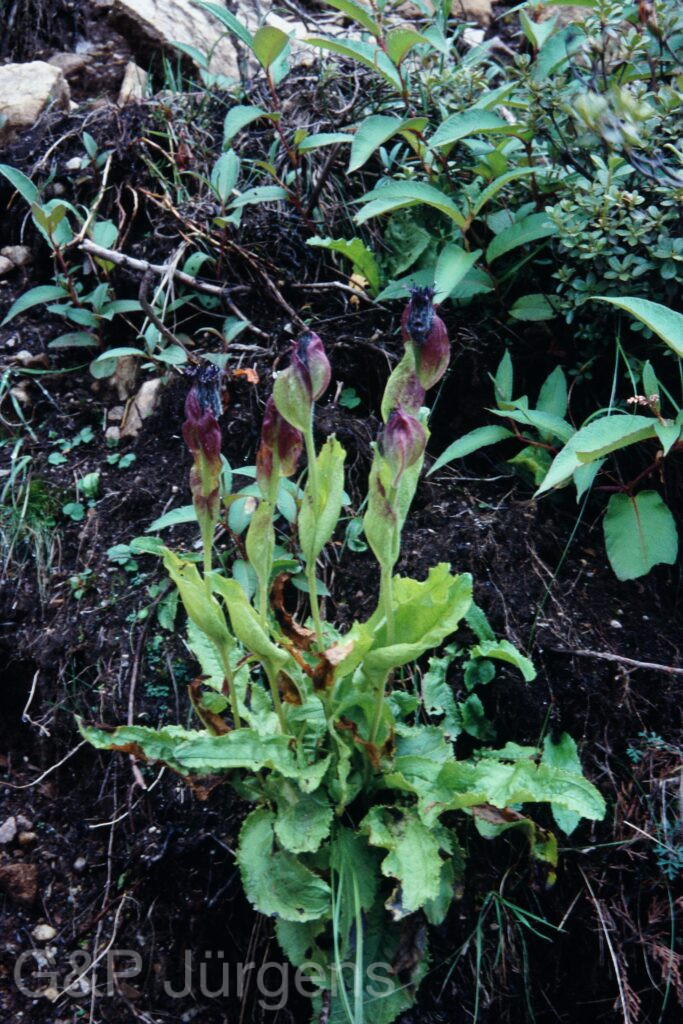
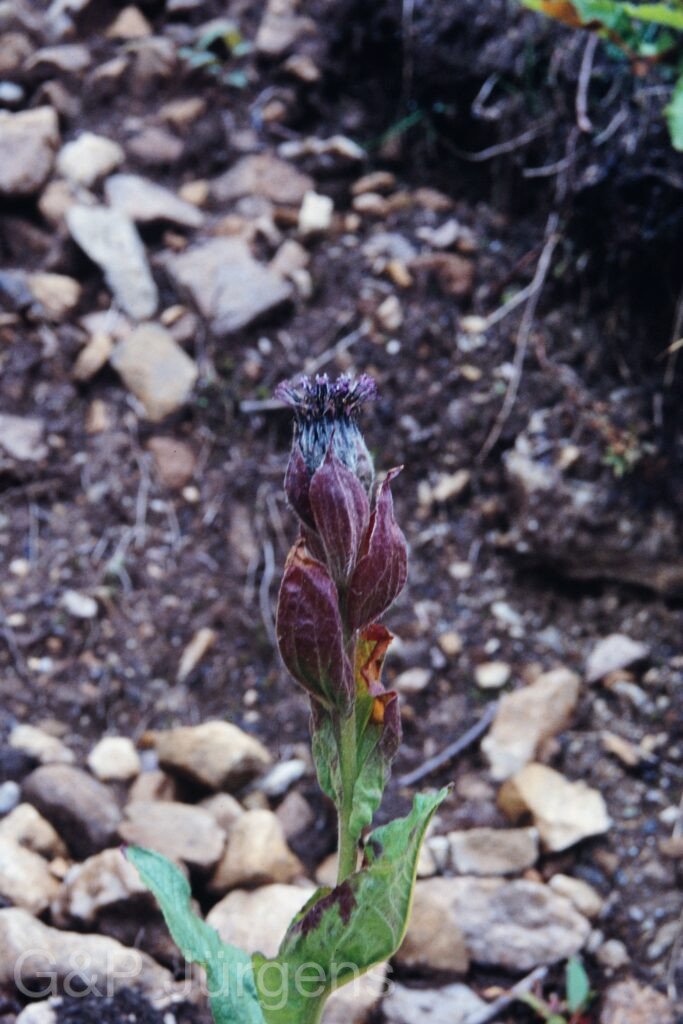
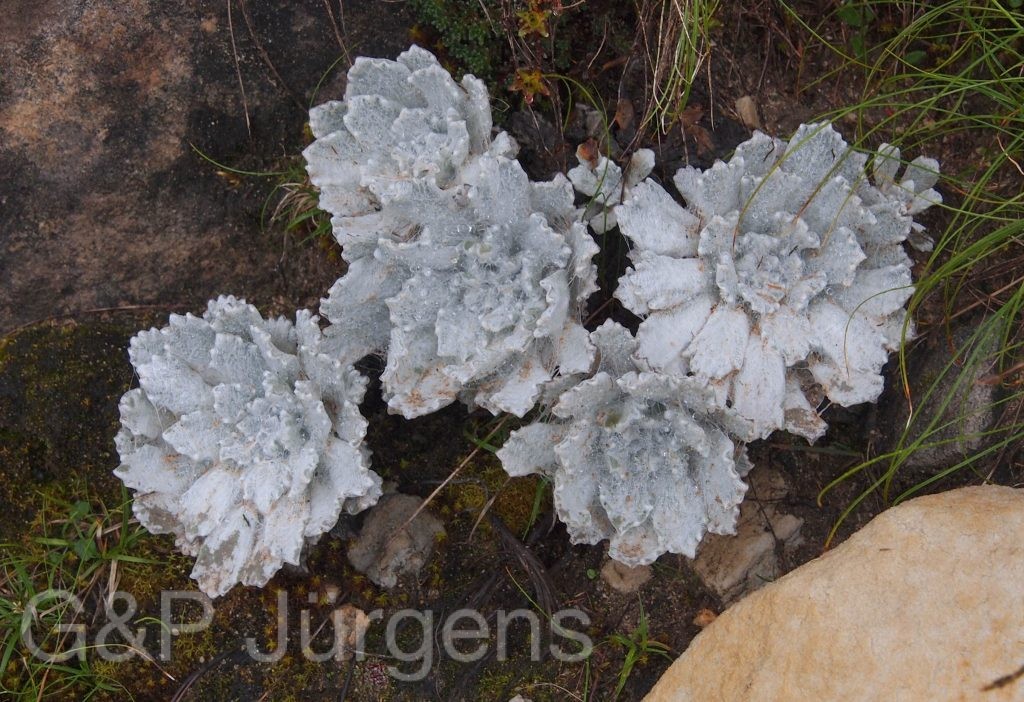
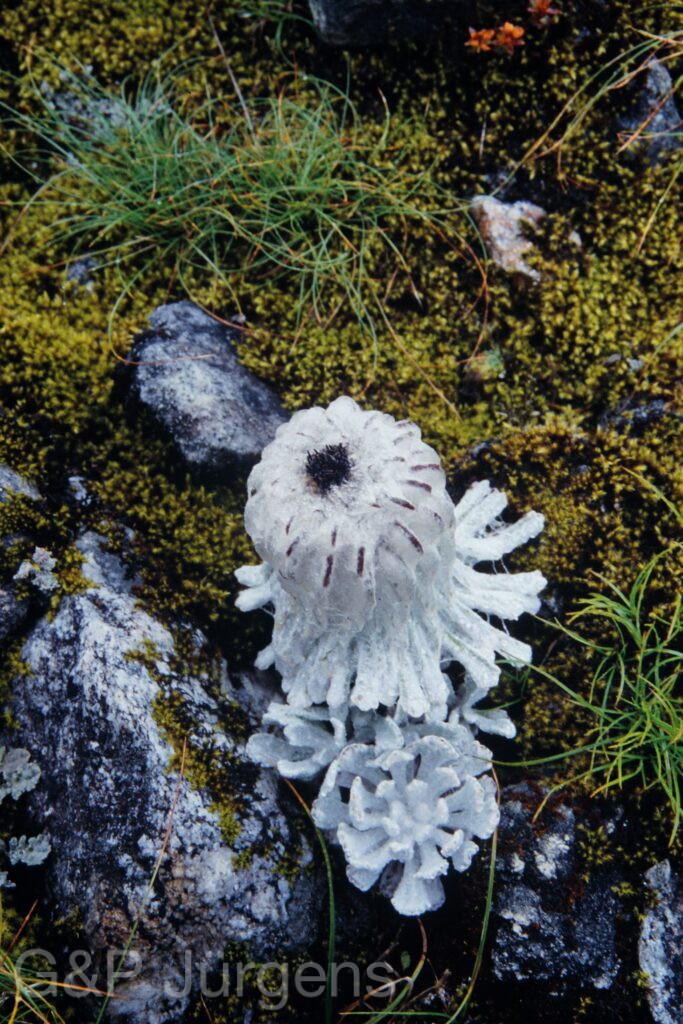
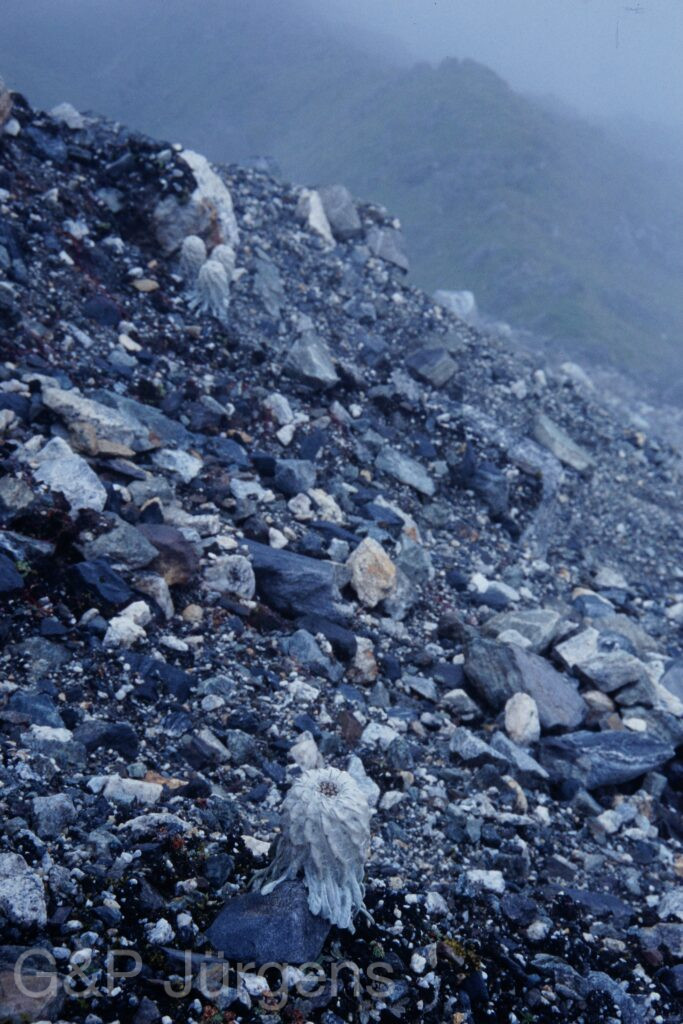
Saussurea tridactyla Sch.Bip. ex Hook.f. is a high-alpine composite of the eastern Himalaya, recorded by GBIF from Nepal, China, India and Bhutan across some 234 occurrences. It belongs to the celebrated group of woolly snowball saussureas of the uppermost mountain zone, growing on open screes, moraine, rocky alpine turf and stony slopes near the snowline, generally between about 4000 and 5000 m. The plants documented at Jule-Tso in Bhutan around 4250 m in June and above Saniti-Lake in Sikkim at about 4400 m in August illustrate its occurrence at the extreme upper limit of vascular plant life, in a harsh environment of strong insolation, wind and cold.
The species forms a low, compact perennial in which the stem and crowded upper leaves and capitula are enveloped in dense, long, white or greyish woolly hairs, producing the characteristic cottony cushion that insulates the developing flowers from cold and ultraviolet radiation. The basal and lower leaves are narrow and toothed to lobed, and the heads are aggregated into a congested terminal cluster. Each capitulum is discoid, with purplish tubular florets enclosed by woolly-margined involucral bracts; the achenes are topped by a pappus of feathery and shorter outer bristles aiding wind dispersal.
Saussurea (tribe Cardueae) is a large Asian genus, and the woolly high-alpine species such as S. tridactyla represent a striking convergent adaptation to extreme altitude, the dense indumentum functioning as a glasshouse-like protection for the inflorescence. With a restricted high-elevation range, the species is naturally localised; such alpine snowball saussureas are increasingly of conservation concern owing to harvesting of related species for medicine and to climate-driven contraction of their cold habitats, making them important sentinels of Himalayan alpine change.
Author: Sch.Bip. ex Hook.f. · Sources: POWO (Kew), GBIF, Flora of Bhutan, Flora of China, Lipschitz monograph of the genus Saussurea