Tag:

Sikkim

Flowers of Sikkim — 350 species from the Sikkim Himalaya in northeast India, a compact yet botanically extraordinary region that climbs from subtropical valleys to the alpine zone beneath Kangchenjunga. Sikkim is a classic centre of Himalayan plant diversity, celebrated for its rhododendrons, primulas, orchids and gentians. Each entry provides a botanical description, distribution, habitat and flowering season with the original field photograph.

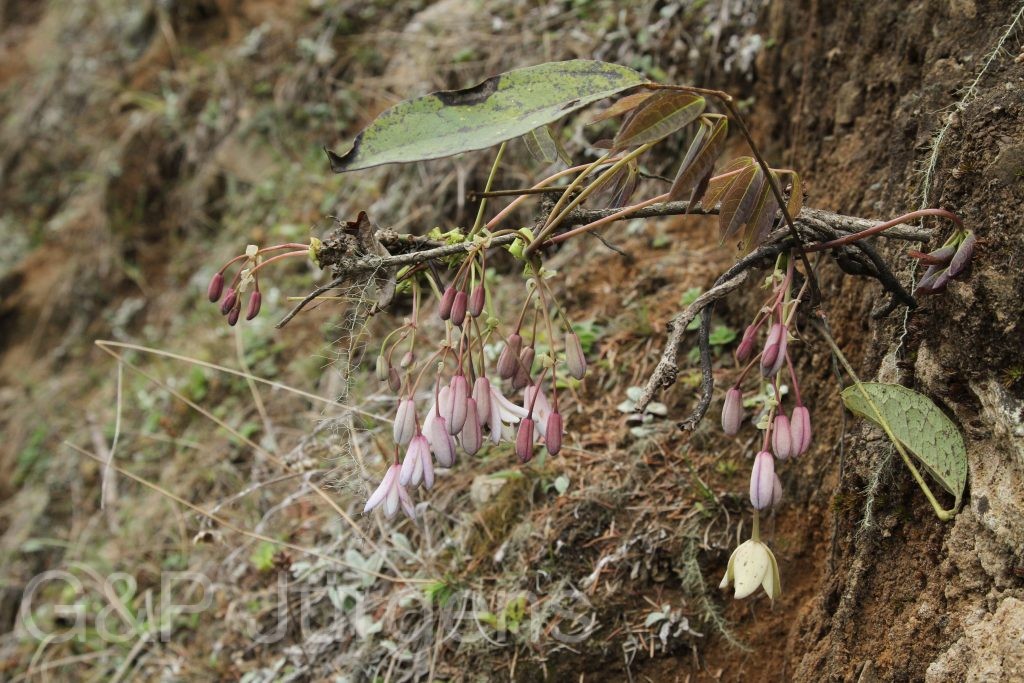
(Wall.) R.Br. ex. Wall.
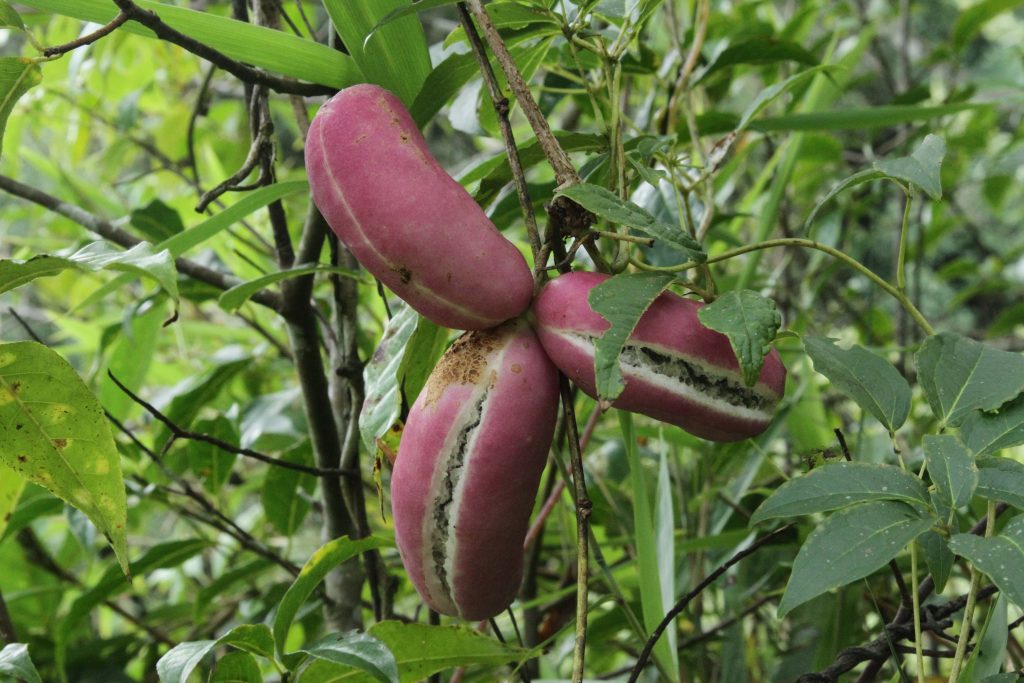
Bhutan2012 357
Bhutan Dochu-La 2900m, September
Bhutan2014 609
Bhutan Phobjika 3100m, May
Sikkim2004 26 P41
Sikkim West-Bengal, Sambon 1850m April

Description

Stauntonia latifolia is a Himalayan woody climber distributed through China, India, Nepal, Bhutan and Myanmar, with GBIF aggregating some 517 occurrences across the warm temperate belt. It is a liana of moist broad-leaved and mixed forest, scrambling over shrubs and into the canopy along forest margins, ravines and streamsides typically between about 1500 and 3100 m. The accompanying records span this range well, from Sambon on the Sikkim–West Bengal border at 1850 m in April, through the Dochu-La in Bhutan at 2900 m in September, to Phobjika at 3100 m flowering in May, reflecting an extended phenology across elevation and longitude in the eastern Himalaya.

The family is here cited as Ranunculaceae, but the plant in fact belongs to the Lardizabalaceae; the description follows the true affinity. It is an evergreen twining climber with palmately compound leaves of three to seven leathery, entire, ovate to elliptic leaflets borne on long petioles. The plant is functionally monoecious, the flowers unisexual and borne in axillary racemes; they are greenish-white to purplish, lacking true petals, the showy parts being six sepals in two whorls, with six stamens in male flowers and three carpels in female ones. The fruit is a fleshy, oblong, purple berry-like follicle, edible and sweet, containing numerous black seeds embedded in a juicy pulp.

The taxon was described by Wallich and is widely treated under the synonym Holboellia latifolia, the generic limits between Holboellia and Stauntonia having been repeatedly debated and revised; under recent circumscriptions the Himalayan plant is placed in Stauntonia. The Lardizabalaceae are a small east-Asian and Chilean family of considerable phylogenetic interest as an early-diverging lineage of the Ranunculales. The succulent fruits are locally gathered and eaten and serve to disperse the seeds via birds and mammals; the species is common and faces no significant conservation concern.

Author: (Wall.) R.Br. ex. Wall. · Sources: POWO (Kew), GBIF, Flora of China, Flora of Bhutan, Annotated Checklist of the Flowering Plants of Nepal, monographic studies of Lardizabalaceae (Holboellia and Stauntonia)
D.Don

CA5B74EED12643D5951B19E897481F0A
Bhutan Chogcham, 3300m June
Sikkim2003 474 P657
Sikkim Lachung Valley 3200m August

Description

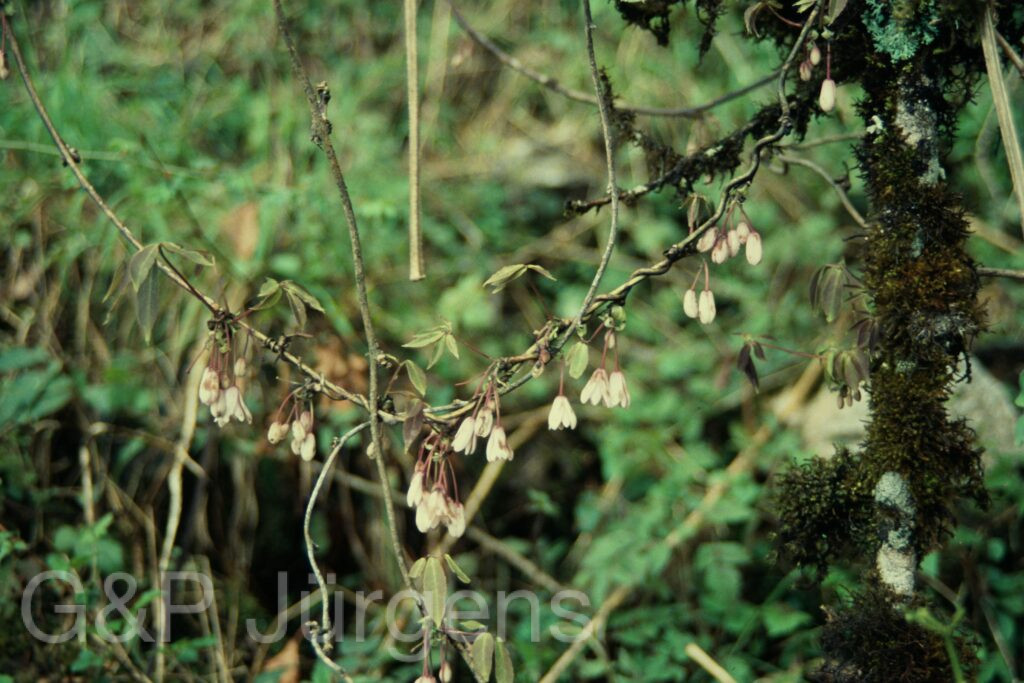
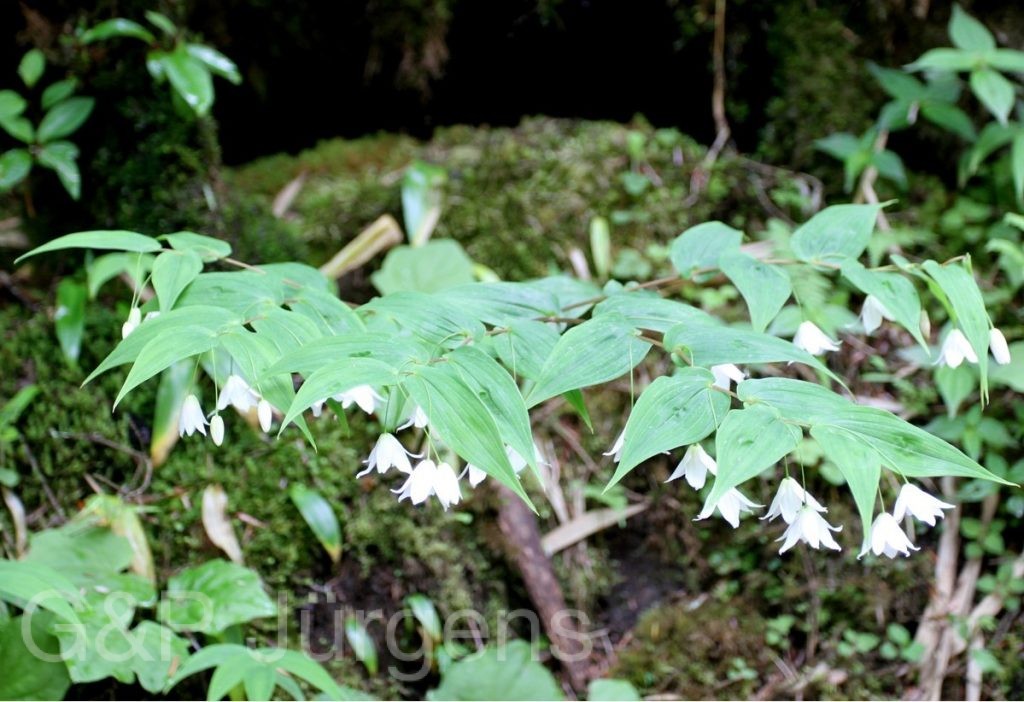
Streptopus simplex, a twistedstalk of the Sino-Himalayan region, is distributed across China (CN), Nepal (NP), Bhutan (BT), India (IN), Myanmar (MM) and Japan (JP), with 726 GBIF occurrences indicating it is a frequent component of high forest. It grows in shaded, humid temperate and subalpine coniferous and broadleaf forest, in bamboo thickets, ravines and on mossy slopes, typically between about 3000 and 4000 m. The illustrated plants came from Chogcham in Bhutan at around 3300 m in June and the Lachung Valley of Sikkim at about 3200 m in August, spanning the early- and late-monsoon flowering and fruiting seasons.

It is a slender perennial herb arising from a short creeping rhizome, with an erect, simple or sparingly branched stem. The leaves are alternate, sessile and somewhat clasping, ovate to lanceolate with entire margins and parallel venation. The flowers are solitary and nodding, borne on slender pedicels that hang beneath the leaves; the perianth consists of six free, campanulate to spreading tepals, white to pink and often purple-spotted within. There are six stamens, and the ovary is superior. The fruit is a globose, fleshy red berry containing several seeds, providing dispersal by birds and other animals.

Streptopus is now placed in Liliaceae sensu lato (the family cited verbatim here), within the Lilioid monocots; some treatments segregate it variably among the lily allies. The genus has a disjunct circumboreal and montane Asian-American distribution, and S. simplex represents its Himalayan and East Asian extension, of biogeographic interest as part of the temperate forest-floor herb flora.

Author: D.Don · Sources: POWO (Kew), GBIF, Flora of China, Flora of Bhutan, Flora of Nepal, Monograph of the genus Streptopus

C.B.Clarke

Bhutan2015 654
Bhutan Semkota 2000m, October
Bhutan2015 653
Bhutan Semkota 2000m, October

Description

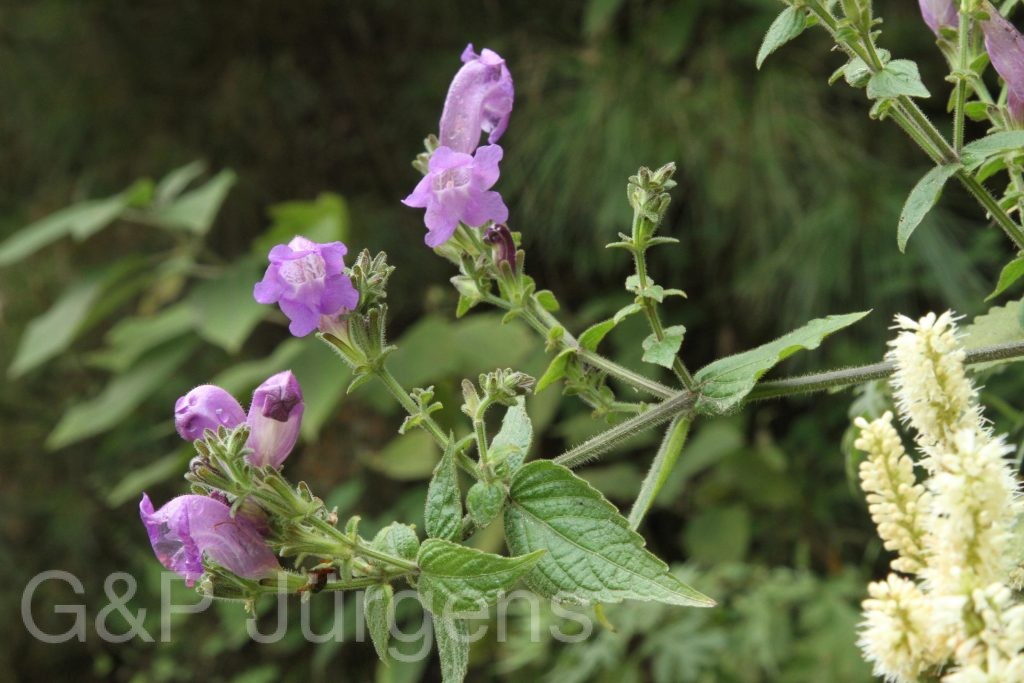
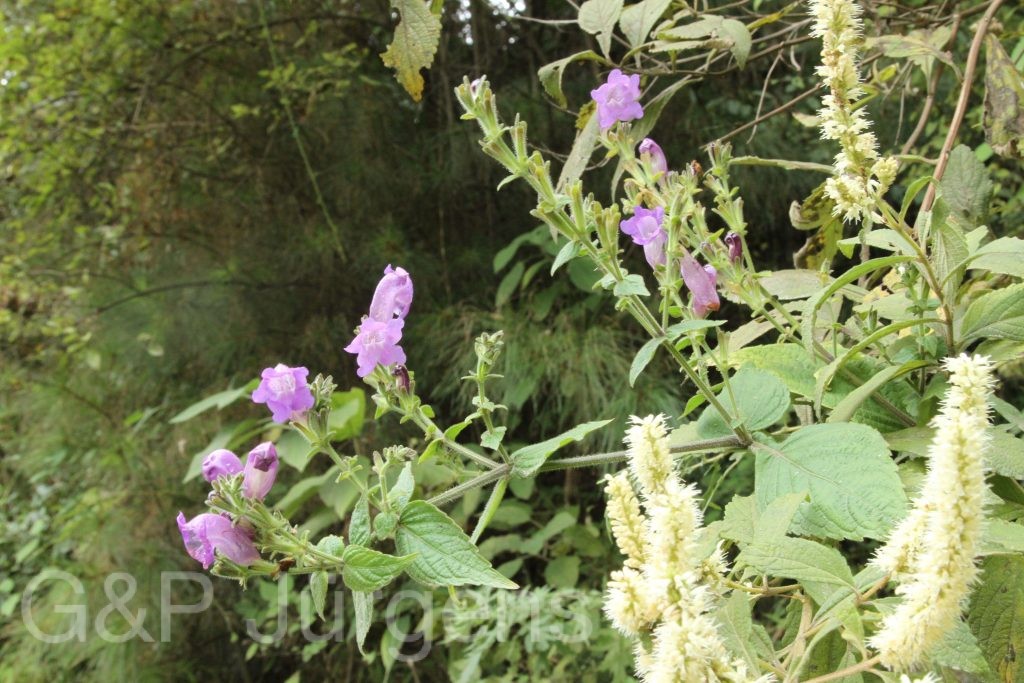
Strobilanthes lachenensis C.B.Clarke is a shrubby herb of the Acanthaceae endemic to the eastern Himalaya and adjacent ranges, recorded from China, Nepal, India and Bhutan, with about 125 GBIF occurrences. It grows in the understorey and along the margins of temperate broad-leaved and mixed forest, on shaded slopes, banks and forest clearings, mainly between about 1800 and 2800 m. It was documented in Bhutan at Semkota near 2000 m in October, an autumn flowering that accords with the often gregarious, plietesial flowering behaviour characteristic of many Himalayan Strobilanthes, in which populations bloom synchronously after several years of vegetative growth.

It is an erect, branched perennial or subshrub with quadrangular stems that are swollen at the nodes. The leaves are opposite and conspicuously anisophyllous, the pair unequal, elliptic to lanceolate, acuminate, with crenate-serrate margins and cystoliths visible as fine streaks on the surface. The flowers are borne in spike-like or capitate inflorescences subtended by bracts; the bilabiate, funnel-shaped corolla is blue to pale violet, curved and slightly inflated at the throat, enclosing four didynamous stamens. The fruit is an elongate, two-valved capsule that dehisces explosively, ejecting a few flattened seeds borne on hooked retinacula.

Strobilanthes is a large and taxonomically complex genus centred on tropical and subtropical Asia, and the Sino-Himalayan species such as S. lachenensis form part of an intricate, much-revised assemblage. Its mass-flowering, bee-pollinated reproductive strategy and the type locality at Lachen in Sikkim, from which the epithet derives, anchor it in the eastern Himalayan flora. The species is forest-dependent and locally distributed, making it potentially sensitive to habitat disturbance, though it is not formally assessed.

Author: C.B.Clarke · Sources: POWO (Kew), GBIF, Flora of China, Flora of Bhutan, Flora of British India, Strobilanthes monograph (Wood; Carine & Scotland revision of Strobilanthes)

C.B. Clarke

Sikkim2003 447 P620
Sikkim Chopta Valley 3800m August
Sikkim2003 448 K620.2
Sikkim Chopta Valley 3800m August

Description

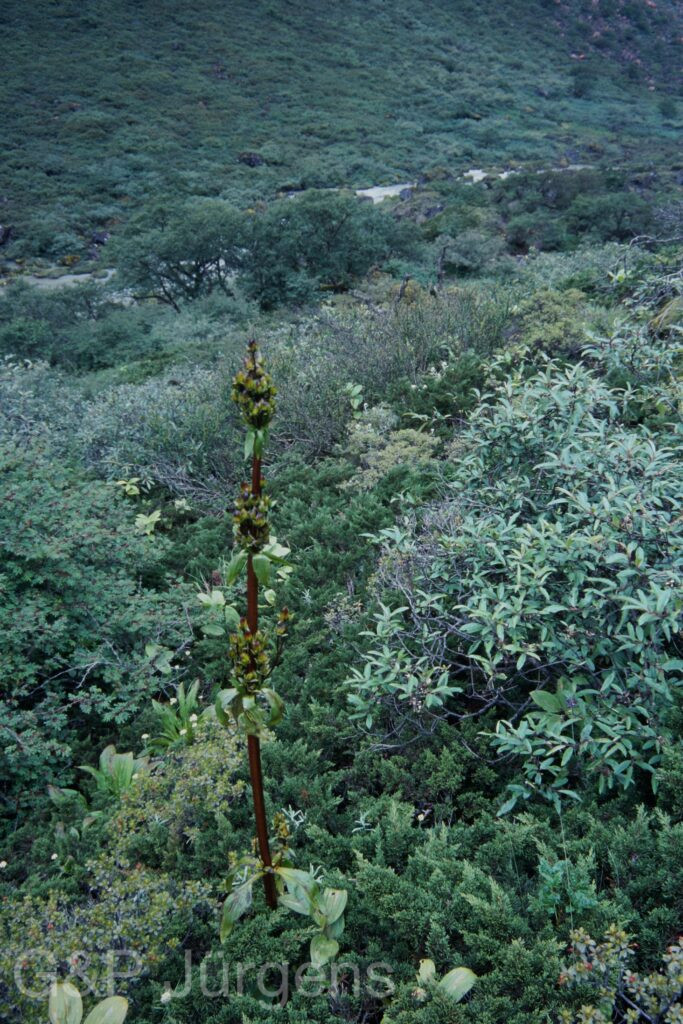
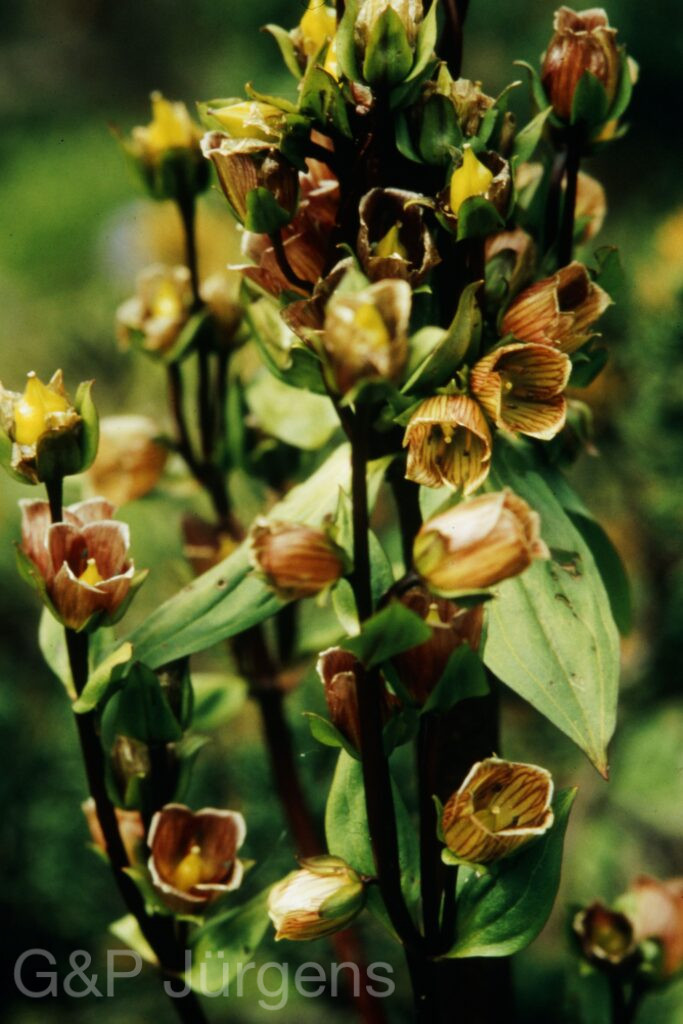
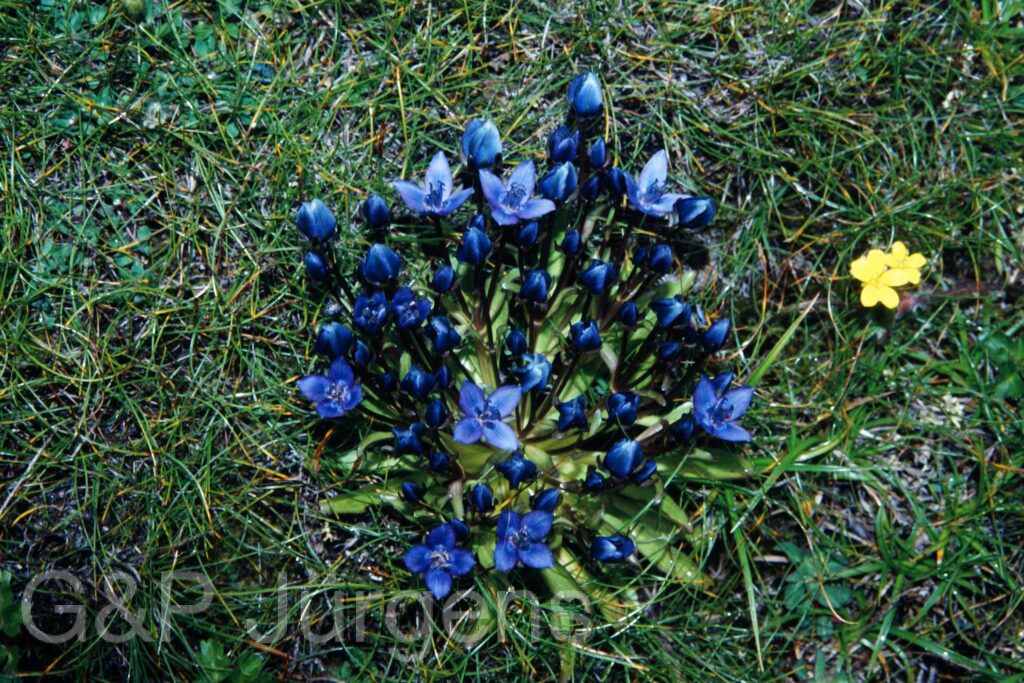
Swertia hookeri is an eastern Himalayan gentian of comparatively restricted range, recorded from India (chiefly Sikkim and Darjeeling), Nepal, Bhutan and the bordering provinces of southern China, GBIF holding around 63 occurrences consistent with a regional endemic. It inhabits moist alpine and upper subalpine zones, growing on open grassy slopes, among shrubberies, on rock ledges and along stream margins where snowmelt maintains high soil moisture. The plant photographed in August in the Chopta Valley of Sikkim at about 3800 m is typical of its elevation band, flowering at the height of the monsoon when the alpine turf is lush and humid.

It is a robust perennial or biennial herb with a stout, erect, often purple-tinged stem arising from a thick rootstock. The leaves are largely basal, broadly elliptic to ovate, conspicuously several-nerved and narrowed to a sheathing base, the cauline leaves becoming smaller and sessile upward. The inflorescence is a leafy branched panicle of large, broadly campanulate flowers; the corolla is usually 4- or 5-merous, pale greenish-yellow to whitish and densely veined with purplish-blue reticulation, each lobe bearing a pair of fimbriate nectary pits at the base. Stamens alternate with the lobes, and the superior ovary develops into a septicidal capsule with numerous small seeds.

Described by C. B. Clarke, Swertia hookeri belongs to a large, taxonomically intricate genus centred on the Sino-Himalayan region, forming part of a species swarm noted for diagnostic nectary morphology. Like many congeners it is rich in bitter secoiridoid and xanthone compounds and is gathered locally for medicinal and febrifugal use. Its dependence on intact high-altitude grassland renders it potentially sensitive to grazing pressure and climate-driven treeline shifts, though it has not been formally evaluated.

Author: C.B. Clarke · Sources: POWO (Kew), GBIF, Flora of Bhutan, Flora of China, Hara Flora of Eastern Himalaya, Clarke revision of Swertia

D. Don

Sikkim2003 301 G422
Sikkim Saniti-Lake 4250m August

Description

Swertia multicaulis is a high-alpine Himalayan gentian distributed through Nepal, China, India, Bhutan and recorded marginally from Kazakhstan, with GBIF holding around 144 occurrences along the main Himalayan chain. It is a plant of the upper alpine zone, growing on damp, peaty or gravelly meadows, moist rock ledges, seepage slopes and the margins of glacial lakes and snowbeds. The specimen from Saniti Lake in Sikkim at about 4250 m in August typifies its preference for cold, moisture-saturated high-altitude turf, where it flowers late in the short growing season as the monsoon wanes and snowmelt keeps the substrate constantly wet.

As its epithet indicates, it is a low perennial herb producing several stems from a stout, often branched rootstock crowned by a rosette of leaves. The basal leaves are obovate to spathulate, entire and narrowed to a petiolar base, forming a compact tuft, while the few stem leaves are small and sessile. The flowers are borne singly or in few-flowered clusters and are typically 4- or 5-merous; the corolla is rotate and deep blue-purple to violet, the lobes ovate-lanceolate and each furnished at the base with one or two fringed nectary scales characteristic of the genus. The stamens alternate with the corolla lobes, and the superior ovary ripens into a many-seeded capsule.

Described by D. Don, Swertia multicaulis is part of the speciose, taxonomically complex Sino-Himalayan radiation of the genus, where species are separated largely by nectary structure, corolla colour and habit. Its cushion-forming, multi-stemmed growth is an adaptation to wind-swept, frost-prone high-alpine conditions. The plant accumulates bitter secoiridoids and xanthones and, like other swertias, has a reputation in local folk medicine. Restricted to intact high-elevation wetland and meadow habitats, it may be vulnerable to grazing and to upward habitat compression under a warming climate.

Author: D. Don · Sources: POWO (Kew), GBIF, Flora of China, Flora of Bhutan, Hara Enumeration of Flowering Plants of Nepal, Clarke revision of Swertia

King ex C.B. Clarke

Bhutan2014 793
Bhutan
Sikkim2004 94 P164
Sikkim West-Bengal, Bersay 2700m April
Sikkim2004 329 P530
Sikkim West-Bengal, Bersay 2700m April

Description

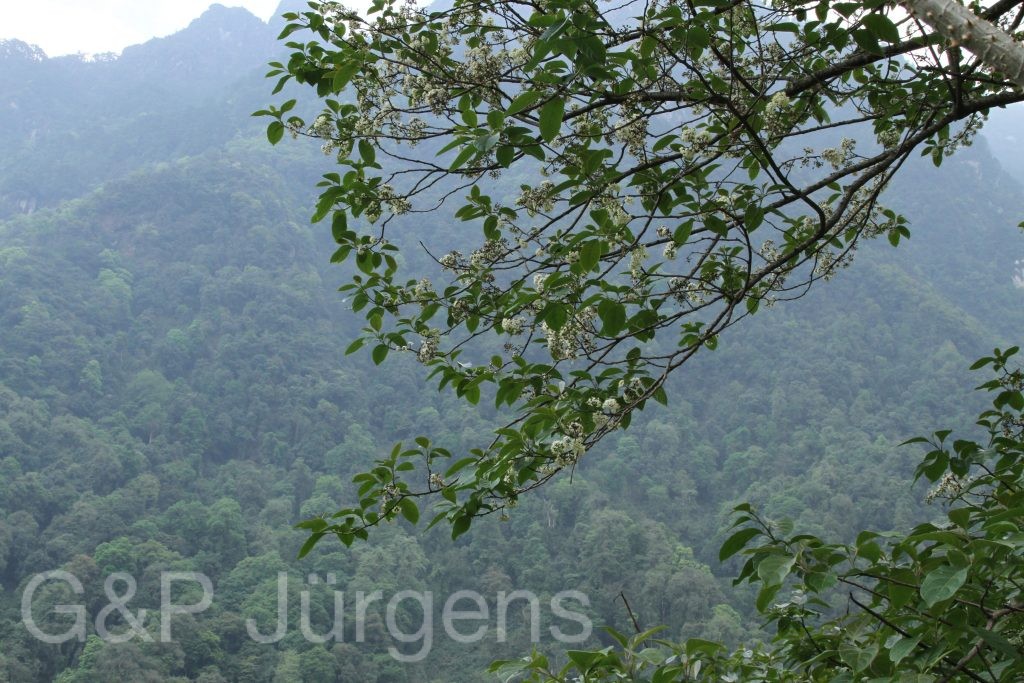
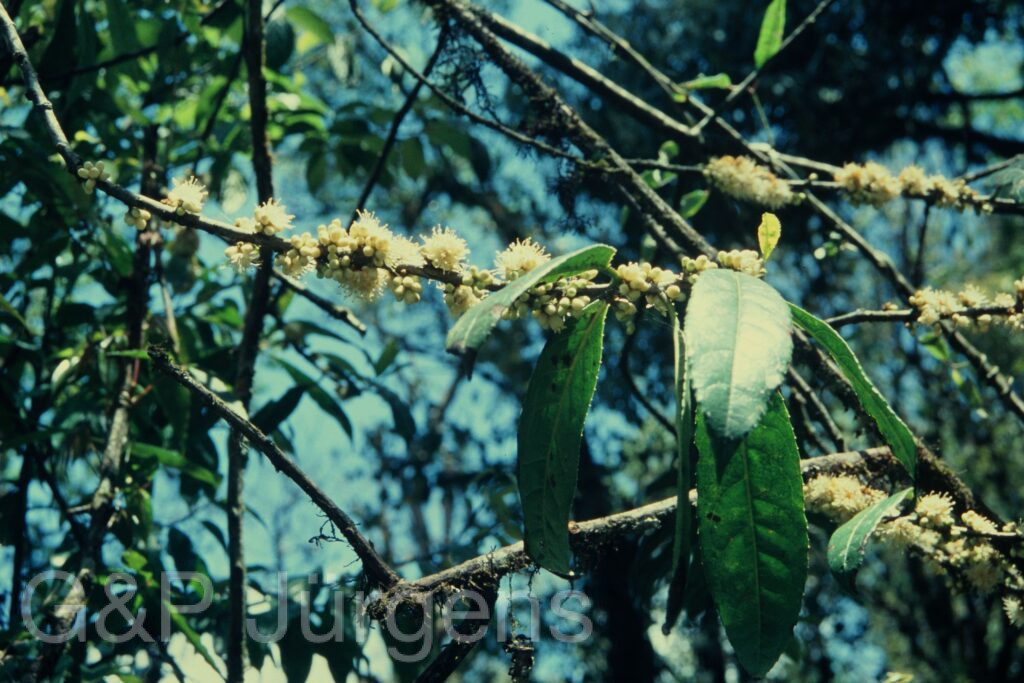
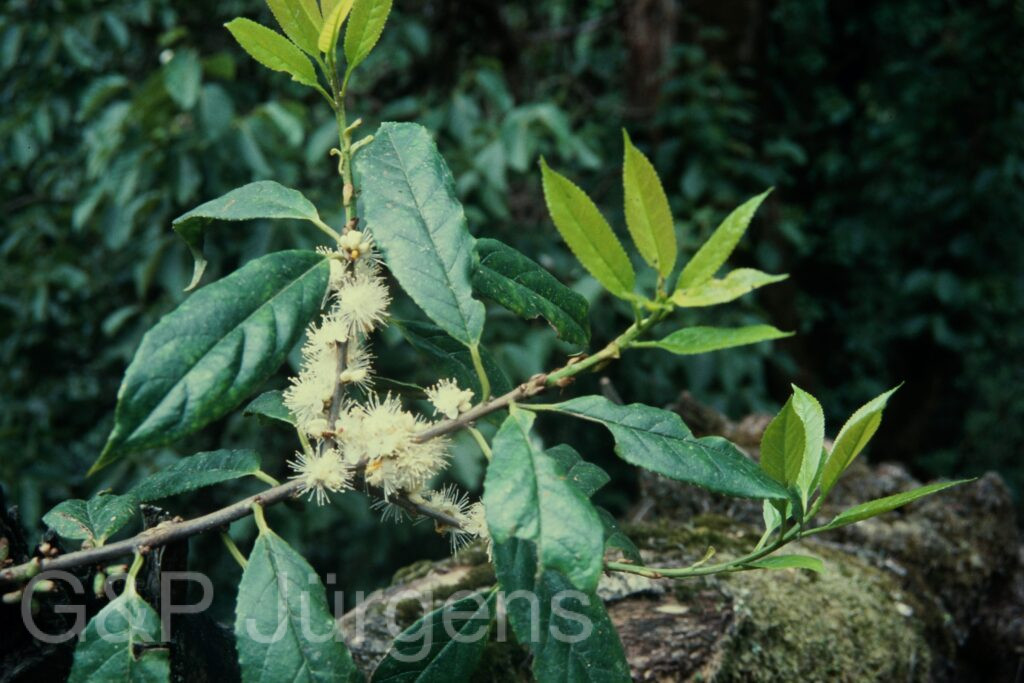
Symplocos glomerata is an Asian tree distributed from the Himalaya and northern India through Bhutan, Nepal and Myanmar into southern China, Taiwan, Indochina and the Malesian region. Its 572 GBIF records span this broad range, indicating a widespread but locally distributed species of evergreen and mixed montane forest. It grows in broadleaved and laurel-dominated forests, on slopes and ridges, typically in the warm-temperate to lower-subtropical montane belt. The plant photographed at Bersay in the Sikkim-West Bengal border region at about 2700 m in April illustrates its occurrence in the moist mid-elevation forests of the Eastern Himalaya, flowering in early spring.

It is a small evergreen tree or shrub with leathery, alternate leaves that are elliptic to oblong, with serrate to crenate margins and a glabrous, glossy upper surface. The flowers are borne in dense, sessile, glomerate clusters in the leaf axils, as the epithet glomerata indicates; each is small, white and fragrant, with a five-lobed corolla and numerous stamens united at the base in fascicles, a characteristic of the genus. The fruit is a small, ovoid to cylindric drupe crowned by the persistent calyx lobes.

Symplocos is the sole genus of the Symplocaceae, distinguished by its polyandrous flowers and aluminium-accumulating tissues; several species, including this one, have been used to yield yellow dyes and mordants. S. glomerata varies considerably across its wide range and has accumulated numerous synonyms and infraspecific names. Widely distributed and ecologically tolerant, it is not regarded as threatened and is a common constituent of Asian montane forest.

Author: King ex C.B. Clarke · Sources: POWO (Kew), GBIF, Flora of Bhutan, Flora of China, Nooteboom Symplocaceae monograph

(C.B.Clarke) Kitam.

Sikkim2003 135 P183
India Sikkim Dzongri 4000m, August

Description

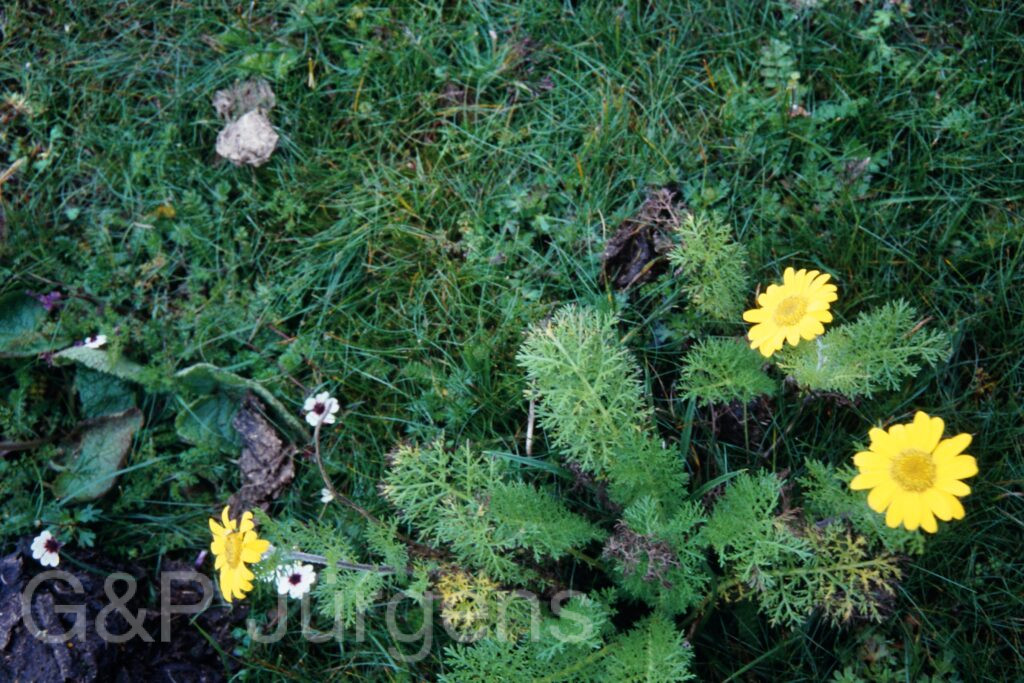
Tanacetum atkinsonii is an aromatic alpine composite of the Himalaya, recorded from Nepal, India, Bhutan and southern China, with GBIF holding around 102 occurrences across this range. It grows on open, stony alpine slopes, rocky pastures, screes and dry grassy banks in the high alpine zone, generally between about 3500 and 4500 m, where it tolerates strong insolation, cold and free-draining substrates. The illustrated plant from Dzongri in Sikkim at 4000 m, flowering in August, is characteristic of these exposed high-altitude habitats and of its late-summer flowering after the monsoon.

It is a perennial, aromatic herb with a woody rootstock producing erect to ascending stems and finely divided, pinnately dissected or bipinnatisect leaves that are grey-green and often hairy, releasing a tansy-like scent when crushed. The capitula (flower heads) are borne in a terminal corymb; each head has an involucre of imbricate, scarious-margined bracts and the typical Tanacetum structure of yellow disc florets, with the marginal florets reduced or shortly rayed rather than conspicuously ligulate. The fruit is a small, ribbed, glandular cypsela, usually with a short membranous corona rather than a true pappus.

Transferred to Tanacetum by Kitamura from an original placement under Chrysanthemum/Pyrethrum by C.B. Clarke, the species sits within the taxonomically fluid tansy group of the tribe Anthemideae, distinguished by its dissected aromatic foliage and reduced ray florets. A widespread high-Himalayan element, it is of no particular conservation concern.

Author: (C.B.Clarke) Kitam. · Sources: POWO (Kew), GBIF, Flora of Bhutan, Flora of China, Compositae of the Himalaya (specialist treatments)

Hand.-Mazz.

Sikkim2003 512 G712 2 ergebnis
Sikkim Yumedzandong 4500m, August

Description

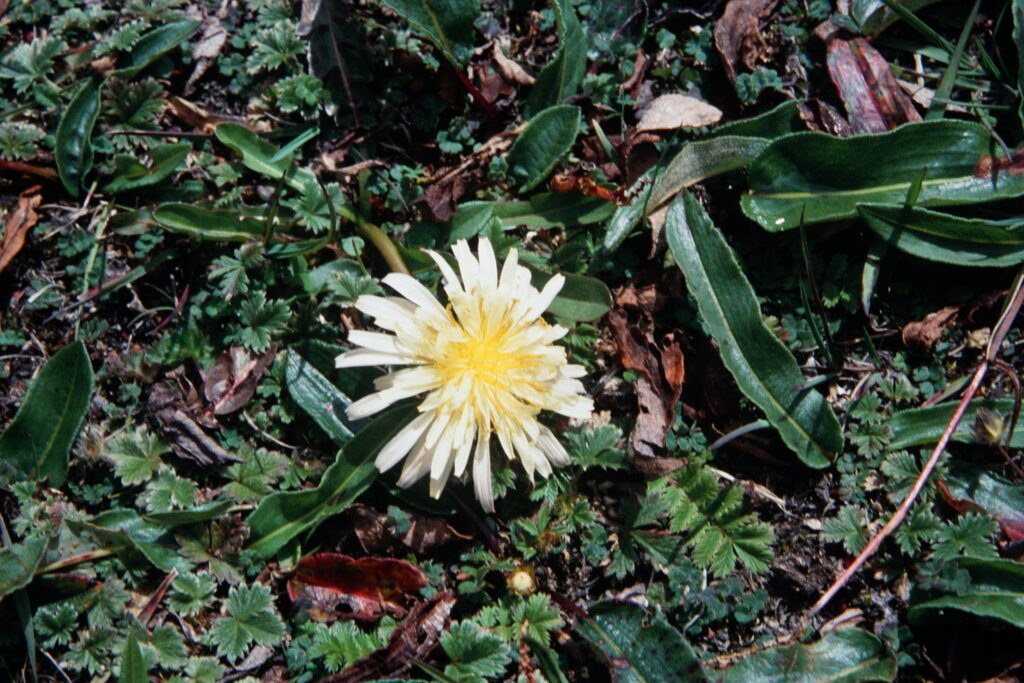
Taraxacum sikkimense is a high-alpine dandelion of the Himalaya and Tibetan Plateau margins, recorded from China, India, Nepal, Bhutan and Pakistan, with a modest set of records (c. 128 in GBIF) reflecting its restricted high-elevation range. It occupies alpine meadows, turfy slopes, moist gravelly ground and the surrounds of snowmelt flushes, typically between about 4000 and 4800 m. The photographed plant from Yumedzandong in Sikkim, at 4500 m and flowering in August, exemplifies the species in its short alpine growing season, when warmth and meltwater briefly permit growth and flowering near the upper limit of vascular plant life.

The plant is a small, acaulescent, rosette-forming perennial herb with a thick, often blackened taproot and a milky white latex characteristic of the tribe Cichorieae. The leaves are all basal, runcinate to pinnatifid or shallowly toothed, sometimes nearly entire in dwarfed alpine forms. The flowering scapes are short, each bearing a single capitulum subtended by an involucre of imbricate phyllaries, the outer often appressed or recurved with a coloured margin. The capitulum is homogamous, composed entirely of yellow ligulate (ray) florets; the fruit is a ribbed, spinulose-muricate cypsela narrowed above into a slender beak that bears a pappus of simple white bristles, dispersed by wind.

Taraxacum is a taxonomically formidable genus owing to widespread apomixis (agamospermy) and polyploidy, which generate innumerable stable microspecies; the Himalayan high-elevation taxa form a distinctive assemblage that remains incompletely revised. Taraxacum sikkimense belongs to this alpine radiation. As a specialised high-altitude plant with a naturally fragmented distribution, it is potentially sensitive to alpine habitat change, though it has not been formally assessed.

Author: Hand.-Mazz. · Sources: POWO (Kew), GBIF, Flora of China (Asteraceae), Flora of Bhutan, Taraxacum: A monograph (Richards)

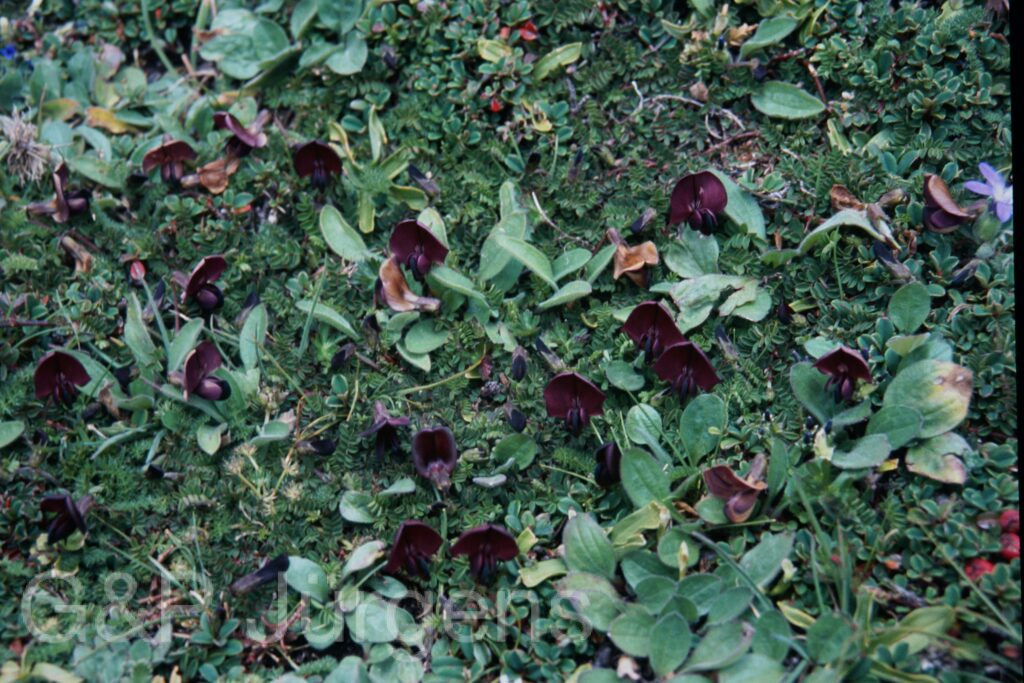
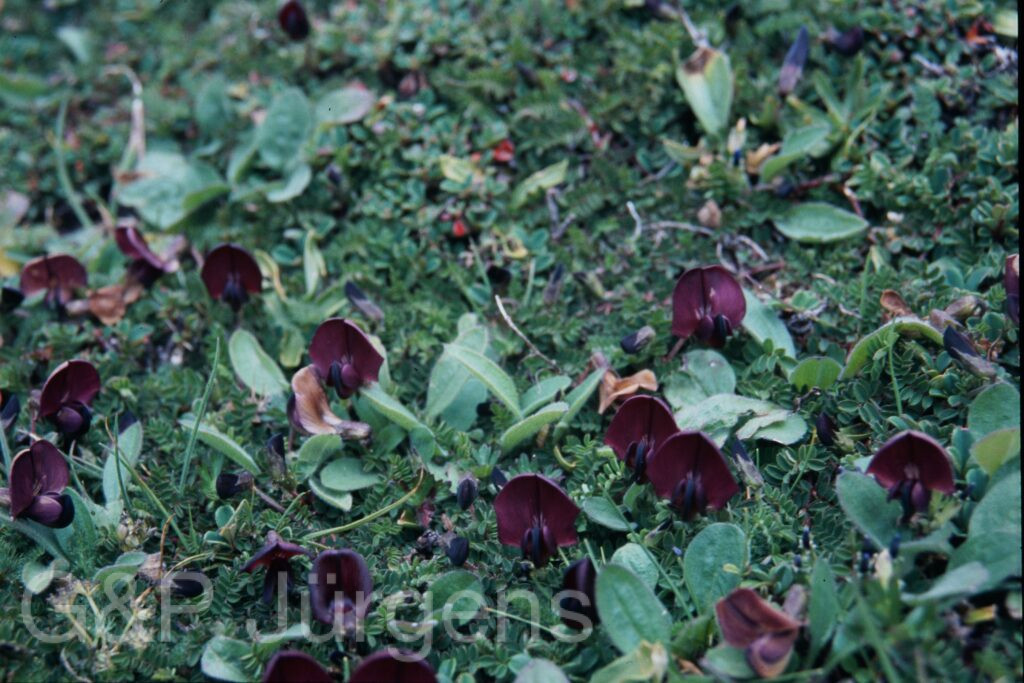
Benth.

Sikkim2011 151
Sikkim Kalep 3670m, June
Nepal 99 452 ergebnis
West-Nepal Naphukana 3080m, June

Description

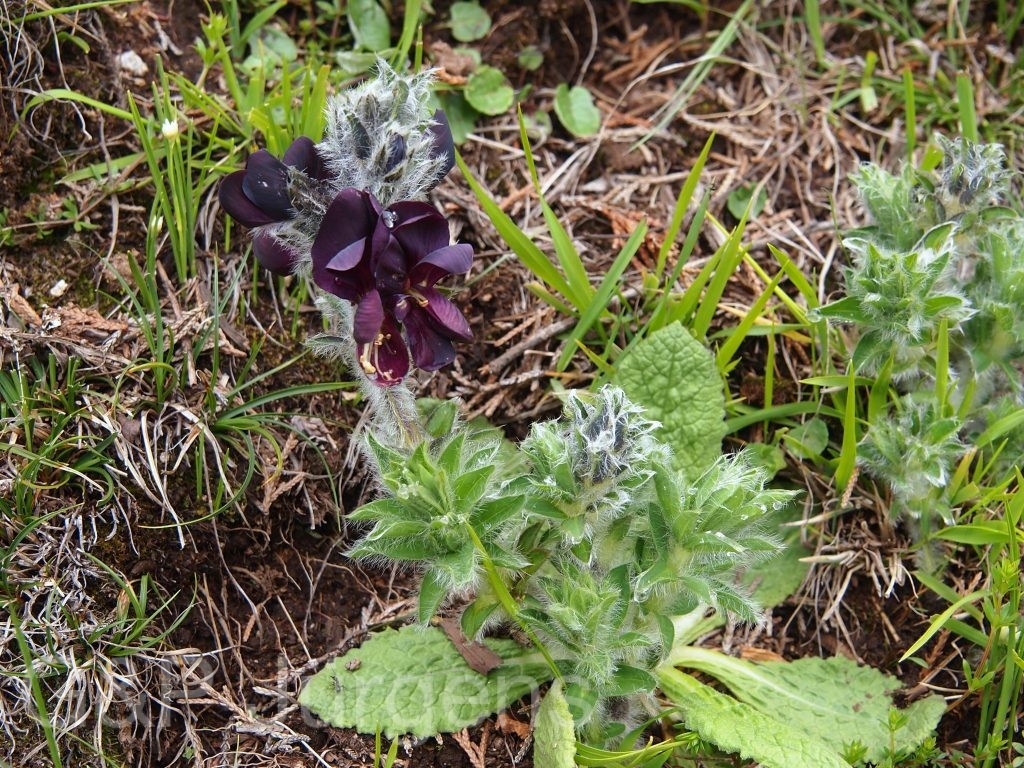
Thermopsis barbata Benth. is a distinctive legume of the high Himalaya, occurring across China, India, Nepal and Bhutan. It is documented from Sikkim at Kalep around 3670 m and from West-Nepal at Naphukana near 3080 m, both flowering in June, within the subalpine to alpine belt. The species favours open stony slopes, dry grassy hillsides, gravelly pastures and the margins of alpine scrub, typically between 3000 and 4500 m, on well-drained, often disturbed substrates exposed to strong sun and seasonal aridity. Its roughly 606 GBIF records indicate a widespread but characteristically montane Himalayan range.

The plant is a robust perennial herb arising from a stout rootstock, the erect stems and foliage conspicuously clothed in long, soft, silky to villous hairs that give the epithet barbata. The leaves are palmately trifoliolate with elliptic to obovate leaflets and large persistent stipules. The flowers are arranged in a dense terminal raceme and are notably large for the genus, the papilionaceous corolla a deep purple to violet-maroon rather than the yellow usual in Thermopsis, subtended by hairy bracts and an enlarged calyx. The fruit is a hairy, flattened, several-seeded legume.

Thermopsis barbata is exceptional within its predominantly yellow-flowered, north-temperate genus for its dark purple corolla and dense pubescence, traits interpreted as adaptations to the cold, high-radiation alpine environment. Like many genistoid legumes it contains quinolizidine alkaloids that deter herbivores. Widespread and locally frequent across its range, it is not regarded as threatened, though high-altitude grazing and pasture degradation may locally affect populations.

Author: Benth. · Sources: POWO (Kew), GBIF, Flora of China, Flora of Nepal, Flora of British India, Legumes of the World (Lewis et al.)

Tibetia himalaica

by GP Jürgens

(Baker) H.B. Cui

Sikkim2003 527 P735
Sikkim Yume Samdong 4600m August
Sikkim2003 528 P736
Sikkim Yume Samdong 4600m August

Description

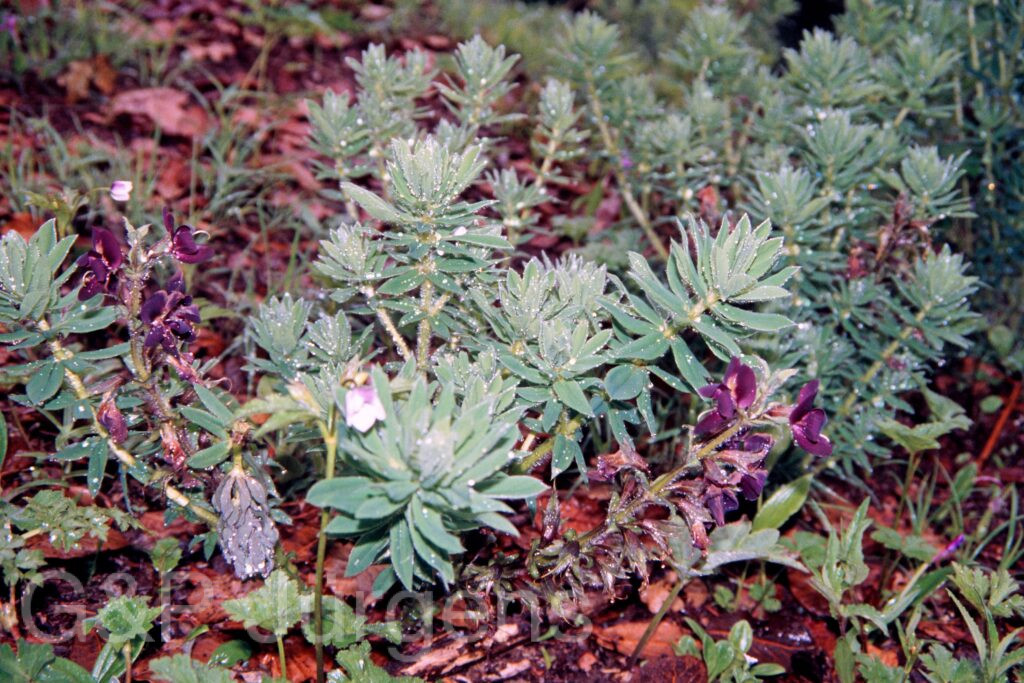
Tibetia himalaica is a high-altitude legume of the Sino-Himalayan region, distributed across the Tibetan Plateau and adjoining mountains in China, Nepal, India and Bhutan; GBIF records over 800 occurrences concentrated in the high alpine belt. It is a plant of alpine meadows, short turf, gravelly slopes, riverine flats and open stony ground, typically between 3,000 and 5,000 m. The individual photographed at Yume Samdong in northern Sikkim at 4,600 m in August captures the species near the upper limit of its range, flowering during the late-summer monsoon on the cold, well-drained alpine soils characteristic of this trans-Himalayan locality.

It is a low, cushion-forming or mat-like perennial herb arising from a slender, often woody taproot and a branched caudex, the stems short and largely prostrate. The leaves are imparipinnate, with several pairs of small, obovate to elliptic, often emarginate leaflets on short petioles, the whole appressed-pubescent. The flowers are solitary or few in an umbel-like arrangement on slender scapes; each is a typical papilionaceous flower with a campanulate, hairy calyx and a blue to purplish or violet corolla comprising a broad standard, oblong wings and an incurved keel. The fruit is a cylindrical, glabrescent legume that dehisces to release several small seeds.

Tibetia is a small genus of about half a dozen species segregated from Gueldenstaedtia, restricted to the high mountains of the Sino-Himalayan and Central Asian region and distinguished by its solitary or few-flowered scapes, persistent stipules and alpine cushion habit. As a nitrogen-fixing legume forming root nodules with rhizobia, T. himalaica contributes to soil enrichment in nutrient-poor alpine turf and is grazed by livestock and wild herbivores. Its wide but high-altitude distribution renders it ecologically secure at present, though high-elevation specialists of this kind are regarded as potentially sensitive to climate warming; it has not been formally assessed for the IUCN Red List.

Author: (Baker) H.B. Cui · Sources: POWO (Kew), GBIF, Flora of China, Flora of Bhutan, Annotated Checklist of the Flowering Plants of Nepal, revision of Tibetia and Gueldenstaedtia (Fabaceae)