Tag:

Sikkim

Flowers of Sikkim — 350 species from the Sikkim Himalaya in northeast India, a compact yet botanically extraordinary region that climbs from subtropical valleys to the alpine zone beneath Kangchenjunga. Sikkim is a classic centre of Himalayan plant diversity, celebrated for its rhododendrons, primulas, orchids and gentians. Each entry provides a botanical description, distribution, habitat and flowering season with the original field photograph.

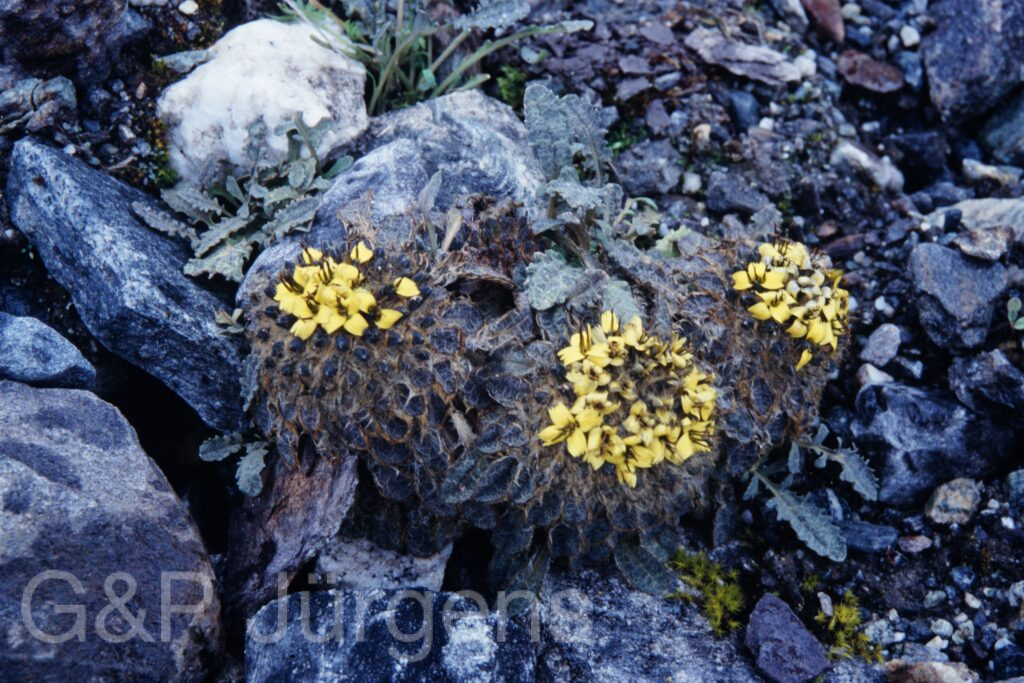
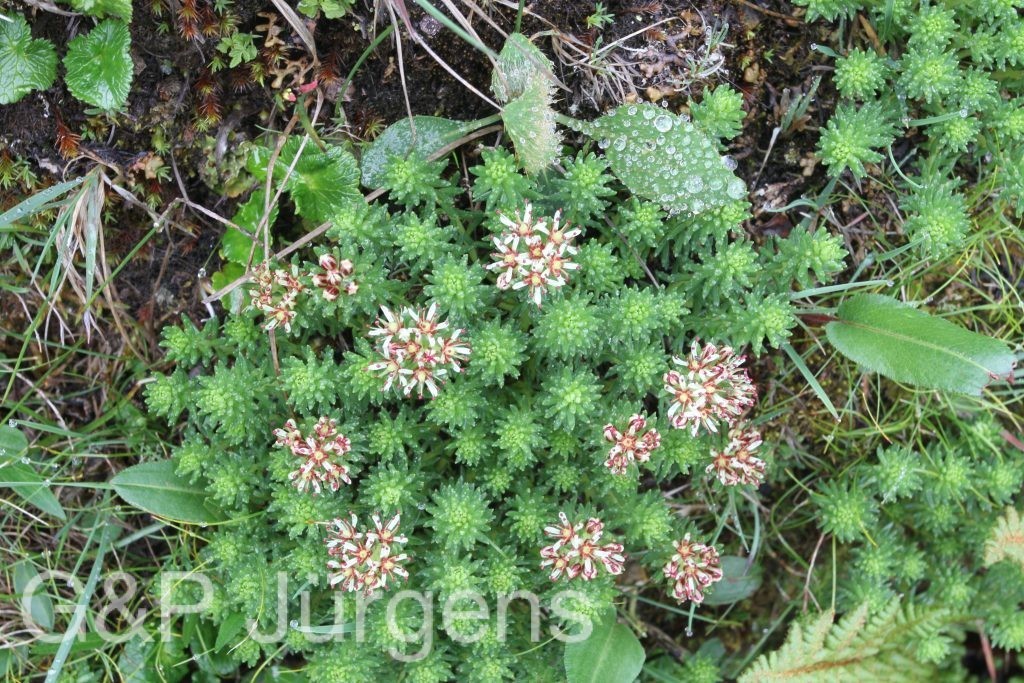
Sedum amabile

by GP Jürgens

H. Ohba

BhutanPG2011 470
Bhutan Ludlow-Sherriff-Trail Warrtlang-La, 4450m June

Description

Sedum amabile is a high-alpine succulent of the Eastern Himalaya, recorded principally from Bhutan and the adjacent mountains of Sikkim and southern Tibet (China). GBIF currently holds no georeferenced occurrences and no associated country list for this name, reflecting both its rarity and the unsettled status discussed below. It is a plant of the high alpine zone above about 4000 m, growing among rocks, on stony slopes, moraine and in crevices, as documented along the Ludlow-Sherriff Trail at Warrtlang-La in Bhutan at 4450 m. Like other high-elevation stonecrops it is adapted to a short, cool growing season, flowering in early summer (June) shortly after snowmelt.

It is a small, glabrous, succulent perennial herb forming low tufts from a short rootstock, with fleshy stems bearing crowded, fleshy leaves that are entire, sessile and oblong to obovate. The flowers are borne in a compact, terminal, cymose to corymbose inflorescence; they are typically 5-merous, with free or nearly free petals that in this species are an attractive bright reddish-pink (the epithet "amabile" meaning lovely or pleasing), and twice as many stamens as petals. The carpels are erect and free, maturing into a star-like cluster of small follicles that split along the ventral suture to release numerous minute seeds.

Though catalogued under the genus Sedum, GBIF treats this name as a synonym, with the accepted name given as Sedum amabile; the basionym by H. Ohba and the WordPress link (referencing Rhodiola amabilis) indicate the long-standing taxonomic movement of high-Himalayan succulents between Sedum and the segregate genus Rhodiola, distinguished chiefly by the latter's perennial scaly caudex and frequently dioecious flowers. Such nomenclatural instability is typical of the Sino-Himalayan Crassulaceae. Given its very restricted, high-altitude range and the paucity of records, the species is potentially of conservation concern, although it has not been formally assessed.

Author: H. Ohba · Sources: POWO (Kew), GBIF, Flora of Bhutan, Flora of China, Ohba's monograph of Himalayan Crassulaceae (Sedum and Rhodiola)
Wall. ex Lindl.

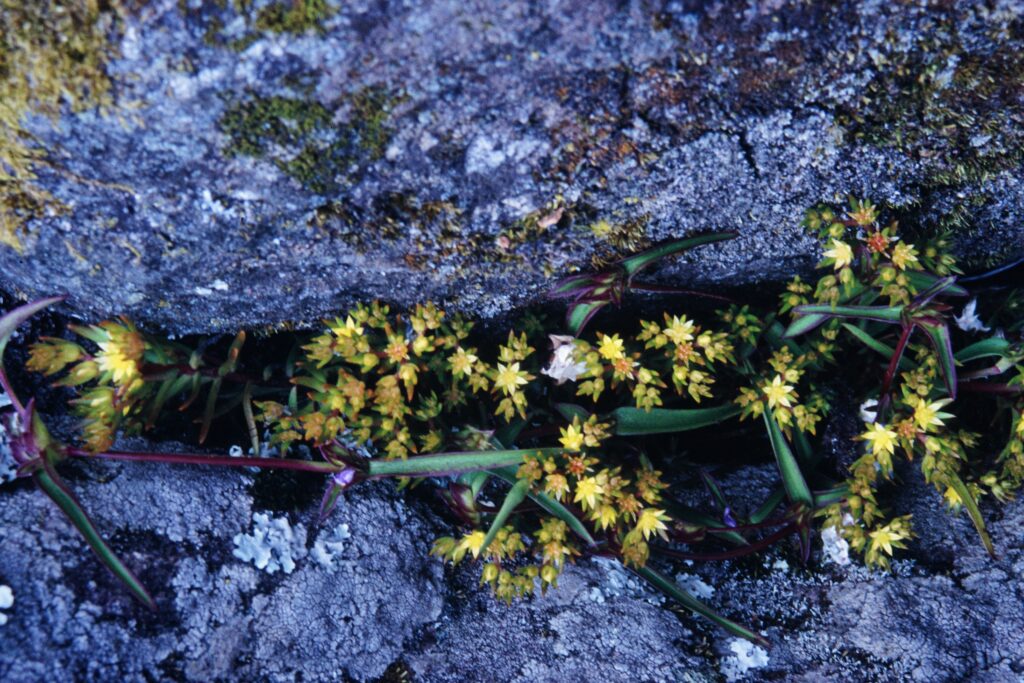
Sikkim2003 385 P543 ergebnis
Sikkim Talim (Zemu-valley) 3280m, August

Description

Sedum multicaule is a widespread Himalayan stonecrop ranging from Pakistan eastwards through India, Nepal, Bhutan and into China and Myanmar, and is well collected with around 618 GBIF records. A succulent of rocky habitats, it colonises moist cliffs, boulders, mossy banks, walls and stony slopes, often growing as a lithophyte in the spray of streams across the temperate to subalpine belt, broadly between about 2000 and 4000 m. The documented gathering from Talim in the Zemu valley of Sikkim at 3280 m in August reflects its preference for damp rock faces during the summer growing season.

It is a perennial, somewhat tufted herb with numerous slender, often reddish stems, as the epithet "multicaule" implies, that are decumbent at the base then ascending. The fleshy leaves are alternate, linear to oblong and terete or semi-terete, frequently spurred at the base and crowded along the stems. The inflorescence is a terminal cyme of several branches bearing many small, sessile, star-shaped flowers; these are typically five-merous with narrow, acute yellow petals, ten stamens and free or shortly united carpels. The fruit comprises spreading, many-seeded follicles.

Sedum in the broad sense belongs to the Crassulaceae and exhibits the CAM photosynthesis and water-storing succulence that suit it to seasonally dry, exposed rock surfaces. The Himalayan members form a taxonomically complex assemblage, several segregated by modern authors into related genera. Of no conservation concern given its abundance and broad altitudinal and geographic range, S. multicaule is a characteristic and resilient element of montane rock-crevice vegetation.

Author: Wall. ex Lindl. · Sources: POWO (Kew), GBIF, Flora of China, Flora of Pakistan, Crassulaceae monograph (Ohba / 't Hart)

(Edgew.) Majumdar

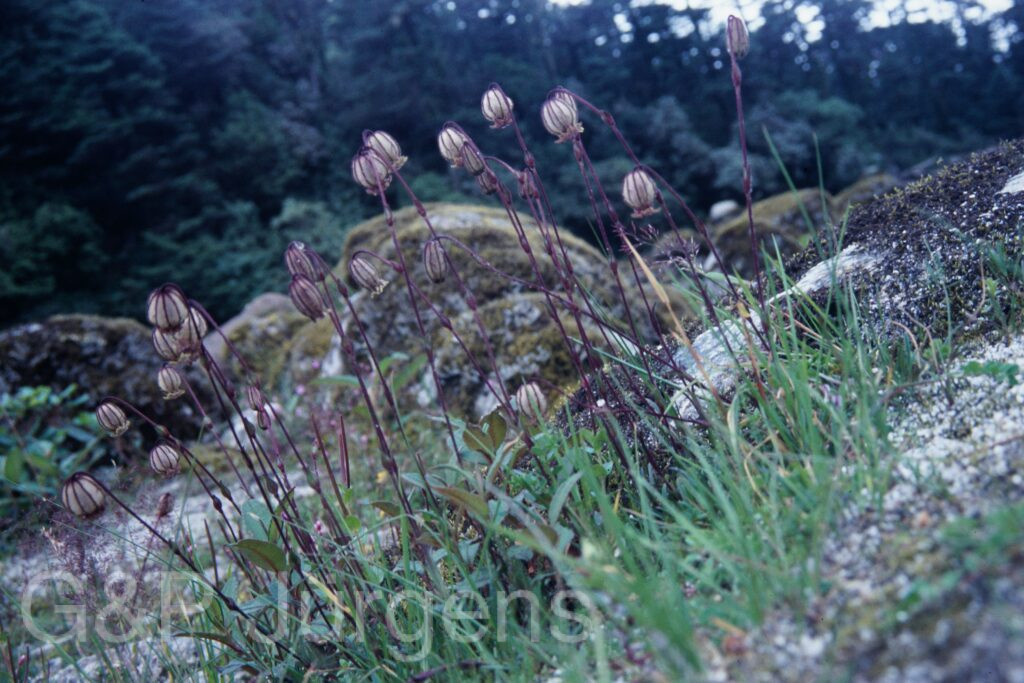
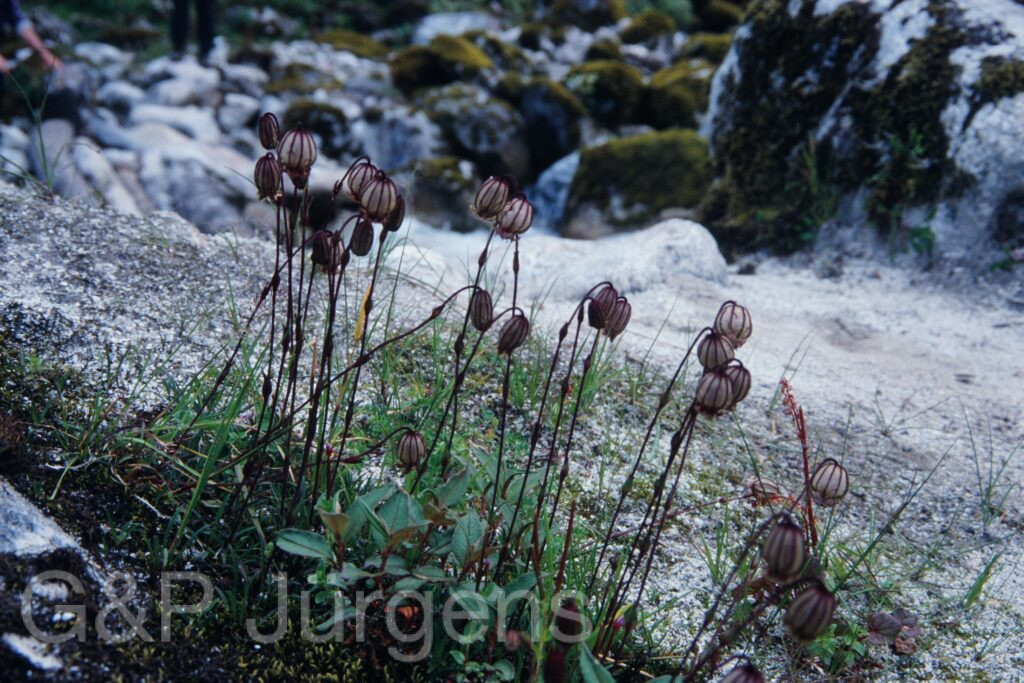
Sikkim2003 215 G299
Sikkim Dzongri 3900m, August
Sikkim2003 216 P300
Sikkim Dzongri 3900m, August

Description

Silene nigrescens is an alpine campion of the Himalaya and adjacent mountains, ranging across China, Nepal, India and Bhutan and into Myanmar; GBIF records about 410 occurrences concentrated in the eastern and central Himalaya. It grows in high alpine meadows, grassy slopes, screes and stony pastures, generally between about 3500 and 4800 m. The illustrated plant was photographed at Dzongri in Sikkim at around 3900 m in August, during the monsoon flowering season when these dark-flowered campions colour the short turf of the eastern Himalayan uplands above the rhododendron scrub.

The species is a perennial herb growing from a slender, branched rootstock, forming low tufts of ascending to erect stems that are often glandular-hairy above. The leaves are opposite, sessile, narrowly lanceolate to oblanceolate, the lower ones crowded near the base. The flowers are nodding and few, with an inflated, ten-nerved, often dark-purple to nearly blackish calyx that gives the species its name; the petals are dingy purple to brownish with a bilobed limb and a small ligulate scale at the throat. The flower has three styles, and the capsule dehisces by six teeth, releasing numerous reniform seeds.

Described as (Edgew.) Majumdar from an Edgeworth basionym, Silene nigrescens belongs to the high-alpine, dark-calyx group of Himalayan Silene whose species limits are notoriously difficult owing to variation in vestiture and flower colour. Its broad eastern-Himalayan to southwest Chinese distribution makes it secure, and it forms part of the characteristic flora of monsoon-influenced alpine meadows, pollinated mainly by insects drawn to its sombre nodding flowers.

Author: (Edgew.) Majumdar · Sources: POWO (Kew), GBIF, Flora of China, Flora of Bhutan, Bocquet: Revision of Himalayan Silene

Bocquet & N.P.Saxena

Sikkim2003 259 P357
Sikkim Dzongri 4200m, August

Description

Silene purii is a narrowly distributed high-alpine herb of the eastern Himalaya, recorded by GBIF only from Bhutan, with just four occurrences and closely allied populations extending into adjacent Sikkim. It occupies open turf, rocky slopes, moraine and grassy hollows above the treeline, generally between about 3900 and 4500 m. The illustrated plant was photographed at Dzongri in Sikkim at roughly 4200 m in August, during the brief monsoon flowering season when these tufted campions exploit the short, cool growing window of the eastern Himalayan summits.

The species is a perennial herb forming low tufts from a branched woody rootstock. The stems are short, ascending and often glandular-pubescent, bearing opposite, narrowly lanceolate to linear, somewhat fleshy leaves crowded toward the base. The flowers are few, terminal and shortly stalked; the calyx is tubular to inflated, ten-nerved and frequently purplish, while the petals are pink to purple with a bilobed or notched limb and a small scale at the throat. The ovary bears three styles and matures into a capsule dehiscing by six apical teeth, releasing numerous reniform seeds.

Named for its collector, Silene purii (Bocquet & N.P.Saxena) is one of many Himalayan campions whose limits remain poorly understood owing to scant collections and the plasticity of alpine Silene. Its extreme rarity in the herbarium record and restricted known range make it of considerable phytogeographic interest as an eastern Himalayan endemic. The paucity of records suggests it may be genuinely localised and potentially vulnerable, warranting targeted survey and conservation assessment.

Author: Bocquet & N.P.Saxena · Sources: POWO (Kew), GBIF, Flora of Bhutan, Flora of China, Bocquet: Revision of Silene sect. Physolychnis

S.C.Chen

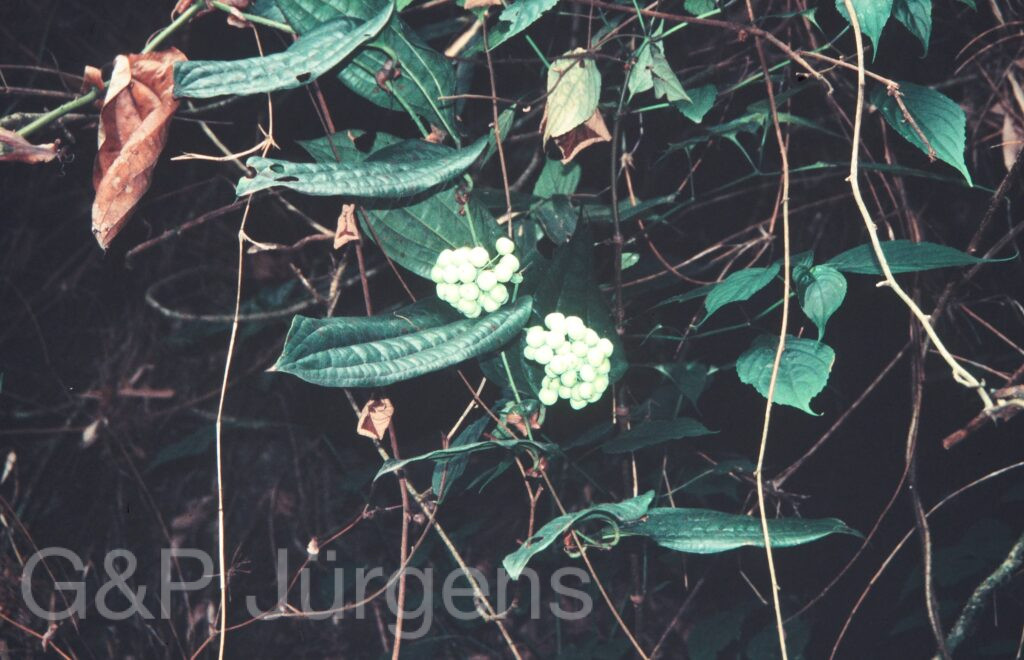
Sikkim 2006 446 ergebnis
India West-Bengal, Kishong 2700m, May

Description

Smilax munita is an eastern Himalayan greenbrier distributed from Nepal through Sikkim and West Bengal in India to Bhutan, north-eastern Myanmar and adjacent China, with around 90 GBIF records reflecting a fairly restricted montane range. It is a climber of temperate broad-leaved and mixed forest, forest margins and thickets, scrambling over shrubs and small trees, typically between about 2,000 and 3,000 m. The plant photographed at Kishong in West Bengal, India, at 2,700 m flowering in May is characteristic of the cool, humid Sikkim-Himalayan forest belt where the genus is well represented.

The plant is a dioecious, woody to subwoody perennial climber arising from a creeping rhizome, the stems armed with stout, scattered prickles (reflected in the epithet munita, "armed"). The leaves are alternate, simple, leathery, ovate to elliptic with several prominent arcuate-convergent main veins, and bear a pair of slender tendrils at the base of the petiole that serve for climbing. The flowers are small, unisexual and greenish, borne in axillary umbels; the perianth consists of six tepals, with six stamens in male flowers and a superior three-locular ovary in female flowers. The fruit is a small globose berry, ripening dark, containing few seeds.

Smilax is the sole large genus of the monocot family Smilacaceae, a lineage of vining herbs and lianas with reticulate-veined leaves and basal tendrils unusual among monocots. Many congeners yield the medicinal "sarsaparilla," and Himalayan species are locally used. The combination of prickly stems, coriaceous tri- to multiveined leaves and the high-montane distribution distinguishes S. munita within the eastern Himalayan members of the genus.

Author: S.C.Chen · Sources: POWO (Kew), Flora of China Vol. 24, Flora of Bhutan Vol. 3, GBIF, Koyama: Smilacaceae of Eastern Asia

Kunth

Sikkim 2006 278 ergebnis
Sikkim India Tolung-Chu 1530m, May

Description

Smilax wallichii is a woody, scrambling climber of the Smilacaceae, distributed through the eastern Himalaya. GBIF records are sparse (13 occurrences) and confined to Nepal, India and Bhutan, indicating a comparatively restricted, undercollected range. The species is a plant of subtropical to lower temperate broadleaved forest, where it climbs through trees and shrubs at forest margins, along streams and on ravine sides. The collection from the Tolung-Chu valley in Sikkim at 1,530 m in May exemplifies its occurrence in the humid, evergreen-forested foothill and lower montane belt of the region.

The plant develops from a stout, woody rhizome and produces tough, climbing stems that are often armed with scattered prickles. As in all Smilax, the leaves are alternate, simple, with a characteristic suite of curved-convergent main veins and a reticulate venation, the petiole bearing a pair of tendrils derived from stipular appendages that grip surrounding vegetation. The plants are dioecious; the small, greenish, six-tepalled flowers are borne in axillary umbels, the staminate flowers with six stamens and the pistillate flowers with a three-locular ovary. The fruit is a small, globose berry, ripening dark, containing few seeds.

Smilax is the principal genus of the otherwise small, exclusively climbing family Smilacaceae, distinguished within the monocots by its net-veined leaves, tendrillar petioles and dioecious umbels. Several species are sources of sarsaparilla and are used medicinally, and the rhizomes of Himalayan taxa enter local pharmacopoeias. The limited records of S. wallichii reflect both genuine rarity and under-sampling; as a forest-dependent liana, it is sensitive to the clearance and fragmentation of mid-elevation broadleaved forest.

Author: Kunth · Sources: POWO (Kew), Flora of China Vol. 24, Flora of Bhutan Vol. 3, GBIF, Koyama: Smilacaceae of the Himalaya and Eastern Asia

Wenz.

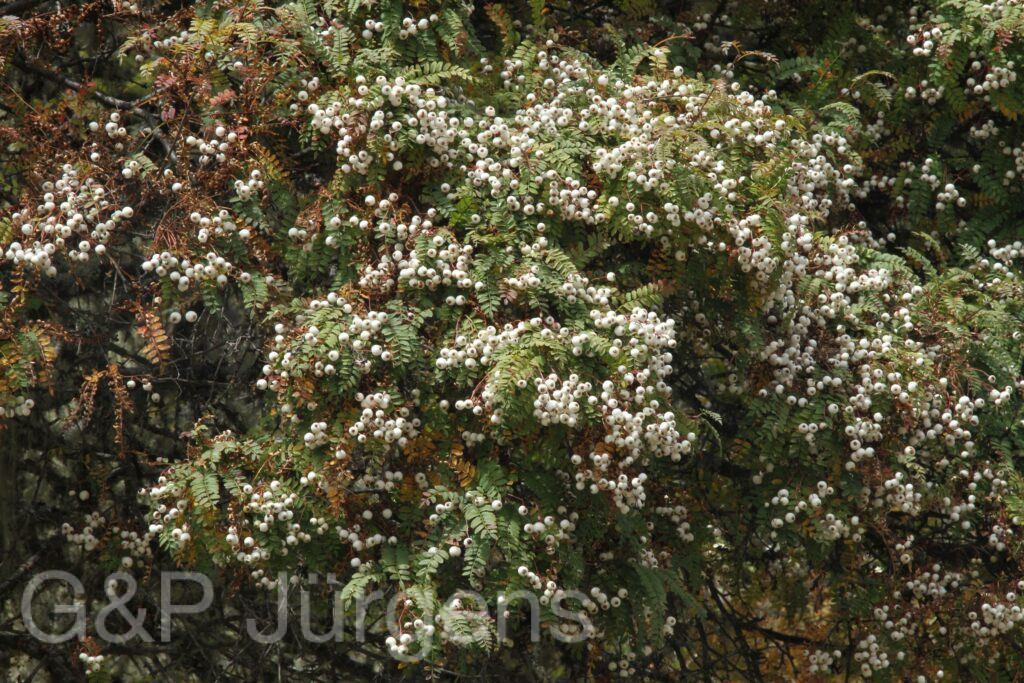
Bhutan2015 371
Bhutan Tumching-La 4000m, October
Bhutan2012 906
Bhutan Tumching-La 3900m, October
Bhutan2012 907
Bhutan Tumching-La 3900m, October

Description

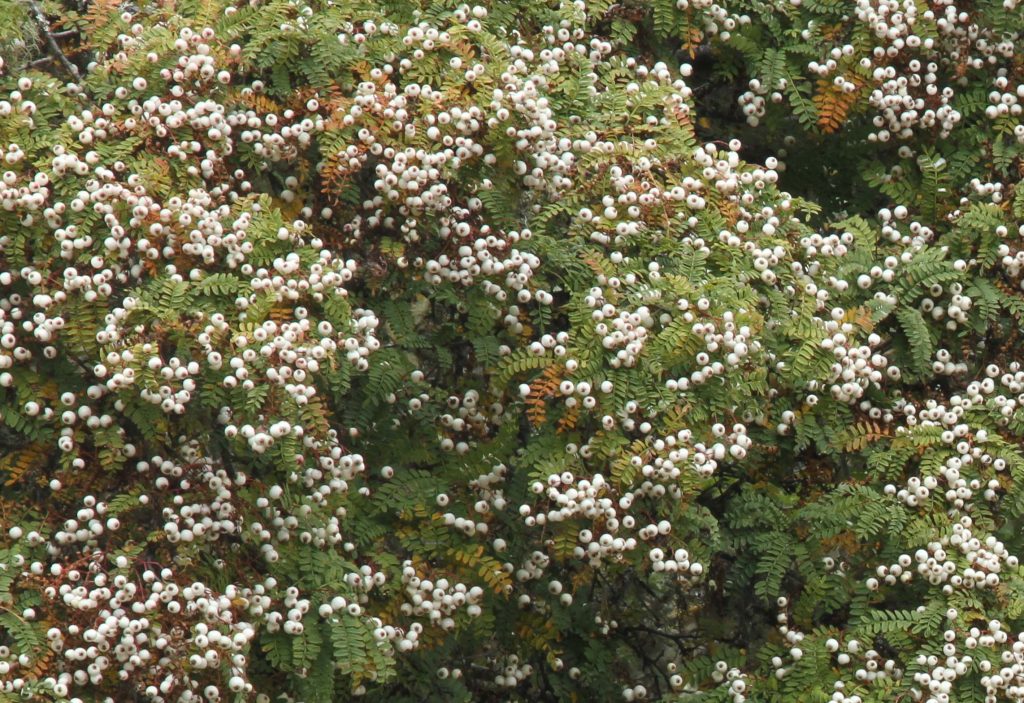
Sorbus microphylla is a high-montane to subalpine deciduous shrub or small tree distributed along the Himalayan arc from Pakistan through Nepal, northern India, Sikkim and Bhutan into south-central China and Myanmar, with the GBIF dataset recording some 344 occurrences including ex-situ collections in Britain, Belgium and North America. It occupies open coniferous and Rhododendron forest, forest margins and alpine thickets, typically between 3000 and 4300 m. The photographed plants were gathered at Tumching-La in Bhutan at 3900-4000 m in October, the fruiting season, where the species forms part of the krummholz and dwarf-shrub community below the treeline.

It is a slender shrub, often 1-3 m tall, with reddish-brown to purplish glabrescent young branches bearing conspicuous lenticels. The leaves are imparipinnate with 10-15 or more pairs of small, crowded, oblong leaflets that are sharply serrate toward the apex, dark green above and paler beneath, turning rich crimson in autumn, the rachis often narrowly winged. The white to pinkish flowers are borne in small terminal corymbs, each with five petals, numerous stamens and two to three styles. The fruit is a small globose pome, white, pink-tinged or pale rose, 6-8 mm across, persisting after leaf-fall.

The species belongs to Sorbus subgenus Albocarmesinae, the white- and pink-fruited Himalayan-Sino mountain ashes, a complex group in which apomixis and hybridisation blur species limits. Its small leaflets and pale fruits distinguish it from related S. ursina and S. foliolosa. The pomes are an important autumn food for thrushes and other montane birds, which disperse the seed. Widespread and locally common across a broad range, it is not considered threatened, though valued horticulturally for its delicate foliage and persistent rosy fruit.

Author: Wenz. · Sources: POWO (Kew), GBIF, Flora of China, Flora of Bhutan, McAllister: The Genus Sorbus

(Cardot) Hand.-Mazz.

Bhutan2015 495
  Bhutan Pele-La 3000m, October
Bhutan2015 497
  Bhutan Pele-La 3000m, October

Description

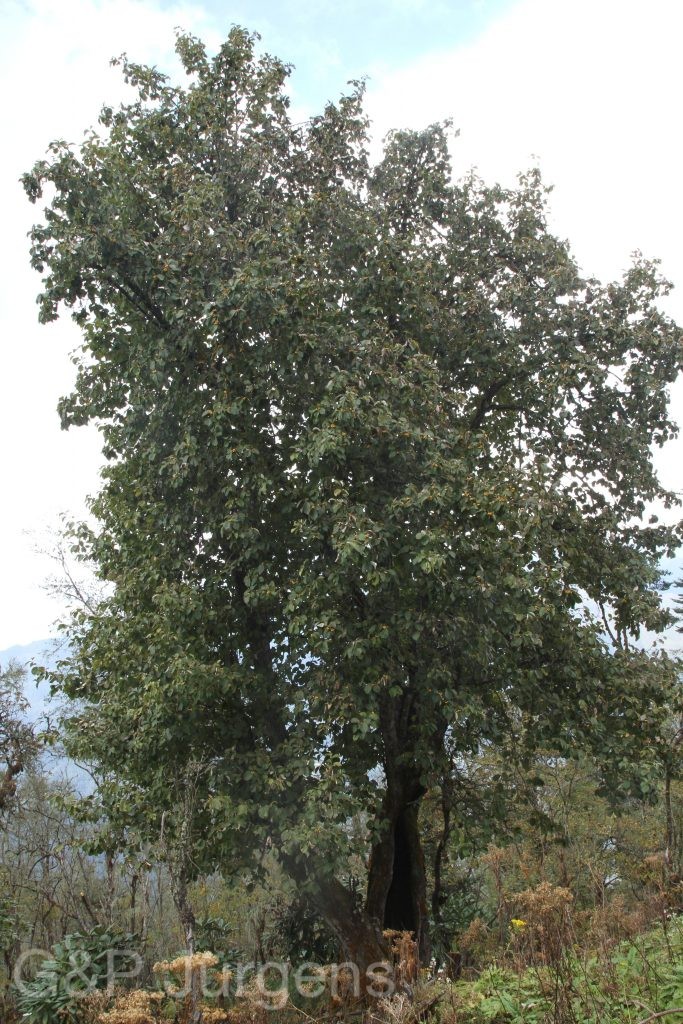
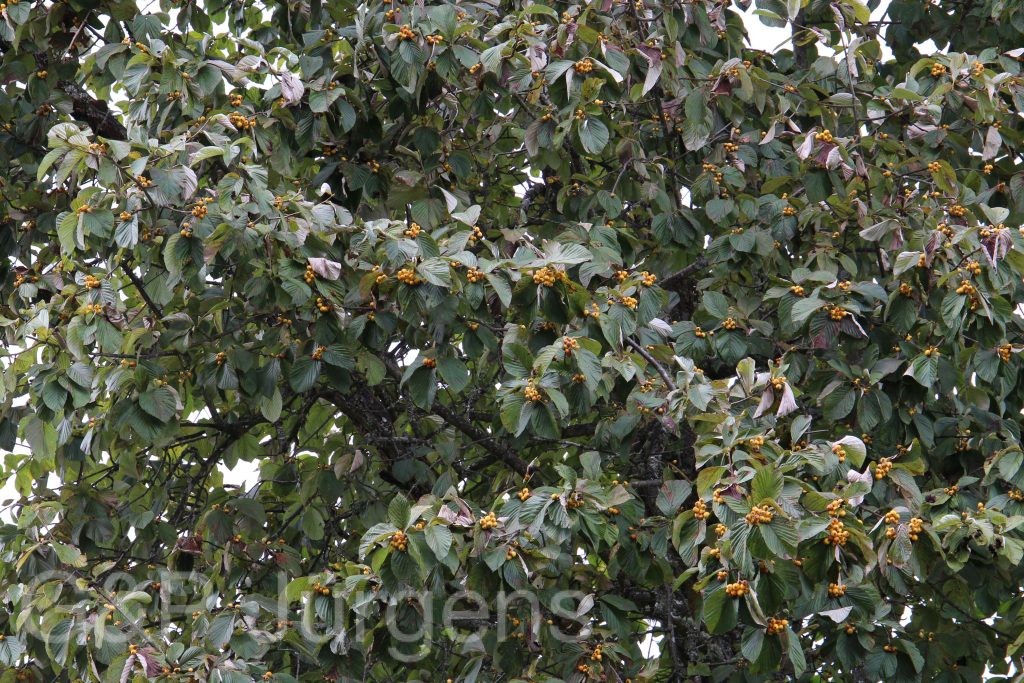
Sorbus thibetica is a Sino-Himalayan whitebeam distributed along the eastern Himalaya and adjacent China, from Nepal through northern India, Sikkim and Bhutan into south-western China (Xizang, Yunnan) and northern Myanmar; its roughly 470 georeferenced occurrences include numerous cultivated records in Britain and northern Europe (GB, NO, DK), reflecting its long-standing horticultural use. It grows in temperate and subalpine forest, woodland margins, rocky slopes and open hillsides, generally between about 2500 and 3600 m. The tree photographed at Pele-La in Bhutan at 3000 m in October, in autumn fruit and leaf-colour, is typical of its cool, montane forest habitat.

It is a deciduous tree to 10-20 m, with a rounded crown and grey bark; the stout twigs and buds are densely white-tomentose when young. The leaves are simple (not pinnate), broadly elliptic to obovate, entire-leaved members of the Aria group, dark green and glabrescent above but persistently covered beneath with a thick, silvery-white felted tomentum, the margins finely and shallowly toothed. The white flowers are borne in flat-topped corymbs, each with five petals, numerous stamens and an inferior ovary. The fruit is a small subglobose pome, ripening orange-brown to russet and bearing scattered lenticels, typical of the simple-leaved whitebeams.

Sorbus thibetica belongs to the Aria group of simple-leaved whitebeams (sometimes segregated as the genus Aria), distinct from the pinnate-leaved rowans of Sorbus sensu stricto. The selection 'John Mitchell', with very large leaves, is widely grown ornamentally. Apomixis and hybridisation complicate species limits throughout the group. Widespread and frequent, it is not considered threatened.

Author: (Cardot) Hand.-Mazz. · Sources: POWO (Kew), GBIF, Flora of China, Flora of Bhutan, Flora of Nepal, McAllister's The Genus Sorbus: Mountain Ash and other Rowans

Stebbins

Sikkim2003 292 P406 2
Sikkim Dzongri 4300m August

Description

Soroseris pumila is a high-alpine cushion composite restricted to the eastern Himalaya, recorded from Nepal, northern India (Sikkim) and Bhutan, with only about 97 GBIF records reflecting both its narrow range and the inaccessibility of its habitat. It is a plant of the upper alpine and subnival zones, growing on open screes, gravelly flats, moraine and stony turf well above the treeline, typically between about 4000 and 5000 m. The Sikkim population imaged at Dzongri at 4300 m in August captures the species in its characteristic late-summer flowering, when the brief post-snowmelt growing season allows these dwarf perennials to bloom and set seed.

The plant is a diminutive, often almost stemless perennial with a stout, deep taproot and a congested rosette or low tuft of leaves pressed close to the substrate, an adaptation to wind, cold and intense irradiation. The leaves are narrowly oblanceolate to spathulate, entire to pinnately lobed, and the foliage exudes milky latex when broken. The capitula are crowded into a dense terminal cluster nestled among the leaves; each head is ligulate with yellow ray florets, the corollas five-toothed. The fruit is a cypsela bearing a pappus of soft white bristles that facilitates wind dispersal across the open high-mountain terrain.

Soroseris is a small genus of cushion-forming lactucoid composites endemic to the high mountains of the Sino-Himalaya, and S. pumila is among the most reduced, dwarfed members, its compact habit typical of the subnival flora. Its restricted distribution and specialised habitat at the upper limit of plant life make it a notable element of eastern Himalayan alpine biogeography; while not formally assessed, such narrow-range high-elevation endemics are intrinsically vulnerable to climatic warming and habitat shift.

Author: Stebbins · Sources: POWO (Kew), GBIF, Flora of China, Flora of Bhutan, Annotated Checklist of the Flowering Plants of Nepal, Stebbins' revision of Soroseris and Crepidinae (monograph)

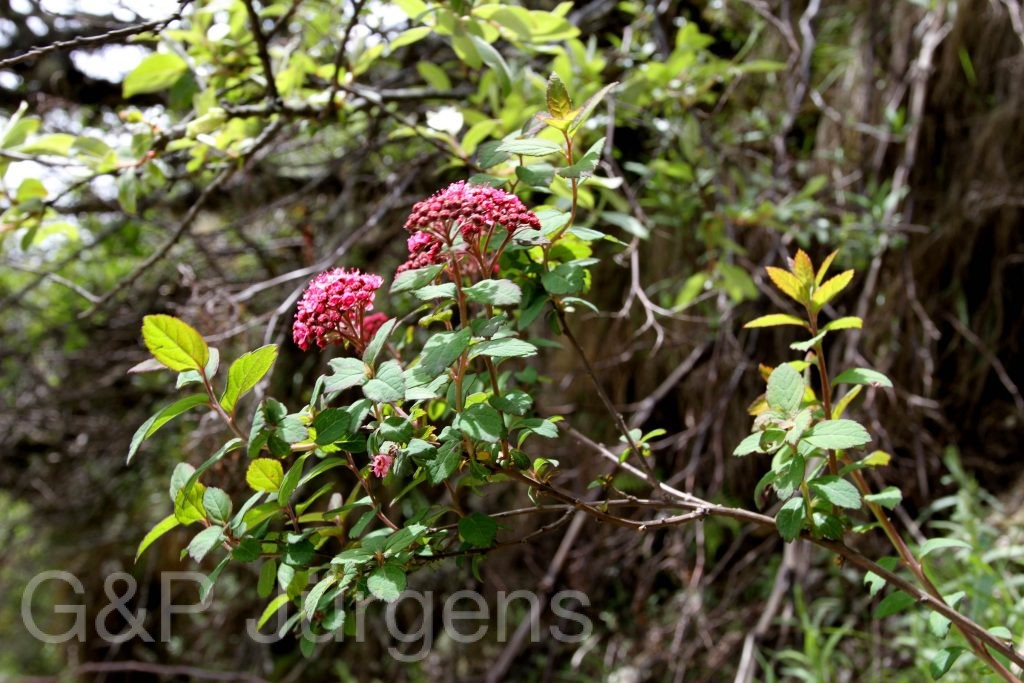
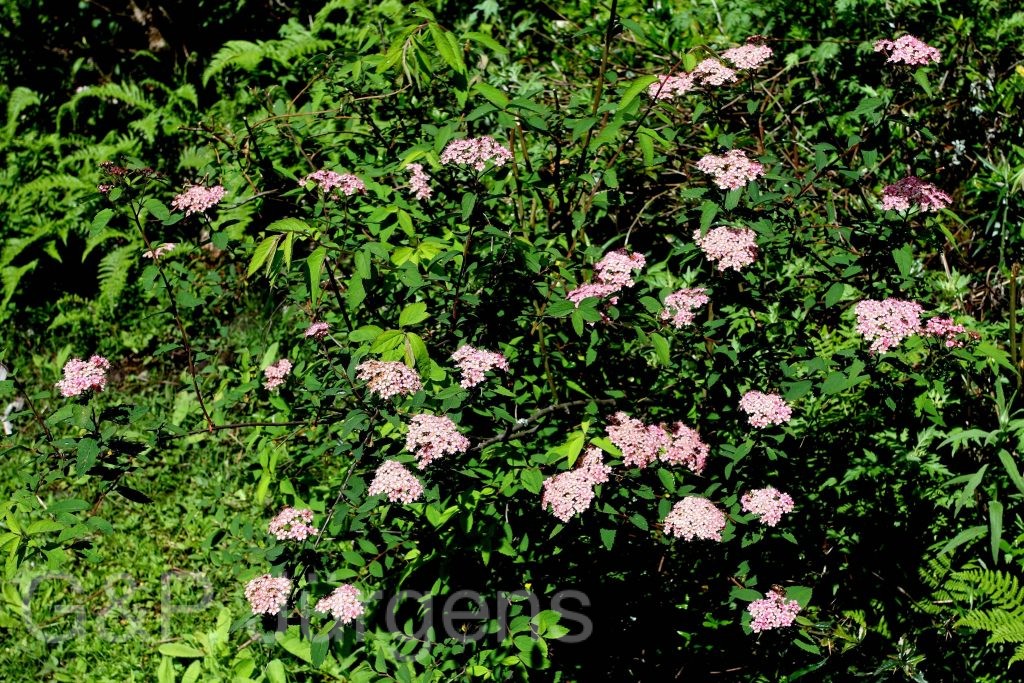
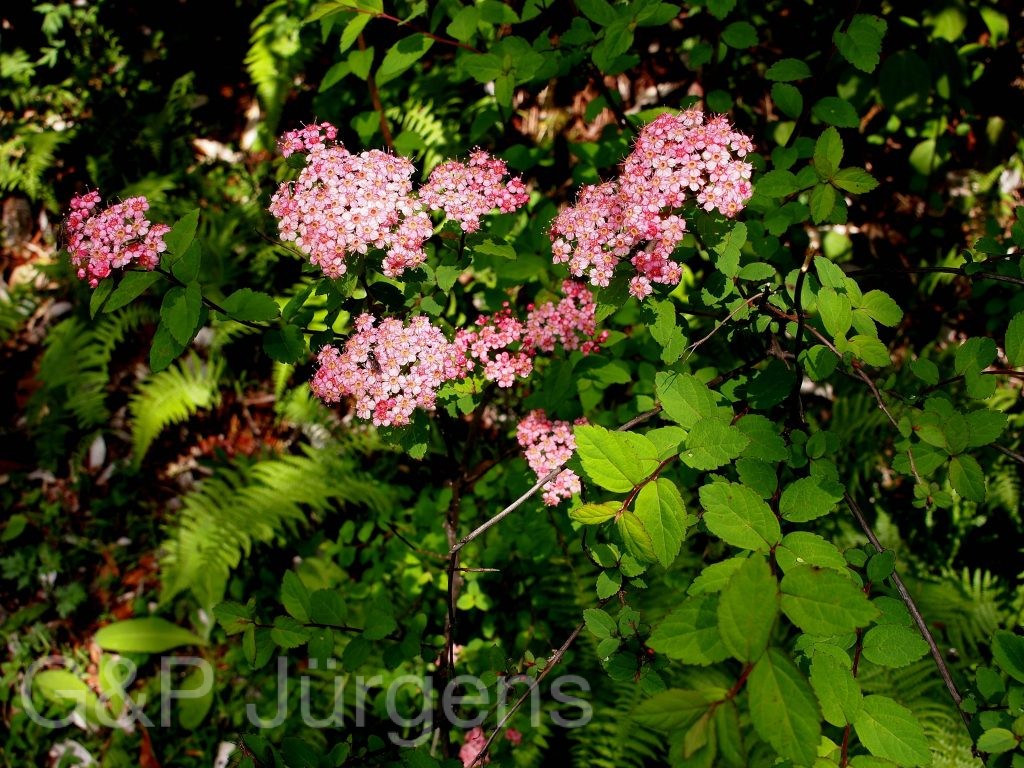
Spiraea bella

by GP Jürgens

Sims

Sikkim2011 38
Sikkim Lachung 2850m, June
Sikkim2011 194
Sikkim Lachung 2850m, June
Sikkim2011 196
Sikkim Lachung 2850m, June

Description

Spiraea bella is a deciduous shrub distributed along the Himalaya and into adjacent China, with verified occurrences spanning China, India, Nepal, Bhutan, Pakistan and Myanmar; further GBIF records from Japan, Korea and numerous European and North American countries reflect its long cultivation as an ornamental. It is a plant of temperate forest margins, open slopes, ravines and shrubberies, typically between about 2000 and 3500 m. The photographed material from Lachung in northern Sikkim at around 2850 m in June, in full bloom, exemplifies its montane habitat in moist, cool valleys.

The species forms an erect to spreading shrub usually 1-2 m tall with slender, angled, reddish-brown branchlets. The alternate, shortly petiolate leaves are ovate to ovate-lanceolate, sharply and often doubly serrate, green above and paler, sometimes thinly pubescent on the veins beneath. Flowers are crowded into terminal corymbs borne on short lateral shoots; each small flower has five rounded pink to rose petals and numerous stamens that exceed the petals, giving the inflorescence a feathery aspect. The fruit is an aggregate of small glabrous to sparsely hairy follicles that split along the inner suture to release minute seeds.

Spiraea bella belongs to a complex of pink-flowered Himalayan spiraeas allied to S. canescens and S. japonica, within which leaf shape and indumentum provide the principal diagnostic characters. Long valued in gardens for its early-summer flowering, it functions ecologically as a nectar source for insects and a component of regenerating forest-edge scrub. It is widespread and locally common, and faces no recognised conservation threat across its broad native range.

Author: Sims · Sources: POWO (Kew), GBIF, Flora of China, Flora of Bhutan, Flowers of the Himalaya