Tag:

Sikkim

Flowers of Sikkim — 350 species from the Sikkim Himalaya in northeast India, a compact yet botanically extraordinary region that climbs from subtropical valleys to the alpine zone beneath Kangchenjunga. Sikkim is a classic centre of Himalayan plant diversity, celebrated for its rhododendrons, primulas, orchids and gentians. Each entry provides a botanical description, distribution, habitat and flowering season with the original field photograph.

DC.

Sikkim2011 224
Sikkim Yumthang 3600m, June

Description

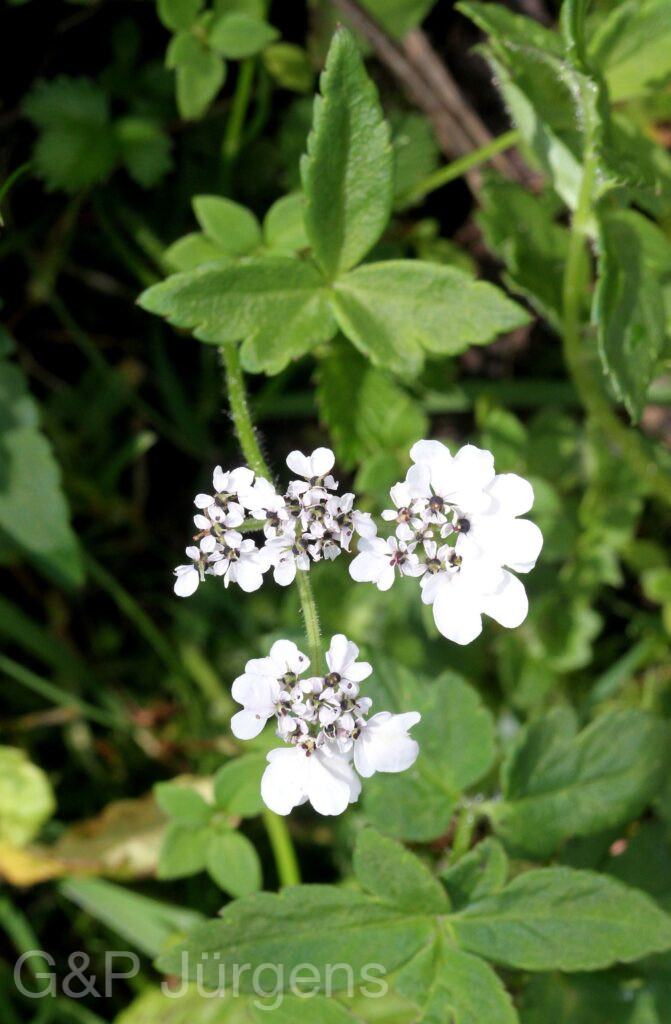
Tordyliopsis brunonis DC. is a monotypic genus of Apiaceae endemic to the high Himalaya. GBIF data (121 occurrences) document its occurrence in Nepal, north India (including Sikkim), Bhutan, and adjacent southwest China, where it inhabits open alpine meadows, rocky slopes, and grazed turf. The species was photographed at Yumthang in Sikkim at 3,600 m in June, consistent with its alpine ecology in the subalpine-to-alpine belt between roughly 3,000 and 4,500 m, where it flowers as snowmelt recedes. It typically grows in moist, humus-rich pockets among boulders and in herb-rich pasture.

The plant is a low perennial herb arising from a stout taproot, with short, often more or less prostrate or ascending stems. The leaves are pinnate to bipinnate with toothed leaflets, forming a basal cluster. As in most Apiaceae the inflorescence is a compound umbel, here subtended by conspicuous bracts and bracteoles; the small white to pinkish flowers give rise to dorsally compressed mericarps whose lateral wings and ribbed dorsal surface recall those of Tordylium, the genus from which the name ("resembling Tordylium") derives.

Tordyliopsis occupies an isolated position within subfamily Apioideae and has been the subject of debate regarding its tribal placement, owing to its distinctive winged fruit anatomy. As a Himalayan endemic restricted to high elevations, it is potentially vulnerable to climate-driven upslope habitat contraction and intensive summer grazing, though no formal IUCN assessment exists. It serves as a useful indicator of intact alpine meadow communities.

Author: DC. · Sources: POWO (Kew), Flora of China Vol. 14, Flora of Bhutan Vol. 2, GBIF, Pimenov & Leonov: The Genera of the Umbelliferae (1993)
Wall.

Bh09 321 G527
Bhutan Jakar 3200m, June
Sikkim2003 377 G529
Sikkim Tista valley 3400m August

Description

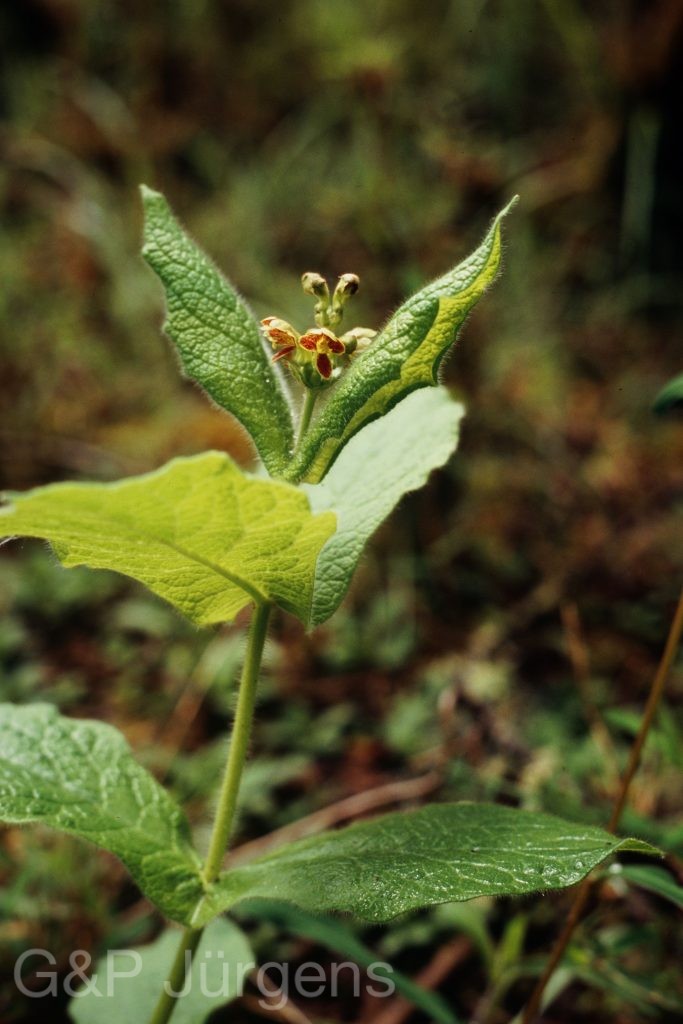
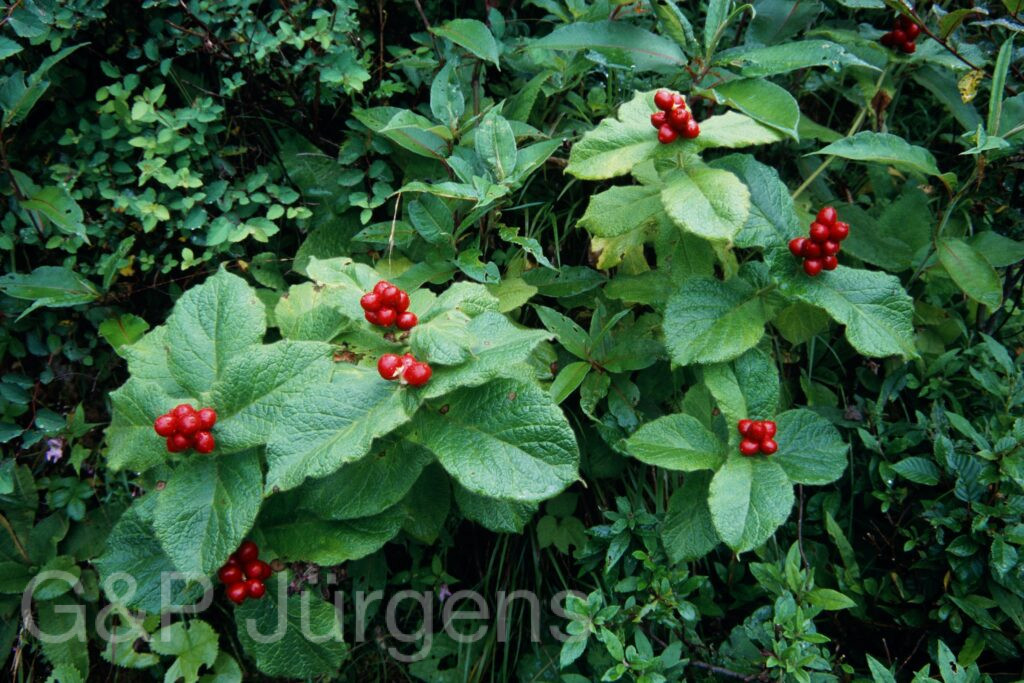
Triosteum himalayanum is a Sino-Himalayan perennial herb distributed across China, Nepal, Bhutan, Sikkim and northern India, with GBIF aggregating around 990 occurrences. It is characteristic of the upper temperate to subalpine forest belt, recorded here from Jakar in Bhutan at 3200 m in June and the Tista valley in Sikkim at 3400 m in August. The species grows in moist shaded forest, woodland margins, scrub and tall-herb communities along streams and on cool, humus-rich slopes, typically between roughly 2500 and 4000 m, where it forms part of the shade-tolerant understorey flora.

It is an erect, softly hairy herbaceous perennial 0.4-1 m tall arising from a stout rhizome, the stems unbranched and glandular-pubescent. The leaves are opposite, large, broadly obovate to elliptic, often shortly connate at the base around the stem (perfoliate to subconnate), entire to shallowly lobed and softly hairy on both surfaces. Small tubular flowers are clustered in dense axillary and terminal verticels; the corolla is dull purplish to greenish-yellow, weakly two-lipped, and the calyx bears persistent, leafy, ciliate lobes. The most conspicuous feature is the fruit, a fleshy, bright red, bristly-hairy drupe crowned by the persistent calyx and containing three bony pyrenes.

Triosteum (horse-gentian) is a small, disjunct genus of about six species in eastern Asia and North America, now placed within an enlarged Caprifoliaceae; this striking amphi-Pacific distribution makes it a classic example of the eastern-Asian-North-American biogeographic link. T. himalayanum is widespread and locally common within its montane range and is not of conservation concern; its showy red drupes are dispersed by birds, and the rhizome has a place in regional herbal traditions.

Author: Wall. · Sources: POWO (Kew), GBIF, Flora of China, Flora of Bhutan, Flora of British India (Hooker), Gould & Donoghue revision of Triosteum (Caprifoliaceae)

(D.Don) Eichler

Nepal 2001 283 ergebnis ergebnis
Nepal (Gorkha) Lambra Kharka 3000m, May

Description

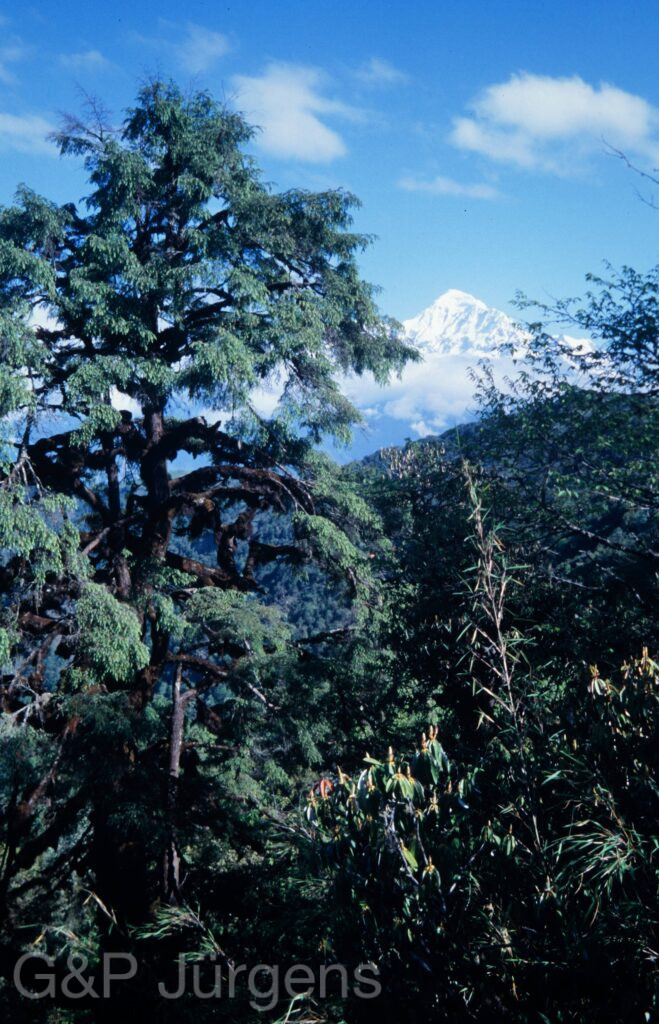
Tsuga dumosa, the Himalayan hemlock, is a large evergreen conifer distributed across the Himalaya from central Nepal eastward through Sikkim, Bhutan, and northeast India into southern China (Xizang, Yunnan, Sichuan, Guizhou), Myanmar, and northern Vietnam. It is a characteristic component of cool temperate and upper montane forests at elevations of 2,000–3,500 m, where it often forms pure stands or grows in association with Abies, Picea, Acer, and Rhododendron species. The species has been documented at Lambra Kharka in the Gorkha district of Nepal at approximately 3,000 m, near the upper limit of its elevational range.
Tsuga dumosa is a tree attaining 25–40 m in height with a trunk up to 1.5 m in diameter, bearing a broadly conical to irregular crown. The bark is dark greyish-brown, deeply fissured and scaly on mature trees. Leaves are linear, flattened, 10–25 mm long and 2–3 mm wide, with a rounded or emarginate apex, dark glossy green above with two conspicuous white stomatal bands beneath, arranged in a pectinate (comb-like) pattern on lateral shoots. Male strobili are small, axillary, and globose. Female seed cones are pendulous, ovoid to oblong, 1.5–2.5 cm long, with thin, rounded cone scales that open at maturity to release two small winged seeds per scale. The cones mature in a single season.
Tsuga dumosa is the sole Himalayan representative of the genus Tsuga, which comprises approximately nine species with a disjunct distribution between eastern Asia and North America. Phylogenetic studies place it sister to the East Asian T. chinensis complex. The species is of considerable ecological importance as a canopy dominant in Himalayan temperate forests, providing critical habitat for epiphytic bryophytes, lichens, and orchids. Its timber is locally valued for construction. While not currently assessed as threatened globally, localized deforestation and climate-driven upward range shifts pose potential concerns for some populations.

Author: (D.Don) Eichler · Sources: POWO (Kew), GBIF, Flora of China Vol. 4, Flora of Bhutan Vol. 1, Farjon: A Handbook of the World's Conifers (2017)

P. Taylor

Sikkim2003 80 P111
India Sikkim Choka 3100m, August

Description

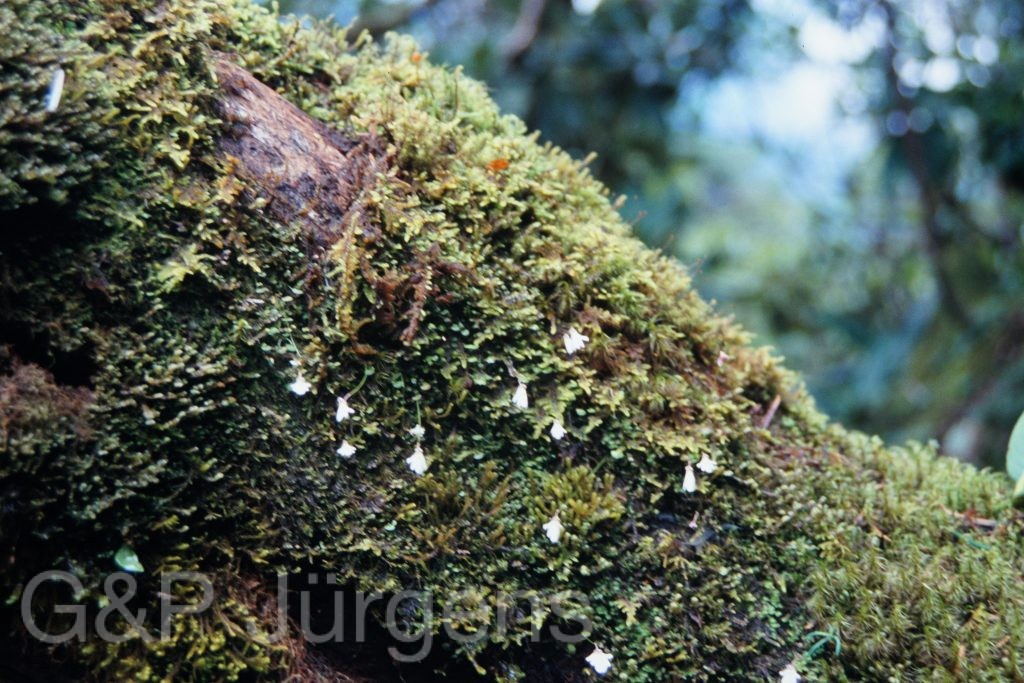
Utricularia christopheri P.Taylor is a small terrestrial bladderwort of the Lentibulariaceae, narrowly restricted to the eastern Himalaya. The very sparse GBIF record (only 14 occurrences) reflects its rarity and confined distribution across Nepal, north India, and Bhutan. It was photographed in Sikkim at Choka at 3,100 m in August, during the monsoon flowering season, in seepage-wet alpine and subalpine ground. The species grows on damp, mossy rocks, wet humic soil, and dripping banks at high elevations, where constant moisture sustains its carnivorous habit.

The plant is a diminutive, rootless herb with slender, creeping rhizoid stolons bearing numerous minute bladder-traps that capture protozoa and small soil invertebrates. The vegetative parts are inconspicuous, with small spathulate leaves. The flowering scape is erect and slender, bearing one to a few comparatively large violet to purplish flowers; the corolla is two-lipped and spurred, the lower lip prominent, distinguishing christopheri within the section to which it belongs by its floral proportions and high-montane ecology.

Utricularia, the largest carnivorous plant genus, is divided into numerous sections, and christopheri belongs to a small group of Himalayan terrestrial species. Its extreme rarity, narrow elevational band, and dependence on permanently wet microhabitats make it potentially vulnerable to hydrological disturbance and climate change, although its remoteness affords some protection. The species remains poorly collected, and its full range is likely undersampled.

Author: P. Taylor · Sources: POWO (Kew), Flora of Bhutan Vol. 2, Flora of Nepal, GBIF, Taylor: The Genus Utricularia – A Taxonomic Monograph (1989)

Hook. f. & Thomson ex C.B. Clarke

Bh2008 392 G607
Bhutan Gogona 3250m, May
Vaccinium nummularia
Sikkim West-Bengal, Bersay 2700m April

Description

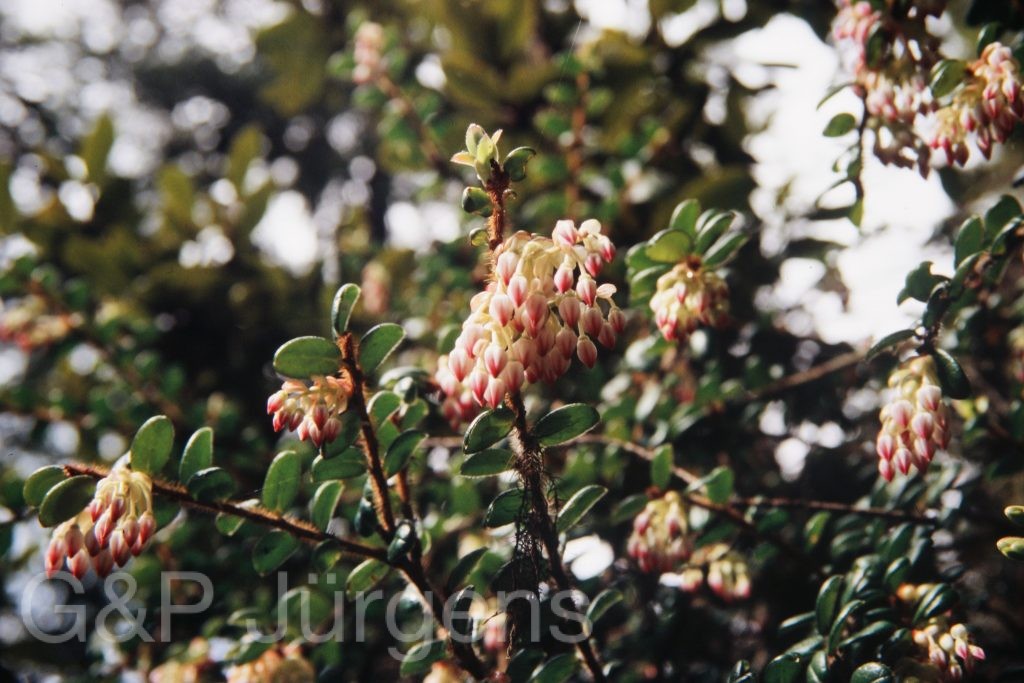
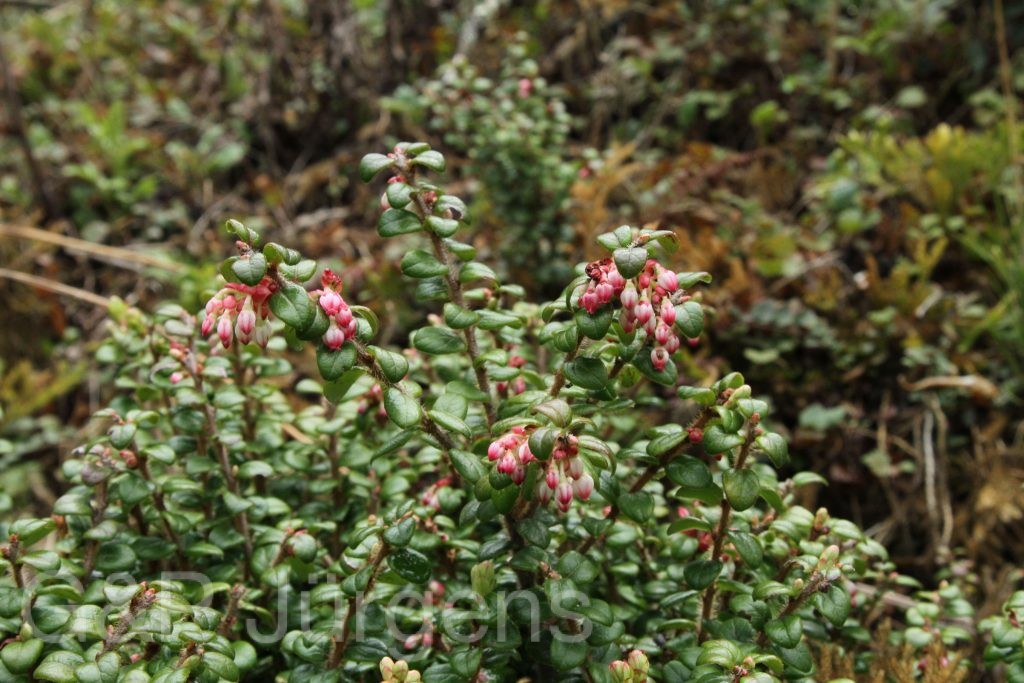
Vaccinium nummularia is an eastern Himalayan blueberry relative distributed through Nepal, northern India, Bhutan, south-central China and Myanmar, with around two hundred and ten GBIF records (a few cultivated or herbarium entries from Britain and the United States reflecting its horticultural interest). It is a characteristic epiphyte or terrestrial shrub of moist temperate forest, growing on mossy tree trunks, banks and cliff faces in the cloud-forest belt. The illustrated plants from Gogona in Bhutan at 3250 m in May and from Bersay in the Sikkim/West Bengal hills at 2700 m in April typify its mid- to upper-temperate, high-humidity habitat.

The species is a low, much-branched evergreen shrub whose young stems and leaf undersides are conspicuously clad in stiff, brown, bristly hairs (setae). The leaves are small, ovate to orbicular, coriaceous and nearly sessile, distichously arranged, with finely serrulate, setose margins, the rounded outline giving rise to the epithet nummularia ('coin-like'). The flowers are borne in short axillary racemes; the corolla is urceolate (urn-shaped), red to pink and waxy, with a small five-lobed limb, and the calyx, ovary and pedicels are likewise setose. The fruit is a globose, purplish-black, edible berry.

Vaccinium nummularia is an accepted species within Vaccinium (Ericaceae, subfamily Vaccinioideae), allied to the setose-leaved Himalayan epiphytic blueberries. Its epiphytic habit, leathery setose leaves and bird-dispersed berries are adaptations to the humid, mossy cloud-forest canopy, and it is cultivated by specialist growers for its handsome bristly foliage and red urn-shaped flowers. The species is locally common and not assessed as threatened, but it depends on intact, humid temperate forest.

Author: Hook. f. & Thomson ex C.B. Clarke · Sources: POWO (Kew), GBIF, Flora of China, Flora of Bhutan, Sleumer revision of Asian Vaccinium (Ericaceae monograph)

(Griff.) Hook. f. ex C.B. Clarke

Bhutan2014 576
Bhutan Bhutan 2950m, May
Sikkim2004 71 G163
Sikkim West-Bengal, Bersay 2700m April
Sikkim 2006 20 ergebnis
India West-Bengal Tonglu 3100m, May

Description

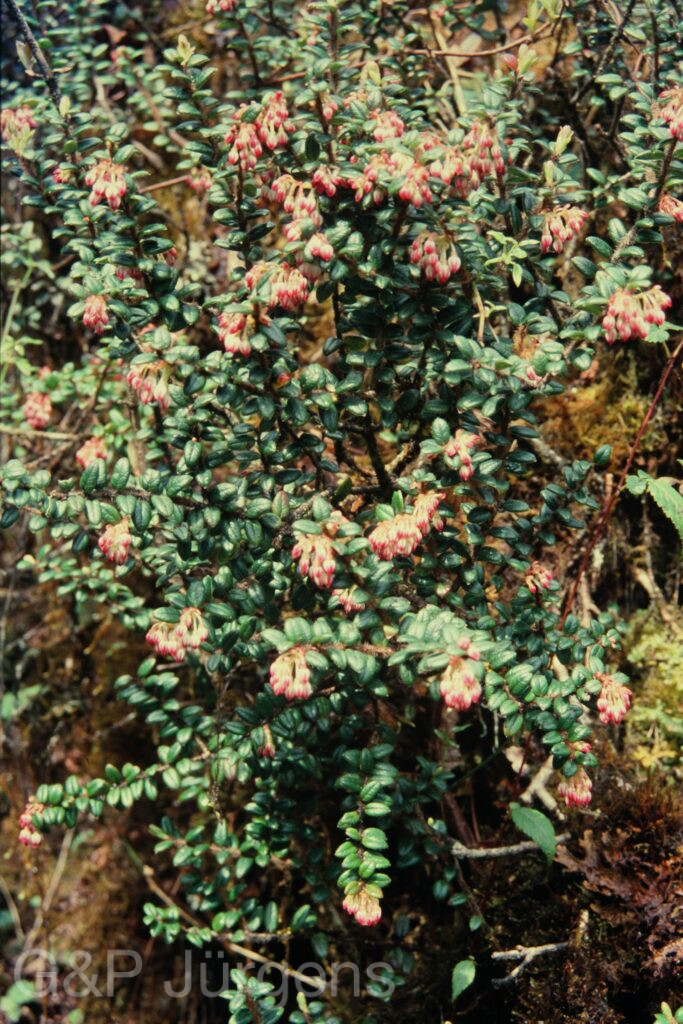
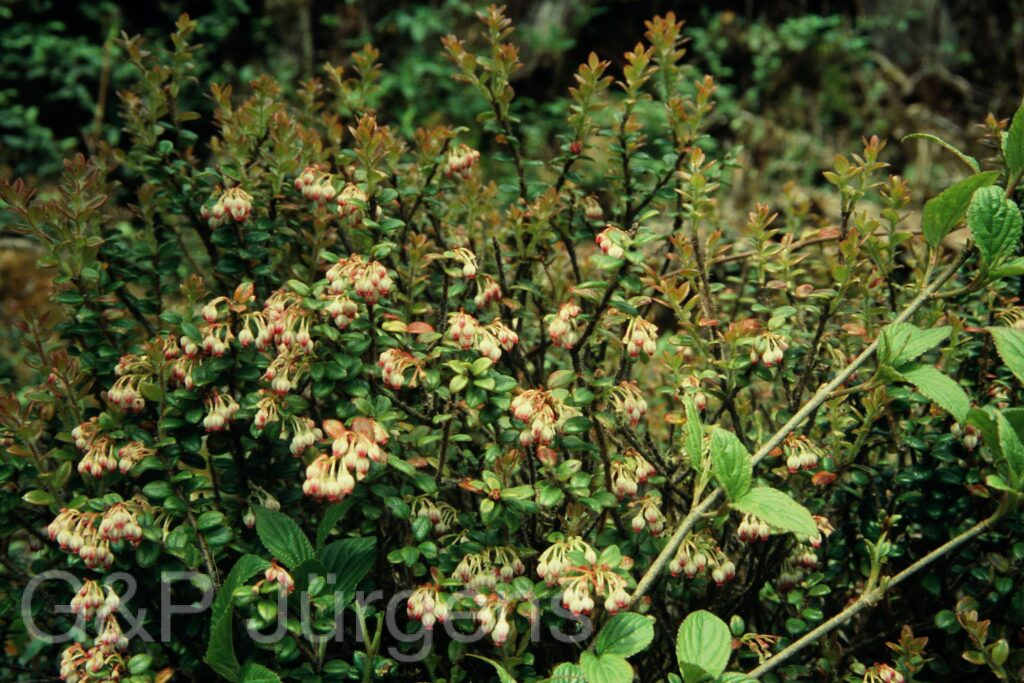
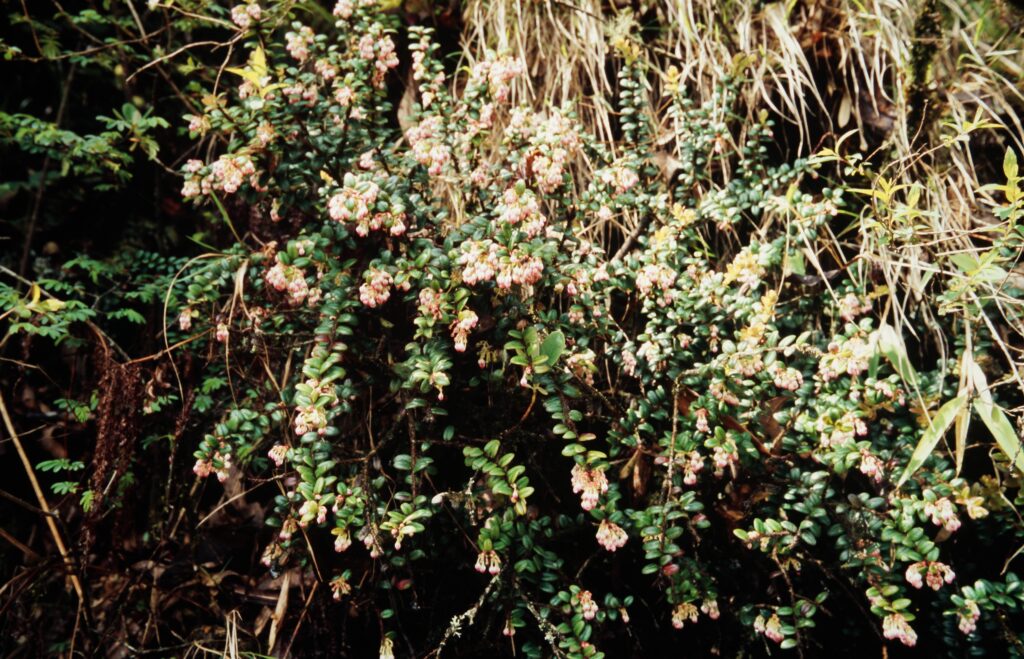
Vaccinium retusum is an evergreen Himalayan shrub distributed through Nepal, India, Bhutan and into adjacent China and northern Indochina (NP, IN, BT, VN, CN, MM, LA, with cultivated and other records), amounting to some 254 occurrences. It is a plant of cool, humid temperate forest, growing as a shrub or small tree among Rhododendron, oak and conifer woodland, on mossy banks and forest margins, and frequently as an epiphyte or hemi-epiphyte on the limbs of larger trees. The cited gatherings span 2700 to 3100 m in Bhutan, Sikkim and the Darjeeling hills of West Bengal (Bersay, Tonglu), flowering in the April-May spring, an elevation and season typical of its occurrence in the mist-laden middle-montane belt.

The plant is a glabrous, much-branched shrub with reddish young shoots. The leaves are leathery and evergreen, elliptic to obovate with a characteristically retuse or emarginate apex from which the epithet derives, the margins entire or finely toothed and the venation reticulate beneath. The flowers are borne in short axillary racemes; the corolla is urceolate (urn-shaped) and white to pinkish, with a five-toothed limb, enclosing the included stamens whose anthers bear terminal tubules. The fruit is a globose, many-seeded berry, ripening dark purple-black and crowned by the persistent calyx.

Vaccinium (the blueberry and bilberry genus, tribe Vaccinieae of the Ericaceae) is richly developed in the Sino-Himalayan region, where many species are epiphytic. The urceolate corolla and inferior, berried ovary are diagnostic, and the flowers are pollinated by bees attracted to nectar. The fleshy berries are dispersed by birds, accounting for the establishment of epiphytic seedlings high in the forest canopy. Widespread and locally common, V. retusum is not considered threatened, though it depends on the persistence of intact temperate broadleaf forest.

Author: (Griff.) Hook. f. ex C.B. Clarke · Sources: POWO (Kew), GBIF, Flora of Bhutan, Flora of China, The Genus Vaccinium (Sleumer monograph of Asian Vaccinieae)

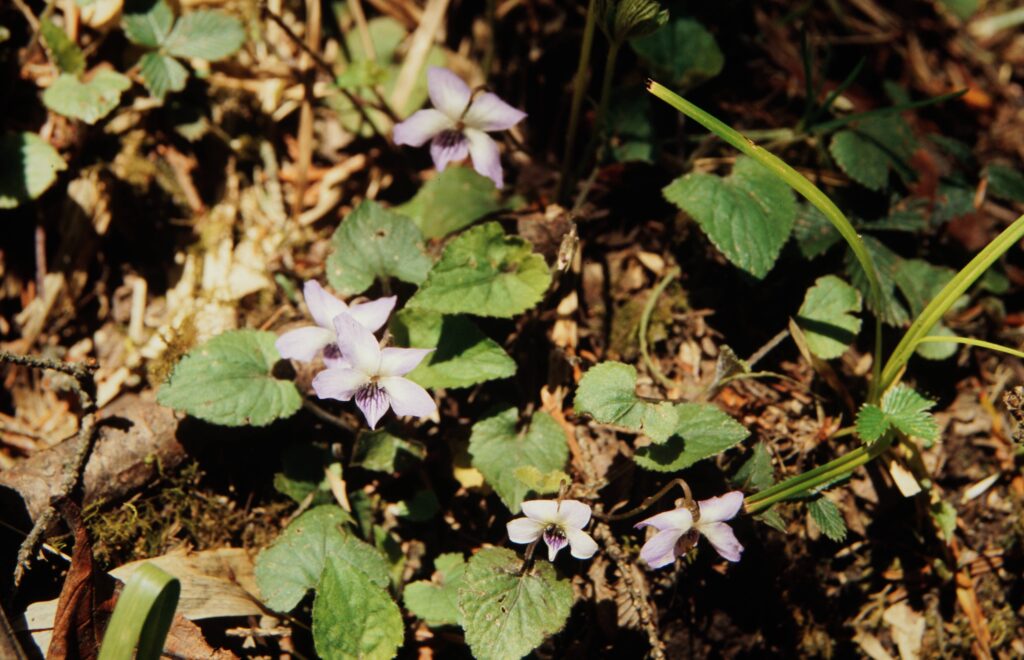
Viola hookeri

by GP Jürgens

Thomson ex Hook.f.

Sikkim2004 73 P128
Sikkim West-Bengal, Bersay 2700m April
Sikkim 2006 160 ergebnis
India West-Bengal, Molley 3200m, May

Description

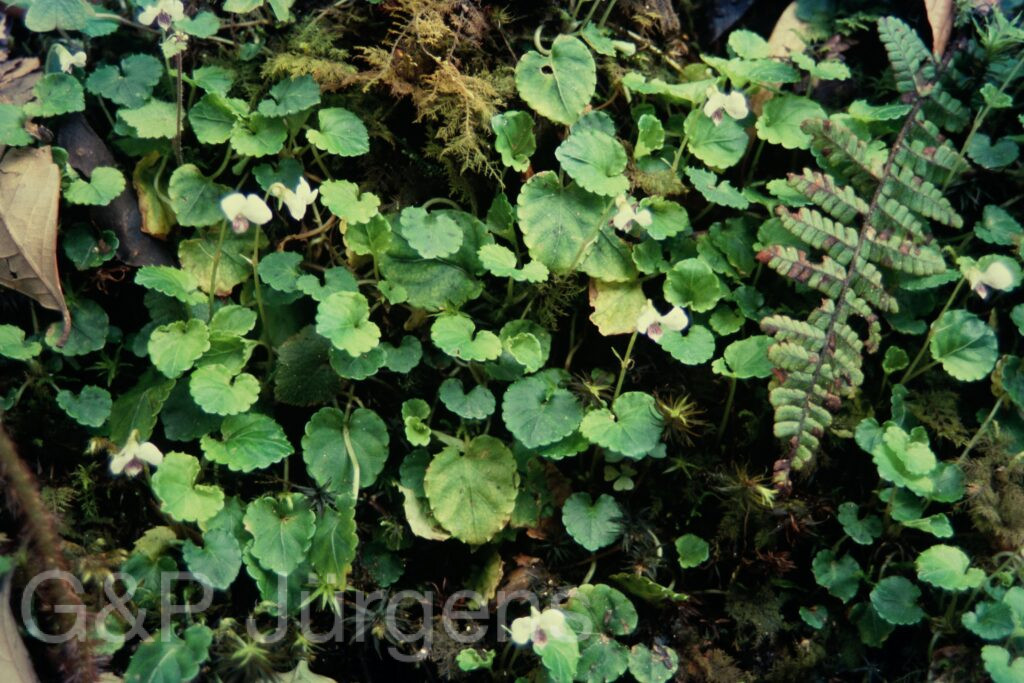
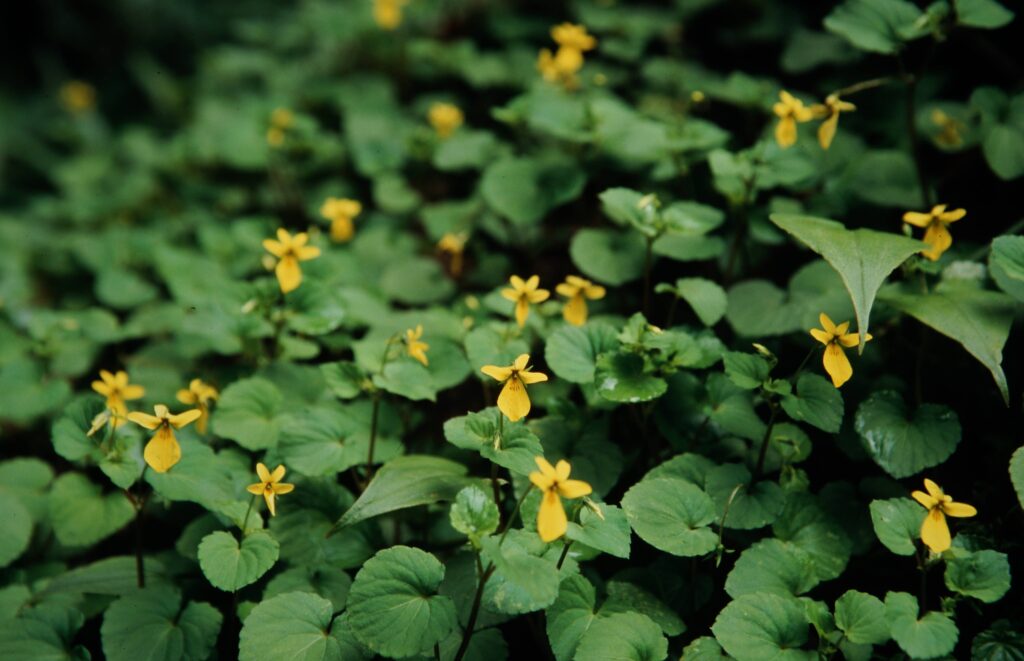
Viola hookeri Thomson ex Hook.f. is a small Himalayan violet of the eastern ranges, occurring in Sikkim, Darjeeling and adjacent India, Nepal and Bhutan. The GBIF figures attached to this record (over 3.8 million occurrences across chiefly European and North American countries) pertain to the genus Viola as a whole, not to this species, whose true range is confined to the temperate eastern Himalaya. It grows in cool, moist, shaded forest, on mossy banks and along path margins. The photographed plants are from the Sikkim-West Bengal border at Bersay (2,700 m, April) and from Molley (3,200 m, May), placing it in the upper temperate to subalpine forest belt.

It is a small acaulescent perennial herb forming a basal rosette from a slender rhizome, without elongated leafy stems. The leaves are long-petiolate, the lamina ovate to cordate-reniform with a crenate margin and a stipulate base. The solitary flowers are borne on slender axillary peduncles and have the characteristic zygomorphic violet structure: five unequal petals, the lowest spurred, white to pale lilac and often violet-veined, with the lower lateral petals sometimes bearded. As in many violets, cleistogamous flowers may also be produced. The fruit is a small, ellipsoid, three-valved loculicidal capsule that splits explosively to eject the smooth seeds.

Viola (Violaceae) is a near-cosmopolitan genus with a strong Himalayan radiation of acaulescent, rosette-forming species adapted to montane woodland. V. hookeri belongs to this eastern Himalayan group, in which basal rosettes, spurred flowers and frequent cleistogamy reflect adaptation to shaded, seasonally cool conditions. The species is not formally assessed but, like its relatives, depends on intact temperate forest.

Author: Thomson ex Hook.f. · Sources: POWO (Kew), GBIF, Flora of Bhutan, Flora of China, Hooker Flora of British India, Annotated Checklist of the Flowering Plants of Nepal, Becker conspectus of Viola

Franch.

Sikkim2004 339 G600
Sikkim/India Choka 3000m May

Description

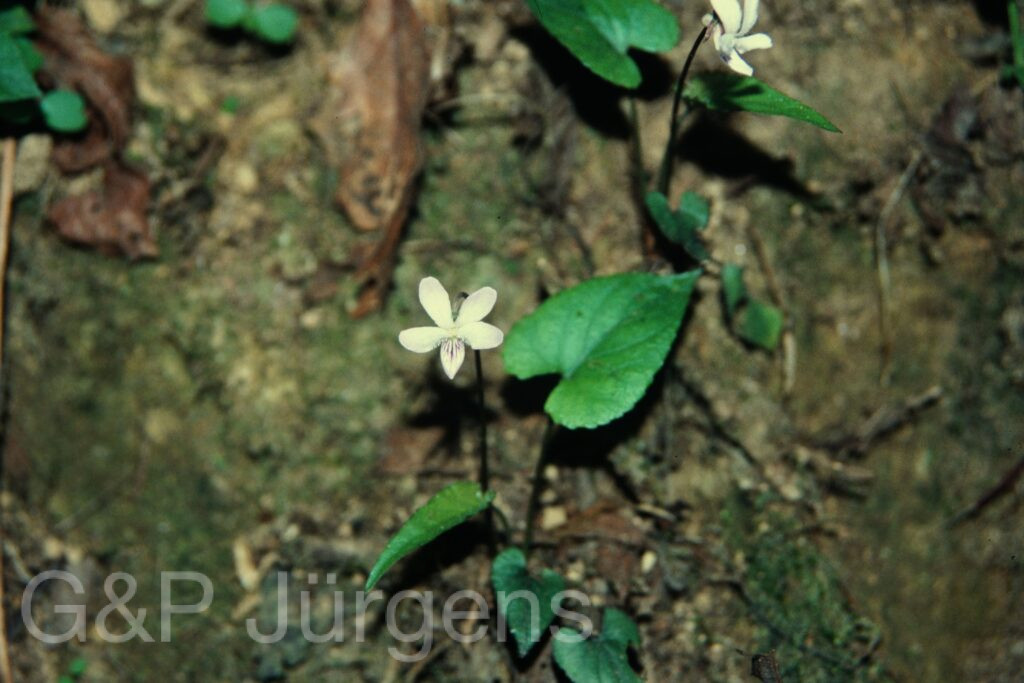
Viola moupinensis Franch. is a stemless perennial violet of the Sino-Himalayan mountains, distributed according to GBIF across China, India, Myanmar, Nepal and Bhutan. It inhabits cool, moist temperate and subalpine forests, shaded grassy slopes, forest margins and stream sides, typically between about 2,000 and 3,500 m. The May record from Choka in Sikkim at 3,000 m reflects its flowering during the spring monsoon onset in mossy, humus-rich woodland, where it grows among ferns and other shade-tolerant herbs in the understorey of mixed conifer and broad-leaved forest.

The species is an acaulescent (rosette-forming) perennial arising from a short, stout rhizome bearing fibrous roots. The leaves are basal, long-petiolate, with broadly cordate to reniform-cordate blades that are crenate-serrate at the margin and somewhat pubescent, often enlarging considerably after flowering. The solitary, long-pedunculate flowers are pale violet to whitish with darker purple veining on the lower petals; the lowermost petal bears a short, blunt spur. As is typical of Viola, the plant also produces self-pollinating cleistogamous flowers later in the season, and the fruit is an ellipsoid, three-valved capsule that dehisces explosively to disperse the seeds, which are further dispersed by ants via their elaiosomes.

Viola moupinensis belongs to section Viola and is closely allied to the temperate stemless violets of Eurasia. Its combination of showy chasmogamous and reliable cleistogamous flowers ensures reproductive success in shaded, insect-poor forest understoreys. As a frequent and adaptable woodland species across a broad elevational and geographic range, it is not of conservation concern but is a valued component of Himalayan spring flora.

Author: Franch. · Sources: POWO (Kew), GBIF, Flora of China Vol. 13, Flora of Bhutan Vol. 1, Wang Wencai: Violaceae monographic studies

Ging.

Sikkim2011 165
Sikkim Vista-valley 2500m, June
Sikkim2011 167
Sikkim Vista-valley 2500m, June
Sikkim 2006 460 ergebnis
India West-Bengal, Ruigi-Chu 2100m, May

Description

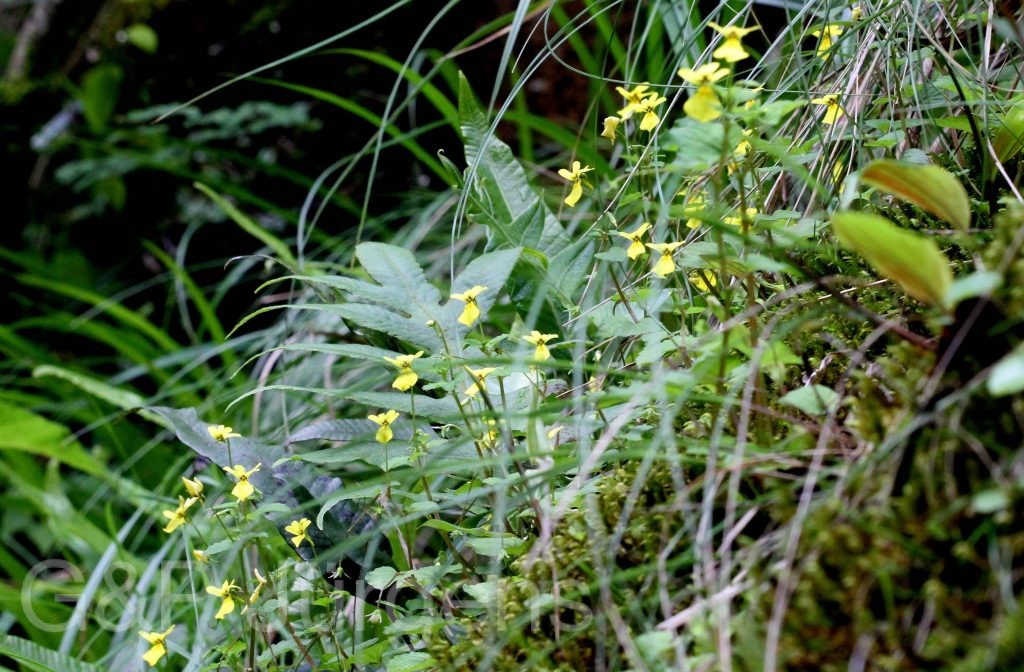
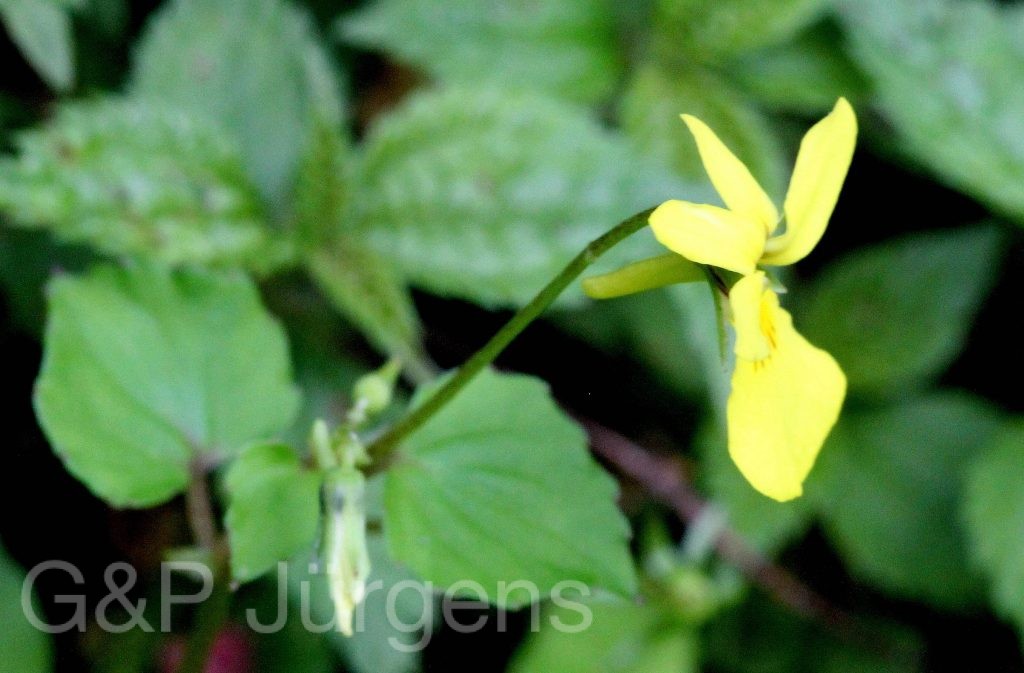
Viola wallichiana is a small perennial herb of the Himalaya, distributed through Nepal, northern India, Sikkim, Bhutan and southwestern China, with peripheral or introduced records noted from Australia; GBIF holds about 79 collections, reflecting a relatively localised eastern Himalayan range. It grows in shaded, moist temperate forest, on mossy banks, humus-covered slopes and shaded rock ledges, typically between about 2000 and 3000 m. The photographed plants were found in Sikkim's Vista valley at around 2500 m in June and in the West Bengal hills at Ruigi-Chu near 2100 m in May, on the cool, sheltered, leaf-littered forest floor it inhabits through late spring and the early monsoon.

The plant is a low, stemless to short-stemmed perennial arising from a slender rhizome, sometimes spreading by short stolons. The leaves are basal or nearly so, long-petiolate, the blade ovate to cordate or reniform with a crenate margin and conspicuous fringed stipules. The flowers are solitary on slender axillary peduncles, zygomorphic and spurred in typical violet fashion, pale violet to bluish or whitish with darker veining on the lower petal, the spur short. Cleistogamous flowers may also be produced. The fruit is a small loculicidal capsule that splits into three valves, ejecting the seeds elastically.

Viola (Violaceae) is a large, cosmopolitan genus, and V. wallichiana belongs to the temperate Himalayan group of rosulate, spurred-flowered violets, commemorating Nathaniel Wallich. Its cordate basal leaves, fringed stipules and pale veined flowers distinguish it from congeners. It is a typical understorey forb of mid-elevation forest, locally common but not assessed as threatened.

Author: Ging. · Sources: POWO (Kew), GBIF, Flora of China Vol. 13, Flora of Bhutan Vol. 2, Flora of Nepal, Flora of Pakistan, Becker conspectus of Himalayan Viola

Edgew.

Sikkim2003 369 P518
Sikkim Lachen Tista Tal 3500m August

Description

Zanthoxylum oxyphyllum Edgew. is an aromatic shrub or small tree of the Rutaceae, distributed along the Himalaya from northern India and Nepal through Bhutan to southwestern China and Myanmar (GBIF: c. 372 occurrences). It grows in temperate to subalpine forests, on open slopes, forest margins and in shrubberies, typically between about 1,800 and 3,500 m. The photographed plant from Lachen in the upper Tista Valley of Sikkim, at around 3,500 m and recorded in August, represents the upper elevational range of the species in the eastern Himalaya, where it occurs in cool, moist montane scrub.

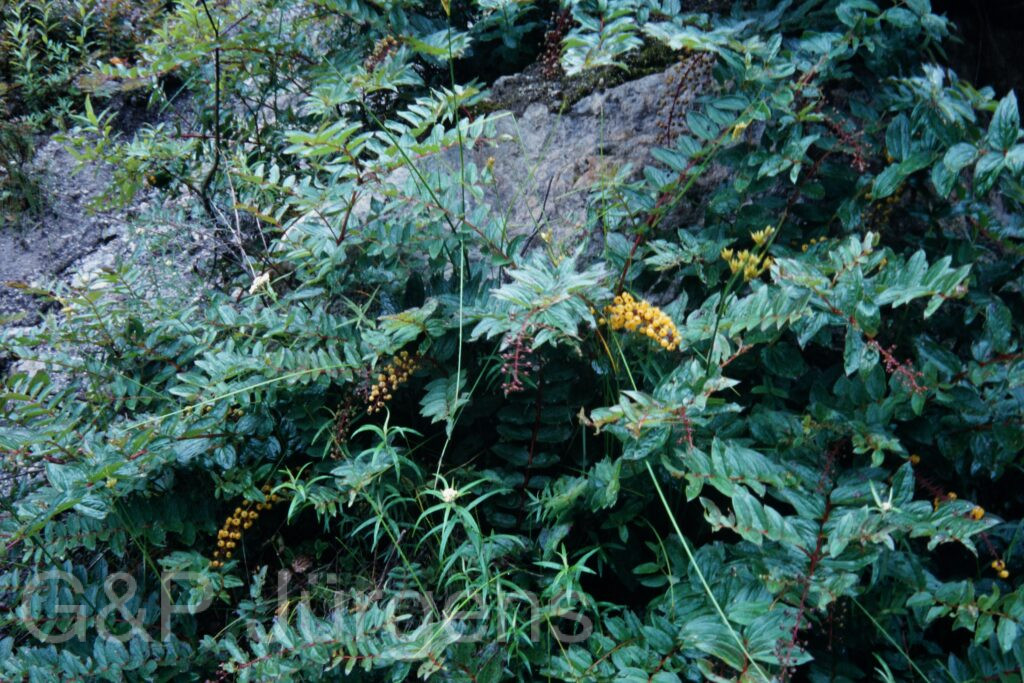
The plant is a deciduous, prickly shrub or small tree bearing recurved spines on the stems and often on the rachis and midrib of the leaves, as is typical of the genus. The leaves are alternate, imparipinnate, with several pairs of opposite, lanceolate to ovate-lanceolate leaflets that are crenate and gland-dotted, releasing a pungent citrus aroma when crushed owing to abundant translucent oil cavities. The plant is functionally dioecious, with small greenish or yellowish unisexual flowers borne in axillary or terminal cymose panicles. The fruit is a small reddish follicle that splits to expose a single shiny black seed, and the carpels, like the foliage, are richly pellucid-punctate.

Zanthoxylum oxyphyllum belongs to the pantropical genus Zanthoxylum, whose species are noted for their pungent, numbing fruits (the Sichuan-pepper group) and their alkaloid- and essential-oil chemistry. The fruits and bark are used locally as a spice and in traditional medicine. The species is widespread and not regarded as threatened.

Author: Edgew. · Sources: POWO (Kew), Flora of China Vol. 11, Flora of Bhutan Vol. 2, Flora of Nepal, GBIF, Hartley: A revision of the Malesian species of Zanthoxylum