
C.B. Clarke
Description
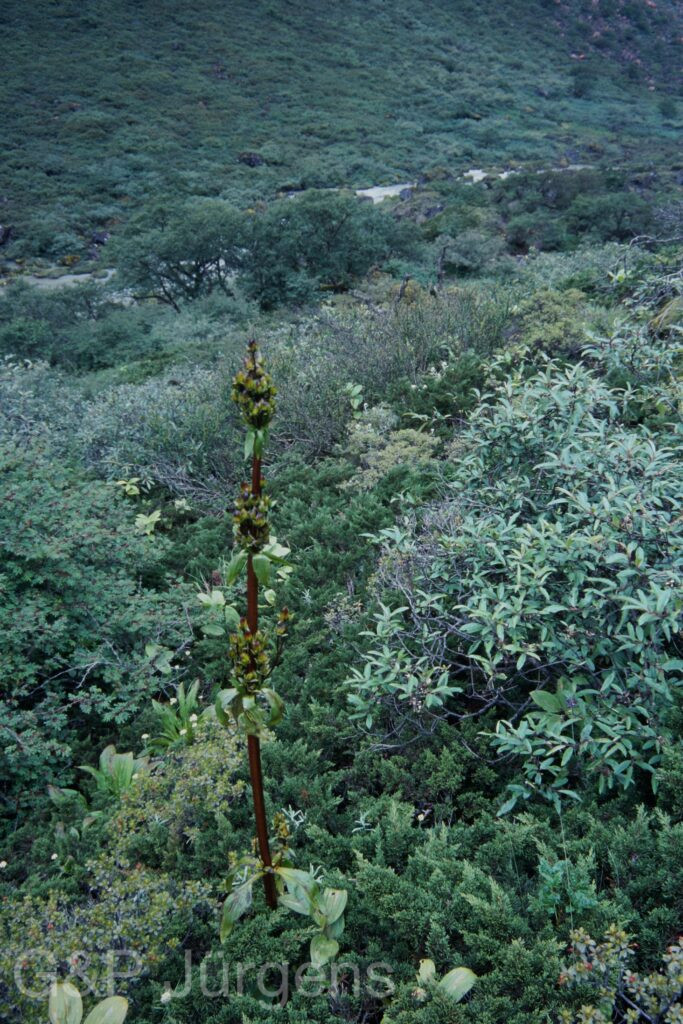
Swertia hookeri is an eastern Himalayan gentian of comparatively restricted range, recorded from India (chiefly Sikkim and Darjeeling), Nepal, Bhutan and the bordering provinces of southern China, GBIF holding around 63 occurrences consistent with a regional endemic. It inhabits moist alpine and upper subalpine zones, growing on open grassy slopes, among shrubberies, on rock ledges and along stream margins where snowmelt maintains high soil moisture. The plant photographed in August in the Chopta Valley of Sikkim at about 3800 m is typical of its elevation band, flowering at the height of the monsoon when the alpine turf is lush and humid.
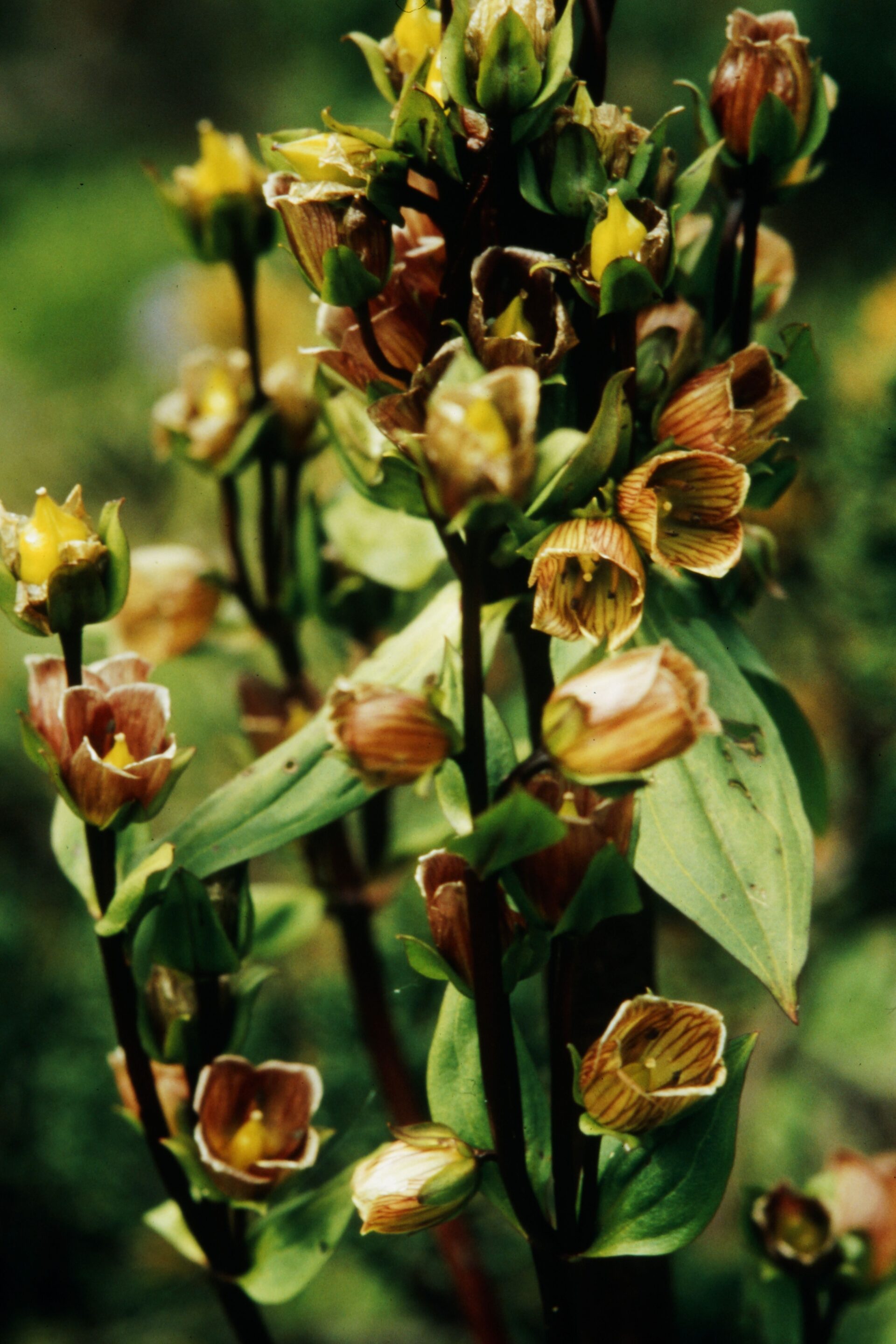
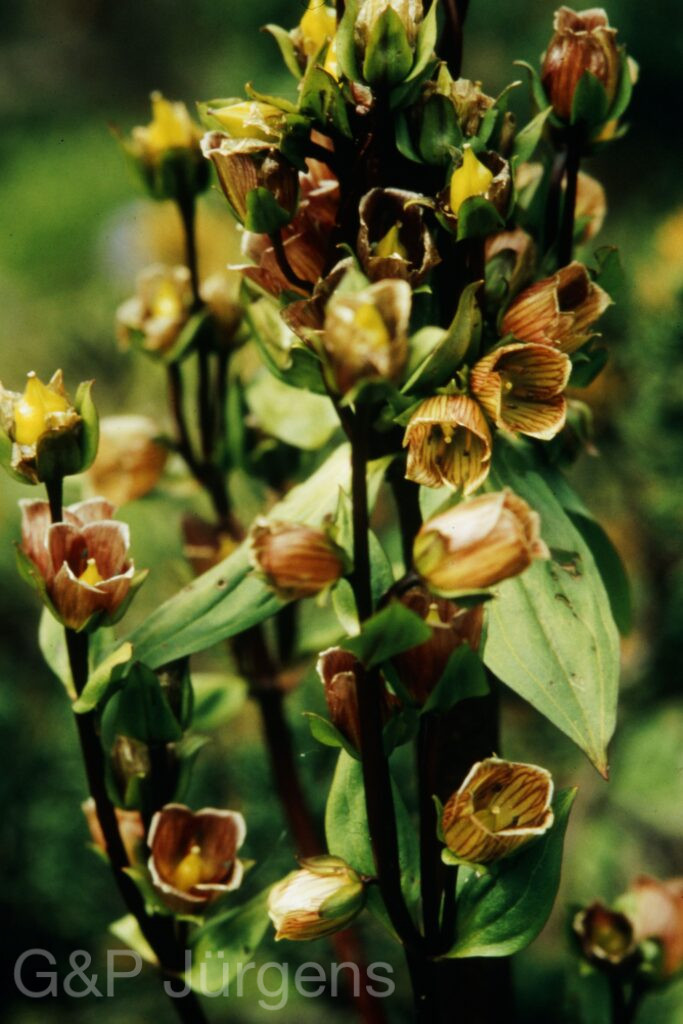
It is a robust perennial or biennial herb with a stout, erect, often purple-tinged stem arising from a thick rootstock. The leaves are largely basal, broadly elliptic to ovate, conspicuously several-nerved and narrowed to a sheathing base, the cauline leaves becoming smaller and sessile upward. The inflorescence is a leafy branched panicle of large, broadly campanulate flowers; the corolla is usually 4- or 5-merous, pale greenish-yellow to whitish and densely veined with purplish-blue reticulation, each lobe bearing a pair of fimbriate nectary pits at the base. Stamens alternate with the lobes, and the superior ovary develops into a septicidal capsule with numerous small seeds.
Described by C. B. Clarke, Swertia hookeri belongs to a large, taxonomically intricate genus centred on the Sino-Himalayan region, forming part of a species swarm noted for diagnostic nectary morphology. Like many congeners it is rich in bitter secoiridoid and xanthone compounds and is gathered locally for medicinal and febrifugal use. Its dependence on intact high-altitude grassland renders it potentially sensitive to grazing pressure and climate-driven treeline shifts, though it has not been formally evaluated.
Author: C.B. Clarke · Sources: POWO (Kew), GBIF, Flora of Bhutan, Flora of China, Hara Flora of Eastern Himalaya, Clarke revision of Swertia