
D.Don

Description
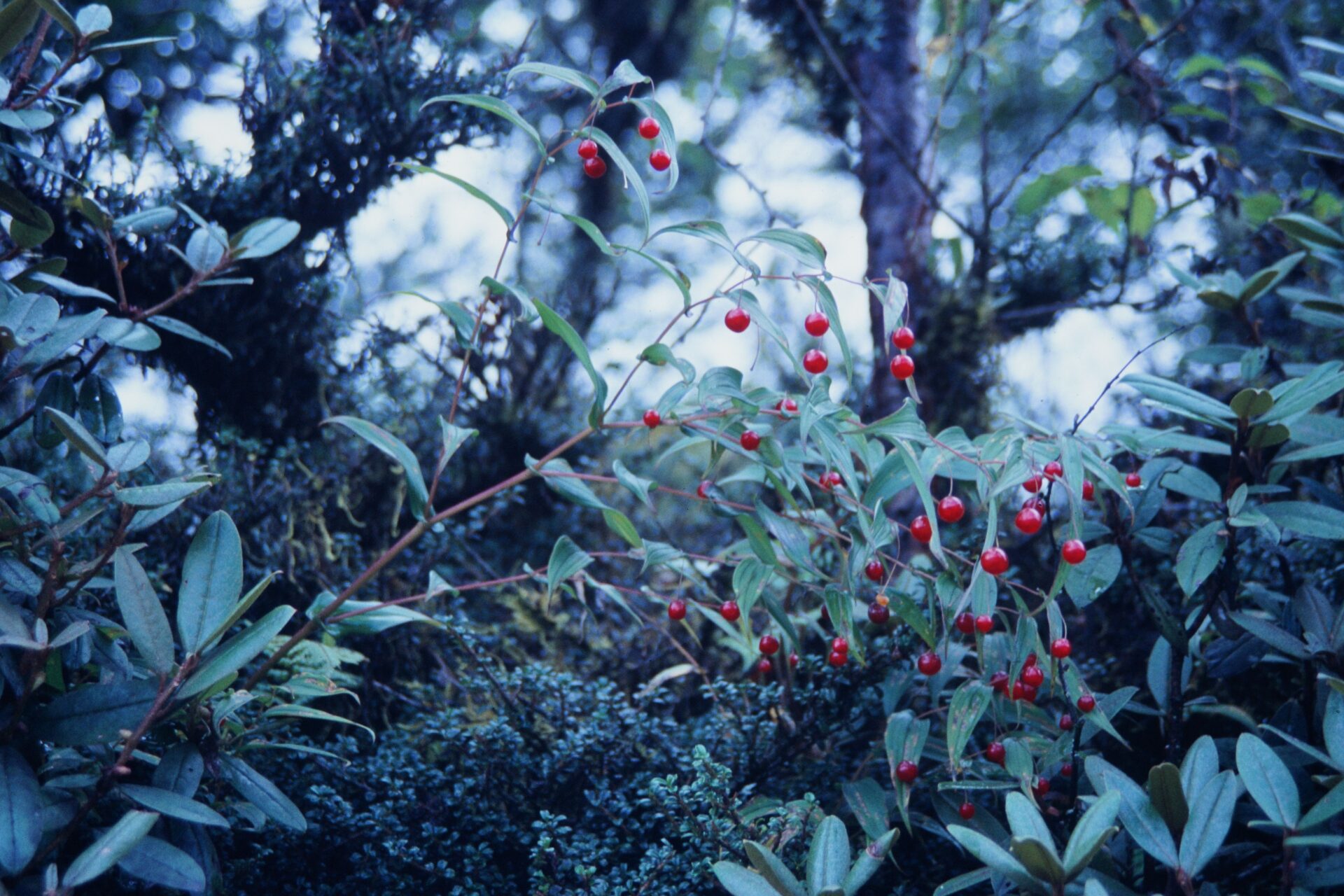
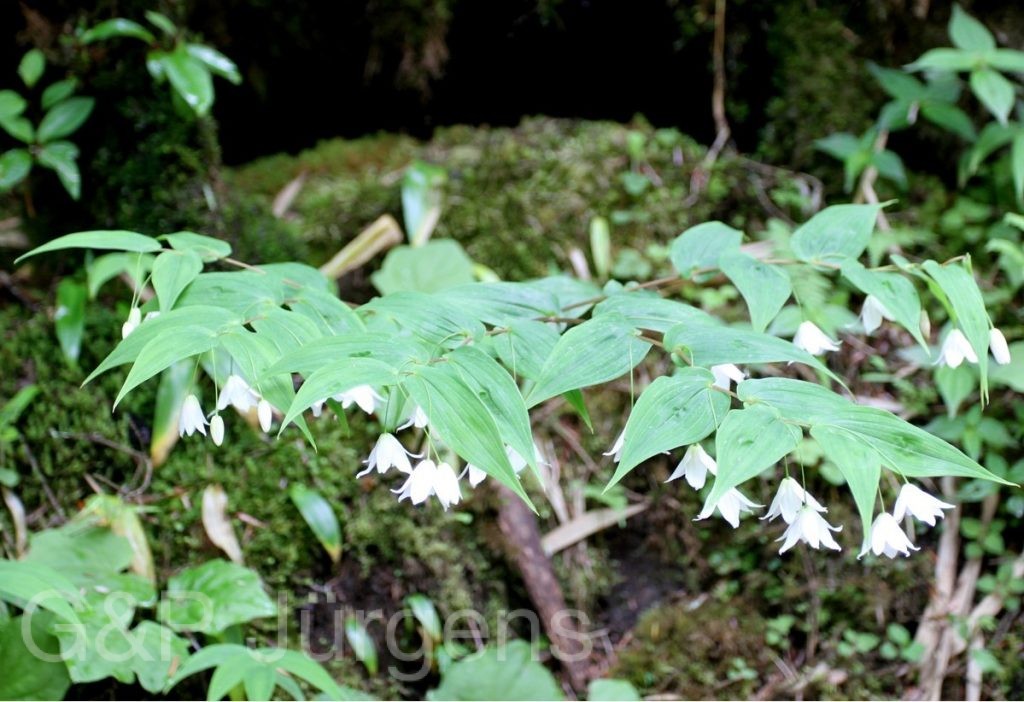
Streptopus simplex, a twistedstalk of the Sino-Himalayan region, is distributed across China (CN), Nepal (NP), Bhutan (BT), India (IN), Myanmar (MM) and Japan (JP), with 726 GBIF occurrences indicating it is a frequent component of high forest. It grows in shaded, humid temperate and subalpine coniferous and broadleaf forest, in bamboo thickets, ravines and on mossy slopes, typically between about 3000 and 4000 m. The illustrated plants came from Chogcham in Bhutan at around 3300 m in June and the Lachung Valley of Sikkim at about 3200 m in August, spanning the early- and late-monsoon flowering and fruiting seasons.
It is a slender perennial herb arising from a short creeping rhizome, with an erect, simple or sparingly branched stem. The leaves are alternate, sessile and somewhat clasping, ovate to lanceolate with entire margins and parallel venation. The flowers are solitary and nodding, borne on slender pedicels that hang beneath the leaves; the perianth consists of six free, campanulate to spreading tepals, white to pink and often purple-spotted within. There are six stamens, and the ovary is superior. The fruit is a globose, fleshy red berry containing several seeds, providing dispersal by birds and other animals.
Streptopus is now placed in Liliaceae sensu lato (the family cited verbatim here), within the Lilioid monocots; some treatments segregate it variably among the lily allies. The genus has a disjunct circumboreal and montane Asian-American distribution, and S. simplex represents its Himalayan and East Asian extension, of biogeographic interest as part of the temperate forest-floor herb flora.
Author: D.Don · Sources: POWO (Kew), GBIF, Flora of China, Flora of Bhutan, Flora of Nepal, Monograph of the genus Streptopus