Tag:

Spring

(Wall.) Bogner & Mayo
Bh2008 63 P103
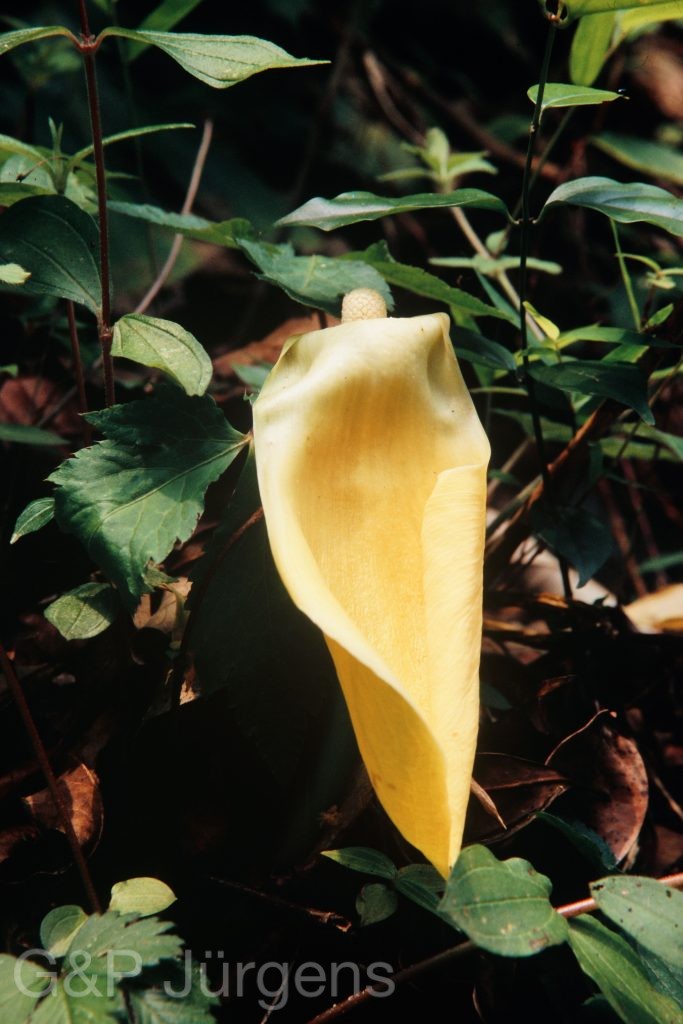
Bhutan Punaka-Chu, 1500m April

Description

Amorphophallus napalensis is a tuberous aroid of the subtropical Himalaya and adjacent Southeast Asia, recorded from India, Nepal, Thailand, Bhutan, Myanmar and Bangladesh across some 80 GBIF occurrences. The photographed plant was found along the Punaka-Chu in Bhutan at about 1500 m in April. It grows in moist broad-leaved forest, on shaded slopes, ravines and forest floors, typically between roughly 500 and 1800 m, emerging with the pre-monsoon and monsoon rains from a dormant underground tuber.

The plant arises from a depressed-globose subterranean tuber and produces, in season, a single large solitary leaf with a long mottled petiole and a blade divided into numerous segments giving an umbrella-like, much-dissected appearance. The inflorescence, typical of the genus, is a spadix subtended by a spathe; the spadix bears a basal zone of female flowers below a zone of male flowers, topped by a sterile appendix. At anthesis the inflorescence emits a fetid odour and may generate heat (thermogenesis) to attract carrion-feeding flies and beetles, which effect pollination. The infructescence ripens into a cluster of fleshy berries.

Amorphophallus is a large palaeotropical genus notable for these protogynous, often malodorous inflorescences and their fly-and-beetle (sapromyophilous) pollination, with the berries subsequently dispersed by birds. The seasonal solitary leaf and dormant tuber adapt the species to the marked wet-dry rhythm of the monsoon forest. A. napalensis is widespread and not regarded as threatened, though, like many forest aroids, it depends on the maintenance of shaded, humid woodland habitat.

Author: (Wall.) Bogner & Mayo · Sources: POWO (Kew), GBIF, Flora of China, Flora of Bhutan, Flora of Nepal, Hetterscheid & Ittenbach – Revision of the Genus Amorphophallus
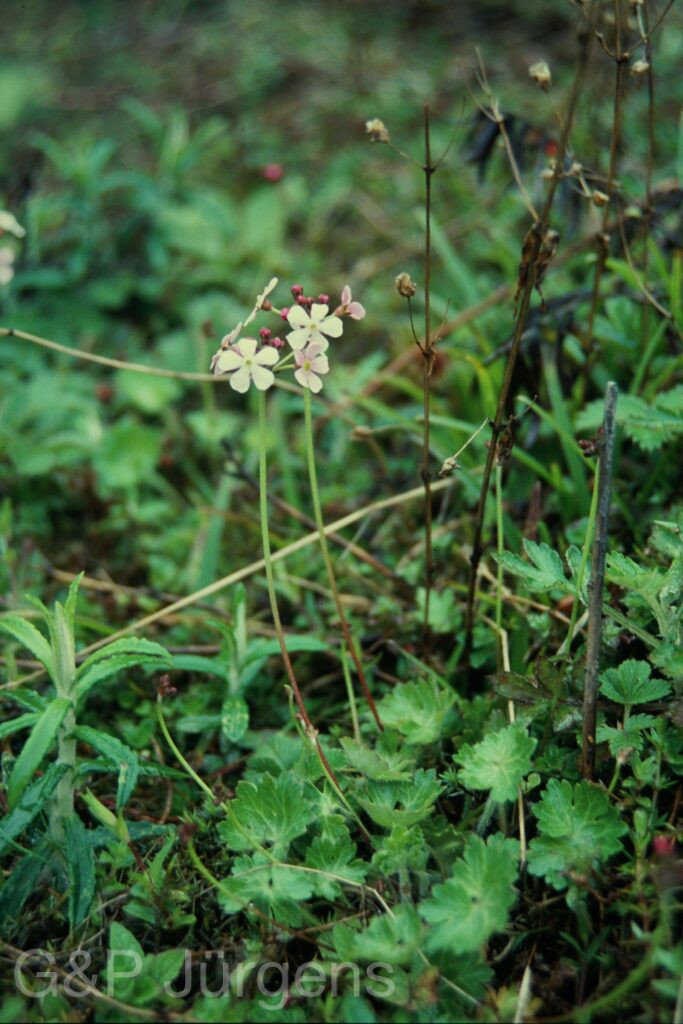
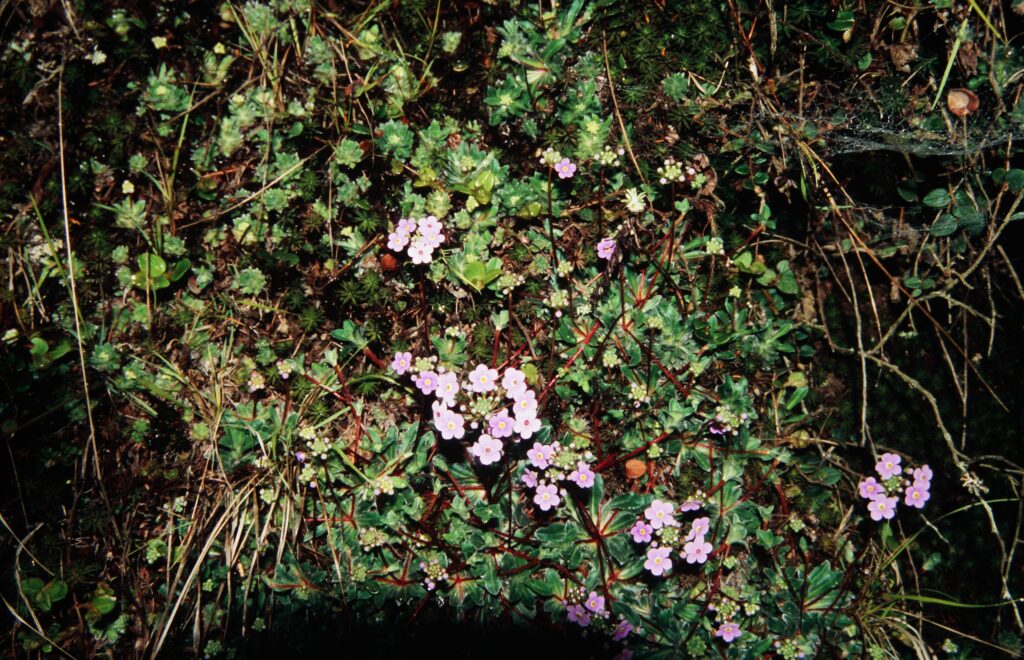
Wall.

Bhutan2014 822
Bhutan Chele-La 3100m, May
Bhutan2014 1019
Bhutan Chele-La 3100m, May
Sikkim2004 376 P653
Sikkim/India Lachung 2800m May

Description

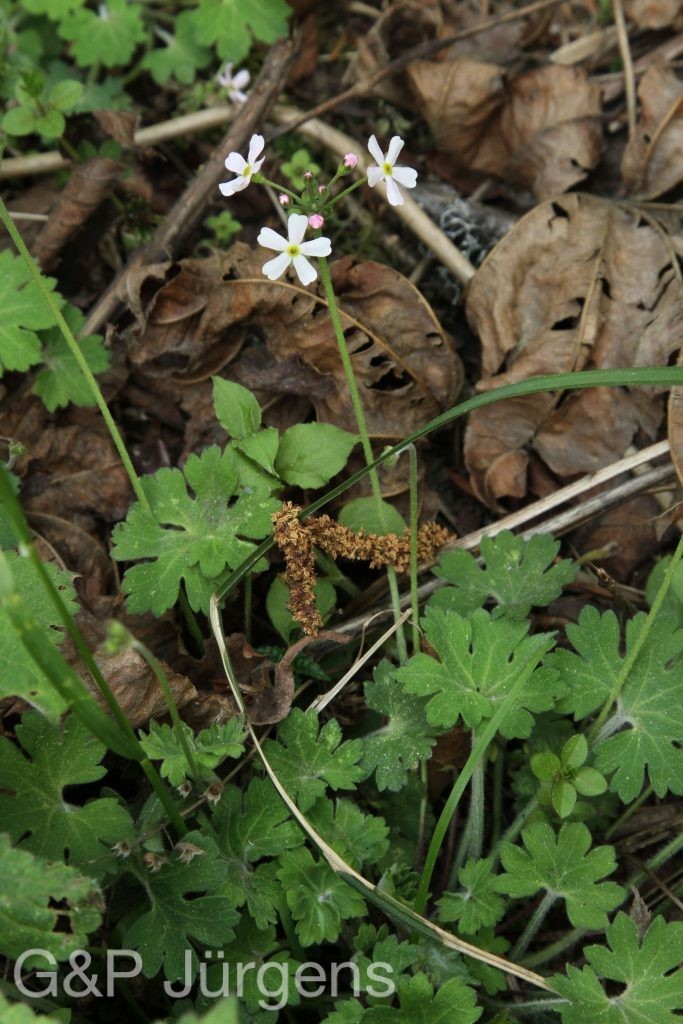
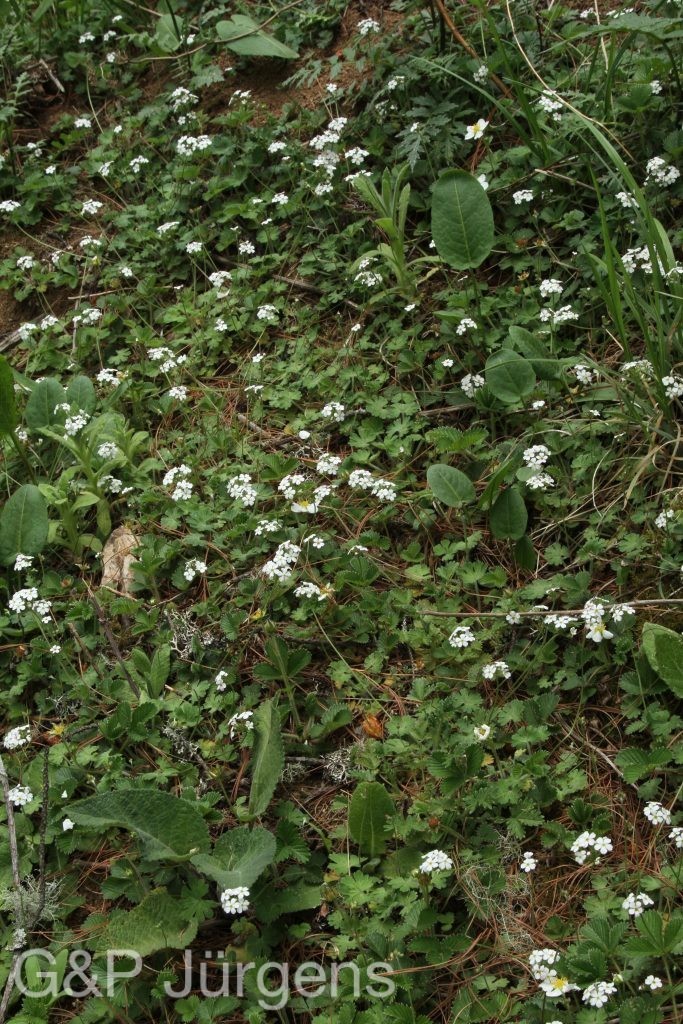
Androsace geranifolia is a Himalayan rock-jasmine of the temperate to subalpine zone, ranging through the central and eastern Himalaya from Nepal through Sikkim and India into Bhutan. GBIF currently holds no georeferenced occurrences and treats the name as doubtful at present, so its distribution is best inferred from herbarium and floristic records, which place it in moist, shaded forest, mossy banks, rock ledges and stream gullies between roughly 2500 and 3500 m. The documented sites at Chele-La in Bhutan at 3100 m and at Lachung in Sikkim, India, at 2800 m, both flowering in May, illustrate its preference for cool, humid, partly shaded montane habitats in spring.

It is a soft, herbaceous perennial, distinct among Himalayan Androsace in its conspicuously geranium-like foliage. The leaves are long-petiolate with orbicular to reniform, palmately lobed and toothed blades, forming a loose basal rosette or tuft rather than the tight cushion of many congeners. From the rosette arise slender, hairy scapes bearing an umbel of several small flowers subtended by leafy bracts. Each flower has a campanulate calyx and a salver-shaped white to pale pink corolla with five spreading lobes and a small yellow eye at the constricted throat. The fruit is a small, few- to several-seeded globose capsule.

Androsace is a large genus of Primulaceae centred on the mountains of central Asia, and A. geranifolia represents the broad-leaved, woodland-dwelling rather than cushion-forming element of the genus, allied to A. sarmentosa and A. rotundifolia. Its dissected foliage reflects adaptation to shaded forest understorey rather than the exposed screes typical of the section. As a narrowly distributed, seldom-collected Himalayan endemic, its conservation status remains formally unassessed and warrants further field documentation.

Author: Wall. · Sources: POWO (Kew), GBIF, Flora of Bhutan, Annotated Checklist of the Flowering Plants of Nepal, Smith & Lowe revision of Androsace, Flora of British India

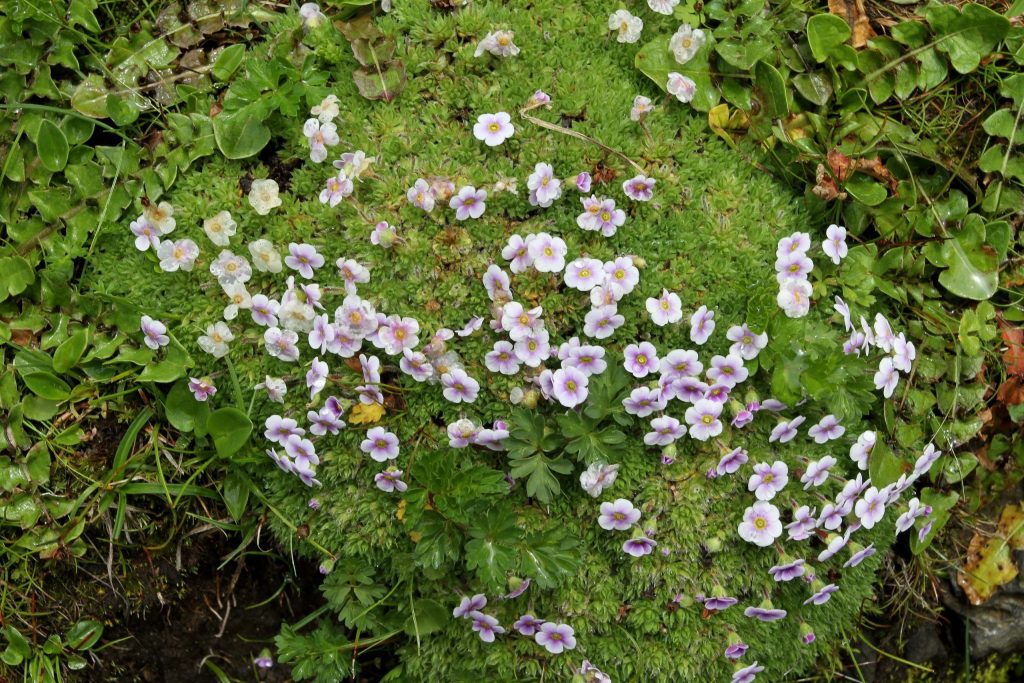
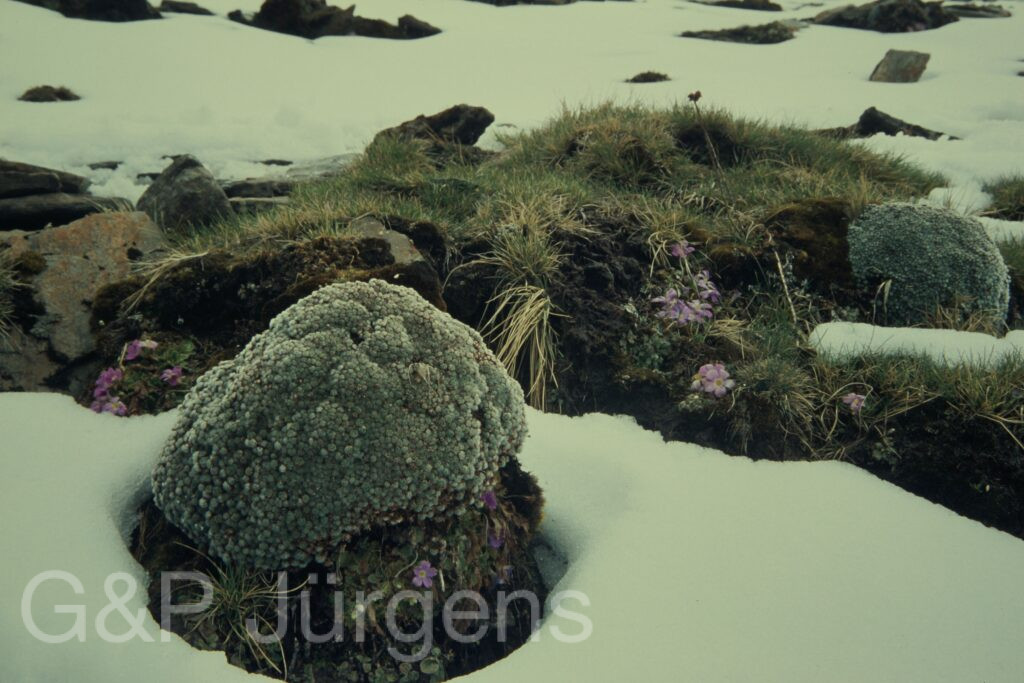
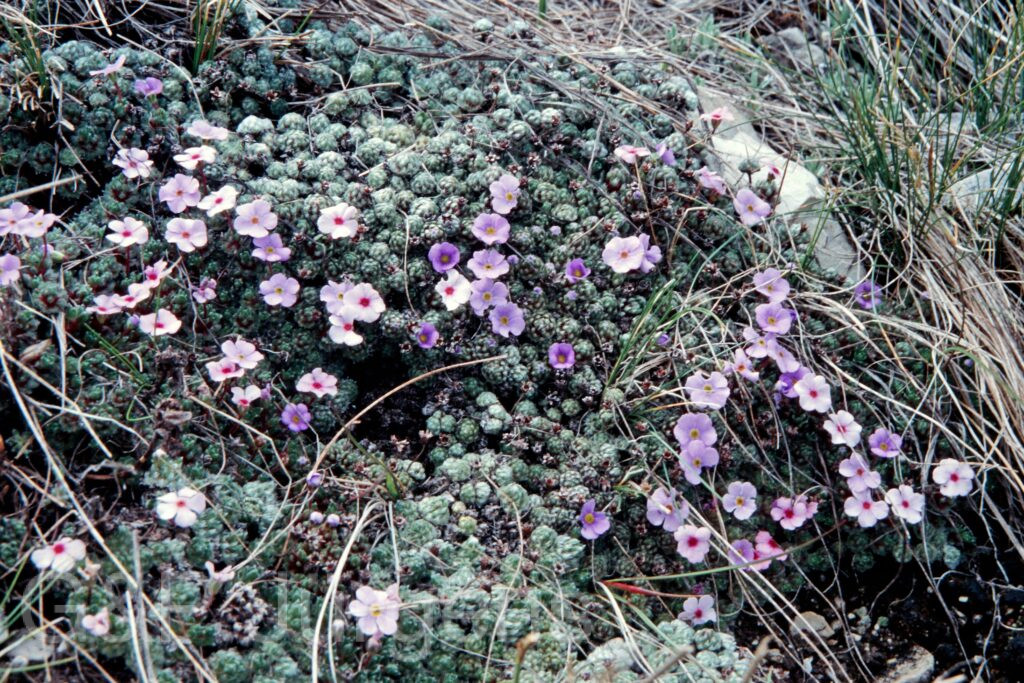
Duby

BhutanPG2011 669 scaled
Bhutan Ludlow-Sherriff-Trail Thitha-Tso, 4300m July
Sikkim2004 163 G276
Sikkim/India Singalila 4100m May
Nepal 99 138 ergebnis
West-Nepal South of Rara-Lake 3800m, June

Description

Androsace globifera is a high-alpine cushion-forming perennial distributed along the central and eastern Himalaya, recorded by GBIF (103 occurrences) from Nepal, India, Bhutan and adjacent Tibetan China. It occupies open, often wind-exposed alpine turf, gravel slopes, moraine margins and the rocky surrounds of glacial tarns, typically between 3800 and 4500 m. The documented gatherings illustrate this range well: dense colonies were found beside Thitha-Tso on the Ludlow-Sherriff Trail in Bhutan at 4300 m in July, on the Singalila ridge of Sikkim at 4100 m in May, and south of Rara Lake in West Nepal at 3800 m in June, flowering as the snow recedes.

The plant forms compact, hemispherical cushions or low mats built from numerous crowded, columnar shoots clothed in persistent, imbricate, withered leaf-remains. The leaves are small, sessile, oblong to spathulate, and gathered into dense terminal rosettes, their margins ciliate with simple and branched hairs. Solitary, sessile or shortly pedicellate flowers nestle among the leaves; the calyx is campanulate and lobed to about the middle, and the rotate corolla is white to pink with a yellow throat, the five obovate lobes spreading from a short tube. The fruit is a small globose capsule that splits by five valves to release angular seeds.

A member of the cushion-forming androsaces, the species is diagnosed by its globular, tightly packed habit and short-tubed flowers. Ecologically it is a pioneer of frost-disturbed, well-drained substrates, the cushion architecture buffering temperature extremes and trapping wind-blown detritus. Though locally frequent and not currently threatened, such narrowly stenothermic alpines are sensitive to warming and shifting snow regimes.

Author: Duby · Sources: POWO (Kew), GBIF, Flora of China Vol. 15, Flora of Bhutan Vol. 2, Flora of Nepal, Smith & Lowe Androsace monograph (Genus Androsace)

Wall.

Sikkim 2006 12 ergebnis
India West-Bengal Tonglu 3100m, May

Description

Androsace sarmentosa is a mat-forming alpine herb of the Himalaya, well represented in GBIF with 514 occurrences across Nepal, India, China, Pakistan and Bhutan, supplemented by abundant cultivated records from Europe and North America, where it is a popular rock-garden plant. It grows on open grassy slopes, rocky banks and the margins of subalpine and alpine meadows, typically in well-drained, sunny situations. It was recorded at Tonglu in West Bengal, India, at about 3100 m in May, an elevation and season at which the spreading cushions flower freely after snowmelt on the Singalila ridge.

The plant spreads by slender, leafy stolons (sarmentose runners, as the epithet indicates) that root at the tips to form new rosettes, building loose, expanding mats. Each rosette consists of obovate to spathulate leaves densely clothed in long, soft, silvery hairs, the young rosettes more woolly than the old. From the rosettes arise erect peduncles bearing a terminal umbel of flowers subtended by an involucre of bracts; each flower has a five-lobed calyx and a salverform corolla, pink to rose with a yellow then reddish eye at the constricted throat. The fruit is a small, few-seeded capsule.

Androsace (Primulaceae) is a genus of mostly arctic and alpine cushion and rosette plants centred on the mountains of central Asia, where the Himalaya holds many species. A. sarmentosa belongs to the stoloniferous, perennial section and is among the most ornamental and frequently cultivated of Himalayan androsaces. It is widespread and not of conservation concern, but as a characteristic component of subalpine turf it is of interest for studies of alpine cushion-plant biogeography and horticulture.

Author: Wall. · Sources: POWO (Kew), GBIF, Flora of China, Flora of Pakistan, Annotated Checklist of the Flowering Plants of Nepal, Smith and Lowe monograph of Androsace

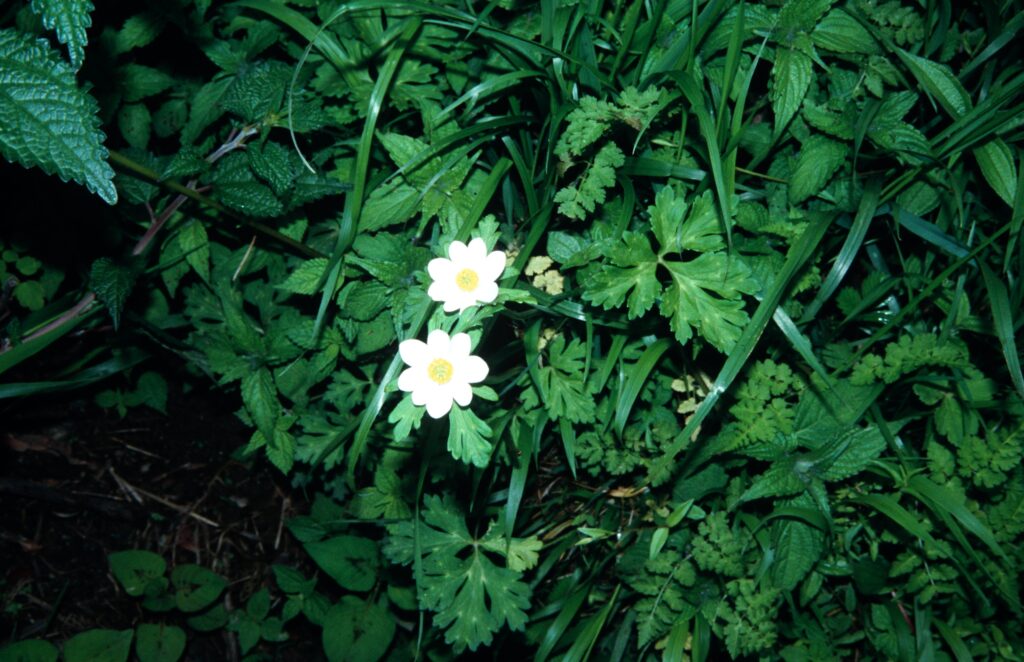
(D.Don) Holub

Nepal 2001 432 ergebnis ergebnis
Nepal (Gorkha) Laprak 1900m, May

Description

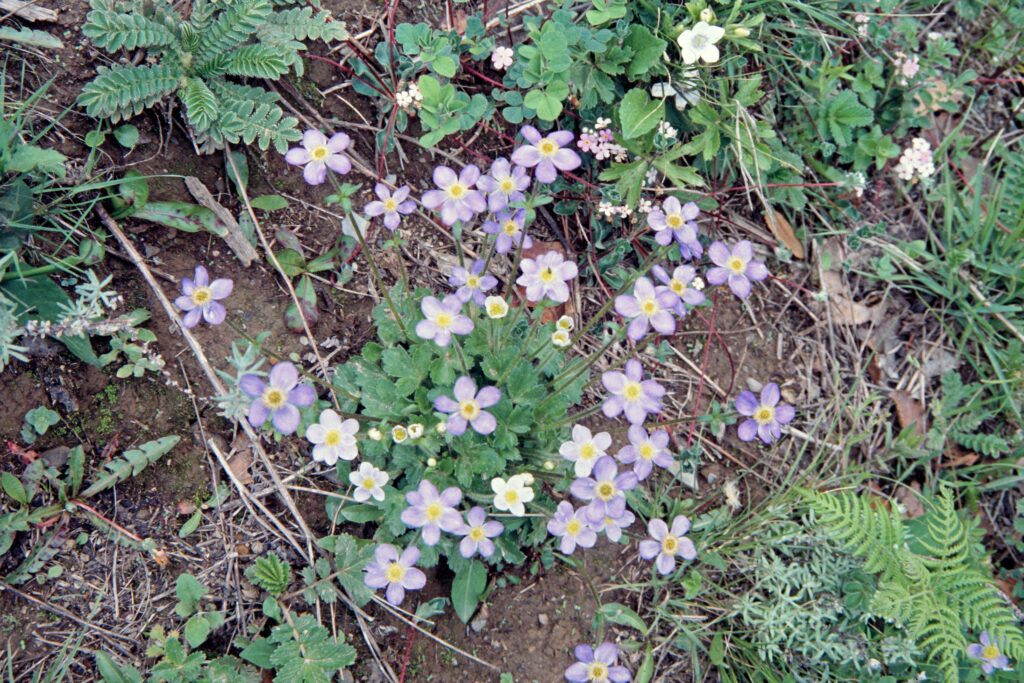
Anemonastrum elongatum is a perennial herb of the temperate and subalpine Himalaya and adjacent Sino-Himalayan ranges, distributed from Nepal and India eastward through China and southward to Myanmar, with peripheral records in Sri Lanka and beyond (gbif_countries: NP, IN, CN, CA, LK, MM, ZZ); GBIF documents some 113 occurrences. It favours moist forest margins, shaded banks, grassy slopes and streamsides, ranging from warm-temperate woodland into the lower subalpine zone. The illustrated collections span a broad elevational gradient, from Laprak in Gorkha at about 1900 m to Nasem Pati in Helambu near 3550 m, both flowering in May at the onset of the monsoon.

The plant arises from a stout, ascending rhizome and produces erect, hairy stems bearing long-petiolate basal leaves that are palmately three- to five-lobed, the lobes coarsely toothed and clothed in appressed hairs. An involucre of similar but shorter-stalked leaves subtends the inflorescence, which is an elongate, few- to several-flowered cyme borne on slender, villous peduncles. The flowers lack true petals; the showy perianth consists of white to faintly tinged sepals surrounding numerous yellow stamens and a central cluster of carpels. The fruit is an aggregate of compressed, laterally winged achenes tipped with a short persistent style.

Long placed in a broadly circumscribed Anemone, the species is now referred to the segregate genus Anemonastrum, reflecting molecular and morphological recognition of natural lineages within tribe Anemoneae. Its elongating fruiting axis, evoked by the epithet, distinguishes it from allied taxa. Widespread and locally common, it is of no conservation concern, and its broad ecological amplitude makes it a characteristic component of Himalayan herb communities.

Author: (D.Don) Holub · Sources: POWO (Kew), GBIF, Flora of Nepal, Flora of China, Annotated Checklist of the Flowering Plants of Nepal, Tamura's monograph of Ranunculaceae

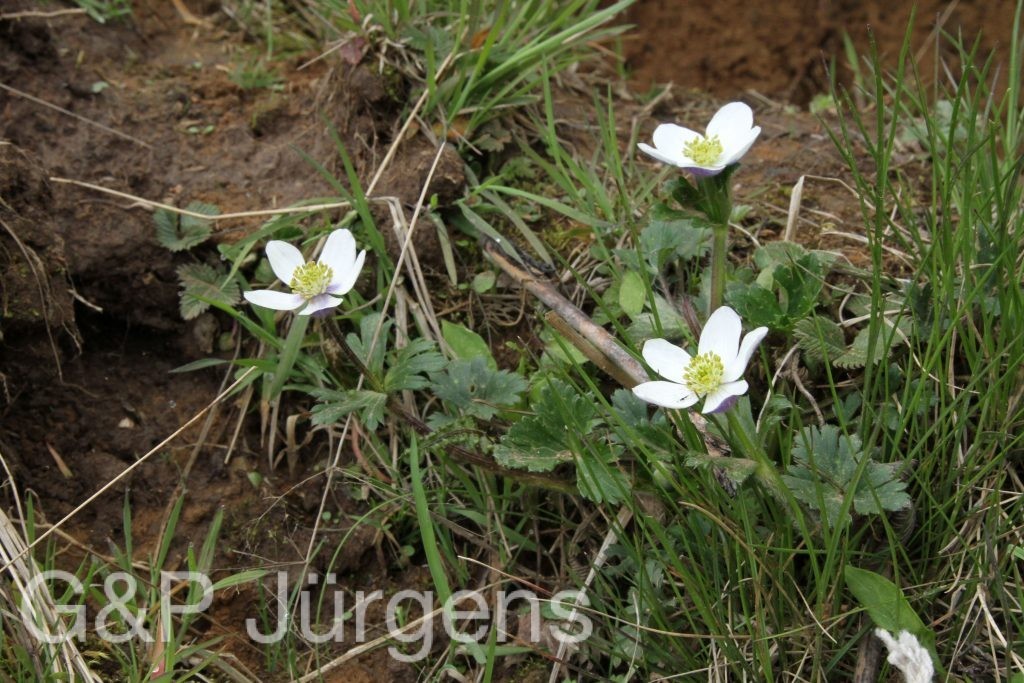
(D.Don) Mosyakin

Bhutan2014 516
Bhutan Yatong-La 3200m, May
Nepal 99 82 ergebnis
Bhutan Bhulbhule 3150m, June

Description

Anemonastrum obtusilobum, long known as Anemone obtusiloba, is a widespread Himalayan and Central Asian alpine herb recorded from China, India, Nepal, Pakistan, Bhutan, Myanmar, Afghanistan, Kazakhstan and Kyrgyzstan, with a substantial 825 occurrences in GBIF. It is a plant of open alpine and subalpine meadows, grassy slopes, forest clearings and stony turf, typically between 2500 and 4500 m. The localities cited, Yatong-La at 3200 m in May and Bhulbhule at 3150 m in June in Bhutan, are characteristic of the moist, herb-rich montane grassland where it carpets slopes in spring and early summer.

The species is a tufted perennial herb from a stout, often branched rootstock clothed with the fibrous remains of old leaf bases. The basal leaves are long-petiolate and palmately three-lobed, the lobes broad and obtusely toothed (hence obtusilobum), softly hairy and somewhat fleshy. The flowering scape bears an involucre of leaf-like bracts and one to several flowers; each flower lacks petals but has five to eight petaloid sepals that are white, cream, yellow or violet-blue, surrounding numerous yellow stamens and a cluster of free carpels. The fruit is a head of compressed, glabrous achenes each tipped with a short style.

The segregate genus Anemonastrum was resurrected on molecular grounds from the broadly circumscribed Anemone, grouping the herbaceous, palmately lobed-leaved species with basal involucres; A. obtusilobum is a polymorphic species varying greatly in flower colour and stature across its range, prompting recognition of several varieties. Its insect-pollinated flowers and dry achenes, dispersed by wind and animals, suit the open alpine environment. The species is common and of least conservation concern, though it remains a useful indicator of intact Himalayan alpine meadow communities.

Author: (D.Don) Mosyakin · Sources: POWO (Kew), GBIF, Flora of China, Flora of Bhutan, Annotated Checklist of the Flowering Plants of Nepal

(Wall. ex Hook.f. & Thomson) Mosyakin

BhutanPG2011 219 scaled
Bhutan Jule-Tso, 4300m June
BhutanPG2011 344
Bhutan Jule-Tso, 4300m June

Description

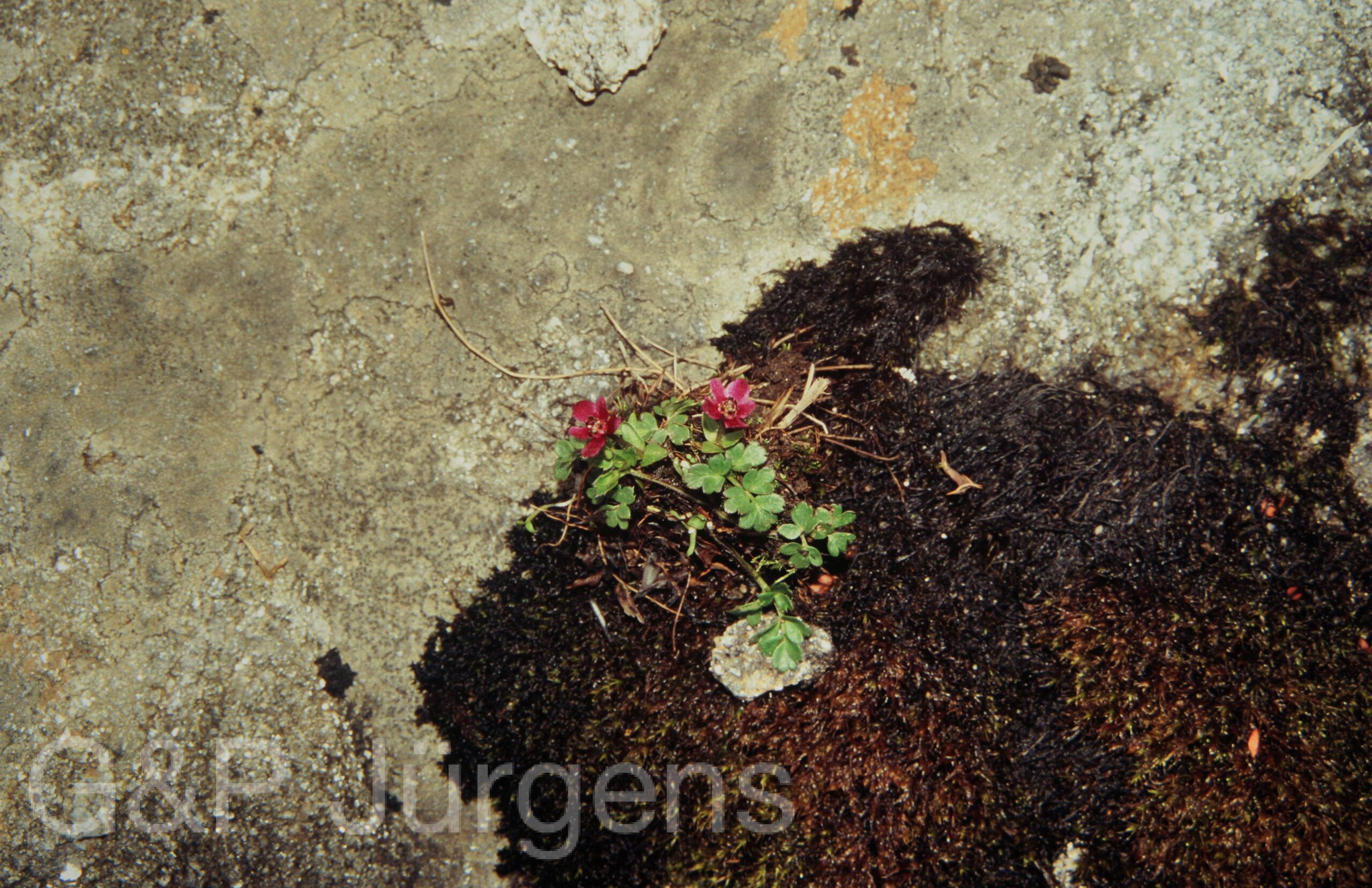
Anemonastrum rupestre (Wall. ex Hook.f. & Thomson) Mosyakin is an alpine perennial of the Himalaya and adjacent mountains, recorded from Nepal, China, India, Bhutan and Myanmar, with about 223 occurrences in GBIF. It inhabits open alpine meadows, rocky slopes, screes and grassy ledges, mostly between 3,000 and 4,500 m. The photographed plants span this range: one from Helambu, Koktrok, in central Nepal at 3,100 m flowering in May, and another from Jule-Tso in Bhutan at 4,300 m in June, illustrating its broad altitudinal occupation of the subalpine to alpine zone.

It is a tufted perennial herb arising from a stout rhizome, with the leaves largely basal and long-petiolate; the lamina is palmately divided into lobed and toothed segments. The flowering scape bears an involucre of leaf-like bracts subtending a few-flowered umbel-like cyme. The flowers lack true petals; the showy perianth consists of several white (sometimes pinkish or bluish-tinged) petaloid sepals surrounding numerous stamens and a head of free carpels. The fruit is an aggregate of laterally compressed, glabrous to pubescent achenes with a short persistent style.

The species was traditionally placed in Anemone, but molecular and morphological studies have led to its transfer to the segregate genus Anemonastrum (Ranunculaceae), characterised by basal leaves, bracteate scapes and compressed achenes. This taxonomic realignment reflects the modern reclassification of the Anemone alliance. As a widespread high-altitude element of the Sino-Himalayan flora occupying extensive natural habitat, it is not of conservation concern, though it remains subject to grazing pressure across its alpine pastures.

Author: (Wall. ex Hook.f. & Thomson) Mosyakin · Sources: POWO (Kew), GBIF, Flora of China, Flora of Bhutan, Annotated Checklist of the Flowering Plants of Nepal, Mosyakin reclassification of Anemone s.l., Ziman & Ehrendorfer studies of Anemone

(Hook.f. & Thomson) Mosyakin

Sikkim2011 131
Sikkim Tanghu 4000m, June
Sikkim2011 129
Sikkim Tanghu 4000m, June
Bhutan2014 985 scaled
Bhutan Chele-La 4000m, May
Bhutan2014 983
Bhutan Chele-La 4000m, May
Nepal 97 210 P428
Nepal Thudam 3690m April

Description

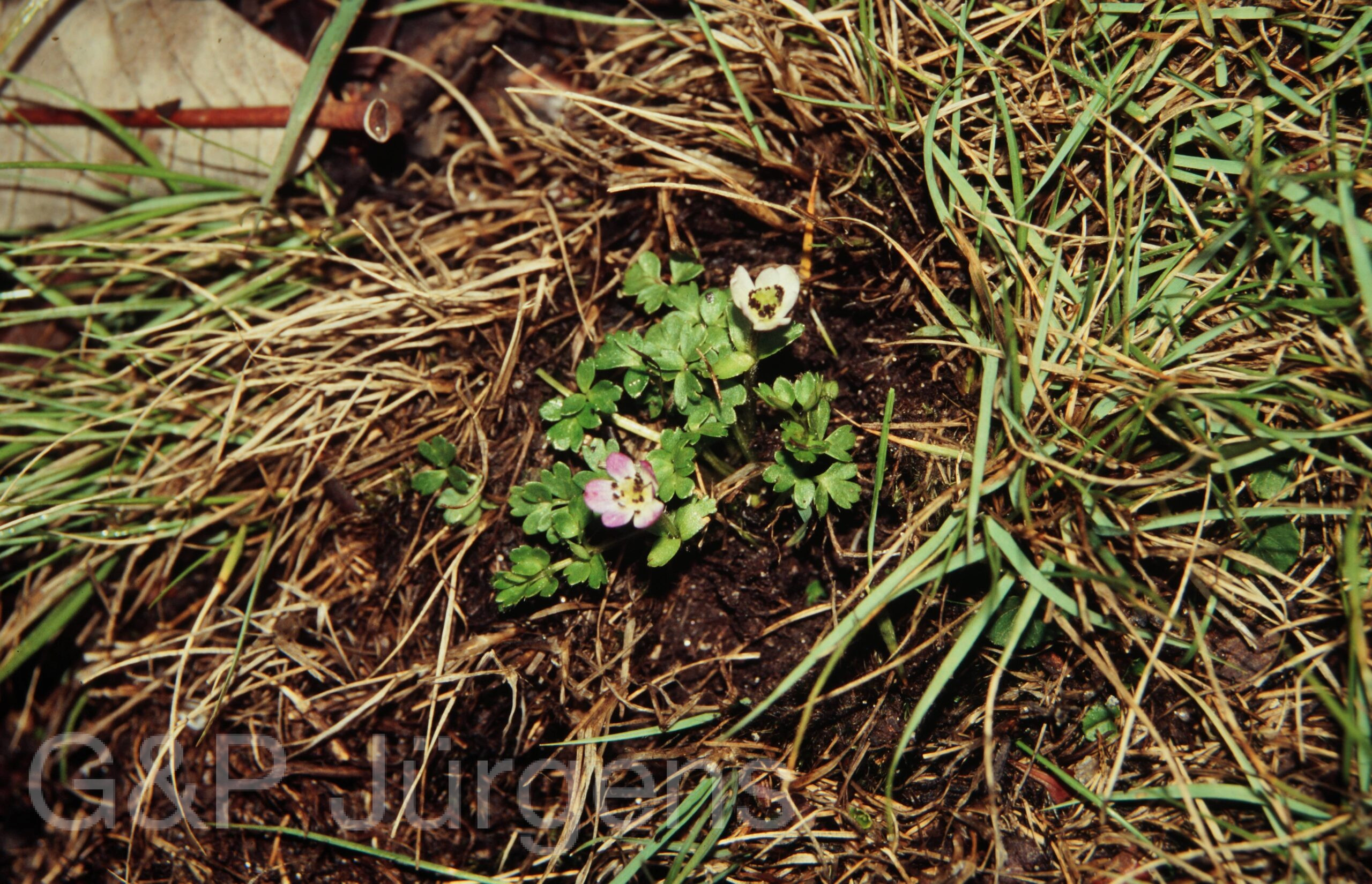
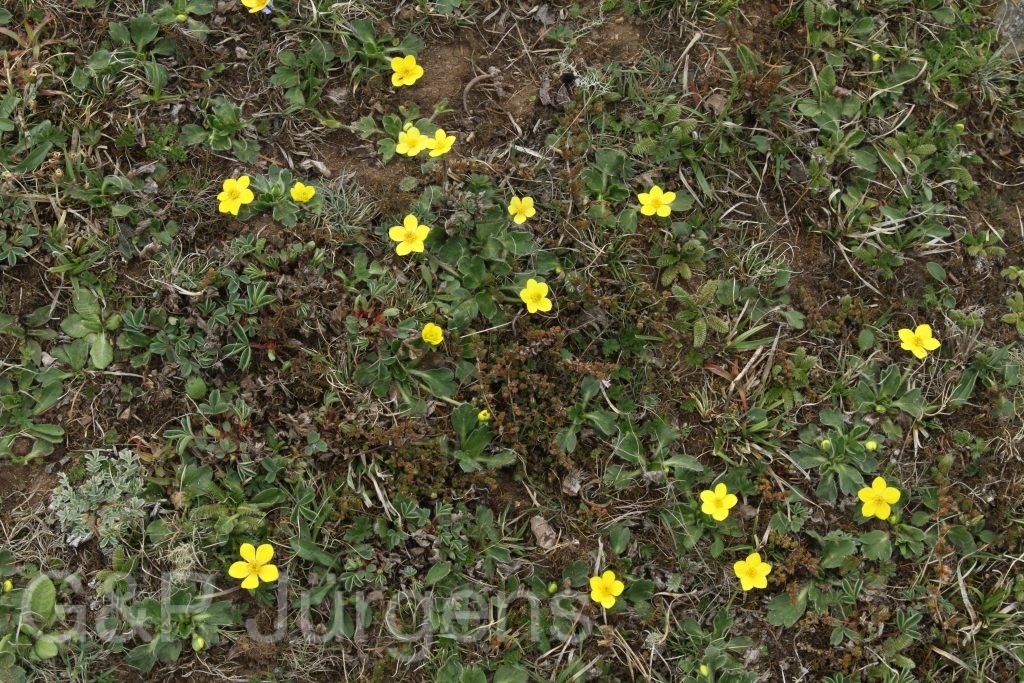
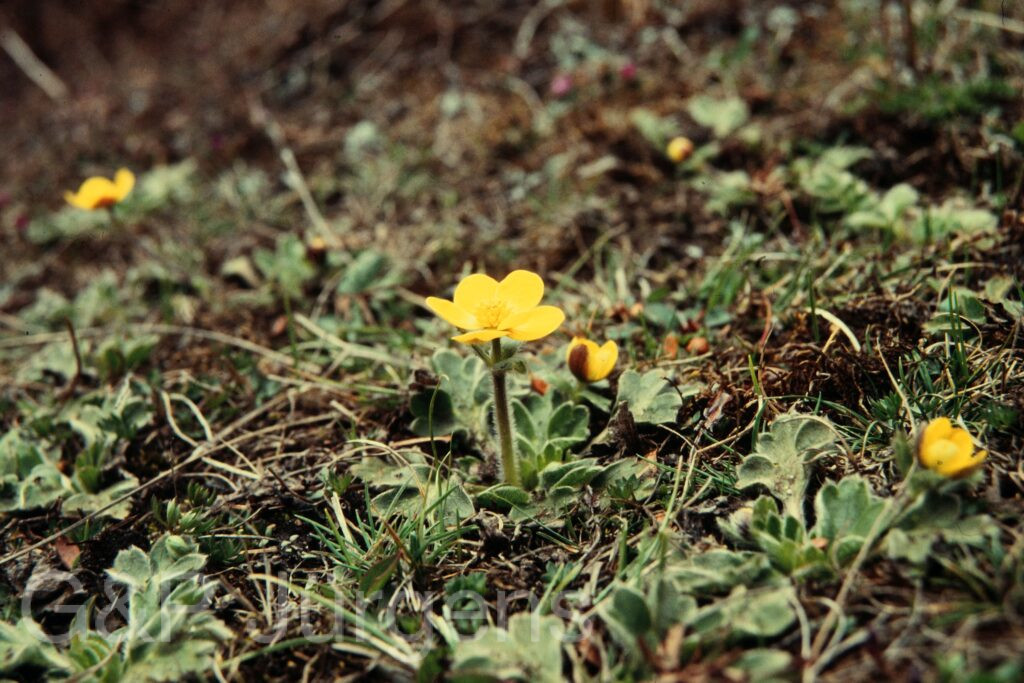
Anemonastrum trullifolium is a Himalayan alpine herb ranging through China, India, Nepal and Bhutan, with 317 occurrences in GBIF (additional records from Britain, Myanmar, Norway and Sweden reflect cultivated or determinavit material). It grows in alpine meadows, open slopes and the margins of dwarf-shrub heath, typically between 3500 and 4500 m. Field collections span Sikkim's Tanghu at about 4000 m in June, Chele-La in Bhutan at 4000 m in May, and Thudam in Nepal at 3690 m in April, indicating an early-season flowerer that tracks receding snow on moist subalpine to alpine turf.

The plant is a rhizomatous perennial 10-30 cm tall, forming a tuft from a short, often hairy rootstock. The long-petiolate basal leaves have a trullate (trowel-shaped) to rhombic-ovate lamina, often three-lobed or coarsely toothed and silky-pilose beneath, the epithet trullifolium referring to this leaf outline. The scape bears an involucre of leaf-like bracts subtending a few-flowered umbel; the flowers lack true petals, the showy perianth comprising 5-6 white to bluish, sometimes externally tinged tepals, surrounding numerous stamens and a head of carpels. The fruiting head is a cluster of flattened, glabrous to pubescent achenes with a short hooked beak.

The species was transferred from Anemone to the segregate genus Anemonastrum following molecular phylogenetic studies that resolved the windflowers into several lineages; the basionym Anemone trullifolia (under which it is widely listed) reflects this history. Pollination is by generalist alpine insects, and the achenes are wind- and gravity-dispersed. Locally common across its range, it has no specific conservation concern.

Author: (Hook.f. & Thomson) Mosyakin · Sources: POWO (Kew), GBIF, Flora of China, Flora of Bhutan, Annotated Checklist of the Flowering Plants of Nepal, Mosyakin revision of Anemonastrum

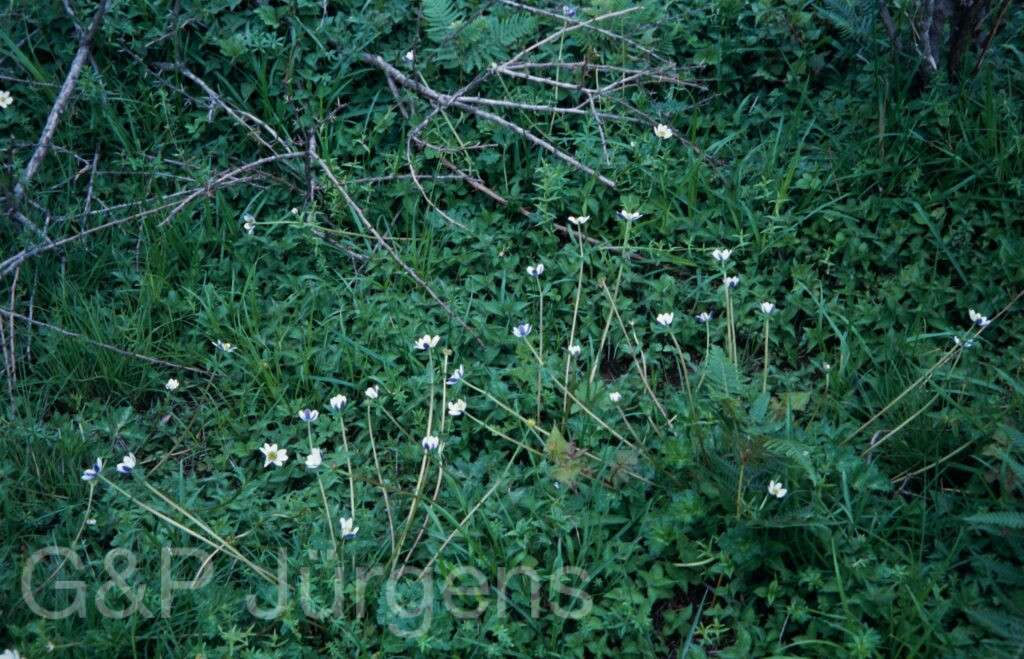
(Hook. & Thomson) Holub

Bhutan2014 325 scaled
Bhutan Tumching-La 2700m, May
Bhutan2014 330 scaled
Bhutan Tumching-La 2700m, May

Description

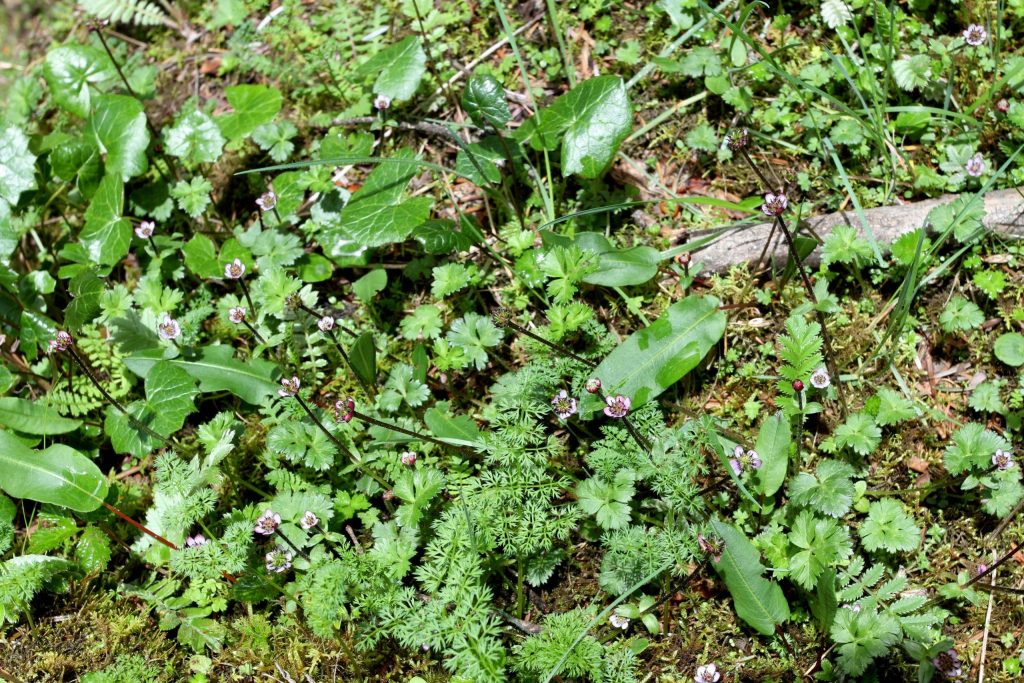
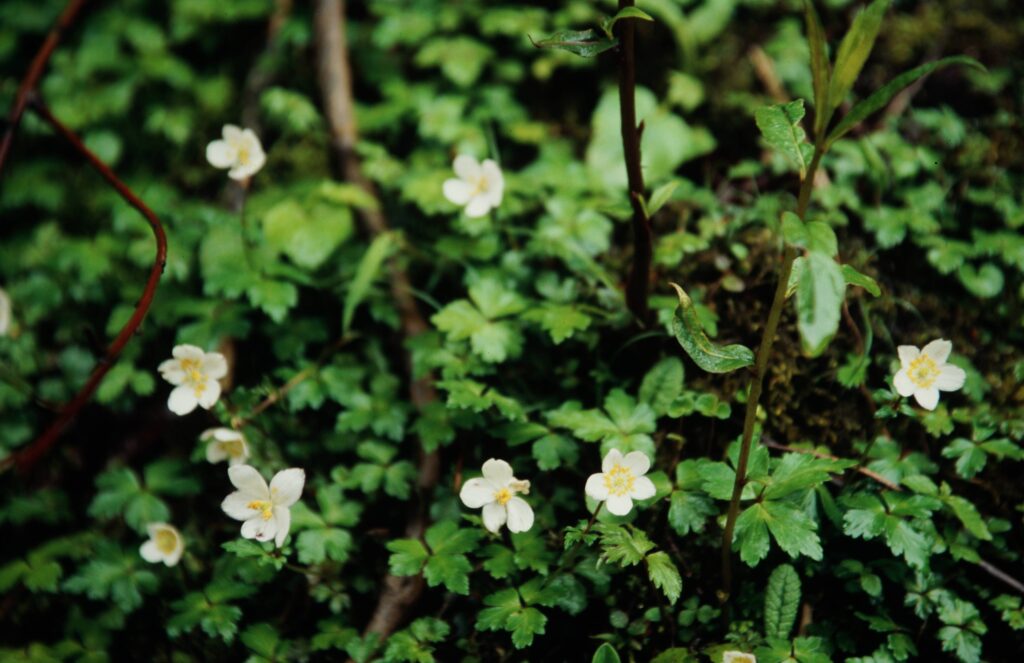
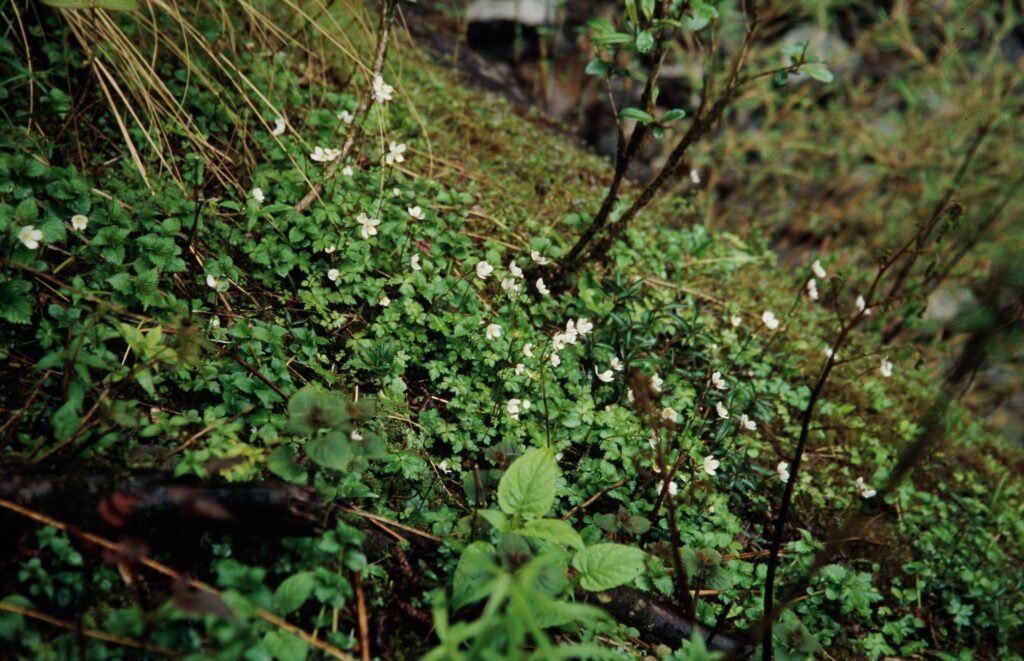
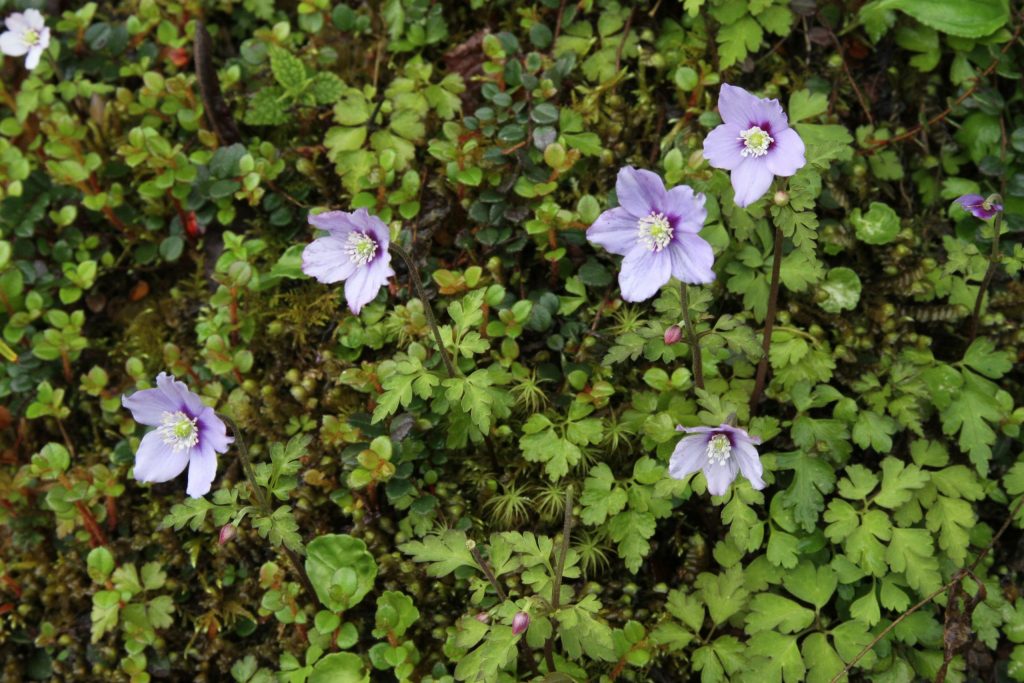
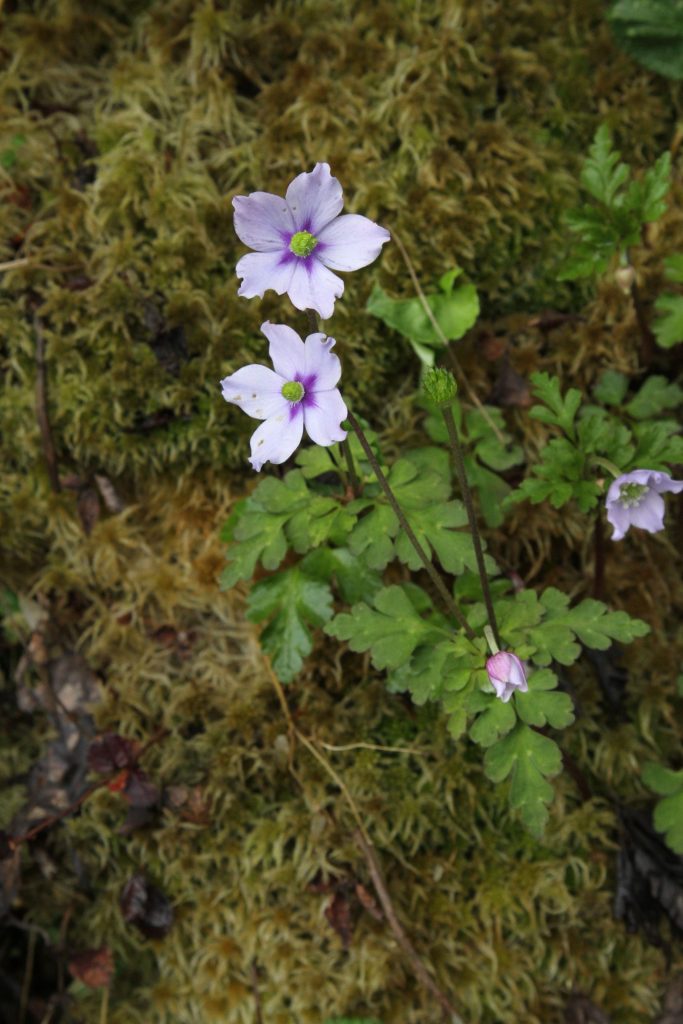
Anemonoides griffithii is a slender, woodland-floor perennial of the temperate eastern Himalaya, distributed through Sikkim, the Darjeeling district of West Bengal, Bhutan and adjacent southern Tibet (Xizang); GBIF, which records the species under the name Anemonoides griffithii, holds only a sparse occurrence dataset (a single georeferenced point from China), reflecting how thinly this shade-dwelling herb is documented despite a genuinely wider range. It favours the cool, humus-rich understorey of mixed conifer and broad-leaved forest and damp shrubberies, where it flowers in late spring as the canopy leafs out. The accompanying images, gathered at Tamrong (2650 m) in West Bengal and at the Tumching-La pass (2700 m) in Bhutan, both in May, place the plant squarely in its characteristic mid-montane band between roughly 2500 and 3500 m, in the moist, mossy conditions typical of the monsoon-fed Himalayan flank.

The plant arises from a short, creeping rhizome and is a delicate herb seldom exceeding 15-25 cm. The basal leaves are long-petiolate and ternately to palmately divided, with deeply incised, toothed segments and a thin, soft texture. The flowering stem bears a whorl of three stalked involucral leaves resembling reduced basal leaves, above which is borne a solitary terminal flower. There are no true petals; the showy perianth consists of five to several petaloid sepals, white often flushed pink or purple beneath, surrounding numerous stamens and a head of carpels. The fruit is an aggregate of small, ovoid, pubescent achenes tipped by a short style, dispersed as the involucre withers.

The species belongs to Anemonoides, a segregate genus split from the broadly circumscribed Anemone to accommodate the rhizomatous, woodland anemones of the A. nemorosa alliance, and many references still treat it under Anemone griffithii. Within the Himalaya it is one of several closely allied spring-flowering forest anemones, distinguished by leaf dissection and perianth colour. As a low-growing, monsoon-region understorey herb it has not been formally assessed for conservation status, but its dependence on intact temperate forest makes it locally sensitive to logging and grazing pressure across its restricted eastern-Himalayan range.

Author: (Hook. & Thomson) Holub · Sources: POWO (Kew), GBIF, Flora of Bhutan Vol. 1, Flora of China Vol. 6, Flora of Nepal, Tamura's Ranunculaceae treatment in The Families and Genera of Vascular Plants

J.Wen

Bh2008 330 P510
Bhutan Tongsa 2400m, April

Description

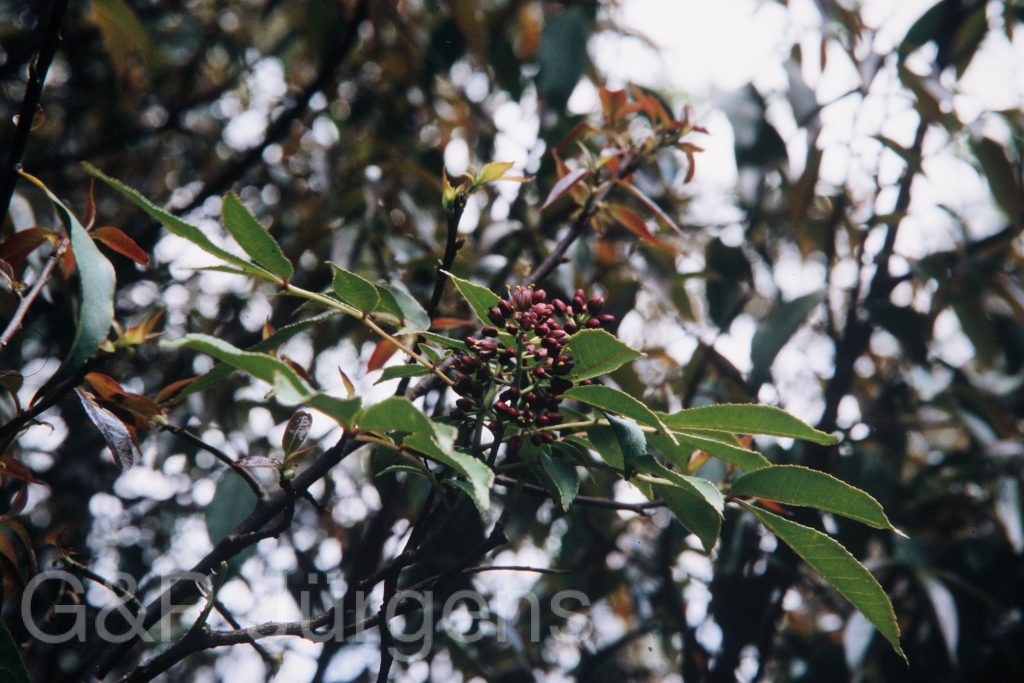
Aralia gigantea is a large herbaceous to subwoody member of the ginseng family ranging across the eastern Himalaya and adjacent uplands, with GBIF logging 145 occurrences in China, Nepal, India, Myanmar and Bhutan. It grows in moist temperate broad-leaved and mixed forest, along ravines, forest clearings and damp shaded slopes, generally between roughly 2000 and 3000 m. The illustrated plant was recorded in Bhutan near Tongsa (Trongsa) at about 2400 m in April, a representative mid-montane forest station for the species, where it springs up among tall-herb communities as the growing season begins.

The plant is a robust, sparsely prickly herb with stout, somewhat pithy stems arising from a thickened rootstock. Leaves are very large, alternate and two- to three-pinnately compound, the numerous ovate leaflets serrate and acuminate, borne on prickly rachides. The inflorescence is a massive terminal panicle of many small umbels, the individual flowers small, greenish-white and five-merous, with a reduced calyx, five petals, five stamens and an inferior ovary crowned by free or basally united styles. The fruit is a small subglobose drupe, ribbed and dark when ripe, containing several flattened pyrenes and attractive to birds.

The species belongs to a group of giant herbaceous Aralia centred on East and Southeast Asia, distinguished from woody congeners by its large compound foliage and herb-like habit. POWO and GBIF accept the name as currently circumscribed. Its size and rapid seasonal growth make it a conspicuous component of Himalayan tall-herb forest understorey, and like related Aralia it has minor ethnobotanical use.

Author: J.Wen · Sources: POWO (Kew), GBIF, Flora of China, Flora of Bhutan, Annotated Checklist of the Flowering Plants of Nepal, Systematics of Aralia (Araliaceae monograph)