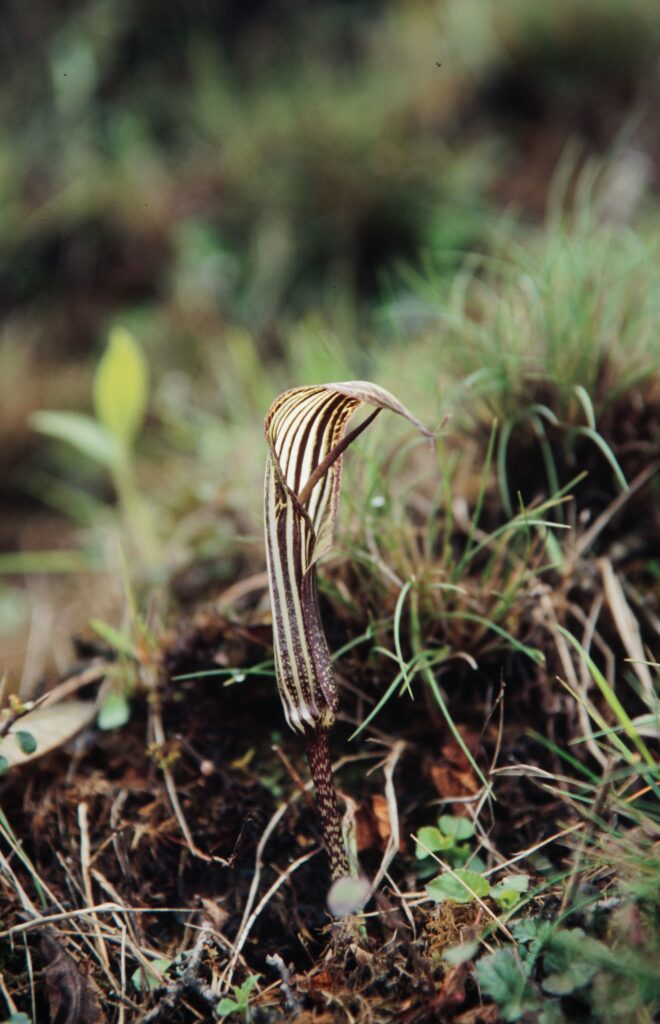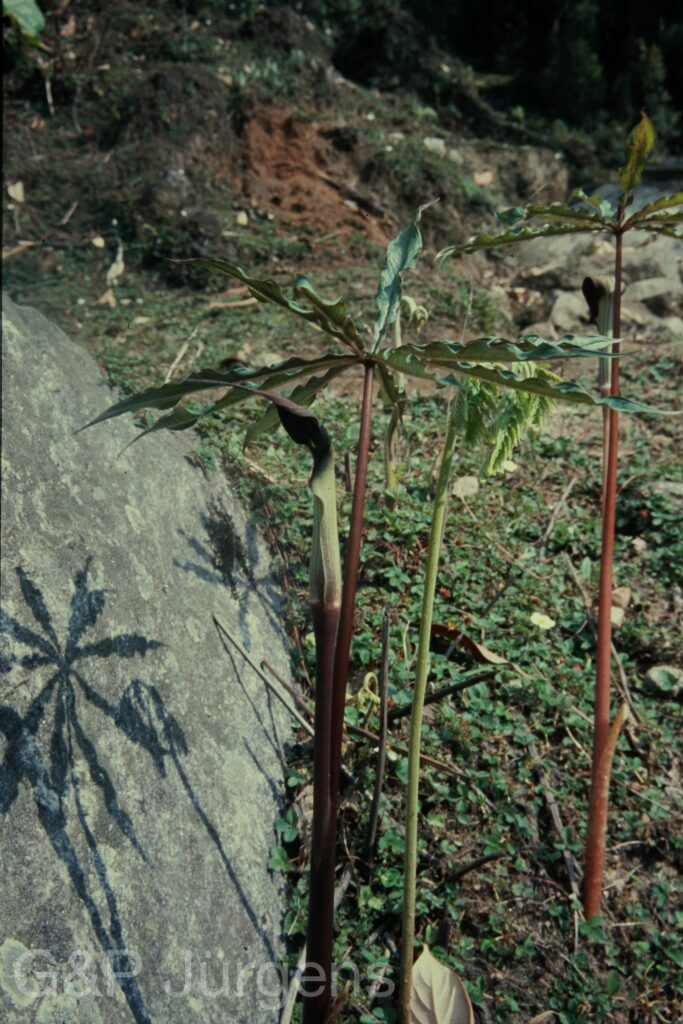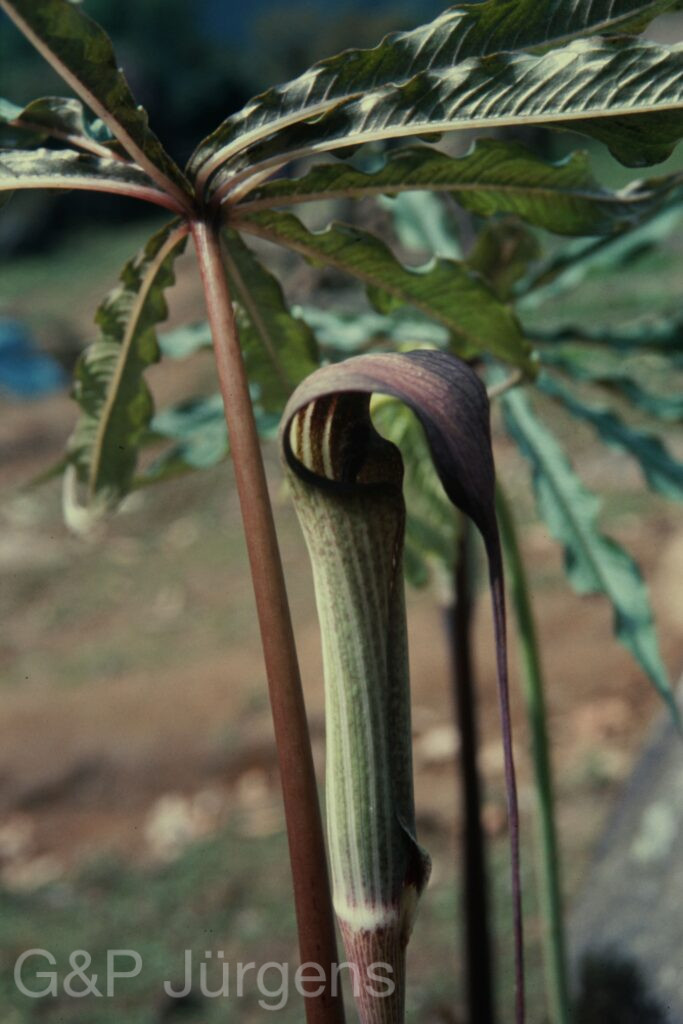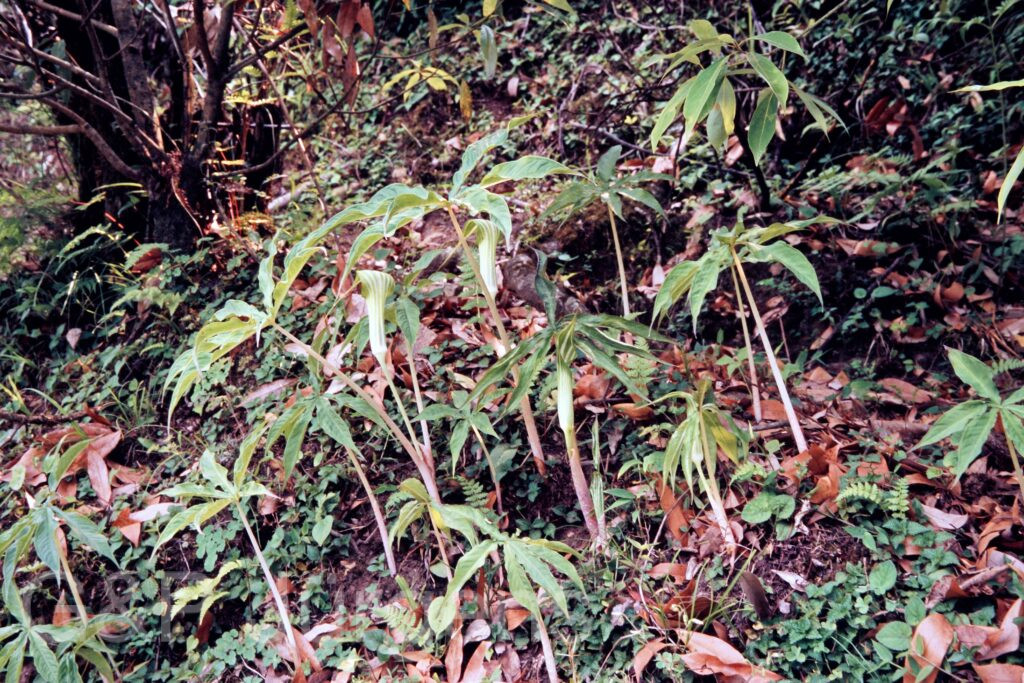
Tag:

Spring

Roxb.

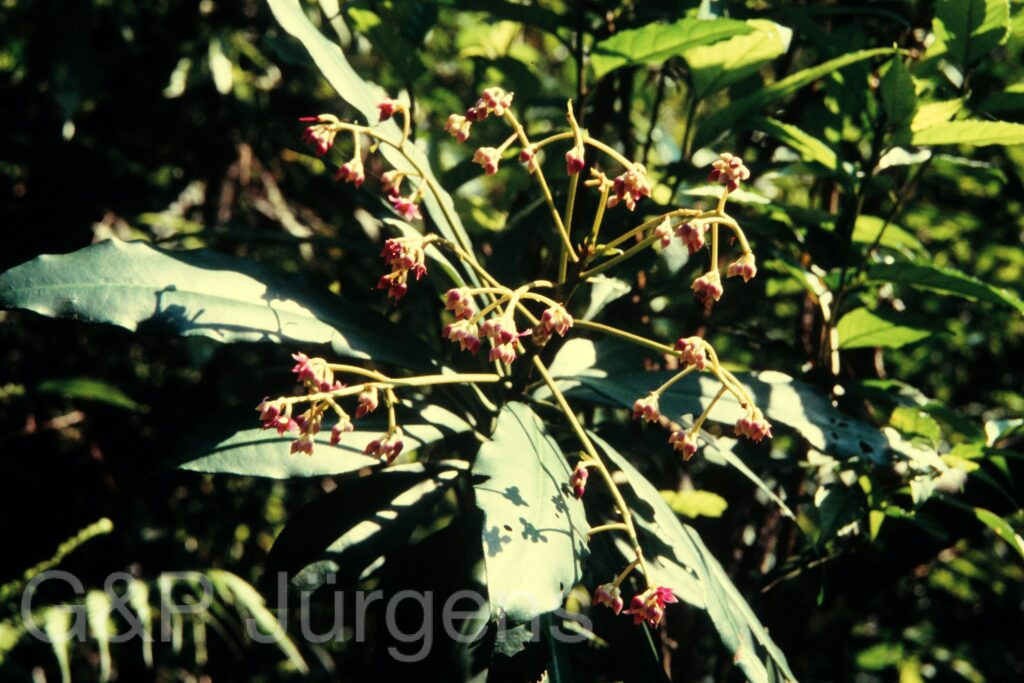
Nepal 97 458 P882
Nepal Arun-Valley 900m May

Description

Ardisia solanacea is a widespread tropical and subtropical shrub of South and Southeast Asia, recorded from India, Nepal, China, Bangladesh, Myanmar, Thailand, Sri Lanka, Malaysia and Indonesia, and naturalised or cultivated more widely; its 865 GBIF records make it one of the better-documented species in this group. It occupies lowland and lower-hill forest, forest margins, secondary thickets and roadside scrub, generally below about 1500 m. The plant photographed in the Arun Valley of eastern Nepal at 900 m, flowering in May, typifies its preference for warm, humid lower-montane settings.

It is an evergreen shrub or small tree with glabrous, terete branchlets. The leaves are alternate, elliptic to obovate-oblong, leathery, entire and obscurely gland-dotted, tapering to a short petiole. The inflorescences are lateral, umbellate to corymbose racemes borne on short specialised branchlets; the flowers are pinkish to rose-purple, with five reflexed, often punctate corolla lobes and prominent connivent anthers forming a cone, in the characteristic Ardisia fashion. The fruit is a depressed-globose, single-seeded drupe that ripens from red to glossy purplish-black.

In GBIF the name carries a synonym flag, but Ardisia solanacea Roxb. is the accepted name for this taxon. The species sits within Ardisia (Myrsinoideae of Primulaceae, formerly Myrsinaceae), a large pantropical genus distinguished by glandular punctations and drupaceous fruits. It is common, weedy in places, and of no conservation concern; its fruits are eaten by birds and the plant is used locally in traditional medicine.

Author: Roxb. · Sources: POWO (Kew), GBIF, Flora of China, Flora of Nepal, Pipoly & Chen revision of Asian Ardisia
M.Bieb.

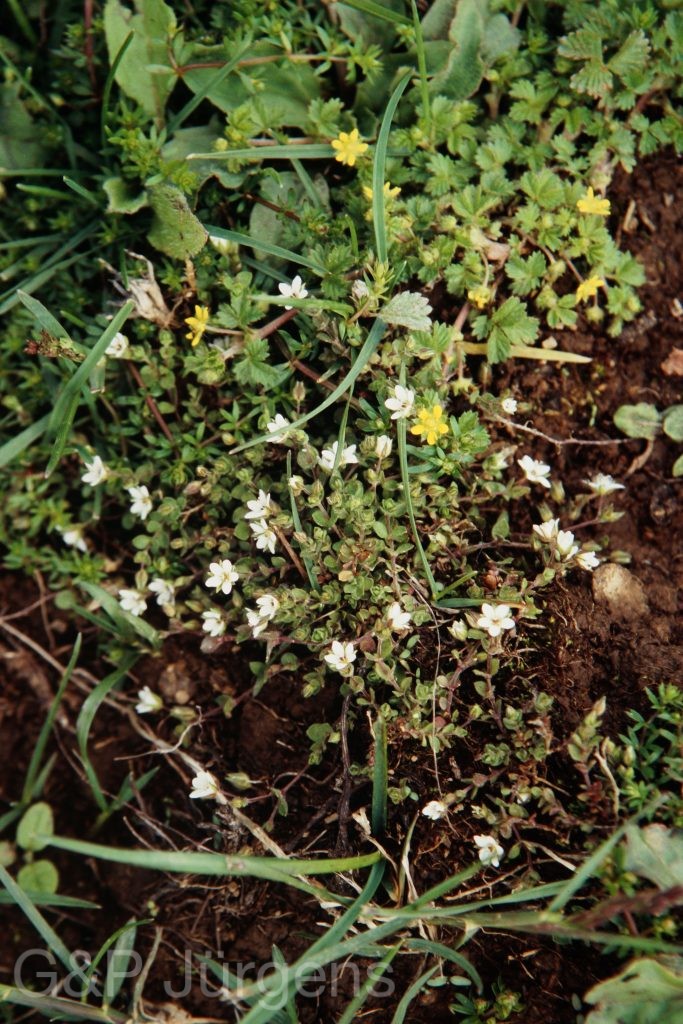
Bh09 185 P322
Bhutan Phajoding, 3600m June
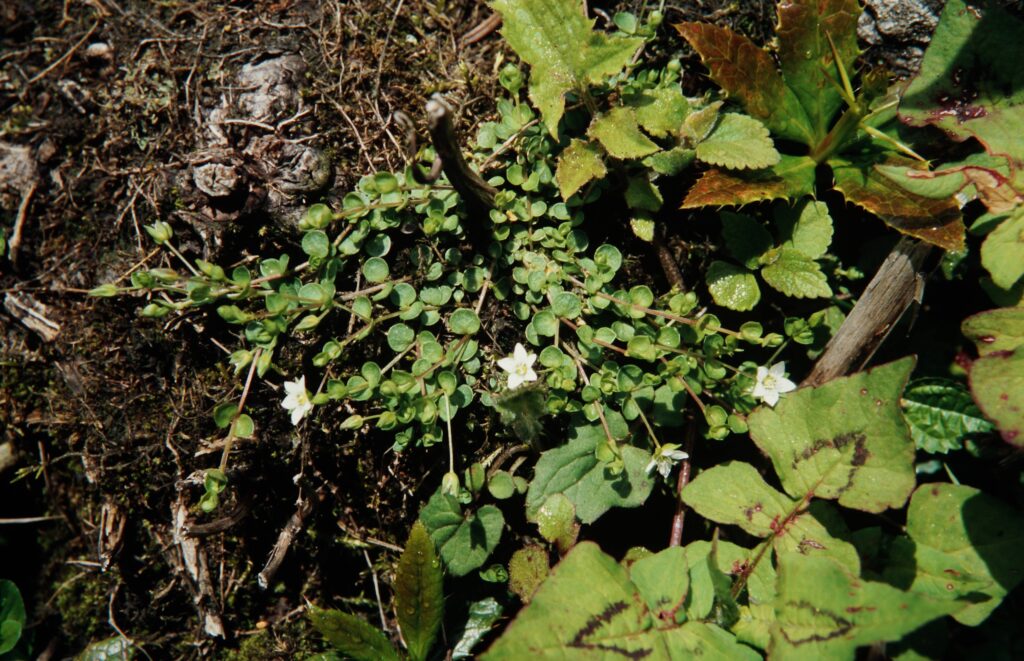
Sikkim 2006 414 ergebnis
India West-Bengal, Kishong 2800m, May

Description

Arenaria rotundifolia is a small alpine sandwort with a wide Eurasian montane distribution, documented by 331 georeferenced records reaching from the Caucasus and Anatolia (TR, GE, AM) and the Balkans (GR, AL, BG, ME, RS) eastward through Iran (IR) and Central Asia (KZ, UZ, TJ, KG) to China (CN), Nepal (NP) and India (IN). It is a plant of moist, open alpine and subalpine ground, growing on rocky slopes, screes, streamsides, damp turf and shaded banks at high elevation. The plants recorded at Phajoding in Bhutan at 3600 m in June and at Kishong in West Bengal at 2800 m in May illustrate its presence in cool, moist Himalayan montane habitats toward the eastern edge of its range.

It is a small, slender, tufted to loosely mat-forming perennial herb with delicate, ascending to decumbent, often glandular-hairy stems. The leaves are opposite, distinctly small and rounded, ovate to suborbicular, shortly petiolate below and sessile above, giving rise to the epithet rotundifolia. The flowers are borne in few-flowered, lax cymes; each has five free, green sepals and five white, entire (not notched) petals, ten stamens and a superior ovary with three styles, in the usual arrangement of the genus. The fruit is a small capsule opening by teeth twice the number of the styles to release numerous minute, reniform seeds.

Arenaria (Caryophyllaceae) is a large, taxonomically difficult genus of mostly cushion- or mat-forming herbs of cold and rocky habitats, in which species circumscription has long been complicated by reticulate variation across its broad Holarctic range. A. rotundifolia, with its wide trans-Eurasian montane distribution, exemplifies this pattern. It is a frequent and widespread alpine herb of no conservation concern, valued chiefly as an indicator of moist, high-elevation rock and turf communities.

Author: M.Bieb. · Sources: POWO (Kew), GBIF, Flora of Bhutan, Flora of China, Flora Europaea, McNeill monographic studies of Arenaria (Caryophyllaceae)

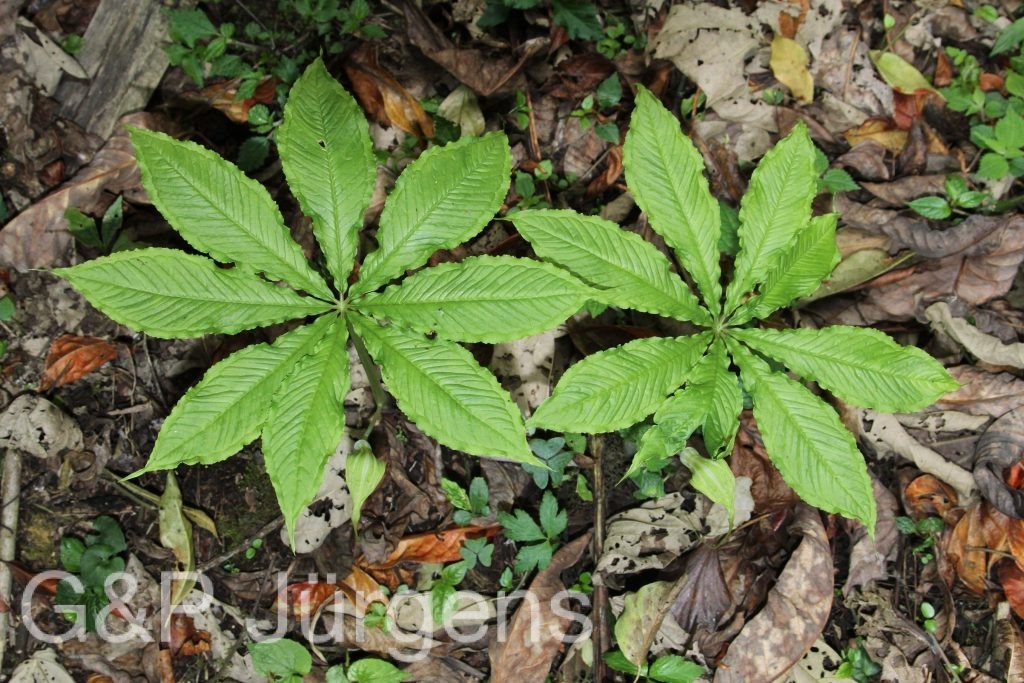
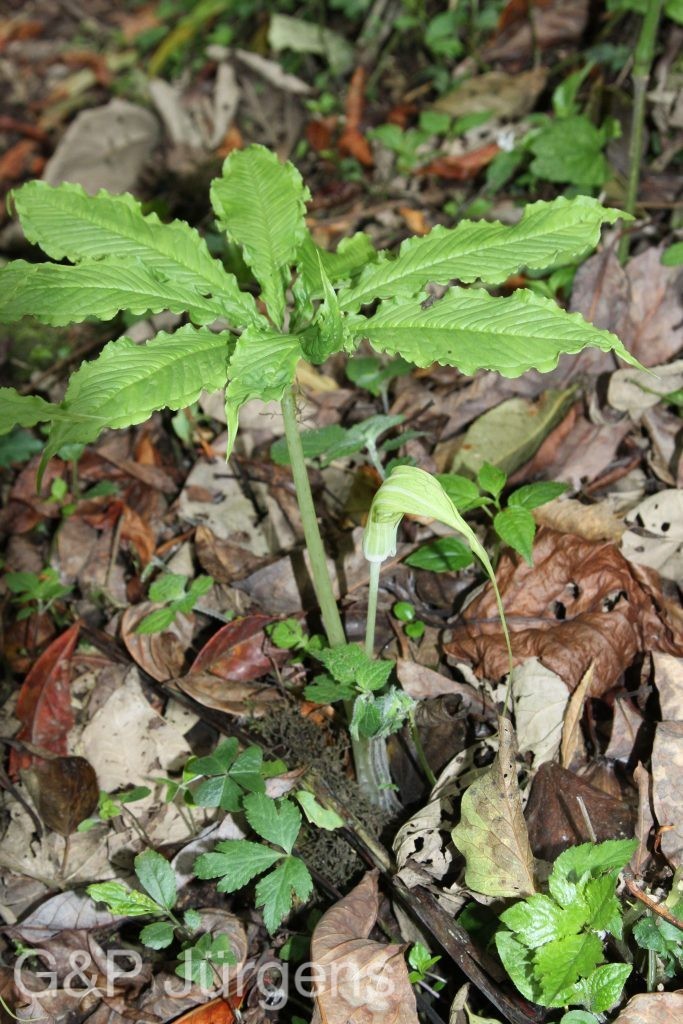
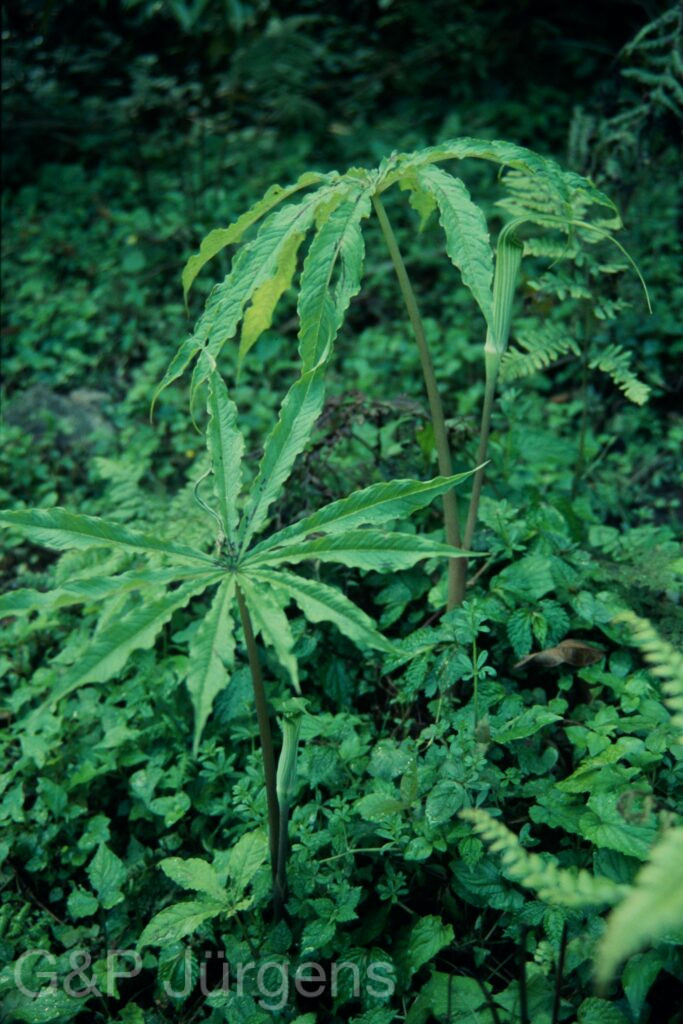
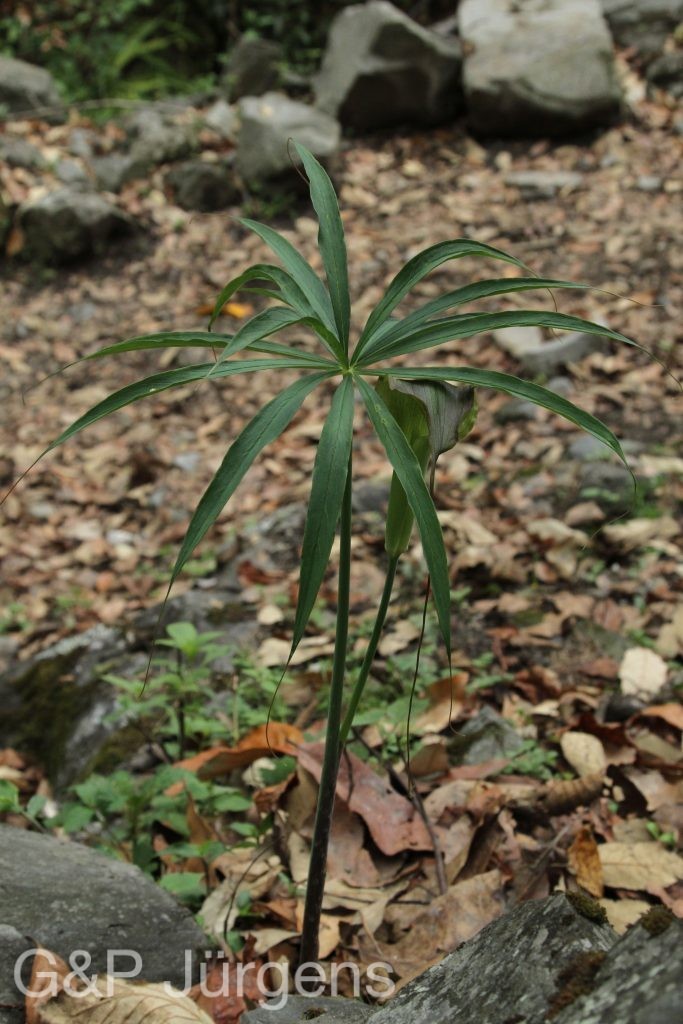
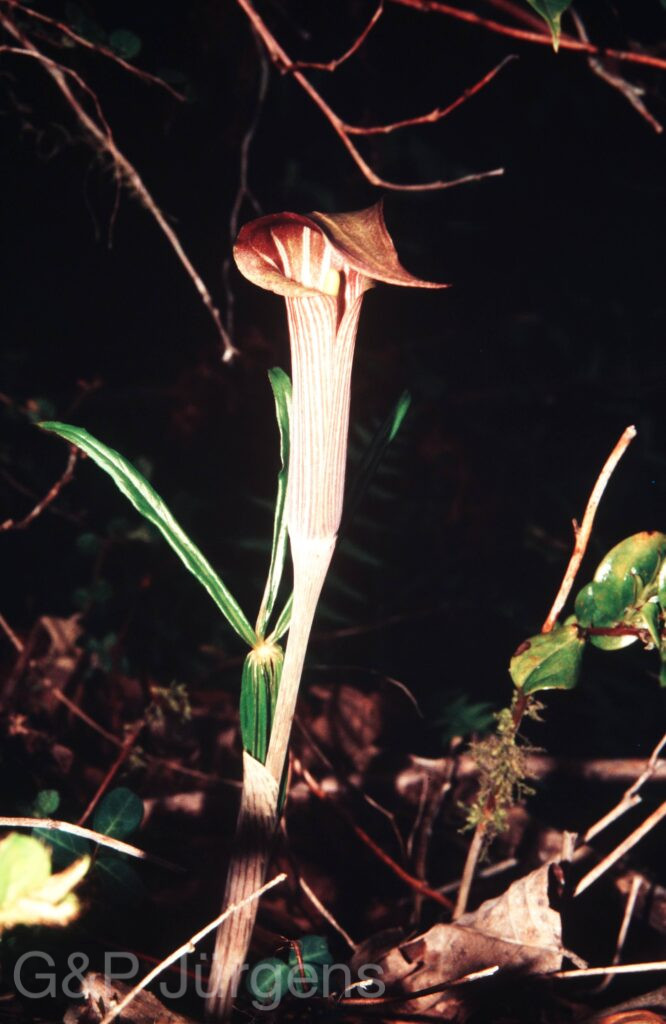
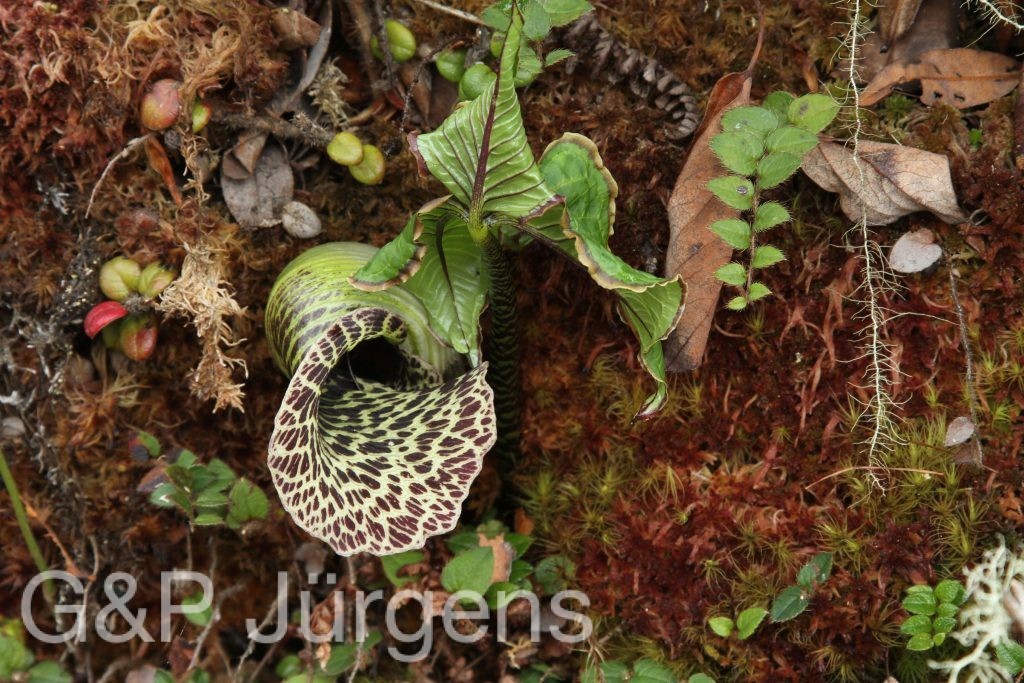
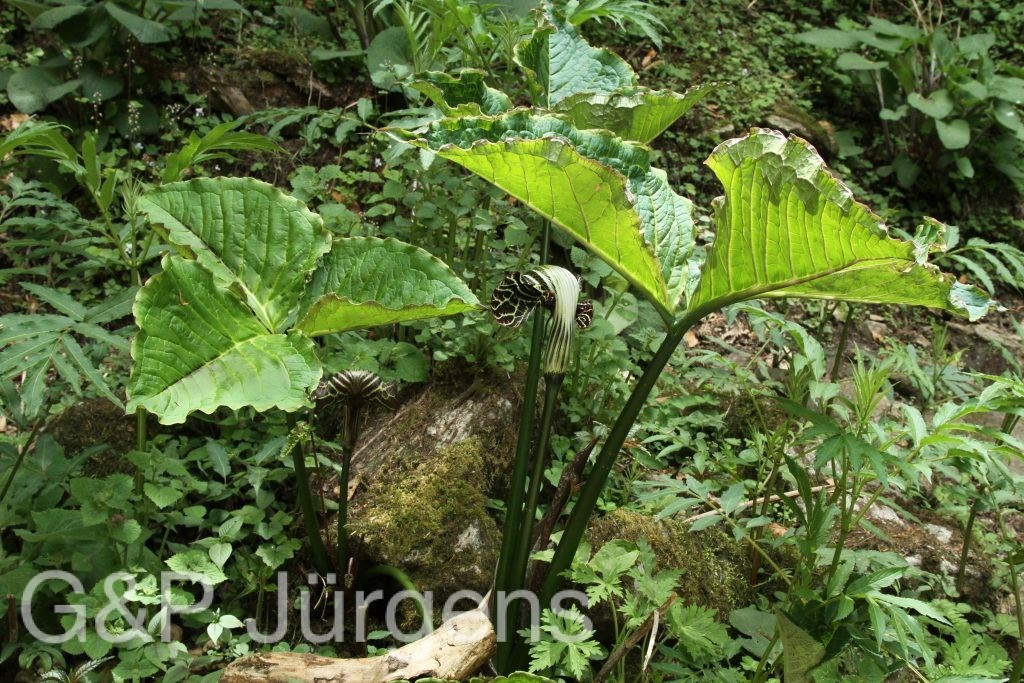
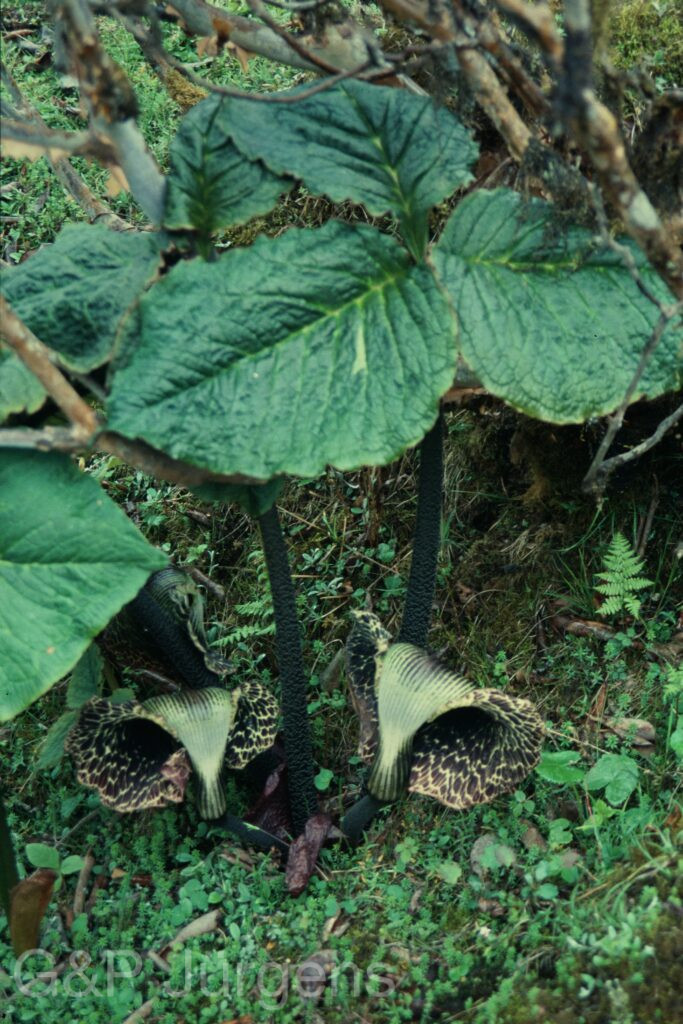
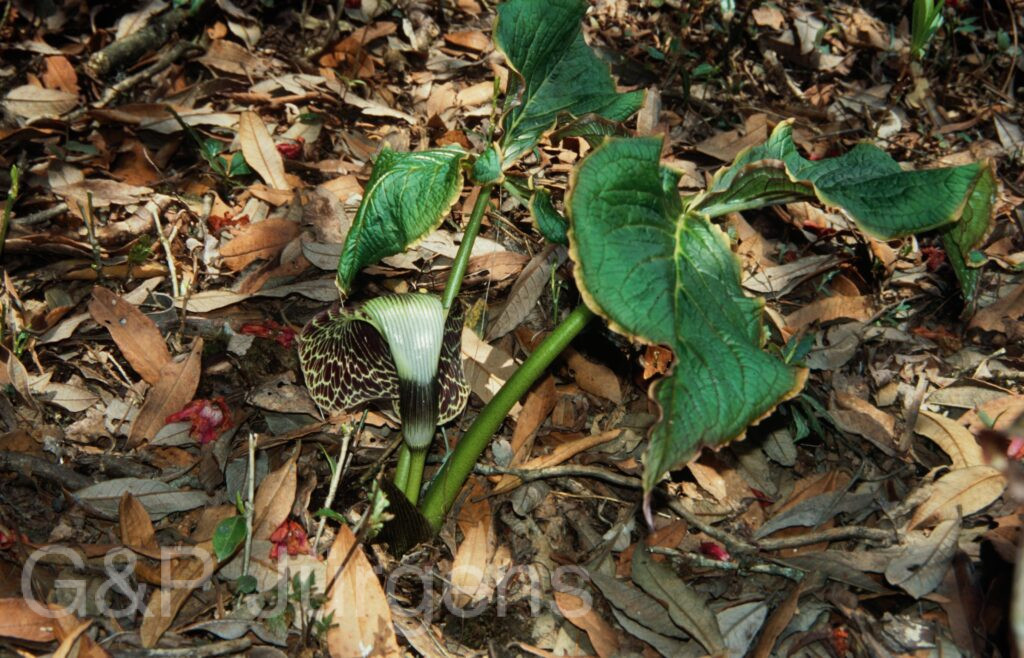
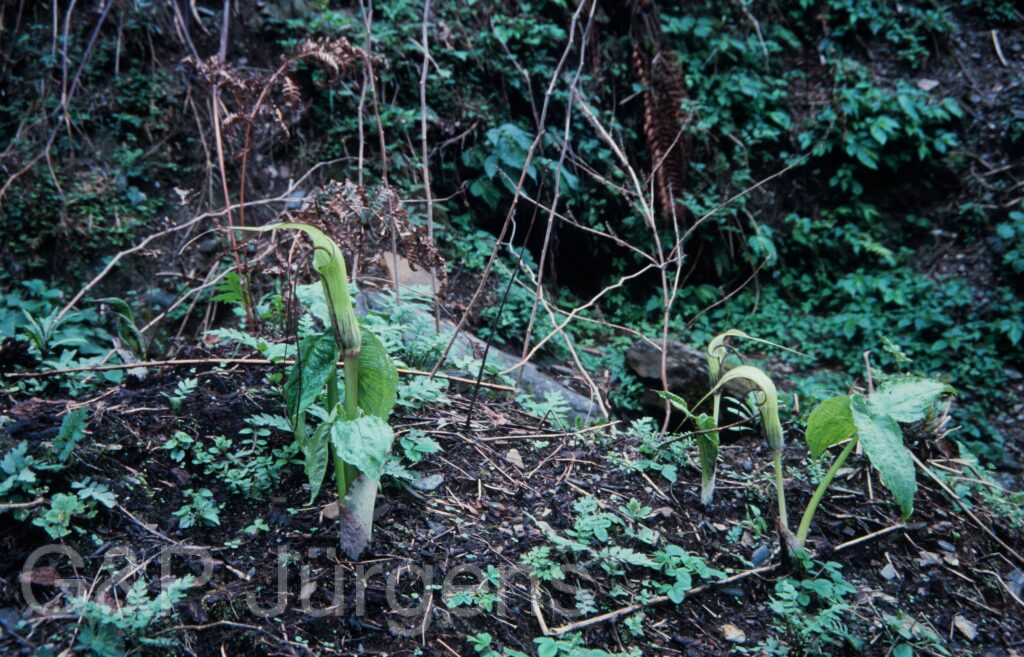
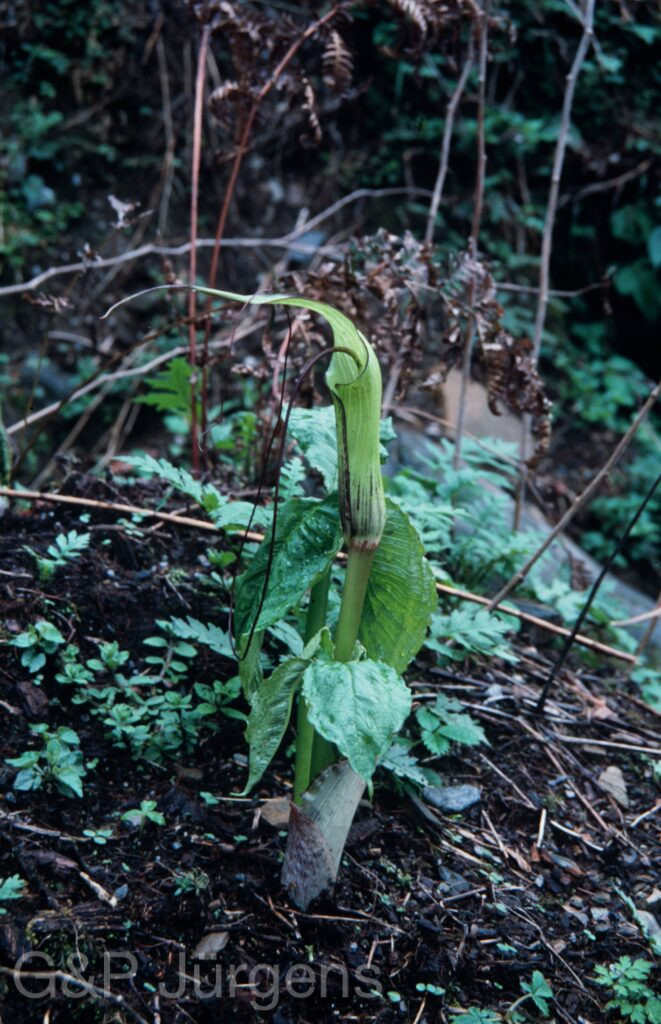
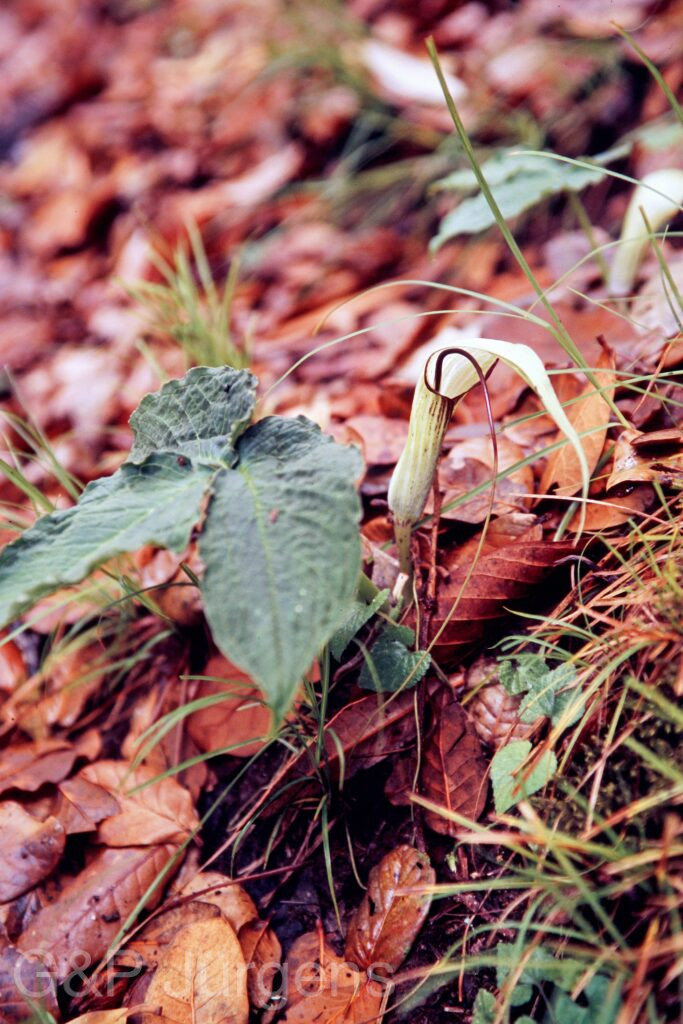
Arisaema concinnum

by GP Jürgens

Schott

Bhutan2014 461
Bhutan Tongsa 2000m, May
Bhutan2014 462
Bhutan Tongsa 2000m, May
Sikkim2004 118 P202
India West-Bengal, Utaray 2200m April

Description

Arisaema concinnum Schott is a tuberous aroid of the temperate Himalaya, ranging through India, Nepal, China, Bhutan, Myanmar and Pakistan. It is recorded from Bhutan at Tongsa near 2000 m, flowering in May, and from Utaray in West Bengal at about 2200 m in April, within the warm to cool temperate forest belt. The species grows in moist, shaded broadleaved and mixed forest, on humus-rich slopes, in ravines and along streamsides, typically between 1800 and 3000 m, where deep leaf litter and consistent monsoonal moisture favour its growth. Its roughly 216 GBIF records reflect a fairly wide but localised montane distribution.

The plant arises from a depressed globose tuber, producing usually a single large radiate leaf divided into numerous (commonly 7–15) lanceolate, acuminate leaflets arranged in a spreading pedate fan. The inflorescence is the characteristic aroid spadix enclosed in a spathe; in this species the spathe tube is greenish and the limb is striped green and white and drawn out into a long, slender, tail-like apex, while the appendix of the spadix is slender and exserted. As in most Arisaema the plants are paradioecious, shifting sex with size and vigour. Pollinated female inflorescences develop a dense club of red berries, each containing few seeds.

Arisaema concinnum belongs to a large, taxonomically intricate genus centred on the Sino-Himalaya, where rapid diversification and sex-lability have produced many closely allied species. Pollination is effected by fungus gnats lured into the spathe, a system in which the female trap can be lethal to the visiting insect. Widespread across its range, the species is not considered threatened, though forest clearance and tuber collection may locally reduce populations.

Author: Schott · Sources: POWO (Kew), GBIF, Flora of China, Flora of Bhutan, Flora of Nepal, The Genus Arisaema (Gusman & Gusman)

Schott

Bhutan2014 114
Bhutan Kadi 1600m, May
Bh09 254 P423
Bhutan Phobjika, 2900m June
Nepal 99 234 ergebnis
West-Nepal Gattalekh 2800m, June

Description

Arisaema consanguineum Schott is a widespread tuberous aroid of the Sino-Himalayan region, recorded from China, Taiwan, Thailand, Nepal, Bhutan, India, Myanmar, Vietnam, the Philippines, Laos and Japan, with cultivated records reaching Europe and North America; GBIF documents over 2000 occurrences. It grows in shaded forest, forest margins, bamboo thickets, scrub and grassy slopes, generally between about 1500 and 3300 m. The illustrated plants were recorded at Kadi (1600 m, May) and Phobjika (2900 m, June) in Bhutan and at Gattalekh in West Nepal (2800 m, June), spanning the warm-temperate to cool-temperate montane zone where this jack-in-the-pulpit emerges with the early monsoon.

The plant arises from a depressed-globose tuber, producing a stout pseudostem sheathed by the mottled petiole bases. There is usually a single radiate (pedately compound) leaf bearing numerous narrow, lanceolate leaflets that frequently terminate in long, threadlike drip-tips and are sometimes silvery-banded. The inflorescence is a spadix enclosed by a green to purplish, white-striped spathe whose limb arches forward; the spadix appendage is slender and elongate. Plants are typically dioecious, sex expression varying with tuber size. The fruit is a dense cylindrical infructescence of red berries borne on the persistent spadix.

A member of the species-rich genus Arisaema, this taxon belongs to the radiate-leaved Sino-Himalayan group and is prized in horticulture for its striking foliage. Sex change linked to plant vigour is an ecological hallmark of the genus, and the showy berries are bird-dispersed. The species is common and adaptable, not of conservation concern, though wild tubers are locally harvested for traditional medicine.

Author: Schott · Sources: POWO (Kew), GBIF, Flora of China, Flora of Bhutan, Annotated Checklist of the Flowering Plants of Nepal, Gusman & Gusman The Genus Arisaema

Arisaema costatum

by GP Jürgens

Mart.

Nepal 97 313 P617
Nepal Honngaon 2300m May
Nepal 1994 192 ergebnis
Ost-Nepal Mewa-Khola
2100m April
Nepal 2009 98 ergebnis
Nepal Helambu Samathang 2410, May

Description

Arisaema costatum is a tuberous aroid of the central and eastern Himalaya, recorded by GBIF from Nepal, China, India and Bhutan across about 99 occurrences. It is a herb of moist, shaded broadleaved and mixed forest, forest margins, ravines and damp humus-rich slopes at mid montane elevations. The photographed plants come from Nepal at Honngaon (2300 m, May), eastern Nepal in the Mewa-Khola (2100 m, April) and the Helambu at Samathang (2410 m, May), a consistent band of cool, humid forest understorey where this cobra-lily emerges with the spring rains.

The plant arises from a depressed globose tuber and typically produces a single large pedate leaf divided into numerous lanceolate, acuminate leaflets, the central one largest, the lamina conspicuously ribbed, the costae giving rise to the epithet costatum. The inflorescence is a spadix enveloped by a spathe whose tube is greenish and the limb dark purple to maroon, strongly striped with white, and drawn out into a long, slender, pendent filiform tail. Arisaema species are commonly paradioecious, individuals shifting sex with size and vigour: smaller plants bear staminate flowers, larger ones pistillate. Pollinated by fungus-gnats lured into the spathe, fertile plants ripen a dense club of bright red berries.

GBIF accepts the name. The genus Arisaema is a centre of Himalayan diversity, with A. costatum among its most striking species for the boldly white-striped, long-tailed spathe. The size-dependent sex change is an adaptive reproductive strategy linked to tuber resources. Widespread within suitable forest, the species is not regarded as threatened, though forest clearance locally reduces its habitat.

Author: Mart. · Sources: POWO (Kew), GBIF, Flora of Nepal, Flora of China, Gusman monograph of Arisaema

Schott

Sikkim 2006 70 ergebnis
Sikkim India Kalipokhri 2900m, May

Description

Arisaema decipiens (Schott) is a tuberous perennial of the family Araceae (the genus is here listed under the synonymous family heading Aceraceae) distributed through the eastern Himalaya and adjacent Southeast Asia, from northeast India and Myanmar through southern China to Vietnam, Japan and Malaysia. With only around 230 GBIF occurrences it is a comparatively localised species of the moist eastern montane forests. It grows in the shaded understorey of evergreen and mixed broad-leaved forest, on humus-rich slopes and among rocks, principally between 2,000 and 3,000 m, as exemplified by the collection from Kalipokhri in Sikkim, India, at 2,900 m in May, when the cohort of fresh inflorescences emerges with the spring growth.

The plant arises from a depressed-globose tuber and produces a pseudostem formed by the overlapping leaf sheaths. Typically a single trifoliolate (occasionally pedately divided) leaf is produced, with elliptic to ovate, acuminate leaflets. The inflorescence is the characteristic aroid spadix enclosed by a green to purplish spathe striped with white; the spathe limb is hooded and tapers to a slender tip, while the spadix appendix is slender and stipitate. As in most Arisaema the species is paradioecious, individual plants changing functional sex between male and female phases according to size and vigour. The fruit is a head of red berries borne on the persistent infructescence.

Arisaema is a large and taxonomically intricate genus in which species boundaries rest heavily on spathe coloration and spadix-appendix form, and A. decipiens belongs to a closely related complex of eastern Himalayan cobra-lilies. Its size-dependent sex change is of considerable interest to reproductive ecologists. Restricted to the wetter eastern ranges, the species is less common than its western congeners but is not currently regarded as threatened.

Author: Schott · Sources: POWO (Kew), Flora of Bhutan Vol. 3, GBIF, Flora of China Vol. 23, Gusman & Gusman: The Genus Arisaema (2006)

Arisaema echinatum

by GP Jürgens

(Wall.) Schott

Sikkim2004 326 P587
Sikkim/India Kokchurong 3400m May
Sikkim2004 327 P588
Sikkim/India Kokchurong 3400m May
Garh 07 86 ergebnis
India Garhwal Trijugi Narayan 2450m, June

Description

Arisaema echinatum is a tuberous aroid of the Himalaya, distributed through China, Nepal, India and Bhutan, with about 44 georeferenced records spread along the temperate to subalpine Himalayan belt. It grows in moist, shaded forest, among rhododendron and conifer scrub and on humus-rich banks, generally between 2400 and 3500 m. The cited collections from Kokchurong in Sikkim (3400 m, May) and from Trijugi Narayan in Garhwal (2450 m, June) bracket its altitudinal range and show its emergence and flowering through the late spring and early monsoon as the soil warms.

The plant arises from a depressed-globose tuber and usually bears one or two pedately compound leaves, each divided into several oblong-elliptic, acuminate leaflets borne on a long sheathing petiole. The inflorescence comprises a spathe with a cylindrical tube and an incurved, acuminate limb, enclosing the spadix; the diagnostic feature is the sterile appendix of the spadix, which is roughened or echinate with projecting papillae or processes, giving the species its name. As in most Arisaema the plants are sequentially hermaphrodite, shifting sex with size. The infructescence is a dense head of crowded scarlet berries.

Arisaema echinatum, transferred to the genus by Schott from Wallich's basionym, belongs to the taxonomically intricate Himalayan section of the genus, where appendix morphology is a key diagnostic. Pollination is by small flies and fungus gnats lured into and temporarily trapped by the spathe, and the bright berries are bird-dispersed. With a restricted montane range and few records, it is potentially sensitive to forest loss, though it has not been formally assessed for conservation.

Author: (Wall.) Schott · Sources: POWO (Kew), GBIF, Flora of China, Flora of Bhutan, Annotated Checklist of the Flowering Plants of Nepal, Gusman & Gusman The Genus Arisaema

Hara

Nepal 2009 20 ergebnis
Nepal Helambu Koktrok 2500m, May

Description

Arisaema exappendiculatum is a Himalayan tuberous aroid of restricted distribution. GBIF holds only some 43 occurrences, chiefly from Nepal and adjacent China, with a handful of herbarium-derived European records (Belgium). It is a plant of moist temperate broadleaved and mixed forest, shaded ravines and shrubby slopes, growing in humus-rich soils. The illustrated plant was photographed in the Helambu region of central Nepal near Koktrok at about 2,500 m in May, a typical station within its montane band of roughly 2,000–3,000 m, where it emerges and flowers with the onset of the pre-monsoon rains.

The plant arises from a depressed-globose tuber producing usually a single leaf with a long sheathing petiole. The leaf is pedately divided into several oblong-lanceolate, acuminate leaflets. The inflorescence is a spathe with a convolute tube and an arching, acuminate limb, greenish to purplish and often pale-striped. As the epithet indicates, the spadix appendix is reduced or absent (exappendiculate), the spadix tapering abruptly above the fertile zone. The plants are dioecious, sex expression depending on tuber size; the fruiting spadix bears a cluster of red berries.

The absence of a developed spadix appendage distinguishes A. exappendiculatum within the predominantly Asian genus Arisaema and aligns it with related Himalayan species. Owing to its narrow range and modest population sizes it warrants monitoring, though no formal IUCN assessment is established. Note that the input wp_link references A. erubescens, with which this taxon should not be confused.

Author: Hara · Sources: POWO (Kew), Flora of Nepal, Flora of China Vol. 23, GBIF, Gusman & Gusman: The Genus Arisaema (2006)

Arisaema griffithii

by GP Jürgens

Schott

Bhutan2014 360
Bhutan Tumching-La 3100m, May
Bhutan2014 830
Bhutan Thimphu 2450m, May
Sikkim2004 399 P681
Sikkim/India Lachung 3200m
Nepal 2001 104 ergebnis ergebnis
East-Nepal Gupka Pokhari 3050m, April

Description

Arisaema griffithii is an eastern Himalayan tuberous geophyte distributed through Nepal, Sikkim and Darjeeling in India, Bhutan, and into adjacent southern China (Xizang, Yunnan) and northern Myanmar, with georeferenced records also from Bangladesh. It is a plant of the cool temperate zone, growing in shaded moist forest, shrubberies, forest clearings and grassy slopes broadly between 2400 and 3600 m. The images document its altitudinal span, from Bhutan's Tumching-La at 3100 m and Thimphu at 2450 m flowering in May, to Lachung in Sikkim at 3200 m and Gupka Pokhari in east Nepal at 3050 m in April.

The plant arises from a depressed tuber and typically bears two trifoliolate leaves with broadly ovate to rhombic, acuminate leaflets, the lateral pair often oblique. The species is celebrated for its remarkable inflorescence: the spathe is large and deeply purple, conspicuously net-veined with pale reticulation, with the tube broadly funnel-shaped and the lamina arched and downturned, its margins recurved. The spadix appendix is exserted and elongated into a long, pendent whip-like flagellum. The plants are dioecious, with small unisexual flowers crowded at the base of the spadix, and the female inflorescence develops a cluster of red berries at maturity.

Within Araceae, A. griffithii belongs to section Sinarisaema and is one of the most distinctive members of the genus, named for William Griffith. Its drooping, intricately veined spathe lures fungus-gnat and small fly visitors into the inflorescence. Prized among specialist gardeners, it remains locally frequent and is not considered globally threatened, though vulnerable to habitat loss and tuber collection.

Author: Schott · Sources: POWO (Kew), GBIF, Flora of Bhutan, Flora of China, Gusman & Gusman 'The Genus Arisaema: A Monograph for Botanists and Nature Lovers'

Blume

Nepal 2001 241 ergebnis ergebnis
Nepal (Gorkha) Niuli Kharka 2600m, May
Nepal 2001 242 ergebnis ergebnis
Nepal (Gorkha) Niuli Kharka 2600m, May
Garh 07 264 ergebnis
India Garhwal Belag Khal 2800m, June

Description

Arisaema intermedium is a Himalayan tuberous aroid distributed along the temperate forest belt of the central and eastern Himalaya, recorded by GBIF from India, Nepal, China, Bhutan and Pakistan across some 118 georeferenced collections. It is a plant of moist, humus-rich woodland floors, shady banks, forest clearings and the margins of rhododendron, oak and conifer forest, where it emerges with the onset of the pre-monsoon and monsoon seasons. Its typical elevational band lies between roughly 2,400 and 3,200 m, consistent with the documented occurrences from Niuli Kharka in the Nepalese district of Gorkha at about 2,600 m in May and from Belag Khal in Garhwal, India, at around 2,800 m in June. The flowering coincides with the early growing season before the leaf is fully expanded.

The species grows from a subglobose underground tuber and produces a solitary leaf divided into three leaflets, the central leaflet broadly ovate to rhombic and the laterals obliquely ovate, the blade often somewhat undulate and acuminate. The inflorescence is a typical aroid spathe-and-spadix structure, the pseudostem and peduncle arising together; the spathe tube is greenish and the limb arched, frequently striped purplish and white with a long-acuminate apex. The diagnostic feature of the genus is the spadix appendage, which in this species is elongate and gradually tapering, projecting forward beyond the spathe mouth. As in other Arisaema the plants are paradioecious, smaller individuals bearing male flowers and larger ones female; pollinated female spadices develop into a dense club of fleshy red berries at maturity.

Arisaema intermedium belongs to a notoriously variable complex within section Sinarisaema, and its delimitation against allied taxa such as A. propinquum has long occupied aroid systematists. The genus exemplifies size-dependent sex change (sequential hermaphroditism keyed to tuber reserves), a reproductive strategy of considerable interest to evolutionary ecologists, with pollination effected by fungus-gnats and small flies trapped within the spathe. Though not formally assessed as threatened and locally frequent within its range, the species shares the general vulnerability of forest-floor Himalayan herbs to habitat degradation and the harvesting pressures that affect tuberous aroids.

Author: Blume · Sources: POWO (Kew), GBIF, Flora of China Vol. 23, Flora of Bhutan Vol. 3, Flora of Nepal, Flora of Pakistan, Gusman & Gusman: The Genus Arisaema, A Monograph for Botanists and Nature Lovers