Tag:

Spring

Benth.

Bhutan2012 349
Bhutan Wangdi 2000m, September
Sikkim 2006 466 ergebnis
India West-Bengal, Ruhig-Chu 2100m, May

Description

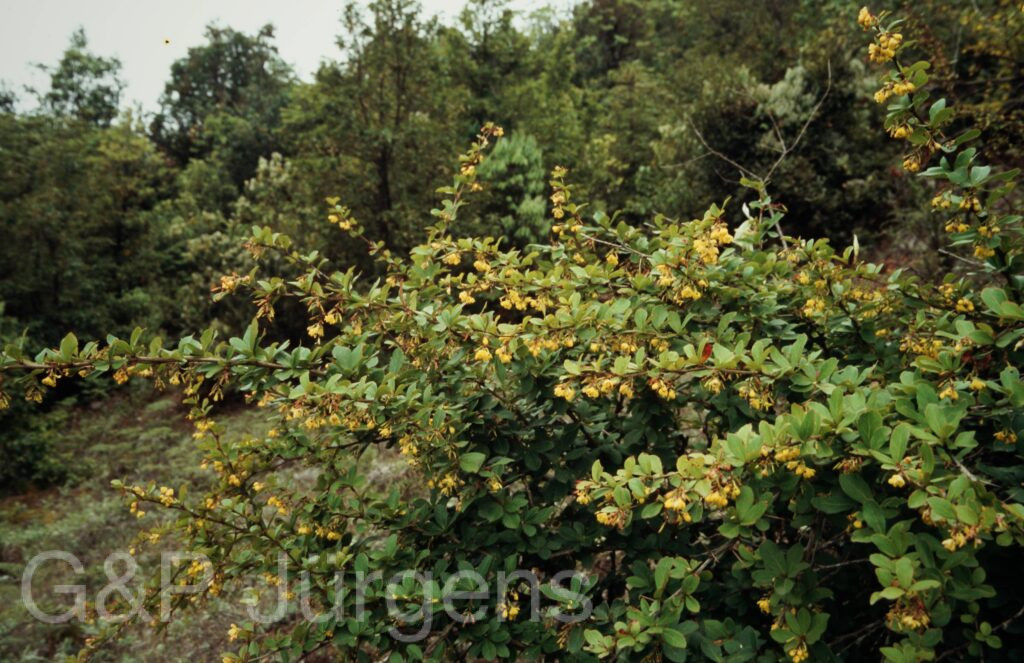
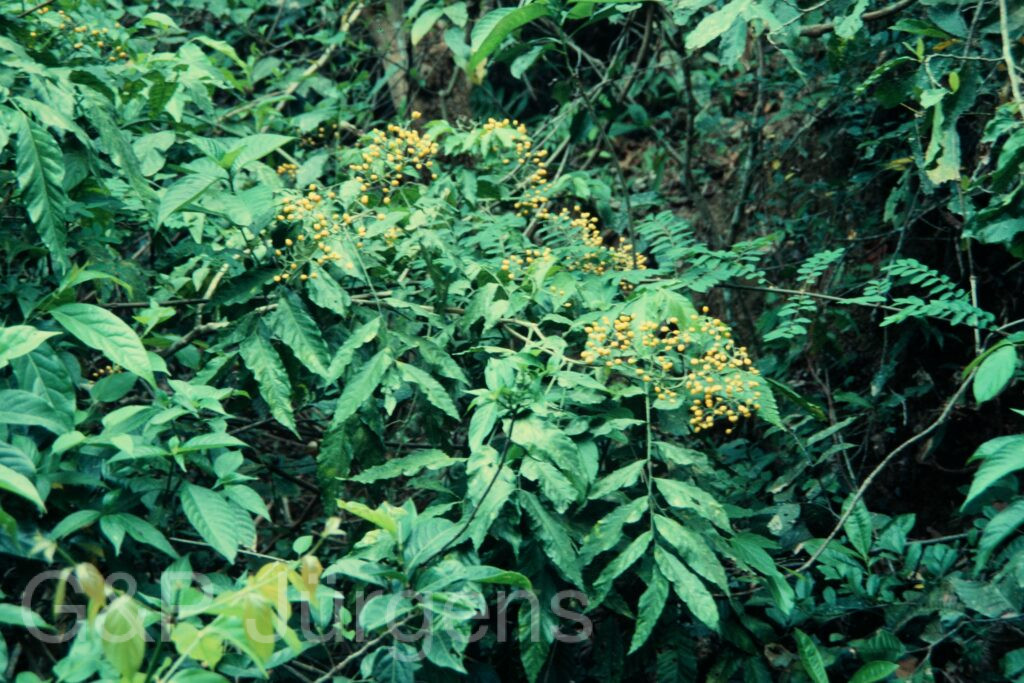
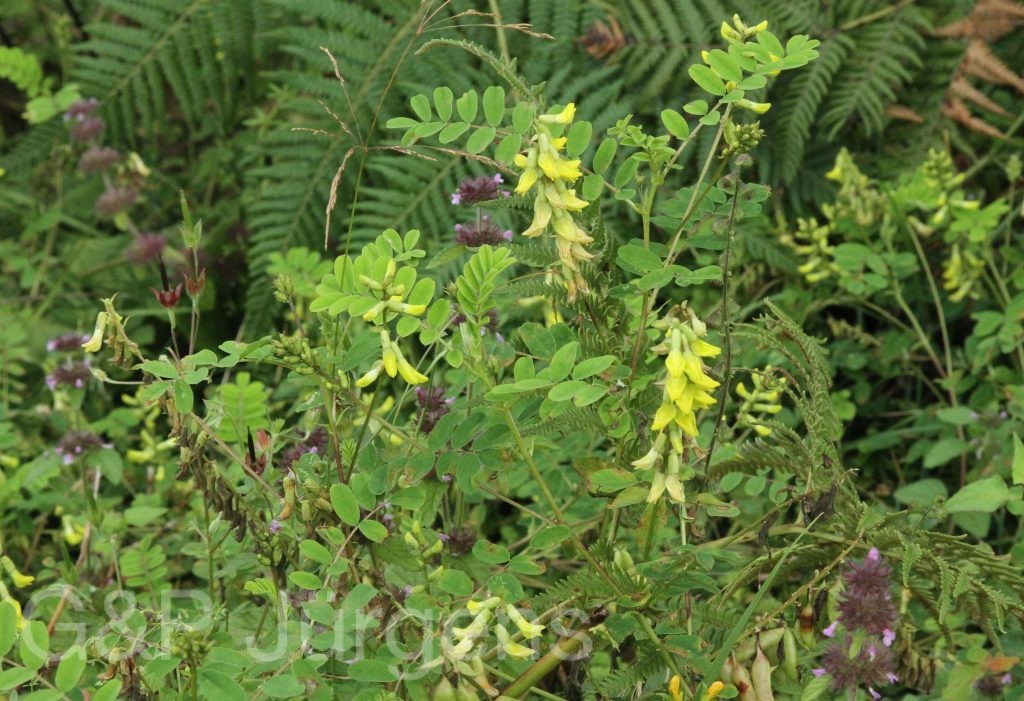
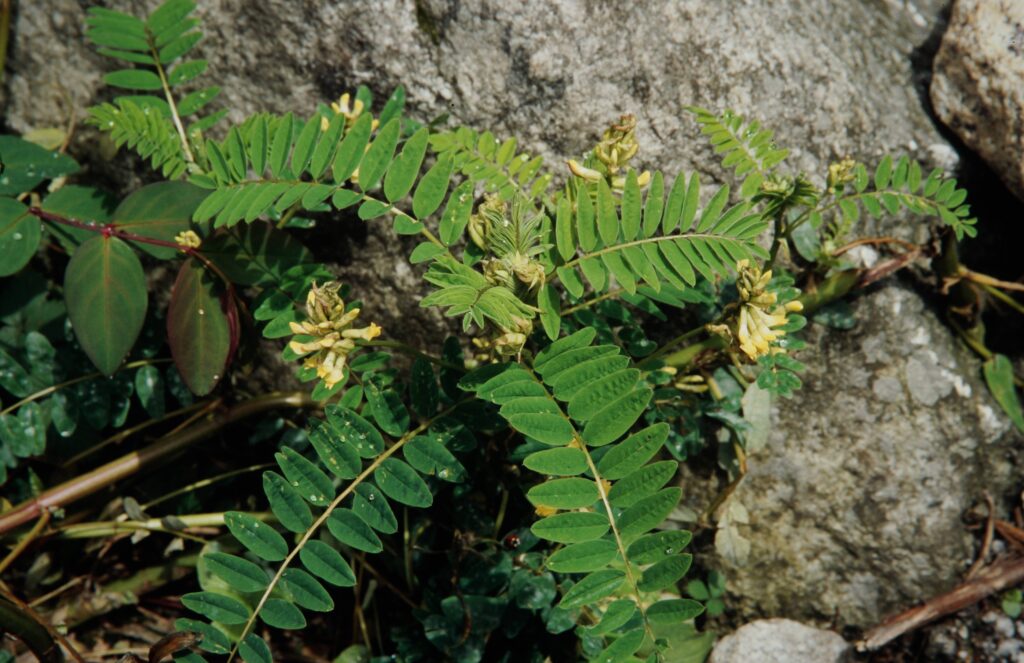
Astragalus concretus is a Himalayan milkvetch recorded from Nepal, India, China, Pakistan and Bhutan, with about 147 georeferenced occurrences concentrated along the central and eastern ranges; scattered records from the United States, Russia and Belgium derive from herbarium and database holdings rather than wild populations. It favours open, sunny banks, dry slopes, scrub margins and disturbed ground in the subtropical to lower temperate zone, broadly between 1500 and 2500 m. The cited gatherings from Wangdue in Bhutan at 2000 m in September and from the Rishi Chu valley in West Bengal at 2100 m in May indicate a tolerance of warm mid-elevation habitats.

It is a perennial or robust herb with ascending to spreading stems. The leaves are imparipinnate with several pairs of oblong to elliptic leaflets, the foliage typically appressed-pubescent. The flowers are borne in axillary racemes; the papilionaceous corolla, of purplish to pale colouring, shows the standard, wing and keel petals characteristic of the genus, subtended by a campanulate, toothed calyx. The fruit is a legume pod, in this species somewhat inflated and incompletely two-celled by intrusion of the ventral suture, the feature reflected in the epithet.

Astragalus is among the largest of all plant genera, and its Himalayan members are taxonomically intricate, separated largely on pod and indumentum characters. As a nitrogen-fixing legume, A. concretus contributes to soil enrichment on poor, eroding slopes. It is not regarded as threatened, occurring widely across disturbed and natural openings throughout its range.

Author: Benth. · Sources: POWO (Kew), GBIF, Flora of China, Flora of Bhutan, Astragalus and Oxytropis monographs of Podlech and Maassoumi
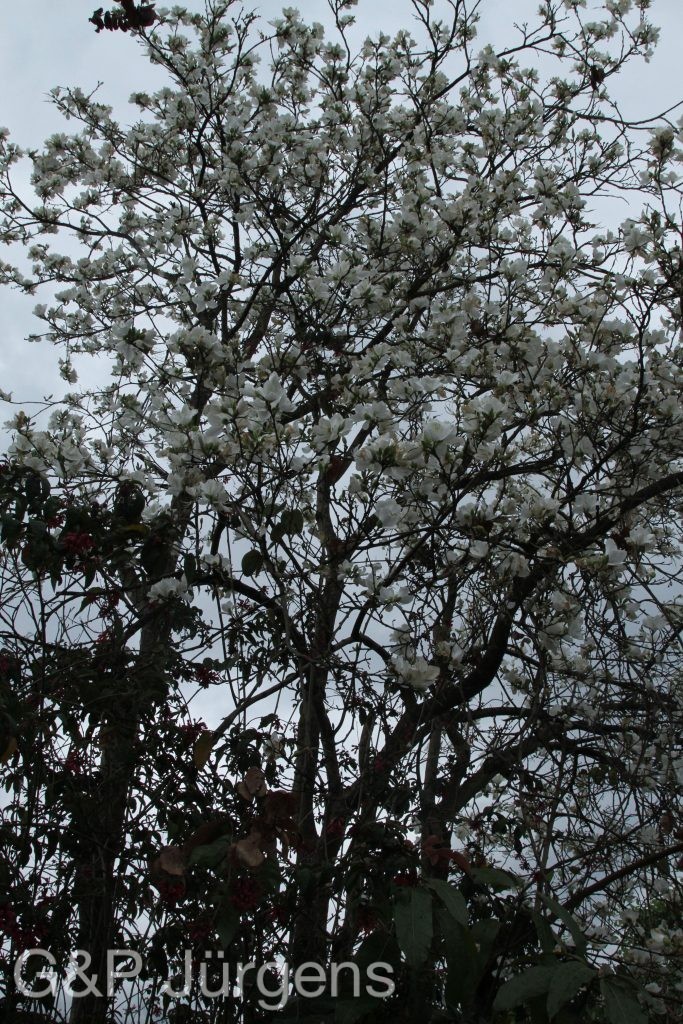
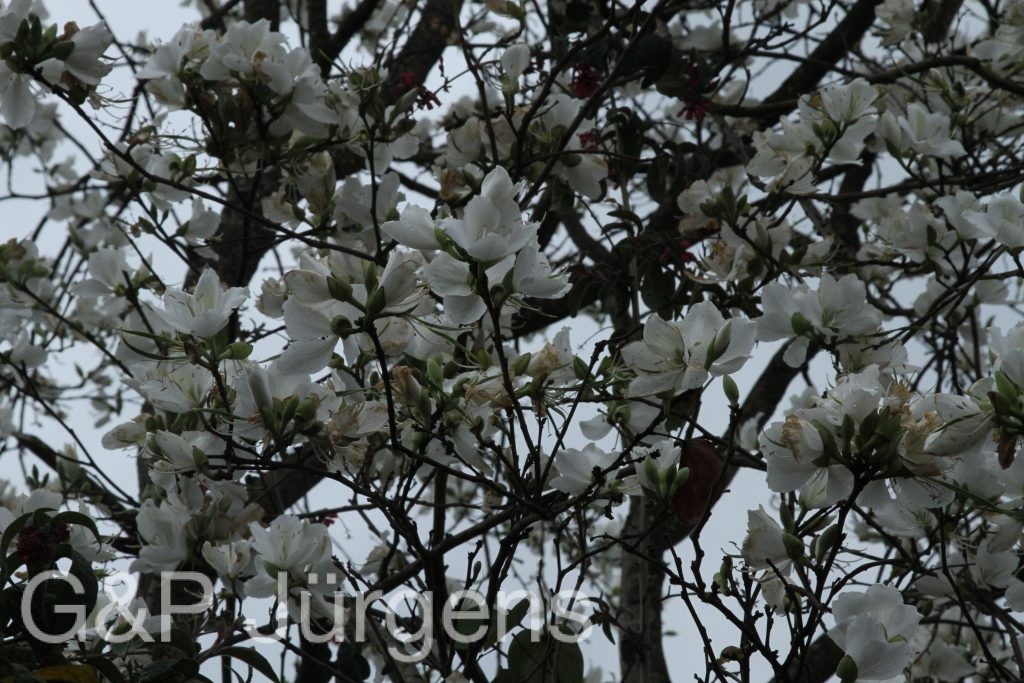
Bauhinia variegata

by GP Jürgens

L.

Bhutan2014 45
Bhutan Trashigang 1200m, May
Bhutan2014 46
Bhutan Trashigang 1200m, May
Nepal 1994 170 ergebnis
Ost-Nepal Mewa-Khola
1850m April

Description

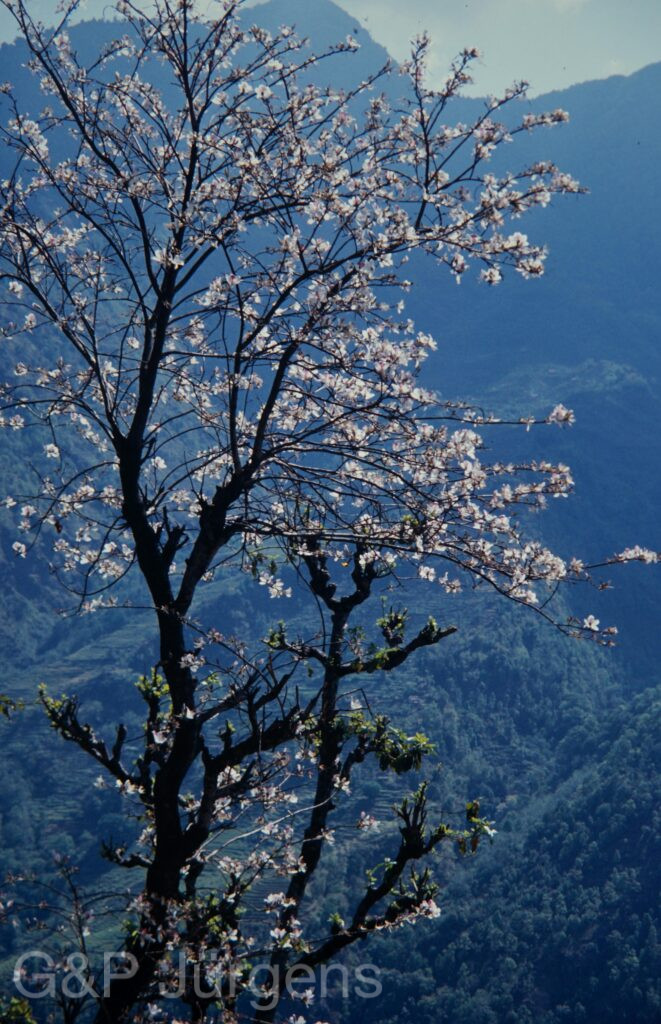
Bauhinia variegata, the orchid tree or kachnar, is a deciduous tree native to tropical and subtropical Asia and now pantropically naturalised, reflected in GBIF's nearly 5000 occurrences spanning India, Nepal, China, Myanmar, Thailand and Pakistan as well as introduced ranges in Brazil, the United States, Mexico, South Africa, Australia and Spain. In the Himalayan foothills it occupies warm, seasonally dry broadleaf forest, riverine slopes and disturbed ground from the plains to about 1900 m. The photographed trees from Trashigang in eastern Bhutan at 1200 m in May and from the Mewa-Khola in eastern Nepal at 1850 m in April illustrate its lower-montane habitat, where it flushes conspicuous blossoms in the dry pre-monsoon months on largely leafless branches.

It is a small to medium tree with grey-brown bark and a spreading crown. The alternate leaves are broadly ovate-cordate, bilobed for up to one-third their length into two rounded lobes giving the characteristic camel-footprint outline, with palmate venation. The showy, fragrant flowers are borne in short axillary or terminal racemes; each has five obovate, clawed petals ranging from white through pink to mauve-purple, the uppermost broader and streaked with deeper veining, and typically three to five fertile stamens. The fruit is a flat, dehiscent, woody legume up to 30 cm long containing several compressed seeds.

A member of Fabaceae (Caesalpinioideae), Bauhinia is the type genus of the diagnostically bilobed-leaved tribe Cercideae. The species is extensively cultivated as an ornamental and avenue tree, while its flower buds, bark and young pods are used as vegetables and in traditional medicine. Widespread, weedy and able to fix little nitrogen yet tolerant of poor soils, it is of Least Concern and locally invasive beyond its native range.

Author: L. · Sources: POWO (Kew), GBIF, Flora of Bhutan, Flora of China, Annotated Checklist of the Flowering Plants of Nepal, Larsen & Larsen revision of Bauhinia

Wall.

Bhutan2014 270
Bhutan Trithangebe near a farmhouse 700m, May
Bhutan2014 271
Bhutan Trithangebe near a farmhouse 700m, May

Description

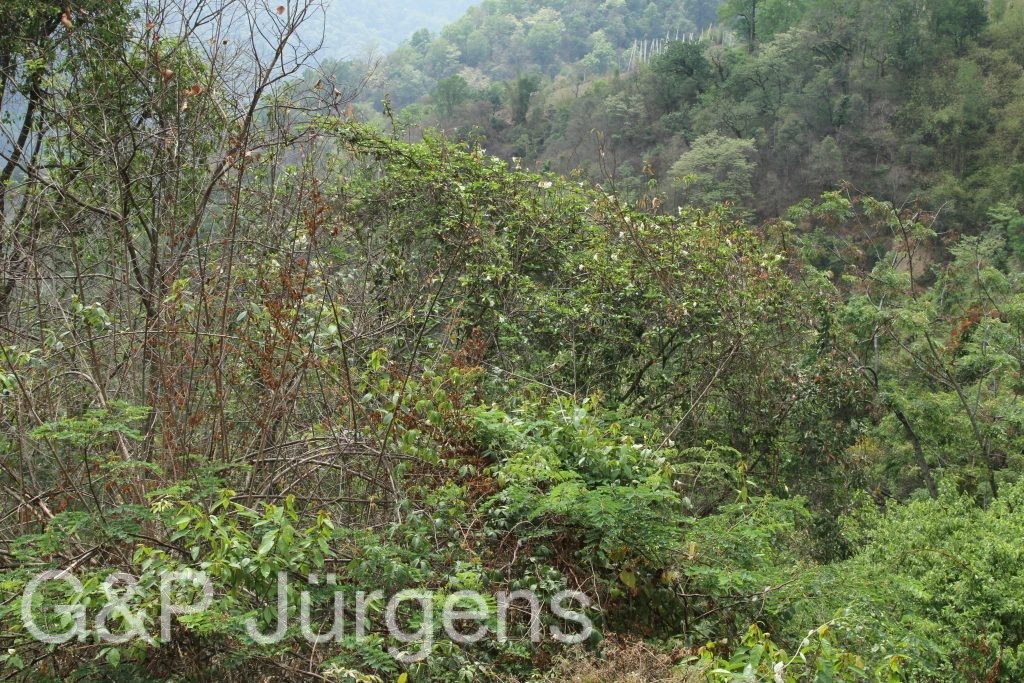
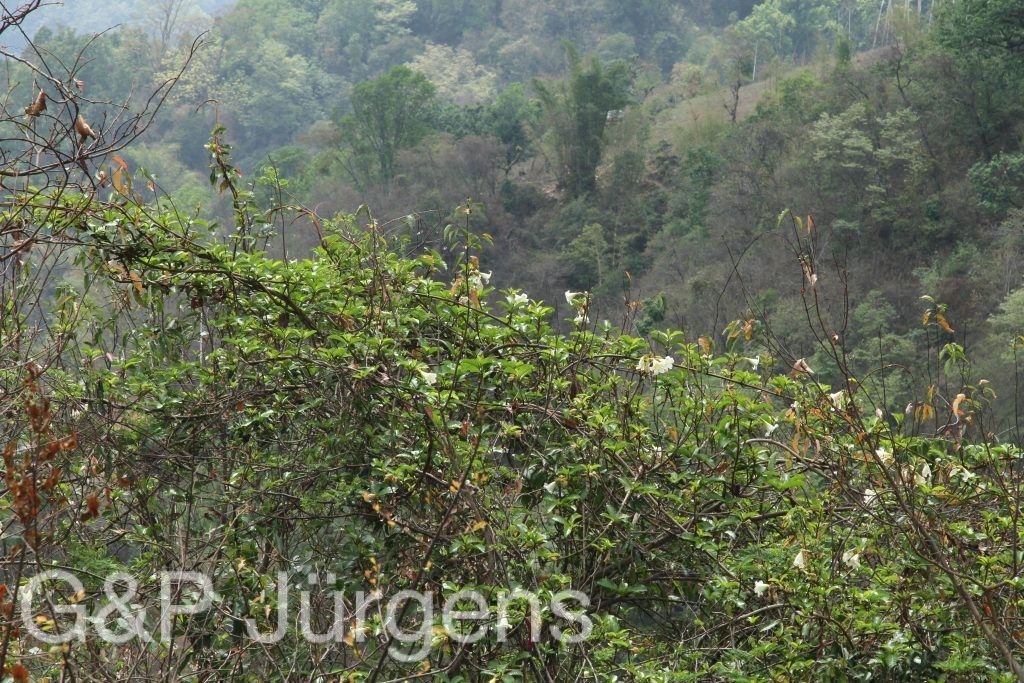
Beaumontia grandiflora is a large woody climber native to the eastern Himalaya and Indo-Chinese region, with native occurrences in India, China, Nepal, Bhutan, Thailand and Vietnam; the long list of additional countries among its roughly 602 records, spanning the Americas, Africa, the Caribbean and Oceania, reflects its extensive use as an ornamental in tropical and subtropical gardens worldwide. In the wild it is a plant of warm, humid lowland to lower-montane forest, scrambling over trees at forest margins and along streams. The photographed plant near a farmhouse at Trithangebe in Bhutan, at about 700 m and flowering in May, is consistent with its subtropical foothill habitat and its spring flowering, and hints at its frequent cultivation around dwellings.

It is a vigorous, large liana with stout woody stems exuding milky latex when cut. The leaves are opposite, simple, large, obovate to elliptic, leathery and glossy above with prominent venation and often rusty-pubescent beneath. The flowers, among the showiest in the family, are large, fragrant and trumpet-shaped, borne in terminal cymes; the corolla is broadly funnelform to campanulate, white, with five spreading lobes and a conspicuously expanded green-veined throat, giving rise to its garden name of Herald's-trumpet or Easter-lily vine. The five stamens have arrow-shaped anthers connivent around the stigma, and the fruit is a pair of large, woody, divergent follicles releasing numerous flat seeds, each with a tuft of silky hairs for wind dispersal.

Beaumontia belongs to the subfamily Apocynoideae of Apocynaceae, a family characterised by latex, contorted corolla aestivation and a specialised gynostegial pollination apparatus; the genus is allied to other tropical Asian lianas of the tribe Apocyneae. The plumed seeds and large insect-pollinated flowers fit a strategy of conspicuous floral display and wind-borne dispersal. Though valued and widely planted as a spectacular flowering vine, in its native Himalayan and Indo-Chinese range it is a natural component of subtropical forest and is not regarded as threatened.

Author: Wall. · Sources: POWO (Kew), GBIF, Flora of Bhutan, Flora of China, Flora of British India, Middleton's revisionary studies of Asian Apocynaceae

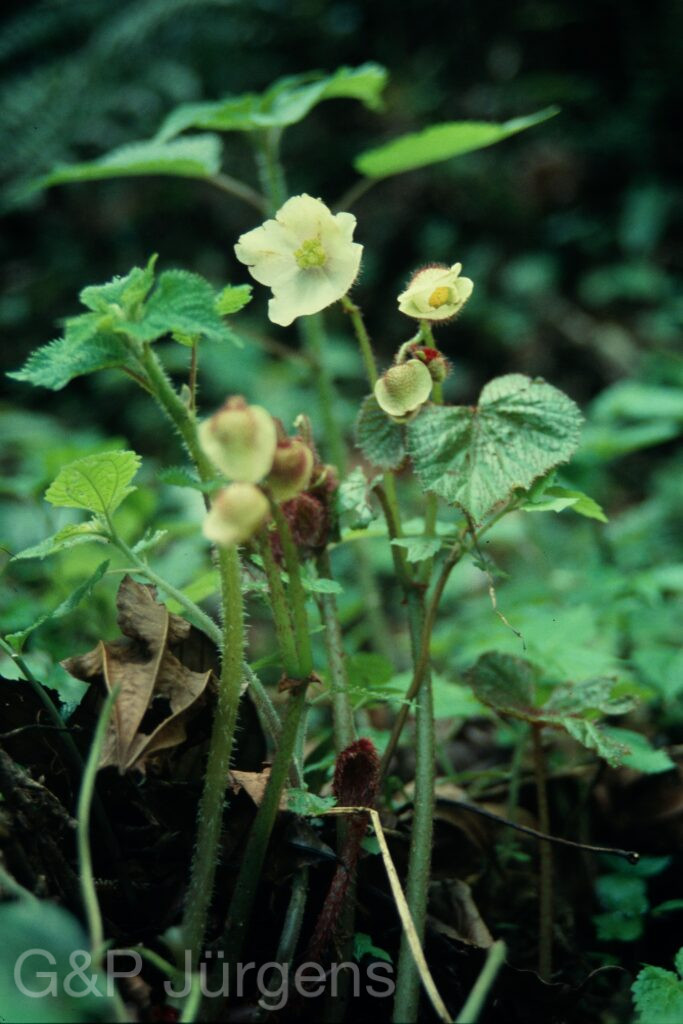
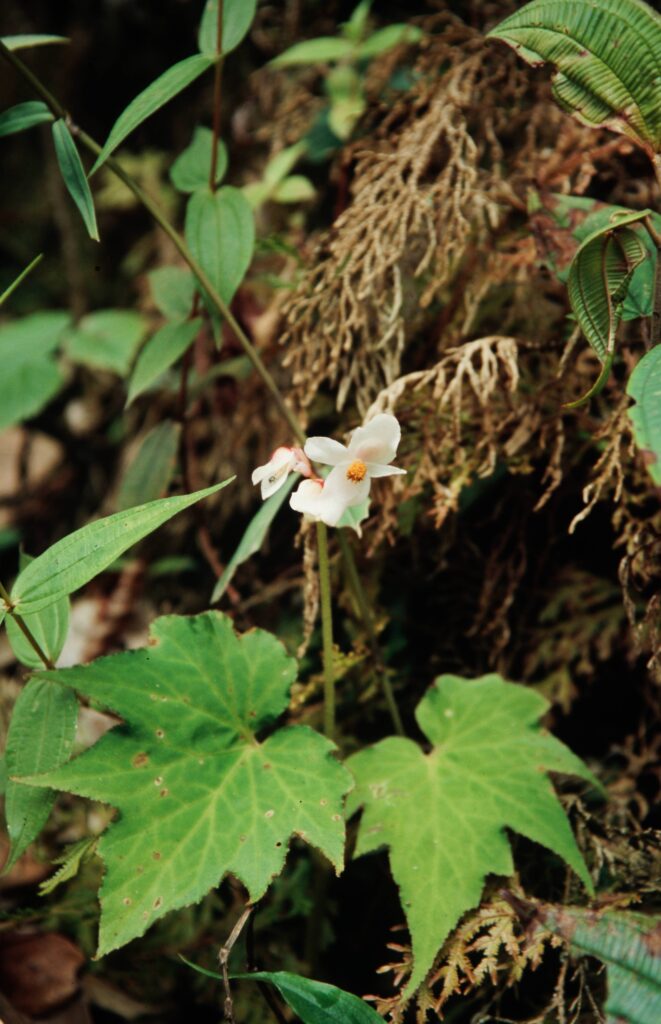
Hook.f. & Thomson

Sikkim2004 342 G603
India West-Bengal, Utaray 2100m April
Sikkim2004 116 P199
Sikkim West-Bengal, Yoksam, 1950m April

Description

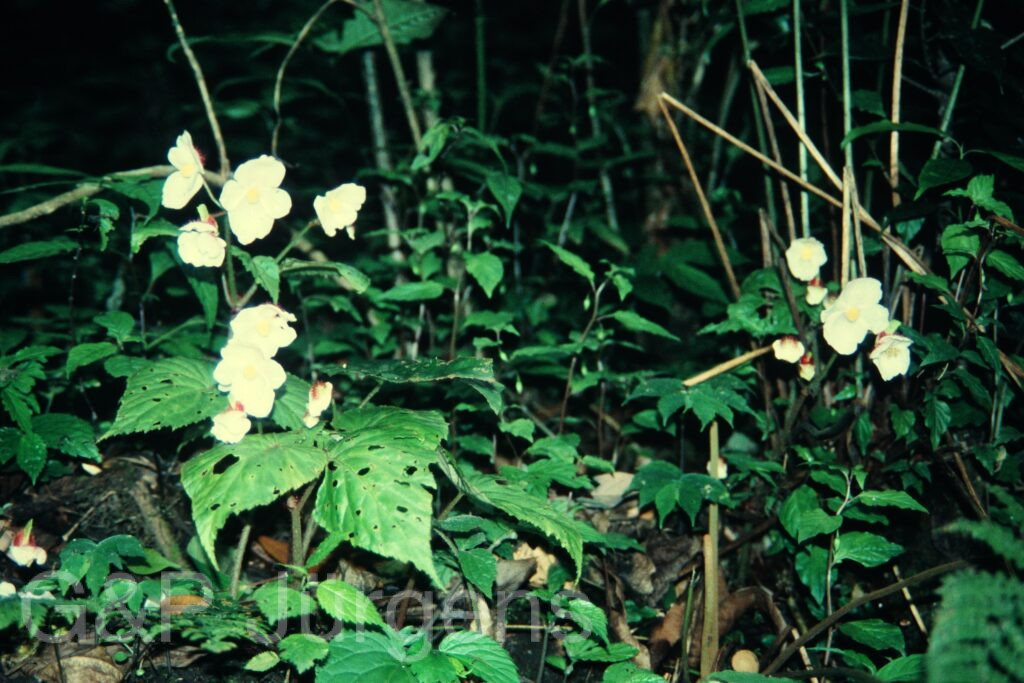
Begonia cathcartii is a perennial herb of the moist eastern Himalaya and neighbouring montane Southeast Asia, recorded from northern India (Sikkim, Darjeeling), Nepal, Bhutan, Myanmar, Thailand and Peninsular Malaysia; GBIF documents about 138 occurrences. It is a plant of shaded, humid broadleaved forest, growing on damp banks, mossy boulders and stream sides where humidity remains high, chiefly between about 1500 and 2700 m. The photographed material came from the Darjeeling hills at Utaray near 2100 m and from Yoksam in Sikkim at about 1950 m, both in April, matching the cool, dripping understorey it favours during the pre-monsoon flush.

The plant is a fleshy, somewhat succulent herb with an erect or ascending, sparingly branched stem arising from a rhizomatous or tuberous base. As in the genus the leaves are alternate, markedly asymmetric (oblique) at the base, broadly ovate, acuminate, with a toothed and often shallowly lobed margin and conspicuous stipules. The flowers are monoecious and borne in axillary cymes, white to pale pink; the staminate flowers bear several stamens while the pistillate flowers sit above a winged inferior ovary. The fruit is a three-winged capsule, with one wing usually larger, releasing very numerous minute seeds.

Begonia (Begoniaceae) is one of the largest angiosperm genera, and B. cathcartii belongs to its rich Sino-Himalayan rhizomatous assemblage, named for J. F. Cathcart. Its monoecious flowers, unequal capsule wings and asymmetric leaves are characteristic of the family. Dependent on humid forest microhabitats, it is locally frequent and not formally assessed as threatened, but sensitive to forest clearance and desiccation.

Author: Hook.f. & Thomson · Sources: POWO (Kew), GBIF, Flora of China Vol. 13, Flora of Bhutan Vol. 2, Flora of Nepal, Flora of Pakistan, Hooker Begonias of the Himalaya in Flora of British India

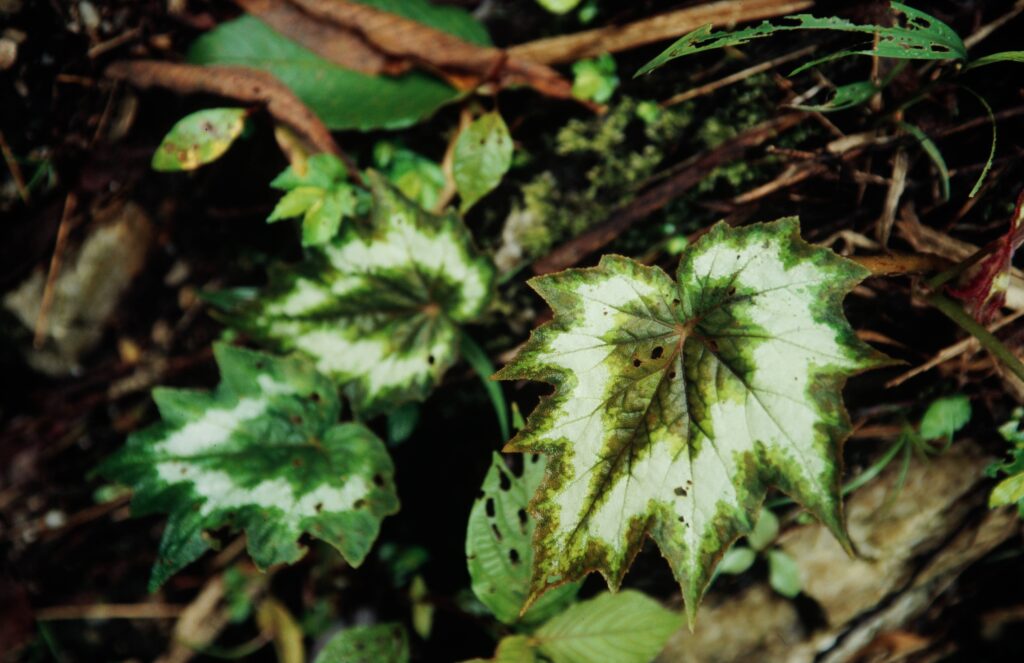
D.Don

Description

Begonia palmata D.Don is a widespread and highly variable perennial herb of the Sino-Himalaya and Southeast Asia, recorded by GBIF from across China and Taiwan, the eastern Himalaya (Nepal, India, Bhutan), Myanmar, Thailand, Laos, Vietnam, Bangladesh and Malesia. It is a characteristic plant of shaded, humid evergreen and broad-leaved forest, growing on moist rocks, mossy banks, ravine sides and beside streams from the foothills to roughly 2,500 m. The May collection from Chaana in Darjeeling district of West Bengal at 1,600 m exemplifies its monsoon-forest habitat, where it thrives in deep shade and high atmospheric humidity.

The plant is a succulent, rhizomatous to shortly caulescent herb with reddish, hispid stems. The asymmetric, palmately lobed leaves give the species its epithet: they are broadly ovate in outline, deeply incised into several acuminate, toothed lobes, often bristly-hairy and frequently marked with a paler or silvery zone above and reddish coloration beneath. As in all begonias the flowers are unisexual and monoecious, borne in axillary cymes; the pink to white male flowers bear two larger and two smaller tepals, while the female flowers have an inferior, three-winged ovary that develops into the characteristic unequally winged, dehiscent capsule containing very numerous minute seeds.

Begonia palmata is taxonomically a notoriously polymorphic species complex, with numerous varieties and segregate names reflecting wide variation in leaf division and indumentum across its range. Such variability has made it a focus of biogeographic and systematic study within the megadiverse genus Begonia. Many of its forms are cultivated as foliage ornamentals, and its broad distribution underlines the high endemism and diversification of begonias in the wet forests of tropical Asia.

Author: D.Don · Sources: POWO (Kew), GBIF, Flora of China Vol. 13, Flora of Bhutan Vol. 2, Tebbitt: Begonias — Cultivation, Identification, and Natural History

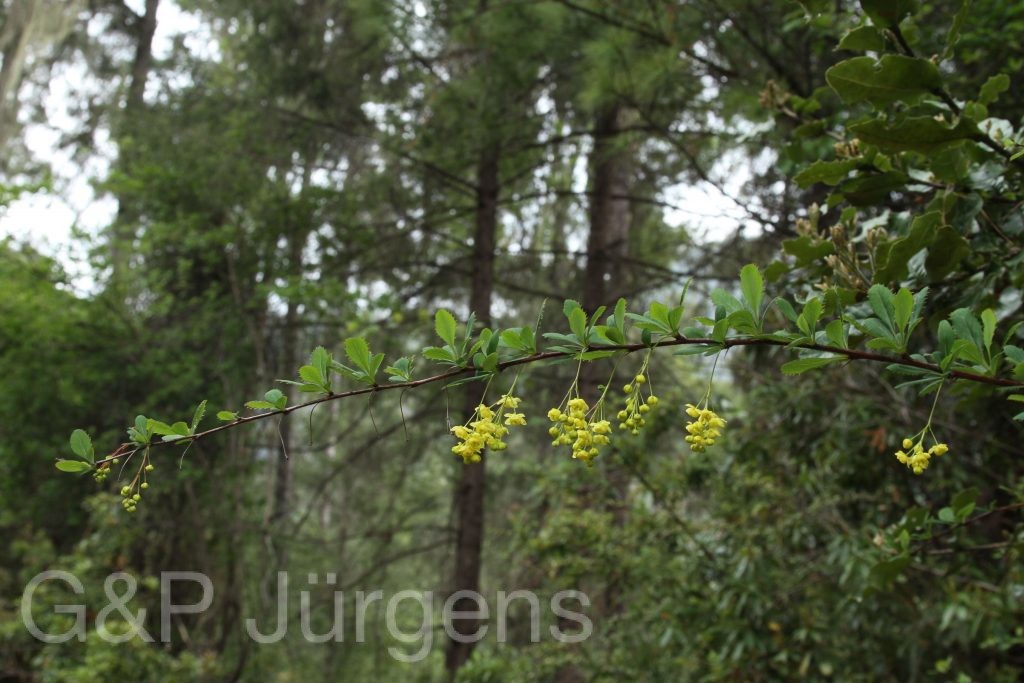
DC.

Bhutan2014 866
Bhutan Chele-La 3000m, May

Description

Berberis aristata is a widespread Himalayan barberry native to Nepal, India, Bhutan, Pakistan and China and now naturalised or cultivated far beyond, the very large dataset of c. 926 records including introductions in New Zealand, Australia, Mexico, South Africa and parts of Europe and North America. Within its native range it occupies open hill forest, scrub, forest margins, ravines and dry rocky slopes of the temperate Himalaya, broadly between about 1800 and 3500 m. The plant was photographed at Chele-La in Bhutan at 3000 m in May, a site characteristic of the species, flowering in spring on sunny, well-drained montane slopes.

It is a spiny, much-branched evergreen or semi-evergreen shrub up to about 3.5 m, the older bark yellowish-brown and the wood bright yellow. The nodes bear stout three-fid spines (modified leaves), in whose axils the true leaves are clustered in fascicles on short shoots; the leaves are obovate to elliptic, leathery, with spinulose-toothed margins. The flowers are golden-yellow, borne in pendulous or corymbose racemes, with the typical berberidaceous arrangement of sepaloid and petaloid whorls, six stamens with sensitive, irritable filaments, and a single carpel. The fruit is an ovoid bluish-black berry covered with a glaucous bloom.

Berberis (Berberidaceae) is a large genus distinguished from the related Mahonia by simple leaves and spiny stems, and B. aristata is among its most economically important Asiatic species. The yellow inner bark and roots are rich in the alkaloid berberine and yield "rasaut," used extensively in Ayurvedic and folk medicine, while the berries are edible. Widespread, ecologically tolerant and weedy where introduced, it is in no way threatened; rather, its medicinal harvesting and invasive potential abroad are the chief concerns associated with it.

Author: DC. · Sources: POWO (Kew), GBIF, Flora of China, Flowers of the Himalaya (Polunin & Stainton), Ahrendt monograph of Berberis and Mahonia

Hook.f. & Thomson

Bhutan2014 336
Bhutan Tumching-La 2900m, May

Description

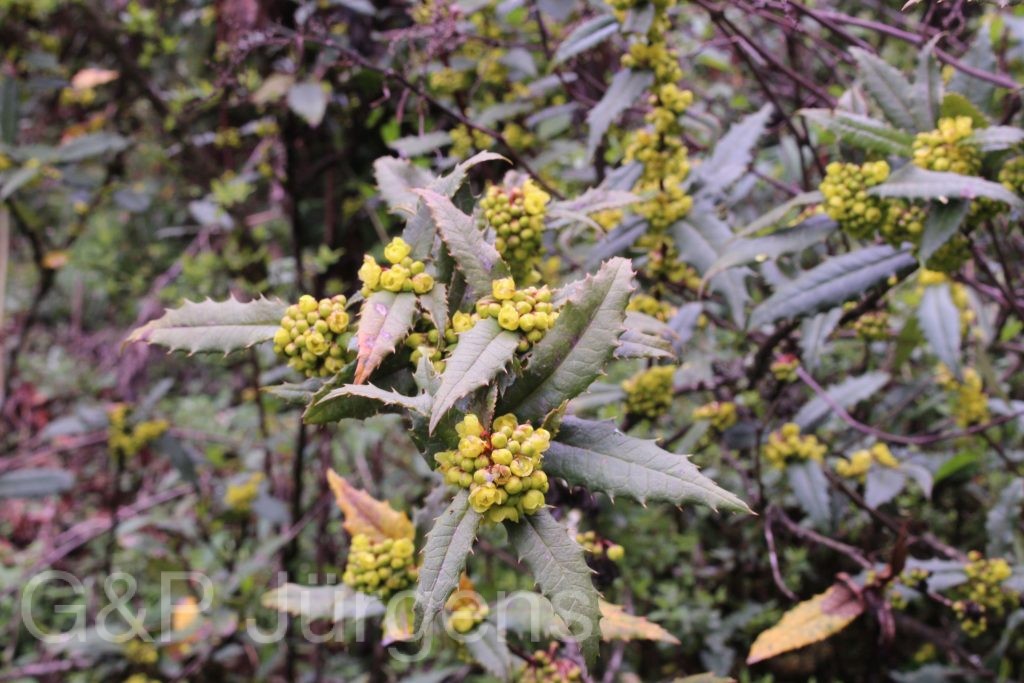
Berberis insignis is an evergreen barberry of the eastern Himalaya, native to Nepal, India, Bhutan and adjacent China, with its 161 georeferenced occurrences also reflecting cultivated material in Britain, the United States and elsewhere. It inhabits cool, moist temperate forest, shrubberies and shaded ravine margins, frequently in the rhododendron and oak belt. The specimen recorded at Tumching-La in Bhutan at 2900 m in May illustrates its occurrence in the upper temperate zone and its late-spring flowering, when the conspicuous yellow blossoms appear among the previous season's foliage.

Distinctively for the genus, B. insignis is a spineless or nearly spineless shrub, lacking the stout nodal thorns of most barberries. The leaves are large, leathery and lustrous, elliptic to oblong-lanceolate, with strongly spinulose-toothed margins and a prominently reticulate venation, borne in tufts on short shoots. The flowers are golden-yellow, clustered in dense axillary fascicles; each flower has the typical berberidaceous arrangement of sepals and petals in whorls of three, with six stamens that respond to touch, and a single carpel. The fruit is an ellipsoid to oblong berry, ripening dark blue-black with a glaucous bloom.

Berberis is a large genus traditionally divided into spiny-leaved evergreen and deciduous groups; B. insignis is notable for combining bold evergreen foliage with the absence of stem spines, characters that have made it a recognised parent in horticulture. Within its native range it is locally frequent in undisturbed forest, and its broad eastern-Himalayan distribution indicates no immediate conservation concern.

Author: Hook.f. & Thomson · Sources: POWO (Kew), GBIF, Flora of China, Flora of Bhutan, The genus Berberis monograph (Ahrendt), Flowers of the Himalaya (Polunin & Stainton)

C.K.Schneid.

Bhutan2014 590
Bhutan Gogona 3000m, May
Bh2008 25 P43
Bhutan Paro 2300m, April

Description

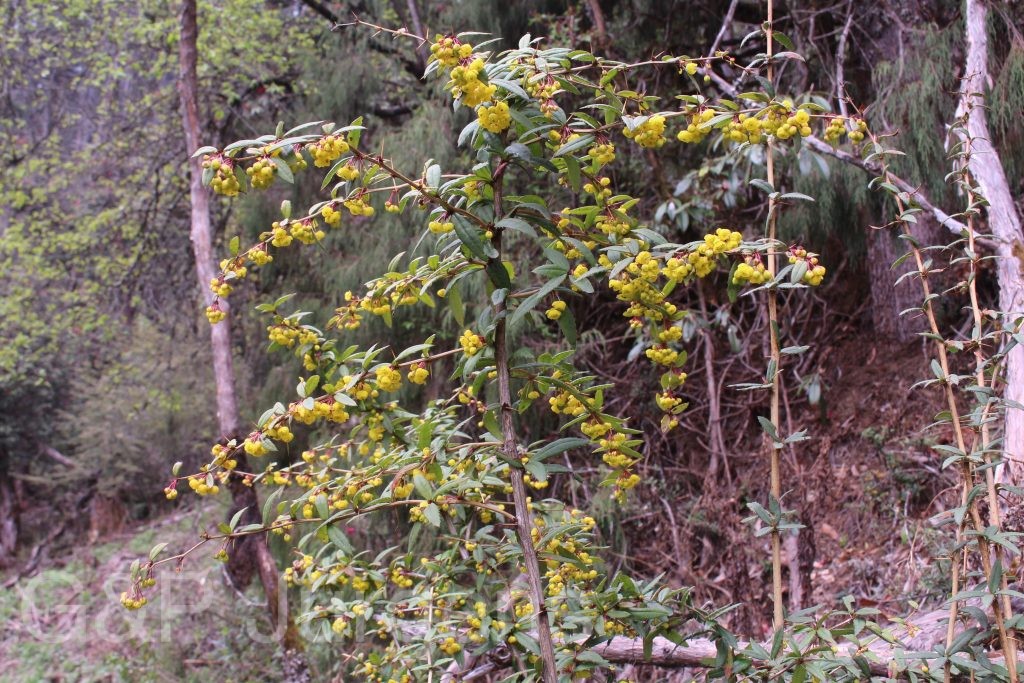
Berberis praecipua is an eastern Himalayan barberry centred on Bhutan and adjacent India, Nepal and southern China, with about 39 occurrences (the additional records from Canada and Britain representing cultivated or herbarium material). It grows in temperate forest margins, open hillsides, scrub and clearings, typically between roughly 2300 and 3300 m. The photographed plants from Gogona at 3000 m (May) and Paro at 2300 m (April) in Bhutan illustrate its spring flowering across this montane belt, where it occupies sunny, well-drained slopes within and around mixed conifer and broad-leaved forest.

It is a deciduous, much-branched spiny shrub with terete, often reddish-brown young shoots armed with three-fid spines derived from modified leaves. The foliage leaves are clustered on short shoots in the axils of the spines, obovate to oblanceolate, with an entire to spinulose-toothed margin, glaucous beneath. The flowers are yellow, borne in pendulous racemes or fascicles, each with the typical Berberis arrangement of six sepals in two whorls, six petals each bearing two basal nectariferous glands, and six stamens with sensitive filaments and valvate anther dehiscence. The ovary is superior and unilocular, ripening into an ellipsoid to oblong berry that is red to purplish-black and often pruinose, containing few seeds.

Berberis is a large, taxonomically intricate genus in which the Himalayan deciduous species form a difficult complex separated on fruit, leaf and inflorescence characters; B. praecipua C.K.Schneid. is the accepted name. The bright flowers are insect-pollinated, with the touch-sensitive stamens promoting pollen transfer, while the fleshy berries are dispersed by birds (ornithochory). As a relatively localised eastern Himalayan endemic it has not been formally assessed but appears locally frequent within its range.

Author: C.K.Schneid. · Sources: POWO (Kew), GBIF, Flora of China Vol. 19, Flora of Bhutan Vol. 1, Flora of Nepal, Ahrendt Berberis and Mahonia: A Taxonomic Revision

Hook.f.

Bh09 251 G419
Bhutan Wanghdi 1900m, June
Nepal 2009 12 ergebnis
Nepal Helambu Sheno-Okrini 2200m, May

Description

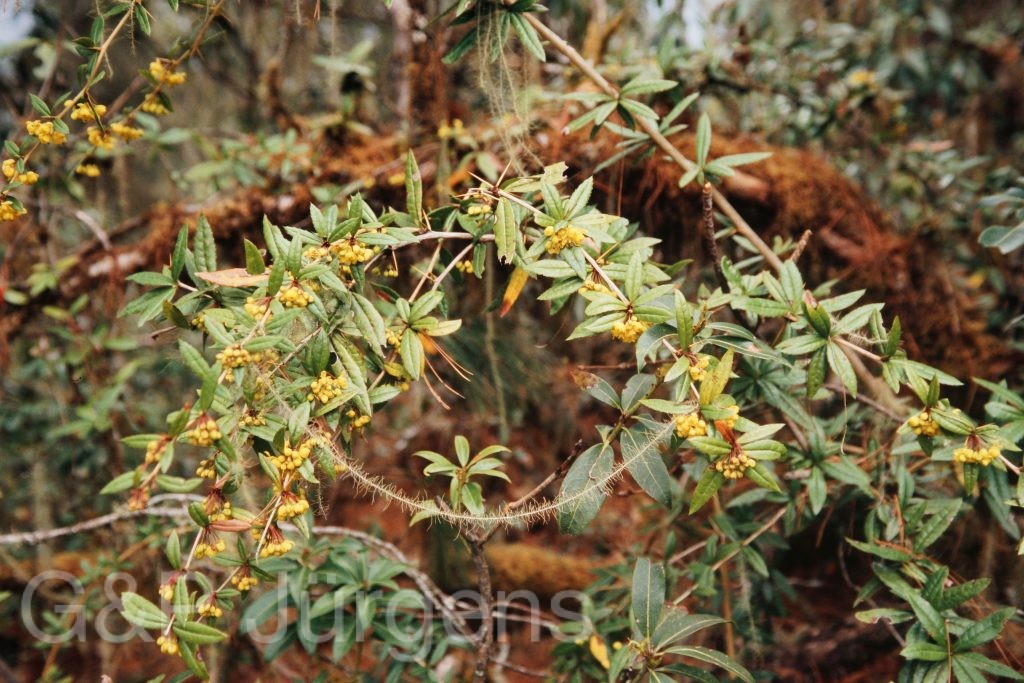
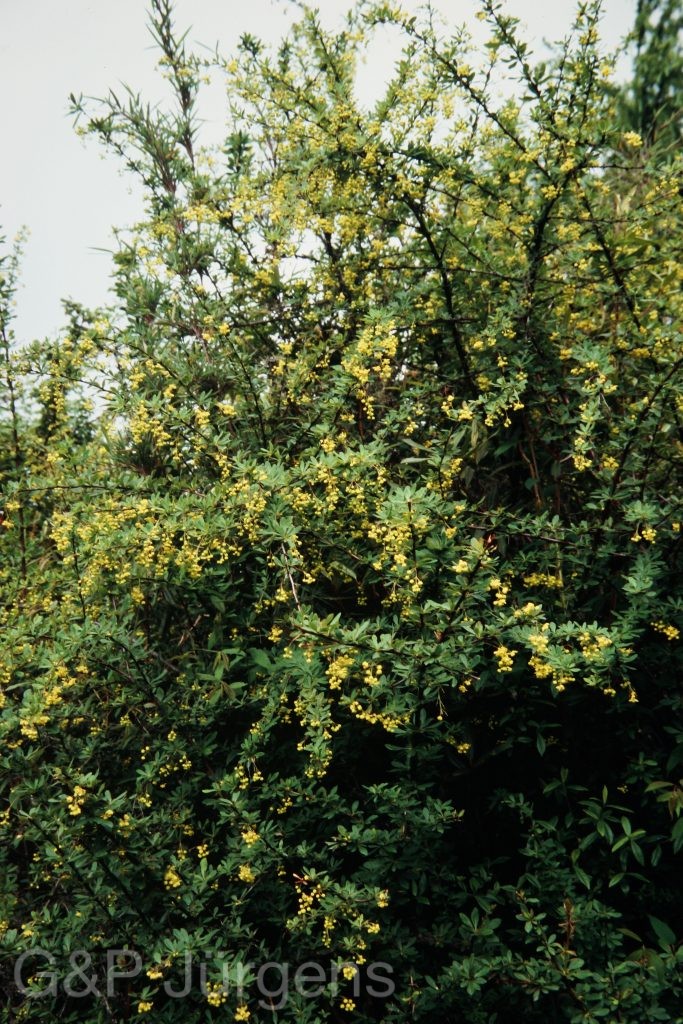
Berberis virescens is a deciduous Himalayan barberry distributed through Nepal, northern India, Bhutan and southern Tibet, the numerous additional GBIF country codes reflecting its long cultivation in botanic gardens of Europe, North America and East Asia. In the wild it occupies open slopes, forest edges, scrub and clearings in the temperate zone, generally between 2,500 and 3,500 m. The vouchered plants derive from Wangdue in Bhutan at about 1,900 m in June and from Sheno-Okrini in the Helambu of Nepal at around 2,200 m in May, within the lower part of its montane range where it flowers in late spring.

The species is a shrub up to about 2 m tall with reddish young shoots that become greenish, giving the epithet, and bearing simple, often three-parted spines at the nodes. The leaves are obovate to narrowly spathulate, thin-textured and clustered on short shoots, with entire or sparsely spinulose margins and a glaucous lower surface. The flowers are yellow, borne in few-flowered fascicles or short racemes, with the typical Berberis arrangement of six sepals, six petals and six stamens that snap inward on contact. The fruit is an ellipsoid to oblong berry, red ripening to blackish and often pruinose, containing a few seeds.

Berberis is a large, taxonomically intricate genus in which species are separated by spine, leaf, inflorescence and berry characters; B. virescens is recognised by its green twigs and red autumn fruit. Like its relatives it is an alternate host for rust fungi and a source of the alkaloid berberine. The species is widespread, hardy and frequently grown ornamentally, and is not considered to be of conservation concern.

Author: Hook.f. · Sources: POWO (Kew), GBIF, Flora of China Vol. 19 (Berberidaceae), Grierson & Long: Flora of Bhutan Vol. 1, Ahrendt: Berberis and Mahonia, A Taxonomic Revision

(Wall.) Brongn.

Nepal 97 582 P1121
Nepal Sabha-Khola 560m May

Description

Berchemia floribunda is a widely distributed scrambling shrub or woody climber of East and South Asia, recorded from China, Japan, Korea, Hong Kong, Taiwan, India, Thailand, Nepal, Vietnam, Laos, Myanmar and Bhutan, with more than six thousand documented occurrences. It grows in forest margins, thickets, scrub and hedgerows from the lowlands into the lower montane zone, clambering over shrubs and small trees by means of its long flexuous branches. In Nepal it descends to warm subtropical foothills, as shown by the collection along the Sabha Khola at about 560 m in May, coinciding with its flowering season.

The plant is a deciduous liana with slender, glabrous, often zigzag branchlets. The leaves are alternate, ovate to elliptic, entire, acute to shortly acuminate at the apex and rounded at the base, with numerous fine, parallel, arching lateral veins that give the lamina a neatly pinnate-veined appearance. The inflorescence is a large, lax terminal panicle of many small flowers, the epithet floribunda referring to their abundance; each flower has five greenish to yellowish triangular petals, a five-lobed calyx and five stamens. The fruit is a small, narrowly ellipsoid drupe, green ripening through red to blue-black, seated on the persistent disk.

Berchemia belongs to the tribe Rhamneae within Rhamnaceae and comprises twining or scandent shrubs of Asia and the Americas distinguished by their many-veined leaves and small drupaceous fruits. The fleshy fruits are dispersed by frugivorous birds, while the climbing habit allows the plant to reach light at forest edges. Berchemia floribunda is locally common and economically minor, its tough stems used in basketry and its roots and fruits in folk medicine. Broadly distributed and tolerant of disturbed habitats, it is of no conservation concern.

Author: (Wall.) Brongn. · Sources: POWO (Kew), GBIF, Flora of China Vol. 12, Flora of Bhutan Vol. 2, Flora of Nepal, Flora of Pakistan, Medan & Schirarend treatment of Rhamnaceae