
Schott
Description
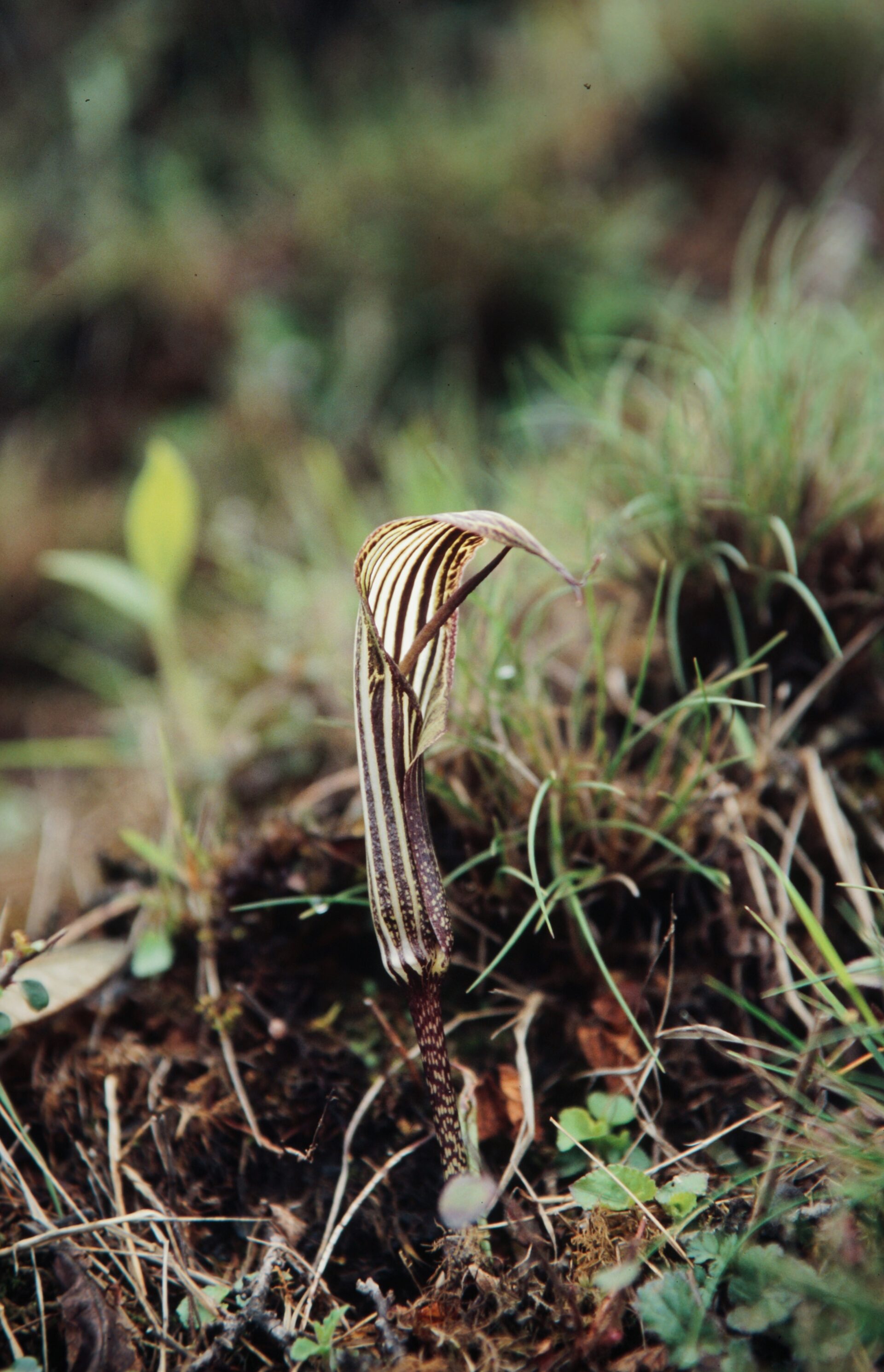
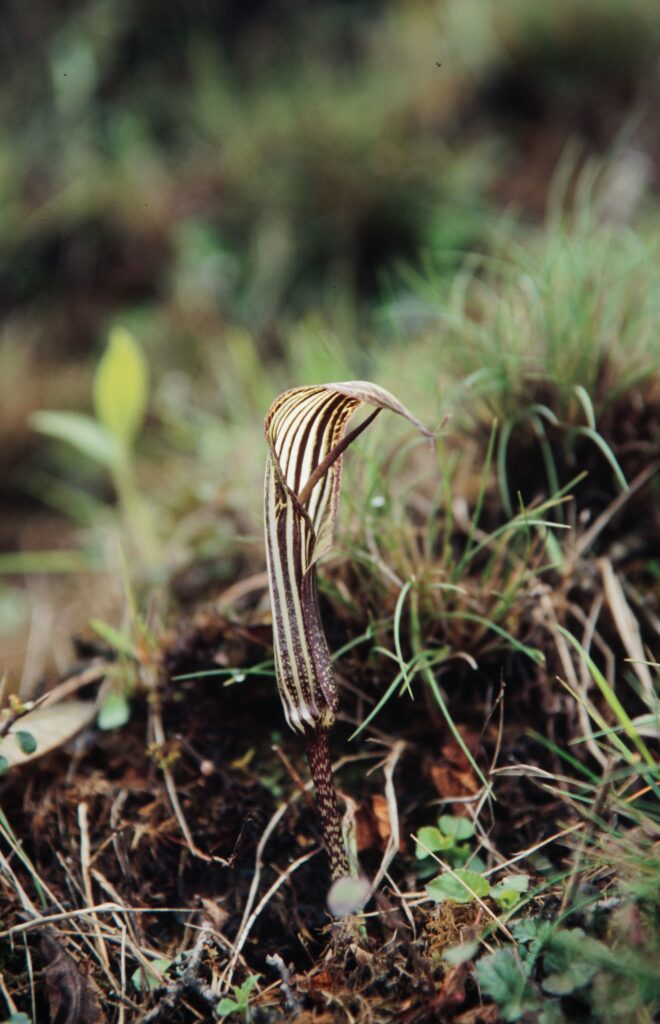
Arisaema decipiens (Schott) is a tuberous perennial of the family Araceae (the genus is here listed under the synonymous family heading Aceraceae) distributed through the eastern Himalaya and adjacent Southeast Asia, from northeast India and Myanmar through southern China to Vietnam, Japan and Malaysia. With only around 230 GBIF occurrences it is a comparatively localised species of the moist eastern montane forests. It grows in the shaded understorey of evergreen and mixed broad-leaved forest, on humus-rich slopes and among rocks, principally between 2,000 and 3,000 m, as exemplified by the collection from Kalipokhri in Sikkim, India, at 2,900 m in May, when the cohort of fresh inflorescences emerges with the spring growth.
The plant arises from a depressed-globose tuber and produces a pseudostem formed by the overlapping leaf sheaths. Typically a single trifoliolate (occasionally pedately divided) leaf is produced, with elliptic to ovate, acuminate leaflets. The inflorescence is the characteristic aroid spadix enclosed by a green to purplish spathe striped with white; the spathe limb is hooded and tapers to a slender tip, while the spadix appendix is slender and stipitate. As in most Arisaema the species is paradioecious, individual plants changing functional sex between male and female phases according to size and vigour. The fruit is a head of red berries borne on the persistent infructescence.
Arisaema is a large and taxonomically intricate genus in which species boundaries rest heavily on spathe coloration and spadix-appendix form, and A. decipiens belongs to a closely related complex of eastern Himalayan cobra-lilies. Its size-dependent sex change is of considerable interest to reproductive ecologists. Restricted to the wetter eastern ranges, the species is less common than its western congeners but is not currently regarded as threatened.
Author: Schott · Sources: POWO (Kew), Flora of Bhutan Vol. 3, GBIF, Flora of China Vol. 23, Gusman & Gusman: The Genus Arisaema (2006)