
(Schott) Engl.
Description
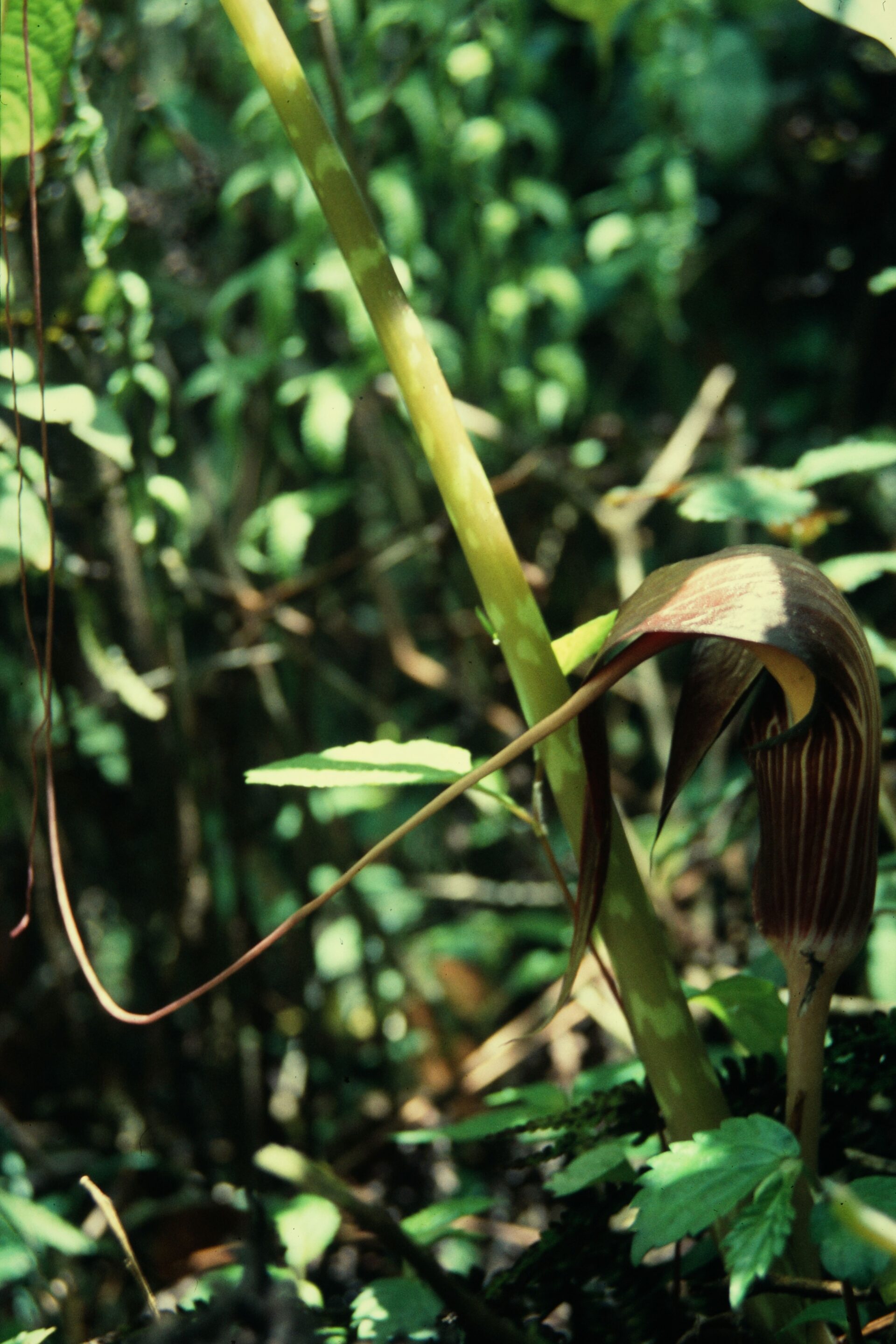
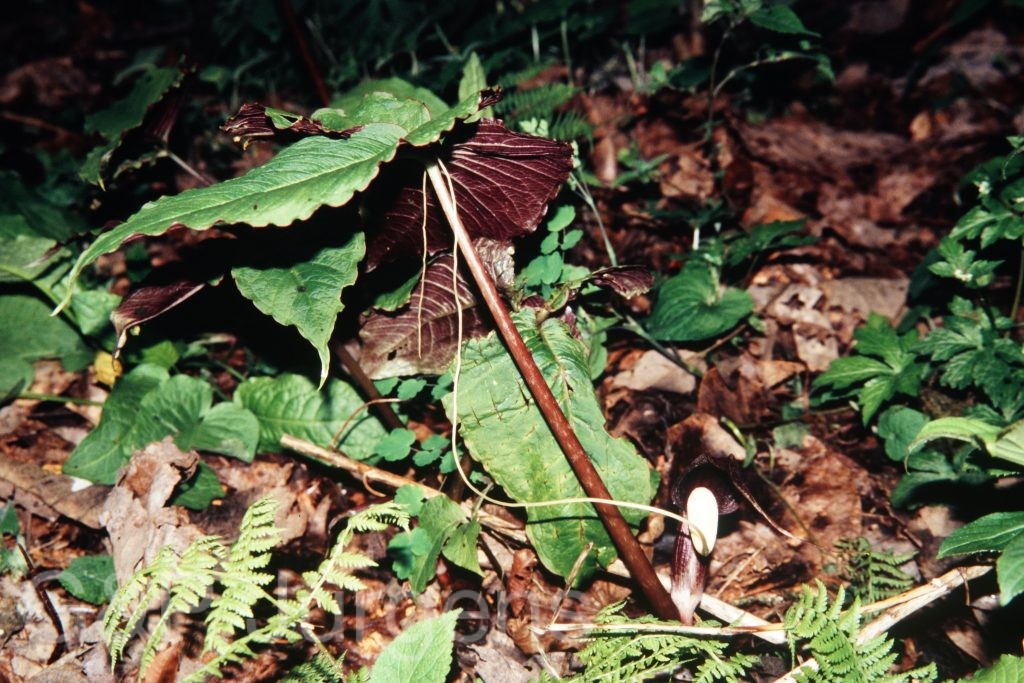
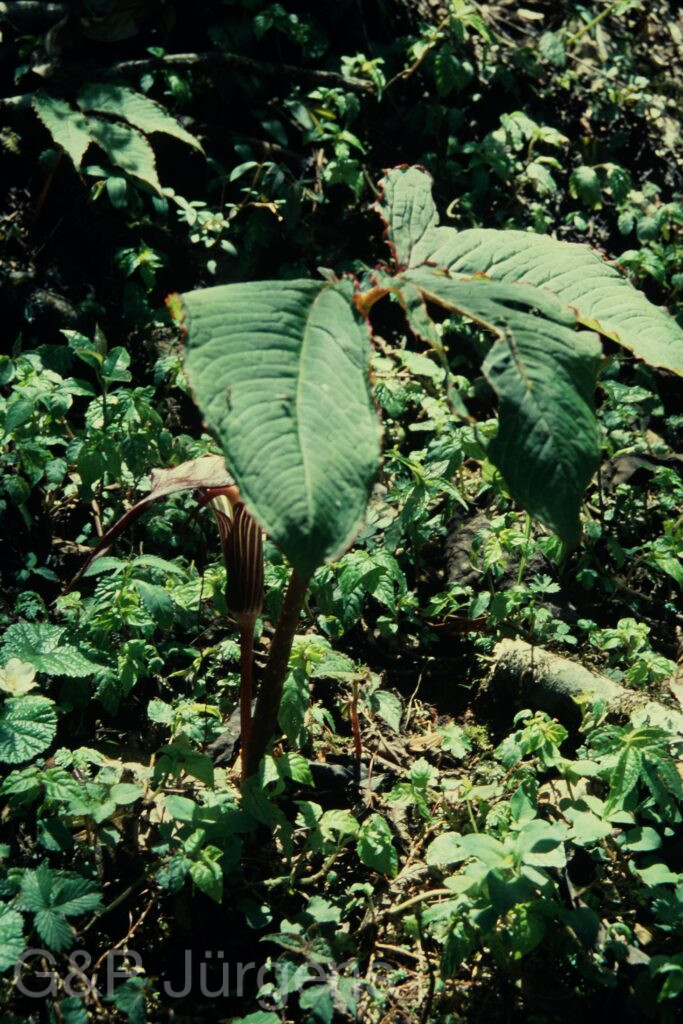
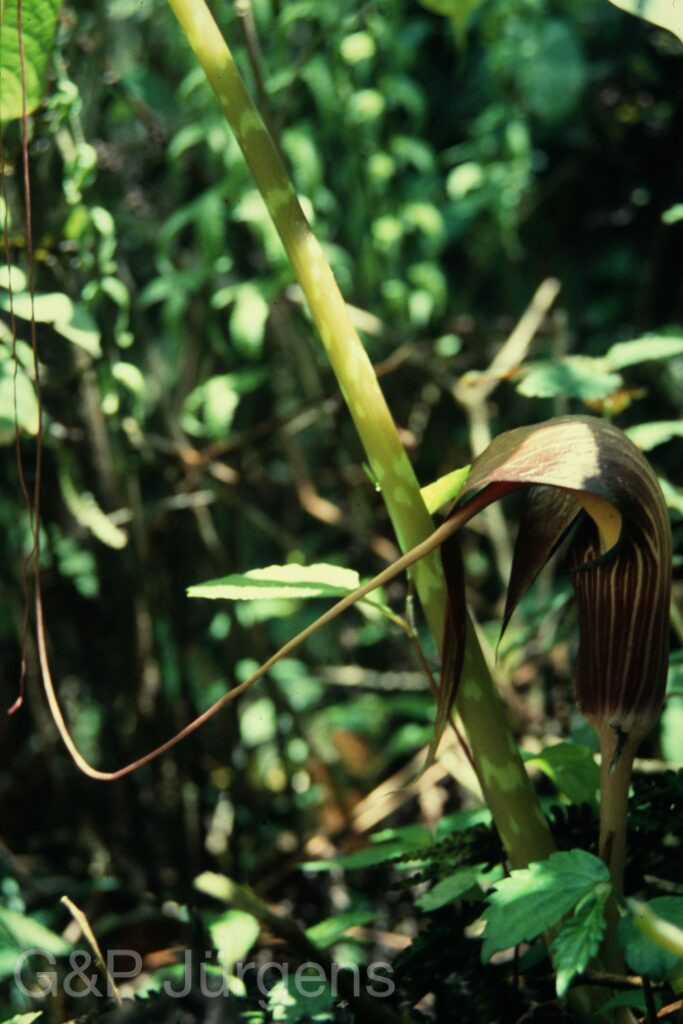
Arisaema speciosum var. mirabile is a striking tuberous aroid of the eastern Himalaya. GBIF holds only some 20 occurrences, from India, China, Nepal and Bhutan, reflecting its restricted range and the limited collection of this montane taxon. It inhabits moist temperate broadleaved and mixed forest, shaded banks and humus-rich slopes, generally between about 2,000 and 3,000 m. The illustrated plant was photographed at Bersay in West Bengal (Darjeeling–Sikkim Himalaya), and in Bhutan, at around 2,600 m in April, emerging and flowering with the pre-monsoon rains. (Despite the input family "Aceraceae", this is an aroid of the Araceae.)
The plant arises from a depressed tuber and bears characteristically a single trifoliolate leaf with three large, broadly ovate to rhombic leaflets, the central one stalked, often with a reddish margin. The inflorescence is a spathe with a dark purple, white-striped tube and a long-acuminate limb; the spadix is prolonged into a very long, thread-like, pendent appendix that hangs well beyond the spathe, the diagnostic feature of this group. The plants are dioecious; female plants produce a dense head of red berries in fruit.
Var. mirabile is distinguished from typical A. speciosum by features of the spathe and the proportions of the leaflets and appendix, though some authors treat the variation as continuous. The exceptionally long flagelliform spadix appendix is thought to function in pollinator attraction (fungus-gnat trapping). Given its narrow distribution and small documented populations, the taxon merits conservation monitoring, and it is much sought after by specialist aroid growers.
Author: (Schott) Engl. · Sources: POWO (Kew), Flora of Bhutan Vol. 3, Flora of China Vol. 23, GBIF, Gusman & Gusman: The Genus Arisaema (2006)