Tag:

Spring

S.C.Chen

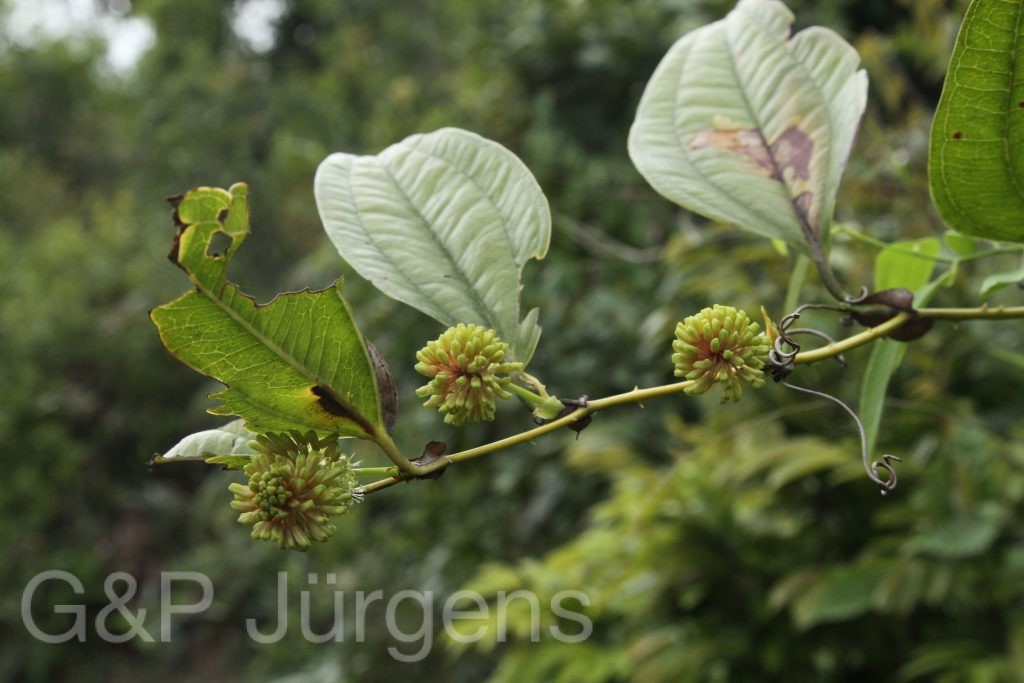
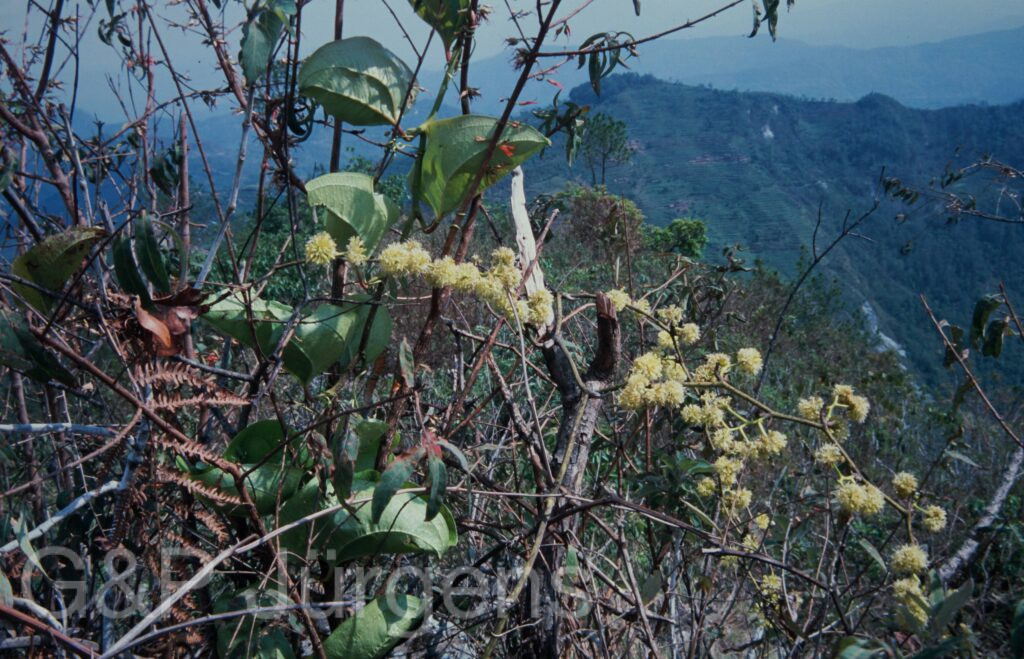
Sikkim 2006 446 ergebnis
India West-Bengal, Kishong 2700m, May

Description

Smilax munita is an eastern Himalayan greenbrier distributed from Nepal through Sikkim and West Bengal in India to Bhutan, north-eastern Myanmar and adjacent China, with around 90 GBIF records reflecting a fairly restricted montane range. It is a climber of temperate broad-leaved and mixed forest, forest margins and thickets, scrambling over shrubs and small trees, typically between about 2,000 and 3,000 m. The plant photographed at Kishong in West Bengal, India, at 2,700 m flowering in May is characteristic of the cool, humid Sikkim-Himalayan forest belt where the genus is well represented.

The plant is a dioecious, woody to subwoody perennial climber arising from a creeping rhizome, the stems armed with stout, scattered prickles (reflected in the epithet munita, "armed"). The leaves are alternate, simple, leathery, ovate to elliptic with several prominent arcuate-convergent main veins, and bear a pair of slender tendrils at the base of the petiole that serve for climbing. The flowers are small, unisexual and greenish, borne in axillary umbels; the perianth consists of six tepals, with six stamens in male flowers and a superior three-locular ovary in female flowers. The fruit is a small globose berry, ripening dark, containing few seeds.

Smilax is the sole large genus of the monocot family Smilacaceae, a lineage of vining herbs and lianas with reticulate-veined leaves and basal tendrils unusual among monocots. Many congeners yield the medicinal "sarsaparilla," and Himalayan species are locally used. The combination of prickly stems, coriaceous tri- to multiveined leaves and the high-montane distribution distinguishes S. munita within the eastern Himalayan members of the genus.

Author: S.C.Chen · Sources: POWO (Kew), Flora of China Vol. 24, Flora of Bhutan Vol. 3, GBIF, Koyama: Smilacaceae of Eastern Asia
A.DC.

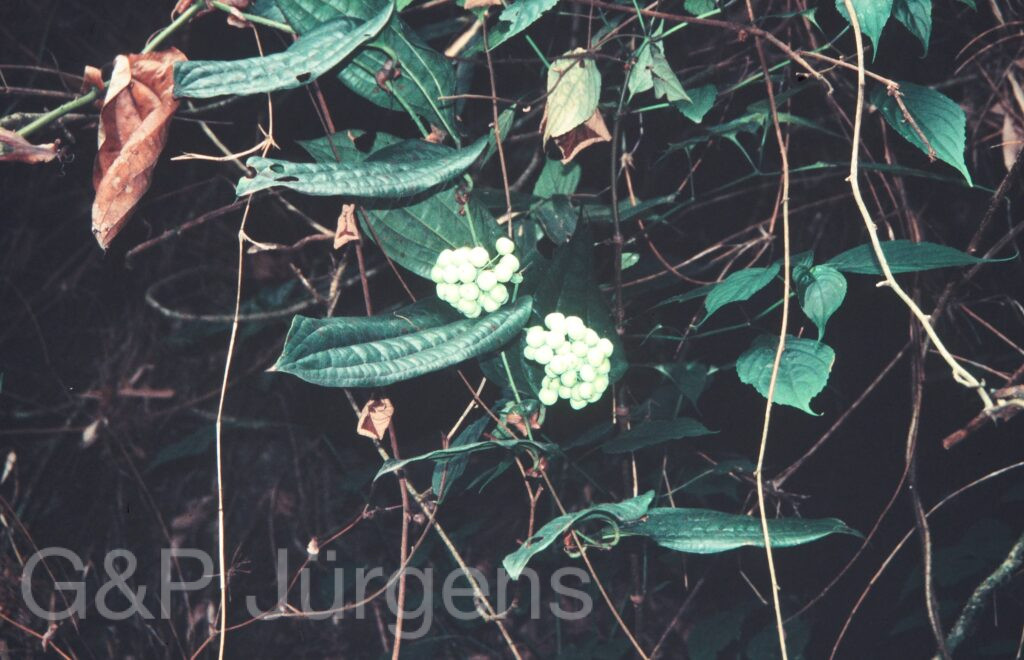
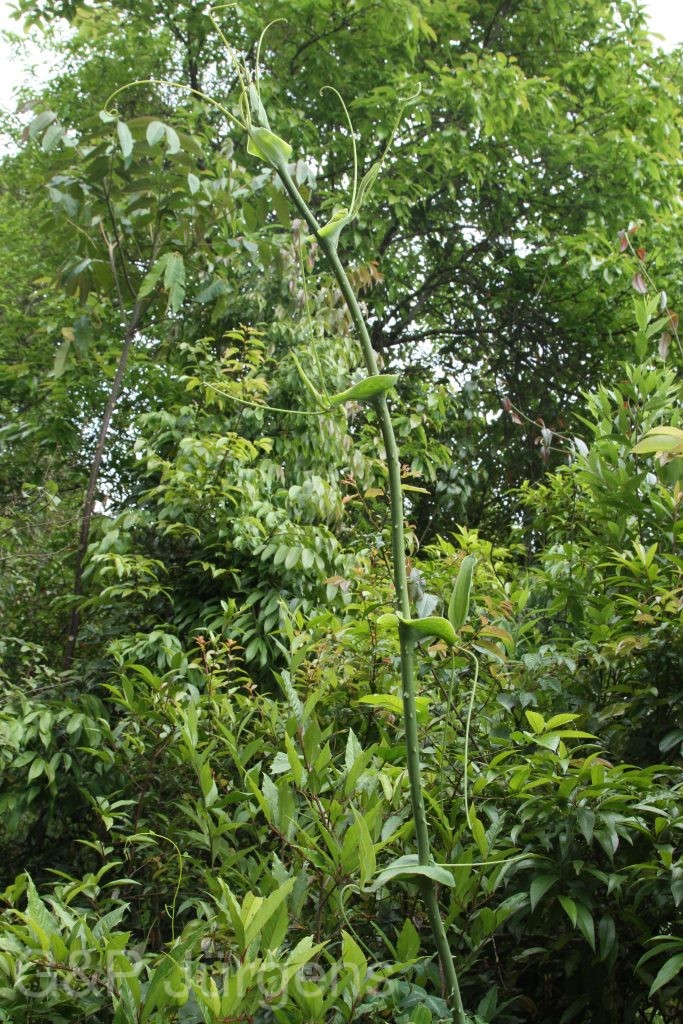
Nepal 2001 232 ergebnis ergebnis
Nepal (Gorkha) Tullikot 1800m, May

Description

Smilax orthoptera is a climbing monocot of the eastern and central Himalaya, recorded by GBIF from India, Nepal and Bhutan in a modest dataset of about 35 occurrences, an accepted species of the warm-temperate hill forests. It scrambles through the understorey and along forest margins, thickets and shrubby slopes of the lower and middle hill zone, broadly between roughly 1500 and 2500 m, where moist, monsoon-fed broad-leaved forest provides the supports its tendrils require. The image from Tullikot in the Gorkha district of Nepal at 1800 m, in May, places the plant in this mid-hill belt at the start of the growing season, climbing over neighbouring vegetation in dappled forest shade.

It is a woody to subwoody climber arising from a tough, knotty rhizome, with slender, angular to ridged, often prickly stems. The alternate leaves are stalked and bear at the base of the petiole a pair of tendrils derived from stipular appendages, by which the plant climbs; the blades are ovate to ovate-lanceolate, leathery, with several prominent curving main veins running from base to apex in the manner characteristic of the genus. The plant is dioecious, the small greenish to yellowish flowers borne in axillary umbels with six tepals and, in staminate flowers, six stamens; female flowers develop into small globose berries containing few seeds, dispersed by birds.

Smilax is a large, mainly tropical and warm-temperate genus and the principal element of the family Smilacaceae, set apart within the monocots by its climbing habit, paired petiolar tendrils and net-veined yet parallel-ribbed leaves. S. orthoptera is one of several Himalayan species distinguished by stem armature, leaf shape and the form of the tendril-bearing petiole. Restricted in range but locally frequent within its forest habitat, it has not been assessed as threatened, although the species depends on the persistence of intact mid-elevation Himalayan forest.

Author: A.DC. · Sources: POWO (Kew), GBIF, Flora of China Vol. 24, Flora of Nepal, Flora of Bhutan Vol. 3, Koyama's monographic studies of Asian Smilax

Lour.

Bhutan2014 216
Bhutan Mongar 1920m, May
Bhutan2014 217
Bhutan Mongar 1920m, May

Description

Smilax perfoliata is a robust scrambling climber of the eastern Himalaya, Indo-China and East Asia, ranging from Nepal, Bhutan and north-east India through Myanmar, Thailand, Laos, Cambodia and Vietnam to southern China, Taiwan, Japan, Korea and Sri Lanka, with records also in Indonesia. GBIF holds around 618 occurrences. It is a woody liana of broad-leaved evergreen and semi-evergreen forest, thickets and forest margins, scrambling over shrubs and into the lower canopy at low to middle elevations. The plant from Mongar in eastern Bhutan at 1920 m in May is typical of the temperate to subtropical forest belt it favours.

It is a dioecious vine arising from a thick woody rhizome, the climbing stems and branches armed with scattered prickles. Its leaves are alternate, leathery, broadly ovate to elliptic with several prominent arching main veins; the petiole bears a conspicuous sheathing, clasping wing (whence perfoliata) from which spring a pair of slender tendrils that anchor the climber. The small greenish-yellow flowers are unisexual in axillary umbels, the perianth of six free tepals, staminate flowers with six stamens, pistillate with a superior trilocular ovary. The fruit is a small globose berry ripening dark blue-black, with one to few bird-dispersed seeds.

Smilax, the sole large genus of Smilacaceae, is set apart among monocots by its net-veined, petiole-tendril-bearing leaves and woody climbing habit. S. perfoliata belongs to a complex of broad-leaved Asian climbers delimited by petiole-sheath morphology and leaf venation. Several species of the genus yield sarsaparilla-type saponins and have medicinal uses, the young shoots sometimes eaten. Widespread and adaptable to disturbed forest, S. perfoliata is of no conservation concern.

Author: Lour. · Sources: POWO (Kew), GBIF, Flora of China Vol. 24, Flora of Bhutan Vol. 3, Annotated Checklist of the Flowering Plants of Nepal, Koyama revision of Asiatic Smilax

Kunth

Sikkim 2006 278 ergebnis
Sikkim India Tolung-Chu 1530m, May

Description

Smilax wallichii is a woody, scrambling climber of the Smilacaceae, distributed through the eastern Himalaya. GBIF records are sparse (13 occurrences) and confined to Nepal, India and Bhutan, indicating a comparatively restricted, undercollected range. The species is a plant of subtropical to lower temperate broadleaved forest, where it climbs through trees and shrubs at forest margins, along streams and on ravine sides. The collection from the Tolung-Chu valley in Sikkim at 1,530 m in May exemplifies its occurrence in the humid, evergreen-forested foothill and lower montane belt of the region.

The plant develops from a stout, woody rhizome and produces tough, climbing stems that are often armed with scattered prickles. As in all Smilax, the leaves are alternate, simple, with a characteristic suite of curved-convergent main veins and a reticulate venation, the petiole bearing a pair of tendrils derived from stipular appendages that grip surrounding vegetation. The plants are dioecious; the small, greenish, six-tepalled flowers are borne in axillary umbels, the staminate flowers with six stamens and the pistillate flowers with a three-locular ovary. The fruit is a small, globose berry, ripening dark, containing few seeds.

Smilax is the principal genus of the otherwise small, exclusively climbing family Smilacaceae, distinguished within the monocots by its net-veined leaves, tendrillar petioles and dioecious umbels. Several species are sources of sarsaparilla and are used medicinally, and the rhizomes of Himalayan taxa enter local pharmacopoeias. The limited records of S. wallichii reflect both genuine rarity and under-sampling; as a forest-dependent liana, it is sensitive to the clearance and fragmentation of mid-elevation broadleaved forest.

Author: Kunth · Sources: POWO (Kew), Flora of China Vol. 24, Flora of Bhutan Vol. 3, GBIF, Koyama: Smilacaceae of the Himalaya and Eastern Asia

Dunal

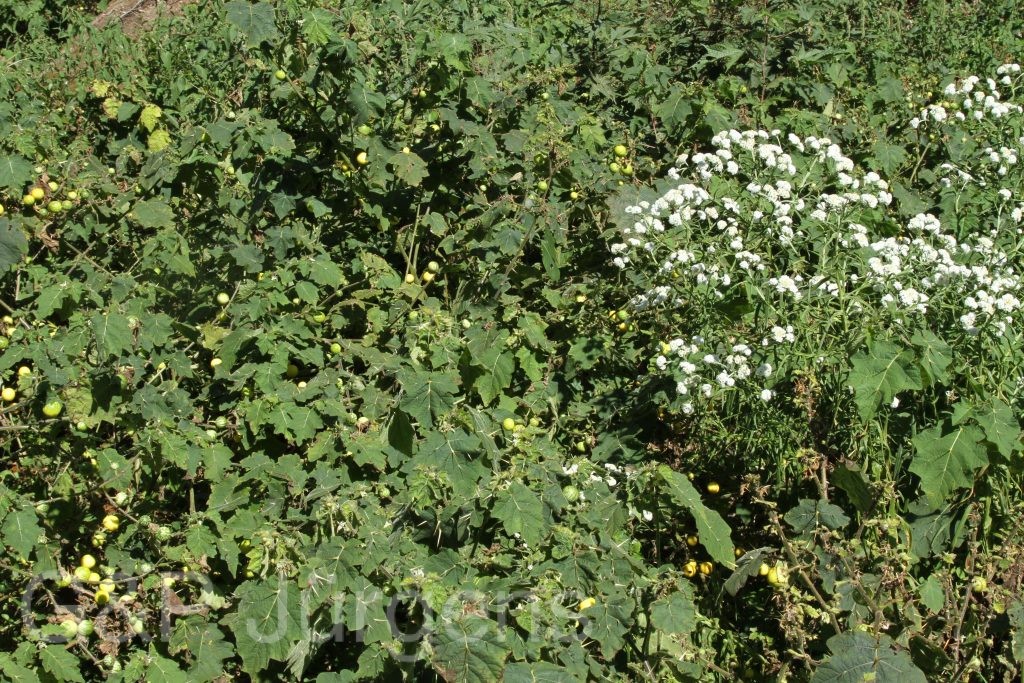
Bhutan2015 219
Bhutan Zhemgang 910m, October
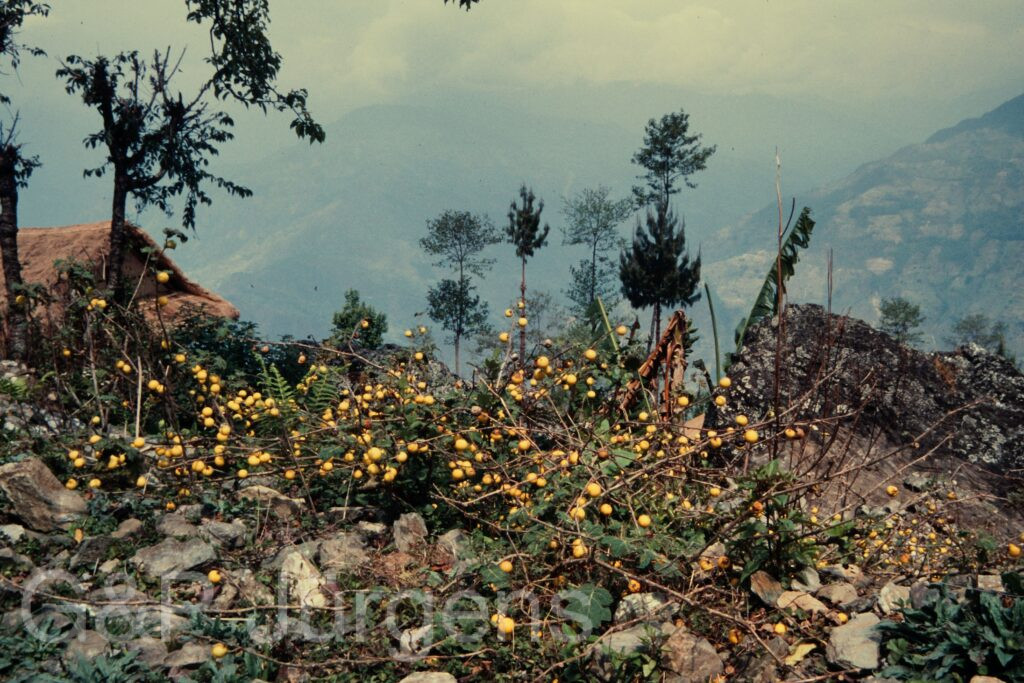
Nepal 97 9 P14
Nepal Taplejung 1000m April

Description

Solanum viarum, the tropical soda apple, is native to subtropical South America, notably Brazil, Argentina, Paraguay and Uruguay, but is now a widespread invasive weed; the GBIF dataset of roughly 32000 records spans the United States, Australia, South Africa, India, China, Vietnam, Thailand, Korea, Mexico and the Himalayan countries Nepal and Bhutan. It colonises pastures, roadsides, field margins, waste ground and disturbed forest edges at low to mid elevations, thriving in open, grazed and ruderal habitats. The illustrated material from Zhemgang in Bhutan at 910 m in October and Taplejung in eastern Nepal at 1000 m in April reflects its establishment in the warm subtropical foothills, where it behaves as an aggressive colonist of disturbed ground.

It is a robust erect prickly perennial herb or subshrub 1–2 m tall, the stems, petioles, leaf veins and calyx armed with stout, broad-based yellowish prickles and clothed in stellate hairs. The leaves are alternate, ovate, deeply lobed and sinuate, prickly on both surfaces along the veins. The inflorescence is a small extra-axillary cyme of white, stellate, five-merous flowers with reflexed petals and a cone of connivent yellow anthers. The fruit is a globose berry about 2–3 cm across, mottled green like a tiny melon when immature and ripening pale yellow, containing numerous flattened seeds embedded in juicy pulp.

Solanum viarum belongs to the spiny Leptostemonum clade of Solanum. Its prolific, animal-dispersed berries, toxic to many vertebrates but readily spread by livestock and wildlife, underlie its notoriety as a noxious weed subject to quarantine and biological control in the United States and elsewhere. In the Himalayan foothills it is a naturalised invader rather than a native element, and its spread is monitored as a threat to pasture and native vegetation.

Author: Dunal · Sources: POWO (Kew), GBIF, Flora of China Vol. 17, Flora of Bhutan Vol. 2, Flora of Nepal, Solanaceae: A Monograph of Solanum (Solanaceae Source)

Gaertn.

Nepal 97 49 P74
Nepal Mewa-Khola 1100m April

Description

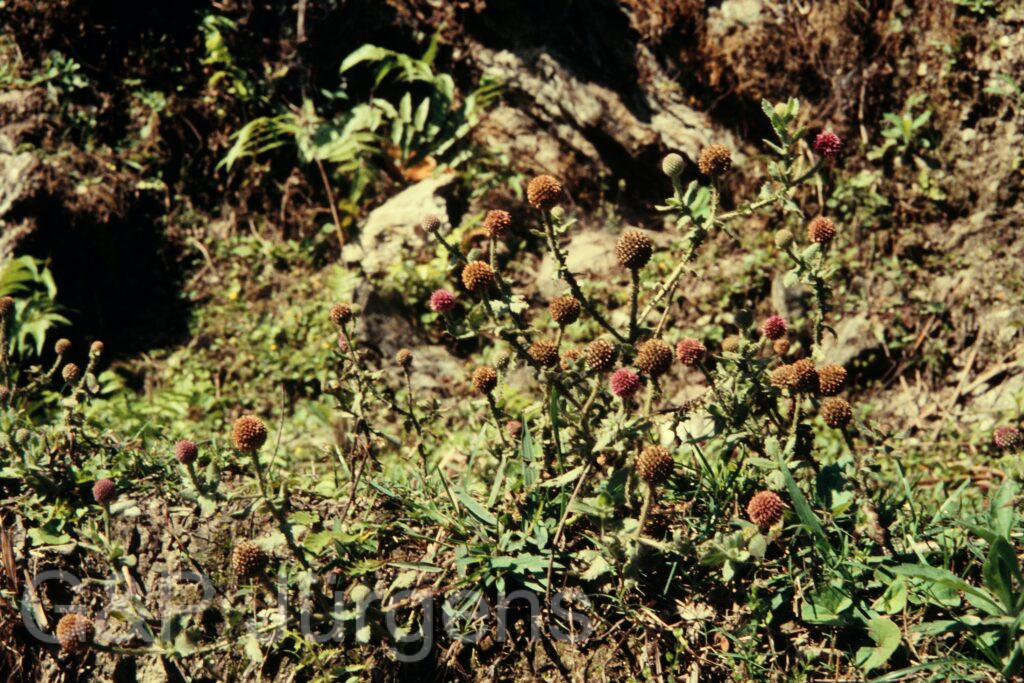
Sphaeranthus indicus Gaertn. is a widespread weedy annual of the Old World tropics and subtropics, with a very broad GBIF footprint (over 1200 occurrences) spanning India, Sri Lanka, Bangladesh, Nepal, Bhutan, Myanmar, Thailand, Laos, Vietnam, southern China and Indonesia, and extending to Australia, Madagascar, Kenya and Ethiopia. It is a plant of seasonally wet, open ground: rice-field margins, fallows, ditches, damp wastelands and the receding edges of pools and tanks, mostly at low elevations. The specimen photographed at Mewa-Khola in Nepal at 1100 m in April occurs in the warm subtropical foothill belt at the upper margin of its lowland range, where post-monsoon wet ground provides its preferred germination sites.

It is a strongly aromatic annual herb with a much-branched, often reddish, ascending to spreading stem bearing conspicuous toothed or undulate wings formed by the decurrent leaf bases. The leaves are obovate to oblanceolate, sessile, and serrate-dentate. The diagnostic feature is its compound capitulescence: numerous tiny, narrow secondary heads are aggregated into a dense, globose to ovoid, purple to violet compound head terminating each branch. Each small head contains a few peripheral female florets and central bisexual florets with tubular corollas. The fruit is a minute, oblong cypsela lacking a conspicuous pappus.

The genus Sphaeranthus is distinctive within tribe Inuleae for its glomerulate, second-order capitula, and S. indicus is its most familiar and economically significant species, valued throughout South Asia in Ayurvedic and folk medicine for its essential oils and bioactive sesquiterpenoids and flavonoids. Ecologically it behaves as a pioneer of disturbed, periodically inundated soils and is locally abundant; it is of least conservation concern and indeed often regarded as a ruderal weed across its pantropical range.

Author: Gaertn. · Sources: POWO (Kew), GBIF, Flora of China, Flowers of the Himalaya, Annotated Checklist of the Flowering Plants of Nepal, Anderberg monograph of tribe Inuleae

(Pers.) Ames

Bhutan2014 92
Bhutan Trashigang 1450m, May
Bh2008 471 G732
Bhutan Tsang-Chu, 1800m April
Nepal1992 92 P126 ergebnis
Nepal Amjilassa 2300m March 

Description

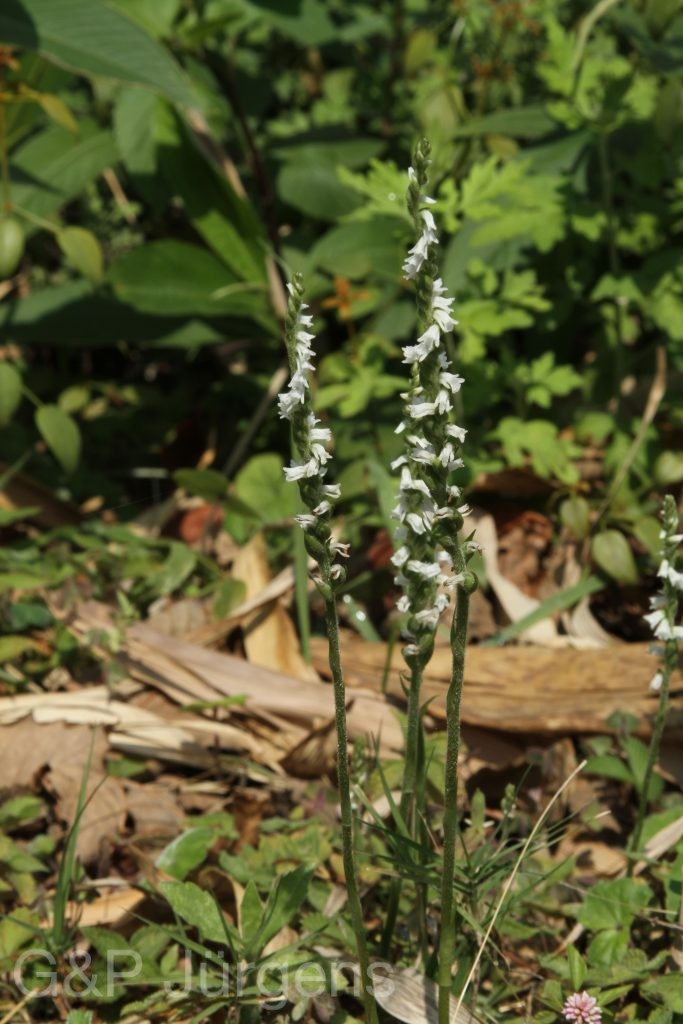
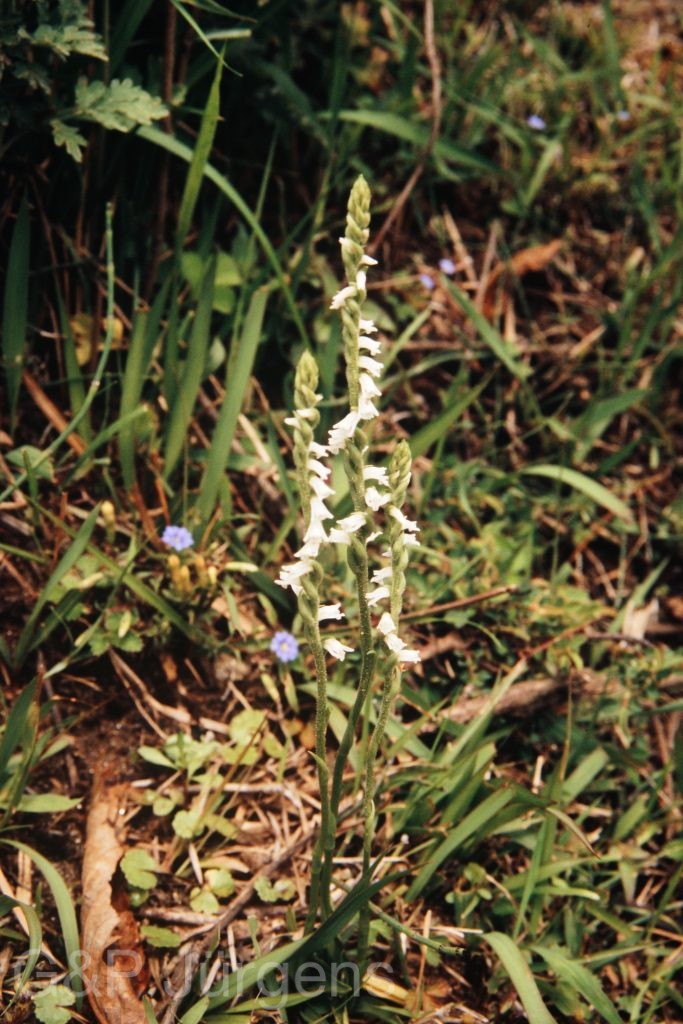
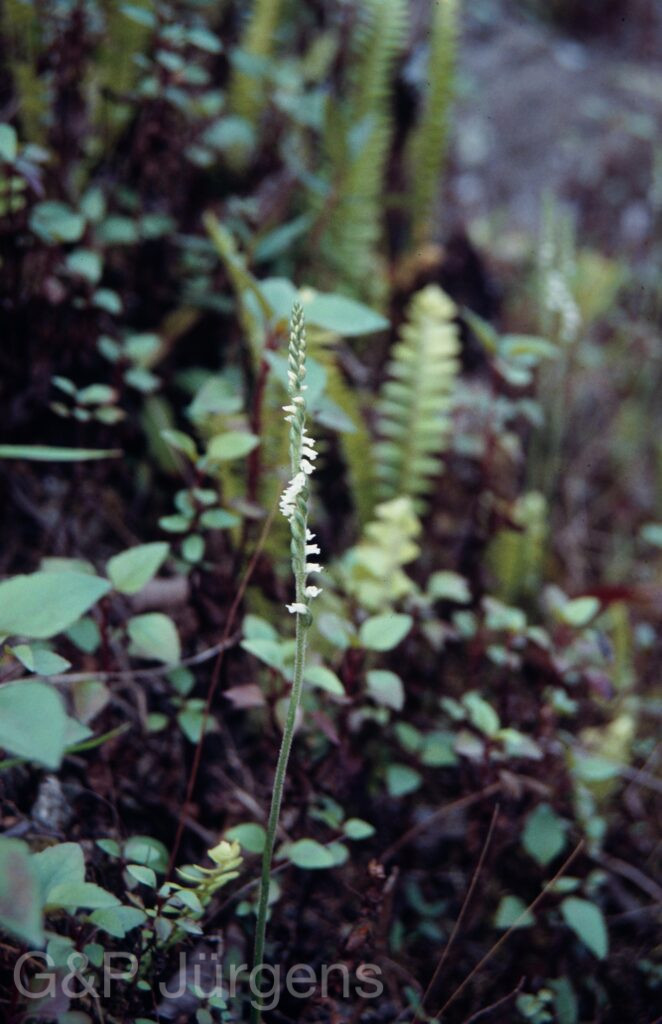
Spiranthes sinensis, the Chinese ladies'-tresses, is one of the most widespread terrestrial orchids of the Old World, documented in GBIF by some 7880 occurrences spanning eastern Asia from China, Japan, Korea and Russia through India, Nepal, Bhutan and Southeast Asia to Australia, New Caledonia and Sri Lanka. It occupies open, moist grassland, marshy meadows, streambanks, paddy margins and grassy slopes from near sea level to about 3000 m. The photographed Himalayan plants from Trashigang in Bhutan at 1450 m in May, the Tsang-Chu at 1800 m in April and Amjilassa in eastern Nepal at 2300 m in March illustrate its tolerance of a wide elevational and seasonal range in damp, sunny situations.

It is a slender terrestrial orchid with fleshy, fasciculate, tuberous roots and a tuft of linear to oblanceolate basal leaves. The erect, finely pubescent inflorescence bears numerous small flowers arranged in a characteristic single spiral around the axis. The flowers are typically pink to rose-purple with a white, recurved, crisped-margined labellum bearing a yellowish, papillose central callus; the dorsal sepal and petals converge to form a hood over the short column. The fruit is a small, erect, ellipsoid capsule releasing dust-like seeds.

A member of subtribe Spiranthinae of the Orchidaceae (here under the input spelling Orchideaceae), S. sinensis forms a taxonomically complex, polyploid-rich aggregate from which several segregates such as S. australis and S. hongkongensis have been recognised. Like most orchids it depends on mycorrhizal fungi for germination and is pollinated chiefly by bees. Despite local declines from wetland drainage, its enormous range and weedy persistence in disturbed grassland make it of Least Concern, though it is protected under CITES Appendix II as for all orchids.

Author: (Pers.) Ames · Sources: POWO (Kew), GBIF, Flora of China, Flora of Bhutan, Annotated Checklist of the Flowering Plants of Nepal, Pridgeon et al. Genera Orchidacearum

Hook.f. & Thomson ex. Benth.

Bh2008 17 P30
Bhutan Thimphu-Chu, 2800m April
Nepal 97 125 G217
Nepal Mewa-Khola 2470m April

Description

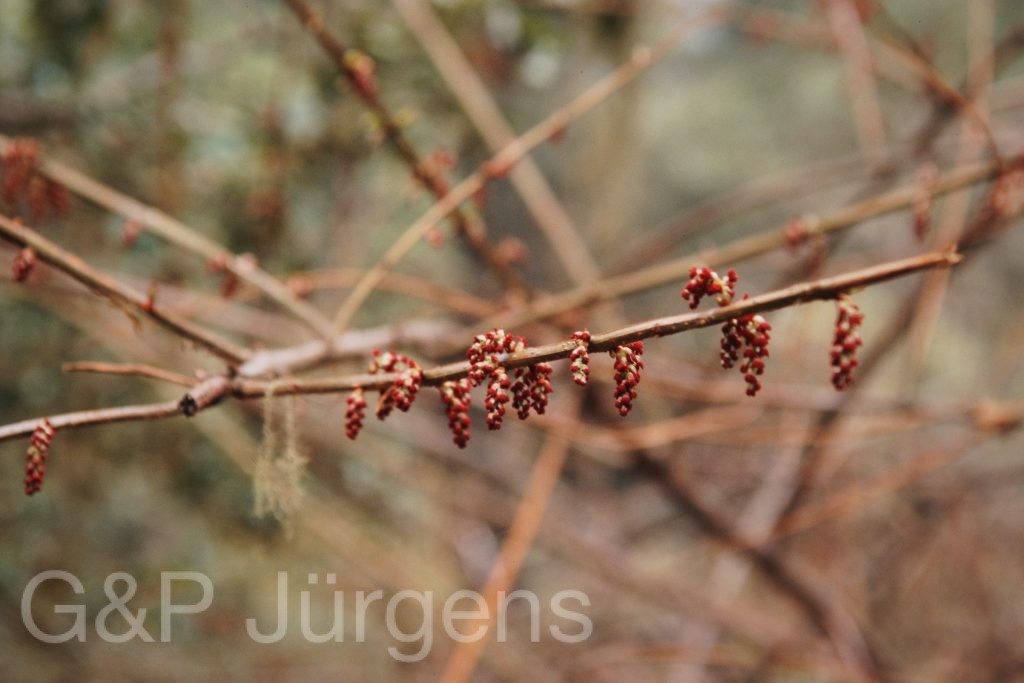
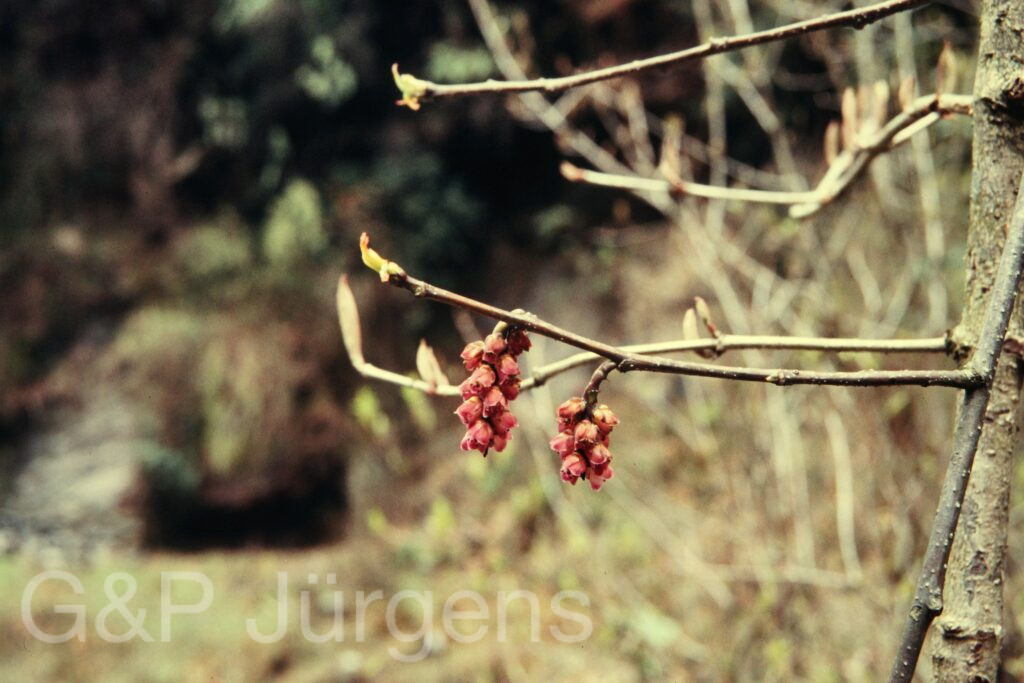
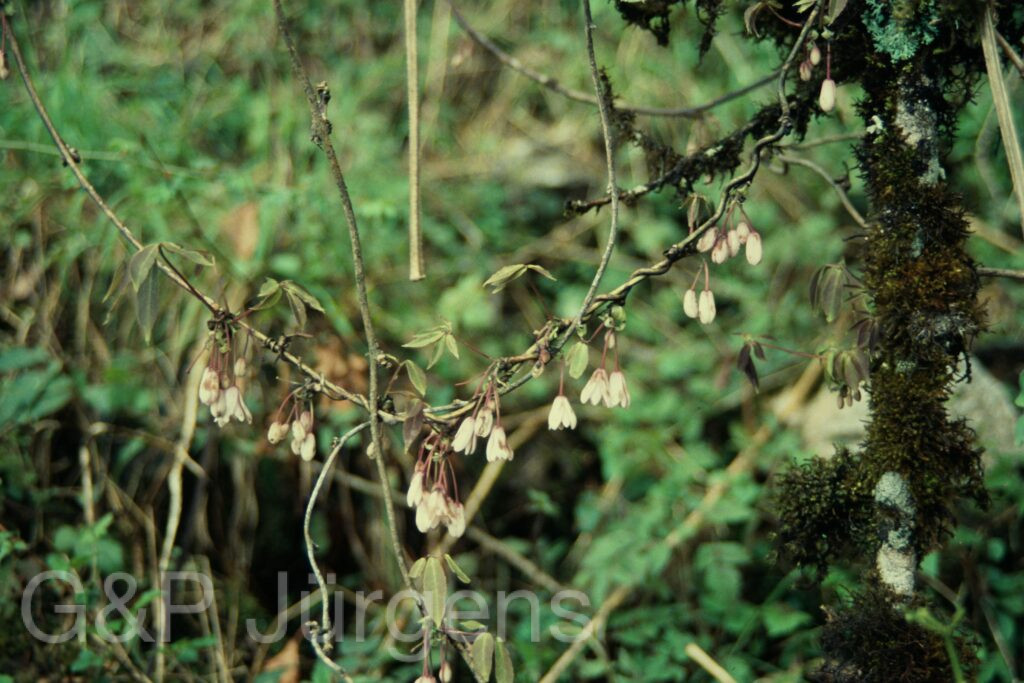
Stachyurus himalaicus is a Sino-Himalayan shrub distributed from Nepal and northern India through Bhutan, northern Myanmar and southern China to Taiwan, with around 4100 GBIF occurrences and a peripheral introduced presence in Japan, Korea and cultivation in Belgium. It grows in moist broad-leaved and mixed evergreen forest, along streamsides, forest margins and shrubby slopes in the warm-temperate to lower cool-temperate belt, roughly 1500 to 3000 m. The plants recorded along the Thimphu-Chu in Bhutan at 2800 m and at Mewa-Khola in Nepal at 2470 m, both flowering in April before leaf expansion, exemplify its precocious early-spring display on humid montane slopes.

It is a deciduous shrub or small tree with reddish-brown, glabrous, lenticellate branchlets. The leaves are alternate, ovate-lanceolate to oblong, acuminate, with serrate to serrulate margins and a slender petiole, the young foliage sometimes flushed reddish. Its diagnostic feature is the inflorescence: stiff, pendent, spike-like racemes produced from the leafless nodes, each bearing numerous small, shortly pedicellate, bell-shaped pale yellow flowers with four sepals, four petals and eight stamens. The superior ovary develops into a small, globose, leathery to fleshy berry containing many minute seeds embedded in pulp.

Stachyurus is the sole genus of the small family Stachyuraceae, an isolated lineage within the Crossosomatales, and S. himalaicus is its principal Himalayan representative, distinguished from the Chinese S. chinensis by leaf and inflorescence characters. The pre-foliar flowering exploits an open canopy and attracts early-season bees, while the berries are bird-dispersed. The species is common and not of conservation concern.

Author: Hook.f. & Thomson ex. Benth. · Sources: POWO (Kew), GBIF, Flora of China Vol. 13, Flora of Bhutan Vol. 2, Flora of Nepal, A Revision of the Genus Stachyurus (Stachyuraceae)

(Wall.) R.Br. ex. Wall.

Bhutan2012 357
Bhutan Dochu-La 2900m, September
Bhutan2014 609
Bhutan Phobjika 3100m, May
Sikkim2004 26 P41
Sikkim West-Bengal, Sambon 1850m April

Description

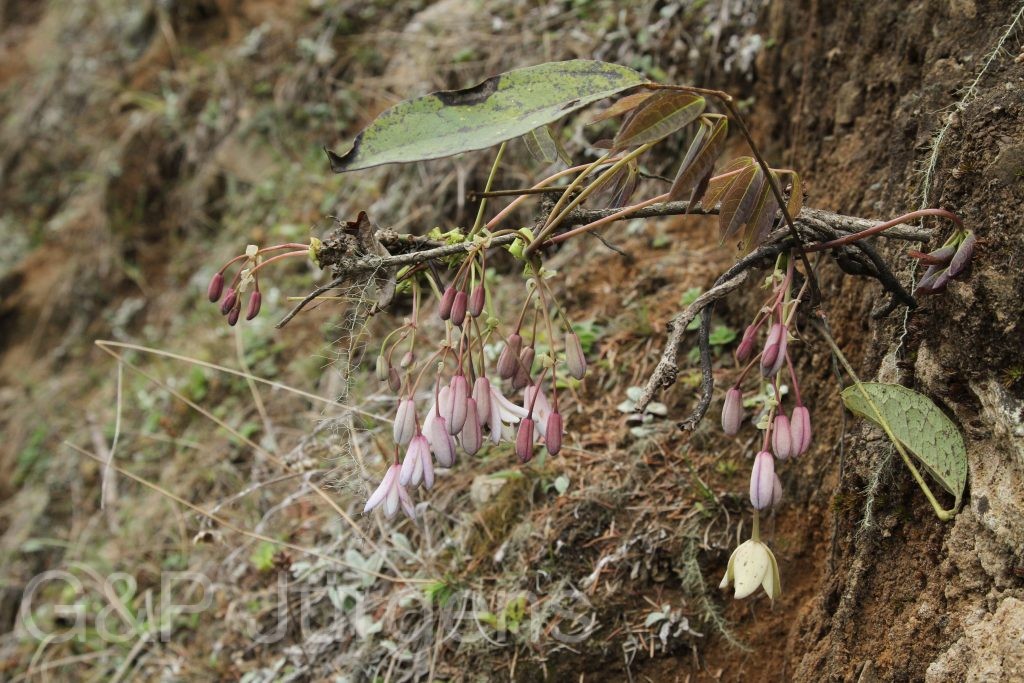
Stauntonia latifolia is a Himalayan woody climber distributed through China, India, Nepal, Bhutan and Myanmar, with GBIF aggregating some 517 occurrences across the warm temperate belt. It is a liana of moist broad-leaved and mixed forest, scrambling over shrubs and into the canopy along forest margins, ravines and streamsides typically between about 1500 and 3100 m. The accompanying records span this range well, from Sambon on the Sikkim–West Bengal border at 1850 m in April, through the Dochu-La in Bhutan at 2900 m in September, to Phobjika at 3100 m flowering in May, reflecting an extended phenology across elevation and longitude in the eastern Himalaya.

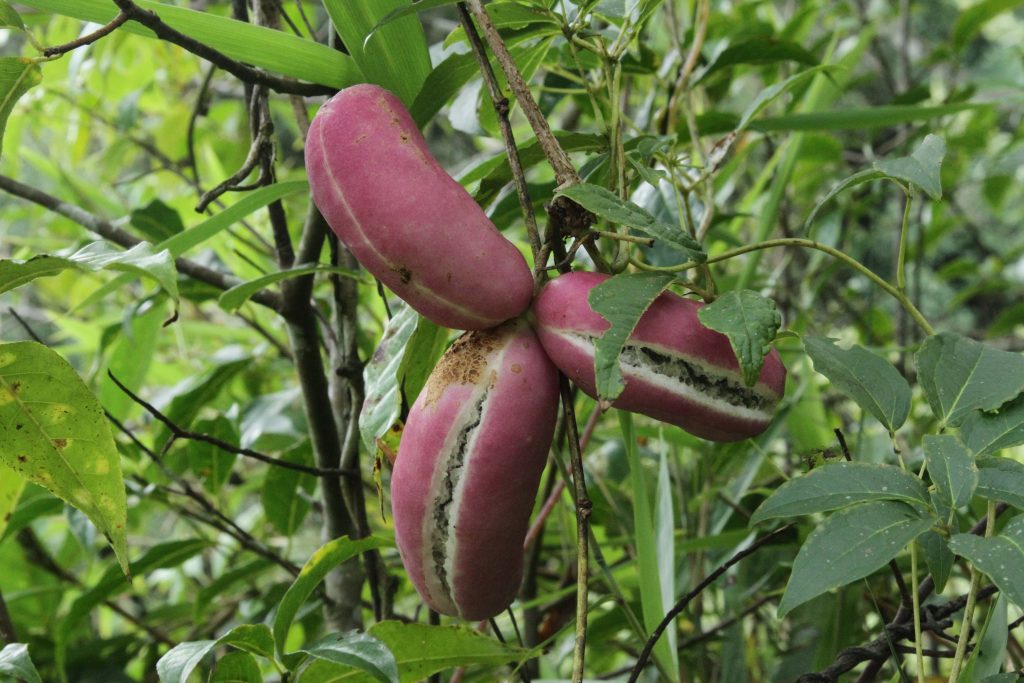
The family is here cited as Ranunculaceae, but the plant in fact belongs to the Lardizabalaceae; the description follows the true affinity. It is an evergreen twining climber with palmately compound leaves of three to seven leathery, entire, ovate to elliptic leaflets borne on long petioles. The plant is functionally monoecious, the flowers unisexual and borne in axillary racemes; they are greenish-white to purplish, lacking true petals, the showy parts being six sepals in two whorls, with six stamens in male flowers and three carpels in female ones. The fruit is a fleshy, oblong, purple berry-like follicle, edible and sweet, containing numerous black seeds embedded in a juicy pulp.

The taxon was described by Wallich and is widely treated under the synonym Holboellia latifolia, the generic limits between Holboellia and Stauntonia having been repeatedly debated and revised; under recent circumscriptions the Himalayan plant is placed in Stauntonia. The Lardizabalaceae are a small east-Asian and Chilean family of considerable phylogenetic interest as an early-diverging lineage of the Ranunculales. The succulent fruits are locally gathered and eaten and serve to disperse the seeds via birds and mammals; the species is common and faces no significant conservation concern.

Author: (Wall.) R.Br. ex. Wall. · Sources: POWO (Kew), GBIF, Flora of China, Flora of Bhutan, Annotated Checklist of the Flowering Plants of Nepal, monographic studies of Lardizabalaceae (Holboellia and Stauntonia)

Edgew.

Nepal 2009 68 ergebnis
Nepal Helambu Yangri 1330, May
Garh 07 340 ergebnis
India Garhwal Dohdi-Tal 3070m, June

Description

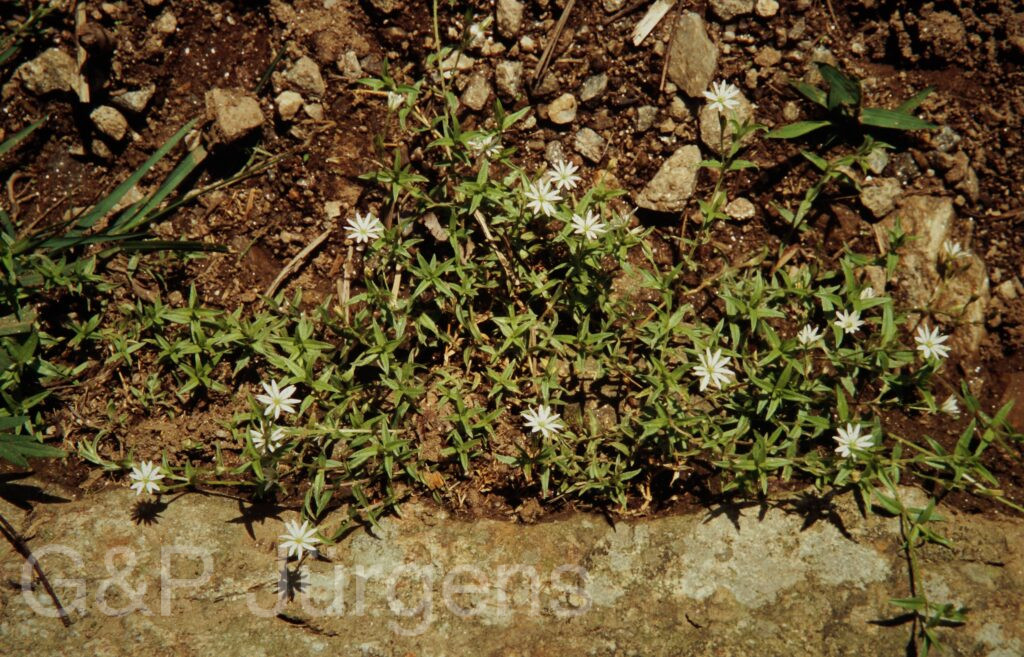
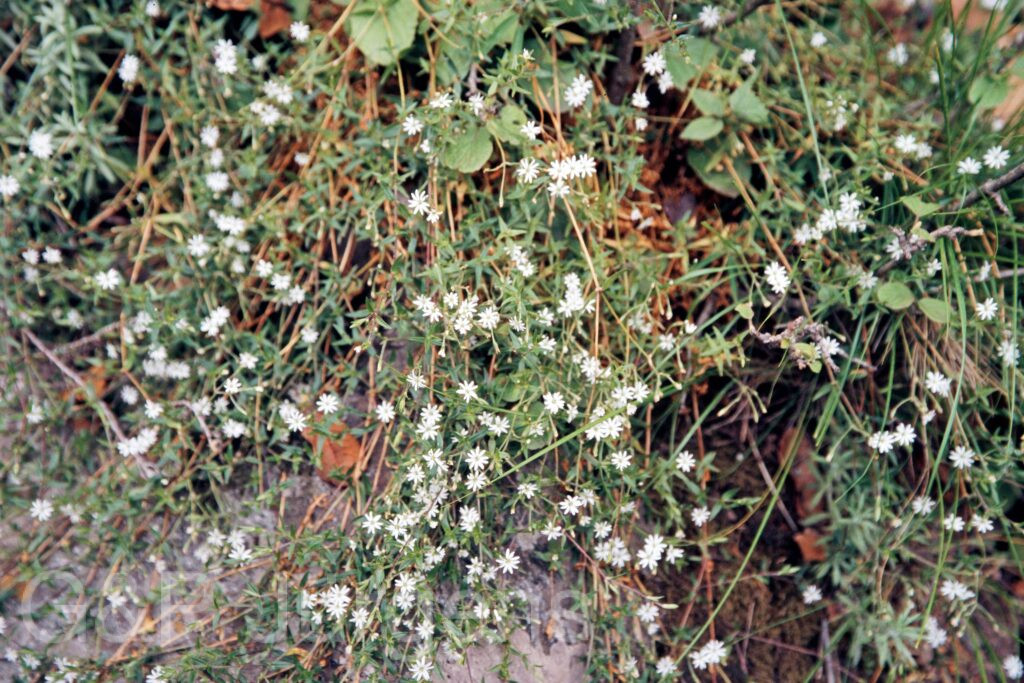
Stellaria semivestita Edgew. is a delicate herbaceous member of the Caryophyllaceae native to the Himalaya and the mountains of southwestern China. GBIF data place it in Nepal, India and China, with a modest 22 georeferenced records reflecting its inconspicuous habit and uneven collection. The species occupies a broad altitudinal span, from warm-temperate forest understorey and shaded banks at around 1,300 m up to subalpine meadows and damp rocky slopes near 3,000 m. The cited gatherings from Helambu (Yangri, Nepal) at 1,330 m and from Dohdi-Tal in Garhwal at 3,070 m illustrate this ecological amplitude across the monsoon-influenced Himalayan front.

The plant is a weak-stemmed, ascending to straggling perennial with quadrangular stems that are pubescent at least in lines, the indumentum being uneven or "half-clothed" as the epithet implies. The leaves are opposite, sessile to shortly petiolate, ovate-lanceolate to lanceolate, acuminate and ciliate at the margins. Flowers are borne in lax, leafy dichasial cymes; the five sepals are lanceolate and the five white petals are deeply bifid, equalling or slightly exceeding the calyx. The fruit is an ovoid capsule dehiscing by six valves and containing numerous reniform, finely tuberculate seeds.

Stellaria semivestita belongs to a taxonomically complex genus in which species delimitation rests on subtle differences in pubescence, petal length and seed sculpture. It is of no conservation concern, being widespread and adaptable, but it contributes to the ground-layer diversity of Himalayan forests and clearings and exemplifies the genus's success across a wide elevational gradient.

Author: Edgew. · Sources: POWO (Kew), GBIF, Flora of China Vol. 6, Flora of Nepal, Flora of Pakistan (Caryophyllaceae), Majumdar: Caryophyllaceae of India