Tag:

Summer

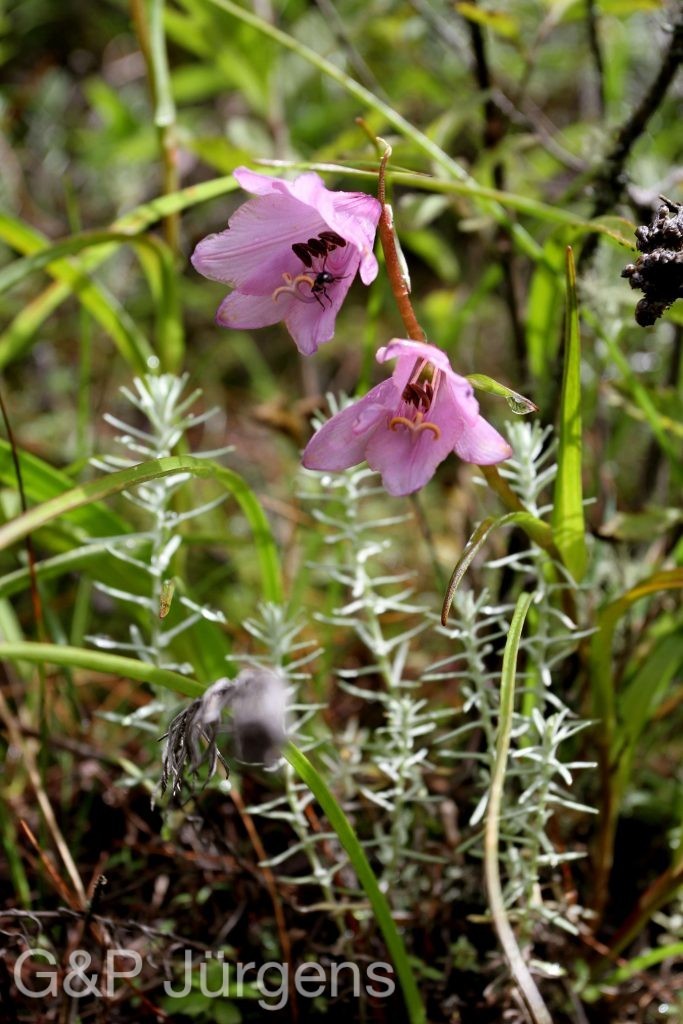
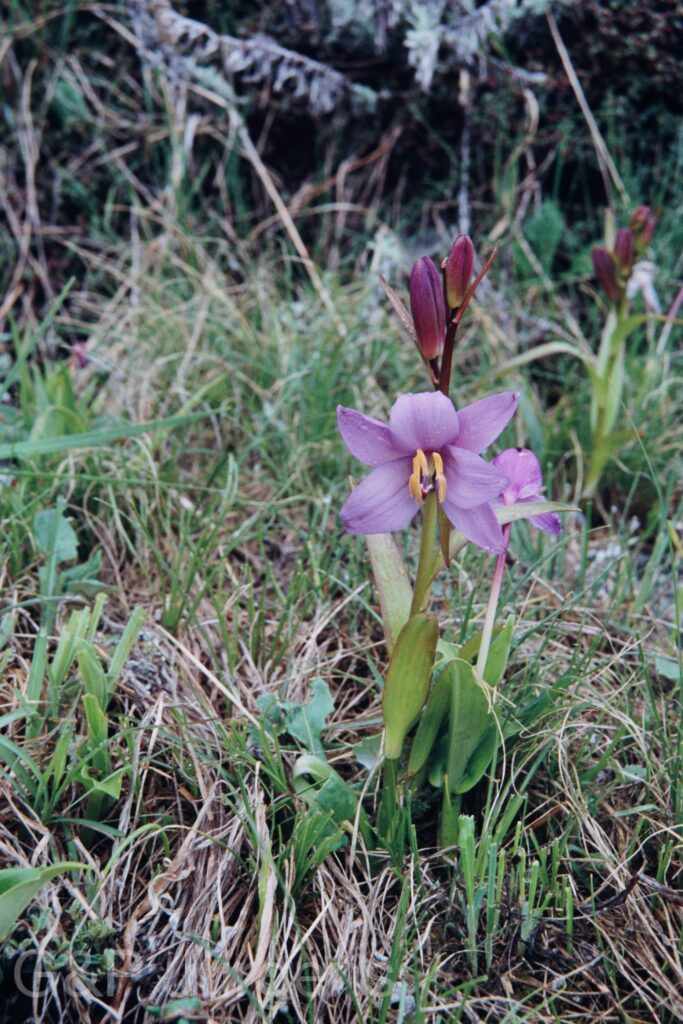
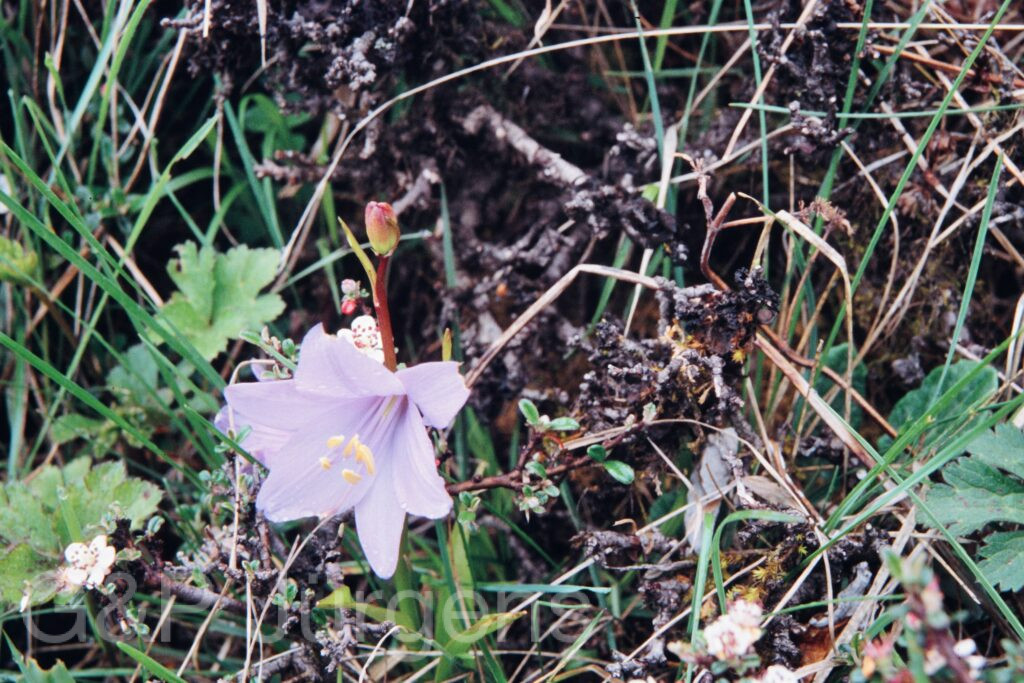
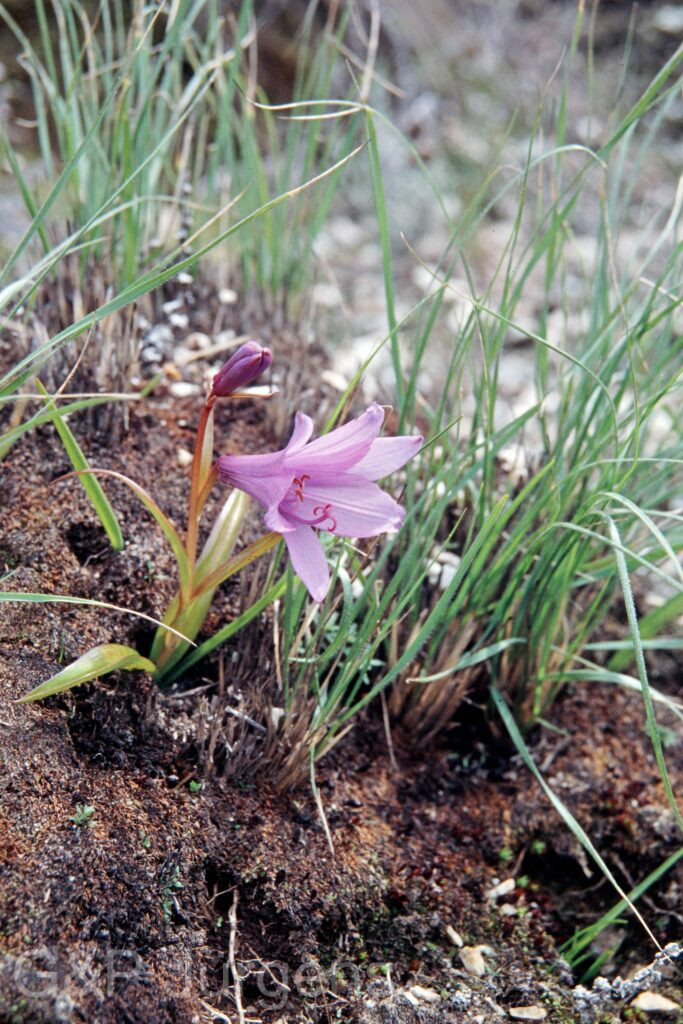
Boiss.

BhutanPG2011 710 01 01 2
Bhutan Pele-La, 2900m July
Nepal 99 31 ergebnis
West-Nepal Chere 2850m June
Nepal 99 32 ergebnis
West-Nepal Chere 2850m June
Nepal 99 379 ergebnis
West-Nepal Chere 2850m June

Description

Notholirion macrophyllum is a Sino-Himalayan bulbous lily ranging through Nepal, Bhutan, northern India and south-western China, with GBIF documenting roughly 189 occurrences across this arc. It favours cool, humid subalpine to lower alpine habitats, occurring on open forest margins, shrubby slopes, grassy banks and moist meadows, often beneath Rhododendron and conifer cover on humus-rich soils. The collections cited from Bhutan at Pele-La around 2900 m in July and western Nepal at Chere near 2850 m in June illustrate its characteristic mid-montane elevation and its phenology, flowering during the early to mid monsoon when ground moisture is abundant.

The plant grows from a small ovoid bulb whose outer scales decay to leave numerous bulblets at the base, a feature typical of the genus and important for vegetative spread. The flowering stem is slender and erect, bearing linear-lanceolate radical leaves and reduced bract-like cauline leaves. The inflorescence is a lax few-flowered raceme of nodding, broadly funnel-shaped flowers; the six tepals are rose-pink to pale lilac or mauve, oblanceolate, spreading at the tips and often darker-veined. Six stamens with versatile anthers surround a slender style ending in a three-lobed stigma. The superior ovary matures into a three-valved loculicidal capsule releasing flat, winged, wind-dispersed seeds.

Notholirion, described in its species by Boissier among others, is a small genus of four to five species allied to Lilium and Fritillaria but distinguished by its monocarpic main bulb that dies after flowering, persisting through offset bulblets. N. macrophyllum is the smallest-flowered member and the most widespread in the central Himalaya. Its reliance on undisturbed subalpine vegetation makes it susceptible to grazing, trampling and forest disturbance, although it remains locally frequent and is sometimes cultivated by enthusiasts of Himalayan bulbs.

Author: Boiss. · Sources: POWO (Kew), GBIF, Flora of Bhutan, Flora of China, Stainton Flowers of the Himalaya, Sealy revision of Notholirion
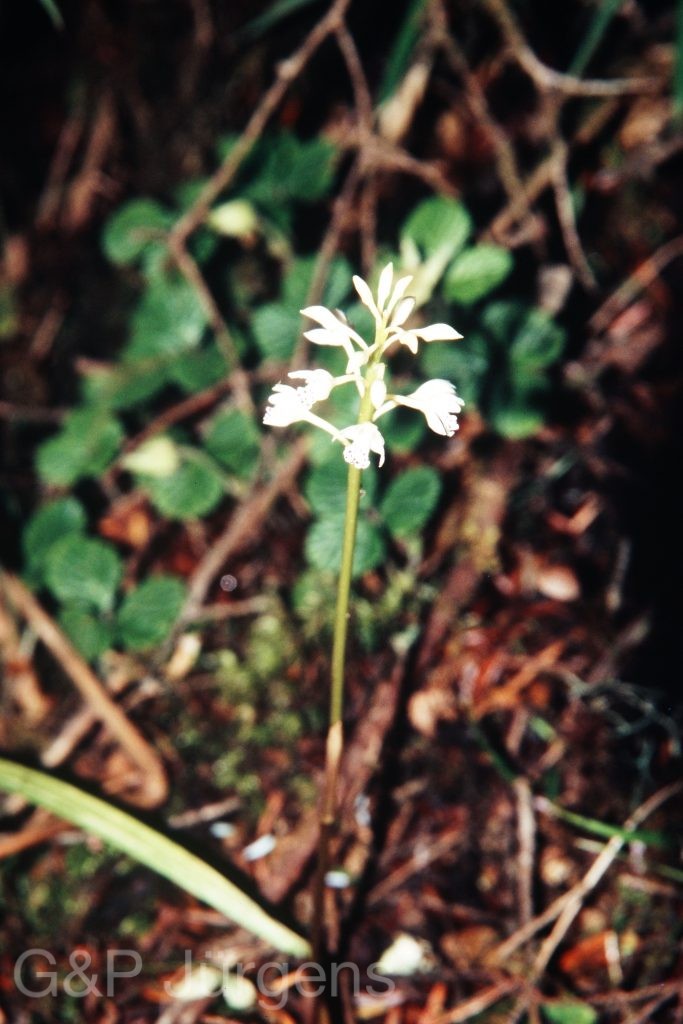
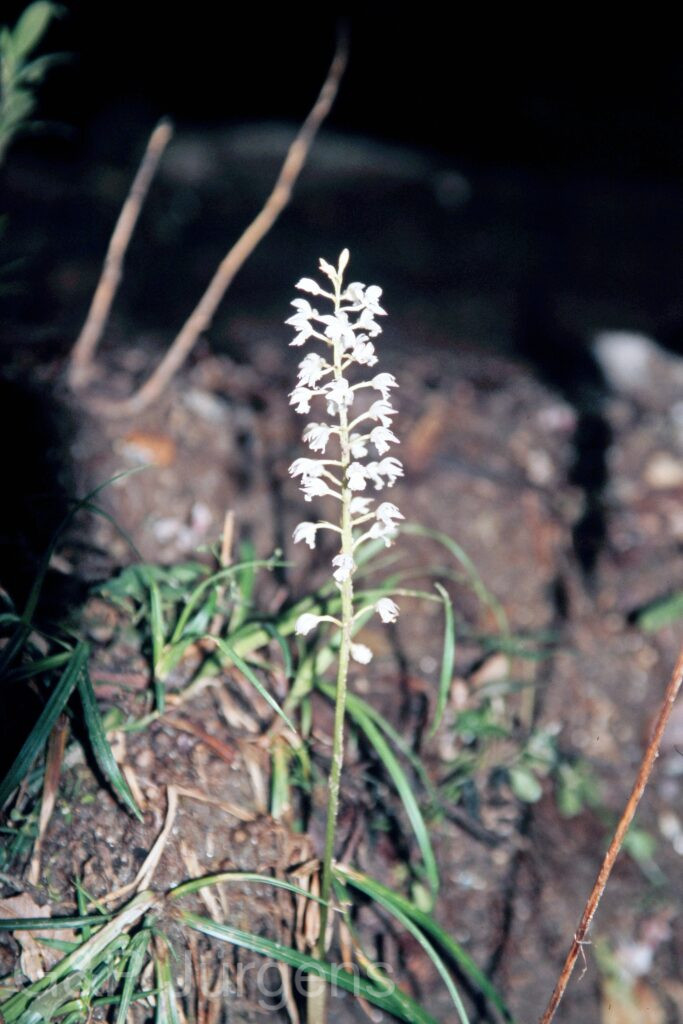
Lindl.

BhutanPG2011 35 ergebnis
Bhutan Wangdi 2000m, June

Description

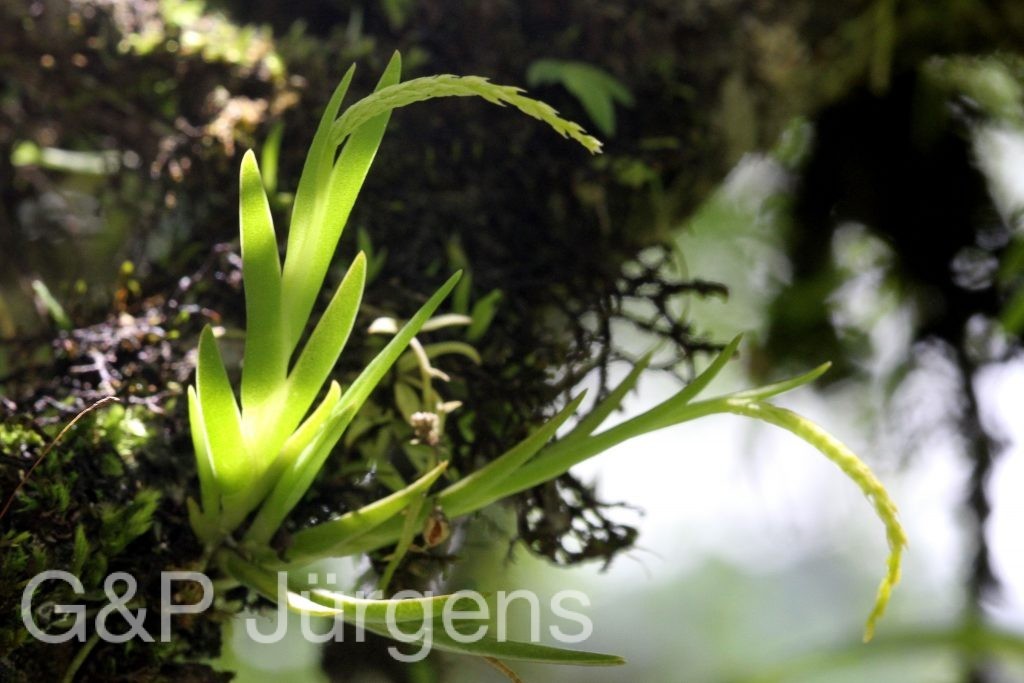
Oberonia obcordata is a diminutive epiphytic orchid of the Eastern Himalaya and adjacent Southeast Asia, recorded from China, India, Nepal, Thailand and Bhutan, with around 40 occurrences in GBIF. It grows as an epiphyte on the trunks and branches of trees in humid subtropical to lower montane broad-leaved forest, generally at moderate elevations of roughly 1,000 to 2,200 m. The plant illustrated was photographed near Wangdue (Wangdi) in western Bhutan at about 2,000 m in June, where the species flowers in the warm, moist conditions of the early monsoon.

It is a small, tufted epiphyte without pseudobulbs, the short stem bearing a fan of laterally flattened, equitant, fleshy leaves arranged in two ranks, as is characteristic of the genus. The inflorescence is a slender, pendent to arching raceme densely crowded with very numerous, minute flowers arranged in whorls along the axis. The tiny flowers are yellowish to orange-brown; the small sepals and petals spread, and the labellum, from which the epithet derives, is obcordate and more or less notched at the apex. The column is very short, and the fruit is a minute ellipsoid capsule containing exceedingly fine seeds.

Oberonia is a large palaeotropical genus of dwarf, fan-leaved epiphytes distinguished chiefly by the form of the diminutive labellum, here obcordate and emarginate. The minute flowers are pollinated by small insects, and establishment is mycorrhiza-dependent. Inconspicuous and easily overlooked, the species is relatively poorly documented; though not specifically assessed, it shares the general CITES Appendix II protection of the family, and its persistence is linked to intact mid-elevation forest.

Author: Lindl. · Sources: POWO (Kew), GBIF, Flora of China, Flora of Bhutan, The Orchids of Bhutan (Pearce & Cribb), Pridgeon et al. Genera Orchidacearum

Wall.

Nepal 99 147 ergebnis
West-Nepal South of Rara-Lake 3700m, June
Nepal 99 724 ergebnis
West-Nepal, Bauli.Khola 3600m, July

Description

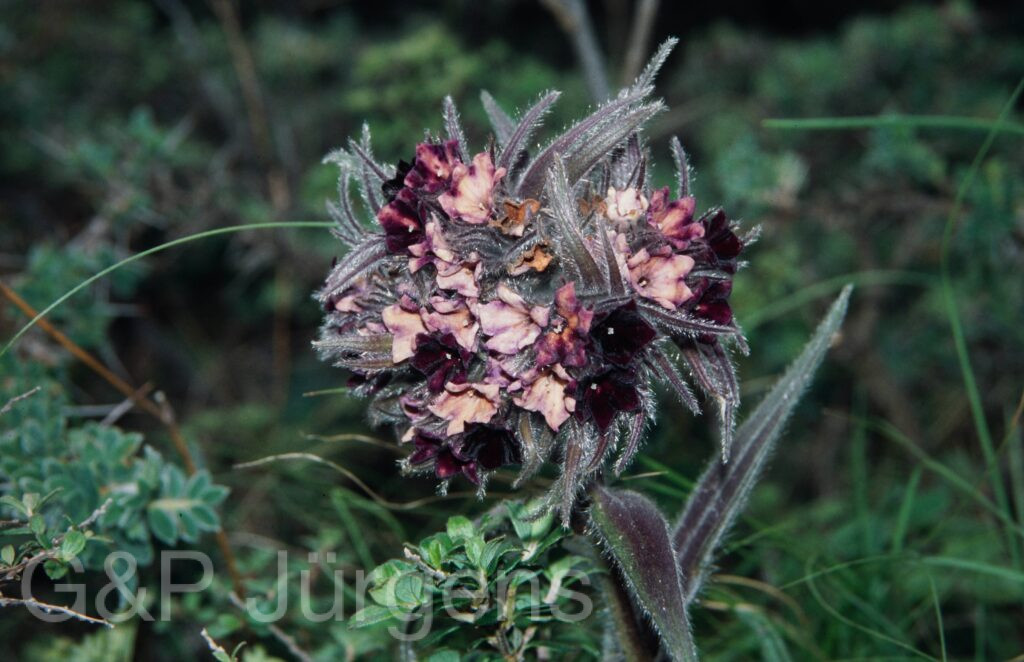
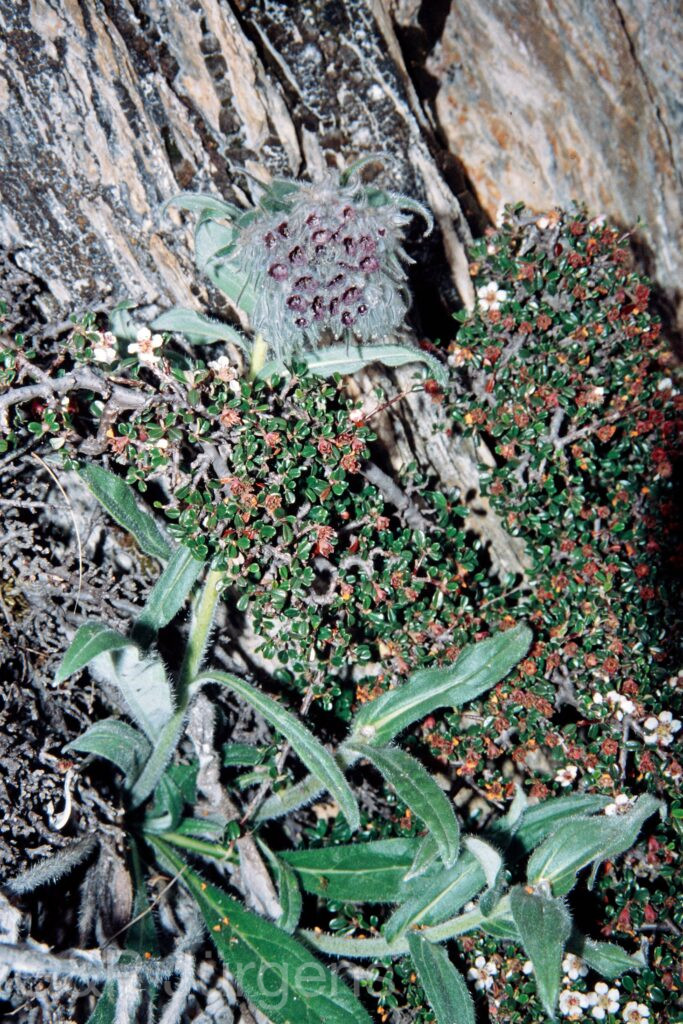
Onosma bracteata Wall. is a bristly perennial herb of the western and central Himalaya, recorded by GBIF (83 occurrences) from Nepal, India and Turkey, though its core range lies along the high inner-Himalayan valleys. It occupies dry, open, stony slopes, rocky pasture and the margins of subalpine scrub on calcareous or schistose substrates, flowering through the early monsoon. The cited collections from west Nepal, south of Rara Lake at 3700 m in June and at Bauli Khola at 3600 m in July, place it firmly in the high-altitude steppe and meadow zone where it forms scattered clumps on sun-exposed ground. The name is treated here as a synonym, with Onosma bracteata recognised as the accepted name.

The plant forms tufted, ascending to erect stems clothed throughout in stiff, spreading, tuberculate-based setae that give a harsh, hispid texture. The leaves are sessile, oblong-lanceolate to linear, entire and likewise bristly on both surfaces. Flowers are aggregated in terminal, scorpioid cymes subtended by conspicuous leafy bracts, from which the epithet derives; the corolla is tubular-campanulate, yellow, with a five-toothed limb and exserted anthers, and the gynoecium develops into four smooth nutlets enclosed by the persistent calyx.

Within the large Old World genus Onosma, the bracteate, yellow-flowered Himalayan species form a taxonomically intricate complex requiring careful comparison of indumentum and bract characters. Several Onosma yield a red dye (alkannin-type pigments) from their roots and have ethnobotanical and medicinal uses across the region. The species is not assessed as threatened, but its restriction to specialised dry montane habitats makes local populations vulnerable to grazing pressure and trampling.

Author: Wall. · Sources: POWO (Kew), GBIF, Flora of Nepal, Flora of British India (Hooker), Boraginaceae of the Western Himalaya, Riedl monograph on Onosma

R.R.Mill

BhutanPG2011 712 01 01
Bhutan Phobjika 2800m July

Description

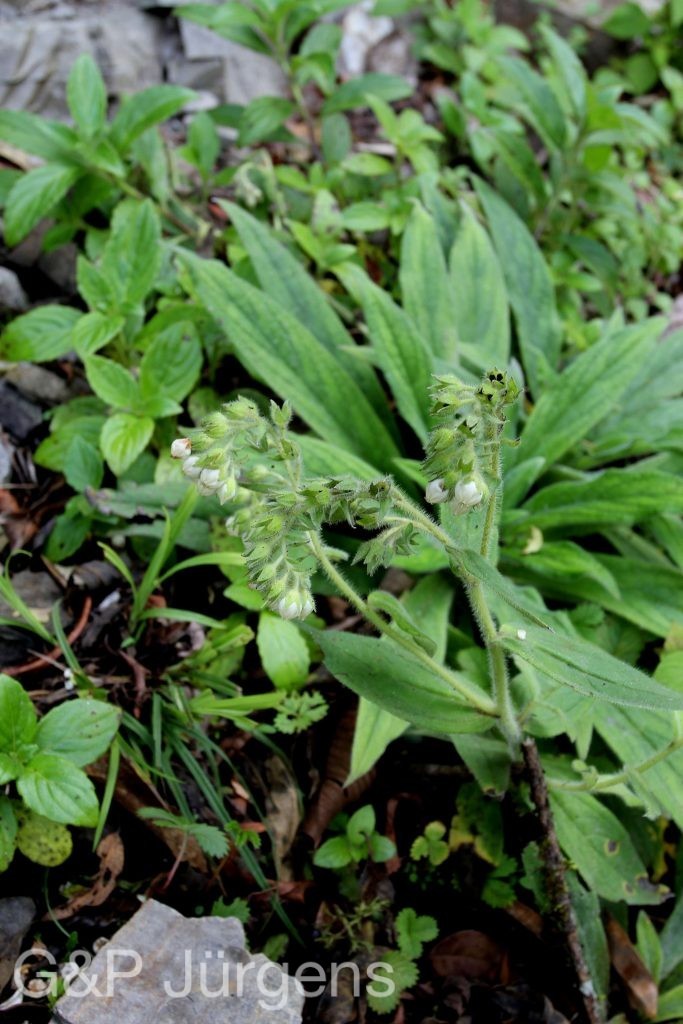
Onosma griersonii is a narrowly distributed Himalayan herb known from the temperate mountains of Bhutan, the only country from which it is recorded in GBIF, where its three occurrences reflect the rarity of collections of this localised taxon. It is a plant of open, dry, sunny banks, grassy slopes and stony ground in the inner valleys of the central Himalaya, favouring well-drained sites in the broad montane belt. The photographed plant from the Phobjika valley in Bhutan at 2800 m, flowering in July, typifies its occurrence in the cool-temperate mid-elevation zone, where it blooms during the summer monsoon. Though GBIF treats the name as a synonym, current taxonomic opinion accepts Onosma griersonii as the correct name for the entity.

Like other members of its genus it is a coarse, bristly-hairy perennial or biennial herb, the whole plant clothed in stiff, often tubercle-based setae that give it a harsh texture. The leaves are narrowly oblong to linear-lanceolate, entire and sessile, the basal ones forming a rosette. The flowers are borne in terminal scorpioid cymes that uncoil as they open; each flower has a tubular to narrowly campanulate corolla, typically yellow, with included or shortly exserted stamens and a deeply five-lobed calyx. The fruit comprises four hard, smooth nutlets.

Onosma is a large Old World genus centred on the mountains of Central and Southwest Asia, with a number of restricted endemics in the Himalaya. O. griersonii, named for the botanist A. J. C. Grierson, co-author of the Flora of Bhutan, is one such local endemic. Its bristly indumentum and tap-rooted habit are adaptations to dry, exposed montane microhabitats, while its tubular corollas suit pollination by long-tongued bees. As a narrow-range endemic it warrants conservation attention.

Author: R.R.Mill · Sources: POWO (Kew), GBIF, Flora of Bhutan, Boraginaceae of the Sino-Himalaya, Revision of Onosma (Riedl & Mill)

Lindl.

Garh 07 88 ergebnis
India Garhwal Trijugi Narayan 2500m, June
Garh 07 89 ergebnis
India Garhwal Trijugi Narayan 2500m, June

Description

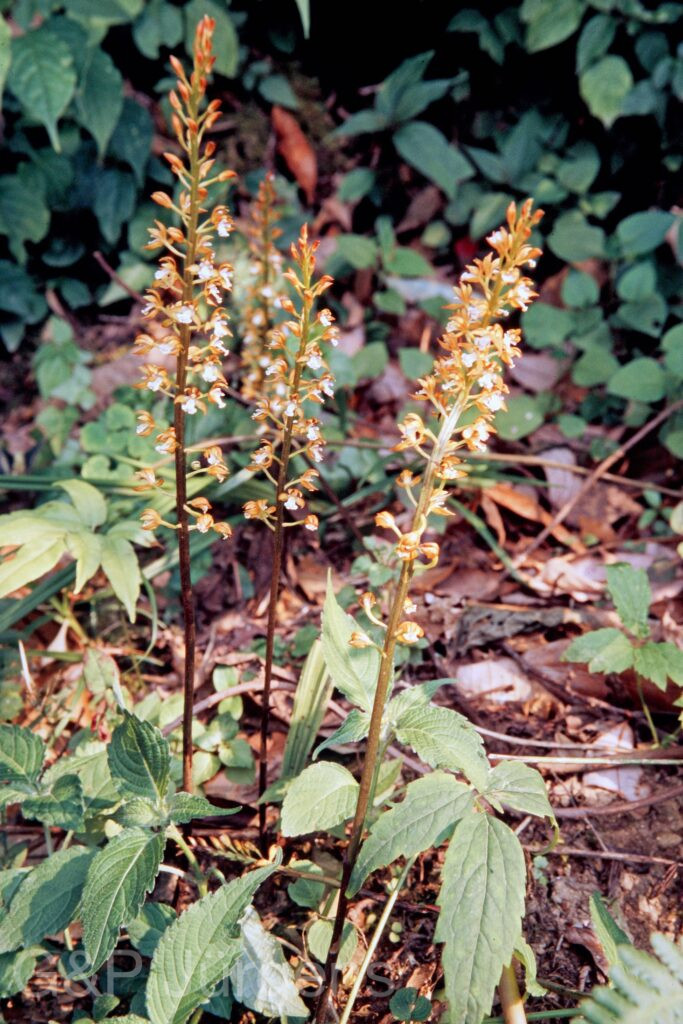
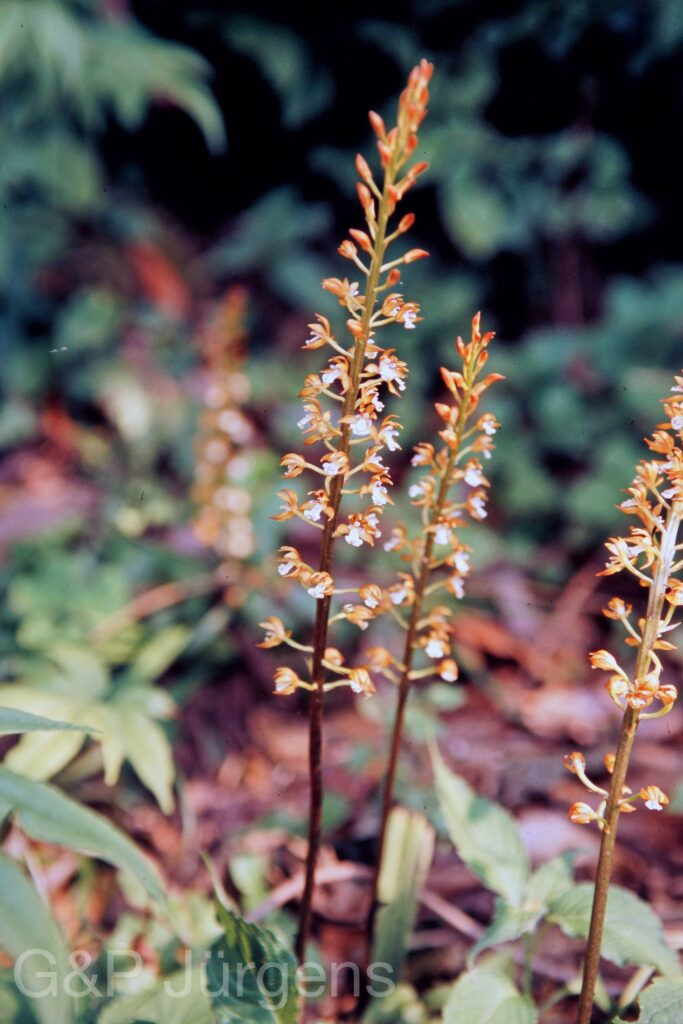
Oreorchis foliosa is a terrestrial orchid distributed across the Himalaya and into south-western China, with verified occurrences in China, India, Nepal, Bhutan and Myanmar. It grows in the humus-rich shade of temperate broadleaved and coniferous forest, on mossy banks and among leaf litter, generally between about 2400 and 3500 m. The material illustrated, from Trijugi Narayan in Garhwal (India) at around 2500 m and from the Dochu-La in Bhutan near 3000 m, both in June, shows the species flowering in the pre- to early-monsoon period in its characteristic moist, lightly shaded forest-floor habitat.

The plant grows from a chain of subterranean corm-like pseudobulbs (corms) that store reserves through the dormant season. From these arise one or two narrowly lanceolate, plicate (longitudinally pleated) leaves, the foliose character noted in the epithet. The erect scape bears a many-flowered raceme of small flowers; the spreading sepals and petals are yellowish to brownish, and the three-lobed labellum is paler, marked with reddish to purple spots or streaks, with a small basal callus or short spur-like base. The fruit is a pendulous dehiscent capsule releasing the dust-fine seeds typical of the family.

The family is written here as in the source as "Orchideaceae"; the correctly formed family name is Orchidaceae. Oreorchis is a small Asian genus of subfamily Epidendroideae allied to Corallorhiza and Cremastra, and like many forest orchids depends on mycorrhizal fungi for germination and establishment. O. foliosa, described by Lindley, is widespread but typically thinly scattered; while not formally assessed as threatened, such forest-dwelling orchids are sensitive to habitat loss and to collection pressure.

Author: Lindl. · Sources: POWO (Kew), GBIF, Flora of China, Flora of Bhutan, Genera Orchidacearum (Pridgeon et al.)

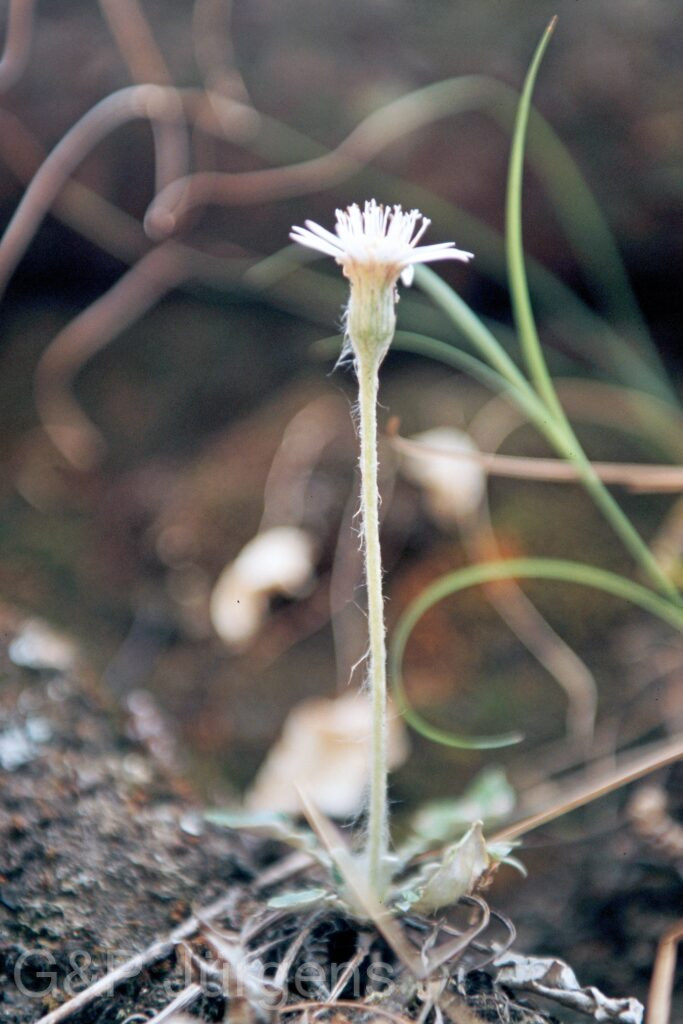
(Royle) X.D.Xu & V.A.Funk

Garw 2005 419 ergebnis
India Garhwal Didina 2470m, September
Garh 07 70 ergebnis
India Garhwal Nanu Mandakini 2300m, June

Description

Oreoseris gossypina is a rosette-forming perennial herb of the temperate and subalpine Himalaya, recorded from Pakistan, India, Nepal, China and Bhutan across more than 300 occurrences. It typically inhabits open grassy slopes, rocky banks and forest margins, often on disturbed or grazed ground, at elevations of roughly 1800 to 3500 m. The documented collections derive from Garhwal in India, at Didina (2470 m, September) and the Nanu Mandakini valley (2300 m, June), the two dates spanning much of its long flowering and fruiting season in the Western Himalaya.

The plant produces a basal rosette of obovate to oblanceolate leaves that are conspicuously white-woolly beneath, the dense cottony indumentum giving rise to the epithet gossypina. The leaf margins are sinuate-dentate and the lamina narrows into a winged petiole. Solitary capitula are borne on slender, bracteate scapes; each head is heterogamous and radiate, with an involucre of imbricate, often arachnoid-hairy phyllaries. The marginal ray florets are ligulate and pale, the disc florets tubular; the achenes are ribbed and surmounted by a pappus of barbellate bristles aiding wind dispersal.

The species was long placed in Gerbera and is also encountered under Leibnitzia; its current placement in Oreoseris (Mutisieae) reflects molecular and morphological revision by X.D. Xu and V.A. Funk. As a member of an early-diverging composite lineage it is of phylogenetic interest, and its mutisioid floral structure attracts a range of pollinating insects. The species is widespread and faces no recognised threat.

Author: (Royle) X.D.Xu & V.A.Funk · Sources: POWO (Kew), GBIF, Flora of China, Flora of Pakistan, Annotated Checklist of the Flowering Plants of Nepal, Xu & Funk revision of Mutisieae

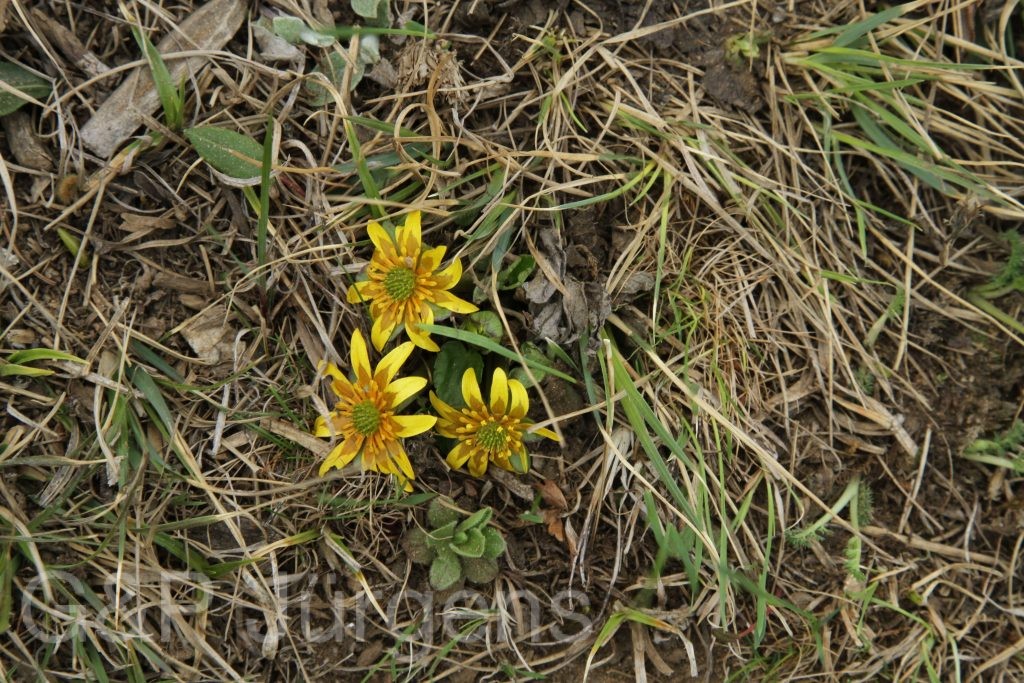
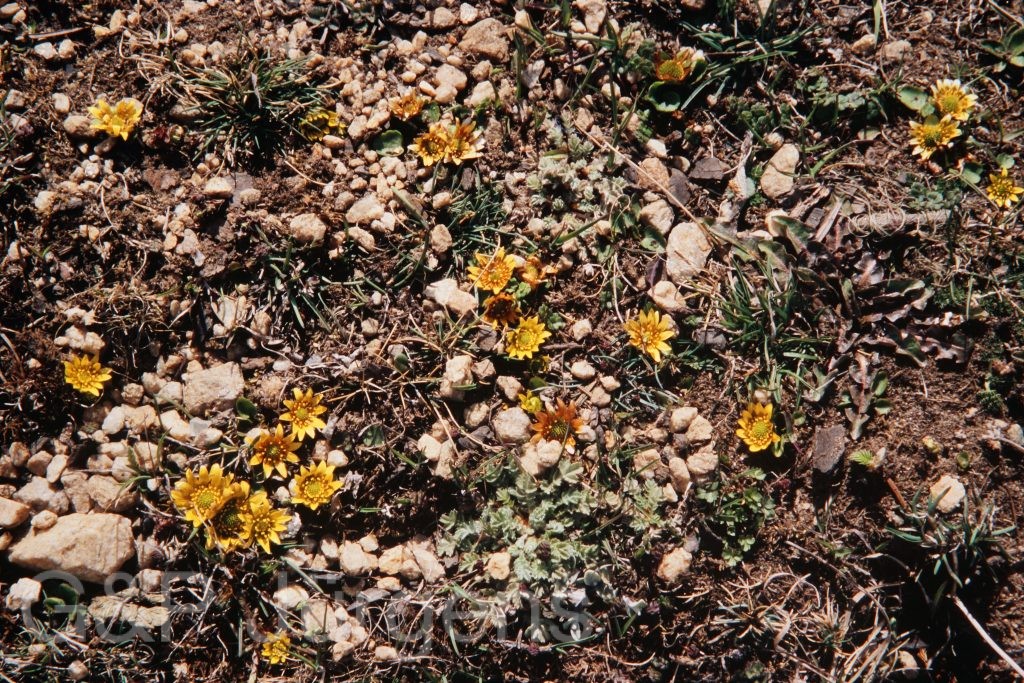
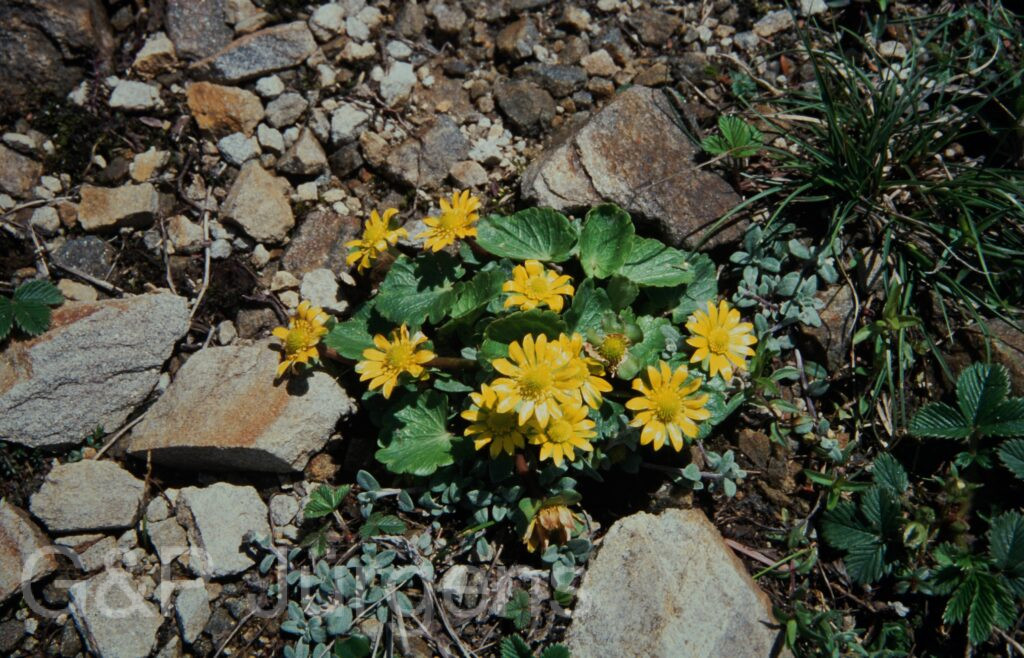
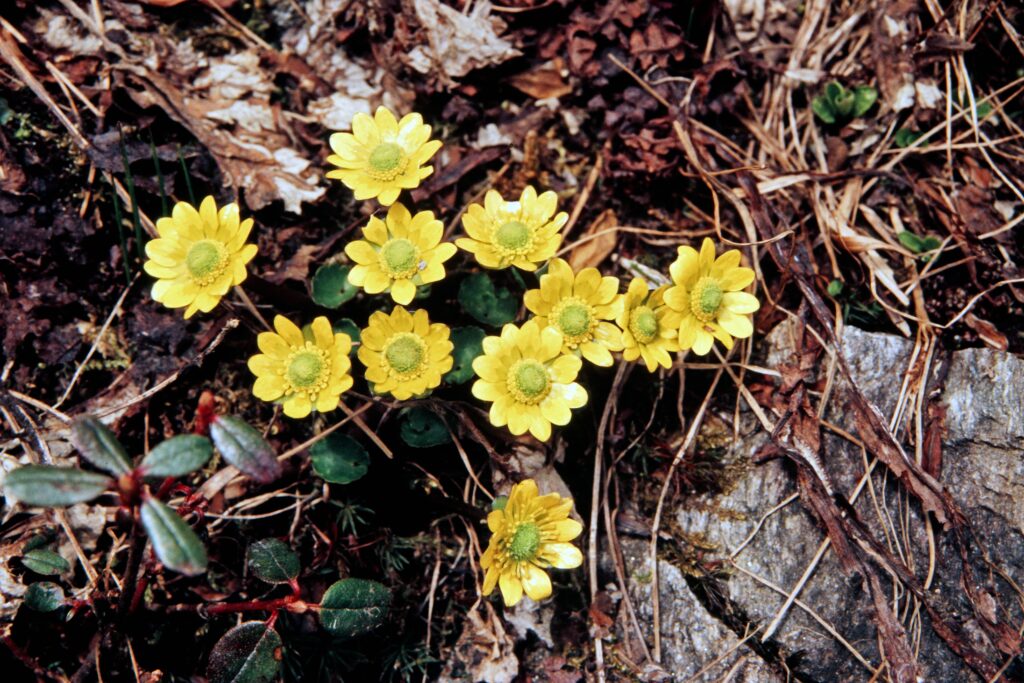
Hook.f. & Thomson

Bhutan2014 918
Bhutan Chele-La 4000m, May
Bh2008 568 P855
Bhutan Chele-La 3900m April
Nepal 2001 332 ergebnis ergebnis
Nepal (Gorkha) Rupina-La 3300m, May

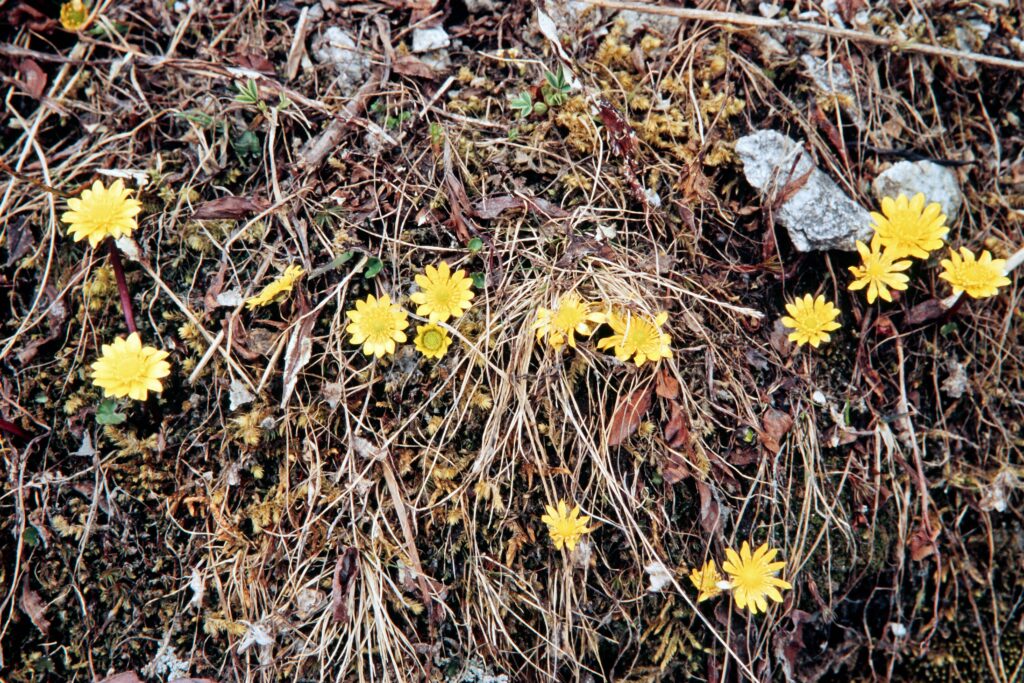
Description

Oxygraphis polypetala is a high-alpine buttercup relative distributed across the Himalaya and Tibetan plateau, with records from India, Nepal, China, Russia, Bhutan and Pakistan and around 115 georeferenced occurrences. It is an early-flowering plant of damp alpine turf, snowmelt flushes, gravelly meadows and the margins of melting snow patches, generally between about 3300 and 4500 m. The illustrated collections—Chele-La in Bhutan at 3900–4000 m in April and May, Rupina-La in Gorkha, Nepal at 3300 m in May, and Khiar Kutti in Garhwal, India at 4100 m in June—capture its phenology of blooming almost immediately as the snow retreats.

It is a small, stemless perennial herb forming rosettes from a short rootstock. The leaves are all basal, long-petiolate, with an entire to obscurely crenate, ovate to elliptic, often somewhat fleshy blade. The flowers are solitary on leafless scapes; the perianth is conspicuous, with numerous (commonly ten or more, whence polypetala) narrow, glossy golden-yellow petaloid segments spreading star-like above a green calyx, surrounding many stamens and a domed head of carpels. The fruit is an aggregate of numerous small, beaked achenes borne on an elongating receptacle.

Oxygraphis is a small Asiatic genus segregated from Ranunculus on the basis of its persistent, leathery petals and achene structure; the name combination here, attributed to Hooker and Thomson, is treated as accepted despite synonym status in the source data. Its precocious flowering exemplifies the snowbed strategy of many high-Himalayan herbs that exploit the brief window of meltwater and warmth. Widely distributed and locally abundant, it is not regarded as threatened.

Author: Hook.f. & Thomson · Sources: POWO (Kew), GBIF, Flora of China (Ranunculaceae), Annotated Checklist of the Flowering Plants of Nepal, Grierson & Long Flora of Bhutan, Tamura's treatment of the Ranunculaceae

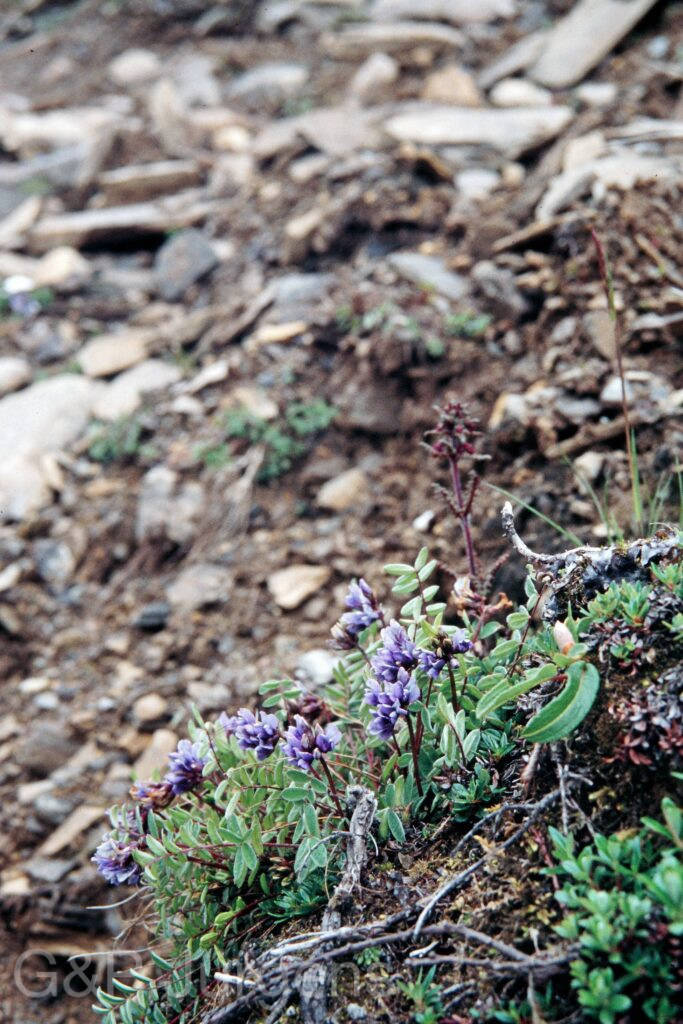
Vassilcz.

Nepal 99 606 ergebnis
West-Nepal Kagmara Phedi 3900m, July

Description

Oxytropis williamsii is a high-alpine legume of the central and western Himalaya, recorded with some 154 georeferenced collections from Nepal and adjacent Tibetan China (Xizang). It inhabits open stony slopes, dry alpine turf, gravelly moraine flanks and the margins of glacial meltwater channels in the upper subnival belt, typically between about 3800 and 4800 m. The plant photographed at Kagmara Phedi in West Nepal at 3900 m in July exemplifies its preference for cold, well-drained, continental sites with a short growing season and intense insolation.

The species forms a low, tufted, more or less acaulescent perennial arising from a stout, woody, branched caudex crowned by persistent stipule and petiole remains. The leaves are imparipinnate, with numerous small, oblong to elliptic leaflets densely clothed in appressed silky-villous hairs that lend the plant a silvery-grey aspect. Flowers are borne in compact, shortly pedunculate racemes or capitate clusters; the papilionaceous corolla is purple to violet, with the keel terminating in the sharp acuminate beak diagnostic of Oxytropis as distinct from Astragalus. The calyx is tubular and pubescent, and the fruit is an inflated, hairy legume, more or less bilocular through intrusion of the dorsal suture.

Membership in Oxytropis and its allies reflects a radiation of cushion- and tussock-forming legumes adapted to the cold deserts of the Tibetan plateau and its Himalayan rim. Such species contribute nitrogen fixation and soil stabilisation in nutrient-poor alpine substrates, and like many Oxytropis may accumulate swainsonine-type alkaloids. Restricted to remote, sparsely collected terrain, O. williamsii has not been formally assessed, though its specialised habitat warrants monitoring under warming and grazing pressure.

Author: Vassilcz. · Sources: POWO (Kew), GBIF, Flora of China, Flora of Nepal, Annotated Checklist of the Flowering Plants of Nepal, monograph of Oxytropis (Vassilczenko / Astragalology)

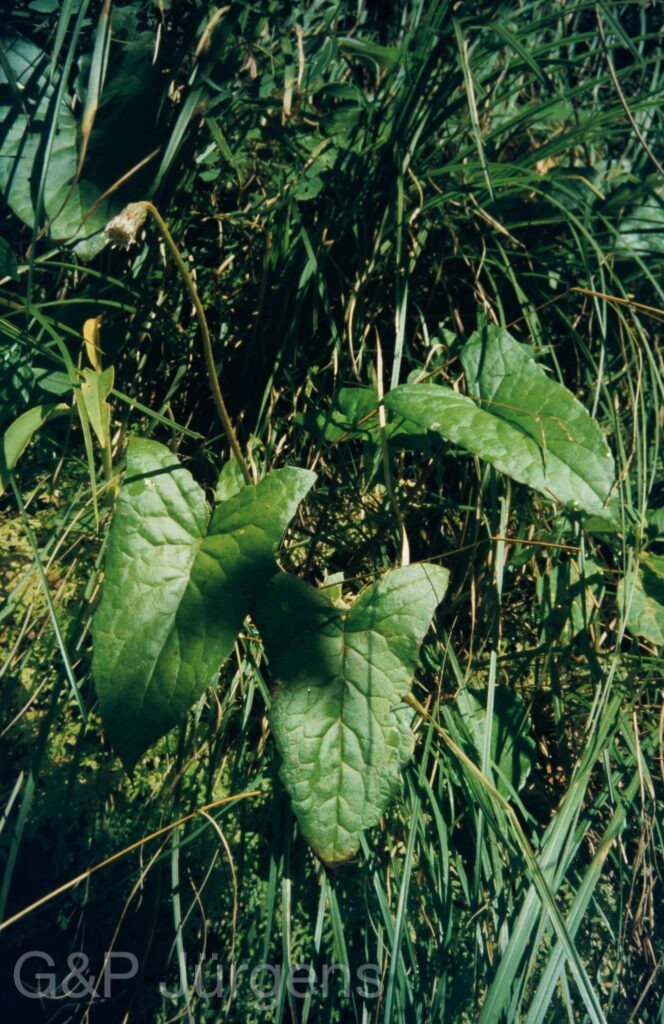
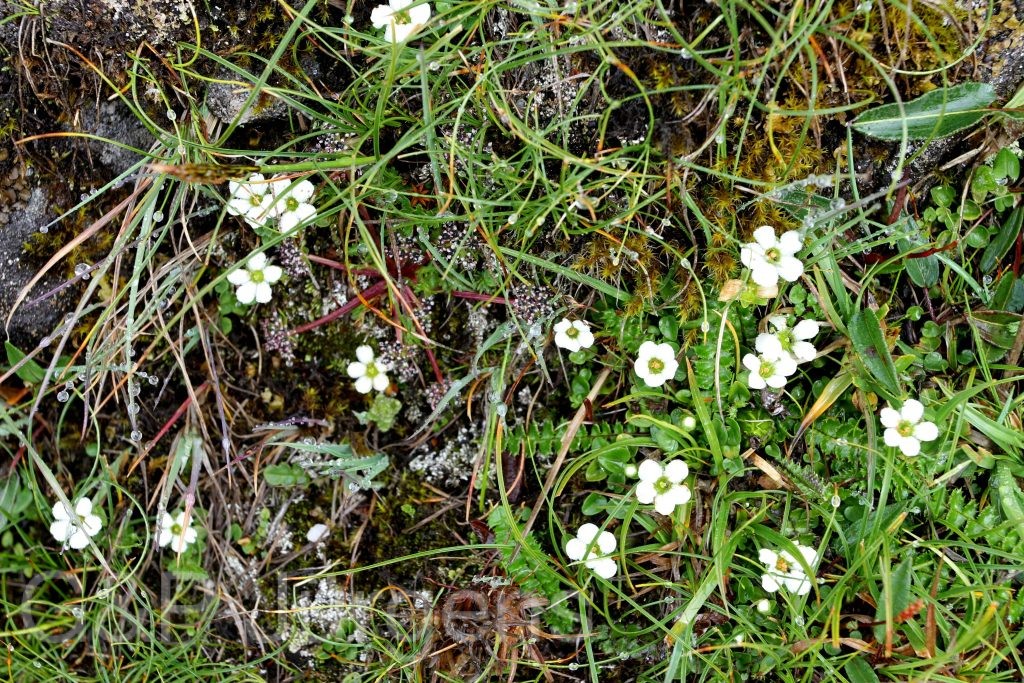
Franch

BhutanPG2011 548
Bhutan Ludlow-Sherriff-Trail Dem-Tso, 4650m June

Description

Parnassia delavayi is an alpine perennial herb of the eastern Himalaya and southwestern China, recorded by GBIF from China, Bhutan and India across roughly 1128 occurrences. It is a plant of cold, moist alpine habitats, growing in wet meadows, marshy turf, streamsides, seepage zones and damp grassy slopes within the alpine belt. The photographed individual was found in Bhutan along the Ludlow-Sherriff Trail near Dem-Tso at 4650 m in June, a high glacial-lake margin that exemplifies the species' affinity for saturated, peaty alpine ground.

It forms tufted perennials arising from a short rhizome, with basal leaves that are long-petiolate and cordate-ovate to reniform with an entire margin. The flowering stem is erect and bears a single, sessile or clasping cauline leaf below the solitary terminal flower. Each flower has five free, white petals, often delicately veined, alternating with five green sepals. Characteristic of the grass-of-Parnassus group are the conspicuous fimbriate staminodes positioned opposite the petals and dissected into gland-tipped filaments, which alternate with five fertile stamens surrounding a superior ovary; the fruit is a loculicidal capsule containing many small winged seeds.

GBIF accepts the name. Though long placed in Saxifragaceae or its own family Parnassiaceae, Parnassia is now embedded within Celastraceae on molecular grounds, the family label given here reflecting that modern circumscription. The elaborate fringed staminodes function as nectar-mimicking attractants for fly and small-bee pollinators. With a wide montane range in remote alpine terrain, P. delavayi faces no significant conservation threat.

Author: Franch · Sources: POWO (Kew), GBIF, Flora of China, Flora of Bhutan, monograph of Parnassia

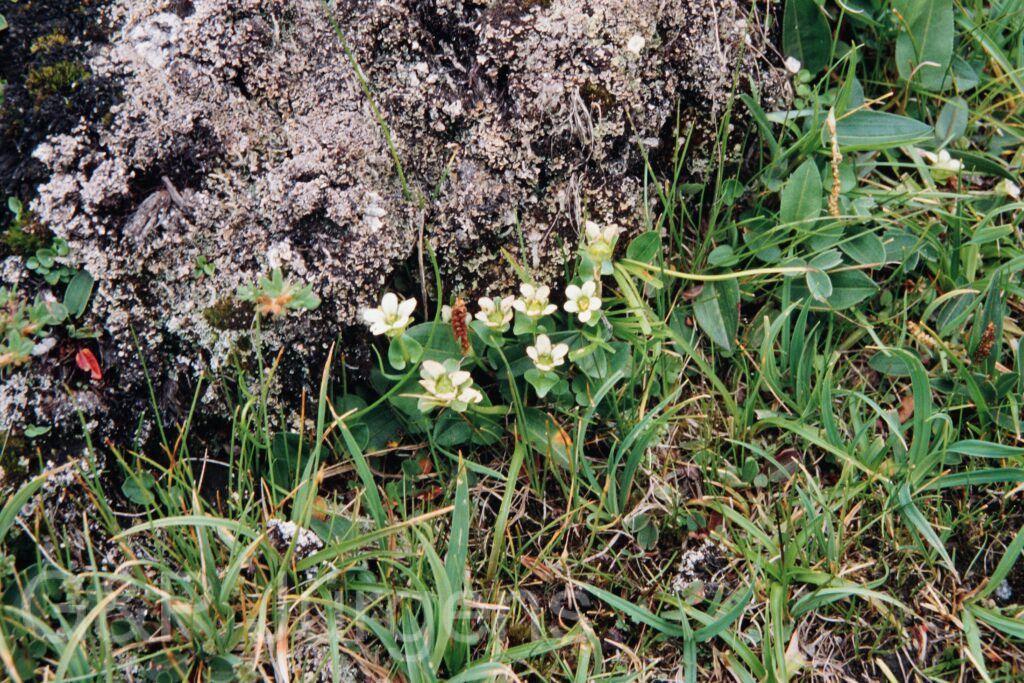
Nekr.

Nepal 99 521 ergebnis
West-Nepal Churta-Khola 3800m, June

Description

Parnassia kumaonica Nekr. is a small alpine herb now placed in the Celastraceae (formerly Parnassiaceae or Saxifragaceae), endemic to the western and central Himalaya and adjacent Tibet. GBIF records, numbering 28 occurrences, place it in Nepal, India and China. The species grows in moist alpine meadows, on seepage slopes, streamsides and damp turf, generally between 3,500 and 4,500 m. The illustrated plant from the Churta-Khola in West Nepal at 3,800 m, in flower in June, typifies its habitat in the cool, well-watered alpine zone where snowmelt sustains the marshy ground it requires.

The plant forms a compact, glabrous perennial arising from a short rootstock, with a basal rosette of long-petioled, ovate to reniform, entire leaves that are somewhat fleshy. Each flowering stem bears a single cauline leaf clasping the stem and is terminated by a solitary, regular flower. The five white petals are conspicuously veined and characteristically fringed or fimbriate at the margins; alternating with the fertile stamens are dissected staminodes bearing gland-tipped processes that function as nectar-mimicking visual lures. The superior ovary develops into a capsule splitting into valves to release numerous small winged seeds.

Parnassia is a taxonomically distinctive genus whose elaborate staminodial nectaries have made it a classic subject of pollination biology, and P. kumaonica fits within the western Himalayan assemblage of the genus, distinguished by petal fringing and staminode morphology. Restricted to high-altitude wetlands, it is a sensitive indicator of intact alpine seepage habitats and, like other narrowly distributed Himalayan endemics, is potentially vulnerable to trampling, grazing and the desiccation of alpine springs under a warming climate.

Author: Nekr. · Sources: POWO (Kew), GBIF, Flora of China Vol. 8, Flora of Nepal, Annotated Checklist of the Flowering Plants of Nepal, Ku: Revision of Parnassia