Tag:

Summer

Hoffm.

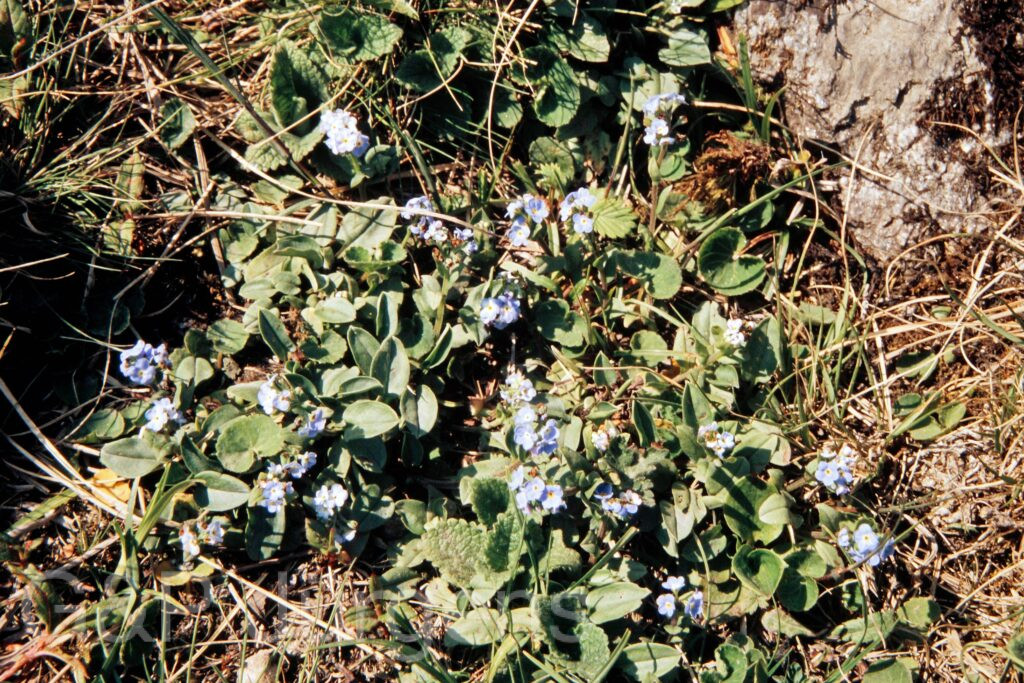
Garh 07 196 ergebnis
India Garhwal Panwali 3250m, June
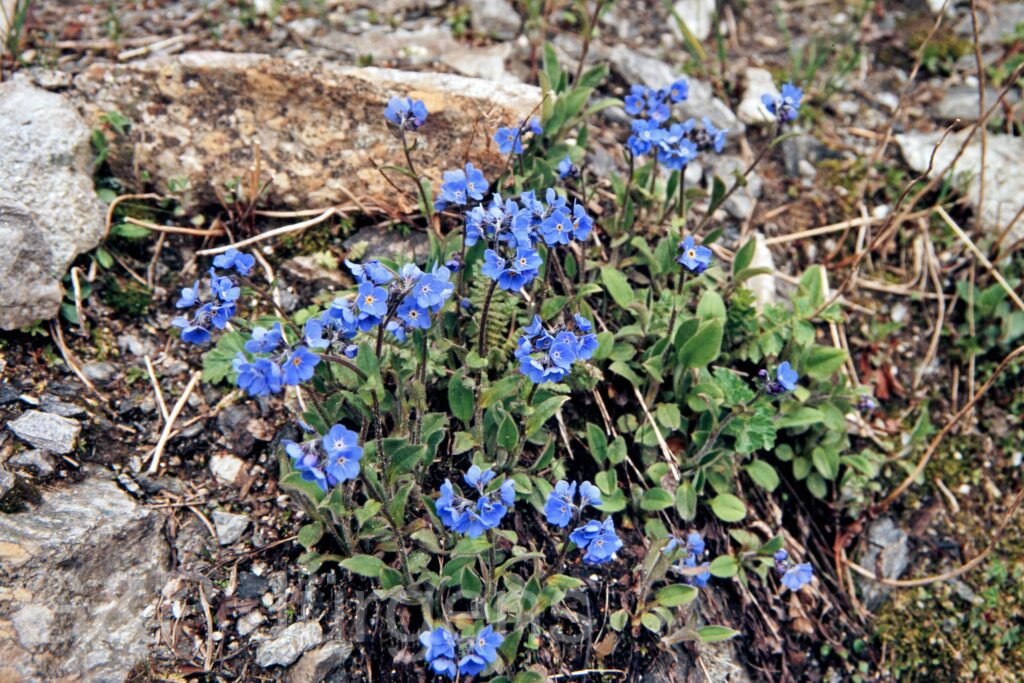
Garh 07 391 ergebnis
India Garhwal Kia-Kutti 3950m, June

Description

Myosotis sylvatica, the wood forget-me-not, is a widespread temperate herb whose native core lies across Europe and western Asia, with very large GBIF representation (over 171,000 records) from Britain, Germany, France, Scandinavia and the Alpine countries, plus naturalised populations in North America, Australia and New Zealand. In the western Himalaya it occurs as a montane element, as shown by the Garhwal collections at Panwali around 3250 m and Kia-Kutti near 3950 m, both in June. There it grows in moist meadows, along streamsides and on grassy alpine slopes, favouring cool, humus-rich soils with reliable seasonal moisture.

The plant is a softly hairy biennial or short-lived perennial forming a basal rosette from which arise erect to ascending leafy stems. The lower leaves are oblanceolate and stalked, the upper sessile and oblong. The inflorescence is the characteristic scorpioid cyme of the genus, uncoiling as the flowers open. Each flower has a five-lobed hairy calyx and a salverform corolla with a short tube and flat, usually sky-blue limb of five rounded lobes, the throat closed by yellow scales. The gynoecium develops into four smooth, shining, dark nutlets seated on the persistent calyx.

Myosotis is a taxonomically intricate genus in which M. sylvatica is distinguished from the annual field forget-me-nots by its larger, flat-faced flowers and from M. scorpioides by its drier habitats and hooked-haired calyx. Widely grown as a cottage-garden ornamental, it self-seeds freely and has escaped cultivation across several continents. The species is globally secure and of least concern, its abundance contrasting with the restricted ranges of many Himalayan congeners.

Author: Hoffm. · Sources: POWO (Kew), GBIF, Flora of China Vol. 16, Flora of Pakistan, Flora of Nepal, Flora Europaea (Tutin et al.)
(Clarke ex Hook.f.) Kitam.

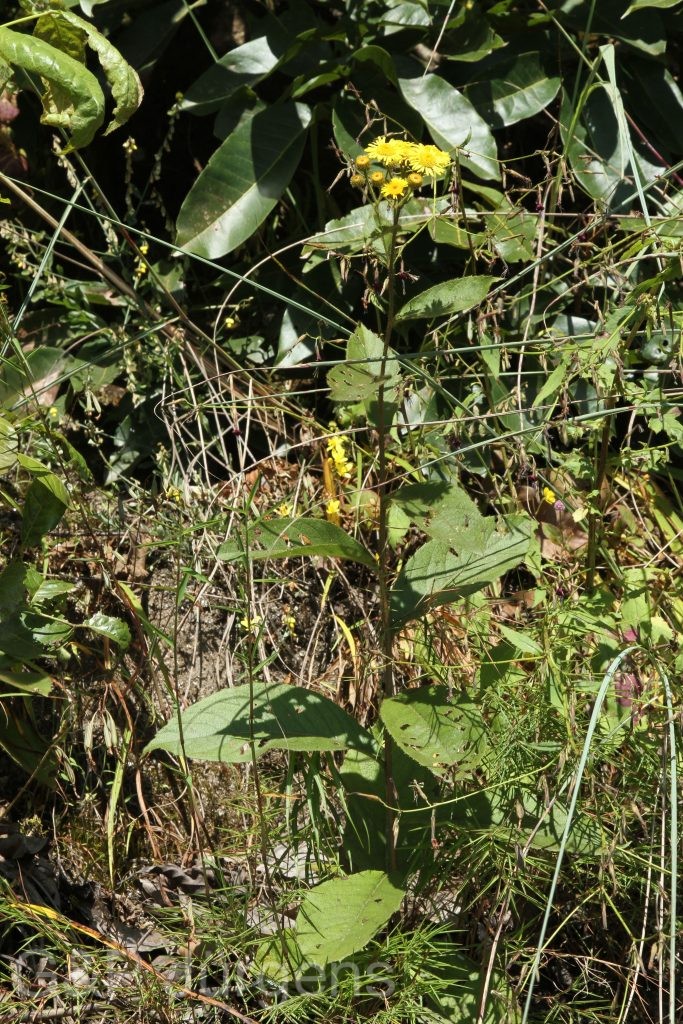
Bhutan2015 74
Bhutan Wangdi 1400m, October
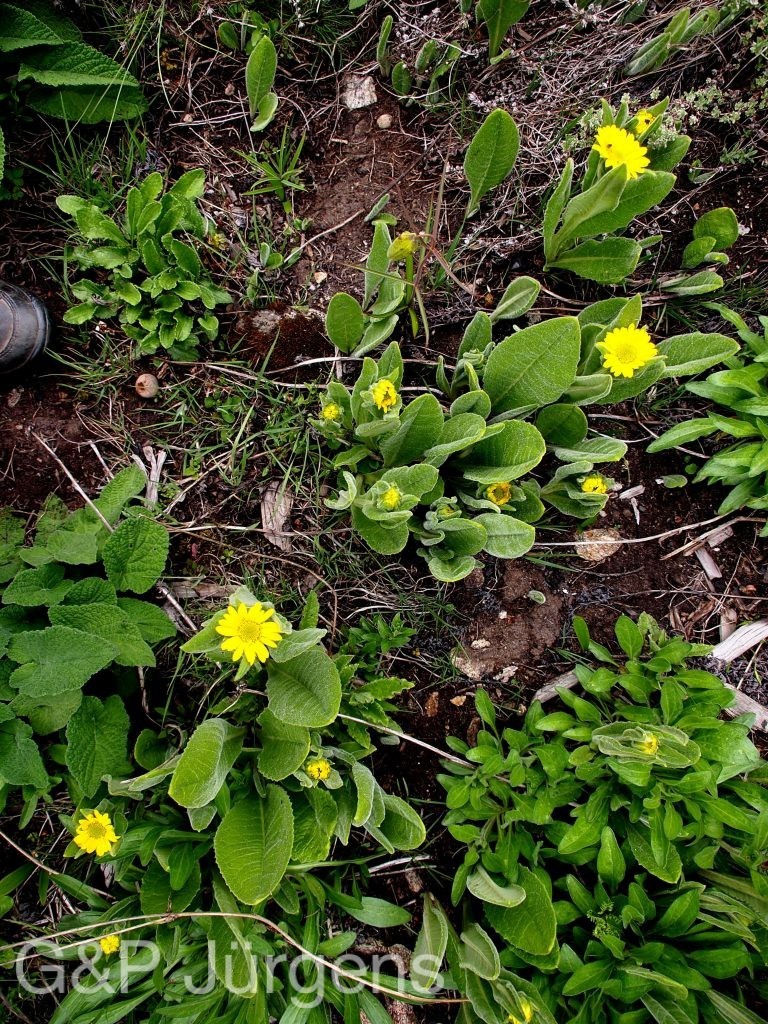
Sikkim2011 73
Sikkim Tanghu 4000m, June
Bh09 25 G46
Bhutan Chele-La, 3500m June

Description

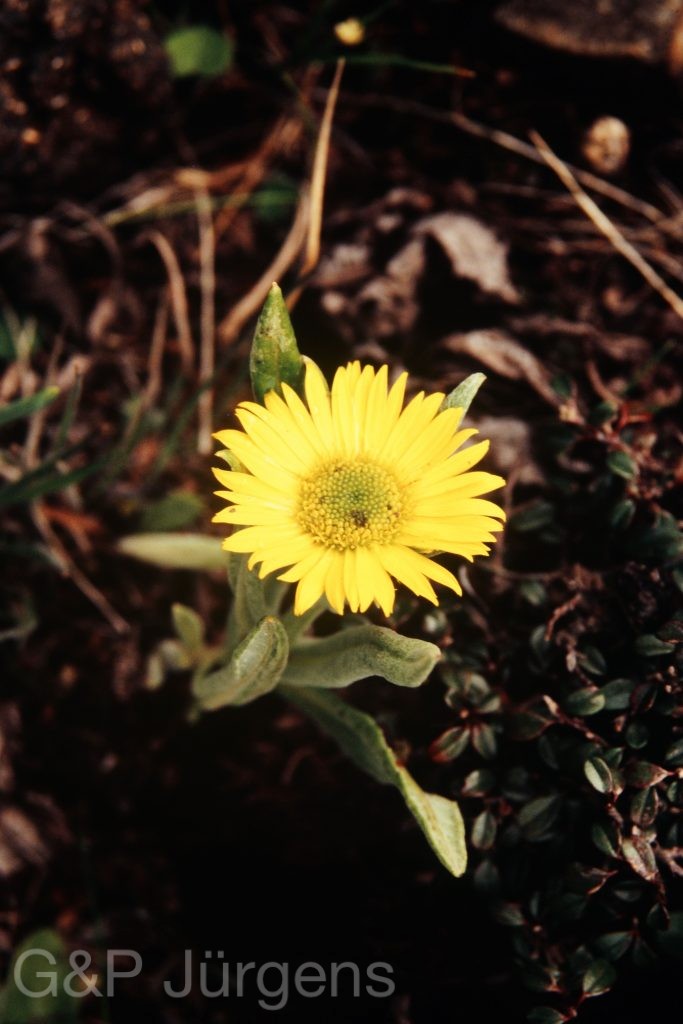
Nannoglottis hookeri is a Himalayan and Sino-Himalayan species recorded from Nepal, Pakistan, Bhutan, India and south-western China, GBIF logging about 145 occurrences across this arc. It inhabits a notably broad altitudinal span, from warm-temperate forest understorey and shrubby slopes to high subalpine and alpine meadows. The cited gatherings illustrate this amplitude: Wangdi in Bhutan at only 1400 m in October, Tanghu in Sikkim near 4000 m in June, and the Chele-La pass at around 3500 m in June. Such occurrence in moist, partly shaded ground, on humus-rich soils among rocks and along forest margins, characterises the species through the Eastern Himalayan ranges.

It is a perennial herb growing from a stout woody rhizome and producing erect, leafy, glandular-pubescent stems. The leaves are alternate, the lower ones petiolate with ovate to elliptic, coarsely toothed blades, becoming sessile and amplexicaul above; both surfaces bear scattered hairs. The capitula are radiate and arranged in a loose terminal corymb; the involucre is hemispheric with subequal, herbaceous phyllaries in few rows. Ray florets are yellow, ligulate and female, while the disc florets are tubular, yellow and bisexual. The cypselae are oblong and ribbed, surmounted by a pappus of slender barbellate bristles, an arrangement linking the genus to the Astereae.

Nannoglottis (Astereae) is a small Sino-Himalayan genus of fewer than a dozen species, distinguished by its radiate heads and montane forest ecology, and molecular work places it near the base of the tribe, making it of phylogenetic interest. Named for J. D. Hooker, N. hookeri is treated as an accepted species. Its dependence on cool, moist montane habitat and relatively narrow distribution warrant attention, though no formal threat status has been assigned; populations appear stable where forest cover persists.

Author: (Clarke ex Hook.f.) Kitam. · Sources: POWO (Kew), GBIF, Flora of Bhutan, Flora of China, Annotated Checklist of the Flowering Plants of Nepal, Gao's systematic study of Nannoglottis (Astereae)

(D.Don) DC.

BhutanPG2011 707 01 01
Bhutan Chele-La, 3850m July
Sikkim2003 195 P273
Sikkim Dzongri 4000m 08.2003
Nepal 99 283 ergebnis
Nepal Loccu 3155m, May
Nepal 99 366 ergebnis
Nepal Loccu 3155m, May
Nepal 99 822 ergebnis
West-Nepal Baga-La-Phedi 4200m, July

Description

Nardostachys jatamansi, the source of the aromatic drug spikenard, is an alpine herb of the high Himalaya and the Tibetan plateau margins. GBIF records confirm its native distribution across China, Nepal, India, Bhutan and Myanmar, with cultivated or processed material recorded from several other countries, totalling around 1110 occurrences. It grows on open alpine meadows, rocky slopes, grassy ledges and stable scree, generally between about 3000 and 5000 m, in the cool, summer-moist conditions of the high mountains. The photographed collections span its range and altitude well, from the Chele-La in Bhutan at 3850 m and Dzongri in Sikkim at 4000 m to Loccu in Nepal at 3155 m and the Baga-La-Phedi in West Nepal at 4200 m, recorded from May to August during the alpine flowering season.

It is a small, erect perennial herb arising from a stout, woody, aromatic rhizome densely clothed in the fibrous remains of old leaf-bases. The leaves are mostly basal, elongate-spathulate to oblong, entire and somewhat fleshy. The flowering stem bears a compact terminal cyme or head of small flowers; each has a campanulate, pink to pale rose corolla with five lobes, four stamens and an inferior ovary. The fruit is a small, one-seeded achene crowned by the persistent calyx.

Nardostachys is here placed in the Caprifoliaceae, into which the former valerian family Valerianaceae is now subsumed. The species is of great economic and cultural importance, its fragrant rhizome being the jatamansi or spikenard of ancient commerce, still harvested for essential oils, perfumery and traditional medicine. Intensive wild collection coupled with its restricted alpine habitat has led to serious population decline, and the species is assessed as Critically Endangered and listed under CITES Appendix II.

Author: (D.Don) DC. · Sources: POWO (Kew), GBIF, Flora of Nepal, Flora of China (Valerianaceae/Caprifoliaceae), Medicinal Plants of the Himalaya (Polunin & Stainton)

R.Br.

Bhutan2014 845
Bhutan Thimphu 2500m, May
Bh09 253 G421
Bhutan Phobjika, 2900m June

Description

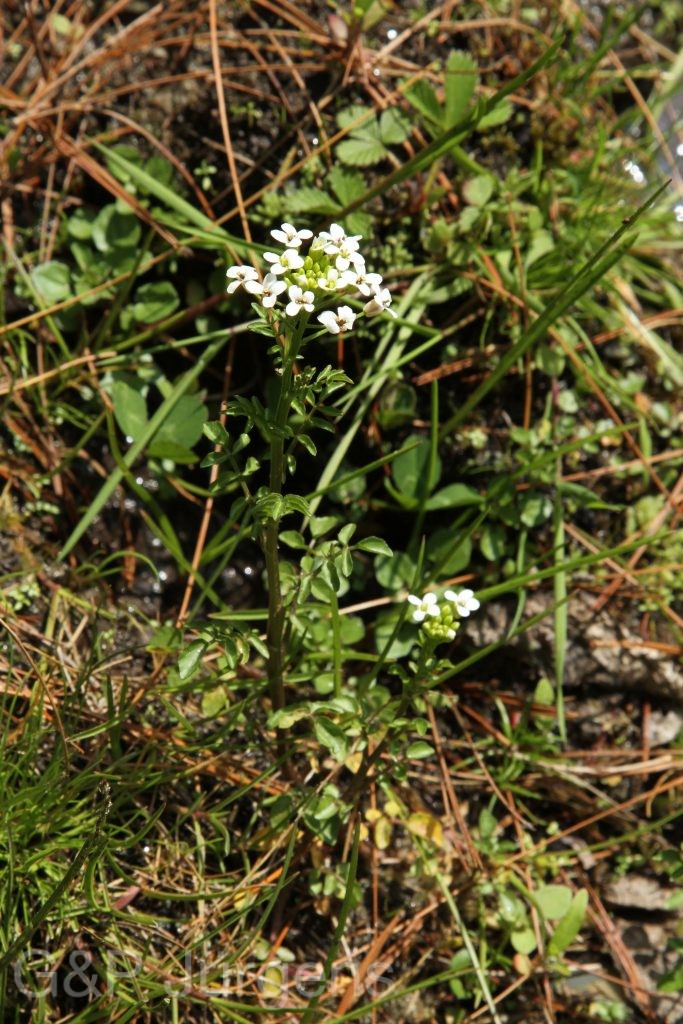
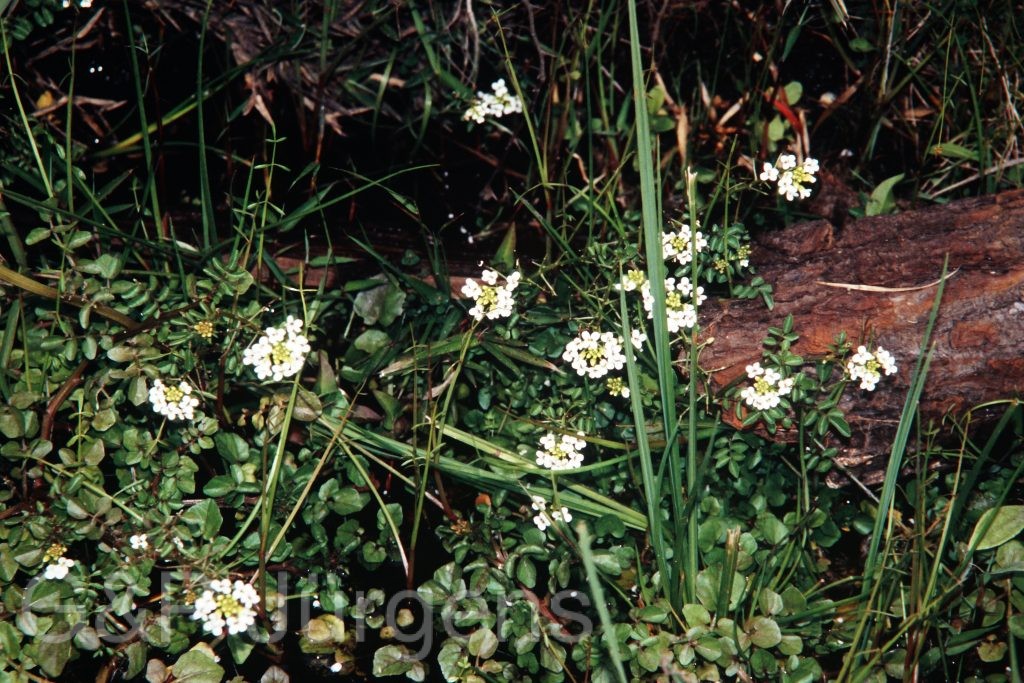
Nasturtium officinale R.Br., the common watercress, is a cosmopolitan aquatic to semi-aquatic perennial native to Europe and western Asia but now naturalised almost worldwide, as the GBIF total of over 150,000 occurrences across the United Kingdom, France, Iberia, central Europe, North and Central America, New Zealand, Australia, Japan and beyond attests. It grows in clean, slow-flowing or still fresh water: streams, ditches, springs, flushes and the muddy margins of ponds, typically on base-rich substrates. In the Himalaya it occurs as an established member of the aquatic flora, the illustrated plants having been recorded at Thimphu in Bhutan at 2500 m in May and at Phobjika at 2900 m in June, where it colonises cool montane watercourses and irrigation channels.

The plant is a glabrous, succulent perennial with hollow, ascending to procumbent stems that root freely at the lower nodes and often float. The leaves are pinnately compound with one to several pairs of ovate to oblong lateral leaflets and a larger, rounded, often cordate terminal leaflet, the margins entire to sinuate. The inflorescence is a terminal raceme of small white flowers, each with four sepals, four clawed white petals arranged in the cruciform pattern typical of the mustard family, and six tetradynamous stamens with yellow anthers. The fruit is a slender, slightly curved cylindrical silique borne on a spreading pedicel, containing two rows of small reticulate seeds in each locule.

Long cultivated as a leaf vegetable for its peppery, vitamin-rich foliage, watercress has been carried far beyond its natural range and is a frequent naturalised escape. It hybridises with the related Nasturtium microphyllum to form the sterile N. × sterile, and the genus is now firmly distinguished from the unrelated garden "nasturtium" (Tropaeolum). Ecologically it is a bioindicator of relatively unpolluted, well-oxygenated water and provides cover and food for aquatic invertebrates. Globally it is of least concern; indeed in some regions it behaves as an aggressive coloniser of waterways rather than a species at risk.

Author: R.Br. · Sources: POWO (Kew), GBIF, Flora of China, Flora Europaea, Brassicaceae of the World (Al-Shehbaz)

R.R.Mill

BhutanPG2011 420 scaled
Bhutan Ludlow-Sherriff-Trail Warrtlang-La, 4400m June

Description

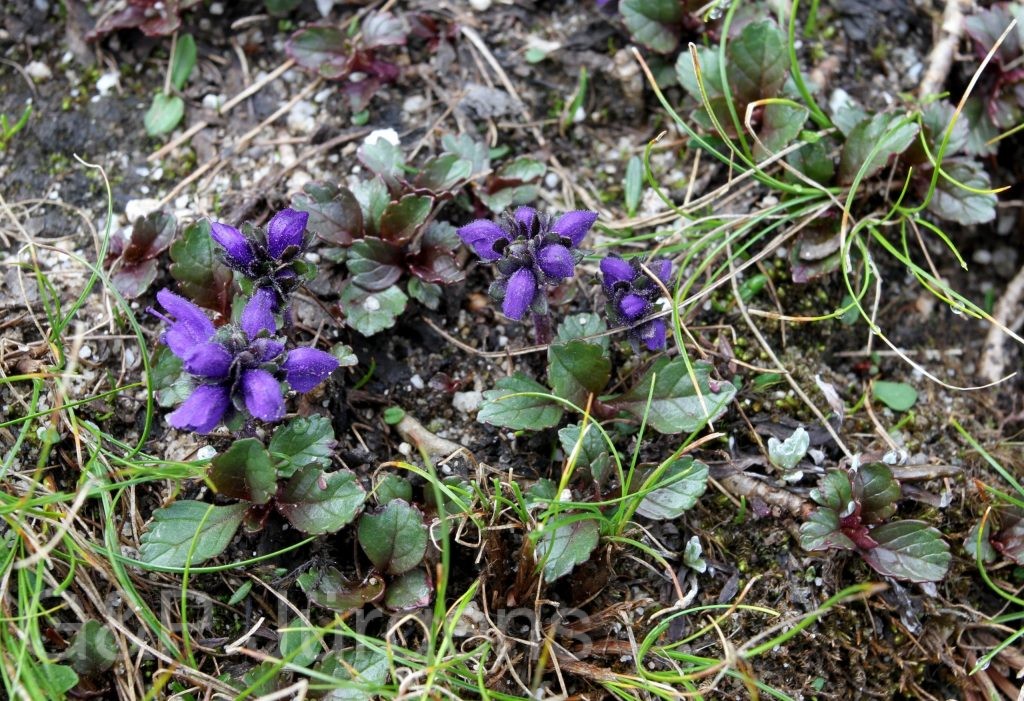
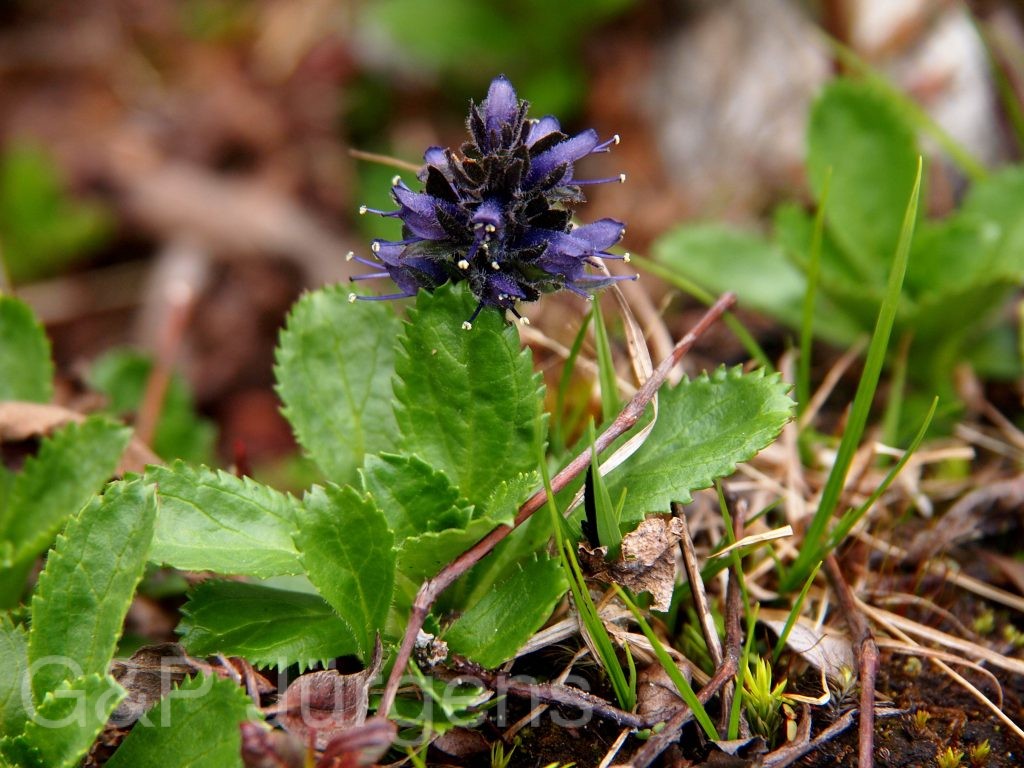
Neopicrorhiza minima is an extremely localised high-alpine herb known only from Bhutan, where GBIF holds a mere five records, underscoring its rarity and narrowly endemic distribution in the Eastern Himalaya. It is a plant of the upper alpine zone, growing on open rocky slopes, moist screes, moraines and short turf near the limit of vascular plant life, at around 4400 m. The plant photographed along the Ludlow-Sherriff Trail at Warrtlang-La in Bhutan at 4400 m in June captures it flowering in this severe, wind-exposed, snowmelt-fed environment during the brief alpine summer.

It is a small, dwarf perennial herb, as the epithet minima indicates, arising from a creeping, bitter rhizome and forming compact tufts or low mats. The leaves are basal, spathulate to oblong and crenate-toothed, narrowing into a petiole. The flowers are borne in a short, dense, terminal raceme or spike on a low scape; each flower has a small calyx and a tubular, somewhat two-lipped corolla, typically bluish-purple to mauve, with four exserted stamens. The fruit is a small capsule containing numerous minute seeds.

Neopicrorhiza was segregated from Picrorhiza, the bitter-rhizomed Himalayan herbs once placed in Scrophulariaceae and now referred to Plantaginaceae following molecular work on the lamiid families; N. scrophulariiflora is the better-known relative, valued medicinally. N. minima, described by R.R. Mill, is distinguished by its diminutive stature and high-alpine habitat. Its single-country endemism and very small number of records mark it as a species of genuine conservation concern, dependent on its restricted Bhutanese high-mountain habitat.

Author: R.R.Mill · Sources: POWO (Kew), GBIF, Flora of Bhutan, Annotated Checklist of the Flowering Plants of Nepal, Hong Scrophulariaceae monograph

(Pennell) D.Y.Hong

Sikkim2011 278
Sikkim Lada-La 3600m, June

Description

Neopicrorhiza scrophulariiflora is an alpine herb of the central and eastern Himalaya, ranging through Nepal, Bhutan, northern India and south-western China (Tibet), the roughly 106 GBIF records concentrating along this high-mountain belt with cultivated and herbarium material accounting for the United States occurrences. In GBIF the name is treated as a synonym, with Neopicrorhiza scrophulariiflora cited as the accepted name. It grows on open alpine slopes, moist rocky meadows, screes and humus-rich crevices, typically between 3500 and 4800 m. The photographed plant from Lada-La in Sikkim at 3600 m in June reflects its early-summer flowering on damp, high-alpine ground.

It is a low, creeping perennial herb spreading by a stout, bitter, woody rhizome that roots at the nodes and bears persistent leaf remains. The leaves are mostly basal, spathulate to oblong-obovate, with a crenate-serrate margin, narrowed to a winged base. From the rosette arises a short, erect scape terminating in a dense, cylindrical, spike-like raceme of small flowers; the corolla is dark bluish-purple to violet, with conspicuously exserted stamens. The fruit is a small ovoid capsule containing numerous minute seeds.

The monotypic genus Neopicrorhiza was segregated from Picrorhiza and, following molecular work, is now placed in the Plantaginaceae (formerly within Scrophulariaceae). The rhizome, known in trade as kutki, is intensely bitter and is among the most heavily harvested Himalayan medicinal plants, used for hepatic and febrile complaints. Sustained wild collection has caused marked population decline, and the species is regarded as threatened and is subject to harvesting controls and cultivation initiatives across its range.

Author: (Pennell) D.Y.Hong · Sources: POWO (Kew), GBIF, Flora of China, Flora of Bhutan, Annotated Checklist of the Flowering Plants of Nepal, Picrorhiza and Neopicrorhiza systematic study

(King & Pantl.) Szlach.

BhutanPG2011 113
Bhutan Tsochenchen, 3500m June

Description

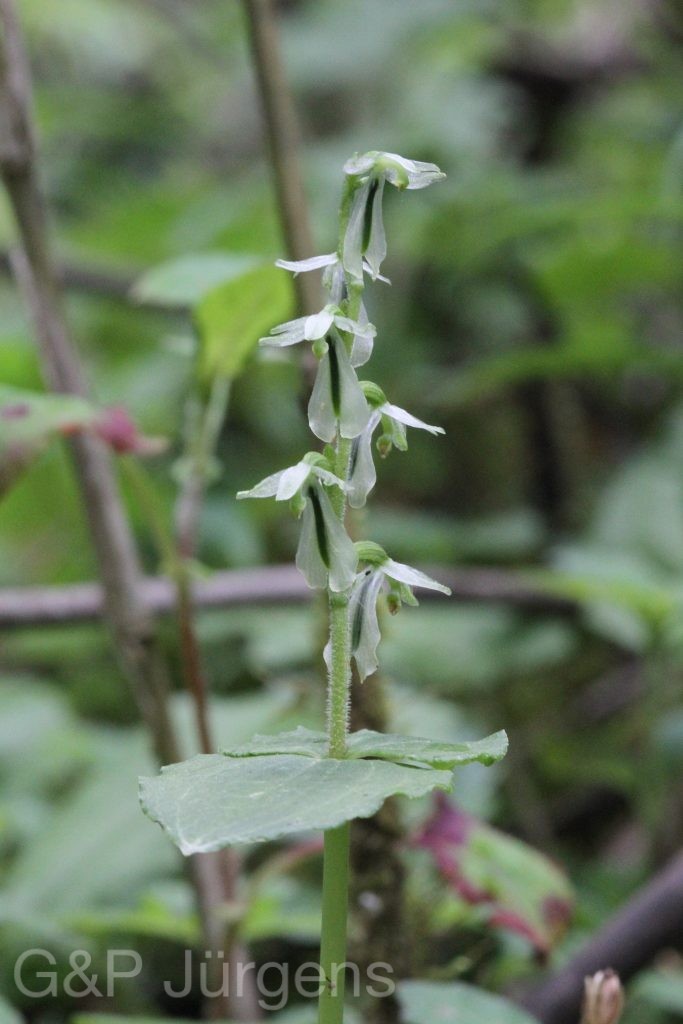
Neottia longicaulis is a terrestrial orchid of the cool, shaded forests of the eastern Himalaya, recorded from India, China, Bhutan and Nepal, with 23 GBIF occurrences reflecting a fairly narrow Sino-Himalayan distribution. It grows in damp, humus-rich leaf litter and mossy ground beneath conifer and mixed broadleaved forest, and in the moist scrub near the treeline, generally in the upper temperate to subalpine zone. The illustrated plant was found at Tsochenchen in Bhutan at about 3500 m in June, in the shaded, humus-floored fir and rhododendron forest where these inconspicuous orchids favour deep, undisturbed organic soils.

The plant is a slender, erect herb with a relatively long stem, as the epithet longicaulis indicates, bearing on its lower part a pair of opposite, broadly ovate to cordate leaves in the manner characteristic of the former genus Listera. The inflorescence is a lax raceme of small, green to yellowish-green flowers above the leaves. Each flower has spreading sepals and petals and a deeply two-lobed (bifid) pendent lip, the cleft forming two divergent arms; the column is short. The fruit is a small ellipsoid capsule containing dust-like seeds.

The basionym authority (King & Pantl.) Szlach. records the transfer of this species into Neottia, into which the genus Listera is now subsumed following phylogenetic evidence that the two are not separable. Neottia belongs to tribe Neottieae, a group spanning fully autotrophic 'twayblade' species and wholly mycoheterotrophic members. Dependent on intact, humus-rich shaded forest, N. longicaulis is sensitive to disturbance, and its small documented range warrants attention even though it has not been formally assessed.

Author: (King & Pantl.) Szlach. · Sources: POWO (Kew), GBIF, Flora of China, Flora of Bhutan, The Orchids of Bhutan (Pearce & Cribb)

(L.) Gaertn.

Nepal 99 955 ergebnis
West-Nepal Dunai 2150m, July

Description

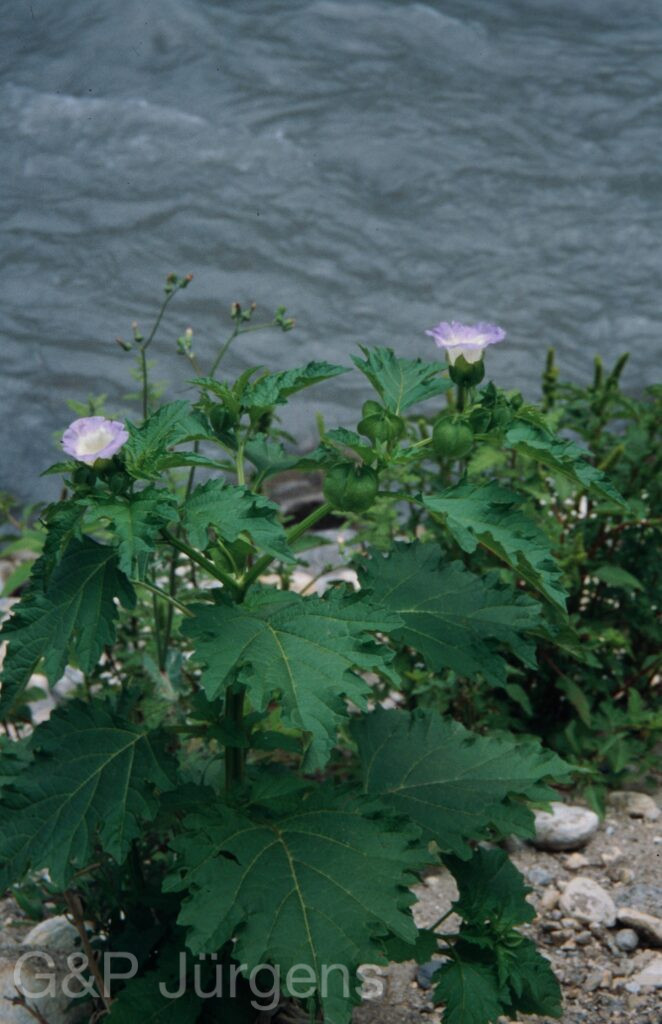
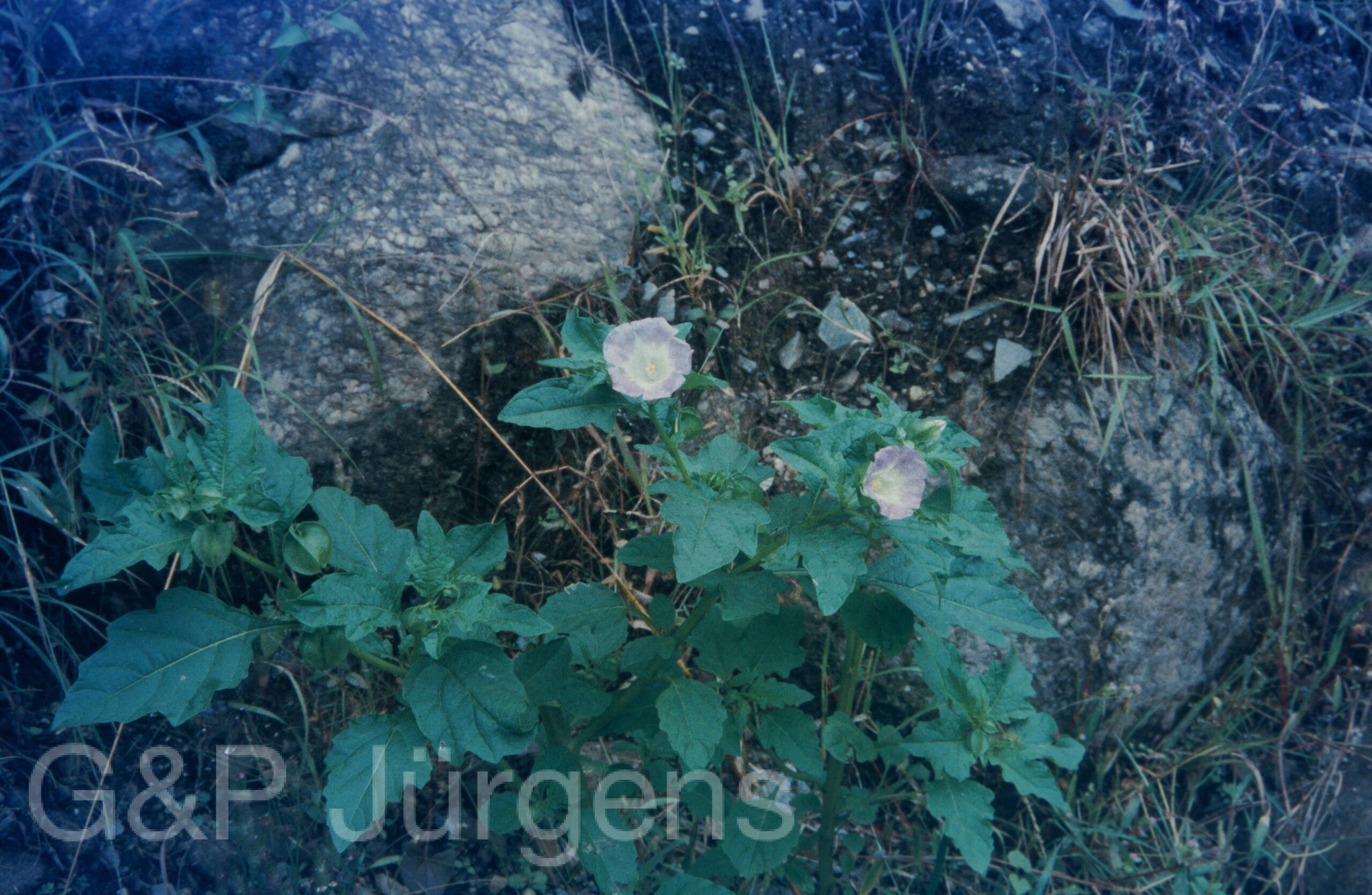
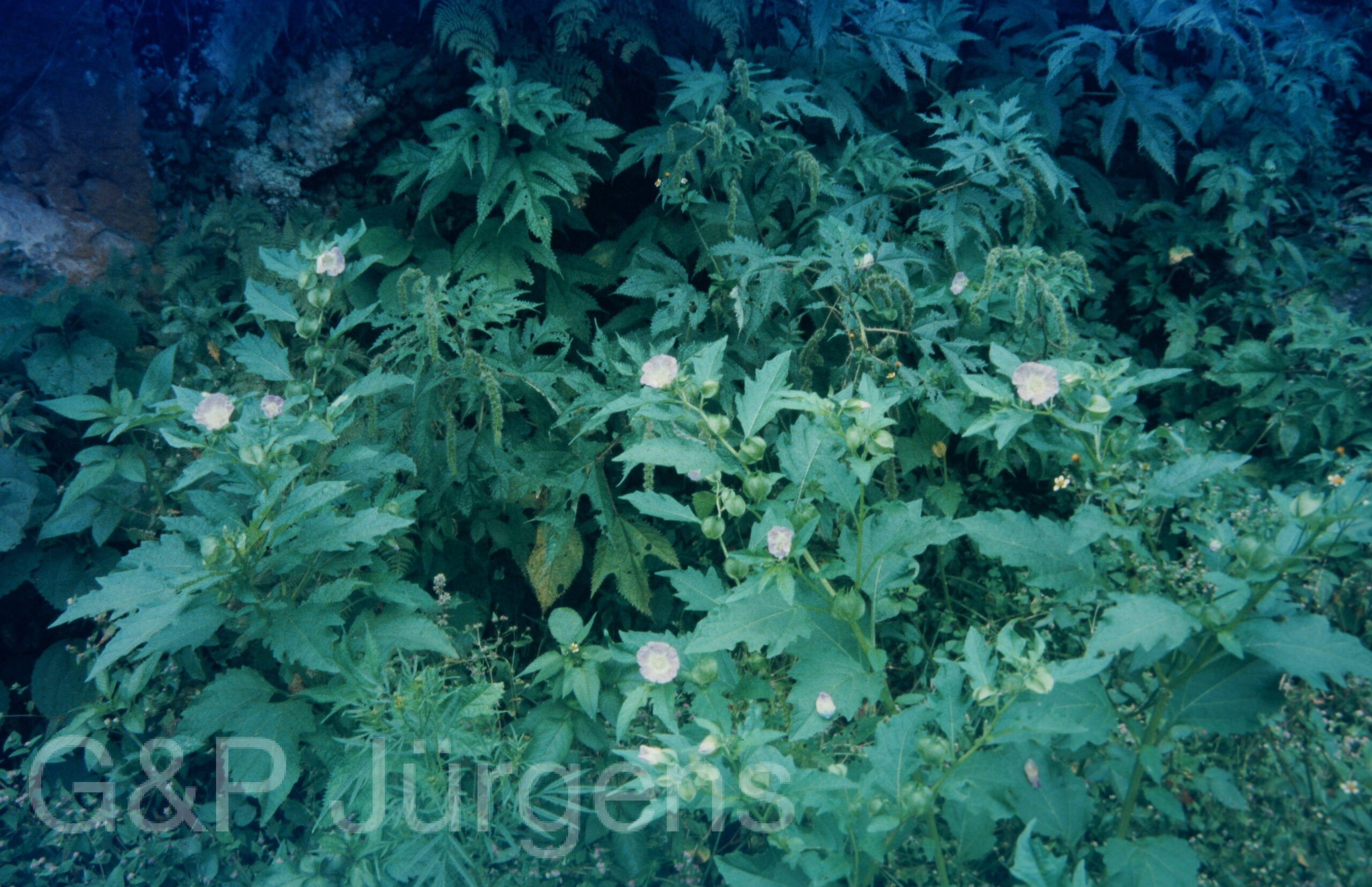
Nicandra physalodes (L.) Gaertn., the shoo-fly plant or apple-of-Peru, is an annual herb native to the Andean region of South America (notably Peru) but now naturalised almost worldwide as a weed of cultivation and waste ground. The very large GBIF occurrence record spans Europe, North and South America, southern Africa, Australasia, China and beyond, reflecting its cosmopolitan ruderal status. In the Himalaya it is a familiar plant of cultivated fields, village margins and disturbed ground; the records from Dunai in west Nepal at 2,150 m in July and from Sitel in Garhwal, India, at 1,850 m in September document its occurrence as a monsoon-season weed in the western and central Himalayan hill zone.

Nicandra is a robust, erect, glabrous annual reaching up to 1–1.5 m, with stout, angular, branching stems. The leaves are alternate, ovate to elliptic, with coarsely sinuate-dentate or lobed margins. The solitary, axillary flowers are pale blue to lilac with a paler, often whitish throat; the corolla is broadly campanulate and shallowly five-lobed. Most distinctive is the persistent, accrescent calyx with five deeply sagittate-cordate, sharply angled lobes that enlarge and become inflated and papery, enclosing the dry, many-seeded berry in a manner resembling the husk of Physalis, hence the epithet physalodes.

The genus Nicandra is monotypic and forms an isolated lineage within Solanaceae, placed in its own subfamily Nicandroideae and of long-standing interest in phylogenetic studies of the family. The plant is mildly toxic, containing withanolide-type compounds, and has been used traditionally as an insect repellent, accounting for the vernacular name shoo-fly. Its remarkable success as a global colonist makes it a textbook example of a New World species turned cosmopolitan agricultural weed.

Author: (L.) Gaertn. · Sources: POWO (Kew), GBIF, Flora of China Vol. 17, Flora of Pakistan (Solanaceae), Hunziker: The Genera of Solanaceae

(Hook.f. & Thomson) Al-Shehbaz

BhutanPG2011 638
Bhutan Paden-Tso, 4300m July

Description

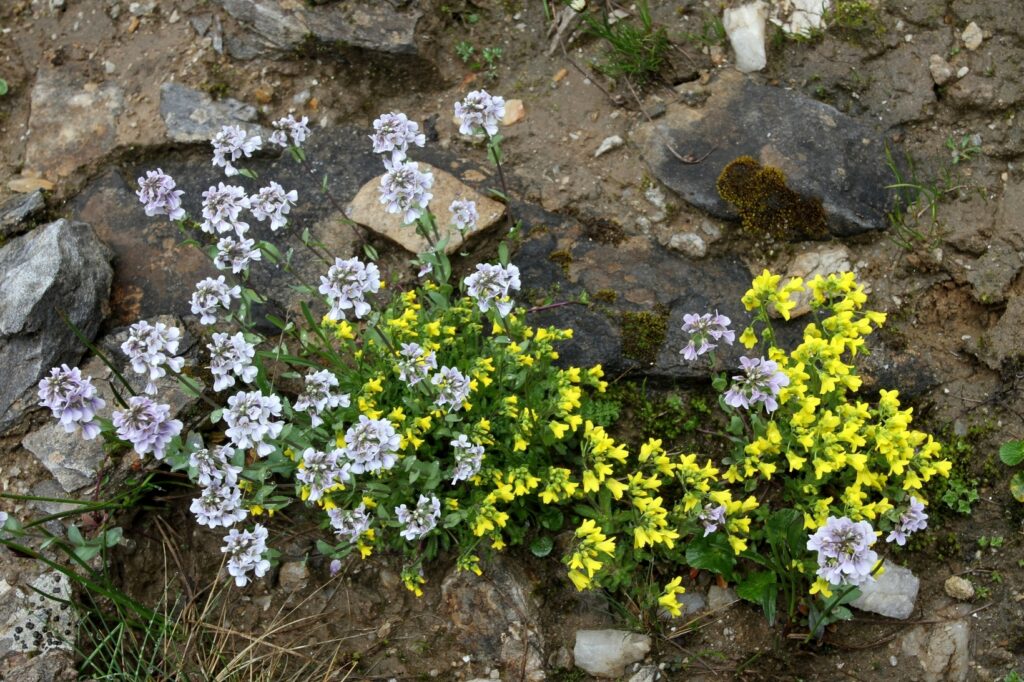
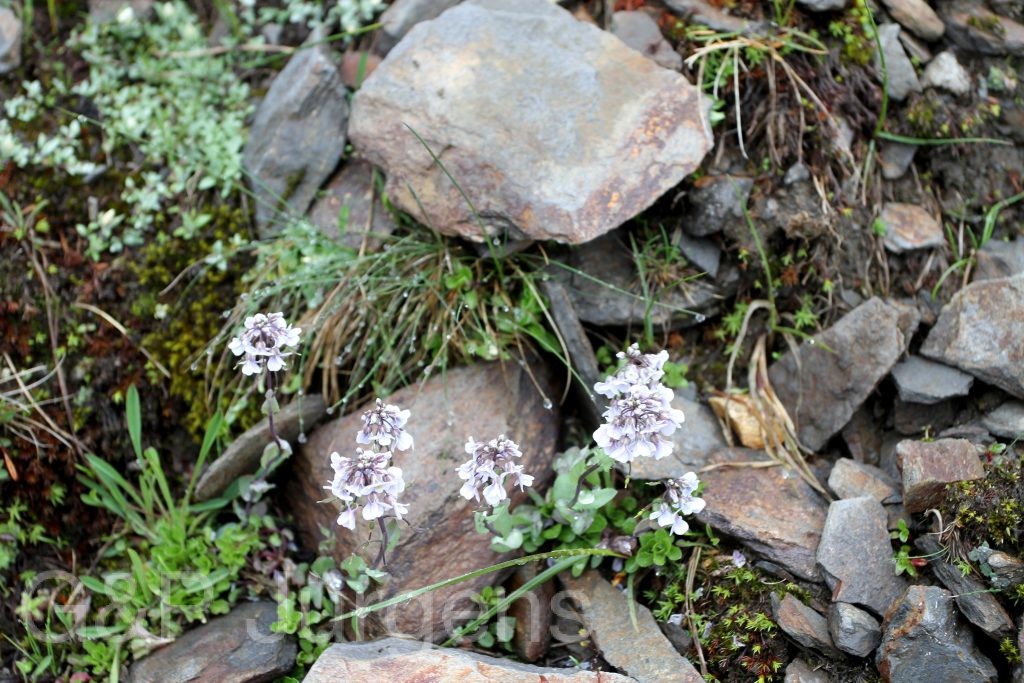
Noccaea andersonii is an alpine crucifer of the Himalaya, documented by GBIF (140 occurrences) from Nepal, India, Bhutan and southern Tibetan China. It is a plant of the upper alpine zone, growing in open stony pastures, scree, moist seepages and the margins of glacial lakes, generally between about 3800 and 4600 m. The cited collection from Paden-Tso in Bhutan at 4300 m in July typifies its preferred habitat: cold, well-drained mineral soils near tarns where it flowers during the brief post-monsoon summer, often associated with cushion plants and short alpine sedge turf.

The species is a low, glabrous, somewhat glaucous perennial herb arising from a slender caudex. Basal leaves are petiolate and form a loose rosette, while the cauline leaves are sessile and clasp the stem with sagittate-amplexicaul bases, a diagnostic feature of the genus. The inflorescence is a corymbose raceme of small flowers with four white to pale lilac petals borne above spreading sepals. The fruit is a flattened, obcordate to broadly elliptic silicle, narrowly winged toward the apex and notched at the tip, containing several smooth seeds in each loculus.

The binomial reflects the modern segregation of Noccaea from the broadly circumscribed Thlaspi, supported by the combination by Al-Shehbaz on molecular and fruit-anatomical grounds, with the perennial habit and amplexicaul leaves distinguishing it from annual Thlaspi proper. Ecologically it is a cold-adapted specialist of frost-churned alpine substrates. It is widespread across suitable habitat and not presently of conservation concern, though restricted to a narrow altitudinal band sensitive to climatic shifts.

Author: (Hook.f. & Thomson) Al-Shehbaz · Sources: POWO (Kew), GBIF, Flora of China Vol. 8, Flora of Bhutan Vol. 1, Flora of Nepal, Al-Shehbaz Brassicaceae systematic studies

(Hook. f. & Thomson) Al-Shehbaz

BhutanPG2011 286
Bhutan Jule-Tso, 4200m June
Sikkim 2006 129 ergebnis
India West-Bengal, Molley 3630m, May

Description

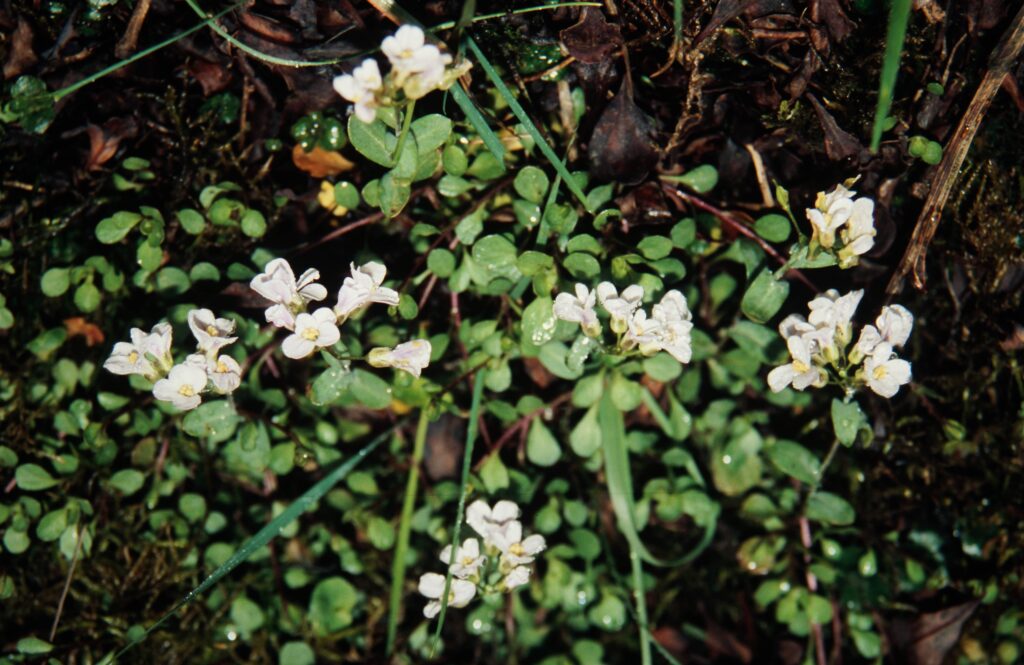
Noccaea cochlearioides (Hook. f. & Thomson) Al-Shehbaz is a high-alpine crucifer of the Himalaya and adjacent Central Asia, recorded from India, Nepal, Pakistan, Bhutan, Afghanistan, southern China and the Russian mountains, with about 93 GBIF occurrences reflecting its restricted, high-elevation niche. It grows on stony alpine slopes, screes, moraines and rock crevices, characteristically between about 3500 and 4800 m. The cited gatherings from Jule-Tso in Bhutan at around 4200 m in June and from Molley in West Bengal at 3630 m in May exemplify its presence in cold, open subnival habitats where the snow-free season is brief.

The species is a small, glabrous, somewhat fleshy perennial herb with a branched caudex bearing rosettes of entire to obscurely toothed, often spathulate basal leaves; the cauline leaves are sessile and amplexicaul with auriculate-sagittate bases. The flowers are arranged in a short corymbose raceme and have four white to pale lilac petals in the typical cruciform arrangement. The fruit is a flattened, obcordate to obovate silicula, narrowly winged and notched at the apex, containing few smooth seeds in each locule.

The taxon was transferred from Thlaspi to the segregate genus Noccaea by Al-Shehbaz in his molecular-based recircumscription of the Thlaspi alliance (Brassicaceae, tribe Coluteocarpeae). Its auriculate cauline leaves and winged, notched silicles are diagnostic. A narrow alpine endemic of restricted range, it is uncommon but not assessed as threatened.

Author: (Hook. f. & Thomson) Al-Shehbaz · Sources: POWO (Kew), GBIF, Flora of Bhutan, Flora of China, Flora of Pakistan, Al-Shehbaz revisions of Thlaspi and allied Brassicaceae