Tag:

Summer

DC.

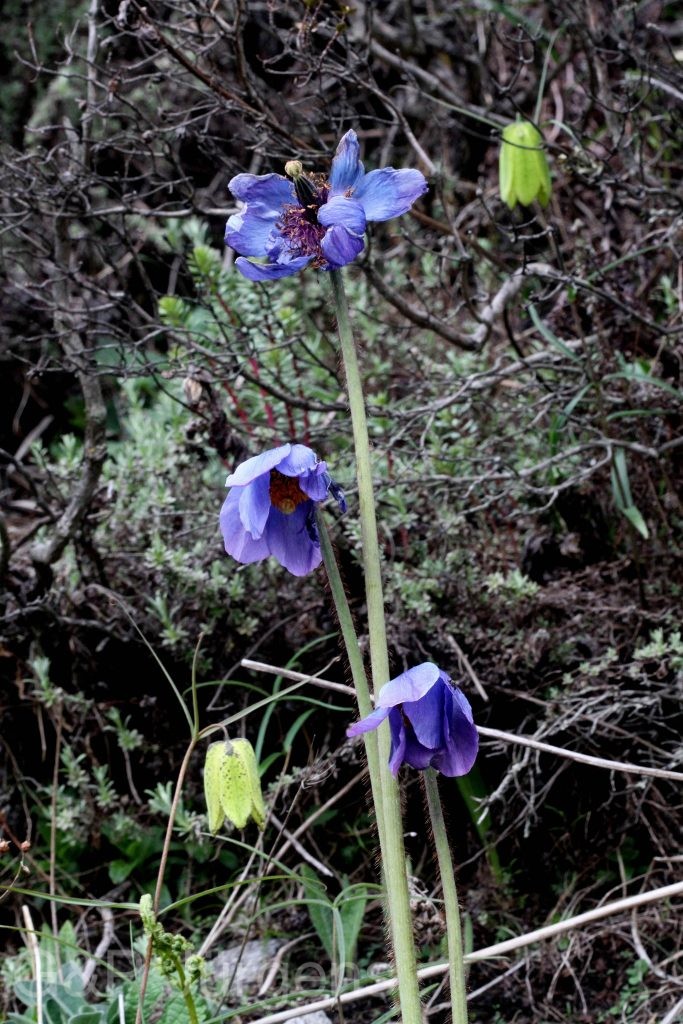
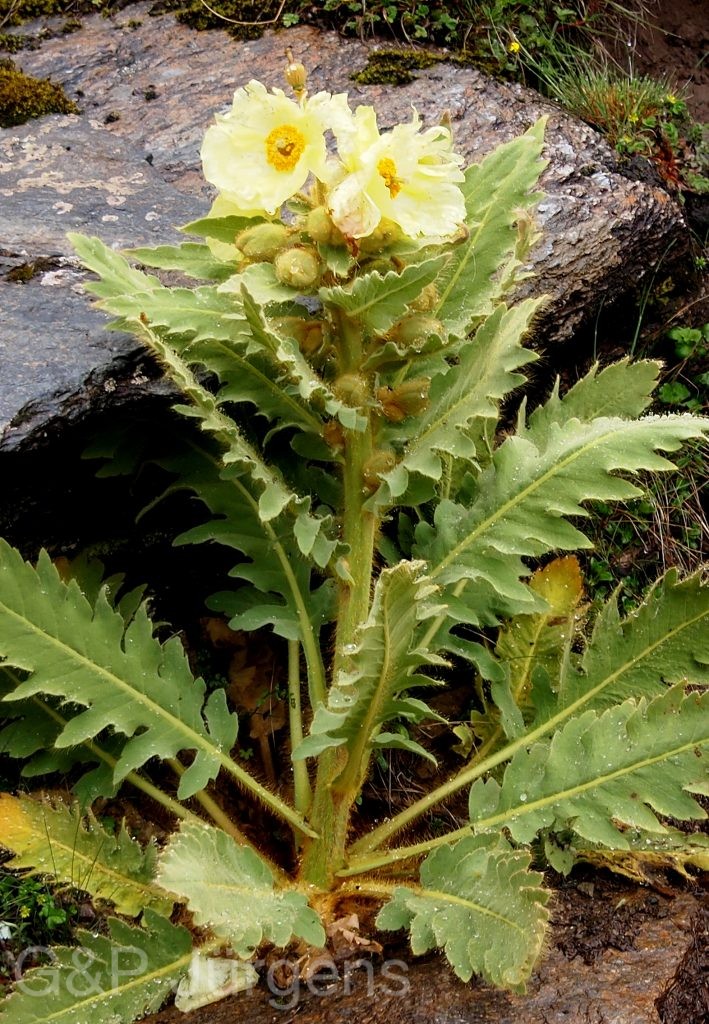
BhutanPG2011 271
Bhutan Jule-Tso, 4100m June

Description

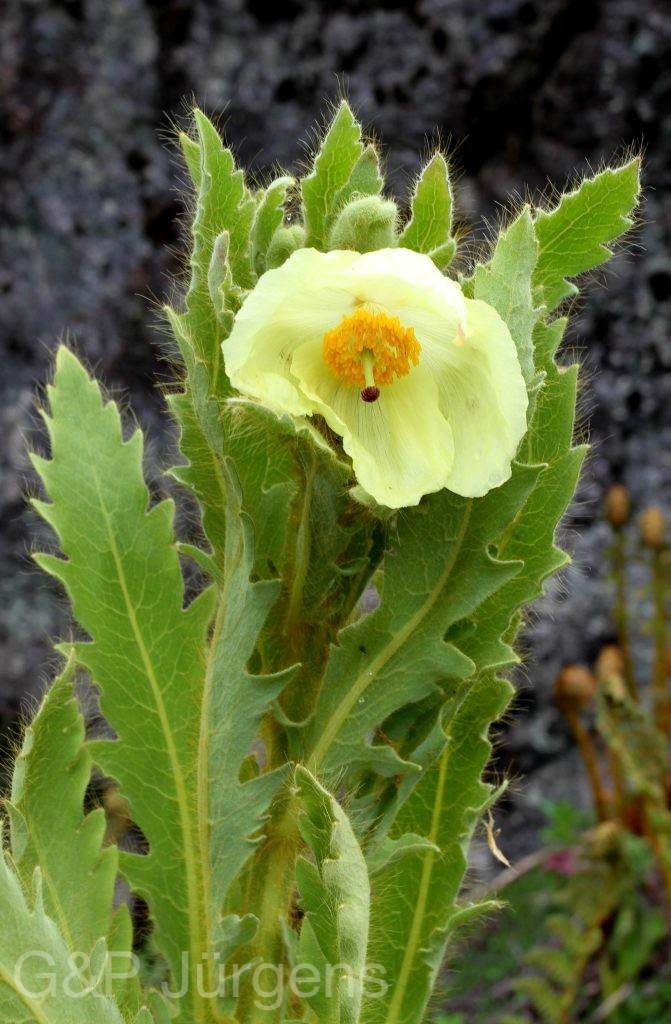
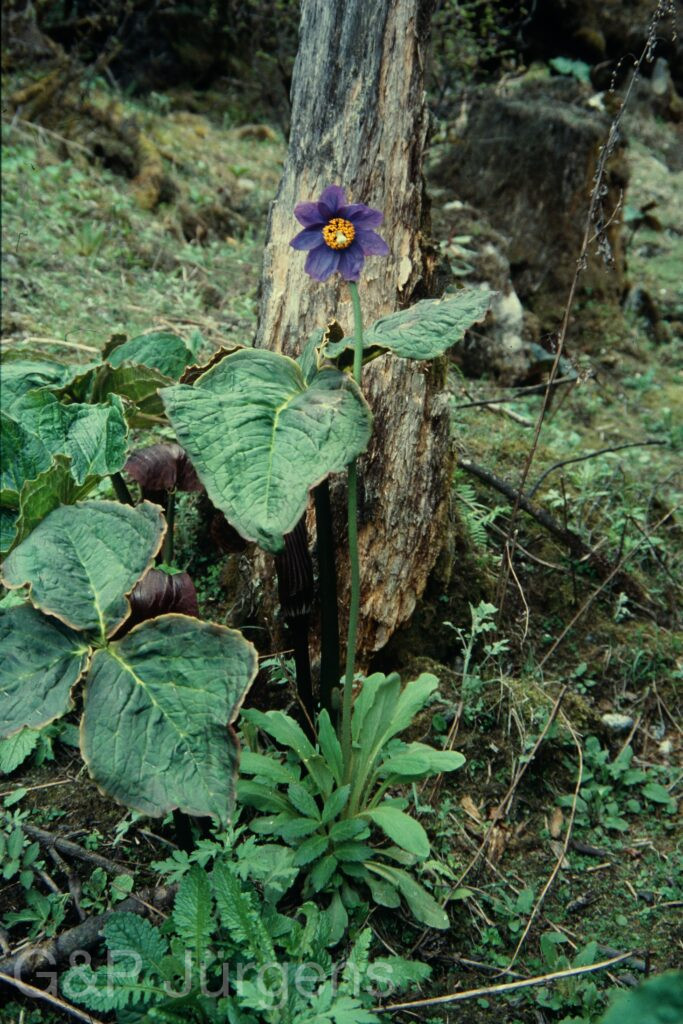
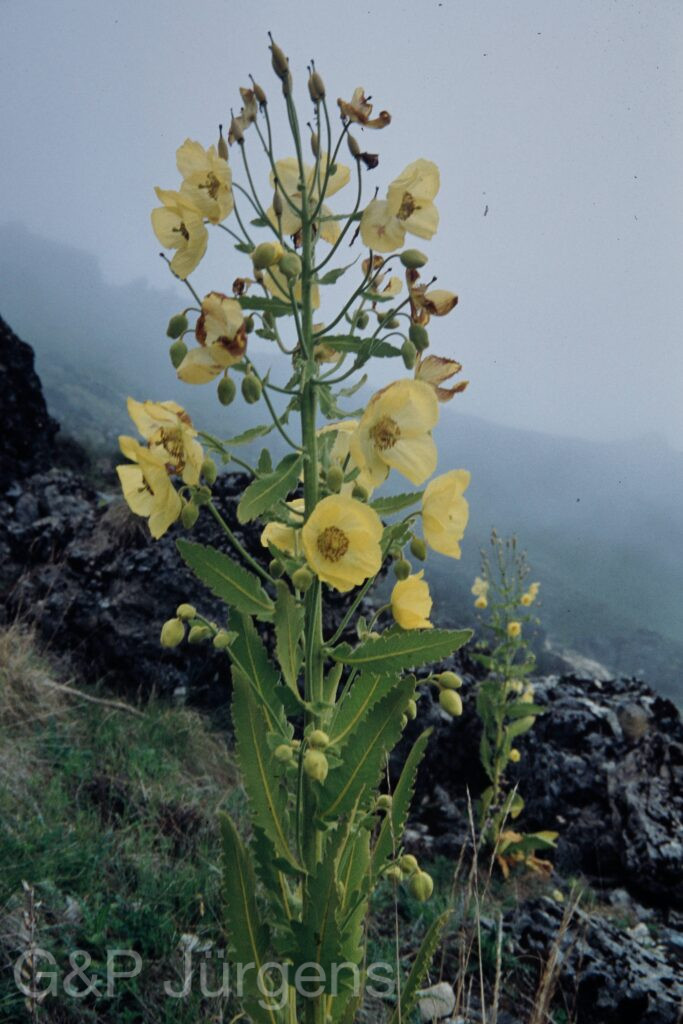
Meconopsis napaulensis DC. is a monocarpic Himalayan poppy distributed through Nepal, Bhutan, Sikkim, north-east India and adjacent south-west China, growing in open subalpine and alpine habitats such as moist meadows, scrub margins, rocky slopes and forest clearings. It favours cool, humid, well-drained sites between roughly 3000 and 4200 m. The photographed plant from Jule-Tso in Bhutan at 4100 m, flowering in June, sits near the upper end of this range, where late snowmelt and summer moisture sustain the brief but spectacular flowering of these high-mountain poppies on open, sunlit slopes.

The plant is a giant, monocarpic herb that builds up over several years as a large basal rosette of pinnately lobed to deeply divided, bristly leaves before producing a single tall, leafy, branched flowering stem in its final season. The whole plant is clothed in stiff, often rust-coloured bristles. The flowers are large, nodding and saucer-shaped, with four (sometimes more) silky petals ranging from blue and purple to red, pink or yellow in different populations, surrounding a central boss of numerous stamens and a prominent ovary. The fruit is an elongate, bristly capsule dehiscing by apical valves to shed abundant minute seeds, after which the entire plant dies.

Meconopsis napaulensis has long been a taxonomically confused name, applied to a range of red- and purple-flowered big rosette poppies; modern revisions have segregated several distinct species (such as M. paniculata and M. wilsonii) formerly lumped under it. Pollinated chiefly by bumblebees, these poppies are emblematic of the Himalayan alpine flora. While not formally assessed as threatened, their monocarpic life cycle, narrow alpine niche and horticultural appeal make wild populations vulnerable to over-collection and climate-driven habitat change.

Author: DC. · Sources: POWO (Kew), GBIF, Flora of Bhutan, Annotated Checklist of the Flowering Plants of Nepal, The Genus Meconopsis (Grey-Wilson), Flora of China (Papaveraceae)
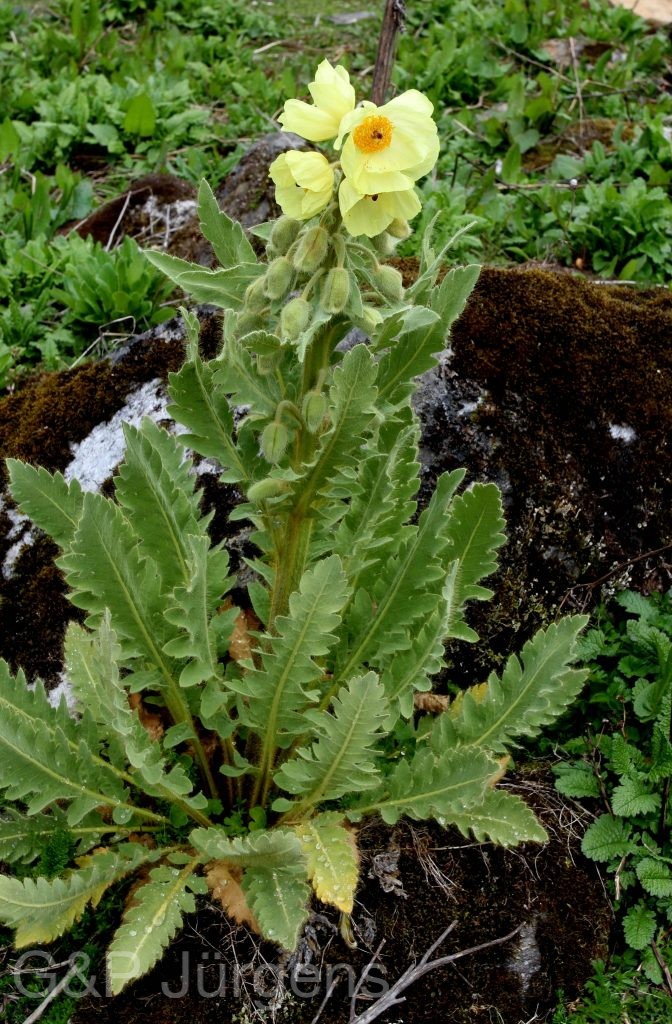
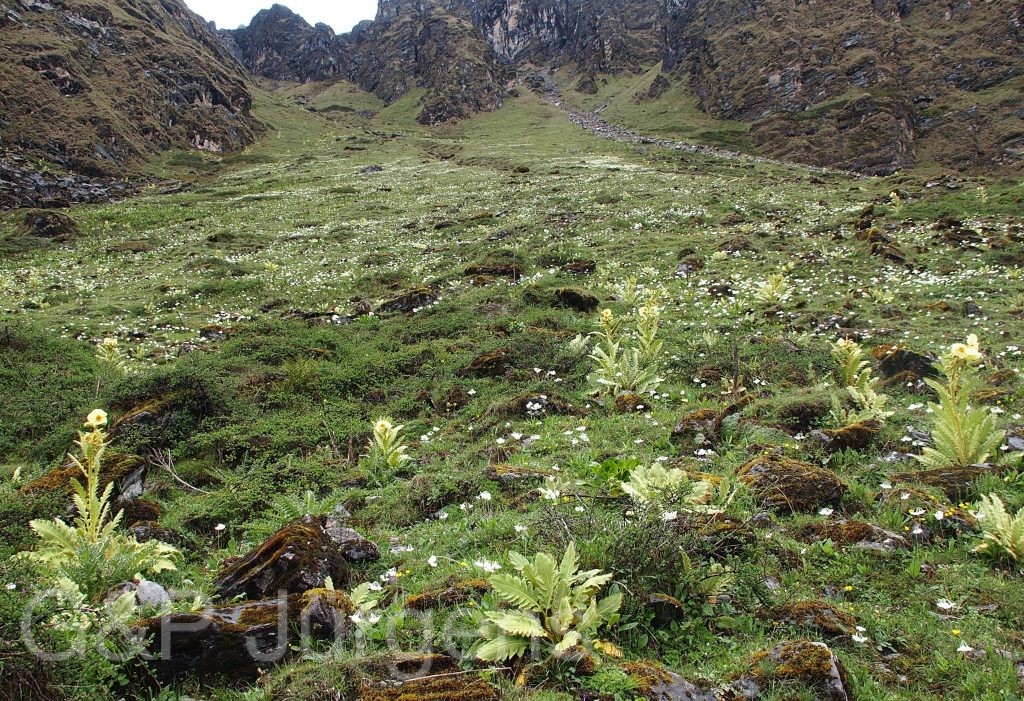
(D. Don) Prain

Sikkim2011 89
Sikkim Chopta-valley 4200m, June
BhutanPG2011 321
Bhutan
Sikkim2011 252
Sikkim Yumthang 3700m, June
Nepal 97 136 G252
Nepal Mewa-Khola 3100m April

Description

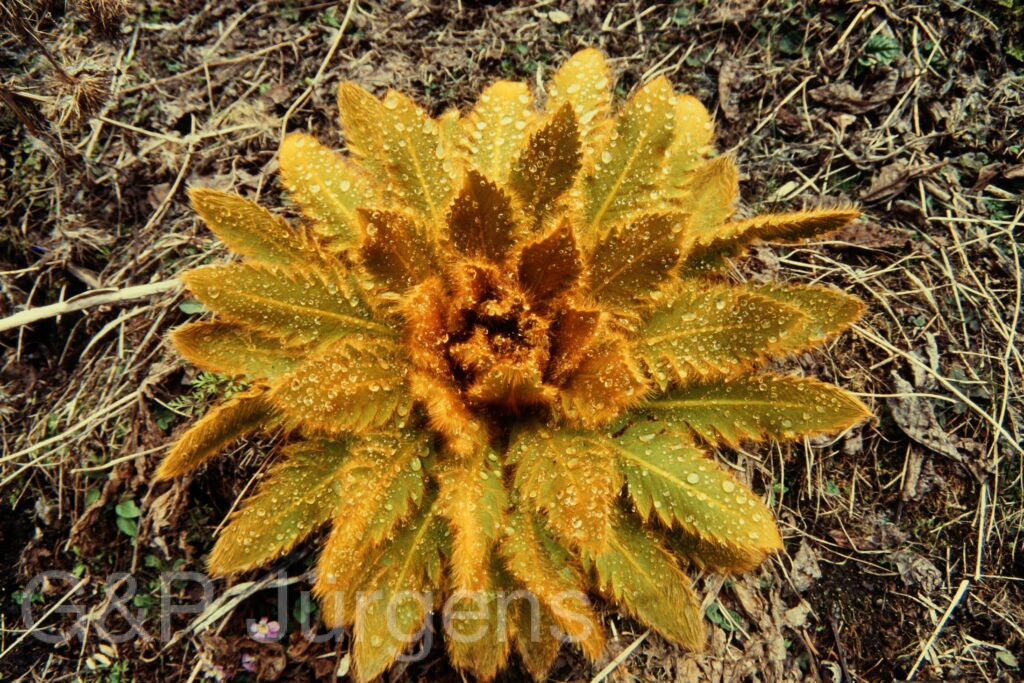
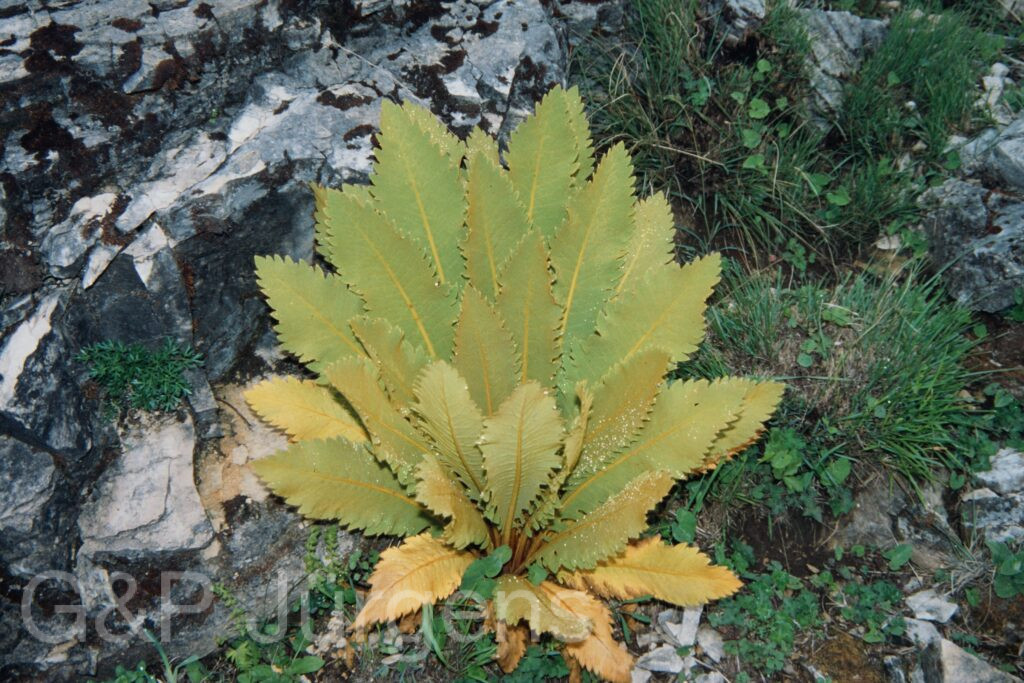
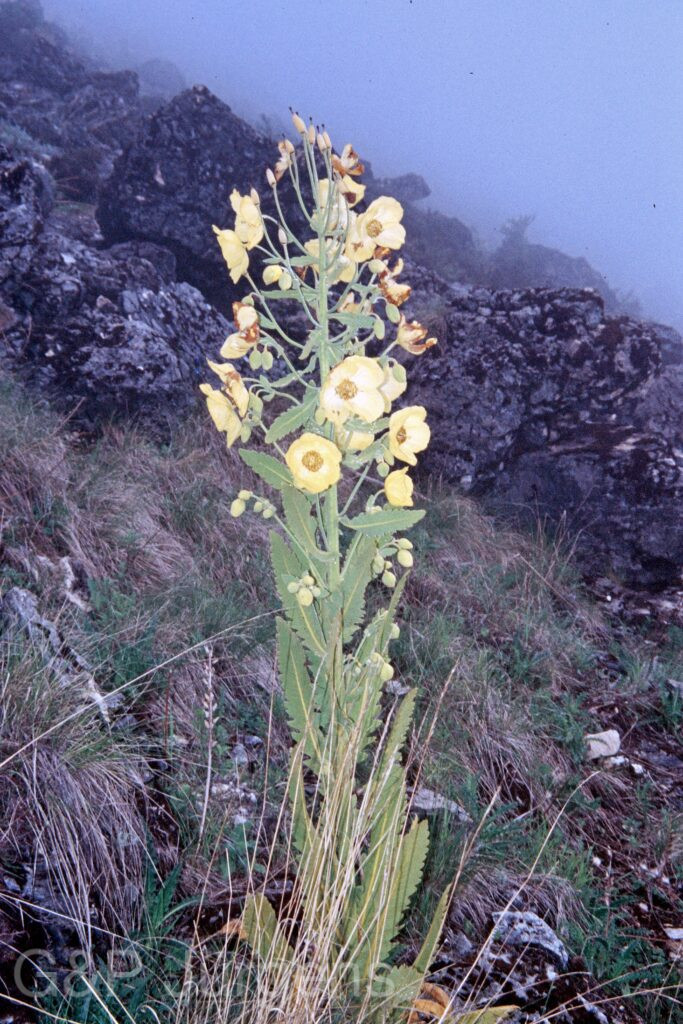
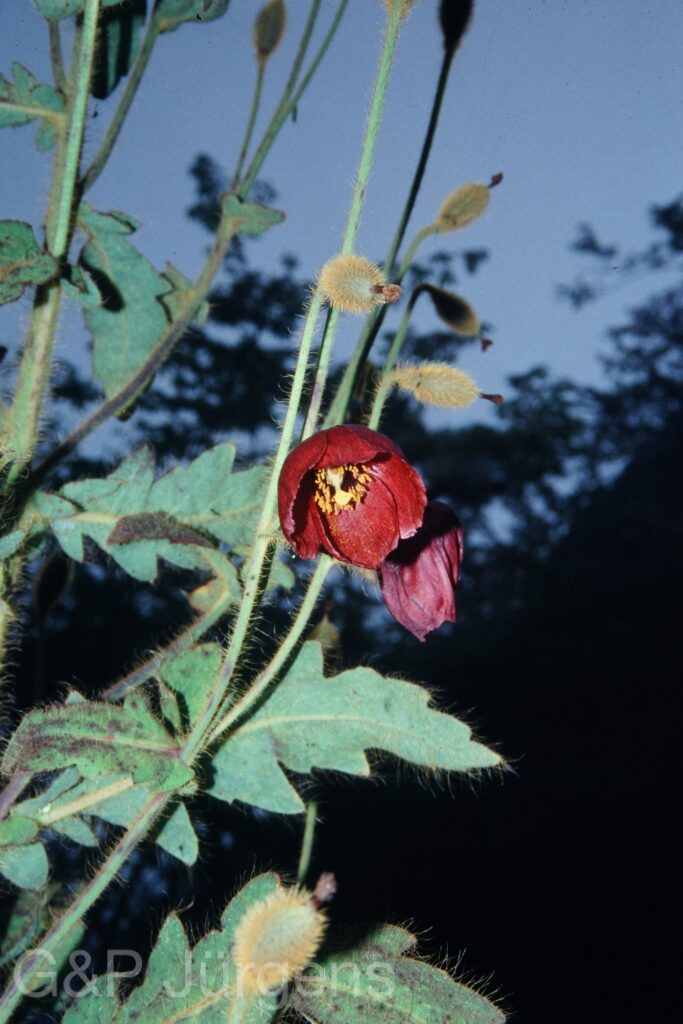
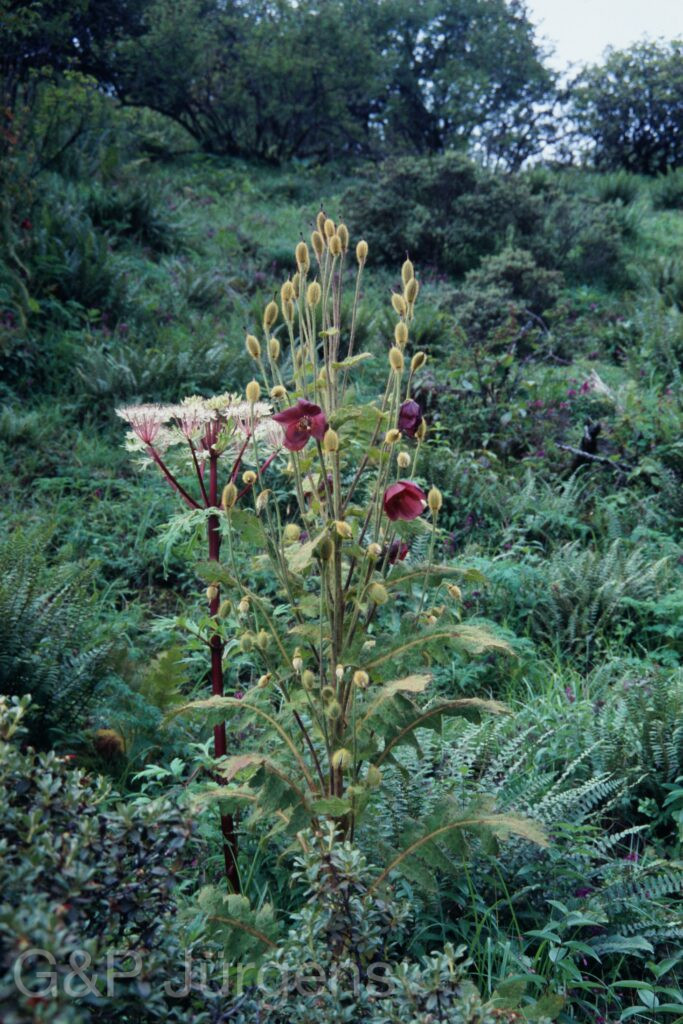
Meconopsis paniculata is a stately Himalayan poppy distributed through Nepal, the Indian states of Sikkim and Darjeeling, Bhutan and southern Tibet (China), with cultivated records in Britain and Canada; GBIF documents about 440 occurrences. It grows in the upper temperate to subalpine and lower alpine zone, on open grassy slopes, forest clearings, streamsides and shrubby hillsides, as recorded in the Chopta valley (4200 m) and at Yumthang (3700 m) in Sikkim and at Mewa-Khola (3100 m) in Nepal. Spanning roughly 3000-4200 m, it flowers from spring into early summer (April-June), often forming conspicuous stands on damp, humus-rich slopes.

It is a robust monocarpic herb, forming in its first years a large basal rosette before producing a single tall, branched flowering stem up to 1.5-2 m. The whole plant is densely clothed in golden to rusty, spreading bristly hairs. The basal leaves are large, oblong-lanceolate and pinnately lobed or deeply cut, narrowing into a winged petiole. The inflorescence is an elongate, leafy panicle (the epithet "paniculata") of nodding, broadly cup-shaped flowers; the four (rarely more) petals are pale to clear yellow, surrounding a boss of numerous yellow stamens and a stout ovary crowned by a short style and lobed stigma. The fruit is an oblong, bristly capsule dehiscing by apical pores to shed many small seeds.

Described by Prain from D. Don's basionym, M. paniculata belongs to the monocarpic, bristly-fruited group of Meconopsis allied to M. napaulensis and M. wallichii, a complex whose taxonomy has long been debated owing to hybridisation and variable indumentum. As a monocarpic species it dies after a single flowering, relying entirely on abundant seed for regeneration. The flowers are visited by bumblebees foraging at altitude. Widespread across its range, it is not considered globally threatened, though seed collection and grazing can affect local populations.

Author: (D. Don) Prain · Sources: POWO (Kew), GBIF, Flora of Bhutan, Flora of Nepal, Grey-Wilson's monograph of the genus Meconopsis

G. Taylor

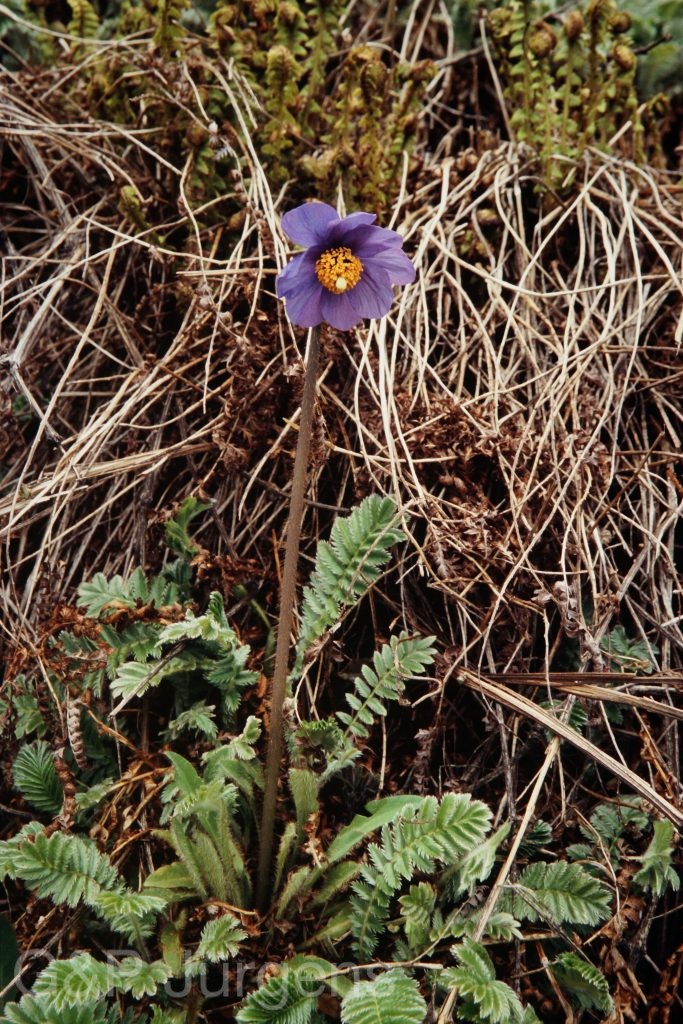
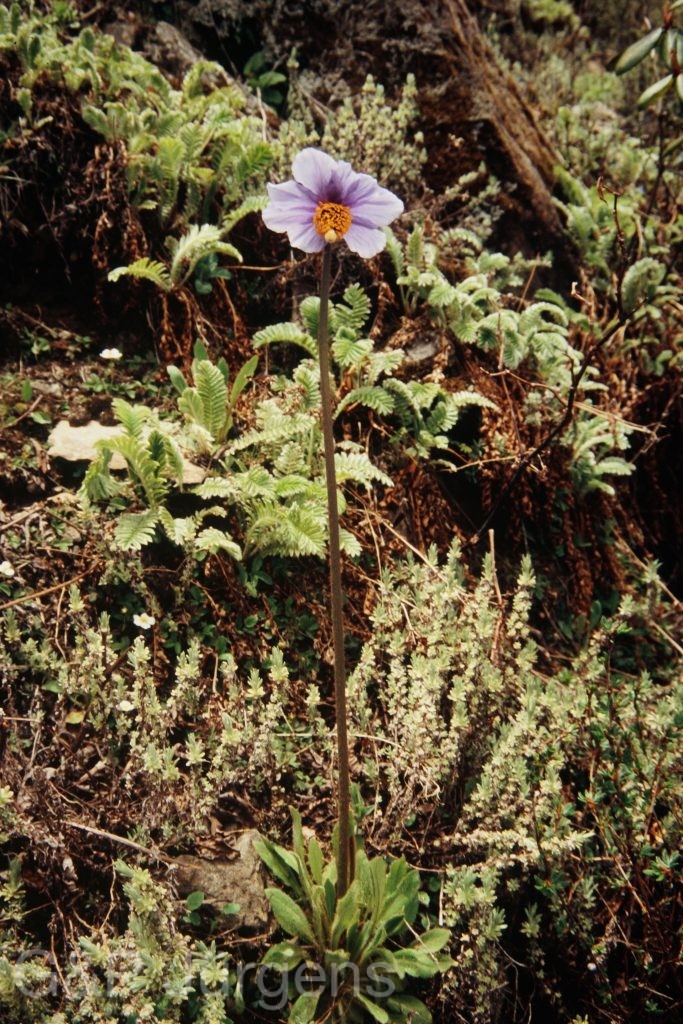
BhutanPG2011 482 scaled
Bhutan Ludlow-Sherriff-Trail Warrtlang-La, 4400m June

Description

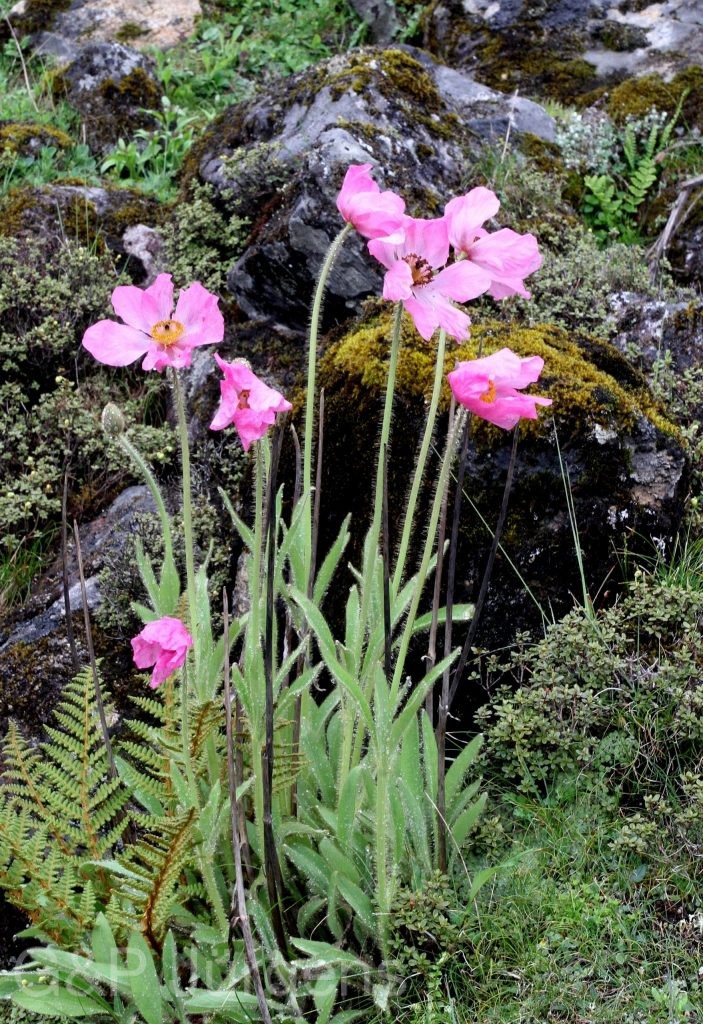
Meconopsis sherriffii is a rare and narrowly endemic Himalayan poppy known only from a small area of the eastern Himalaya straddling south-eastern Xizang (China) and adjacent northern Bhutan; with merely around 17 georeferenced occurrences (CN, BT) it ranks among the most localised members of its celebrated genus. It is a plant of high alpine turf, screes and rocky, well-drained slopes near the upper limit of vegetation, typically between about 4000 and 4800 m. The plant photographed at Warrtlang-La on the historic Ludlow-Sherriff Trail in Bhutan at 4400 m in June, flowering in the short alpine summer, occupies exactly this exposed, high-elevation habitat for which the species is named after its co-discoverer George Sherriff.

It is a tap-rooted perennial forming a low rosette of leaves clothed, like the scapes, in soft golden to rufous hairs. The leaves are oblong to oblanceolate, entire to shallowly lobed, and densely pilose. The flowers, borne singly or few on hairy scapes, are large and saucer-shaped, with four (occasionally more) broad, satiny petals of a distinctive soft pink to rose colour, unusual in a genus dominated by blue and yellow species; the boss of numerous golden stamens surrounds a superior ovary topped by a short style and lobed stigma. The fruit is an ellipsoid, hairy, several-valved capsule opening by apical pores to release many minute seeds.

Meconopsis sherriffii belongs to the section of monocarpic-to-perennial hairy Himalayan poppies and is prized in cultivation for its rare pink colouring. Its extremely restricted range, low population numbers and dependence on fragile high-alpine habitat make it of clear conservation concern, vulnerable to grazing, collection and climatic change.

Author: G. Taylor · Sources: POWO (Kew), GBIF, Flora of Bhutan, Flora of China, Grey-Wilson's monograph The Genus Meconopsis, Ludlow & Sherriff's Bhutan collections

(D. Don) Walp.

Description

Meconopsis simplicifolia (D. Don) Walp. is a high-mountain perennial blue poppy of the central and eastern Himalaya, ranging through Nepal, Sikkim and northern India, Bhutan and southern Tibet (China), with cultivated records accounting for the United Kingdom entries in a GBIF dataset of roughly 267 occurrences. It inhabits alpine meadows, open turf, rocky slopes and the margins of Rhododendron scrub on moist, humus-rich, well-drained acidic soils, typically within the snowmelt-fed alpine zone. The illustrated collections cluster between about 3200 and 3900 m, from Tanghu in Sikkim at 3900 m and Chele-La in Bhutan at 3200 m in June to Yumthang on the Sikkim-India border at 3600 m in May, marking a late-spring to early-summer flowering as the snow retreats.

It forms a perennial herb with a basal rosette of simple, undivided leaves, oblanceolate to elliptic or narrowly lanceolate, entire to faintly toothed and clothed in soft, often fulvous to fawn-coloured bristly hairs, narrowing to a winged petiole; the simple, unlobed foliage gives the species its epithet. From the rosette arise one or several slender, bristly, leafless scapes, each bearing a solitary, nodding flower. The flowers have four (sometimes more) broad, silky, overlapping petals of clear sky-blue to violet or, in some forms, reddish-purple, surrounding a tuft of golden stamens and a stout ovary topped by a short, distinct style and capitate stigma. The fruit is an ellipsoid, bristly capsule opening by short apical valves.

Meconopsis simplicifolia is part of the perennial, scapose blue-poppy assemblage and is distinguished from allies such as M. grandis by its single-flowered scapes and entirely simple leaves; it is variable in flower colour and in whether it behaves as monocarpic or polycarpic. Pollinated chiefly by bumblebees, it is a celebrated ornamental long grown in cool temperate gardens. Across its range populations are localised and sensitive to grazing, trampling and the warming of alpine habitats, making it, like its relatives, a species of interest for Himalayan alpine conservation though not formally assessed as threatened.

Author: (D. Don) Walp. · Sources: POWO (Kew), GBIF, Flora of Bhutan, Flora of Nepal, Christopher Grey-Wilson – The Genus Meconopsis

Prain

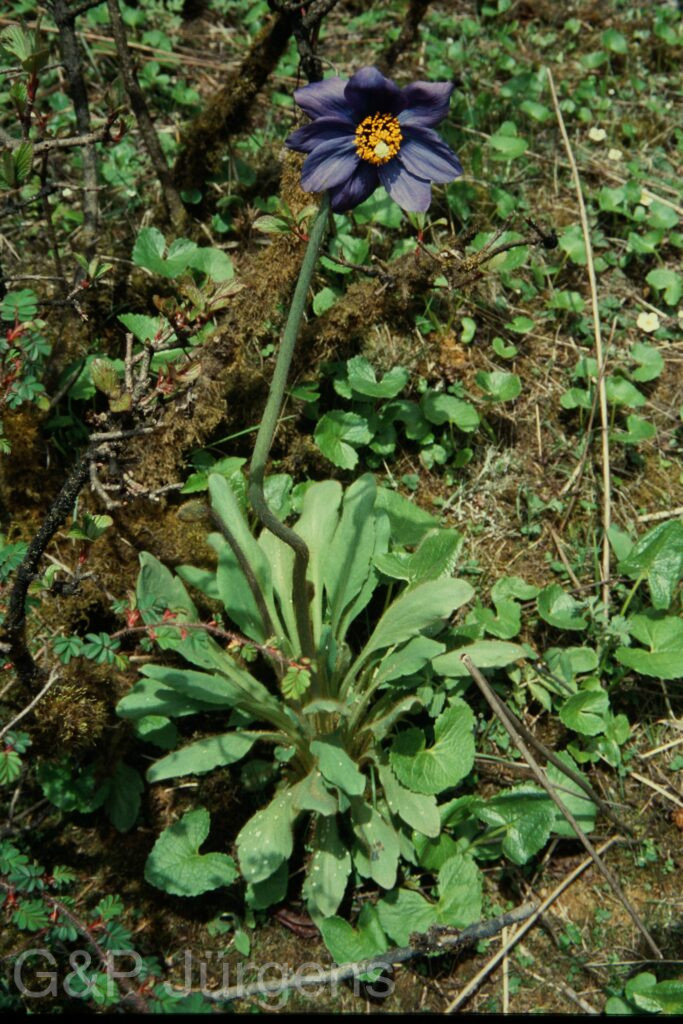
BhutanPG2011 155
Bhutan Tsochenchen, 3500m June

Description

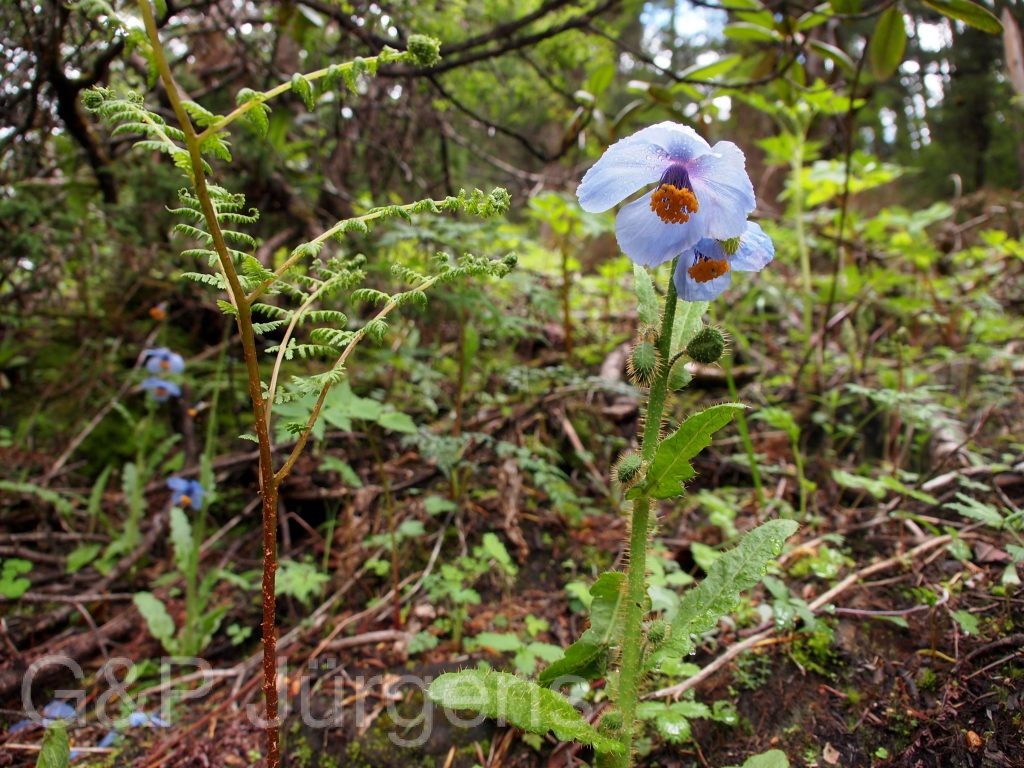
Meconopsis sinuata is a blue poppy of the eastern Himalaya. GBIF records it from India, Nepal, Bhutan and China, with around 60 occurrences distributed along the moist eastern Himalayan ranges. It grows in subalpine and alpine meadows, open shrubberies, forest clearings and rocky slopes, typically between 3000 and 4300 m, in the high-rainfall belt swept by the summer monsoon. The plant figured here was photographed at Tsochenchen in Bhutan at 3500 m in June, flowering early in the season among damp alpine herbage characteristic of this genus of cool, humid mountain habitats.

It is a slender perennial or biennial poppy bearing bristly hairs throughout. The basal leaves are oblanceolate with a distinctly sinuate to lobed margin, narrowing to a winged petiole, and the cauline leaves diminish upward. The nodding flowers are borne singly on bristly pedicels in the upper axils; the four (occasionally more) delicate, crinkled petals are sky-blue to purplish-blue, sometimes mauve, surrounding a boss of numerous yellow stamens. The superior ovary bears a short style, and the fruit is an elongate, bristly capsule dehiscing by apical valves to shed many small seeds.

Meconopsis, the celebrated Himalayan blue poppies, is a centre of endemism in the eastern Himalaya and Hengduan mountains, and the group has been extensively recircumscribed by molecular work separating Asian species from the European M. cambrica. The vivid blue pigmentation, attractive to bumblebee pollinators, has also made these poppies prized in cultivation. Restricted to specialised high-rainfall alpine habitats, M. sinuata is sensitive to grazing and habitat disturbance, and several congeners are of conservation concern.

Author: Prain · Sources: POWO (Kew), GBIF, Flora of China, Flora of Bhutan, Annotated Checklist of the Flowering Plants of Nepal, The Genus Meconopsis: Blue Poppies and their Relatives

Nepal 99 41 ergebnis
West-Nepal Nyor Gaad 2800m, June
Nepal 99 38 ergebnis
West-Nepal Nyor Gaad 2800m, June
Nepal 99 39 ergebnis
West-Nepal Nyor Gaad 2800m, June

Description

Meconopsis is a genus of approximately 50–80 species of poppy-like herbs predominantly centred on the Sino-Himalayan region, with a single outlying species (M. cambrica) in western Europe. The genus ranges from Pakistan through the Himalayas to southwestern China and northern Myanmar, with its greatest species diversity in southeastern Xizang, northwestern Yunnan, and western Sichuan. Species occupy diverse montane to alpine habitats including forest clearings, scrub, rocky slopes, scree, and high-altitude meadows at elevations from 2,000 to over 5,500 m. The present specimen, photographed in the Nyor Gaad valley of western Nepal at 2,800 m in June, represents a population in the lower elevational range typical for the genus.
Meconopsis species are annual, biennial, or monocarpic to polycarpic perennial herbs, producing rosettes of basal leaves that are variously lobed, pinnatifid, or entire, and typically covered with bristly or plumose hairs. The flowers are borne singly or in racemose to paniculate inflorescences and are characteristically large and showy, 3–10 cm across, with 4–8 petals in shades of blue, purple, red, yellow, or white. The stamens are numerous, with conspicuous yellow to orange anthers. The gynoecium consists of a syncarpous ovary that matures into a capsule dehiscing by apical valves. Identification to species level often requires examination of fruit morphology, indumentum type, and style characters.
Species-level determination in Meconopsis from photographs alone is frequently unreliable, as many taxa overlap in floral colour and vegetative morphology, and the genus has undergone considerable taxonomic revision. Western Nepal harbours several species including M. regia, M. napaulensis, and M. paniculata, among others. Over 9,200 occurrence records in GBIF attest to the genus's wide distribution and collecting interest. Many species are of significant horticultural value, particularly the blue-flowered taxa, while several narrow endemics face conservation concerns due to climate-driven habitat shifts and overcollection. Continued field surveys and molecular phylogenetic studies are essential for resolving species boundaries within this iconic Himalayan genus.

Sources: POWO (Kew), GBIF, Grey-Wilson: The Genus Meconopsis (2014), Flora of China Vol. 7, Flora of Nepal

Sikkim2003 156 G209
Sikkim Dzongri 3900m 08.2003
Sikkim2003 158 P211
Sikkim Dzongri 3900m, August

Description

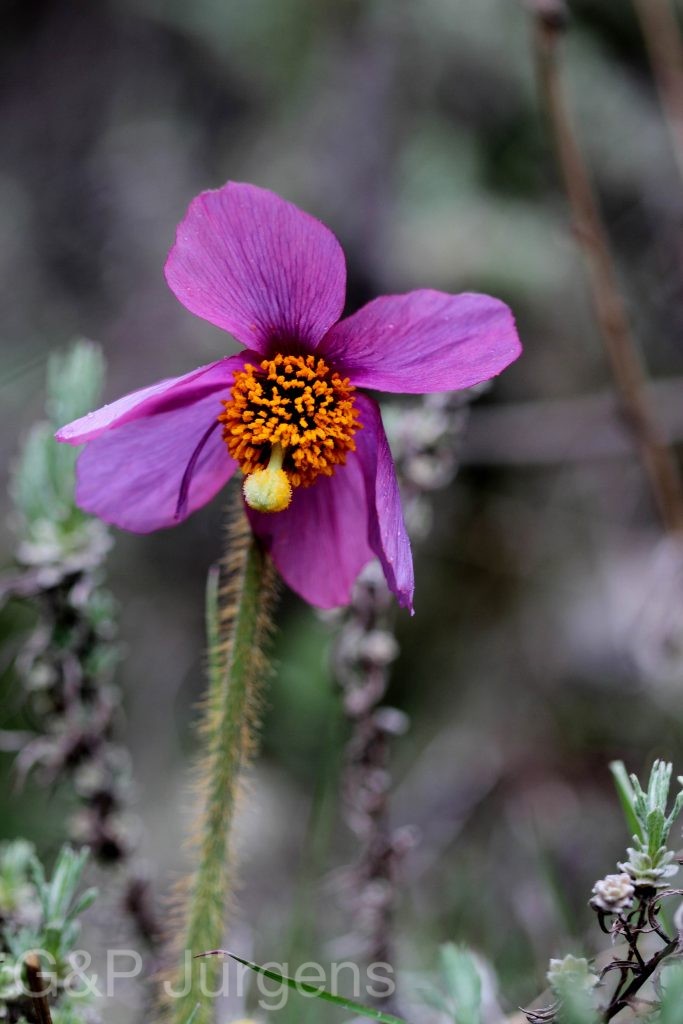
Meconopsis wallichii var. fusco-purpurea is a dark-flowered variant of the tall Himalayan blue poppy complex of the eastern Himalaya, ranging through Nepal, Sikkim and Bhutan. Although GBIF holds no occurrence records under this infraspecific name (the taxon being treated under the broader M. wallichii and the genus Meconopsis sensu lato), the species occupies open subalpine and lower alpine slopes, forest clearings and shrubberies, typically between 3000 and 4000 m. The photographs from Dzongri in Sikkim at about 3900 m in August document this purple-flowered form in its characteristic high-montane meadow habitat during the monsoon flowering season.

The plant is a tall, monocarpic herb that forms a basal rosette of deeply pinnatifid, bristly-hairy leaves over several years before producing a single robust, branched flowering stem up to a metre or more in height. The stems and foliage bear rusty to golden setose hairs. The large, nodding, saucer-shaped flowers are arranged in a leafy panicle; in this variety the petals are a deep dusky purple to wine-red rather than the sky-blue typical of the species, surrounding a boss of golden stamens. The ovary is bristly and develops into an elongate, several-valved capsule dehiscing at the apex to release numerous small seeds.

Taxonomically this purple form has been recognised at varietal rank within the variable M. wallichii, itself part of the difficult Sino-Himalayan genus Meconopsis where flower colour and indumentum vary clinally; many such names are now subsumed or transferred following modern revisions. The monocarpic life history, with a long vegetative phase and a single mass-flowering event, is characteristic of the group. As a striking ornamental, it is of horticultural interest, while wild populations depend on undisturbed subalpine slopes.

Sources: POWO (Kew), GBIF, Flora of Bhutan, Annotated Checklist of the Flowering Plants of Nepal, Grey-Wilson's monograph The Genus Meconopsis

Benth.

Nepal 99 293 ergebnis
West-Nepal Kalmura 4100m, June
Nepal 99 294 ergebnis
West-Nepal Kalmura 4100m, June

Description

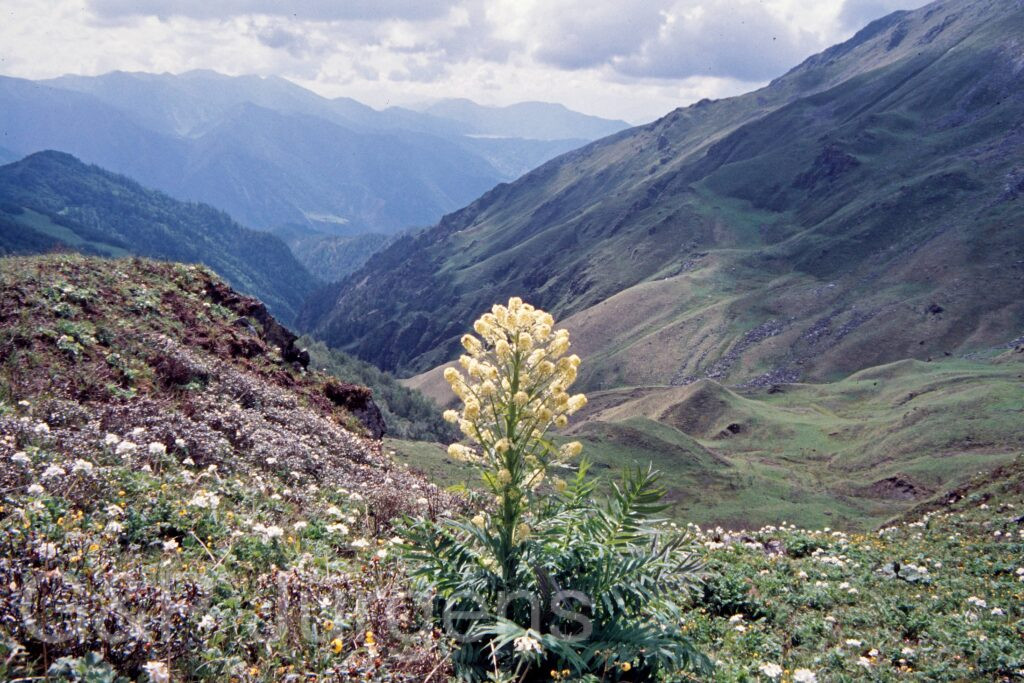
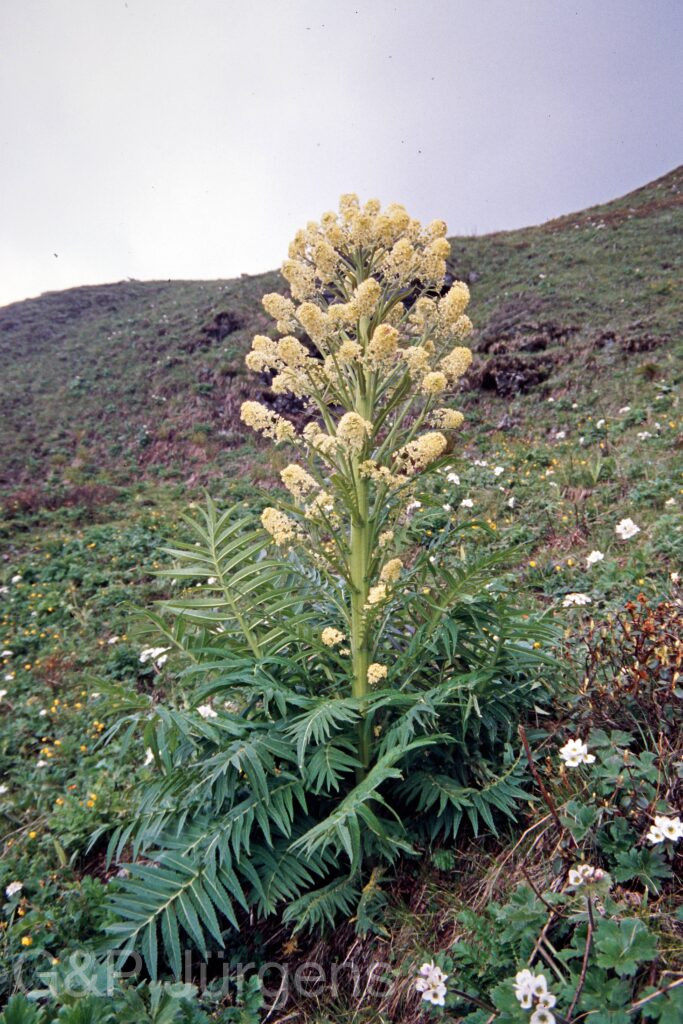
Megacarpaea polyandra Benth. is a robust alpine crucifer of the western and central Himalaya, known from about 99 records in India, Nepal and Pakistan, with scattered extralimital reports. It grows on open grassy and rocky alpine slopes, in subalpine scrub, forest clearings and along the margins of high pastures, generally between about 3000 and 4300 m. The plant photographed at Kalmura in West Nepal at 4100 m in June is typical of its preference for deep, moist, fertile soils on sunny slopes where it can attain a conspicuously large stature for an alpine herb.

The species is a stout perennial herb arising from a thick rootstock, with an erect, branching stem and large, deeply pinnatisect to lyrate leaves with several pairs of toothed lobes. The inflorescence is a broad panicle of many flowers; uniquely among most Brassicaceae the flowers bear numerous stamens (well in excess of the usual six), giving rise to the epithet "polyandra," and the petals are pale yellow to whitish. The fruit is the diagnostic feature: a large, flattened, didymous (two-lobed) silicle with broadly winged, papery valves, each loculus one-seeded, the whole readily wind-dispersed.

Megacarpaea is a small genus of central and high Asia notable for its polyandrous flowers and large winged fruits, features that set it apart within the mustard family and have made it of interest in studies of floral evolution in Brassicaceae. The young shoots and leaves are gathered locally as a potherb in parts of the Himalaya. Although widespread, its showy habit and use as a wild vegetable expose it to collection pressure, and as a narrow-belt alpine endemic it merits monitoring.

Author: Benth. · Sources: POWO (Kew), GBIF, Flora of Pakistan, Flora of Nepal, Hooker's Flora of British India, revision of Megacarpaea and tribe Megacarpaeeae

(C.B.Clarke) Harry Sm.

BhutanPG2011 807 01 01
Bhutan Chele-La, 3900m July

Description

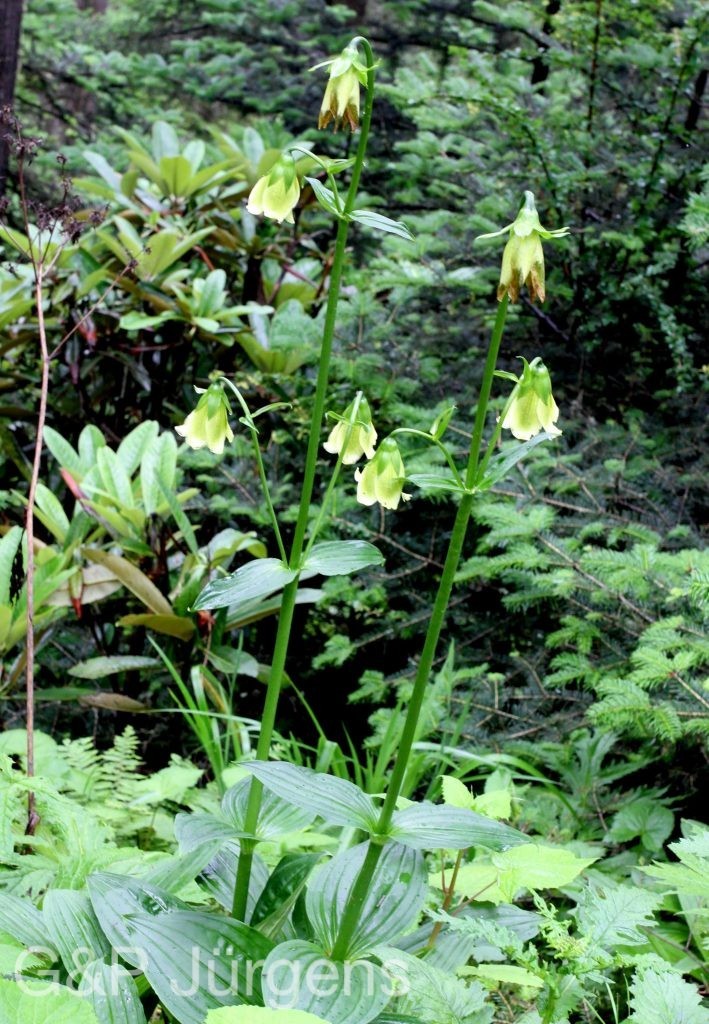
Megacodon stylophorus is a stately giant gentian of the eastern Himalaya and southwestern China. GBIF records it from China, India, Bhutan, Nepal and Myanmar, with roughly 450 occurrences, the genus being a small Sino-Himalayan endemic. It grows in moist subalpine meadows, forest clearings, scrub margins and along streamsides between about 3000 and 4300 m. The plant shown was photographed on the Chele-La pass in western Bhutan at 3900 m in July, when its tall flowering stems rise above the surrounding alpine herbage at the height of the monsoon growing season.

It is one of the largest herbaceous gentians, an erect perennial reaching 1-1.5 m from a stout rhizome. The stem bears opposite, sessile, broadly ovate leaves with conspicuous arcuate parallel venation. The large, pendulous, broadly campanulate flowers are borne in the upper leaf axils; the corolla is pale greenish-yellow, intricately net-veined with darker reticulation, and 4-5 cm long. Distinctively the style is long and persistent (the epithet stylophorus, style-bearing), exserted from the corolla, and the fruit is a large septicidal capsule releasing numerous winged seeds adapted to wind dispersal.

Megacodon is a segregate from the broadly defined Gentiana, distinguished by its great stature, reticulate corolla and elongate style, and molecular studies place it among the basal lineages of tribe Gentianeae. Its showy net-veined flowers are pollinated chiefly by bumblebees foraging at high elevation. Though striking and of horticultural interest, it is not regarded as globally threatened, but its dependence on undisturbed, moist subalpine habitats makes it sensitive to overgrazing and shifting monsoon regimes.

Author: (C.B.Clarke) Harry Sm. · Sources: POWO (Kew), GBIF, Flora of China, Flora of Bhutan, Annotated Checklist of the Flowering Plants of Nepal, Gentianaceae: systematics and natural history

(Royle) N.Kilian

Bhutan2012 260
Bhutan Chele-La 3500m, September
Nepal 99 928 ergebnis
West-Nepal Roha 2700m, July

Description

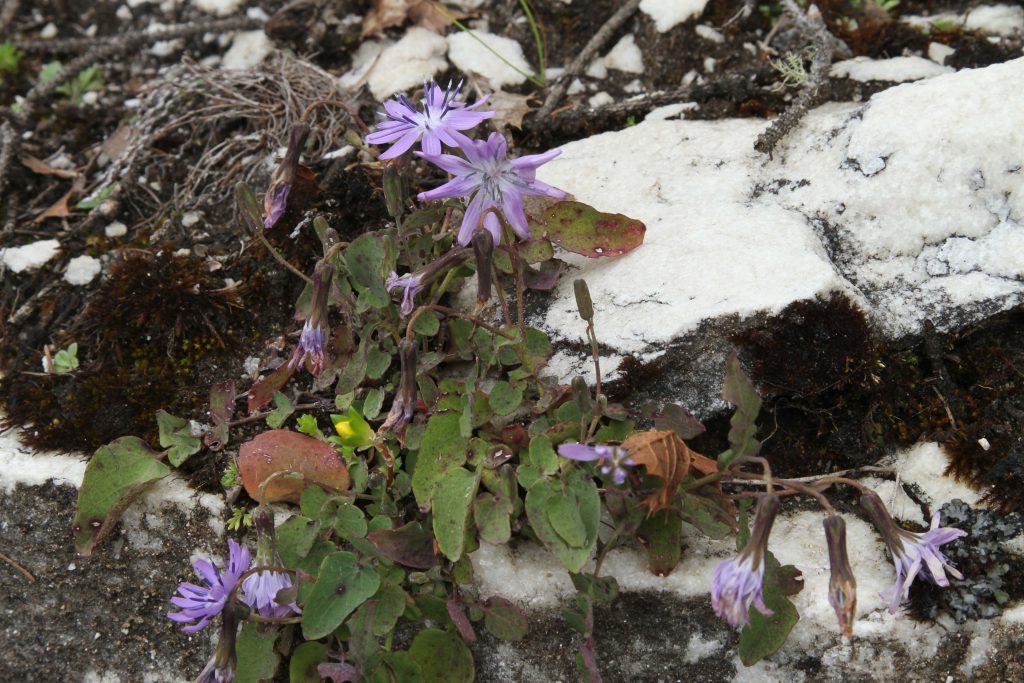
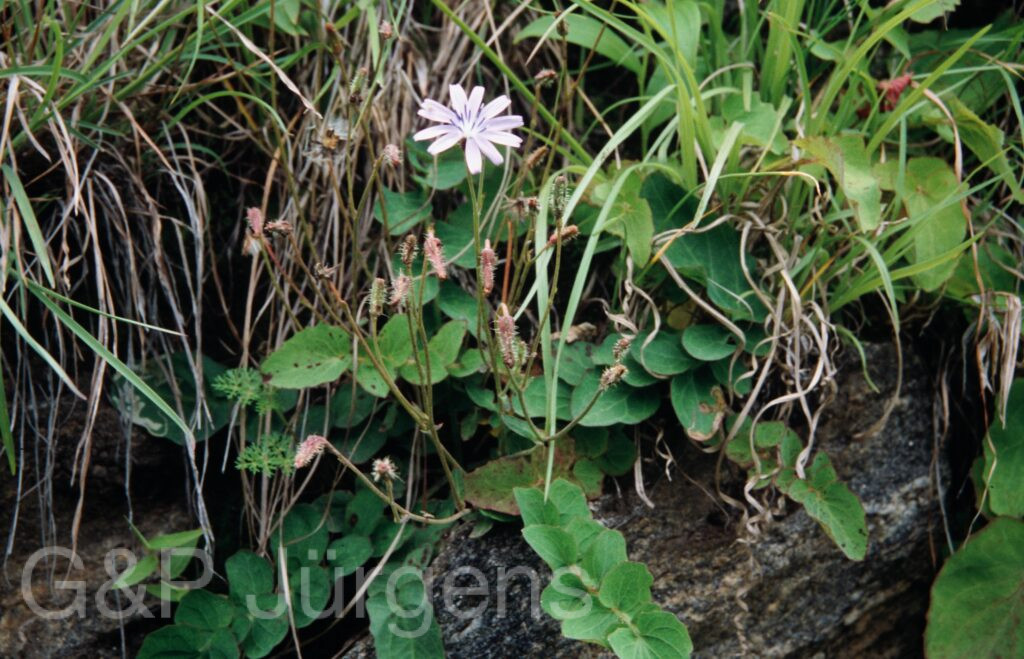
Melanoseris macrorhiza (Royle) N.Kilian is a Himalayan and Sino-Himalayan blue-flowered lettuce relative recorded from Nepal, India, Pakistan, Afghanistan, Bhutan, China and Myanmar, with around 468 georeferenced occurrences in GBIF. It grows on open alpine and subalpine slopes, in moist meadows, among rocks and along forest margins, typically between about 2700 and 4000 m. The collections from Chele-La at 3500 m in September and from Roha in West Nepal at 2700 m in July illustrate its broad Himalayan altitudinal range and its late-summer to autumn flowering.

It is a perennial herb arising, as the epithet macrorhiza indicates, from a stout, thickened taproot or rootstock, with milky latex characteristic of the tribe Cichorieae. The stems are erect and leafy below, becoming branched in the inflorescence. The leaves are lyrate-pinnatifid to runcinate, the basal ones petiolate and the cauline ones often clasping with auriculate bases. The capitula are wholly ligulate, with blue to violet-blue strap-shaped florets and a cylindric involucre of imbricate phyllaries. The fruit is a flattened, ribbed cypsela narrowed toward the apex and bearing a pappus of white, soft bristles.

The species has a complex nomenclatural history, having been placed at various times in Lactuca, Cicerbita and Cephalorrhynchus before transfer to Melanoseris, a predominantly Asian genus segregated within the lettuce alliance on the basis of cypsela and pappus characters supported by molecular data. It is a widespread montane element of no particular conservation concern.

Author: (Royle) N.Kilian · Sources: POWO (Kew), GBIF, Flora of China, Flora of Pakistan, Kilian revision of Cichorieae (Melanoseris)