Author

G & P Jürgens

Prain

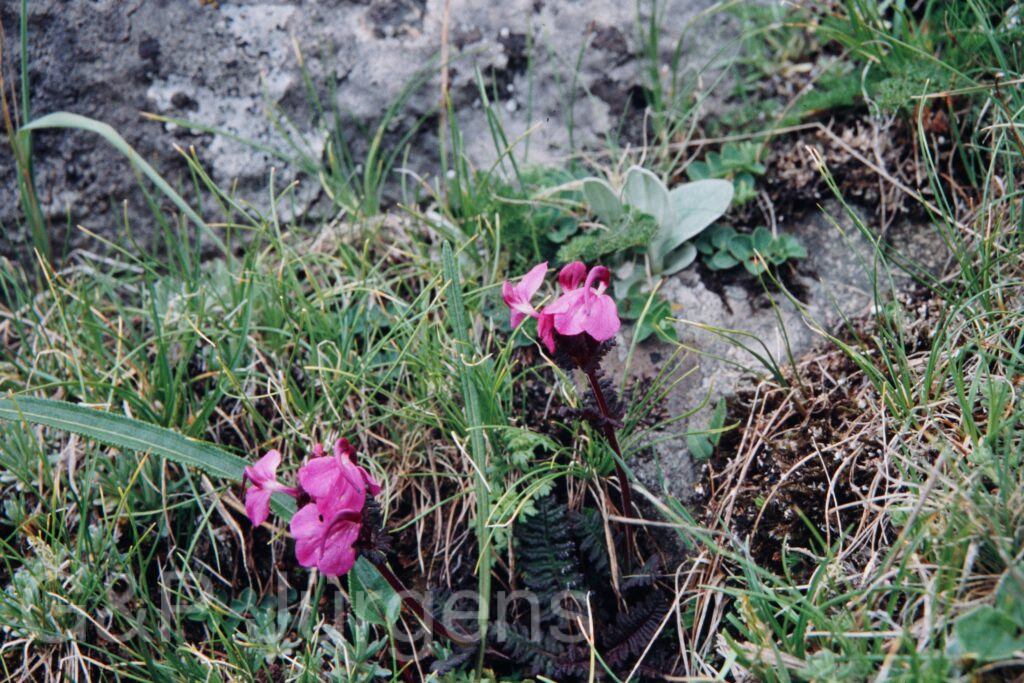
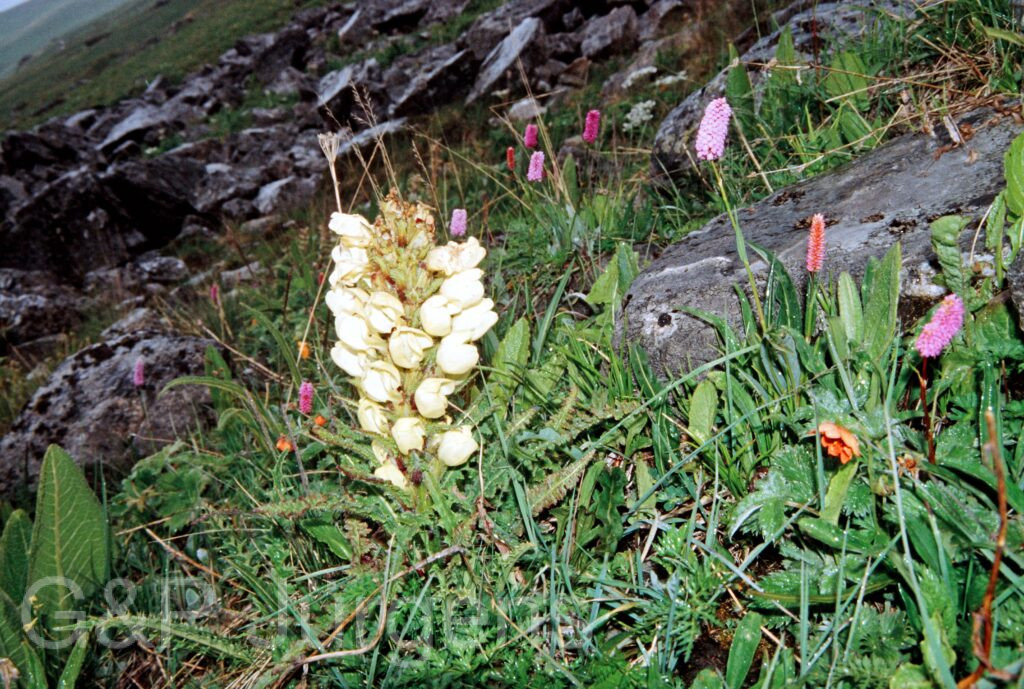
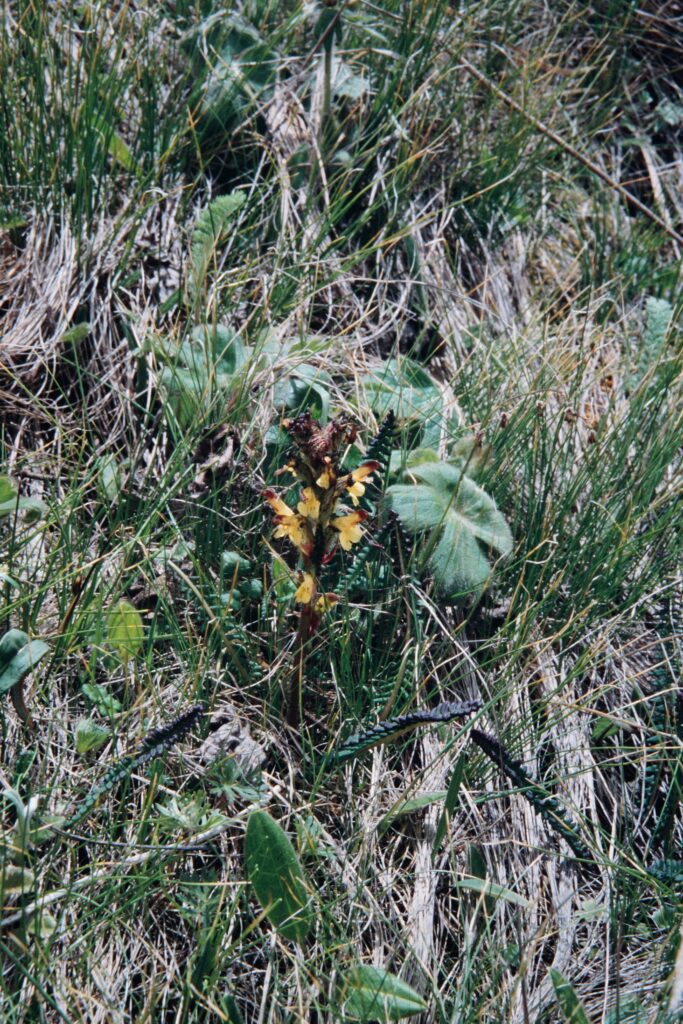
Nepal 99 125 ergebnis
Nepal Bhulbhule 3400m, June
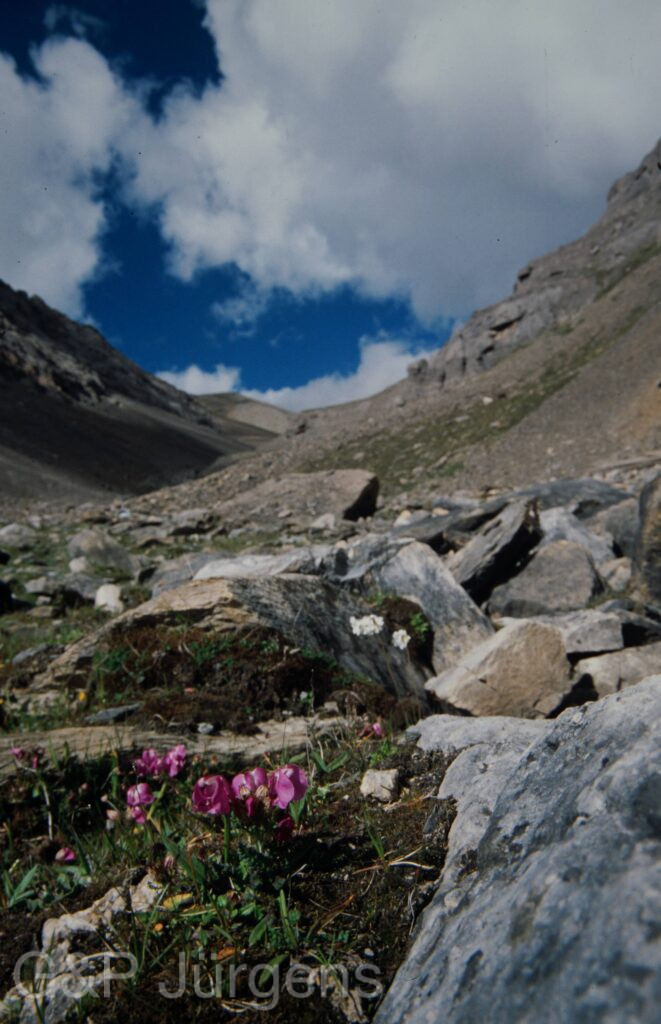
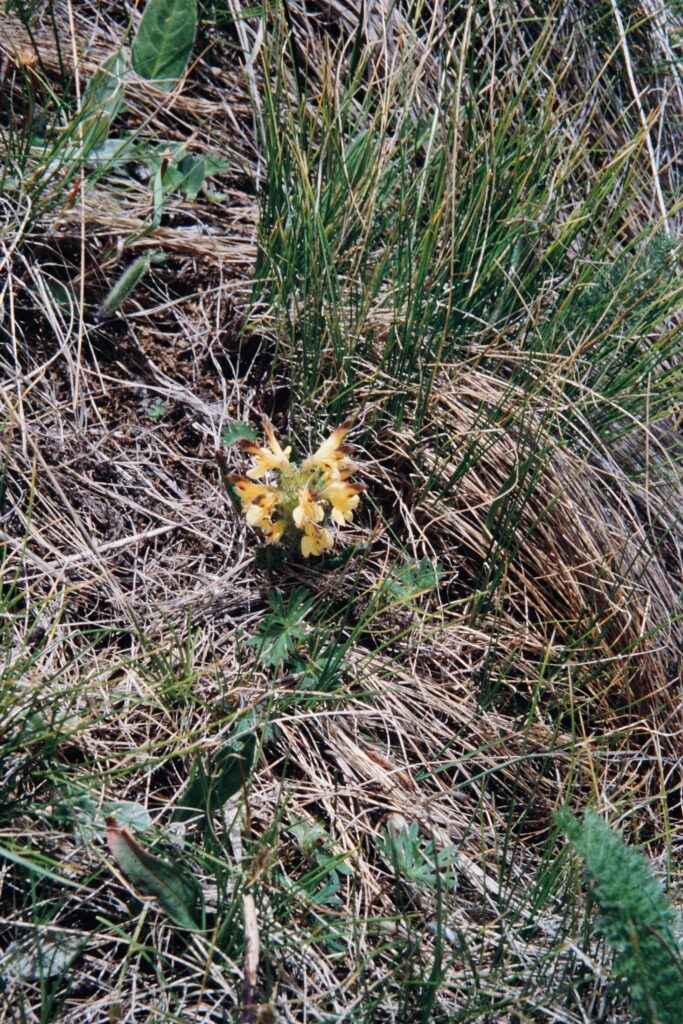
Nepal 99 126 ergebnis
Nepal Bhulbhule 3400m, June

Description

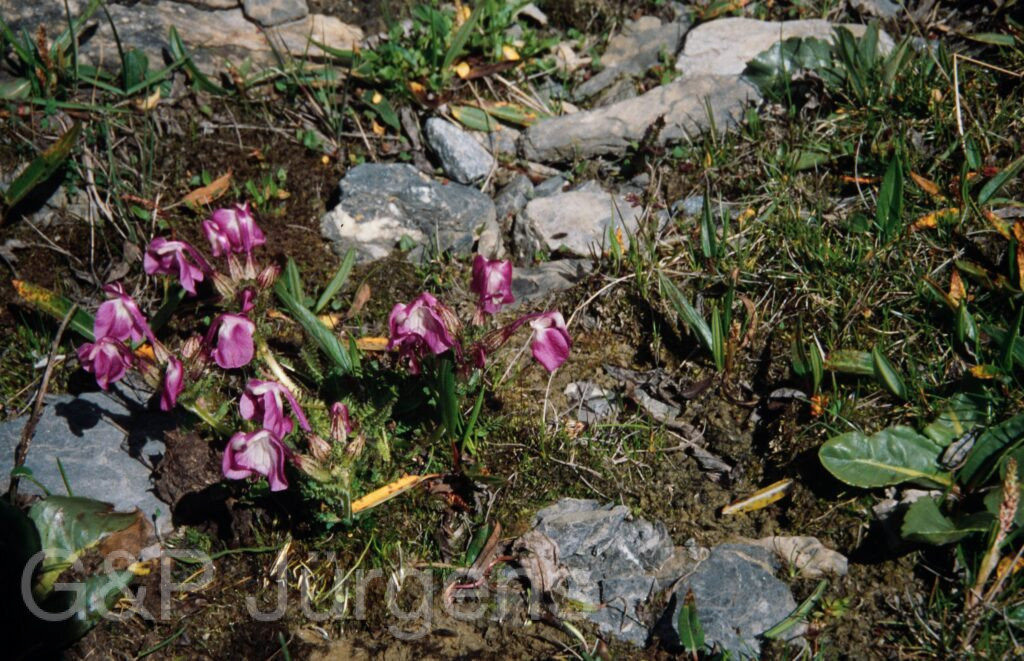
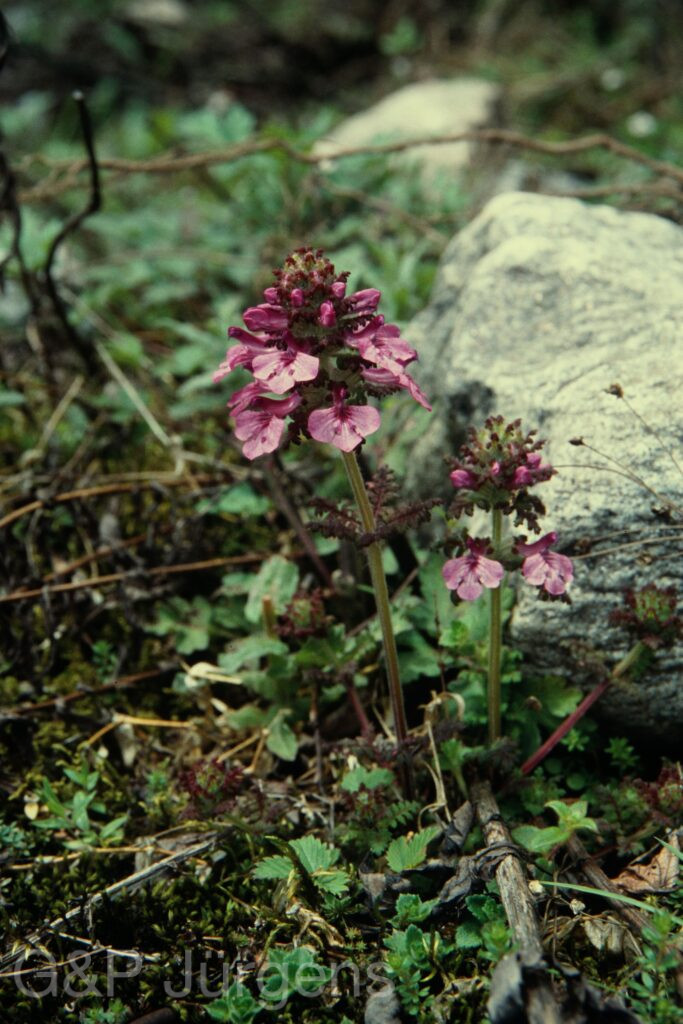
Pedicularis oederi var. heteroglossa is a hemiparasitic perennial herb of the family Orobanchaceae, belonging to one of the largest and most diversified genera of the alpine flora of the Sino-Himalayan region. The variety is distributed across the high mountains of central and eastern Asia, with GBIF records concentrated in China, Nepal, India and Bhutan and extending to Japan; this circum-Himalayan to East Asian range reflects the wide ecological amplitude of the typical species. It is a plant of open alpine meadows, moist grassy slopes, screes and the margins of snow-fed flushes, generally between 3,000 and 4,500 m. The collection illustrated here from Bhulbhule in Nepal at about 3,400 m in June represents a characteristic subalpine to alpine habitat where the plant flowers as the snow recedes.

It forms a low, tufted rosette herb arising from a short rootstock, the stems usually solitary and rarely exceeding 15–25 cm. The leaves are mostly basal, oblong-lanceolate in outline and deeply pinnatisect, the segments themselves toothed or pinnatifid, giving a finely divided, fern-like appearance. The inflorescence is a dense, terminal spike of zygomorphic flowers subtended by leafy bracts. The corolla is bilabiate and typically yellow, the galea (upper lip) helmet-shaped and often marked with red or purple toward the apex, the lower lip three-lobed; the diagnostic feature of var. heteroglossa lies in the form and coloration of the galea and beak. The fruit is a flattened, ovoid capsule containing several seeds.

As a root hemiparasite, the species draws water and nutrients from neighbouring graminoids and forbs via haustoria, while retaining functional chlorophyll. Pedicularis is taxonomically notoriously complex, with the P. oederi aggregate showing strong infraspecific variation that has generated numerous varieties such as this one. The genus is also of ecological interest for its specialised pollination by long-tongued bumblebees. Though not currently considered threatened, high-altitude Pedicularis populations are sensitive to grazing pressure and climate-driven shifts in the alpine snowline.

Author: Prain · Sources: POWO (Kew), GBIF, Flora of China Vol. 18, Flora of Nepal, Flora of Bhutan Vol. 2, Yamazaki: Taxonomic Revision of Pedicularis
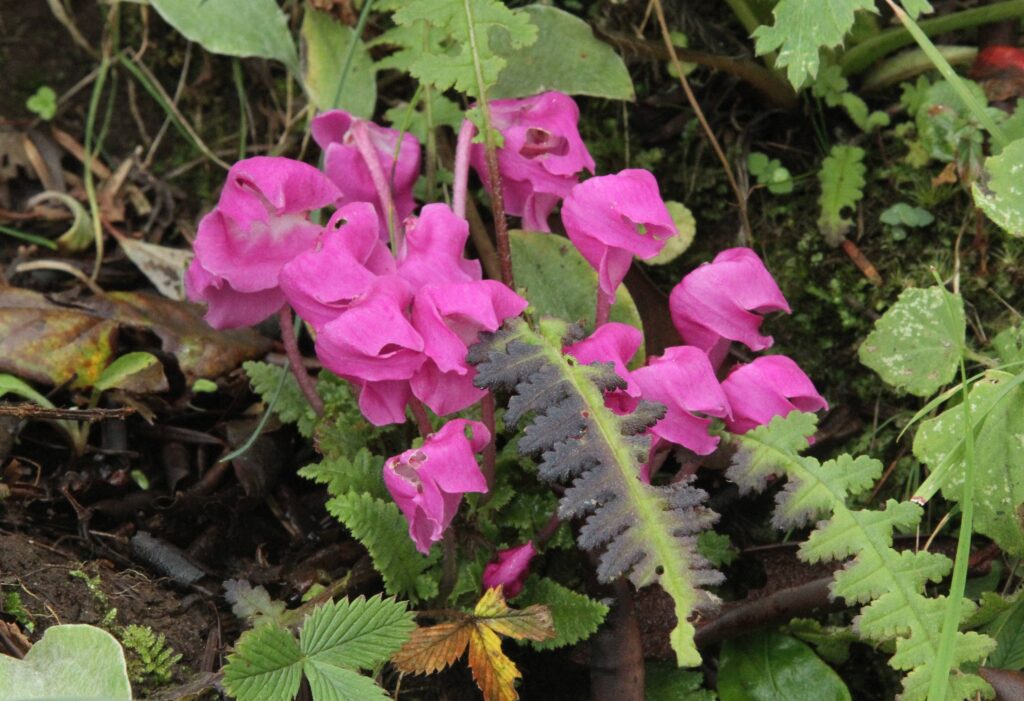
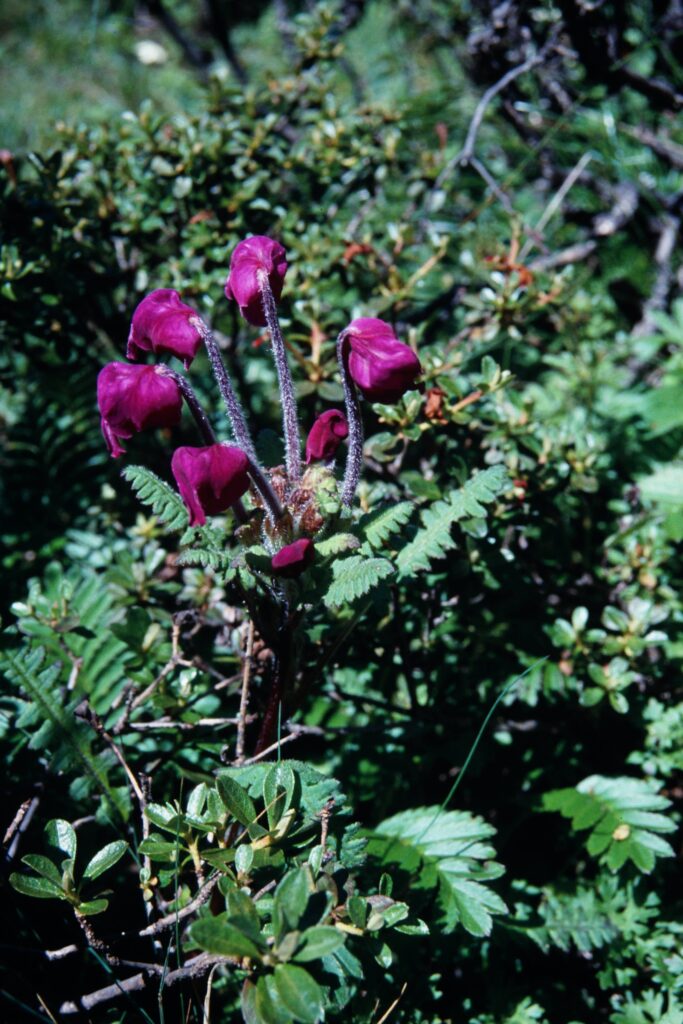
Prain

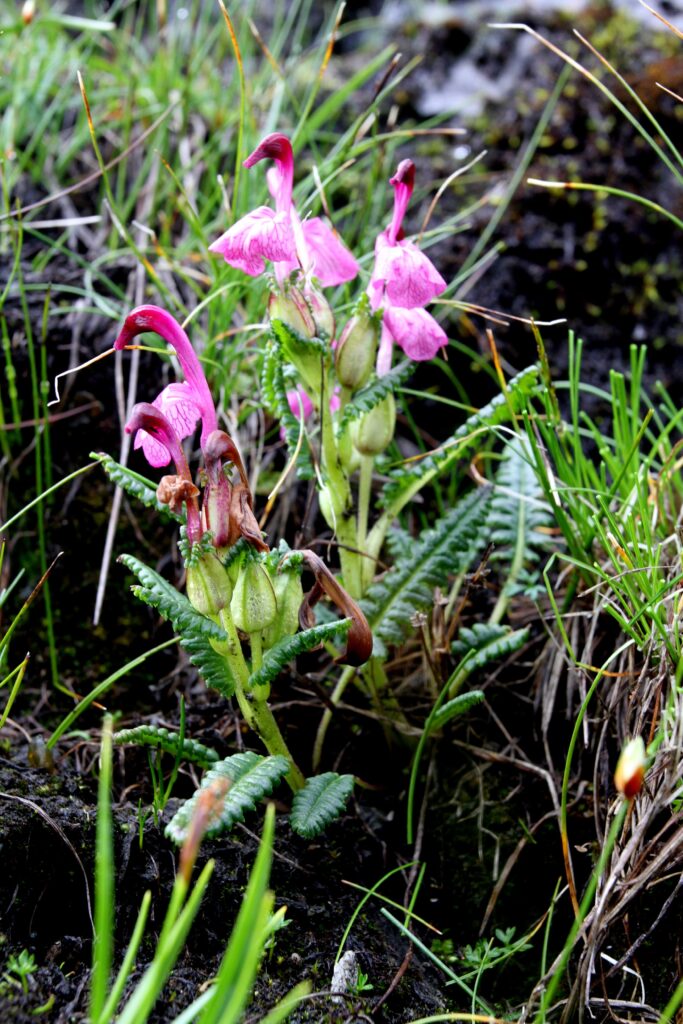
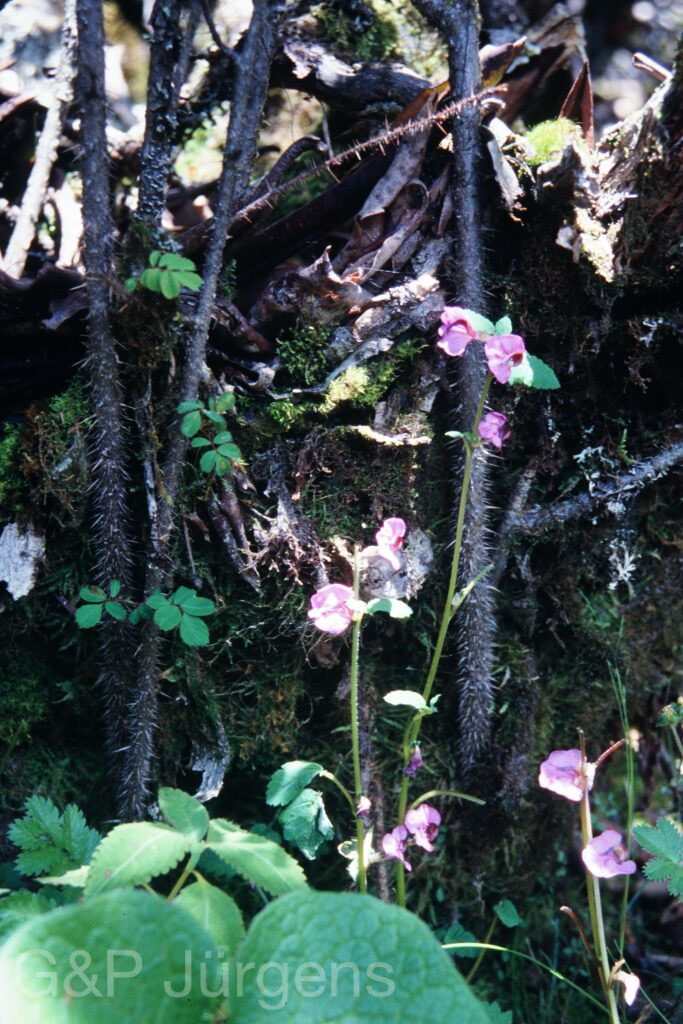
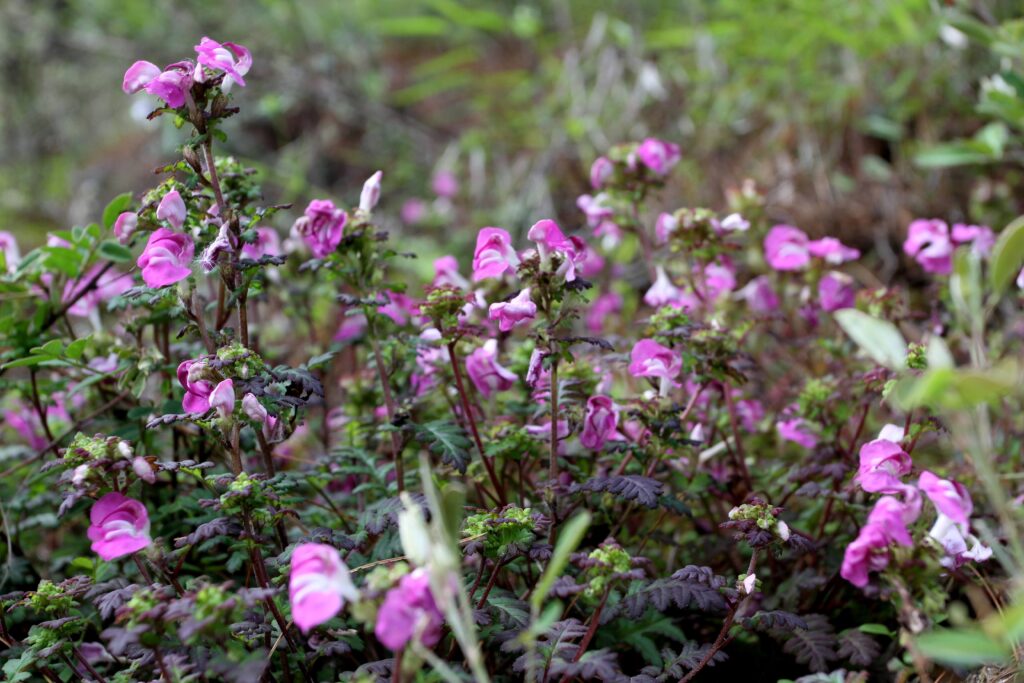
Sikkim2003 205 P285
Sikkim Dzongri 3900m, August
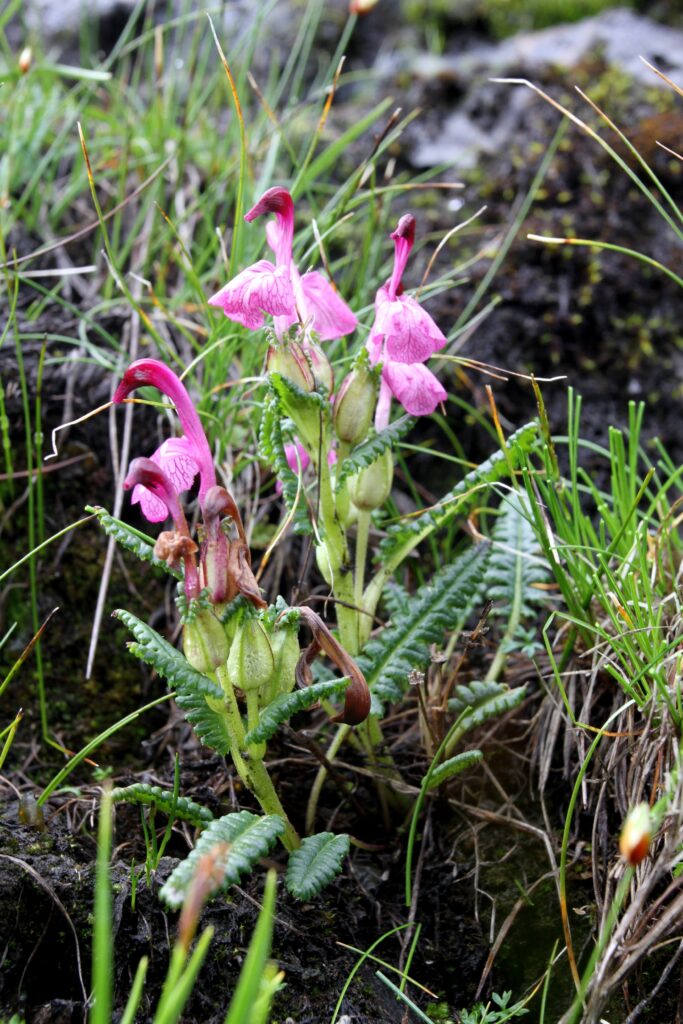
BhutanPG2011 719 ergebnis
Bhutan Timphu 2490m, July

Description

Pedicularis pantlingii is an alpine hemiparasitic herb of the eastern Himalaya, distributed across India (notably Sikkim), China, Bhutan, Myanmar and Nepal, with the Austrian (AT) record almost certainly representing cultivated or herbarium-derived material rather than a natural occurrence. The roughly 114 georeferenced collections concentrate along the high mountain arc from Sikkim and Bhutan into adjacent south-eastern Tibet. It favours moist alpine meadows, open grassy slopes, streamsides and the margins of rhododendron and dwarf-shrub thickets. As the photographed material from Sikkim's Dzongri at 3900 m in August and from Bhutan near Thimphu at 2490 m in July shows, the species ranges from upper temperate to alpine elevations, flowering through the summer monsoon when these pastures are at their most lush.

Like most members of the genus, it is a semi-parasitic perennial drawing water and nutrients from neighbouring roots via haustoria. The stems arise from a short rootstock and bear leaves that are oblong to lanceolate in outline and pinnatisect, the segments toothed and often crisped at the margin. The flowers are borne in a terminal spike or raceme, each subtended by a leafy bract, with a tubular, toothed calyx. The corolla is strongly two-lipped and characteristically galeate: the hooded upper lip (galea) is frequently prolonged into a slender beak enclosing the four didynamous stamens, while the spreading three-lobed lower lip forms a landing platform for bumblebee pollinators. The fruit is an obliquely ovoid, laterally compressed capsule containing several seeds.

The genus Pedicularis (lousewort) is exceptionally diverse in the Sino-Himalayan region, which forms its global centre of speciation, and the elaborate corolla beaks reflect tight coevolution with long-tongued bumblebees. Commemorating the collector Robert Pantling of the Sikkim botanical surveys, P. pantlingii is a regional endemic of restricted range. Although not formally assessed as threatened, its dependence on intact alpine pasture makes it sensitive to overgrazing and climate-driven upslope shifts of montane vegetation.

Author: Prain · Sources: POWO (Kew), GBIF, Flora of China Vol. 18, Flora of Bhutan Vol. 2, Flora of Nepal, Tsoong's Monograph of the Genus Pedicularis

(Prain ex Maxim.) Pennell

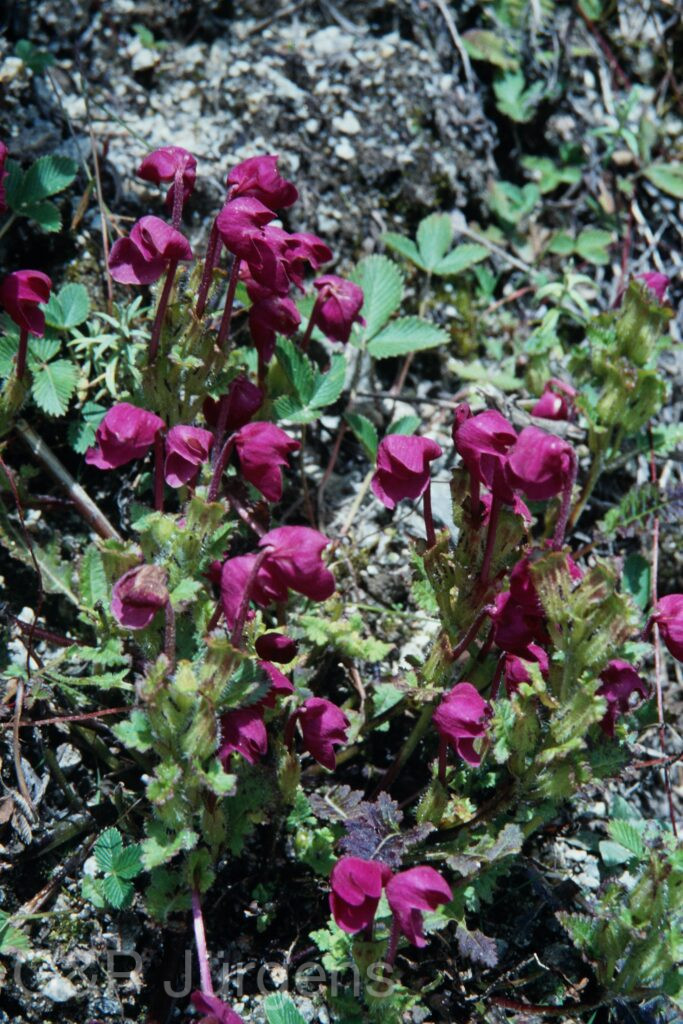
Bhutan2012 290 ergebnis
Bhutan Tsotchentchen 3980m, June
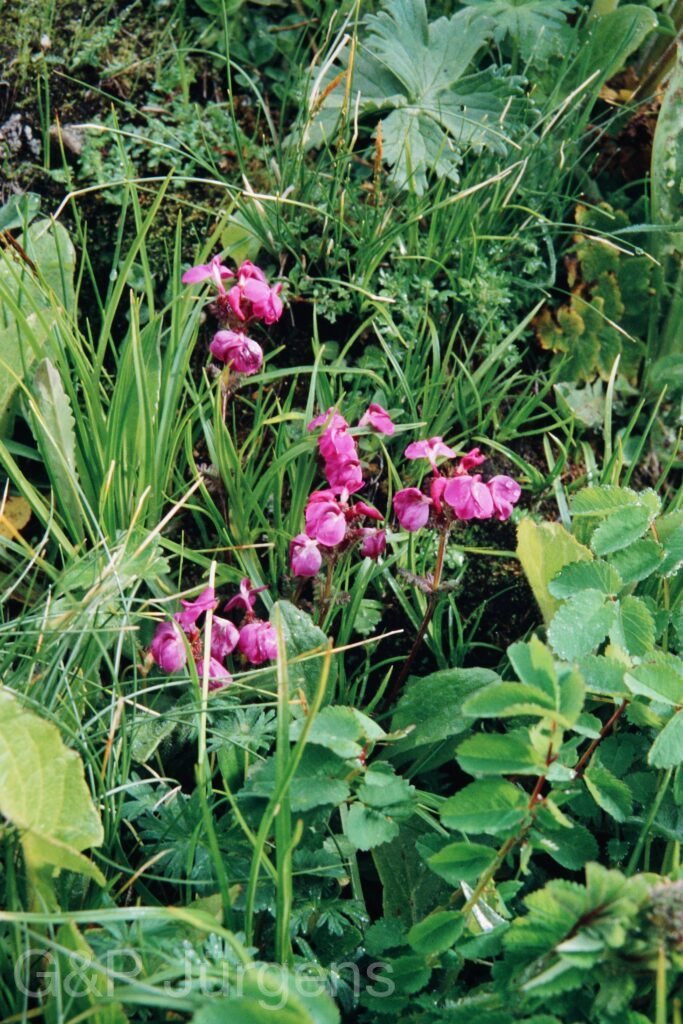
Sikkim2003 173 P234 ergebnis
Sikkim Dzongri, 3900m August
Sikkim2003 375 G526 ergebnis
Sikkim Dzongri, 3900m August

Description

Pedicularis pauciflora is a hemiparasitic herb of the eastern Himalaya, distributed across Nepal, NE India (Sikkim, West Bengal) and Bhutan, with GBIF documenting some 43 georeferenced records concentrated in this narrow arc. It is a plant of the alpine and subalpine zone, occupying moist meadows, open turf and rocky slopes between roughly 3,500 and 4,200 m. The photographed populations at Tsotchentchen in Bhutan (3,980 m, flowering in June) and at Dzongri in Sikkim (3,900 m, August) typify its habitat in cool, well-drained alpine grassland kept moist by monsoon precipitation and snowmelt.

It is a perennial forming a slender, often few-stemmed tuft from a fibrous rootstock. The leaves are pinnatisect, the lobes oblong and crenate-dentate, glabrous to sparsely hairy and arranged in a basal rosette with a few reduced cauline leaves. As the epithet pauciflora indicates, the inflorescence is few-flowered, the flowers borne in the upper leaf axils. The zygomorphic corolla is bilabiate with a galeate upper lip prolonged into a slender beak and a spreading three-lobed lower lip, in shades of pink to purple-rose. The fruit is an obliquely ovoid capsule enclosing several seeds.

Like all Pedicularis, the genus exemplifies facultative root hemiparasitism, drawing water and nutrients from host roots via haustoria while retaining functional photosynthesis. The galeate, beaked corolla is an adaptation to pollination by long-tongued bumblebees prevalent at high elevation. Pedicularis is a notoriously large and taxonomically complex genus in the Himalaya, and P. pauciflora is best distinguished from allied species by its reduced flower number and beak morphology. Its restricted alpine range makes it potentially sensitive to grazing pressure and climatic shifts in the high Himalaya.

Author: (Prain ex Maxim.) Pennell · Sources: POWO (Kew), Flora of Bhutan Vol. 2, GBIF, Flora of China Vol. 18, Yamazaki: Revision of the Asiatic Pedicularis (Scrophulariaceae)

(Prain) Pennell

Nepal 99 478 ergebnis
West-Nepal Churta-Khola 3300m, June

Description

Pedicularis pectinata subsp. palans is a hemiparasitic herb of the western and central Himalaya, recorded from India, Pakistan and Nepal, where GBIF documents a small number of occurrences (11). It inhabits open alpine and subalpine slopes, grazed meadows and stony pastures, typically between roughly 3000 and 4000 m. The photographed plant comes from the Churta Khola in West Nepal at about 3300 m, flowering in June, a setting of damp, herb-rich turf where snowmelt persists into early summer.

Like other members of the genus, it is a perennial forming a basal rosette and erect, leafy flowering stems. The leaves are pinnatisect with the pinnae themselves toothed (pectinate), giving the foliage a fern-like aspect. The flowers are borne in a dense terminal spike; each has a tubular, two-lipped corolla, the galea (upper lip) often beaked or prolonged and the lower lip three-lobed and spreading, in shades of pink to rose-purple. The fruit is a flattened, oblique capsule enclosing several seeds.

The name is treated by GBIF as a synonym, with Pedicularis pectinata palans regarded as the accepted taxon. Pedicularis (Orobanchaceae, here labelled Orchideaceae in the source) is a notoriously variable, root-hemiparasitic genus, drawing water and nutrients from host roots while retaining green photosynthetic tissue. Its Himalayan species are pollinated chiefly by bumblebees, the corolla architecture closely matched to bee morphology. Such infraspecific taxa are valued markers of alpine biogeography and warrant continued field study.

Author: (Prain) Pennell · Sources: POWO (Kew), GBIF, Flora of Nepal, Flora of Pakistan, Pennell's monograph of the Scrophulariaceae of the Himalaya

Wall. ex Benth.

Nepal 99 514 ergebnis
West-Nepal Churta-Khola 3900m, June
Nepal 99 289 ergebnis
West-Nepal Kalmura 4200m, June

Description

Pedicularis porrecta is a hemiparasitic perennial herb of the high Himalaya, recorded by GBIF chiefly from Nepal and northern India, with some 55 georeferenced occurrences across the central and western chain. It inhabits open alpine and subalpine turf, moist grassy slopes, and the margins of pastures and snow-melt flushes, where its roots form haustorial connections to neighbouring graminoids and herbs. The photographed populations grow in West Nepal at Churta-Khola at about 3900 m and at Kalmura at roughly 4200 m, both flowering in June as the monsoon advances; such elevations between about 3500 and 4500 m typify the species across its range.

The plant produces erect, sparingly branched stems arising from a short caudex, clad in pinnatisect to pinnatipartite leaves whose oblong segments bear crenate-dentate, often cartilaginous-toothed margins. The flowers are borne in a terminal, somewhat lax spike or interrupted raceme, each subtended by a leafy bract. The calyx is tubular and unequally toothed, while the bilabiate corolla shows the galeate upper lip characteristic of the genus, here produced into a forward-pointing or short-beaked galea (the epithet porrecta meaning extended forward), the lower lip three-lobed and spreading. Fruit is an oblique, laterally compressed capsule enclosing flattened seeds.

Pedicularis is among the most species-rich genera of the Himalaya, with intense radiation linked to bumblebee pollination and corolla-beak diversity that partitions pollinators among sympatric taxa. As an obligate hemiparasite, P. porrecta influences alpine community structure, often acting as a keystone that modulates the vigour of dominant grasses. No formal conservation assessment exists; its alpine habitats are nonetheless sensitive to warming, shifting snow regimes, and grazing pressure across the Nepalese and Indian Himalaya.

Author: Wall. ex Benth. · Sources: POWO (Kew), GBIF, Flora of Nepal, Flora of China, Pedicularis monograph (Tsoong / Prain)

(Decne.) Pennell

Nepal 99 796 ergebnis
West-Nepal Baga-La-Phedi 4500m, July
Nepal 99 797 ergebnis
West-Nepal Baga-La-Phedi 4500m, July

Description

Pedicularis rhinanthoides subsp. labellata is a high-alpine lousewort of the Himalaya and the Tibetan plateau, the GBIF records (treated here as a synonym of the accepted Pedicularis rhinanthoides labellata) falling within China and India, with the species at large extending through Nepal and adjacent ranges; the small number of georeferenced occurrences reflects its restriction to remote high elevations. It grows in wet alpine meadows, marshy turf, seepage slopes and streamside flushes, characteristically between about 4000 and 5000 m. The photographed plant from Baga-La-Phedi in West Nepal at 4500 m in July is typical of its mid-summer flowering in damp, high-alpine pasture near the snowline.

It is a low, hemiparasitic perennial herb rooting into the roots of neighbouring grasses and sedges, with one to several ascending stems from a short rootstock. The leaves are mostly basal and pinnatisect, the segments narrow, toothed and crisped. The flowers are borne in a short terminal raceme; the rose-pink to purplish corolla is strongly two-lipped, with a long-tubed galea drawn out into a slender, often beaked upper lip and a broad, conspicuous lower lip, the well-developed lip being the basis of the epithet labellata. The fruit is a flattened, obliquely ovoid capsule containing several seeds.

The vast genus Pedicularis reaches its greatest diversity in the Sino-Himalayan alpine zone, where galea form is closely tied to specialised bumblebee pollination. This taxon, a regional subspecies of the widespread P. rhinanthoides, exemplifies the fine-scale infraspecific variation pervading the genus. As a habitat-restricted hemiparasite of high wet meadows it is potentially sensitive to grazing change and warming, though it has not been formally assessed.

Author: (Decne.) Pennell · Sources: POWO (Kew), GBIF, Flora of China, Annotated Checklist of the Flowering Plants of Nepal, Flora of British India, Pedicularis of the Sino-Himalaya (Tsoong/Yang revision)

(Prain) T.Yamaz.

Sikkim2004 427 G737
Sikkim/India Yumtahng 3500m May

Description

Pedicularis roylei var. speciosa is a hemiparasitic perennial of the eastern Himalaya, distributed across the high-montane and subalpine belt of southern China (Xizang and adjacent Yunnan) and Nepal, with populations extending into Sikkim and the Chumbi region. The variety is documented from a modest number of records (GBIF lists around 12 occurrences from CN and NP), reflecting both its restricted range and the limited collecting in its remote habitats. It occupies open alpine meadows, moist grassy slopes, the margins of Rhododendron and Abies forest, and streamside flushes between roughly 3000 and 4300 m. The photographed plant from the Yumthang valley in northern Sikkim at about 3500 m, flowering in May, is typical of these subalpine pastures where snowmelt sustains a brief but vigorous flush of growth. As a root-hemiparasite, it draws water and minerals from neighbouring grasses and forbs via haustoria while retaining functional green foliage.

The plant forms a low, clumped herb arising from a stout caudex, with erect or ascending stems often clothed in soft hairs. The leaves are mostly basal and pinnatisect, with oblong-lanceolate segments that are themselves toothed or crenate, giving the foliage a fern-like texture. The inflorescence is a dense spike or capitate cluster of conspicuous flowers; var. speciosa is distinguished by its notably large, showy corollas. The bilabiate corolla is rose-pink to purplish, the galea (upper lip) prolonged into a slender, often beak-like apex that twists or curves, while the broad three-lobed lower lip forms a landing platform. The calyx is tubular and toothed, and the four didynamous stamens lie concealed within the galea. The fruit is an obliquely ovoid capsule containing several seeds.

Within the large and taxonomically complex genus Pedicularis, which reaches its global diversity peak in the Sino-Himalayan region, this taxon belongs to a group whose beaked galeas reflect specialised pollination by long-tongued bumblebees. The variety, based on the basionym described by Prain and later treated by T. Yamazaki, is sometimes folded into a broadly circumscribed P. roylei; GBIF accepts it at varietal rank. Its elaborate floral architecture exemplifies the radiation of corolla forms that has accompanied the genus's hemiparasitic lifestyle. Though not currently regarded as threatened, alpine Pedicularis are sensitive to grazing pressure and climate-driven shifts in the snowmelt regime, making long-term monitoring of Himalayan populations desirable.

Author: (Prain) T.Yamaz. · Sources: POWO (Kew), GBIF, Flora of China Vol. 18, Flora of Bhutan Vol. 2 Part 3, Flora of Nepal, A Revision of the Genus Pedicularis (Pennell; Yamazaki, Pedicularis of Eastern Asia)

Prain ex Maxim.

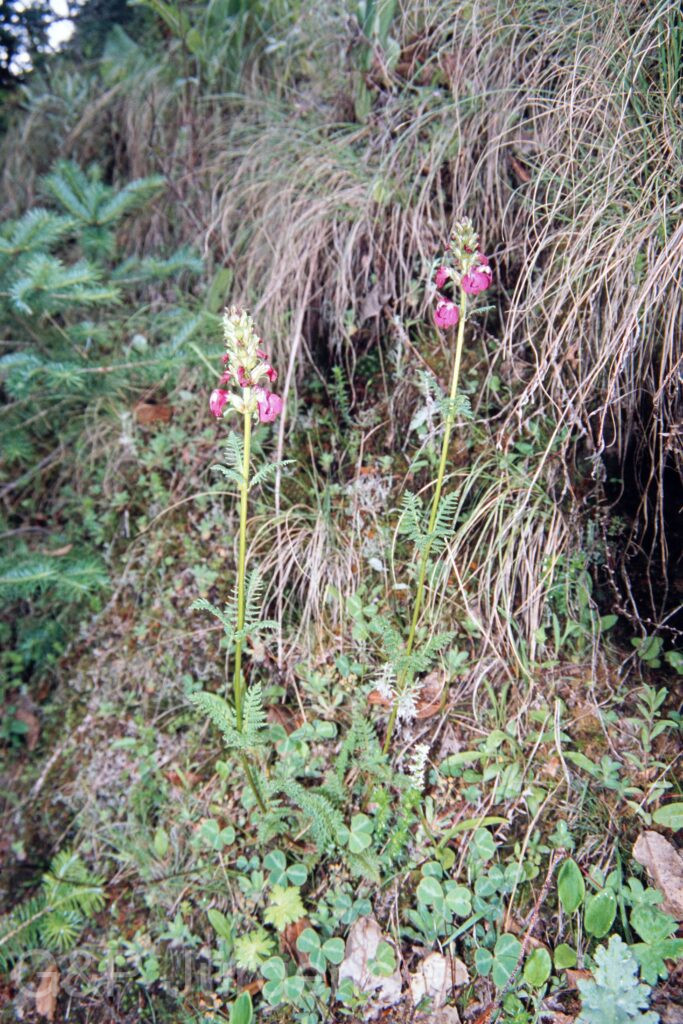
Nepal 99 332 ergebnis
West-Nepal Kalmura 4000m, June

Description

Pedicularis scullyana is an alpine hemiparasitic herb endemic to the Himalaya and adjacent Tibetan margins, recorded from Nepal, India, Bhutan and China across some 217 GBIF occurrences. The illustrated plant was photographed at Kalmura in West Nepal at about 4000 m in June. It inhabits open alpine meadows, moist grassy slopes and the margins of scrub between roughly 3500 and 4500 m, growing in the short turf where, like all lousewort, it draws water and nutrients from the roots of neighbouring grasses and herbs through haustorial connections.

The plant is a perennial herb with a fascicled rootstock and erect or ascending stems. The leaves are alternate or sub-opposite, pinnatisect into closely toothed segments, giving the fern-like foliage typical of the genus. The flowers are borne in a terminal spike or raceme; each has a tubular calyx and a strongly two-lipped corolla, the upper lip (galea) hooded and often beaked to enclose the anthers, the lower lip three-lobed and spreading. Pollination is by long-tongued bumblebees, and the fruit is a flattened capsule releasing several seeds.

Pedicularis is one of the largest genera of the Himalayan alpine flora and a notable example of an explosive radiation, with the diversity of galea and beak forms reflecting specialisation for bumblebee pollination. As facultative root hemiparasites, the species influence community composition by suppressing dominant graminoids. P. scullyana is a regional endemic of restricted range; while not formally assessed as threatened, such narrowly distributed alpines are sensitive to grazing intensity and climate-driven shifts in the alpine zone.

Author: Prain ex Maxim. · Sources: POWO (Kew), GBIF, Flora of Nepal, Flora of China, Flora of Bhutan, Yamazaki – Taxonomic Revision of Pedicularis (Himalaya)
T.Yamaz.

BhutanPG2011 657 ergebnis
Bhutan Thitha-Tso, 4360m, July
BhutanPG2011 658 ergebnis
Bhutan Thitha-Tso, 4360m, July

Description

Pedicularis trichodonta is a perennial hemiparasitic herb native to the eastern Himalayas, recorded from Nepal, northeast India (Sikkim), and Bhutan. The species inhabits alpine meadows, moist turf, and Rhododendron scrub margins at elevations of 3,800–4,800 m, attaching to the roots of neighbouring grasses and other herbaceous hosts for supplementary water and nutrient uptake. It has been documented from the Thitha-Tso area in Bhutan at 4,360 m, flowering in July during the monsoon, when alpine meadows in the eastern Himalayas reach their peak floral diversity.
The plant produces erect to ascending stems 10–25 cm tall from a fascicle of fleshy, fusiform roots. The leaves are mostly basal and sub-opposite on the stem, oblong-lanceolate in outline, 3–7 cm long, deeply pinnatisect with numerous linear to oblong segments that are themselves dentate, the teeth bearing fine, hair-like extensions — the character from which the specific epithet trichodonta ("hair-toothed") is derived. The inflorescence is a dense, terminal, capitate to shortly spicate raceme. The calyx is tubular, membranous, with five unequal, denticulate lobes. The corolla is bilabiate, typically pink to purplish-red, 15–20 mm long; the upper lip (galea) is falcate-incurved, beakless or very shortly beaked, while the lower lip is three-lobed and spreading. The capsule is obliquely ovoid, compressed, slightly exserted from the calyx.
Pedicularis trichodonta was described by Tetsuo Yamazaki and belongs to one of the most species-rich genera of flowering plants, with over 600 species worldwide, the majority concentrated in the Sino-Himalayan region. With only about 33 occurrence records in GBIF, the species is among the less frequently collected members of the genus in the eastern Himalayas. Its hemiparasitic ecology makes it dependent on intact alpine plant communities, and disruption of host populations through overgrazing or climate-driven vegetation change could indirectly threaten its persistence. Further collections are needed to clarify its full range and population status.

Author: T.Yamaz. · Sources: POWO (Kew), GBIF, Flora of Bhutan Vol. 2, Flora of China Vol. 18, Yamazaki: Pedicularis of Nepal (1988)

(G.Forst.) Hook. & Arn.

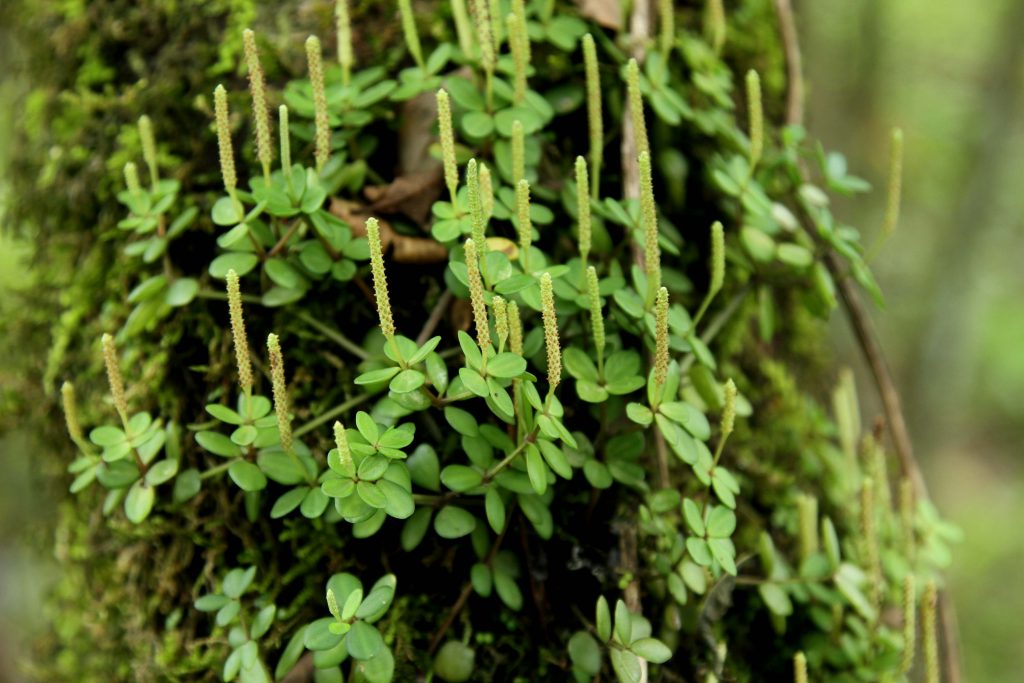
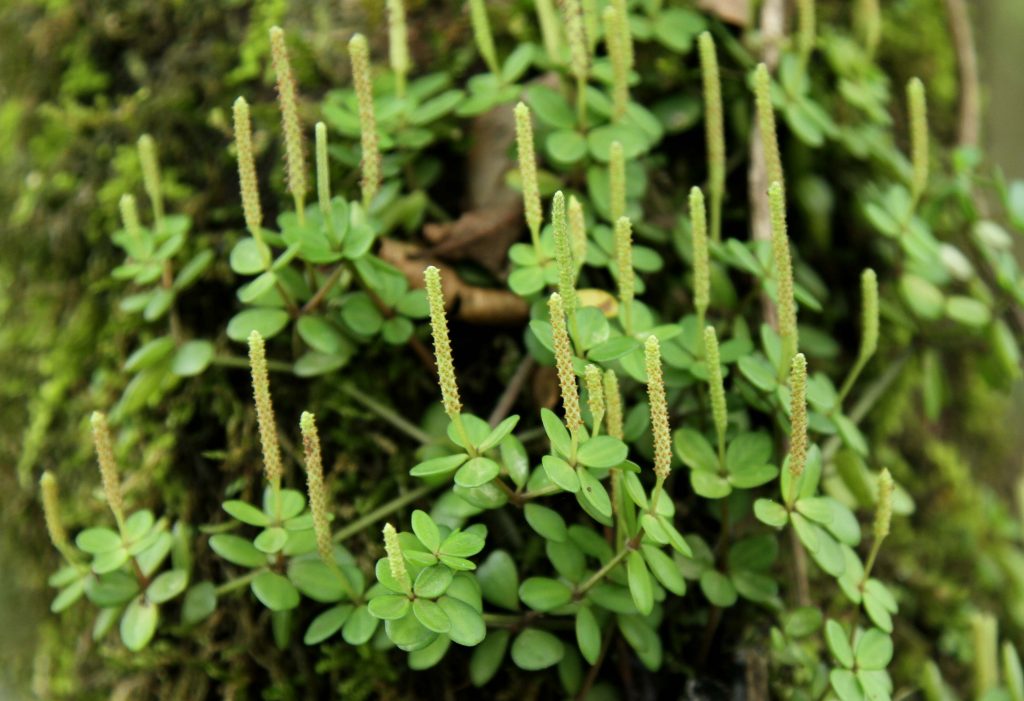
Bhutan2012 1010
Bhutan Trithangebe 1000m, October
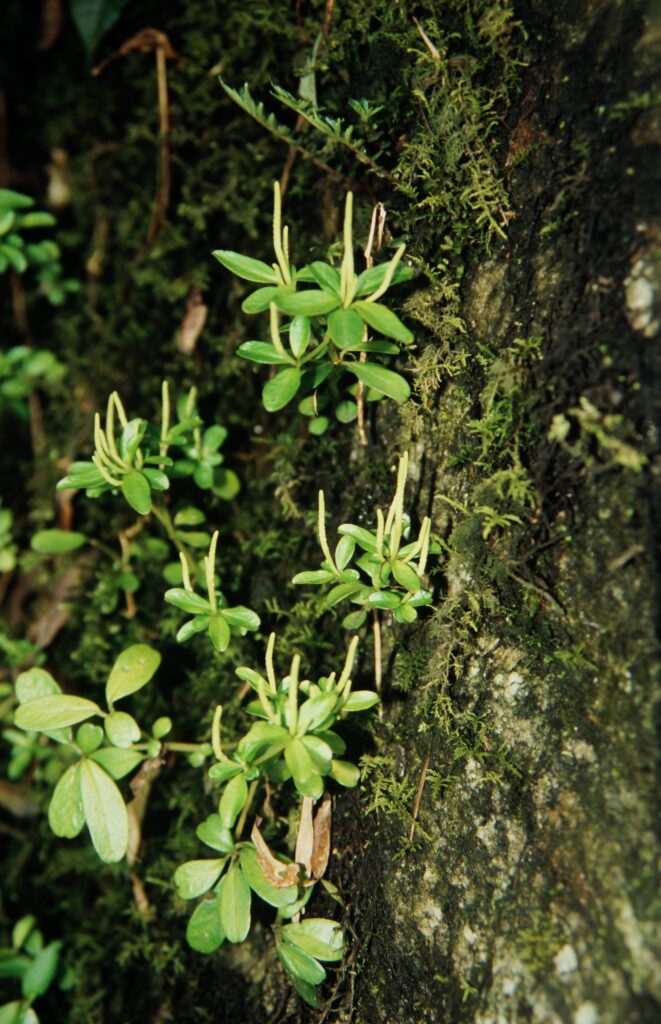
Bhutan2012 1011
Bhutan Trithangebe 1000m, October
Sikkim 2006 472 ergebnis
India West-Bengal, Ruigi-Chu 2000m, May

Description

Peperomia tetraphylla is a small succulent herb of pantropical and warm-temperate distribution. GBIF (some 13,039 occurrences) documents it from the Americas (Brazil, Mexico, the United States, the Andes), Africa and the Indian Ocean islands, Asia (China, India, Indonesia, Taiwan) and Australasia, reflecting an extraordinarily wide range. It grows as an epiphyte on mossy trunks and as a lithophyte on shaded, humid rocks in forest. The illustrated plants are from Bhutan at Trithangbi (1,000 m, October) and West Bengal at Ruigi-Chu (2,000 m, May), spanning its Himalayan altitudinal range in moist broadleaved forest.

The plant is a fleshy, glabrous to finely pubescent herb with creeping then ascending stems rooting at the nodes. The leaves are succulent, characteristically borne in whorls of three to four (whence tetraphylla), small, elliptic to obovate and shortly petiolate. The inflorescence is a slender terminal or axillary spike of minute, naked, bisexual flowers lacking a perianth, each subtended by a peltate bract; the stamens are two and the stigma single. The fruit is a tiny ovoid drupelet, often borne sessile along the rachis.

Peperomia (Piperaceae) is a large pantropical genus, and P. tetraphylla is notable as one of its most widespread species, occurring on most continents. Its small succulent leaves and CAM-like physiology suit it to the seasonally dry, epiphytic microhabitats it occupies. Of no conservation concern given its vast range, it is locally used in folk medicine and is grown as a miniature ornamental, illustrating the cosmopolitan tropical element reaching into the lower Himalaya.

Author: (G.Forst.) Hook. & Arn. · Sources: POWO (Kew), Flora of China Vol. 4, Flora of Bhutan Vol. 1, GBIF, Wanke et al.: Phylogeny of Piperaceae