Author

G & P Jürgens

Hook.f. & Thomson

Bhutan2014 918
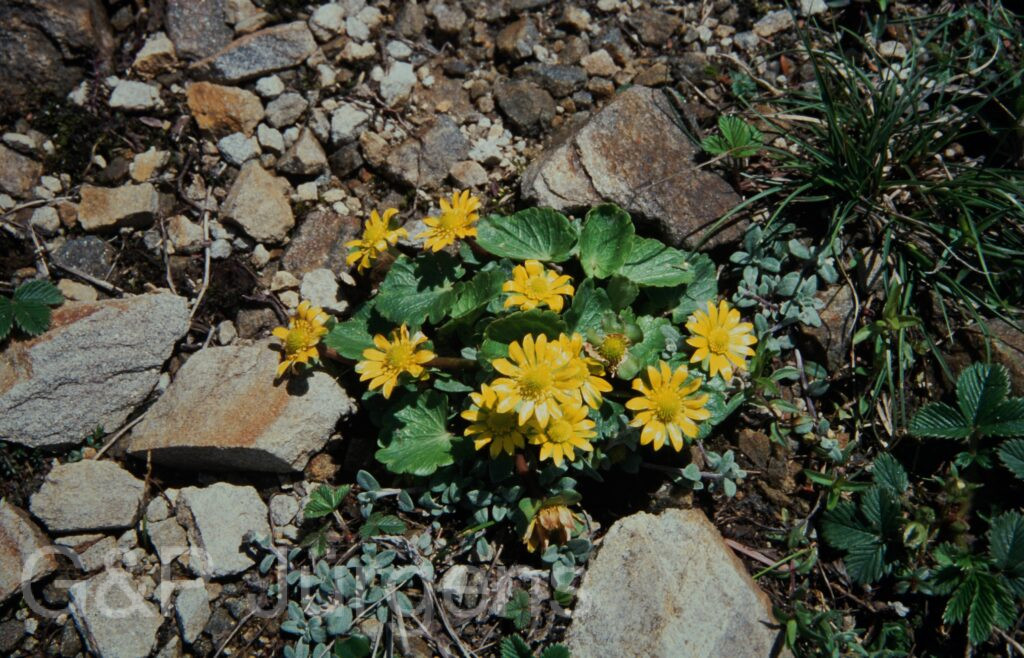
Bhutan Chele-La 4000m, May
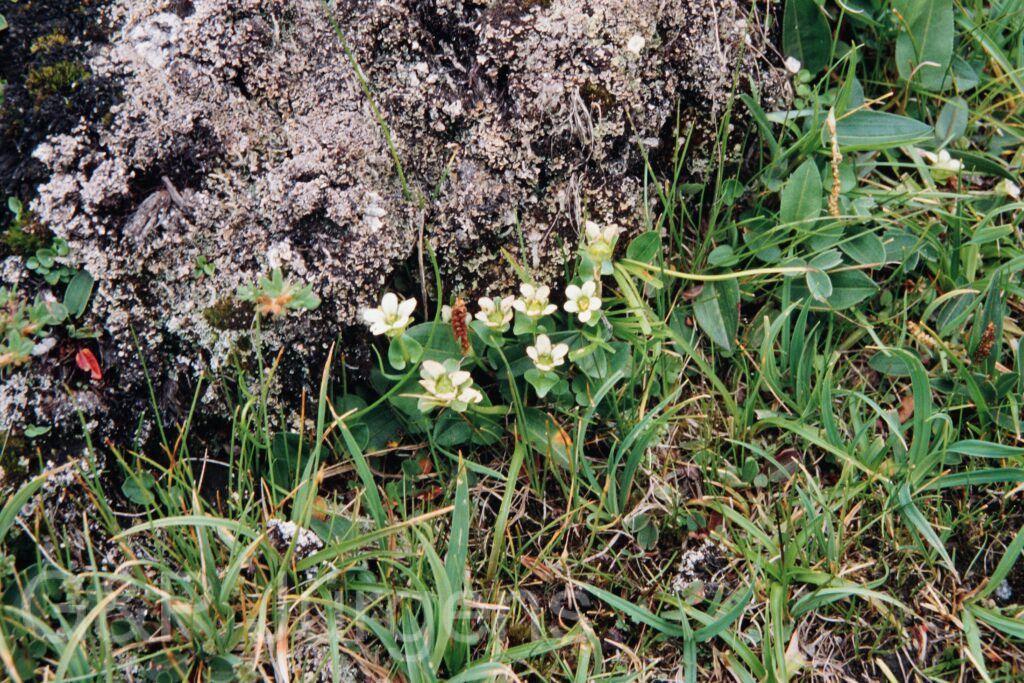
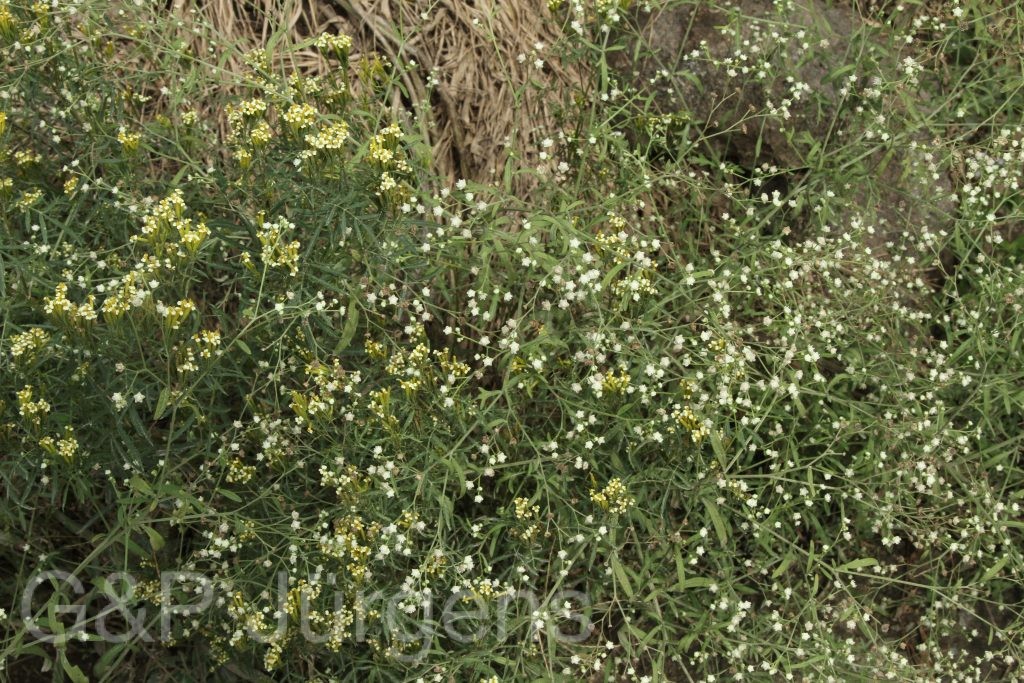
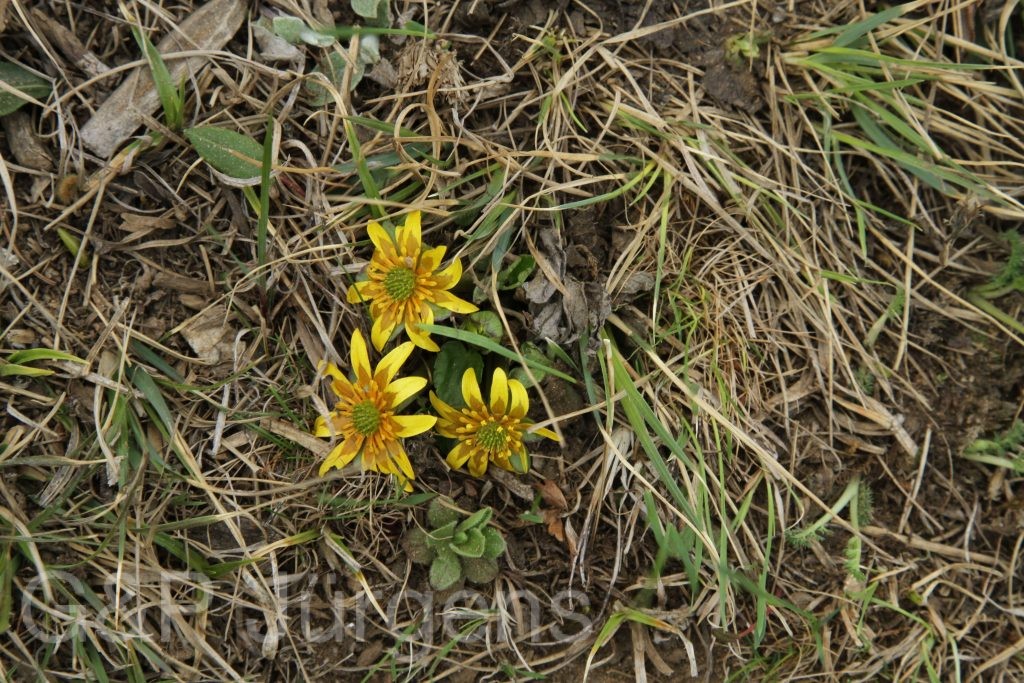
Bh2008 568 P855
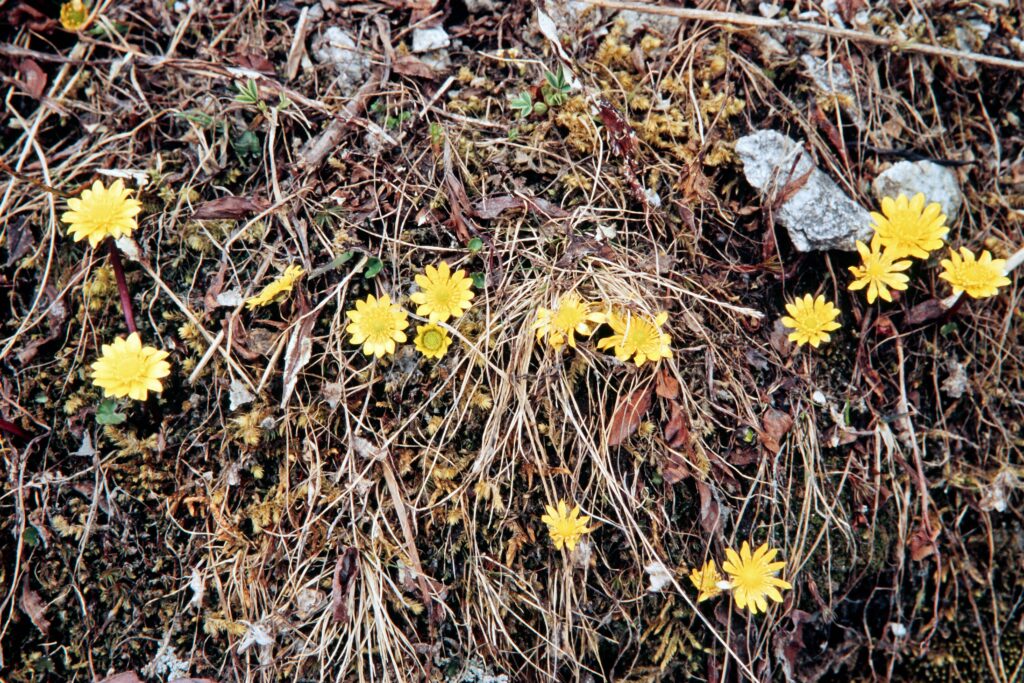
Bhutan Chele-La 3900m April
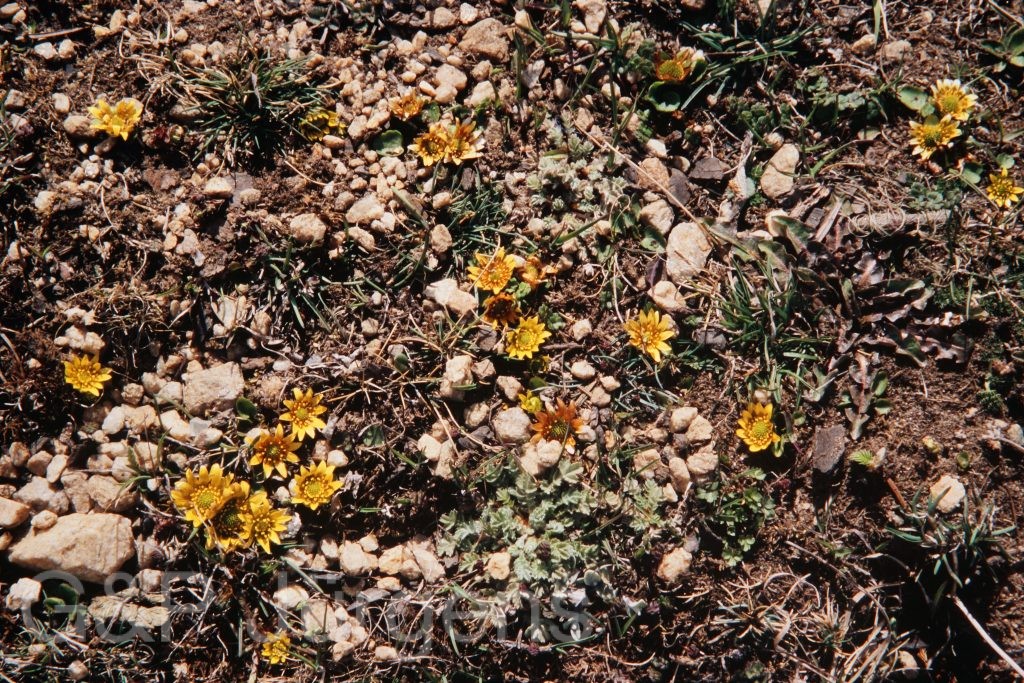
Nepal 2001 332 ergebnis ergebnis
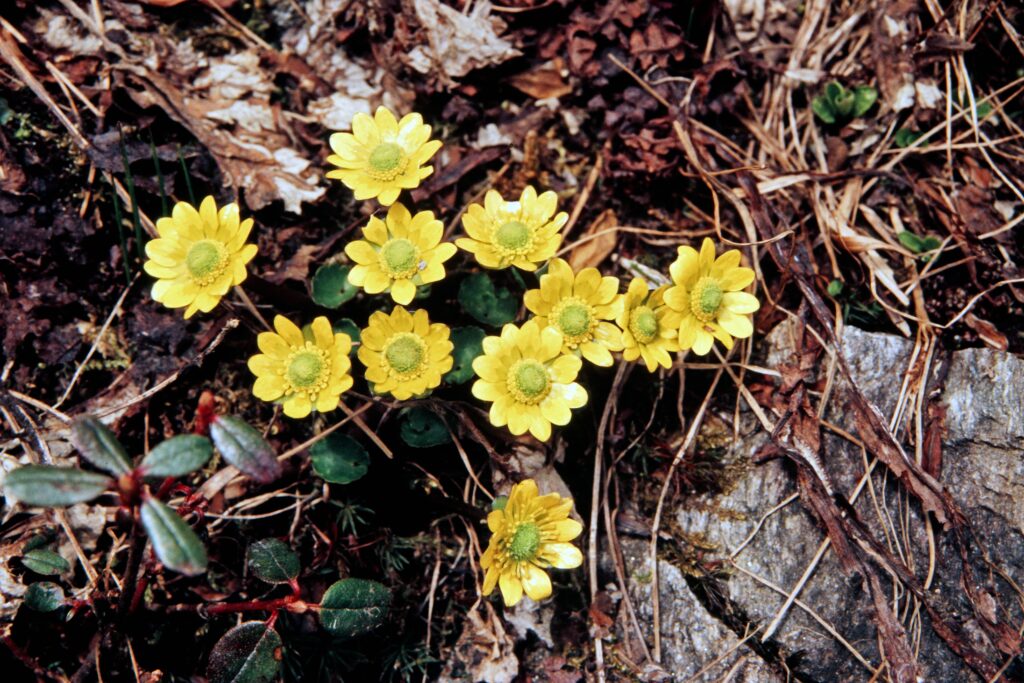
Nepal (Gorkha) Rupina-La 3300m, May

Description

Oxygraphis polypetala is a high-alpine buttercup relative distributed across the Himalaya and Tibetan plateau, with records from India, Nepal, China, Russia, Bhutan and Pakistan and around 115 georeferenced occurrences. It is an early-flowering plant of damp alpine turf, snowmelt flushes, gravelly meadows and the margins of melting snow patches, generally between about 3300 and 4500 m. The illustrated collections—Chele-La in Bhutan at 3900–4000 m in April and May, Rupina-La in Gorkha, Nepal at 3300 m in May, and Khiar Kutti in Garhwal, India at 4100 m in June—capture its phenology of blooming almost immediately as the snow retreats.

It is a small, stemless perennial herb forming rosettes from a short rootstock. The leaves are all basal, long-petiolate, with an entire to obscurely crenate, ovate to elliptic, often somewhat fleshy blade. The flowers are solitary on leafless scapes; the perianth is conspicuous, with numerous (commonly ten or more, whence polypetala) narrow, glossy golden-yellow petaloid segments spreading star-like above a green calyx, surrounding many stamens and a domed head of carpels. The fruit is an aggregate of numerous small, beaked achenes borne on an elongating receptacle.

Oxygraphis is a small Asiatic genus segregated from Ranunculus on the basis of its persistent, leathery petals and achene structure; the name combination here, attributed to Hooker and Thomson, is treated as accepted despite synonym status in the source data. Its precocious flowering exemplifies the snowbed strategy of many high-Himalayan herbs that exploit the brief window of meltwater and warmth. Widely distributed and locally abundant, it is not regarded as threatened.

Author: Hook.f. & Thomson · Sources: POWO (Kew), GBIF, Flora of China (Ranunculaceae), Annotated Checklist of the Flowering Plants of Nepal, Grierson & Long Flora of Bhutan, Tamura's treatment of the Ranunculaceae
DC.

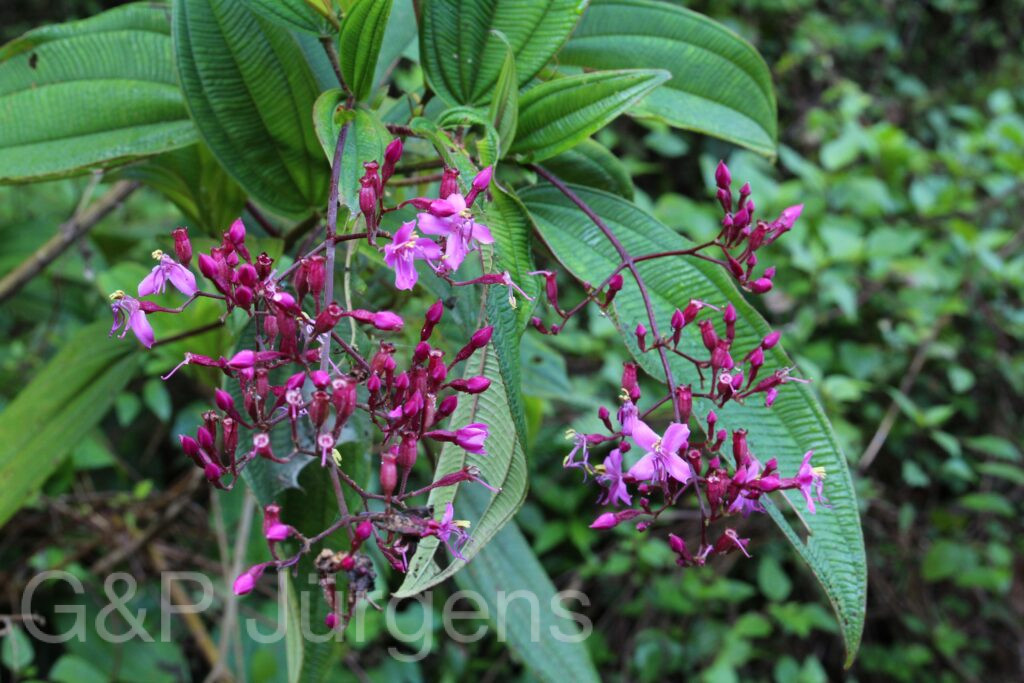
Bhutan2015 552
Bhutan Mo-Chu 1400m, October

Description

Oxyspora paniculata is a widespread species of the family Melastomataceae, distributed from the eastern Himalayas through mainland Southeast Asia to southern China and Vietnam. GBIF records over 1,090 occurrences across Nepal, India, Bhutan, Myanmar, China, Laos, Vietnam, and Japan. The species inhabits warm-temperate to subtropical broadleaved forests, forest margins, and streamsides at elevations of 500–2,200 m, favouring humid, semi-shaded habitats with well-drained acidic soils. Along the Mo-Chu valley in Bhutan at 1,400 m, it grows in the understorey of warm broadleaved forests dominated by Castanopsis and Schima.
Oxyspora paniculata is a shrub or subshrub, typically 1–3 m tall, with quadrangular, often narrowly winged stems. Leaves are opposite, ovate to ovate-lanceolate, 8–18 cm long, acuminate at the apex, with 3–5 prominent acrodromous veins and finely serrulate margins. The inflorescence is a terminal, lax panicle of cymes, 10–25 cm long, bearing numerous small flowers. Flowers are tetramerous, with pink to mauve petals 6–10 mm long and eight stamens of two lengths; the longer stamens bear sigmoid filaments and poricidal anthers with a short dorsal spur. The fruit is a urceolate capsule dehiscing by four apical valves, releasing numerous minute, cuneate seeds.
The genus Oxyspora comprises approximately 20 species centred in the Sino-Himalayan region and mainland Southeast Asia. Oxyspora paniculata is the most widespread member of the genus and has at times been confused with O. vagans, from which it differs in its distinctly winged stems and larger panicles. The species plays an important ecological role as a nectar source for pollinators in subtropical forest margins and is occasionally used in traditional medicine in parts of northeast India.

Author: DC. · Sources: POWO (Kew), GBIF, Flora of China Vol. 13, Flora of Bhutan Vol. 2, Renner et al.: Melastomataceae of the Old World (2021)

Vassilcz.

Nepal 99 606 ergebnis
West-Nepal Kagmara Phedi 3900m, July

Description

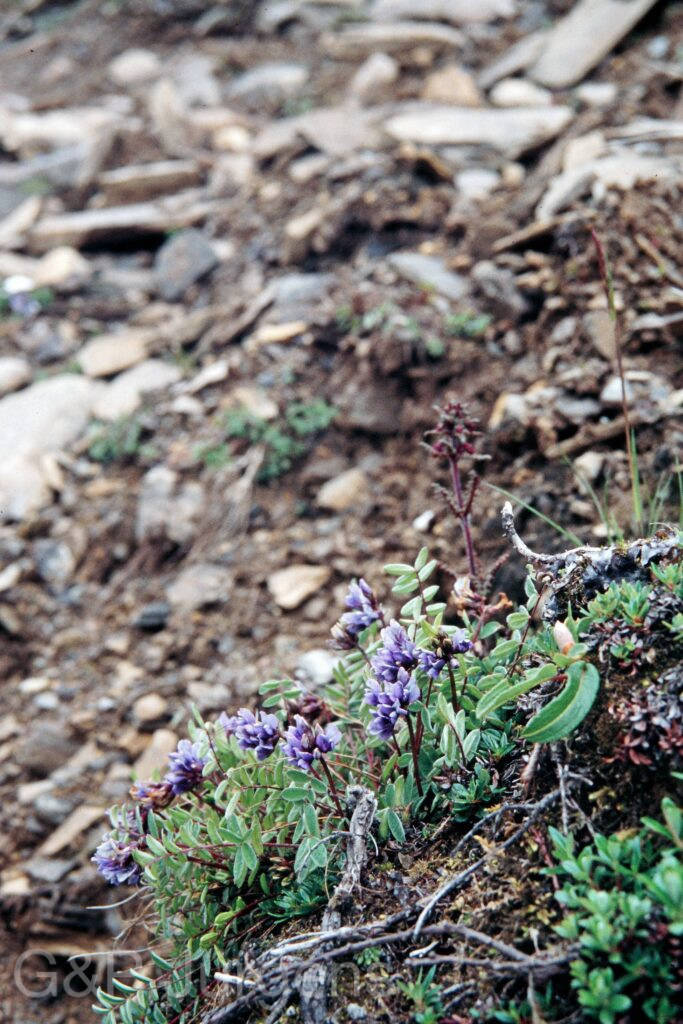
Oxytropis williamsii is a high-alpine legume of the central and western Himalaya, recorded with some 154 georeferenced collections from Nepal and adjacent Tibetan China (Xizang). It inhabits open stony slopes, dry alpine turf, gravelly moraine flanks and the margins of glacial meltwater channels in the upper subnival belt, typically between about 3800 and 4800 m. The plant photographed at Kagmara Phedi in West Nepal at 3900 m in July exemplifies its preference for cold, well-drained, continental sites with a short growing season and intense insolation.

The species forms a low, tufted, more or less acaulescent perennial arising from a stout, woody, branched caudex crowned by persistent stipule and petiole remains. The leaves are imparipinnate, with numerous small, oblong to elliptic leaflets densely clothed in appressed silky-villous hairs that lend the plant a silvery-grey aspect. Flowers are borne in compact, shortly pedunculate racemes or capitate clusters; the papilionaceous corolla is purple to violet, with the keel terminating in the sharp acuminate beak diagnostic of Oxytropis as distinct from Astragalus. The calyx is tubular and pubescent, and the fruit is an inflated, hairy legume, more or less bilocular through intrusion of the dorsal suture.

Membership in Oxytropis and its allies reflects a radiation of cushion- and tussock-forming legumes adapted to the cold deserts of the Tibetan plateau and its Himalayan rim. Such species contribute nitrogen fixation and soil stabilisation in nutrient-poor alpine substrates, and like many Oxytropis may accumulate swainsonine-type alkaloids. Restricted to remote, sparsely collected terrain, O. williamsii has not been formally assessed, though its specialised habitat warrants monitoring under warming and grazing pressure.

Author: Vassilcz. · Sources: POWO (Kew), GBIF, Flora of China, Flora of Nepal, Annotated Checklist of the Flowering Plants of Nepal, monograph of Oxytropis (Vassilczenko / Astragalology)

Andrews

Bhutan2014 950
Bhutan Haa-valley 640m, May
Bhutan2014 953
Bhutan Haa-valley 640m, May

Description

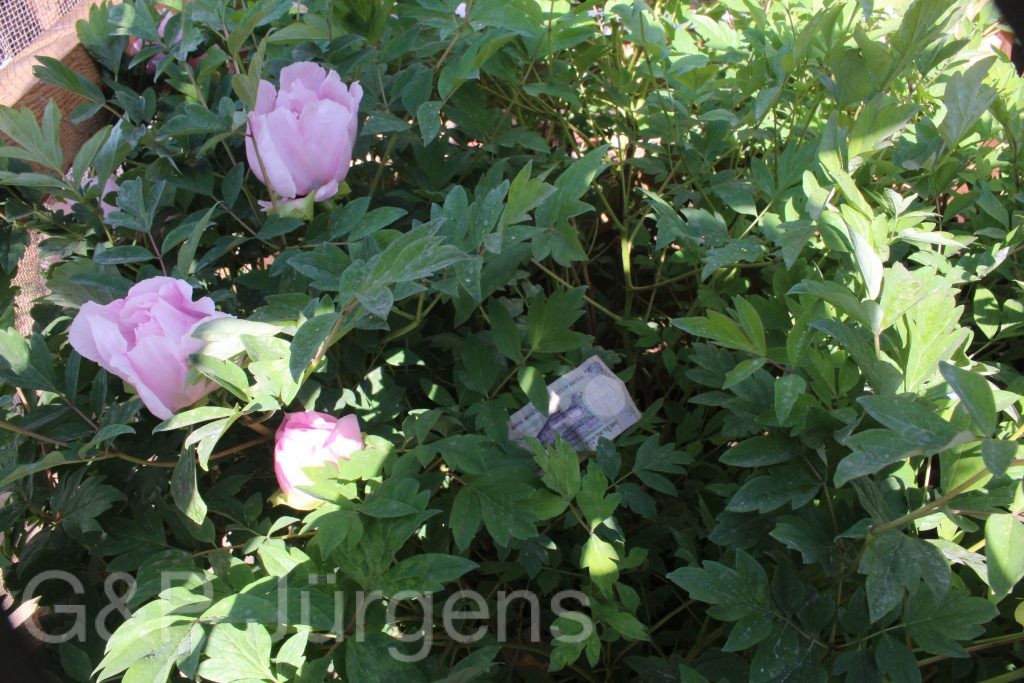
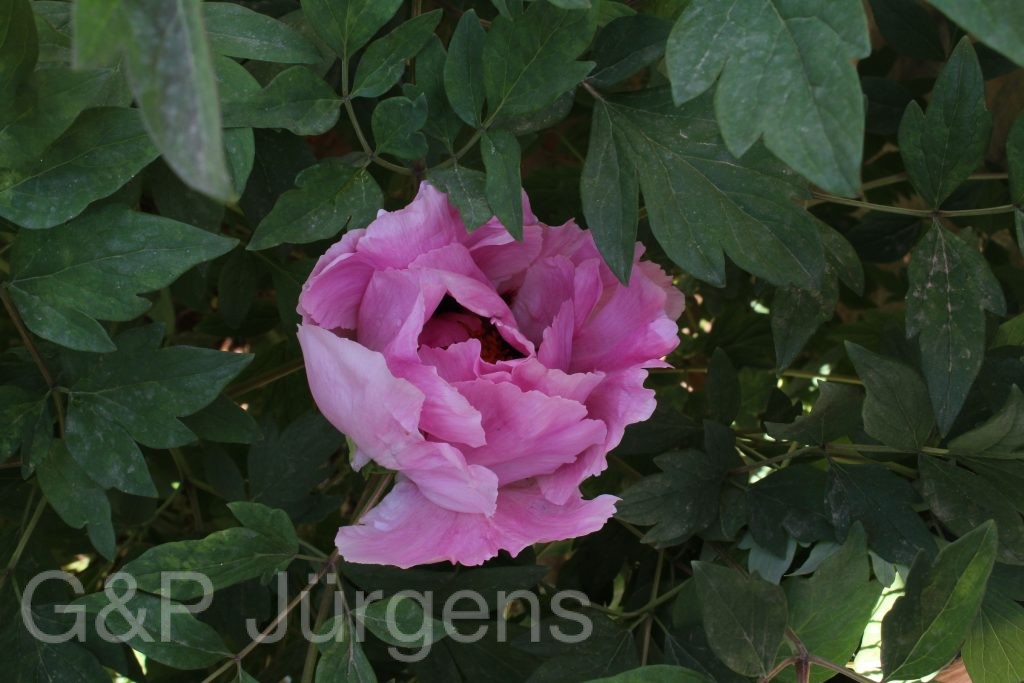
Paeonia suffruticosa, the tree peony, is a woody peony of Chinese origin that has been cultivated for well over a millennium and is now distributed worldwide through horticulture. Its GBIF dataset, with over 1,200 occurrences, reflects this mixed status, recording it from China, Korea, Japan and Taiwan as well as from a long list of countries where it occurs only in cultivation or as a garden escape, including the United States, Canada, Russia, Ukraine, and many European nations such as Germany, France, Spain, Italy, Sweden, Norway, Estonia, the Czech Republic, Belgium and Great Britain, alongside a record from Bhutan. The photographed plant from the Haa valley in Bhutan, at about 640 m and flowering in May, almost certainly represents cultivated or naturalised material grown around dwellings and monasteries, consistent with the species' long history as an ornamental rather than a wild Himalayan native.

It is a deciduous shrub up to about 2 m tall, with erect, branching woody stems, in contrast to the herbaceous, dying-back peonies. The leaves are alternate, large and biternately to bipinnately compound, the leaflets ovate, often lobed and glaucous beneath. The flowers are solitary and terminal and exceptionally large and showy, single to fully double in cultivated forms, with broad petals in white, pink, red, purple or yellow tones surrounding numerous stamens; a conspicuous fleshy, leathery disk forms a sheath partly enclosing the carpels. The fruit is a cluster of several densely tomentose follicles that split to release the large, rounded, dark seeds.

Paeonia, the only genus of Paeoniaceae, is divided into herbaceous and woody (section Moutan) groups, and P. suffruticosa in the strict sense is now understood to be a complex hybrid cultigen derived from several wild Chinese tree-peony species rather than a single wild taxon. As the celebrated "king of flowers" (mudan) of Chinese horticulture, it is enormously important culturally, medicinally (the root bark, mudanpi, is a traditional drug) and ornamentally, and exists in innumerable cultivars. As a cultigen it has no wild conservation status of its own, although the wild ancestral species of the Moutan group, several narrowly endemic in China, are of considerable conservation concern.

Author: Andrews · Sources: POWO (Kew), GBIF, Flora of China Vol. 6, Flora of Bhutan Vol. 1, Flora of Nepal, Flora of Pakistan, Hong's monograph Peonies of the World

Seem.

Sikkim 2006 316 ergebnis
India West-Bengal, Chaana 1800m, May

Description

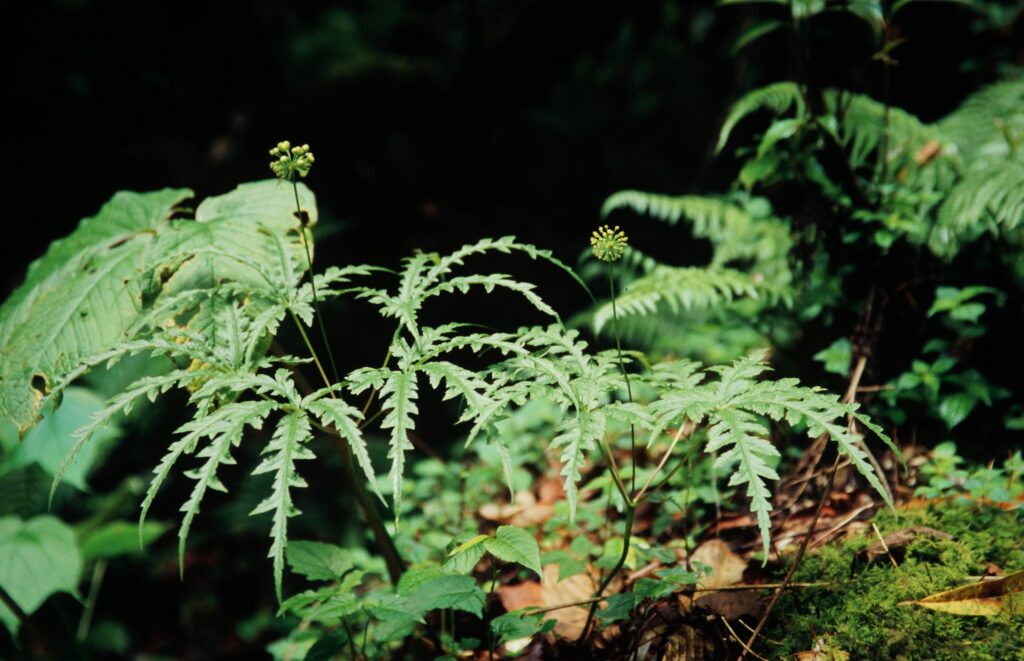
Panax bipinnatifidus is a Sino-Himalayan ginseng distributed through the eastern Himalaya and adjacent uplands of mainland Asia, with GBIF documenting some 900 occurrences across India, Nepal, Bhutan, China, Myanmar, Vietnam and Thailand. It is a herb of shaded, humus-rich temperate broad-leaved and conifer forests, growing among leaf litter on cool, moist slopes and in mossy understorey, generally between about 1800 and 3500 m. The photographed plant from Chaana in West Bengal, India, at roughly 1800 m and flowering in May, sits at the lower edge of this altitudinal band, typical of its occurrence beneath dense Himalayan forest canopy where it relies on consistent shade and well-drained organic soils.

It is a glabrous perennial herb arising from a stout, often moniliform (beaded) or fusiform fleshy rhizome that creeps horizontally. The single erect aerial stem bears a terminal whorl of (usually three to five) long-petiolate, palmately compound leaves, the leaflets characteristically deeply bipinnatifid or pinnately divided with the laminae much dissected, a feature that distinguishes the species and gives it its epithet. From the centre of the leaf whorl rises a slender peduncle terminating in a solitary, simple umbel of small greenish-white, pentamerous, mostly bisexual flowers with an inferior two-celled ovary and two styles. The fruit is a small, laterally compressed, red drupe that turns red at maturity, often with a black apical spot.

The genus Panax, the true ginsengs, is taxonomically complex in the Himalaya, where P. bipinnatifidus has historically been confused with P. pseudoginseng and treated under several varieties (var. bipinnatifidus, var. angustifolius) and synonyms; molecular and morphological work has helped clarify the dissected-leaved entity. Like its congeners it accumulates triterpenoid ginsenosides in the rhizome and is harvested as a substitute for ginseng across the Himalaya, which together with habitat loss exposes wild populations to over-collection. The species is consequently of growing conservation concern and is regarded as threatened or vulnerable in parts of its range, prompting interest in cultivation and sustainable management.

Author: Seem. · Sources: POWO (Kew), GBIF, Flora of China Vol. 13, Flora of Bhutan Vol. 2, Flora of Nepal, Flora of Pakistan, Wen's monograph of Panax (Araliaceae)

Roxb.

Bhutan2012 749
Bhutan Zhemgang 850m, September
Bhutan2015 127
Bhutan Zhemgang 850m, September

Description

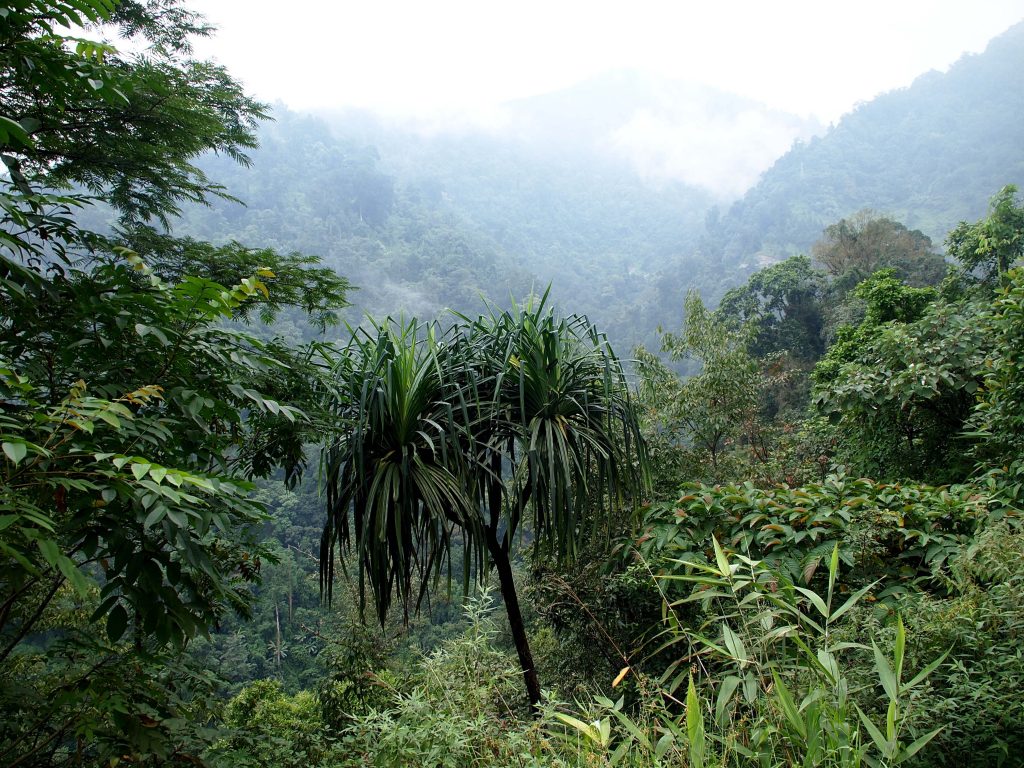
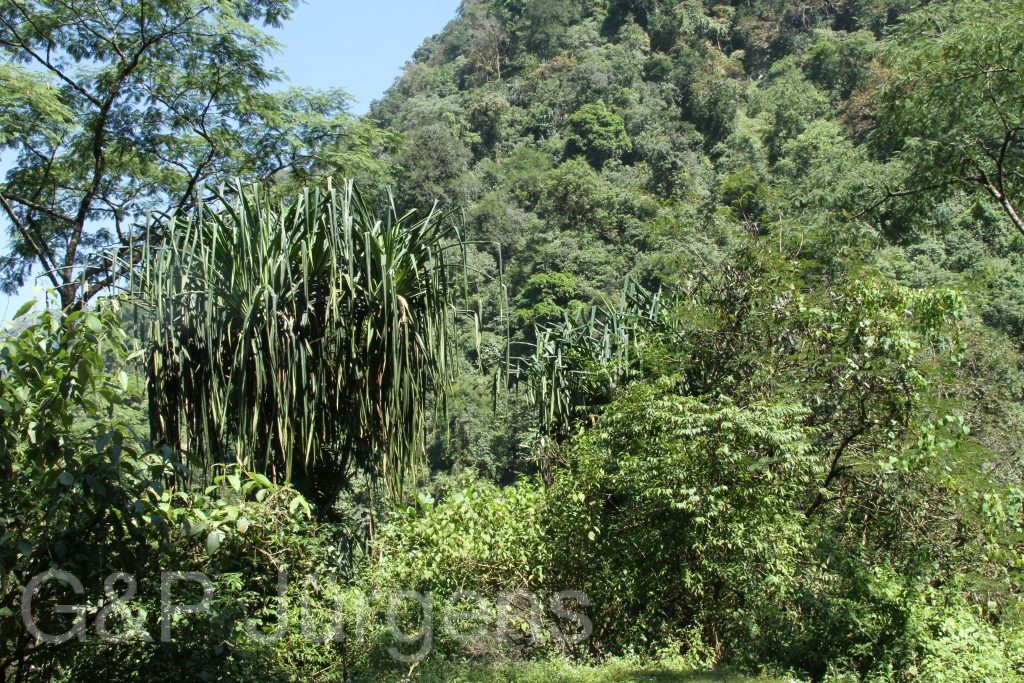
Pandanus furcatus, the Himalayan screw-pine, is a tree-like monocot of the eastern Himalaya and Southeast Asia, recorded by GBIF from Indonesia, Sri Lanka, India, Nepal, China, Malaysia, Thailand, Bhutan, Bangladesh and Myanmar (with cultivated records in Europe) across roughly 352 georeferenced occurrences. It is a plant of warm, humid, subtropical forest, favouring stream banks, moist ravines, gullies and shaded valley bottoms where the air remains saturated, generally at low elevations in the foothill zone. The photographed plant from Zhemgang in central Bhutan at about 850 m in September is characteristic of its occurrence along the moist inner-valley watercourses of the southern Himalaya, where it forms a conspicuous element of riparian vegetation.

The plant grows as a small tree with a slender trunk supported above the ground by a cone of stout, downwardly directed stilt (prop) roots, the stem typically branching and bearing terminal tufts of leaves. The leaves are very long, strap-shaped (ensiform) and spirally arranged in three ranks that twist around the stem, with sharp spiny teeth along the margins and the midrib beneath. Like all Pandanus it is dioecious. The male inflorescence is a much-branched, pendulous, fragrant spike subtended by white bracts, while the female inflorescence develops into a large, pendent, globose to ovoid syncarp (compound fruit) composed of numerous angular, wedge-shaped drupes that ripen yellow to orange-red.

Pandanus furcatus belongs to the Pandanaceae, an ancient pantropical family of arborescent monocots distinguished by their stilt roots, spiral tristichous leaves and dioecious habit. Among Himalayan species it is notable for ascending to relatively high elevations for the genus and for its role in stabilising stream banks and providing fruit and shelter for wildlife; the leaves are used locally for weaving and thatching. Although harvested locally, the species has a broad distribution and is locally common, and it is not regarded as globally threatened.

Author: Roxb. · Sources: POWO (Kew), GBIF, Flora of China Vol. 23, Flora of Bhutan Vol. 3, Flora of Nepal, Flora of Pakistan, Stone: revisional studies of Pandanus and the Pandanaceae

Franch.

Bhutan2014 469
Bhutan Tongsa 2000m, May
Bhutan2014 586
Bhutan Phobjika 3100m, May

Description

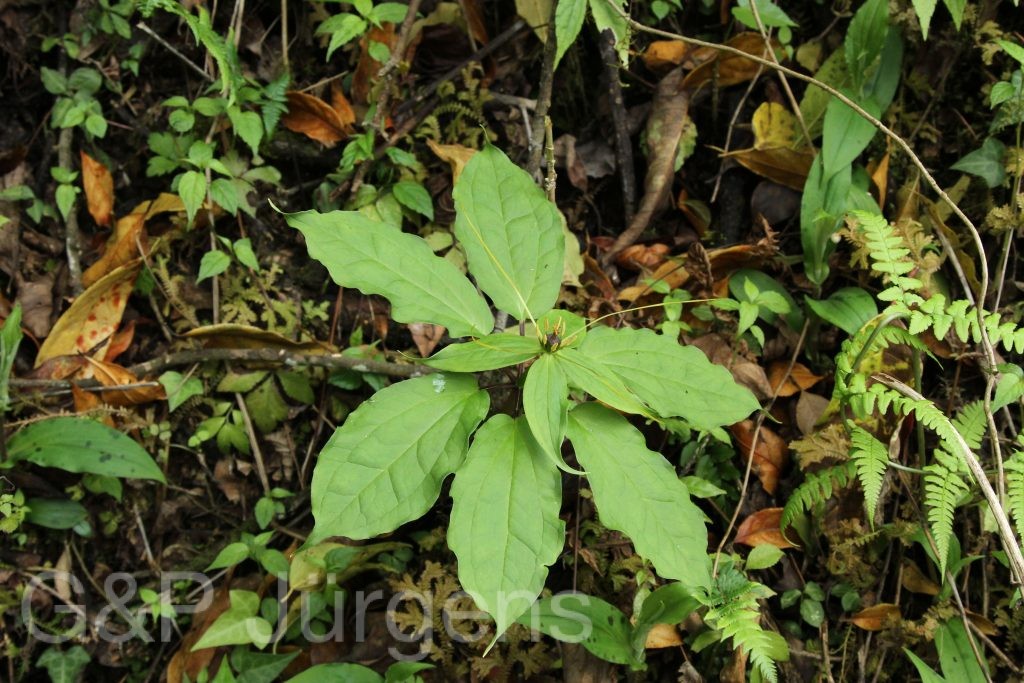
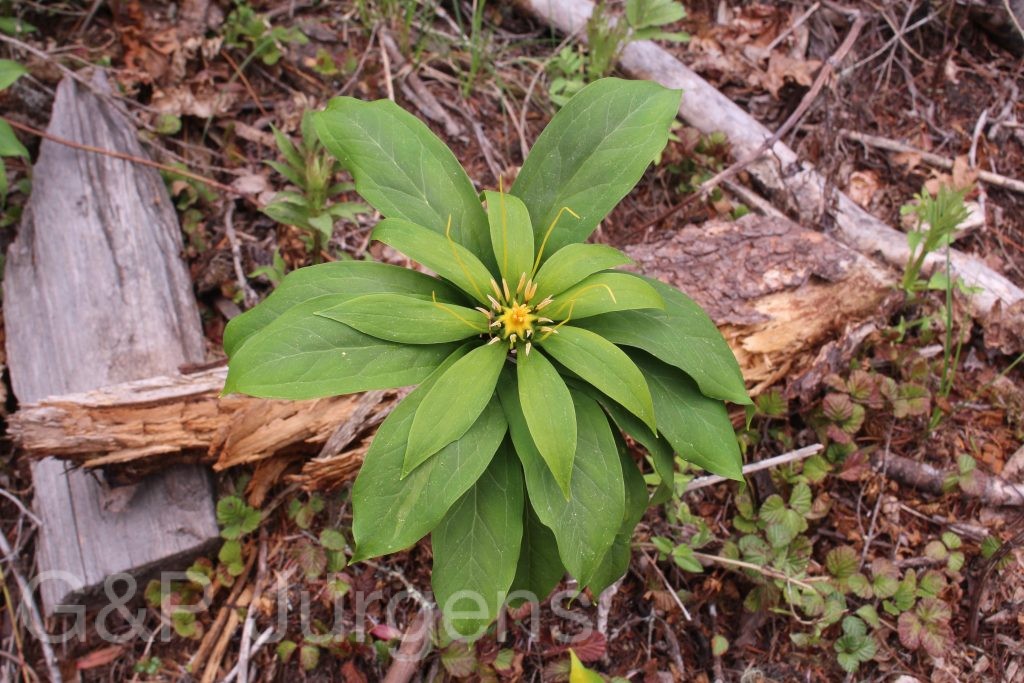
Paris thibetica is a rhizomatous woodland herb of the eastern Himalaya and Sino-Himalayan region, recorded from China, Nepal, India, Bhutan and Myanmar, the Norwegian (NO) datum representing cultivated or herbarium material. Its roughly 281 georeferenced collections concentrate in the temperate forests of the Tibet-Himalaya borderlands. It grows in shaded, moist, humus-rich broadleaved and mixed forest, on banks and in damp ravines beneath the canopy. The photographed plants from Bhutan at Tongsa (2000 m) and Phobjika (3100 m), both in May, demonstrate its broad altitudinal range across the temperate belt and its spring flowering as the rhizome resumes growth after winter.

It is an erect perennial arising from a thick, creeping rhizome that produces a single unbranched stem. At the stem apex is a single whorl of typically four or more leaves, ovate-lanceolate to oblanceolate, with the netted-reticulate venation characteristic of the genus. From the centre of the whorl rises a solitary terminal flower on a slender pedicel. The perianth is in two distinct whorls: the outer of green, leaf-like sepals and the inner of very narrow, filiform to thread-like yellowish-green petals. Numerous stamens with elongate connectives surround a globose ovary crowned by spreading styles. The fruit is a capsule that opens to expose seeds borne in a fleshy, often reddish aril.

The genus Paris (herb-Paris) is placed in the Melanthiaceae (formerly Trilliaceae) and is centred on the temperate Sino-Himalayan mountains, where it is taxonomically intricate and much studied. Several species, including members of the Paris polyphylla complex to which P. thibetica is allied, are valued in traditional medicine for their steroidal saponins, exposing wild populations to harvesting pressure. Slow-growing and habitat-specific, herb-Paris species are increasingly of conservation concern owing to forest loss and over-collection.

Author: Franch. · Sources: POWO (Kew), GBIF, Flora of China Vol. 24, Flora of Bhutan Vol. 3, Flora of Nepal, Li's The Genus Paris (Trilliaceae)

W.E.Evans

Bhutan2012 67
Bhutan Shele-La, 3800m September

Description

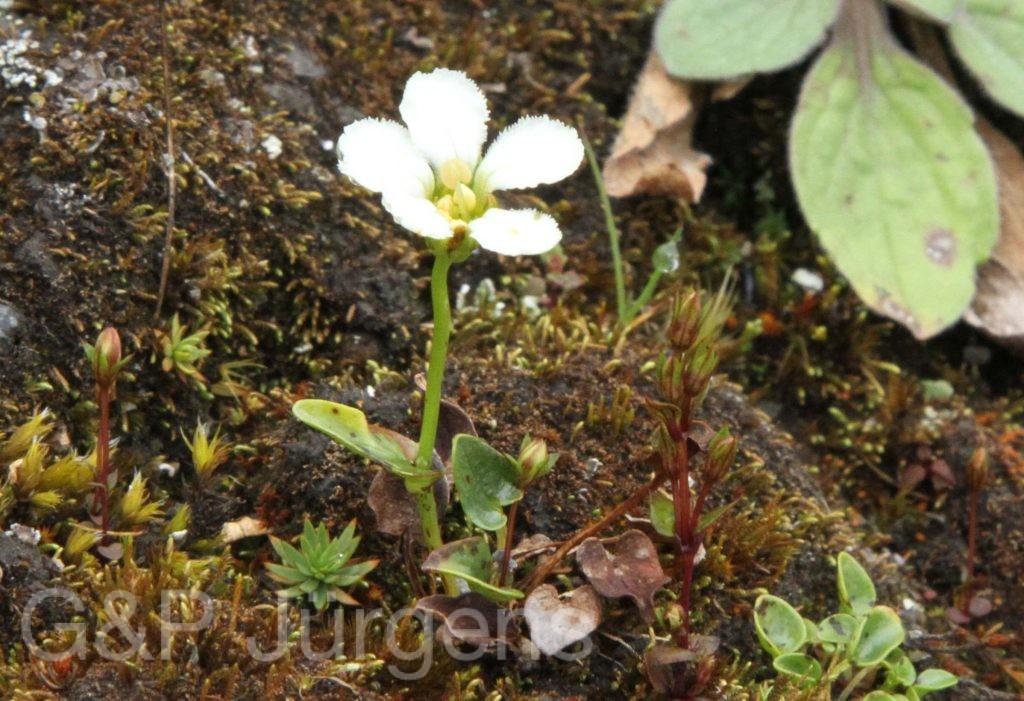
Parnassia cooperi is an alpine perennial herb of the eastern Himalaya, known from a small set of 12 GBIF occurrences in China, Bhutan and India. It inhabits moist alpine meadows, seepage slopes, streamsides and damp grassy turf in the upper temperate to alpine zone, generally between about 3500 and 4300 m. The plant recorded on the Shele-La in Bhutan at 3800 m in September represents its typical high-elevation habitat, flowering late in the season on cool, humid, well-watered ground where snowmelt and monsoon moisture persist.

The species is a slender, glabrous, rosette-forming herb arising from a short rhizome. The basal leaves are long-petiolate with ovate to cordate, entire blades, while each erect, unbranched flowering stem bears a single sessile or clasping cauline leaf below the solitary terminal flower. The flower has five free, white petals, frequently veined, and alternates fertile stamens with conspicuous fringed or gland-tipped staminodes, the latter a defining feature of the genus. The superior to half-inferior ovary ripens into a capsule that dehisces into valves, releasing numerous small seeds.

Though traditionally placed in its own family Parnassiaceae or in Saxifragaceae, Parnassia is here listed under Celastraceae, reflecting molecular evidence that nests the Parnassia-Lepuropetalon lineage within an expanded Celastrales. Parnassia cooperi is a narrow-range eastern Himalayan endemic whose restricted distribution and specialised wetland-alpine habitat make it potentially vulnerable to grazing pressure and climatic shifts, warranting monitoring despite its current data-poor conservation status.

Author: W.E.Evans · Sources: POWO (Kew), GBIF, Flora of China Vol. 8, Flora of Bhutan Vol. 1, Flora of Nepal, Flora of Pakistan, Wu's monograph of Parnassia

Nekr.

Nepal 99 521 ergebnis
West-Nepal Churta-Khola 3800m, June

Description

Parnassia kumaonica Nekr. is a small alpine herb now placed in the Celastraceae (formerly Parnassiaceae or Saxifragaceae), endemic to the western and central Himalaya and adjacent Tibet. GBIF records, numbering 28 occurrences, place it in Nepal, India and China. The species grows in moist alpine meadows, on seepage slopes, streamsides and damp turf, generally between 3,500 and 4,500 m. The illustrated plant from the Churta-Khola in West Nepal at 3,800 m, in flower in June, typifies its habitat in the cool, well-watered alpine zone where snowmelt sustains the marshy ground it requires.

The plant forms a compact, glabrous perennial arising from a short rootstock, with a basal rosette of long-petioled, ovate to reniform, entire leaves that are somewhat fleshy. Each flowering stem bears a single cauline leaf clasping the stem and is terminated by a solitary, regular flower. The five white petals are conspicuously veined and characteristically fringed or fimbriate at the margins; alternating with the fertile stamens are dissected staminodes bearing gland-tipped processes that function as nectar-mimicking visual lures. The superior ovary develops into a capsule splitting into valves to release numerous small winged seeds.

Parnassia is a taxonomically distinctive genus whose elaborate staminodial nectaries have made it a classic subject of pollination biology, and P. kumaonica fits within the western Himalayan assemblage of the genus, distinguished by petal fringing and staminode morphology. Restricted to high-altitude wetlands, it is a sensitive indicator of intact alpine seepage habitats and, like other narrowly distributed Himalayan endemics, is potentially vulnerable to trampling, grazing and the desiccation of alpine springs under a warming climate.

Author: Nekr. · Sources: POWO (Kew), GBIF, Flora of China Vol. 8, Flora of Nepal, Annotated Checklist of the Flowering Plants of Nepal, Ku: Revision of Parnassia

L.

Bhutan2015 523
Bhutan Wangdi 1800m, October

Description

Parthenium hysterophorus is a neotropical annual of Central American and Caribbean origin that has become one of the world's most aggressive invasive weeds, GBIF recording nearly 39,000 occurrences spanning the Americas, Africa, the Middle East, South Asia and Australasia. It colonises waste ground, roadsides, overgrazed pasture, field margins and other disturbed, open habitats from the lowlands to mid-elevations, thriving on a wide range of soils. In the Eastern Himalaya it has spread along valley roads and settlements, the figured plant from Wangdi in central Bhutan at about 1800 m, photographed in October, documenting its ongoing upward and eastward expansion into mountain agricultural landscapes.

It is an erect, much-branched annual herb with longitudinally grooved, pubescent stems. The lower leaves are deeply bipinnatisect and form a basal rosette, while the upper leaves become smaller and less divided; all are softly hairy and bear glandular trichomes. The numerous small, whitish capitula are arranged in lax terminal panicles, each head containing five short, female ray florets and many functionally male disc florets. The involucre is shallow with two series of phyllaries. At maturity each ray achene falls together with two adjacent sterile disc florets and subtending bracts as a wedge-shaped dispersal unit bearing two small scale-like pappus elements.

A member of tribe Heliantheae, Parthenium hysterophorus is notorious for its prolific seed output, allelopathic suppression of neighbouring vegetation, and production of the sesquiterpene lactone parthenin, which causes contact dermatitis and respiratory allergy in humans and is toxic to livestock. Its invasion degrades rangeland and crops across the tropics and is the target of biological control using host-specific beetles and rusts. In the Himalayan region it is regarded as a serious emerging threat to biodiversity and pastoral livelihoods rather than a species of conservation concern.

Author: L. · Sources: POWO (Kew), GBIF, Flora of Bhutan, Flora of China, CABI Invasive Species Compendium, Navie's monograph of Parthenium hysterophorus