
Andrews
Description
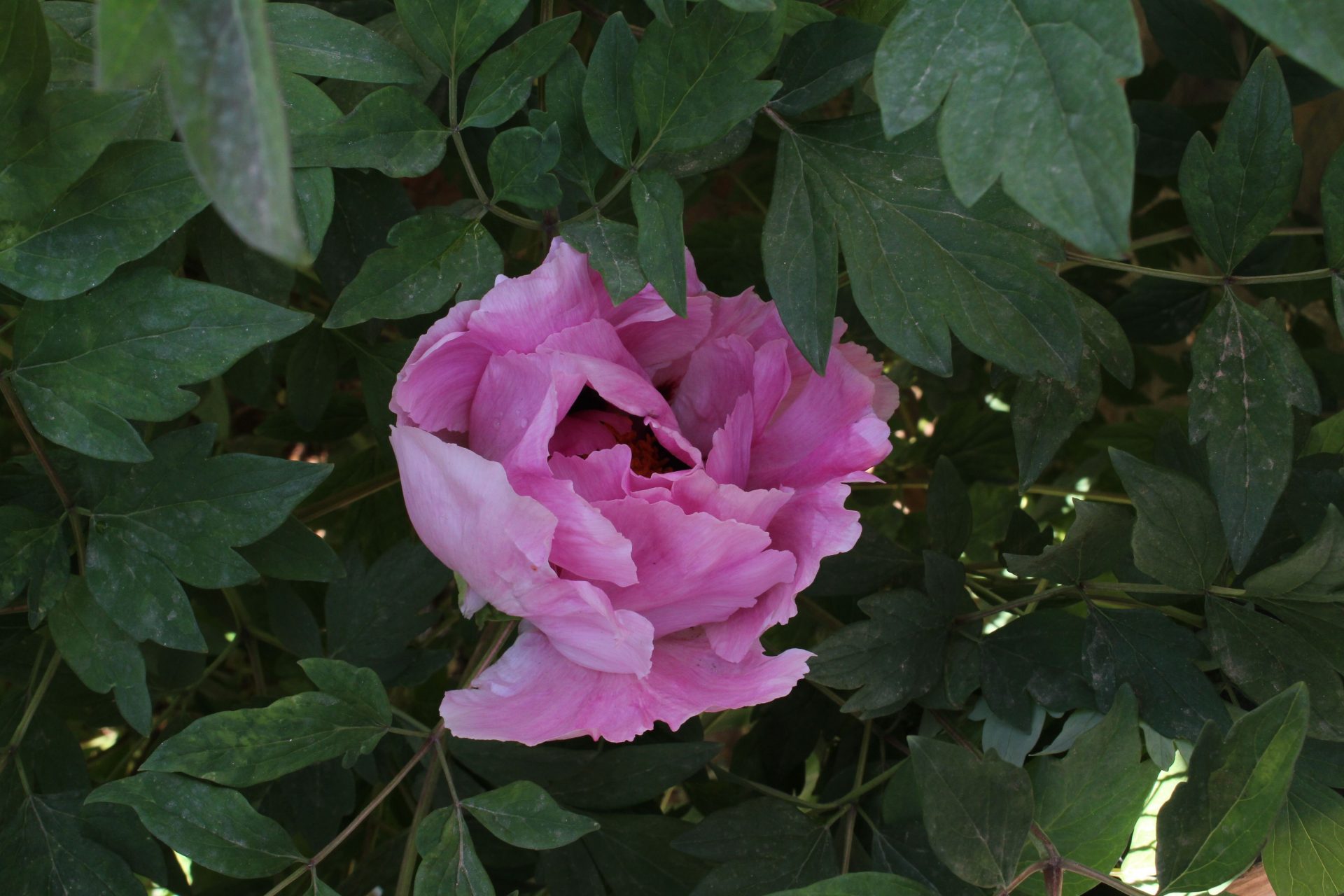
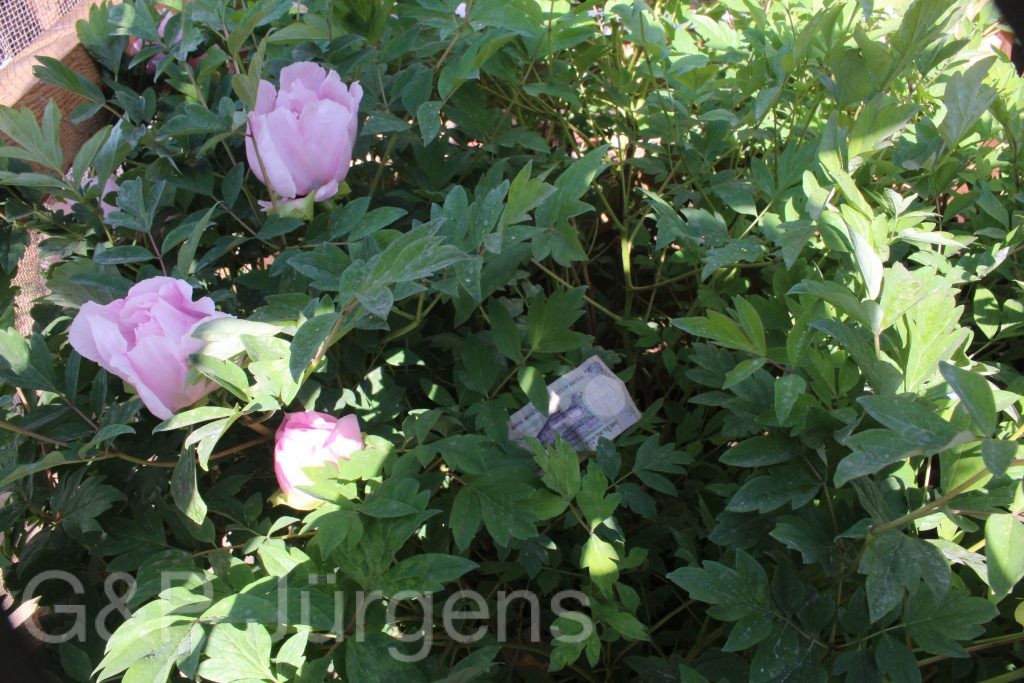
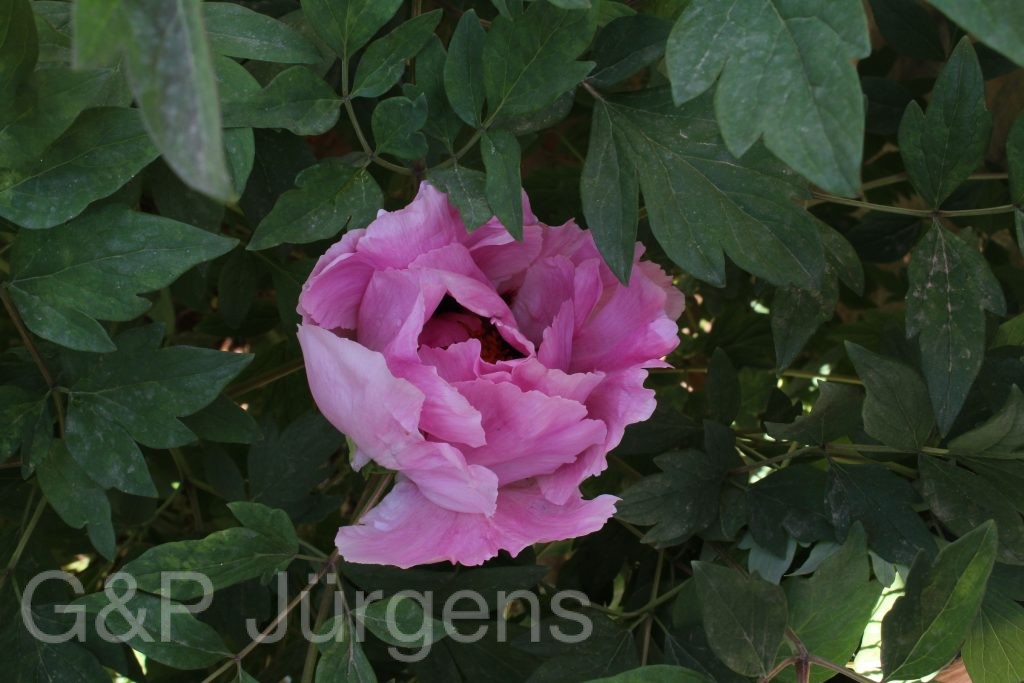
Paeonia suffruticosa, the tree peony, is a woody peony of Chinese origin that has been cultivated for well over a millennium and is now distributed worldwide through horticulture. Its GBIF dataset, with over 1,200 occurrences, reflects this mixed status, recording it from China, Korea, Japan and Taiwan as well as from a long list of countries where it occurs only in cultivation or as a garden escape, including the United States, Canada, Russia, Ukraine, and many European nations such as Germany, France, Spain, Italy, Sweden, Norway, Estonia, the Czech Republic, Belgium and Great Britain, alongside a record from Bhutan. The photographed plant from the Haa valley in Bhutan, at about 640 m and flowering in May, almost certainly represents cultivated or naturalised material grown around dwellings and monasteries, consistent with the species' long history as an ornamental rather than a wild Himalayan native.
It is a deciduous shrub up to about 2 m tall, with erect, branching woody stems, in contrast to the herbaceous, dying-back peonies. The leaves are alternate, large and biternately to bipinnately compound, the leaflets ovate, often lobed and glaucous beneath. The flowers are solitary and terminal and exceptionally large and showy, single to fully double in cultivated forms, with broad petals in white, pink, red, purple or yellow tones surrounding numerous stamens; a conspicuous fleshy, leathery disk forms a sheath partly enclosing the carpels. The fruit is a cluster of several densely tomentose follicles that split to release the large, rounded, dark seeds.
Paeonia, the only genus of Paeoniaceae, is divided into herbaceous and woody (section Moutan) groups, and P. suffruticosa in the strict sense is now understood to be a complex hybrid cultigen derived from several wild Chinese tree-peony species rather than a single wild taxon. As the celebrated "king of flowers" (mudan) of Chinese horticulture, it is enormously important culturally, medicinally (the root bark, mudanpi, is a traditional drug) and ornamentally, and exists in innumerable cultivars. As a cultigen it has no wild conservation status of its own, although the wild ancestral species of the Moutan group, several narrowly endemic in China, are of considerable conservation concern.
Author: Andrews · Sources: POWO (Kew), GBIF, Flora of China Vol. 6, Flora of Bhutan Vol. 1, Flora of Nepal, Flora of Pakistan, Hong's monograph Peonies of the World