Author

G & P Jürgens

L.

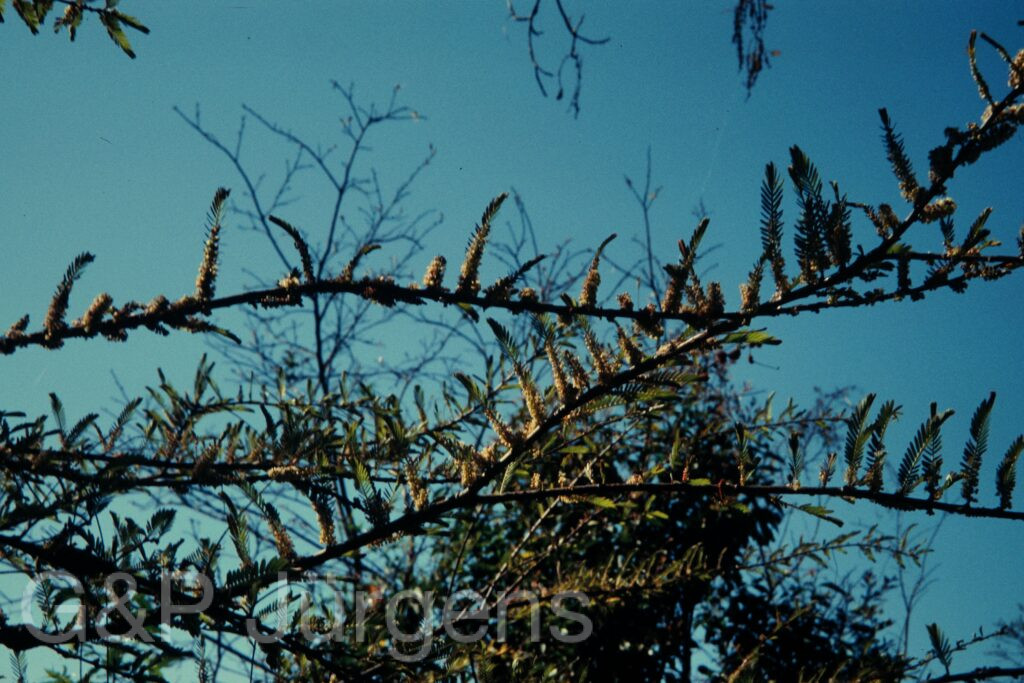
Bhutan2012 534
Bhutan Wangdi 2600m, September
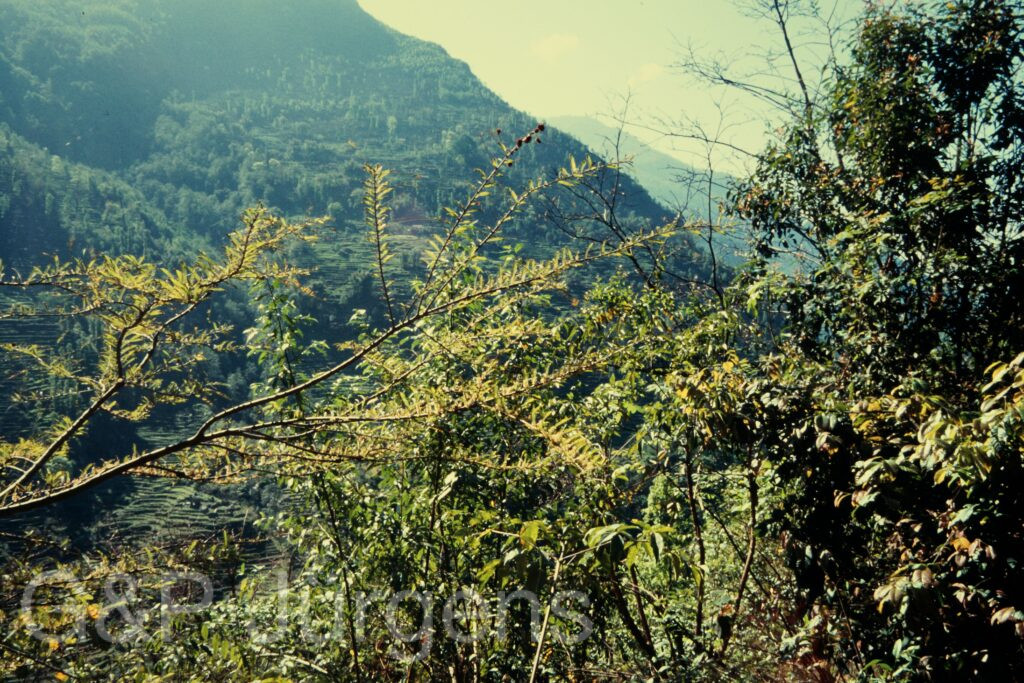
Nepal 97 68 P104
Nepal Mewa-Khola 1250m April
Nepal 97 67 P103
Nepal Mewa-Khola 1250m April

Description

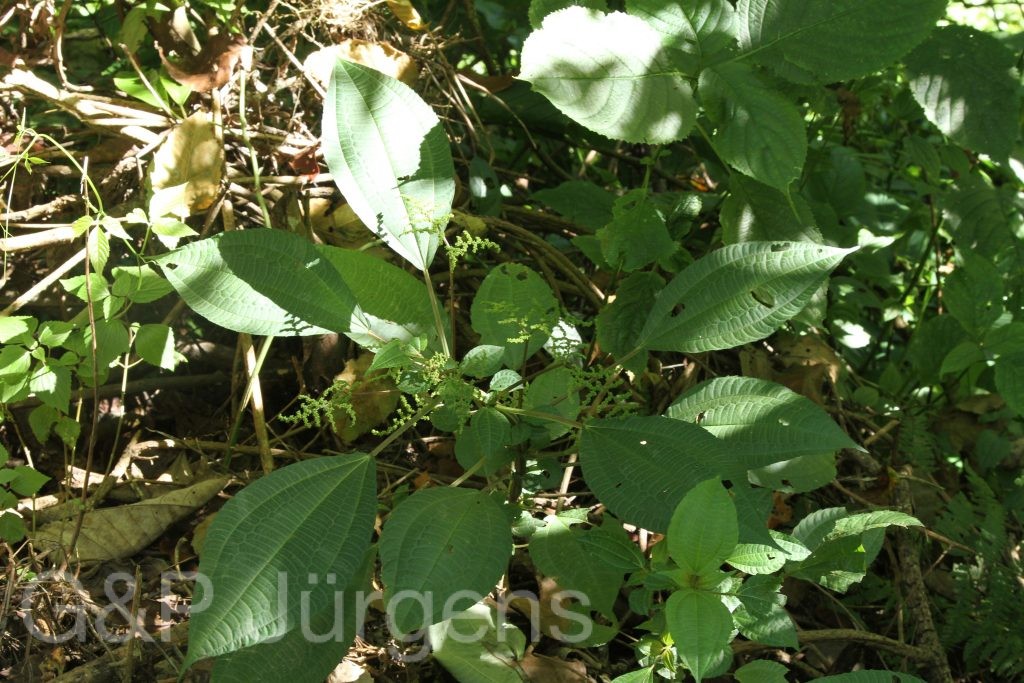
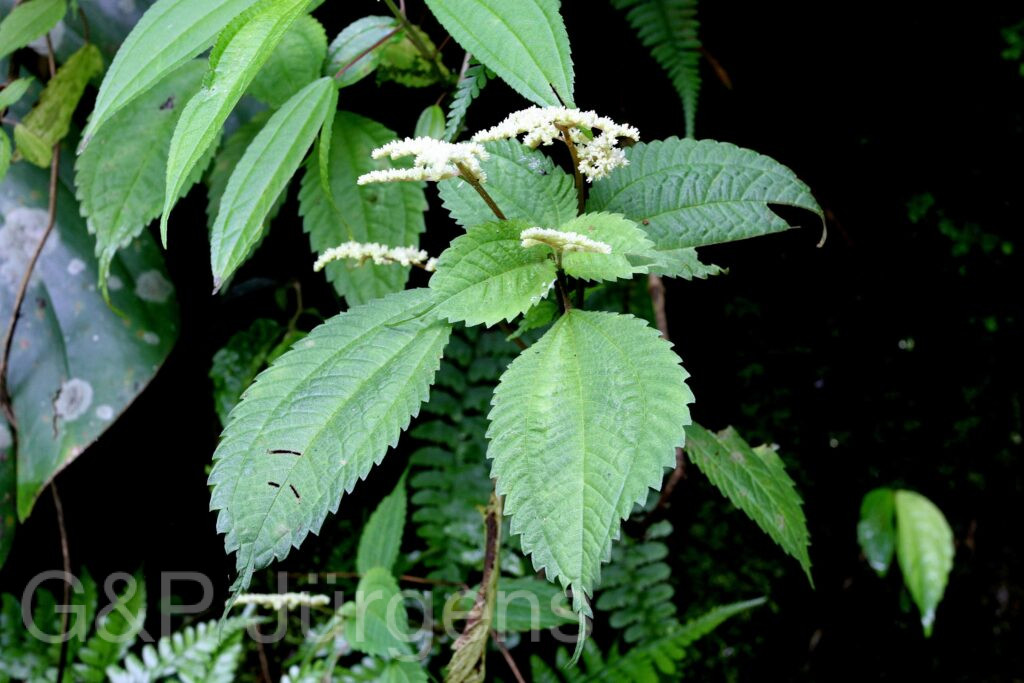
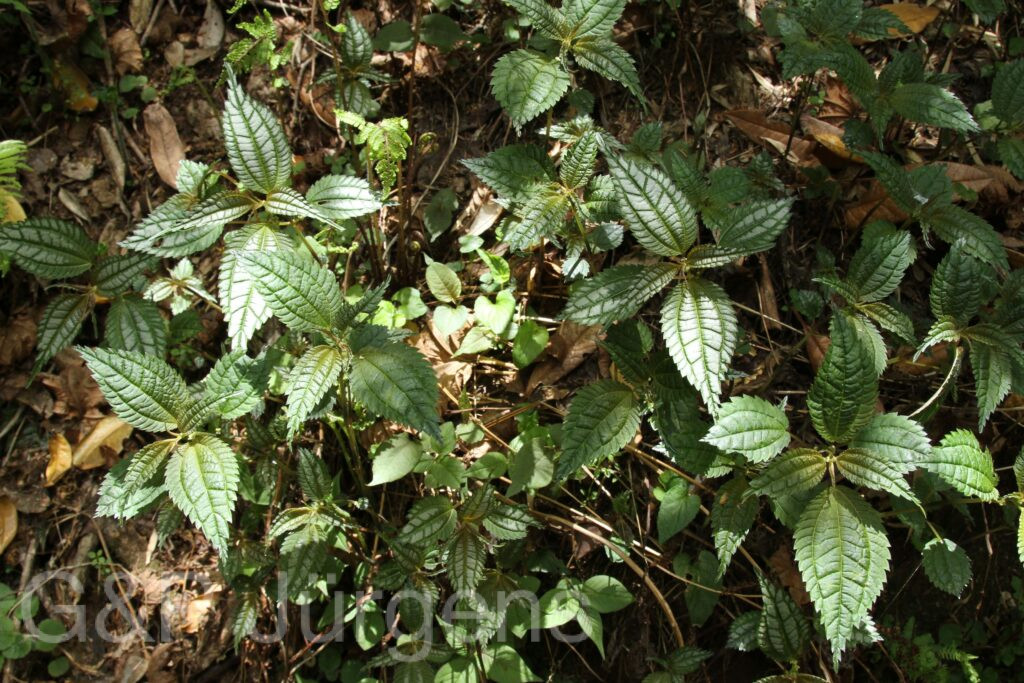
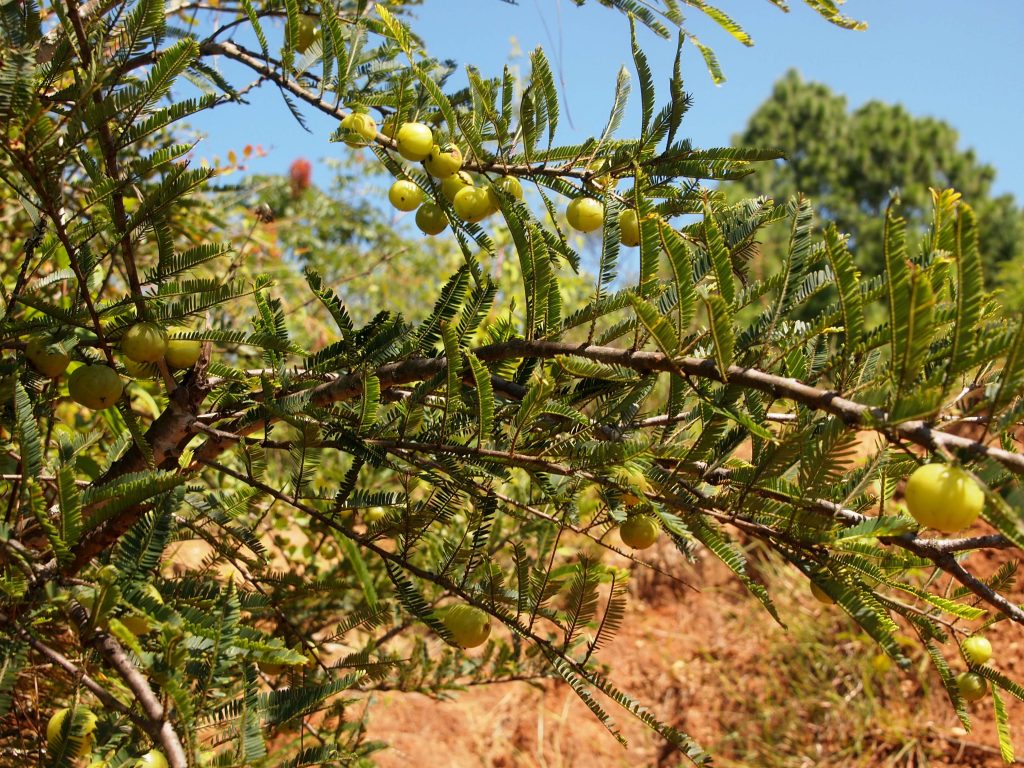
Phyllanthus emblica, the emblic myrobalan or Indian gooseberry (amla), is a small to medium tree of tropical and subtropical Asia with a very broad distribution embracing India, China, much of Southeast Asia, Sri Lanka, Nepal, Bhutan and many introduced ranges, recorded in GBIF by more than 19000 occurrences. It is a plant of deciduous and mixed dry forest, open hillsides, scrub and cultivated and disturbed ground, and is very widely planted, generally from the lowlands up into the hills. The cited material spans Mewa Khola in eastern Nepal at 1250 m, in leaf and flower in April, and Wangdi in Bhutan at 2600 m in September, the latter near the upper elevational limit and reflecting the species' wide ecological amplitude across the southern Himalayan belt.

The tree reaches up to about 8–18 m, with smooth, pale, often flaking bark and slender, feathery branchlets bearing numerous small, distichous, oblong-linear leaves that closely resemble the pinnae of a compound leaf, the whole leafy branchlet being deciduous as a unit. It is monoecious, the small, greenish-yellow, apetalous flowers borne in clusters in the leaf axils. The fruit is the most distinctive feature: a fleshy, globose, pale green to yellowish drupe-like capsule, 1.5–2.5 cm across, with six faint longitudinal furrows, a hard central stone, and a markedly sour, astringent flesh.

Phyllanthus is a vast pantropical genus now placed in the family Phyllanthaceae, segregated from a broadly defined Euphorbiaceae. P. emblica is among the most economically and culturally important of its members: the vitamin-C-rich fruit is a staple of Ayurvedic and traditional medicine and is widely eaten preserved or processed, while the tree yields tannins, dye and timber. It is extensively cultivated and naturalised well beyond its native range. Being abundant, hardy and widely grown, the species is of no conservation concern and is in many areas a familiar element of agroforestry and village landscapes.

Author: L. · Sources: POWO (Kew), GBIF, Flora of China Vol. 11, Flora of Bhutan Vol. 1, Flora of Nepal, A Monograph of the Genus Phyllanthus (Phyllanthaceae)
(Decne.) Miers

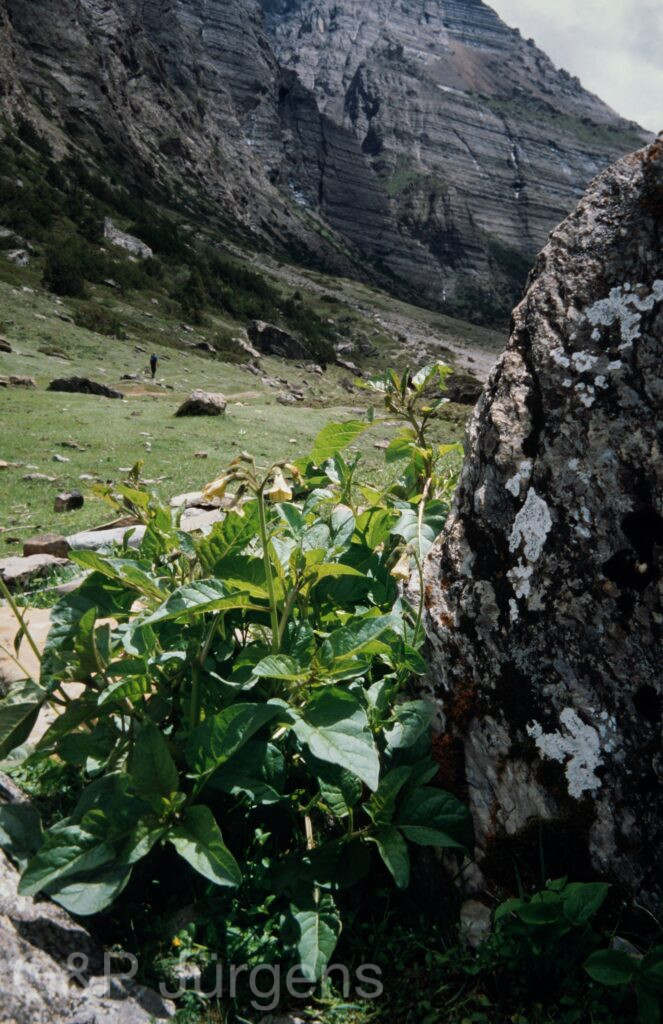
Nepal 99 777 ergebnis
West-Nepal, Baga-La-Phedi 3800m, July

Description

Physochlaina praealta (Decne.) Miers is a robust perennial herb of the high alpine and subalpine zones of the western and central Himalaya and the Tibetan borderlands. GBIF records it from India, China, Nepal and Pakistan (about 360 occurrences), a distribution centred on the cold, arid inner-Himalayan and trans-Himalayan ranges. It grows on open stony slopes, screes, grazed alpine pastures and around herders' camps where the soil is nitrogen-enriched, typically between roughly 3,000 and 4,500 m; the photographed plant is from West Nepal, Baga-La-Phedi, at 3,800 m in July, at the height of the brief alpine growing season.

The plant arises from a stout, perennial rootstock and forms an erect, branched, somewhat viscid-pubescent stem. The leaves are alternate, ovate to elliptic, entire to sinuate, narrowed to a winged petiole and soft in texture. The flowers are borne in terminal, somewhat scorpioid cymes; the corolla is campanulate to tubular, dull yellowish or greenish often tinged purple, with a five-lobed limb, and the calyx is accrescent. In fruit the calyx enlarges into an inflated, bladder-like, membranous structure (Physochlaina meaning swollen cloak) that encloses the circumscissile capsule (pyxidium), an adaptation aiding wind dispersal across open terrain.

Like many Hyoscyameae, the genus is rich in tropane alkaloids (hyoscyamine, scopolamine) and is poisonous yet medicinally used in Himalayan and Tibetan traditional systems. Physochlaina is a small Central Asian–Himalayan genus exemplifying the cold-desert Solanaceae element. The species is naturally localised but not currently regarded as threatened.

Author: (Decne.) Miers · Sources: POWO (Kew), GBIF, Flora of China Vol. 17, Flora of Pakistan, Flora of Nepal, Hunziker: The Genera of Solanaceae

Roxb.

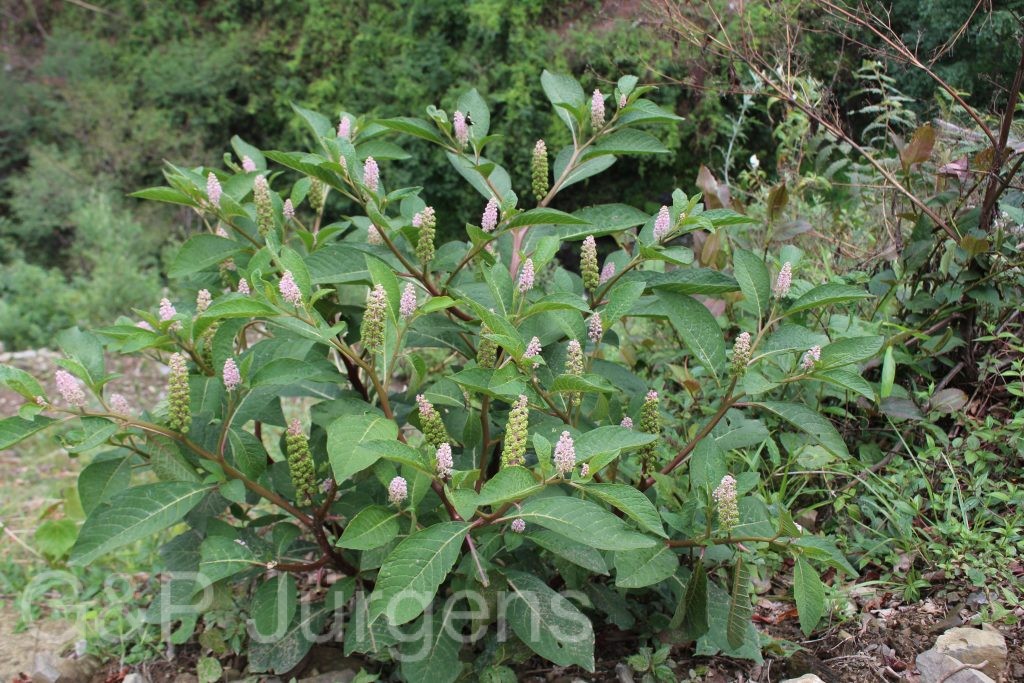
Bhutan2014 111
Bhutan Trashigang 1550m, May

Description

Phytolacca acinosa is a robust herbaceous perennial native to the temperate and subtropical mountains of Asia, from the Himalaya and China eastward to Korea and Japan, and now widely naturalised across Europe, where GBIF records dominate; the more than 40,000 occurrences logged reflect its abundance as an introduced plant across the Netherlands, Belgium, Germany, France and Britain as much as its native Asian range. Within its indigenous range it grows at forest margins, in clearings and on disturbed or cultivated ground at lower and middle elevations. The photographed plant was recorded in eastern Bhutan at Trashigang around 1550 m in May, a setting typical of this nitrogen-loving herb.

The plant arises from a stout, fleshy, often massive perennial taproot and produces tall, erect, branching, somewhat succulent stems. The leaves are alternate, large, elliptic to ovate-lanceolate, entire, with an acute apex and tapering base. The flowers are borne in dense, erect to suberect racemes opposite the leaves; each has five whitish to greenish tepals, the stamens and free carpels typically numbering around eight to ten. The fruit is a fleshy, depressed-globose berry of distinct segments, ripening dark purple-black, each with a single shining seed.

Phytolacca (Phytolaccaceae) is a small genus of pokeweeds known for their berry-like fruits and saponin-rich tissues. P. acinosa is distinguished from the American P. americana by its erect fruiting racemes and free carpels. The young shoots are eaten as a cooked vegetable in Asia, though the root and mature plant are toxic. Far from threatened, it is a successful colonist, now widespread and sometimes weedy beyond its homeland.

Author: Roxb. · Sources: POWO (Kew), GBIF, Flora of China Vol. 5, Flora of Bhutan Vol. 1, Flora of Nepal, Flora of Pakistan, Nowicke monograph of Phytolaccaceae

Picea smithiana

by G & P Jürgens

(Wall.) Boiss.

Nepal 99 189 ergebnis
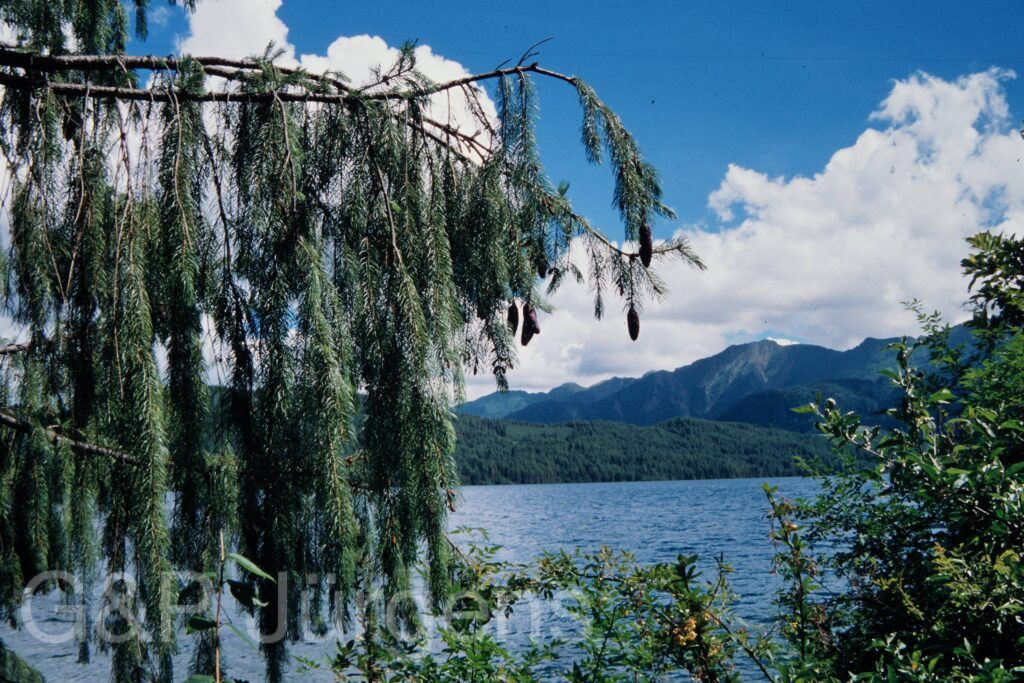
West-Nepal Lara-Lake 3000m, June

Description

Picea smithiana, the West Himalayan or morinda spruce, is a large coniferous tree native to the western and central Himalaya, with a natural range from Afghanistan through northern Pakistan and India to western Nepal and adjacent Tibet (China). The numerous GBIF records outside this core area (United Kingdom, United States, New Zealand, Spain, Italy, Germany, Belgium and others) reflect its long history in arboreta and forestry cultivation rather than natural occurrence. In the wild it forms montane and subalpine coniferous forest, often mixed with Cedrus deodara, Abies pindrow and Pinus wallichiana, typically between about 2,000 and 3,600 m. The plant photographed at Lara Lake in West Nepal at 3,000 m in June lies near the south-eastern limit of its distribution.

The tree is evergreen, reaching 40 m or more, with a straight trunk and conspicuously pendulous branchlets that give it a weeping habit. The leaves are needle-like, quadrangular in cross-section, dark green, among the longest of any spruce at up to 4 cm, borne radially on raised peg-like pulvini. It is monoecious; the pollen cones are small and reddish, while the seed cones are pendulous, cylindrical, 12-18 cm long, green ripening to glossy brown, with smooth-margined, rounded scales. The winged seeds are shed in autumn.

Picea smithiana is the only spruce native to the western Himalaya and is valued for its soft, light timber and as an ornamental. It is assessed as Least Concern globally, though local populations are reduced by logging and grazing pressure. Its weeping, long-needled morphology distinguishes it readily from the eastern Himalayan Picea spinulosa, with which it forms a vicariant pair across the genus's Himalayan distribution.

Author: (Wall.) Boiss. · Sources: POWO (Kew), Flora of China Vol. 4, Flora of Pakistan, GBIF, Farjon: A Handbook of the World's Conifers

Picea spinulosa

by G & P Jürgens

(Griff.) A.Henry

Bhutan2015 407
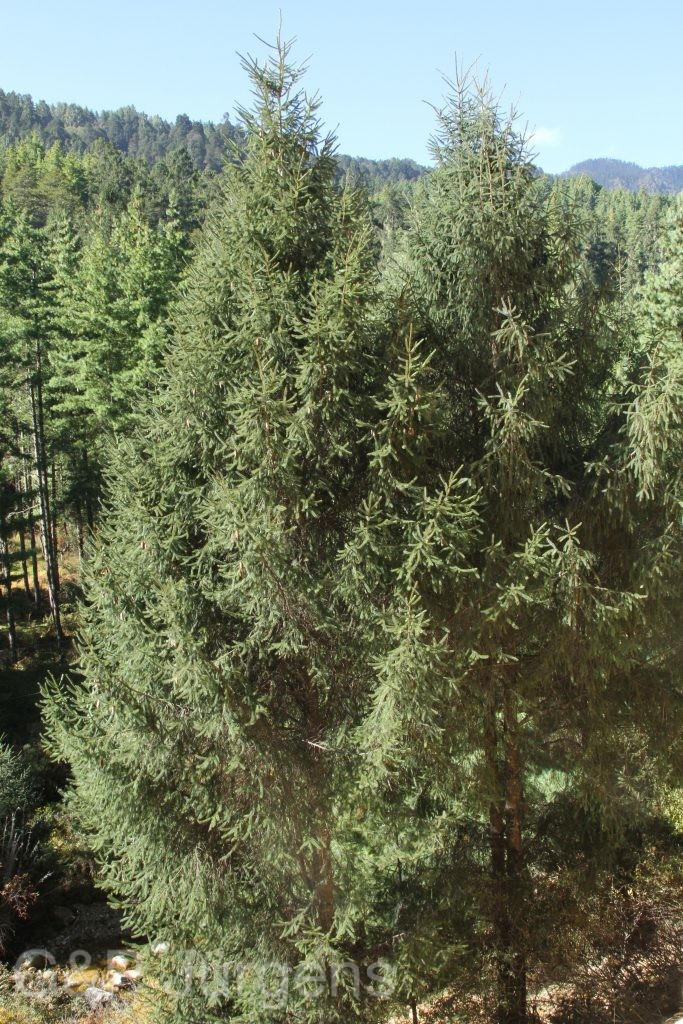
Bhutan Jakar 2550, October
Sikkim2004 440 P767
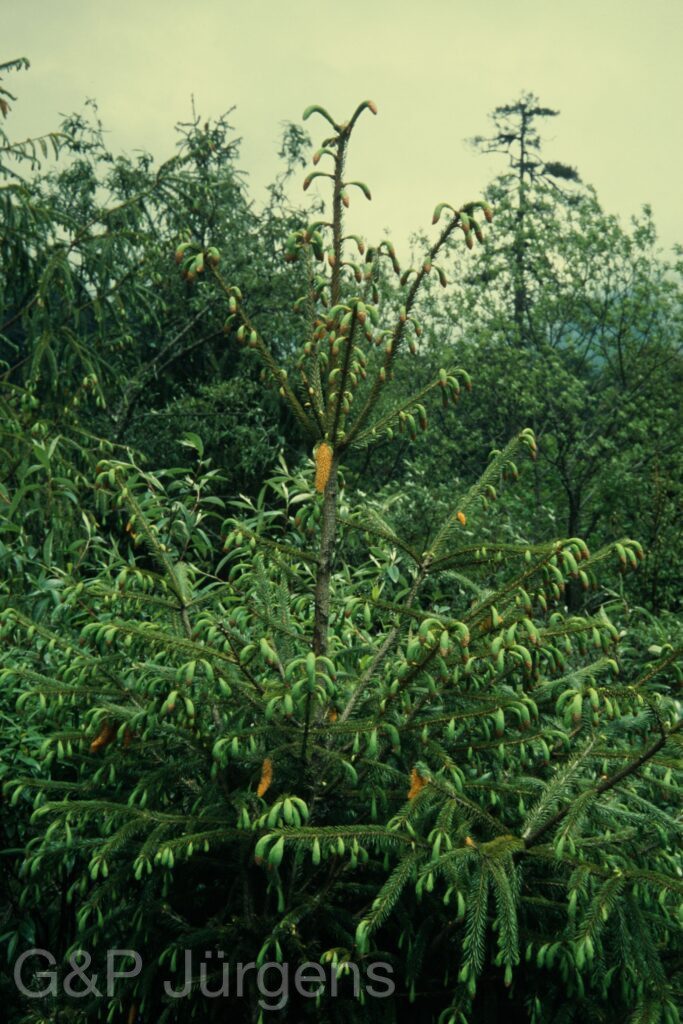
Sikkim/India Lachung 3400m May

Description

Picea spinulosa, the Sikkim or Himalayan weeping spruce, is a coniferous tree endemic to the eastern Himalaya, native to Bhutan, India (Sikkim), Nepal and adjacent China (Xizang); GBIF lists 291 occurrences, many from cultivated arboretum specimens in Europe and North America. In the wild it forms montane coniferous and mixed forests, often on north-facing slopes and in sheltered valleys, generally between about 2300 and 3700 m. The trees illustrated were photographed at Jakar in Bhutan at 2550 m in October and at Lachung in Sikkim at 3400 m in May, spanning the typical altitudinal range.

It is a tall evergreen tree with a conical to columnar crown and pendulous, weeping branchlets that give the species its distinctive habit. The bark is grey and scaly; the needle leaves are flattened, sharply pointed (spinulose, as the epithet notes), borne singly on small peg-like pulvini and showing two whitish stomatal bands beneath. The seed cones are pendulous, cylindrical, green ripening to pale brown, with thin, rounded, entire scales. Pollen and seed cones mature in a single season, and the winged seeds are dispersed by wind from the opening cones.

Picea spinulosa belongs to Pinaceae and is a regional dominant of the eastern Himalayan temperate conifer forests, frequently associating with Tsuga, Abies and broadleaved genera. Its graceful weeping form has led to its planting in temperate arboreta worldwide, accounting for the wide scatter of cultivated records. The species yields useful softwood timber. Although restricted in natural range, it remains locally common; nonetheless its forests are vulnerable to logging, fire and the cumulative effects of land-use change across the eastern Himalaya.

Author: (Griff.) A.Henry · Sources: POWO (Kew), GBIF, Flora of China, Flora of Bhutan, Conifers of the World, Farjon A Handbook of the World's Conifers

Royle ex Benth.

Description

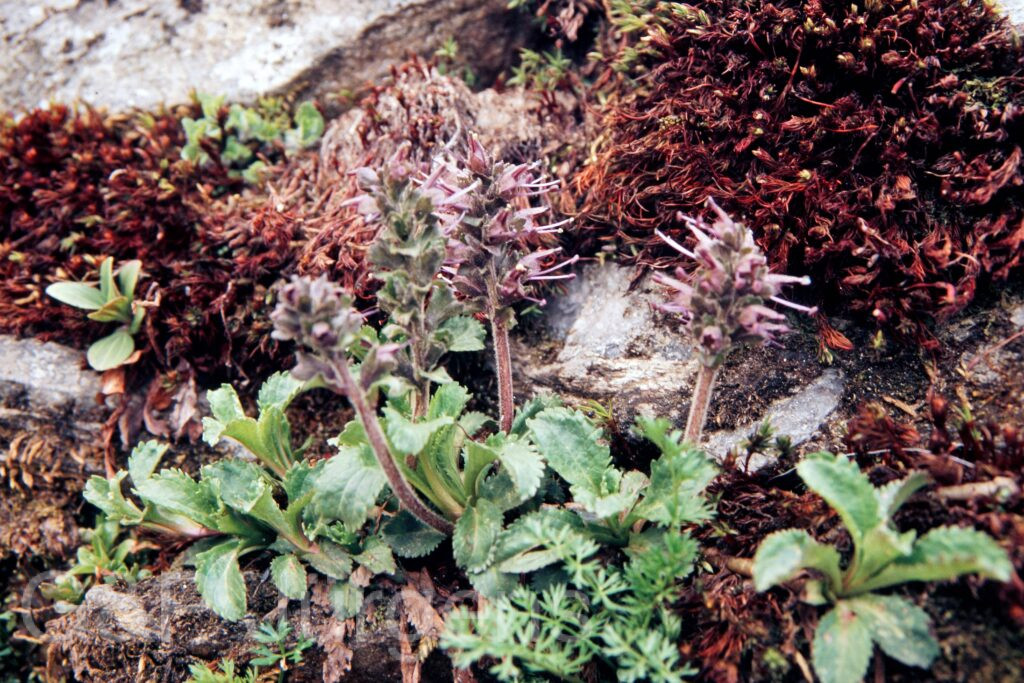
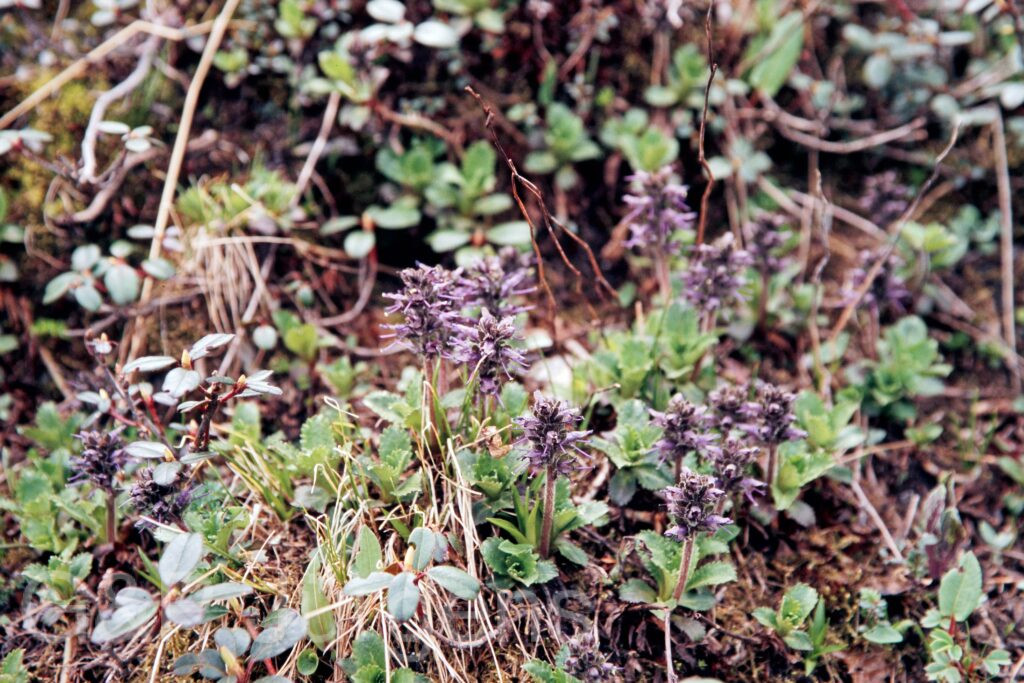
Picrorhiza kurroa Royle ex Benth. is a high-alpine perennial herb of the western and central Himalaya. GBIF records (238 occurrences) place it in India, Pakistan, Nepal, Bhutan, and adjacent China, with its core range along the alpine zone of the Himalayan arc. It was photographed in Garhwal at Kinkhola at 3,550 m in June, a characteristic station on open, rocky alpine slopes, moist screes, and herb-rich meadows between about 3,000 and 4,500 m. The species favours cool, well-drained, often north-facing situations where snow lies late.

The plant develops a creeping, woody, bitter-tasting rhizome from which arise rosettes of leaves. The foliage is mostly basal, the leaves spatulate to obovate, sharply serrate, and tapering into a winged petiole. Erect, leafless scapes bear a dense, cylindrical, spike-like raceme of small flowers; the corolla is bluish-purple to pale, five-lobed, with conspicuously exserted stamens, giving the inflorescence a bristly appearance. The fruit is a small, ovoid capsule containing numerous seeds. The genus is now placed in Plantaginaceae following the dismantling of the traditional Scrophulariaceae.

Picrorhiza kurroa is one of the most heavily exploited Himalayan medicinal plants, the rhizome ("kutki") being a long-established source of the hepatoprotective iridoid glycosides picroside I and II. Sustained wild harvesting for the herbal trade, combined with its narrow alpine niche, has driven steep population declines; it is listed on CITES Appendix II and is regarded as threatened across much of its range, prompting cultivation and conservation initiatives.

Author: Royle ex Benth. · Sources: POWO (Kew), Flora of Pakistan, Flora of Bhutan Vol. 2, GBIF, Hooker: Flora of British India Vol. 4

Pieris formosa

by G & P Jürgens

(Wall.) D. Don

Bhutan2014 861
Bhutan Chele-La 3000m, May
Bhutan2014 859
Bhutan Chele-La 3000m, May
Sikkim2004 381 658
Sikkim/India Lachung 3000m May

Description

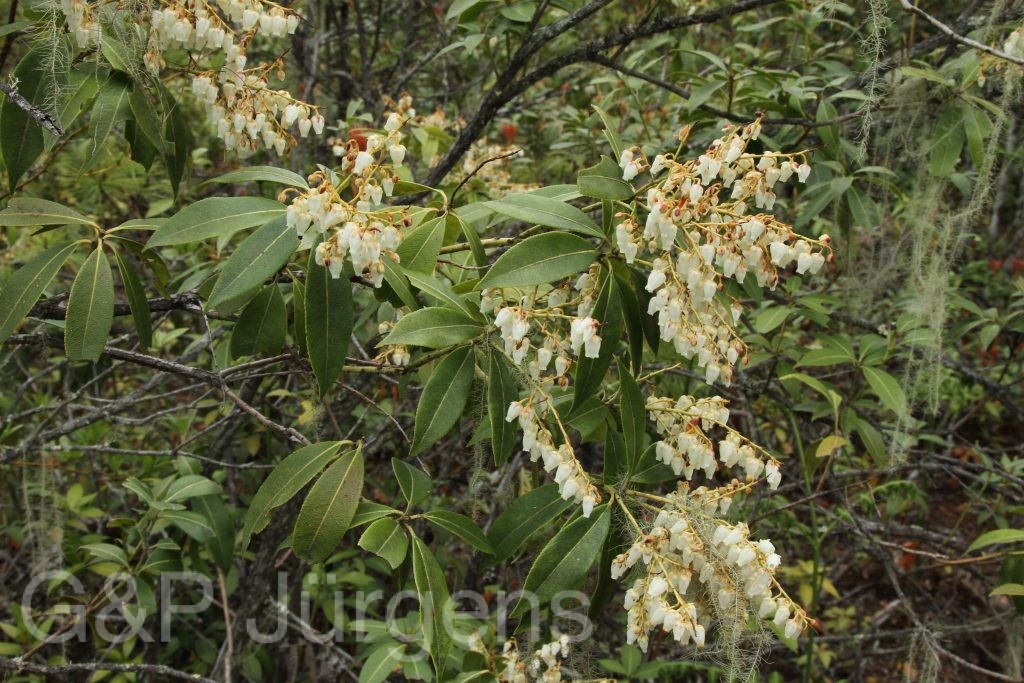
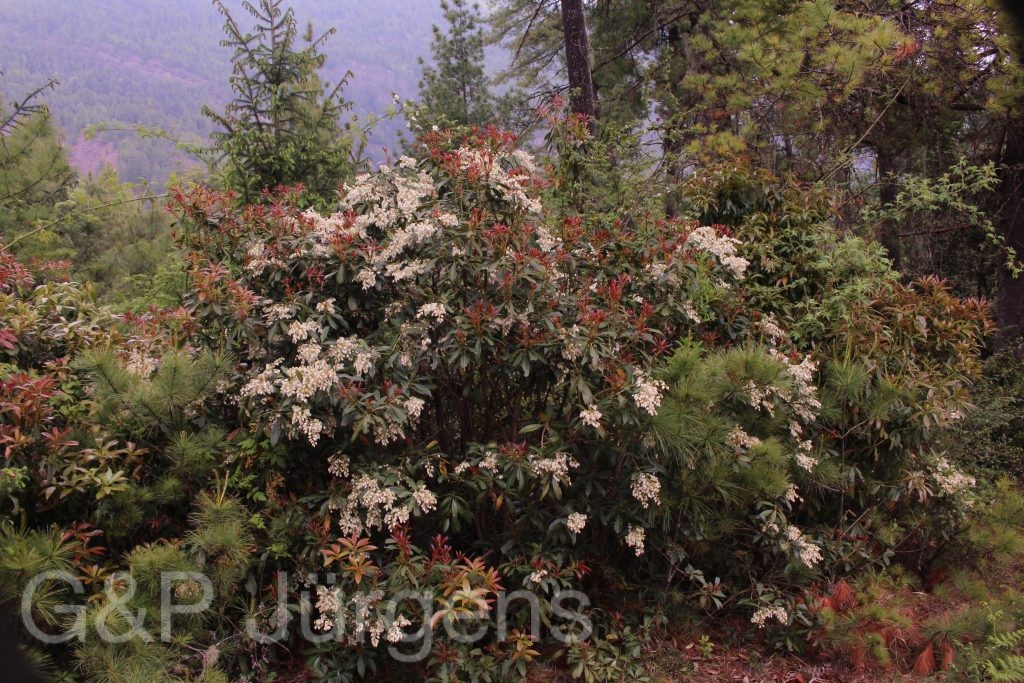
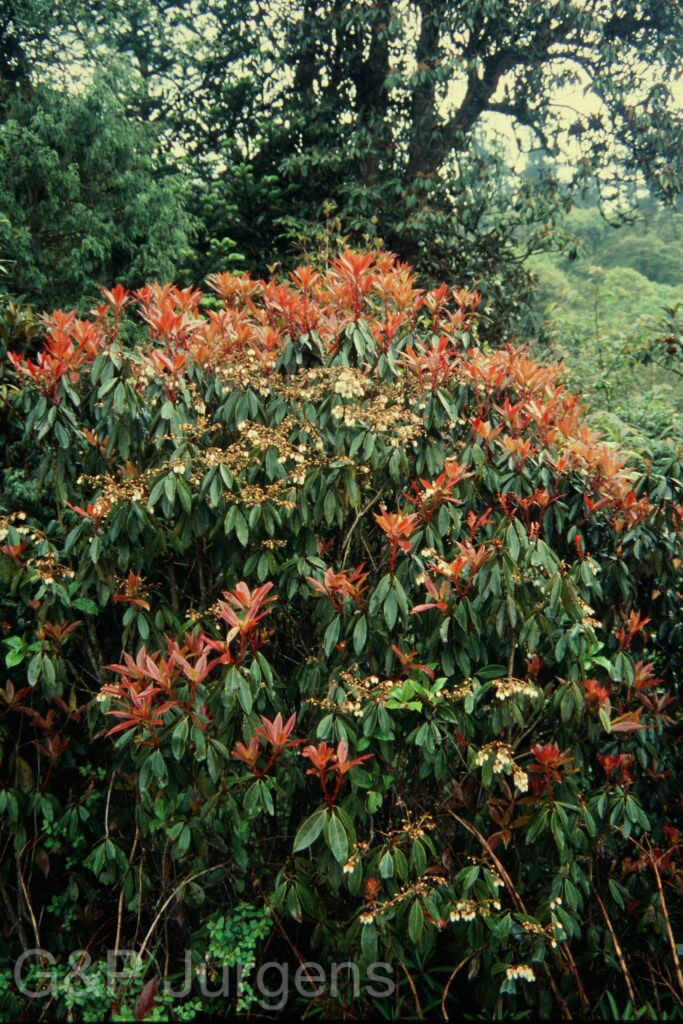
Pieris formosa is an evergreen ericaceous shrub native to the Himalaya and southwestern China, recorded from China, Nepal, India, Bhutan and Myanmar, with cultivated and naturalised records elsewhere accounting for the European, North American, Japanese and other points among its substantial 2971 GBIF occurrences. It occurs in temperate forest, forest margins, thickets and open rocky slopes, generally between 900 and 3300 m. The localities in the caption, Chele-La in Bhutan and Lachung in Sikkim, both around 3000 m in May, represent the cool, humid upper montane forest where the species flowers profusely in spring.

The plant is a much-branched evergreen shrub or small tree reaching several metres, with leathery, oblong-lanceolate to elliptic leaves that are finely serrate, glossy dark green above and frequently flushed bronze or coppery-red when young. The flowers are borne in large, terminal, much-branched panicles; each corolla is small, white, urceolate (urn-shaped) and five-toothed at the mouth, with the stamens enclosed and the ovary superior. Fruit is a small erect, woody, five-valved dehiscent capsule containing numerous minute seeds, the persistent panicles remaining conspicuous after flowering.

Pieris (tribe Lyonieae, subfamily Vaccinioideae) is a small genus of Asian and North American shrubs, and P. formosa is its most robust Himalayan representative, widely grown as an ornamental, notably the form 'Forrestii' selected for its vivid red young growth. Like many Ericaceae it favours acidic, humus-rich soils and harbours grayanotoxins, rendering its foliage poisonous to livestock. Its urn-shaped flowers are pollinated chiefly by bees, and the dust-like seeds are wind-dispersed. The species is common and not threatened across its native range.

Author: (Wall.) D. Don · Sources: POWO (Kew), GBIF, Flora of China, Flora of Bhutan, Bean Trees and Shrubs Hardy in the British Isles

Wedd.

Bhutan2015 180
Bhutan Zhemgang 1000m, October

Description

Pilea anisophylla is a perennial herb of the family Urticaceae, widely distributed through the Himalaya and Indo-Malayan region. GBIF records place it in China, Nepal, India, Bhutan, Bangladesh, Myanmar, Thailand and Indonesia, indicating a broad subtropical to warm-temperate range. It is a plant of moist, shaded habitats, growing on damp rocks, mossy boulders, stream banks, forest floors and shaded walls in evergreen and semi-evergreen broad-leaved forest, generally from low elevations up to about 2,500 m. The specimen illustrated from Zhemgang in central Bhutan at roughly 1,000 m in October typifies the humid mid-montane forest where the genus flourishes.

The plant is a soft, fleshy, often somewhat succulent herb with terete, frequently translucent stems that may root at the lower nodes. As the epithet indicates, the paired leaves of each node are strongly anisophyllous, one of the pair being markedly larger than the other; the blades are ovate to elliptic, with a toothed or crenate-serrate margin, three-veined from the base, and dotted with the linear cystoliths characteristic of the family. Stipules are present at the nodes. The flowers are minute, greenish and unisexual, borne in small axillary cymose clusters; like other Urticaceae the staminate flowers have explosively dehiscent stamens that scatter pollen, and the inconspicuous pistillate flowers develop into small, compressed achenes.

Pilea is the largest genus of the nettle family and is taxonomically difficult, with many species separated on subtle vegetative and achene characters; the conspicuous leaf inequality of P. anisophylla is a useful field character. Lacking stinging hairs, the plant is harmless to handle, and as a shade- and moisture-loving understorey herb it is a minor but consistent component of Himalayan forest ground flora. It is not regarded as threatened, its wide range and tolerance of disturbed shaded sites buffering it against habitat change.

Author: Wedd. · Sources: POWO (Kew), GBIF, Flora of China Vol. 5, Flora of Bhutan Vol. 1, Flora of Nepal, Friis: Urticaceae of the Himalaya

Wedd.

Sikkim2011 6
Bhutan Tista-valley 1900m, October

Description

Pilea insolens is a Sino-Himalayan herbaceous species distributed from central Nepal through Sikkim, Bhutan, and northeast India (Darjeeling, Arunachal Pradesh) to Bangladesh, Myanmar, southern China, Japan, and Indonesia. GBIF records 94 occurrences across this range. The species inhabits damp, shaded habitats in subtropical and warm-temperate forests at elevations of 800–2,400 m, where it colonises moist rocks, stream banks, tree bases, and old walls in areas of high humidity. It is most abundant in the eastern Himalayan valleys that receive heavy monsoon precipitation.
Pilea insolens is a succulent, erect to ascending, monoecious perennial herb, 15–40 cm tall. Stems are fleshy, translucent, glabrous, and often reddish-brown at the base. Leaves are opposite, markedly anisophyllous — a characteristic feature, with the larger leaf of each pair broadly ovate to suborbicular, 3–8 cm long, and the smaller leaf often reduced to a stipule-like scale or small blade less than 1 cm. The larger leaf surface is dark green, often with a cystolith-dotted texture visible as pale streaks, with crenate to serrate margins and three prominent basal veins. Stipules are small, membranous, and soon deciduous. Male and female flowers are borne in separate axillary cymes on the same plant; the male flowers are minute with four perianth segments, while the female flowers are even smaller, with an achene enclosed by persistent perianth lobes.
The photographed specimen from the Tista valley in Bhutan at 1,900 m in October represents a typical occurrence in the humid, deeply incised river valleys of the eastern Himalayas. Pilea insolens is distinguished from other Himalayan congeners by its pronounced leaf anisophylly combined with the broadly ovate, crenate larger leaf. The genus Pilea is enormous, with over 700 species globally, and the eastern Himalayan region is a centre of diversity with numerous narrowly distributed endemics. The species' extension from the Himalayas into Japan and Indonesia reflects a shared subtropical element across the monsoon-influenced forests of East and Southeast Asia. Its reliance on humid, undisturbed forest microsites makes it sensitive to deforestation and stream-channel modification.

Author: Wedd. · Sources: POWO (Kew), GBIF, Flora of China Vol. 5, Flora of Bhutan Vol. 1, Grierson & Long (1983), Chen (1982) — Revision of Chinese Pilea

Wedd.

Bhutan2014 833
Bhutan Thimphu 2450m, May

Description

Pilea symmeria is a herbaceous member of the nettle family with a broad Asian range, GBIF documenting it from China, Nepal, Bhutan, NE India, Thailand, Indonesia and Japan across some 217 records. It is a plant of shaded, humid habitats, growing on moist rock faces, stream banks, ravines and the floor of broadleaved evergreen forest. The photographed plant from Thimphu in Bhutan at 2,450 m (May) is representative of its mid-montane occurrence, where it favours cool, sheltered and consistently damp microsites typical of the genus.

It is a soft, glabrous perennial or annual herb with succulent, often translucent stems frequently rooting at the lower nodes. The leaves are opposite, equal or somewhat unequal in a pair, ovate to elliptic, with a toothed or crenate margin and conspicuous linear cystoliths visible on the surface, the venation triplinerved at the base as is characteristic of Pilea. The plants are typically monoecious, the minute unisexual flowers borne in small axillary cymes; the male flowers have a 4-merous perianth and explosively dehiscent stamens, while the female flowers produce a small, compressed achene.

The family is here correctly Urticaceae. Pilea is the largest genus of the nettle family and a notoriously difficult one, the species separated on subtle differences in leaf shape, stipules, cystolith pattern and inflorescence. The explosive release of pollen by the recoiling stamens is a hallmark dispersal mechanism of the family. As a widespread, shade-adapted forest herb of no particular rarity, P. symmeria is not regarded as threatened, though it is sensitive to disturbance of the humid forest understorey it requires.

Author: Wedd. · Sources: POWO (Kew), Flora of Bhutan Vol. 1, GBIF, Flora of China Vol. 5, Friis: Urticaceae (in Families and Genera of Vascular Plants)