
Wedd.
Description
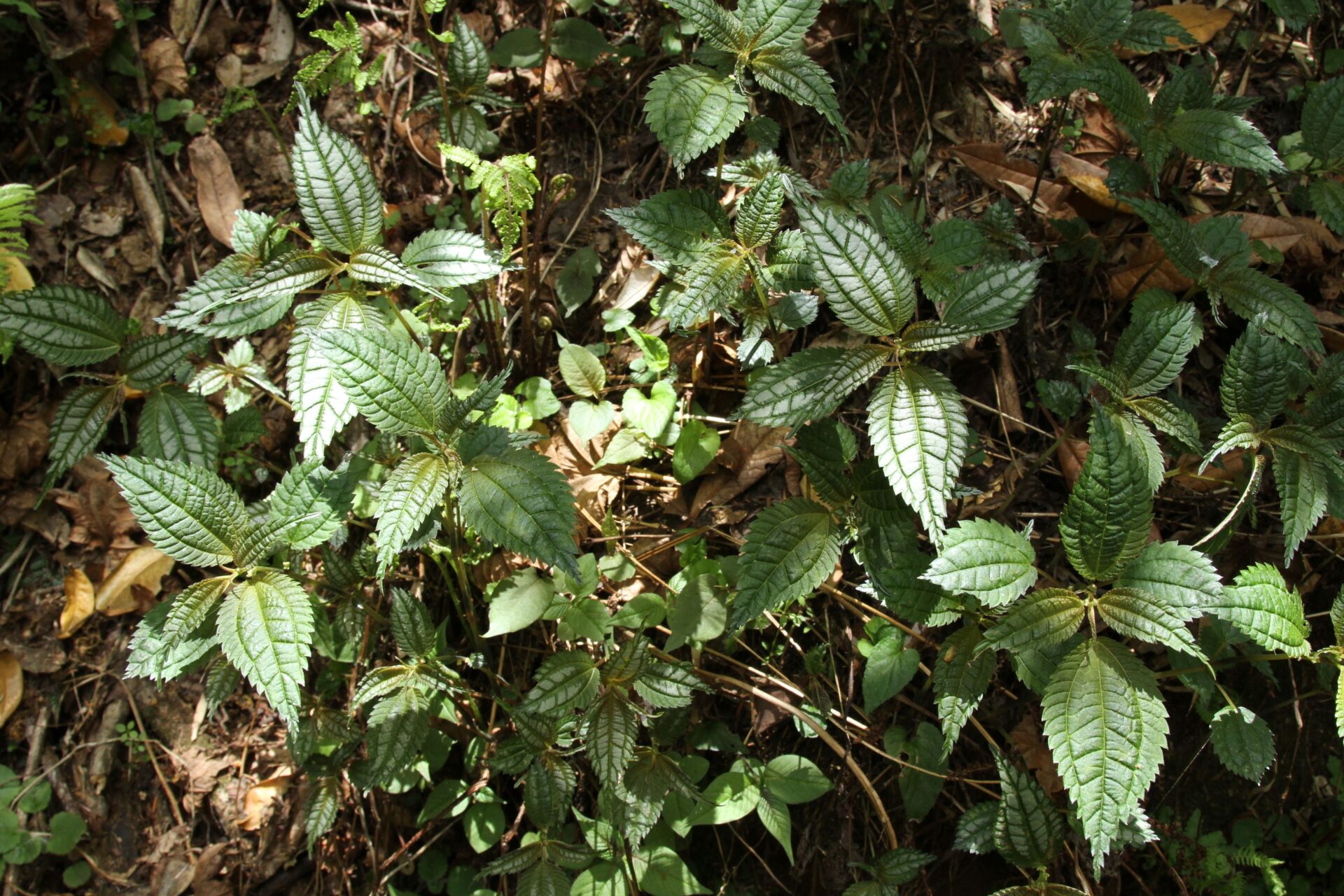
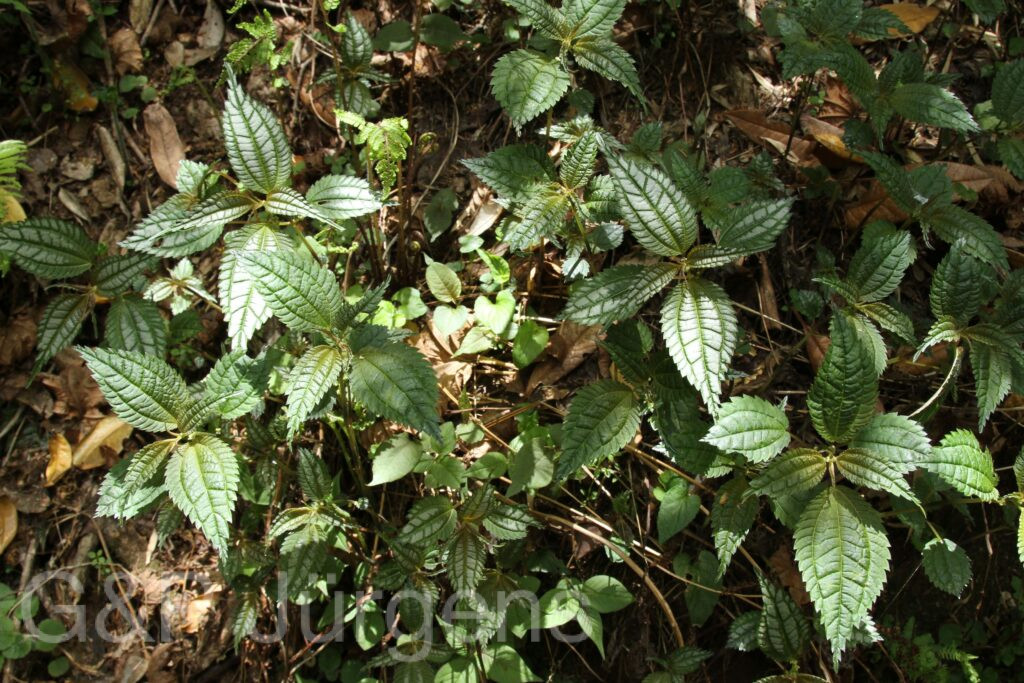
Pilea symmeria is a herbaceous member of the nettle family with a broad Asian range, GBIF documenting it from China, Nepal, Bhutan, NE India, Thailand, Indonesia and Japan across some 217 records. It is a plant of shaded, humid habitats, growing on moist rock faces, stream banks, ravines and the floor of broadleaved evergreen forest. The photographed plant from Thimphu in Bhutan at 2,450 m (May) is representative of its mid-montane occurrence, where it favours cool, sheltered and consistently damp microsites typical of the genus.
It is a soft, glabrous perennial or annual herb with succulent, often translucent stems frequently rooting at the lower nodes. The leaves are opposite, equal or somewhat unequal in a pair, ovate to elliptic, with a toothed or crenate margin and conspicuous linear cystoliths visible on the surface, the venation triplinerved at the base as is characteristic of Pilea. The plants are typically monoecious, the minute unisexual flowers borne in small axillary cymes; the male flowers have a 4-merous perianth and explosively dehiscent stamens, while the female flowers produce a small, compressed achene.
The family is here correctly Urticaceae. Pilea is the largest genus of the nettle family and a notoriously difficult one, the species separated on subtle differences in leaf shape, stipules, cystolith pattern and inflorescence. The explosive release of pollen by the recoiling stamens is a hallmark dispersal mechanism of the family. As a widespread, shade-adapted forest herb of no particular rarity, P. symmeria is not regarded as threatened, though it is sensitive to disturbance of the humid forest understorey it requires.
Author: Wedd. · Sources: POWO (Kew), Flora of Bhutan Vol. 1, GBIF, Flora of China Vol. 5, Friis: Urticaceae (in Families and Genera of Vascular Plants)