
Wedd. ex D.G.Long
Description
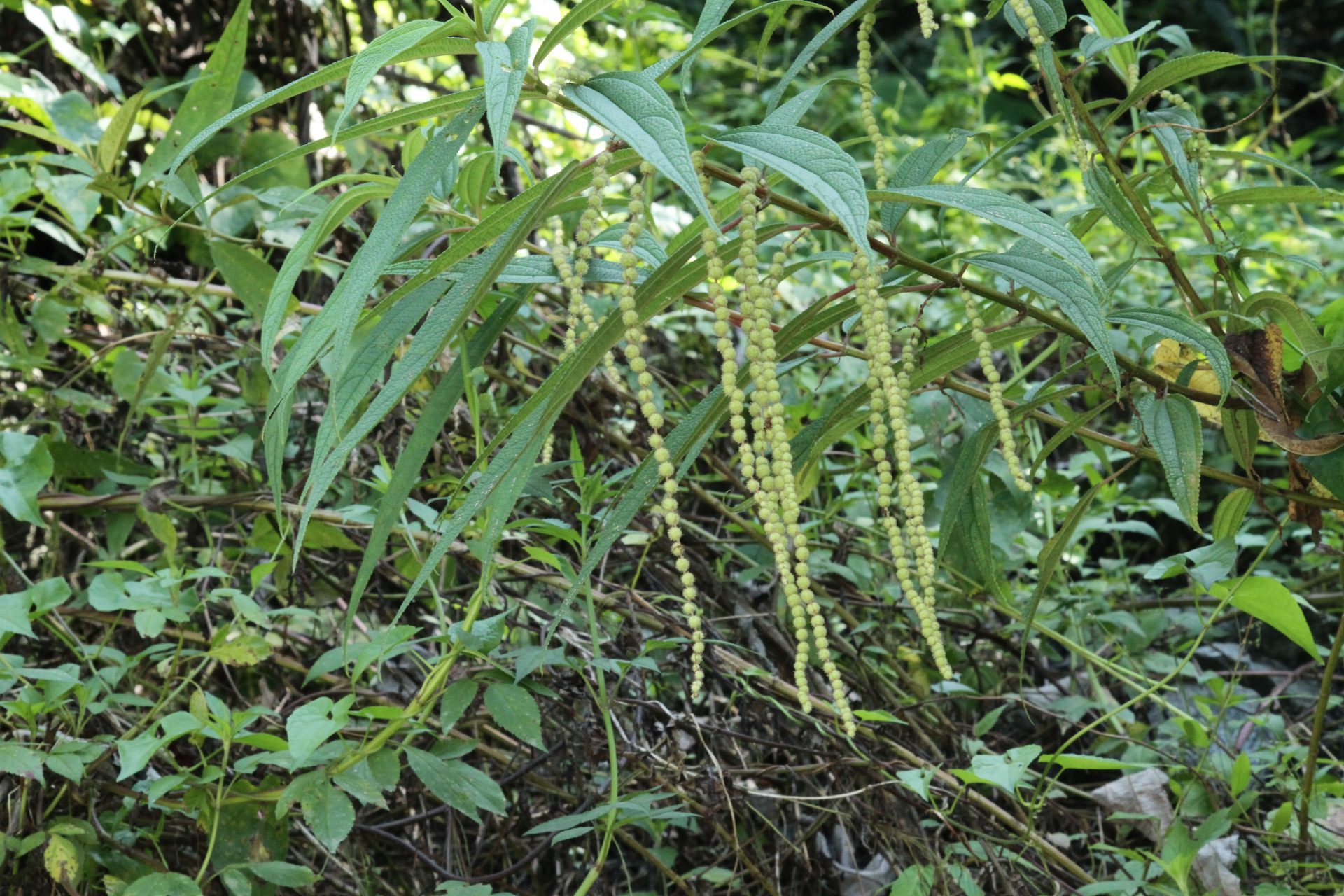
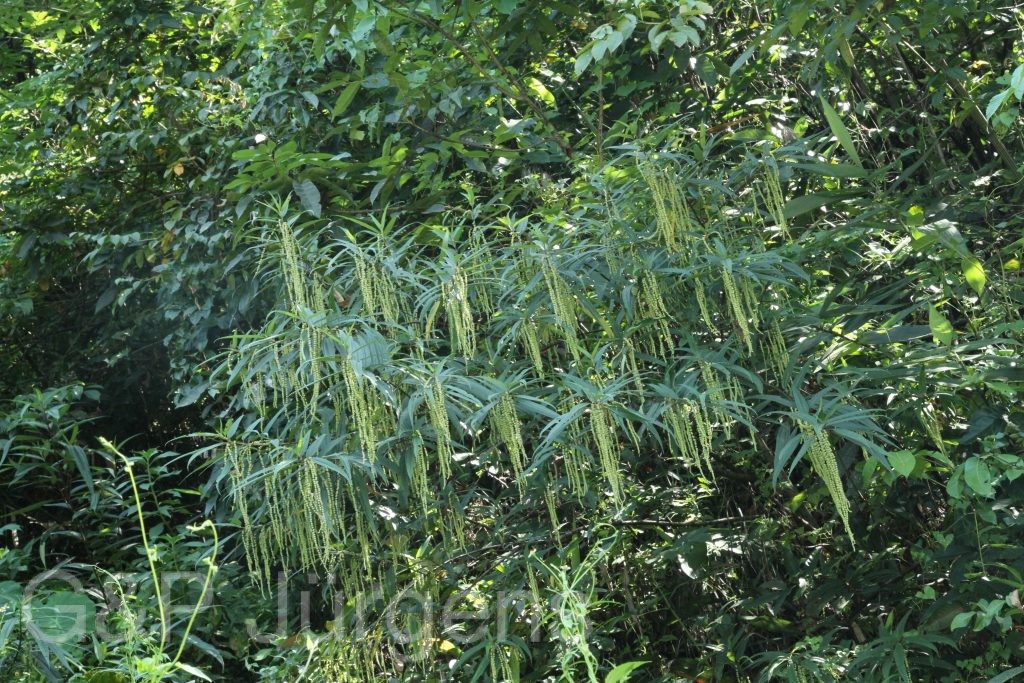
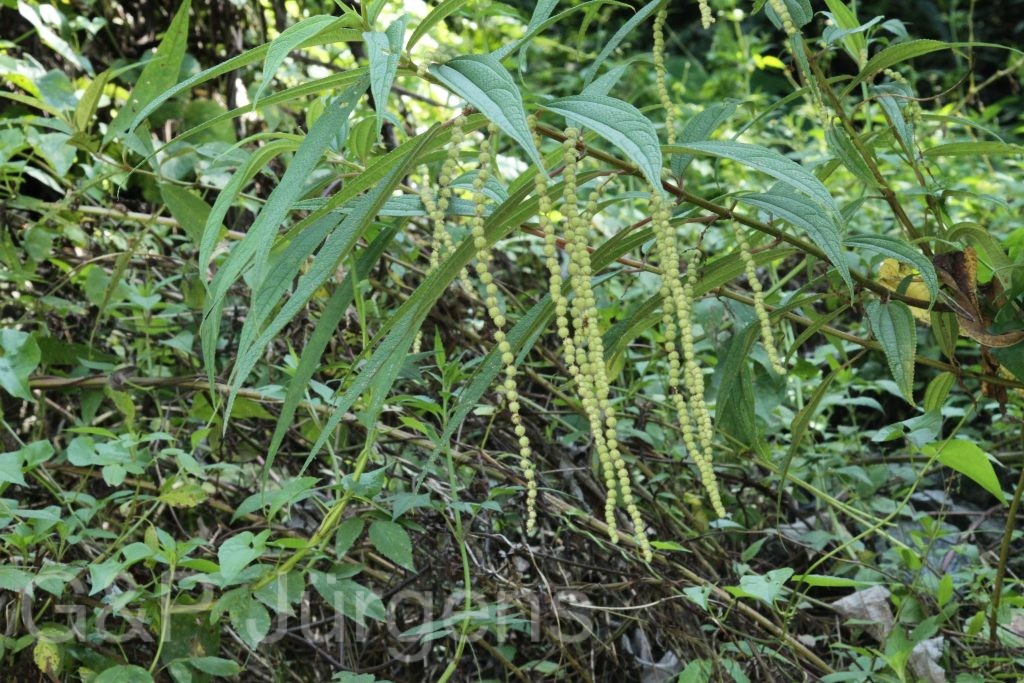
Boehmeria penduliflora is a shrubby false-nettle distributed from the Himalaya and southern China through Indochina and Southeast Asia, with GBIF documenting nearly 2000 occurrences including naturalised records on Indian Ocean islands such as Reunion and Mauritius. It favours warm, humid lowland and submontane settings: streambanks, forest margins, roadside thickets and disturbed scrub on moist soils. The photographed plant grows in southern Bhutan at Gelephu around 600 m, in flower or fruit in October; the species is most frequent below about 1500 m in the subtropical foothill zone where it can form sizeable bushes.
The plant is a much-branched, erect to spreading shrub reaching two to three metres, with terete, finely pubescent young stems and, unlike true nettles, no stinging hairs. The leaves are opposite or subopposite, narrowly lanceolate to elliptic, long-acuminate, serrate-margined and three-nerved from the base, scabrid above and paler beneath. The minute unisexual flowers are densely clustered in glomerules arranged along slender, pendulous axillary spikes, a feature reflected in the epithet penduliflora. The fruit is a small ellipsoid achene enclosed in the persistent perianth.
Boehmeria belongs to the tribe Boehmerieae of the Urticaceae and includes the economically important ramie; B. penduliflora yields a usable bast fibre and is browsed by livestock, with leaves used as fodder and occasionally in traditional medicine. Its drooping inflorescences and lanceolate leaves readily distinguish it within the genus. Widespread, vigorous and tolerant of disturbance, it is of least concern and has naturalised well beyond its native Asian range as a hedge and fibre plant.
Author: Wedd. ex D.G.Long · Sources: POWO (Kew), GBIF, Flora of China, Flora of Bhutan, Boehmeria revision (Wilmot-Dear & Friis)