
D.Don
Description
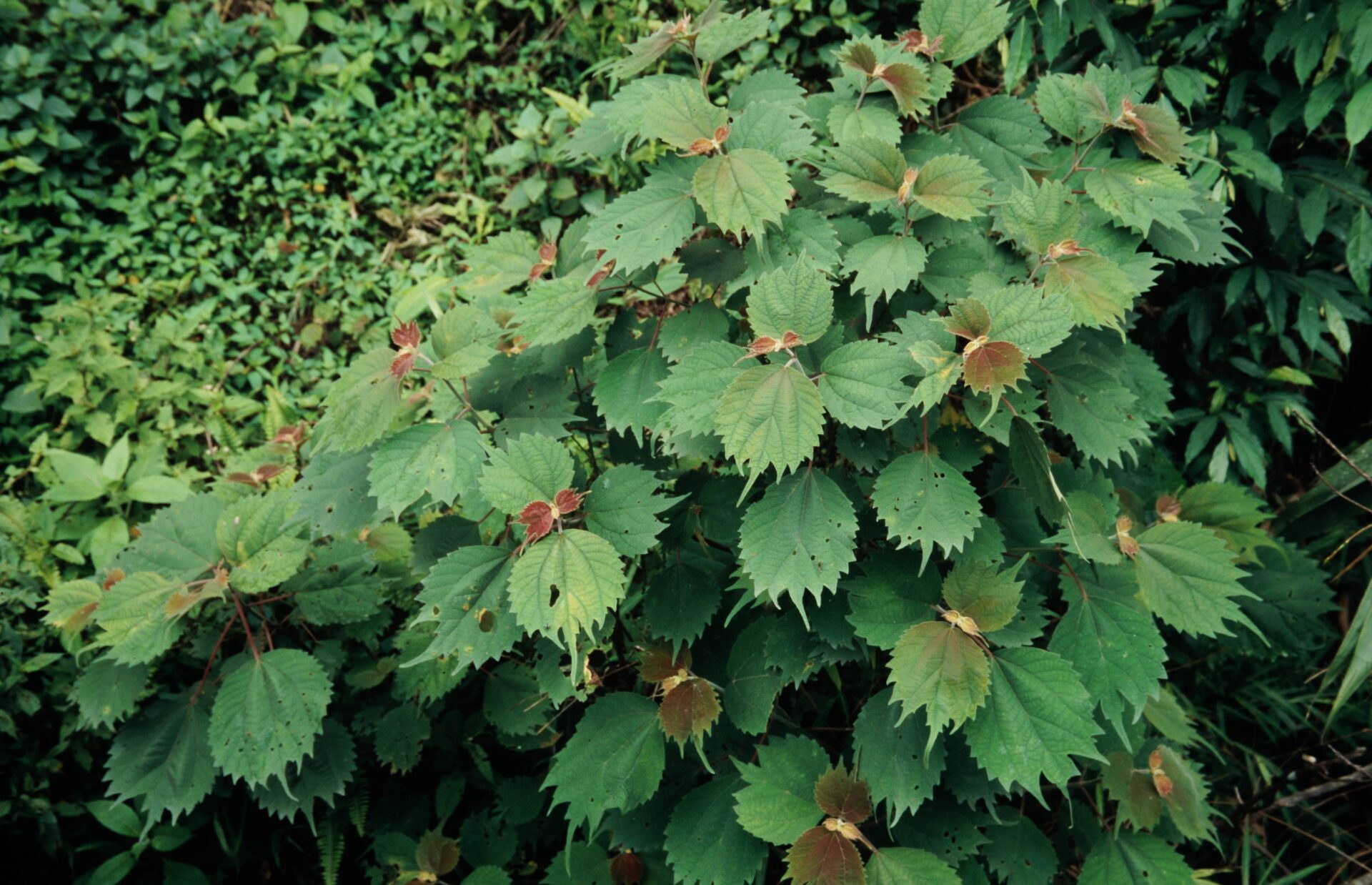
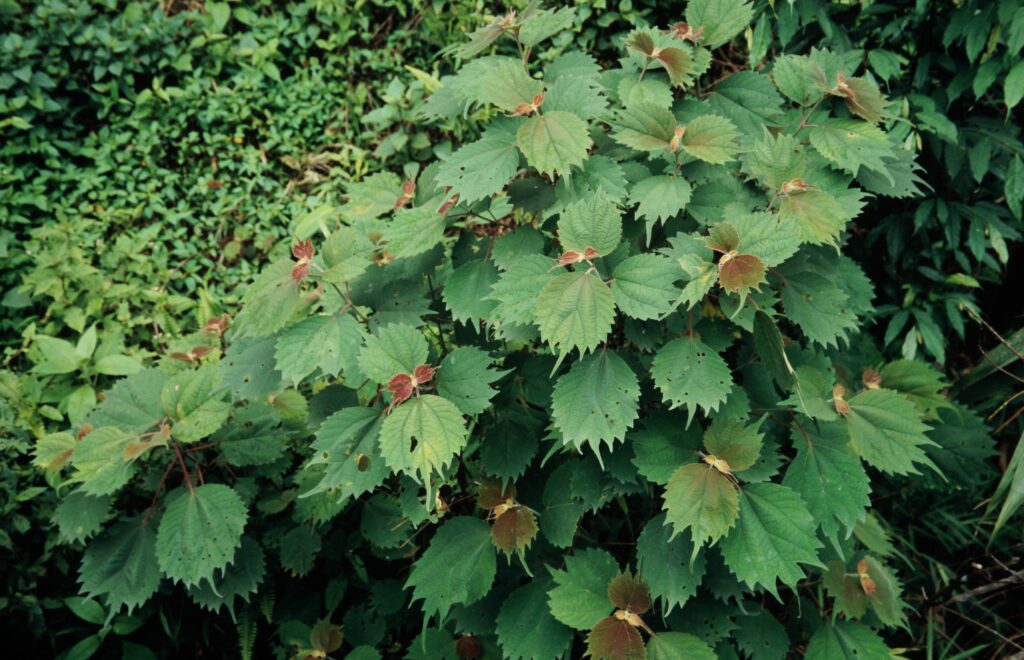
Boehmeria ternifolia is a shrubby member of the nettle family ranging through the eastern Himalaya and adjacent regions, recorded from Nepal, India and Bhutan, with GBIF documenting nearly two hundred occurrences across these countries; scattered records from France and the United States represent herbarium and cultivated holdings rather than wild populations. It is a plant of warm-temperate to subtropical broadleaved forest, favouring shaded ravines, streamsides, moist forest margins and roadside banks, typically between roughly 1000 and 2200 m. The specimen illustrated from Lingza in the Darjeeling district of West Bengal at about 1300 m, in May, is representative of these humid mid-elevation forests of the Sikkim-Darjeeling Himalaya, where high rainfall and deep shade favour the soft-leaved, non-stinging habit of the genus.
The plant is an erect shrub or subshrub with woody lower stems and herbaceous, often four-angled younger branches that lack stinging hairs. The leaves are characteristically arranged in whorls of three (occasionally opposite), the basis of the epithet ternifolia; they are ovate to lanceolate, with a long-acuminate apex, serrate margins and a three-veined base, the lamina thin and somewhat rough above. Stipules are present and soon falling. The minute unisexual flowers are borne in slender, interrupted axillary spikes or glomerules, the staminate flowers with a four-lobed perianth and four stamens, the pistillate flowers tubular and enclosing a single ovary with a filiform stigma. The fruit is a small achene tightly invested by the persistent perianth.
Boehmeria is a pantropical and warm-temperate genus best known for ramie (B. nivea), an important bast-fibre crop, and several Himalayan species likewise yield serviceable cordage fibres from their stems. The whorled, ternate leaf arrangement of B. ternifolia is a useful diagnostic character separating it from the many opposite-leaved congeners of the region. As a common, ecologically tolerant forest-edge shrub with a wide elevational and geographic span, it is of no conservation concern, and its abundance along disturbed margins suggests considerable resilience to moderate human impact within the eastern Himalayan forest belt.
Author: D.Don · Sources: POWO (Kew), GBIF, Flora of China Vol. 5, Flora of Bhutan Vol. 1 Part 2, Flora of Nepal, A Revision of Boehmeria (Urticaceae) (W.T. Wang and C.J. Chen)