
Wedd.
Description
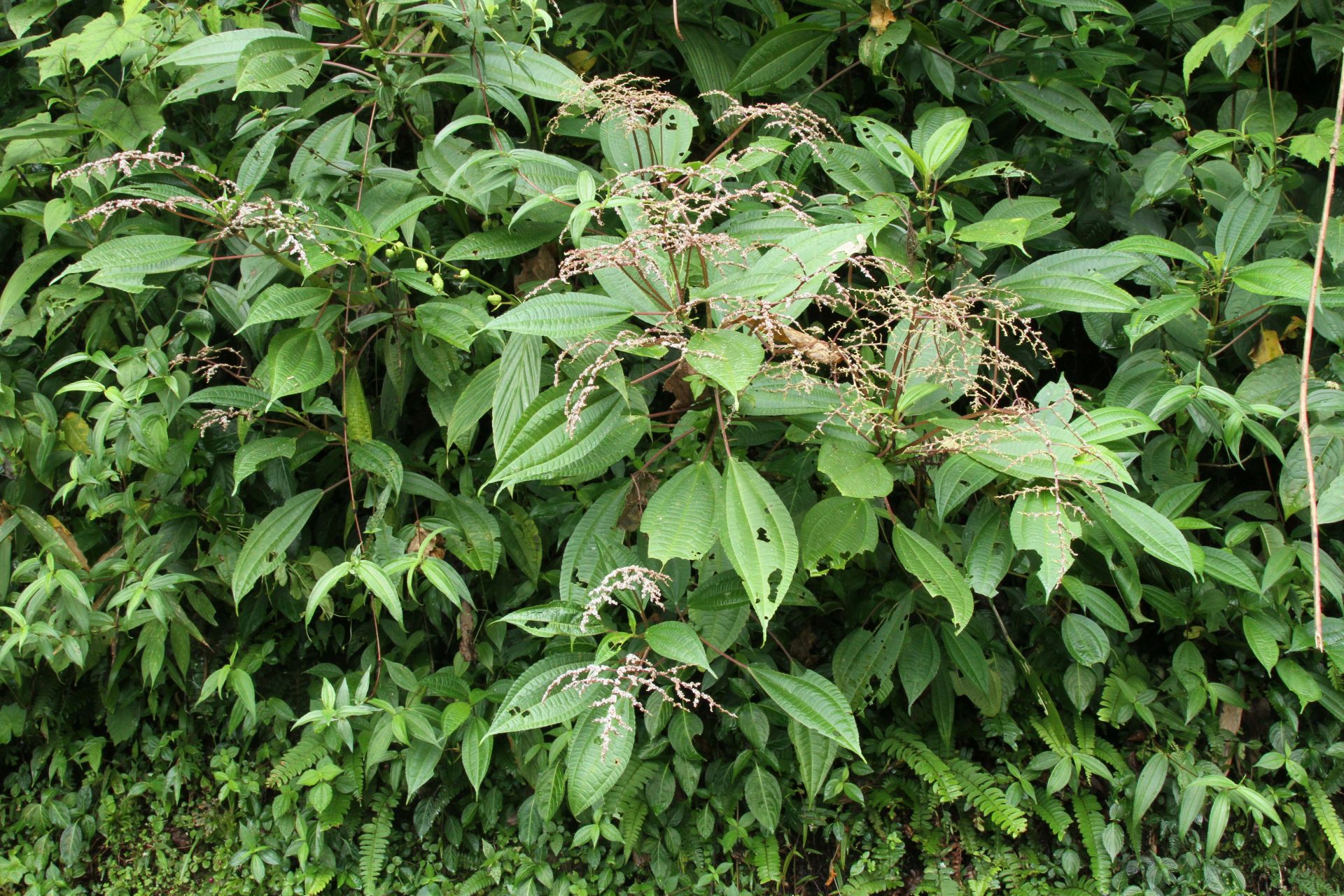
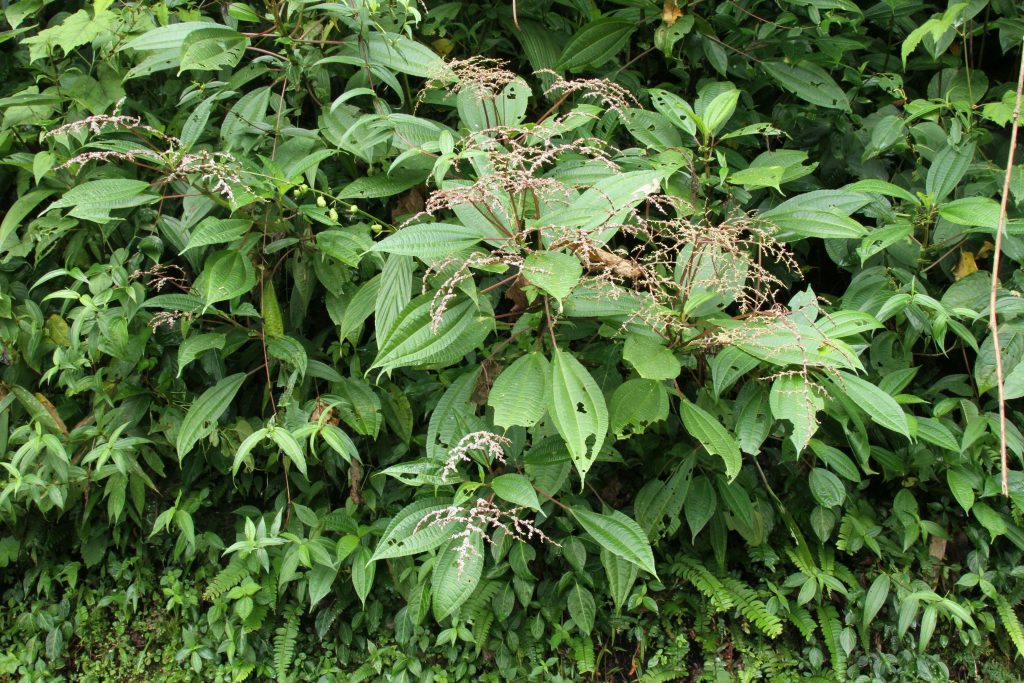
Boehmeria hamiltoniana is a subtropical shrub or tall herb of the Himalayan foothills and adjacent Southeast Asia, recorded from India, China, Nepal, Thailand, Bhutan, Myanmar and Indonesia across some 115 GBIF occurrences. The illustrated plant was photographed at Galephu in southern Bhutan at about 900 m in September. It grows in warm, humid lowland and submontane settings, along forest margins, streamsides, ravines and disturbed ground generally below about 1500 m, favouring shaded, moist, fertile soils.
The plant is a perennial herb or soft-wooded shrub with erect, sometimes pubescent stems. The leaves are opposite or alternate, ovate to ovate-lanceolate, with a serrate or dentate margin and an acuminate apex, three-nerved from the base and often roughish or hairy. As in the Urticaceae the flowers are small, greenish and unisexual, lacking petals; they are densely aggregated into slender, often interrupted axillary spikes or panicles. The female flowers develop into small dry achenes enclosed in the persistent perianth, each containing a single seed.
Boehmeria belongs to the nettle family but, unlike true nettles, lacks stinging hairs. The genus includes the economically important ramie (Boehmeria nivea), valued for its strong bast fibres, and several Himalayan species are used locally for cordage. Wind plays a role in pollination of the inconspicuous flowers. B. hamiltoniana is widespread and ecologically tolerant of disturbance, and is therefore of least conservation concern, persisting readily along trails and forest edges.
Author: Wedd. · Sources: POWO (Kew), GBIF, Flora of China, Flora of Bhutan, Flora of Nepal, Friis & Wilmot-Dear – Revision of Boehmeria (Urticaceae)