
Wedd.
Description
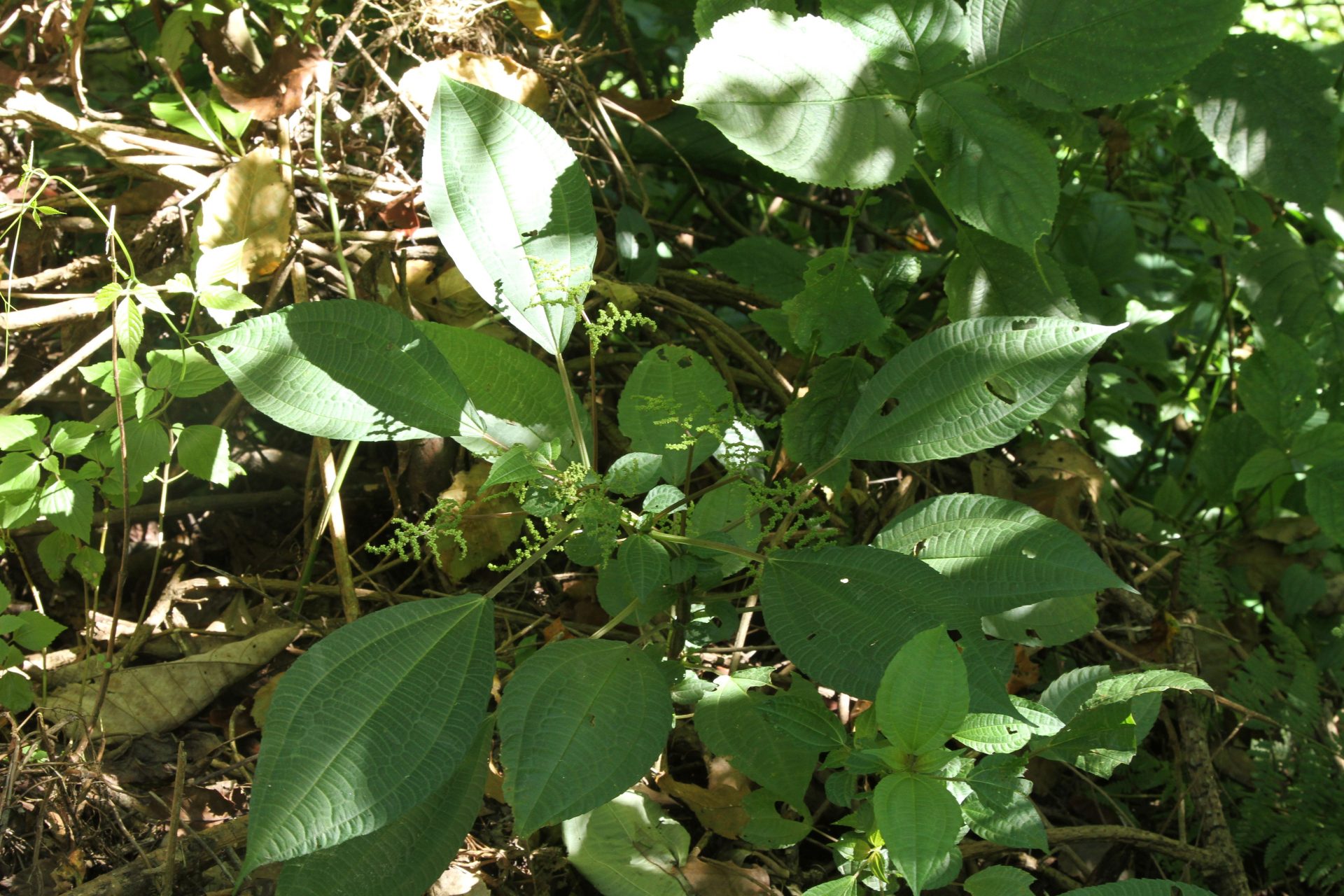
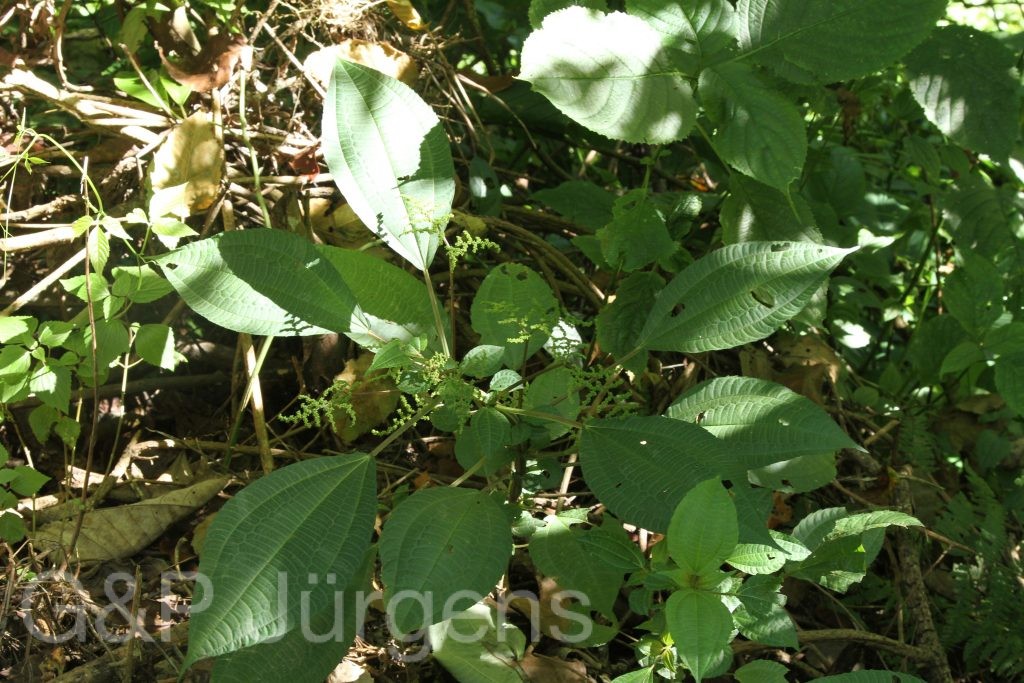
Pilea anisophylla is a perennial herb of the family Urticaceae, widely distributed through the Himalaya and Indo-Malayan region. GBIF records place it in China, Nepal, India, Bhutan, Bangladesh, Myanmar, Thailand and Indonesia, indicating a broad subtropical to warm-temperate range. It is a plant of moist, shaded habitats, growing on damp rocks, mossy boulders, stream banks, forest floors and shaded walls in evergreen and semi-evergreen broad-leaved forest, generally from low elevations up to about 2,500 m. The specimen illustrated from Zhemgang in central Bhutan at roughly 1,000 m in October typifies the humid mid-montane forest where the genus flourishes.
The plant is a soft, fleshy, often somewhat succulent herb with terete, frequently translucent stems that may root at the lower nodes. As the epithet indicates, the paired leaves of each node are strongly anisophyllous, one of the pair being markedly larger than the other; the blades are ovate to elliptic, with a toothed or crenate-serrate margin, three-veined from the base, and dotted with the linear cystoliths characteristic of the family. Stipules are present at the nodes. The flowers are minute, greenish and unisexual, borne in small axillary cymose clusters; like other Urticaceae the staminate flowers have explosively dehiscent stamens that scatter pollen, and the inconspicuous pistillate flowers develop into small, compressed achenes.
Pilea is the largest genus of the nettle family and is taxonomically difficult, with many species separated on subtle vegetative and achene characters; the conspicuous leaf inequality of P. anisophylla is a useful field character. Lacking stinging hairs, the plant is harmless to handle, and as a shade- and moisture-loving understorey herb it is a minor but consistent component of Himalayan forest ground flora. It is not regarded as threatened, its wide range and tolerance of disturbed shaded sites buffering it against habitat change.
Author: Wedd. · Sources: POWO (Kew), GBIF, Flora of China Vol. 5, Flora of Bhutan Vol. 1, Flora of Nepal, Friis: Urticaceae of the Himalaya