
(Royle) Wedd.
Description
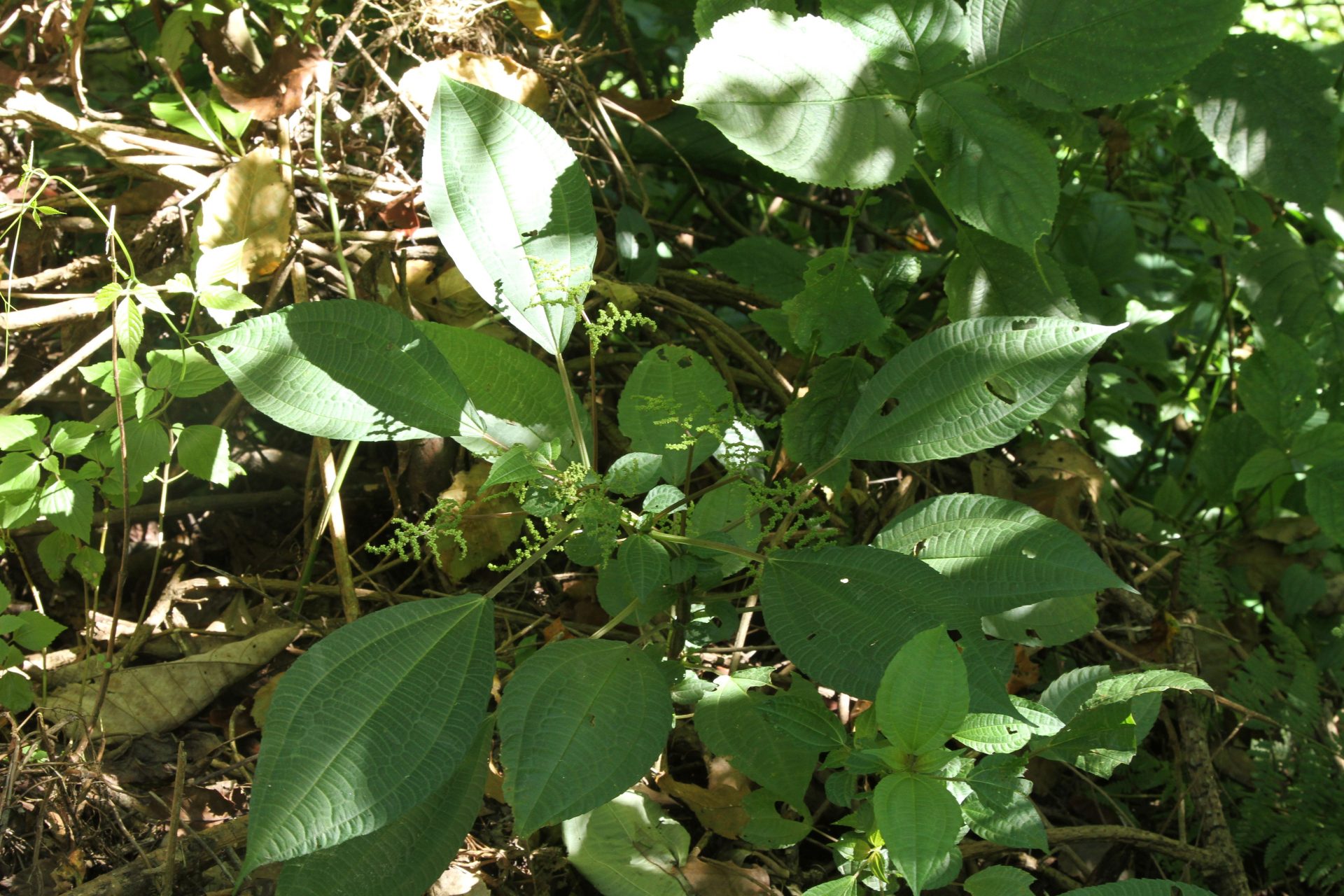
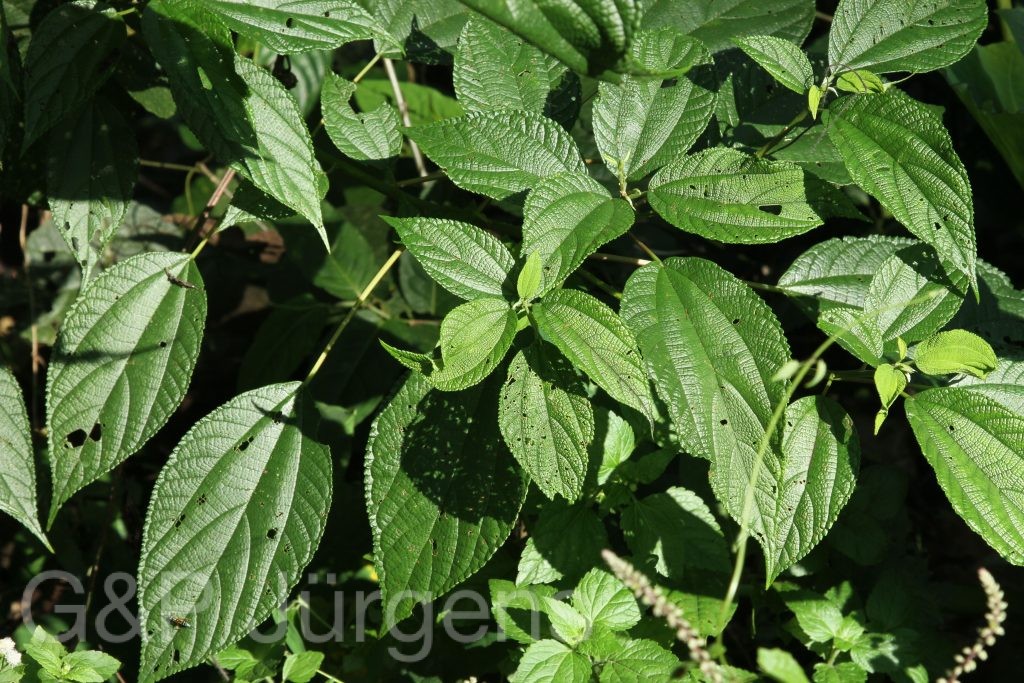
Lecanthus peduncularis is a widespread herb of tropical and subtropical Asia and beyond, ranging from the Himalaya (Nepal, India, Bhutan, Pakistan) through China, Taiwan, Japan and South-East Asia to Indonesia, the Philippines, Papua New Guinea and parts of Africa (Cameroon, Equatorial Guinea, Ethiopia); its very numerous GBIF records (over 2150) reflect this broad distribution. It grows in moist, shady places in evergreen and mixed forest, on damp banks, by streams, on dripping rocks and at forest margins, from the lowlands up to mid-montane elevations of around 2500 m. The photographed plant from Galephug in southern Bhutan at 600 m in October is typical of its warm, humid foothill habitat.
It is a soft, succulent perennial or annual herb with weak, ascending to creeping stems, glabrous to sparsely hairy and rooting at the lower nodes. The opposite leaves are ovate to elliptic, membranous, with a serrate to crenate-dentate margin, an acuminate apex and conspicuous cystoliths, borne on slender petioles. The minute, unisexual flowers are crowded in flat, disc-like receptacular heads subtended by an involucre and carried on long, slender axillary peduncles, the long peduncle giving the species its epithet. The fruit is a small, compressed, ovoid achene.
The small genus Lecanthus belongs to the Urticaceae and is allied to Pilea and Elatostema, distinguished by its long-stalked, involucrate flower-heads. As a shade- and moisture-loving understorey herb of wide ecological tolerance, L. peduncularis is common and not of conservation concern; it has minor local use as a potherb and in traditional remedies across its Asian range.
Author: (Royle) Wedd. · Sources: POWO (Kew), GBIF, Flora of China, Flora of Bhutan, Annotated Checklist of the Flowering Plants of Nepal, Urticaceae revision (Friis & Wilmot-Dear)