
L.
Description
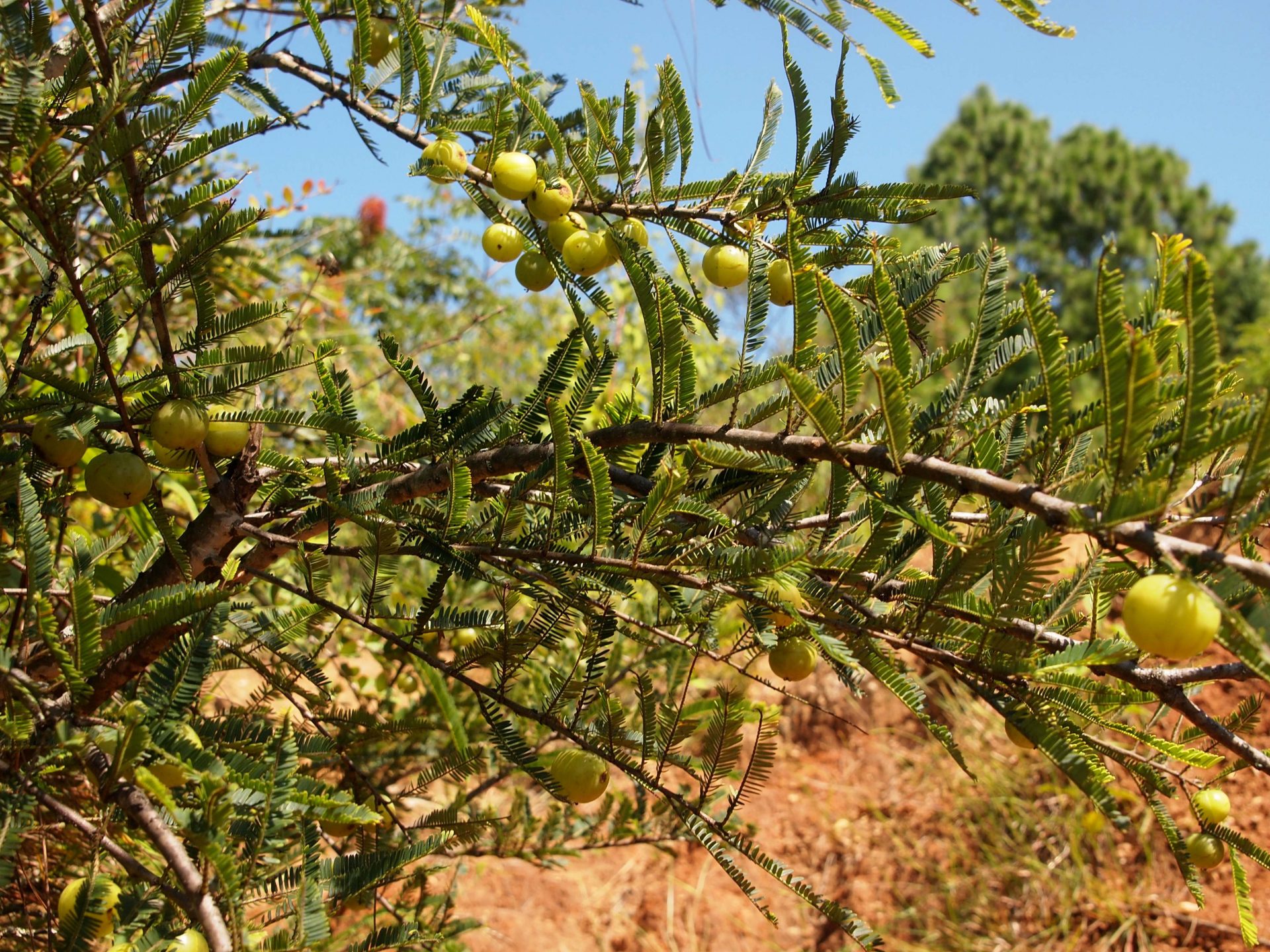
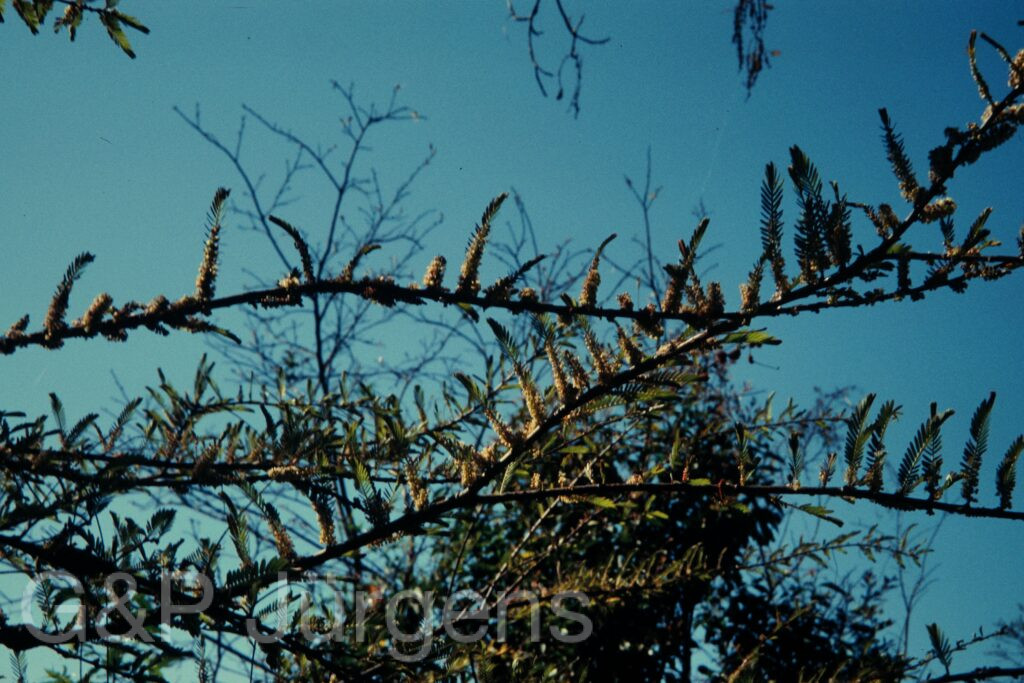
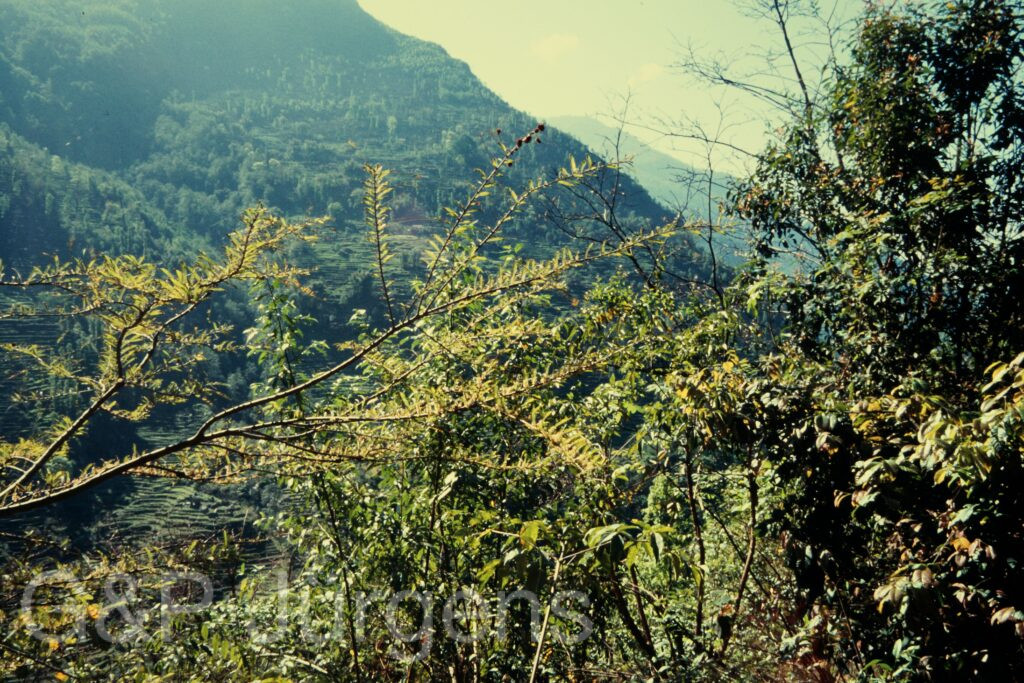
Phyllanthus emblica, the emblic myrobalan or Indian gooseberry (amla), is a small to medium tree of tropical and subtropical Asia with a very broad distribution embracing India, China, much of Southeast Asia, Sri Lanka, Nepal, Bhutan and many introduced ranges, recorded in GBIF by more than 19000 occurrences. It is a plant of deciduous and mixed dry forest, open hillsides, scrub and cultivated and disturbed ground, and is very widely planted, generally from the lowlands up into the hills. The cited material spans Mewa Khola in eastern Nepal at 1250 m, in leaf and flower in April, and Wangdi in Bhutan at 2600 m in September, the latter near the upper elevational limit and reflecting the species' wide ecological amplitude across the southern Himalayan belt.
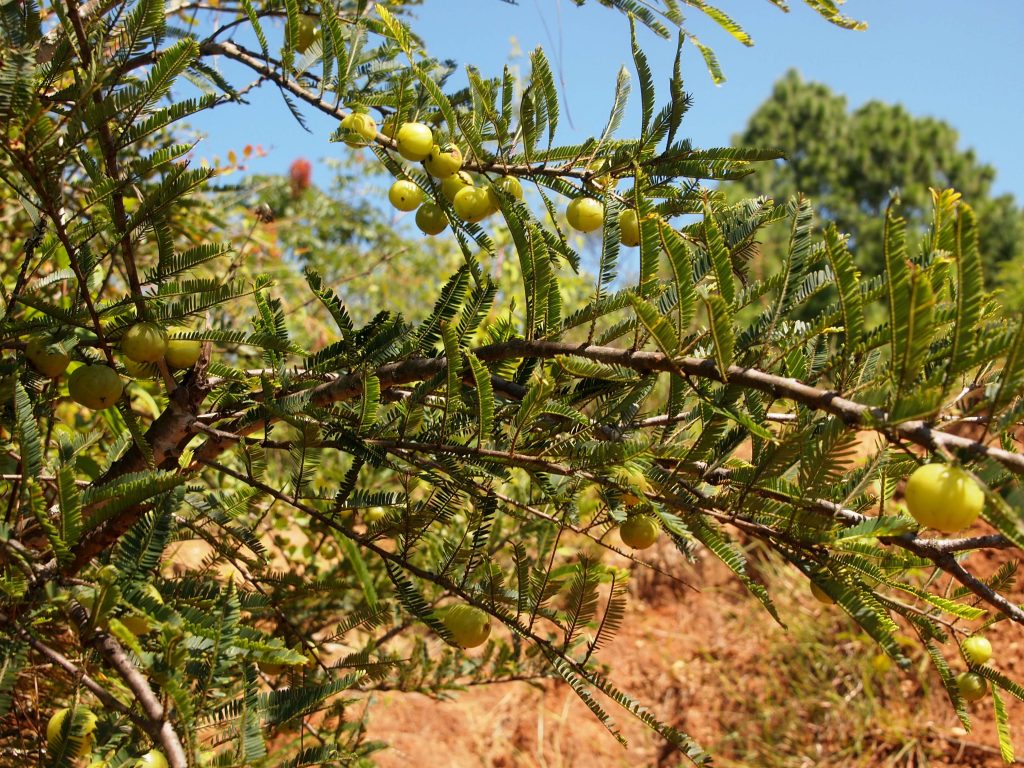
The tree reaches up to about 8–18 m, with smooth, pale, often flaking bark and slender, feathery branchlets bearing numerous small, distichous, oblong-linear leaves that closely resemble the pinnae of a compound leaf, the whole leafy branchlet being deciduous as a unit. It is monoecious, the small, greenish-yellow, apetalous flowers borne in clusters in the leaf axils. The fruit is the most distinctive feature: a fleshy, globose, pale green to yellowish drupe-like capsule, 1.5–2.5 cm across, with six faint longitudinal furrows, a hard central stone, and a markedly sour, astringent flesh.
Phyllanthus is a vast pantropical genus now placed in the family Phyllanthaceae, segregated from a broadly defined Euphorbiaceae. P. emblica is among the most economically and culturally important of its members: the vitamin-C-rich fruit is a staple of Ayurvedic and traditional medicine and is widely eaten preserved or processed, while the tree yields tannins, dye and timber. It is extensively cultivated and naturalised well beyond its native range. Being abundant, hardy and widely grown, the species is of no conservation concern and is in many areas a familiar element of agroforestry and village landscapes.
Author: L. · Sources: POWO (Kew), GBIF, Flora of China Vol. 11, Flora of Bhutan Vol. 1, Flora of Nepal, A Monograph of the Genus Phyllanthus (Phyllanthaceae)