Author

G & P Jürgens

Andrews

Bhutan2012 398
Bhutan Wangdi 2600m, September

Description

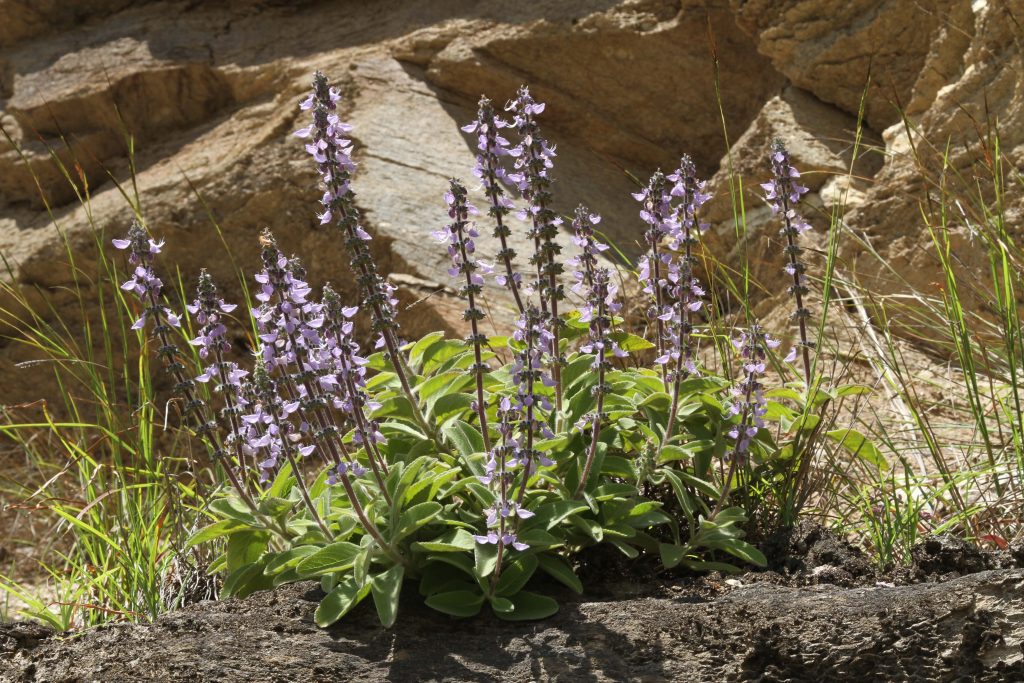
Plectranthus barbatus Andrews is an aromatic perennial herb or subshrub with a broad palaeotropical distribution, recorded from tropical and southern Africa (Ethiopia, Kenya, Tanzania, South Africa) and the Arabian Peninsula through to the Indian subcontinent, Nepal, Bhutan and Sri Lanka, where it is both native and widely cultivated and naturalised. In the Himalaya it grows on warm, dry, rocky banks, terrace margins, scrub and open hill slopes, often near villages. The photographed plant from Wangdi (Wangdue Phodrang) in Bhutan at 2600 m, flowering in September at the close of the monsoon, illustrates its tolerance of sunny, well-drained sites in the lower-temperate zone. GBIF treats the listed name as a synonym, with Plectranthus barbatus the accepted name.

The plant forms an erect, branching, softly woody-based herb with quadrangular, finely pubescent stems. The opposite leaves are broadly ovate, crenate-margined, somewhat fleshy and strongly aromatic, narrowing to a winged petiole and densely glandular and hairy. The flowers are borne in whorls along elongate, terminal racemose inflorescences; the bilabiate corolla is blue to violet-blue, with a short upper lip and a deflexed, boat-shaped lower lip enclosing the four didynamous stamens. As in other Lamiaceae the fruit comprises four smooth nutlets seated in the persistent calyx.

Long cultivated for medicine and as a hedge plant, P. barbatus (often called Coleus forskohlii in pharmacological literature) is the principal source of the diterpenoid forskolin, which has driven extensive cultivation across India and Africa. Its taxonomy is complicated by this synonymy and by horticultural movement blurring native and introduced ranges. The species is not of conservation concern, being weedy, easily propagated and widely naturalised.

Author: Andrews · Sources: POWO (Kew), GBIF, Flora of Bhutan, Flora of Tropical East Africa (Lamiaceae), Plectranthus and Allied Genera (Lukhoba, Simmonds & Paton)

(Lindl.) Rollisson

Sikkim2011 381
Sikkim Lachen 2600m, June
Nepal 2001 262 ergebnis ergebnis
Nepal (Gorkha) Jaurey Kharka 2700m, May
Nepal 2001 263 ergebnis ergebnis
Nepal (Gorkha) Jaurey Kharka 2700m, May

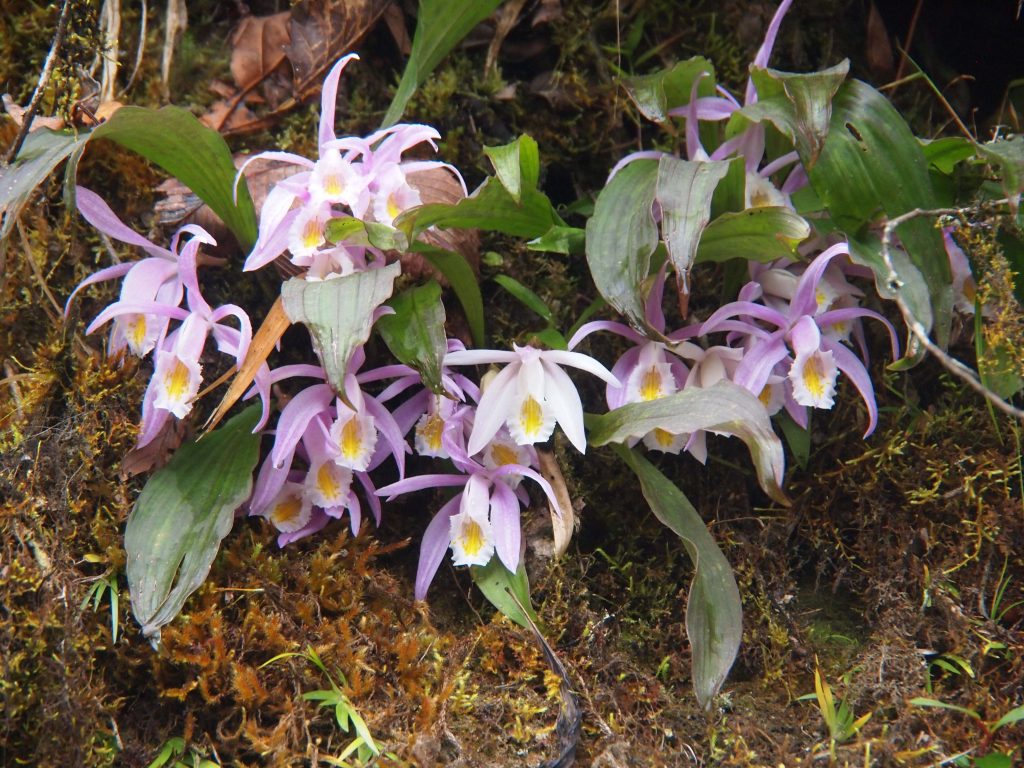
Description

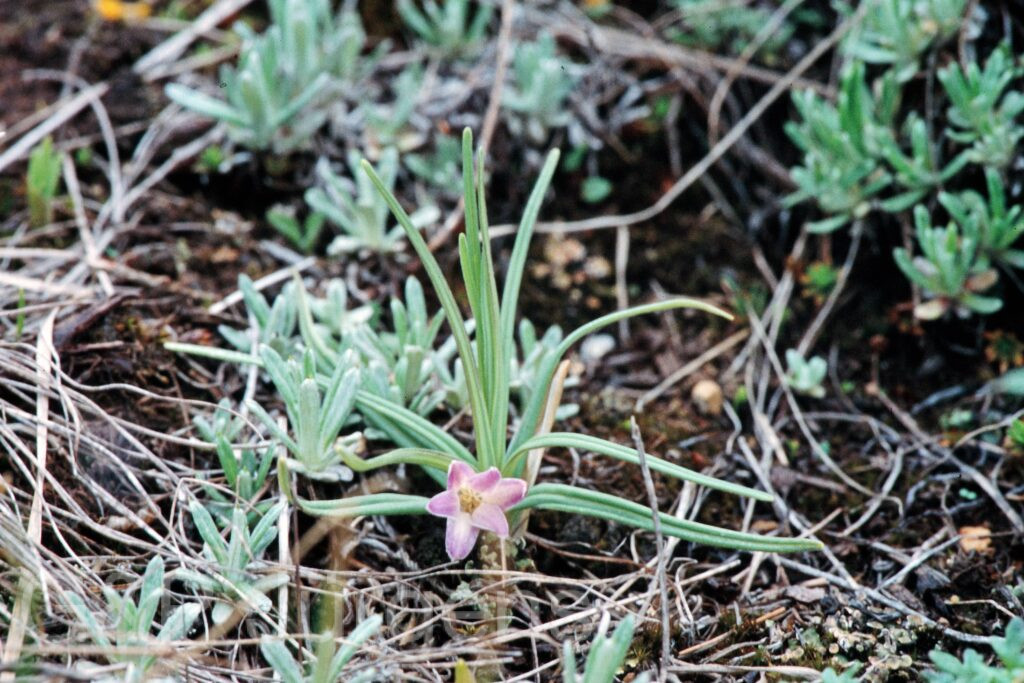
Pleione hookeriana is a small epiphytic and lithophytic orchid of the eastern Himalaya and Indochina, distributed across Nepal, India, Bhutan, China and Laos, with about 204 GBIF occurrences. It inhabits cool, humid montane forest, growing on mossy tree trunks, branches and shaded rocks in the temperate zone, favouring situations with abundant atmospheric moisture. The images document it in Sikkim near Lachen at about 2600 m in June and in the Gorkha district of Nepal at Jaurey Kharka around 2700 m in May, where it flowers on moss-clad substrates as the monsoon approaches.

It is a dwarf, deciduous orchid growing from a small annual pseudobulb that bears a single plicate leaf. The flower is solitary and produced with or just before the leaf on a short scape arising from the base of the pseudobulb. The sepals and petals are narrow, spreading and pale pink to rose-lilac; the labellum is comparatively large, obovate, fringed at the margin, and marked within by a yellow to brown-spotted, lamellate throat that contrasts with the paler perianth. The column is slender and winged. The fruit is a dry dehiscent capsule releasing dust-like seeds.

Pleione hookeriana is the smallest-flowered species of its genus and is distinguished by its diminutive habit and patterned lip. Like all Pleione it has an annual pseudobulb cycle and depends on mycorrhizal fungi for seed germination. The showy lip and contrasting throat markings attract bee pollinators in spring. As an attractive orchid it is subject to horticultural collection, and the entire genus is listed on CITES Appendix II, regulating international trade.

Author: (Lindl.) Rollisson · Sources: POWO (Kew), GBIF, Flora of China, Flora of Bhutan, The Genus Pleione (Cribb & Butterfield), CITES Appendices

(Sm.) D.Don

Bhutan2012 828 Kopie
Bhutan Tongsa 2050m, October
Bhutan2012 831 Kopie
Bhutan Tongsa 2050m, October
Bhutan2012 1302
Bhutan Trashigang 1900m, October

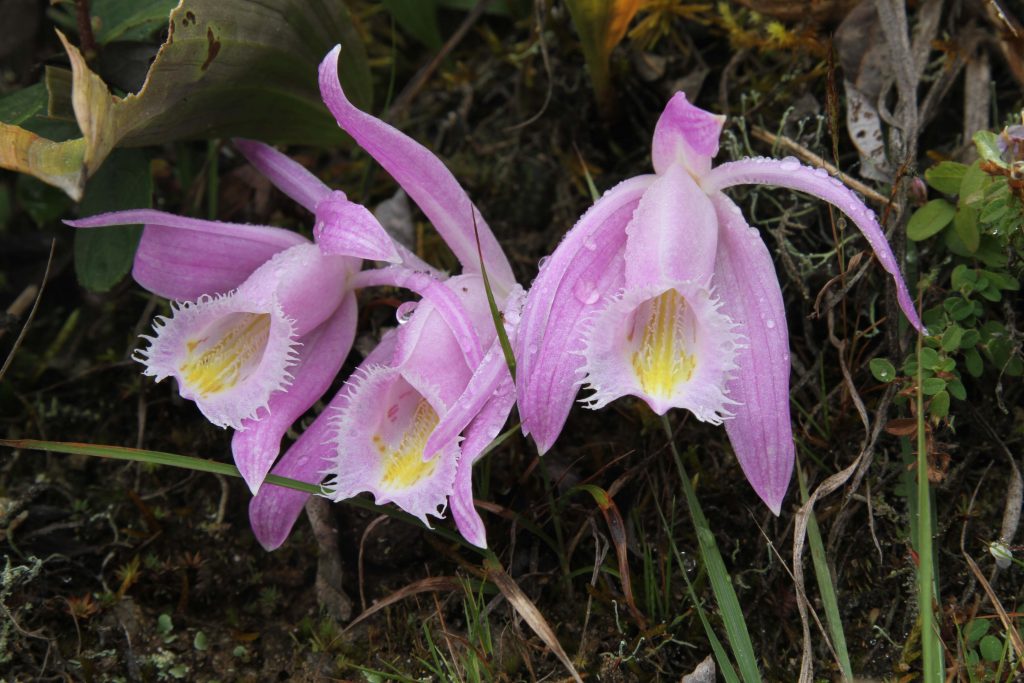
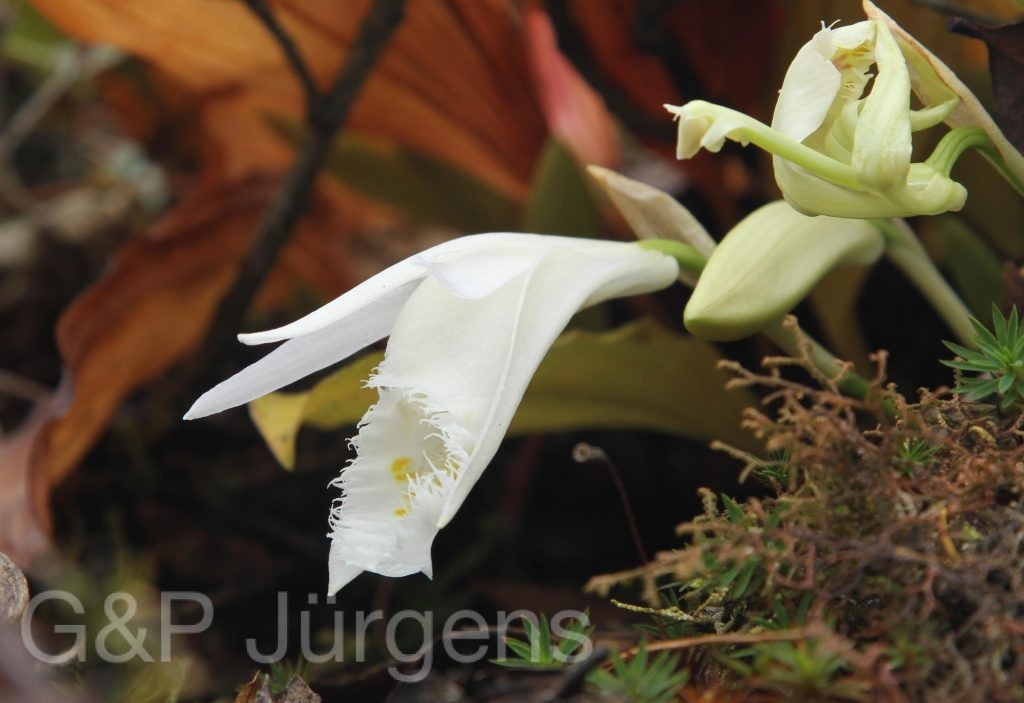
Description

Pleione praecox is an autumn-flowering epiphytic and lithophytic orchid of the eastern Himalaya and Indo-Burmese region, ranging through India, Nepal, Bhutan, China, Thailand, Myanmar, Vietnam and Bangladesh, with cultivated records in Britain and the United States among its roughly 335 GBIF occurrences. It grows on mossy tree trunks, rocks and banks in humid broadleaved montane forest, typically between about 1200 and 2500 m. The cited Bhutanese plants from Trongsa (2050 m) and Trashigang (1900 m), both flowering in October, exemplify its diagnostic late-season anthesis, the epithet praecox referring to bloom appearing as or before the leaves develop.

The species is a deciduous sympodial orchid producing conspicuous, flask-shaped to conical pseudobulbs, often mottled green and purple, each typically bearing one or two pleated, lanceolate leaves that are shed in the dormant season. The showy flowers, borne singly (rarely paired) on a short scape from the base of a pseudobulb, have spreading rose-pink to magenta sepals and petals. The funnel-shaped labellum is the showpiece: broad, fimbriate at the margin, and marked internally with several toothed or lamellate crests and reddish-brown blotching. The column is slender and winged, and the fruit is an ellipsoid capsule.

Pleione is a small genus of subtribe Coelogyninae, and P. praecox is among its most horticulturally prized species, widely cultivated by alpine and orchid growers, which accounts for its scattered records in Europe and North America. Its showy labellum attracts bee pollinators despite offering little reward. Although locally frequent, wild populations face pressure from commercial and amateur collection of pseudobulbs and from clearance of montane forest, making in-situ conservation of its epiphytic habitat important.

Author: (Sm.) D.Don · Sources: POWO (Kew), GBIF, Flora of Bhutan, Flora of China (Orchidaceae), Cribb & Butterfield The Genus Pleione

D.Don

Bhutan2015 187
Bhutan Zhemgang 1000m, October
Bhutan2015 188
Bhutan Zhemgang 1000m, October
Bhutan2014 194
Bhutan Trashyangtse 2100m, May
Bhutan2014 195
Bhutan Trashyangtse 2100m, May

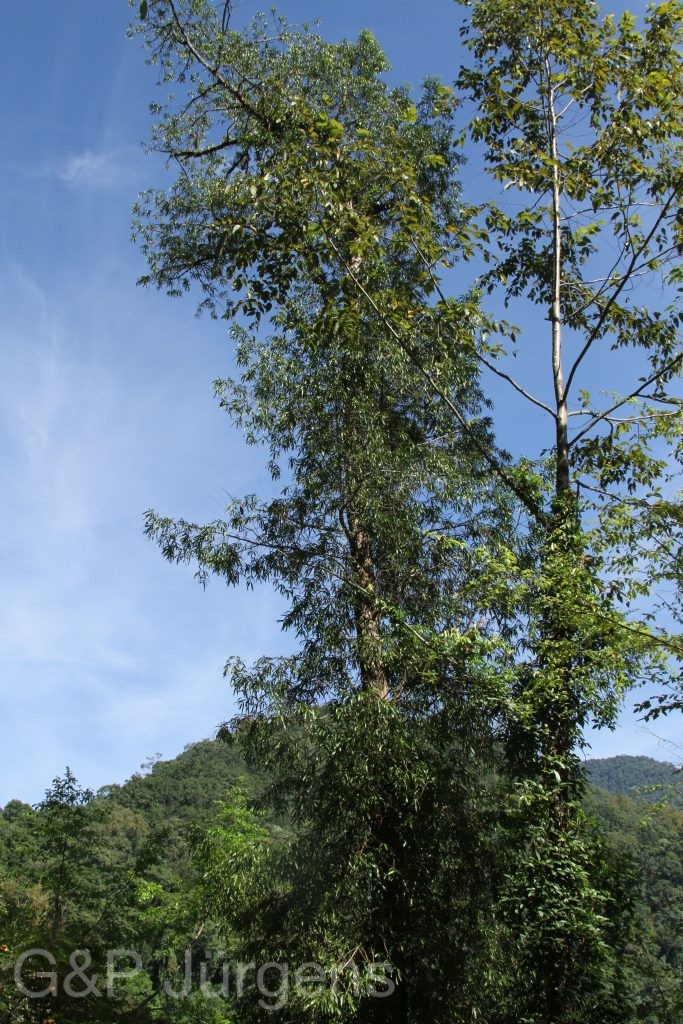
Description

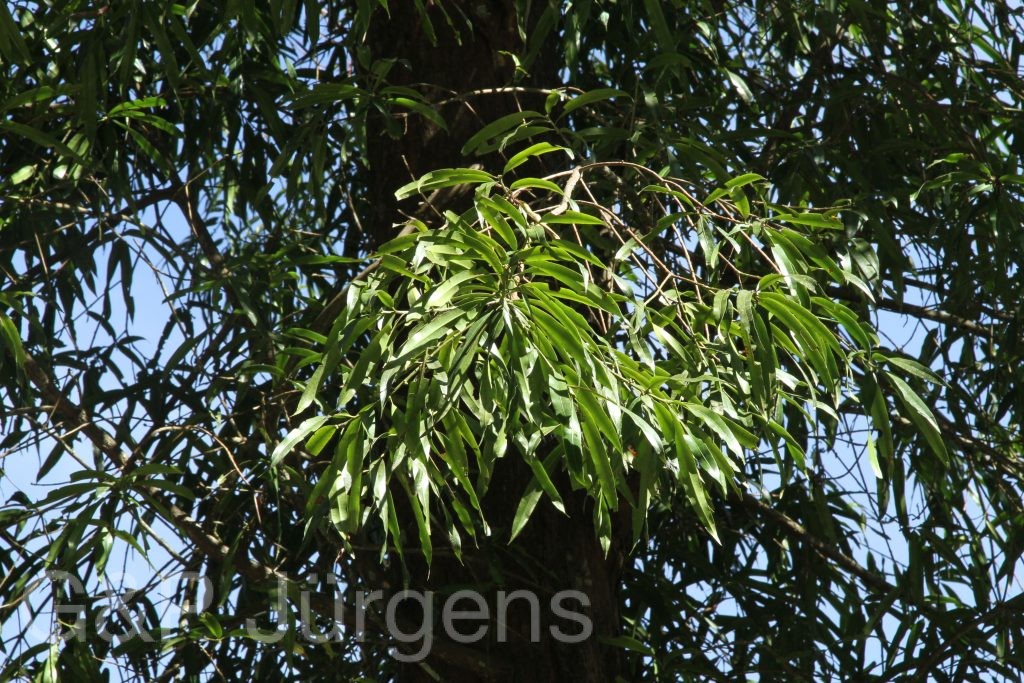
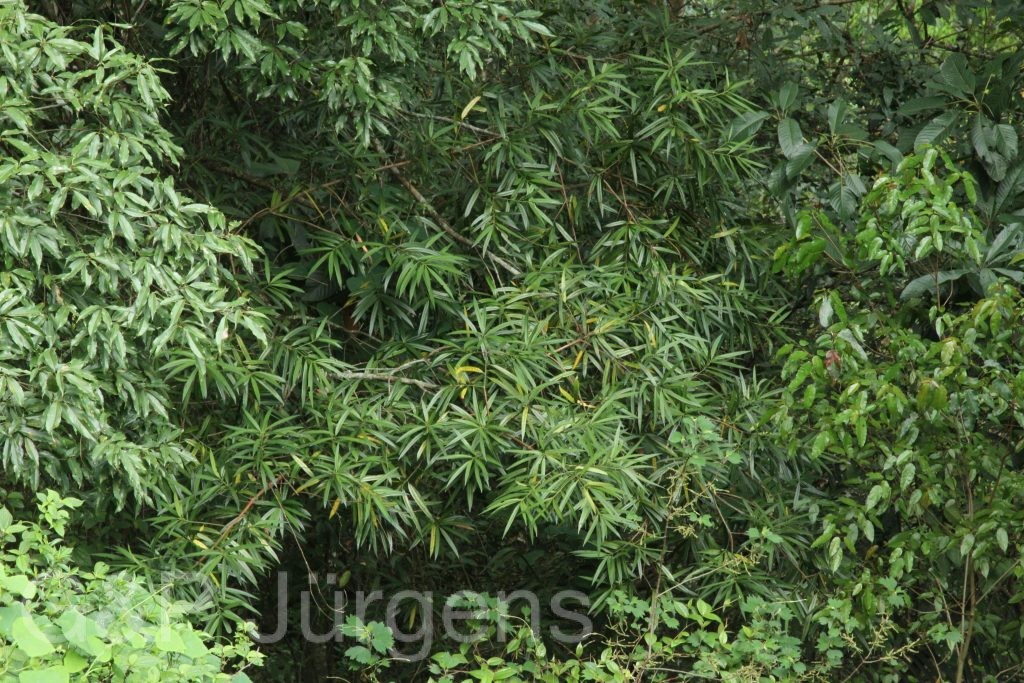
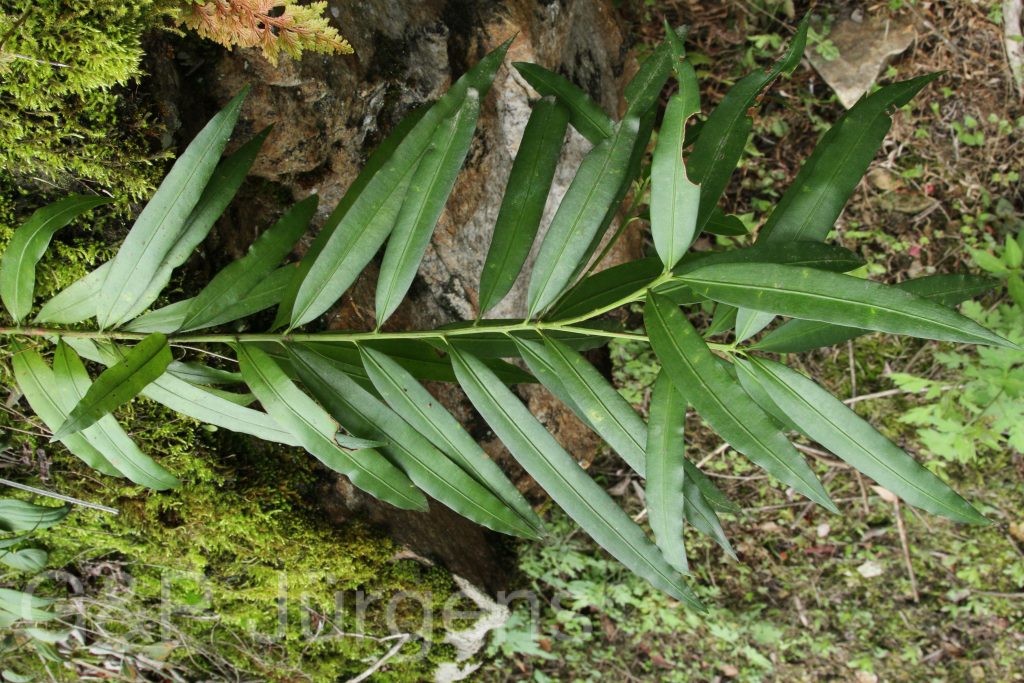
Podocarpus neriifolius, the brown pine or oleander-leaved podocarp, is a broadly distributed evergreen conifer of tropical and subtropical Asia and the western Pacific, with GBIF recording over 3,100 occurrences from Papua New Guinea, Fiji, Indonesia, Vietnam, China, Malaysia, the Solomon Islands, the Philippines, India, Thailand, Nepal, Vanuatu, Cambodia, Laos and beyond. In the eastern Himalaya it occurs in warm broad-leaved and mixed forest of the foothills and lower mountains, generally between about 500 and 2100 m. The images from Zhemgang in Bhutan at 1000 m, in October, and from Trashyangtse at 2100 m, in May, bracket its altitudinal range in that country, showing it as a scattered emergent or canopy tree in humid, evergreen subtropical forest on well-drained slopes.

It is an evergreen tree commonly 10-25 m tall, occasionally much larger, with grey to brown, fibrous, flaking bark and a dense crown. The leaves are spirally arranged but often appearing two-ranked, simple, narrowly lanceolate and leathery with a prominent midrib and a long, gradually tapering apex, recalling the foliage of oleander as the epithet indicates. The species is dioecious: pollen cones are slender, cylindrical and borne in leaf axils, while the seed cones are reduced to one or two ovules seated on a swollen, fleshy receptacle (the epimatium and aril) that ripens red to purple, the single seed crowned by a green to bluish covering and dispersed by birds.

Podocarpus is the largest genus of the Southern Hemisphere-centred family Podocarpaceae, and P. neriifolius is among its most wide-ranging species, exhibiting considerable variation in leaf size across its vast area. It is valued for its fine, even timber, which has led to local overexploitation, though its enormous geographic range means it is assessed by the IUCN as Least Concern overall. In the Himalaya it represents a tropical-Gondwanan conifer lineage reaching its northern limits in the warm forests of the eastern foothills.

Author: D.Don · Sources: POWO (Kew), GBIF, Flora of China Vol. 4, Flora of Bhutan Vol. 1, Flora of Nepal, de Laubenfels' revision of Podocarpus and the Podocarpaceae

Hand.-Mazz.

BhutanPG2011 57JPG
Bhutan Jakar 2600m June
Bh09 295 G486
Bhutan Pele-La, 3200m June
Bh09 296 G487
Bhutan Pele-La, 3200m June

Description

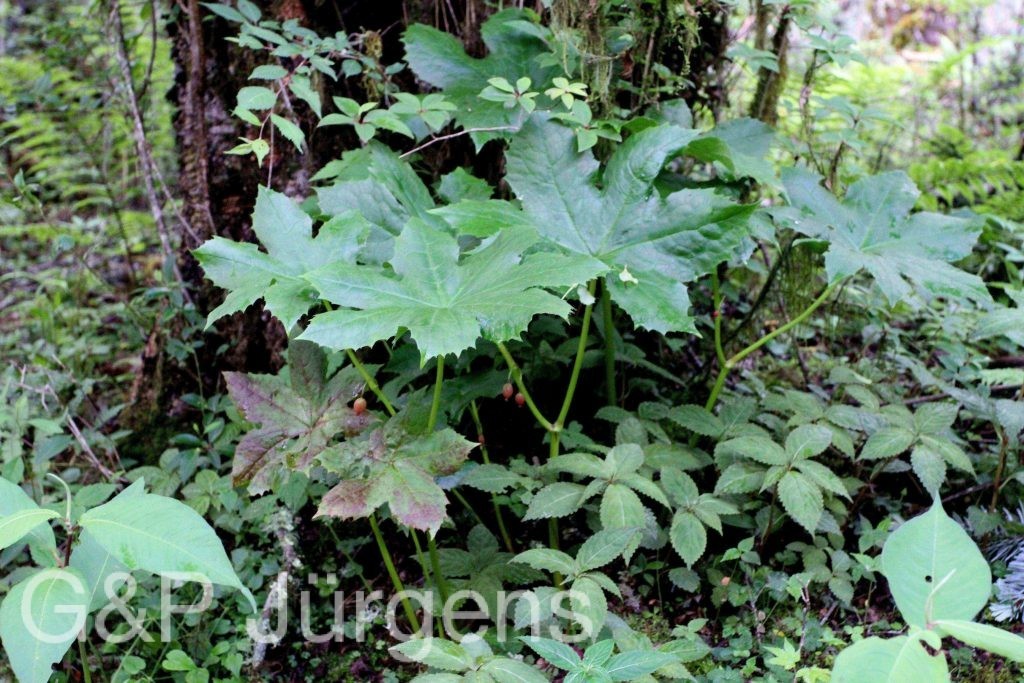
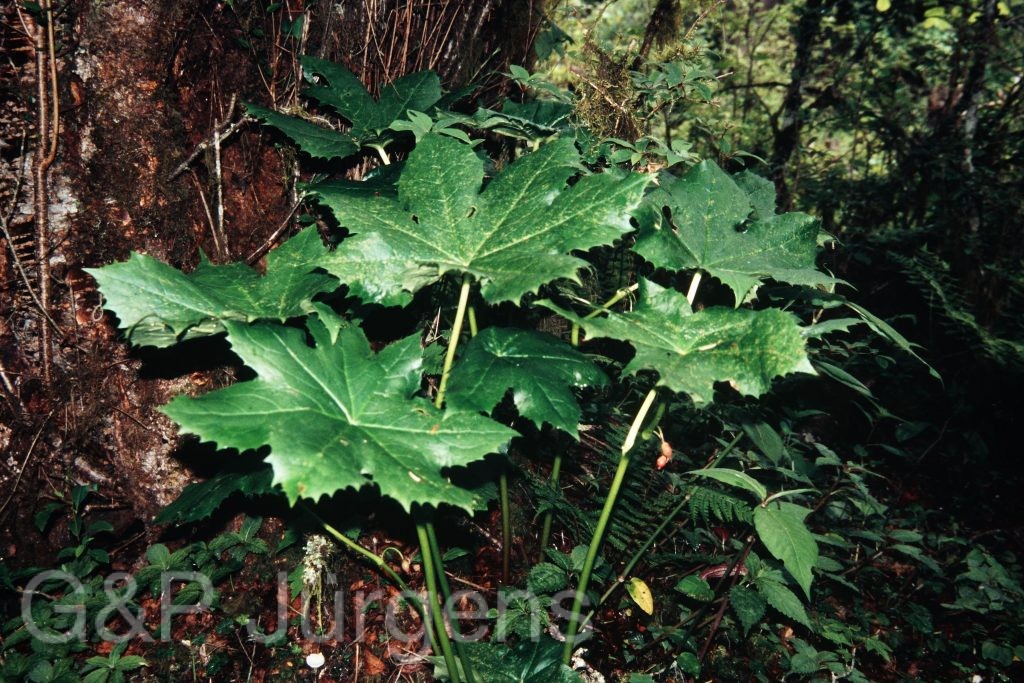
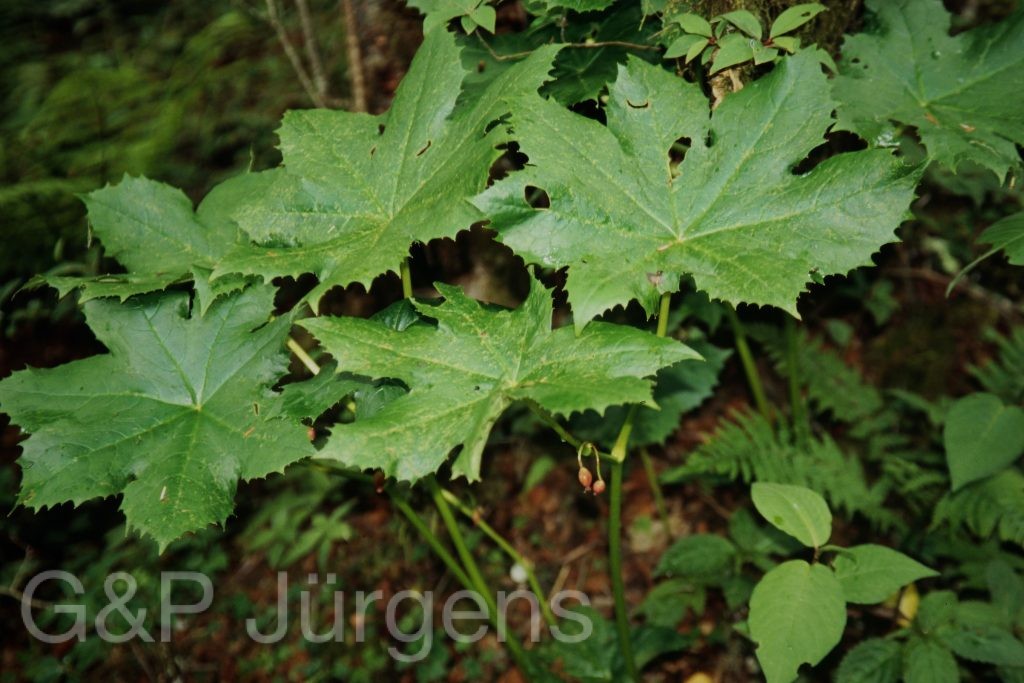
Podophyllum aurantiocaule is a Sino-Himalayan woodland herb recorded from China, Myanmar and India (with one extralimital cultivated record from the Netherlands), the c. 25 georeferenced occurrences reflecting a relatively narrow and uncommon distribution in the eastern Himalaya and adjacent mountains. It grows in the shade and humus of temperate broadleaved and conifer forest, on cool, moist, sheltered slopes and forest floor, generally between about 2400 and 3400 m. The illustrated plants were photographed at Jakar in Bhutan at 2600 m and at Pele-La at 3200 m, both in June, sites characteristic of the species, which emerges and flowers in early summer beneath the forest canopy. Under GBIF this name is treated as a synonym, with Podophyllum aurantiocaule itself recognised as the accepted name in that backbone.

It is a perennial herb arising from a stout creeping rhizome, sending up an erect, fleshy, often orange-tinted stem, the colouration reflected in the epithet aurantiocaule. The stem bears typically two large, long-petioled, peltate to deeply palmately lobed leaves whose margins are toothed. A single, rather large, nodding flower is borne at the fork between the leaves; it has free, somewhat fleshy petals in shades of dull red to purplish, numerous stamens and a single superior carpel. The fruit is a large fleshy berry containing many seeds embedded in pulp.

The Asian podophylloids, treated either in a broad Podophyllum or in the segregate genera Dysosma and Sinopodophyllum, are placed in Berberidaceae and are renowned for the lignan podophyllotoxin, precursor of the anticancer drugs etoposide and teniposide. As a slow-growing, rhizomatous, narrowly distributed forest herb subject to medicinal collection and habitat loss, P. aurantiocaule is intrinsically vulnerable, and members of this complex are widely flagged for conservation attention.

Author: Hand.-Mazz. · Sources: POWO (Kew), GBIF, Flora of China, Flora of Bhutan, Shaw monograph of the podophylloid Berberidaceae

Baker

Nepal 99 85 ergebnis
West-Nepal Bhulbhule 3200m, June

Description

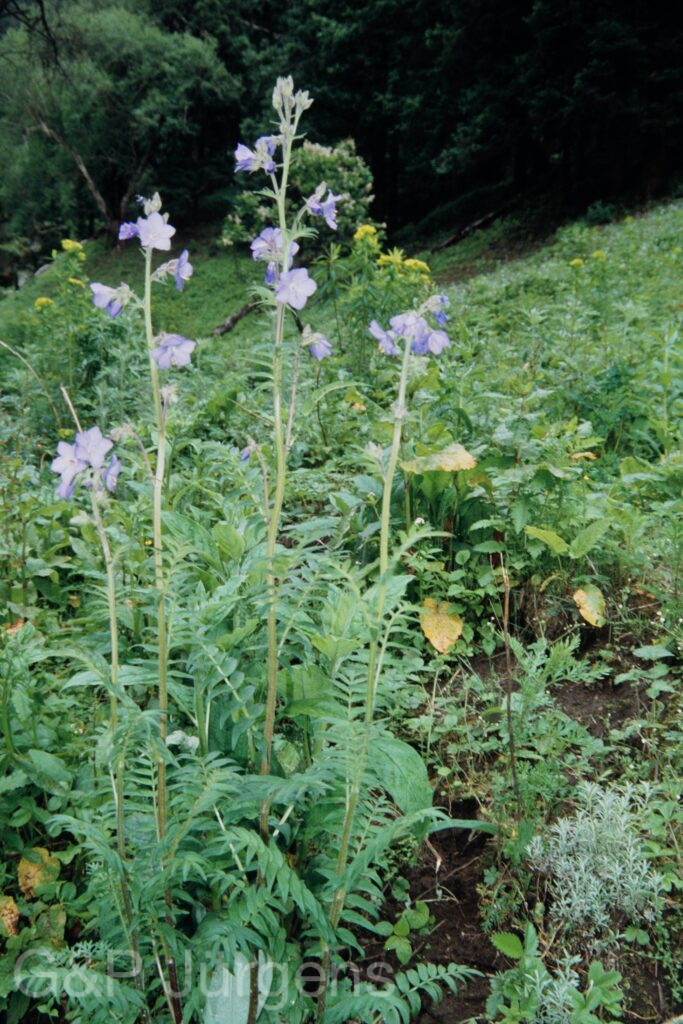
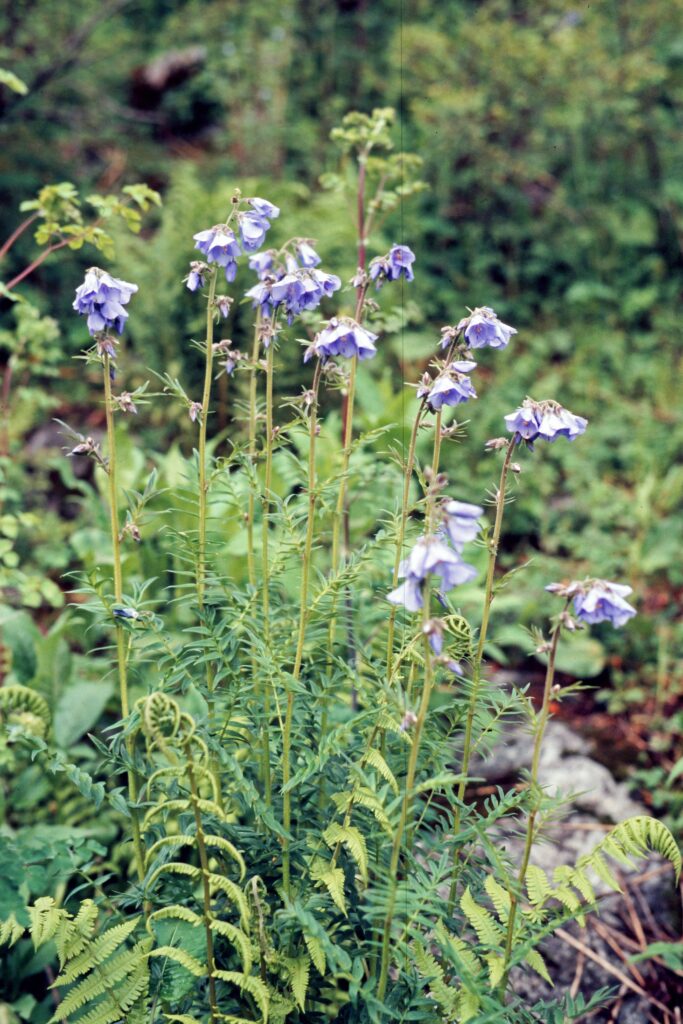
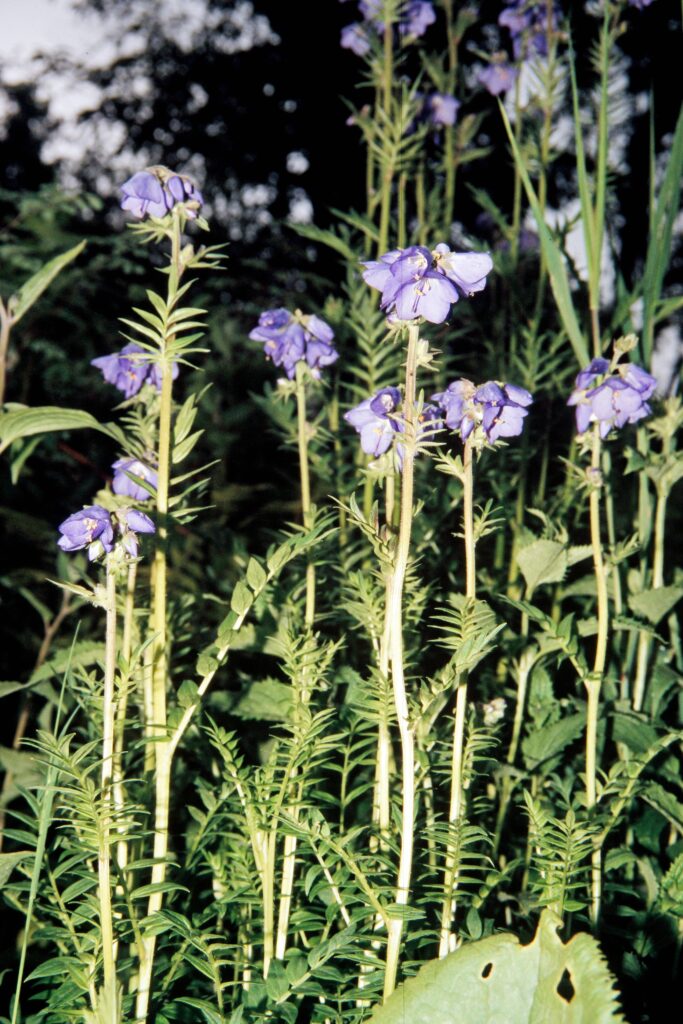
Polemonium caeruleum var. himalayanum is the Himalayan expression of the wide-ranging Jacob's ladder, here documented chiefly from Nepal, with only about 16 georeferenced GBIF occurrences reflecting its restricted recording rather than true rarity. It is a herb of moist alpine and upper-subalpine meadows, streambanks, open shrubberies and damp rocky slopes, typically between about 3000 and 4000 m. The populations noted at Bhulbhule in West Nepal at 3200 m and at Seema in Garhwal at 3400 m, both flowering in June at the start of the monsoon, are characteristic of its preference for cool, humus-rich, seasonally moist ground in the high western and central Himalaya.

It is an erect perennial herb arising from a short rhizome, the stems leafy and often glandular-pubescent above. The leaves are alternate and pinnately compound, the numerous lanceolate to ovate leaflets arranged ladder-like along the rachis, giving the plant its vernacular name. The flowers are borne in a terminal, somewhat congested panicle; each has a campanulate, glandular five-lobed calyx and a broadly campanulate to rotate blue corolla with five spreading lobes, the five stamens inserted in the throat with hairy filament bases, and a three-lobed style exserted. The fruit is an ovoid, three-valved loculicidal capsule containing several angular seeds.

GBIF treats the name as a synonym, with Polemonium caeruleum himalayanum recognised as the accepted infraspecific taxon within the circumboreal P. caeruleum complex. The protandrous, nectar-rich flowers are visited by bees and long-tongued insects, promoting outcrossing. As a high-altitude meadow plant it is sensitive to overgrazing, though not presently assessed as threatened.

Author: Baker · Sources: POWO (Kew), GBIF, Flora of Nepal, Flora of Bhutan Vol. 2, Flora of China Vol. 16, A Systematic Treatment of Polemonium (Polemoniaceae)

Baker

Sikkim 2006 315 ergebnis
India West-Bengal, Chaana 1800m, May

Description

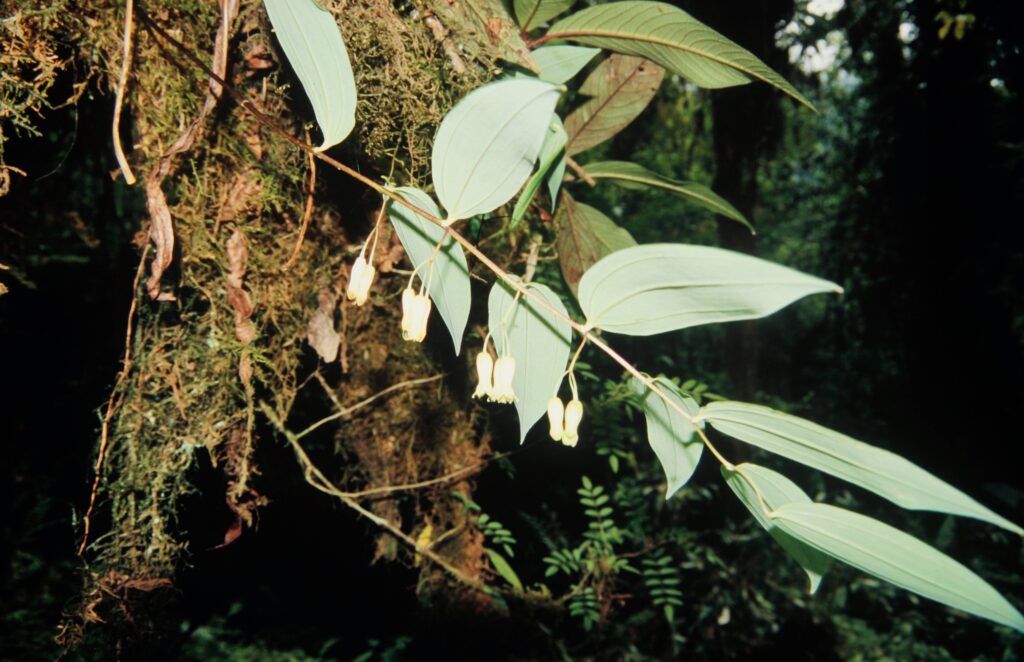
Polygonatum brevistylum is a rhizomatous perennial of the eastern Himalaya and adjacent ranges. GBIF documents it (some 27 occurrences) from Nepal, India, Bhutan and Myanmar, in moist temperate forest, forest margins, shrubberies and shaded banks. It grows in cool, humus-rich soils within the broadleaved and mixed conifer zone, generally between about 1,500 and 3,000 m. The photographed plant is from Chaana in West Bengal (Darjeeling–Sikkim Himalaya) at around 1,800 m, flowering in May, a representative low-montane station for the species as it sends up shoots in spring.

The plant has a stout, knotty, horizontally creeping rhizome from which arises an erect or arching stem. The leaves are alternate, ovate to elliptic and acuminate, glabrous, sessile or shortly petiolate. The flowers are pendent and borne in few-flowered axillary clusters; the perianth is tubular-campanulate, white to greenish-white, with six short lobes, and, as the epithet brevistylum signals, a notably short style. The fruit is a globose berry, ripening blue-black to purplish and containing several seeds.

Polygonatum (Solomon's-seal), now placed in Asparagaceae (formerly Convallariaceae or Liliaceae sensu lato), is taxonomically intricate in the Himalaya, where several closely allied rhizomatous species occur. The short style and the clustered axillary flowers are useful diagnostic characters separating P. brevistylum from sympatric congeners. Himalayan Polygonatum rhizomes are widely gathered for food and traditional medicine, so localised harvesting pressure may affect accessible populations.

Author: Baker · Sources: POWO (Kew), Flora of China Vol. 24, Flora of Bhutan Vol. 3, GBIF, Jeffrey: The Genus Polygonatum (Liliaceae) in Eastern Asia

Decne.

Garh 07 101 ergebnis
India Garhwal Trijugin 2300m, June

Description

Polygonatum geminiflorum is a western Himalayan Solomon's seal distributed from Afghanistan and Pakistan through Kashmir, Himachal Pradesh, and Uttarakhand to western Nepal, with disjunct records from the Caucasus region (Georgia, Armenia). GBIF records 123 occurrences across this range. The species inhabits moist, shaded understorey habitats in temperate oak-conifer and mixed broadleaved forests at elevations of 1,800–3,200 m. It favours deep, humus-rich forest soils and is frequently found on north-facing slopes, along streams, and at the base of boulders under canopies of Quercus semecarpifolia, Cedrus deodara, and Abies pindrow.
Polygonatum geminiflorum is an erect, herbaceous perennial arising from a stout, horizontal, moniliform rhizome bearing conspicuous circular stem scars (Solomon's seals). Stems are simple, arching, 30–60 cm tall, glabrous, and angular in cross-section. Leaves are alternate, sessile, elliptic to ovate-lanceolate, 5–10 cm long, glaucous beneath, with parallel venation and slightly clasping bases. Flowers are typically borne in pairs (geminate) from leaf axils — the diagnostic character reflected in the epithet — occasionally solitary or in threes. Each flower is tubular-campanulate, 12–18 mm long, white to cream with green tips, pendulous on slender pedicels 1–2 cm long. The six tepals are fused for most of their length. The fruit is a globose berry, 8–10 mm in diameter, ripening from green to dark blue-black.
The photographed specimen from Trijugin in Garhwal at 2,300 m in June represents a characteristic occurrence in the west-central Himalayan forests during peak flowering season. Polygonatum geminiflorum is distinguished from the related P. verticillatum by its alternate (not whorled) leaves and consistently paired flowers. The Caucasian disjunction is biogeographically significant, representing a relictual Tertiary connection between the western Himalayan and Irano-Turanian floras. The rhizomes are used in traditional Ayurvedic medicine as a tonic and are locally harvested, which in some areas may impact wild populations.

Author: Decne. · Sources: POWO (Kew), GBIF, Flora of Pakistan (Liliaceae), Flora of British India Vol. 6, Tamura: Liliaceae in Flora of China Vol. 24

Hook.

Nepal 99 117 ergebnis
West-Nepal South of Rara-Lake 3750m, June

Description

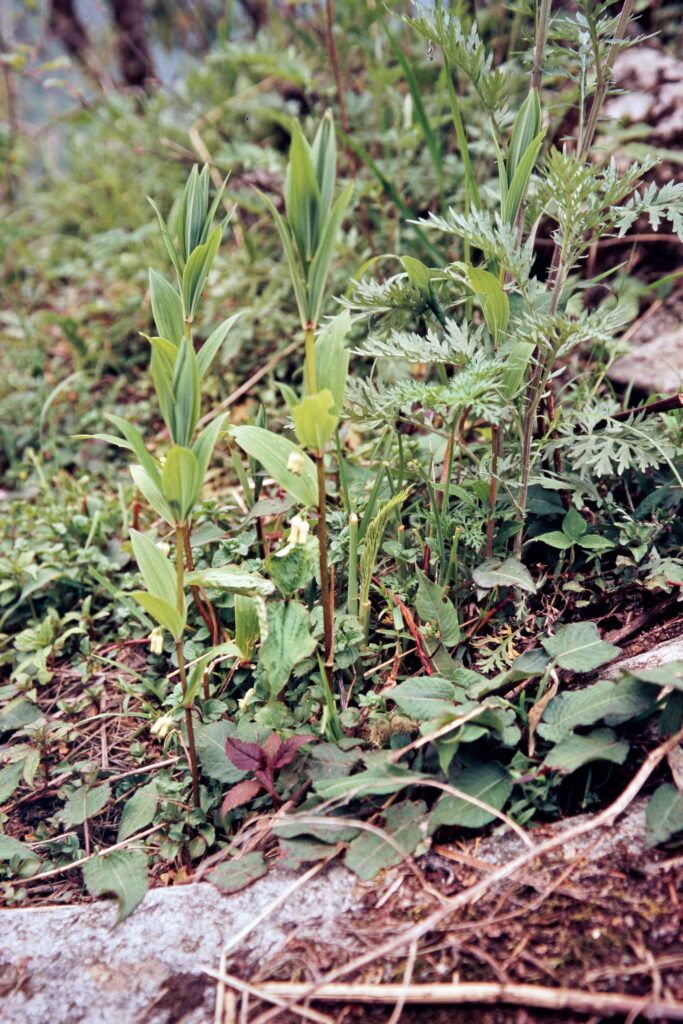
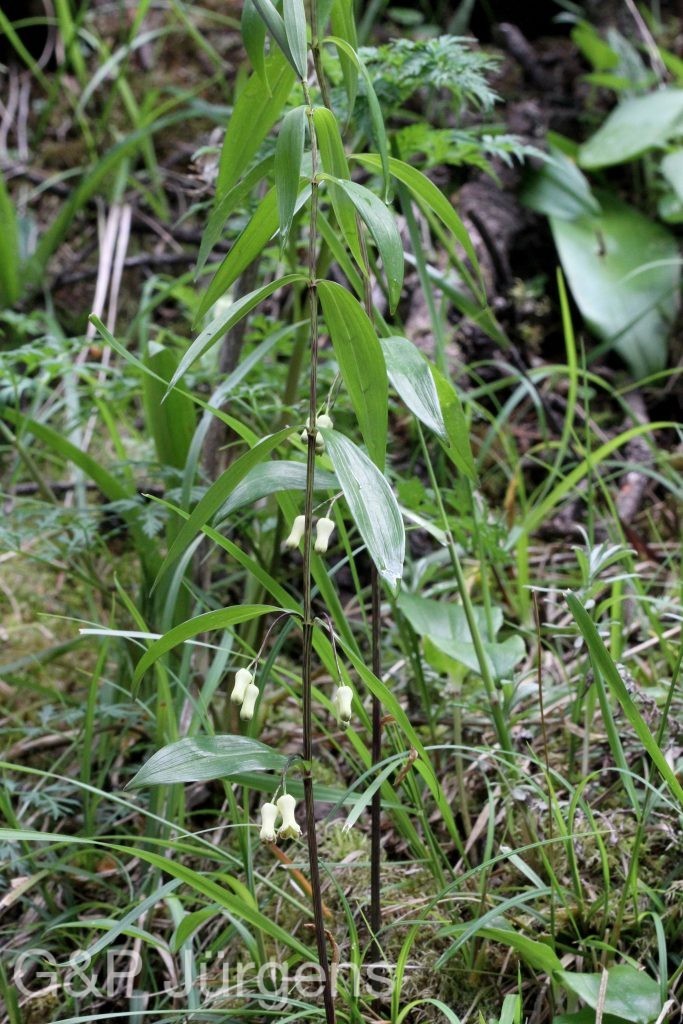
Polygonatum graminifolium is a high-alpine Solomon's seal restricted to the Himalaya, recorded from Pakistan, India, Nepal and Bhutan; GBIF documents only about 18 occurrences, indicating a narrow range and limited collecting. It inhabits open alpine and subalpine slopes, rocky meadows, grassy turf and the margins of dwarf shrubberies, generally on stony, well-drained soils above the forest line. The plant photographed south of Rara Lake in western Nepal at 3750 m in June is characteristic of its elevation, roughly 3000-4300 m, where the short season compels rapid flowering soon after snowmelt in early summer.

It is a small, slender perennial herb growing from a short, knotted, horizontal rhizome bearing the circular scars that give the genus its name. The wiry, erect to arching stem is unbranched and bears narrow, grass-like (graminoid) leaves that are linear to linear-lanceolate, sessile and parallel-veined, arranged alternately or sometimes subverticillately, their slenderness giving the species its epithet. The flowers are small, tubular-campanulate and pendulous, solitary or paired in the leaf axils, white to greenish-white and often green-tipped, on short pedicels. The perianth tube is cylindrical with six short recurved lobes enclosing six included stamens, and the ovary develops into a small globose berry ripening bluish-black to red.

The epithet graminifolium, grass-leaved, distinguishes it from broader-leaved Himalayan congeners. Polygonatum is a north-temperate genus formerly placed in Liliaceae or Convallariaceae and now treated within an expanded Asparagaceae. Its restricted distribution and modest occurrence record suggest specialisation to alpine turf, though no formal conservation assessment exists; like related species its rhizomes have potential use in the regional pharmacopoeia.

Author: Hook. · Sources: POWO (Kew), GBIF, Flora of China, Flora of Pakistan, Flora of Bhutan, Jeffrey revision of Polygonatum

H. Hara

BhutanPG2011 164
Bhutan Tsochenchen, 3600m June
Bh09 183 P318
Bhutan Phajoding, 3600m June

Description

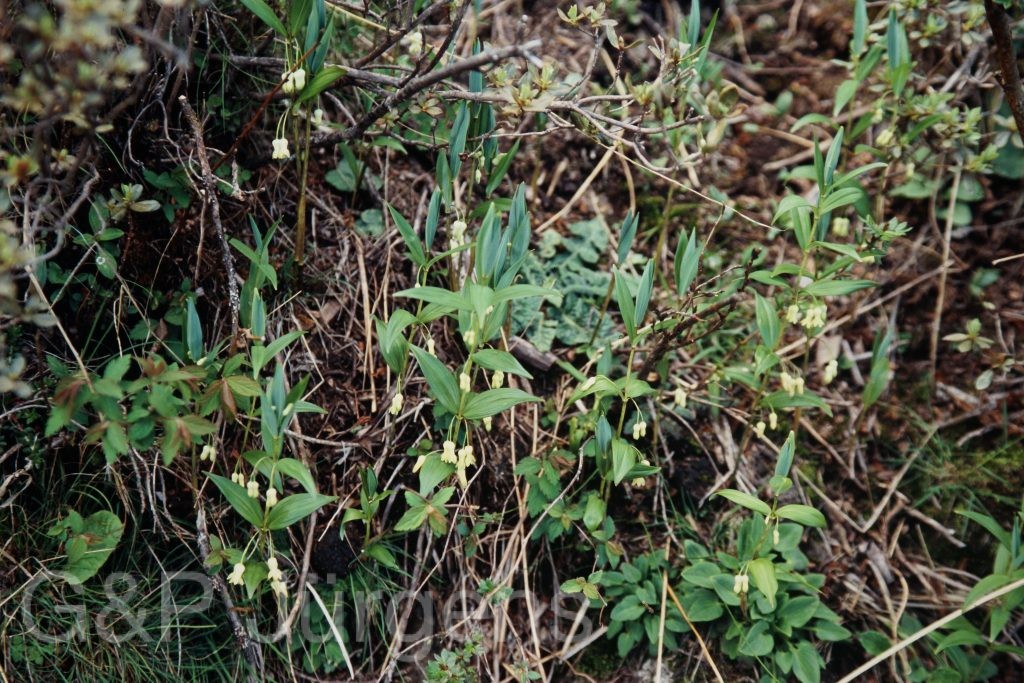
Polygonatum singalilense H.Hara is an alpine Solomon's-seal of the eastern Himalaya, named for the Singalila ridge and known from about 66 records in Nepal, India, Bhutan and adjacent China, with herbarium material in Great Britain. It occurs in moist alpine meadows, dwarf-shrub heath, rhododendron scrub and the edges of fir forest, typically among rocks and mossy banks in the upper temperate to subalpine zone. The plants illustrated from Tsochenchen and Phajoding in Bhutan, both near 3600 m in June, are characteristic of its cool, humid, snow-influenced habitats with a brief flowering season at the onset of the monsoon.

This is a small rhizomatous perennial herb growing from a knotty, horizontally creeping rhizome bearing the scars ("seals") of previous shoots. The stem is short, erect to arching and unbranched. Leaves are alternate to subverticillate, sessile or shortly petiolate, ovate to lanceolate, and glabrous. The flowers are solitary or few in the leaf axils, pendulous, with a tubular to campanulate, gamophyllous perianth that is whitish to greenish, often tinged purple; the six tepals are fused with short free lobes, the stamens inserted within the tube. The fruit is a small globose berry, ripening dark blue to blackish and containing few seeds.

The species belongs to a complex of dwarf, alpine Himalayan Polygonatum often confused with P. hookeri and relatives, distinguished by stature, leaf arrangement and perianth proportions. Its nectar-rich tubular flowers are bumblebee-pollinated, and the fleshy berries are bird-dispersed. As a narrow-range montane endemic of the eastern Himalaya, P. singalilense is potentially sensitive to grazing, collection and upward shifts of vegetation belts under climate warming, though it has not been formally assessed.

Author: H. Hara · Sources: POWO (Kew), GBIF, Flora of Bhutan, Flora of Nepal, Flora of China, Hara's Flora of Eastern Himalaya, monograph/revision of Polygonatum