
Roxb.
Description
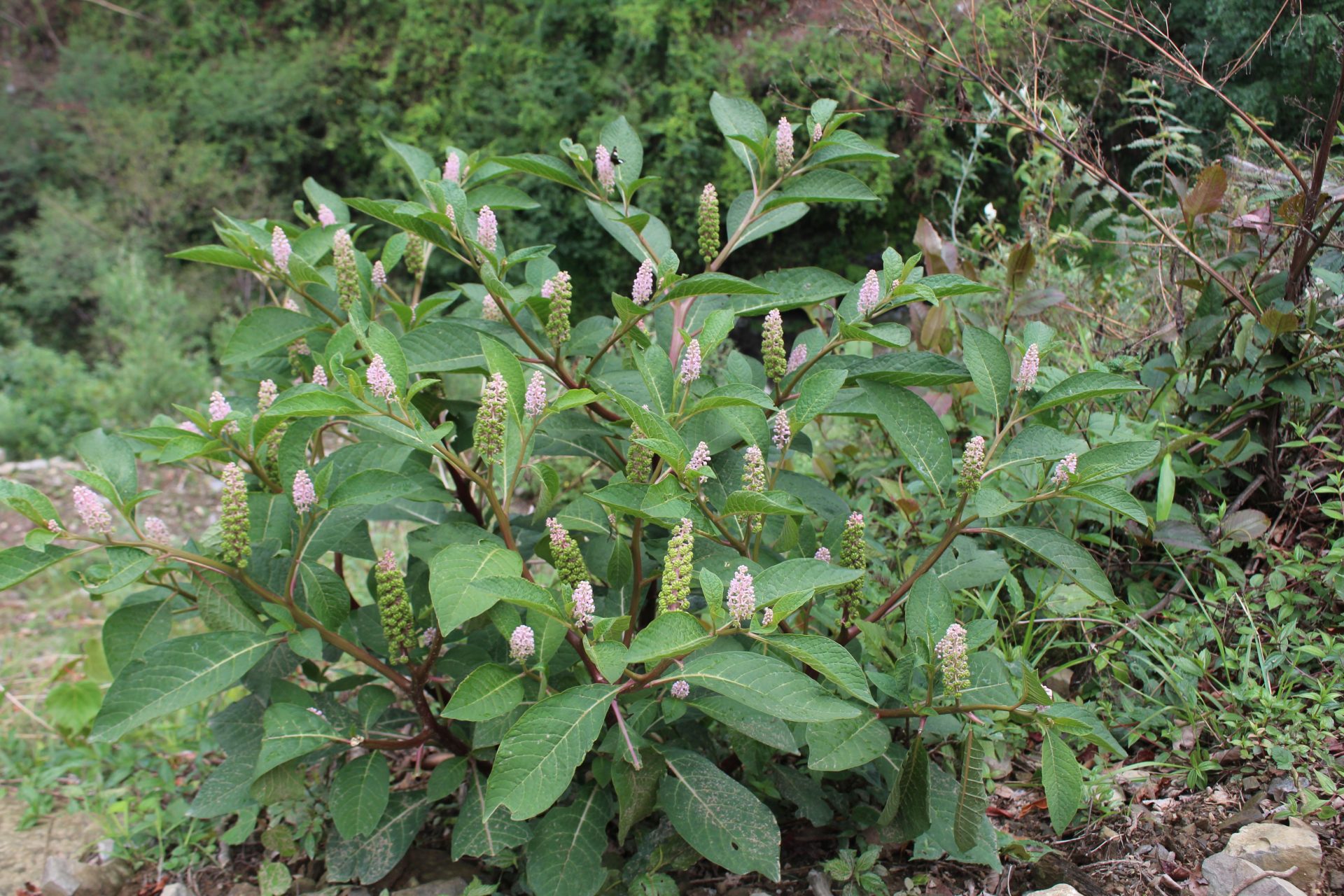
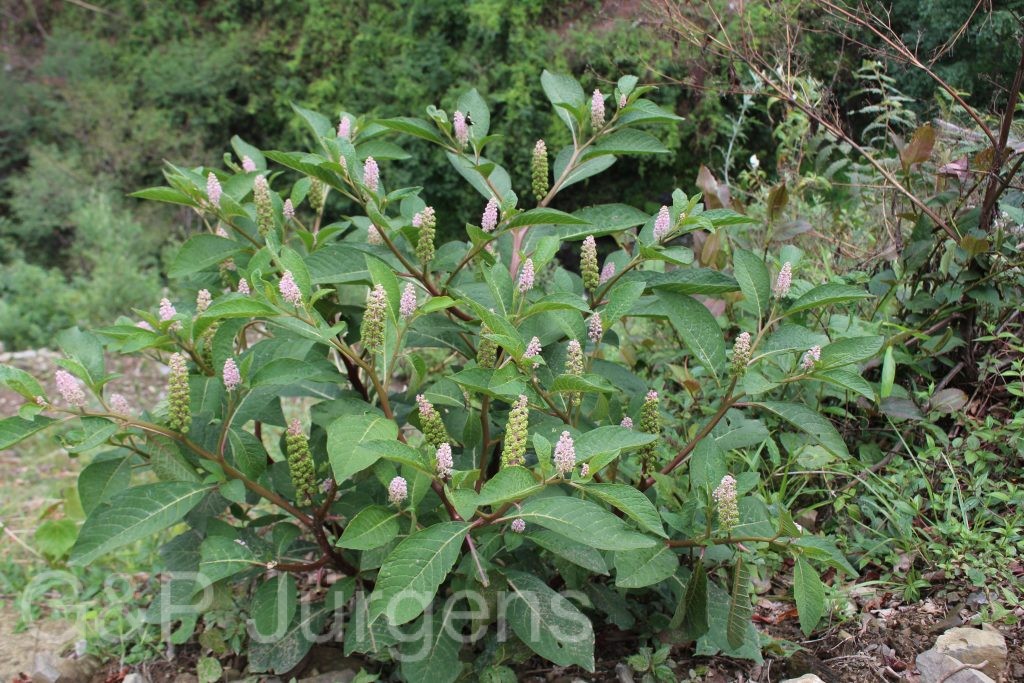
Phytolacca acinosa is a robust herbaceous perennial native to the temperate and subtropical mountains of Asia, from the Himalaya and China eastward to Korea and Japan, and now widely naturalised across Europe, where GBIF records dominate; the more than 40,000 occurrences logged reflect its abundance as an introduced plant across the Netherlands, Belgium, Germany, France and Britain as much as its native Asian range. Within its indigenous range it grows at forest margins, in clearings and on disturbed or cultivated ground at lower and middle elevations. The photographed plant was recorded in eastern Bhutan at Trashigang around 1550 m in May, a setting typical of this nitrogen-loving herb.
The plant arises from a stout, fleshy, often massive perennial taproot and produces tall, erect, branching, somewhat succulent stems. The leaves are alternate, large, elliptic to ovate-lanceolate, entire, with an acute apex and tapering base. The flowers are borne in dense, erect to suberect racemes opposite the leaves; each has five whitish to greenish tepals, the stamens and free carpels typically numbering around eight to ten. The fruit is a fleshy, depressed-globose berry of distinct segments, ripening dark purple-black, each with a single shining seed.
Phytolacca (Phytolaccaceae) is a small genus of pokeweeds known for their berry-like fruits and saponin-rich tissues. P. acinosa is distinguished from the American P. americana by its erect fruiting racemes and free carpels. The young shoots are eaten as a cooked vegetable in Asia, though the root and mature plant are toxic. Far from threatened, it is a successful colonist, now widespread and sometimes weedy beyond its homeland.
Author: Roxb. · Sources: POWO (Kew), GBIF, Flora of China Vol. 5, Flora of Bhutan Vol. 1, Flora of Nepal, Flora of Pakistan, Nowicke monograph of Phytolaccaceae