Author

G & P Jürgens

(Hook.f.) Aswal & Mehrotra
Garw 2005 76 ergebnis ergebnis
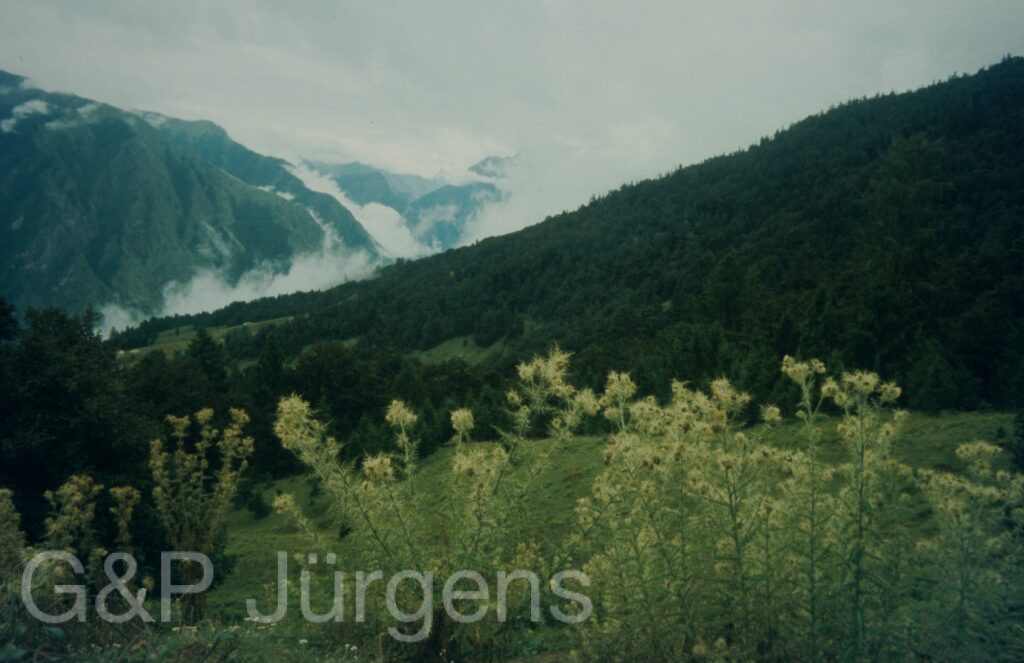
India Gaushon 3000m, September

Description

Cirsium wallichii var. platylepis is a Himalayan thistle taxon recorded by GBIF only from India, with about 8 occurrences, reflecting its status as a narrowly recognised variety raised by Aswal and Mehrotra from a Hooker name. It occupies open grassy slopes, pastures, forest margins, clearings and disturbed banks through the temperate and subalpine zones, broadly 2000 to 3300 m. The plant photographed at Gaushon in the Indian Himalaya at 3000 m in September, flowering and fruiting at the close of the monsoon, is consistent with its preference for sunny, somewhat disturbed montane grassland.

It is a robust biennial or perennial herb forming an erect, often winged and spiny stem from a stout rootstock. The leaves are oblong to lanceolate in outline, pinnatifid to pinnatisect, the lobes and margins armed with sharp spines and the undersurface frequently whitish-tomentose. The capitula are large and ovoid to subglobose, solitary or clustered, subtended by an involucre of many spine-tipped bracts; the variety platylepis is distinguished chiefly by its broader involucral phyllaries. The florets are tubular and pinkish-purple to whitish, and the cypselae are smooth and crowned by a pappus of plumose, feathery bristles that aid wind dispersal.

Cirsium is a large genus of true thistles in which Himalayan taxa form a difficult complex, and the variety platylepis represents fine-scale infraspecific differentiation within the widespread C. wallichii. The spiny armature and bitter foliage deter grazing in heavily pastured uplands, while the plumose pappus disperses the achenes effectively across open ground. As a narrowly defined variety with few records, its taxonomic standing merits further study, though the parent species is common and the entity is of no immediate conservation concern.

Author: (Hook.f.) Aswal & Mehrotra · Sources: POWO (Kew), GBIF, Flora of India (Asteraceae), Annotated Checklist of the Flowering Plants of Nepal, Flora of China (Asteraceae), Petrak revision of Asian Cirsium
(Franch.) Prain

Bhutan2014 67 ergebnis
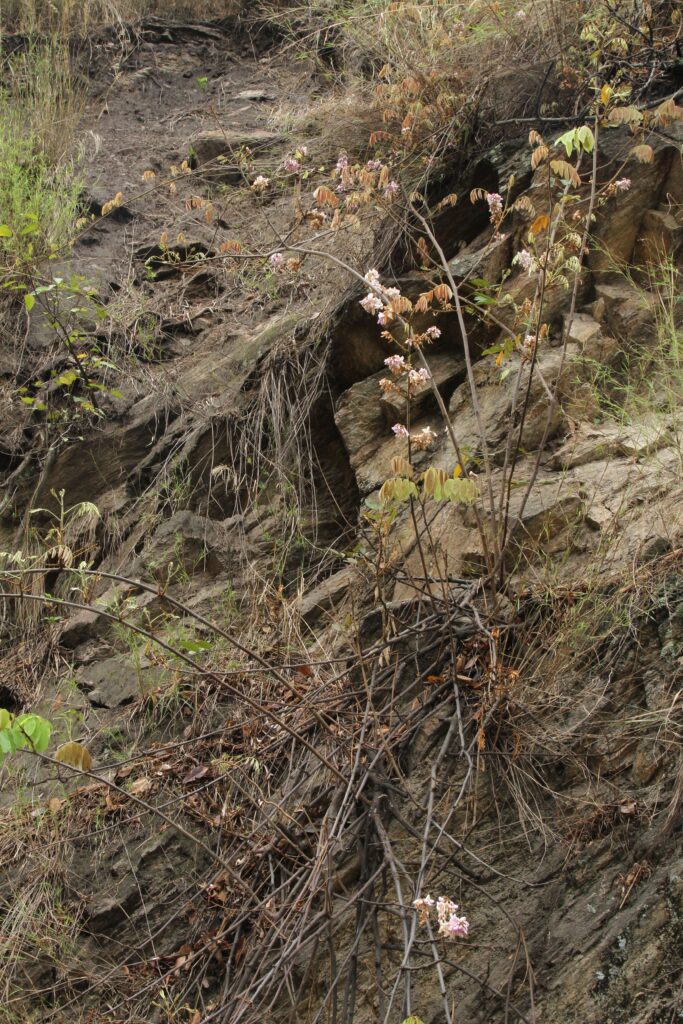
Bhutan Tashigang 1500m, May
Bhutan2014 68 ergebnis
Bhutan Tashigang 1500m, May

Description

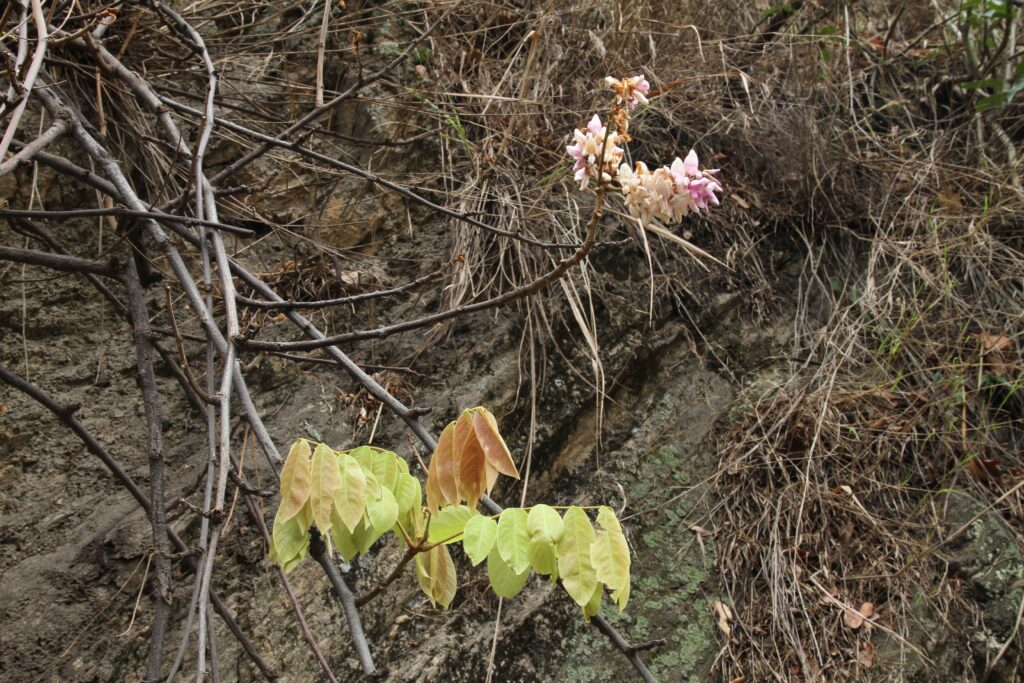
Cladrastis delavayi is a deciduous tree native to southern China (Yunnan, Sichuan, Guizhou, Guangxi) and the eastern Himalayan foothills, with records extending into Bhutan. The species occurs in warm-temperate to subtropical broadleaved forests, forest margins, and river valleys at elevations of 1,000–2,500 m, often growing on calcareous substrates. It has been documented from the Tashigang district in eastern Bhutan at 1,500 m, where it flowers in May before the onset of the summer monsoon, representing the western limit of its distribution in the Himalayan region.
Cladrastis delavayi is a medium-sized tree reaching 8–20 m in height, with a smooth, greyish bark. The leaves are alternate, imparipinnately compound, 15–30 cm long, with 9–13 leaflets that are ovate to elliptic, 4–10 cm long, papery in texture, glabrous above and sparsely pubescent beneath. The inflorescence is a terminal, erect panicle 15–30 cm long, bearing numerous papilionaceous flowers. The flowers are white to pale pink, approximately 1.5–2 cm long, fragrant, with a broadly campanulate calyx. The standard petal is reflexed and suborbicular. The fruit is a linear-oblong, flattened legume 5–10 cm long, indehiscent or tardily dehiscent, containing 1–4 seeds.
Originally described by Franchet as Sophora delavayi from material collected by Delavay in Yunnan and later transferred to Cladrastis by Prain, this species belongs to the small tribe Cladrastideae, which has a notable disjunct distribution between East Asia and eastern North America. With over 570 occurrence records in GBIF, C. delavayi is moderately well collected, though many records originate from cultivated specimens in botanical gardens in Europe, North America, and Japan. The presence of this species in Bhutan underscores the floristic affinity between eastern Bhutan and the Sino-Himalayan phytogeographic region. The tree is valued ornamentally for its attractive flowering and autumn foliage.

Author: (Franch.) Prain · Sources: POWO (Kew), GBIF, Flora of China Vol. 10, Grierson & Long: Flora of Bhutan Vol. 1 (1987), Duley & Vincent: Cladrastis (Leguminosae) Revisited (2003)

DC.

Garw 2005 251 ergebnis
India Garhwal Sitel 1850m, September

Description

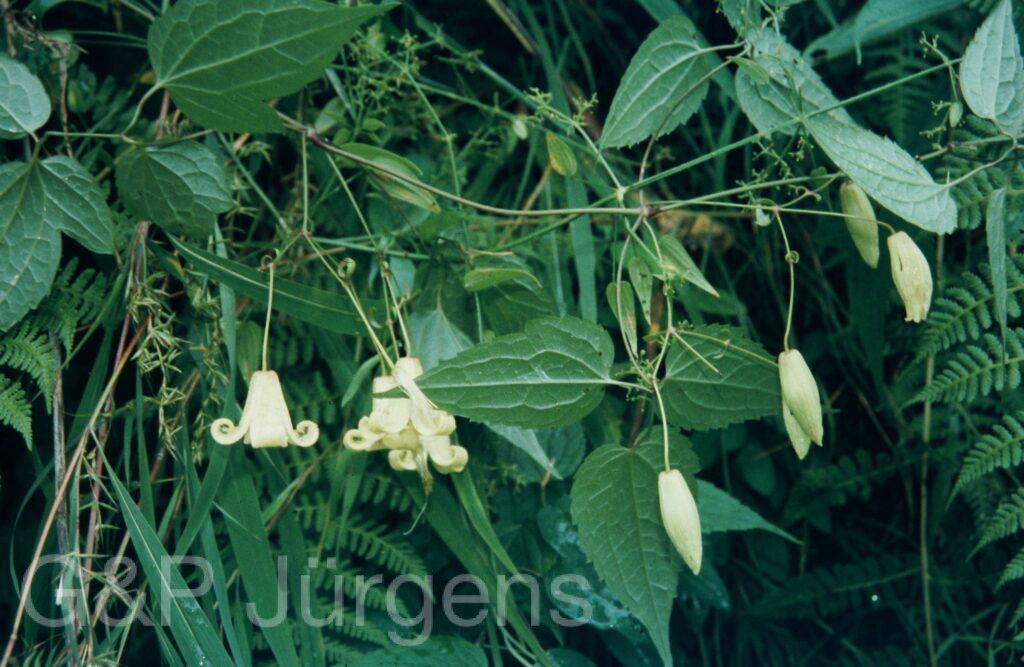
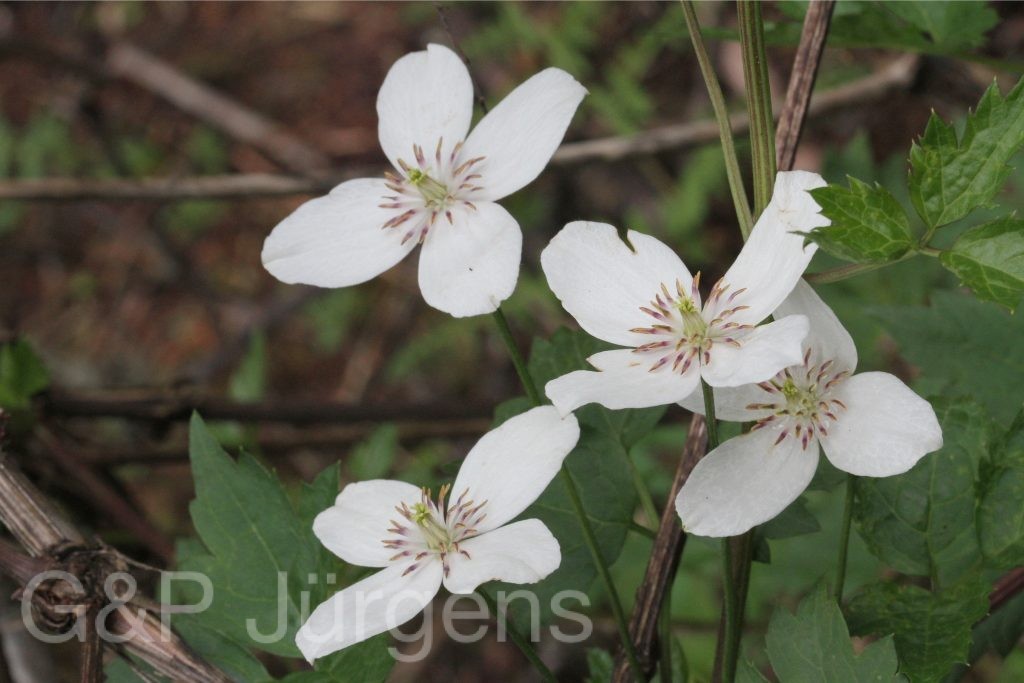
Clematis acuminata is a woody climber of the Himalaya and adjacent uplands, recorded by GBIF from China, India, Nepal, Myanmar, Thailand and Bhutan, with around 173 occurrences spread along the southern ranges. It grows in temperate and warm-temperate forest, scrambling through shrubbery, over forest margins and along open hillsides and ravines, typically on well-drained slopes. The photographed plant was found in the Indian Garhwal Himalaya at Sitel around 1850 m, flowering in September as the monsoon wanes; the species generally occupies the 1500-3000 m belt where it climbs vigorously into the canopy of small trees and thickets.

The plant is a perennial liana with slender, ribbed, climbing stems that ascend by means of clasping, twining petioles. The leaves are opposite and pinnately or ternately compound, the leaflets ovate to lanceolate and conspicuously long-acuminate, giving the epithet, with entire or sparingly toothed margins. The flowers are borne in axillary cymes and lack true petals, the showy parts being four spreading, often pale to creamy or pinkish sepals surrounding numerous stamens. The fruit is a head of achenes, each tipped with a long, persistent, plumose style that aids wind dispersal.

Clematis belongs to the Ranunculaceae and is unusual in the family for its lianescent habit and petaloid sepals. The feathery styled achenes are a hallmark of the genus, ensuring effective anemochory across mountainous terrain. Like many relatives, the herbage contains acrid protoanemonin and is locally used in folk medicine. Clematis acuminata is moderately widespread but nowhere abundant; it is not formally assessed, and its forest-margin populations persist where montane woodland and scrub remain intact.

Author: DC. · Sources: POWO (Kew), GBIF, Flora of China, Flora of Bhutan, Clematis monograph (Grey-Wilson)

L.H.J.Williams

Nepal 99 708 ergebnis
West-Nepal, Pungmo 3400m, July
Nepal 99 707 ergebnis
West-Nepal, Pungmo 3400m, July

Description

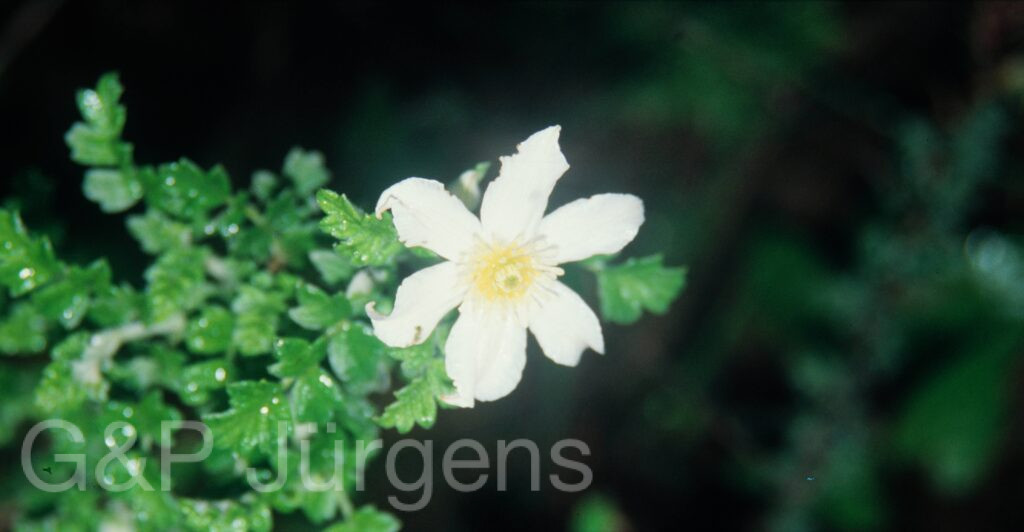
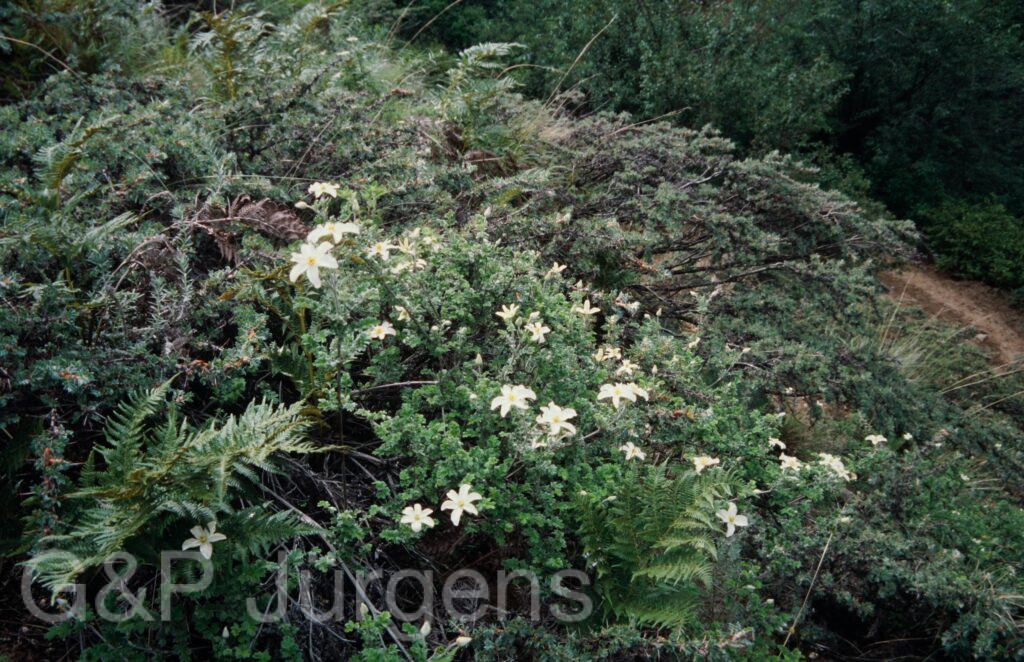
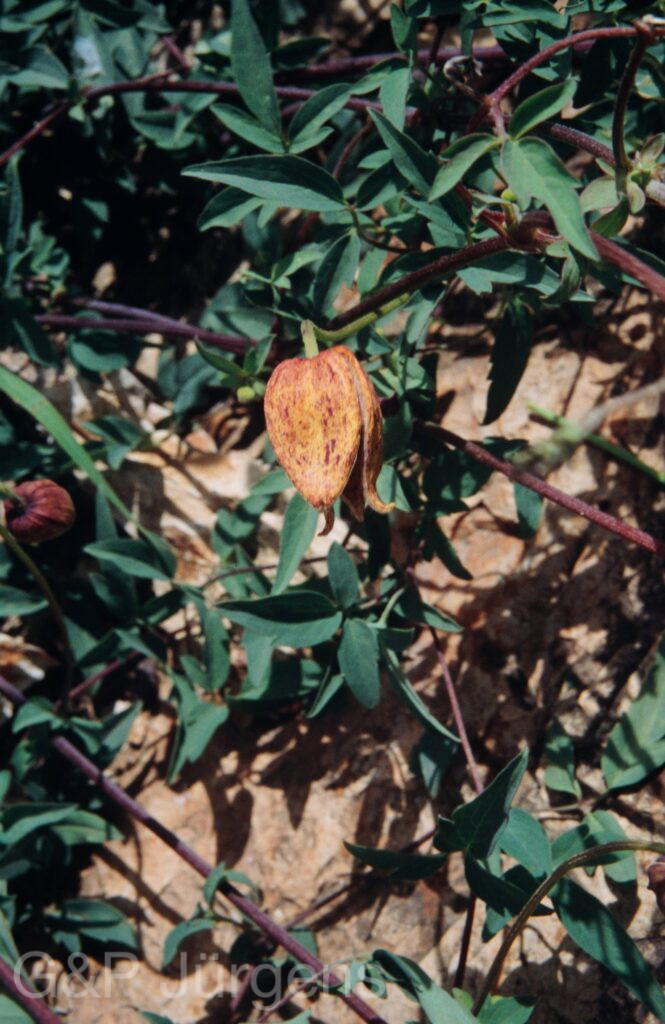
Clematis phlebantha L.H.J.Williams is a rare Himalayan endemic restricted to western Nepal, where GBIF records only 46 occurrences (the additional Netherlands record reflecting cultivated or herbarium material). It is a plant of dry, rocky, sun-exposed slopes and arid river gorges in the rain-shadowed valleys of the trans-Himalaya, growing at around 3000 to 3600 m. The plant photographed at Pungmo in West Nepal, at about 3400 m in July, exemplifies its association with the semi-arid inner valleys of the Dolpo region, where it scrambles over rock and shrubs in a markedly dry montane climate.

The species is a sprawling, woody-based climber or sub-shrub with silvery, silky-hairy stems and foliage that lend the plant a distinctive pale, felted appearance. The leaves are pinnate, with several segments that are densely silky beneath, an adaptation to its arid, high-light habitat. The flowers are solitary or few, borne on long pedicels, with no true petals; the showy floral parts are the four to six spreading, creamy-white to pale tepals, conspicuously marked with prominent purplish or reddish veins (phlebantha referring to this vein pattern). The fruit is an aggregate of achenes, each bearing a long, persistent, plumose style that aids wind dispersal.

First described from western Nepal, C. phlebantha is celebrated among horticulturists, having been introduced to cultivation following its discovery, and is valued for its silvery foliage and veined flowers. Its strict endemism and limited known range make it a species of notable biogeographic and conservation interest, characteristic of the specialised flora of the dry inner Himalayan valleys. Its narrow distribution warrants monitoring, as such restricted-range endemics are inherently vulnerable to habitat change.

Author: L.H.J.Williams · Sources: POWO (Kew), GBIF, Flora of Nepal, Grey-Wilson monograph of Clematis, Stainton Flowers of the Himalaya

Rehder

Nepal 99 469 ergebnis
West-Nepal Churta-Khola 3200m, June

Description

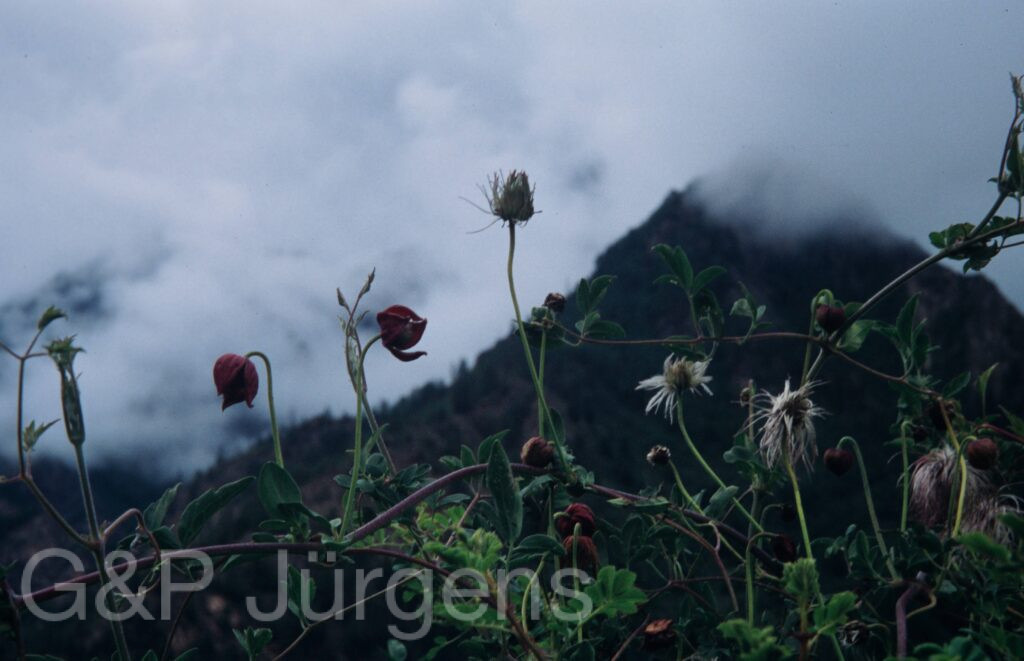
Clematis roylei is a Himalayan climber of the buttercup family, with about 66 GBIF occurrences recorded from India and Nepal. It is a plant of moist temperate forest and the shrubby ecotones between forest and open slope, scrambling over shrubs, herbaceous vegetation and embankments in cool, humid montane settings. The material photographed at Churta-Khola in West Nepal at about 3200 m in June was recorded at the start of the monsoon, when the temperate forest zone is flushed with new growth and these herbaceous climbers come into flower. The species occupies a broadly montane band along the central and western Himalaya.

It is a slender, somewhat woody-based herbaceous to subscandent climber whose petioles and rachises twine to provide support, the leaves being opposite and compound, typically pinnate to ternate with toothed or lobed, acuminate leaflets. The nodding, campanulate flowers lack true petals; the floral envelope consists of four (occasionally more) connivent sepals that are commonly bluish, purple, violet or dull yellow and frequently softly hairy on the margins and outer surface. The numerous stamens surround a cluster of carpels which, in fruit, develop into the characteristic achenes each tipped by a long, persistent, plumose feathery style that aids wind dispersal.

Clematis is a large, cosmopolitan genus, and roylei belongs to the nodding-flowered Himalayan assemblage allied to the C. connata group, with which it has often been associated taxonomically. These climbers contribute to the structural complexity of forest margins and provide nectar to montane pollinators. The species is locally distributed but not formally evaluated; its persistence is tied to the maintenance of intact mid-montane forest and shrubland habitats.

Author: Rehder · Sources: POWO (Kew), GBIF, Flora of Nepal, Hooker Flora of British India, Annotated Checklist of the Flowering Plants of Nepal, Tamura Ranunculaceae

(C.E.C.Fisch.) Grey-Wilson

Nepal 99 712 ergebnis
West-Nepal, Bauli-Khola 3500m, July
Nepal 99 713 ergebnis
West-Nepal, Bauli-Khola 3500m, July
Nepal 99 714 ergebnis
West-Nepal, Bauli-Khola 3500m, July

Description

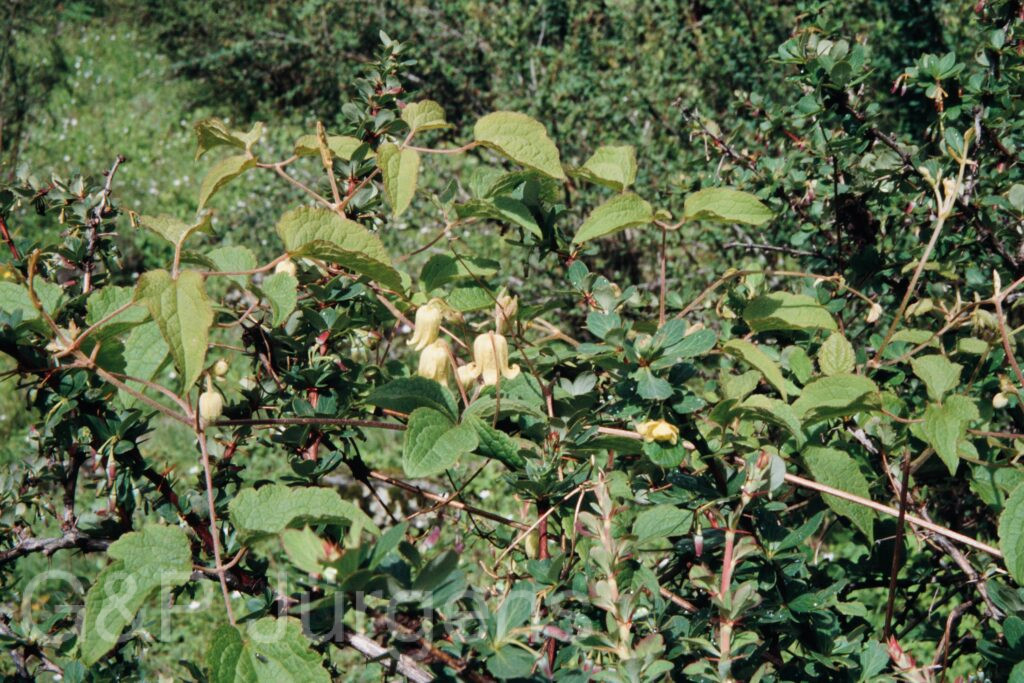
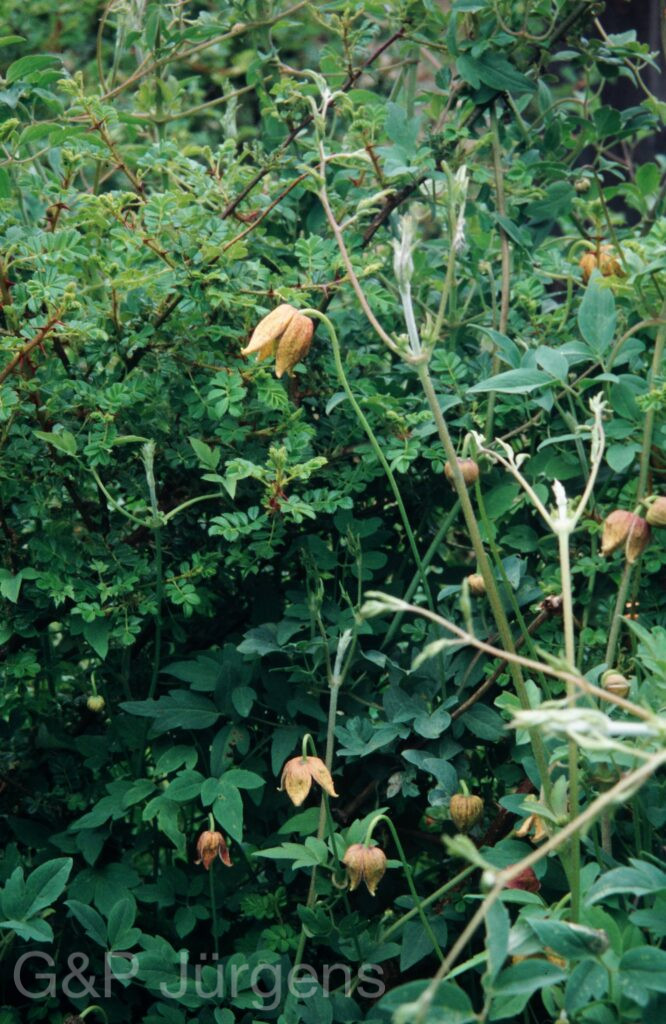
Clematis tibetana var. vernayi is a Himalayan and Tibetan climber recorded principally from China and Nepal among its roughly 289 occurrences, the records from New Zealand, the Netherlands, the United States and Canada reflecting its popularity in horticulture rather than a natural range, since this is the celebrated nodding yellow-flowered clematis widely cultivated in temperate gardens. In the wild it inhabits open subalpine and alpine slopes, scrub, rocky banks and dry valley sides, often scrambling over shrubs and boulders in well-drained, sunny situations. The photographed plant from the Bauli-Khola in West Nepal, at about 3500 m and flowering in July, is typical of its high-montane occurrence in the inner, drier Himalayan valleys.

It is a woody-based, semi-scandent perennial climbing by twining petioles, with deeply divided, pinnately compound leaves whose narrow leaflets are often lobed, toothed and somewhat glaucous, an adaptation to the dry, exposed habitat. The flowers are solitary, nodding and broadly campanulate to lantern-shaped, lacking true petals; the showy structures are four thick, leathery sepals coloured deep yellow, frequently flushed purple-brown outside, surrounding numerous stamens. The fruit is a head of achenes each bearing a long, conspicuously plumose persistent style, forming the silvery feathery seed-heads characteristic of the genus and aiding wind dispersal.

Clematis section Meclatis, the yellow-flowered Asian group to which this taxon belongs, has been studied in detail by Grey-Wilson, who recombined the variety; the thick-sepalled, glaucous, dry-habitat forms of the C. tibetana complex have long been valued by gardeners as the orange-peel clematis for their unusually substantial sepals. Ecologically the plumed achenes exploit wind for dispersal across open terrain. Widespread in the wild and abundant in cultivation, the variety is of no conservation concern, and its garden derivatives remain among the most familiar Himalayan contributions to ornamental horticulture.

Author: (C.E.C.Fisch.) Grey-Wilson · Sources: POWO (Kew), GBIF, Flora of China, Annotated Checklist of the Flowering Plants of Nepal, Grey-Wilson's monograph Clematis the Genus

(Bruehl) Tamura

BhutanPG2011 157 5
Bhutan Tsochenchen, 3550m June

Description

Clematis tongluensis is a Himalayan climber recorded from Nepal, Bhutan, India, China and Myanmar, with additional cultivated or vouchered material noted from Canada; GBIF holds around 58 occurrences. It is a plant of temperate to subalpine forest, scrambling through shrubberies, over forest-edge thickets and along open slopes, generally between about 2700 and 3700 m. It was photographed at Tsochenchen in Bhutan at 3550 m in June, where it climbs through rhododendron and conifer woodland margins, flowering at the onset of the summer monsoon.

The species is a woody to semi-woody climber with ribbed, somewhat pubescent stems that twine and clamber by means of the petioles. The leaves are ternate to pinnate, the leaflets ovate to lanceolate, acuminate and serrate, often thinly hairy. The flowers, borne singly or in few-flowered cymes, are nodding and broadly campanulate, lacking true petals; the four (rarely more) thick, spreading to recurved sepals are usually creamy-white to pale yellow, sometimes flushed purplish, with tomentose margins. Numerous stamens surround the carpels, and the fruit is a head of achenes each bearing a long, plumose persistent style.

Clematis tongluensis sits within the bell-flowered Sino-Himalayan groups of the genus, allied to the Montanae and related sections, and has at times been treated under or confused with the variable C. montana complex. Its nodding campanulate flowers and montane forest habitat are diagnostic. The species is fairly widely distributed and faces no recognised conservation threat, though it depends on the persistence of intact temperate broad-leaved and coniferous forest.

Author: (Bruehl) Tamura · Sources: POWO (Kew), GBIF, Flora of Bhutan, Flora of China, A Revision of the Genus Clematis (Grey-Wilson), Annotated Checklist of the Flowering Plants of Nepal

Walp.

Bhutan2015 316
Bhutan Trongsa 1900m, October
Bhutan2012 751
Bhutan Zemgang 1200m, October
Bhutan2012 752
Bhutan Zemgang 1200m, October
Bhutan2015 149 scaled
Bhutan Zhemgang 800m, October

Description

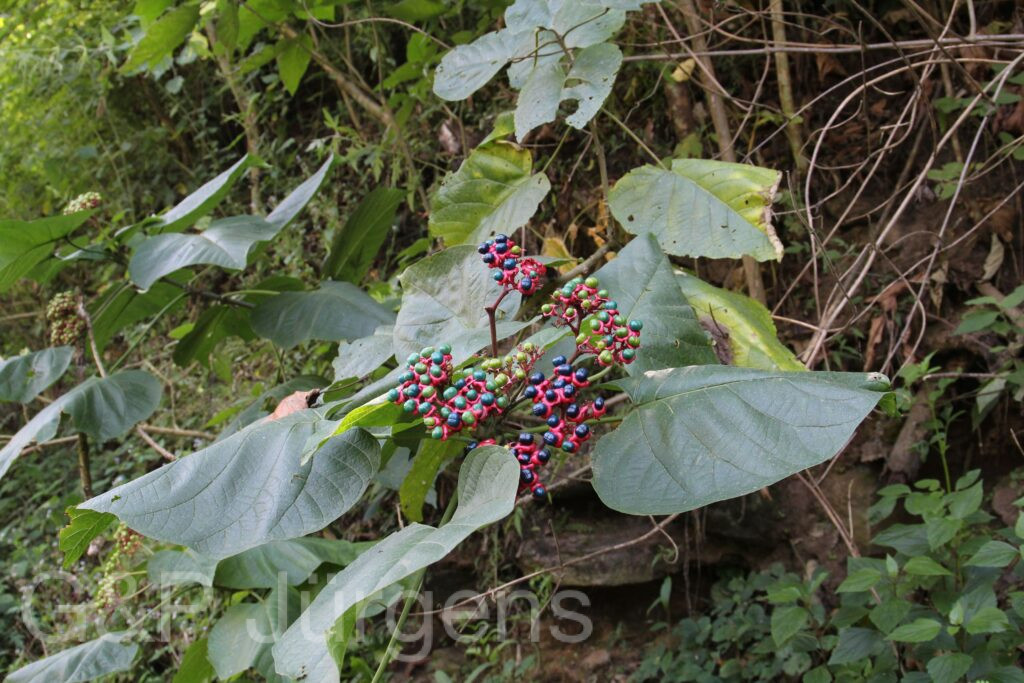
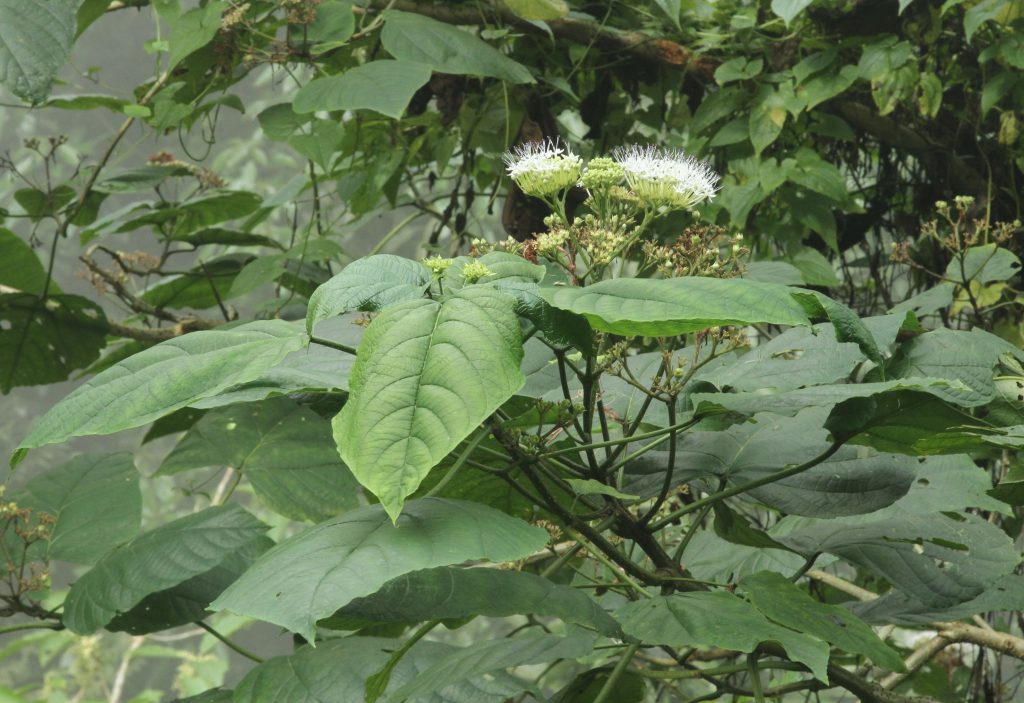
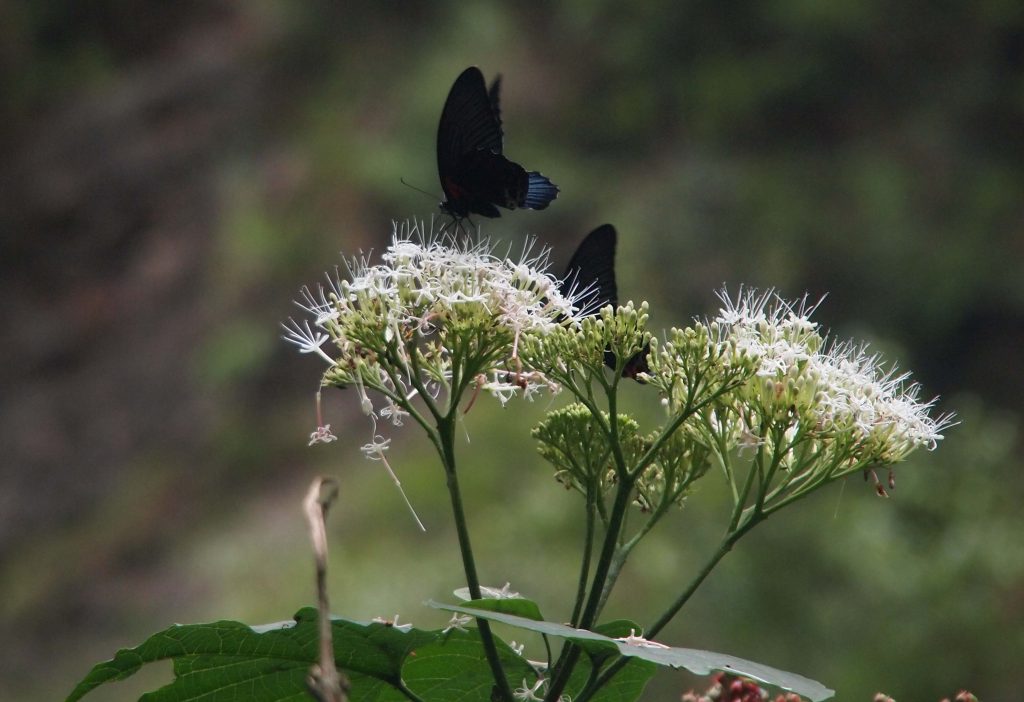
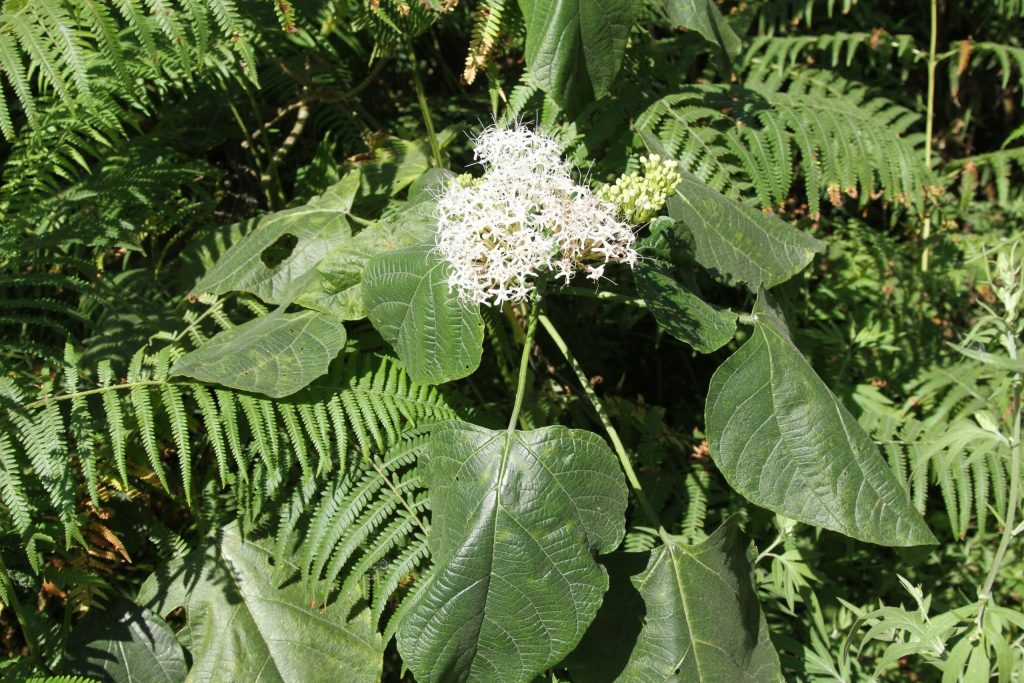
Clerodendrum colebrookianum is a shrub of the Indo-Himalayan and Southeast Asian region, recorded from Nepal, NE India, Bhutan, Bangladesh, Myanmar, southern China and southward through Thailand, Laos, Vietnam, Malaysia and Indonesia; the GBIF dataset (299 occurrences) also includes outlying records. It is a plant of warm-temperate to subtropical broad-leaved forest, forest margins, secondary scrub and disturbed roadsides, frequently following human settlement. In Bhutan it has been collected across a broad altitudinal span, from around 800 m in Zhemgang up to about 1,900 m near Trongsa, with autumn (October) collections capturing it in flower and early fruit.

It is an erect shrub 1–3 m tall with quadrangular, finely pubescent young branchlets. The leaves are opposite, broadly ovate to cordate, 8–20 cm long, acuminate at the apex, entire or shallowly toothed, with a soft indumentum beneath and a strong odour when crushed. The inflorescence is a broad, terminal, flat-topped corymbose cyme; flowers are white, the calyx campanulate and 5-lobed, the corolla with a slender tube and five spreading lobes, and four long-exserted stamens and a bifid style projecting well beyond the limb. The fruit is a fleshy drupe splitting into four pyrenes seated on the persistent, reddening calyx.

Though GBIF flags the name as a synonym, the accepted name is Clerodendrum colebrookianum, here treated as correct. Formerly placed in Verbenaceae, the genus is now referred to Lamiaceae following molecular phylogenetic revision. The species is a well-known leafy vegetable and ethnomedicinal plant across NE India and adjacent regions, valued in folk treatment of hypertension, and is widespread and unthreatened.

Author: Walp. · Sources: POWO (Kew), Flora of China Vol. 17, Flora of Bhutan Vol. 2, GBIF, Harley et al.: Labiatae in The Families and Genera of Vascular Plants (2004)

Trautv. & C.A.Mey.

Nepal 99 154 ergebnis
West-Nepal South of Rara-Lake 3500m, June

Description

Clintonia udensis is a woodland perennial with a remarkably wide East Asian to Himalayan distribution, recorded from China, Japan, Russia (Far East), Korea, Nepal, India, Bhutan, Myanmar and Pakistan, with over 3800 GBIF occurrences across this temperate arc. It is a shade-loving plant of moist, humus-rich coniferous and mixed forests, fir and rhododendron understorey, bamboo thickets and damp shaded gullies, typically between about 2500 and 4000 m in the Himalaya. The plant photographed south of Rara Lake in West Nepal at 3500 m in June, flowering as the high forests emerge from winter, exemplifies its preference for cool, sheltered subalpine forest floors where deep leaf litter retains moisture.

The species arises from a short, creeping rhizome and produces a basal rosette of two to five broadly elliptic to oblong-obovate leaves that are conspicuously parallel-veined, entire and ciliate at the margin, sheathing at the base. A leafless scape rises above the foliage bearing a terminal raceme of a few nodding, campanulate flowers. The six white tepals are oblong and free, subtending six stamens with linear anthers, and the superior ovary matures into a fleshy, ellipsoid to ovoid berry that ripens from green to a deep blue-black, containing several seeds and crowned by the persistent style base.

Clintonia is a small Holarctic genus of about five species traditionally placed in the Liliaceae and treated by some authors within an expanded Convallariaceae or Uvulariaceae. C. udensis is the sole Asian representative and the only one with white flowers and a black berry, the remaining species being North American. Its disjunct amphi-Pacific generic distribution is a classic example of the East Asian–North American floristic link. The berries are dispersed by birds, and the species is widespread and common; it is of no particular conservation concern.

Author: Trautv. & C.A.Mey. · Sources: POWO (Kew), GBIF, Flora of China Vol. 24, Flora of Bhutan Vol. 3, Flora of Nepal, A Monograph of the Genus Clintonia (Liliaceae)

H.Ohashi

Bhutan2015 585
Bhutan Punaka 1240m, October

Description

Codariocalyx motorius is a subshrub of the subtropical and tropical understorey, widely distributed across South and Southeast Asia and reaching the southern Himalayan foothills. GBIF records (some 1,418 occurrences) document it from China, India, Nepal, Bhutan, Myanmar, Thailand, Laos, Cambodia, Vietnam, Sri Lanka, Taiwan, the Philippines, Indonesia and Pakistan, with naturalised or cultivated material in Japan, the United States and elsewhere. It favours open scrub, forest margins, grassy slopes and disturbed ground. The photographed plant grows at Punakha in western Bhutan at about 1,240 m, flowering in October, typical of the warm broadleaved zone below 1,500 m it occupies in the eastern Himalaya.

It is an erect perennial subshrub 0.6–1.5 m tall with woody-based, finely pubescent stems. The leaves are pinnately trifoliolate; the terminal leaflet is large, oblong-lanceolate and up to 8 cm long, flanked by two minute lateral leaflets that perform spontaneous rotatory movements in response to light and warmth. The inflorescence is a terminal or axillary raceme of small papilionaceous flowers, violet to purplish, with a striate standard. The fruit is a curved, several-jointed lomentum that breaks into one-seeded articles at maturity.

Long known as Desmodium gyrans, the species is famous as the "telegraph" or "dancing" plant, its motile lateral leaflets having attracted study from Darwin onwards. It is locally used in traditional medicine and is of no conservation concern given its wide range and tolerance of disturbance, though it is a characteristic indicator of seasonally dry monsoon forest in the Himalayan tracts.

Author: H.Ohashi · Sources: POWO (Kew), Flora of China Vol. 10, Flora of Bhutan Vol. 1, GBIF, Ohashi: Taxonomic Studies in Desmodium (Leguminosae)