Tag:

Alpine (>3500 m)

Wall.

Nepal 99 147 ergebnis
West-Nepal South of Rara-Lake 3700m, June
Nepal 99 724 ergebnis
West-Nepal, Bauli.Khola 3600m, July

Description

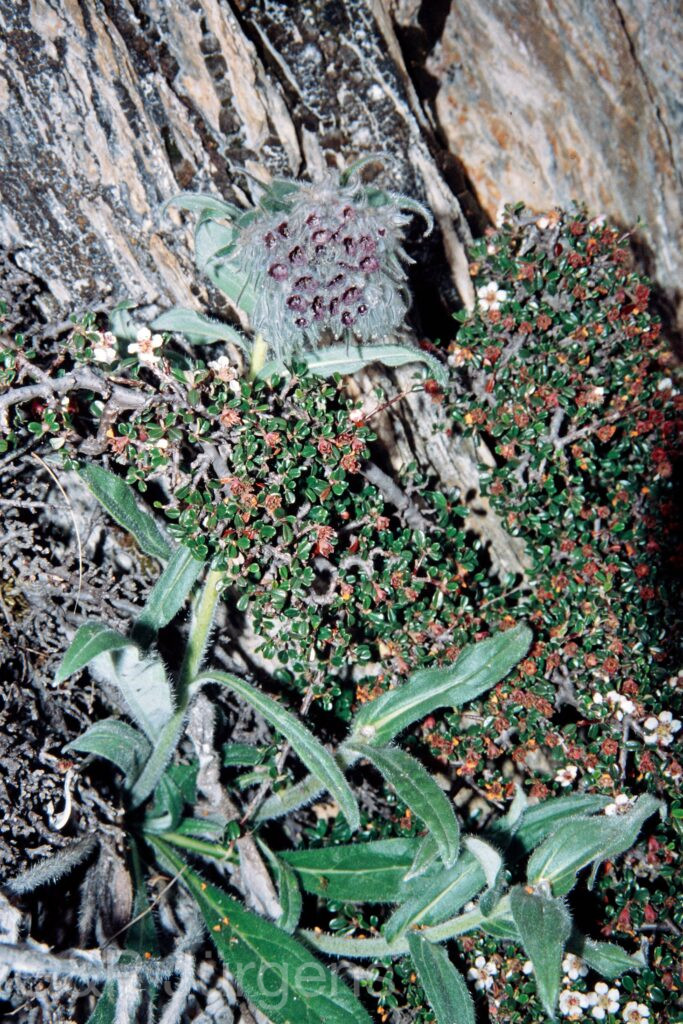
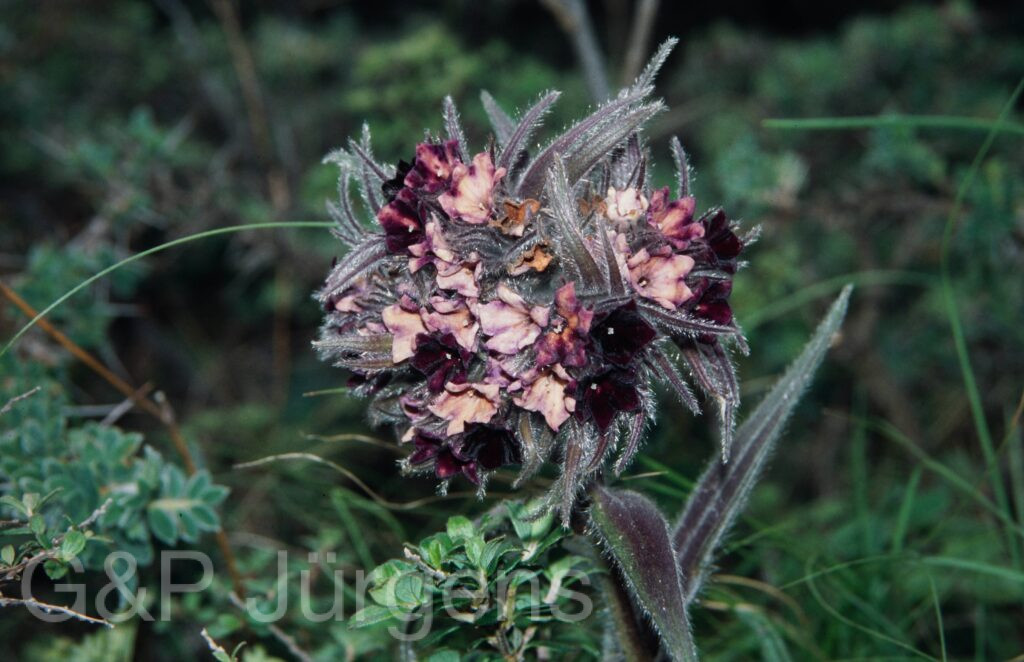
Onosma bracteata Wall. is a bristly perennial herb of the western and central Himalaya, recorded by GBIF (83 occurrences) from Nepal, India and Turkey, though its core range lies along the high inner-Himalayan valleys. It occupies dry, open, stony slopes, rocky pasture and the margins of subalpine scrub on calcareous or schistose substrates, flowering through the early monsoon. The cited collections from west Nepal, south of Rara Lake at 3700 m in June and at Bauli Khola at 3600 m in July, place it firmly in the high-altitude steppe and meadow zone where it forms scattered clumps on sun-exposed ground. The name is treated here as a synonym, with Onosma bracteata recognised as the accepted name.

The plant forms tufted, ascending to erect stems clothed throughout in stiff, spreading, tuberculate-based setae that give a harsh, hispid texture. The leaves are sessile, oblong-lanceolate to linear, entire and likewise bristly on both surfaces. Flowers are aggregated in terminal, scorpioid cymes subtended by conspicuous leafy bracts, from which the epithet derives; the corolla is tubular-campanulate, yellow, with a five-toothed limb and exserted anthers, and the gynoecium develops into four smooth nutlets enclosed by the persistent calyx.

Within the large Old World genus Onosma, the bracteate, yellow-flowered Himalayan species form a taxonomically intricate complex requiring careful comparison of indumentum and bract characters. Several Onosma yield a red dye (alkannin-type pigments) from their roots and have ethnobotanical and medicinal uses across the region. The species is not assessed as threatened, but its restriction to specialised dry montane habitats makes local populations vulnerable to grazing pressure and trampling.

Author: Wall. · Sources: POWO (Kew), GBIF, Flora of Nepal, Flora of British India (Hooker), Boraginaceae of the Western Himalaya, Riedl monograph on Onosma
Hook.f. & Thomson

Bhutan2014 918
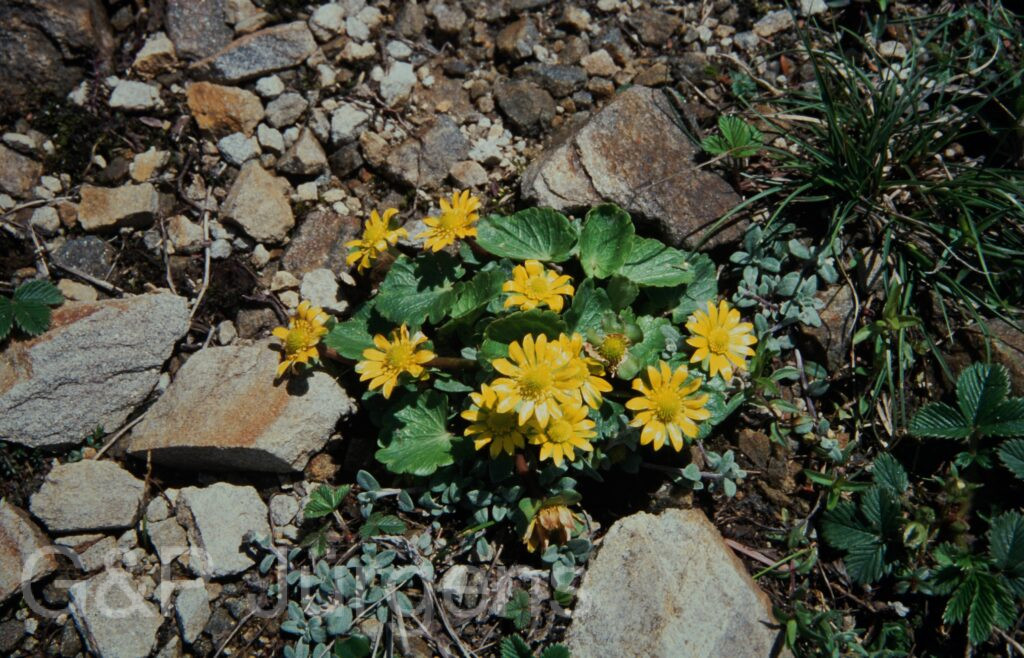
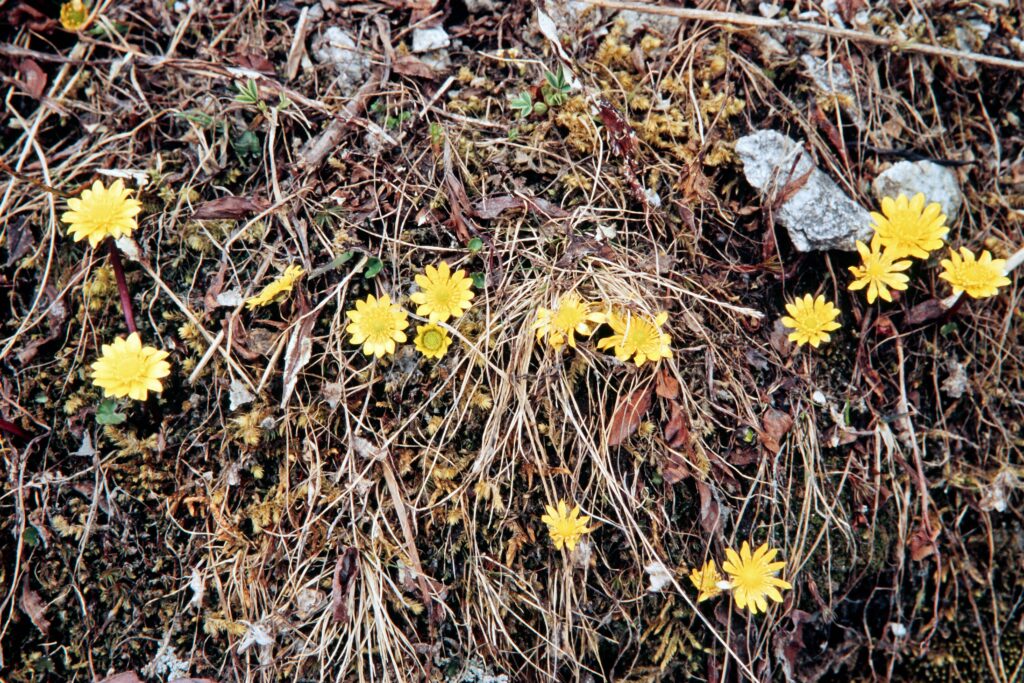
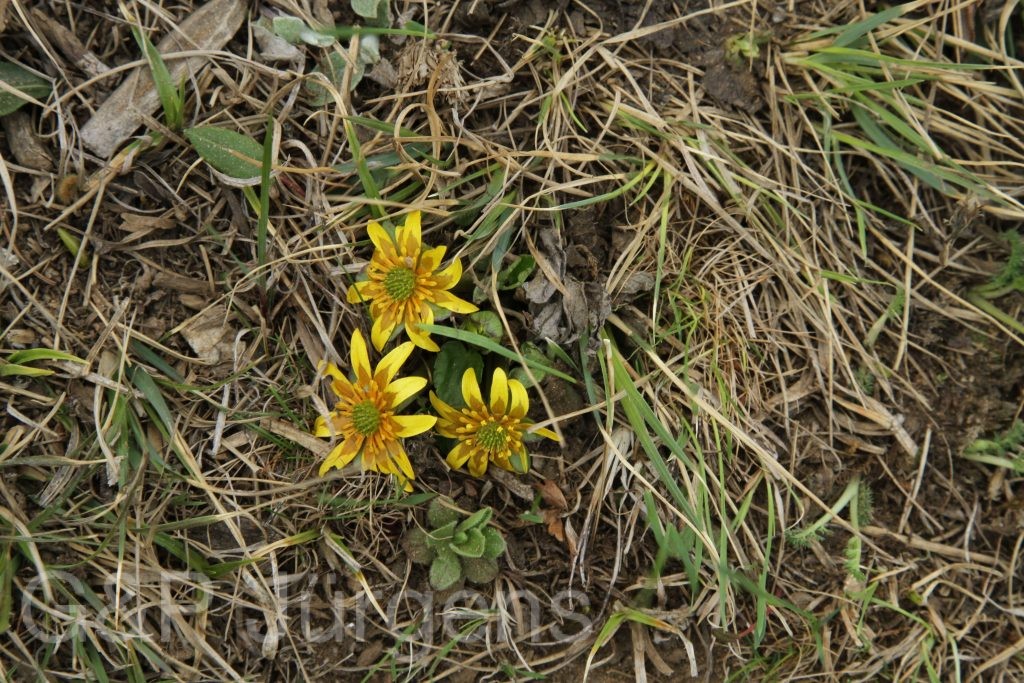
Bhutan Chele-La 4000m, May
Bh2008 568 P855
Bhutan Chele-La 3900m April
Nepal 2001 332 ergebnis ergebnis
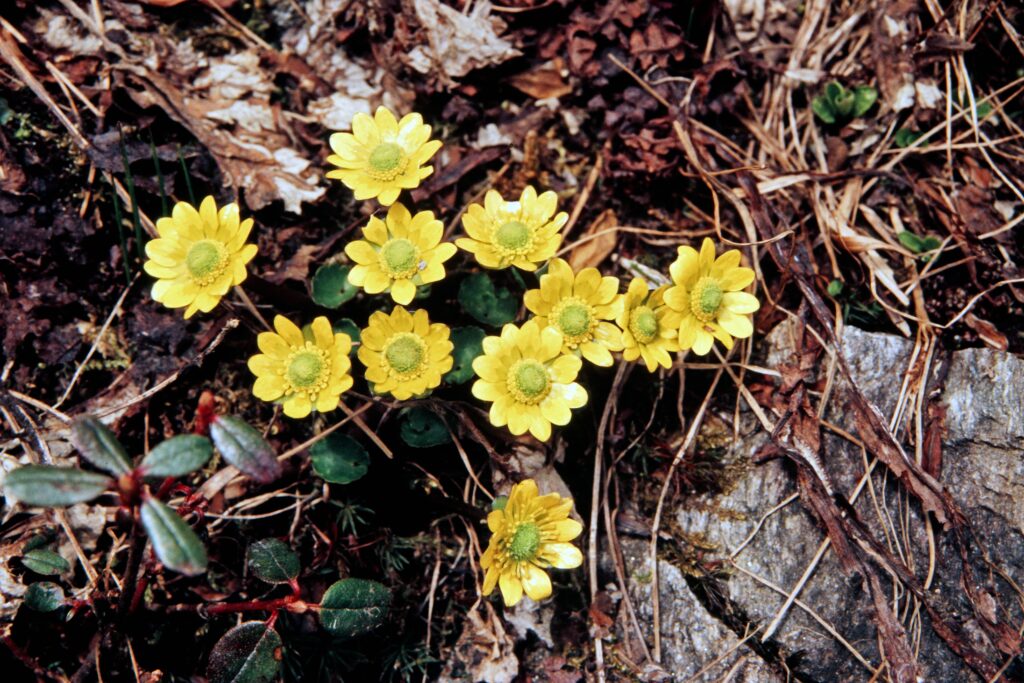
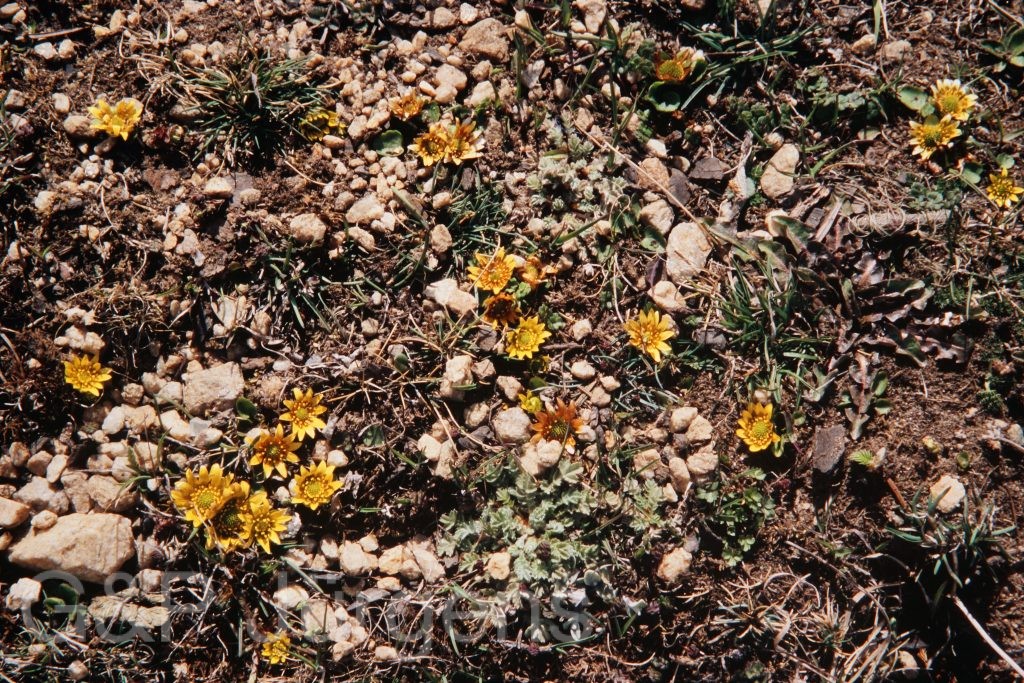
Nepal (Gorkha) Rupina-La 3300m, May

Description

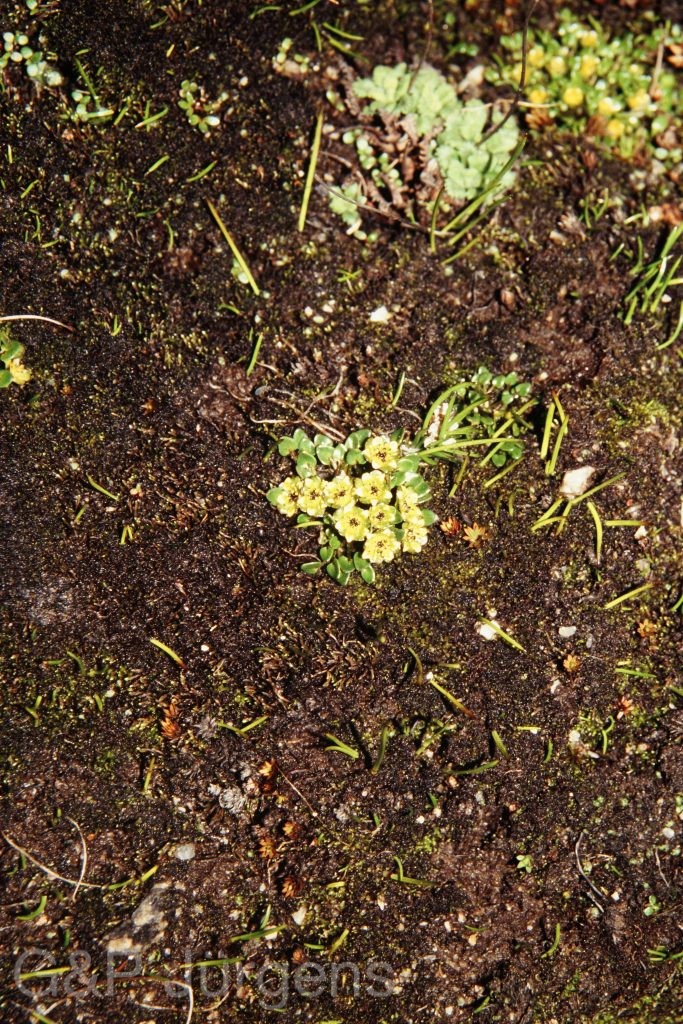
Oxygraphis polypetala is a high-alpine buttercup relative distributed across the Himalaya and Tibetan plateau, with records from India, Nepal, China, Russia, Bhutan and Pakistan and around 115 georeferenced occurrences. It is an early-flowering plant of damp alpine turf, snowmelt flushes, gravelly meadows and the margins of melting snow patches, generally between about 3300 and 4500 m. The illustrated collections—Chele-La in Bhutan at 3900–4000 m in April and May, Rupina-La in Gorkha, Nepal at 3300 m in May, and Khiar Kutti in Garhwal, India at 4100 m in June—capture its phenology of blooming almost immediately as the snow retreats.

It is a small, stemless perennial herb forming rosettes from a short rootstock. The leaves are all basal, long-petiolate, with an entire to obscurely crenate, ovate to elliptic, often somewhat fleshy blade. The flowers are solitary on leafless scapes; the perianth is conspicuous, with numerous (commonly ten or more, whence polypetala) narrow, glossy golden-yellow petaloid segments spreading star-like above a green calyx, surrounding many stamens and a domed head of carpels. The fruit is an aggregate of numerous small, beaked achenes borne on an elongating receptacle.

Oxygraphis is a small Asiatic genus segregated from Ranunculus on the basis of its persistent, leathery petals and achene structure; the name combination here, attributed to Hooker and Thomson, is treated as accepted despite synonym status in the source data. Its precocious flowering exemplifies the snowbed strategy of many high-Himalayan herbs that exploit the brief window of meltwater and warmth. Widely distributed and locally abundant, it is not regarded as threatened.

Author: Hook.f. & Thomson · Sources: POWO (Kew), GBIF, Flora of China (Ranunculaceae), Annotated Checklist of the Flowering Plants of Nepal, Grierson & Long Flora of Bhutan, Tamura's treatment of the Ranunculaceae

Vassilcz.

Nepal 99 606 ergebnis
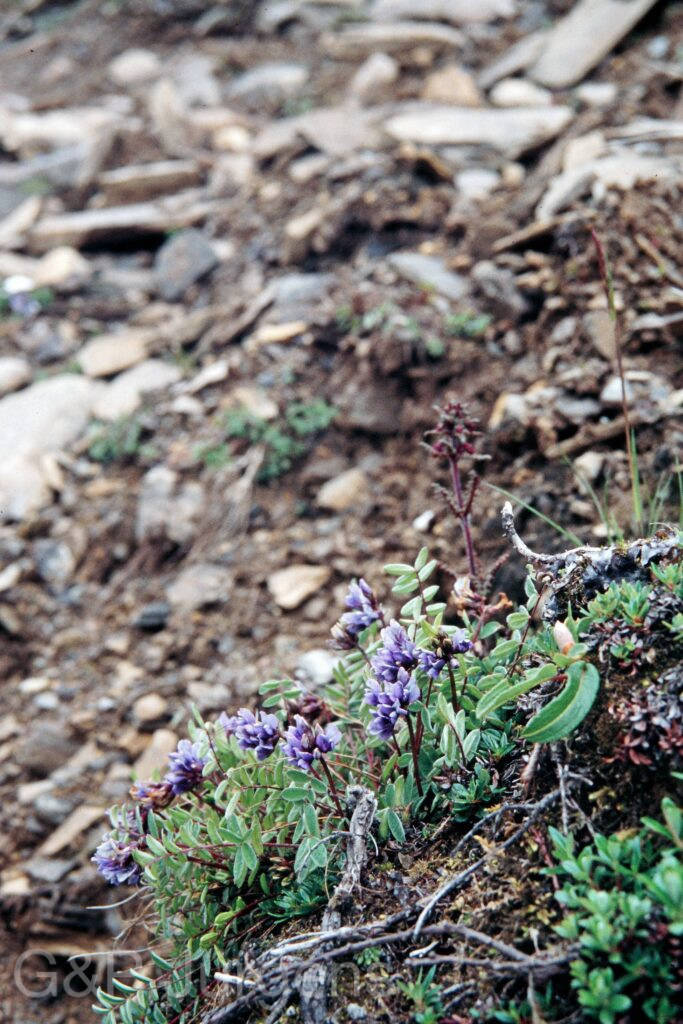
West-Nepal Kagmara Phedi 3900m, July

Description

Oxytropis williamsii is a high-alpine legume of the central and western Himalaya, recorded with some 154 georeferenced collections from Nepal and adjacent Tibetan China (Xizang). It inhabits open stony slopes, dry alpine turf, gravelly moraine flanks and the margins of glacial meltwater channels in the upper subnival belt, typically between about 3800 and 4800 m. The plant photographed at Kagmara Phedi in West Nepal at 3900 m in July exemplifies its preference for cold, well-drained, continental sites with a short growing season and intense insolation.

The species forms a low, tufted, more or less acaulescent perennial arising from a stout, woody, branched caudex crowned by persistent stipule and petiole remains. The leaves are imparipinnate, with numerous small, oblong to elliptic leaflets densely clothed in appressed silky-villous hairs that lend the plant a silvery-grey aspect. Flowers are borne in compact, shortly pedunculate racemes or capitate clusters; the papilionaceous corolla is purple to violet, with the keel terminating in the sharp acuminate beak diagnostic of Oxytropis as distinct from Astragalus. The calyx is tubular and pubescent, and the fruit is an inflated, hairy legume, more or less bilocular through intrusion of the dorsal suture.

Membership in Oxytropis and its allies reflects a radiation of cushion- and tussock-forming legumes adapted to the cold deserts of the Tibetan plateau and its Himalayan rim. Such species contribute nitrogen fixation and soil stabilisation in nutrient-poor alpine substrates, and like many Oxytropis may accumulate swainsonine-type alkaloids. Restricted to remote, sparsely collected terrain, O. williamsii has not been formally assessed, though its specialised habitat warrants monitoring under warming and grazing pressure.

Author: Vassilcz. · Sources: POWO (Kew), GBIF, Flora of China, Flora of Nepal, Annotated Checklist of the Flowering Plants of Nepal, monograph of Oxytropis (Vassilczenko / Astragalology)

Wall.

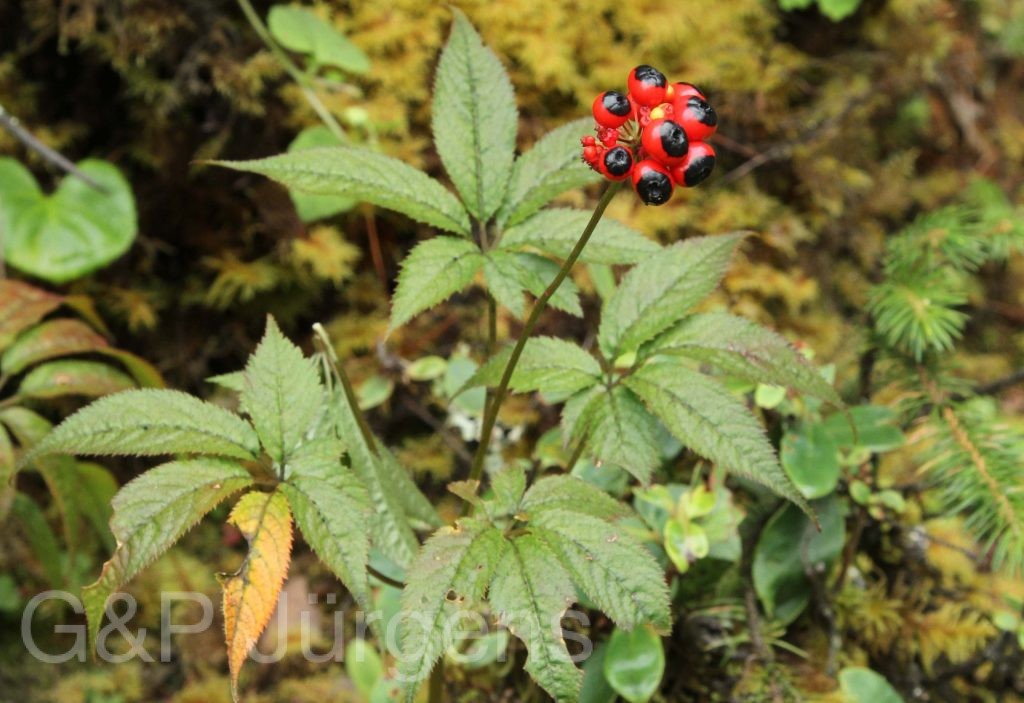
Bhutan2012 27
Bhutan Shele-La, 3500m September

Description

Panax pseudoginseng is a rhizomatous perennial herb of the eastern Himalaya and Sino-Himalayan region, distributed across Nepal, India, Bhutan, China and Myanmar; its c. 255 georeferenced records define a temperate to subalpine forest range (records from Japan, North America, Russia and Europe largely reflect cultivation and study collections). It grows in shaded, humus-rich understorey of broadleaf and mixed forest, on mossy banks and in damp ravines, typically between 2500 and 4000 m. The plant photographed at Shele-La in Bhutan at 3500 m in September grows in the cool, moist upper-temperate to subalpine forest where the genus reaches its Himalayan optimum.

It is a slender erect herb 30-70 cm tall arising from a knotted, often elongate fleshy rhizome bearing prominent stem scars. A single whorl of palmately compound leaves crowns the stem, each leaf with three to five serrate, obovate to oblong leaflets, the terminal ones largest. From the centre rises a long peduncle bearing a solitary terminal umbel of small greenish flowers, each with five petals, five stamens and an inferior two-carpellate ovary with two recurved styles. The fruit is a small, fleshy red drupe, sometimes black-tipped, containing two flattened seeds.

Described by Wallich (as Wall.), P. pseudoginseng is the Himalayan representative of Panax, the ginseng genus of the Araliaceae, and a close relative of the medicinally renowned P. ginseng and P. notoginseng. Its rhizome contains ginsenosides and is harvested in traditional Himalayan and Chinese medicine, exposing wild populations to over-collection. The brightly coloured drupes are bird-dispersed. Because of its slow growth, narrow forest habitat and medicinal value, the species is regarded as conservation-sensitive and locally depleted by harvesting.

Author: Wall. · Sources: POWO (Kew), GBIF, Flora of Bhutan, Flora of China, Flora of Nepal, Wen's revision of Panax (Araliaceae)

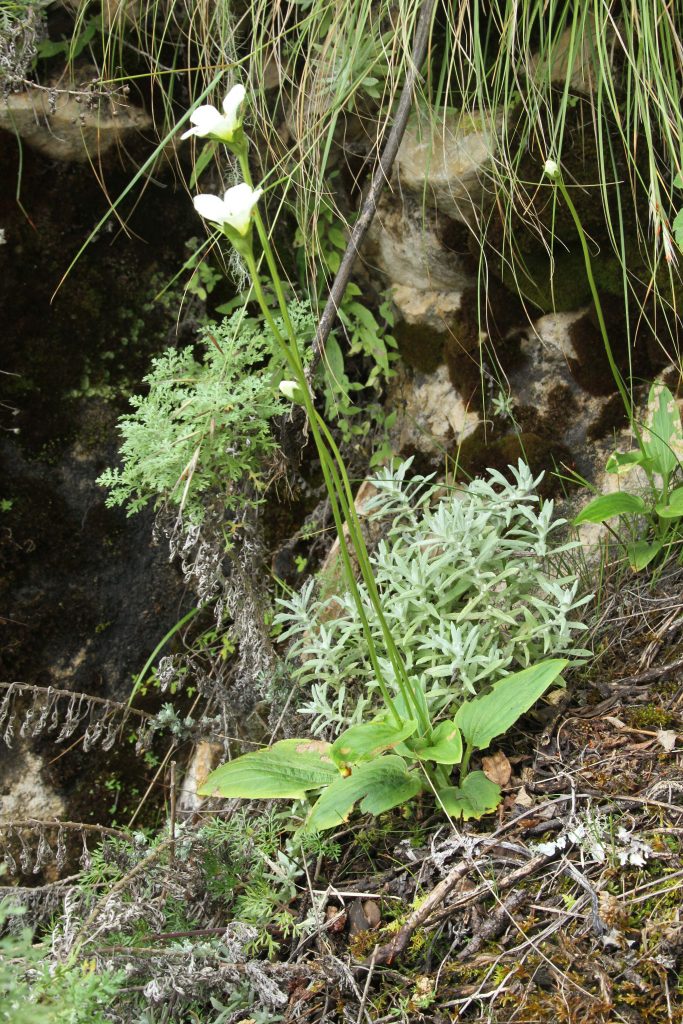
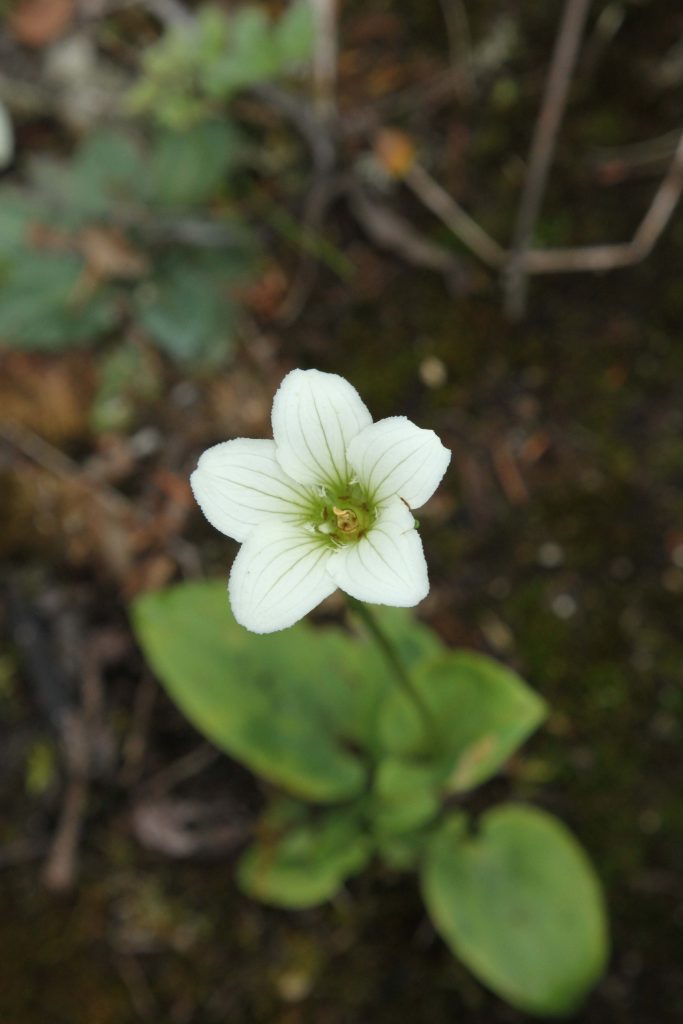
W.E.Evans

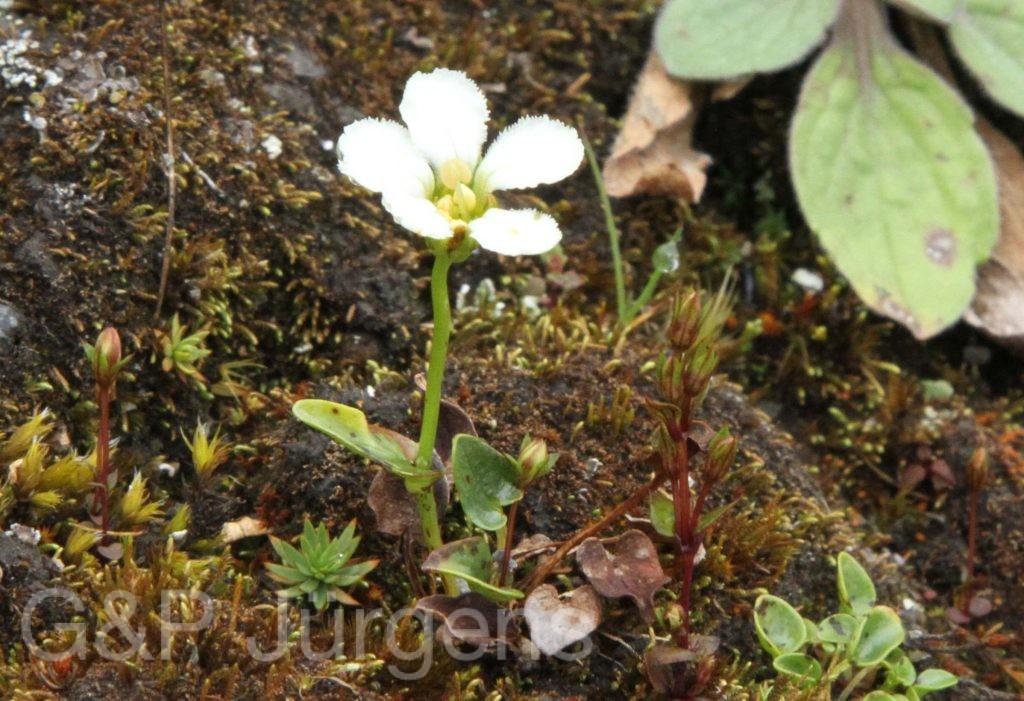
Bhutan2012 67
Bhutan Shele-La, 3800m September

Description

Parnassia cooperi is an alpine perennial herb of the eastern Himalaya, known from a small set of 12 GBIF occurrences in China, Bhutan and India. It inhabits moist alpine meadows, seepage slopes, streamsides and damp grassy turf in the upper temperate to alpine zone, generally between about 3500 and 4300 m. The plant recorded on the Shele-La in Bhutan at 3800 m in September represents its typical high-elevation habitat, flowering late in the season on cool, humid, well-watered ground where snowmelt and monsoon moisture persist.

The species is a slender, glabrous, rosette-forming herb arising from a short rhizome. The basal leaves are long-petiolate with ovate to cordate, entire blades, while each erect, unbranched flowering stem bears a single sessile or clasping cauline leaf below the solitary terminal flower. The flower has five free, white petals, frequently veined, and alternates fertile stamens with conspicuous fringed or gland-tipped staminodes, the latter a defining feature of the genus. The superior to half-inferior ovary ripens into a capsule that dehisces into valves, releasing numerous small seeds.

Though traditionally placed in its own family Parnassiaceae or in Saxifragaceae, Parnassia is here listed under Celastraceae, reflecting molecular evidence that nests the Parnassia-Lepuropetalon lineage within an expanded Celastrales. Parnassia cooperi is a narrow-range eastern Himalayan endemic whose restricted distribution and specialised wetland-alpine habitat make it potentially vulnerable to grazing pressure and climatic shifts, warranting monitoring despite its current data-poor conservation status.

Author: W.E.Evans · Sources: POWO (Kew), GBIF, Flora of China Vol. 8, Flora of Bhutan Vol. 1, Flora of Nepal, Flora of Pakistan, Wu's monograph of Parnassia

Franch

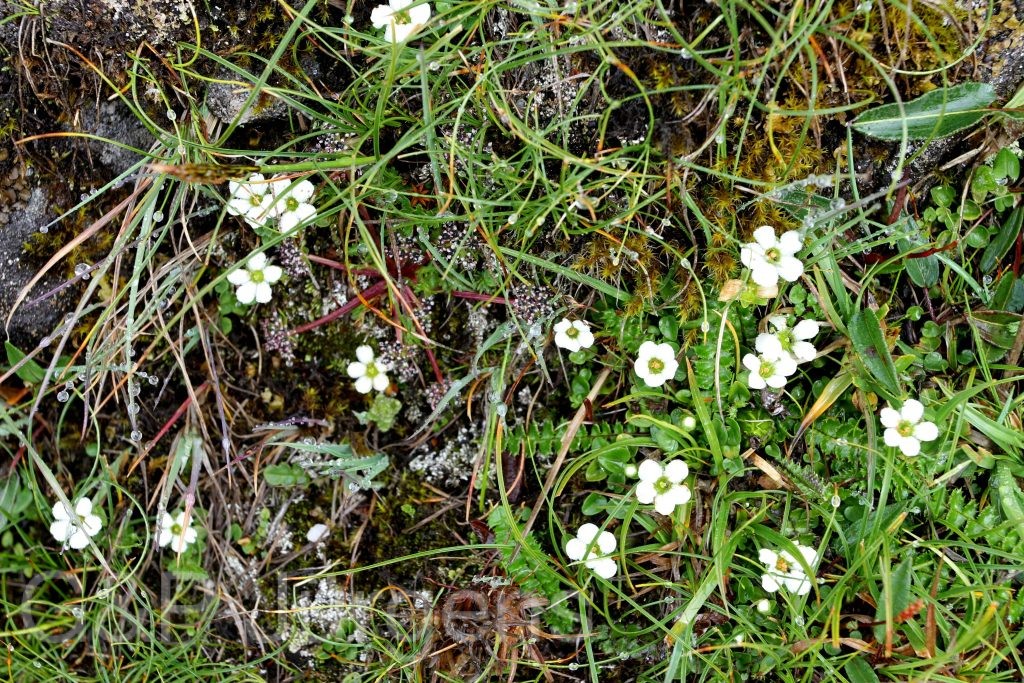
BhutanPG2011 548
Bhutan Ludlow-Sherriff-Trail Dem-Tso, 4650m June

Description

Parnassia delavayi is an alpine perennial herb of the eastern Himalaya and southwestern China, recorded by GBIF from China, Bhutan and India across roughly 1128 occurrences. It is a plant of cold, moist alpine habitats, growing in wet meadows, marshy turf, streamsides, seepage zones and damp grassy slopes within the alpine belt. The photographed individual was found in Bhutan along the Ludlow-Sherriff Trail near Dem-Tso at 4650 m in June, a high glacial-lake margin that exemplifies the species' affinity for saturated, peaty alpine ground.

It forms tufted perennials arising from a short rhizome, with basal leaves that are long-petiolate and cordate-ovate to reniform with an entire margin. The flowering stem is erect and bears a single, sessile or clasping cauline leaf below the solitary terminal flower. Each flower has five free, white petals, often delicately veined, alternating with five green sepals. Characteristic of the grass-of-Parnassus group are the conspicuous fimbriate staminodes positioned opposite the petals and dissected into gland-tipped filaments, which alternate with five fertile stamens surrounding a superior ovary; the fruit is a loculicidal capsule containing many small winged seeds.

GBIF accepts the name. Though long placed in Saxifragaceae or its own family Parnassiaceae, Parnassia is now embedded within Celastraceae on molecular grounds, the family label given here reflecting that modern circumscription. The elaborate fringed staminodes function as nectar-mimicking attractants for fly and small-bee pollinators. With a wide montane range in remote alpine terrain, P. delavayi faces no significant conservation threat.

Author: Franch · Sources: POWO (Kew), GBIF, Flora of China, Flora of Bhutan, monograph of Parnassia

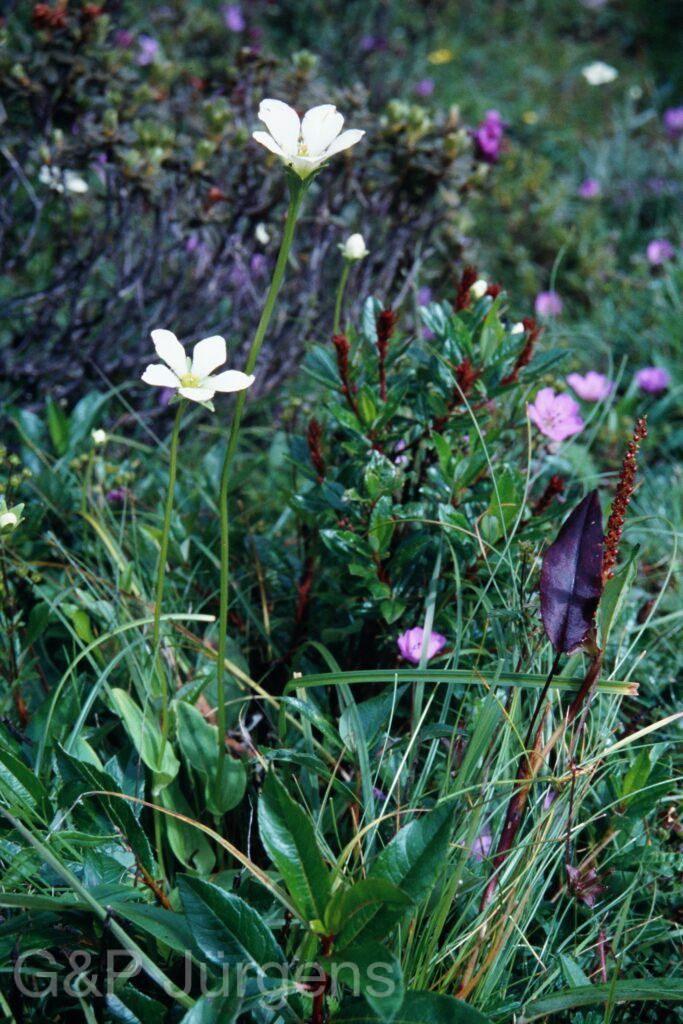
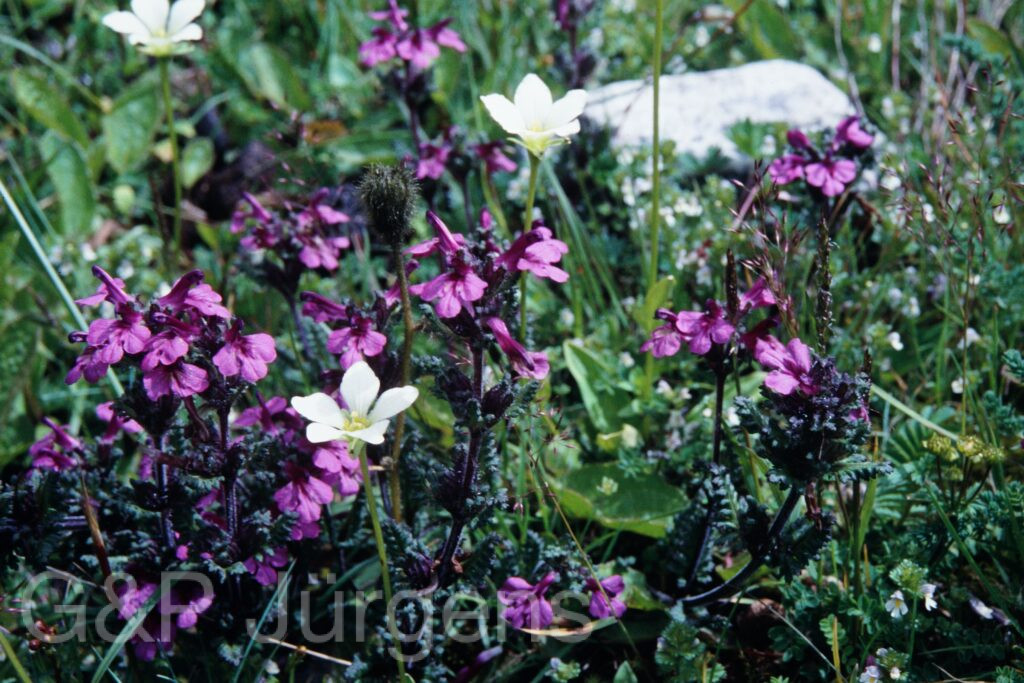
Nekr.

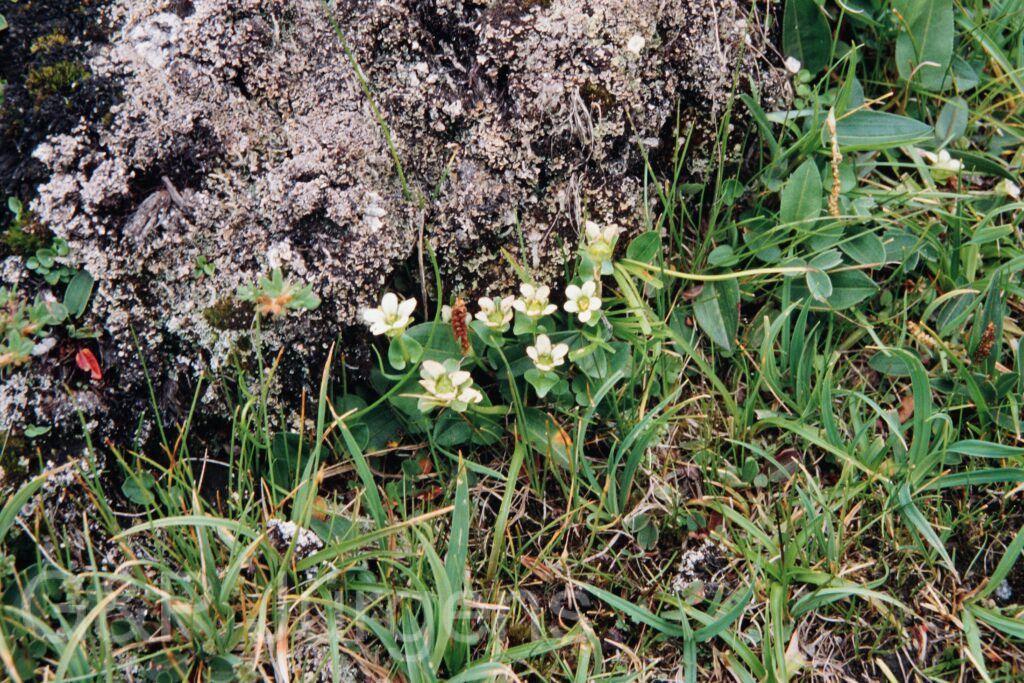
Nepal 99 521 ergebnis
West-Nepal Churta-Khola 3800m, June

Description

Parnassia kumaonica Nekr. is a small alpine herb now placed in the Celastraceae (formerly Parnassiaceae or Saxifragaceae), endemic to the western and central Himalaya and adjacent Tibet. GBIF records, numbering 28 occurrences, place it in Nepal, India and China. The species grows in moist alpine meadows, on seepage slopes, streamsides and damp turf, generally between 3,500 and 4,500 m. The illustrated plant from the Churta-Khola in West Nepal at 3,800 m, in flower in June, typifies its habitat in the cool, well-watered alpine zone where snowmelt sustains the marshy ground it requires.

The plant forms a compact, glabrous perennial arising from a short rootstock, with a basal rosette of long-petioled, ovate to reniform, entire leaves that are somewhat fleshy. Each flowering stem bears a single cauline leaf clasping the stem and is terminated by a solitary, regular flower. The five white petals are conspicuously veined and characteristically fringed or fimbriate at the margins; alternating with the fertile stamens are dissected staminodes bearing gland-tipped processes that function as nectar-mimicking visual lures. The superior ovary develops into a capsule splitting into valves to release numerous small winged seeds.

Parnassia is a taxonomically distinctive genus whose elaborate staminodial nectaries have made it a classic subject of pollination biology, and P. kumaonica fits within the western Himalayan assemblage of the genus, distinguished by petal fringing and staminode morphology. Restricted to high-altitude wetlands, it is a sensitive indicator of intact alpine seepage habitats and, like other narrowly distributed Himalayan endemics, is potentially vulnerable to trampling, grazing and the desiccation of alpine springs under a warming climate.

Author: Nekr. · Sources: POWO (Kew), GBIF, Flora of China Vol. 8, Flora of Nepal, Annotated Checklist of the Flowering Plants of Nepal, Ku: Revision of Parnassia

Wall. ex Royle

Sikkim2003 258 P353
Sikkim Dzongri 4200m August
Sikkim2003 261 P360
Sikkim Dzongri 4200m August

Description

Parnassia nubicola Wall. ex Royle is a perennial herb of moist alpine habitats distributed along the Himalaya and into adjoining Central Asia, recorded from China, India, Nepal, Pakistan, Afghanistan and Bhutan, with around 182 georeferenced occurrences clustered in the high Sino-Himalayan ranges. It favours wet alpine meadows, marshy turf, seepage slopes, streamsides and the moist margins of snowmelt flushes, where soils remain saturated through the growing season. The photographed plants from Dzongri in Sikkim at about 4,200 m in August and from the Shele-La in Bhutan at about 4,000 m in September show its preference for the upper subalpine to alpine zone, where it flowers in late summer.

It grows from a short rhizome as a rosette of long-petioled basal leaves with ovate to cordate, entire blades. The flowering stems are erect and bear usually a single clasping, sessile cauline leaf below the solitary terminal flower. Each flower has five green sepals and five white petals conspicuously veined with green or yellowish lines. Between the fertile stamens lie five fringed staminodes divided into numerous gland-tipped filaments, a hallmark of the genus; the superior ovary ripens into a capsule splitting into four valves to release many small seeds.

The family attribution to Celastraceae follows recent molecular classifications, in which Parnassia (formerly placed in Saxifragaceae or its own Parnassiaceae) is treated within an expanded Celastraceae. The conspicuous nectar-secreting staminodes are associated with generalist insect pollination. Widespread and locally common across its broad range, P. nubicola is not considered threatened, though wetland alpine populations are sensitive to drainage, trampling and grazing.

Author: Wall. ex Royle · Sources: POWO (Kew), Flora of China Vol. 8, Flora of Bhutan Vol. 1, GBIF, Simmons: Celastraceae (in Kubitzki, 2004)

Wall.

Sikkim2003 111 P151
Sikkim below Dzongri 3950m 08.2003

Description

Parnassia pusilla is a diminutive grass-of-Parnassus distributed through the central and eastern Himalaya, recorded from China, Nepal, India, Bhutan and Myanmar and represented by some 177 georeferenced occurrences. It is a plant of cold, wet, open high-elevation ground, characteristically inhabiting alpine seepages, marshy meadows, dripping rock ledges and the gravelly margins of snowmelt streams where the substrate remains saturated through summer. The specimen photographed below Dzongri in Sikkim at about 3950 m in August illustrates its strong affinity for the upper alpine flush zone, where it flowers during the brief monsoon-fed growing season among low cushion vegetation and short turf.

It is a small, glabrous perennial herb arising from a short rootstock, forming a basal rosette from which slender, single-flowered scapes emerge. The basal leaves are long-petiolate with ovate to cordate blades, while each flowering stem bears a single sessile, clasping cauline leaf below the flower. The solitary flower is regular and pentamerous, with five free white petals that are conspicuously veined. Characteristic of the genus, alternating with the fertile stamens are five fringed staminodes, each dissected into gland-tipped filaments that serve as pseudonectaries to attract pollinators. The superior ovary develops into a capsule that splits to release numerous small seeds.

Despite its placement here under Celastraceae, Parnassia is morphologically distinctive, and the family circumscription reflects modern molecular treatments that subsume the former Parnassiaceae within an enlarged Celastraceae. The elaborate gland-tipped staminodes are a notable adaptation for insect pollination, offering visual and possibly olfactory rewards without true nectar. As a specialist of high-altitude wetlands, P. pusilla is sensitive to drainage, trampling by livestock and the desiccation of alpine seeps, so it serves as a useful indicator of intact high-mountain mire habitat.

Author: Wall. · Sources: POWO (Kew), GBIF, Flora of China Vol. 8, Flora of Bhutan Vol. 1, Flora of Nepal, Wu Phylogeny and Biogeography of the Genus Parnassia

W.W.Sm.

Bh09 155 G277
Bhutan Jimilangtso, 4100m June

Description

Paroxygraphis sikkimensis is a rare alpine member of the buttercup family endemic to the Eastern Himalaya, recorded from Nepal, Sikkim and adjacent India, Bhutan and southern Tibet (China), with GBIF documenting only 24 occurrences across NP, IN, BT and CN. It inhabits open alpine turf, moist meadows and damp gravelly slopes near the upper limit of vegetation, generally between about 3800 and 4500 m. The photographed plant was found in Bhutan near Jimilangtso (Jimilang Tsho) at around 4100 m, flowering in June at the start of the brief alpine growing season.

The plant is a small, low perennial herb forming a basal rosette of leaves from a slender rootstock, with short, few-flowered stems. The leaves are simple, spathulate to obovate, entire or shallowly toothed toward the apex, and somewhat fleshy. The flowers are solitary or few, with a calyx of sepals and a corolla of small white to yellowish petals each bearing a basal nectary, surrounding numerous free stamens and an apocarpous gynoecium of many separate carpels. The fruit is a head of achenes, each tipped with a short style, in the manner of the closely allied genus Ranunculus.

Paroxygraphis is a small, segregate genus erected by W.W. Smith and traditionally placed near Oxygraphis and Ranunculus within the Ranunculeae; molecular studies have prompted discussion of its relationships and possible inclusion in a broadly circumscribed Ranunculus. Its very restricted range, low number of recorded occurrences and specialised high-alpine habitat make P. sikkimensis a taxon of biogeographic interest and potential conservation concern, though it has not been formally assessed.

Author: W.W.Sm. · Sources: POWO (Kew), GBIF, Flora of Bhutan, Annotated Checklist of the Flowering Plants of Nepal, Flora of China (Ranunculaceae)