Tag:

Autumn

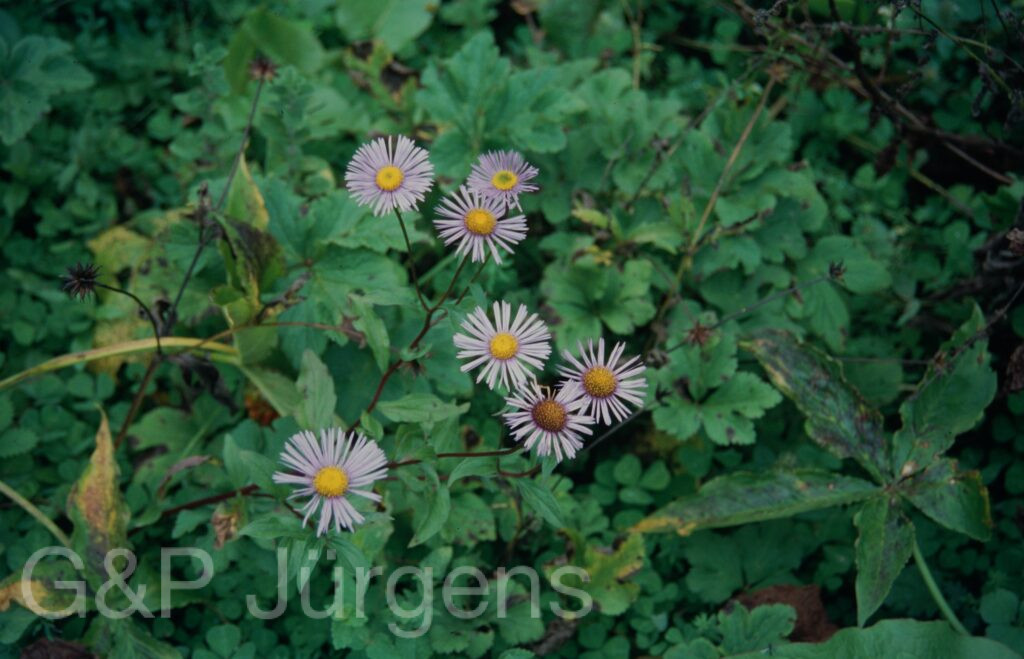
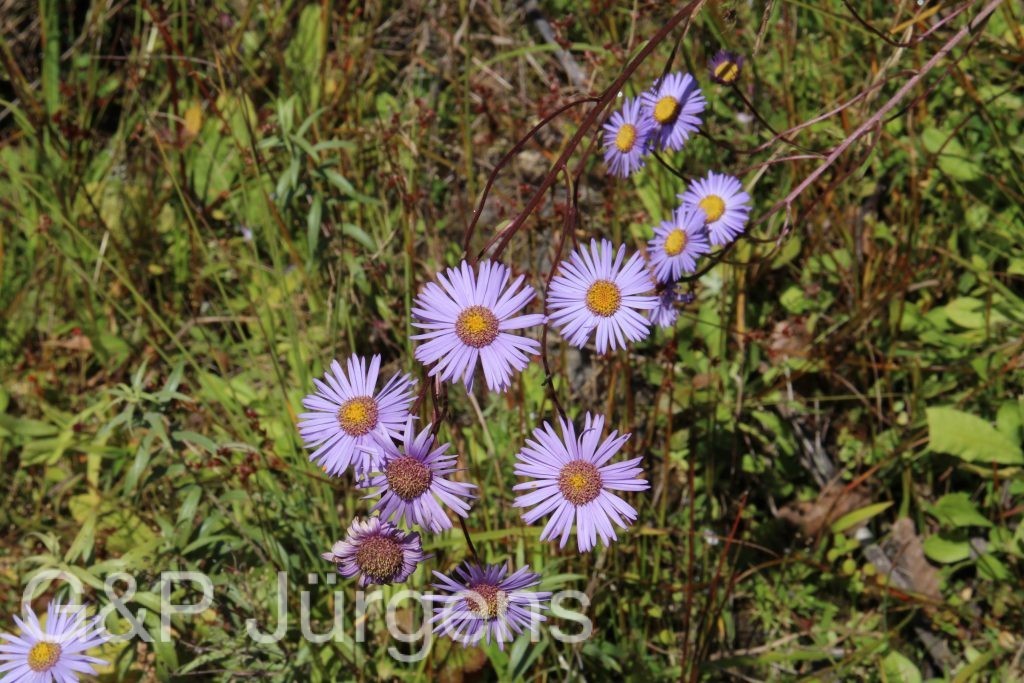
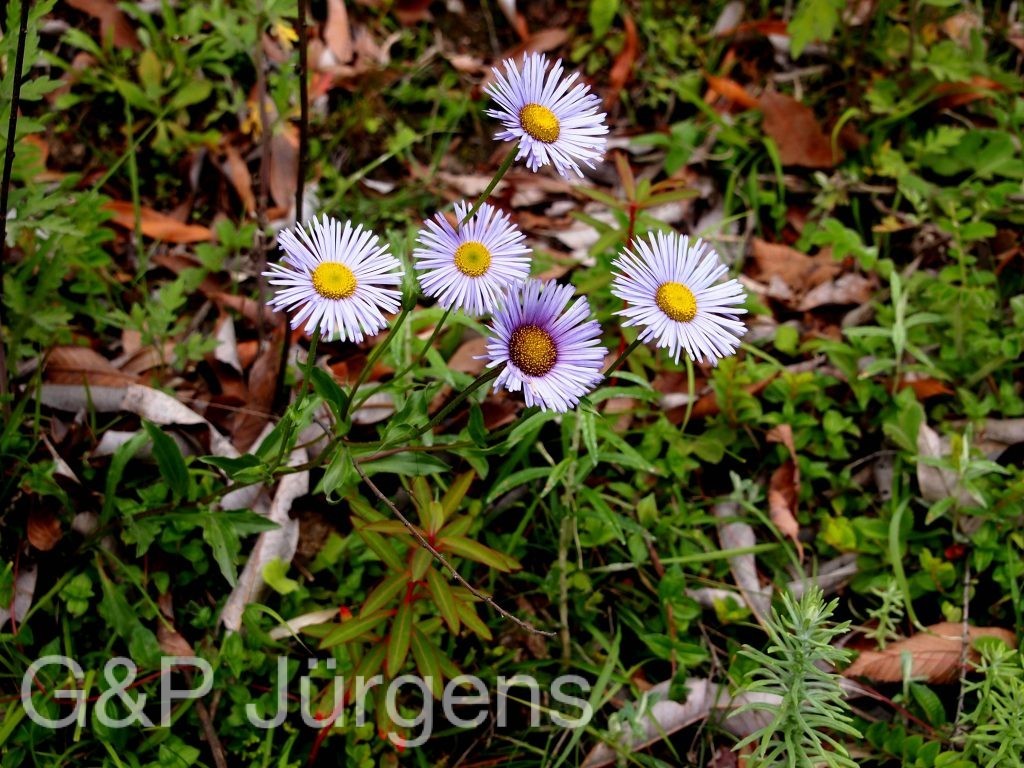
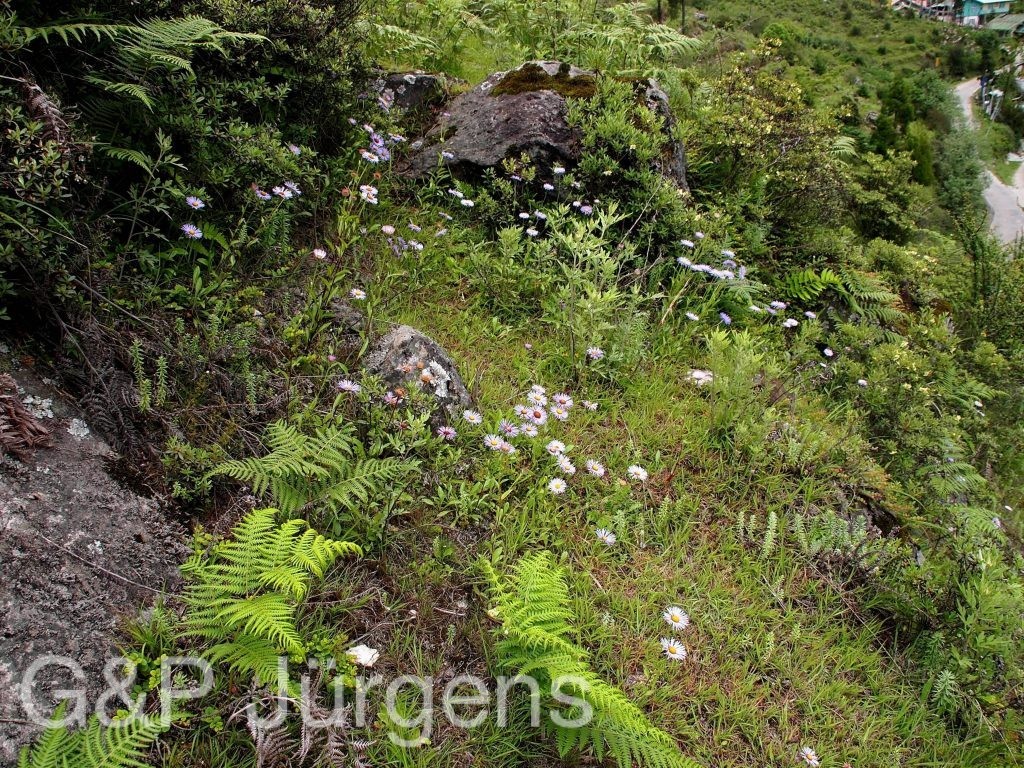
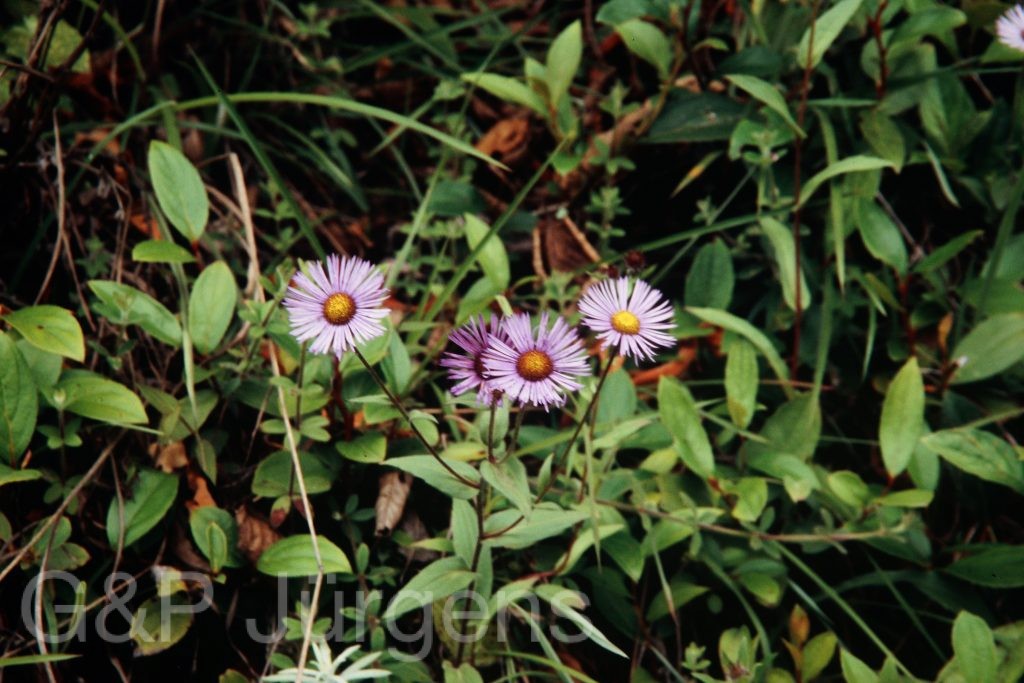
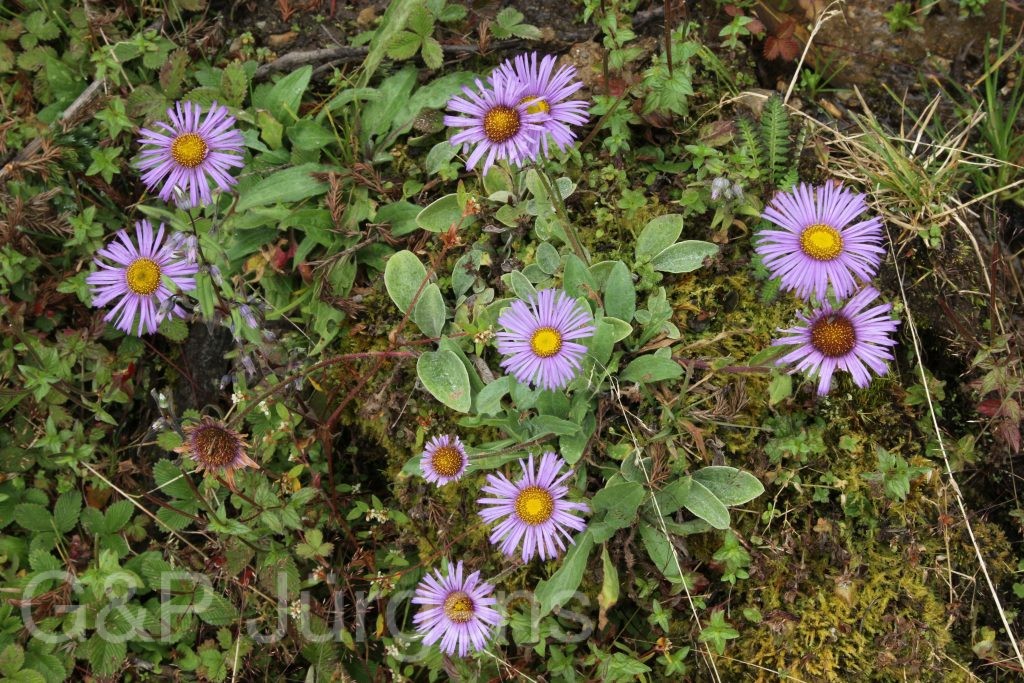
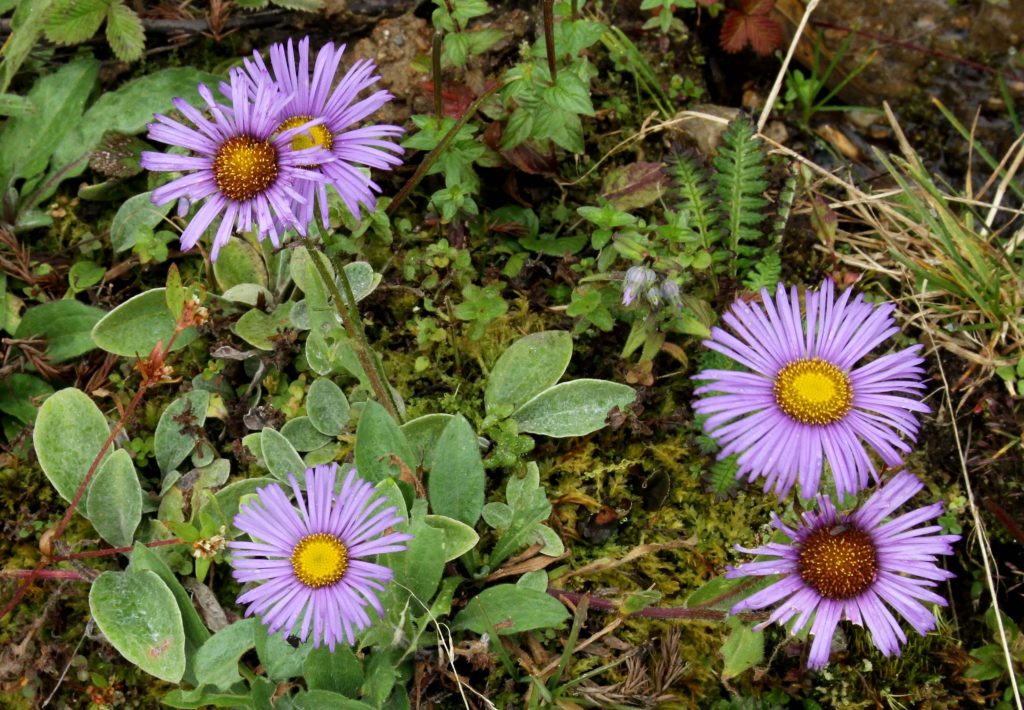
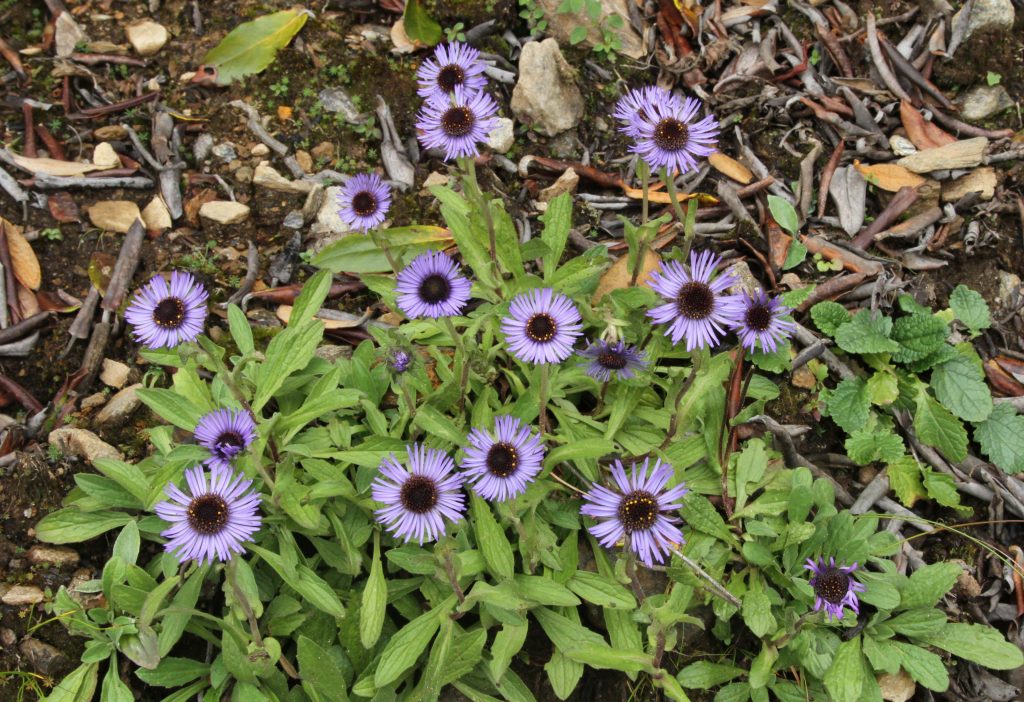
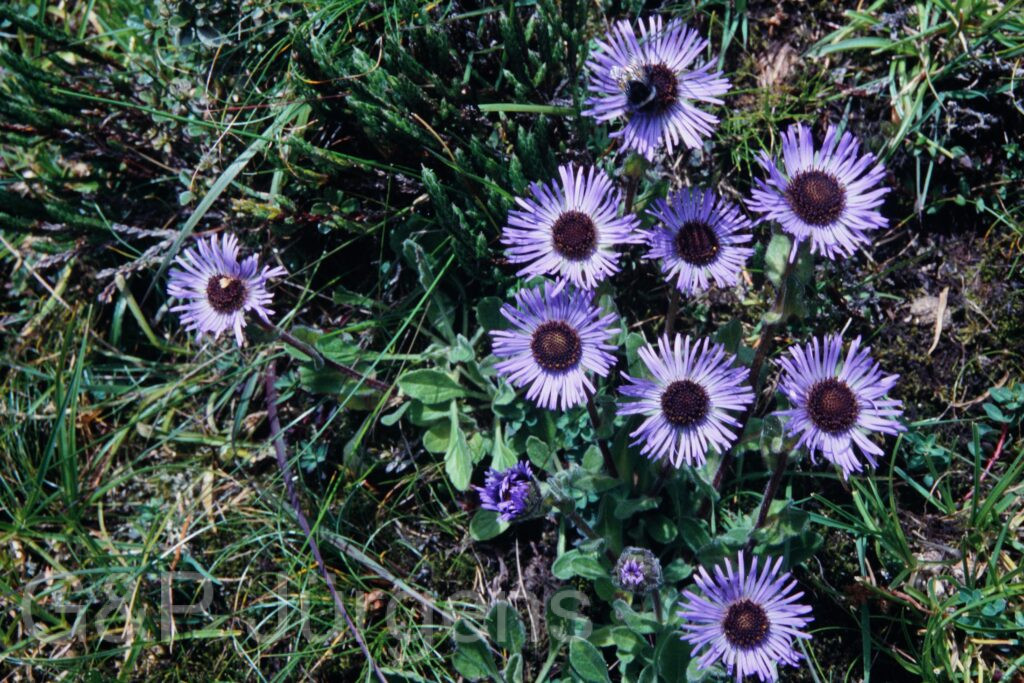
Aster himalaicus

by GP Jürgens

C.B.Clarke

Bhutan2012 53
Bhutan Shele-La, 4000m September
Bhutan2012 55
Bhutan Shele-La, 4000m September
Bhutan2012 292
Bhutan Shele-La, 4100m September
Sikkim2003 138 P186
Sikkim Dzongri 3950m, August

Description

Aster himalaicus is an alpine aster of the eastern and central Himalaya, distributed through Nepal, China, Bhutan, India, Myanmar and Pakistan (NP, CN, BT, IN, MM, PK), with around 277 GBIF occurrences indicating a genuinely high-mountain, comparatively restricted range. It grows in alpine meadows, on grassy and stony slopes, moist turf and the margins of dwarf-rhododendron scrub above the treeline. The photographed populations occur on the Shele-La in Bhutan at 4000–4100 m in September and at Dzongri in Sikkim at 3950 m in August, flowering through the late monsoon on open alpine grassland. Note that under GBIF this name carries SYNONYM status, though the accepted name is likewise given as Aster himalaicus.

It is a low perennial herb with a short, woody rhizome bearing solitary or few erect, simple stems usually 5–20 cm tall, more or less hispid with spreading hairs. The leaves are mostly basal and lower-cauline, obovate to oblanceolate or spathulate, tapering to a winged petiole, with entire ciliate margins and sparse hairs. The capitula are large and solitary, terminal and radiate, subtended by an involucre of several series of narrow, often purple-tinged, hairy phyllaries. The ray florets are conspicuous, ligulate and blue-violet to purple, encircling a disc of numerous yellow tubular florets. The fruit is a flattened, hairy cypsela crowned by a pappus of fine barbellate bristles in one or two series.

Aster sensu lato in the Himalaya has been much reorganised, several alpine taxa having been segregated into genera such as Aster s.str. of the tribe Astereae; the synonymy attached to this binomial reflects that ongoing taxonomic flux. The large solitary heads borne on dwarf stems are characteristic of cushion-forming alpine asters adapted to short, cool growing seasons. The species is not assessed as threatened, but its dependence on high alpine turf renders it locally vulnerable to grazing pressure and climatic shifts.

Author: C.B.Clarke · Sources: POWO (Kew), GBIF, Flora of China Vol. 20-21, Flora of Bhutan, Flora of Nepal, Asteraceae monograph (Grierson, revision of Himalayan Aster)
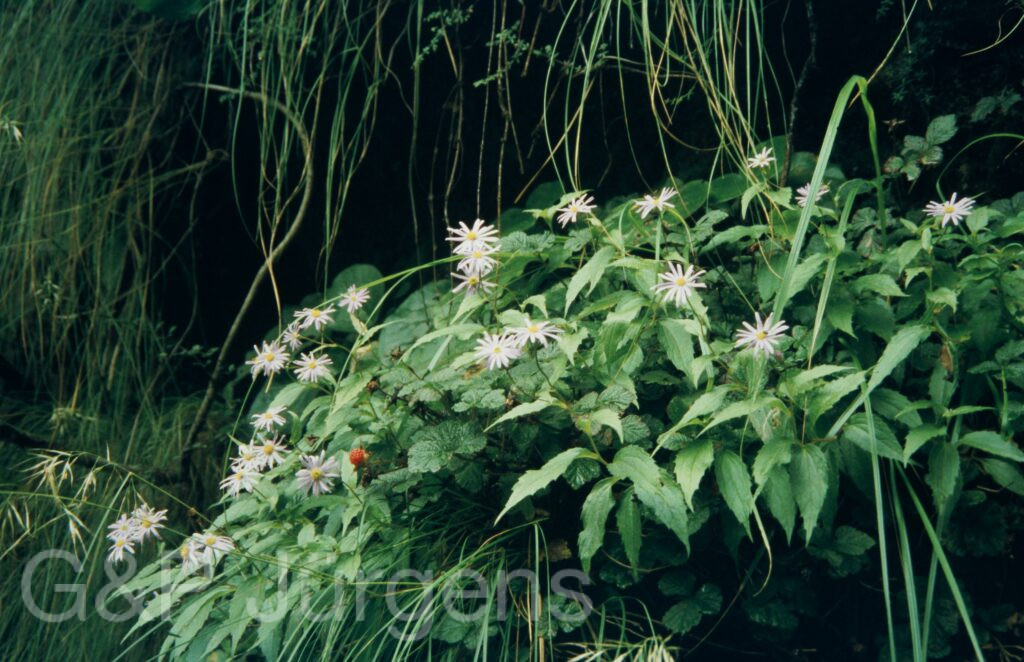
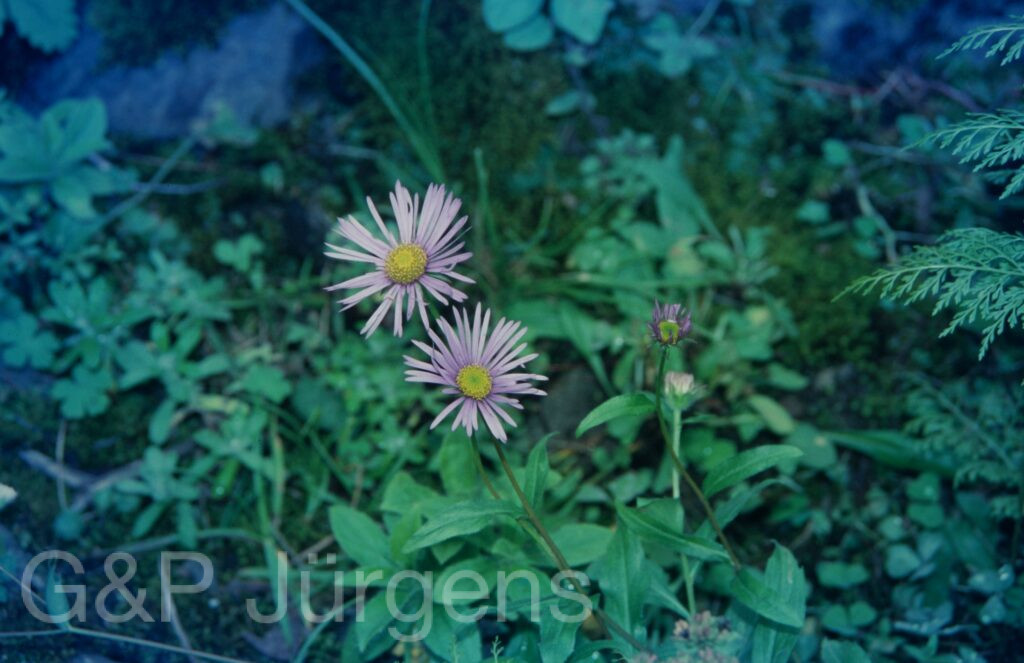
Wall.

Garw 2005 171 ergebnis
India Garhwal Shertoli 3200m, September

Description

Aster peduncularis is a western and central Himalayan daisy recorded from India, Nepal and Pakistan, with about 76 GBIF occurrences. It occupies the temperate to subalpine zone, growing in open forest, grassy slopes, meadows, clearings and shrubby banks, broadly between about 2500 and 3800 m. The collection from Shertoli in Garhwal, India, at 3200 m in September corresponds to its late-summer to autumn flowering, when such mid-montane meadows of the western Himalaya are bright with composites following the monsoon rains.

It is a perennial herb with erect or ascending stems arising from a rootstock, bearing alternate, ovate to lanceolate leaves that diminish upwards, the lower ones petiolate and the upper sessile and sometimes clasping. The capitula are radiate and borne on conspicuously long peduncles, the feature evoked by the epithet "peduncularis". Each head has an involucre of several rows of graded bracts; the ray florets are ligulate and bluish-purple to mauve, encircling a disc of yellow tubular florets. The achenes are compressed and crowned by a pappus of fine barbellate bristles aiding wind dispersal.

In GBIF this name is treated as a synonym, with the accepted taxon being the same epithet under current circumscription; placement of Himalayan asters has shifted considerably as the broad genus Aster has been split into segregate genera, several Sino-Himalayan species moving to allied groups within tribe Astereae. Pollination is by a range of generalist insects, and the plumose pappus disperses the seed on wind. The species is widespread and not regarded as threatened.

Author: Wall. · Sources: POWO (Kew), GBIF, Flora of China, Flora of Pakistan, Asteraceae of the Himalaya (Grierson / Nesom)

C.B.Clarke

Garw 2005 40 ergebnis ergebnis
India Garhwal Valley of flowers 2900m, September
Garw 2005 25 ergebnis ergebnis
India Garhwal Valley of flowers 2900m, September

Description

Aster thomsonii is a western and central Himalayan daisy ranging through India, Pakistan and Nepal, with roughly 223 GBIF records. It inhabits open slopes, forest clearings, meadows and shrubby banks in the temperate and subalpine zone. The material from the Valley of Flowers in Garhwal at about 2900 m, flowering in September, is characteristic of its preference for moist, well-lit montane sites where it blooms late in the growing season as the monsoon recedes, often forming scattered colonies among grasses and other tall herbs.

The plant is a perennial herb with erect, often branched stems bearing alternate, simple leaves that are ovate to lanceolate, the lower ones petiolate and the upper sessile and somewhat clasping, with toothed margins and a thinly hairy surface. The flower heads are radiate and solitary or few at the branch tips, with an involucre of imbricate, herbaceous phyllaries. The ray florets are female and ligulate, lilac to pale blue-violet, surrounding a central disc of numerous yellow, tubular, bisexual florets. The fruit is a flattened, hairy achene crowned by a pappus of fine barbellate bristles that aids wind dispersal.

Though catalogued here under the name Aster thomsonii C.B. Clarke, this name is treated as a synonym in current taxonomic databases, with Aster thomsonii cited as the accepted name following the ongoing recircumscription of Aster and its segregate genera in the eastern Old World. Such reassignments reflect molecular evidence that the traditional broad Aster is polyphyletic. The species remains a widespread and unthreatened component of Himalayan herbaceous vegetation.

Author: C.B.Clarke · Sources: POWO (Kew), GBIF, Flora of Pakistan, Flora Simlensis, Grierson's revision of Himalayan Aster

C.B.Clarke

Bhutan2015 326
Bhutan Trongsa 2200m, October
Sikkim2011 182
Sikkim Lachung 2600m, June
Sikkim2011 188
Sikkim Lachung 2600m, June
Bh09 311 G477
Bhutan Yetong-La, 2900m June

Description

Aster tricephalus is a Himalayan species ranging through India, Nepal, Pakistan, China and Bhutan, GBIF recording some 87 occurrences along the temperate Himalayan chain. It grows on open grassy and shrubby slopes, in forest clearings, along banks and in subalpine meadows where it benefits from full sun and moist, well-drained soils. The cited gatherings span its altitudinal range: Trongsa in central Bhutan at 2200 m in October, Lachung in Sikkim at 2600 m in June, and the Yetong-La at 2900 m in June. This spread of localities, flowering from early summer through to autumn, reflects its presence across the temperate to lower subalpine belt of the Eastern Himalaya.

It is a perennial herb arising from a short rhizome, with erect, leafy, often pubescent stems. The leaves are alternate, the lower ones oblanceolate and narrowed to the base, the upper smaller, sessile and somewhat clasping, with entire or slightly toothed margins and scabrid or hairy surfaces. The capitula are radiate and few, sometimes clustered into a small terminal group as the epithet suggests; the involucre is campanulate with imbricate, herbaceous phyllaries in several rows. The ray florets are female and ligulate, mauve to purplish-blue, surrounding numerous yellow tubular disc florets. The cypselae are flattened and hairy, bearing a pappus of fine barbellate bristles.

Aster in the strict modern sense (tribe Astereae) is centred on Eurasia, and many Himalayan species formerly placed here have been variously reassigned among segregate genera, so the generic placement of montane taxa such as A. tricephalus remains under continuing taxonomic scrutiny. Attributed to C. B. Clarke, it is treated as an accepted species. Its violet-rayed heads attract a range of bees, hoverflies and butterflies. As a widespread plant of open montane habitats it is not regarded as threatened.

Author: C.B.Clarke · Sources: POWO (Kew), GBIF, Flora of Bhutan, Flora of China, Annotated Checklist of the Flowering Plants of Nepal, Grierson's revision of Himalayan Aster (Astereae)

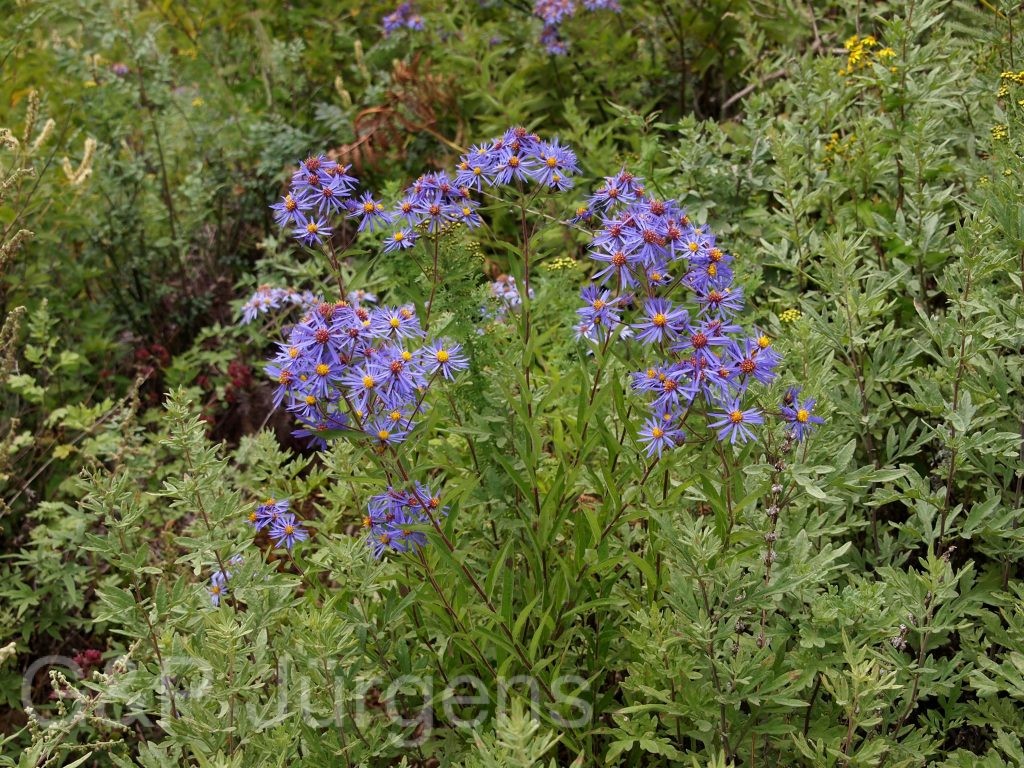
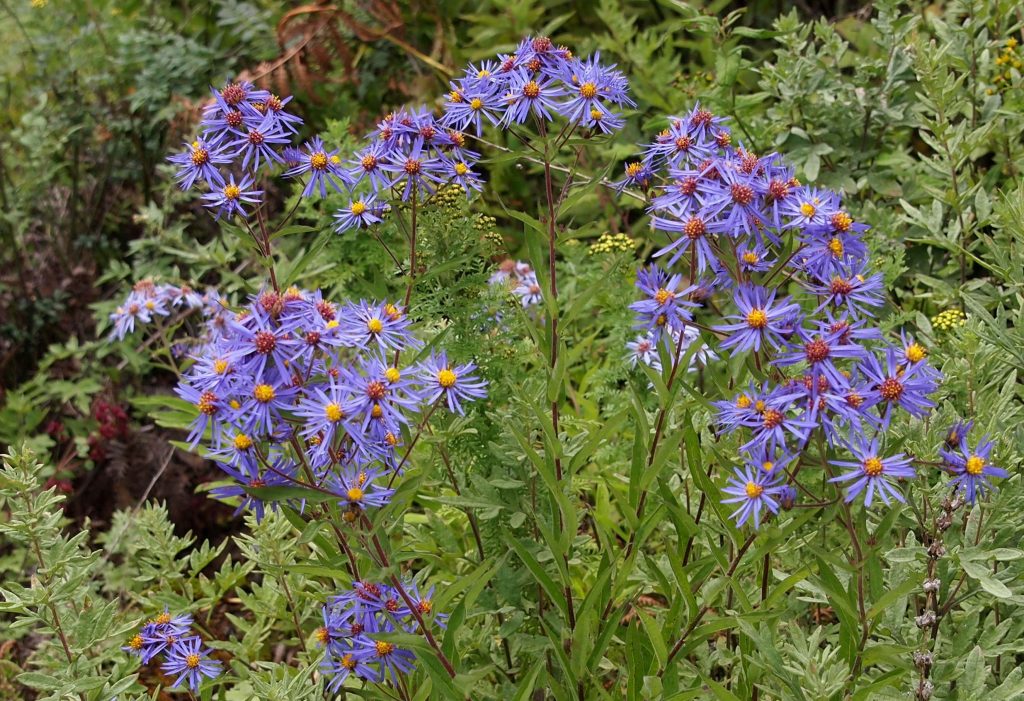
Aster vestitus

by GP Jürgens

Franch.

Bhutan2012 114
Bhutan Shele-La, 3600m September
Bhutan2012 115
Bhutan Shele-La, 3600m September

Description

Aster vestitus is a Sino-Himalayan composite distributed through China, Bhutan, India, Nepal, Myanmar and Thailand, with cultivated material accounting for the British GBIF records; some 247 occurrences are aggregated overall. It is a plant of open subalpine and alpine slopes, forest margins, scrub and grassy banks, generally in the upper montane to alpine zone. The specimen figured was recorded at Shele-La in Bhutan at about 3,600 m in September, when the species comes into flower toward the end of the growing season, its asters providing late-season colour on the high meadows.

It is an erect perennial herb with stems and foliage more or less clothed in a soft, woolly or villous indumentum, as the epithet vestitus (clothed) implies. The leaves are alternate, lanceolate to oblong, sessile or shortly petiolate, the margins entire to obscurely toothed and the surfaces pubescent. The capitula are radiate and borne in a loose corymbose arrangement; the involucral bracts are imbricate in several series. Each head bears an outer ring of pistillate ray florets with violet to pale purple ligules surrounding numerous yellow, tubular, bisexual disc florets. The fruit is a flattened, hairy achene (cypsela) crowned by a pappus of barbellate bristles that aids wind dispersal.

Aster in the broad sense is a large genus undergoing taxonomic recircumscription, with many Asiatic species now distributed among segregate genera; A. vestitus belongs to the predominantly Sino-Himalayan assemblage of woolly-stemmed alpine asters. The radiate capitula are insect-pollinated, while the pappus-bearing cypselas are dispersed anemochorously. Widespread and locally frequent across its montane range, the species is of no particular conservation concern.

Author: Franch. · Sources: POWO (Kew), GBIF, Flora of China, Flora of Bhutan, Annotated Checklist of the Flowering Plants of Nepal, Grierson's revisionary studies of Himalayan Aster (Compositae)

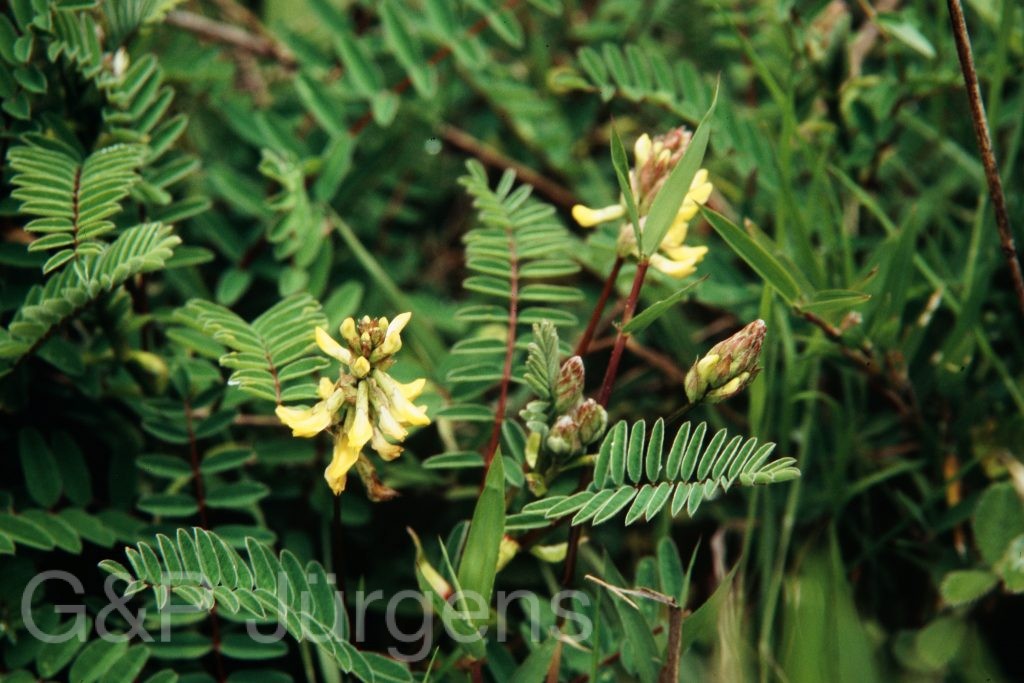
Lindl.

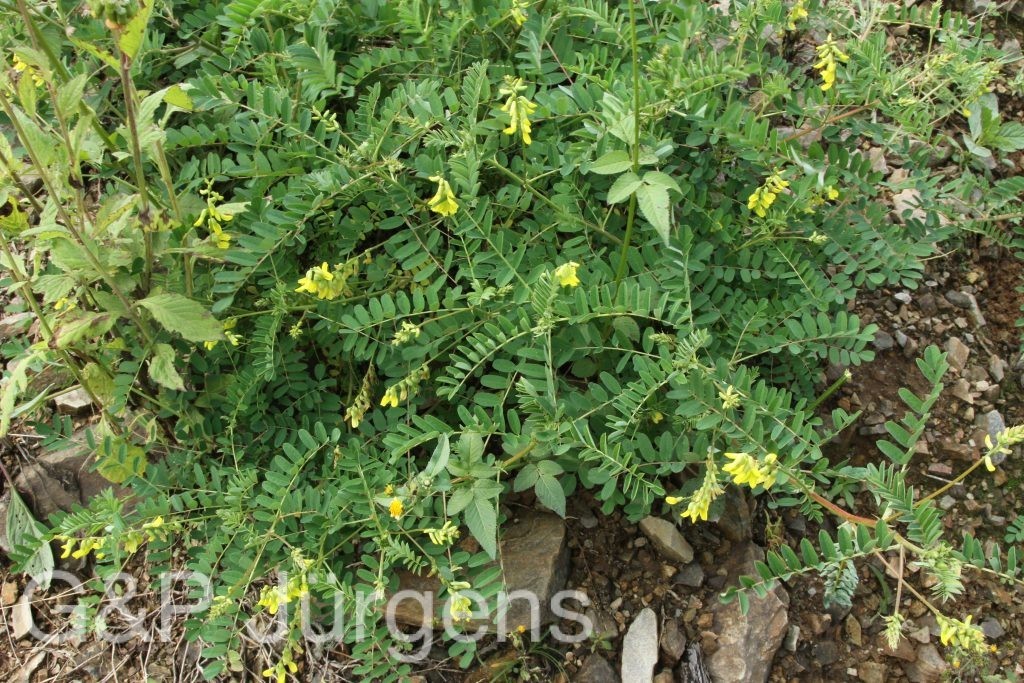
Bhutan2015 515
Bhutan Phobjika 2600m, October
Bh09 300 G494
Bhutan Kiki-La, 2100m June

Description

Astragalus chlorostachys is a perennial legume of the inner valleys and dry montane slopes of the Himalaya and Central Asia, ranging through India, Pakistan, Nepal, Bhutan, Afghanistan and China, with around 270 documented occurrences (records from Belgium and Switzerland representing herbarium and cultivated material). It favours open grassy slopes, forest margins, scrub and disturbed ground in the warm- to cool-temperate belt, broadly between about 2000 and 3000 m. The photographed plants were recorded in Bhutan at Phobjika at 2600 m in October and at the Kiki-La at 2100 m in June, indicating a long flowering and fruiting season through the growing months.

The species is an erect to ascending herb with several stems arising from a woody rootstock, the herbage finely appressed-pubescent. The leaves are imparipinnate with numerous opposite, oblong to elliptic leaflets. The flowers are crowded into dense, elongate, spike-like axillary racemes (the green-tinged inflorescence reflected in the epithet chlorostachys); the calyx is tubular and pubescent, and the papilionaceous corolla is small, yellowish to greenish-white or pale lilac. The fruit is a small, sessile or shortly stipitate pod, more or less inflated and pubescent, dehiscent at maturity.

Astragalus is among the largest genera of flowering plants, and its Himalayan members are taxonomically intricate; A. chlorostachys is placed among the densely spicate-flowered milkvetches of the region. Like many of its congeners it is a nitrogen-fixing pioneer of disturbed and grazed terrain, providing fodder and contributing to soil enrichment. It is common across a wide range and is not considered to be of conservation concern.

Author: Lindl. · Sources: POWO (Kew), GBIF, Flora of Bhutan, Flora of Pakistan, Astragalus monograph (Podlech & Zarre)

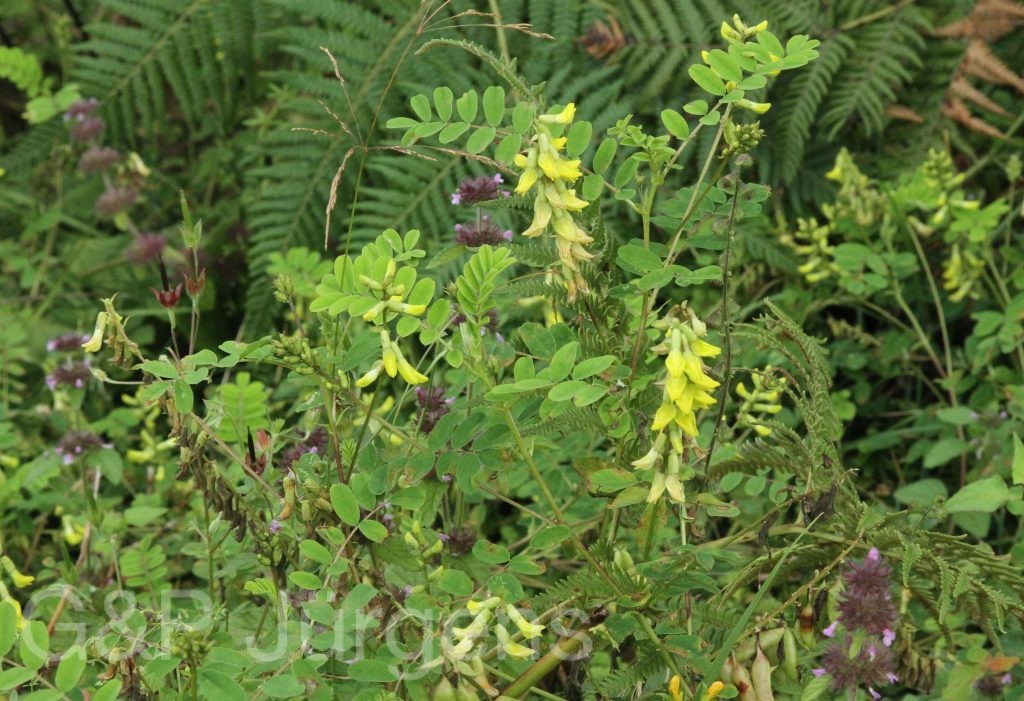
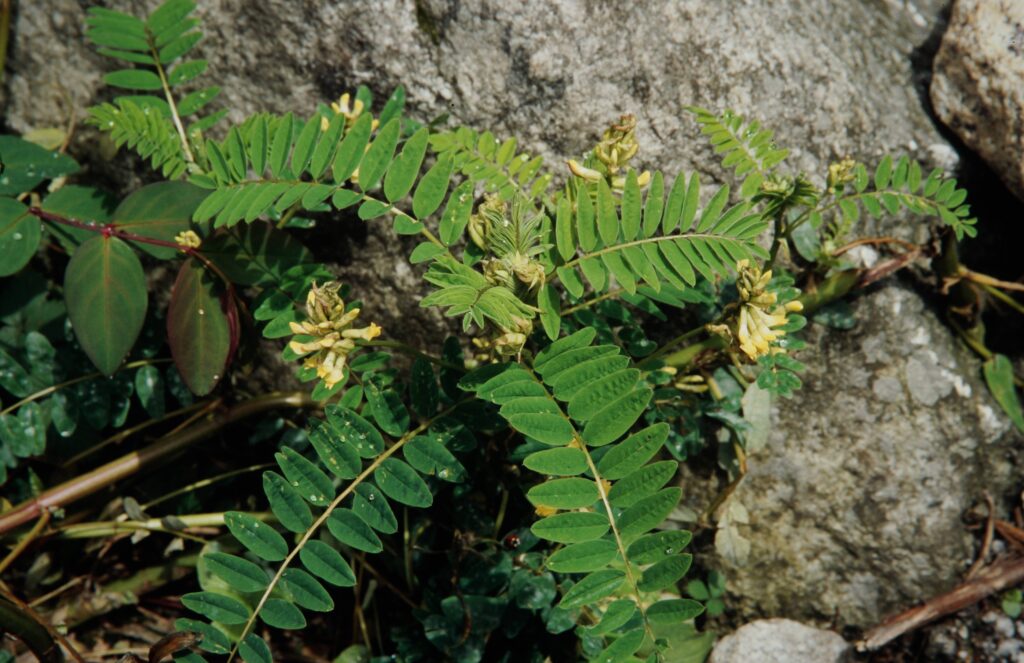
Benth.

Bhutan2012 349
Bhutan Wangdi 2000m, September
Sikkim 2006 466 ergebnis
India West-Bengal, Ruhig-Chu 2100m, May

Description

Astragalus concretus is a Himalayan milkvetch recorded from Nepal, India, China, Pakistan and Bhutan, with about 147 georeferenced occurrences concentrated along the central and eastern ranges; scattered records from the United States, Russia and Belgium derive from herbarium and database holdings rather than wild populations. It favours open, sunny banks, dry slopes, scrub margins and disturbed ground in the subtropical to lower temperate zone, broadly between 1500 and 2500 m. The cited gatherings from Wangdue in Bhutan at 2000 m in September and from the Rishi Chu valley in West Bengal at 2100 m in May indicate a tolerance of warm mid-elevation habitats.

It is a perennial or robust herb with ascending to spreading stems. The leaves are imparipinnate with several pairs of oblong to elliptic leaflets, the foliage typically appressed-pubescent. The flowers are borne in axillary racemes; the papilionaceous corolla, of purplish to pale colouring, shows the standard, wing and keel petals characteristic of the genus, subtended by a campanulate, toothed calyx. The fruit is a legume pod, in this species somewhat inflated and incompletely two-celled by intrusion of the ventral suture, the feature reflected in the epithet.

Astragalus is among the largest of all plant genera, and its Himalayan members are taxonomically intricate, separated largely on pod and indumentum characters. As a nitrogen-fixing legume, A. concretus contributes to soil enrichment on poor, eroding slopes. It is not regarded as threatened, occurring widely across disturbed and natural openings throughout its range.

Author: Benth. · Sources: POWO (Kew), GBIF, Flora of China, Flora of Bhutan, Astragalus and Oxytropis monographs of Podlech and Maassoumi

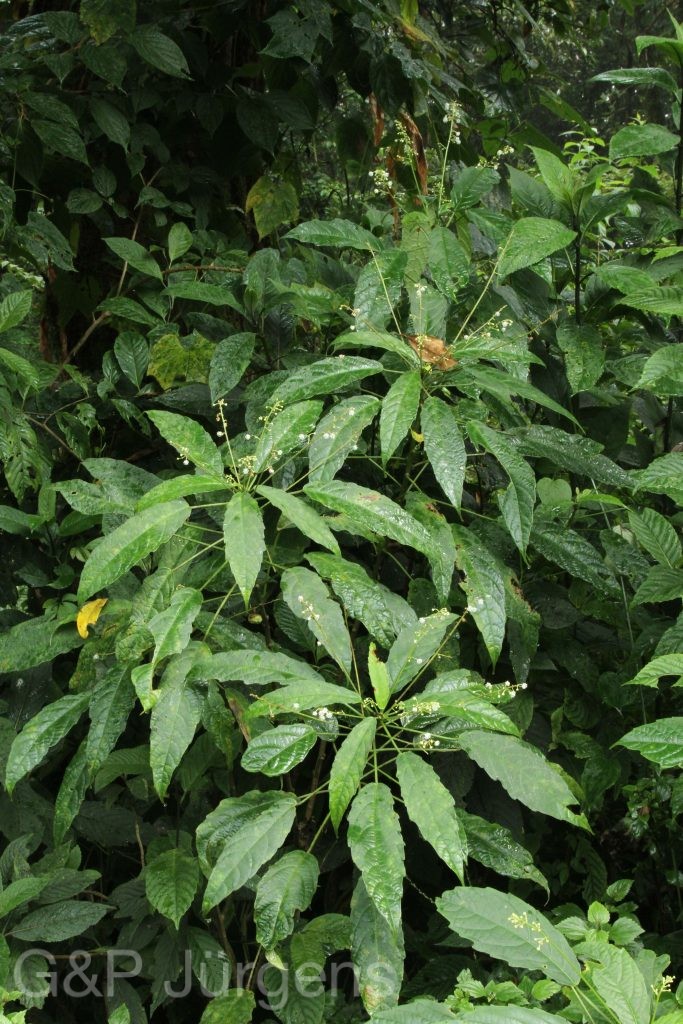
Müll.Arg.

Bhutan2012 684
Bhutan Tserang 850m, September

Description

Baliospermum calycinum is a broadly distributed spurge of the Indo-Himalayan and Southeast Asian region, with more than 550 georeferenced occurrences across China, Thailand, India, Myanmar, Nepal, Vietnam, Bhutan, Laos and Bangladesh. It is a plant of warm, subtropical forest margins, scrub, ravines and disturbed ground at low to moderate elevations. The specimen recorded near Tsirang (Tserang) in southern Bhutan at about 850 m in September reflects its typical lowland habitat, fruiting toward the end of the monsoon on moist, fertile soils in partly shaded settings.

It is a monoecious, somewhat woody undershrub or robust herb exuding a watery to milky sap typical of the Euphorbiaceae. The leaves are alternate, large, the lower ones often broadly ovate and palmately lobed while the upper become narrower and merely toothed, with glandular teeth and a serrate margin. The small, apetalous unisexual flowers are borne in axillary racemiform inflorescences, with female flowers below and numerous male flowers above; the species is distinguished by its conspicuously developed, persistent calyx. The fruit is a three-lobed schizocarpic capsule splitting into three two-valved cocci that eject the smooth, mottled seeds.

Within Euphorbiaceae the genus Baliospermum comprises a small number of Asian species long valued in traditional medicine for the purgative and irritant properties of the seed oil. Taxonomic confusion with related taxa such as B. montanum has historically obscured its limits, and modern treatments rely on calyx, leaf-lobing and capsule characters for separation. Common and weedy across its wide range, it is of least conservation concern.

Author: Müll.Arg. · Sources: POWO (Kew), GBIF, Flora of Bhutan, Flora of China, Flora of British India, Radcliffe-Smith's account of Euphorbiaceae

L.

Bhutan2012 1062
Bhutan Koma-Chu-Valley 800m, September
Bhutan2015 173 scaled
Bhutan Zhemgang 910m, October

Description

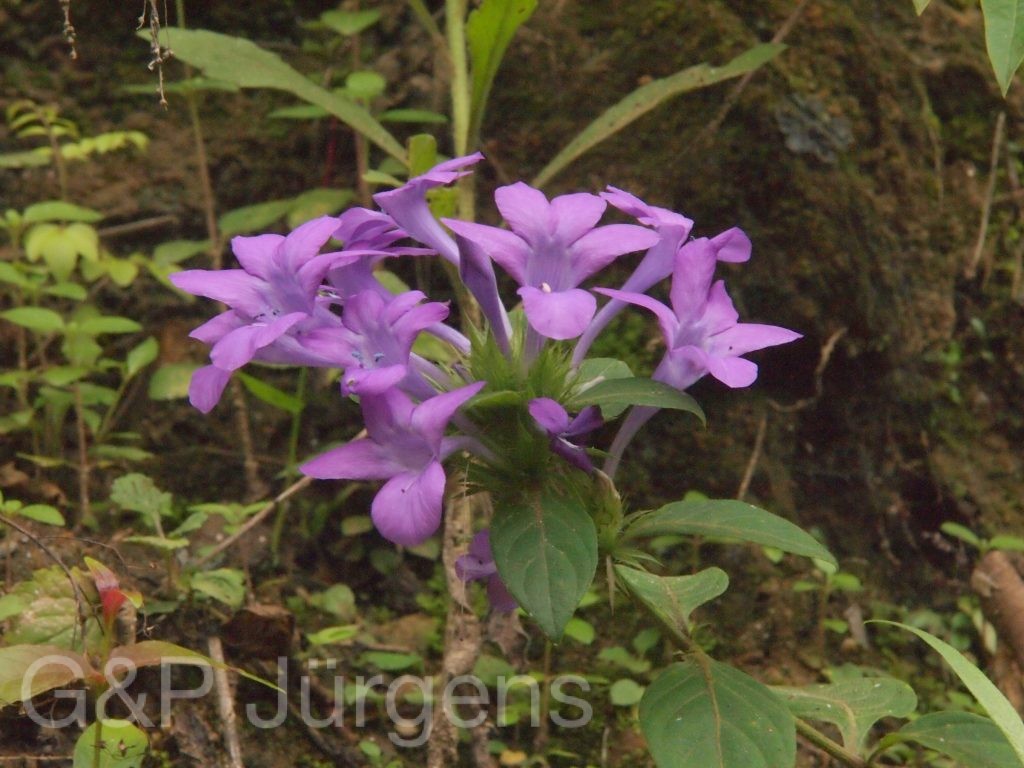
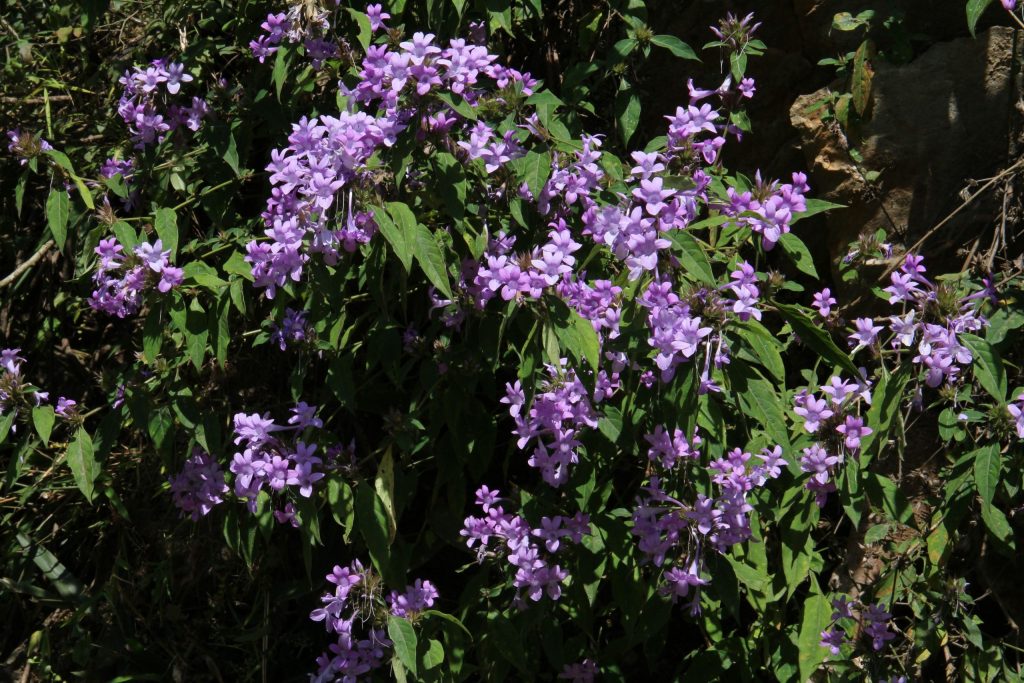
Barleria cristata is a widespread species distributed from the Indian subcontinent through Southeast Asia to southern China, occurring in India, Nepal, Bhutan, Pakistan, Myanmar, Thailand, and Laos. It has also become naturalized in parts of the tropics worldwide, including Australia, Brazil, and the Philippines. The species inhabits open and disturbed forests, rocky slopes, stream banks, and forest margins at elevations from near sea level to approximately 1,800 m. In Bhutan, it is found in the warm broadleaved forests of the southern foothills, as documented from the Koma-Chu Valley at 800 m and near Zhemgang at 910 m, where it flowers from September to October.
The plant is an erect to spreading shrub or subshrub, 0.5–1.5 m tall, with quadrangular stems that are pubescent when young. Leaves are opposite, ovate to elliptic, 5–12 cm long, with an acuminate apex and entire margins, bearing scattered hairs on both surfaces. The inflorescence is a dense, terminal or axillary spike, subtended by conspicuous, ovate, spinose-tipped bracts that give the species its epithet "cristata" (crested). Flowers are bilabiate, 3–4 cm long, typically violet to pale blue or occasionally white. The calyx is deeply four-lobed with two larger outer lobes and two smaller inner ones. The fruit is an oblong capsule containing two to four flattened, hygroscopic seeds that are explosively dehiscent when wetted.
Barleria is a large pantropical genus of approximately 300 species, with its centre of diversity in Africa and Asia. B. cristata is among the most commonly cultivated ornamental species in the genus and has escaped cultivation in numerous tropical regions, raising concerns about its invasive potential in some areas. Ecologically, it provides nectar resources for butterflies and long-tongued pollinators. The species exhibits considerable variation in flower colour across its range, which has led to the description of several infraspecific taxa, though most are not currently recognized.

Author: L. · Sources: POWO (Kew), GBIF, Flora of Bhutan Vol. 2, Flora of China Vol. 19

Bauhinia purpurea

by GP Jürgens

L.

Bhutan2015 551
Bhutan Punaka 1400m, October
Nepal 95 20 P29 ergebnis
Nepal Gorkha 1200m, Octobre

Description

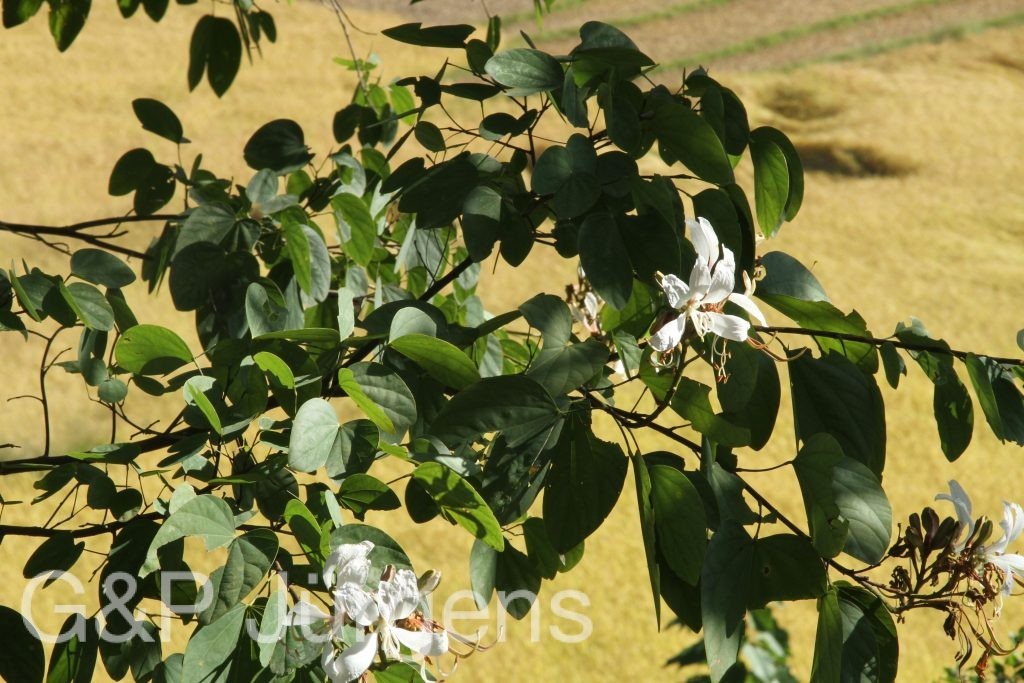
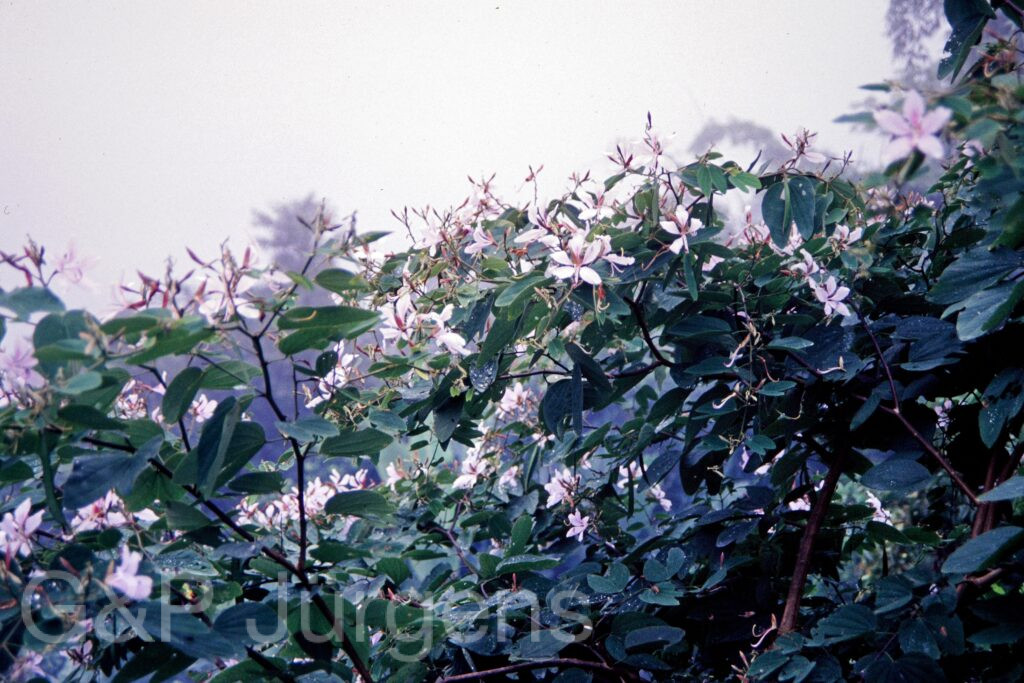
Bauhinia purpurea is a tropical and subtropical tree native to South and Southeast Asia, with a centre of diversity across India, Nepal, Bhutan, southern China, Thailand, Malaysia and the Philippines. Through widespread cultivation as an ornamental and street tree it has become naturalised across the tropics, and the more than 11,500 GBIF records include numerous occurrences in the Americas (Brazil, Colombia, Mexico, Costa Rica, the Caribbean) and elsewhere. In its native Himalayan foothill range it occupies warm broad-leaved forest, scrub and cultivated margins at low to mid elevations; the Bhutanese tree at Punakha (1400 m) and the Nepalese population near Gorkha (1200 m), both flowering in October, mark its autumn blooming in the eastern Himalaya.

It is a small to medium-sized deciduous tree with a spreading crown. The leaves are distinctive and diagnostic of the genus: broadly ovate to orbicular, cleft at the apex into two rounded lobes for up to one-third to one-half their length, giving the characteristic bilobed "camel-foot" outline, with several palmate veins. The fragrant flowers are borne in short racemes and have five free, narrow, clawed petals coloured rose-purple to magenta, with usually three fertile stamens. The fruit is a flattened, linear-oblong, woody legume that dehisces elastically to scatter several seeds.

Bauhinia purpurea is often confused with the closely allied B. variegata, from which it differs in its narrower petals, reduced number of fertile stamens and later flowering season. The species is economically and culturally significant, valued for shade, ornament, edible flower buds, fibre and traditional medicine. It is common and widely planted, of no conservation concern, but its readiness to naturalise has led to its being treated as locally invasive in some introduced tropical regions.

Author: L. · Sources: POWO (Kew), GBIF, Flora of China, Flora of Bhutan, Annotated Checklist of the Flowering Plants of Nepal, Larsen & Larsen revision of Asian Bauhinia (monograph)