Tag:

Bhutan

Flowers of Bhutan — 1326 plant species documented across the Bhutanese Himalaya, from dense broadleaf and conifer forests to alpine scrub and meadows. Bhutan’s largely intact wilderness shelters an exceptional diversity of orchids, rhododendrons, primulas and Himalayan poppies, many of them regional endemics. Each species page includes a botanical description, distribution, habitat and flowering time, with the original photograph and its recorded altitude and locality.

(D.Don) Dandy

Bhutan2012 251
Bhutan Shele-La, 4000m September

Description

Herminium macrophyllum is a terrestrial orchid of the Himalaya and southwestern China, recorded from Nepal, China, India and Bhutan, with 160 occurrences in GBIF. It grows on alpine and subalpine meadows, grassy slopes and open turf, generally between 3000 and 4300 m. The plant photographed at Shele-La in Bhutan at about 4000 m in September is characteristic of the cool, moist high-altitude grassland where the species flowers in the late monsoon, its slender spikes rising among low alpine herbs and sedges on damp peaty soil.

The species is a small deciduous terrestrial herb arising from a pair of ovoid to globose underground tubers. The stem bears a few leaves, with one or two comparatively large, broadly elliptic to ovate basal leaves (the macrophyllum referring to this enlarged foliage) sheathing the base. The inflorescence is a slender, many-flowered cylindrical raceme of small greenish to yellowish-green flowers; each has a hooded dorsal sepal and petals forming a loose galea, spreading lateral sepals, and a labellum that is typically three-lobed with a short saccate or scarcely spurred base, the column short as is usual in the genus. The fruit is a small erect dehiscent capsule releasing copious minute seeds.

Herminium (subtribe Orchidinae, tribe Orchideae of the Orchidoideae) is a genus of small Eurasian terrestrial orchids centred on the Sino-Himalayan region, distinguished by their tuberous habit and inconspicuous green flowers; H. macrophyllum is set apart by its enlarged leaves. Like other terrestrial orchids it requires mycorrhizal fungi for seed germination and is pollinated by small insects attracted to the modest flowers. The species is locally frequent in intact alpine meadow but, as with all orchids, is listed under CITES Appendix II and is sensitive to grazing and habitat disturbance.

Author: (D.Don) Dandy · Sources: POWO (Kew), GBIF, Flora of China, Flora of Bhutan, Orchids of Bhutan, Genera Orchidacearum (Pridgeon et al.)
(D.Don) P.F.Hunt & Summerh.

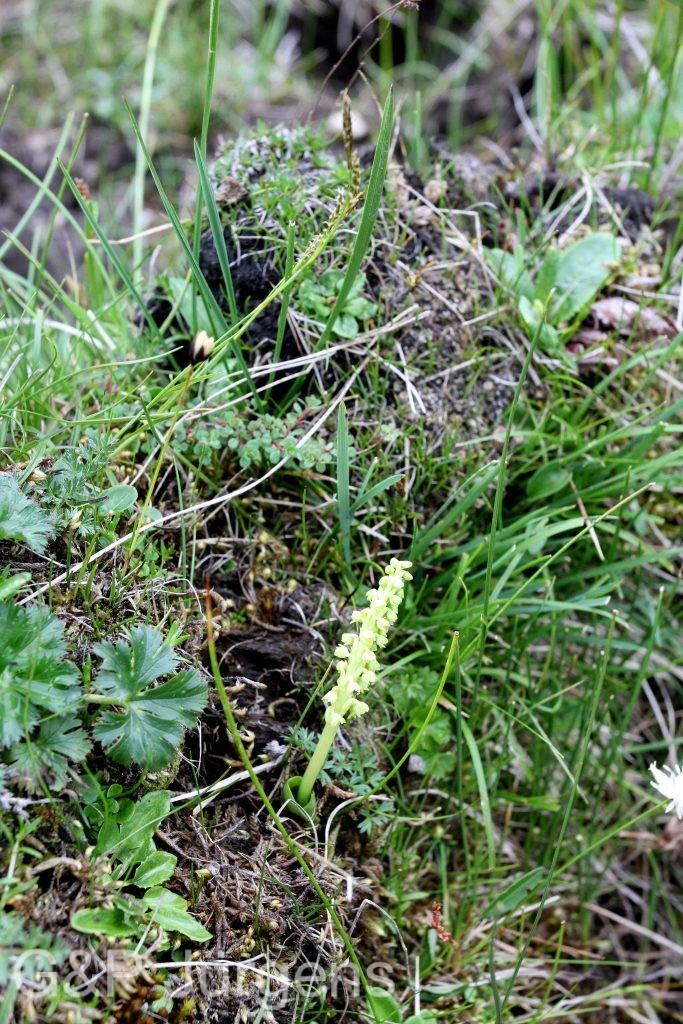
BhutanPG2011 245
Bhutan Tsochenchen 3800m, June

Description

Herminium monophyllum (D.Don) P.F.Hunt & Summerh. is a small terrestrial orchid of the Himalaya and western China, recorded by GBIF from India, Nepal, Bhutan and China across some 59 occurrences. It is a plant of open alpine and subalpine turf, grassy slopes, moist meadows and the margins of scrub, generally between about 3000 and 4300 m. The individual photographed at Tsochenchen in Bhutan at around 3800 m in June, during the brief alpine flowering flush, reflects its preference for cool, humid grassland kept moist through the growing season.

The plant grows from small subterranean tubers and produces a slender erect stem. As the epithet monophyllum indicates, there is characteristically a single principal basal leaf (sometimes with a second much smaller one), which is oblong to lanceolate, sheathing at the base. The inflorescence is a slender, rather lax to dense terminal raceme of numerous tiny greenish or greenish-yellow flowers. Each flower has narrow, somewhat hooded sepals and petals and a small three-lobed labellum without a true spur, the whole giving the inflorescence a delicate, grass-like appearance typical of the genus, which is pollinated chiefly by small insects.

Herminium is a genus of small-flowered terrestrial orchids of tribe Orchideae, distinguished by its spurless or near-spurless labellum and tuberous habit. Herminium monophyllum is one of several closely similar Himalayan species and can be confused with its relatives without close examination. It is inconspicuous and easily overlooked, and although not formally assessed as threatened it is restricted to high-altitude grassland that is vulnerable to overgrazing and warming; like all orchids it is protected under CITES Appendix II.

Author: (D.Don) P.F.Hunt & Summerh. · Sources: POWO (Kew), GBIF, Flora of Bhutan, Flora of China, Pearce and Cribb Orchids of Bhutan, World Checklist of Orchidaceae

(DC.) Raab-Straube

Sikkim2003 103 P141
Sikkim below Dzongri 3900m 08.2003
Sikkim2003 408 P567
Sikkim below Dzongri 3900m 08.2003
Bhutan2012 493
Bhutan Pele-La 3000m, September

Description

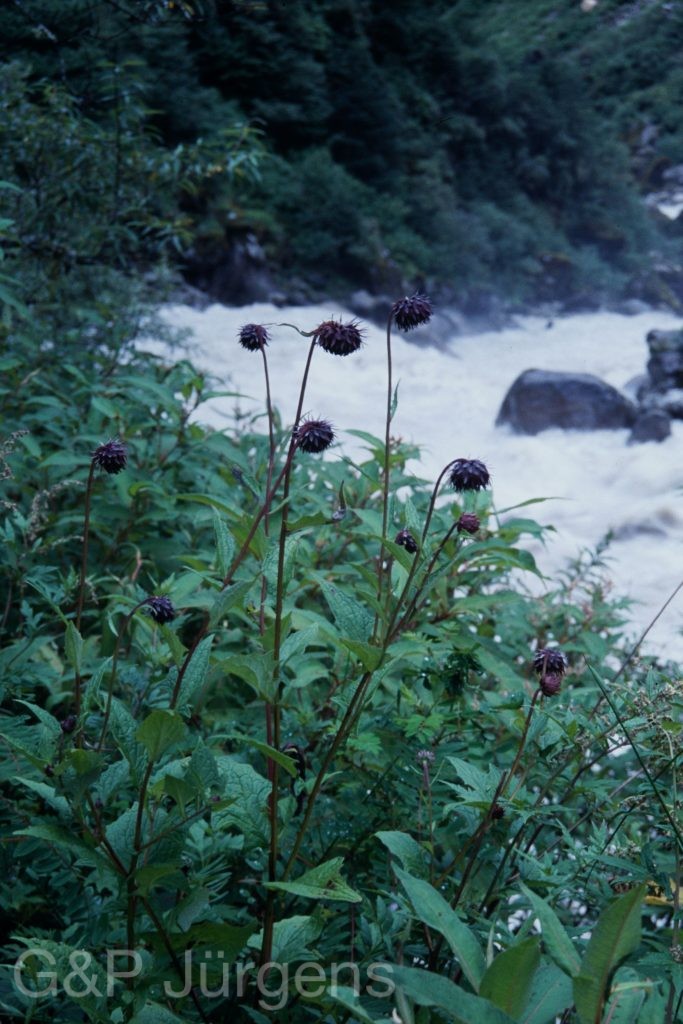
Himalaiella auriculata is a perennial thistle-like composite of the temperate to subalpine zone of the eastern Himalaya, native to India, Nepal and China, with around 27 documented occurrences. It grows on open slopes, forest clearings, meadow margins and disturbed ground, broadly between about 3000 and 4000 m. The photographed plants were recorded below Dzongri in Sikkim at 3900 m in August and at the Pele-La in Bhutan at 3000 m in September, flowering in the late-monsoon and early-autumn period typical of the genus in the region. The name supplied, Himalaiella auriculata, is recorded by GBIF as a synonym, with the same epithet treated as the accepted name; the species was long placed in Saussurea as S. auriculata.

The species is an erect herb with a leafy, often winged stem arising from a perennial rootstock, the herbage thinly cobwebby-arachnoid. The leaves are elliptic to lanceolate, the basal narrowed to a petiole and the cauline sessile and conspicuously auriculate-clasping at the base, the auricles giving the epithet. The capitula are discoid, solitary or few in a loose terminal cluster, with an ovoid to campanulate involucre of imbricate, often purple-tipped phyllaries; the florets are all tubular and purple to mauve. The fruit is a glabrous cypsela bearing a double pappus, the inner bristles plumose, as is diagnostic of the alliance.

Himalaiella is a small Sino-Himalayan genus segregated from Saussurea (tribe Cardueae) on molecular and morphological grounds, characterised by the auriculate, decurrent leaves and feathery inner pappus. Restricted in range and represented by relatively few collections, it is a regional endemic of the eastern Himalaya whose populations warrant monitoring, though it has not been formally assessed.

Author: (DC.) Raab-Straube · Sources: POWO (Kew), GBIF, Flora of Bhutan, Flora of China, Saussurea monograph (Lipschitz)

(C.B.Clarke) Fujikawa & H.Ohba

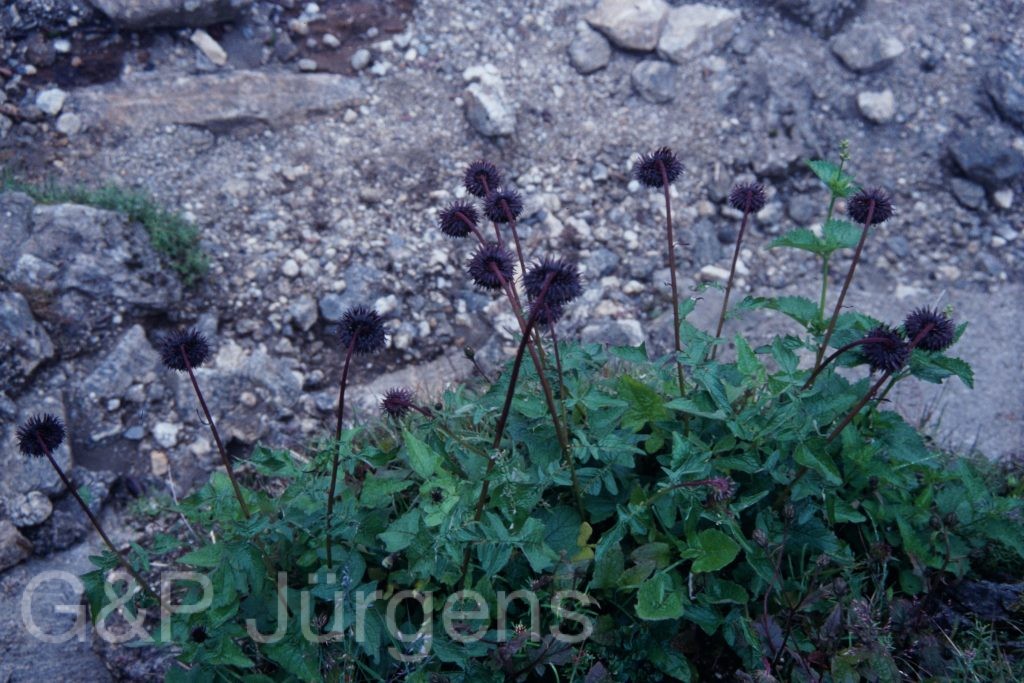
Bhutan2012 256
Bhutan Shele-La, 4000m September

Description

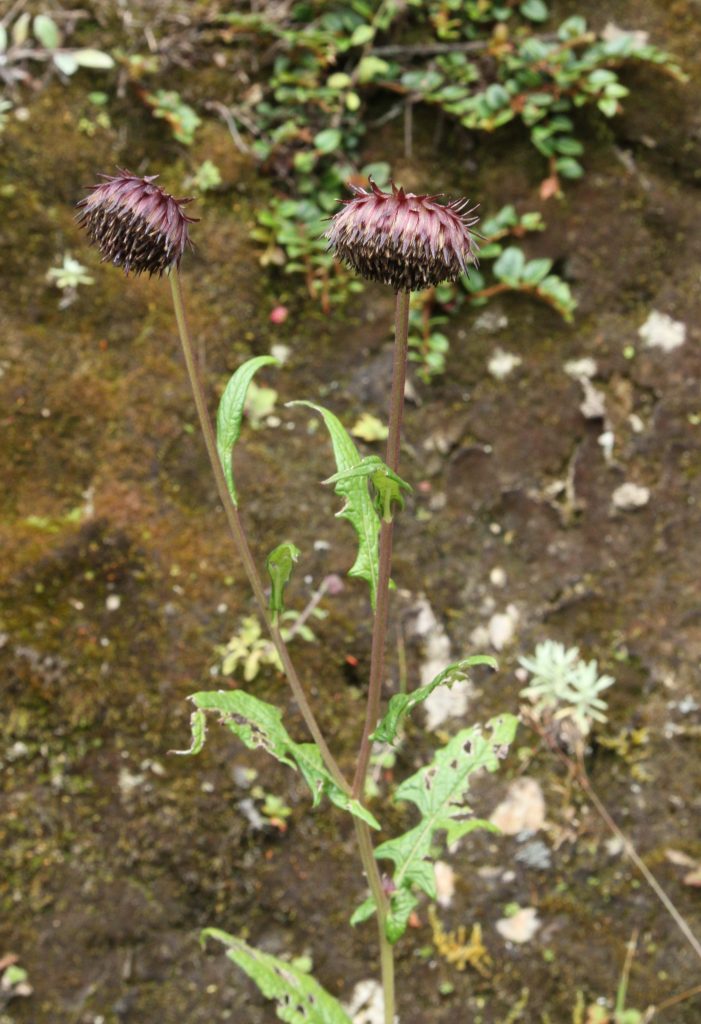
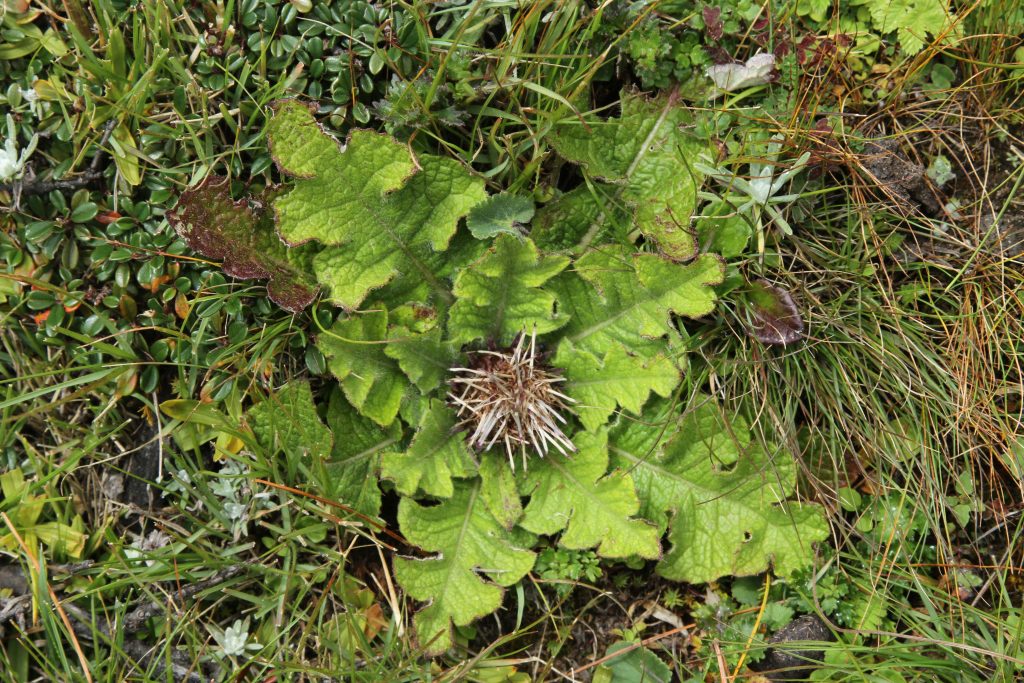
Himalaiella yakla is a high-alpine thistle-like composite of the Eastern Himalaya, recorded from China and Nepal and extending into Bhutan, where it is very seldom collected, the aggregated databases holding only a handful of occurrences. It is a plant of the upper alpine zone, growing on open stony slopes, scree, rocky pastures and exposed ridges generally near and above 4000 m. The specimen illustrated was photographed at Shele-La in Bhutan at about 4000 m in September, its late-season flowering reflecting the short growing window of these cold, wind-swept high passes.

The plant is a perennial herb with a stout caudex and an erect, often somewhat woolly stem, frequently clothed in white arachnoid or floccose tomentum that mitigates intense alpine radiation and desiccation. The leaves are oblong to lanceolate, sessile or shortly petiolate, with toothed to pinnatifid, sometimes spinulose margins, green above and greyer beneath. The capitula are discoid, solitary or few, with an ovoid involucre of imbricate, often spine-tipped phyllaries. The florets are tubular, bisexual and purple to violet, and the achenes are crowned by a pappus of plumose or barbellate bristles in series, adapted to wind dispersal across open terrain.

The name appears in GBIF as a synonym, with Himalaiella yakla treated as the accepted name; the taxon was segregated from the large genus Saussurea, under which it long stood as Saussurea yakla, following molecular studies that resolved Himalaiella as a distinct Sino-Himalayan lineage. Its rarity, restricted high-elevation range and sensitivity to climatic shifts and grazing render it of biogeographic significance and best regarded as data-deficient pending targeted survey.

Author: (C.B.Clarke) Fujikawa & H.Ohba · Sources: POWO (Kew), GBIF, Flora of China, Flora of Bhutan, Saussurea and Himalaiella systematic studies, Compositae of the Himalaya

(Wall. ex Roxb.) T.Yamaz.

Bh2008 491 P760
Bhutan Samtengang, 2300m April
Nepal 2009 10 ergebnis
Nepal Helambu Sheno-Okrini 1900m, May

Description

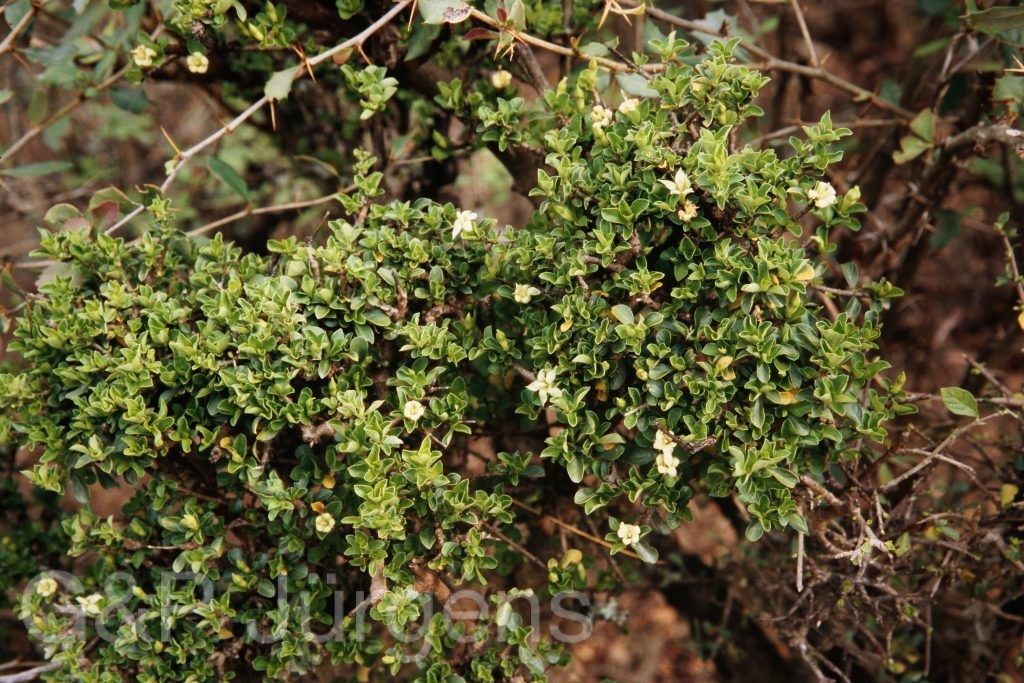
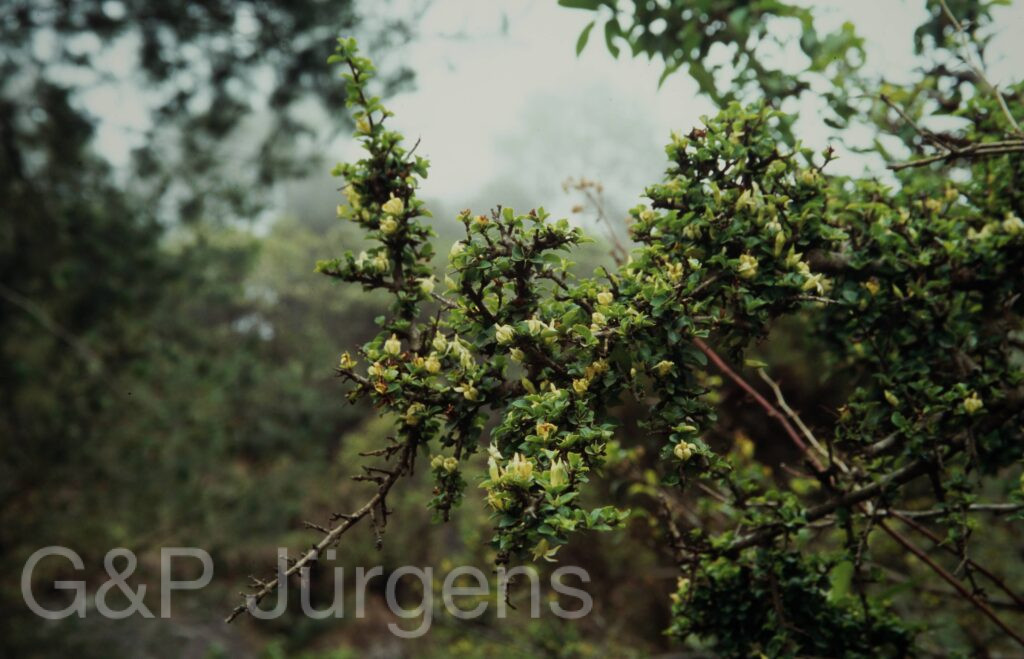
Himalrandia tetrasperma is a spiny shrub of the Rubiaceae endemic to the Himalaya and its western foothills, recorded by GBIF (about 176 occurrences) from India, Nepal, Pakistan, Bhutan and Afghanistan. It is a plant of warm, often dry, open forest, scrub and rocky hillsides in the subtropical and lower temperate zone, frequently on sunny slopes and ravine sides. The illustrated material was gathered in Bhutan at Samtengang near 2300 m in April and in the Helambu region of Nepal at Sheno-Okrini around 1900 m in May, both flowering in spring, which is consistent with the genus producing its blossom on the bare or newly leafing wood of the dry season.

The plant is a much-branched, deciduous shrub whose short lateral shoots are modified into stout, woody spines, a distinctive armament for the family. The leaves are opposite or clustered on the dwarf shoots, small, obovate to elliptic, entire and glabrescent, with interpetiolar stipules. The flowers are solitary or in small fascicles, fragrant and white, with a short calyx and a salverform corolla of five spreading lobes opening from a slender tube. There are five stamens inserted in the throat and an inferior, bilocular ovary. The fruit is a small, fleshy to leathery berry, the epithet tetrasperma referring to the typically four-seeded fruit.

Himalrandia is a small genus segregated from the broadly circumscribed Randia, to which the species was long referred (as Randia tetrasperma); its placement among the Gardenieae has been confirmed by revision. As a hardy shrub of disturbed and semi-arid hill country it is locally common and not regarded as threatened, its fragrant flowers pollinated by insects and its berries dispersed by birds.

Author: (Wall. ex Roxb.) T.Yamaz. · Sources: POWO (Kew), GBIF, Flora of Pakistan, Flora of Bhutan, Annotated Checklist of the Flowering Plants of Nepal, Tirvengadum's studies of Asian Gardenieae (Rubiaceae)

Retz.

Bhutan2015 276
Bhutan Zhemgang 1000m, October
Bhutan2012 1040
Bhutan Trithangebe 900m, October
Bhutan2012 1042
Bhutan Trithangebe 900m, October

Description

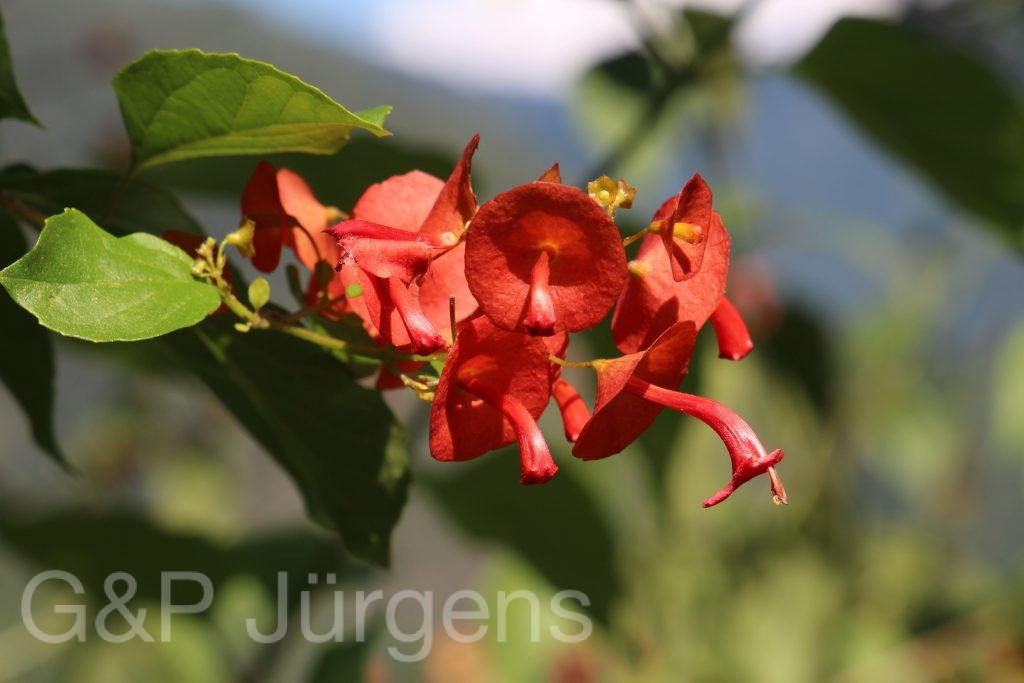
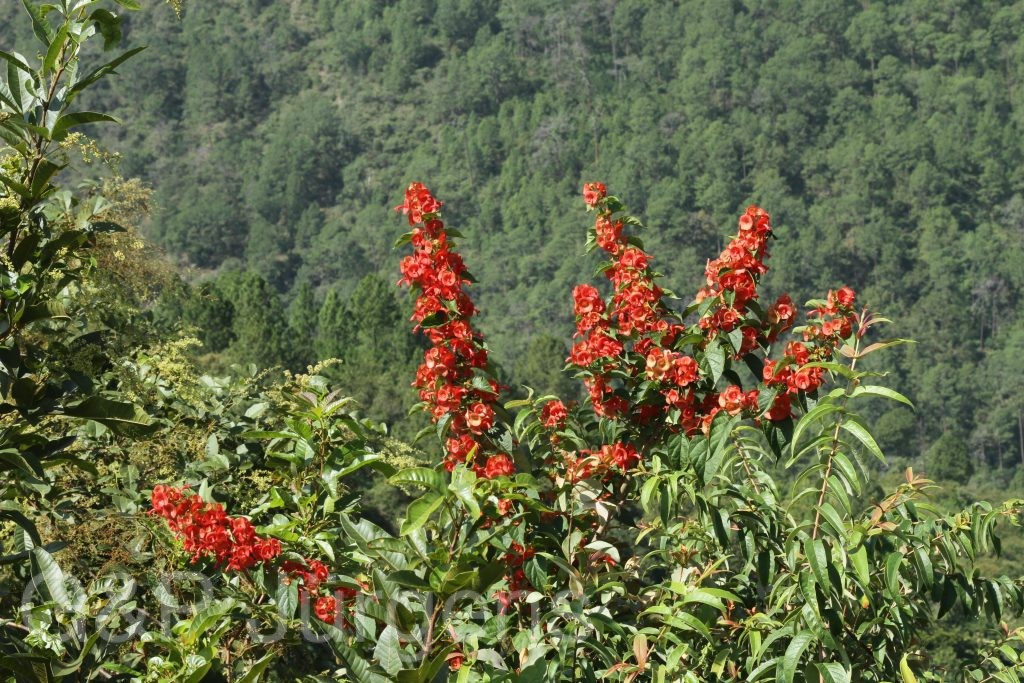
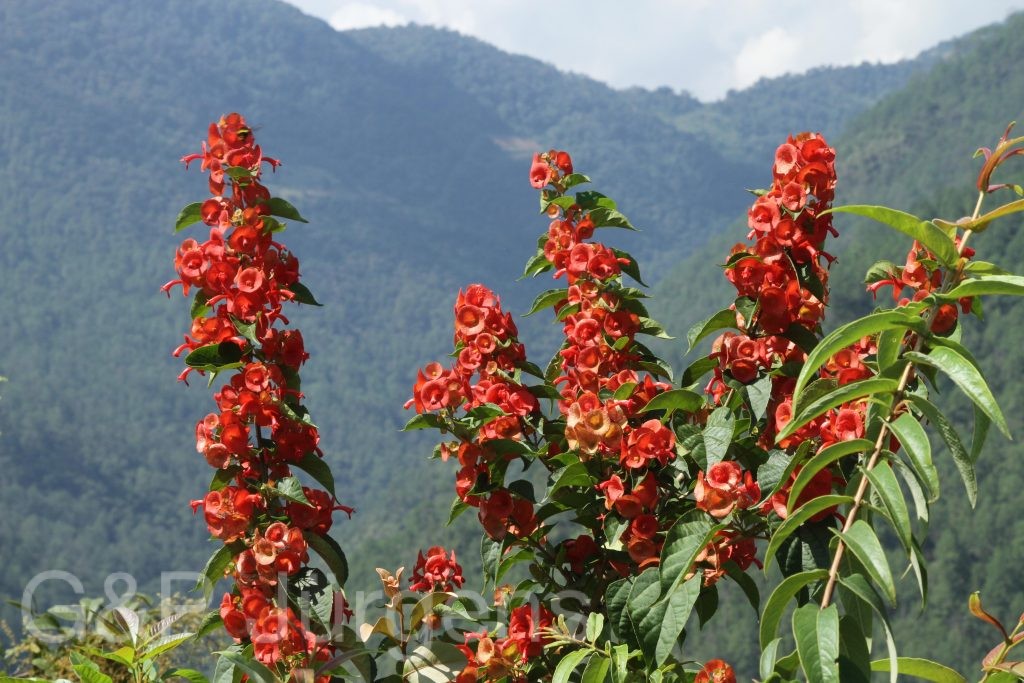
Holmskioldia sanguinea Retz., the Chinese hat plant or cup-and-saucer plant, is a subtropical shrub native to the foothills of the Himalaya in India, Nepal and Bhutan; GBIF lists nearly 1995 occurrences, the great majority from cultivation across the tropics, with records from the Americas, the Caribbean, the Philippines, Mauritius and Reunion attesting to its global ornamental dispersal. In its native range it grows along forest margins, ravines and warm valley slopes in the subtropical zone, generally below about 1500 m. The Bhutan records from Zhemgang at 1000 m and Trithangebe at 900 m, flowering in October, exemplify its occurrence in warm, low-elevation submontane habitats.

The species is a straggling to scandent evergreen shrub with quadrangular branches. The leaves are opposite, ovate, acuminate and serrate. The conspicuous flowers are borne in axillary cymes and are remarkable for the large, brick-red to orange, persistent, saucer-shaped calyx, from the centre of which the slender, curved, tubular corolla projects like a cup upon a saucer, with exserted stamens; this striking calyx accounts for both the common and specific names. The fruit is a small, four-lobed schizocarp seated within the persistent calyx.

Formerly placed in Verbenaceae, Holmskioldia is now classified in the Lamiaceae (subfamily Viticoideae) following molecular reappraisal of the verbenoid genera. Widely cultivated as a flowering ornamental in warm climates, it is of no conservation concern and occasionally naturalises beyond its native range.

Author: Retz. · Sources: POWO (Kew), GBIF, Flora of Bhutan, Flora of British India, Flora of China, Harley et al. Labiatae treatment in The Families and Genera of Vascular Plants

Thunb.

Sikkim2004 369 P644
Sikkim/India Tista-Valley 1900m May
Nepal 2009 64 ergebnis
Nepal Helambu Doroli 1850, May

Description

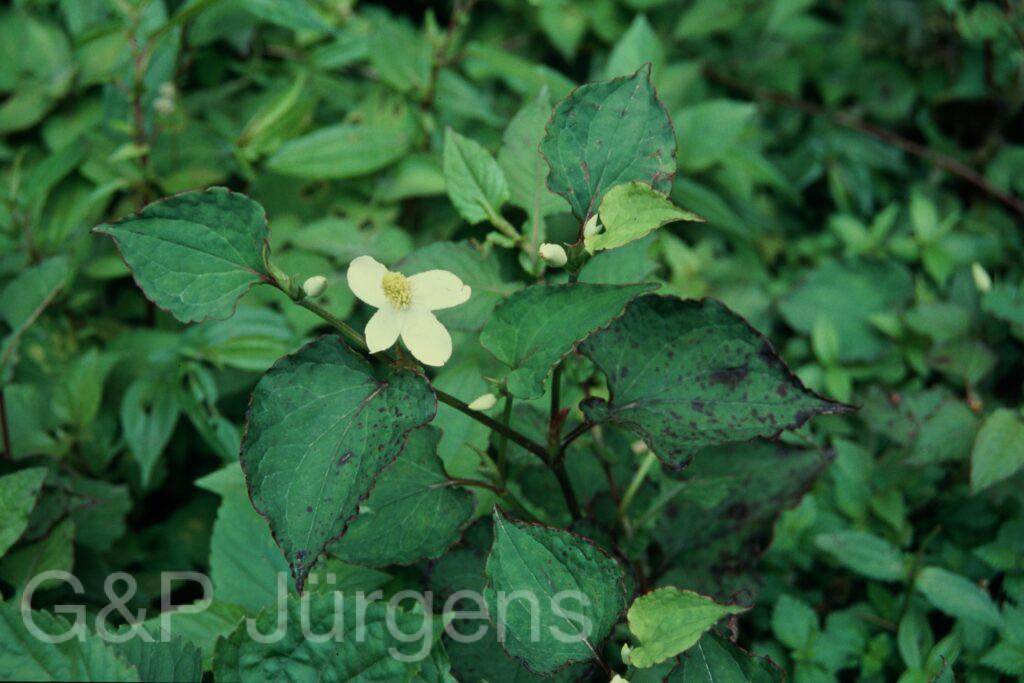
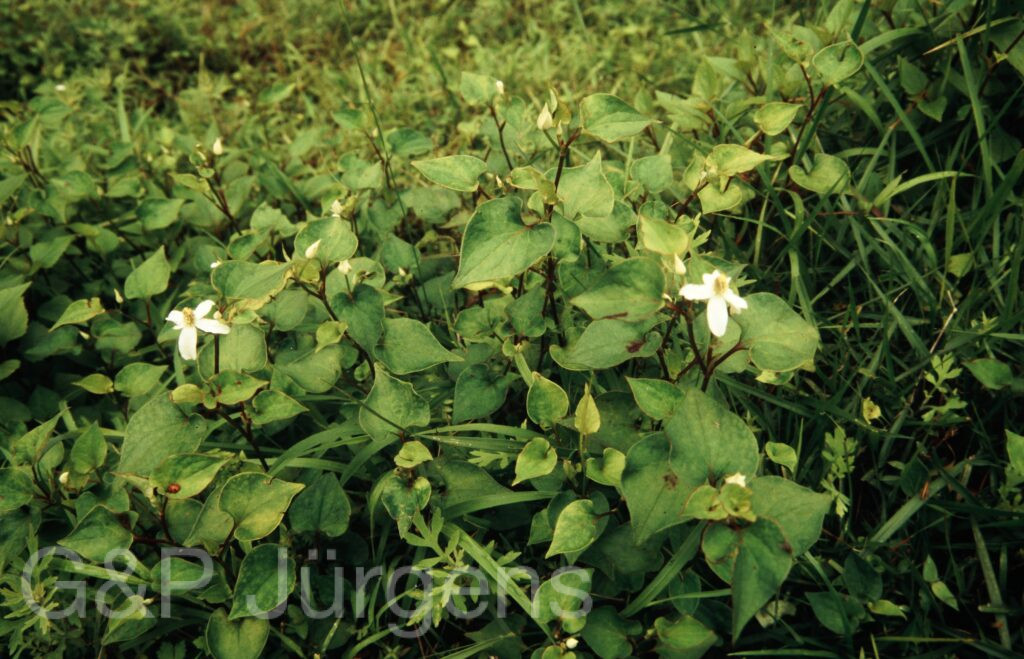
Houttuynia cordata is a widespread East Asian and Himalayan herb with a very large GBIF dataset of nearly 18000 records spanning Japan, China, Korea, Taiwan, India, Nepal, Bhutan, Vietnam and Thailand, together with numerous naturalised and cultivated occurrences in Europe and North America. It grows in moist and wet places, along streamsides, ditches, marsh margins, wet meadows and shaded forest floors, from the lowlands up to around 2500 m. The illustrated plants from the Tista valley in Sikkim/India at 1900 m and from Doroli in the Helambu region of Nepal at 1850 m, both flowering in May, are typical of its damp, shaded montane habitats in the Himalaya.

It is a rhizomatous perennial herb emitting a strong fish-like odour when bruised. The slender rhizomes creep underground, giving rise to erect, simple or sparingly branched stems. The leaves are alternate, broadly ovate-cordate with a deeply cordate base, an acuminate apex, an entire margin and palmate venation, often tinged red beneath, and the petiole base is sheathing with a membranous stipule. The minute, perianthless flowers are densely crowded on a short terminal spike that is subtended by four (occasionally more) showy, petaloid white involucral bracts, giving the whole structure the appearance of a single flower. Each tiny flower has three stamens and a one-locular ovary of fused carpels; the fruit is a small capsule with numerous seeds.

Houttuynia cordata is one of only a few genera in the small basal angiosperm family Saururaceae (order Piperales). It is widely used as a culinary herb and in traditional medicine across East Asia, and the variegated forms are popular ornamentals. It spreads vigorously by its creeping rhizomes, forming clonal colonies, and can become weedy where introduced. It is exceedingly common and of least conservation concern.

Author: Thunb. · Sources: POWO (Kew), GBIF, Flora of China Vol. 4, Flora of Bhutan Vol. 1, Flora of Nepal, Liang & Tucker Saururaceae systematic studies (monograph)

Hook.f.

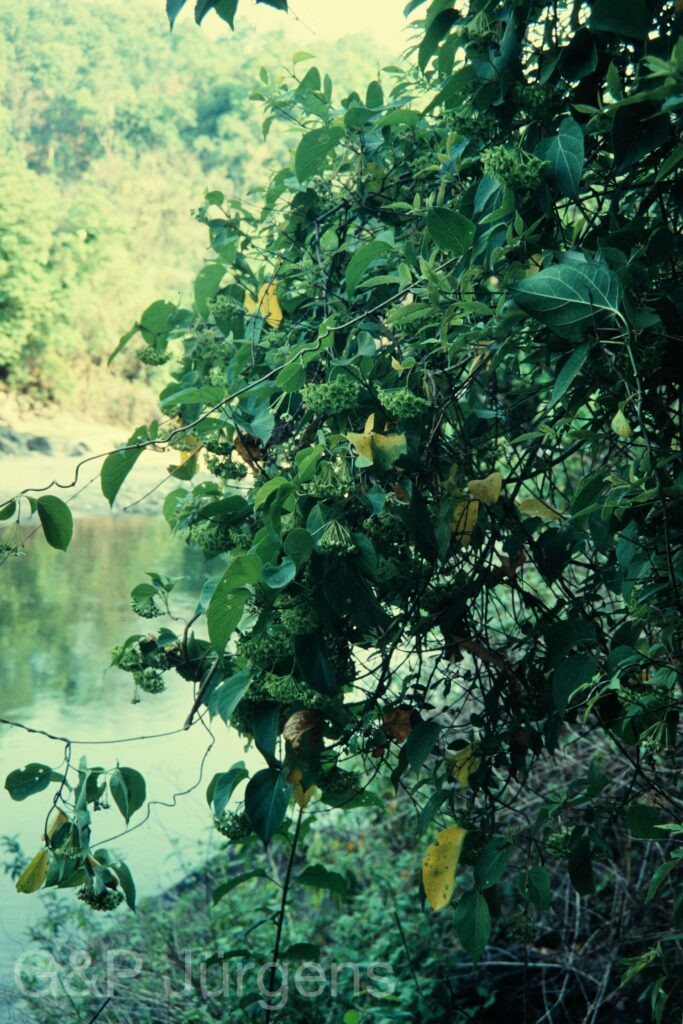
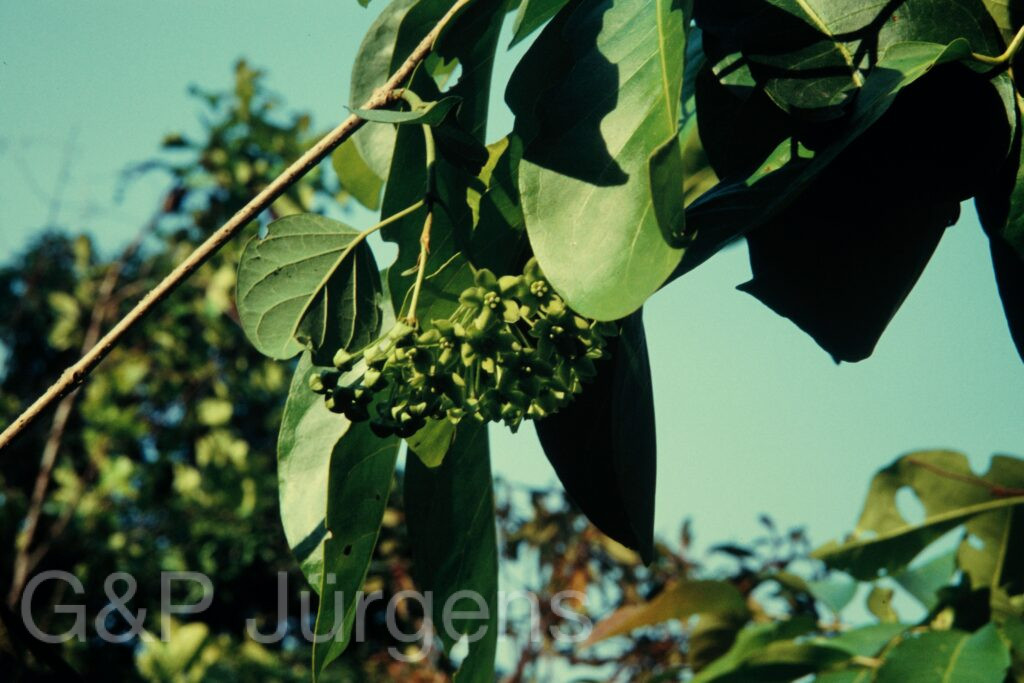
Bhutan2015 213
Bhutan Zhemgang 910m, October

Description

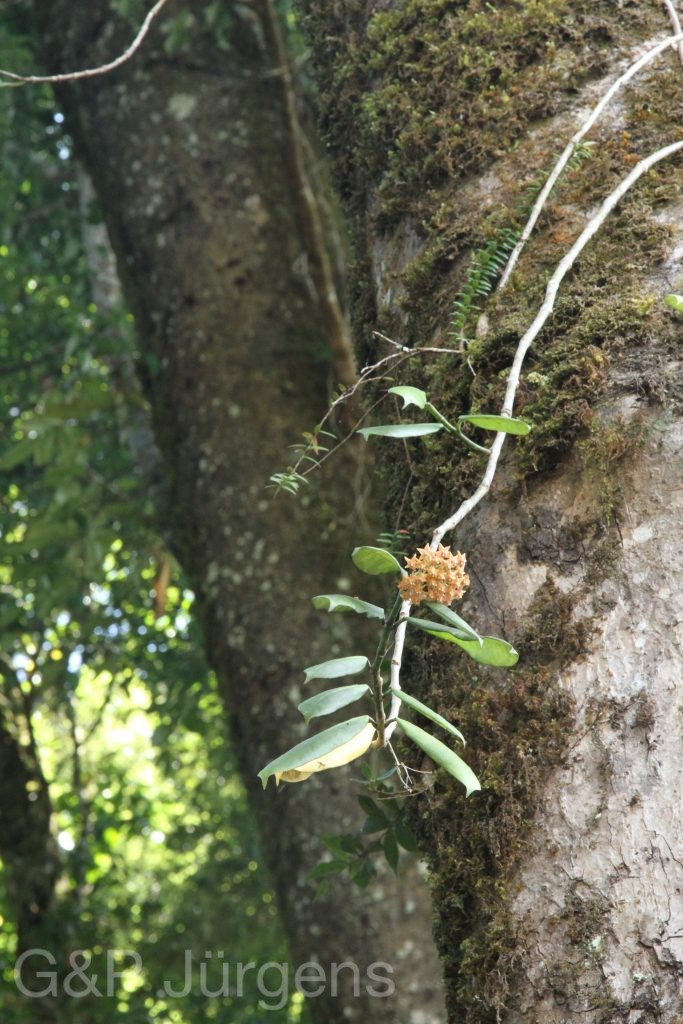
Hoya globulosa Hook.f. is an epiphytic climber of the eastern Himalaya and adjoining Indochina, recorded from India, Bhutan, China and Vietnam, with scattered cultivated material elsewhere; the GBIF total of about 115 occurrences reflects its moderately frequent presence in warm, humid montane forest. It grows as an epiphyte on mossy trunks and branches, occasionally as a lithophyte, in subtropical to warm-temperate broad-leaved evergreen forest, broadly between 700 and 1800 m. The photographed plant from Zhemgang in central Bhutan at about 910 m, flowering in October, typifies its occurrence in the moist, shaded foothill forests of southern Bhutan during the post-monsoon season.

The species is a robust, woody, climbing or pendent epiphytic vine with stout stems rooting at the nodes and exuding milky latex when broken. The leaves are opposite, thick and coriaceous, large, elliptic to oblong-lanceolate, acuminate, with a stout midrib and prominent, somewhat impressed lateral venation. The inflorescence is a dense, many-flowered, globose, umbelliform cyme on a persistent peduncle — the rounded flower-head giving the epithet globulosa. The flowers are small, with a fleshy, reflexed, hairy-margined corolla, pale yellow to greenish-white often suffused pink, surmounted by the characteristic waxy, glistening, star-shaped staminal corona. Pollen is borne in paired pollinia, and the fruit is a slender, elongate paired follicle releasing plumed seeds.

Hoya (Apocynaceae, subfamily Asclepiadoideae) is a large palaeotropical genus distinguished by its waxy coronate flowers and pollinarial reproduction; H. globulosa belongs to the large-leaved, dense-umbelled Himalayan-Indochinese assemblage. Its bold foliage and tight spherical flower-heads have made it sought-after in specialist Hoya cultivation. As a forest-dependent epiphyte it is potentially threatened by lowland deforestation and collection pressure, although formally unassessed and locally not uncommon within intact forest.

Author: Hook.f. · Sources: POWO (Kew), GBIF, Flora of China, Flora of Bhutan, Flora of British India, Surveswaran et al. — Phylogeny and revision of Hoya

Wall. ex D.Don

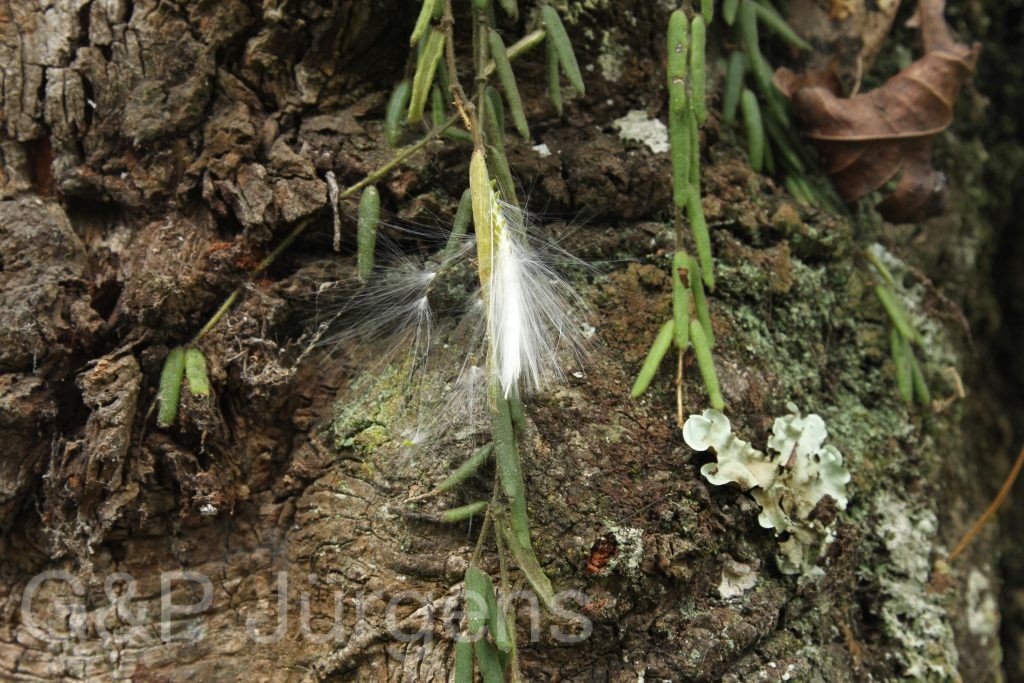
Bhutan2012 1175
Bhutan Trashiyantse 1780m, October
Bhutan2012 1177
Bhutan Trashiyantse 1780m, October

Description

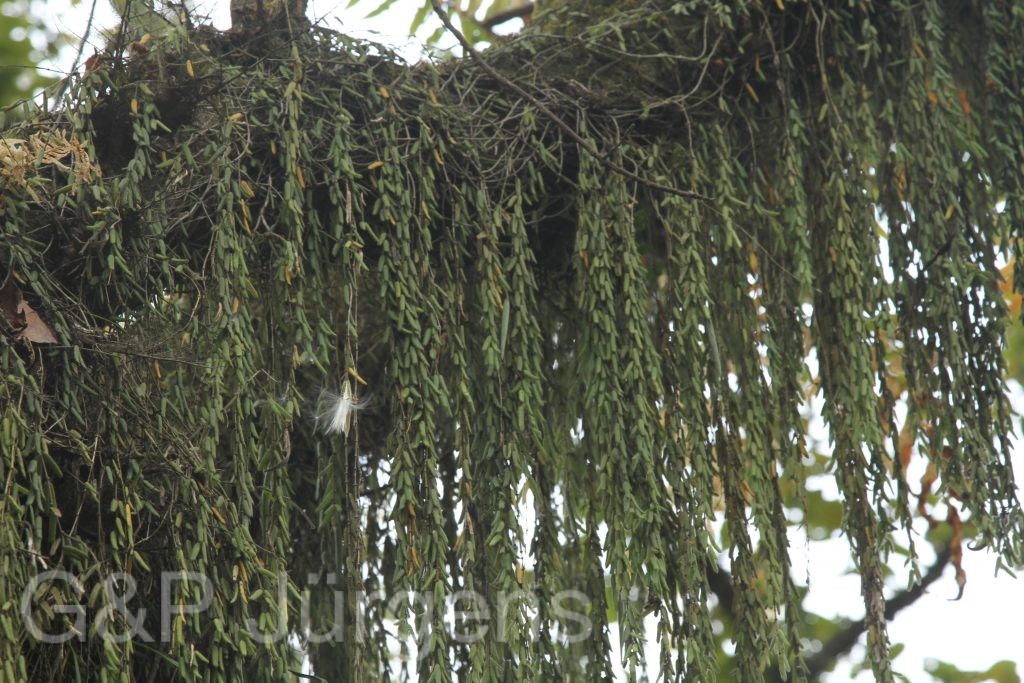
Hoya linearis is a Himalayan epiphytic wax-plant, GBIF recording around 106 occurrences from India, Bhutan, Nepal, China and Myanmar, the remaining records (US, ZA, FI, VN) representing cultivated material of this popular ornamental. It grows as a pendent epiphyte on mossy tree trunks and branches in humid, shaded broadleaved and evergreen montane forest, generally between about 1500 and 2500 m, where persistent cloud and high humidity sustain its succulent foliage. The plant photographed from Trashiyangtse (Trashiyantse) in eastern Bhutan at 1780 m, flowering in October, typifies its occurrence in cool, moist mid-montane forest where it festoons the canopy in long hanging masses.

It is a glabrous to softly hairy epiphytic subshrub with slender, trailing or pendent stems rooting at the nodes. The leaves are distinctive: linear, narrow, soft, slightly fleshy and grooved above, hanging in dense curtains quite unlike the broad succulent leaves of most Hoya. The flowers are borne in pendent umbellate cymes; each has a small calyx and a fleshy, white, five-lobed, star-shaped corolla with a central corona typical of the asclepiad group, sweetly fragrant especially in the evening. The fruit is a slender paired follicle releasing comose seeds dispersed by wind.

Described by Wallich (ex D. Don), H. linearis is placed in Hoya within Apocynaceae (subfamily Asclepiadoideae, formerly Asclepiadaceae). Its specialised epiphytic, narrow-leaved habit makes it readily recognisable and a much-grown houseplant, though wild populations depend on intact humid montane forest and are vulnerable to deforestation and over-collection. Ecologically its fragrant flowers attract insect pollinators, while its plumed seeds exploit air currents to colonise new host trees.

Author: Wall. ex D.Don · Sources: POWO (Kew), GBIF, Flora of Bhutan, Flora of China, The Genus Hoya (Asclepiadaceae) – Kleijn & van Donkelaar monograph

Hoya obcordata

by GP Jürgens

Hook.f.

Nepal 97 554 P1081
Nepal Sabha-Khola 550m May
Nepal 97 553 P1080
Nepal Sabha-Khola 550m May

Description

Hoya obcordata is an epiphytic climber of the eastern Himalayan foothills and adjacent subtropical forests, documented from north-east India and Bhutan, with collections also referable to lowland Nepal. It is poorly recorded, GBIF holding only five georeferenced occurrences, reflecting both its restricted range and the difficulty of collecting canopy epiphytes. It grows as a twining liana or root-climber on tree trunks and rocks in humid broad-leaved and riverine forest at low elevations. The plant from Sabha Khola in eastern Nepal at 550 m in May occupies just such a warm, humid valley floor, flowering in the late dry season.

It is a glabrous, somewhat succulent vine with slender twining stems rooting adventitiously at the nodes and exuding milky latex. The leaves are opposite, thick and fleshy, obovate to obcordate with a notched or rounded apex (whence obcordata) and shortly petiolate. The flowers are borne in pendent, umbelliform cymes from extra-axillary peduncles, each umbel of many small star-shaped blooms. The corolla is rotate and five-lobed, pale and reflexed, surmounted by the fleshy five-parted corona typical of Hoya around the gynostegium of fused stamens and stigma. The pollen forms waxy pollinia, and the fruit is a slender paired follicle releasing comose, wind-dispersed seeds.

Hoya belongs to subfamily Asclepiadoideae of an expanded Apocynaceae, defined by the gynostegium, corona and pollinium-bearing flowers formerly placed in Asclepiadaceae. H. obcordata is among the less collected Himalayan members of this largely Malesian genus, and its scarcity in herbaria leaves its full distribution imperfectly known. Such epiphytes are vulnerable to lowland deforestation, and the species would merit targeted survey to clarify its conservation status.

Author: Hook.f. · Sources: POWO (Kew), GBIF, Flora of China Vol. 16, Flora of Bhutan Vol. 2, Annotated Checklist of the Flowering Plants of Nepal, Wallich revisions of Asiatic Hoya