
Thunb.
Description
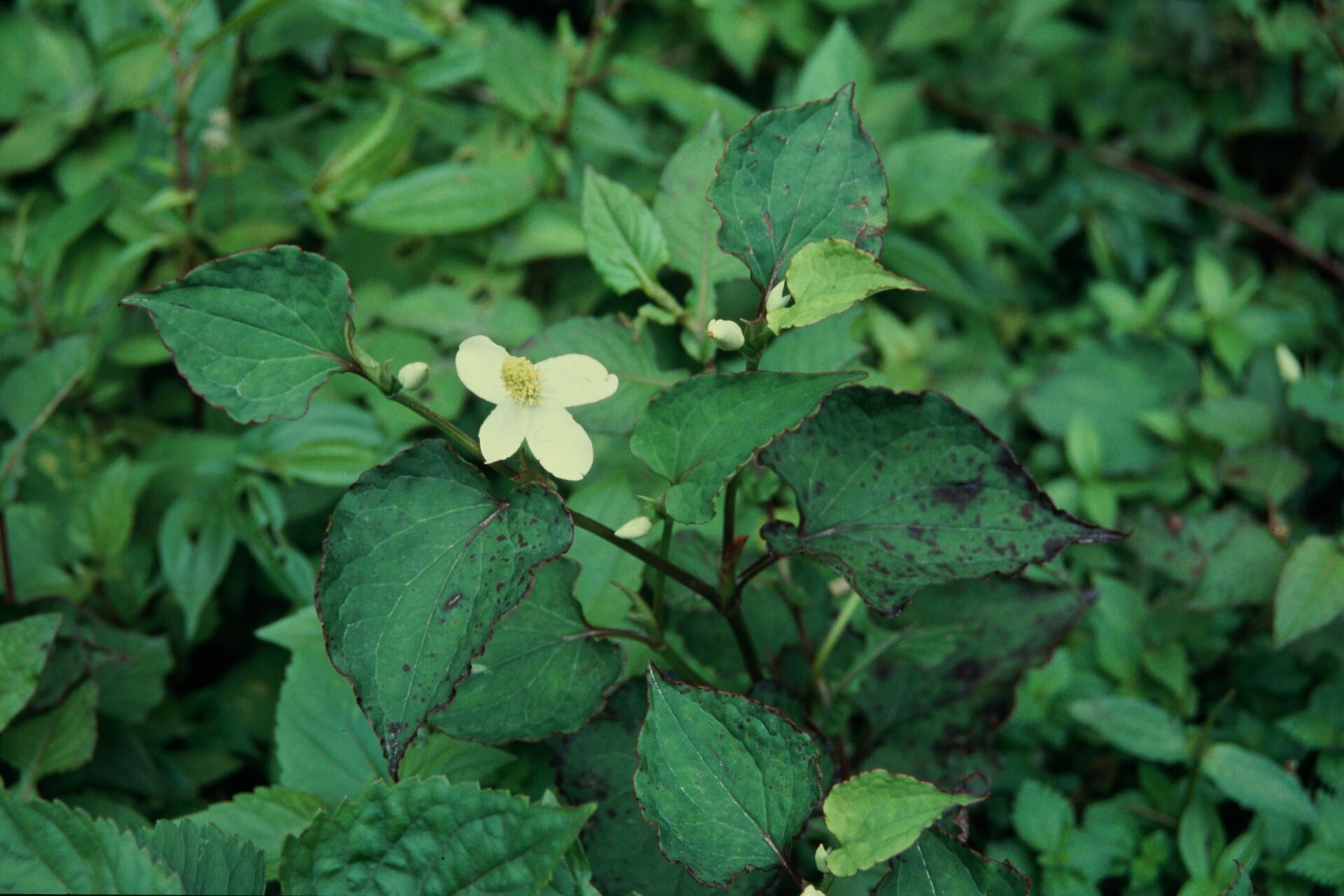
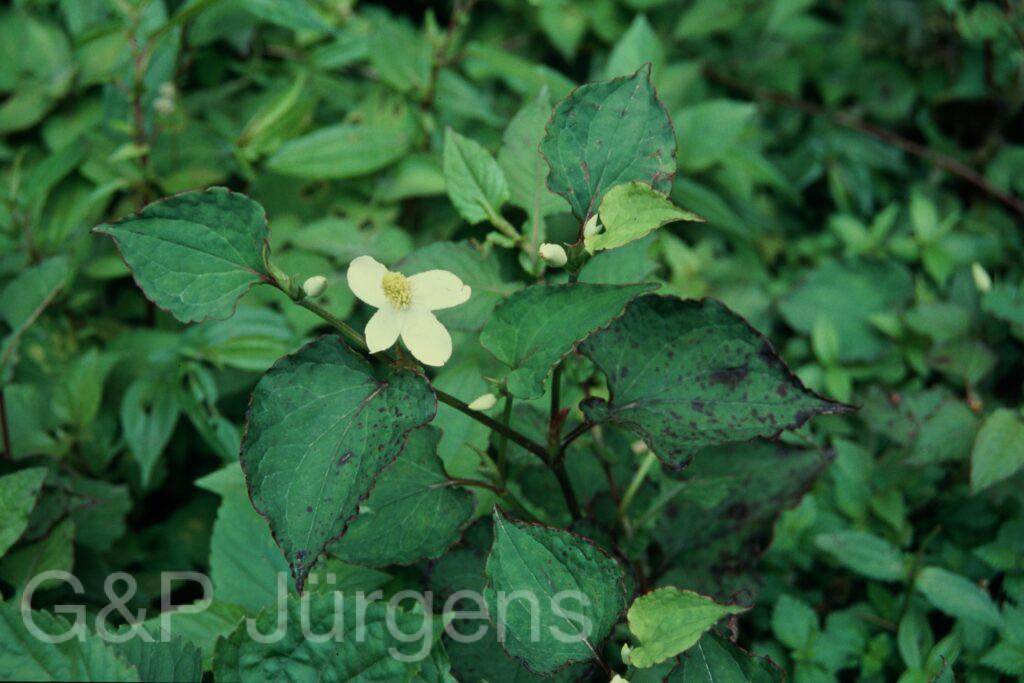
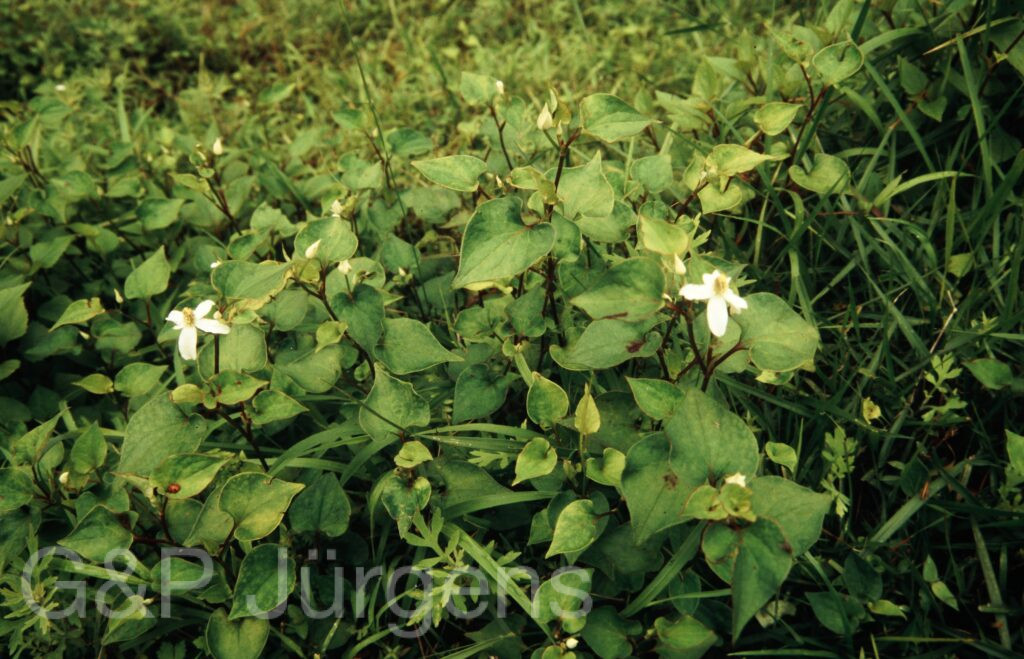
Houttuynia cordata is a widespread East Asian and Himalayan herb with a very large GBIF dataset of nearly 18000 records spanning Japan, China, Korea, Taiwan, India, Nepal, Bhutan, Vietnam and Thailand, together with numerous naturalised and cultivated occurrences in Europe and North America. It grows in moist and wet places, along streamsides, ditches, marsh margins, wet meadows and shaded forest floors, from the lowlands up to around 2500 m. The illustrated plants from the Tista valley in Sikkim/India at 1900 m and from Doroli in the Helambu region of Nepal at 1850 m, both flowering in May, are typical of its damp, shaded montane habitats in the Himalaya.
It is a rhizomatous perennial herb emitting a strong fish-like odour when bruised. The slender rhizomes creep underground, giving rise to erect, simple or sparingly branched stems. The leaves are alternate, broadly ovate-cordate with a deeply cordate base, an acuminate apex, an entire margin and palmate venation, often tinged red beneath, and the petiole base is sheathing with a membranous stipule. The minute, perianthless flowers are densely crowded on a short terminal spike that is subtended by four (occasionally more) showy, petaloid white involucral bracts, giving the whole structure the appearance of a single flower. Each tiny flower has three stamens and a one-locular ovary of fused carpels; the fruit is a small capsule with numerous seeds.
Houttuynia cordata is one of only a few genera in the small basal angiosperm family Saururaceae (order Piperales). It is widely used as a culinary herb and in traditional medicine across East Asia, and the variegated forms are popular ornamentals. It spreads vigorously by its creeping rhizomes, forming clonal colonies, and can become weedy where introduced. It is exceedingly common and of least conservation concern.
Author: Thunb. · Sources: POWO (Kew), GBIF, Flora of China Vol. 4, Flora of Bhutan Vol. 1, Flora of Nepal, Liang & Tucker Saururaceae systematic studies (monograph)