Tag:

Bhutan

Flowers of Bhutan — 1326 plant species documented across the Bhutanese Himalaya, from dense broadleaf and conifer forests to alpine scrub and meadows. Bhutan’s largely intact wilderness shelters an exceptional diversity of orchids, rhododendrons, primulas and Himalayan poppies, many of them regional endemics. Each species page includes a botanical description, distribution, habitat and flowering time, with the original photograph and its recorded altitude and locality.

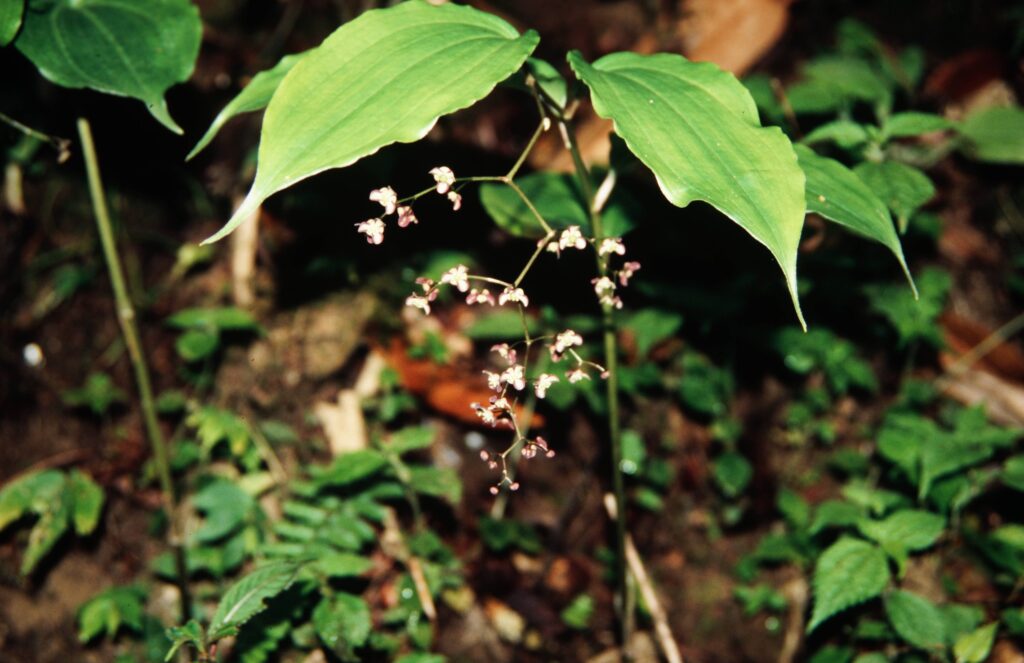
(Wall.) LaFrankie

Sikkim 2006 229 ergebnis
India West-Bengal, Ramman 2100m, May

Description

Maianthemum fuscum is a rhizomatous woodland herb of the eastern Himalaya and adjacent mountains of southwestern China, recorded by GBIF from China, India, Nepal, Myanmar, Bhutan and Vietnam across roughly 303 georeferenced occurrences. It inhabits cool, moist, shaded broadleaf and mixed forest, growing on humus-rich slopes, beneath rhododendron and oak canopy, and along streamsides in the temperate montane belt, generally between about 1,800 and 3,000 m. The photographed plant from Ramman in the Darjeeling hills of West Bengal, India, at around 2,100 m in May is representative of its pre-monsoon flowering, the inflorescences appearing as the new leafy shoots unfurl on the forest floor.

The plant arises from a slender creeping rhizome bearing an erect, often arching aerial stem with several alternate, sessile to short-petioled leaves that are ovate to ovate-lanceolate, acuminate and prominently parallel-veined. The inflorescence is a terminal raceme or narrow panicle of small flowers, each flower with a typically six-parted perianth of free or basally connate tepals that are dull purplish-brown to dark maroon, giving the species its epithet fuscum ("dusky"). There are six stamens and a superior ovary maturing into a small globose berry that ripens through mottled to red or purplish-black, containing few seeds and dispersed by birds.

Maianthemum fuscum was long placed in the genus Smilacina, and its transfer reflects the modern circumscription of Maianthemum to encompass the trimerous-flowered Asian "false Solomon's seals" alongside the dimerous North-temperate species; the family placement follows the broad Asparagaceae of APG, the group having previously been treated under Convallariaceae or Liliaceae. Within the Himalaya it is one of several closely related forest Maianthemum species whose vegetative similarity makes them dependent on floral and fruit characters for reliable identification. The species is locally common, not regarded as threatened, but like other shade-demanding rhizomatous herbs it is sensitive to canopy loss and forest disturbance.

Author: (Wall.) LaFrankie · Sources: POWO (Kew), GBIF, Flora of China Vol. 24, Flora of Bhutan Vol. 3, Flora of Nepal, Flora of Pakistan, LaFrankie's revision of Maianthemum (Smilacina) and the Convallariaceae
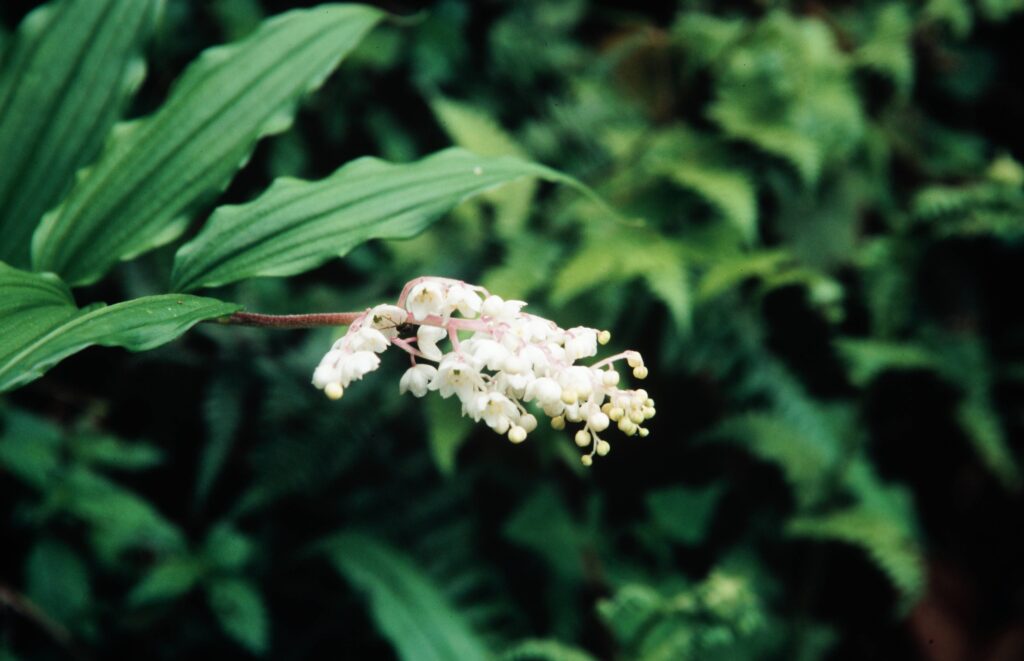
(Baker) LaFrankie

Sikkim 2006 58 ergebnis
India West-Bengal, Kalipokkri 3100m, May

Description

Maianthemum oleraceum is a robust rhizomatous herb of the eastern Himalaya and western China, recorded from China, Nepal, India, Bhutan and Myanmar, with roughly 259 documented occurrences. It is a woodland species inhabiting moist temperate and subalpine forests, shaded ravines, shrubberies and forest clearings on deep humus-rich soils, often forming loose colonies through its spreading rhizome. In the Indian eastern Himalaya it reaches the upper montane belt, exemplified by the gathering near Kalipokkri in West Bengal at about 3100 m in May, when the species comes into flower at the close of the cool season.

The plant produces stout, erect to arching leafy stems from a thickened creeping rhizome. The leaves are several, alternate, sessile or shortly petiolate, broadly ovate to ovate-lanceolate, acuminate at the apex and cordate to rounded at the base, with prominent arching venation. The inflorescence is a terminal branched panicle of numerous small flowers, each with six free, spreading, pinkish to greenish-white tepals and six stamens; the flowers are subtended by small bracts. The fruit is a globose berry, green and mottled when young, ripening through red to dark purple, containing few hard seeds.

Maianthemum, treated under Asparagaceae in modern classifications and long placed near Smilacina, comprises rhizomatous forest herbs of the northern hemisphere, of which M. oleraceum is one of the larger Asian species. The fleshy berries are dispersed by birds and small mammals, while clonal rhizome growth allows persistence in shaded understorey. The young shoots and leaves are gathered locally as a potherb, reflected in the epithet oleraceum. Common across its montane range, it is not considered threatened, though it depends on the maintenance of intact temperate forest.

Author: (Baker) LaFrankie · Sources: POWO (Kew), GBIF, Flora of China Vol. 24, Flora of Bhutan Vol. 3, Flora of Nepal, LaFrankie revision of Maianthemum (Smilacina)

(Wall.) LaFrankie

BhutanPG2011 169
Bhutan Tsochenchen, 3550m June
Nepal 99 100 ergebnis
West-Nepal South of Rara-Lake 3600m, June

Description

Maianthemum purpureum (Wall.) LaFrankie is a montane false Solomon's-seal of the Himalaya and southwestern China, with about 673 records from China, Nepal, India, Bhutan, Myanmar and Taiwan. It grows in shaded, humus-rich situations: fir and rhododendron forest, subalpine scrub, mossy stream banks and the edges of high meadows, typically in the upper temperate to subalpine belt around 3000 to 3800 m. The plants photographed at Tsochenchen in Bhutan at 3550 m and south of Rara Lake in West Nepal at 3600 m, both in June, are typical of its cool, moist, snow-influenced woodland and forest-margin habitats.

The species is an erect rhizomatous perennial arising from a creeping, somewhat fleshy rhizome. The simple, unbranched stem bears several alternate, sessile to subsessile, ovate to elliptic leaves with conspicuous parallel venation. The inflorescence is a terminal raceme or narrow panicle of small flowers; in contrast to typical white-flowered Maianthemum, the perianth here is purple to dull reddish, with six free or shortly united tepals and six stamens. The fruit is a small globose berry that ripens red to purplish-black, each containing one to few seeds.

Long placed in Smilacina (and Tovaria), the species was transferred to a broadly circumscribed Maianthemum, which subsumes those segregate genera on molecular and morphological grounds. Its purple-flowered condition is notable within the predominantly white-flowered genus. The nectariferous flowers attract small insects, and the fleshy berries are dispersed by birds. Widespread across the Sino-Himalayan region and locally common in suitable forest, M. purpureum is not considered threatened, although it depends on the persistence of undisturbed montane woodland.

Author: (Wall.) LaFrankie · Sources: POWO (Kew), GBIF, Flora of China, Flora of Bhutan, Flora of Nepal, LaFrankie's revision of Maianthemum (incl. Smilacina)

(Lindl.) Kuntze

BhutanPG2011 788 01 01
Bhutan Chele-La, 3750m July

Description

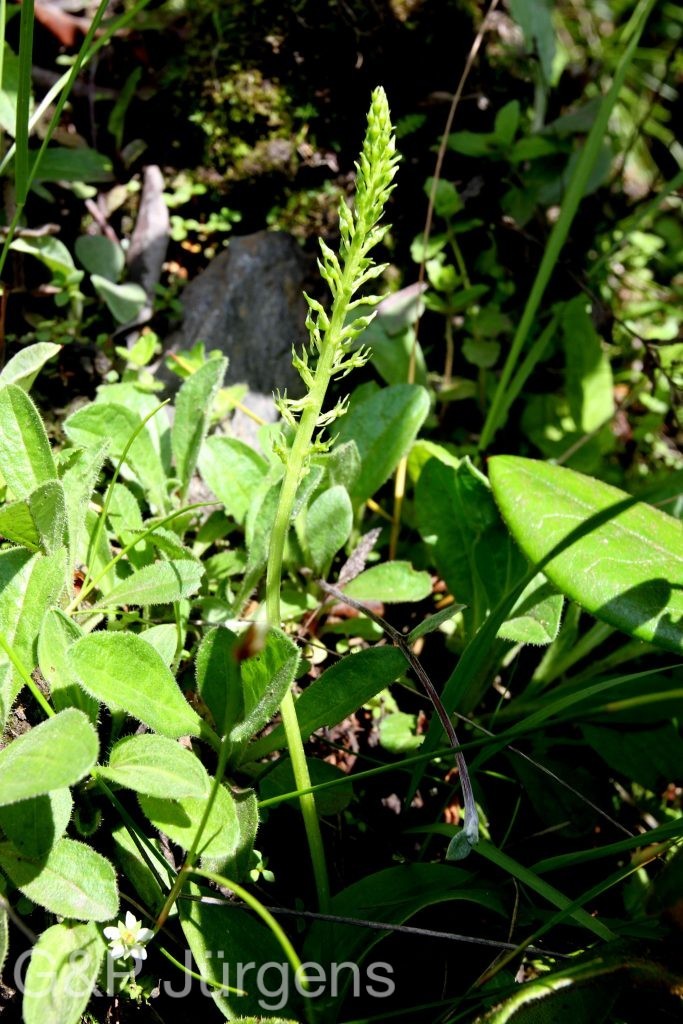
Malaxis muscifera is a small terrestrial orchid widespread through the Himalaya and adjacent China, recorded from Nepal, India, China, Bhutan, Pakistan and Myanmar, with some 237 occurrences in GBIF. It grows in moist temperate to subalpine forest and forest margins, among shaded humus, mossy banks and grassy clearings, broadly between about 2,500 and 4,000 m. The plant figured was photographed at Chele-La in western Bhutan at around 3,750 m in July, when the species flowers during the summer monsoon in the cool, damp conditions of the upper conifer and Rhododendron belt.

It is a slender, glabrous perennial herb arising from a small pseudobulb-like, fleshy stem-base. There are usually two, occasionally more, ovate to elliptic, plicate-veined leaves clasping the lower stem by their sheathing bases. The erect stem terminates in a long, dense, many-flowered raceme of minute greenish to yellowish flowers. The narrow sepals and the very slender, thread-like petals spread or reflex, giving the inflorescence its characteristic spidery aspect; the labellum is uppermost through resupination, broadly cordate-auriculate at the base and abruptly contracted to a narrow apex, embracing the short column. The fruit is a small ellipsoid capsule with numerous dust-like seeds.

Malaxis is a large, mainly tropical and warm-temperate genus, and M. muscifera, with its narrowly filiform petals, is among the most distinctive Himalayan representatives, the epithet alluding to the fly-like floral appearance. The flowers are pollinated by small insects, and germination requires mycorrhizal fungi. Frequent and locally abundant across the Himalaya, it is of low conservation concern, though, as an orchid, it is covered by the CITES Appendix II listing of the family.

Author: (Lindl.) Kuntze · Sources: POWO (Kew), GBIF, Flora of China, Flora of Bhutan, Annotated Checklist of the Flowering Plants of Nepal, Pridgeon et al. Genera Orchidacearum

Müll.Arg.

Bh09 231 P387
Bhutan Wangdi, 1650m June
Bh09 380 G601
Bhutan Wangdi, 1650m June
Sikkim 2006 255 ergebnis
India West-Bengal, Lingza 1250m, May

Description

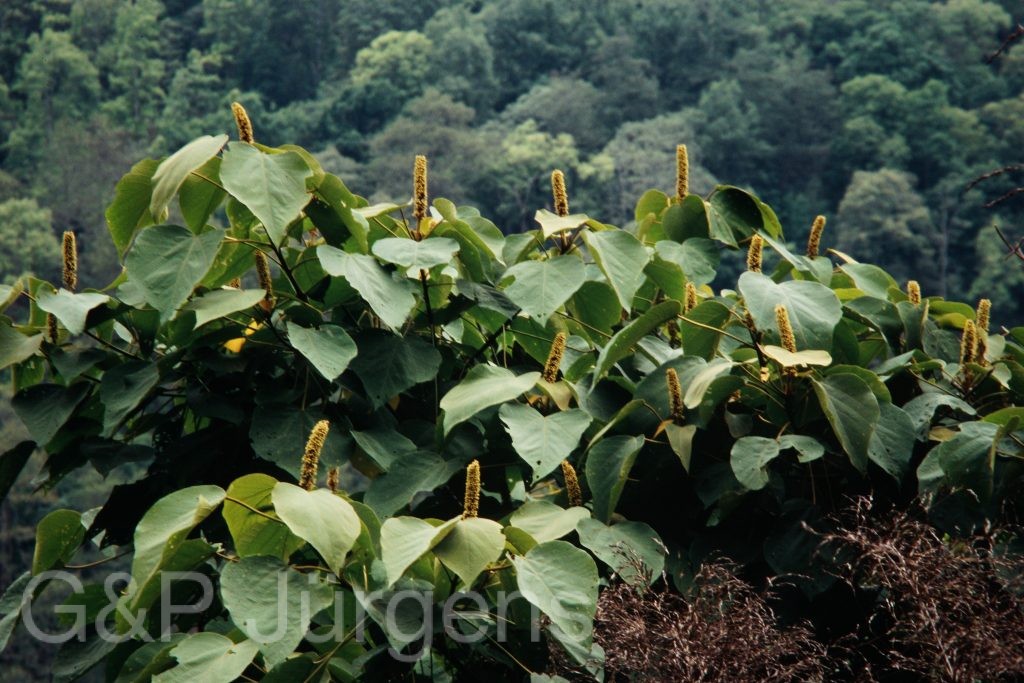
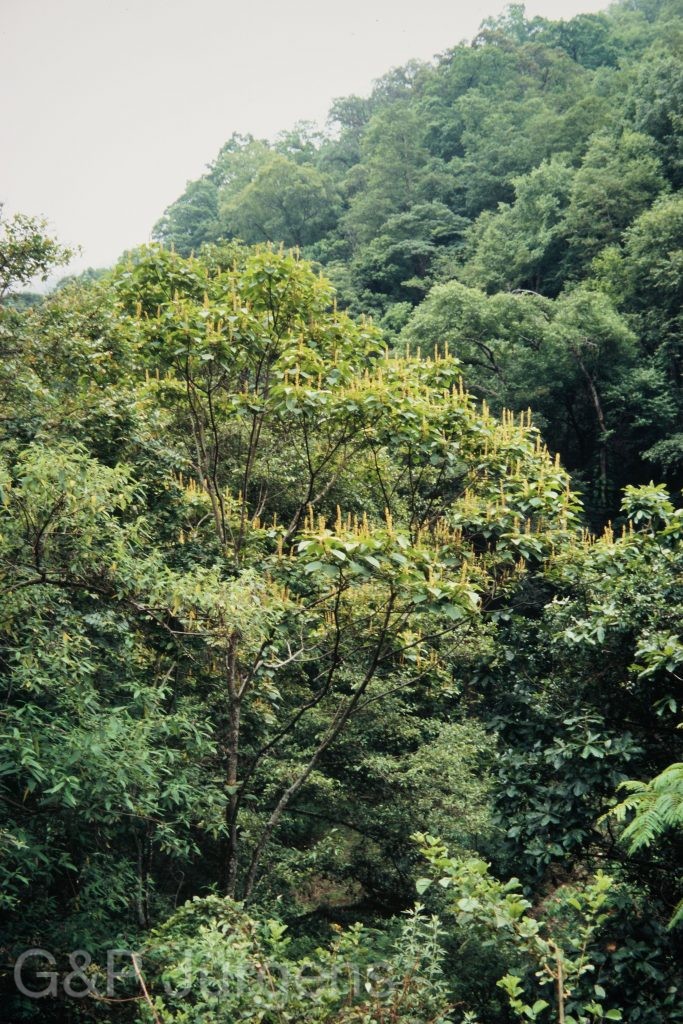
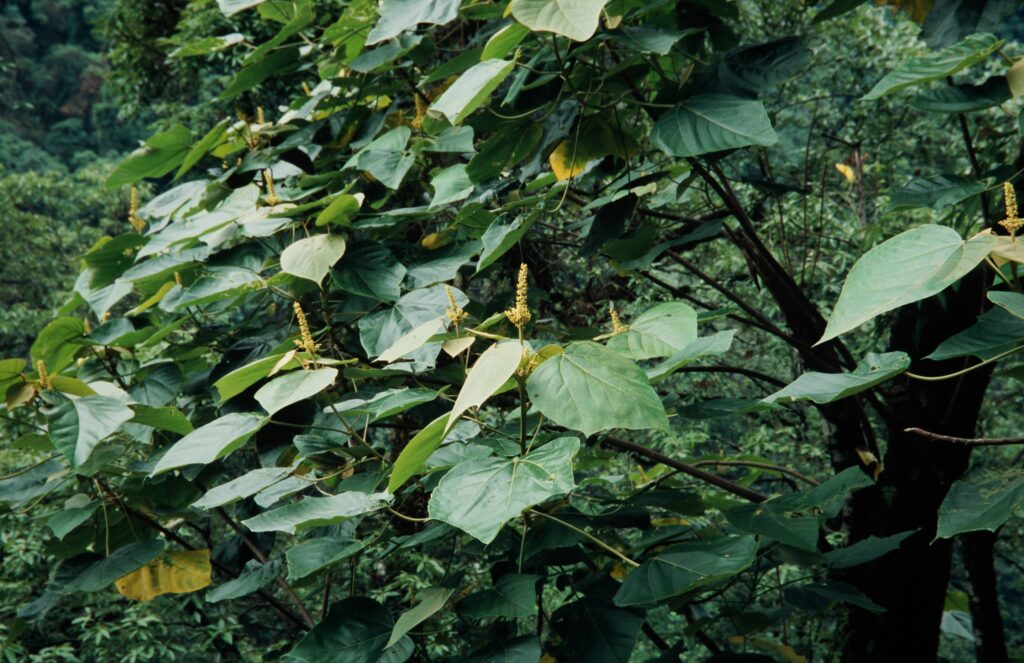
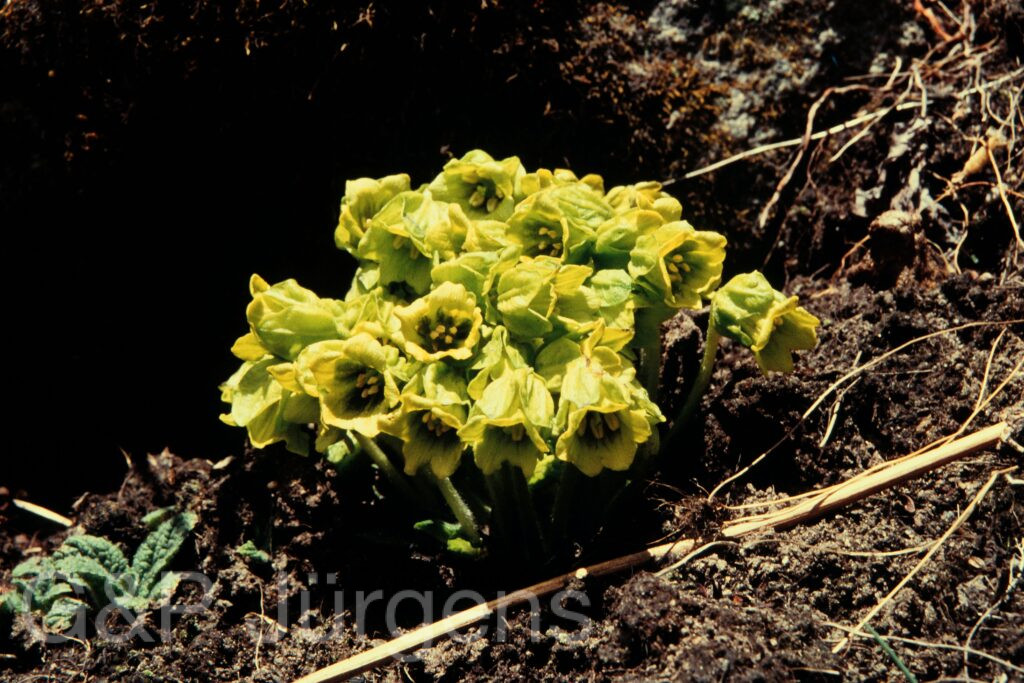
Mallotus nepalensis is a small tree or shrub of the subtropical to lower-temperate Himalaya and its eastern extensions, documented by GBIF (972 occurrences) across China, Nepal, India, Bhutan, Myanmar, Taiwan, Vietnam, Japan and Pakistan. It grows in secondary forest, scrub, forest edges and along streams and clearings, characteristically as a light-demanding component of disturbed and successional vegetation, mostly between about 800 and 2000 m. The collections from Wangdi in Bhutan at 1650 m in June and from Lingza in West Bengal at 1250 m in May illustrate its montane-subtropical distribution along the southern Himalayan front.

The plant is a deciduous shrub or small tree whose young branchlets, petioles and inflorescences are clothed in stellate hairs and reddish, granular peltate glands typical of the genus. The leaves are alternate, long-petiolate, broadly ovate to deltoid, often with two glands at the blade base and a pair of basal lateral nerves, the lower surface pale and gland-dotted. The plant is dioecious; minute apetalous flowers are borne in slender terminal and axillary racemes or panicles, the staminate with numerous stamens, the pistillate with a softly spiny ovary. The fruit is a globose, three-lobed capsule beset with soft processes and covered in red glandular powder.

Mallotus belongs to subfamily Acalyphoideae of the Euphorbiaceae and is characterised by its stellate indumentum and resinous peltate glands, the latter yielding the dye-like powder for which several species are known. Ecologically it behaves as a pioneer, regenerating freely in gaps and along disturbed margins, its capsular fruit and small seeds aiding rapid colonisation. The species is common and of no conservation concern.

Author: Müll.Arg. · Sources: POWO (Kew), GBIF, Flora of China Vol. 11, Flora of Bhutan Vol. 1, Flora of Nepal, Airy Shaw Euphorbiaceae of the Indian subcontinent

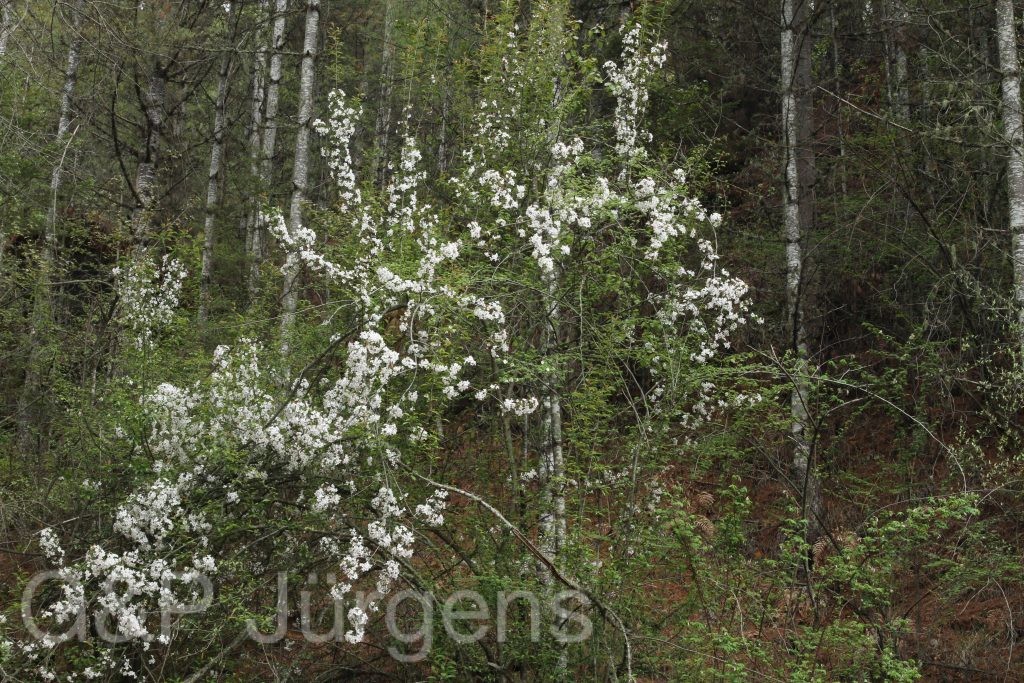
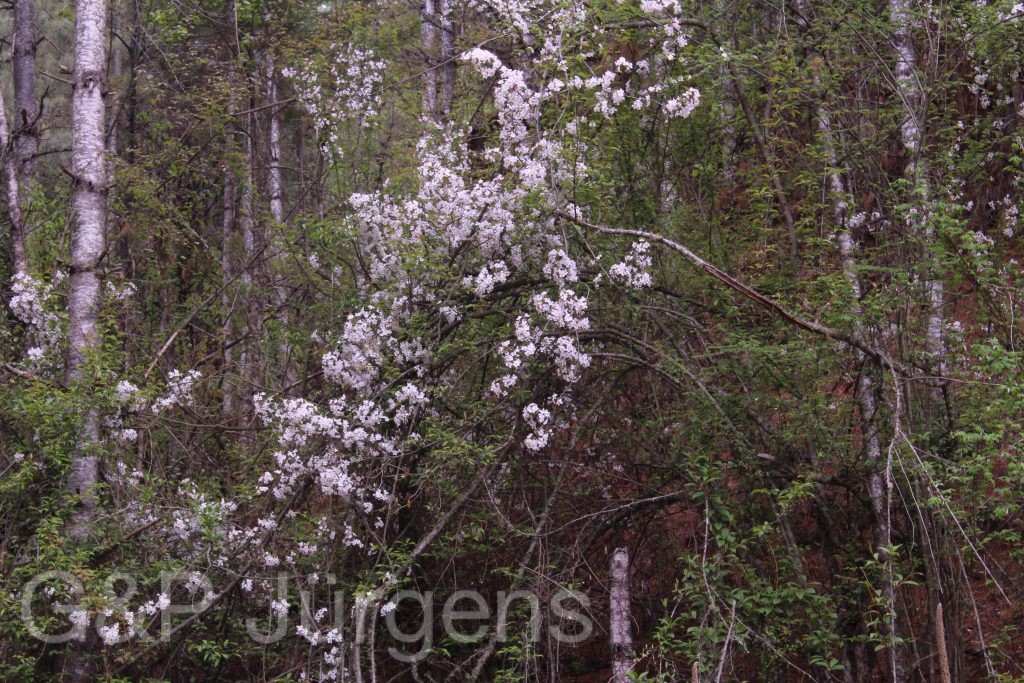
Malus baccata

by G & P Jürgens

(L.) Borkh.

Bhutan2014 407
Bhutan Jakar 2400m, May
Bhutan2014 408
Bhutan Jakar 2400m, May

Description

Malus baccata, the Siberian crab apple, is among the most broadly distributed wild apples, ranging across temperate and boreal East Asia from the Russian Far East and Siberia through Mongolia, northern China, the Korean Peninsula and Japan, and extending into the Himalaya in Nepal, India, Bhutan and Afghanistan; the species is widely cultivated and naturalised in Europe and North America, accounting for records from Great Britain, Germany, Sweden, Canada and the United States, with over 12,000 GBIF occurrences. In the eastern Himalaya it grows in temperate broad-leaved and mixed forest, margins, riverine thickets and open hillsides, as photographed near Jakar in central Bhutan at around 2400 m in May, when the trees are in full flower.

It is a deciduous tree reaching 10-14 m, with a rounded crown and reddish-brown, glabrous young shoots. The leaves are alternate, ovate to elliptic, 3-8 cm long, acuminate, finely serrate, glabrous or nearly so at maturity, on slender petioles. The flowers, borne in umbel-like corymbs of 4-6, are white, 3-3.5 cm across, with five rounded petals and styles connate and pubescent at the base. The fruit is a small globose pome 8-10 mm in diameter, red or yellow, lacking a persistent calyx, on a long slender pedicel, hanging conspicuously into autumn.

Malus baccata is the type of a polymorphic complex and is divided into several varieties and intergrading races across its range; Himalayan material has at times been segregated. As a cold-hardy, disease-resistant species it is of considerable importance in apple breeding and as a rootstock, and its abundant fruit is an autumn food resource for birds and mammals. It is of least concern conservation-wise, being common and widespread.

Author: (L.) Borkh. · Sources: POWO (Kew), GBIF, Flora of China, Flora of Bhutan, Flora of British India, A Monograph of the Genus Malus (Rehder)

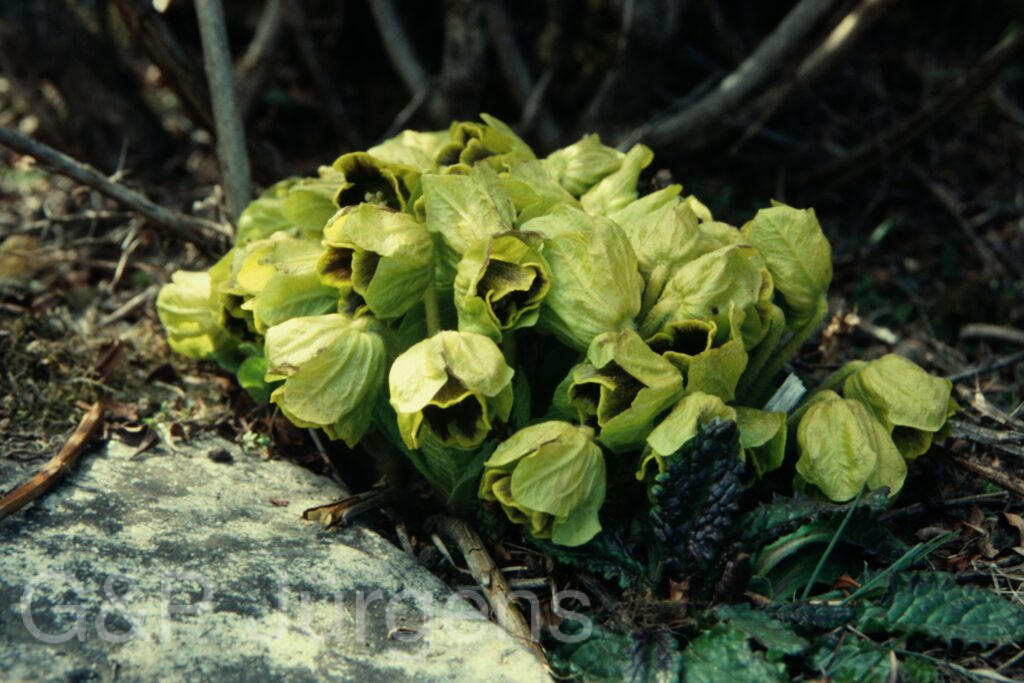
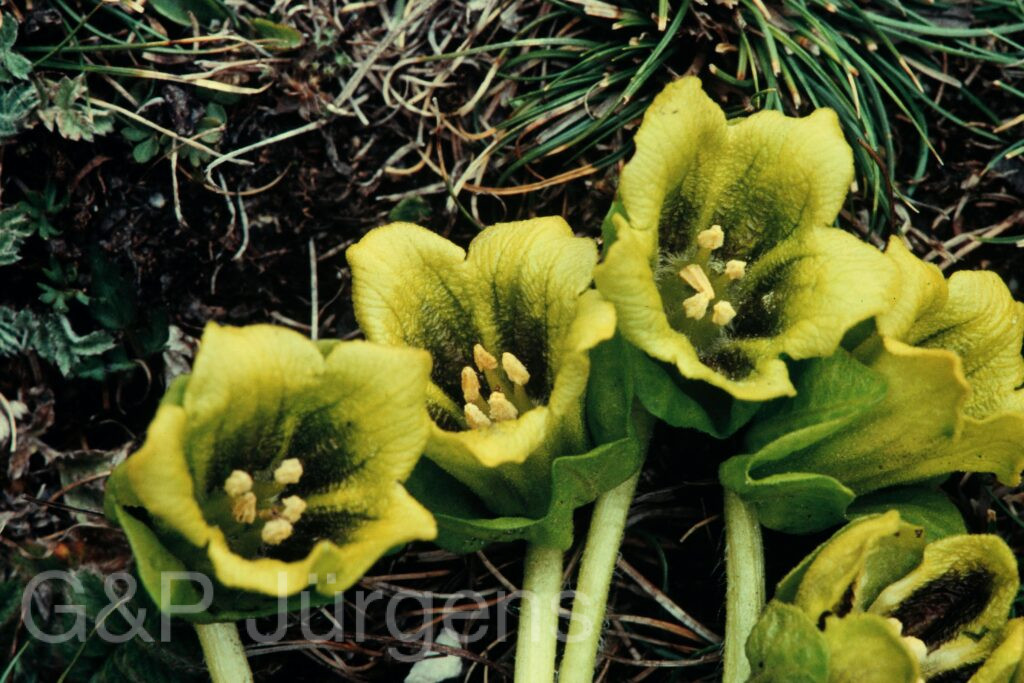
C.B.Clarke

Sikkim2004 215 G367
Sikkim/India Gometang 3900m May
Nepal 97 203 P415
Nepal Thudam 3850m April
Nepal 97 202 P414
Nepal Thudam 3850m April

Description

Mandragora caulescens is a stout alpine perennial of the high Himalaya and Tibetan borderlands, distributed across southwestern China (Xizang, Yunnan, Sichuan), northern India, Nepal, Bhutan and Myanmar; GBIF documents some 540 collections, indicating it is locally frequent within its high-elevation range. It occupies open alpine meadows, grassy slopes, scrub margins and stony pasture, generally between about 2500 and 4500 m, often in moist, well-drained turf. The photographed plants were recorded at Gometang on the Sikkim/India border at about 3900 m in May and at Thudam in eastern Nepal near 3850 m in April, typical of this snowmelt-associated meadow species.

Unlike the stemless Mediterranean mandrakes, this species is caulescent, developing a short, leafy aerial stem from a large, fleshy, often forked taproot. The leaves are clustered, oblong to oblanceolate, tapering to the base, entire or sinuate, and somewhat fleshy. The flowers are solitary on long, decurved or nodding peduncles among the leaves; the corolla is broadly campanulate, dull purple to brownish-violet or rarely greenish, five-lobed, subtended by a deeply lobed persistent calyx. The fruit is a globose, fleshy berry seated in the enlarged calyx.

The placement of Mandragora has long been debated; it is treated here in Solanaceae, in which it is conventionally classified, though some authors segregate it. M. caulescens is the principal Asian representative of the genus and, like its western relatives, contains tropane alkaloids and features in regional ethnomedicine. Widespread across the high Sino-Himalayan ranges, it is not regarded as globally threatened.

Author: C.B.Clarke · Sources: POWO (Kew), GBIF, Flora of China Vol. 17, Flora of Bhutan Vol. 2, Flora of Nepal, Flora of Pakistan, Ungricht et al. revision of the genus Mandragora

(Jacqu. ex Benth.) Hedge

Nepal 99 790 ergebnis
West-Nepal Baga-La-Phedi 4460m, July

Description

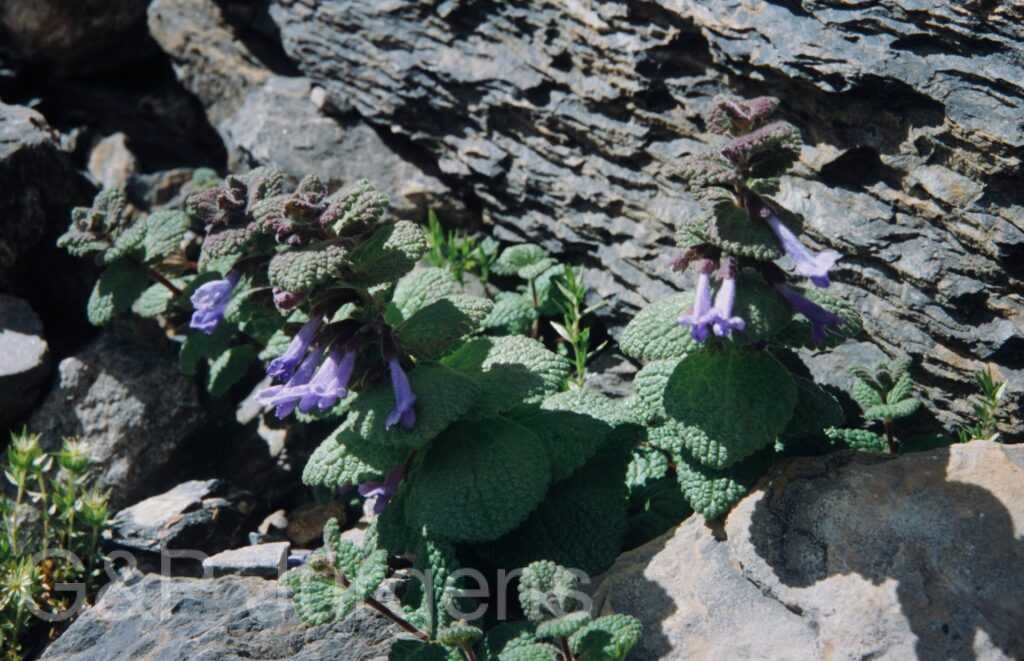
Marmoritis nivalis is a high-alpine herb of the Himalaya, recorded from India, Nepal, Bhutan and China; with only about 36 georeferenced records it is a sparsely collected, narrowly montane species. As the epithet "nivalis" indicates, it is a plant of the snow line, growing on open screes, stony alpine turf, moraine and rocky slopes typically between 4000 and 5000 m. The photographed individual from Baga-La-Phedi in West Nepal at 4460 m, flowering in July, exemplifies its occurrence in the cushion-and-scree zone above the timberline, where the short summer growing season coincides with the monsoon.

It is a low, mat-forming or tufted perennial herb arising from a branched woody caudex and slender rhizome, the stems short, ascending and grey-pubescent. The leaves are small, opposite, ovate to orbicular, crenate, thick and densely hairy, an adaptation to cold, exposed, high-radiation habitats. The flowers are crowded in compact terminal heads subtended by leafy bracts; each corolla is bilabiate, pale violet to bluish, with a notched upper lip and a spreading three-lobed lower lip. The calyx is tubular and conspicuously veined, and the four stamens lie under the upper lip. The fruit consists of four small nutlets enclosed in the persistent calyx.

This taxon is treated by GBIF as a synonym, with Marmoritis nivalis itself as the accepted name (combination by Hedge, based on Bentham's earlier name in Dracocephalum/Nepeta). Marmoritis is a small Sino-Himalayan genus segregated from the Nepeta alliance of the Lamiaceae. The cushion habit and dense indumentum are classic high-alpine adaptations. Pollination is by hardy bumblebees active in the brief alpine summer. Owing to its restricted, high-elevation range it warrants monitoring, though no formal threat status is established.

Author: (Jacqu. ex Benth.) Hedge · Sources: POWO (Kew), GBIF, Flora of Nepal, Flora of China, Flora of Bhutan, Hedge's treatment of Himalayan Nepeteae (Lamiaceae)

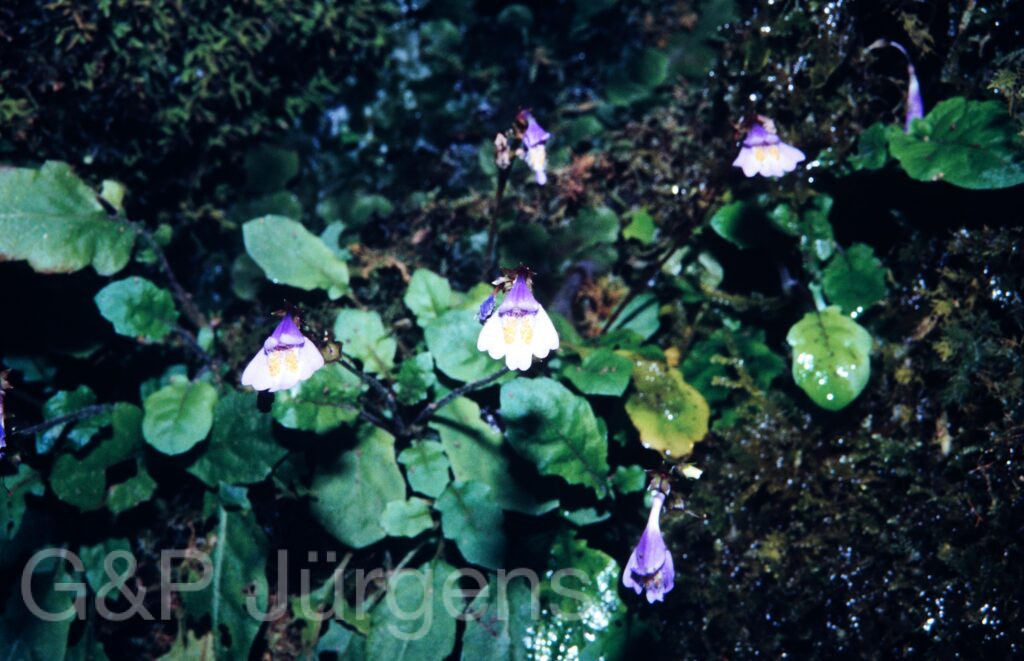
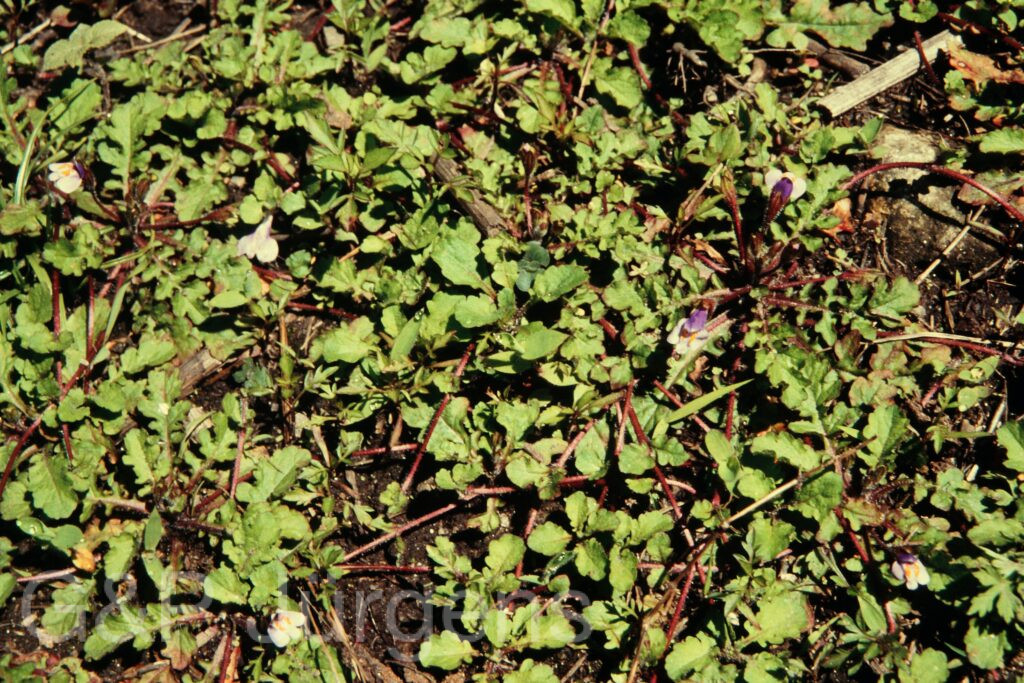
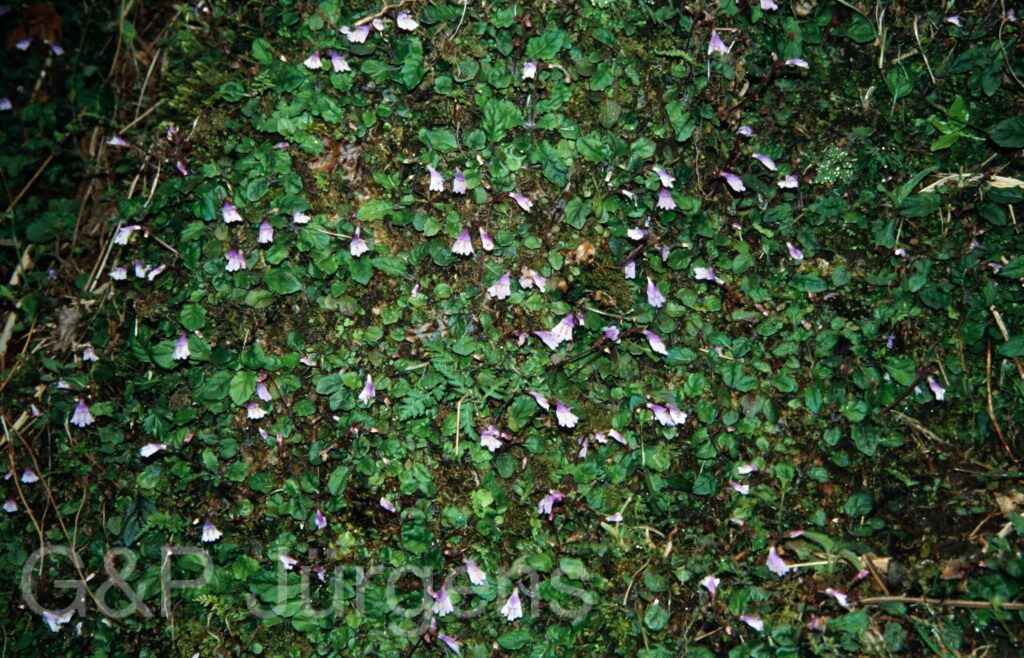
Mazus dentatus

by GP Jürgens

Wall. ex Benth.

Sikkim2004 11 P17
Sikkim West-Bengal, Sambon 1800m April
Nepal 97 97 P160
Nepal Dongen 2360m April
Nepal1992 174 P255 ergebnis
Nepal Mamanke 1800m March 

Description

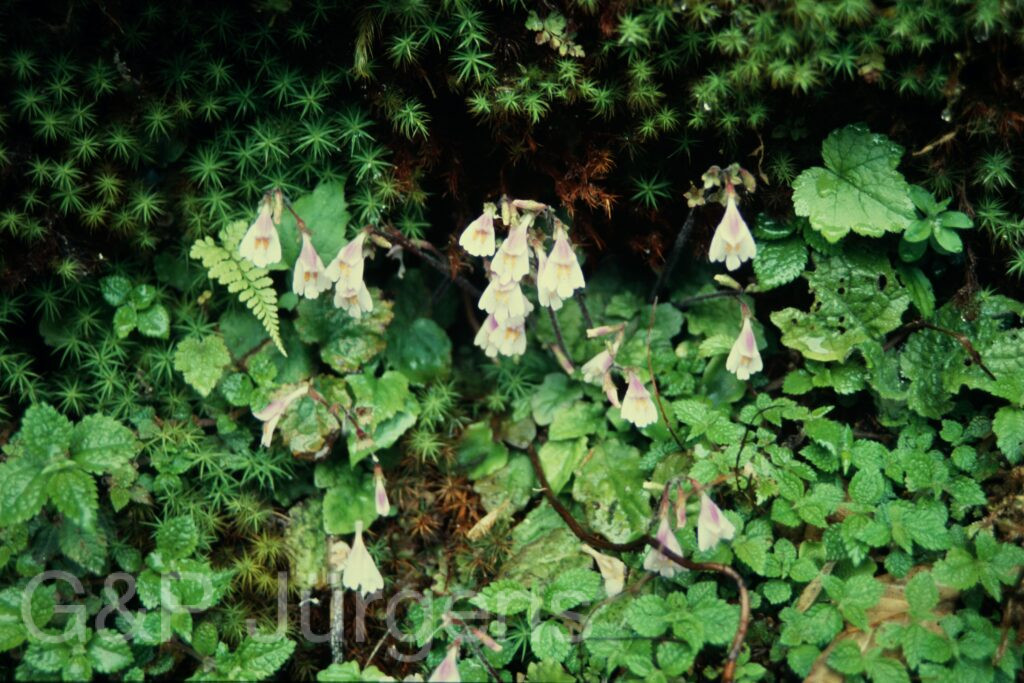
Mazus dentatus is a small herbaceous plant of the eastern Himalaya, recorded from northern India (Sikkim, Darjeeling), Nepal and Bhutan; GBIF holds only about 48 records, consistent with a restricted, narrow distribution. It grows in moist, shaded or semi-open habitats such as damp banks, grassy slopes, terraced field margins, ditches and stream sides at lower to middle elevations, broadly between about 1500 and 2500 m. The photographed material came from Sambon in the Sikkim/West Bengal hills at around 1800 m in April, from Dongen in Nepal near 2360 m in April and from Mamanke at about 1800 m in March, the early-spring flowering typical of this moisture-loving herb.

The plant is a low, soft, more or less hairy annual or short-lived perennial with slender ascending or decumbent stems. The leaves are mostly in a basal rosette and opposite below, obovate to spathulate, narrowed to a winged petiole, with a coarsely toothed (dentate) margin that gives the species its epithet. The flowers are borne in lax terminal racemes; the corolla is strongly two-lipped, pale violet to bluish, the short upper lip two-lobed and the larger lower lip three-lobed and marked with yellow and darker spots on a raised palate. The fruit is a small capsule enclosed in the persistent calyx.

Mazus, long placed in Scrophulariaceae and later in its own family Mazaceae, is treated here in Phrymaceae following the broad circumscription adopted in several recent floras. The genus is distinguished by its palate-bearing, bilabiate corolla and rosulate habit. M. dentatus is a localised eastern Himalayan plant of disturbed, moist ground; though not formally assessed, its limited range warrants attention.

Author: Wall. ex Benth. · Sources: POWO (Kew), GBIF, Flora of China Vol. 18, Flora of Bhutan Vol. 2, Flora of Nepal, Flora of Pakistan, Bonati revision of Asian Mazus

D. Don

Nepal 97 273 P558
Nepal Bagong-Khola 2650m April
Nepal 2001 86 ergebnis ergebnis
East-Nepal Gupka Pokhari 2920m, April

Description

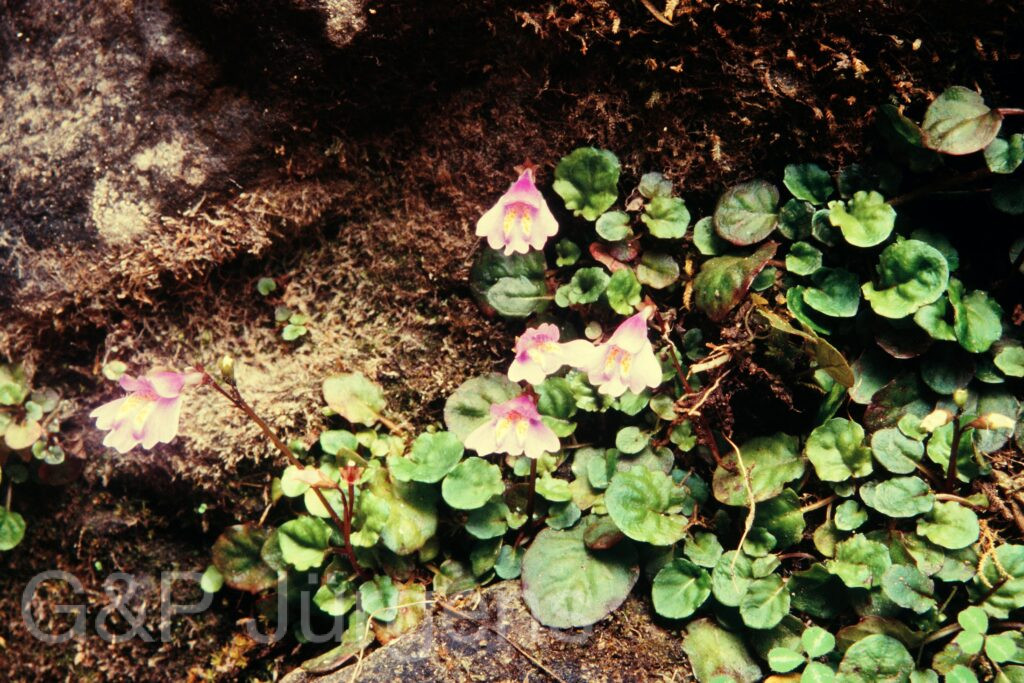
Mazus surculosus D.Don is a small, creeping perennial herb of moist temperate habitats in the Himalaya and adjacent mountains. GBIF records it from India, Nepal, China, Bhutan and Pakistan, with some 230 occurrences, indicating a Sino-Himalayan distribution. It grows on damp, shaded ground — streamsides, wet banks, mossy turf and the margins of paths and forest clearings — typically between about 2,000 and 3,200 m. The illustrated material is from central Nepal at Bagong-Khola, 2,650 m, and from East Nepal at Gupka Pokhari, 2,920 m, both flowering in April, in keeping with its early-spring phenology.

The plant is mat-forming, spreading by slender, rooting stolons or surculose runners (whence surculosus), from which arise short ascending flowering shoots. The leaves are mostly in a basal rosette, obovate to spathulate, crenate-toothed, narrowed to a winged petiole, with a few smaller opposite leaves on the stem. The flowers are borne in lax, few-flowered racemes; the corolla is strongly bilabiate, blue-violet to purple, the short upper lip two-lobed and the larger lower lip three-lobed and marked with white and yellow palatal ridges spotted with darker colour. The fruit is a small, rounded, loculicidal capsule enclosed by the persistent calyx, releasing numerous minute seeds.

Mazus, formerly placed in Scrophulariaceae, is now referred to Phrymaceae (or the segregate Mazaceae) on molecular grounds, and the input family Phrymaceae reflects this modern placement. The genus is centred in temperate and subtropical Asia. As a widespread, weedy creeper of damp open ground, M. surculosus is common and not of conservation concern.

Author: D. Don · Sources: POWO (Kew), GBIF, Flora of China Vol. 18, Flora of Bhutan Vol. 2, Flora of Nepal, Beardsley & Olmstead: Redefining Phrymaceae (American Journal of Botany)