Tag:

Bhutan

Flowers of Bhutan — 1326 plant species documented across the Bhutanese Himalaya, from dense broadleaf and conifer forests to alpine scrub and meadows. Bhutan’s largely intact wilderness shelters an exceptional diversity of orchids, rhododendrons, primulas and Himalayan poppies, many of them regional endemics. Each species page includes a botanical description, distribution, habitat and flowering time, with the original photograph and its recorded altitude and locality.

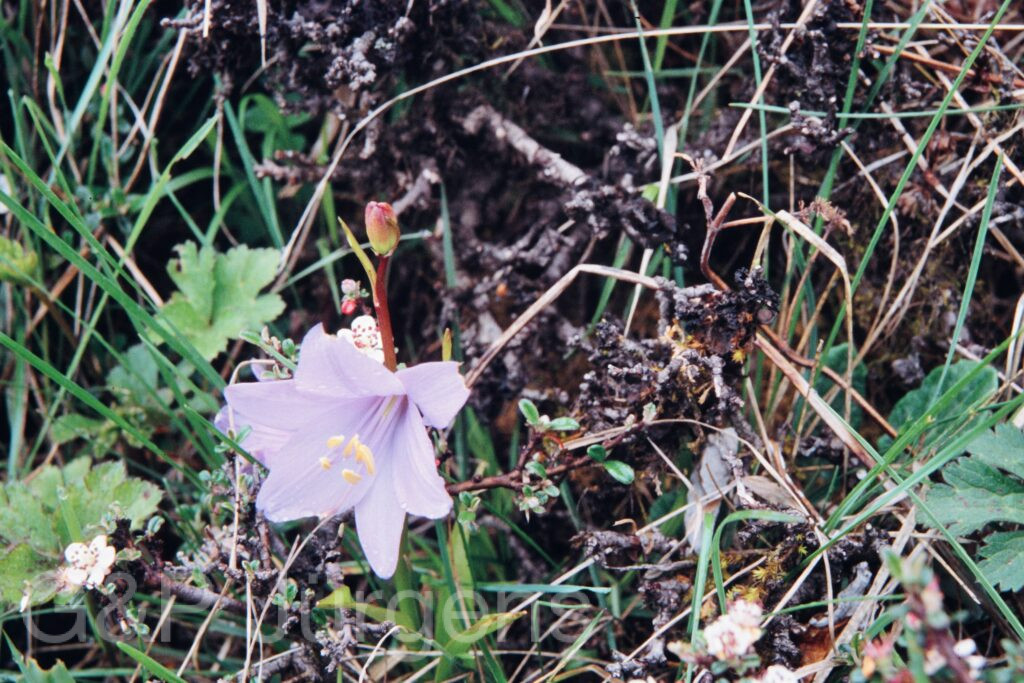
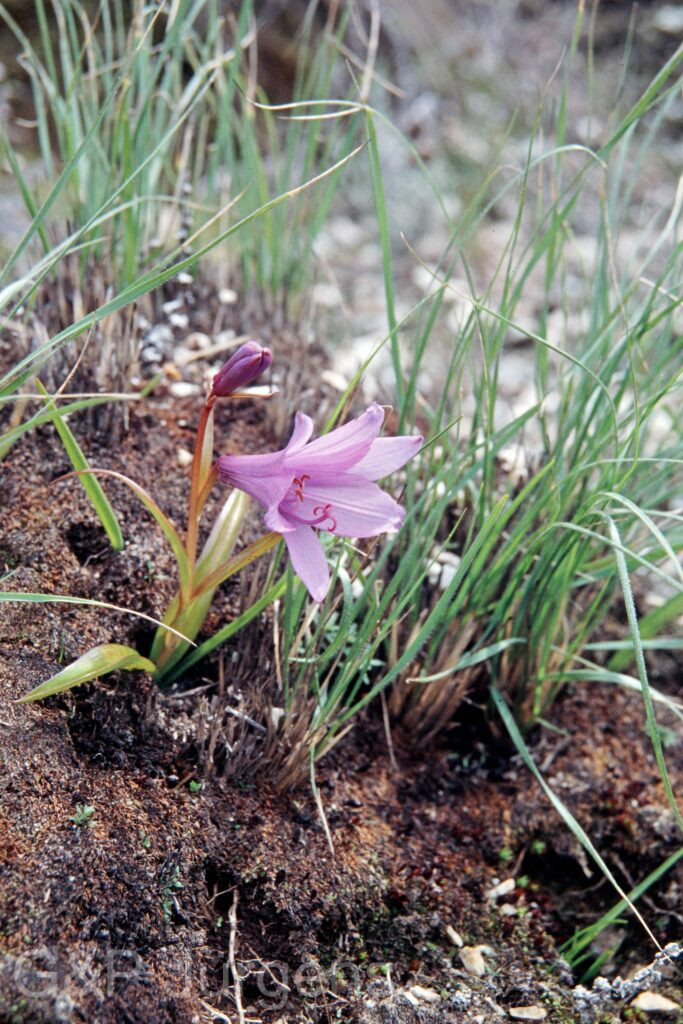
Boiss.

BhutanPG2011 710 01 01 2
Bhutan Pele-La, 2900m July
Nepal 99 31 ergebnis
West-Nepal Chere 2850m June
Nepal 99 32 ergebnis
West-Nepal Chere 2850m June
Nepal 99 379 ergebnis
West-Nepal Chere 2850m June

Description

Notholirion macrophyllum is a Sino-Himalayan bulbous lily ranging through Nepal, Bhutan, northern India and south-western China, with GBIF documenting roughly 189 occurrences across this arc. It favours cool, humid subalpine to lower alpine habitats, occurring on open forest margins, shrubby slopes, grassy banks and moist meadows, often beneath Rhododendron and conifer cover on humus-rich soils. The collections cited from Bhutan at Pele-La around 2900 m in July and western Nepal at Chere near 2850 m in June illustrate its characteristic mid-montane elevation and its phenology, flowering during the early to mid monsoon when ground moisture is abundant.

The plant grows from a small ovoid bulb whose outer scales decay to leave numerous bulblets at the base, a feature typical of the genus and important for vegetative spread. The flowering stem is slender and erect, bearing linear-lanceolate radical leaves and reduced bract-like cauline leaves. The inflorescence is a lax few-flowered raceme of nodding, broadly funnel-shaped flowers; the six tepals are rose-pink to pale lilac or mauve, oblanceolate, spreading at the tips and often darker-veined. Six stamens with versatile anthers surround a slender style ending in a three-lobed stigma. The superior ovary matures into a three-valved loculicidal capsule releasing flat, winged, wind-dispersed seeds.

Notholirion, described in its species by Boissier among others, is a small genus of four to five species allied to Lilium and Fritillaria but distinguished by its monocarpic main bulb that dies after flowering, persisting through offset bulblets. N. macrophyllum is the smallest-flowered member and the most widespread in the central Himalaya. Its reliance on undisturbed subalpine vegetation makes it susceptible to grazing, trampling and forest disturbance, although it remains locally frequent and is sometimes cultivated by enthusiasts of Himalayan bulbs.

Author: Boiss. · Sources: POWO (Kew), GBIF, Flora of Bhutan, Flora of China, Stainton Flowers of the Himalaya, Sealy revision of Notholirion
Griff.

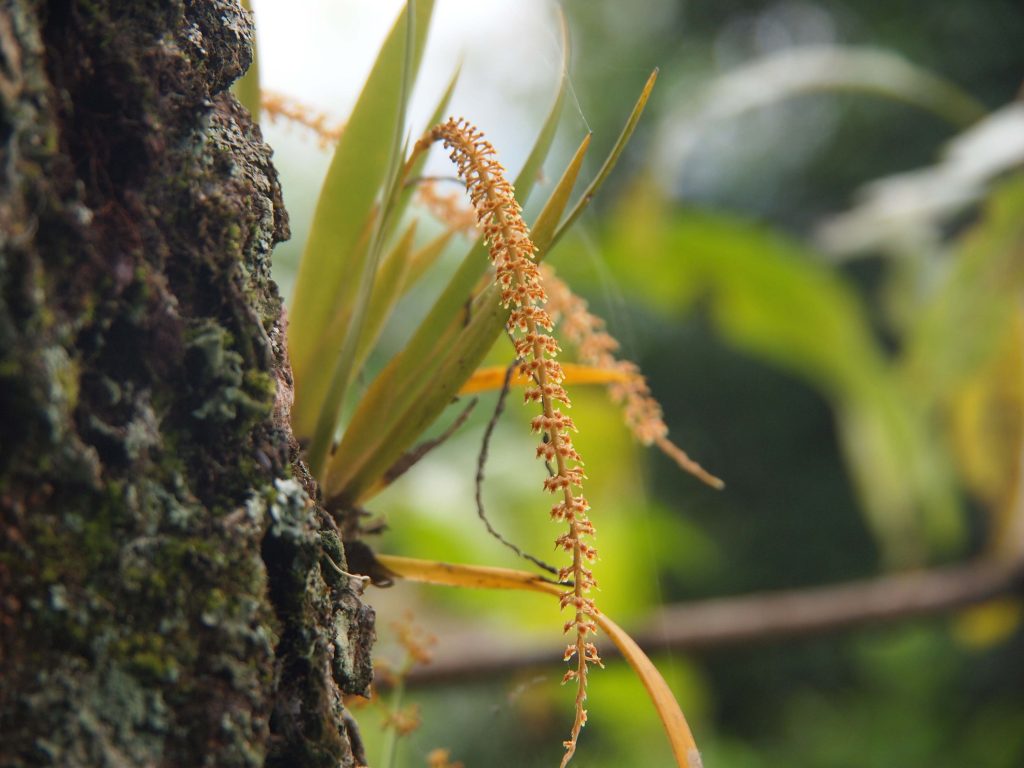
Bhutan2012 814 Kopie
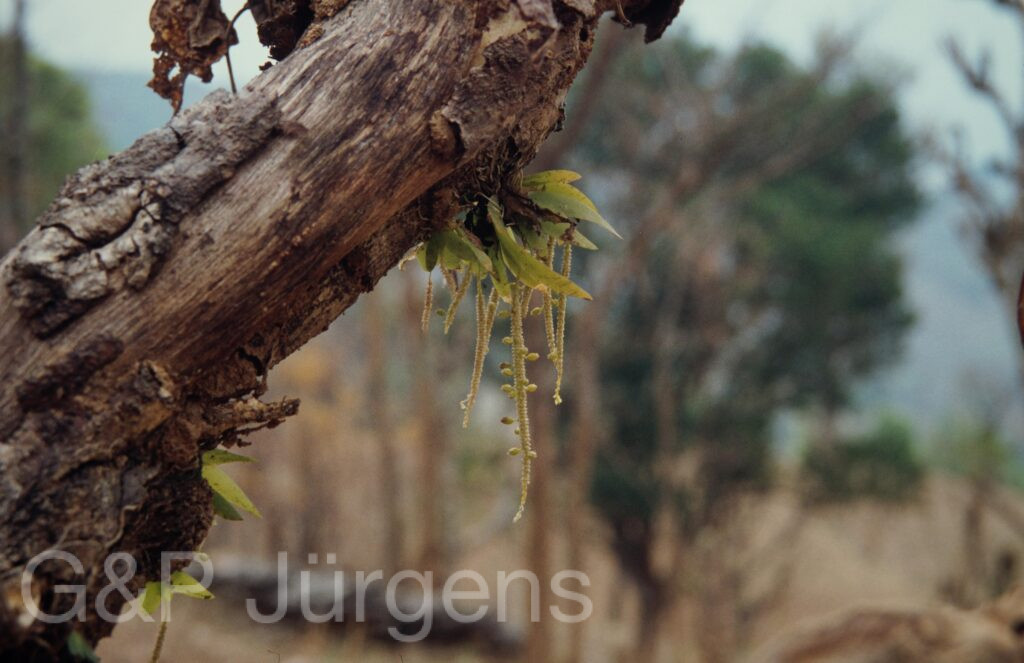
Bhutan Zemgang 2000m, October
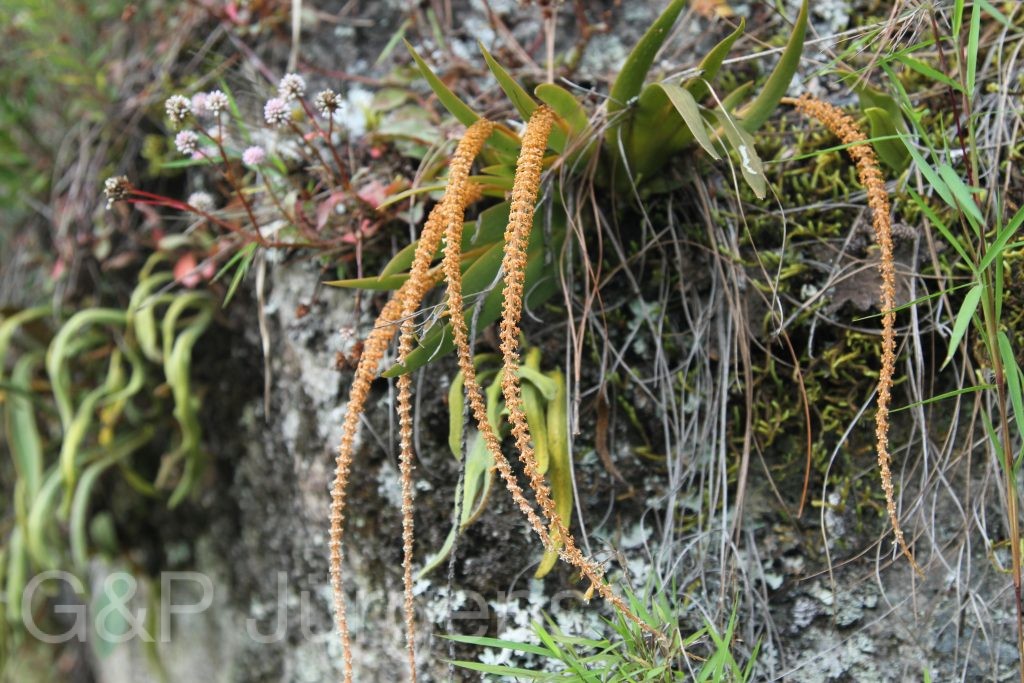
Bhutan2012 1146
Bhutan Tashiyangtse 1500m, October

Description

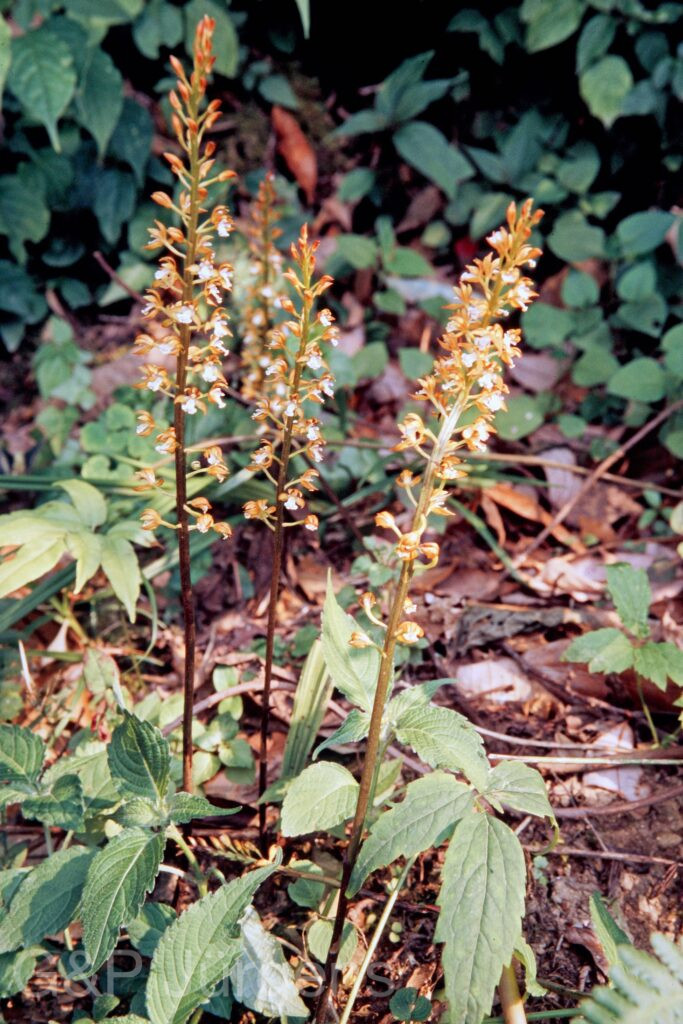
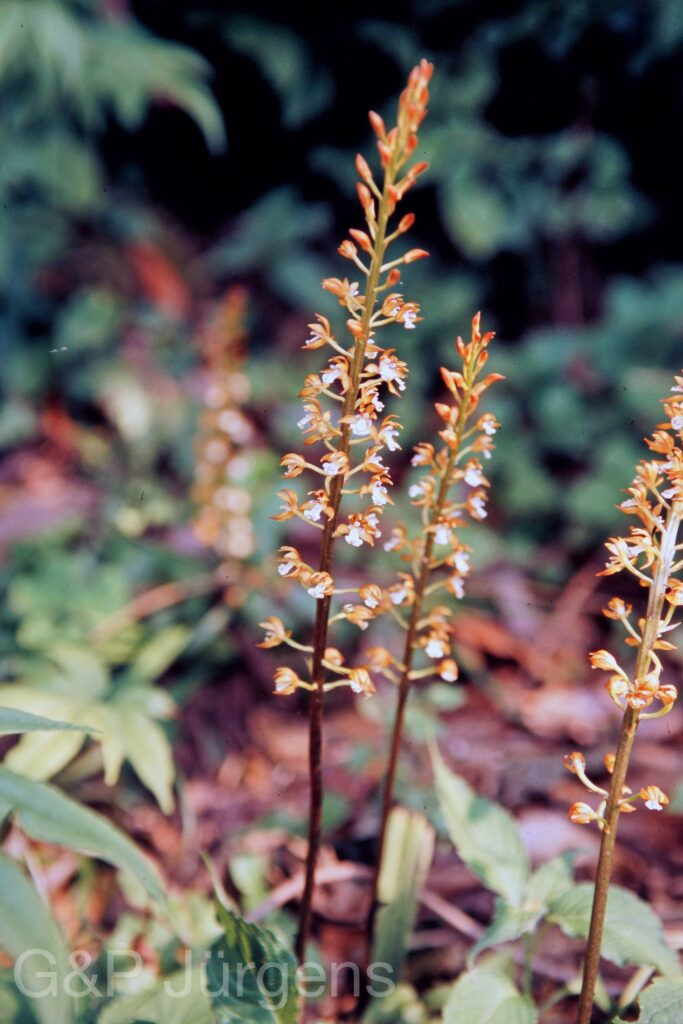
Oberonia acaulis is a small epiphytic orchid widespread across tropical and subtropical Asia, recorded from India, Nepal, Bhutan, China, Myanmar, Bangladesh, Thailand, Vietnam and beyond, with about 198 GBIF occurrences. It grows in warm, humid broad-leaved and subtropical forest, perched on tree trunks and branches in shaded, moist situations from the lowlands into the lower montane zone. The images document it in Bhutan at Zemgang around 2000 m and at Tashiyangtse near 1500 m, both in October, when the minute flowers are borne in dense spikes among forest epiphyte communities.

It is a tufted, dwarf epiphyte lacking pseudobulbs, with a short stem bearing a fan of equitant, laterally flattened (iris-like), fleshy leaves arranged in two ranks. From the centre of the fan arises a slender, erect to arching scape terminating in a long, densely many-flowered cylindrical raceme. The flowers are extremely small, numerous, yellowish to orange-brown, arranged in whorls; the labellum is the most conspicuous part, typically three-lobed with a divided or toothed apex, distinguishing the species within the genus. The fruit is a tiny ellipsoid capsule.

Oberonia is a large pantropical genus of "button orchids" notable for the diminutive size and great number of their flowers, which complicates field identification and rests heavily on the structure of the lip. The minute flowers are thought to be pollinated by small flies or midges. Like all orchids the genus is listed on CITES Appendix II; O. acaulis is widespread and common across its broad range and is not considered threatened.

Author: Griff. · Sources: POWO (Kew), GBIF, Flora of China, Flora of Bhutan, Flora of British India, Genera Orchidacearum (Vol. 4 Epidendroideae)

King & Pantl.

Nepal 1994 27 ergebnis
Ost-Nepal Kandbari 600m April

Description

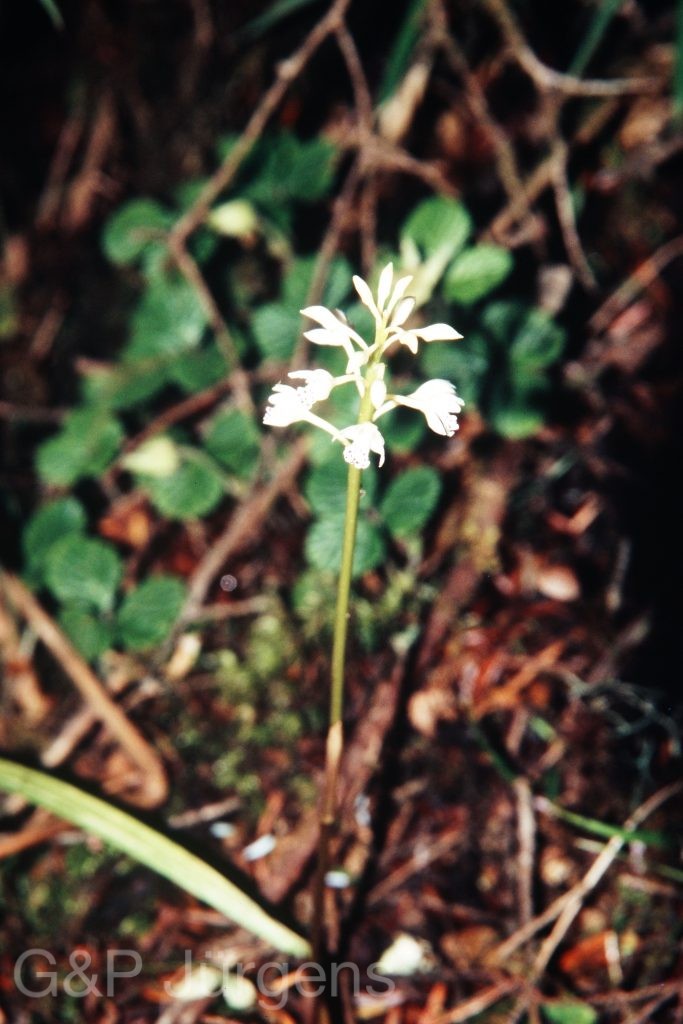
Oberonia falcata is a small epiphytic orchid ranging through the lowland and submontane forests of the eastern Himalaya and Southeast Asia, recorded from India, Nepal, Bhutan, Myanmar (implied regionally), Thailand, Cambodia, Vietnam, Taiwan and Malaysia, with a modest 67 occurrences in GBIF. It grows on the trunks and branches of trees in warm, humid evergreen and semi-evergreen forest, generally at low to moderate elevations. The illustrated plant was collected in eastern Nepal near Kandbari (Khandbari) at about 600 m in April, a typically low, frost-free station consistent with the genus's preference for sheltered, shaded humid forest.

Like other Oberonia, the species is a tufted, stemless to short-stemmed epiphyte with a fan of distichous, laterally flattened (equitant), fleshy leaves that are falcate (sickle-shaped), as the epithet records. From the centre of the leaf-fan arises a slender erect to arching inflorescence densely covered with minute flowers arranged in whorls along the rachis. The individual flowers are tiny and inconspicuous, orange to brownish, with a deeply lobed lip characteristic of the genus; the column is very short. The fruit is a small ellipsoid capsule releasing dust-fine seeds.

Oberonia is a large pantropical Old World genus distinguished by its iris-like flattened leaf-fans and miniature whorled flowers, and species delimitation rests largely on lip morphology. As an epiphyte dependent on undisturbed humid forest canopy, O. falcata is vulnerable to deforestation and the harvesting of host trees across its range. Its minute, scentless flowers are thought to be pollinated by small insects, and like nearly all orchids it relies on mycorrhizal fungi for seed germination and establishment.

Author: King & Pantl. · Sources: POWO (Kew), GBIF, Flora of Bhutan, Orchids of Nepal, Genera Orchidacearum (Oberonia)

Lindl.

BhutanPG2011 35 ergebnis
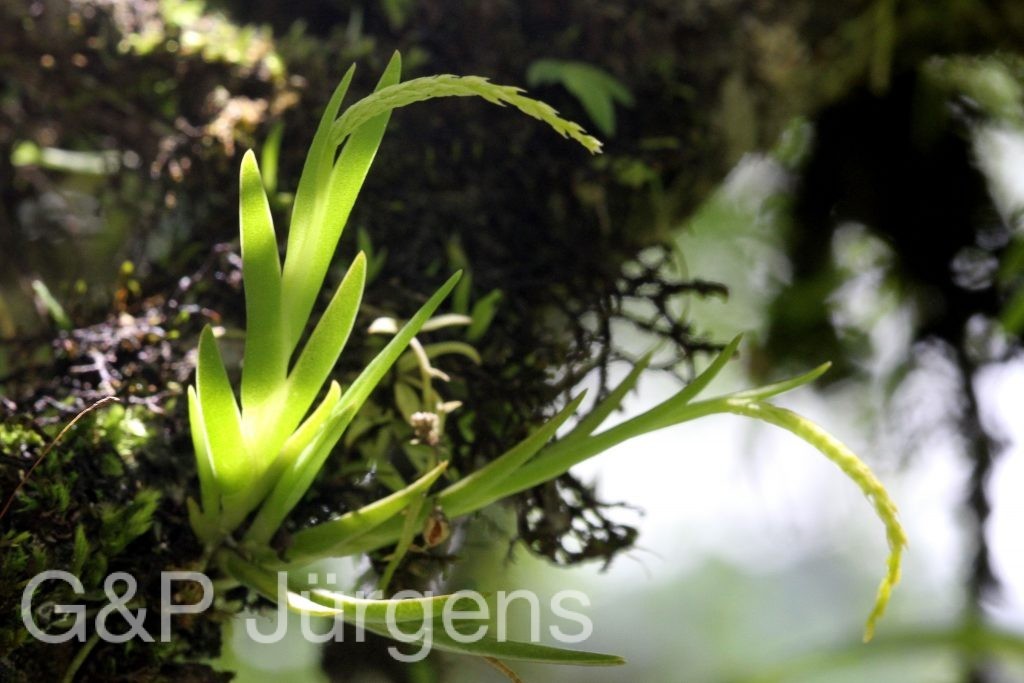
Bhutan Wangdi 2000m, June

Description

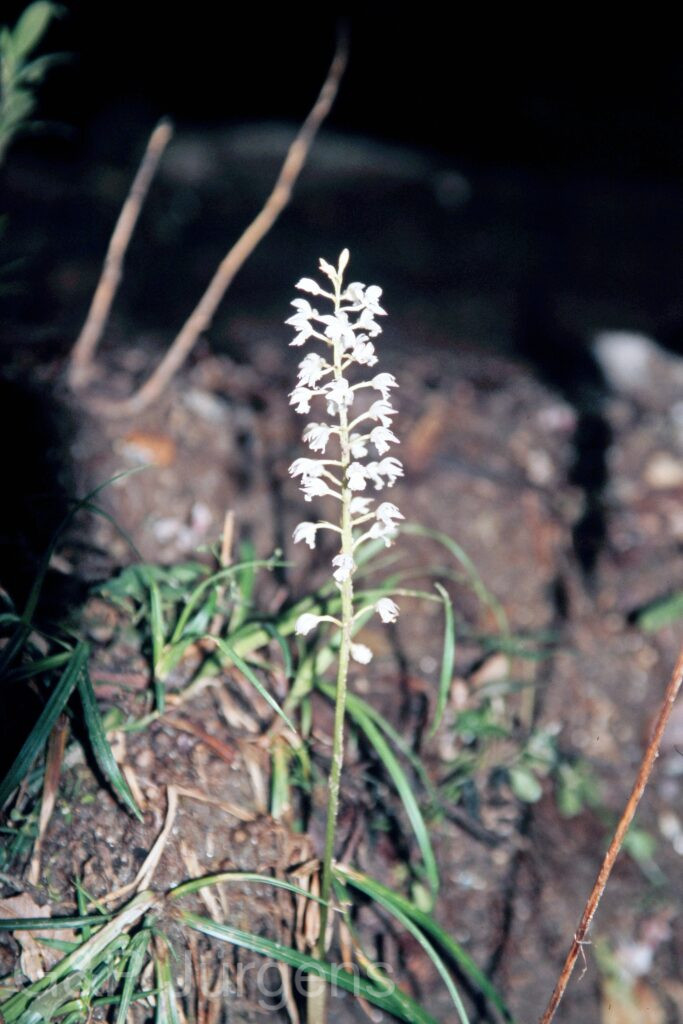
Oberonia obcordata is a diminutive epiphytic orchid of the Eastern Himalaya and adjacent Southeast Asia, recorded from China, India, Nepal, Thailand and Bhutan, with around 40 occurrences in GBIF. It grows as an epiphyte on the trunks and branches of trees in humid subtropical to lower montane broad-leaved forest, generally at moderate elevations of roughly 1,000 to 2,200 m. The plant illustrated was photographed near Wangdue (Wangdi) in western Bhutan at about 2,000 m in June, where the species flowers in the warm, moist conditions of the early monsoon.

It is a small, tufted epiphyte without pseudobulbs, the short stem bearing a fan of laterally flattened, equitant, fleshy leaves arranged in two ranks, as is characteristic of the genus. The inflorescence is a slender, pendent to arching raceme densely crowded with very numerous, minute flowers arranged in whorls along the axis. The tiny flowers are yellowish to orange-brown; the small sepals and petals spread, and the labellum, from which the epithet derives, is obcordate and more or less notched at the apex. The column is very short, and the fruit is a minute ellipsoid capsule containing exceedingly fine seeds.

Oberonia is a large palaeotropical genus of dwarf, fan-leaved epiphytes distinguished chiefly by the form of the diminutive labellum, here obcordate and emarginate. The minute flowers are pollinated by small insects, and establishment is mycorrhiza-dependent. Inconspicuous and easily overlooked, the species is relatively poorly documented; though not specifically assessed, it shares the general CITES Appendix II protection of the family, and its persistence is linked to intact mid-elevation forest.

Author: Lindl. · Sources: POWO (Kew), GBIF, Flora of China, Flora of Bhutan, The Orchids of Bhutan (Pearce & Cribb), Pridgeon et al. Genera Orchidacearum

R.R.Mill

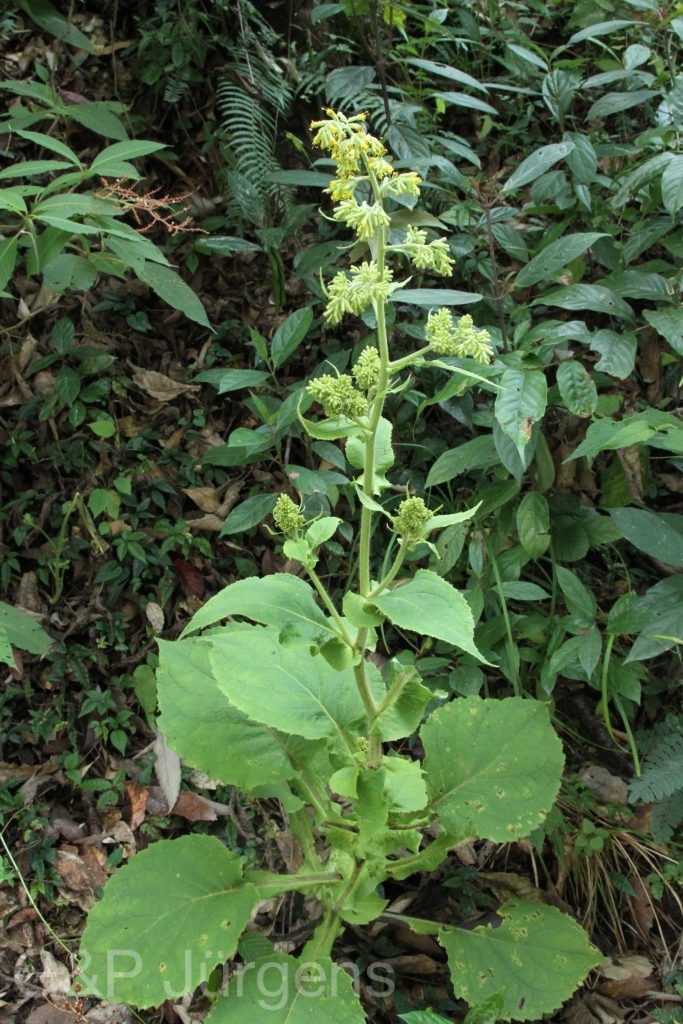
BhutanPG2011 712 01 01
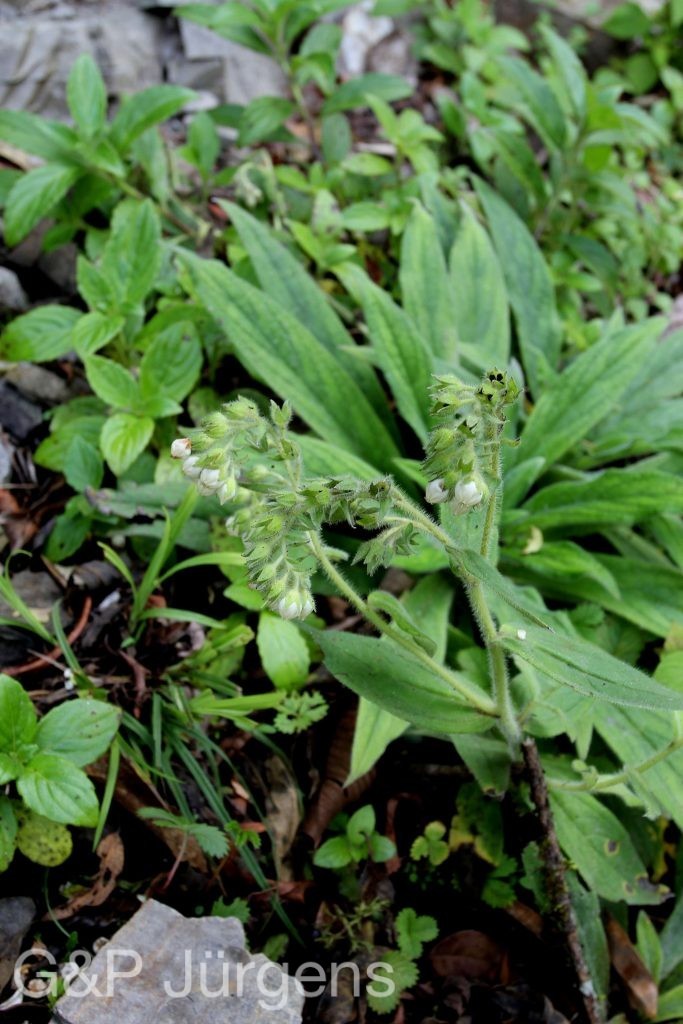
Bhutan Phobjika 2800m July

Description

Onosma griersonii is a narrowly distributed Himalayan herb known from the temperate mountains of Bhutan, the only country from which it is recorded in GBIF, where its three occurrences reflect the rarity of collections of this localised taxon. It is a plant of open, dry, sunny banks, grassy slopes and stony ground in the inner valleys of the central Himalaya, favouring well-drained sites in the broad montane belt. The photographed plant from the Phobjika valley in Bhutan at 2800 m, flowering in July, typifies its occurrence in the cool-temperate mid-elevation zone, where it blooms during the summer monsoon. Though GBIF treats the name as a synonym, current taxonomic opinion accepts Onosma griersonii as the correct name for the entity.

Like other members of its genus it is a coarse, bristly-hairy perennial or biennial herb, the whole plant clothed in stiff, often tubercle-based setae that give it a harsh texture. The leaves are narrowly oblong to linear-lanceolate, entire and sessile, the basal ones forming a rosette. The flowers are borne in terminal scorpioid cymes that uncoil as they open; each flower has a tubular to narrowly campanulate corolla, typically yellow, with included or shortly exserted stamens and a deeply five-lobed calyx. The fruit comprises four hard, smooth nutlets.

Onosma is a large Old World genus centred on the mountains of Central and Southwest Asia, with a number of restricted endemics in the Himalaya. O. griersonii, named for the botanist A. J. C. Grierson, co-author of the Flora of Bhutan, is one such local endemic. Its bristly indumentum and tap-rooted habit are adaptations to dry, exposed montane microhabitats, while its tubular corollas suit pollination by long-tongued bees. As a narrow-range endemic it warrants conservation attention.

Author: R.R.Mill · Sources: POWO (Kew), GBIF, Flora of Bhutan, Boraginaceae of the Sino-Himalaya, Revision of Onosma (Riedl & Mill)

Bureau & Franch.

Bhutan2015 458
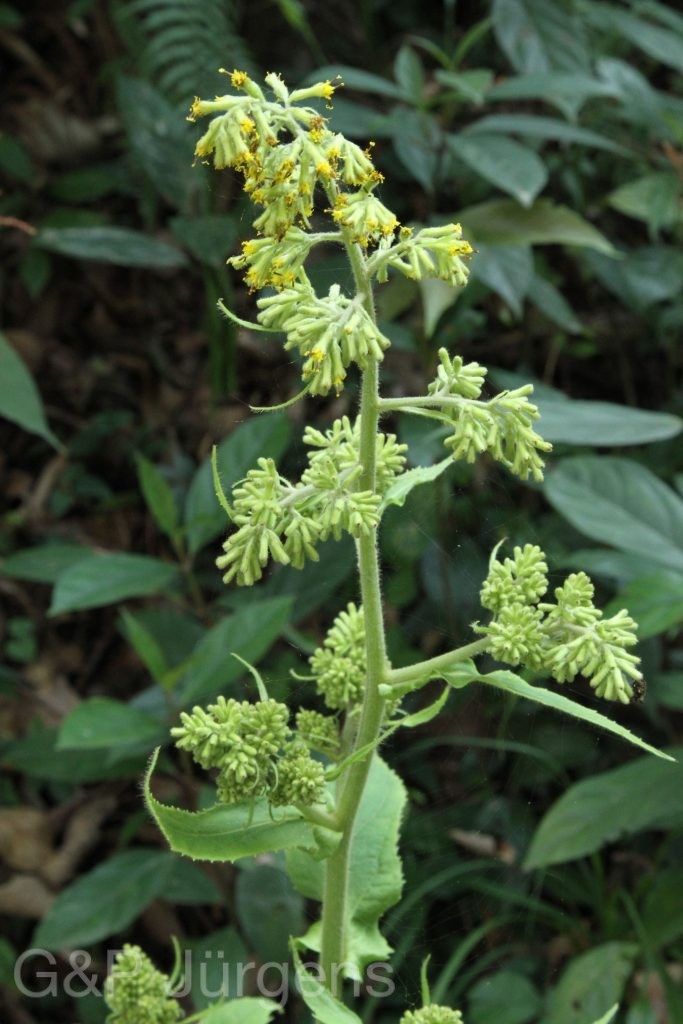
Bhutan Trongsa 2100m, October
Bhutan2015 457
Bhutan Trongsa 2100m, October

Description

Onosma paniculatum is a robust, bristly-hairy herb of the eastern Himalaya and adjacent China, with GBIF documenting 255 occurrences across China and Bhutan. It favours open, sunny banks, dry rocky slopes, roadside cuttings and disturbed grassy ground in warm-temperate to montane country. The photographed plant grows at Trongsa in central Bhutan at about 2100 m, flowering in October, a relatively low and autumn-flowering station consistent with the species' tolerance of dry, exposed habitats.

The plant is a biennial or short-lived perennial with stiffly erect stems clothed in spreading, often pustular-based setae that render it harshly scabrid. The basal and lower leaves are linear to lanceolate, the cauline leaves smaller and sessile. The inflorescence is an open, branched panicle of scorpioid cymes; the flowers are pendent with a tubular-campanulate corolla, blue to violet (sometimes purplish), exserted anthers and a long, slender style. The fruit comprises four smooth, ovoid-trigonous nutlets.

GBIF treats the spelling Onosma paniculatum as a synonym, with Onosma paniculata accepted as the correct orthography. Onosma is a large Old World genus whose roots yield naphthoquinone red dyes long used locally, and several Himalayan species are gathered for traditional medicine and colouring. The genus is taxonomically difficult owing to indumentum variation and intergrading forms, so reliable identification depends on nutlet and corolla detail. Its prominence at disturbed sites makes it a familiar, weedy component of the eastern Himalayan flora.

Author: Bureau & Franch. · Sources: POWO (Kew), GBIF, Flora of China, Flora of Bhutan, Riedl's revision of Onosma (Boraginaceae)

Hook.f.

Description

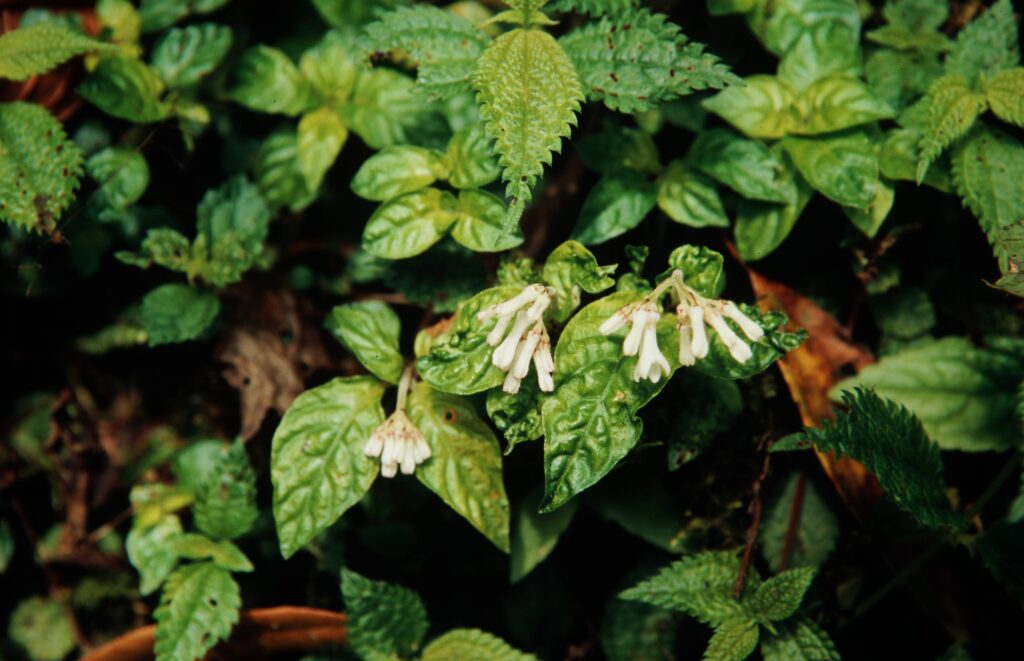
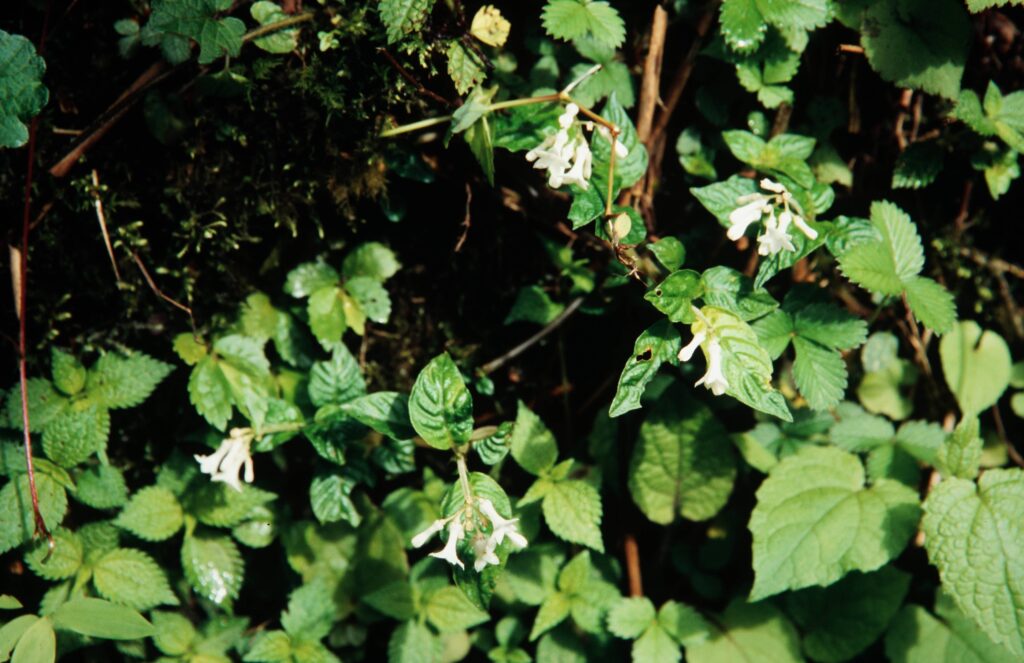
Ophiorrhiza treutleri is an eastern Himalayan understorey herb confined to India, Nepal and Bhutan, documented by roughly 39 georeferenced records that cluster in the moist mid-montane forests of the region. It is a plant of shaded, humid habitats, growing on the floor of dense evergreen and mixed broadleaved forest, along streamsides, mossy banks and damp ravines where atmospheric humidity remains high throughout the year. The specimen photographed at Tolung in West Bengal (India) at about 2200 m in May reflects its typical occurrence in the cool, perpetually damp montane belt, where it flowers in spring beneath a closed canopy.

It is a small perennial or weakly suffrutescent herb with slender, often decumbent stems that root at the lower nodes and bear a sparse indumentum. The leaves are opposite, ovate to elliptic-lanceolate, acuminate at the apex and somewhat asymmetric at the base, with conspicuous lateral venation and small interpetiolar stipules characteristic of the family. The inflorescence is a terminal, scorpioid cyme; the flowers are small, white to pinkish and tubular, with a five-lobed corolla and an inferior bilocular ovary. As in many Ophiorrhiza, the species is distylous, producing pin and thrum flowers. The fruit is a characteristically broad, didymous (two-lobed) capsule that dehisces loculicidally to release numerous minute angular seeds.

Ophiorrhiza belongs to the tribe Ophiorrhizeae of the Rubiaceae and is notable for the accumulation of camptothecin and related alkaloids, which has drawn pharmacological interest to several species. The heterostyly of O. treutleri promotes outcrossing through insect-mediated pollination, while its capsular fruits are adapted to rain-splash and gravity dispersal in the still air of the forest floor. As an obligate shade species tied to undisturbed montane forest, it is vulnerable to canopy opening, and its conservation is effectively linked to the protection of intact eastern Himalayan woodland.

Author: Hook.f. · Sources: POWO (Kew), GBIF, Flora of China Vol. 19, Flora of Bhutan Vol. 2, Flora of Nepal, Deb & Mondal Revision of the Genus Ophiorrhiza (Rubiaceae)

(Willd.) Haw.

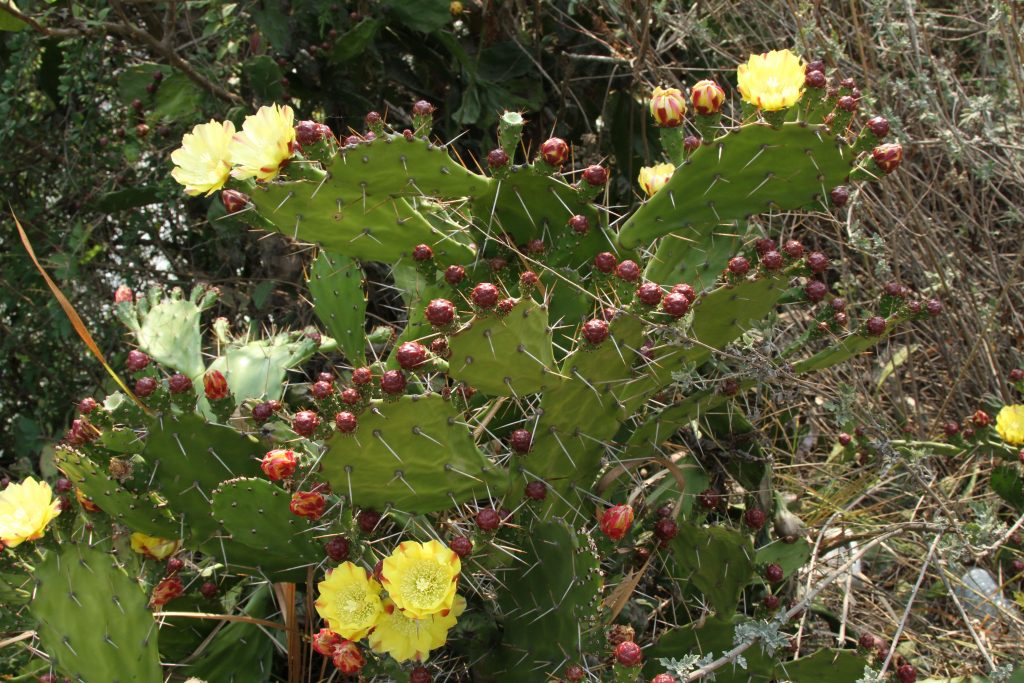
Bhutan2014 693
Bhutan Pele-La 2800m, May

Description

Opuntia monacantha is a prickly-pear cactus native to subtropical South America (Brazil, Argentina, Uruguay and Paraguay) that has become one of the most widely naturalised Opuntia species in the world. Its 4754 GBIF occurrences span Australia, South Africa, the Mediterranean, East Africa, India, China, Nepal, Bhutan and many other regions, almost all representing introduced and frequently invasive populations. In the Himalaya it persists as an escape from cultivation on dry, sunny, rocky slopes, banks, walls and disturbed ground in warm valleys. The record from the Pele-La area of Bhutan at about 2800 m in May is notable as a relatively high-elevation occurrence, the plant having been spread through cultivation as a hedge and ornamental into the inner dry valleys of the eastern Himalaya.

It is a succulent shrub to small tree, sometimes developing a distinct cylindrical woody trunk, with a branched crown of flattened green photosynthetic stem-segments (cladodes or pads). The pads are obovate to oblong, glossy green and somewhat flaccid, bearing areoles that produce tufts of minute barbed glochids and usually one or few (occasionally none) stout spines, the sparse armature giving rise to the epithet monacantha. The leaves are reduced to tiny caducous scales. The flowers are large, solitary, sessile on the pad margin, with a rotate perianth of bright yellow tepals often reddish at the base and numerous stamens. The fruit is a fleshy, obovoid, reddish-purple berry, frequently proliferous, the pulp edible and the seeds dispersed by frugivores.

The genus Opuntia is among the most successful of invasive plant lineages, the readily detached, root-forming cladodes enabling vigorous vegetative spread, while the bird- and mammal-dispersed fruits extend its reach. O. monacantha is regarded as a noxious weed in several countries and has been a target of biological control using cochineal insects. In the Himalayan context it is an introduced naturalised alien rather than a native element; its conservation status is irrelevant in the usual sense, the concern instead being its potential to colonise and degrade dry montane slopes.

Author: (Willd.) Haw. · Sources: POWO (Kew), GBIF, Flora of China Vol. 13, Flora of Pakistan, Flora of Nepal, Anderson The Cactus Family

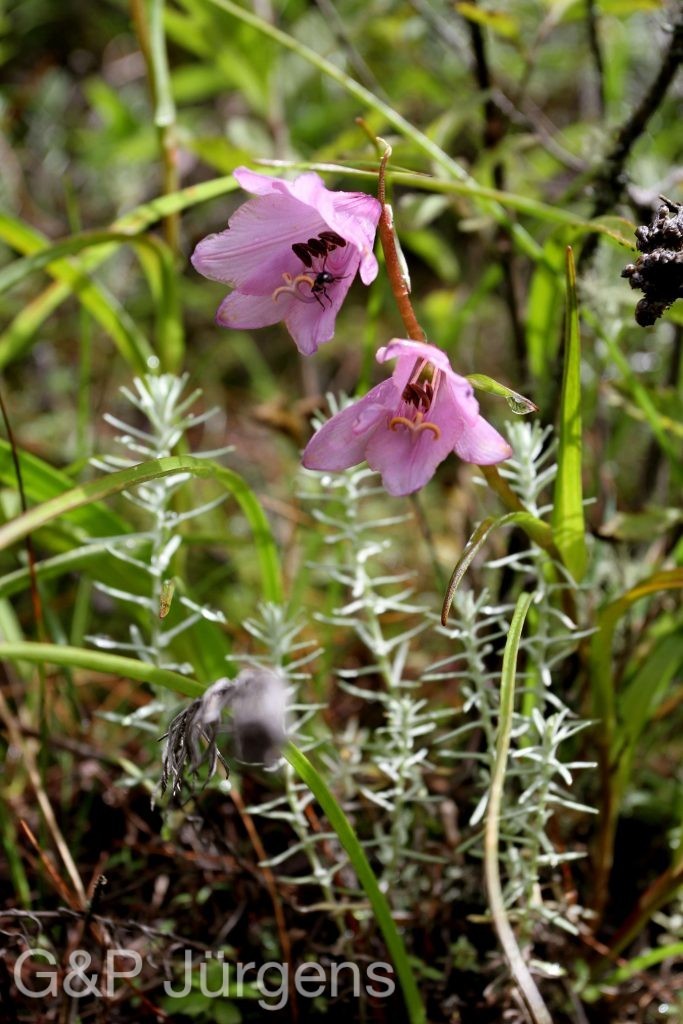
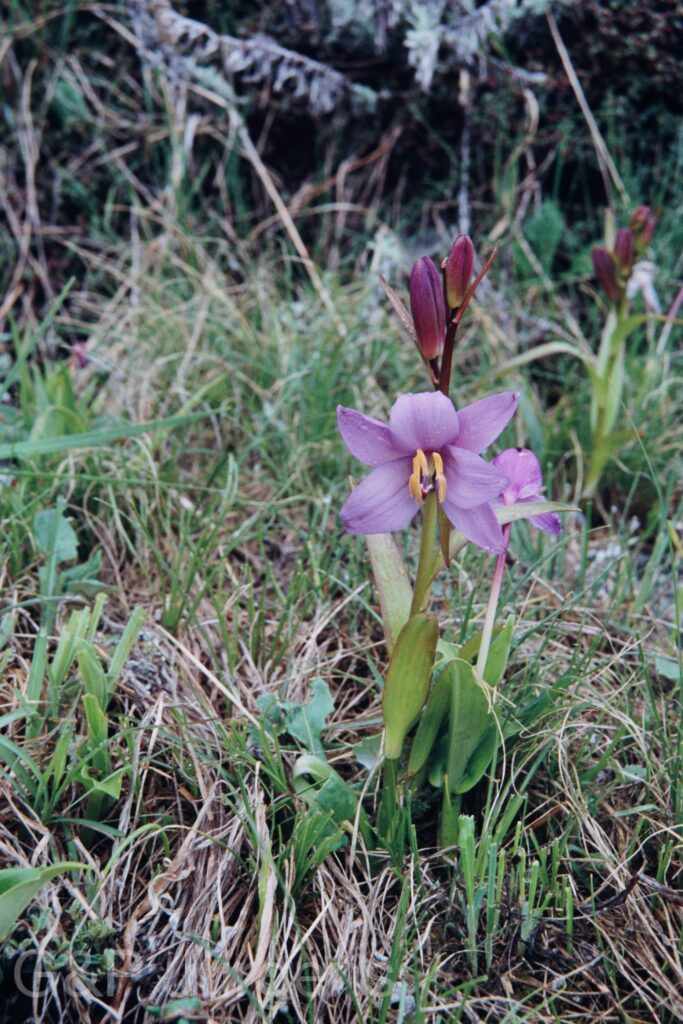
Lindl.

Garh 07 88 ergebnis
India Garhwal Trijugi Narayan 2500m, June
Garh 07 89 ergebnis
India Garhwal Trijugi Narayan 2500m, June

Description

Oreorchis foliosa is a terrestrial orchid distributed across the Himalaya and into south-western China, with verified occurrences in China, India, Nepal, Bhutan and Myanmar. It grows in the humus-rich shade of temperate broadleaved and coniferous forest, on mossy banks and among leaf litter, generally between about 2400 and 3500 m. The material illustrated, from Trijugi Narayan in Garhwal (India) at around 2500 m and from the Dochu-La in Bhutan near 3000 m, both in June, shows the species flowering in the pre- to early-monsoon period in its characteristic moist, lightly shaded forest-floor habitat.

The plant grows from a chain of subterranean corm-like pseudobulbs (corms) that store reserves through the dormant season. From these arise one or two narrowly lanceolate, plicate (longitudinally pleated) leaves, the foliose character noted in the epithet. The erect scape bears a many-flowered raceme of small flowers; the spreading sepals and petals are yellowish to brownish, and the three-lobed labellum is paler, marked with reddish to purple spots or streaks, with a small basal callus or short spur-like base. The fruit is a pendulous dehiscent capsule releasing the dust-fine seeds typical of the family.

The family is written here as in the source as "Orchideaceae"; the correctly formed family name is Orchidaceae. Oreorchis is a small Asian genus of subfamily Epidendroideae allied to Corallorhiza and Cremastra, and like many forest orchids depends on mycorrhizal fungi for germination and establishment. O. foliosa, described by Lindley, is widespread but typically thinly scattered; while not formally assessed as threatened, such forest-dwelling orchids are sensitive to habitat loss and to collection pressure.

Author: Lindl. · Sources: POWO (Kew), GBIF, Flora of China, Flora of Bhutan, Genera Orchidacearum (Pridgeon et al.)

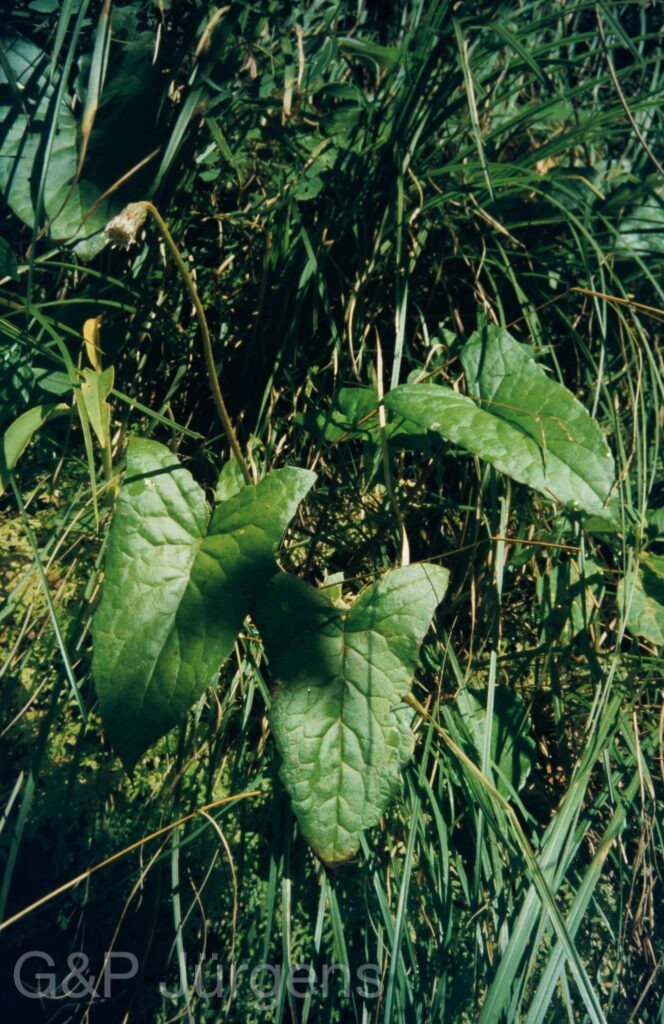
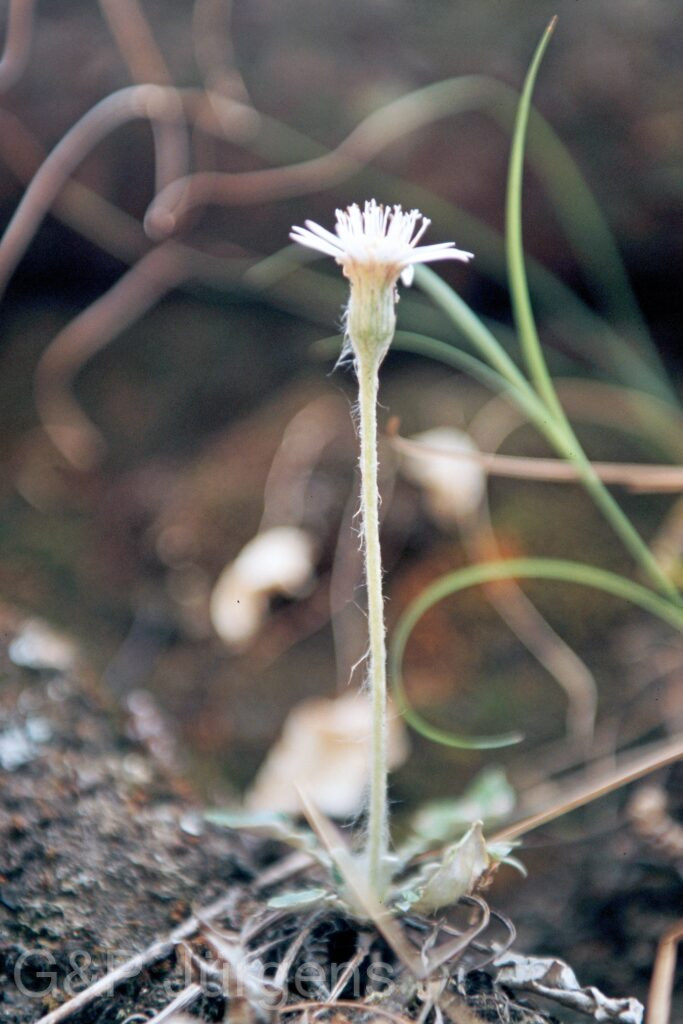
(Royle) X.D.Xu & V.A.Funk

Garw 2005 419 ergebnis
India Garhwal Didina 2470m, September
Garh 07 70 ergebnis
India Garhwal Nanu Mandakini 2300m, June

Description

Oreoseris gossypina is a rosette-forming perennial herb of the temperate and subalpine Himalaya, recorded from Pakistan, India, Nepal, China and Bhutan across more than 300 occurrences. It typically inhabits open grassy slopes, rocky banks and forest margins, often on disturbed or grazed ground, at elevations of roughly 1800 to 3500 m. The documented collections derive from Garhwal in India, at Didina (2470 m, September) and the Nanu Mandakini valley (2300 m, June), the two dates spanning much of its long flowering and fruiting season in the Western Himalaya.

The plant produces a basal rosette of obovate to oblanceolate leaves that are conspicuously white-woolly beneath, the dense cottony indumentum giving rise to the epithet gossypina. The leaf margins are sinuate-dentate and the lamina narrows into a winged petiole. Solitary capitula are borne on slender, bracteate scapes; each head is heterogamous and radiate, with an involucre of imbricate, often arachnoid-hairy phyllaries. The marginal ray florets are ligulate and pale, the disc florets tubular; the achenes are ribbed and surmounted by a pappus of barbellate bristles aiding wind dispersal.

The species was long placed in Gerbera and is also encountered under Leibnitzia; its current placement in Oreoseris (Mutisieae) reflects molecular and morphological revision by X.D. Xu and V.A. Funk. As a member of an early-diverging composite lineage it is of phylogenetic interest, and its mutisioid floral structure attracts a range of pollinating insects. The species is widespread and faces no recognised threat.

Author: (Royle) X.D.Xu & V.A.Funk · Sources: POWO (Kew), GBIF, Flora of China, Flora of Pakistan, Annotated Checklist of the Flowering Plants of Nepal, Xu & Funk revision of Mutisieae