
Bureau & Franch.
Description
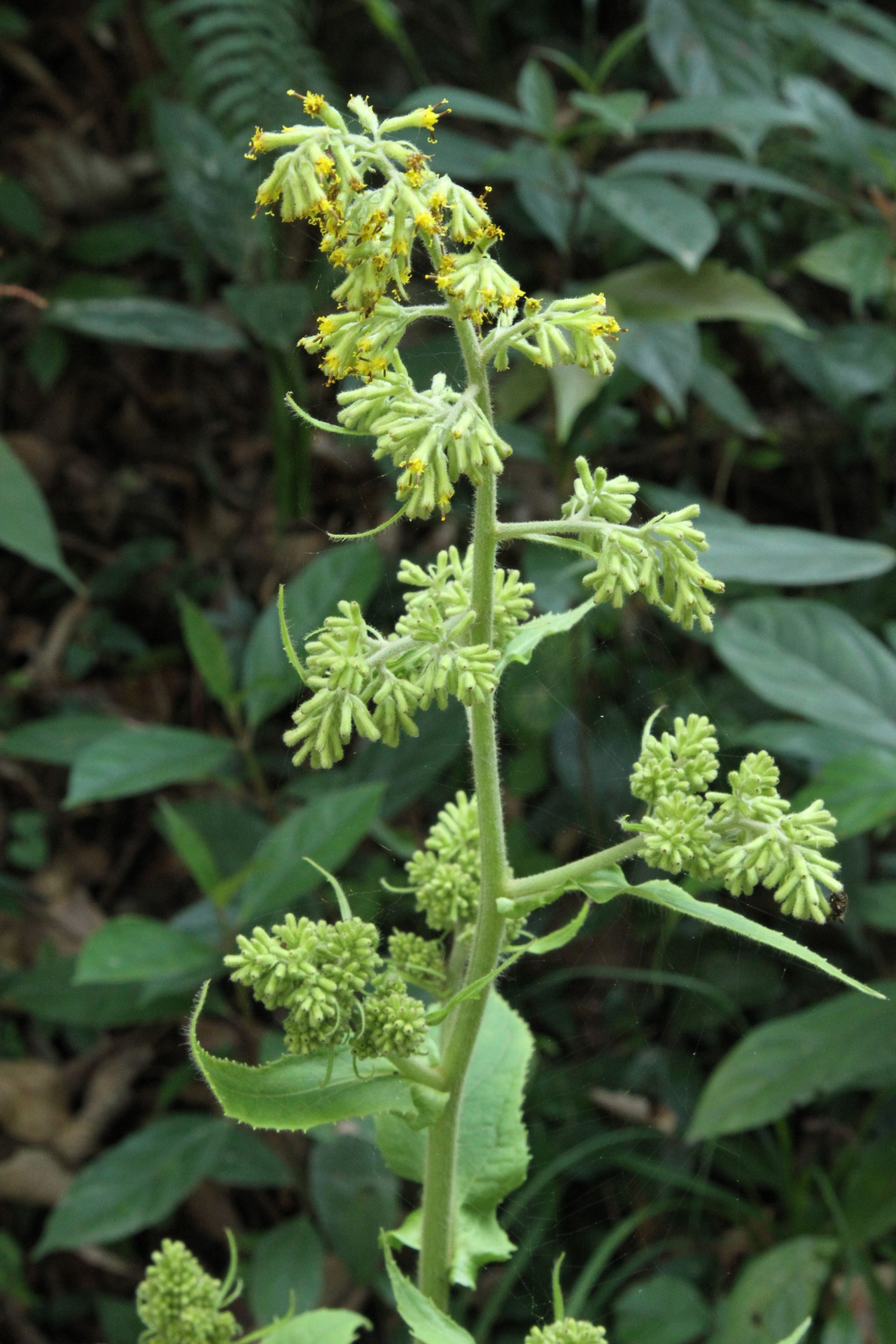
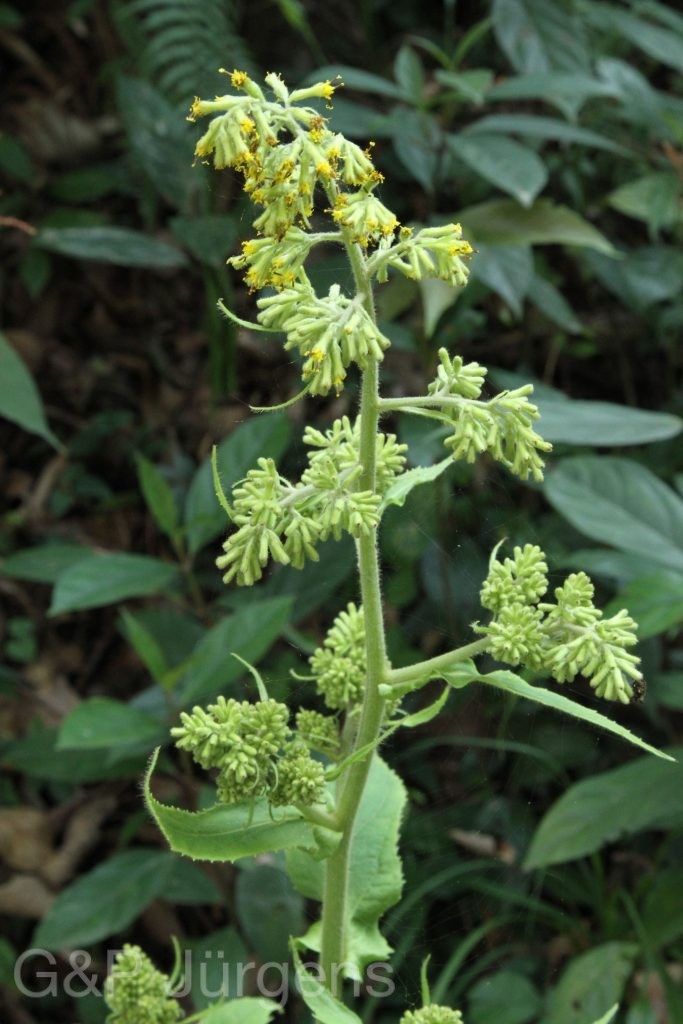
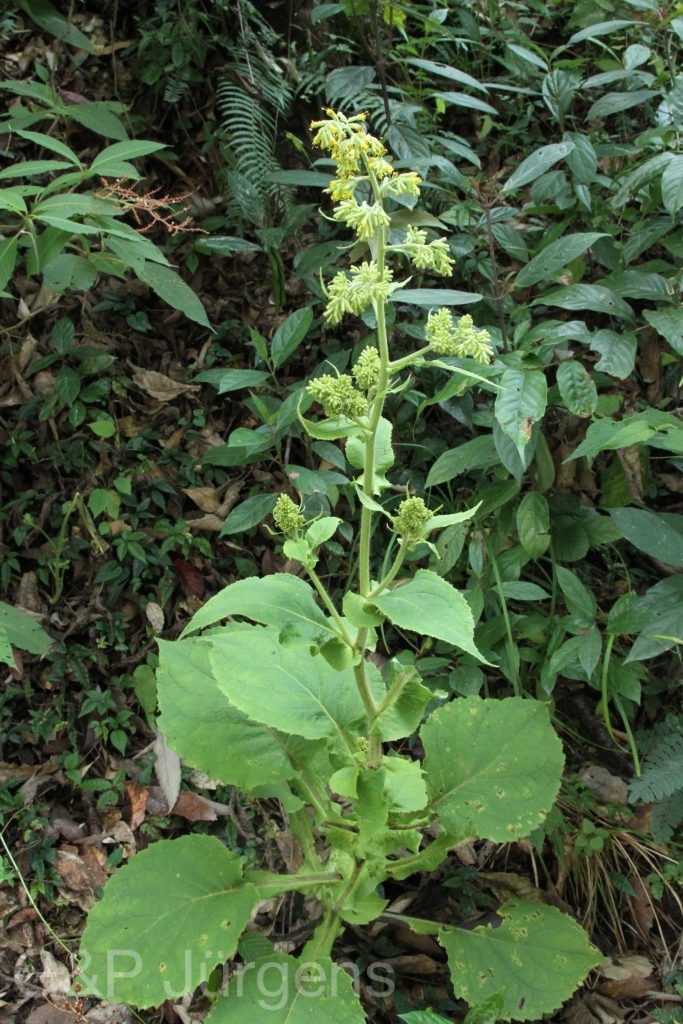
Onosma paniculatum is a robust, bristly-hairy herb of the eastern Himalaya and adjacent China, with GBIF documenting 255 occurrences across China and Bhutan. It favours open, sunny banks, dry rocky slopes, roadside cuttings and disturbed grassy ground in warm-temperate to montane country. The photographed plant grows at Trongsa in central Bhutan at about 2100 m, flowering in October, a relatively low and autumn-flowering station consistent with the species' tolerance of dry, exposed habitats.
The plant is a biennial or short-lived perennial with stiffly erect stems clothed in spreading, often pustular-based setae that render it harshly scabrid. The basal and lower leaves are linear to lanceolate, the cauline leaves smaller and sessile. The inflorescence is an open, branched panicle of scorpioid cymes; the flowers are pendent with a tubular-campanulate corolla, blue to violet (sometimes purplish), exserted anthers and a long, slender style. The fruit comprises four smooth, ovoid-trigonous nutlets.
GBIF treats the spelling Onosma paniculatum as a synonym, with Onosma paniculata accepted as the correct orthography. Onosma is a large Old World genus whose roots yield naphthoquinone red dyes long used locally, and several Himalayan species are gathered for traditional medicine and colouring. The genus is taxonomically difficult owing to indumentum variation and intergrading forms, so reliable identification depends on nutlet and corolla detail. Its prominence at disturbed sites makes it a familiar, weedy component of the eastern Himalayan flora.
Author: Bureau & Franch. · Sources: POWO (Kew), GBIF, Flora of China, Flora of Bhutan, Riedl's revision of Onosma (Boraginaceae)