
Griff.
Description
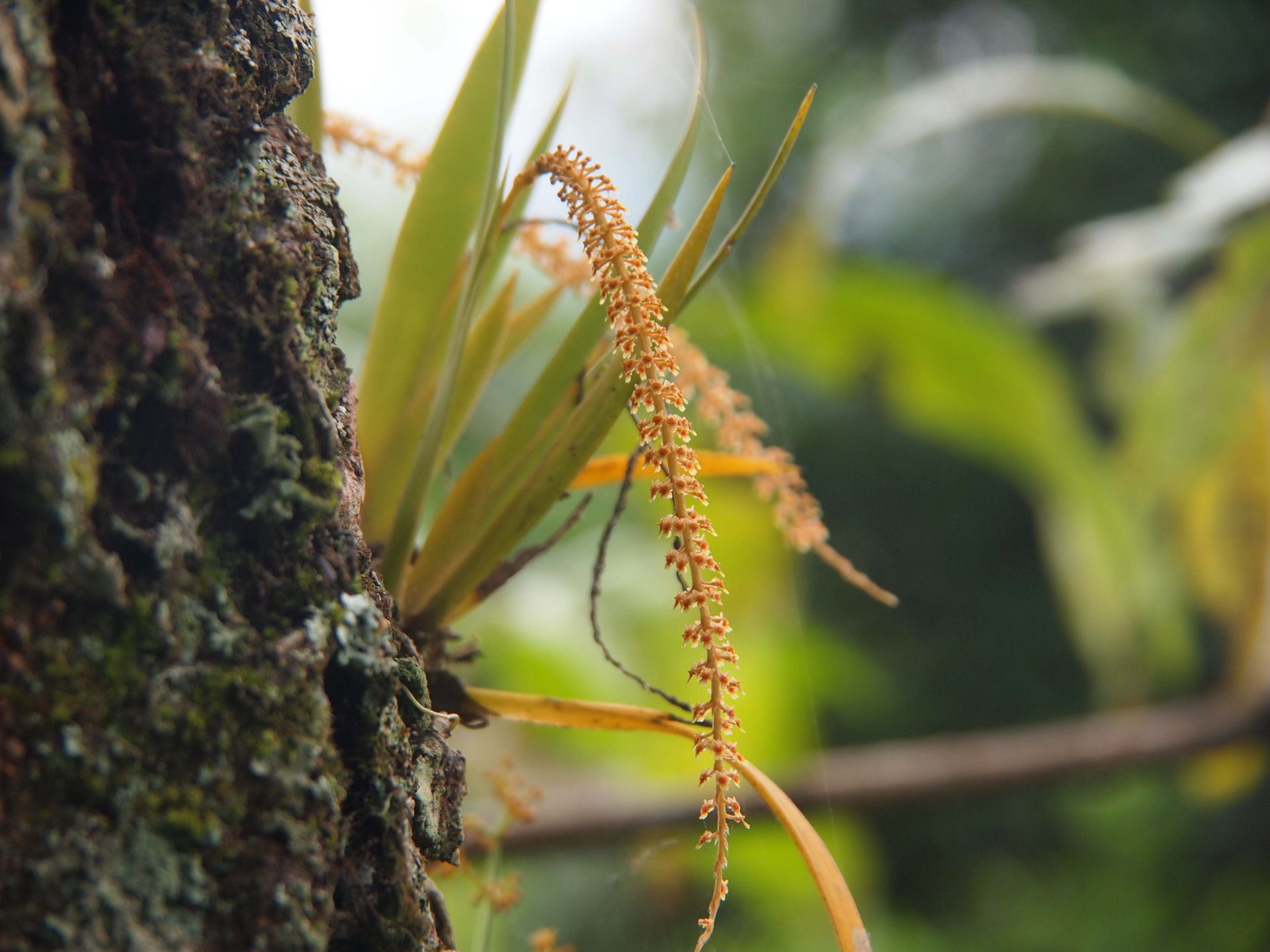
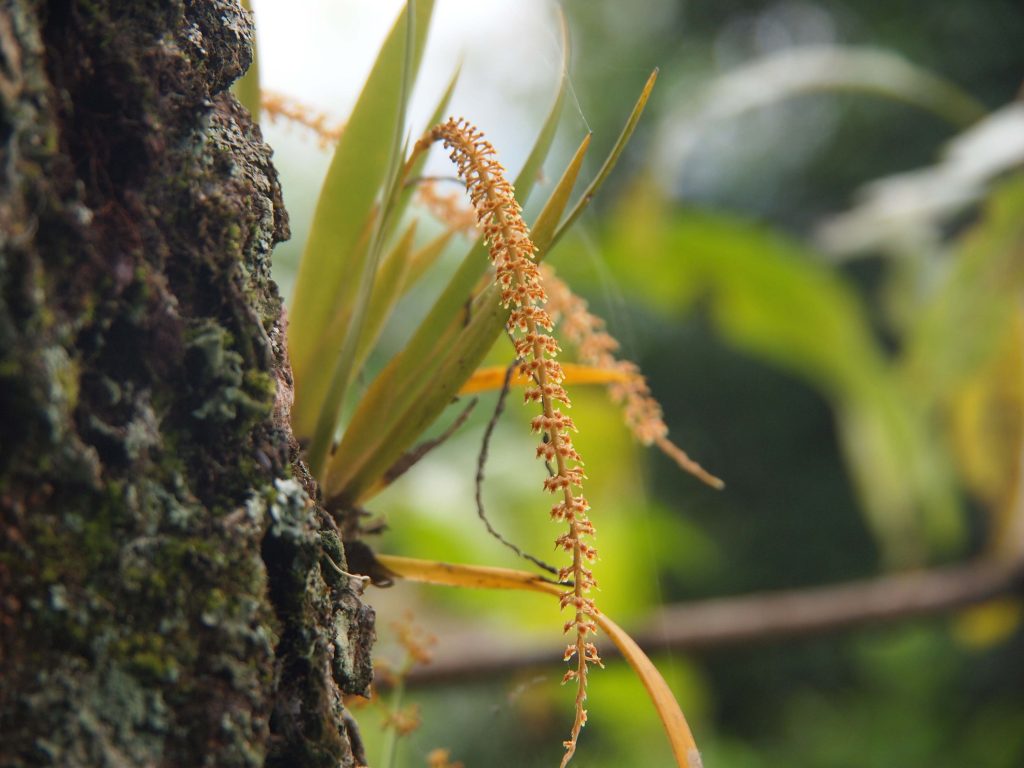
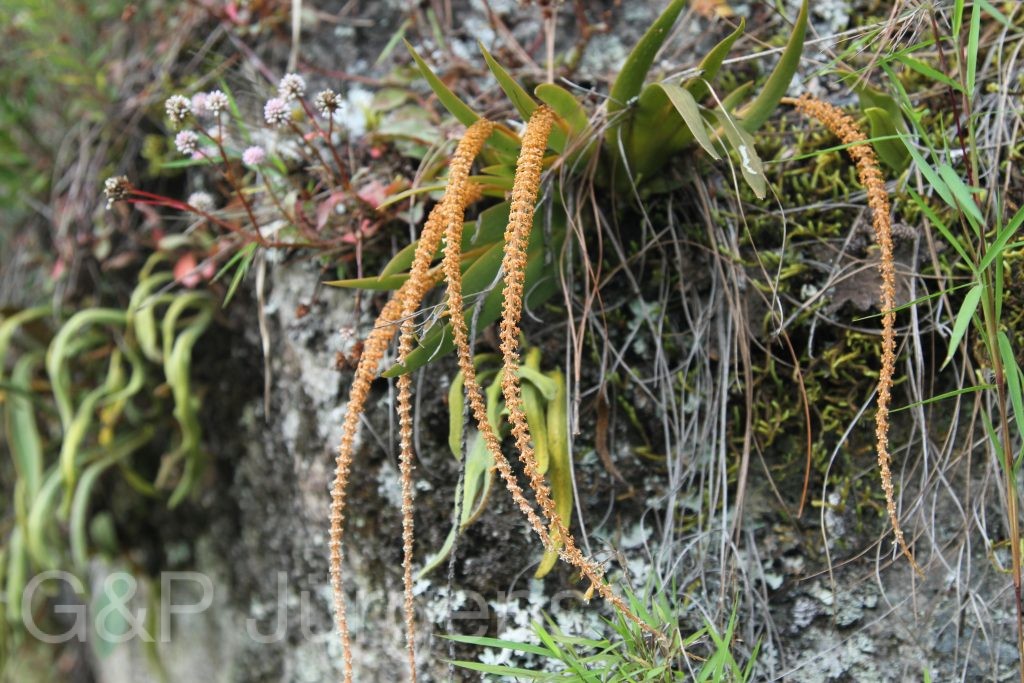
Oberonia acaulis is a small epiphytic orchid widespread across tropical and subtropical Asia, recorded from India, Nepal, Bhutan, China, Myanmar, Bangladesh, Thailand, Vietnam and beyond, with about 198 GBIF occurrences. It grows in warm, humid broad-leaved and subtropical forest, perched on tree trunks and branches in shaded, moist situations from the lowlands into the lower montane zone. The images document it in Bhutan at Zemgang around 2000 m and at Tashiyangtse near 1500 m, both in October, when the minute flowers are borne in dense spikes among forest epiphyte communities.
It is a tufted, dwarf epiphyte lacking pseudobulbs, with a short stem bearing a fan of equitant, laterally flattened (iris-like), fleshy leaves arranged in two ranks. From the centre of the fan arises a slender, erect to arching scape terminating in a long, densely many-flowered cylindrical raceme. The flowers are extremely small, numerous, yellowish to orange-brown, arranged in whorls; the labellum is the most conspicuous part, typically three-lobed with a divided or toothed apex, distinguishing the species within the genus. The fruit is a tiny ellipsoid capsule.
Oberonia is a large pantropical genus of "button orchids" notable for the diminutive size and great number of their flowers, which complicates field identification and rests heavily on the structure of the lip. The minute flowers are thought to be pollinated by small flies or midges. Like all orchids the genus is listed on CITES Appendix II; O. acaulis is widespread and common across its broad range and is not considered threatened.
Author: Griff. · Sources: POWO (Kew), GBIF, Flora of China, Flora of Bhutan, Flora of British India, Genera Orchidacearum (Vol. 4 Epidendroideae)