Tag:

Montane (1500-2500 m)

(Buch.-Ham. ex Sm.) D.Don
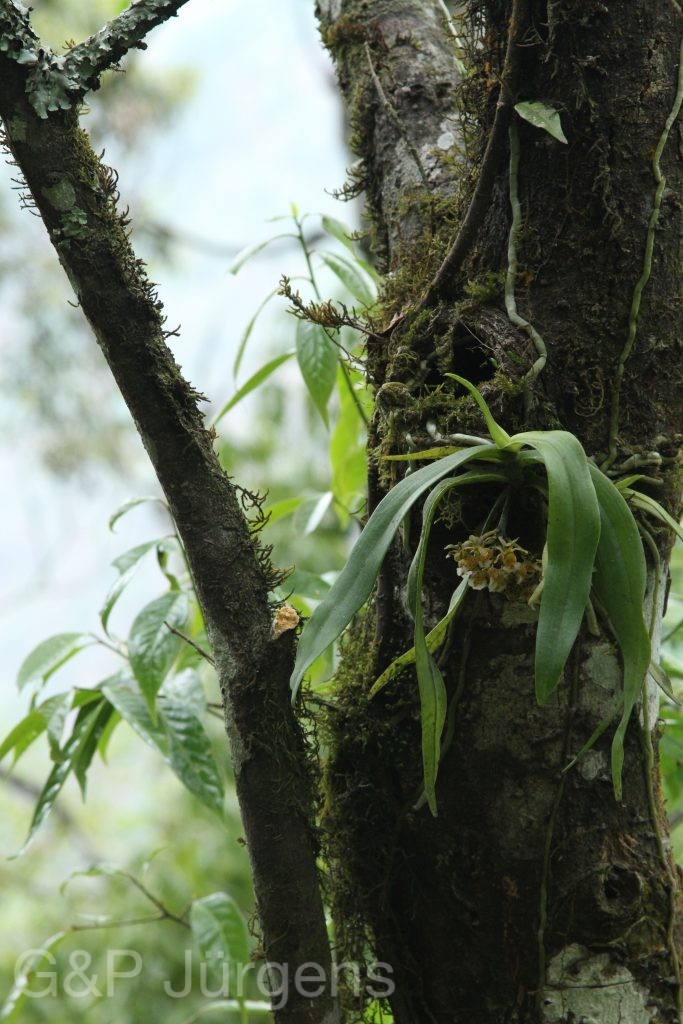
Bhutan2014 463
Bhutan Trongtsa 2030m, May
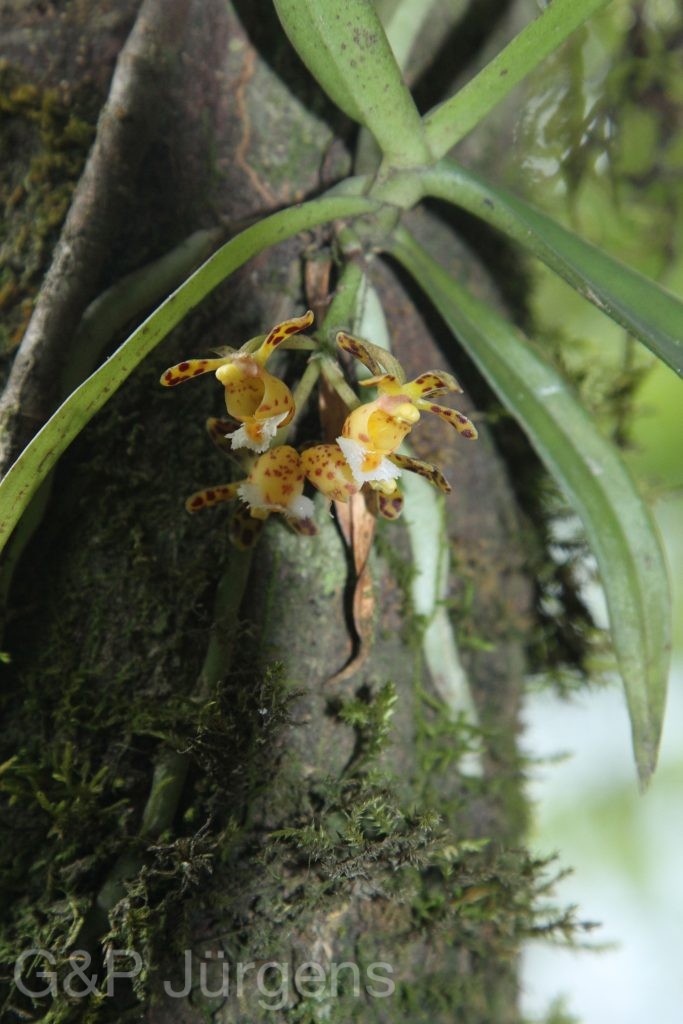
Bhutan2014 464
Bhutan Trongtsa 2030m, May

Description

Gastrochilus calceolaris is a widespread epiphytic orchid of the eastern Himalaya and tropical-subtropical Asia, recorded by GBIF from China, India, Nepal, Bhutan, Myanmar and onwards through Vietnam, Thailand, Malaysia, the Philippines and Indonesia, with 356 georeferenced occurrences. It grows on the trunks and branches of broadleaved evergreen trees in humid montane and lower temperate forest, typically between about 1000 and 2300 m. The plant illustrated was photographed near Trongtsa (Trongsa) in central Bhutan at 2030 m in May, a setting of mossy oak and rhododendron forest where atmospheric moisture favours vandaceous epiphytes.

The species is a monopodial epiphyte with a short, stout stem clad in the persistent sheathing bases of distichous, ligulate to oblong leaves that are coriaceous and unequally bilobed at the apex. Numerous flexuous aerial roots anchor the plant. The short, pendent racemes bear several to many subumbellate flowers; the sepals and petals are yellowish green blotched with reddish brown. The labellum is three-lobed with a conspicuous saccate, helmet- or slipper-shaped hypochile (the source of the epithet calceolaris) and a fringed, transversely oblong epichile bearing a hairy central callus. The column is short and the pollinia are waxy.

First described as Aerides calceolaris by Buchanan-Hamilton ex Smith and transferred to Gastrochilus by D. Don, the species is the type-bearing representative of a genus of some five dozen Asian epiphytes segregated from Saccolabium. Though locally frequent across a vast range and not assessed as globally threatened, populations are vulnerable to forest clearance and to collection for the ornamental orchid trade.

Author: (Buch.-Ham. ex Sm.) D.Don · Sources: POWO (Kew), GBIF, Flora of Bhutan, Flora of China, The Genus Gastrochilus (Z.H. Tsi monograph), Orchids of Bhutan
Wall.

Nepal 97 89 P149
Nepal Tankhu 2200m, April
Nepal 1994 186 ergebnis
Ost-Nepal Jaljale Himal
2350 m, April

Description

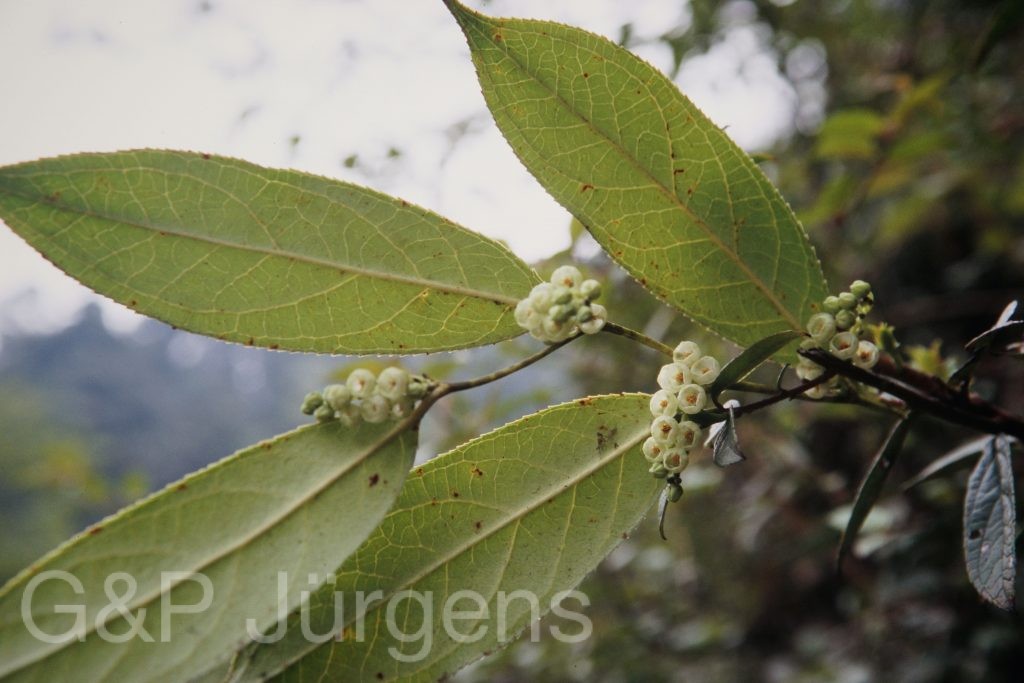
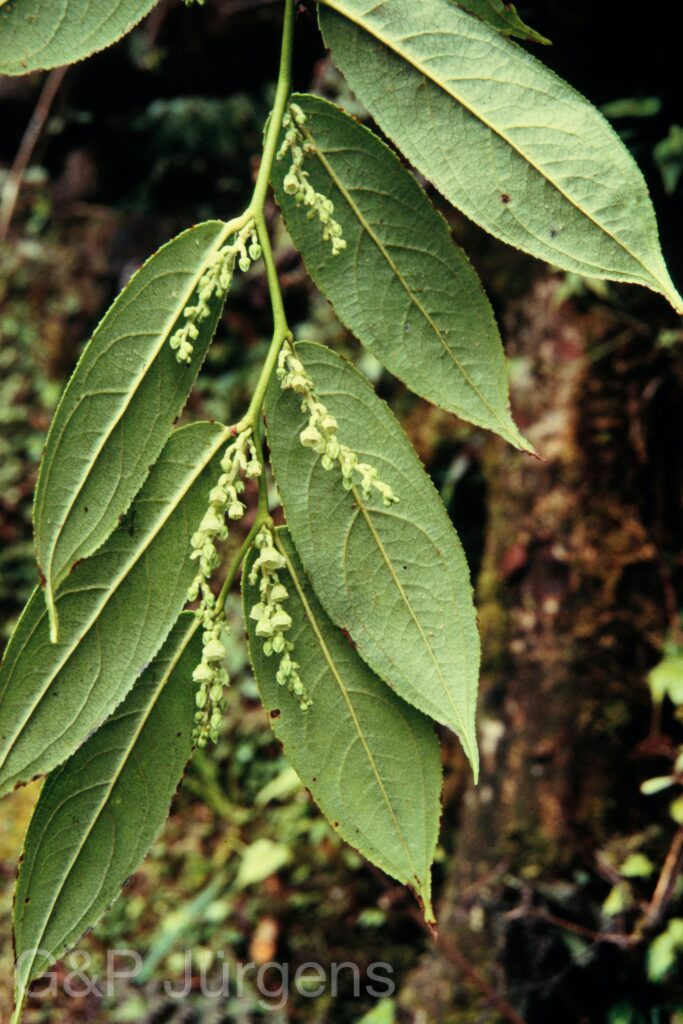
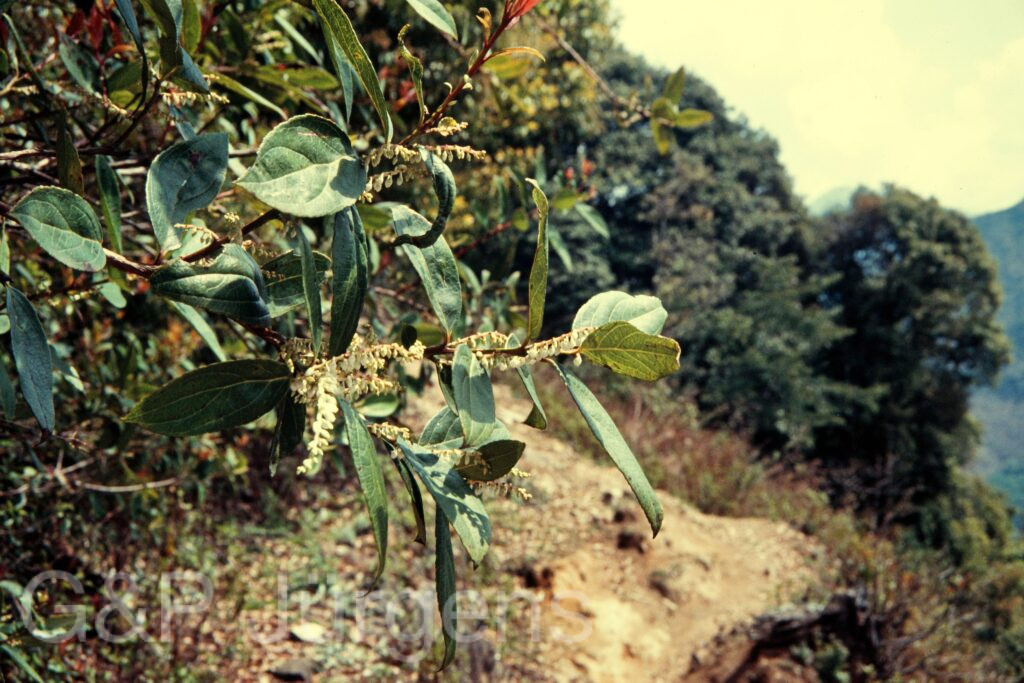
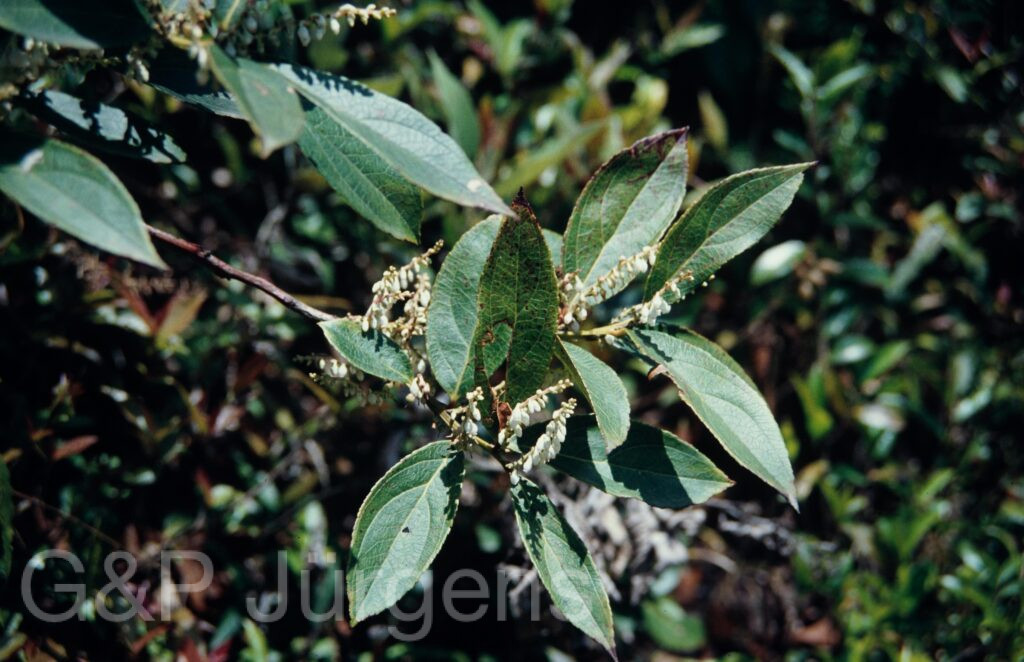
Gaultheria fragrantissima Wall. is a wide-ranging evergreen shrub of the eastern Himalaya and montane tropical Asia, documented from Nepal, India, Bhutan, China, Myanmar, Sri Lanka, Thailand, Vietnam, Indonesia and Malaysia, with a substantial body of records (GBIF reports some 1,853 occurrences, the higher latitudes among them reflecting cultivation or introduction). It occupies forest margins, open hillsides, secondary scrub and clearings in oak, rhododendron and broad-leaved evergreen forest, typically at 1,500-2,800 m. The photographed material comes from central and eastern Nepal, at Tankhu (2,200 m) and the Jaljale Himal (2,350 m), both in April, where it flowers on sunny, well-drained slopes.

It forms a much-branched shrub 1-3 m tall, the young twigs reddish, bristly or shortly setose. The leaves are alternate, coriaceous, elliptic to lanceolate, 5-12 cm long, with a serrulate-glandular margin, acuminate apex and conspicuously reticulate venation, aromatic when crushed. Inflorescences are axillary or terminal racemes bearing numerous small, urceolate (urn-shaped) white to pinkish corollas about 4-6 mm long, the calyx persistent and accrescent. The fruit is a depressed-globose capsule enclosed by the swollen, fleshy, bluish-purple calyx, forming a berry-like false fruit, dispersed by birds.

A member of the large genus Gaultheria (Ericaceae, subfam. Vaccinioideae), the species yields a methyl-salicylate-rich essential oil ("Indian wintergreen oil") distilled from its foliage and harvested commercially across Nepal and India. This use, with its capacity to colonise disturbed and burnt ground, makes it locally abundant and of no conservation concern. Its broad ecological amplitude and bird-dispersed fleshy fruits underlie its extensive Indo-Malesian distribution.

Author: Wall. · Sources: POWO (Kew), GBIF, Flora of Nepal, Flora of China, Flora of Bhutan, Airy Shaw revision of Asiatic Gaultheria, Middleton monograph of Gaultheria

Wight

Bh2008 154 P253
Bhutan Trongtsa 2120m, April
Nepal 97 115 P198
Nepal Mewa-Khola 2470m April

Description

Gaultheria griffithiana is an evergreen shrub of the eastern Himalaya and Indo-Burmese mountains, distributed through Nepal, Sikkim and Darjeeling in India, Bhutan, southern China (Xizang, Yunnan), Myanmar, Laos and Vietnam, with nearly seven hundred georeferenced records. It grows in temperate broadleaved and conifer forest, on shrubby slopes, forest margins and rocky banks, often on acidic humus-rich soils. The cited collections at Trongtsa in Bhutan around 2120 m and Mewa-Khola in east Nepal at 2470 m, both flowering in April, reflect its spring anthesis in the montane forest belt.

The plant is a much-branched shrub with reddish, often bristly or glandular-setose young branchlets. The leaves are alternate, coriaceous, elliptic to oblong-lanceolate, finely serrate with gland-tipped teeth, glossy above and often with bristly hairs or glands, and aromatic when crushed. The flowers are borne in axillary racemes, each subtended by bracts; the calyx is five-lobed and the corolla is small, urceolate (urn-shaped), white to pinkish, with ten included stamens whose anthers open by terminal pores. The fruit is a small berry-like structure, the capsule being enclosed by the fleshy, accrescent calyx that turns blue-black or dark purple at maturity.

Gaultheria (Ericaceae, subfamily Vaccinioideae) is well represented in the Sino-Himalaya, and this species, named for William Griffith, belongs to the assemblage of wintergreen-scented shrubs containing methyl salicylate. The fleshy fruiting calyces are dispersed by birds, while the urceolate flowers are pollinated by bees. Locally common and ecologically widespread, the species is not regarded as threatened.

Author: Wight · Sources: POWO (Kew), GBIF, Flora of China, Flora of Bhutan, Middleton's revision of Asian Gaultheria (Ericaceae)

Franch.

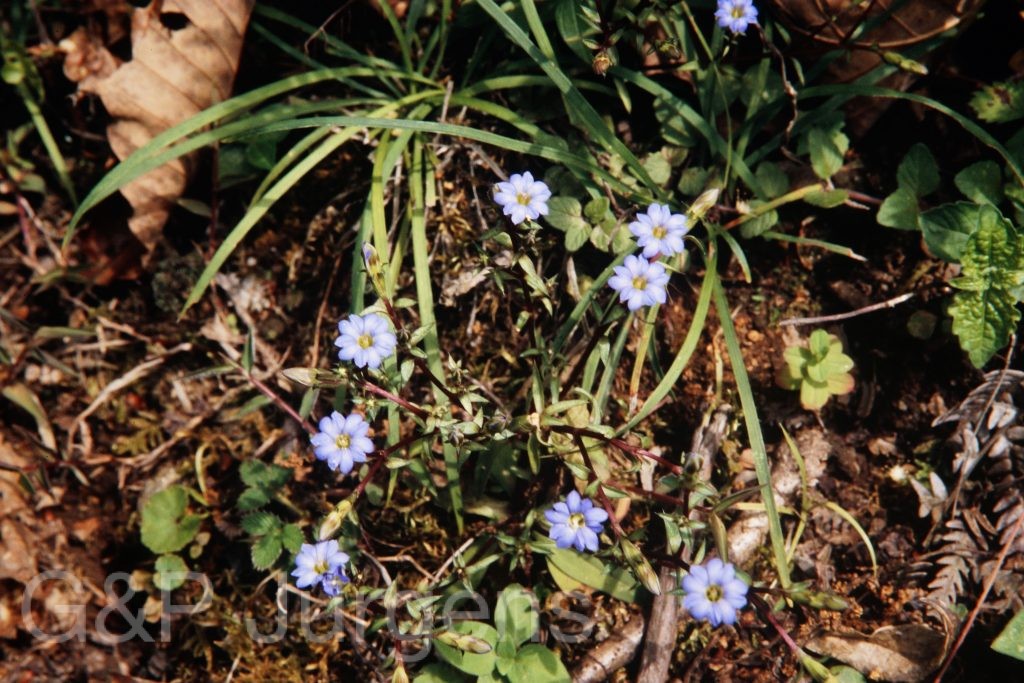
Bh2008 446 G697
Bhutan Gogona, 3400m April
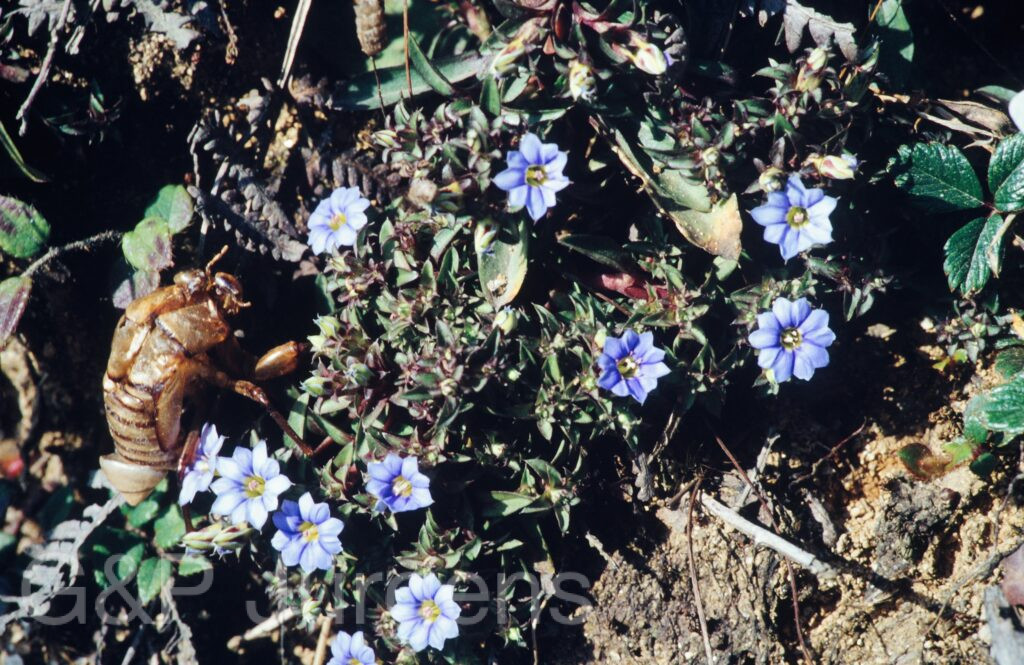
BH2008 537 G815
Bhutan Limbukha, 2200m April
Bh2008 538 P816
Bhutan Limbukha, 2200m April

Description

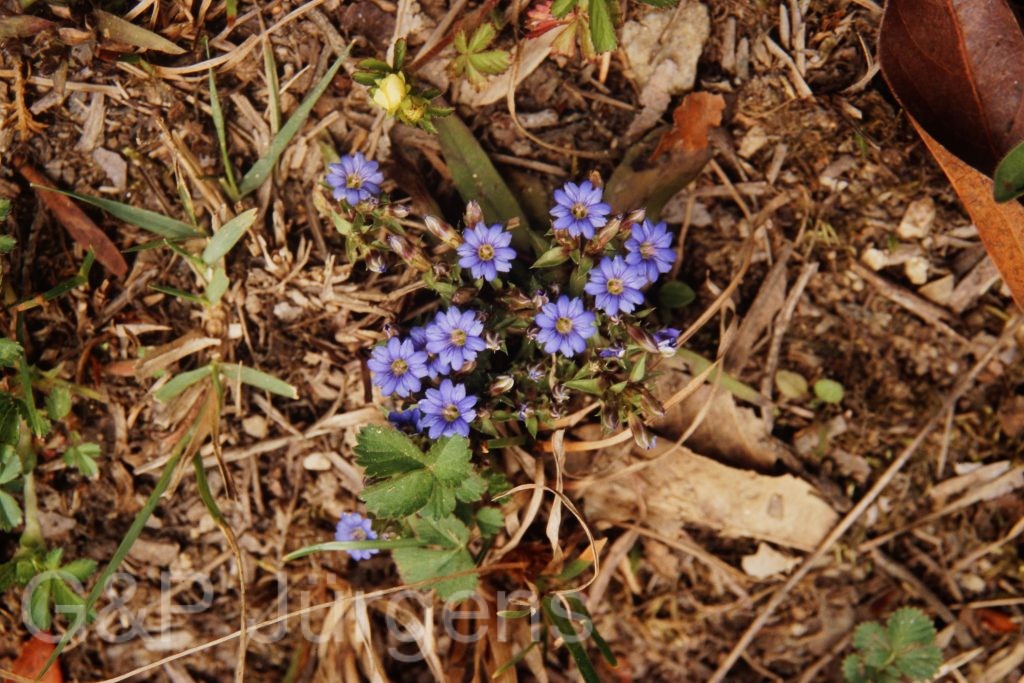
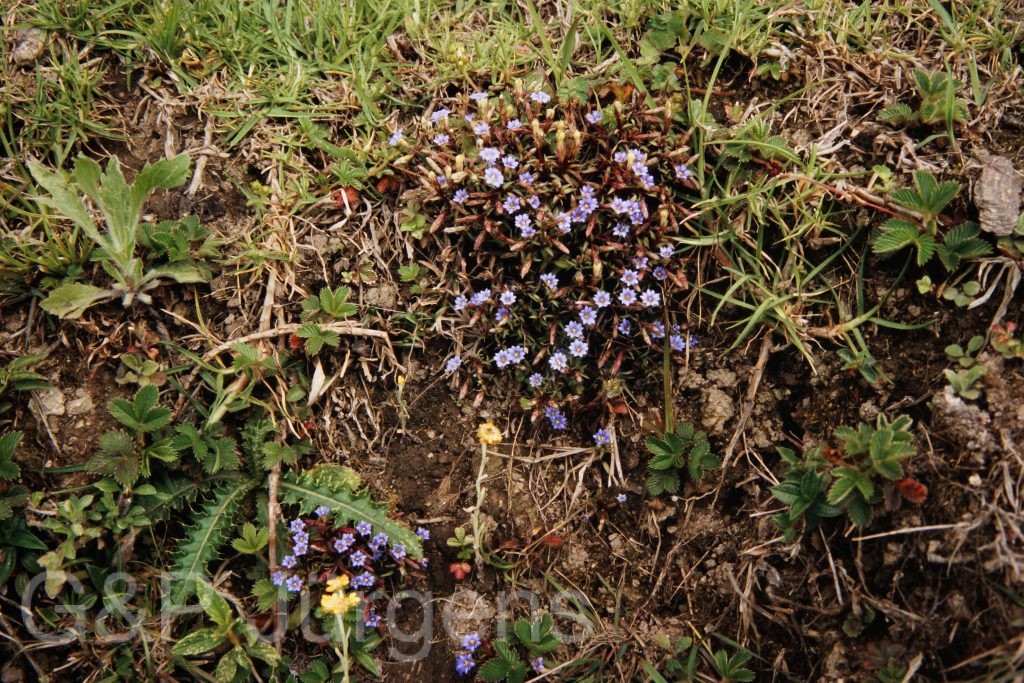
Gentiana maeulchanensis is a small annual or biennial gentian of the eastern Himalaya and adjacent China, known from a comparatively modest 60 records spanning China, Bhutan, India and Myanmar. It occupies open meadows, grassy banks, terraced field margins and moist disturbed ground, generally between 2000 and 3600 m, flowering early in the season before the monsoon. The illustrated plants were collected in Bhutan at Gogona (3400 m) and at Limbukha (2200 m), both in April, the latter site lying among the lower cultivated valleys where the species descends to its altitudinal minimum.

The plant is a slender, often branched herb a few centimetres to about 20 cm tall, with a basal rosette and small opposite cauline leaves that are ovate to spathulate with cartilaginous, often whitish margins. The flowers are solitary and terminal or borne in lax cymes; the calyx is tubular with a membranous keel and unequal lobes. The corolla is funnelform to campanulate, blue to pale violet, with five spreading lobes alternating with shorter, fringed or toothed plicae in the sinuses, a defining feature of the section. The capsule is exserted on a stipe at maturity and releases numerous minute seeds.

The species belongs to the predominantly annual Himalayan-Chinese assemblage of small gentians, where it is distinguished by its plical fringing and early phenology. Such early flowering exploits the brief window before competing monsoon vegetation, and the flowers are pollinated by early-emerging insects. With a restricted but stable distribution, it has not been assessed but warrants attention where its lower-elevation habitats are subject to agricultural change.

Author: Franch. · Sources: POWO (Kew), GBIF, Flora of China, Flora of Bhutan, Annotated Checklist of the Flowering Plants of Nepal, Ho & Liu monograph of Gentiana

(D.Don) Wall.

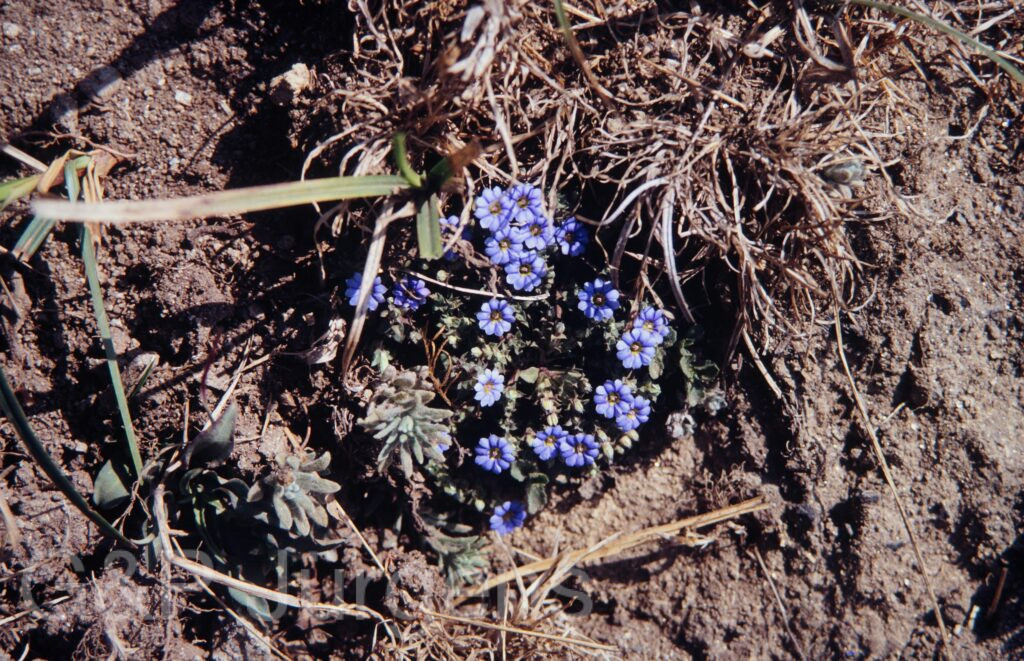
Nepal 1994 80 ergebnis
Ost-Nepal Jaljale Himal
2900m April
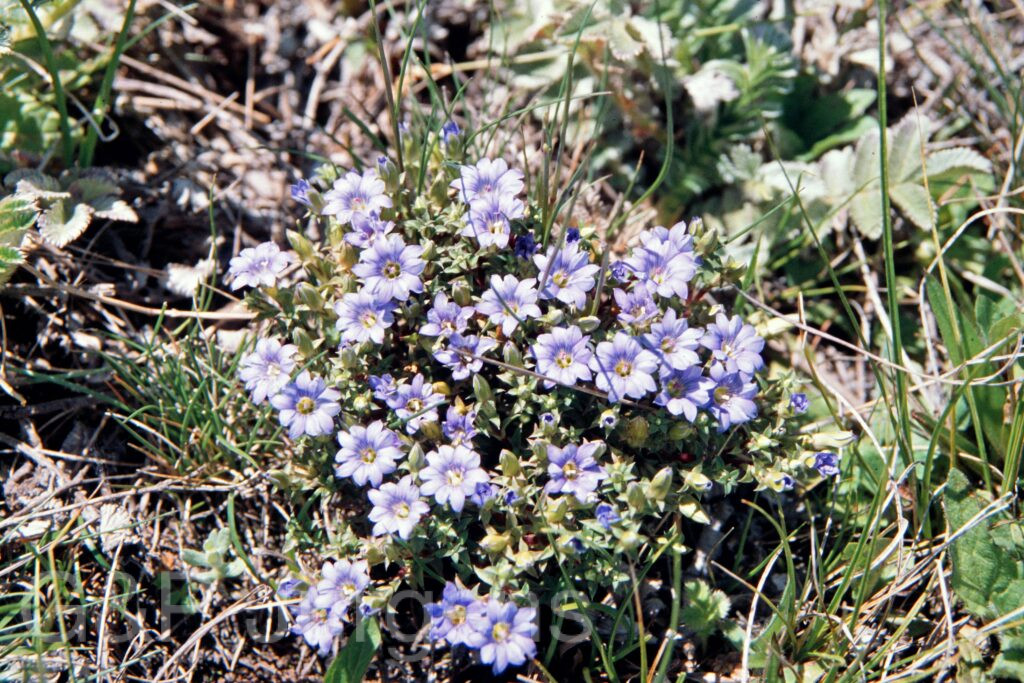
Nepal1992 43 W61 ergebnis
Nepal Nundhaki 1600m March 
Nepal 99 227 ergebnis
West-Nepal Gumghadi 2400m, June

Description

Gentiana pedicellata is a small annual gentian widely distributed across the Himalaya and into south-western China and Sri Lanka, with records also from Myanmar, Laos and Bangladesh and a documented base of some 466 occurrences (European and East Asian points largely cultivated or curated). It occupies open grassy slopes, terraced fields, forest clearings and moist disturbed ground over a broad altitudinal span. The images here span eastern Nepal's Jaljale Himal at 2900 m in April, Nundhaki at 1600 m in March, and Gumghadi in west Nepal at 2400 m in June, reflecting a flowering season tied to spring and early summer at middle elevations.

The plant is a slender, diminutive annual a few centimetres to about 15 cm tall, often branched from the base. The leaves are small, opposite, ovate to elliptic, sessile or shortly petiolate and somewhat fleshy, the lower forming a loose basal rosette. The flowers are solitary and terminal on conspicuously elongate, thread-like pedicels (the source of the epithet), the calyx tubular with five lobes, and the corolla narrowly funnel-shaped, pale blue to bluish-white with intervening plicate folds between the five spreading lobes. The fruit is a stalked, two-valved capsule exserted from the persistent calyx, releasing numerous minute seeds.

Gentiana pedicellata belongs to the Gentianaceae and to the annual gentians (section Chondrophyllae), a group well represented in the temperate Himalaya by many small, ephemeral species. Its long pedicels readily distinguish it from related dwarf annuals. The flowers are insect-pollinated, opening in bright conditions, and the light seeds are dispersed passively. Common, weedy and adaptable across a wide range, the species is of least conservation concern.

Author: (D.Don) Wall. · Sources: POWO (Kew), GBIF, Flora of China, Flora of Bhutan, Annotated Checklist of the Flowering Plants of Nepal, Ho & Liu monograph of Gentiana

(Lam.) Schltr.

Geodorum densiflorum ergebnis
Bhutan Paro, 2400m June

Description

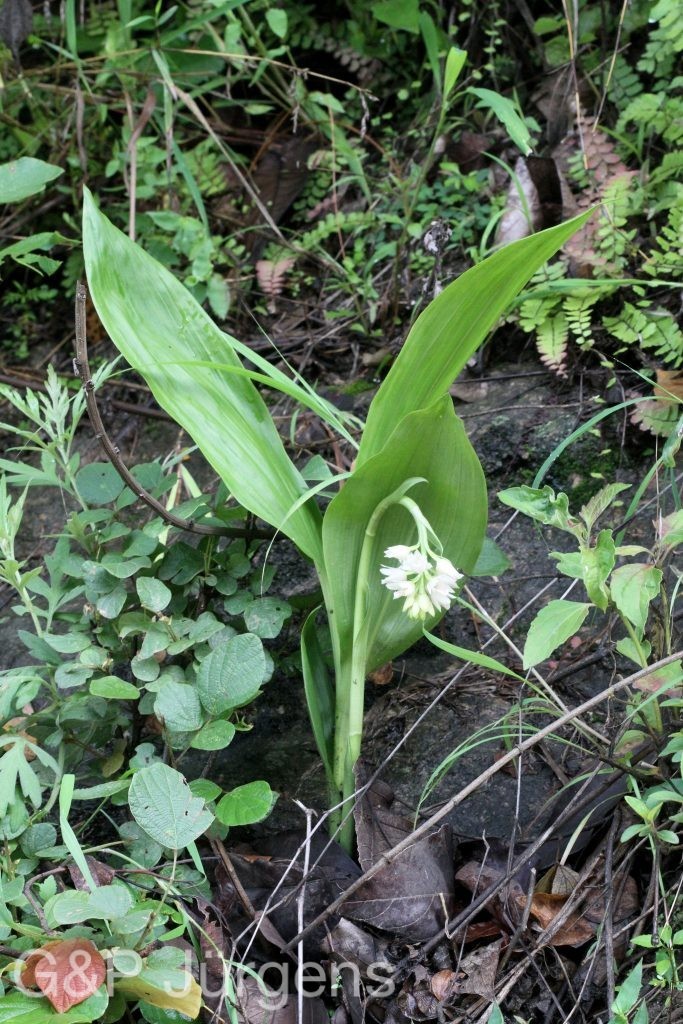
Geodorum densiflorum is a widespread terrestrial orchid ranging across tropical and subtropical Asia and into the Pacific, recorded from India, Nepal, Bhutan, Sri Lanka, China, Japan, Taiwan, Thailand, Vietnam, Malaysia, Indonesia, the Philippines, New Guinea, Australia and numerous islands, with well over a thousand documented occurrences. It grows in open deciduous and bamboo forest, grassy slopes, scrub and roadside banks, usually in seasonally dry, well-drained ground from the lowlands to mid-elevations. The plant photographed near Paro in Bhutan at 2400 m in June represents the upper part of its altitudinal range, flowering with the onset of the monsoon.

The species arises from underground, corm-like pseudobulbs that store water and reserves through the dry season. The leaves are few, large, broadly elliptic-lanceolate and plicate, with prominent parallel venation, narrowed to a petiole-like base and often appearing with or after the flowers. The inflorescence is unmistakable: a stout scape terminating in a dense, sharply nodding or recurved raceme so that the flowers face downward, the apex curving over before erecting in fruit. The flowers are pink to white with a pouched, whitish labellum marked yellow or purple within. The column is short and the fruit a pendent capsule.

In GBIF the name appears as a synonym, with Geodorum densiflorum treated as the accepted name; the species is the type of the small palaeotropical genus Geodorum within tribe Cymbidieae, distinguished by its characteristic nodding inflorescence. Its wide range, ecological tolerance and frequent occurrence in disturbed habitats make it relatively secure, though, like all orchids, it is listed on CITES Appendix II.

Author: (Lam.) Schltr. · Sources: POWO (Kew), GBIF, Flora of China, The Orchids of Bhutan (Pearce & Cribb), Flora of British India, CITES Appendices

(Royle) Raizada & Saxena

Garh 07 20 ergebnis
India Garhwal Ransi at Mandakini 1800m, June

Description

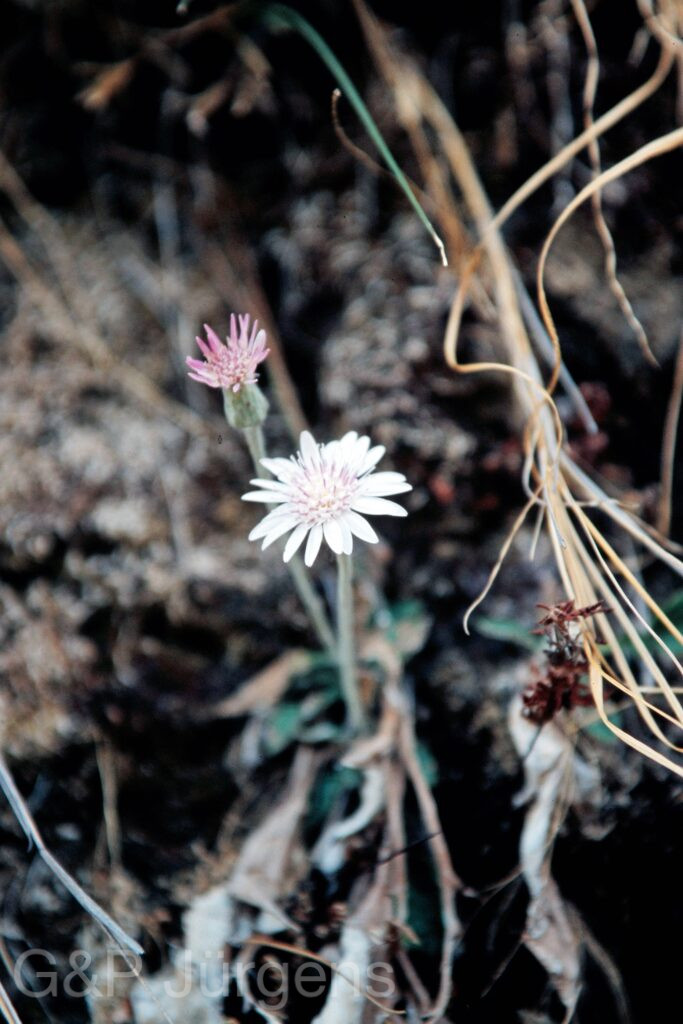
Gerbera gossypina is a western Himalayan herb recorded by GBIF from India and Pakistan, with only about 10 documented occurrences, reflecting both its restricted range and sparse collection history. It grows on open grassy slopes, sunny banks, forest clearings and rocky hillsides in the temperate zone, generally between about 1500 and 2800 m. The photographed plant was found in Garhwal, India, at Ransi by the Mandakini river at around 1800 m in June, a habitat characteristic of this woolly-leaved species among the herb-rich meadows of the western Himalayan foothills before the monsoon.

The species is a stemless or short-stemmed perennial forming a basal rosette from a thick rootstock. The leaves are oblong to obovate or lyrate, narrowed to a winged petiole, and densely clothed beneath with white to greyish cottony tomentum, the feature that gives the epithet gossypina. The flowering heads are solitary on long, erect, woolly scapes overtopping the rosette. Each radiate capitulum has an outer series of strap-shaped ligulate florets, white to pinkish above and often reddish beneath, surrounding numerous tubular disc florets within an involucre of imbricate bracts. The fruit is a ribbed, hairy cypsela bearing a pappus of fine bristles.

Gerbera gossypina (Royle) Raizada & Saxena is one of few representatives of this largely African and Asian genus in the Himalaya and a western-Himalayan element of phytogeographic interest. The very small number of records suggests it is genuinely localised, and its limited known range and scant documentation indicate its conservation status merits assessment, with field survey needed across Garhwal, Himachal and adjoining Pakistan.

Author: (Royle) Raizada & Saxena · Sources: POWO (Kew), GBIF, Flora of British India, Polunin & Stainton: Flowers of the Himalaya, taxonomic revisions of Gerbera (Asteraceae)

DC.

Bhutan2014 718
Bhutan Wangdi Phodrang 2000m, May

Description

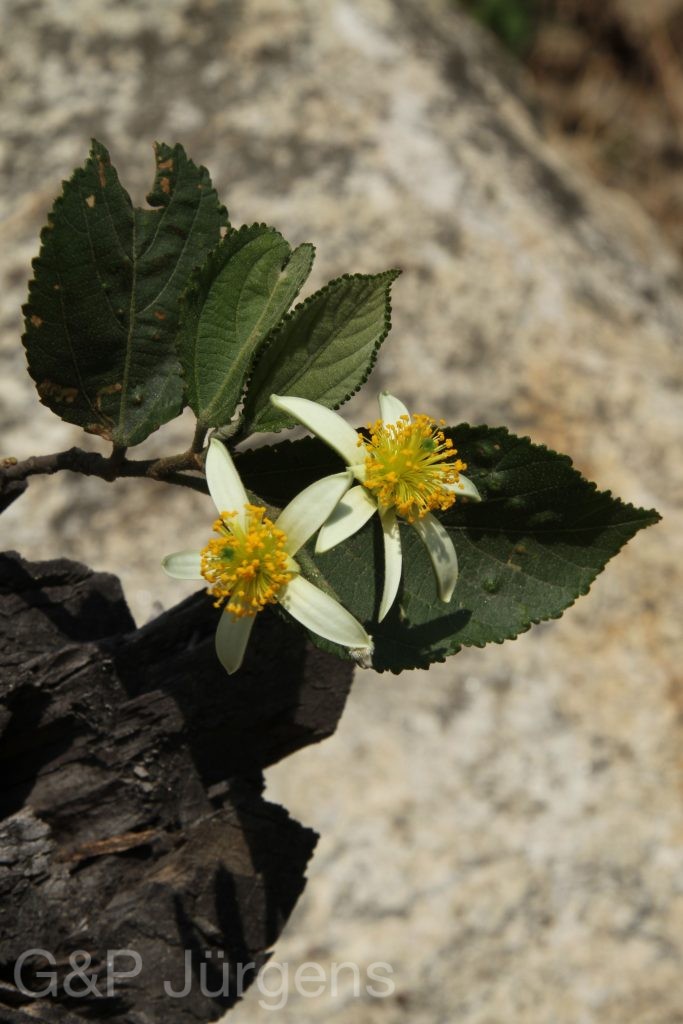
Grewia serrulata is a shrub or small tree of the Indomalayan tropics, distributed through India, Nepal, Bangladesh, Myanmar, Malaysia, Bhutan, Indonesia, the Philippines, Pakistan and Thailand, with around 382 GBIF occurrences. It is a plant of warm subtropical to tropical hill forest, growing in open woodland, forest margins, scrub, ravine slopes and along roadsides and clearings, generally on well-drained ground in the foothill and lower montane belt. The record from Wangdi Phodrang in Bhutan at about 2000 m in May illustrates its occurrence in the warm temperate to subtropical zone of the eastern Himalayan foothills, flowering in the pre-monsoon season.

The plant is a much-branched shrub or small tree with young branchlets bearing stellate pubescence. The alternate, simple leaves are ovate to oblong-lanceolate with an asymmetric, rounded to subcordate base, an acuminate apex, a finely serrulate margin (as the epithet denotes) and prominent palmate basal venation, the lower surface often paler and stellate-hairy. The flowers are borne in small axillary or leaf-opposed cymes; each has five sepals, five spreading yellow to whitish petals each with a basal nectariferous gland, and a prominent central androgynophore bearing numerous stamens around a superior ovary. The fruit is a small, lobed, fleshy drupe, becoming reddish to purplish-black at maturity and bearing few stones.

Described by de Candolle, Grewia serrulata belongs to a large genus formerly placed in Tiliaceae but now subsumed, following molecular phylogenetics, within the broadly circumscribed Malvaceae (subfamily Grewioideae); the input family is retained accordingly. The genus is well known for its tough bast fibres and edible drupes, and several species are gathered for fruit, fodder and fibre. As a widespread, adaptable component of secondary and disturbed forest, G. serrulata is not regarded as threatened, though locally valued for its useful products.

Author: DC. · Sources: POWO (Kew), GBIF, Flora of British India, Flora of Bhutan, Flora of China, Bayer & Kubitzki treatment of Malvaceae

(Roxb. ex Willd.) DC.

Bhutan2012 1313
Bhutan Pemagatse 1800m, October

Description

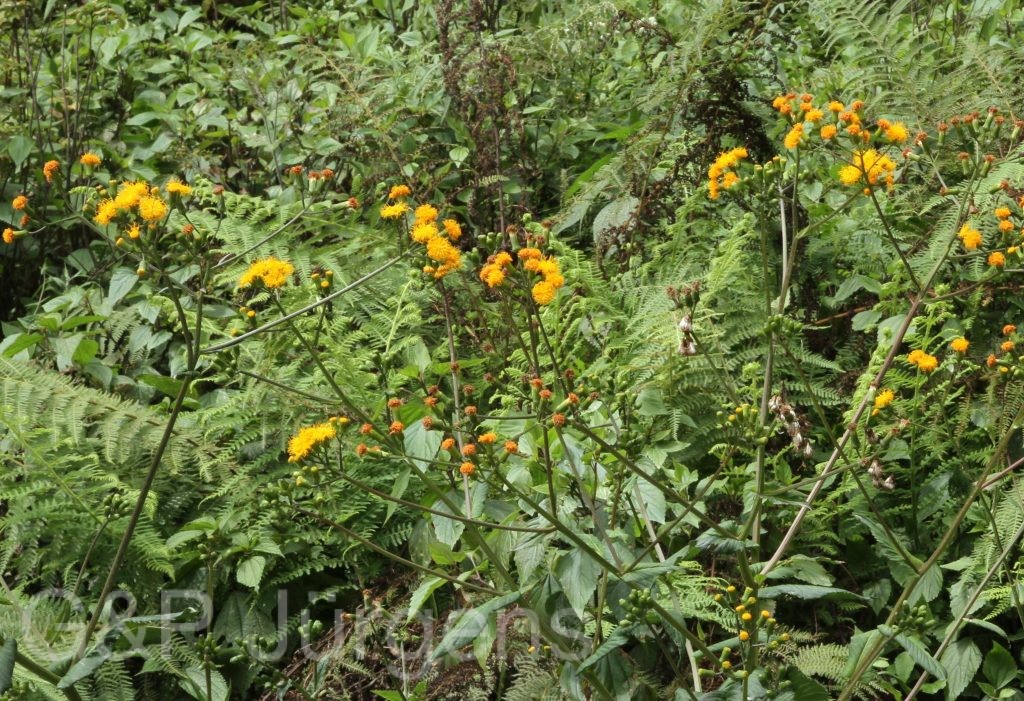
Gynura bicolor is a soft-stemmed composite of warm-temperate to subtropical Asia, native through China, Taiwan, Japan, India, Nepal, Thailand, Myanmar and Bhutan, and very widely cultivated and naturalised across the Pacific, Americas and elsewhere; GBIF lists over 600 occurrences reflecting both wild and grown plants. It occupies forest margins, moist shaded slopes, streamsides and disturbed ground, generally below about 2000 m. The photographed plant is from Pemagatse in Bhutan at 1800 m in October, growing in humid subtropical hill forest at the lower edge of the survey area.

The species is an erect to ascending perennial herb with fleshy, somewhat succulent, often purplish stems. The leaves are alternate, ovate to oblong-lanceolate, irregularly toothed to lyrately lobed, and strikingly bicolorous, green above and deep purple beneath, the source of the epithet. The capitula are discoid, lacking ray florets, and gathered in lax terminal corymbs; each head holds numerous orange to reddish tubular florets within a cylindrical involucre of narrow phyllaries, the long styles exserted with hairy, recurved branches. The fruit is a ribbed cypsela bearing a copious white pappus of fine bristles.

Gynura belongs to the tribe Senecioneae, and G. bicolor is well known as the edible "Okinawan spinach" or hong feng cai, grown as a leaf vegetable and used in traditional medicine, which accounts for its extensive cultivated distribution. It is of no conservation concern, being a vigorous, easily propagated plant tolerant of disturbance.

Author: (Roxb. ex Willd.) DC. · Sources: POWO (Kew), GBIF, Flora of China, Flora of Bhutan, Annotated Checklist of the Flowering Plants of Nepal, Revision of the Genus Gynura (Senecioneae)

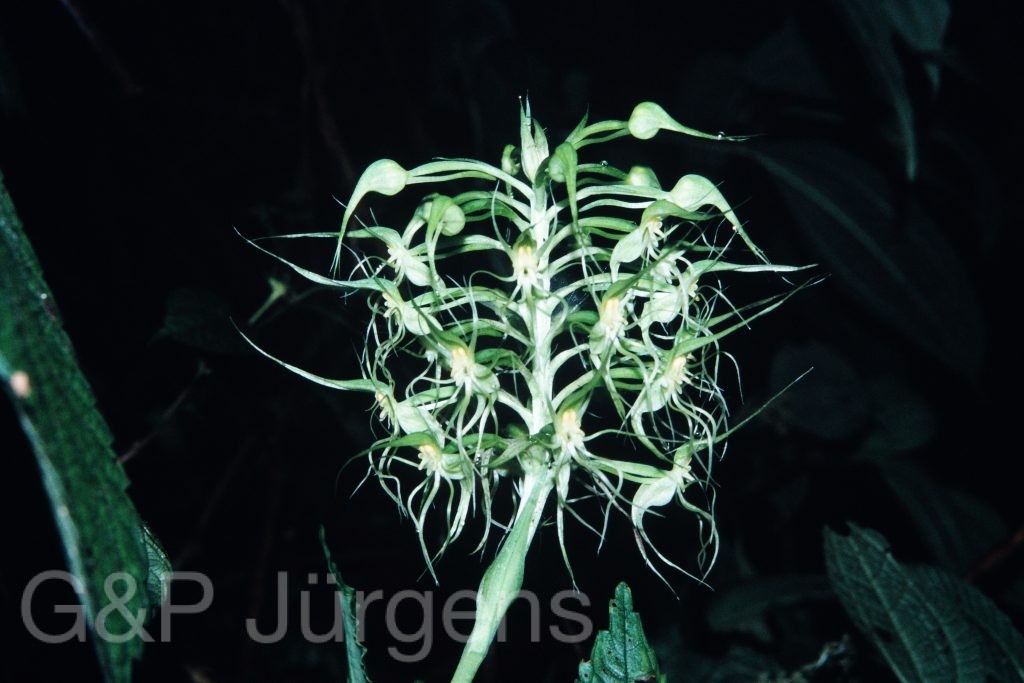
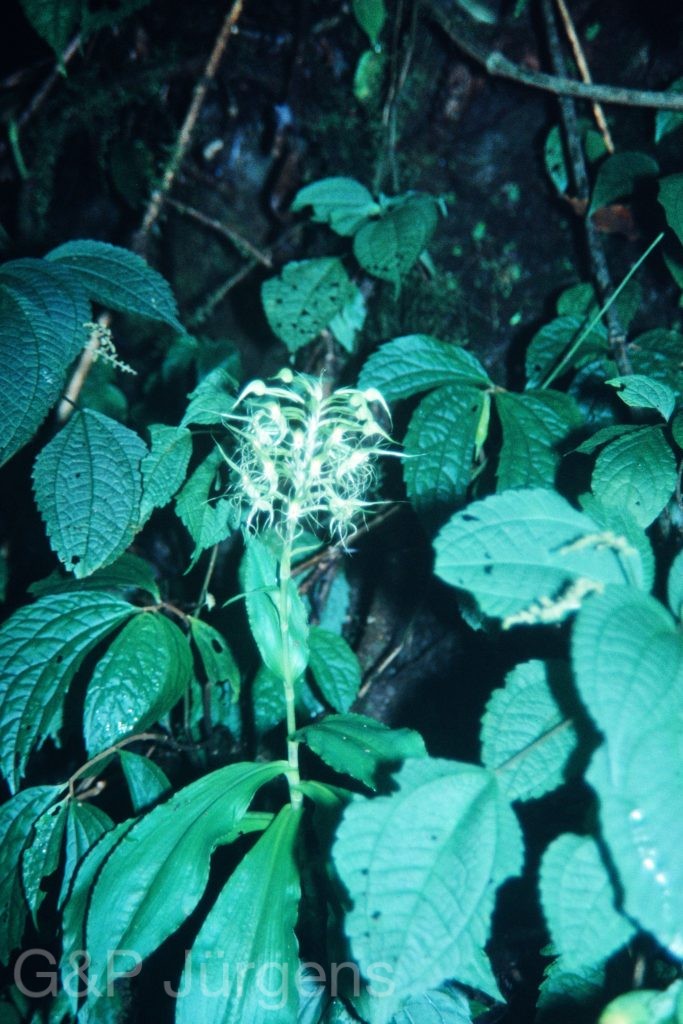
Kraenzl.

Sikkim2003 35 G48
Sikkim above Yoksam 1880m 08.2003
Sikkim2003 34 W47
Sikkim above Yoksam 1880m 08.2003

Description

Habenaria pantlingiana is a terrestrial orchid distributed across the eastern Himalaya and East Asia, with GBIF records (322 occurrences) spanning Taiwan, Japan, China, India, Nepal, Bhutan and Vietnam. It grows in moist, humus-rich soils on shaded forest floors, grassy slopes and stream banks within warm-temperate and subtropical broad-leaved forest, broadly between 1000 and 2500 m. The documented plant from above Yoksam in western Sikkim at about 1880 m, flowering in August, reflects its summer-monsoon phenology, when the tuberous geophyte emerges and blooms during the period of maximum humidity and rainfall.

The plant arises from ovoid, fleshy underground tubers and produces an erect, leafy stem. The cauline leaves are oblong-lanceolate to elliptic, sheathing at the base, grading into bract-like organs above. The inflorescence is a many-flowered terminal raceme of small greenish to greenish-white flowers, each subtended by a narrow bract. As in Habenaria, the lip (labellum) is deeply three-lobed with slender, often filiform divisions, and bears a prominent slender spur arising at its base. The dorsal sepal and petals form a loose hood over the column, the lateral sepals spreading; the rostellum and stigmatic processes are characteristically elaborate. The fruit is a ribbed, dehiscent capsule releasing dust-like seeds.

Described by Kraenzlin and commemorating the Sikkim orchidologist R. Pantling, the species sits within the large, taxonomically intricate genus Habenaria (subfamily Orchidoideae, tribe Orchideae), where spur and lip lobing are key diagnostic features. Like most terrestrial orchids it depends on mycorrhizal fungi for germination and establishment, rendering it sensitive to forest disturbance. Although its wide range buffers it against global extinction, local populations are vulnerable to habitat loss and collection, and all wild orchids are CITES-listed.

Author: Kraenzl. · Sources: POWO (Kew), GBIF, Flora of China, The Orchids of Sikkim-Himalaya (Pantling & King), Genera Orchidacearum (Pridgeon et al.)