Hook. f. & Thomson ex C.B. Clarke
Description
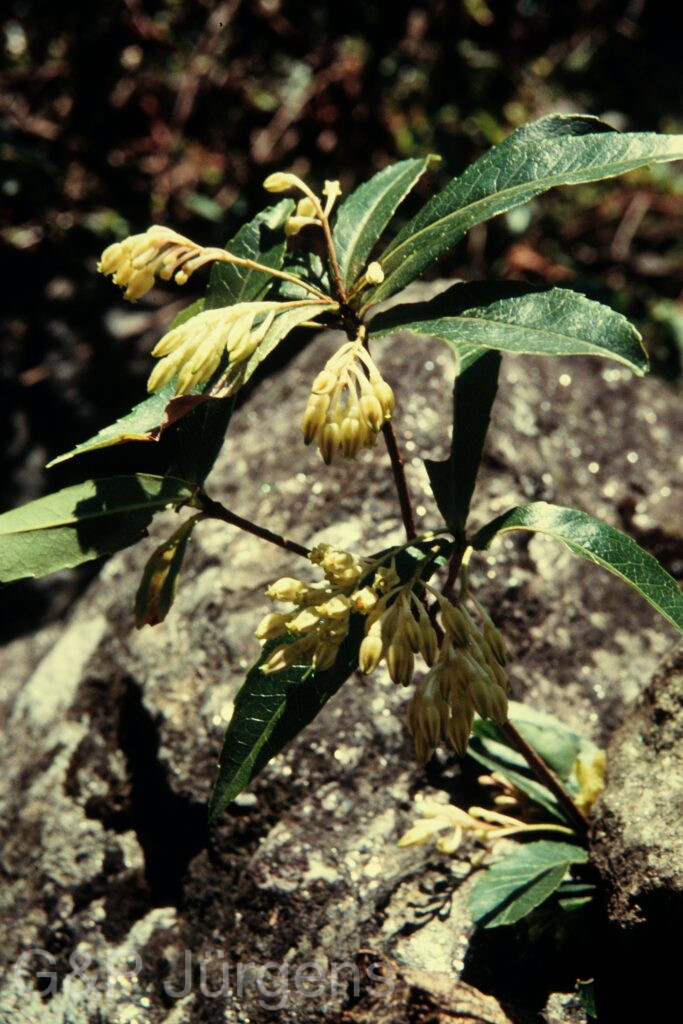
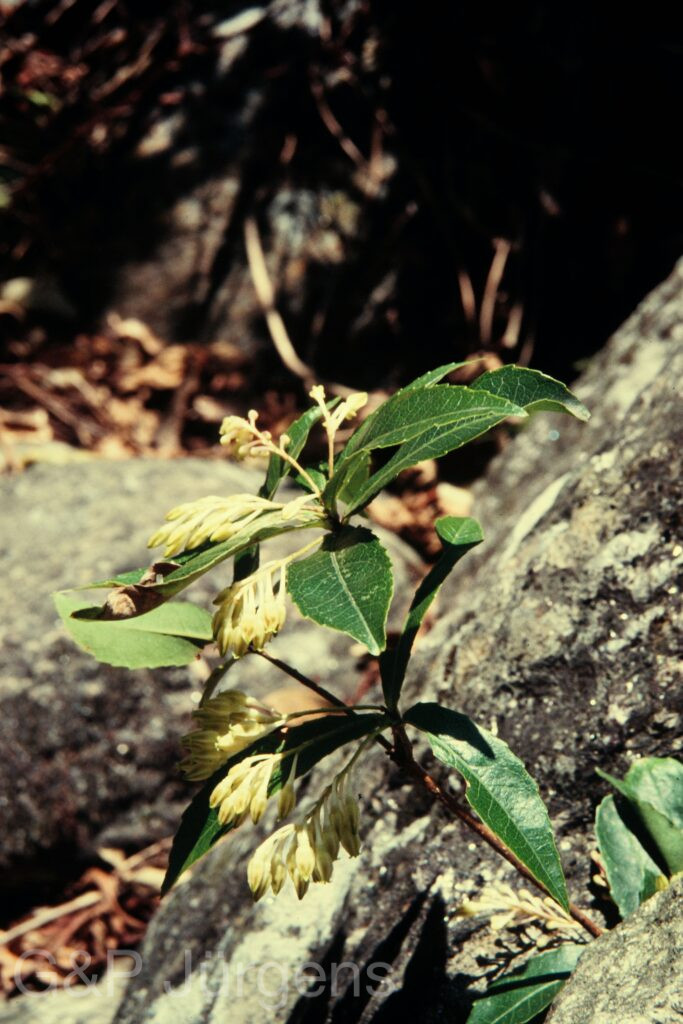
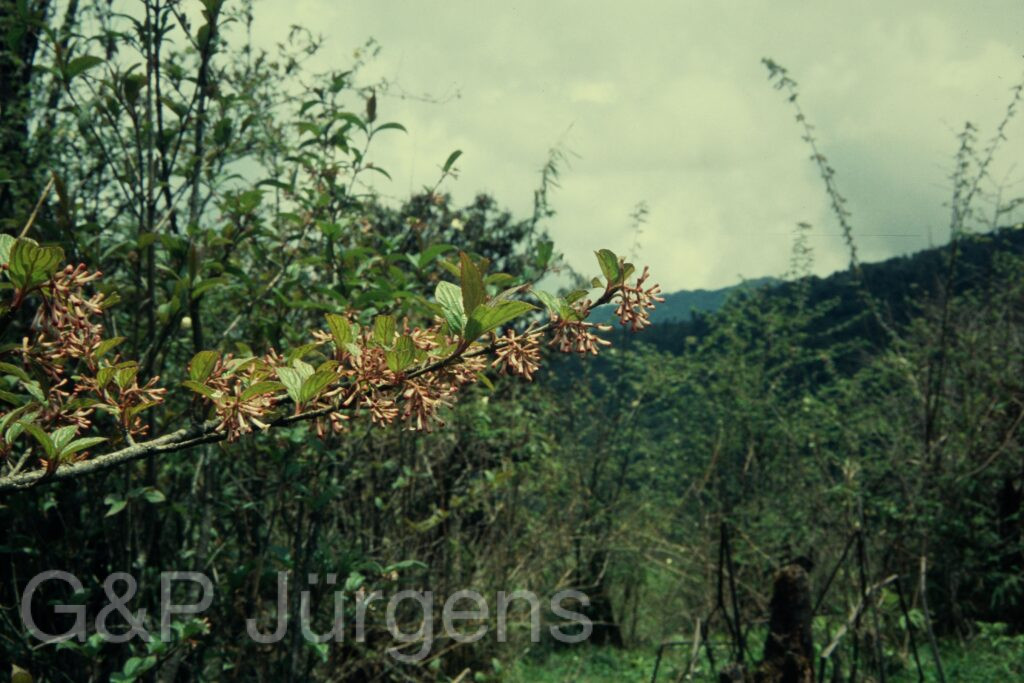
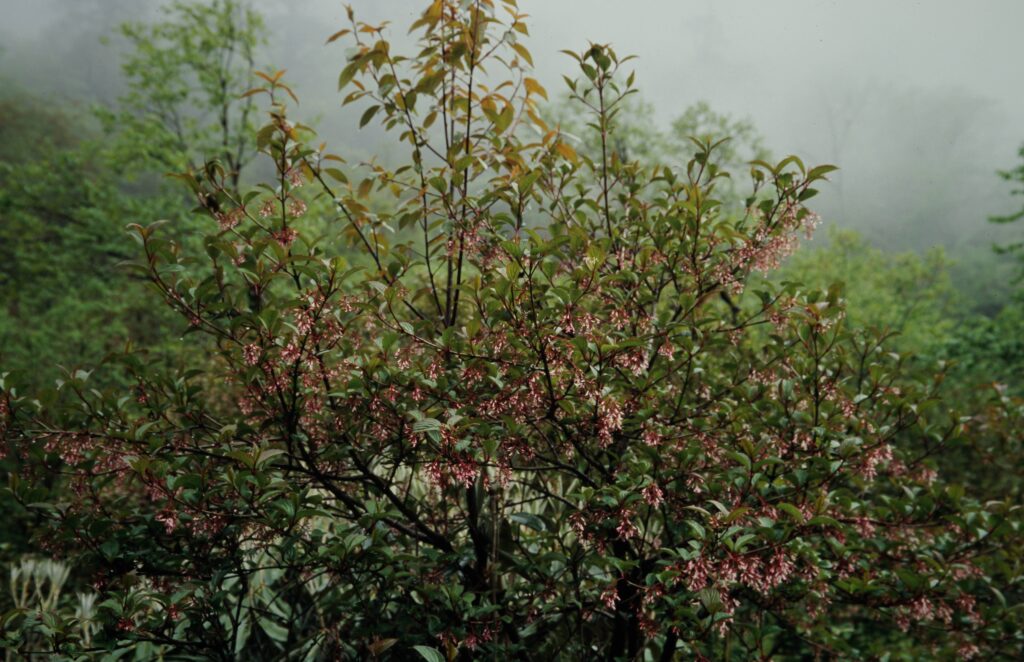
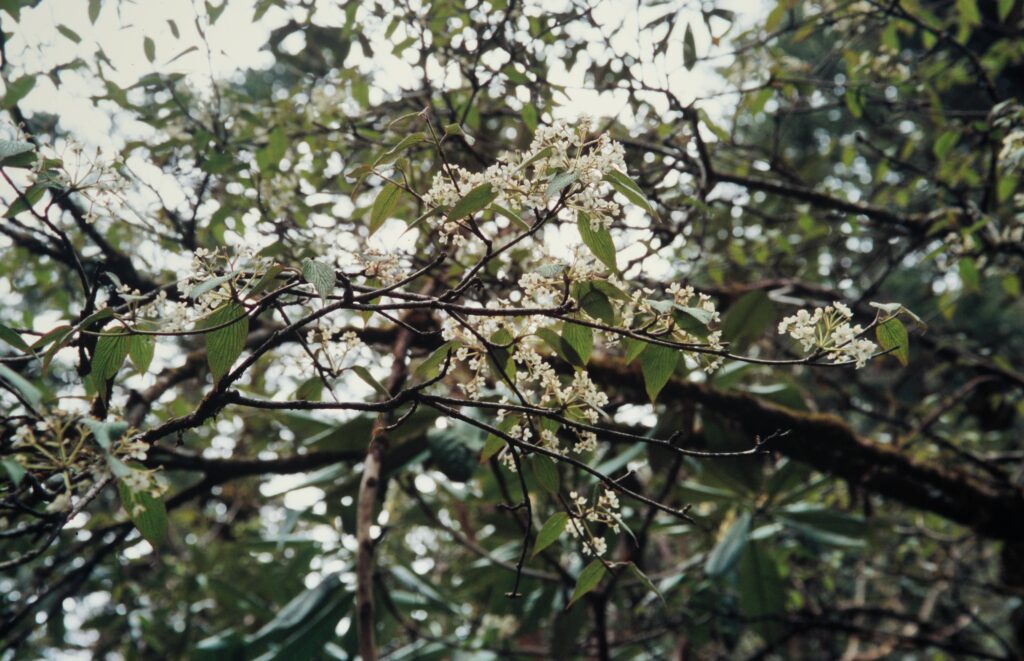
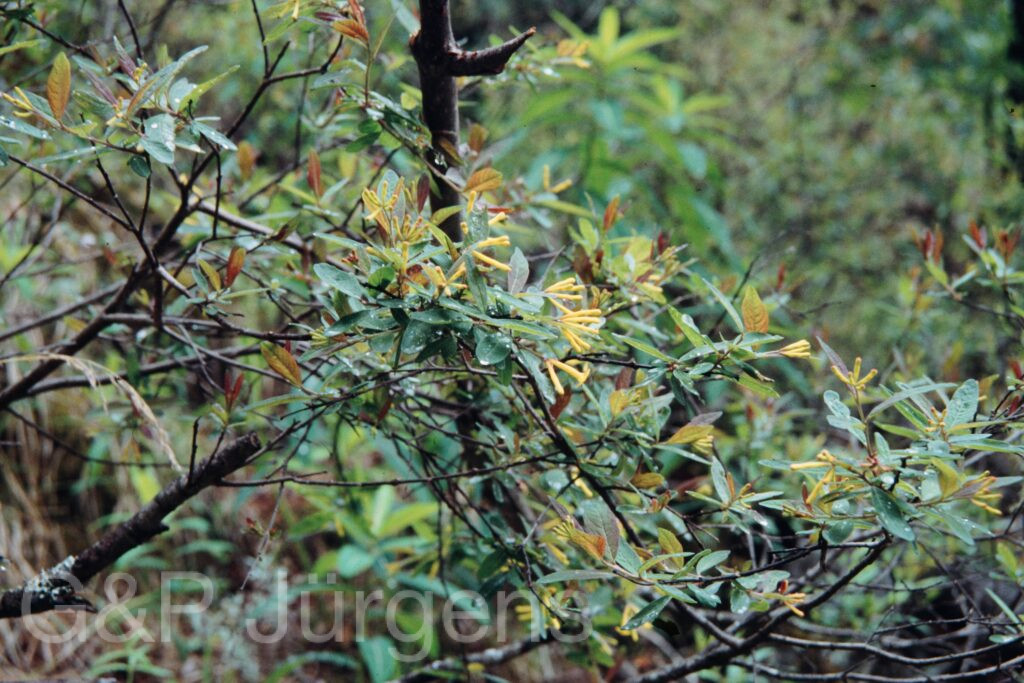
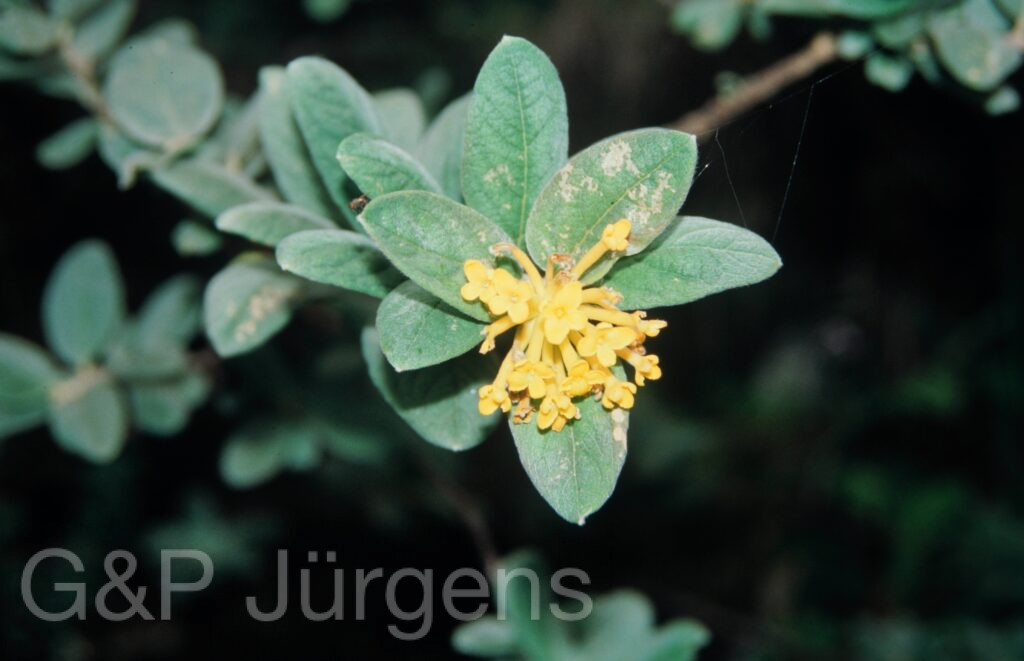
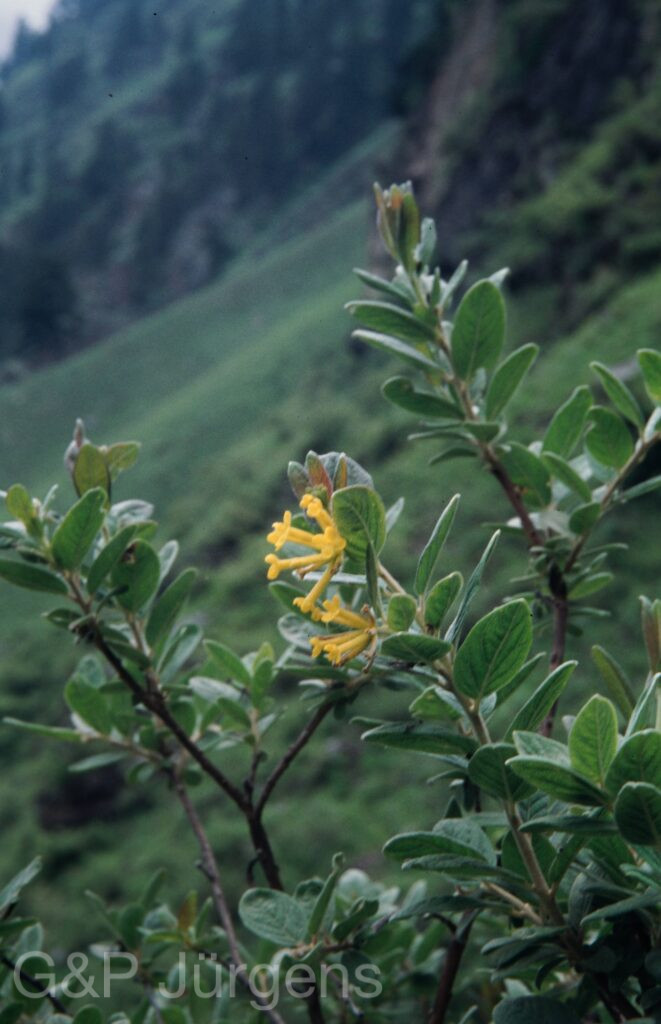
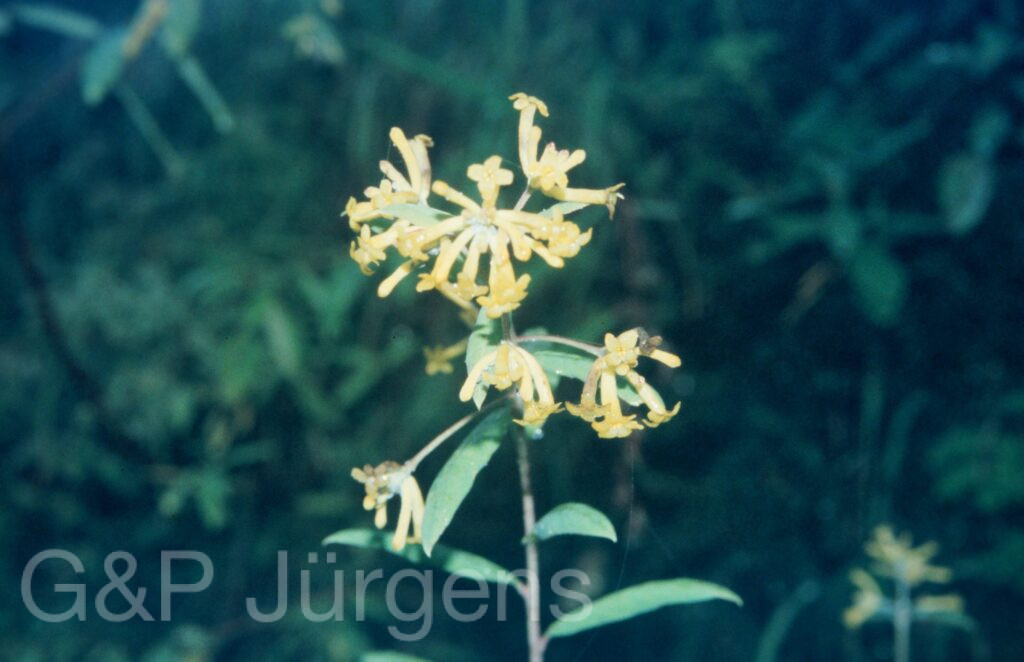
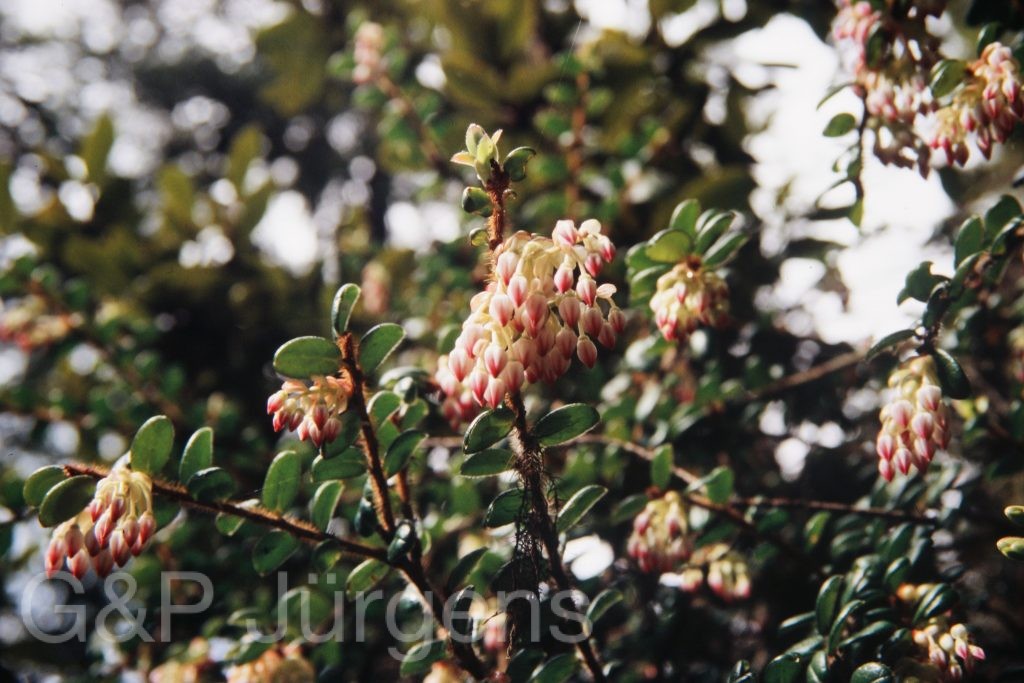
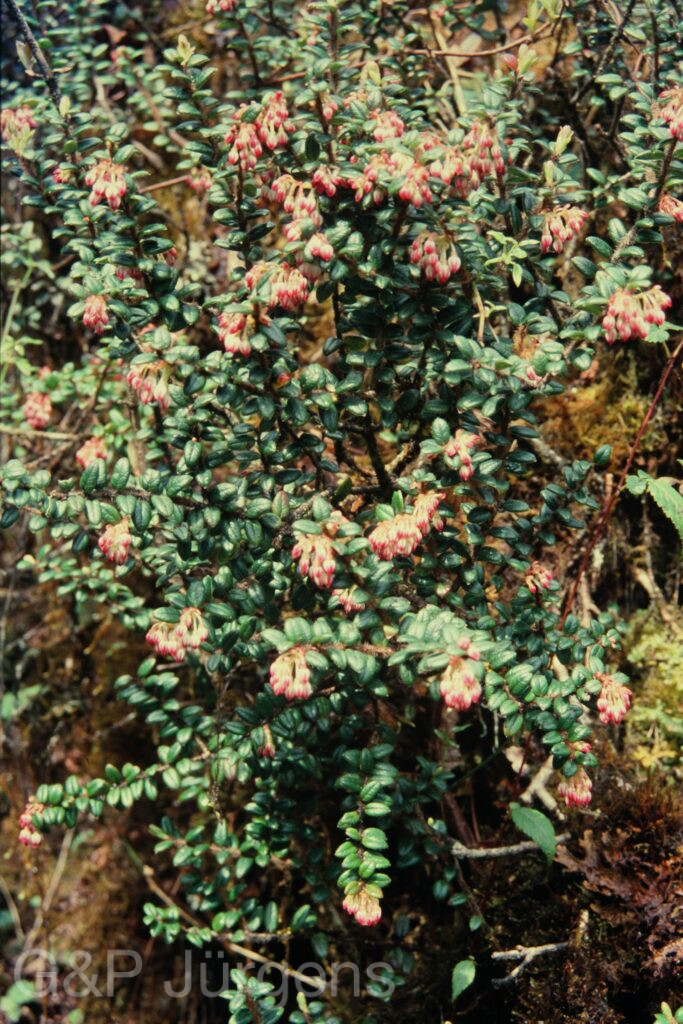
Vaccinium nummularia is an eastern Himalayan blueberry relative distributed through Nepal, northern India, Bhutan, south-central China and Myanmar, with around two hundred and ten GBIF records (a few cultivated or herbarium entries from Britain and the United States reflecting its horticultural interest). It is a characteristic epiphyte or terrestrial shrub of moist temperate forest, growing on mossy tree trunks, banks and cliff faces in the cloud-forest belt. The illustrated plants from Gogona in Bhutan at 3250 m in May and from Bersay in the Sikkim/West Bengal hills at 2700 m in April typify its mid- to upper-temperate, high-humidity habitat.
The species is a low, much-branched evergreen shrub whose young stems and leaf undersides are conspicuously clad in stiff, brown, bristly hairs (setae). The leaves are small, ovate to orbicular, coriaceous and nearly sessile, distichously arranged, with finely serrulate, setose margins, the rounded outline giving rise to the epithet nummularia ('coin-like'). The flowers are borne in short axillary racemes; the corolla is urceolate (urn-shaped), red to pink and waxy, with a small five-lobed limb, and the calyx, ovary and pedicels are likewise setose. The fruit is a globose, purplish-black, edible berry.
Vaccinium nummularia is an accepted species within Vaccinium (Ericaceae, subfamily Vaccinioideae), allied to the setose-leaved Himalayan epiphytic blueberries. Its epiphytic habit, leathery setose leaves and bird-dispersed berries are adaptations to the humid, mossy cloud-forest canopy, and it is cultivated by specialist growers for its handsome bristly foliage and red urn-shaped flowers. The species is locally common and not assessed as threatened, but it depends on intact, humid temperate forest.
Author: Hook. f. & Thomson ex C.B. Clarke · Sources: POWO (Kew), GBIF, Flora of China, Flora of Bhutan, Sleumer revision of Asian Vaccinium (Ericaceae monograph)