
D.Don
Description
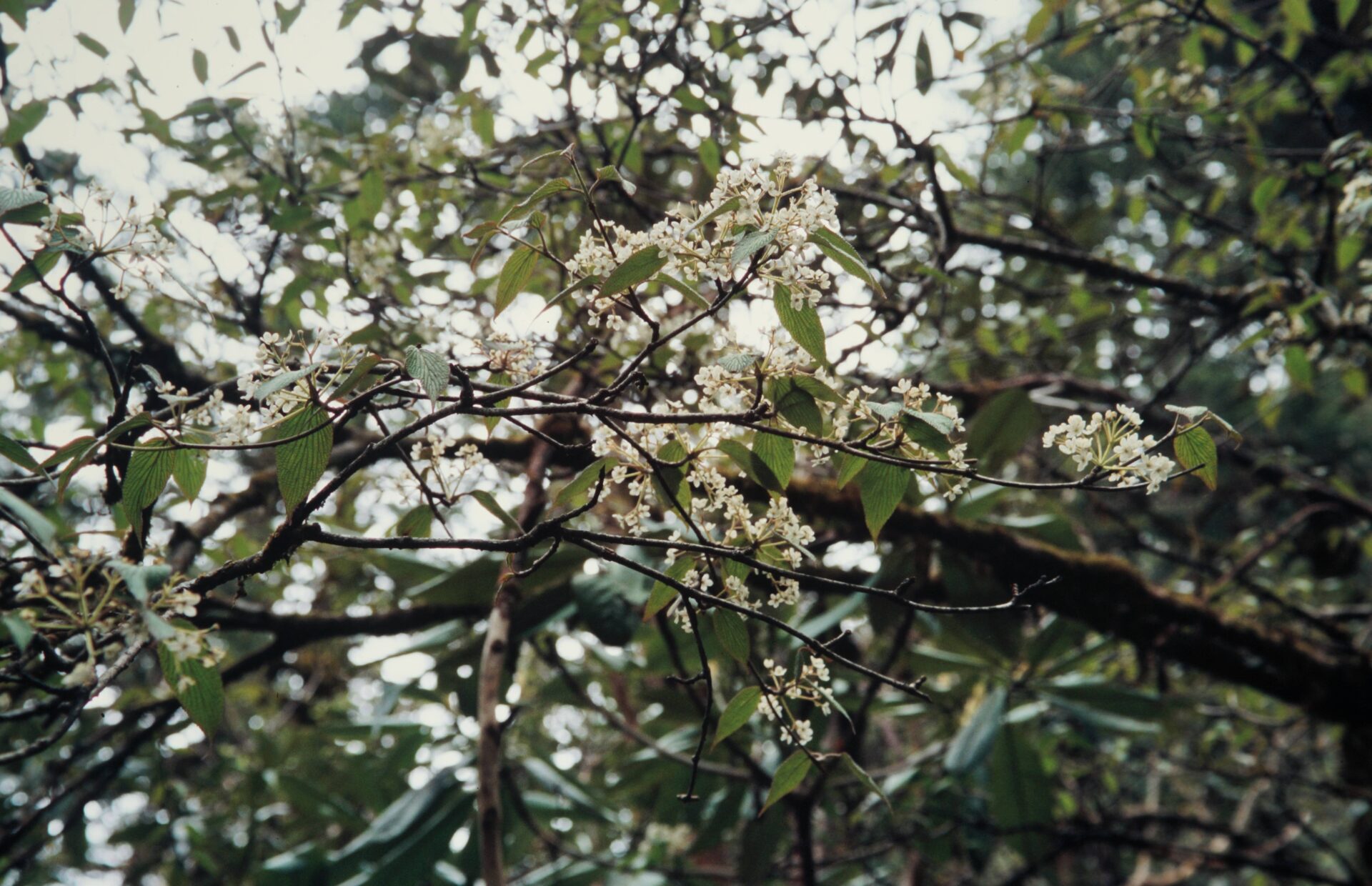
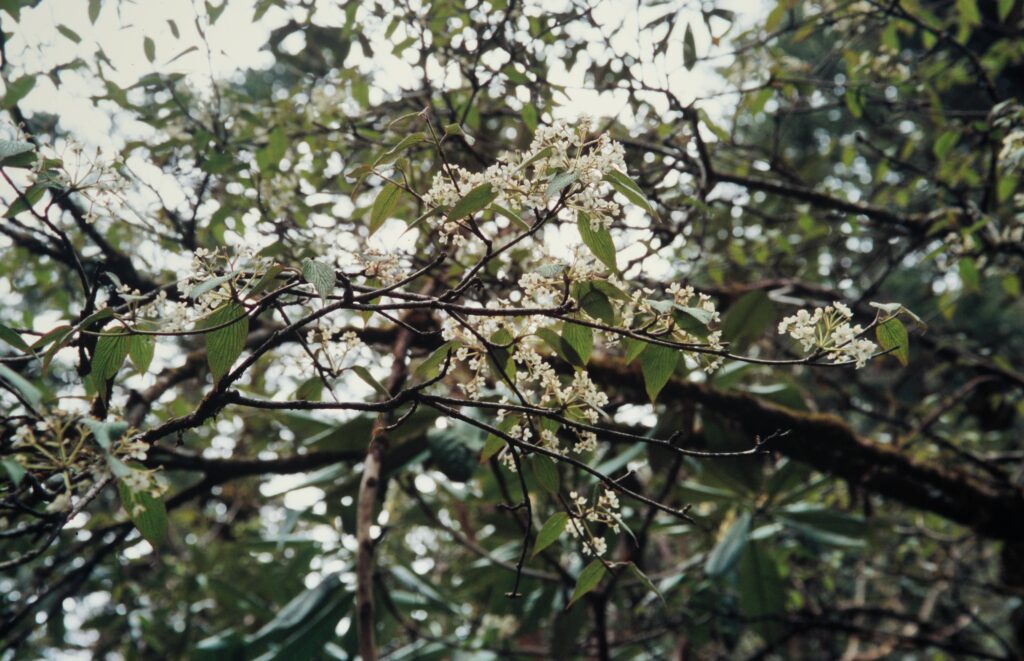
Viburnum nervosum is a deciduous shrub or small tree of the temperate Himalaya and adjacent mountains, documented by GBIF (1437 occurrences) from China, Nepal, India, Bhutan, Myanmar and Taiwan, with further records reflecting cultivation elsewhere. It grows in moist temperate forest, forest margins, rhododendron thickets and open slopes, typically between about 2400 and 3600 m. The collection from Tamrong in West Bengal at 2800 m in May reflects its montane forest setting, where it is conspicuous in spring, often flowering on bare branches before or as the leaves expand in the cool, humid middle-mountain belt.
The plant is a shrub or small tree with stout twigs and prominent buds, the young growth and inflorescence somewhat stellate-pubescent. The leaves are opposite, broadly ovate to elliptic, cordate at the base, serrate, and strongly marked by deeply impressed, parallel lateral veins from which the epithet derives. The inflorescence is a rounded to flat-topped terminal cyme of small, fragrant, white to pinkish flowers, each with a short campanulate corolla of five lobes and five exserted stamens. The fruit is a small, ellipsoid drupe ripening from red to black, containing a single compressed stone.
Viburnum, long placed in Caprifoliaceae but here treated within Viburnaceae (Adoxaceae sensu lato), is distinguished by opposite simple leaves, cymose inflorescences and one-seeded drupes. The strongly nerved leaves and early-spring flowering readily characterise this species among Himalayan viburnums. Its fleshy fruits are dispersed by birds, and it regenerates well in forest gaps. Widespread and locally common, V. nervosum is of no conservation concern.
Author: D.Don · Sources: POWO (Kew), GBIF, Flora of China Vol. 19, Flora of Bhutan Vol. 2, Flora of Nepal, Kern & Hara Viburnum of the Himalaya (Flora of Eastern Himalaya)