Tag:

Myanmar

Flowers of the Myanmar Himalaya — 604 species recorded from northern Myanmar (Burma) and the eastern Himalayan borderlands, a biodiversity hotspot linking the Himalaya to the mountains of Yunnan and Southeast Asia. The region’s forests and alpine slopes hold a rich flora of rhododendrons, orchids, balsams and gentians. Every page gives a botanical description, distribution, habitat and flowering time with the original photograph.

(L.) Kuntze

Garh 07 283 ergebnis
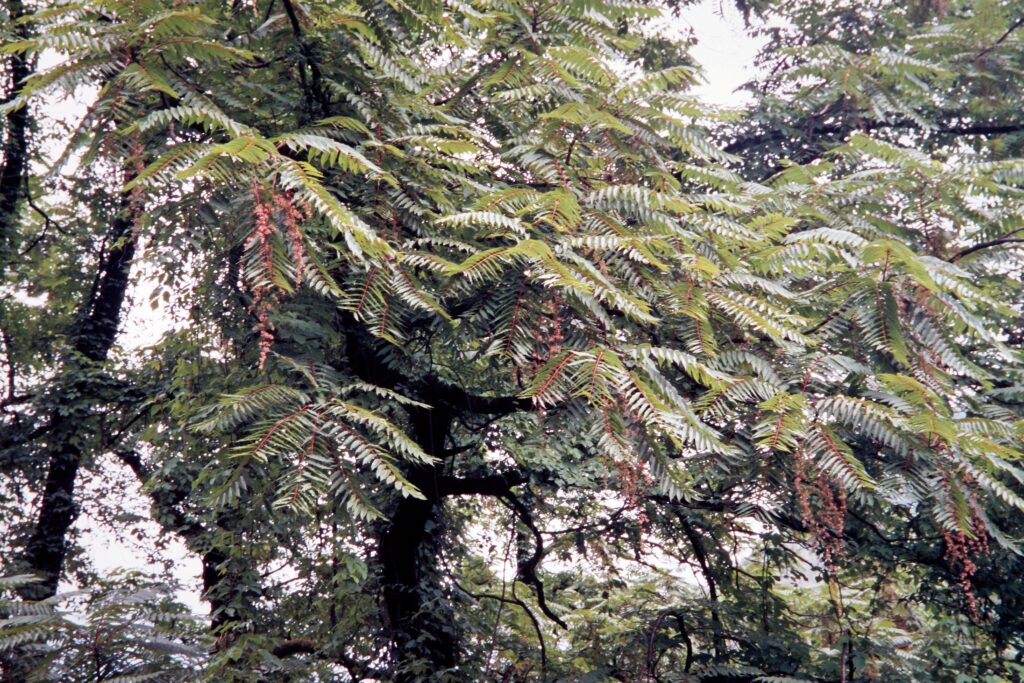
Indi Garhwal Belak Khal 2600m, June

Description

Toxicodendron succedaneum ((L.) Kuntze), the wax tree or Japanese wax tree, is a deciduous tree of the Anacardiaceae native across eastern and southern Asia, ranging from the Himalaya (India, Nepal) through China, Taiwan, Korea and Japan to Southeast Asia (Myanmar, Thailand, Vietnam, Cambodia, Malaysia, Indonesia). With around 6,400 GBIF occurrences, it is well documented, and the species has also become naturalised and locally invasive in Australia, New Zealand and elsewhere. In the Himalaya it grows in temperate broad-leaved forest, on open slopes and forest edges, ascending to roughly 2,600 m, as shown by the Garhwal record from Belak Khal at 2,600 m in June.

The plant is a small to medium-sized tree reaching 8–10 m, with smooth grey bark and a spreading crown that turns brilliant scarlet and orange in autumn. The leaves are alternate and imparipinnate, 25–35 cm long, with 7–15 lanceolate to oblong, entire, glabrous leaflets that are glaucous beneath and taper to an acuminate apex. The small, yellowish-green, functionally unisexual flowers are borne in axillary panicles, the species being dioecious. The fruit is a flattened, asymmetrical, pale brown drupe whose mesocarp is rich in vegetable wax.

As in other members of Toxicodendron, the resinous sap contains urushiol-type allergens that can cause severe contact dermatitis, and the plant should be handled with caution. Economically it has long been cultivated in Japan and China for the wax ("sumac wax") extracted from the fruits, used in candles, polishes and cosmetics. The genus was formerly merged into Rhus, but is now consistently segregated on the basis of its irritant sap and pendulous, papery-fruited inflorescences. The species is abundant and of no conservation concern.

Author: (L.) Kuntze · Sources: POWO (Kew), Flora of Nepal, GBIF, Flora of China Vol. 11, Min & Barfod: Anacardiaceae in Flora of China (2008)
(Roxb. ex Lindl.) Vis.

Bhutan2015 591
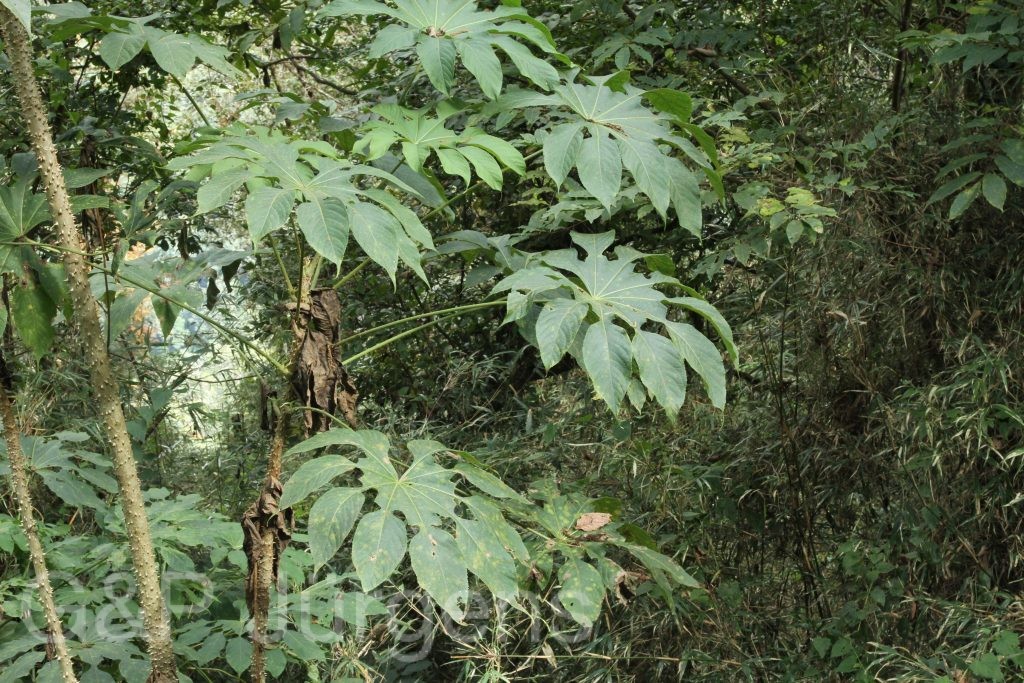
Bhutan Mo-Chu 1900m, October
Sikkim 2006 308 ergebnis
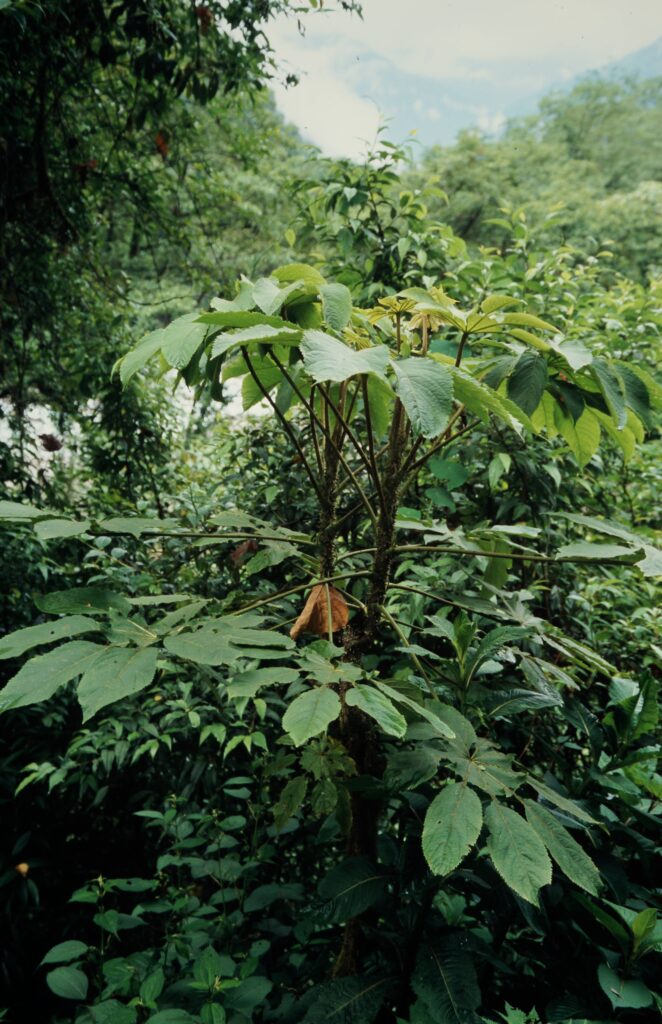
India West-Bengal, Chaana 1750m, May

Description

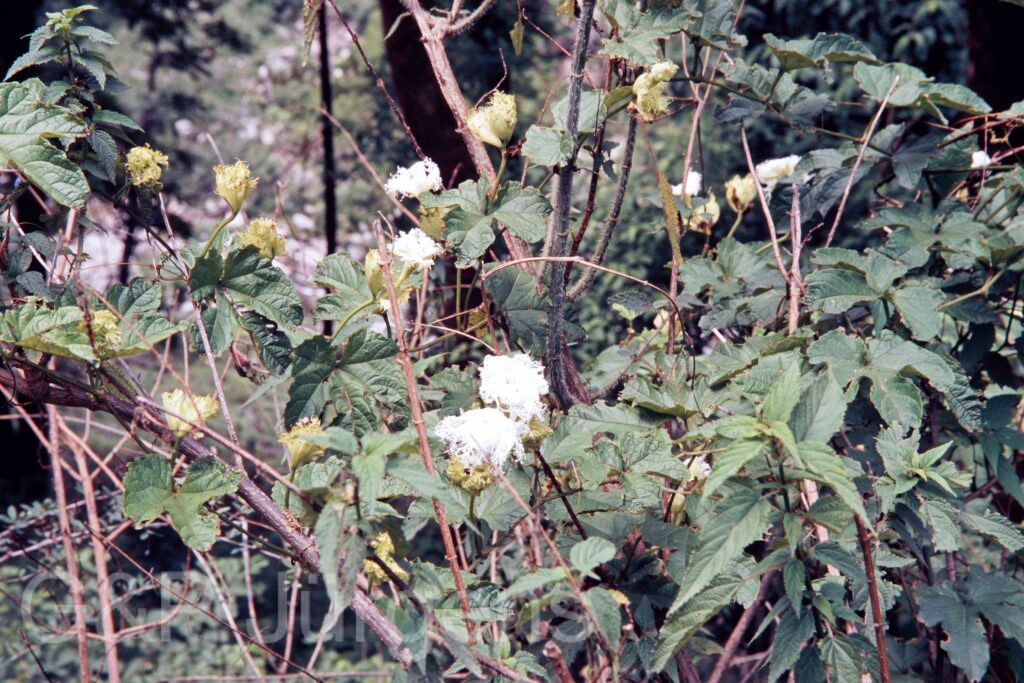
Trevesia palmata, the snowflake tree, is a tropical and subtropical Asian aralioid ranging from the Himalaya of Nepal, India and Bhutan through Bangladesh, Myanmar, Thailand, Laos, Cambodia, Vietnam, southern China and into Malaysia, with more than 700 GBIF occurrences including many from cultivation in botanic gardens worldwide. It grows in warm, humid broadleaved forest, in ravines, along streams, on shaded slopes and in clearings on moist, fertile soils. The localities illustrated, the Mo Chu valley in Bhutan at about 1900 m in October and Chaana in West Bengal at 1750 m in May, are typical of its lower-montane belt of roughly 500-2000 m in the eastern Himalaya.

It is a small, sparsely branched evergreen tree or treelet, often prickly on the trunk and petioles, with a stout pithy stem. The very large leaves are palmately lobed and again deeply incised, so that each is divided almost to the centre into spreading, toothed segments arranged like a snowflake, borne on long prickly petioles and clustered toward the stem apex. The numerous small flowers are creamy to greenish-white and grouped in dense globose umbels arranged along a large, branched terminal panicle. Each flower has a fleshy disc and an inferior ovary of several carpels, and the fruit is a small, somewhat ribbed, fleshy drupe containing several seeds.

Trevesia is a small genus of the ivy family centred on tropical Asia, and T. palmata is its most familiar and widespread species. The dramatically dissected juvenile foliage makes it a popular ornamental and conservatory plant, which explains the many cultivated records far outside its native range. In its forest habitat it is an understorey to mid-canopy element pollinated by insects, and its fruits are dispersed by birds and other animals.

Author: (Roxb. ex Lindl.) Vis. · Sources: POWO (Kew), GBIF, Flora of China, Flora of Bhutan, Frodin & Govaerts World Checklist of Araliaceae, Hooker Flora of British India

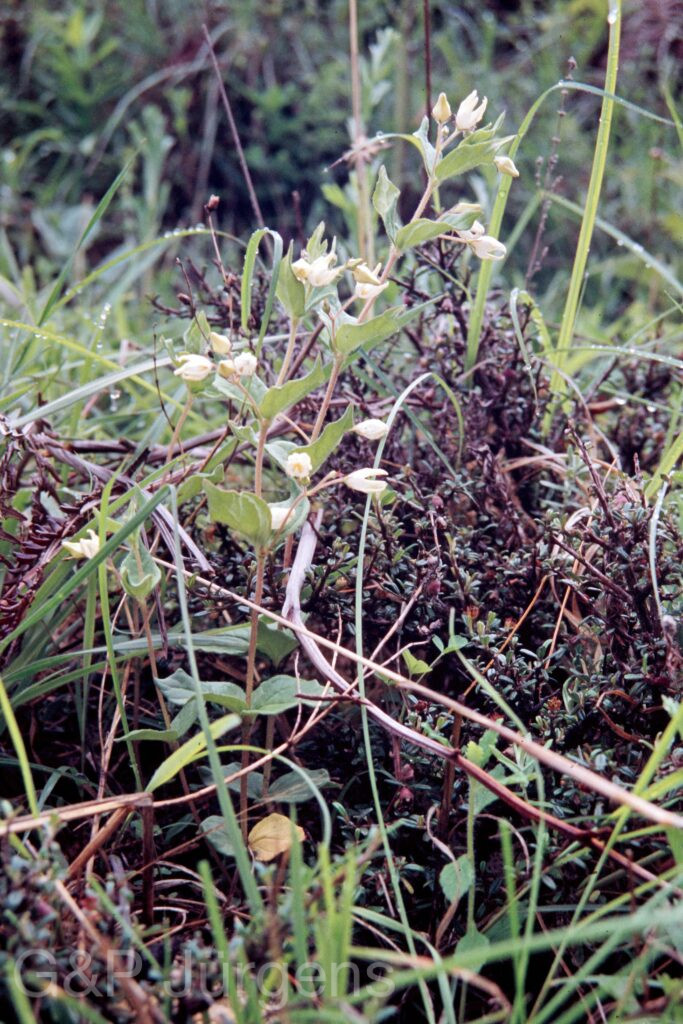
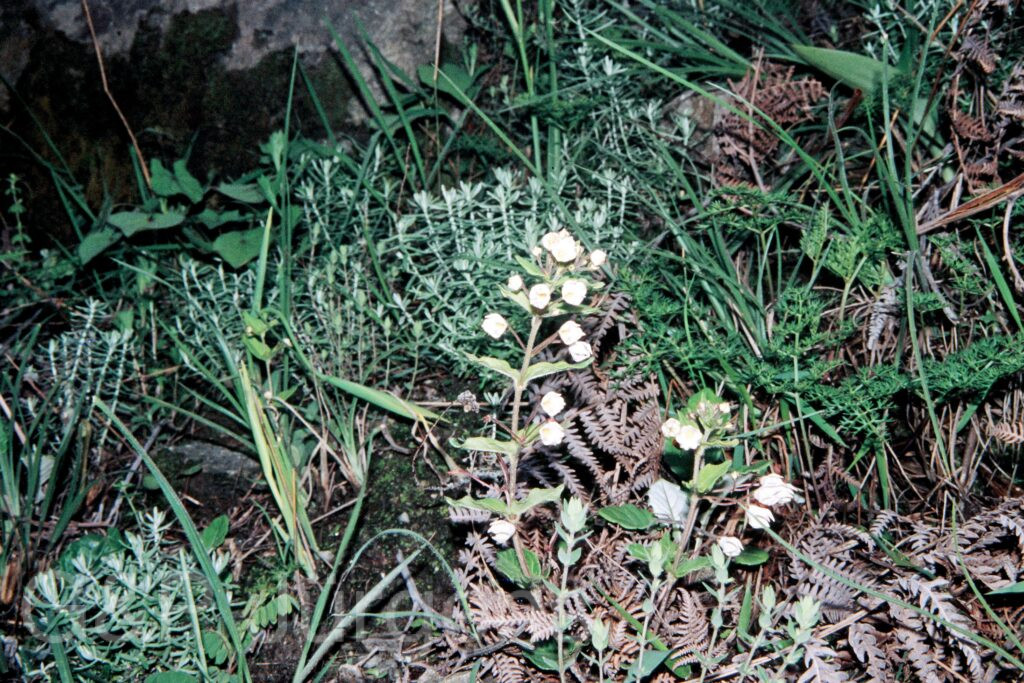
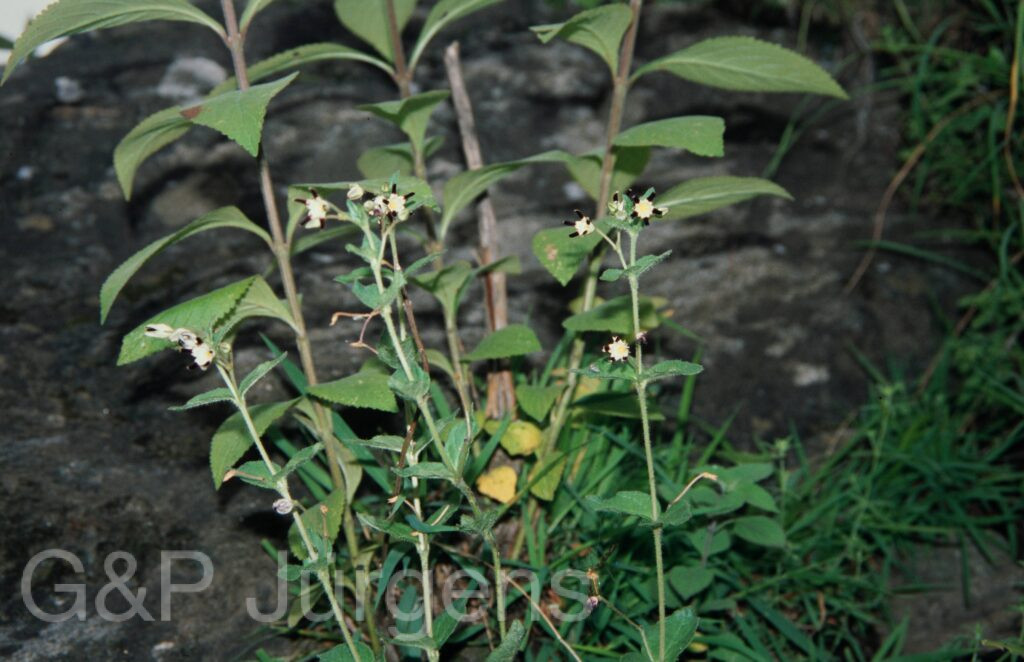
(L.) Lehm.

Nepal 99 565 ergebnis
West-Nepal Hurikot 2700m, June
Nepal 99 564 ergebnis
West-Nepal Hurikot 2700m, June
Nepal 99 910 ergebnis
West-Nepal Hanke 2700m, July

Description

Trichodesma indicum (L.) Lehm. is a herb of the borage family widespread across the Old World tropics and subtropics, native through India, Pakistan, Nepal, Sri Lanka and Myanmar and extending to Southeast Asia, Africa and Australia, with over 1150 GBIF occurrences. It is a weedy plant of open dry ground, fallow fields, roadsides, wastelands and gravelly slopes, typically at low elevations but ascending in the inner Himalayan valleys. In western Nepal it was recorded at Hurikot at 2700 m in June and at nearby Hanke at the same elevation in July, an unusually high station reflecting warm, dry rain-shadow habitats in the upper Karnali region.

It is an erect, branching annual covered throughout with stiff, bulbous-based bristly hairs giving a harsh, scabrid texture. The leaves are mostly opposite below and alternate above, sessile, oblong to lanceolate, the margins entire and undersurface hispid. The flowers are solitary or in lax leafy cymes, nodding on recurved pedicels; the calyx is deeply lobed and sagittate at the base, and the pale blue to bluish-white corolla is rotate with a short tube and a twisted, beaked cone of connivent anthers projecting from the throat, a hallmark of the genus. The fruit separates into four ovoid, tuberculate nutlets enclosed by the enlarged, persistent calyx.

Trichodesma is distinguished within tribe Boragineae by its protruding, spirally twisted anther cone, and T. indicum is the most widely distributed species, much used in traditional South Asian medicine. Its bristly indumentum and burr-like calyx-enclosed nutlets aid epizoochorous dispersal, while its ruderal ecology has carried it far beyond its native range as an introduced weed. Common and adaptable, it is of no conservation concern.

Author: (L.) Lehm. · Sources: POWO (Kew), GBIF, Flora of China, Flora of Pakistan, Flora of British India, Boraginaceae monograph (Kazmi revision of Trichodesma)

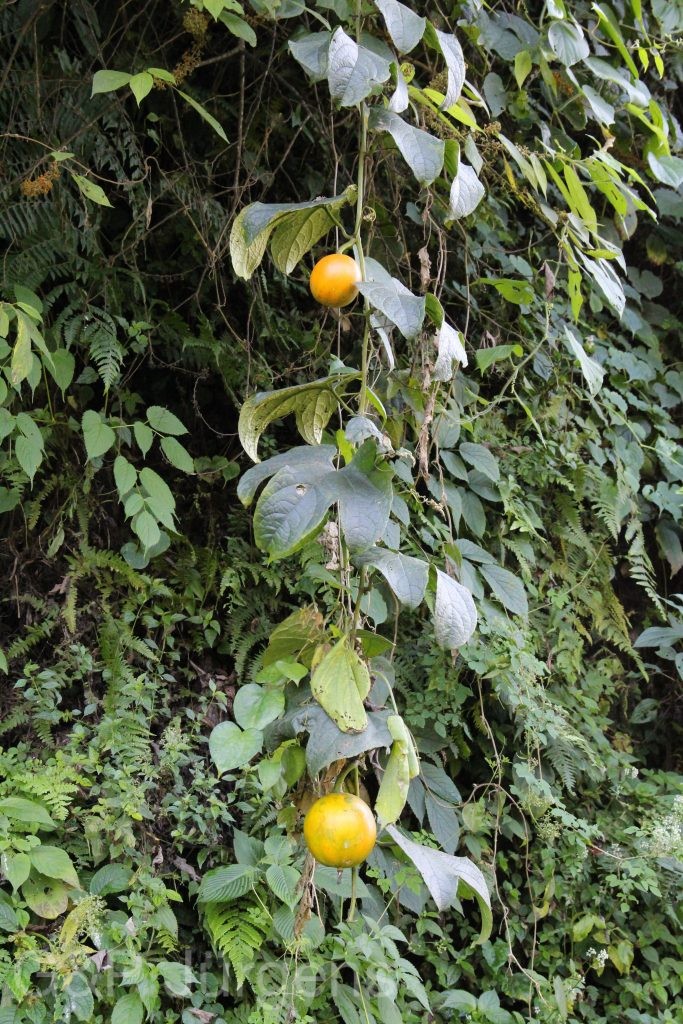
Blume

Bhutan2015 160
Bhutan, Zhemgang 910m, October

Description

Trichosanthes costata Blume is a climbing cucurbit widely distributed across tropical and subtropical Asia, recorded by GBIF from China, Indonesia, Thailand, Taiwan, India, Malaysia, Vietnam, Cambodia, the Philippines, Myanmar, Laos and Bhutan, with over 600 occurrences. It grows in lowland to lower montane forest, secondary growth and thickets, scrambling over shrubs by tendrils. The Bhutanese material from Zhemgang at 910 m in October reflects its preference for the warm subtropical foothills and its autumn fruiting, when the ribbed fruits that give the epithet mature.

It is a slender, herbaceous to somewhat woody climbing vine with angular or ribbed stems and axillary tendrils. The leaves are alternate, broadly ovate to suborbicular, often three- to five-lobed, cordate at the base, with a dentate margin and palmate venation. The plants are monoecious or dioecious, the white flowers with the fringed corolla lobes characteristic of Trichosanthes, the males in racemes and the solitary females with an inferior ovary. The fruit is a small ellipsoid berry, conspicuously ribbed or costate, ripening red to orange, with several compressed seeds dispersed by frugivores.

Trichosanthes costata, sometimes treated under the segregate name Gymnopetalum but here accepted in the broader Trichosanthes, belongs to a large Old World genus of forest lianas distinguished by their fringed corollas, thought to attract nocturnal hawkmoth pollinators. Its wide Indo-Malesian to Sino-Himalayan range and tolerance of disturbance make it common in secondary forest, and several relatives are economically or medicinally important. It is not considered threatened, reflecting its colonising habit.

Author: Blume · Sources: POWO (Kew), GBIF, Flora of China Vol. 19, Flora of Bhutan Vol. 2, Flora of Nepal, de Wilde & Duyfjes revisions of Asian Cucurbitaceae (Trichosanthes)

Lour.

Garh 07 292 ergebnis
India Garhwal, Belak Khal 2750m, June

Description

Trichosanthes tricuspidata is a climbing cucurbit widely distributed through tropical and subtropical Asia, from the Himalaya (India, Nepal, Bhutan) across China, Myanmar, Thailand and Indochina to Sri Lanka, Malesia, the Philippines and northern Australia. It is a liana of forest margins, thickets, secondary scrub and hedgerows, scrambling over shrubs and trees by means of tendrils. Though most frequent in the lowlands and lower hills, it ascends well into the temperate zone; the plant recorded at Belak Khal in Garhwal at 2,750 m in June marks an upper-elevation occurrence in the western Himalaya, flowering with the early summer warmth.

The plant is a perennial herbaceous to woody climber with branched tendrils and a tuberous rootstock. The leaves are alternate, broadly ovate to orbicular in outline and palmately three- to five-lobed, the lobes often again toothed or cuspidate, cordate at the base. The plant is dioecious; the flowers are white with the petals fringed into the long, lacy filaments characteristic of the genus, the male flowers in racemes and the females solitary. The fruit is a globose to ovoid berry that ripens bright orange-red, marked with pale stripes when young, containing flattened seeds embedded in pulp.

The genus Trichosanthes, distinguished by its delicately fimbriate corolla lobes, is a large Indo-Pacific group of considerable ethnobotanical importance. Trichosanthes tricuspidata, described by Loureiro, is well known in traditional medicine, its roots and fruit used in Ayurvedic and folk preparations despite the toxic, purgative nature of the fruit pulp. Widespread and ecologically versatile, ranging from tropical lowland to temperate montane forest, the species is common and is not regarded as threatened.

Author: Lour. · Sources: POWO (Kew), Flora of China Vol. 19, Flora of Bhutan Vol. 2, GBIF, de Boer & Thulin: Trichosanthes revision

Wall. ex DC.

Bhutan2015 26
Bhutan Dochu-La 3100m, October

Description

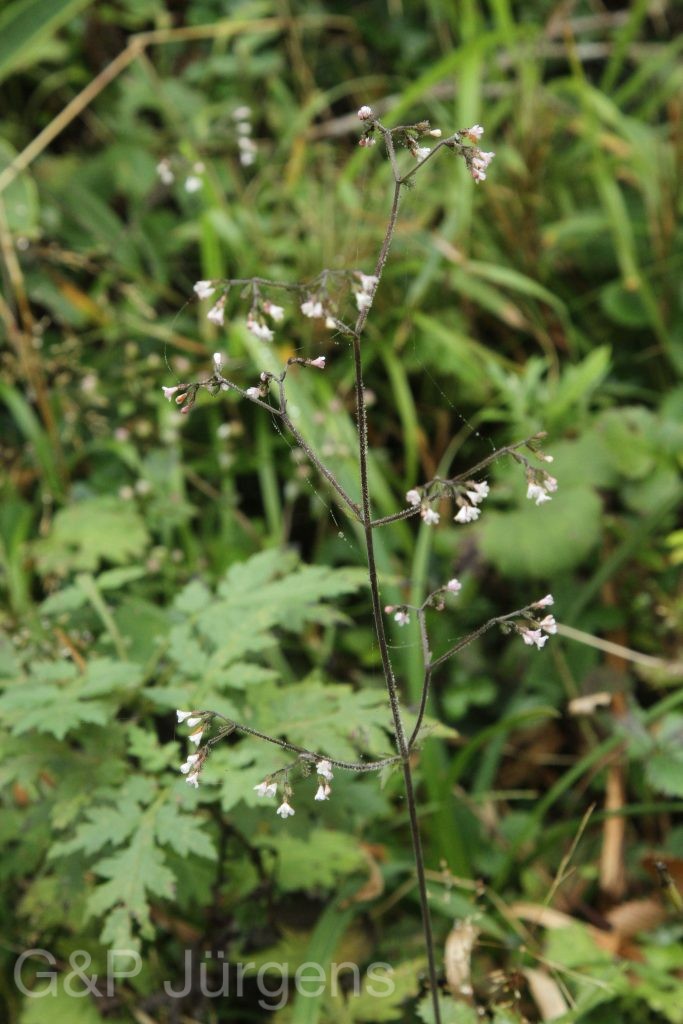
Triplostegia glandulifera is a slender montane herb broadly distributed through the Sino-Himalaya and into Malesia, ranging from Nepal, northern India and Bhutan eastward across China and Taiwan to Myanmar, Malaysia, Indonesia and New Guinea, with outliers in Japan. GBIF documents over 1500 occurrences, concentrated in China, Taiwan and the Himalayan countries. It grows in moist temperate forest, on shaded grassy banks, in clearings and along forest margins on humus-rich soils, broadly between about 2000 and 3500 m. The plant illustrated was photographed in Bhutan at the Dochu-La at 3100 m in October, in cool, misty broad-leaved and conifer forest typical of its autumn fruiting.

The plant is a delicate, erect perennial herb with slender, four-angled stems that are glandular-pubescent above. The leaves are opposite, the lower ones often lyrate-pinnatifid and the upper smaller and less divided, with toothed segments. The inflorescence is a lax, dichotomously branched cyme bearing small, regular, five-lobed white to pinkish flowers. Diagnostically, each ovary is enclosed in a double involucel of bracteoles densely covered with stalked, hooked glandular hairs, which persists around the single-seeded fruit and aids epizoochorous dispersal.

The genus Triplostegia comprises only a couple of species and has had an unsettled placement, treated variously within Dipsacaceae, Valerianaceae or its own family Triplostegiaceae; molecular phylogenetics now situates it within an enlarged Caprifoliaceae (the dipsacalean clade), as a sister lineage to the teasels and valerians. Its glandular double involucel is a key character linking it to that alliance. The species is widespread and ecologically unremarkable in distribution, and is not considered of conservation concern.

Author: Wall. ex DC. · Sources: POWO (Kew), GBIF, Flora of China, Flora of Bhutan, An Annotated Checklist of the Flowering Plants of Nepal, Phylogeny and Classification of Dipsacales (Caprifoliaceae s.l.)

(D.Don) Eichler

Nepal 2001 283 ergebnis ergebnis
Nepal (Gorkha) Lambra Kharka 3000m, May

Description

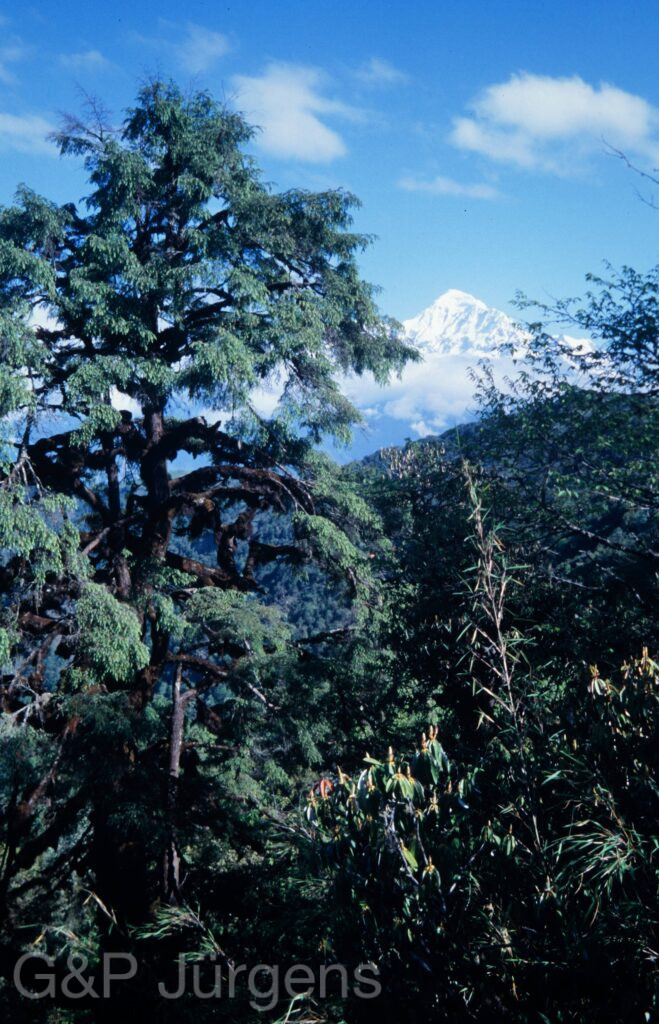
Tsuga dumosa, the Himalayan hemlock, is a large evergreen conifer distributed across the Himalaya from central Nepal eastward through Sikkim, Bhutan, and northeast India into southern China (Xizang, Yunnan, Sichuan, Guizhou), Myanmar, and northern Vietnam. It is a characteristic component of cool temperate and upper montane forests at elevations of 2,000–3,500 m, where it often forms pure stands or grows in association with Abies, Picea, Acer, and Rhododendron species. The species has been documented at Lambra Kharka in the Gorkha district of Nepal at approximately 3,000 m, near the upper limit of its elevational range.
Tsuga dumosa is a tree attaining 25–40 m in height with a trunk up to 1.5 m in diameter, bearing a broadly conical to irregular crown. The bark is dark greyish-brown, deeply fissured and scaly on mature trees. Leaves are linear, flattened, 10–25 mm long and 2–3 mm wide, with a rounded or emarginate apex, dark glossy green above with two conspicuous white stomatal bands beneath, arranged in a pectinate (comb-like) pattern on lateral shoots. Male strobili are small, axillary, and globose. Female seed cones are pendulous, ovoid to oblong, 1.5–2.5 cm long, with thin, rounded cone scales that open at maturity to release two small winged seeds per scale. The cones mature in a single season.
Tsuga dumosa is the sole Himalayan representative of the genus Tsuga, which comprises approximately nine species with a disjunct distribution between eastern Asia and North America. Phylogenetic studies place it sister to the East Asian T. chinensis complex. The species is of considerable ecological importance as a canopy dominant in Himalayan temperate forests, providing critical habitat for epiphytic bryophytes, lichens, and orchids. Its timber is locally valued for construction. While not currently assessed as threatened globally, localized deforestation and climate-driven upward range shifts pose potential concerns for some populations.

Author: (D.Don) Eichler · Sources: POWO (Kew), GBIF, Flora of China Vol. 4, Flora of Bhutan Vol. 1, Farjon: A Handbook of the World's Conifers (2017)

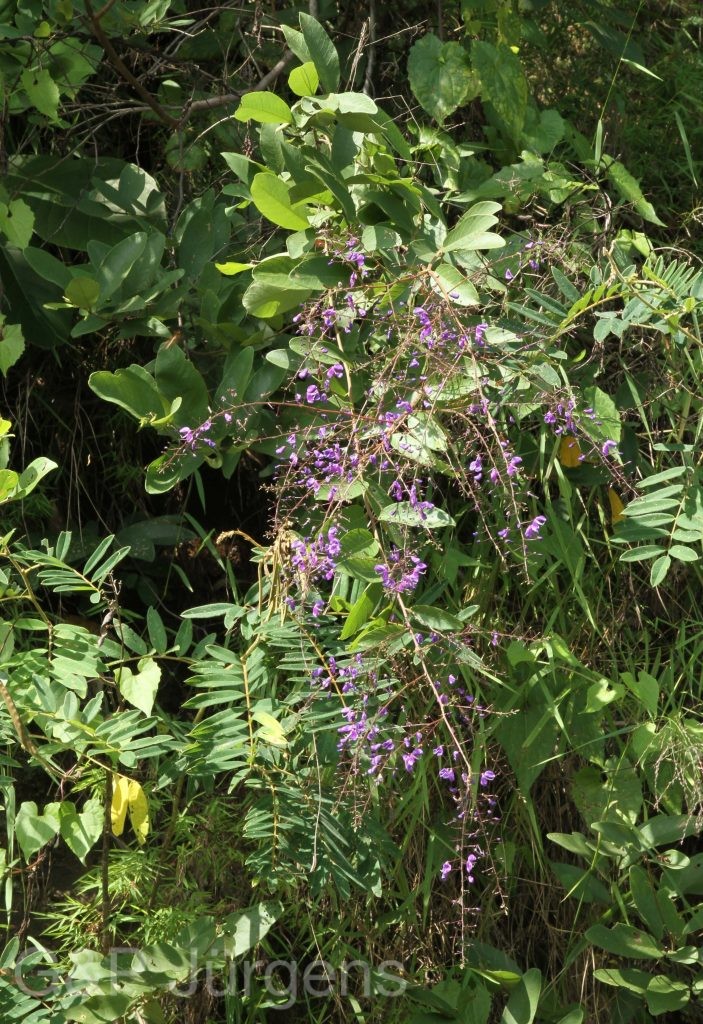
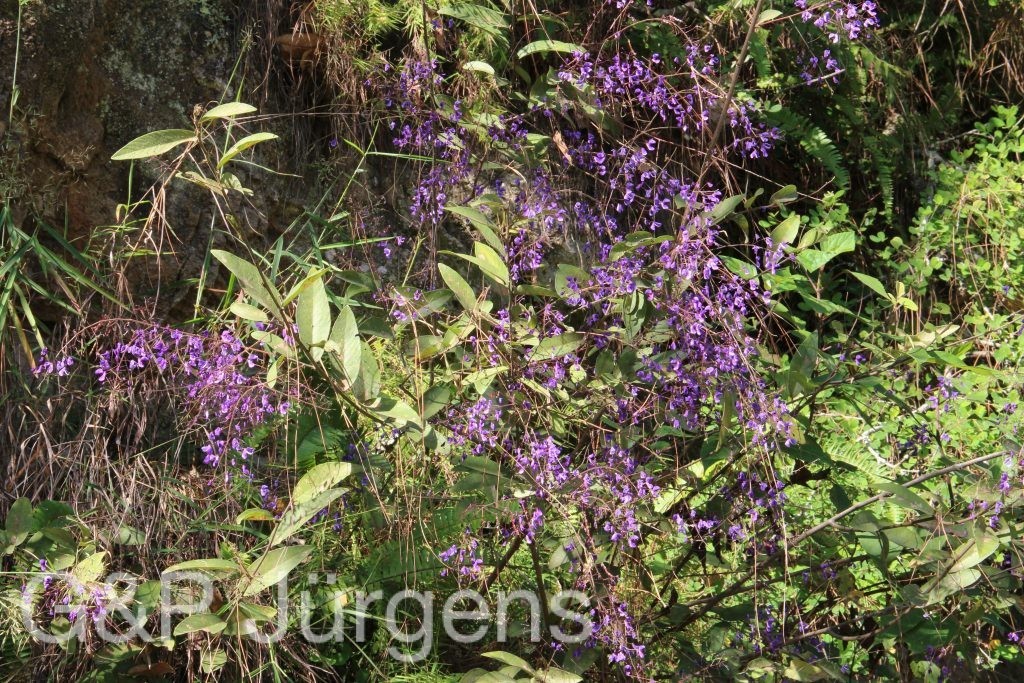
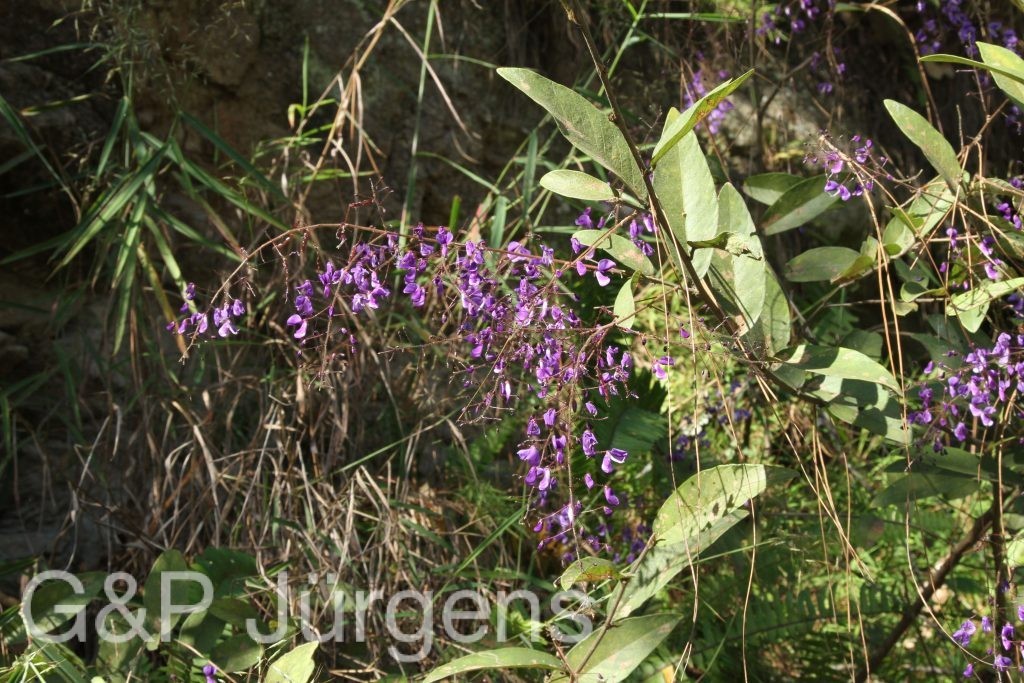
Uraria lagopus

by GP Jürgens

DC.

Bhutan2012 520
Bhutan Wangdi 2800m, September

Description

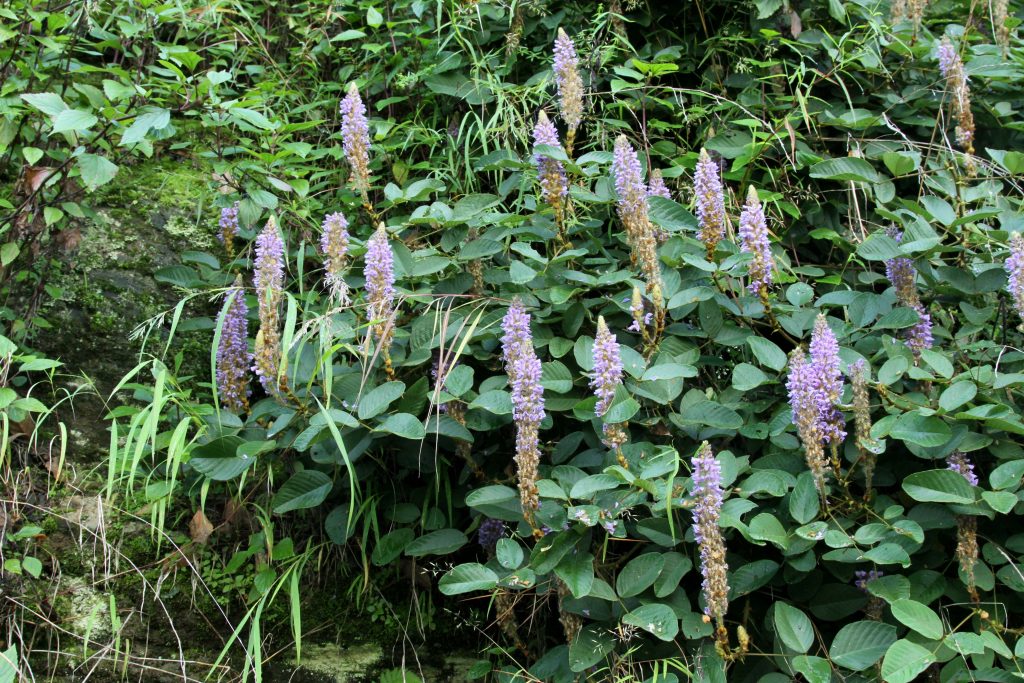
Uraria lagopus is a perennial herb or subshrub widely distributed through the Himalaya, southern China and South and Southeast Asia, recorded from India, China, Nepal, Myanmar, Taiwan, Bhutan, Sri Lanka, Bangladesh and Indonesia, with about 222 occurrences in GBIF. It is a plant of open grassy slopes, scrub, forest margins, roadsides and disturbed sunny ground, ranging from the lowlands into the lower montane zone. The photographed plant was collected in Bhutan near Wangdi (Wangdue) at about 2800 m in September, towards the upper end of its altitudinal range and during the post-monsoon flowering and fruiting season.

The plant produces erect to ascending stems from a woody base, clothed in spreading hairs. The leaves are pinnately compound, usually with three to several leaflets, the leaflets oblong to elliptic, entire, with prominent venation and a hairy underside; stipules are present at the nodes. The flowers are borne in dense, elongate, terminal racemes that are conspicuously shaggy with long hairs, giving the inflorescence the hare's-foot appearance recorded in the epithet lagopus. Each papilionaceous flower is small, pinkish to purplish. The fruit is a small jointed legume (loment) breaking into one-seeded segments at maturity.

Uraria belongs to the tribe Desmodieae of the Fabaceae, a group characterised by loment fruits dispersed as individual articles. Several species, including U. lagopus, are valued in traditional medicine and as fodder, and as legumes they fix atmospheric nitrogen through root-nodule symbiosis with rhizobia, contributing to soil fertility. The species is a tolerant colonist of open and disturbed habitats and is not regarded as threatened across its broad range.

Author: DC. · Sources: POWO (Kew), GBIF, Flora of China, Flora of Bhutan, Legumes of South Asia (Kew)

Uraria oblonga

by GP Jürgens

(Wall. ex Benth.) H.Ohashi & K.Ohashi

Bhutan2012 989
Bhutan Trithangebe 1050m, October
Bhutan2015 543
Bhutan Punaka 1240m, October
Bhutan2015 544
Bhutan Punaka 1240m, October

Description

Uraria oblonga is distributed across the warm-temperate and subtropical belt of mainland Asia, with georeferenced records spanning Thailand, China, India, Myanmar, Laos, Vietnam, Bhutan and Japan; the roughly 235 documented occurrences reflect a continuous range along the southern Himalayan foothills and through Indochina. In Bhutan it has been recorded at lower montane elevations, as the accompanying images from Trithangebe at about 1050 m and Punaka at about 1240 m attest, both gathered in October at the close of the monsoon. It favours open grassland, scrub margins, forest clearings and disturbed roadsides on well-drained slopes, behaving as a light-demanding component of secondary herbaceous communities.

The plant is an erect to ascending perennial herb or subshrub arising from a woody rootstock, the stems sparingly branched and clothed in spreading hairs. Leaves are imparipinnate, typically with one to three pairs of leaflets that are oblong to elliptic-oblong, with entire margins, a reticulate venation prominent beneath, and stipels at the base of the petiolules. The inflorescence is an elongate terminal raceme bearing numerous small papilionaceous flowers, the calyx deeply lobed with elongate teeth and the corolla pink to purplish. The fruit is a small lomentum breaking into several folded, indehiscent one-seeded articles characteristic of the genus.

The species belongs to tribe Desmodieae of the Fabaceae (Faboideae), allied to Desmodium, a relationship echoed in the synonymy and the herbarium history of the basionym described by Wallich and Bentham before transfer by H. Ohashi and K. Ohashi. The jointed, hook-haired lomentum promotes epizoochorous dispersal, while the legume root nodules fix atmospheric nitrogen, allowing the plant to colonise nutrient-poor disturbed ground. With its broad transcontinental range and tolerance of human-modified habitats, U. oblonga is not considered threatened.

Author: (Wall. ex Benth.) H.Ohashi & K.Ohashi · Sources: POWO (Kew), GBIF, Flora of China, Flora of Bhutan, Ohashi revision of Desmodieae (Leguminosae)

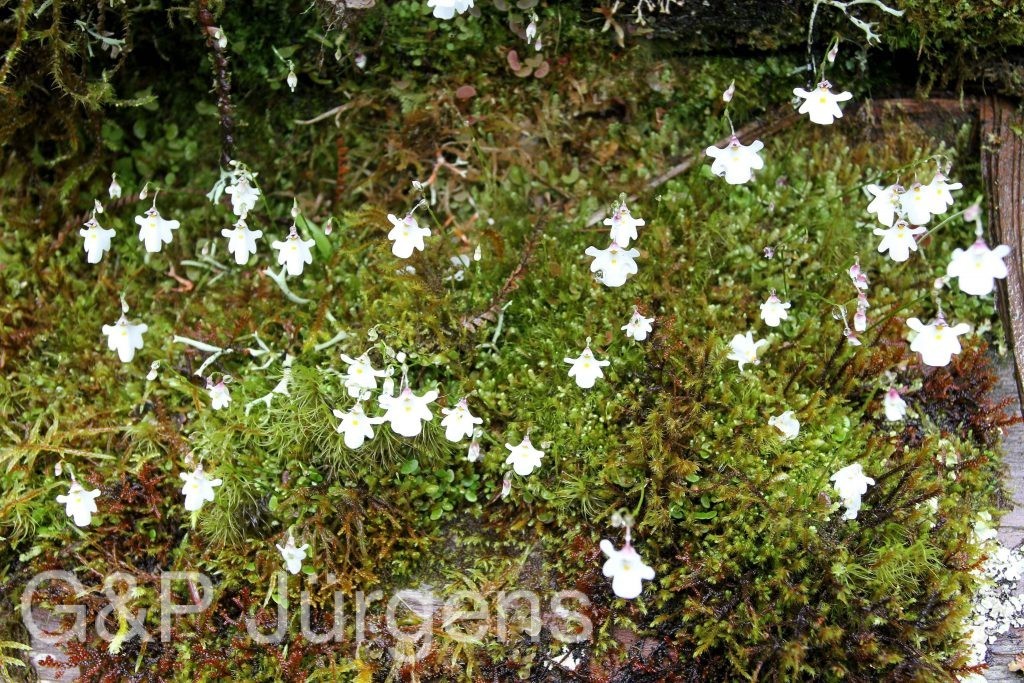
Oliv.

BhutanPG2011 698 01 01
Bhutan Luksor, 2850m July

Description

Utricularia brachiata is a small carnivorous herb of the Himalaya and adjacent mountains, recorded by GBIF (about 94 occurrences) from China, India, Nepal, Bhutan, Japan and Myanmar, a relatively modest tally reflecting both its inconspicuous habit and its specialised wet montane habitat. It is a terrestrial to subaquatic species of permanently moist ground: dripping rocks, mossy seepages, wet banks, boggy turf and the margins of springs and streams, generally between 2500 and 4000 m. The plant photographed at Luksor in Bhutan at about 2850 m in July grows in such a damp seepage habitat during the monsoon, the season when high humidity sustains the saturated substrates on which this bladderwort depends.

As in all members of the genus the vegetative body is much reduced and rootless, consisting of fine, thread-like stolons that ramify through the moss and wet soil. Borne on these are minute leaf-like organs and the diagnostic carnivorous traps: tiny bladders (utricles) that capture and digest microscopic soil and water invertebrates through a sophisticated suction mechanism triggered by sensory bristles. The flowering scape is slender and erect, bearing one to few small bilabiate flowers. The corolla is typically white to pale violet or bluish, with a prominent palate and a basal spur, the personate two-lipped form characteristic of the genus and adapted to small insect pollinators. The fruit is a tiny capsule releasing numerous minute seeds.

Lentibulariaceae are wholly carnivorous, and Utricularia, the bladderworts, is the largest and most widespread genus of carnivorous plants, its trap mechanism among the most morphologically refined in the plant kingdom. Carnivory allows U. brachiata to supplement nitrogen and phosphorus in the nutrient-poor, leached, waterlogged substrates it occupies, an adaptive strategy that defines its narrow ecological niche. Though not assessed as globally threatened, its dependence on intact high-altitude wetland seepages renders it locally sensitive to hydrological disturbance, drainage and the disruption of mountain spring systems.

Author: Oliv. · Sources: POWO (Kew), GBIF, Flora of China Vol. 19, Flora of Bhutan Vol. 2, Flora of Nepal, Taylor The Genus Utricularia: A Taxonomic Monograph