
Oliv.
Description
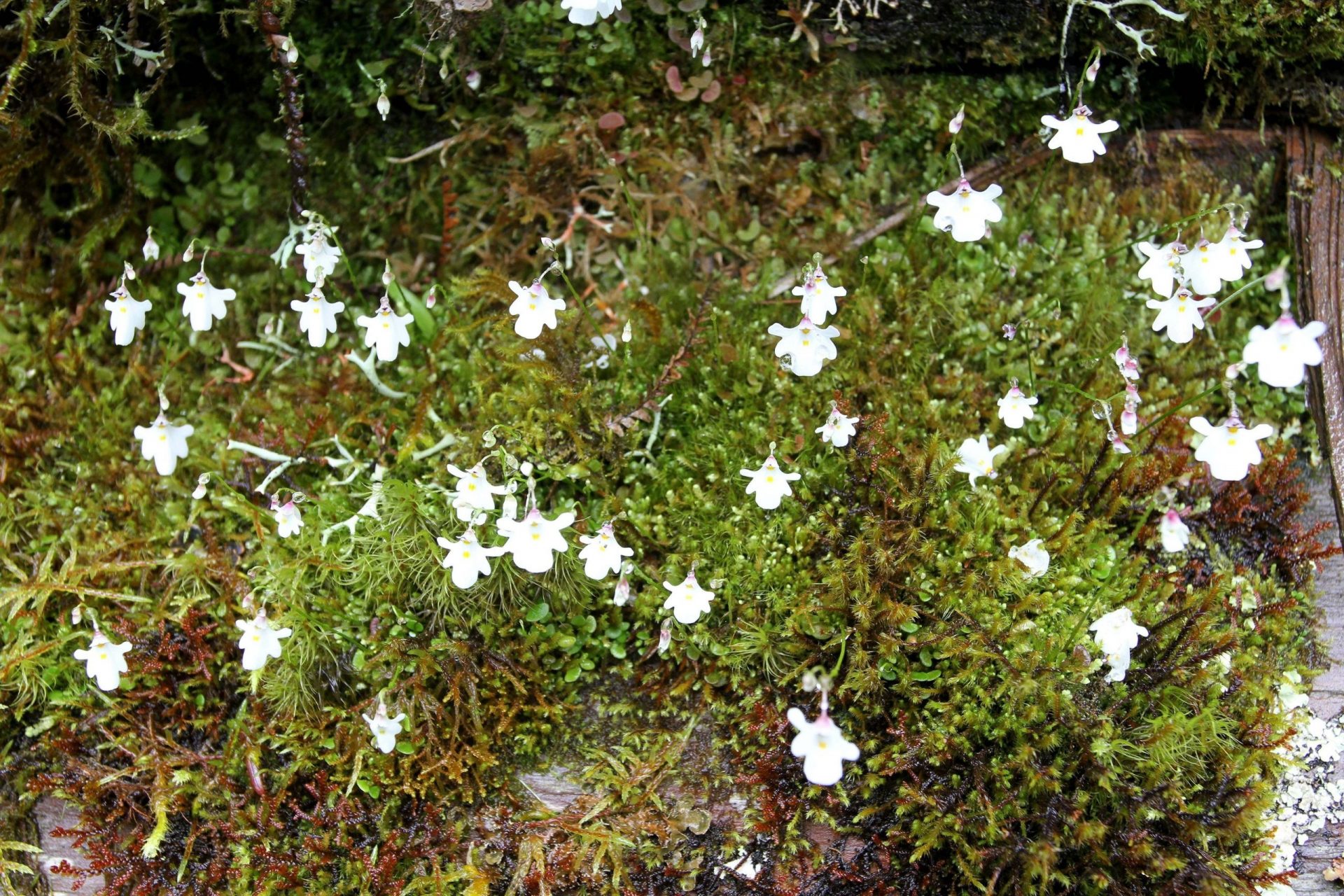
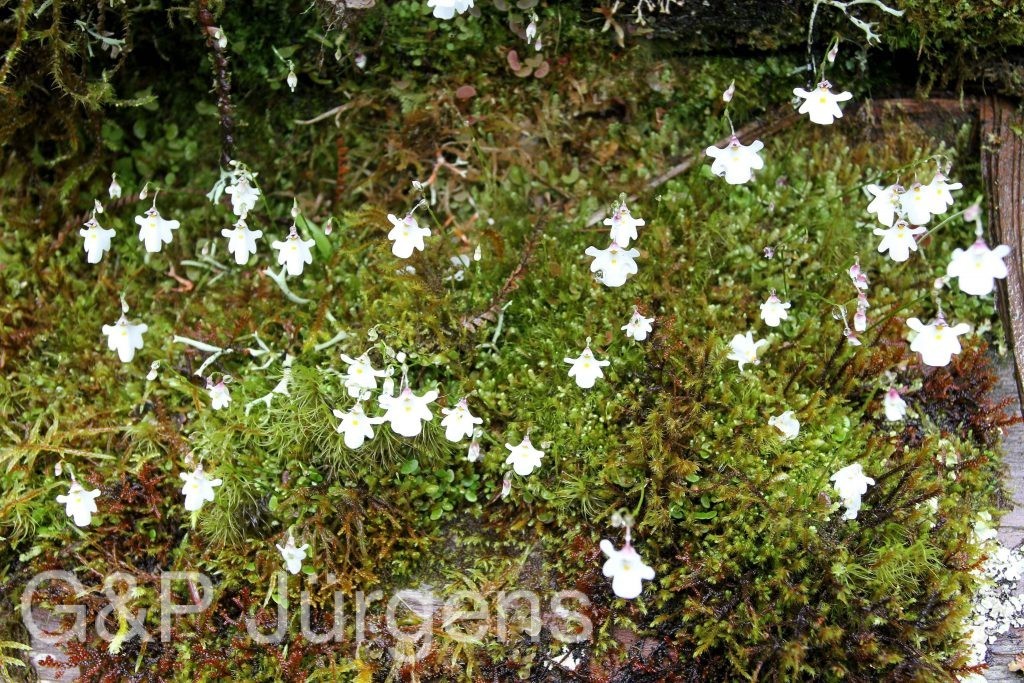
Utricularia brachiata is a small carnivorous herb of the Himalaya and adjacent mountains, recorded by GBIF (about 94 occurrences) from China, India, Nepal, Bhutan, Japan and Myanmar, a relatively modest tally reflecting both its inconspicuous habit and its specialised wet montane habitat. It is a terrestrial to subaquatic species of permanently moist ground: dripping rocks, mossy seepages, wet banks, boggy turf and the margins of springs and streams, generally between 2500 and 4000 m. The plant photographed at Luksor in Bhutan at about 2850 m in July grows in such a damp seepage habitat during the monsoon, the season when high humidity sustains the saturated substrates on which this bladderwort depends.
As in all members of the genus the vegetative body is much reduced and rootless, consisting of fine, thread-like stolons that ramify through the moss and wet soil. Borne on these are minute leaf-like organs and the diagnostic carnivorous traps: tiny bladders (utricles) that capture and digest microscopic soil and water invertebrates through a sophisticated suction mechanism triggered by sensory bristles. The flowering scape is slender and erect, bearing one to few small bilabiate flowers. The corolla is typically white to pale violet or bluish, with a prominent palate and a basal spur, the personate two-lipped form characteristic of the genus and adapted to small insect pollinators. The fruit is a tiny capsule releasing numerous minute seeds.
Lentibulariaceae are wholly carnivorous, and Utricularia, the bladderworts, is the largest and most widespread genus of carnivorous plants, its trap mechanism among the most morphologically refined in the plant kingdom. Carnivory allows U. brachiata to supplement nitrogen and phosphorus in the nutrient-poor, leached, waterlogged substrates it occupies, an adaptive strategy that defines its narrow ecological niche. Though not assessed as globally threatened, its dependence on intact high-altitude wetland seepages renders it locally sensitive to hydrological disturbance, drainage and the disruption of mountain spring systems.
Author: Oliv. · Sources: POWO (Kew), GBIF, Flora of China Vol. 19, Flora of Bhutan Vol. 2, Flora of Nepal, Taylor The Genus Utricularia: A Taxonomic Monograph