
L.
Description
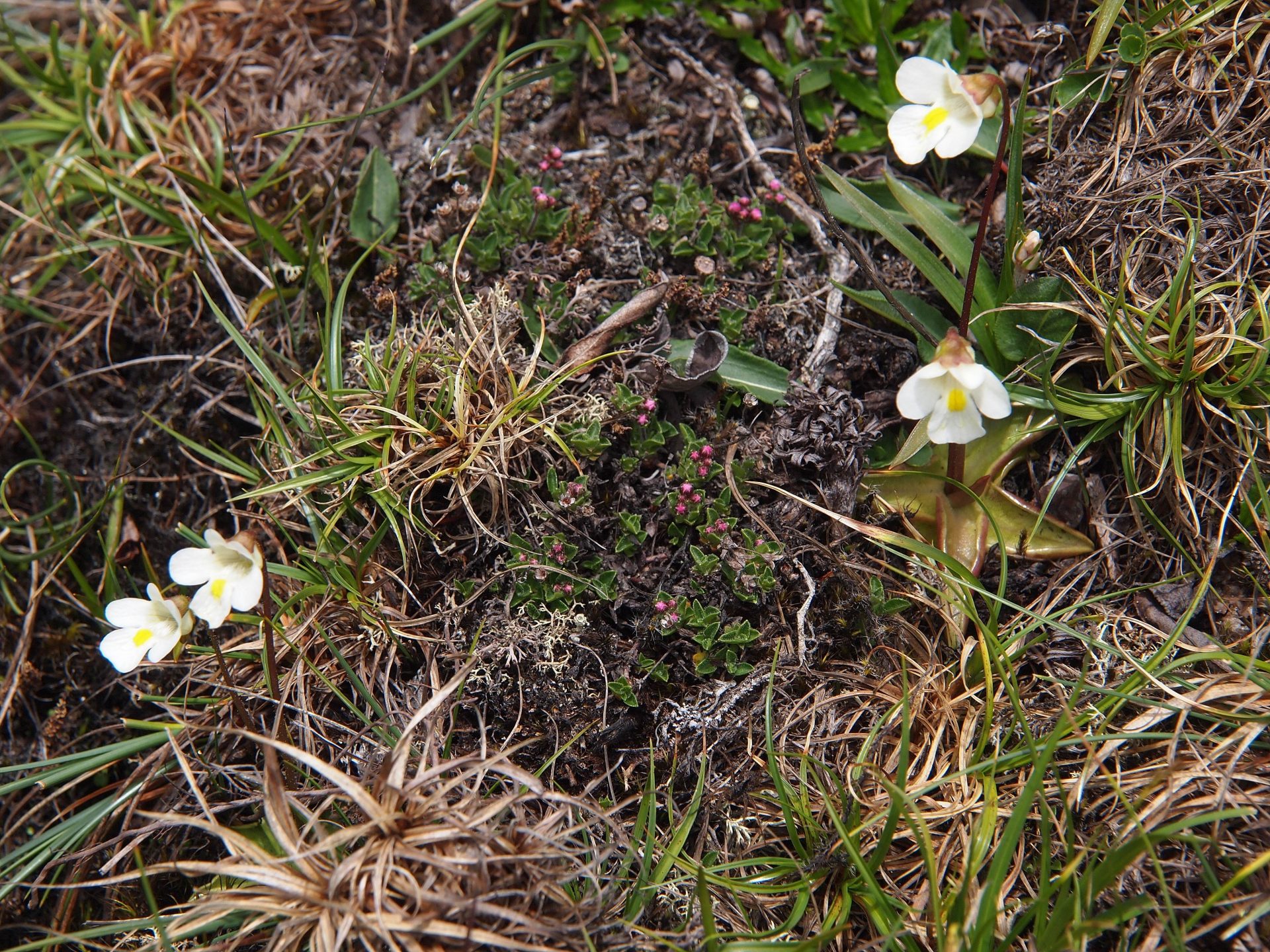
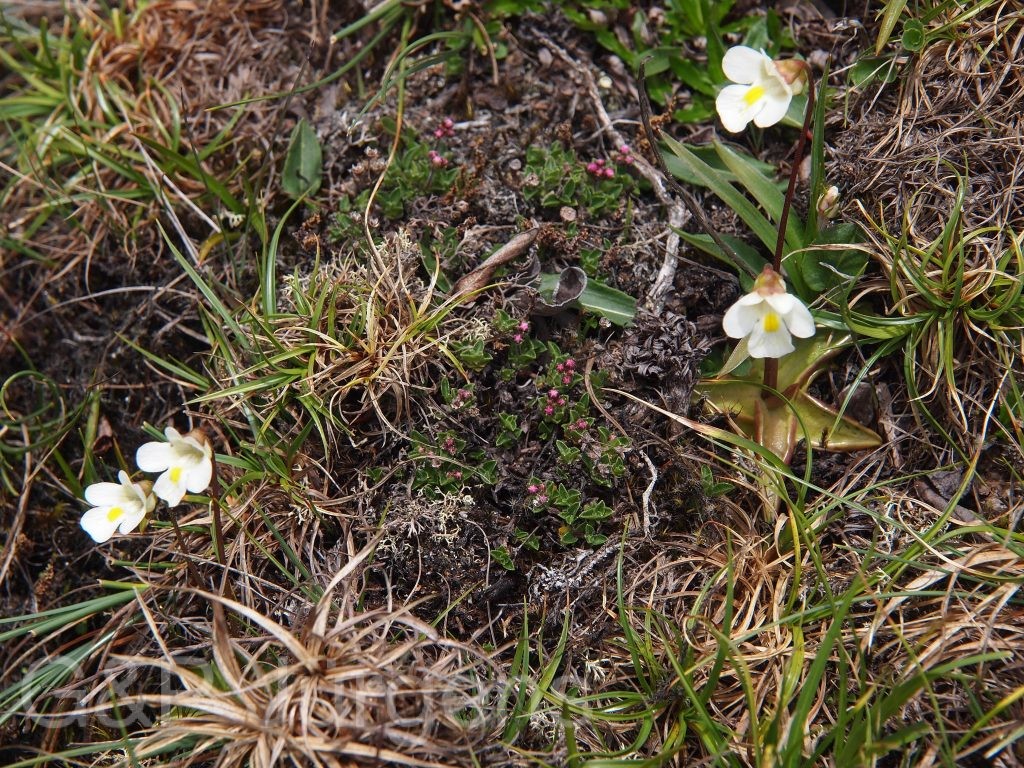
Pinguicula alpina is a circumboreal-alpine carnivorous herb with a vast range across the mountains and high latitudes of Eurasia, from the Alps, Pyrenees and Scandinavia through Russia to China, with disjunct outliers in the Himalaya including Nepal and Sikkim. Its tens of thousands of catalogued occurrences reflect this broad distribution. It grows in wet, base-rich, often calcareous habitats — flushes, dripping rocks, fens, streamsides and damp turf — from the montane belt to high alpine elevations, reaching about 4,300 m in the Himalaya, as in the plant photographed in the Chopta valley of Sikkim at 4,300 m in June, where it flowers at the height of the alpine spring.
It is a small, perennial, insectivorous herb forming a flat basal rosette of yellow-green, oblong to elliptic leaves whose upper surfaces are sticky with glandular hairs that trap and digest minute insects, the margins slightly involute. From the rosette arise one to few erect, leafless scapes bearing a single nodding flower; the corolla is white with one or two yellow spots on the palate, two-lipped and spurred at the base, the spur short and conical. The fruit is a small ovoid capsule releasing numerous minute seeds. The plant overwinters as a resting bud (hibernaculum).
Within Lentibulariaceae, Pinguicula employs flypaper-type passive carnivory, supplementing nutrient uptake in the poor, wet soils it favours. P. alpina is distinguished from the violet-flowered P. vulgaris by its white, yellow-spotted corolla and shorter spur, and the two occasionally co-occur. Though globally secure, its Himalayan populations are localised and dependent on undisturbed calcareous wetlands sensitive to drainage and warming.
Author: L. · Sources: POWO (Kew), Flora of China Vol. 19, Flora of Nepal, GBIF, Casper: Monographie der Gattung Pinguicula (1966)