Tag:

Myanmar

Flowers of the Myanmar Himalaya — 604 species recorded from northern Myanmar (Burma) and the eastern Himalayan borderlands, a biodiversity hotspot linking the Himalaya to the mountains of Yunnan and Southeast Asia. The region’s forests and alpine slopes hold a rich flora of rhododendrons, orchids, balsams and gentians. Every page gives a botanical description, distribution, habitat and flowering time with the original photograph.

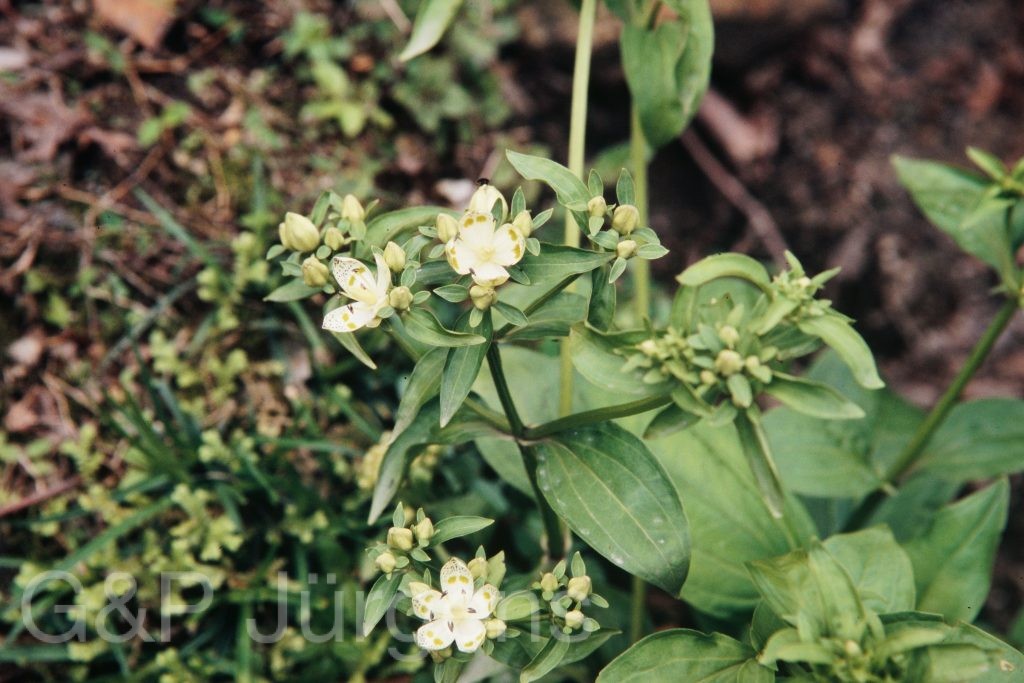
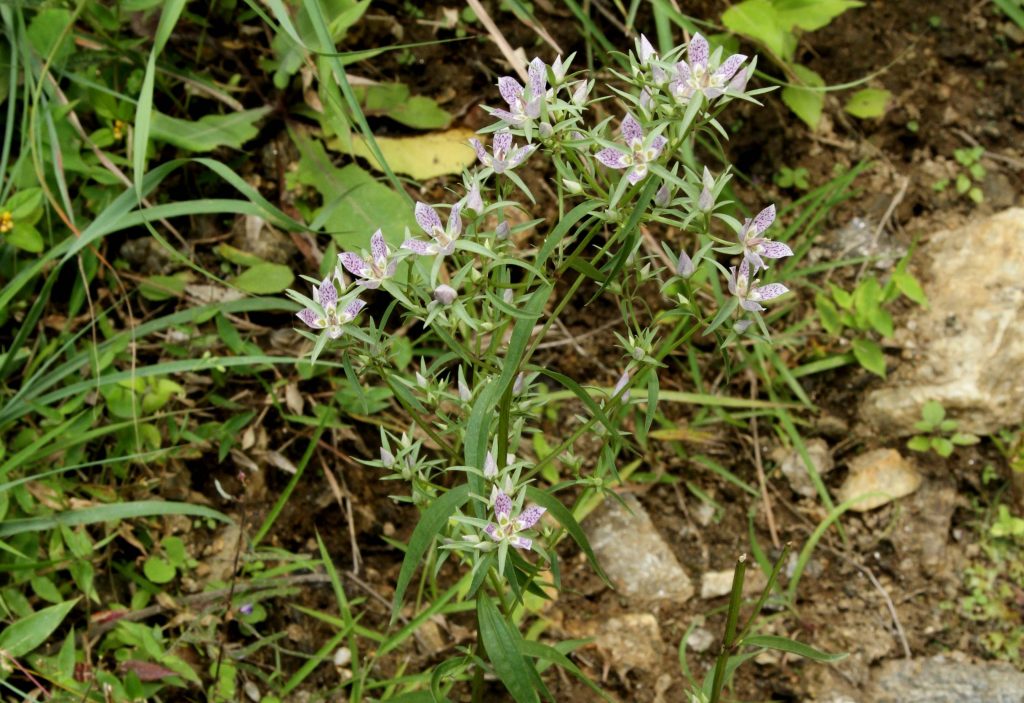
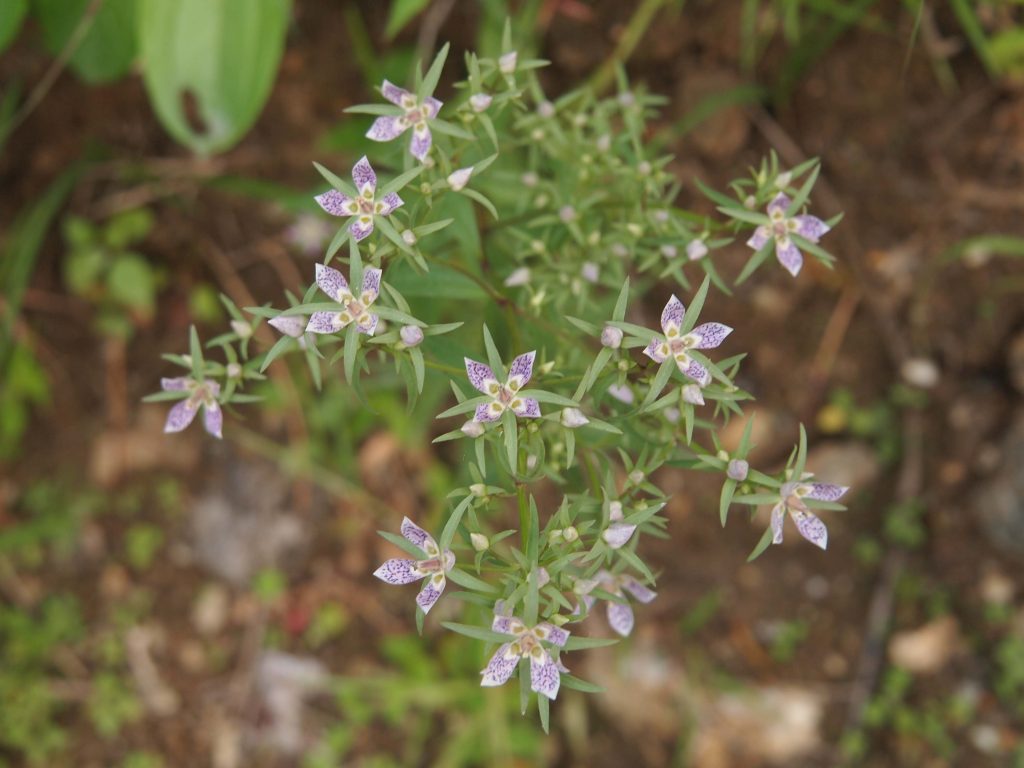
Buch.-Ham. ex D.Do

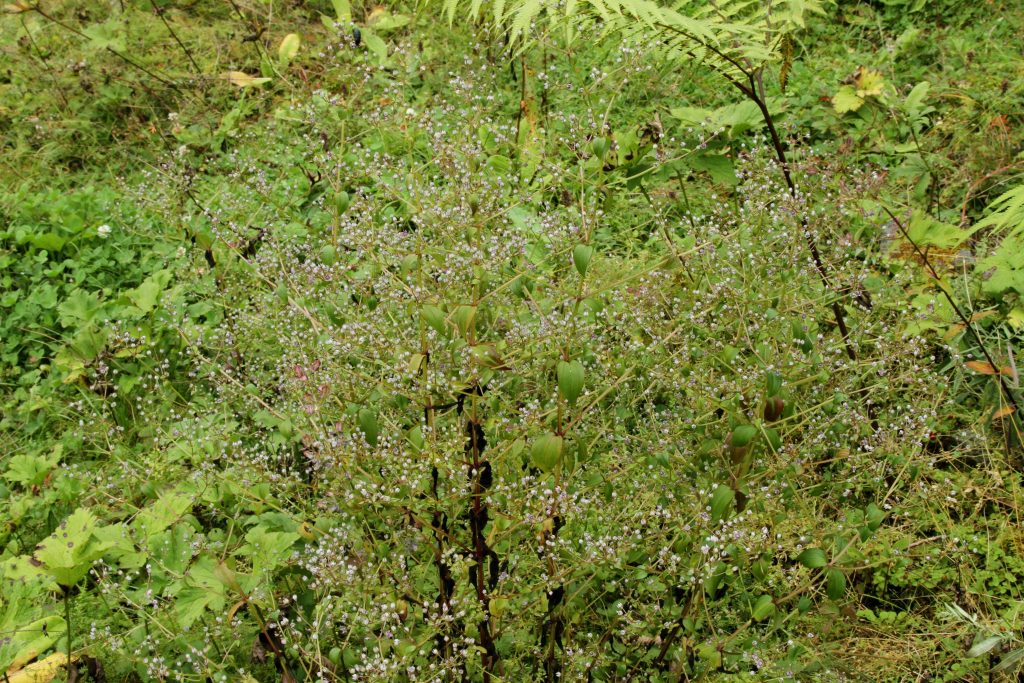
Bhutan2012 415
Bhutan Wangdi 2700m, September
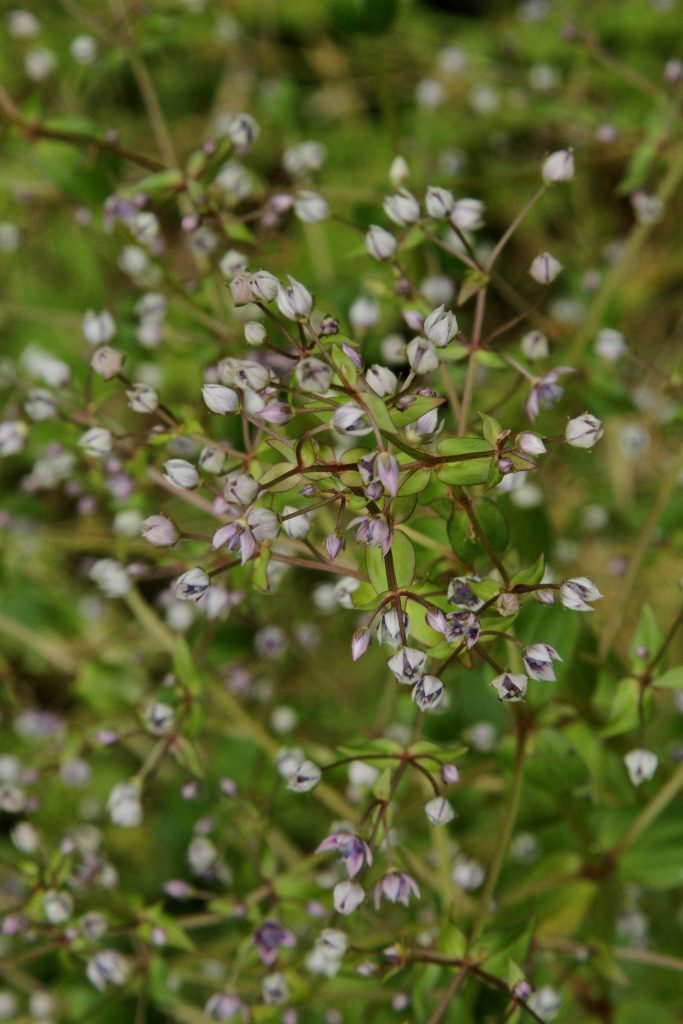
Bhutan2012 416
Bhutan Wangdi 2700m, September

Description

Swertia angustifolia is a slender annual or biennial herb widespread across the Himalaya and montane Asia, recorded from China, India, Nepal, Myanmar, Thailand, Pakistan, Bhutan and beyond, with peripheral records (KR, ZA, SG, US) reflecting introduction or cultivated material. Its roughly 1,000 georeferenced collections make it one of the better-documented species in this group, ranging through the subtropical to temperate hill belt. It grows on open grassy slopes, fallow fields, roadsides, forest margins and disturbed ground, often as a pioneer of seasonally moist sites. The photographed plant from Bhutan near Wangdi at 2700 m, flowering in September, is characteristic of its autumn flowering at the close of the monsoon.

It is an erect, glabrous herb with a slender, quadrangular, usually much-branched stem arising from a thin taproot. The opposite leaves are narrowly lanceolate to linear, sessile, entire and acute, the epithet angustifolia referring to their narrowness. The flowers are numerous, small and borne in a lax, leafy, paniculate cyme. The corolla is rotate and typically four- or five-merous, white to pale greenish or purplish, each lobe bearing one or two nectary glands (foveae) fringed with hairs near its base, a diagnostic feature of the genus. Stamens equal the corolla lobes in number, and the superior, one-celled ovary develops into a many-seeded capsule.

Swertia is a large genus of the gentian family, richest in the Sino-Himalayan region, and many species (notably the chiretta group) are economically important in traditional medicine for their intensely bitter secoiridoid glycosides. S. angustifolia is a common, weedy, wide-ranging species of no conservation concern, frequently colonising agricultural and disturbed land. Its small, fly- and bee-pollinated flowers and prolific seed set underpin its success as a montane ruderal.

Author: Buch.-Ham. ex D.Do · Sources: POWO (Kew), GBIF, Flora of China Vol. 16, Flora of Bhutan Vol. 2, Flora of Nepal, Clarke's Monograph of Asiatic Gentianaceae
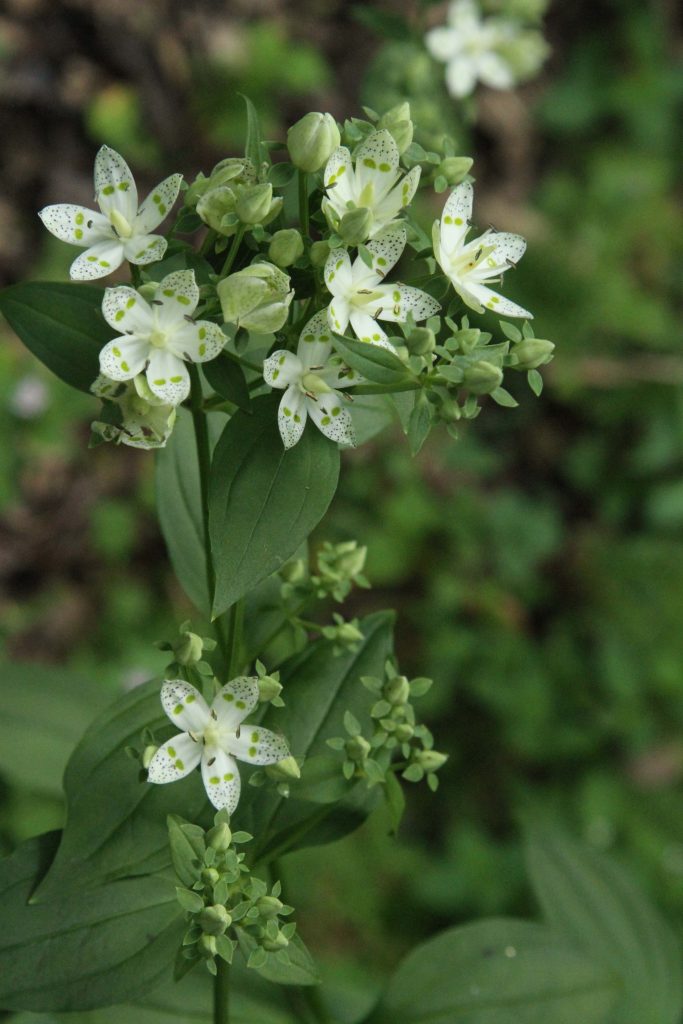
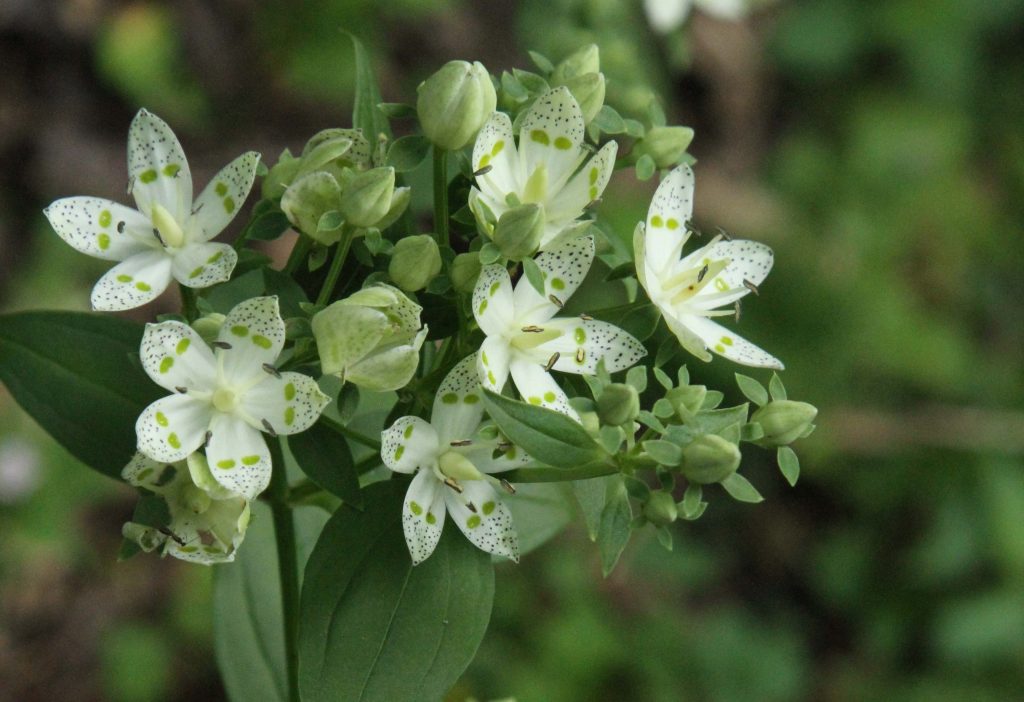
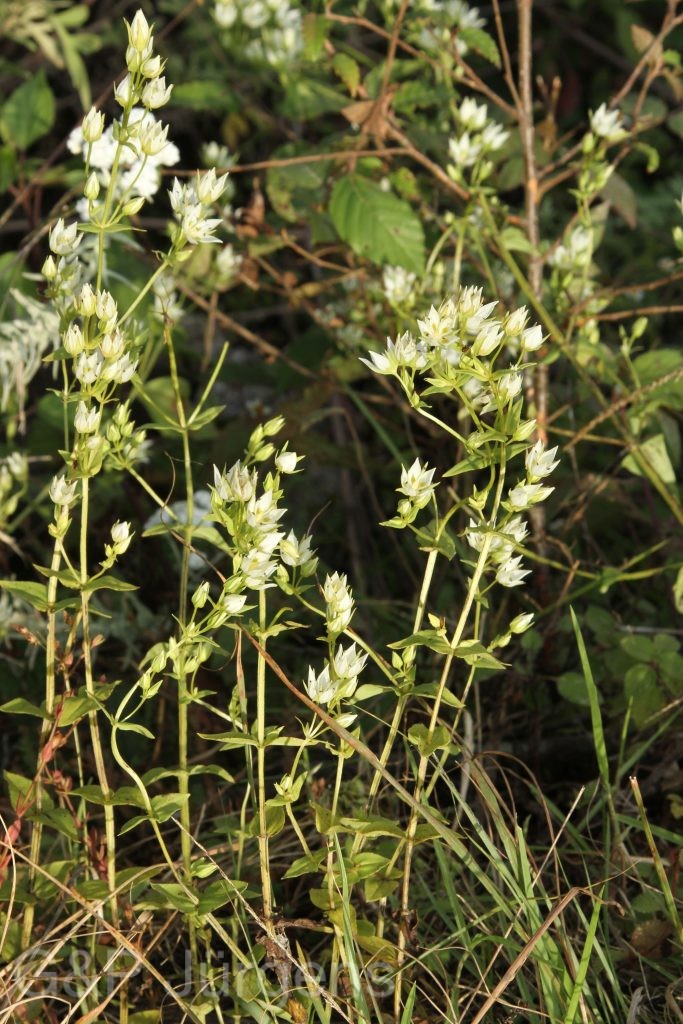
(Siebold & Zucc.) Hook. f. & Thomson ex C.B. Clarke

Bhutan2012 354
Bhutan Doch-La, 3000m September
Bhutan2012 355
Bhutan Doch-La, 3000m September
Bh2008 65 P106
Bhutan Punaka-Chu, 1600m April

Description

Swertia bimaculata is a widely distributed Asian gentian recorded by GBIF in nearly 3,942 occurrences spanning China, Japan, Korea, India, Bhutan, Nepal, Myanmar, Indonesia, Malaysia and Vietnam, making it one of the most far-ranging members of its genus. It occupies forest margins, grassy slopes, meadows and streamsides over a broad altitudinal span from lowland valleys to the subalpine zone. The Bhutanese collections illustrated, one from the Dochu La at 3000 m flowering in September and another from the Punakha Chu at 1600 m in April, demonstrate both its wide elevational tolerance and a flowering season extended by the diversity of habitats it occupies.

The species is a tall, erect annual or biennial herb with an angular, often branched stem arising from a slender taproot. The leaves are opposite, sessile to short-petiolate and broadly elliptic to lanceolate, with prominent arcuate veins. Flowers are numerous in a large, lax terminal panicle; the corolla is rotate and deeply four- to five-lobed, the lobes pale greenish-white to yellowish and finely dotted or streaked with purple. Each lobe bears two conspicuous dark glandular nectaries—the paired "two spots" of the epithet bimaculata—fringed with long fimbriae. The superior ovary develops into a narrowly ovoid septicidal capsule releasing many small seeds.

Swertia is a taxonomically complex, pharmacologically notable genus whose bitter secoiridoid-rich species are widely used in traditional Asian medicine, and S. bimaculata is among those harvested for such purposes. The fringed nectary glands and spotted corolla attract bees and flies that effect cross-pollination. Despite its medicinal exploitation the species remains common and ecologically plastic across its enormous range and is not regarded as threatened.

Author: (Siebold & Zucc.) Hook. f. & Thomson ex C.B. Clarke · Sources: POWO (Kew), GBIF, Flora of China, Flora of Bhutan, Flora of Japan, Revision of the Genus Swertia (Hara)

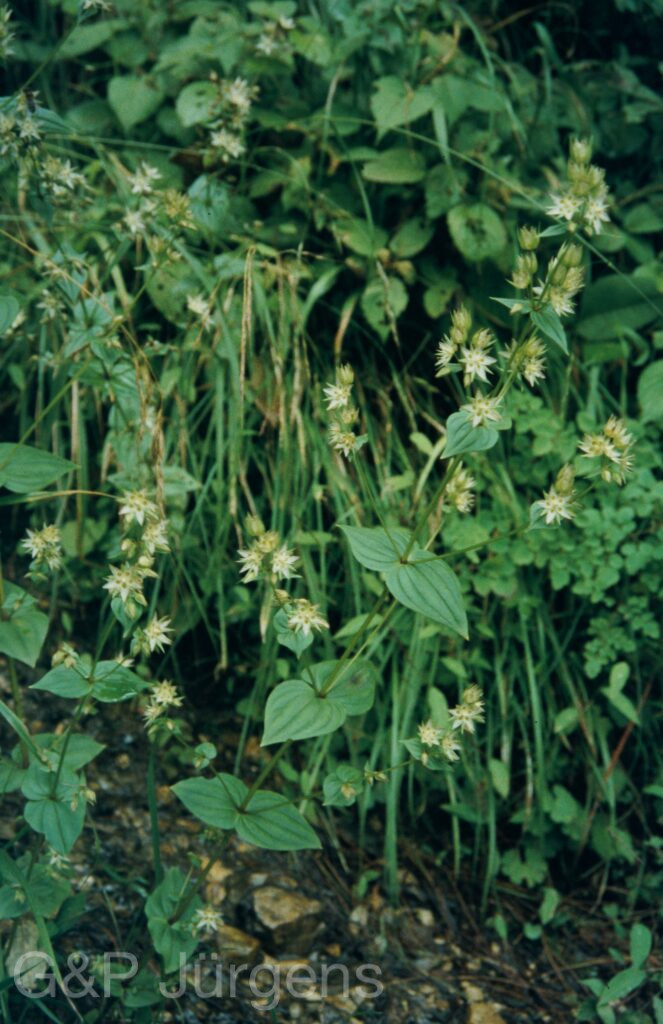
(G. Don) Wall. ex. C.B. Clarke

Bhutan2015 464
Bhutan Trongsa 2100m, October
Garw 2005 276 ergebnis
India Garhwal Kunol 2600m, September

Description

Swertia cordata is a Himalayan gentian relative ranging along the entire arc from Afghanistan and Pakistan through India, Nepal, Bhutan and into south-western China and Myanmar, documented by some 332 GBIF records. It favours moist, shaded banks, grassy forest clearings, stream margins and humid open slopes within the temperate zone, broadly between 1800 and 3000 m. The material illustrated from Trongsa in central Bhutan at 2100 m in October and from Kunol in the Garhwal Himalaya at 2600 m in September reflects its late-season flowering, when the post-monsoon humidity sustains the soft foliage of this short-lived herb.

It is an erect annual or biennial with a slender, quadrangular and often branched stem. The basal and lower cauline leaves are conspicuously cordate at the base and shortly petiolate, while the upper leaves become sessile and amplexicaul; all are thin, ovate and prominently veined. The flowers are borne in lax terminal and axillary cymose panicles, the corolla typically four-merged, rotate and pale blue to lilac with darker veining, each lobe bearing the nectary pits or foveae diagnostic of Swertia, fringed by scale-like appendages. The fruit is a septicidal capsule containing numerous small seeds.

Swertia is a large, taxonomically demanding genus widely exploited in Himalayan ethnomedicine for its bitter secoiridoid glycosides, and S. cordata shares this chemistry. The basal foveae govern a specialised pollination relationship in which nectar is hidden beneath protective fringes. The species is not regarded as threatened given its wide distribution, but collection for medicinal use and habitat loss along forest margins warrant monitoring of accessible populations.

Author: (G. Don) Wall. ex. C.B. Clarke · Sources: POWO (Kew), GBIF, Flora of Bhutan, Annotated Checklist of the Flowering Plants of Nepal, Flora of China (Gentianaceae), Revision of the genus Swertia

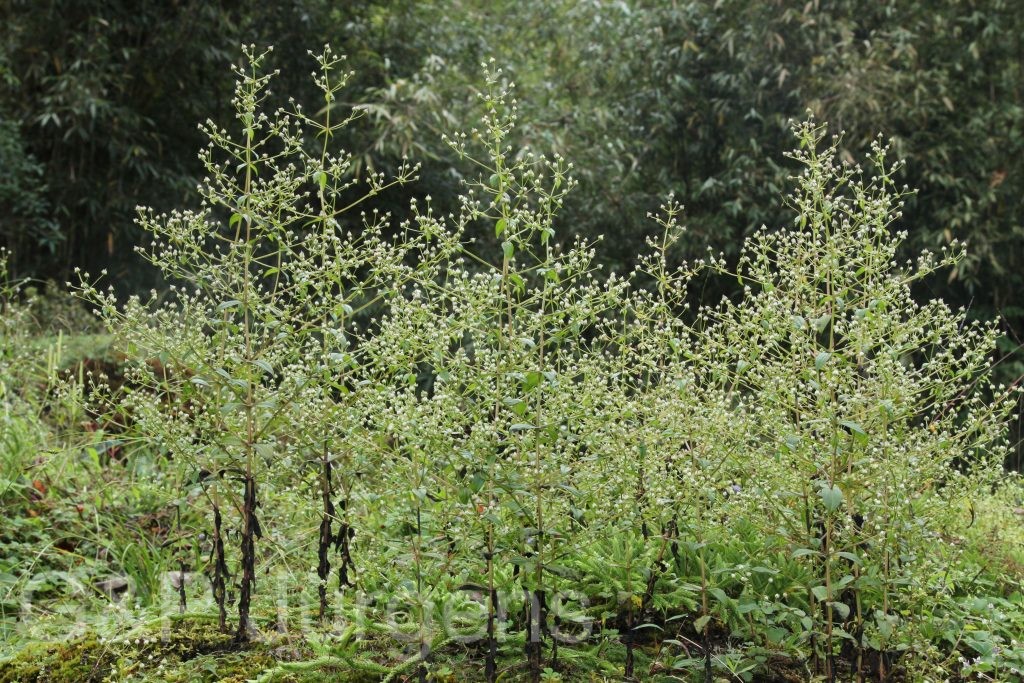
(C.B. Clarke) C.B. Clarke

Bhutan2015 31
Bhutan Thimphu 2300m, October
Bhutan2012 321
Bhutan Dochu-La, 3100m September
Bhutan2012 322
Bhutan Dochu-La, 3100m September

Description

Swertia macrosperma is a widespread gentian-family herb of Asia, exceptionally well represented in GBIF with about 1613 occurrences spanning Taiwan, China, India, Nepal, Bhutan, Myanmar, Bangladesh, Japan and beyond. It is a plant of open, moist montane settings, growing on grassy slopes, forest margins, clearings, banks and damp meadows in the temperate to lower subalpine belt. The material photographed in Bhutan, at Thimphu around 2300 m in October and at the Dochu-La pass near 3100 m in September, illustrates its autumn flowering season, when these post-monsoon slopes carry the late display typical of many Himalayan swertias.

It is an erect annual to biennial herb with slender, often quadrangular and branched stems arising from a basal rosette of leaves. The cauline leaves are opposite, sessile to shortly petiolate and ovate to lanceolate. The flowers are borne in lax terminal and axillary cymes forming a diffuse panicle; each is usually four- or five-merous with a rotate, deeply parted corolla that is whitish, pale greenish or tinged with purple and frequently spotted, and each corolla lobe bears one or two fringed nectary glands (foveolae) diagnostic of the genus. The fruit is a septicidal capsule that, as the epithet indicates, releases comparatively large seeds.

Swertia is a large genus of tribe Swertieae, distinguished from Gentiana by its rotate, deeply divided corolla and conspicuous nectary pits. Several species, including this one, are gathered for traditional medicine on account of their bitter secoiridoid compounds. As an abundant and ecologically tolerant species across a vast range, S. macrosperma is of no conservation concern, though localised harvesting pressure on bitter Swertia species is documented elsewhere in the genus.

Author: (C.B. Clarke) C.B. Clarke · Sources: POWO (Kew), GBIF, Flora of China, Flora of Bhutan, Flora of Nepal, Ho & Pringle Gentianaceae revision

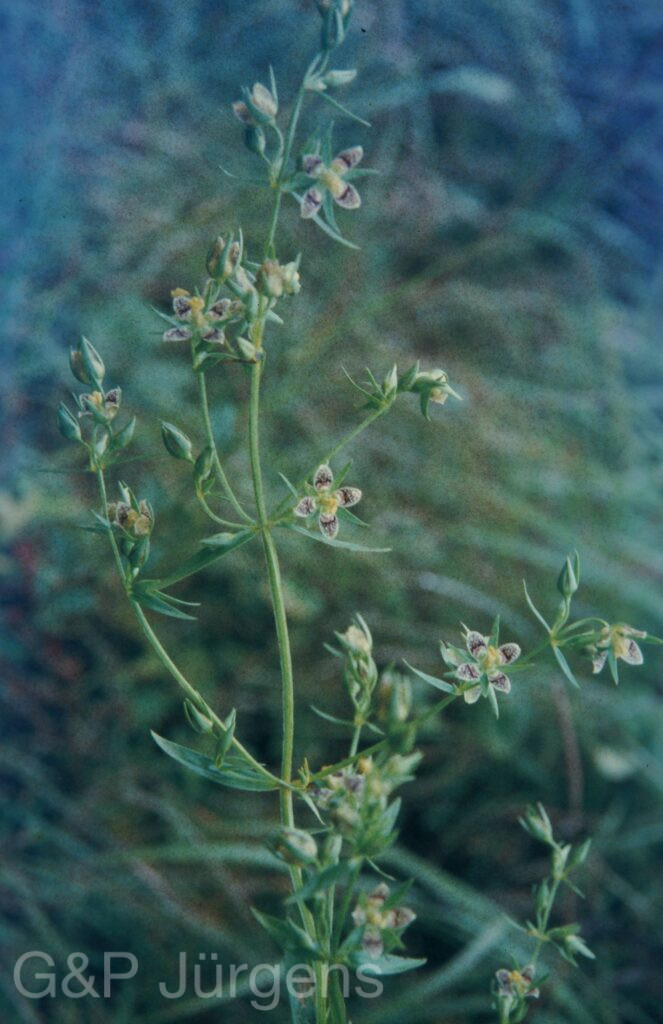
(G.Don) Wall. ex. C.B.Clarke

Garw 2005 242 ergebnis ergebnis
India Garhwal Bora 2200m, September

Description

Swertia nervosa is an annual gentian-relative widely distributed across the Himalaya and montane Southeast Asia, recorded from China, Nepal, India, Bhutan, Myanmar and Taiwan, with around 331 occurrences in GBIF. It is a plant of moist open slopes, grassy banks, forest clearings, streamsides and disturbed ground in the subtropical to lower temperate belt, typically between 1500 and 2800 m. The photograph from Bora in Garhwal, India, at about 2200 m in September shows it in flower at the close of the monsoon, the period when the genus reaches its peak of flowering across the mid-elevation Himalaya.

The plant is an erect annual herb with an angular, often four-winged or ridged stem branching in the upper part. The leaves are opposite, sessile, lanceolate to ovate-lanceolate and conspicuously several-nerved, the prominent venation reflected in the epithet nervosa. The numerous small flowers are borne in a lax, much-branched terminal panicle; they are usually four-merous with a deeply parted, pale yellowish to greenish corolla often marked with purplish veins, and each lobe bears a fringed nectary gland at its base, a diagnostic feature of Swertia. The fruit is an ovoid bivalved capsule containing many minute seeds.

Swertia is a large genus of the Gentianaceae centred on the Sino-Himalayan region, distinguished by the nectariferous glands (foveae) on the corolla lobes; S. nervosa belongs to the annual, paniculate-flowered group sometimes segregated under Ophelia. Like several relatives it is rich in bitter secoiridoid compounds and is used in traditional medicine as a substitute for the famed chiretta (S. chirayita). Common, weedy and broadly distributed, it is of no conservation concern.

Author: (G.Don) Wall. ex. C.B.Clarke · Sources: POWO (Kew), GBIF, Flora of China, Flora of Bhutan, Annotated Checklist of the Flowering Plants of Nepal, Clarke's treatment of Gentianaceae in Flora of British India

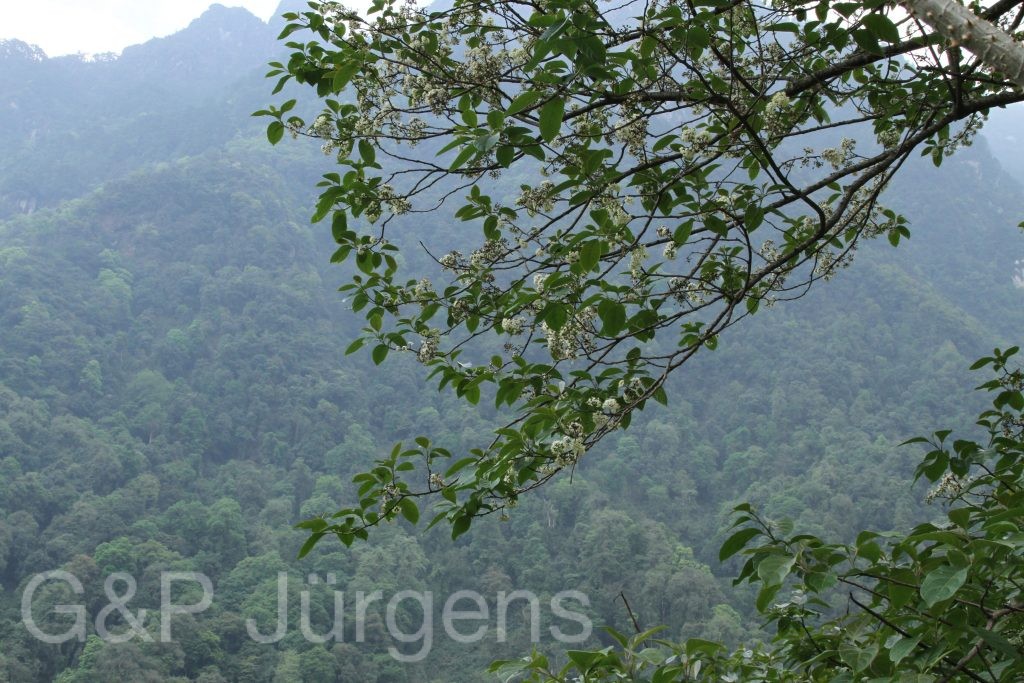
King ex C.B. Clarke

Bhutan2014 793
Bhutan
Sikkim2004 94 P164
Sikkim West-Bengal, Bersay 2700m April
Sikkim2004 329 P530
Sikkim West-Bengal, Bersay 2700m April

Description

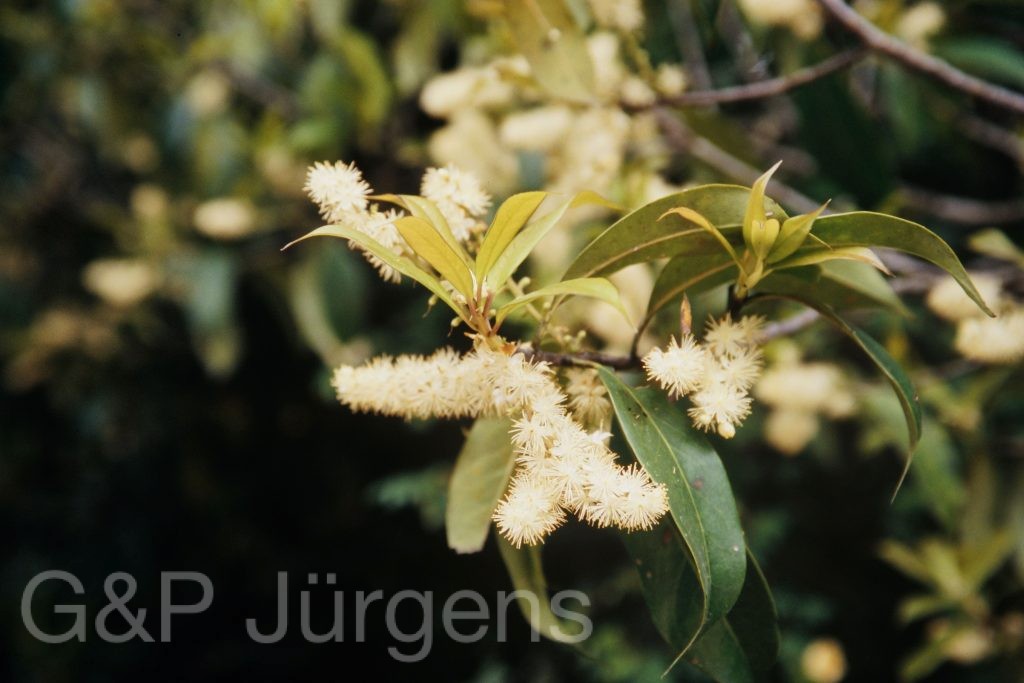
Symplocos glomerata is an Asian tree distributed from the Himalaya and northern India through Bhutan, Nepal and Myanmar into southern China, Taiwan, Indochina and the Malesian region. Its 572 GBIF records span this broad range, indicating a widespread but locally distributed species of evergreen and mixed montane forest. It grows in broadleaved and laurel-dominated forests, on slopes and ridges, typically in the warm-temperate to lower-subtropical montane belt. The plant photographed at Bersay in the Sikkim-West Bengal border region at about 2700 m in April illustrates its occurrence in the moist mid-elevation forests of the Eastern Himalaya, flowering in early spring.

It is a small evergreen tree or shrub with leathery, alternate leaves that are elliptic to oblong, with serrate to crenate margins and a glabrous, glossy upper surface. The flowers are borne in dense, sessile, glomerate clusters in the leaf axils, as the epithet glomerata indicates; each is small, white and fragrant, with a five-lobed corolla and numerous stamens united at the base in fascicles, a characteristic of the genus. The fruit is a small, ovoid to cylindric drupe crowned by the persistent calyx lobes.

Symplocos is the sole genus of the Symplocaceae, distinguished by its polyandrous flowers and aluminium-accumulating tissues; several species, including this one, have been used to yield yellow dyes and mordants. S. glomerata varies considerably across its wide range and has accumulated numerous synonyms and infraspecific names. Widely distributed and ecologically tolerant, it is not regarded as threatened and is a common constituent of Asian montane forest.

Author: King ex C.B. Clarke · Sources: POWO (Kew), GBIF, Flora of Bhutan, Flora of China, Nooteboom Symplocaceae monograph

Wall. ex G. Don

Garh 07 237 ergebnis
India Garhwal Barron Chatti 2450m, June

Description

Symplocos ramosissima is an evergreen shrub or small tree widely distributed through the Sino-Himalayan and Indochinese region, with GBIF recording around 1472 occurrences across China, Nepal, India, Myanmar, Bhutan, Bangladesh, Vietnam, Sri Lanka and Taiwan. It is a characteristic component of moist broad-leaved evergreen and mixed temperate forests, occurring on humid slopes, ridge forests and forest margins generally between 1500 and 3000 m. The individual photographed at Barron Chatti in Garhwal, India, at about 2450 m in June sits within this mid-montane band, where the species forms part of the dense understorey and lower-canopy layer of laurel-oak and rhododendron-rich forests on the southern Himalayan flank.

Morphologically it is a much-branched evergreen with glabrous or finely pubescent young twigs and alternate, simple, coriaceous leaves; the blades are elliptic to lanceolate, with a serrate to crenate-serrate margin and an acuminate apex. The flowers are small, white, fragrant and borne in short axillary spikes or racemes, each with a persistent calyx, a rotate to shortly campanulate corolla of five lobes and numerous stamens fused into fascicles at the base, the pollination biology favouring small generalist insects. The fruit is a small ovoid to cylindric drupe, blue-black to purplish when ripe, crowned by the persistent calyx lobes and containing a hard stone, dispersed largely by frugivorous birds.

The family Symplocaceae comprises the single large genus Symplocos, a taxonomically intricate group well represented in the Himalaya and East Asia. The genus is notable for accumulating aluminium and for the yellow dye historically obtained from the bark and leaves of several species, which were used as mordants in traditional textile dyeing. As a common and ecologically wide-ranging forest element, S. ramosissima is not considered threatened, though its dependence on intact mid-elevation evergreen forest links its local persistence to the conservation of those increasingly fragmented montane habitats.

Author: Wall. ex G. Don · Sources: POWO (Kew), GBIF, Flora of China Vol. 15, Flora of Bhutan Vol. 2, Flora of Nepal, Nooteboom Revision of Symplocaceae of the Old World

Buch.-Ham. ex D. Don

Bh2008 155 P254
Bhutan Phobjika 2650m, April

Description

Symplocos sumuntia is a broadly distributed East Asian and Himalayan tree, recorded from Nepal, north-east India, Bhutan and Bangladesh eastward through China, Taiwan, Japan and Korea to Indochina and Myanmar, with thousands of catalogued occurrences spanning this wide range. It is a constituent of broadleaved evergreen and mixed montane forests, occurring on slopes, ridges and forest margins from the warm subtropical lowlands to the cool temperate belt, broadly between about 800 and 2,800 m. The tree photographed at Phobjika in central Bhutan at 2,650 m in April was recorded in flower, the white blossom opening in spring before or with the new foliage.

It is an evergreen shrub or small to medium tree with smooth grey bark and slender, often glabrous twigs. The leaves are alternate, simple, coriaceous, narrowly elliptic to lanceolate, acuminate, with finely serrate to subentire margins and an entire to undulate texture. The flowers are small, white and fragrant, borne in short axillary racemes or panicles; the corolla is five-lobed, the numerous stamens united at the base into fascicles adnate to the corolla, a hallmark of the family. The fruit is an ovoid to ellipsoidal drupe crowned by the persistent calyx, ripening blue-black to purple.

Symplocos, the sole genus of Symplocaceae, is taxonomically complex, and S. sumuntia (Buch.-Ham. ex D. Don) has historically encompassed numerous regional variants and synonyms. The leaves and bark are valued locally as a source of mordant (aluminium-accumulating tissues used in dyeing) and in traditional medicine. As a widespread forest species it is not of conservation concern, though it depends on the integrity of subtropical montane forest.

Author: Buch.-Ham. ex D. Don · Sources: POWO (Kew), Flora of China Vol. 15, Flora of Bhutan Vol. 2, GBIF, Nooteboom: Revision of Symplocaceae (1975)

(Wall. ex DC.) C.Jeffrey & Y.L.Chen

Garw 2005 172 ergebnis ergebnis
India Garhwal Shertoli 3100m, September

Description

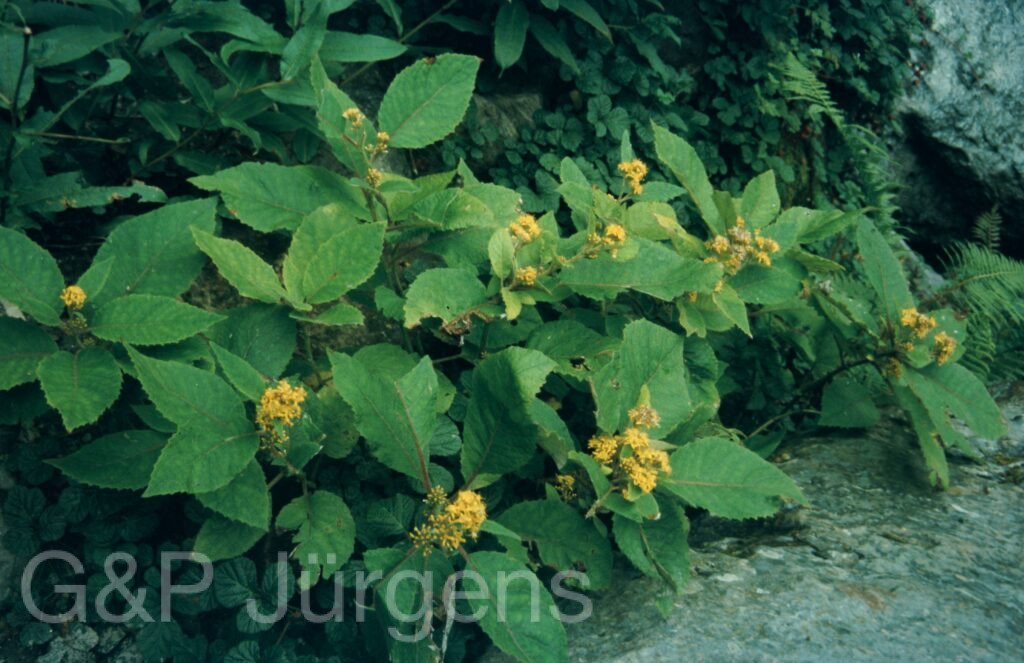
Synotis alata is a robust ragwort-allied composite of the Himalaya and southwestern China, documented by GBIF (330 occurrences) from Nepal, India, Bhutan, Myanmar and China. It grows in forest clearings, shrubberies, along streamsides and on grassy slopes within the upper temperate and subalpine zones, typically between about 2500 and 3500 m. The plant photographed at Shertoli in Garhwal, India, at 3100 m in September captures its late-monsoon to autumn flowering, when these tall herbs come into bloom along moist montane margins after the rains.

The species is a perennial herb with erect, often winged or narrowly alate stems, a feature reflected in the epithet "alata". The leaves are alternate, ovate to elliptic-lanceolate, sharply toothed and frequently decurrent down the stem to form the characteristic wings, with a thinly hairy lower surface. The capitula are numerous and arranged in a broad terminal corymbose panicle; each head is radiate with a few yellow ligulate ray florets surrounding a disc of yellow tubular florets, subtended by an involucre of uniseriate phyllaries with small calyculate bracts. The fruit is a cylindrical, ribbed cypsela bearing a copious white pappus of fine barbellate bristles that aids wind dispersal.

Synotis was segregated from the vast genus Senecio by C. Jeffrey and Y. L. Chen, who recognised its distinctive style and pollen characters; S. alata is a typical member of this Sino-Himalayan group. The wind-borne pappus permits rapid colonisation of disturbed and successional ground, and the bright capitula attract a range of generalist butterfly and bee pollinators. The species is common and widespread across its range and is not considered to be of conservation concern.

Author: (Wall. ex DC.) C.Jeffrey & Y.L.Chen · Sources: POWO (Kew), GBIF, Flora of China, Flora of Bhutan, Annotated Checklist of the Flowering Plants of Nepal, The Senecioneae of the Himalaya (Jeffrey)

L.f.

Bhutan2015 95
Bhutan Galephug 300m, October
Bhutan2015 96
Bhutan Galephug 300m, October

Description

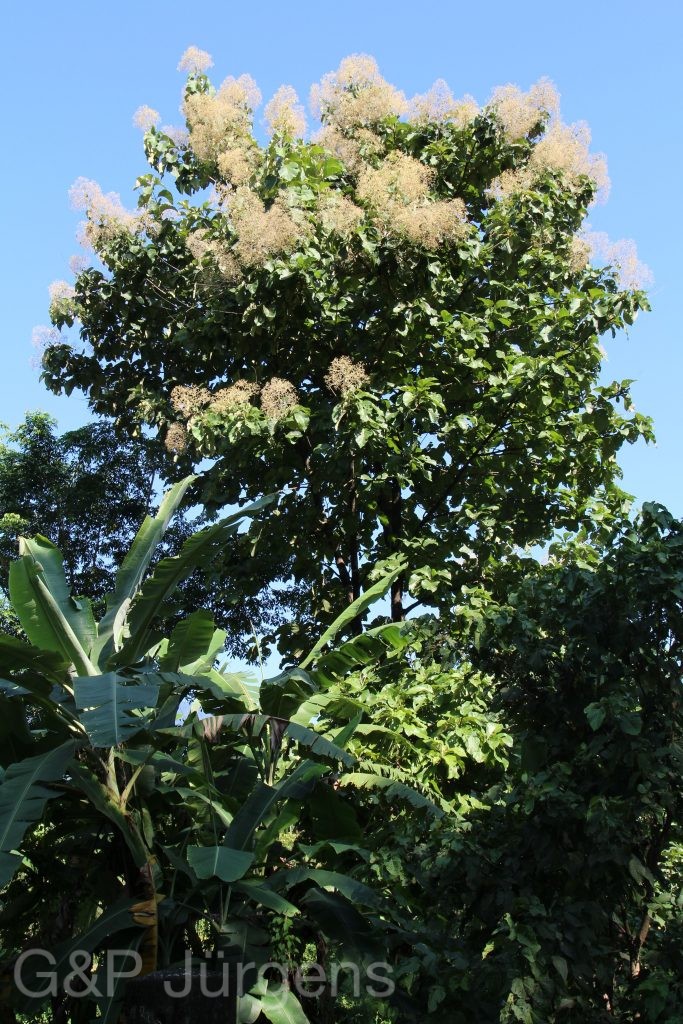
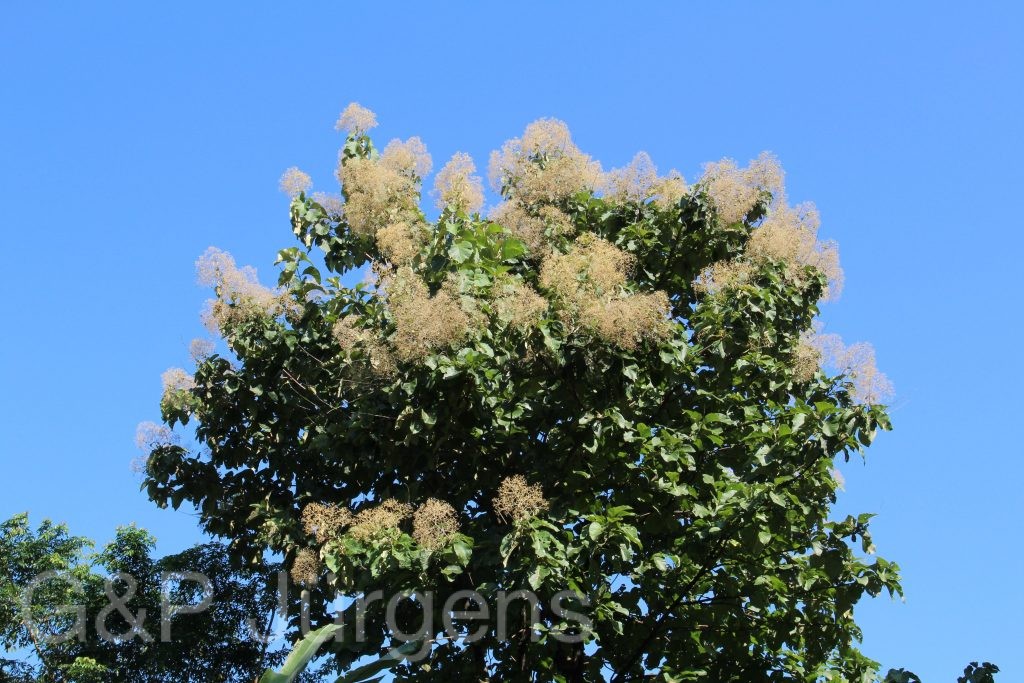
Tectona grandis L.f., the teak, is a large deciduous tree native to the monsoonal forests of South and Southeast Asia, including India, Myanmar, Thailand, Laos and Sri Lanka, and now widely planted and naturalised across the tropics in Indonesia, Brazil, Nigeria, Tanzania, Costa Rica and beyond. In the Himalayan foothills it is recorded from Bhutan at Galephug near 300 m in October, at the warm, low-elevation southern margin of the region. The species grows in tropical dry and moist deciduous forest, on well-drained alluvial and lateritic soils, typically below 1000 m, where a pronounced dry season triggers leaf fall. Its roughly 37 411 GBIF records reflect both its native range and its enormous footprint as a cultivated timber tree.

It is a tall tree reaching 30–40 m with a tall, often fluted bole and pale, fibrous, longitudinally fissured bark. The leaves are very large, opposite or sub-opposite, broadly elliptic to obovate, scabrid above and densely stellate-tomentose beneath, exuding a reddish sap when crushed. The small whitish to pale lilac flowers are five- to six-merous and borne in massive, much-branched terminal panicles. The fruit is a hard, four-chambered drupe enclosed in a conspicuously inflated, bladder-like accrescent calyx that aids wind and water dispersal.

Formerly placed in Verbenaceae, Tectona is now assigned to Lamiaceae (subfamily Tectonoideae) on molecular grounds, here matching the input family. Its heartwood, rich in protective tectoquinones and natural oils, is among the world's most prized timbers for its durability, dimensional stability and resistance to decay and insects, underpinning a vast plantation industry. While extensively cultivated, genuinely wild teak forests have been much reduced and fragmented by logging, and conservation of natural provenances and their genetic diversity is an ongoing priority.

Author: L.f. · Sources: POWO (Kew), GBIF, Flora of British India, Flora of Bhutan, Trees of Tropical Asia, Teak: A Global Overview (FAO monograph)