
(C.B. Clarke) C.B. Clarke
Description
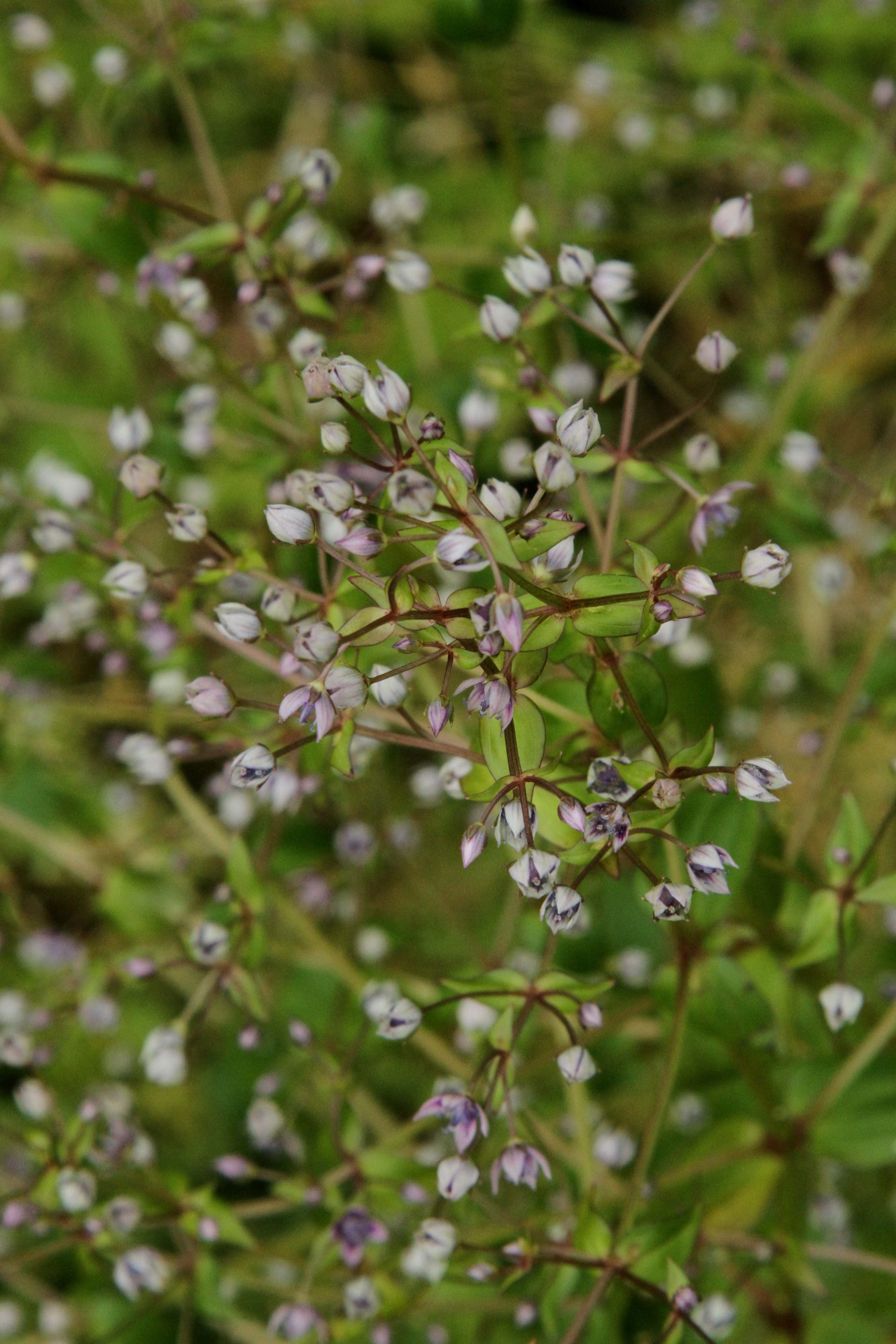
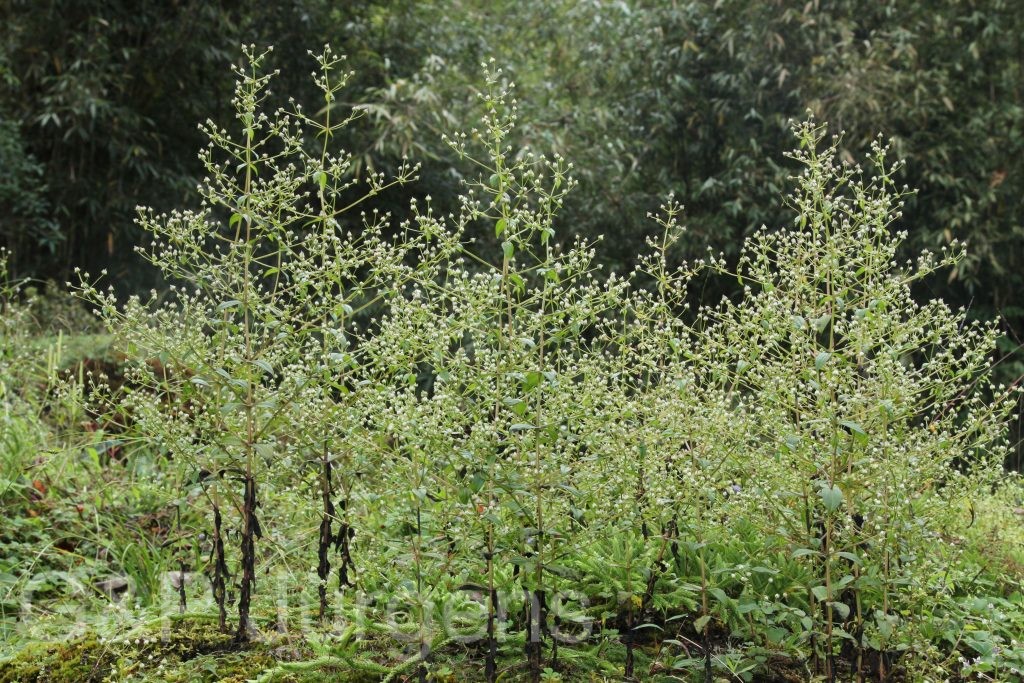
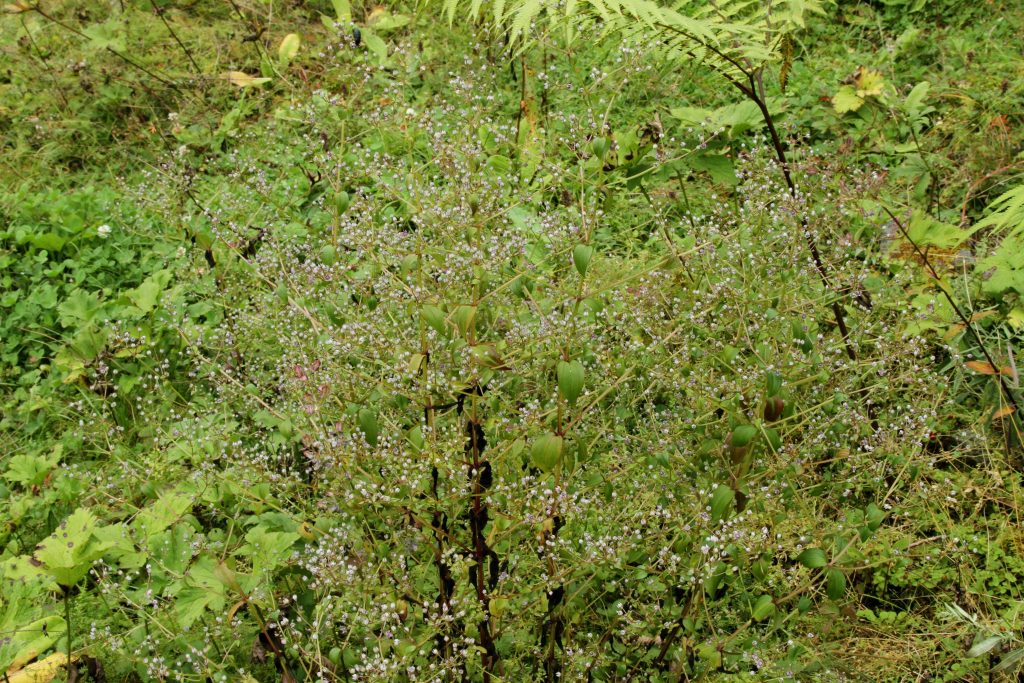
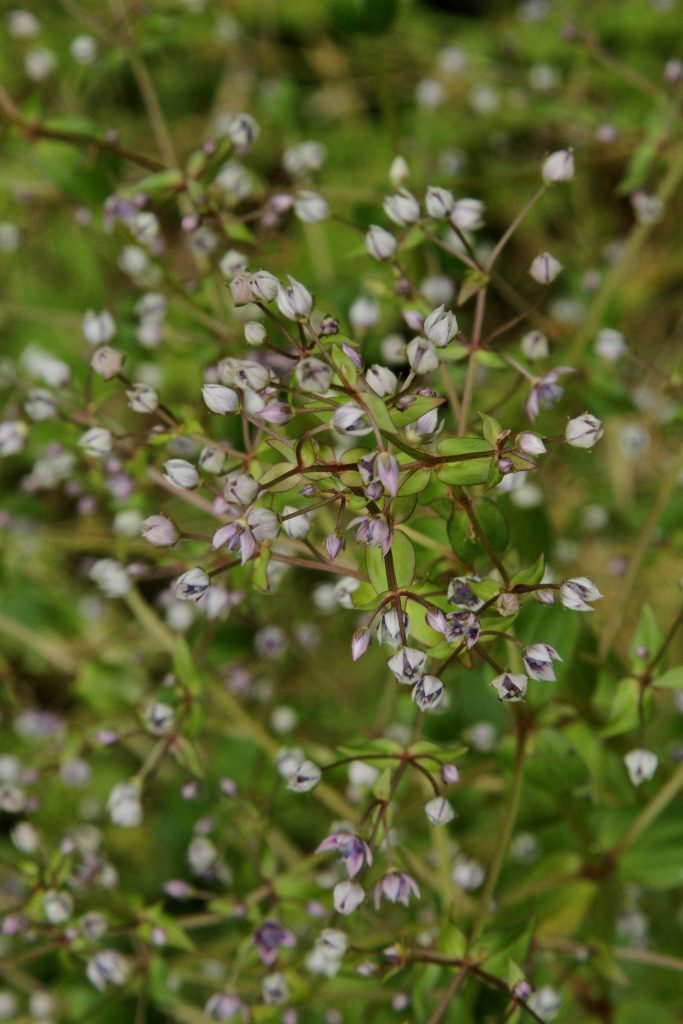
Swertia macrosperma is a widespread gentian-family herb of Asia, exceptionally well represented in GBIF with about 1613 occurrences spanning Taiwan, China, India, Nepal, Bhutan, Myanmar, Bangladesh, Japan and beyond. It is a plant of open, moist montane settings, growing on grassy slopes, forest margins, clearings, banks and damp meadows in the temperate to lower subalpine belt. The material photographed in Bhutan, at Thimphu around 2300 m in October and at the Dochu-La pass near 3100 m in September, illustrates its autumn flowering season, when these post-monsoon slopes carry the late display typical of many Himalayan swertias.
It is an erect annual to biennial herb with slender, often quadrangular and branched stems arising from a basal rosette of leaves. The cauline leaves are opposite, sessile to shortly petiolate and ovate to lanceolate. The flowers are borne in lax terminal and axillary cymes forming a diffuse panicle; each is usually four- or five-merous with a rotate, deeply parted corolla that is whitish, pale greenish or tinged with purple and frequently spotted, and each corolla lobe bears one or two fringed nectary glands (foveolae) diagnostic of the genus. The fruit is a septicidal capsule that, as the epithet indicates, releases comparatively large seeds.
Swertia is a large genus of tribe Swertieae, distinguished from Gentiana by its rotate, deeply divided corolla and conspicuous nectary pits. Several species, including this one, are gathered for traditional medicine on account of their bitter secoiridoid compounds. As an abundant and ecologically tolerant species across a vast range, S. macrosperma is of no conservation concern, though localised harvesting pressure on bitter Swertia species is documented elsewhere in the genus.
Author: (C.B. Clarke) C.B. Clarke · Sources: POWO (Kew), GBIF, Flora of China, Flora of Bhutan, Flora of Nepal, Ho & Pringle Gentianaceae revision