
(G.Don) Wall. ex. C.B.Clarke
Description
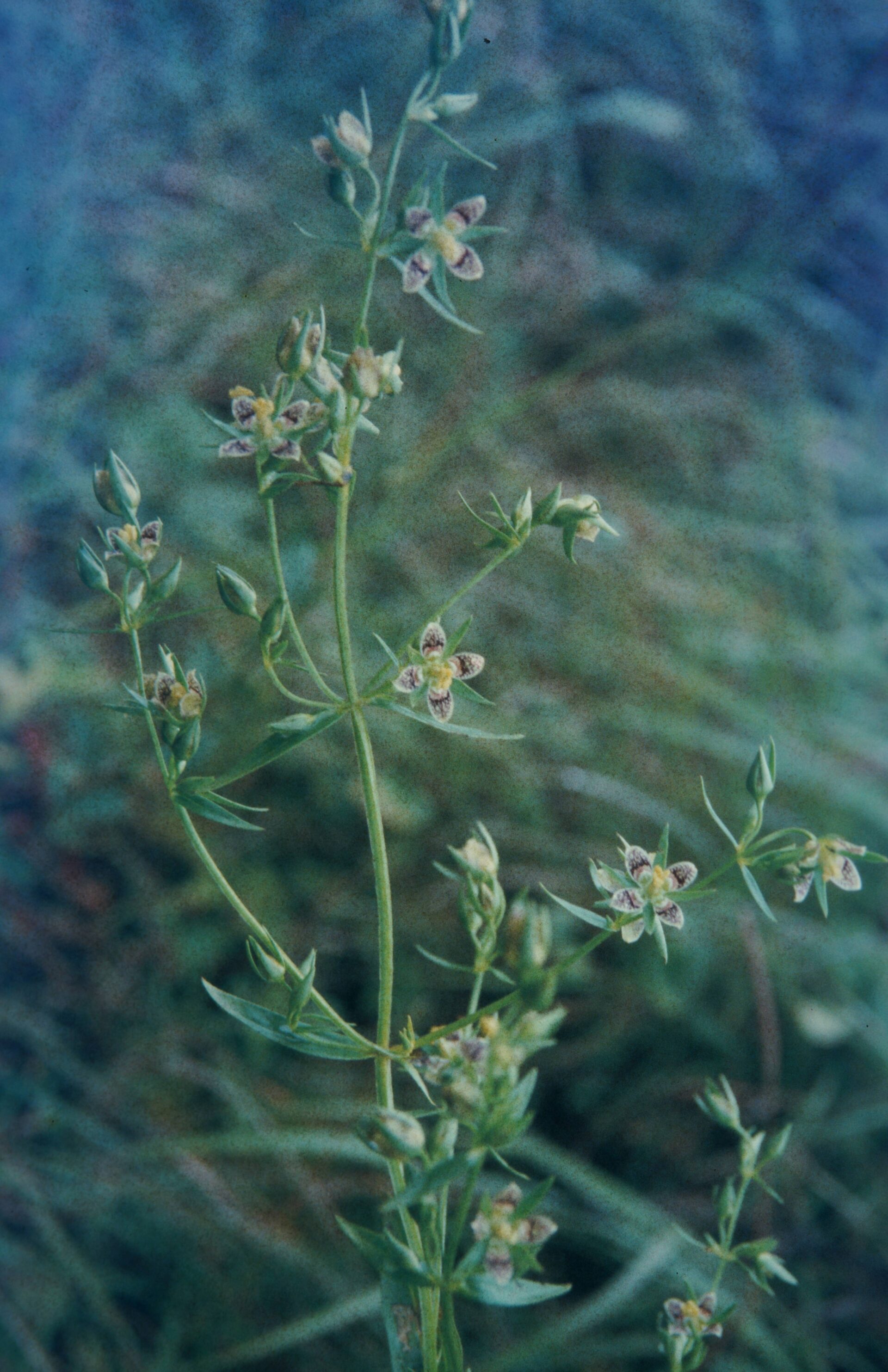
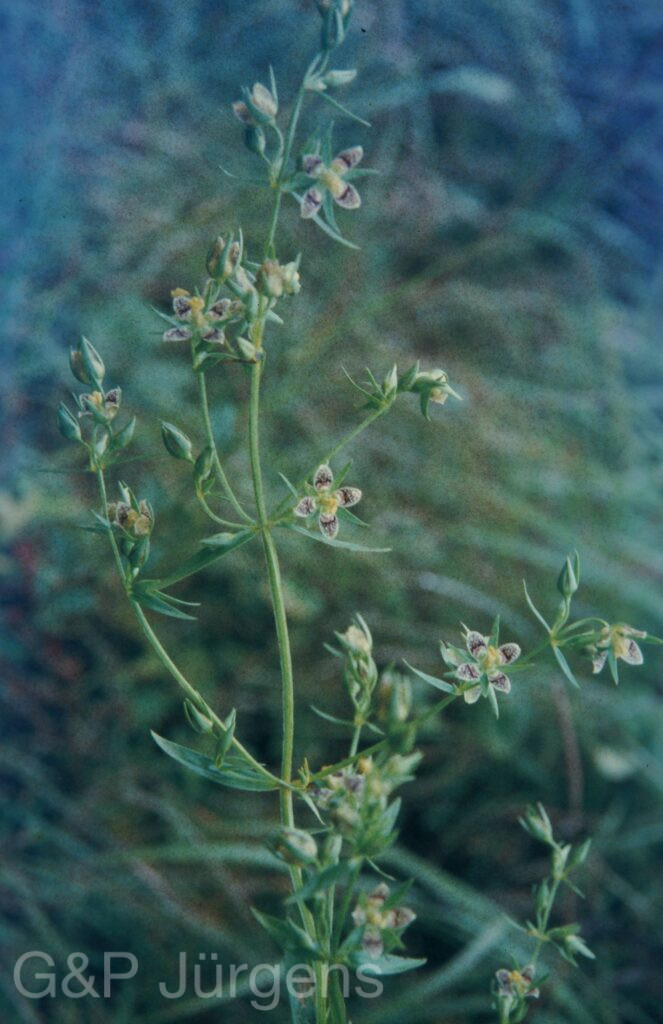
Swertia nervosa is an annual gentian-relative widely distributed across the Himalaya and montane Southeast Asia, recorded from China, Nepal, India, Bhutan, Myanmar and Taiwan, with around 331 occurrences in GBIF. It is a plant of moist open slopes, grassy banks, forest clearings, streamsides and disturbed ground in the subtropical to lower temperate belt, typically between 1500 and 2800 m. The photograph from Bora in Garhwal, India, at about 2200 m in September shows it in flower at the close of the monsoon, the period when the genus reaches its peak of flowering across the mid-elevation Himalaya.
The plant is an erect annual herb with an angular, often four-winged or ridged stem branching in the upper part. The leaves are opposite, sessile, lanceolate to ovate-lanceolate and conspicuously several-nerved, the prominent venation reflected in the epithet nervosa. The numerous small flowers are borne in a lax, much-branched terminal panicle; they are usually four-merous with a deeply parted, pale yellowish to greenish corolla often marked with purplish veins, and each lobe bears a fringed nectary gland at its base, a diagnostic feature of Swertia. The fruit is an ovoid bivalved capsule containing many minute seeds.
Swertia is a large genus of the Gentianaceae centred on the Sino-Himalayan region, distinguished by the nectariferous glands (foveae) on the corolla lobes; S. nervosa belongs to the annual, paniculate-flowered group sometimes segregated under Ophelia. Like several relatives it is rich in bitter secoiridoid compounds and is used in traditional medicine as a substitute for the famed chiretta (S. chirayita). Common, weedy and broadly distributed, it is of no conservation concern.
Author: (G.Don) Wall. ex. C.B.Clarke · Sources: POWO (Kew), GBIF, Flora of China, Flora of Bhutan, Annotated Checklist of the Flowering Plants of Nepal, Clarke's treatment of Gentianaceae in Flora of British India