Tag:

Myanmar

Flowers of the Myanmar Himalaya — 604 species recorded from northern Myanmar (Burma) and the eastern Himalayan borderlands, a biodiversity hotspot linking the Himalaya to the mountains of Yunnan and Southeast Asia. The region’s forests and alpine slopes hold a rich flora of rhododendrons, orchids, balsams and gentians. Every page gives a botanical description, distribution, habitat and flowering time with the original photograph.

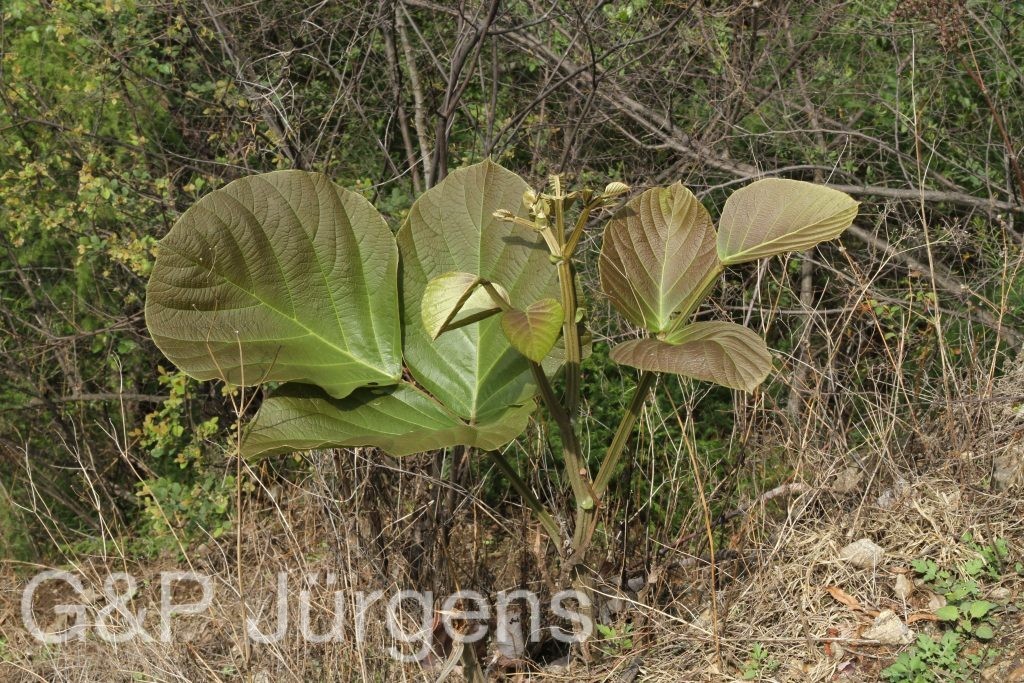
Seem.

Bhutan2015 205
Bhutan Zhemgang 910m, October

Description

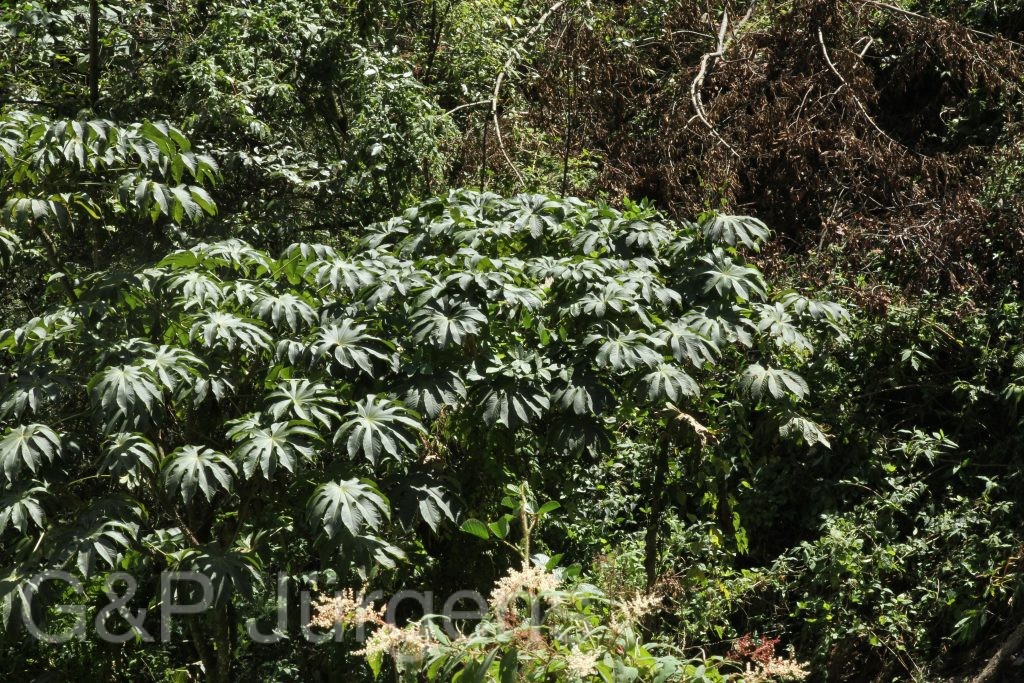
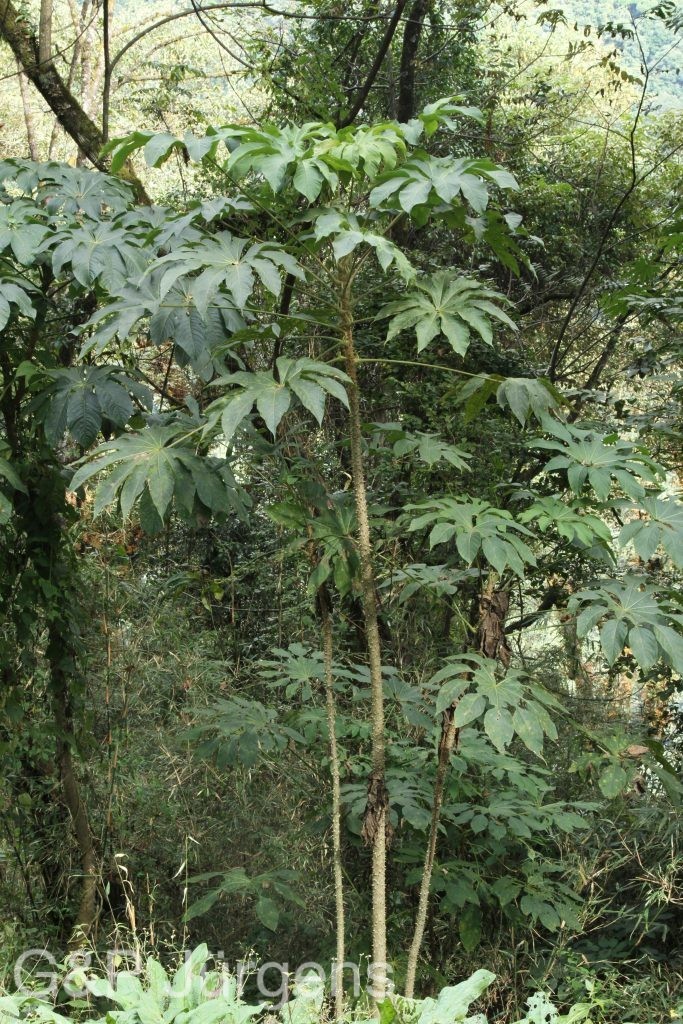
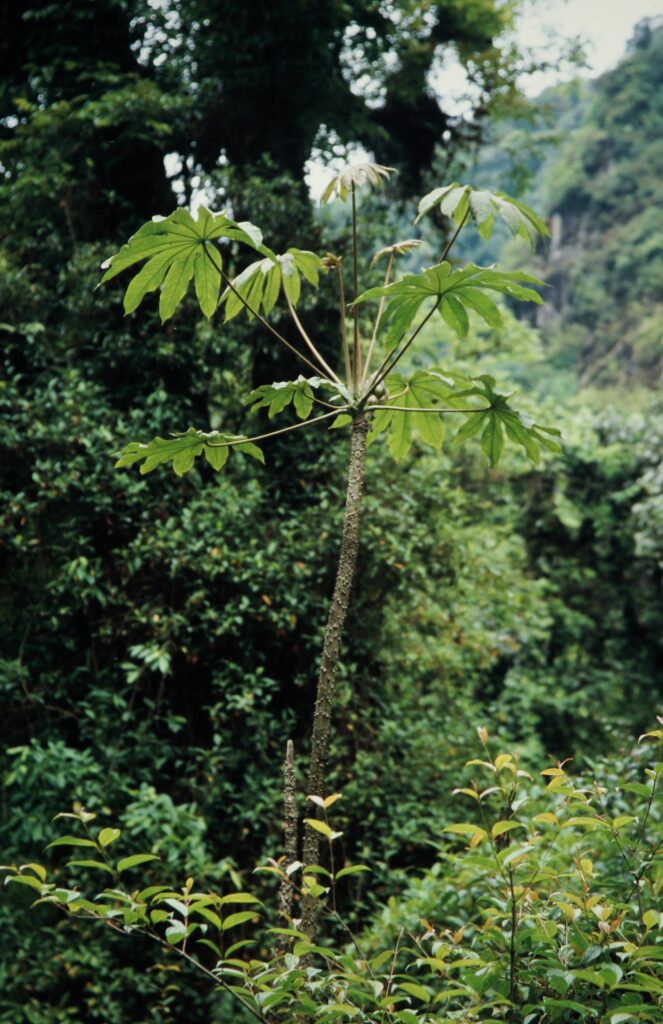
Brassaiopsis hainla is a small tree or treelet of the eastern Himalaya and adjacent Southeast Asia, distributed from northern India, Nepal and Bhutan through southern China into Myanmar, Thailand, Malaysia and Indonesia. GBIF records some 350 occurrences, the core in China, India, Nepal and Myanmar. It is a plant of subtropical to warm-temperate broad-leaved forest, growing along streamsides, ravine slopes, forest margins and secondary woodland, broadly from the foothills up to around 1500–2000 m. The individual shown was photographed in Bhutan at Zhemgang at 910 m in October, in humid hill forest characteristic of its lower-montane habitat.

The plant is a sparingly branched small tree with stout, often prickly stems and large, palmately lobed or palmately compound leaves clustered toward the branch tips on long petioles; the lobes are oblong-lanceolate, acuminate and serrate, and young growth is frequently armed with scattered prickles. The minute, greenish-white flowers are five-merous and borne in umbels arranged into large terminal, paniculate or racemose compound inflorescences. Each flower has a reduced calyx, free petals and an inferior ovary crowned by a stylar column. The fruit is a small, globose to slightly flattened drupe-like berry, ripening dark, containing several flattened pyrenes.

Brassaiopsis is a genus of the Araliaceae centred on the Sino-Himalaya and Indochina, allied to Aralia and Schefflera and distinguished by its armed stems, palmate leaves and umbellate inflorescences. The young shoots and leaves of B. hainla are eaten as a vegetable in parts of the Himalaya, and the species has local ethnobotanical use. It is reasonably widespread across its montane forest range and is not regarded as globally threatened, though it depends on the persistence of intact broad-leaved forest.

Author: Seem. · Sources: POWO (Kew), GBIF, Flora of China, Flora of Bhutan, An Annotated Checklist of the Flowering Plants of Nepal, A Systematic Revision of the Genus Brassaiopsis (Araliaceae)
Seem.

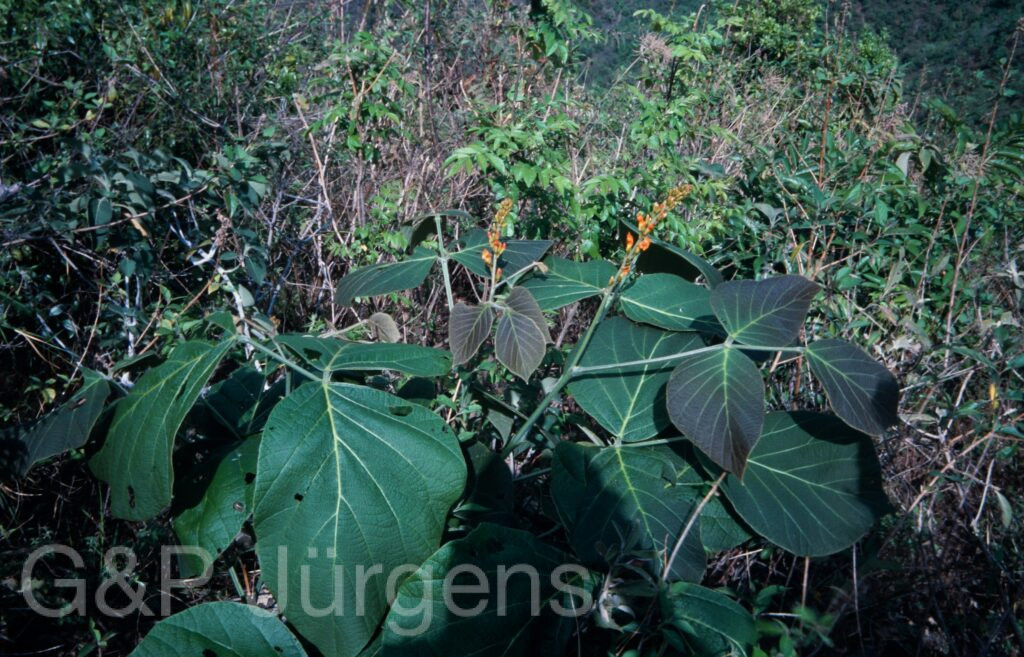
Sikkim 2006 309 ergebnis
India West-Bengal, Chaana 1750m, May
Sikkim 2006 455 ergebnis
Sikkim Ringi-Chu 2300m, May

Description

Brassaiopsis hispida Seem. is a prickly shrub or small tree of the ginseng family ranging through the eastern Himalaya and the Sino-Himalayan region. GBIF records document it in India, Nepal, Bhutan, China and Myanmar, reflecting a distribution centred on the moist eastern Himalayan foothills and adjacent uplands. It occupies humid broad-leaved evergreen and semi-evergreen forest, forest margins and ravines, typically between roughly 1,200 and 2,500 m. The collections illustrated from Chaana in West Bengal at 1,750 m and from the Ringi-Chu in Sikkim at 2,300 m, both flowering in May, are representative of its damp montane forest habitat.

The plant is an armed shrub to small tree, the stems and petioles bearing scattered prickles and a hispid indumentum. The large, long-petiolate leaves are palmately lobed or compound, with the lobes or leaflets coarsely serrate and abruptly acuminate, the surfaces rough-hairy. The inflorescence is a terminal panicle of umbels bearing small, greenish to yellowish, functionally polygamous flowers with five petals and a five-merous ovary. The fruit is a small subglobose drupe with the persistent styles at the apex.

Brassaiopsis is a Palaeotropical Asian genus closely allied to Trevesia and Aralia, distinguished by its prickly habit and lobed leaves. B. hispida is one of several morphologically variable Himalayan species, and the genus has attracted phytochemical interest for its triterpenoid saponins. Though locally common in suitable forest, it is sensitive to habitat clearance in the lower hills.

Author: Seem. · Sources: POWO (Kew), GBIF, Flora of China Vol. 13, Flora of Bhutan Vol. 2, Lowry & Frodin: Studies in Asian Araliaceae

C.B.Clarke

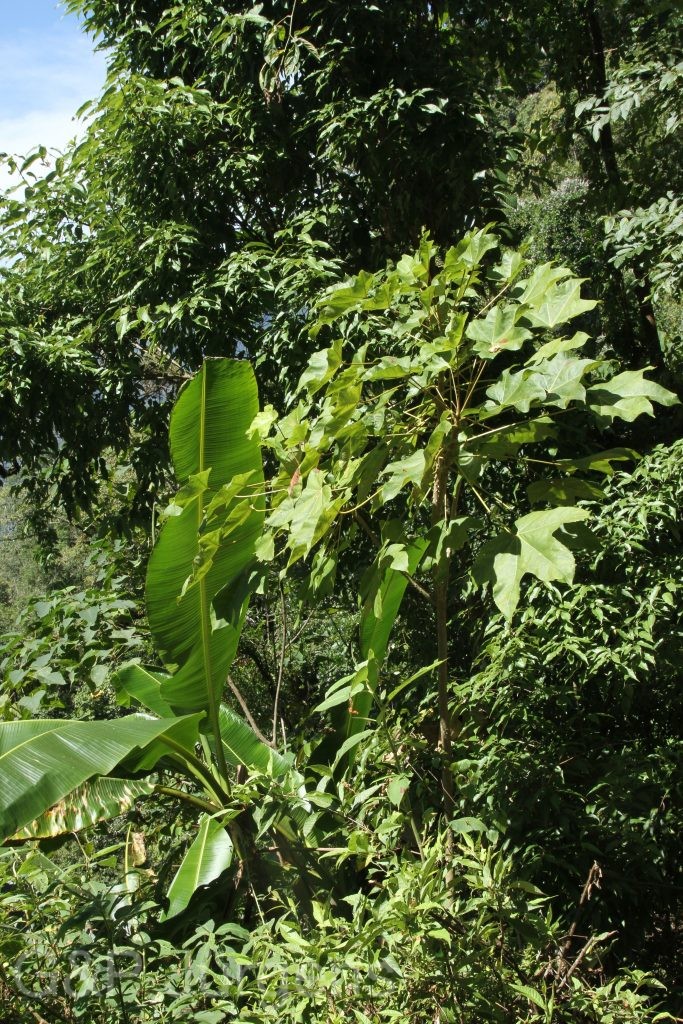
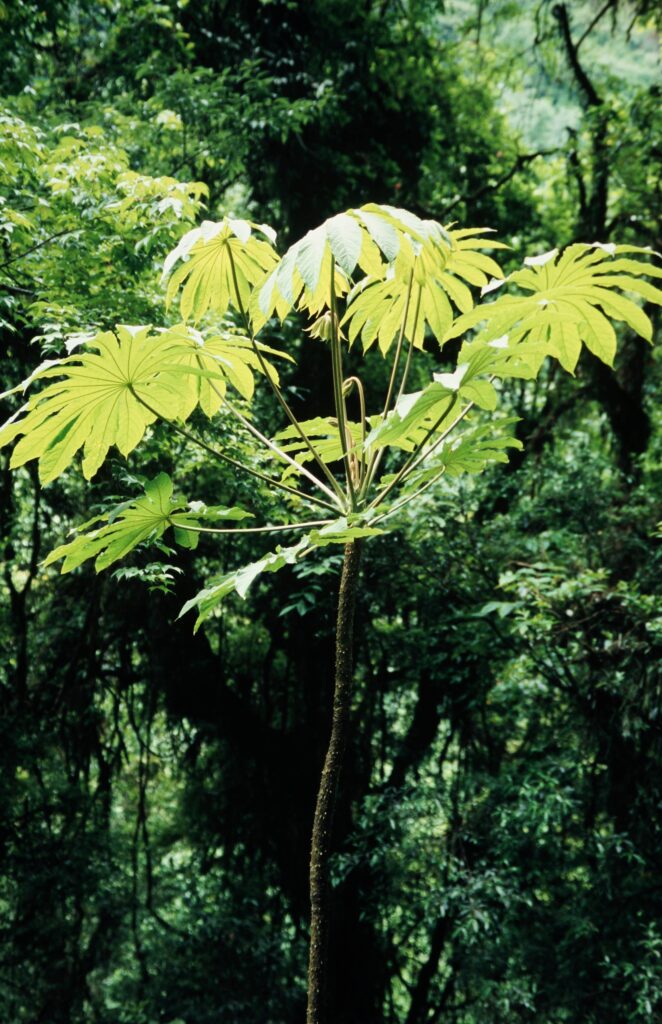
Bhutan2015 583
Bhutan Gasa 2000m, October
Bhutan2015 590
Bhutan Gasa 2200m, October

Description

Brassaiopsis mitis is an East Himalayan small tree or large shrub of the ginseng family, GBIF holding only about 61 occurrences from India, Bhutan, Nepal and Myanmar. It inhabits humid, shaded broadleaved and evergreen montane forest, occurring along stream gullies, ravine slopes and forest margins generally between about 1500 and 2500 m. The individuals photographed from the Gasa district of northern Bhutan at 2000 and 2200 m, in October, are typical of its occurrence in cool, moist mid-montane forest of deep shade and high humidity, the autumn date corresponding to its fruiting season.

It is an evergreen shrub or small tree to several metres tall, the stems and petioles often prickly, as in many species of Brassaiopsis. The leaves are large, long-petiolate and palmately lobed or palmately compound, the lobes or leaflets entire to serrate, giving the crown a coarse, tropical aspect. The minute, greenish flowers are five-merous with an inferior ovary and are aggregated into umbels grouped into large terminal panicles. The fruit is a small, fleshy, more or less globose drupe crowned by the persistent stylopodium, ripening dark and containing a few flattened pyrenes.

Described by C. B. Clarke, B. mitis belongs to the predominantly Sino-Himalayan and Southeast Asian genus Brassaiopsis within Araliaceae, characterised by prickly, large-leaved understorey trees. With its few records and restricted East Himalayan range it is of regional biogeographic interest, dependent on intact mid-montane forest. Ecologically its umbellate inflorescences attract generalist insects, while its drupaceous fruit is dispersed by frugivorous birds and mammals of the forest interior.

Author: C.B.Clarke · Sources: POWO (Kew), GBIF, Flora of Bhutan, Flora of China, Lowry & Frodin studies of Brassaiopsis (Araliaceae)
Benth.

Bhutan2015 445
  Bhutan Jakar 2900m, October
Bhutan2015 446
  Bhutan Jakar 3100m, October

Description

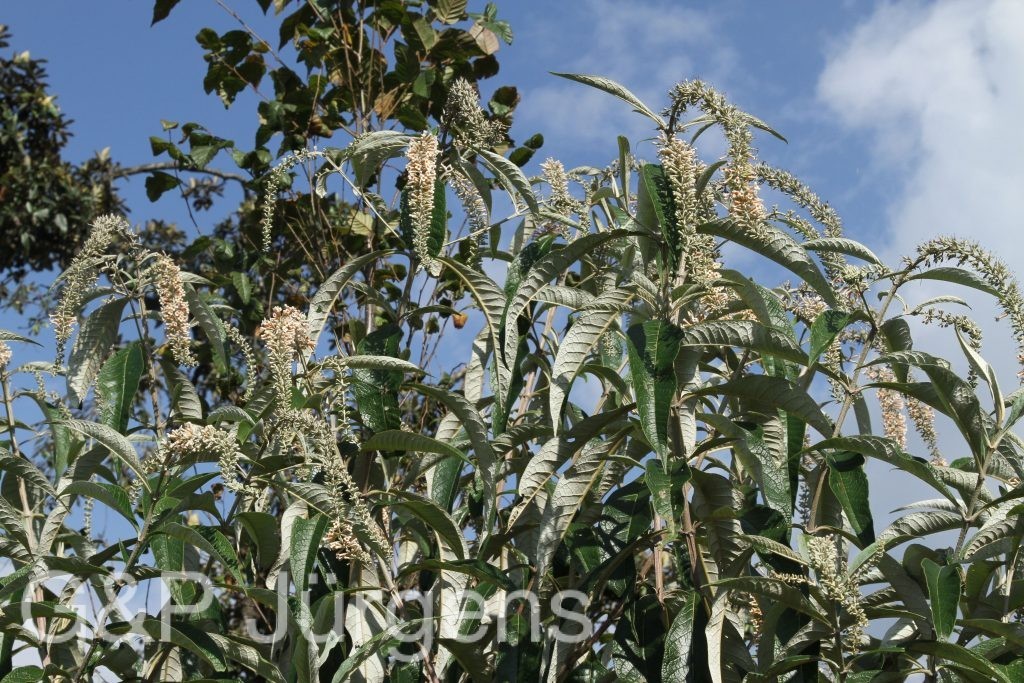
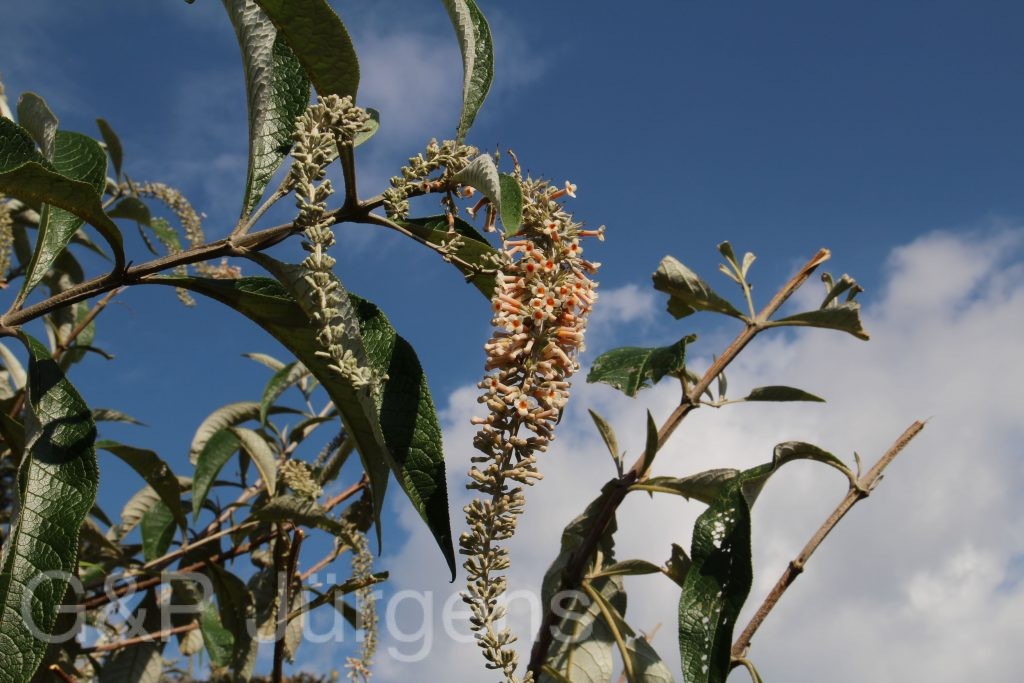
Buddleja macrostachya is a widespread Sino-Himalayan and Indochinese shrub, recorded from China, India, Vietnam, Myanmar, Thailand, Bhutan, Bangladesh and Nepal, with over 400 documented occurrences spanning the eastern Himalaya into mainland Southeast Asia. It is a plant of open hillsides, forest margins, thickets, roadsides and disturbed slopes in subtropical to temperate zones, generally between about 1000 and 3200 m. The illustrated plants from Jakar in central Bhutan at 2900 and 3100 m, flowering in October, demonstrate its autumn flowering at the upper end of its altitudinal range, where it forms conspicuous shrubs in sunny, often disturbed montane habitats.

It is a large shrub with quadrangular, densely stellate-tomentose young branches. The leaves are opposite, lanceolate to narrowly elliptic, long-acuminate, with a crenate-serrate margin, dark green and rugose above and grey- to fawn-tomentose beneath, the bases joined by an interpetiolar stipular line. The inflorescence is a long, narrow, interrupted spike-like thyrse (reflected in the epithet macrostachya, large-spiked) of many congested cymose clusters. Individual flowers are small, with a four-lobed campanulate corolla that is pale lilac to pink or purplish with an orange throat, and four included stamens. The fruit is a small, septicidal, two-valved capsule releasing numerous minute seeds.

Although listed here under Scrophulariaceae following the broad APG placement of Buddleja, the genus is also frequently treated in its own family Buddlejaceae; B. macrostachya Benth. is the accepted name. The nectar-rich, fragrant inflorescences attract butterflies, moths and other long-tongued insects, while the light, winged seeds are wind-dispersed. As a vigorous coloniser of open and disturbed ground it is common and widespread, and of least conservation concern.

Author: Benth. · Sources: POWO (Kew), GBIF, Flora of China Vol. 15, Flora of Bhutan Vol. 2, Flora of Nepal, Leeuwenberg The Loganiaceae of Africa and Buddleja revisions (monograph)

Wall.

Nepal 97 331 P656
Nepal Arun-Valley 1900m, May

Description

Buddleja paniculata is a shrubby butterfly-bush of the Himalaya and adjacent China, with GBIF occurrences across Nepal, northern India, Bhutan, Myanmar, Vietnam, Thailand and southwest China (further codes being cultivated and herbarium records). It favours open, sunny situations on dry slopes, river terraces, cliffs, roadsides and forest margins in the subtropical to warm-temperate zone, mostly between 1,000 and 2,800 m. The illustrated plant was photographed in the Arun Valley of eastern Nepal at about 1,900 m in May, where it flowers in the dry pre-monsoon season on stony, well-drained ground.

The plant is an erect, much-branched shrub 1-3 m tall with quadrangular, stellate-tomentose young branches. The leaves are opposite, lanceolate to ovate-lanceolate, with a green, somewhat rugose upper surface and a paler, densely stellate-hairy underside, and crenate-serrate margins. The flowers are small and fragrant, crowded into slender, often nodding panicles of cymose clusters; the corolla is tubular with four short lobes, white to pale lilac with an orange or yellow throat, and the calyx is densely tomentose. The fruit is a small, two-valved septicidal capsule releasing numerous minute, narrowly winged seeds dispersed by wind.

The genus Buddleja, formerly placed in its own family Buddlejaceae or in Loganiaceae, is now treated within an enlarged Scrophulariaceae. Buddleja paniculata is among the more cold-tolerant Asian species and an important early-season nectar source for butterflies and other insects. It is widespread, often colonising disturbed and degraded ground, and is not of conservation concern; some forms are grown ornamentally for their scented winter-to-spring bloom.

Author: Wall. · Sources: POWO (Kew), GBIF, Flora of China Vol. 19 (Buddlejaceae), Flora of Nepal, Leeuwenberg: The Loganiaceae of Africa – Buddleja revision works

Lindl.

Bh09 392 G619
Bhutan Mo-Chu, 1500m June

Description

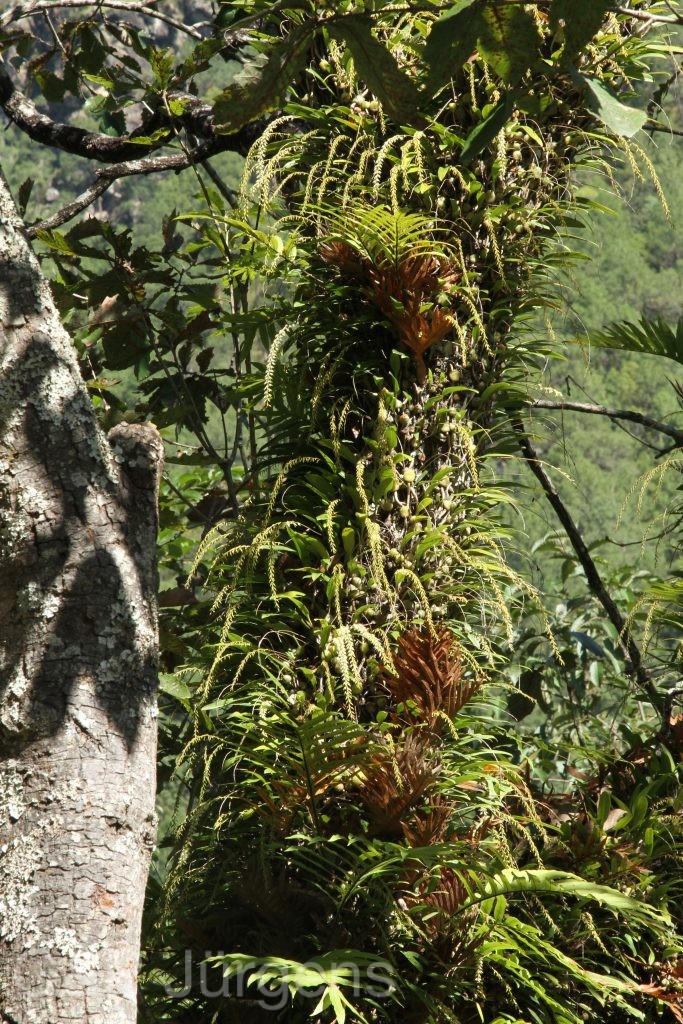
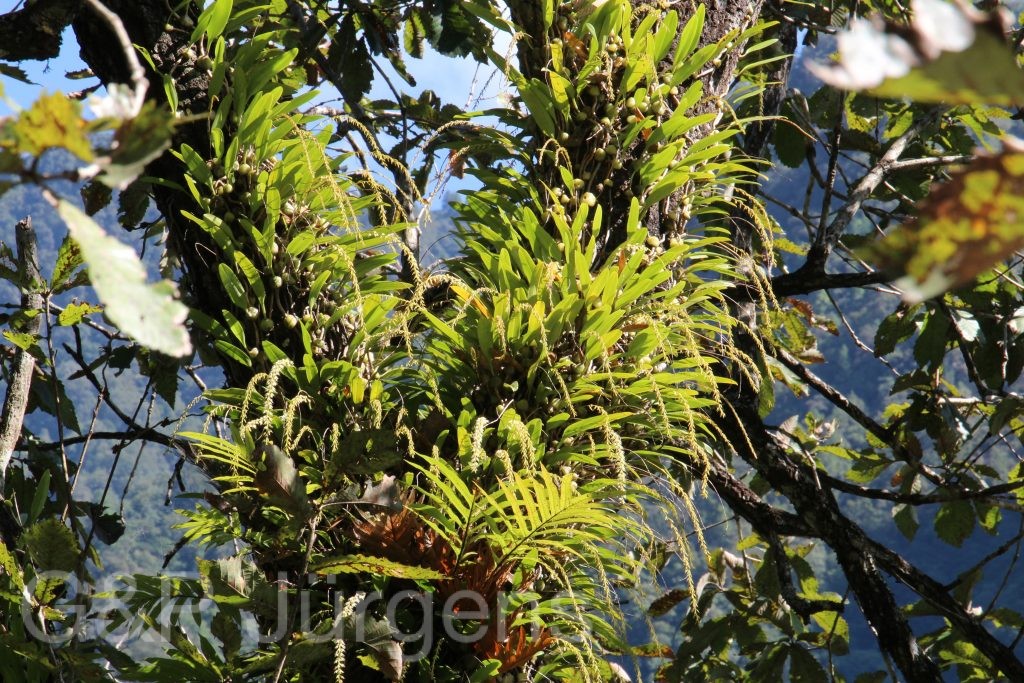
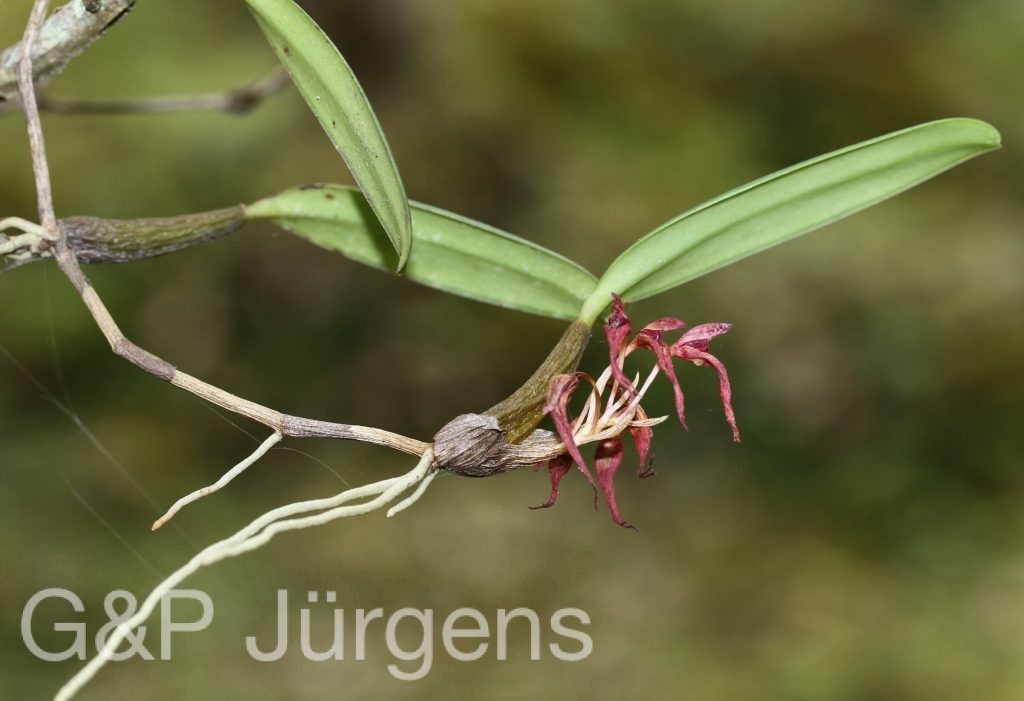
Bulbophyllum affine is an epiphytic orchid widely distributed across East and Southeast Asia, from Nepal and northeast India (Sikkim, Assam) through Bhutan, Myanmar, and southern China to Taiwan, Vietnam, and Thailand. It inhabits humid broadleaved and mixed forests at 500–2,500 m elevation, growing on mossy trunks and branches, occasionally on rocks (lithophytic).

The plant produces ovoid to conical pseudobulbs 2–4 cm tall, set 3–8 cm apart on a stout, creeping rhizome. Each pseudobulb bears a single, leathery, elliptic to oblong leaf 8–15 cm long. The inflorescence is a nodding, densely many-flowered raceme 5–15 cm long, emerging from the base of the pseudobulb. The flowers are small, 5–8 mm across, yellowish-green to pale brown, densely arranged in a cylindrical spike. Sepals are lanceolate and acuminate; the lip is small, fleshy, and recurved, mobile on a thin strap connecting it to the column foot — a characteristic feature of Bulbophyllum enabling pollination by small flies.

Bulbophyllum is the largest genus in the Orchidaceae, comprising over 2,200 described species. B. affine belongs to section Cirrhopetalum and is distinguished from similar congeners by its densely flowered, cylindrical raceme and the prominent column stelidia.

Author: Lindl. · Sources: POWO (Kew), Flora of Bhutan Vol. 3, GBIF, Seidenfaden: Orchid Genera in Thailand XIV: Bulbophyllum (1979)

Lindl.

Bhutan2015 573
Bhutan Mo-Chu 1550m, October
Bhutan2015 574
Bhutan Mo-Chu 1550m, October

Description

Bulbophyllum hirtum is an epiphytic orchid distributed across the eastern Himalayas and Southeast Asia, from Nepal and northeast India through Bhutan, Myanmar, southwest China, Thailand, and Vietnam. It grows in warm to temperate broadleaved forests at 500–2,000 m elevation, on moss-covered tree trunks and larger branches, occasionally on rocks near streams.

The plant has ovoid, somewhat compressed pseudobulbs 1.5–2.5 cm tall, spaced 2–5 cm apart on a creeping rhizome. Each pseudobulb bears a single, elliptic-oblong, coriaceous leaf 6–12 cm long. The inflorescence is a lax raceme 5–15 cm long, carrying 5–15 flowers. The specific epithet 'hirtum' (meaning hairy) refers to the distinctive pubescence on the floral parts: the flowers are small, 6–10 mm across, yellowish to brownish-green with conspicuous fine hairs on the sepals and petals. The lip is fleshy, recurved, and densely papillose, dark purple, hinged to the column foot. Flowering occurs from September to November.

Bulbophyllum hirtum is classified within Bulbophyllum section Brachystachya. The pubescent flower surfaces are thought to play a role in pollinator attraction by enhancing both visual texture and scent dispersal, as the genus is predominantly pollinated by small flies (Diptera).

Author: Lindl. · Sources: POWO (Kew), Flora of Bhutan Vol. 3, GBIF, Vermeulen: Orchid Monographs 7: Bulbophyllum (1993)

Rchb.f.

Bhutan2015 44
Bhutan Wangdi Phodrang 2000m, October
Bhutan2015 53
Bhutan Wangdi Phodrang 2000m, October

Description

Bulbophyllum retusiusculum is a widespread epiphytic orchid ranging from the eastern Himalayas (Nepal, northeast India, Bhutan) through Myanmar, southern China, Taiwan, Vietnam, and Thailand. GBIF records document over 550 occurrences across this range. The species inhabits broadleaved and mixed forests at 800–2,500 m elevation, growing on tree trunks and branches in moderately humid conditions.

The pseudobulbs are narrowly ovoid to cylindrical, 1–2 cm tall, clustered on a short rhizome. Each bears a single, oblong-elliptic, leathery leaf 4–10 cm long with a slightly retuse (shallowly notched) apex — the feature reflected in the specific epithet 'retusiusculum'. The inflorescence is an erect to arching, densely many-flowered raceme 5–15 cm long. The flowers are minute, 3–4 mm across, arranged in a dense, cylindrical spike, typically pale yellowish-green to cream. The dorsal sepal is concave, the lateral sepals spreading, and the lip is small, fleshy, and recurved. Flowering occurs from September to November.

B. retusiusculum belongs to Bulbophyllum section Brachystachya, characterised by densely flowered, spike-like racemes. The species shows moderate morphological variation across its extensive range, particularly in flower colour and pseudobulb spacing.

Author: Rchb.f. · Sources: POWO (Kew), Flora of China Vol. 25, GBIF, Pearce & Cribb: The Orchids of Bhutan (2002)

J.J.Sm.

Bhutan2012 1178
Bhutan Tashiyangtse 2000m, October
Bhutan2012 1180
Bhutan Tashiyangtse 2000m, October
Bhutan2012 1181
Bhutan Tashiyangtse 2000m, October

Description

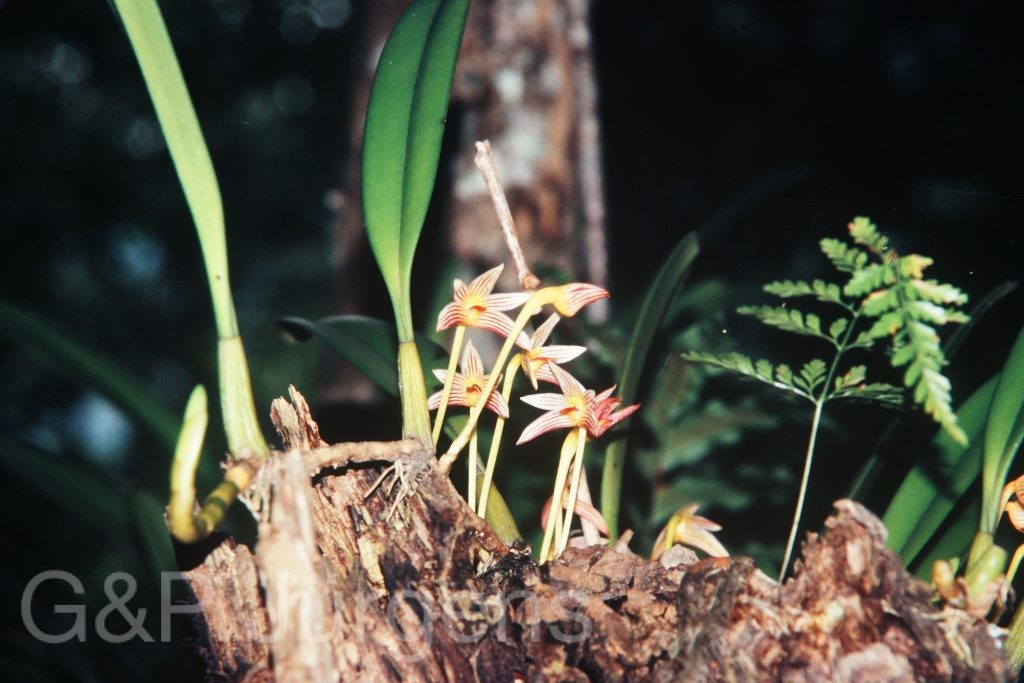
Bulbophyllum yoksunense is a rare epiphytic orchid with a restricted distribution in the eastern Himalayas. The species is named after Yuksom (also spelled Yoksum or Yoksun) in western Sikkim, India, where the type specimen was collected. Its known range includes Sikkim, Bhutan, eastern Nepal, and northern Myanmar. With only 17 documented occurrences in GBIF, it is among the less frequently recorded Bulbophyllum species in the region. It grows on mossy tree trunks in temperate broadleaved forests at 1,500–2,500 m elevation.

The pseudobulbs are ovoid, 1–2 cm tall, closely set on a creeping rhizome. Each bears a single, elliptic, coriaceous leaf 5–10 cm long. The inflorescence is a short, few-flowered raceme. Flowers are small, about 8–12 mm across, with distinctive coloration: the sepals are pale greenish-yellow with fine purple veining, and the lip is dark purple, fleshy, and slightly recurved. The lateral sepals are slightly longer than the dorsal sepal. Flowering in Bhutan occurs in October.

B. yoksunense is poorly known in cultivation and in the wild. Its apparent rarity may partly reflect under-collection in the remote eastern Himalayan forests of Bhutan and Sikkim. Further field survey is needed to clarify its true distribution and conservation status.

Author: J.J.Sm. · Sources: POWO (Kew), GBIF, Pearce & Cribb: The Orchids of Bhutan (2002), J.J. Smith: Orchidaceae Novae (1910)

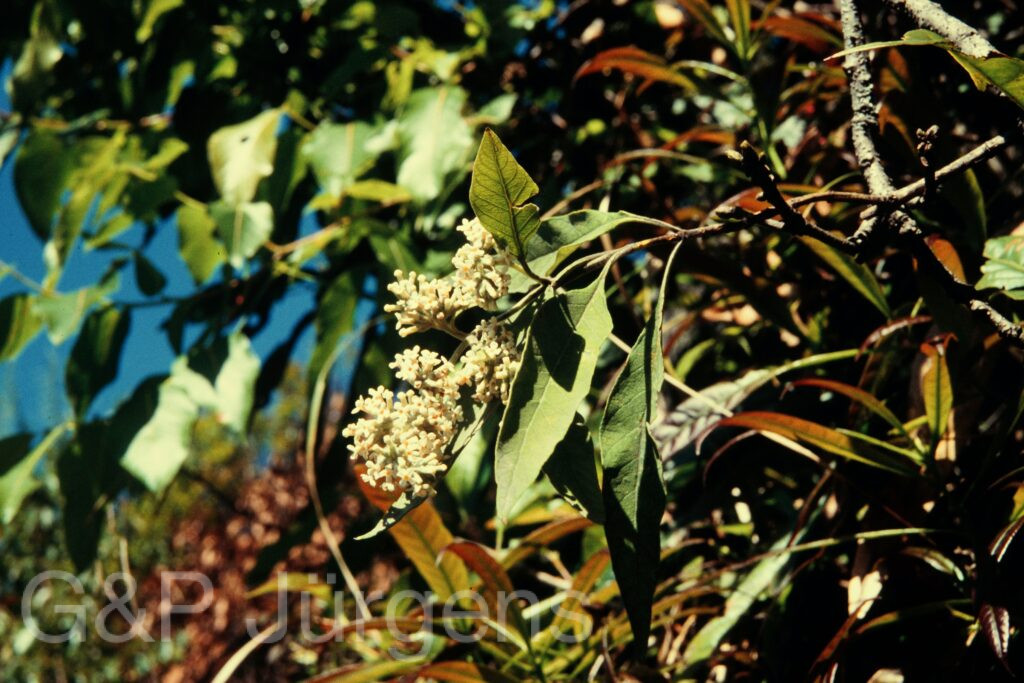
Butea buteiformis

by GP Jürgens

(Voigt) Grierson

Bhutan2014 146
Bhutan Trashigang 1900m, May
Nepal 2001 229 ergebnis ergebnis
Nepal (Gorkha) Tullikot 1750m, May

Description

Butea buteiformis is a small tree or scandent shrub of the subtropical and warm-temperate broad-leaved forests of the eastern and central Himalaya, ranging through Nepal, India, Bhutan, Bangladesh and Myanmar, with some 220 georeferenced collections documenting a continuous arc along the southern Himalayan front. It occupies forest margins, ravines and secondary thickets, typically between about 1000 and 2200 m. The photographed plants were recorded at Trashigang in eastern Bhutan at 1900 m and at Tullikot in the Gorkha district of central Nepal at 1750 m, both flowering in May, a season coinciding with the pre-monsoon flush in these mid-montane belts.

The species is a deciduous, often climbing legume with twining or trailing branches and stout, lenticellate stems. The leaves are pinnately trifoliolate, the leaflets broadly ovate to rhombic, coriaceous, with the lateral pair distinctly oblique and a prominent reticulate venation; young growth is silky-pubescent. The inflorescences are dense axillary or terminal racemes bearing showy papilionaceous flowers; the calyx is campanulate and silky-tomentose, and the corolla is bright orange to scarlet, the standard recurved and the keel strongly curved, as is characteristic of bird-pollinated Butea. The fruit is a flattened, indehiscent, samaroid pod, thickened and seed-bearing toward the apex.

Butea is a small palaeotropical genus allied to Spatholobus and Meizotropis within the tribe Phaseoleae; B. buteiformis is distinguished from the lowland B. monosperma by its montane habit, smaller stature and more slender, often climbing form. The vivid ornithophilous flowers are visited by sunbirds and other nectarivores. Though not assessed as threatened and locally frequent, populations face forest clearance along accessible mid-elevation slopes.

Author: (Voigt) Grierson · Sources: POWO (Kew), GBIF, Flora of Bhutan, Flora of Nepal, Legumes of the World (Lewis et al.)