Tag:

Myanmar

Flowers of the Myanmar Himalaya — 604 species recorded from northern Myanmar (Burma) and the eastern Himalayan borderlands, a biodiversity hotspot linking the Himalaya to the mountains of Yunnan and Southeast Asia. The region’s forests and alpine slopes hold a rich flora of rhododendrons, orchids, balsams and gentians. Every page gives a botanical description, distribution, habitat and flowering time with the original photograph.

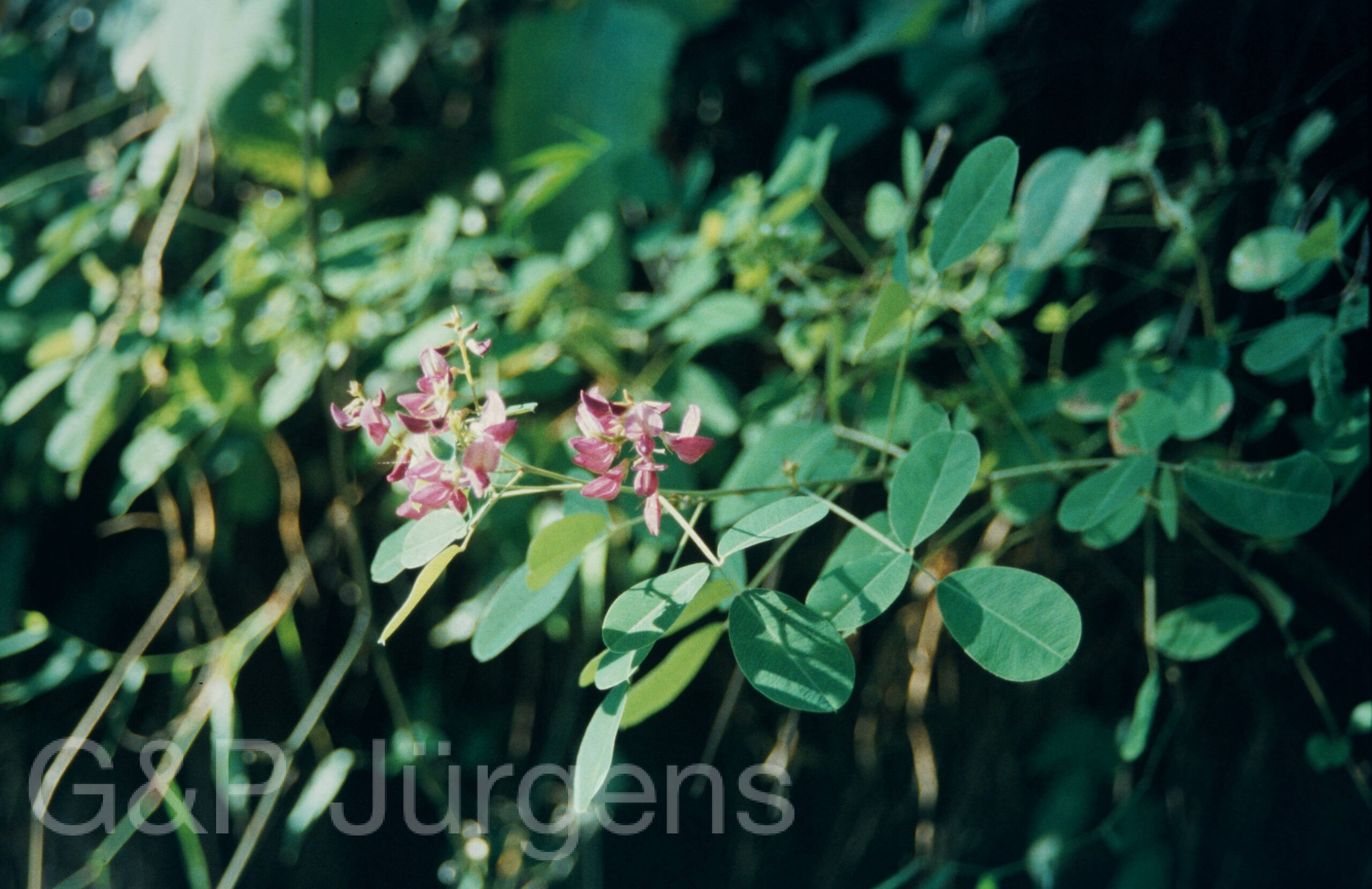
(Royle ex Schindl.) Schindl.
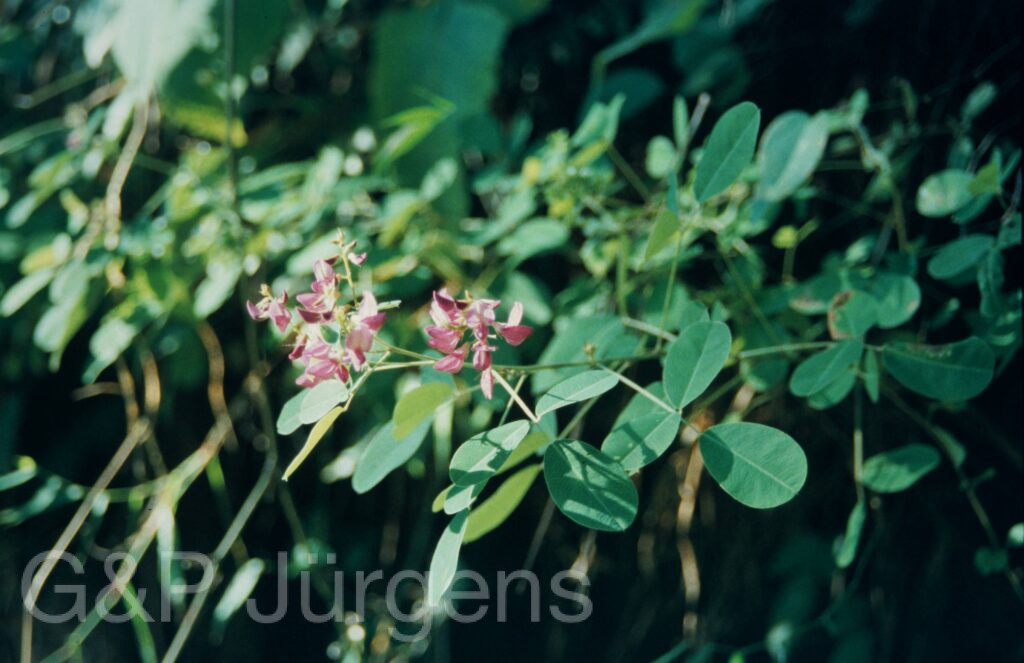
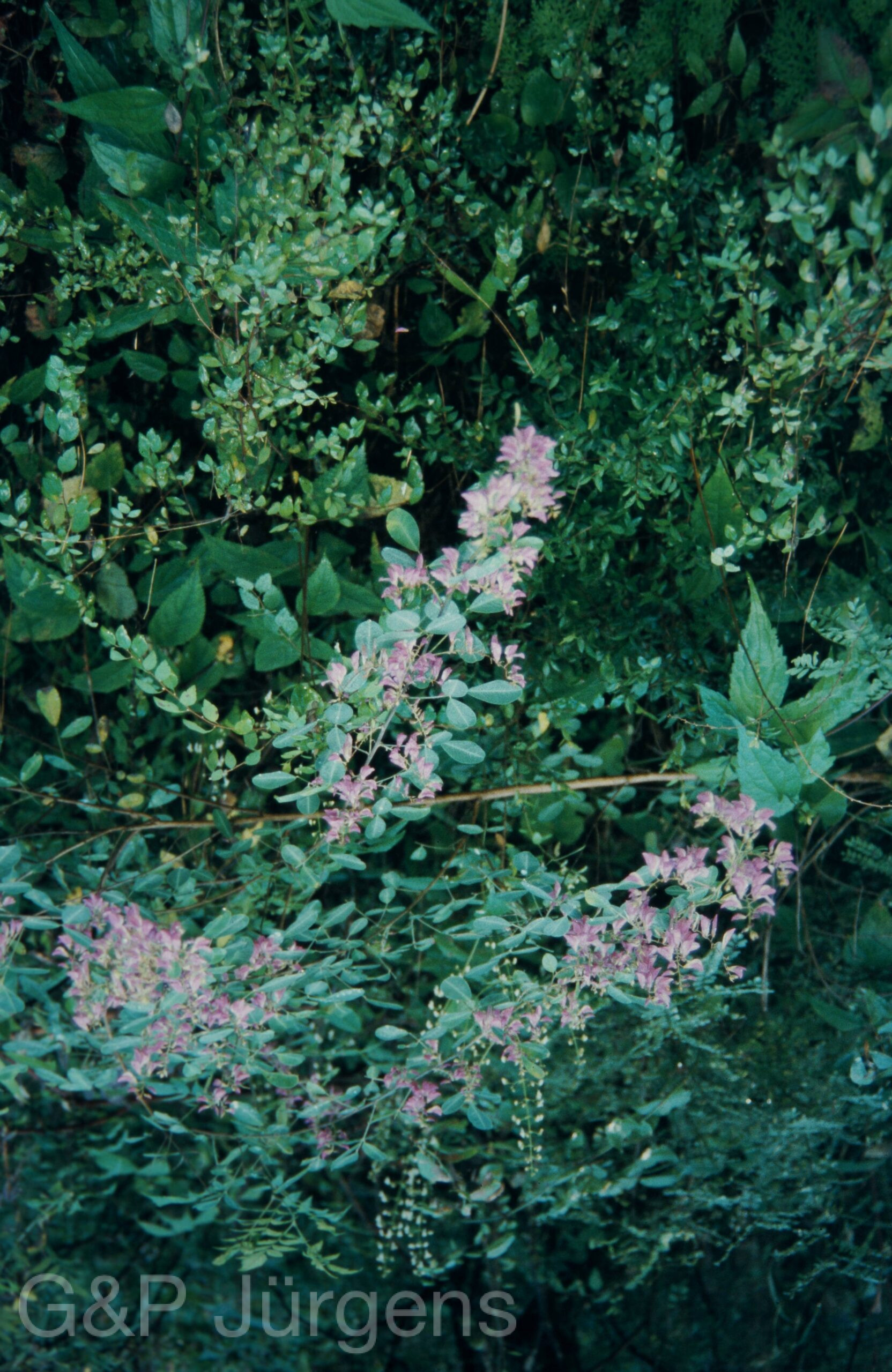
Garw 2005 263 ergebnis
India Garwahl Kunol 2500m, September

Description

Campylotropis speciosa is a Sino-Himalayan shrub distributed across the warm-temperate and subtropical belts of the southern Himalaya and adjacent China, with verified records from India, Nepal, Pakistan, Bhutan, Bangladesh, Myanmar and China. The roughly 294 occurrences trace a continuous arc along the outer ranges. In the Garhwal Himalaya it occupies open hill slopes, forest margins and scrub at around 1900-2500 m, as documented by collections from Kunol (2500 m) and Sitel (1900 m) flowering in September. It favours sunny, well-drained rocky ground and is typically a component of secondary scrub and degraded oak forest.

It forms an erect, much-branched shrub to about 2 m, with ridged, finely pubescent young branchlets. The leaves are pinnately trifoliolate; leaflets are elliptic to obovate, the terminal one largest, rounded or emarginate at the apex and mucronate, glabrescent above and appressed-pubescent beneath, the stipules subulate and persistent. The showy flowers are borne in elongate, lax terminal and axillary racemes, each pedicel articulate and bearing a single papilionaceous corolla; the standard is broad and reddish-purple to violet, the keel incurved. The fruit is a small, flattened, indehiscent, one-seeded legume with a reticulate-veined surface.

The genus Campylotropis, allied to Lespedeza within tribe Desmodieae, is distinguished by its articulate pedicels and one-seeded pods. C. speciosa is among the more ornamental Himalayan species, valued for its long racemes. As a leguminous pioneer it aids nitrogen enrichment and slope stabilisation on disturbed ground; though not assessed as threatened, its dependence on open habitats makes it sensitive to forest succession and grazing.

Author: (Royle ex Schindl.) Schindl. · Sources: POWO (Kew), GBIF, Flora of China, Flora of Bhutan, Flora of Pakistan, Iokawa & Ohashi revision of Campylotropis
Hook.f. & Thomson

BhutanPG2011 103
Bhutan Chogcham, 3450m June
BhutanPG2011 685 01 01 scaled
Bhutan Luksor, 2900m July
BhutanPG2011 116 scaled
Bhutan Tsochenchen, 3500m June

Description

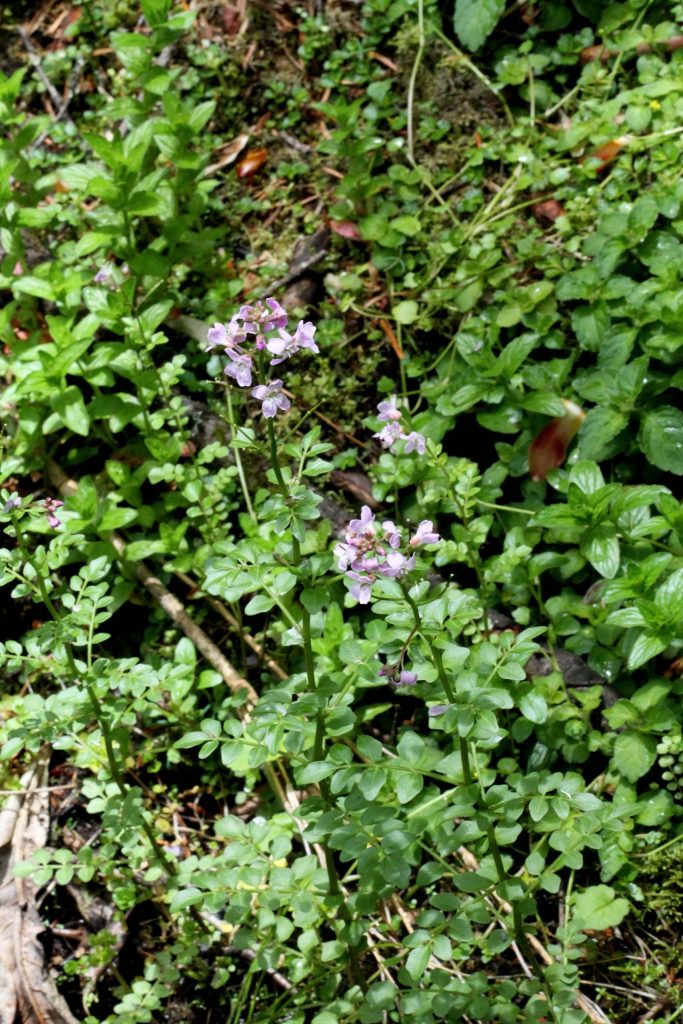
A perennial bittercress of the eastern Himalaya and adjacent mountains, recorded from China, Bhutan, India, Nepal and Myanmar, with around 577 GBIF occurrences. It is a plant of cool, wet ground, frequenting stream banks, seepages, marshy meadows, damp forest floors and shaded rocky places in the temperate to subalpine belt, mostly between about 2800 and 3800 m. The featured collections come from several Bhutanese sites in June and July, including Chogcham at 3450 m, Luksor at 2900 m and Tsochenchen at 3500 m, all moist, sheltered montane habitats.

The species grows from a slender rhizome, producing erect or ascending, glabrous to sparsely hairy stems. The leaves are pinnately compound, the lower with several pairs of stalked, ovate to lanceolate, toothed leaflets and a larger terminal leaflet; cauline leaves are similar but reduced upward. The inflorescence is a terminal raceme of small white to pale lilac flowers, each with four sepals and four clawed, spreading petals in the typical cruciform pattern, six tetradynamous stamens and a superior bilocular ovary. The fruit is a slender, linear, slightly flattened silique that dehisces elastically from the base, scattering the small seeds in a single row per locule.

Accepted by POWO and GBIF, C. griffithii belongs to a taxonomically intricate genus in which Himalayan species are distinguished by leaf division, petal size and habitat. Like many bittercresses it is closely tied to permanently moist microhabitats and the elastic silique aids local seed dispersal. It is widespread and often locally common in suitable damp ground across its range, and is not considered threatened, though it depends on intact montane wetlands and riparian zones.

Author: Hook.f. & Thomson · Sources: POWO (Kew), GBIF, Flora of Bhutan, Flora of China, Jafri monograph of Brassicaceae

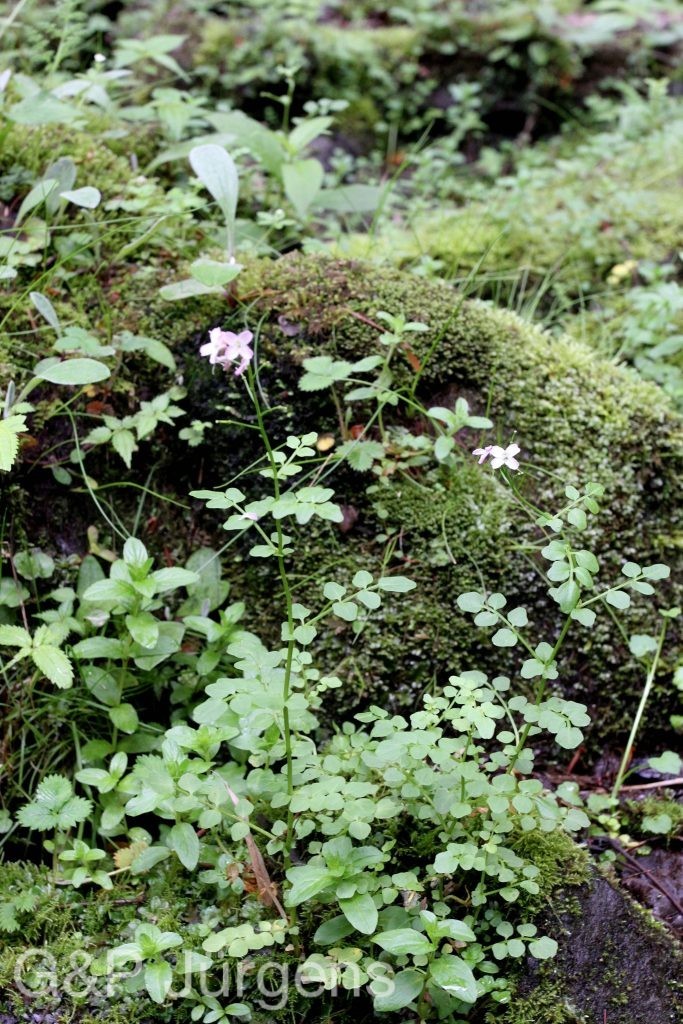
(Hook.f. & Thomson) Al-Shehbaz & G.Yang

Sikkim 2006 422 ergebnis
India West-Bengal, Kishong 2800m, May

Description

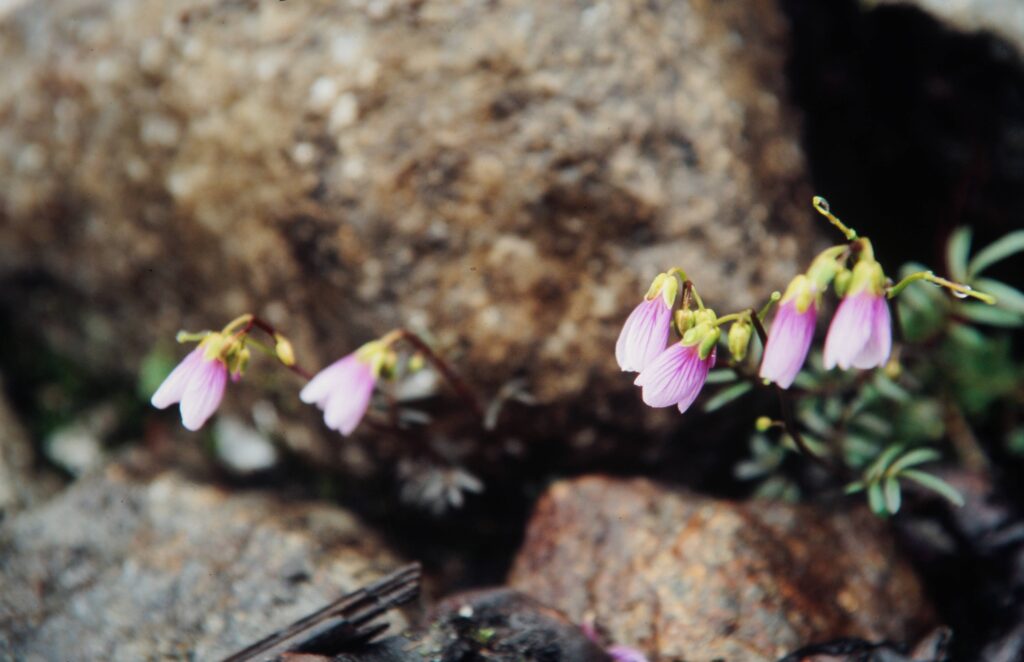
Cardamine pulchella is a delicate perennial herb of the Sino-Himalayan high mountains, recorded by GBIF from China, India, Nepal, Bhutan and Myanmar across about 147 occurrences. It inhabits cool, moist alpine and subalpine sites, growing on damp grassy slopes, beside rills and snowmelt flushes, and in open turf among rocks, generally from around 2800 to over 4500 m. The image from Kishong in West Bengal at about 2800 m, flowering in May, captures it near the lower edge of its range, where the early-season moisture of melting snow supports its slender, soft growth.

The plant arises from a slender creeping rhizome and produces low, often somewhat fleshy stems. The leaves are pinnately divided or compound, with a few rounded to oblong leaflets, the terminal leaflet frequently larger; both basal and cauline leaves are present, and the foliage is thin-textured and glabrous to sparsely hairy. The flowers are borne in a short few-flowered raceme and are relatively large for the genus, with four free sepals and four spreading petals that are white to pale lilac or pinkish-purple, conspicuous against the small stature of the plant. There are six tetradynamous stamens. The fruit is a slender linear silique that opens by two valves springing elastically from the persistent septum to scatter the seeds.

The species was transferred to its current placement by Al-Shehbaz and G. Yang, reflecting modern molecular and morphological reassessment of the alpine Asian Cardamine. It is part of a group of high-elevation crucifers adapted to short growing seasons and cold, wet substrates, completing flowering and fruiting rapidly after snowmelt. Though not assessed as threatened, such specialised alpine herbs are vulnerable to the upward compression of suitable habitat under climate warming, and to disturbance of fragile snowbed and flush communities.

Author: (Hook.f. & Thomson) Al-Shehbaz & G.Yang · Sources: POWO (Kew), GBIF, Flora of China, Flora of Bhutan, Al-Shehbaz revisions of Asian Brassicaceae, Annotated Checklist of the Flowering Plants of Nepal

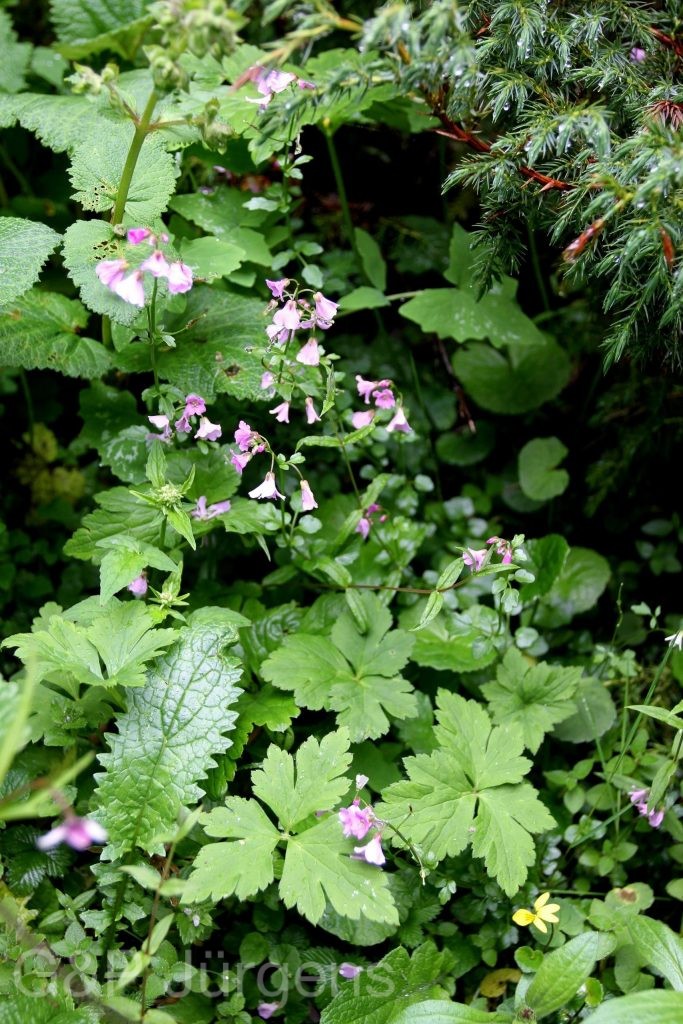
Franch.

Sikkim 2006 346 ergebnis
India West-Bengal, Tolung 2500m, May

Description

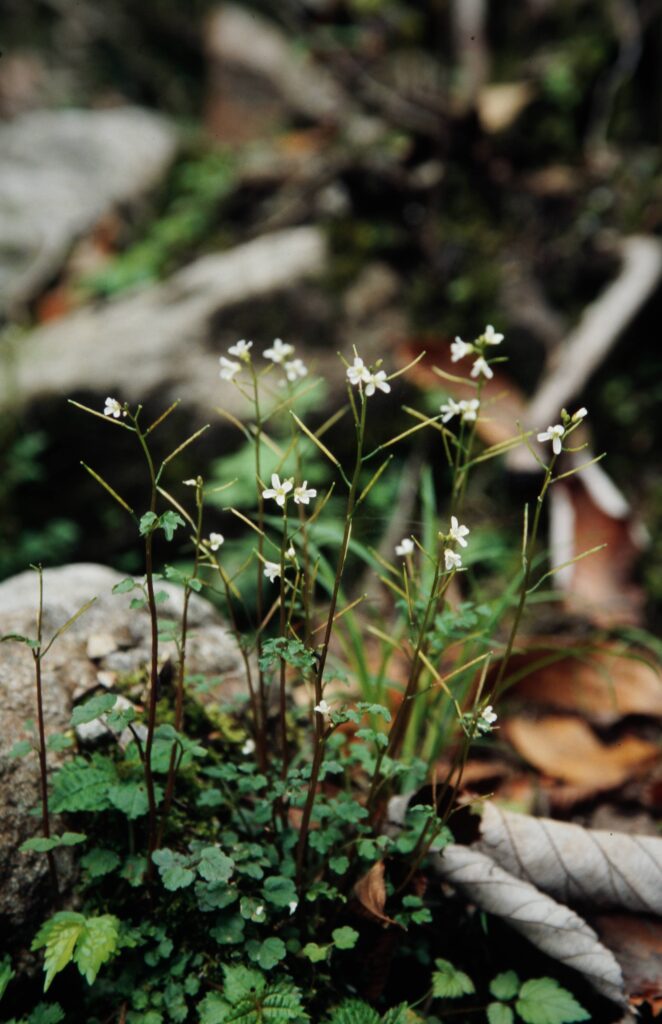
Cardamine yunnanensis is a temperate montane bittercress distributed through China, Nepal, India, Bhutan, Myanmar and Afghanistan, its 298 georeferenced occurrences indicating a fairly widespread Sino-Himalayan presence. It is a herb of cool, moist, shaded habitats, occupying forest floors, stream sides, damp banks and seepage areas within the temperate zone. The collection from Tolung in West Bengal, India, at 2500 m in May reflects its spring growth and flowering in moist broadleaved forest, when soils are kept reliably damp by snowmelt and early-season precipitation.

The plant is a slender annual or perennial herb with erect or ascending, often slightly fleshy stems arising from a thin rootstock. The leaves are usually pinnately compound or lobed, with a larger terminal leaflet and smaller lateral segments, the margins entire to toothed. The flowers are arranged in terminal racemes and follow the cruciferous plan, with four sepals, four white to pale lilac petals in a cross, and the tetradynamous androecium of six stamens. The diagnostic fruit is a slender, linear, laterally compressed silique that dehisces explosively, the valves coiling elastically to fling the small seeds away from the parent plant.

Cardamine is a large, cosmopolitan genus of the Brassicaceae characterised by its narrow siliques and frequently divided leaves, with a notable concentration of species in the Sino-Himalayan mountains. Many species are calcifuge moisture-lovers and several are used as wild greens. With a broad distribution spanning several countries and tolerance of disturbed damp ground, C. yunnanensis is secure and not considered threatened.

Author: Franch. · Sources: POWO (Kew), GBIF, Flora of China, Flora of Bhutan, Cardamine systematic and phylogenetic studies (Brassicaceae), Flowers of the Himalaya (Polunin & Stainton)

(Wall.) Makino

Garh 07 234 ergebnis
India Garwahl Trijugi Narayan 2250m, June
Sikkim 2006 469 ergebnis
Sikkim Ringi Chu 2200, May
Sikkim 2006 471 ergebnis
Sikkim Ringi Chu 2200, May

Description

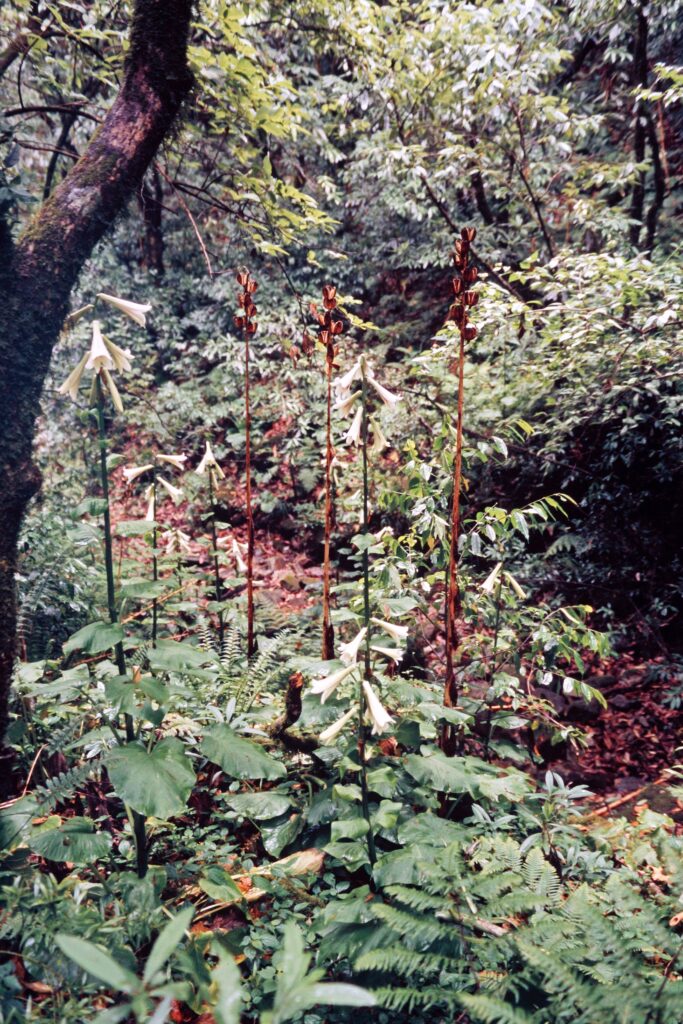
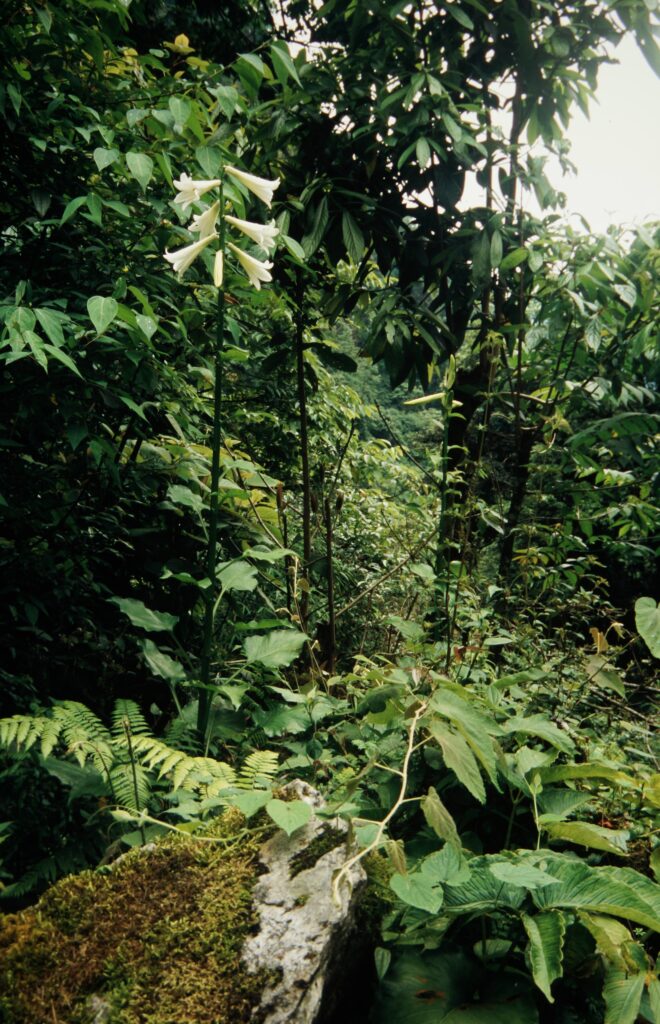
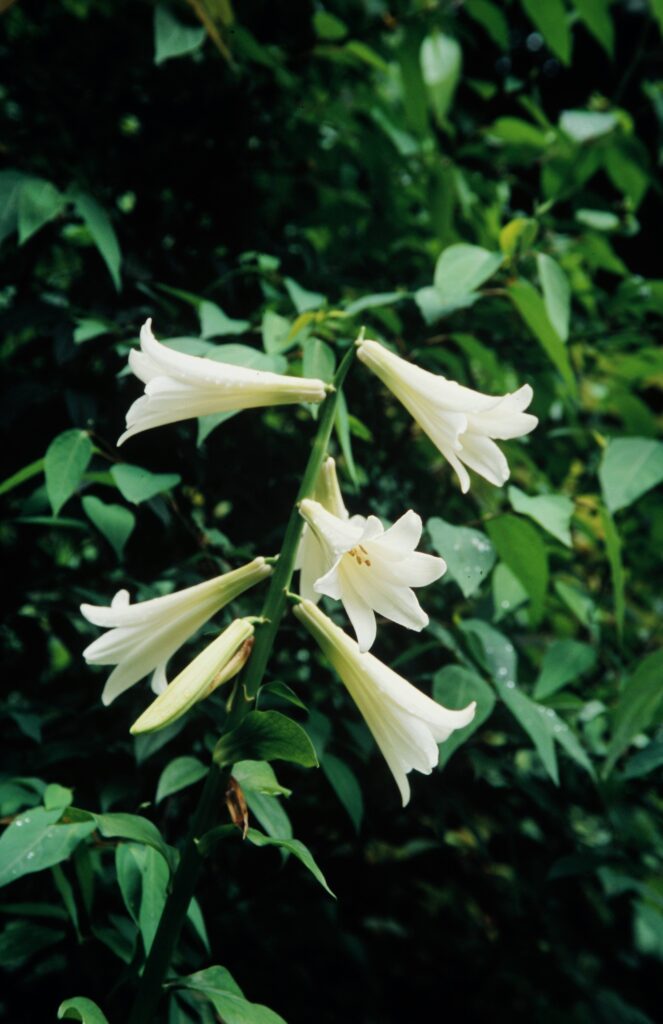
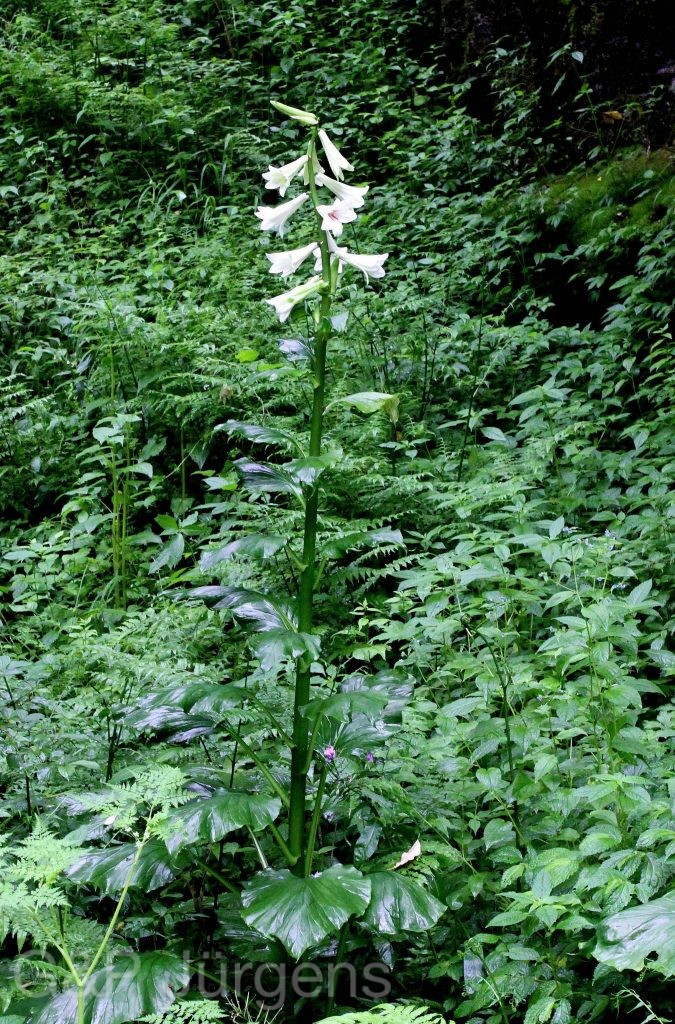
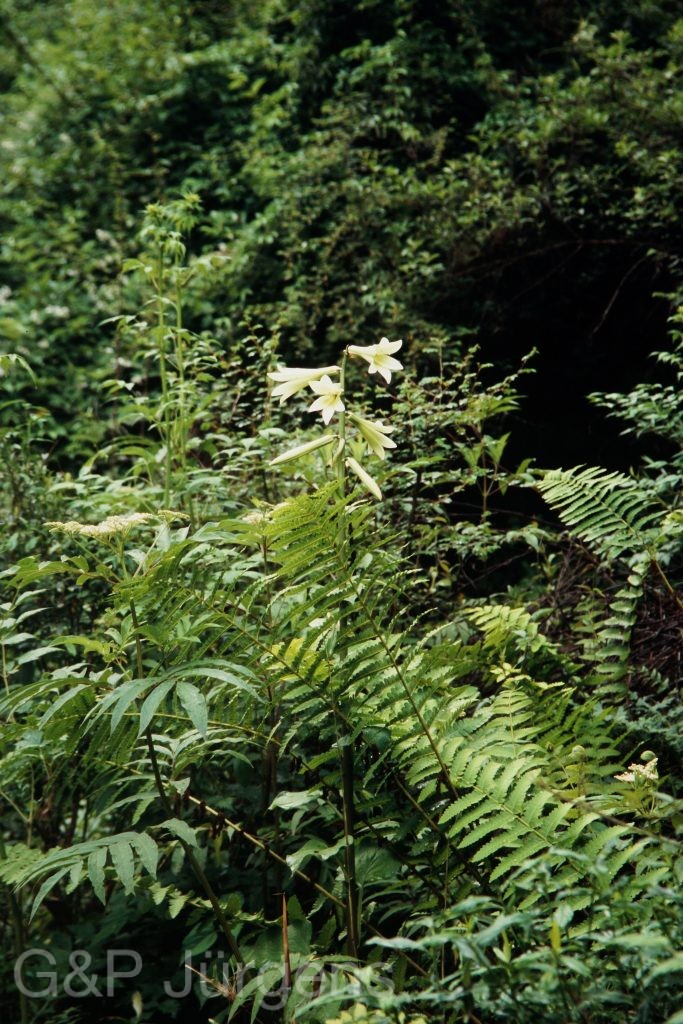
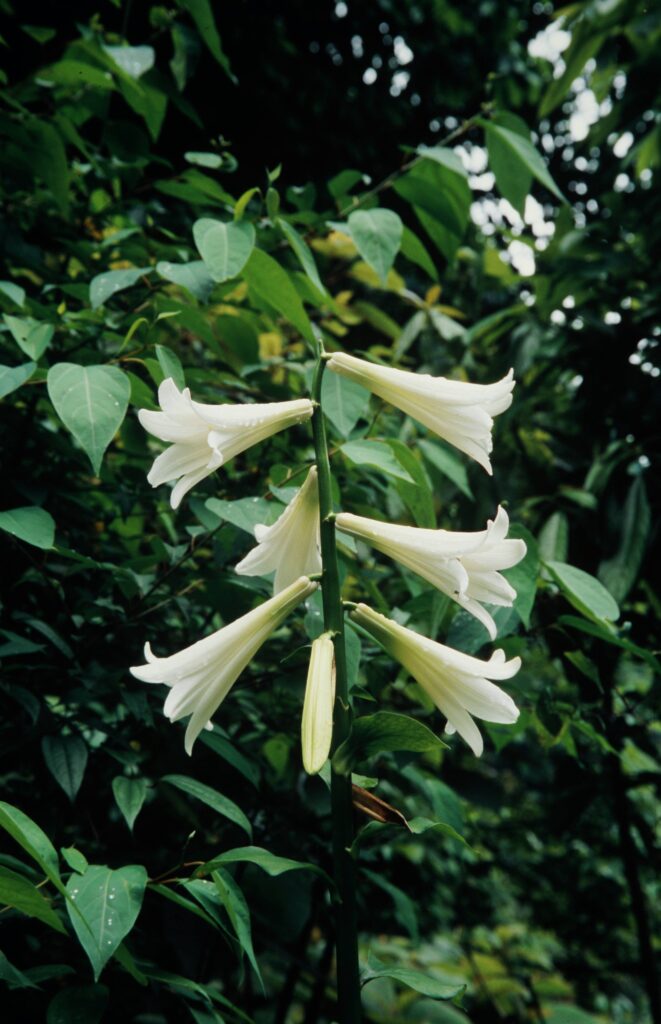
Cardiocrinum giganteum is the world's largest lily, distributed from central Nepal through Sikkim, Bhutan, and northeast India into upper Myanmar and southwestern China (Yunnan, Sichuan, Xizang). With over 1,370 occurrences recorded on GBIF, it is well-documented across its range. The species inhabits moist, shaded ravines and openings in temperate broadleaved and mixed forests at elevations of 1,500–2,800 m, favouring deep, humus-rich soils under canopies of Magnolia, Acer, and Rhododendron.
Cardiocrinum giganteum is a monocarpic perennial growing from a large, conical bulb up to 15 cm in diameter. In its final flowering year, the plant produces a stout, hollow stem reaching 1.5–3.5 m in height. Basal leaves are broadly cordate, glossy dark green, up to 45 cm long, with a conspicuous reticulate venation. The inflorescence is a terminal raceme of 10–20 large, trumpet-shaped, fragrant flowers, each 15–20 cm long, white with maroon-purple streaking inside the throat. The six tepals are slightly recurved at the tips. The fruit is an oblong, erect capsule, 4–6 cm long, containing numerous flat, winged seeds adapted for wind dispersal. After flowering and fruiting, the parent bulb dies, but several daughter bulblets persist at the base, requiring 5–7 years to reach flowering size.
The species was first described from material collected by Nathaniel Wallich in Nepal. The photographed specimens from Trijugi Narayan in Garhwal (2,250 m) and Ringi Chu in Sikkim (2,200 m) represent populations near the western and central portions of the range, respectively. Though widely cultivated in temperate gardens, wild populations face pressure from habitat fragmentation and collection. The var. yunnanense, sometimes recognized from southwestern China, differs in its bronze-flushed foliage, but its taxonomic distinctness remains debated.

Author: (Wall.) Makino · Sources: POWO (Kew), GBIF, Flora of China Vol. 24, Flora of Bhutan Vol. 3, Grierson & Long (1983)

(Wall.) Makino

Sikkim2011 386 1
Sikkim 2011
Bh09 306 P503
Bhutan 2009
Sikkim 2006 470 ergebnis

Description

Cardiocrinum giganteum, the giant Himalayan lily, is a stately bulbous herb of the temperate Himalaya and south-western China, distributed from northern India and Nepal through Bhutan into Myanmar and China, with over 1380 occurrence records, many from cultivation across Europe, North America, New Zealand and Japan where it is a prized ornamental. It grows in moist, shaded broad-leaved and coniferous forest, ravines and forest margins, generally between about 2000 and 3600 m. The photographs derive from Sikkim (2011) and Bhutan (2009), within the rich mid-montane forests where the species attains its impressive stature.

The plant is among the largest of all lilies, the flowering stem rising 2-3.5 m from a large, monocarpic bulb. The leaves are broadly ovate to cordate, glossy, net-veined and conspicuously heart-shaped at the base, borne on long petioles and arranged in a basal rosette and up the stem. The inflorescence is a long terminal raceme of large, fragrant, pendulous trumpet-shaped flowers; the six tepals are white, flushed greenish outside and streaked reddish-purple within the throat. The fruit is a large, erect, oblong capsule with three valves shedding numerous flat, winged seeds.

Cardiocrinum (Liliaceae) is a small east Asian genus segregated from Lilium by its cordate leaves and monocarpic, bulb-replacing habit: the main bulb dies after flowering, leaving offset bulblets that perpetuate the clump over several years. The night-fragrant flowers attract moths and large bees, and the winged seeds are wind-dispersed. Widespread and locally common, it is of least conservation concern, though localised collection of bulbs occurs.

Author: (Wall.) Makino · Sources: POWO (Kew), GBIF, Flora of China, Flora of Bhutan, Annotated Checklist of the Flowering Plants of Nepal, Synge revision of Lilies (Cardiocrinum)

Caryota urens

by GP Jürgens

L.

Bhutan2015 261
Bhutan Zhemgang 1000m, October

Description

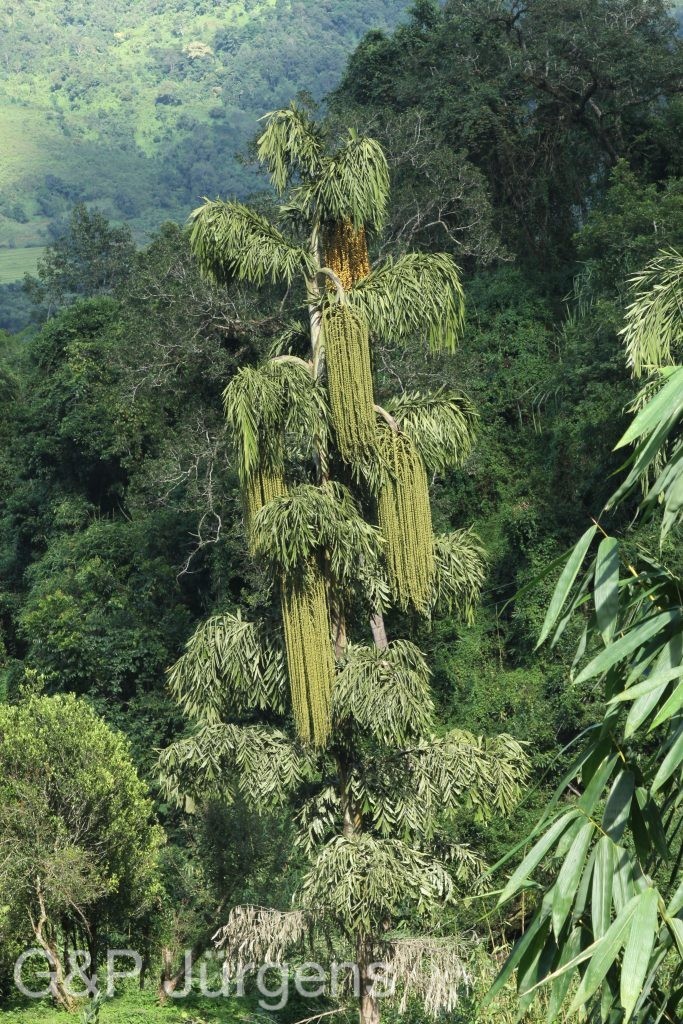
Caryota urens, the fishtail or jaggery palm, is a solitary tropical palm native to the Indian subcontinent, Sri Lanka, Myanmar and South-East Asia, with around 5517 occurrence records spanning both its native range and many countries where it is widely cultivated. It grows in moist tropical and subtropical forest, secondary woodland, river valleys and around villages, predominantly in the lowland to lower-montane zone. The photographed plant from Zhemgang in southern Bhutan at 1000 m, recorded in October, sits at the upper-elevation edge of its warm, humid habitat.

It is a tall, single-stemmed palm with a stout, ringed grey trunk reaching well over ten metres. The leaves are very large, bipinnate—unusual among palms—with the ultimate segments wedge-shaped and jaggedly toothed at the apex, resembling a fish's tail and giving the common name. The plant is monocarpic and hapaxanthic: after years of vegetative growth it flowers once, producing a sequence of massive pendulous inflorescences from the upper nodes downward, bearing cream to purplish unisexual flowers. The fruit is a globose red to purplish-black berry containing irritant calcium-oxalate raphides, whence the epithet urens ("stinging").

Despite the source labelling it Fabaceae, Caryota urens belongs to the palm family, Arecaceae, subfamily Coryphoideae, tribe Caryoteae. It is of considerable economic value: the sugary sap tapped from the inflorescences yields jaggery, palm wine and vinegar, while the trunk furnishes sago-like starch and the leaf sheaths a strong fibre (kittul). Widely planted and broadly distributed, it is not considered threatened.

Author: L. · Sources: POWO (Kew), GBIF, Flora of China (Arecaceae), Flora of Bhutan, Genera Palmarum (Dransfield et al.), Govaerts & Dransfield World Checklist of Palms

Hook.f. & Thomson

BhutanPG2011 401
Bhutan Warrtlang-La, 4500m June

Description

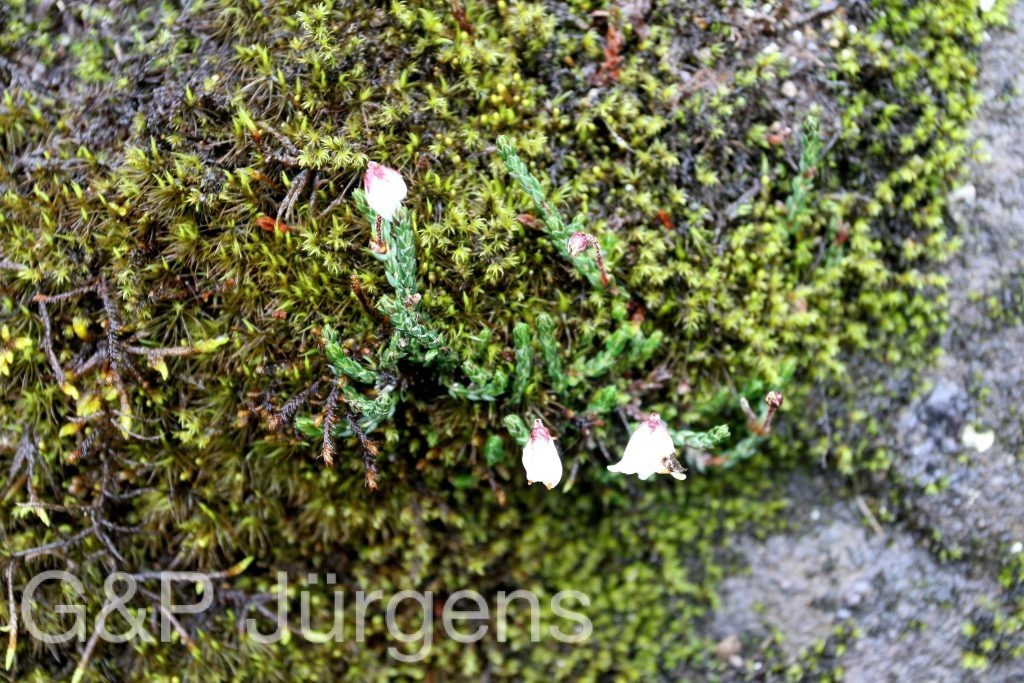
Cassiope selaginoides is a dwarf, mat-forming alpine shrub of the Himalaya and Sino-Himalayan ranges, documented in GBIF (about 854 occurrences) from China, India, Bhutan, Nepal and Myanmar. It is characteristic of high alpine slopes, rocky ridges, moorland and the upper margins of dwarf-shrub heath, typically growing between 3500 and 4800 m, often forming low cushions and carpets among rocks and moss. The photographed population on the Warrtlang-La in Bhutan at 4500 m in June represents this exposed, high-alpine habitat, where it flowers soon after snowmelt at the start of the brief growing season.

It is a small, prostrate to ascending evergreen shrub with slender, wiry, much-branched stems densely clothed in tiny, imbricate, scale-like leaves arranged in four ranks, giving the shoots a clubmoss-like (selaginoid) appearance from which the epithet derives. The small, nodding flowers are solitary on slender, reddish pedicels arising from the upper leaf axils; each has a persistent calyx and a white, broadly campanulate, five-lobed corolla, sometimes tinged pink, with eight to ten included stamens bearing awned anthers. The fruit is a small, dehiscent, subglobose capsule containing numerous minute seeds.

Cassiope, a small genus of subfamily Cassiopoideae within the Ericaceae, comprises arctic and high-alpine cushion shrubs of which the Himalayan species form a distinctive radiation alongside C. fastigiata and C. wardii. Like other ericaceous heath plants it associates with ericoid mycorrhizal fungi, enabling survival on acidic, nutrient-poor alpine soils. Widespread across the high Himalaya and locally abundant, it is of Least Concern, contributing to the structure and stabilisation of alpine heath communities above the tree line.

Author: Hook.f. & Thomson · Sources: POWO (Kew), GBIF, Flora of China, Flora of Bhutan, Annotated Checklist of the Flowering Plants of Nepal, Stevens revision of Cassiope and Ericaceae

A.DC.

Nepal 97 413 P797 ergebnis
Nepal Tashigang 2230m, May
Nepal 97 414 P800 ergebnis
Nepal Tashigang 2230m, May
Nepal 97 417 G804 ergebnis
Nepal Tashigang 2230m, May

Description

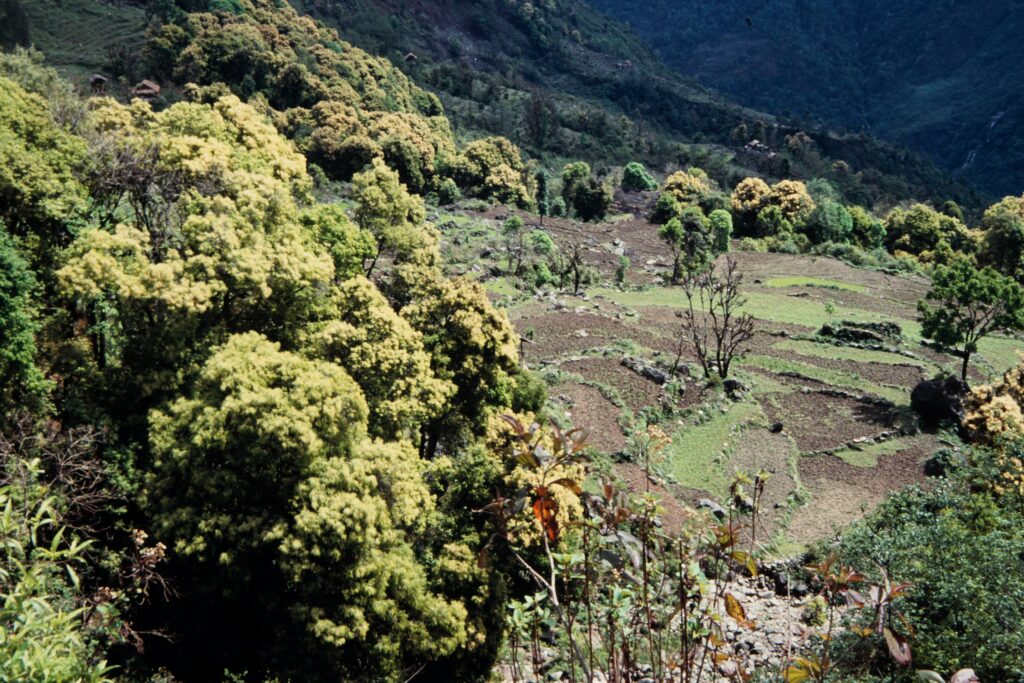
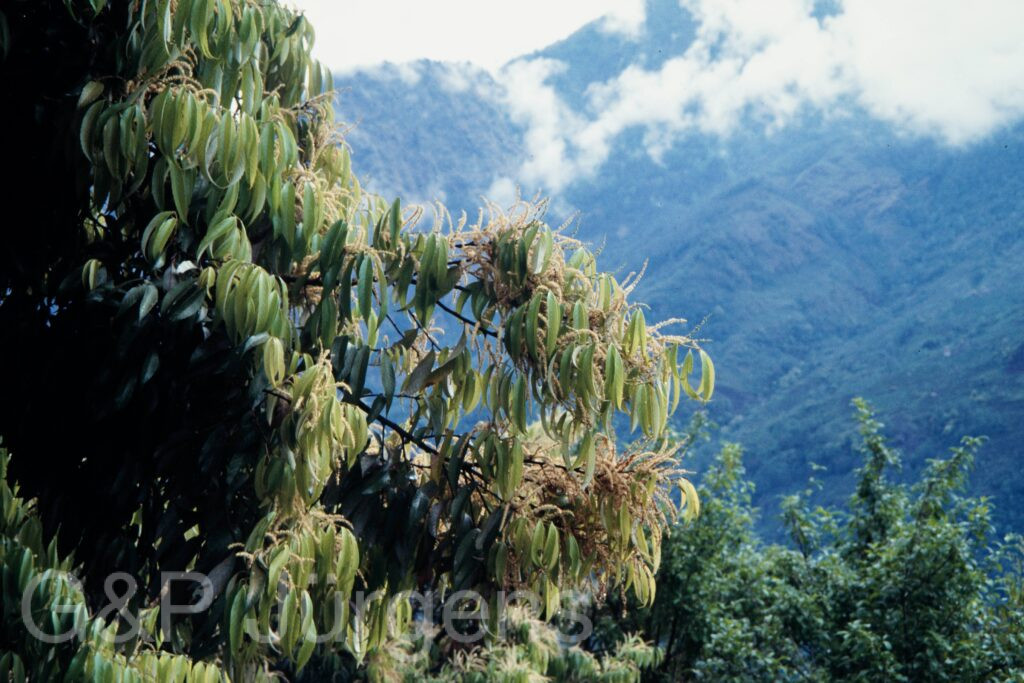
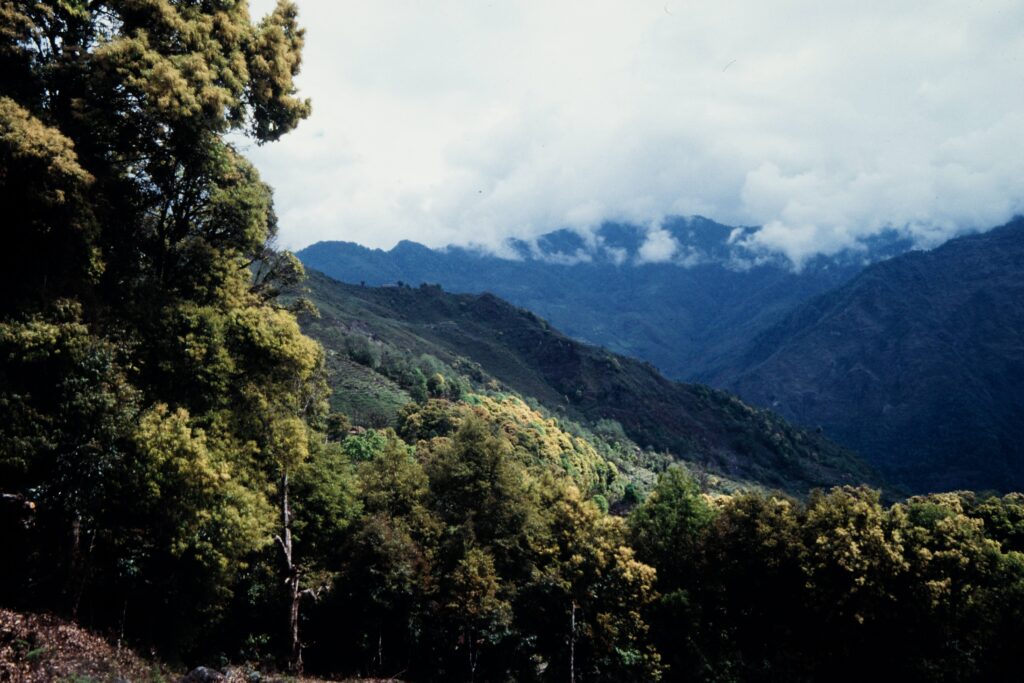
Castanopsis hystrix A.DC. is an evergreen forest tree of the Fagaceae, widespread through the eastern Himalaya and Indo-Burmese region into southern China and Taiwan; native occurrences span India, Nepal, Bhutan, Myanmar, Vietnam, Laos, Thailand and China, with introduced records in Japan and elsewhere, and over 1,100 georeferenced collections overall. It is a dominant or codominant canopy species of subtropical and lower-temperate broad-leaved evergreen forest, often forming mixed stands with Quercus, Lithocarpus, Schima and laurels on humid montane slopes. The photographed tree from Tashigang in eastern Nepal at about 2,230 m in May lies within the species' characteristic mid-elevation belt, typically between roughly 1,000 and 2,500 m.

It is a medium to large tree with a straight bole and greyish, longitudinally fissured bark. The leaves are alternate, simple, leathery, lanceolate to oblong, entire or finely toothed toward the apex, glossy above and often coppery-tomentose beneath. The plant is monoecious: erect catkin-like spikes bear the small unisexual flowers, the staminate above and pistillate below. The defining feature is the densely spiny cupule (whence the epithet hystrix, 'porcupine'), an indehiscent or tardily splitting involucre clothed in branched echinate spines and enclosing a single ovoid, brown nut.

Castanopsis is a large Asian genus centred on the Sino-Himalayan and Malesian regions, and C. hystrix is among its most economically important members, valued for durable timber and as a keystone of montane evergreen forest ecosystems. The acorns are an important wildlife food. Although the species remains widespread and is not globally threatened, primary stands have been depleted by logging and shifting cultivation, and it is increasingly used in reforestation.

Author: A.DC. · Sources: POWO (Kew), Flora of China Vol. 4, Flora of Bhutan Vol. 1, GBIF, Soepadmo: Fagaceae in Flora Malesiana (1972)

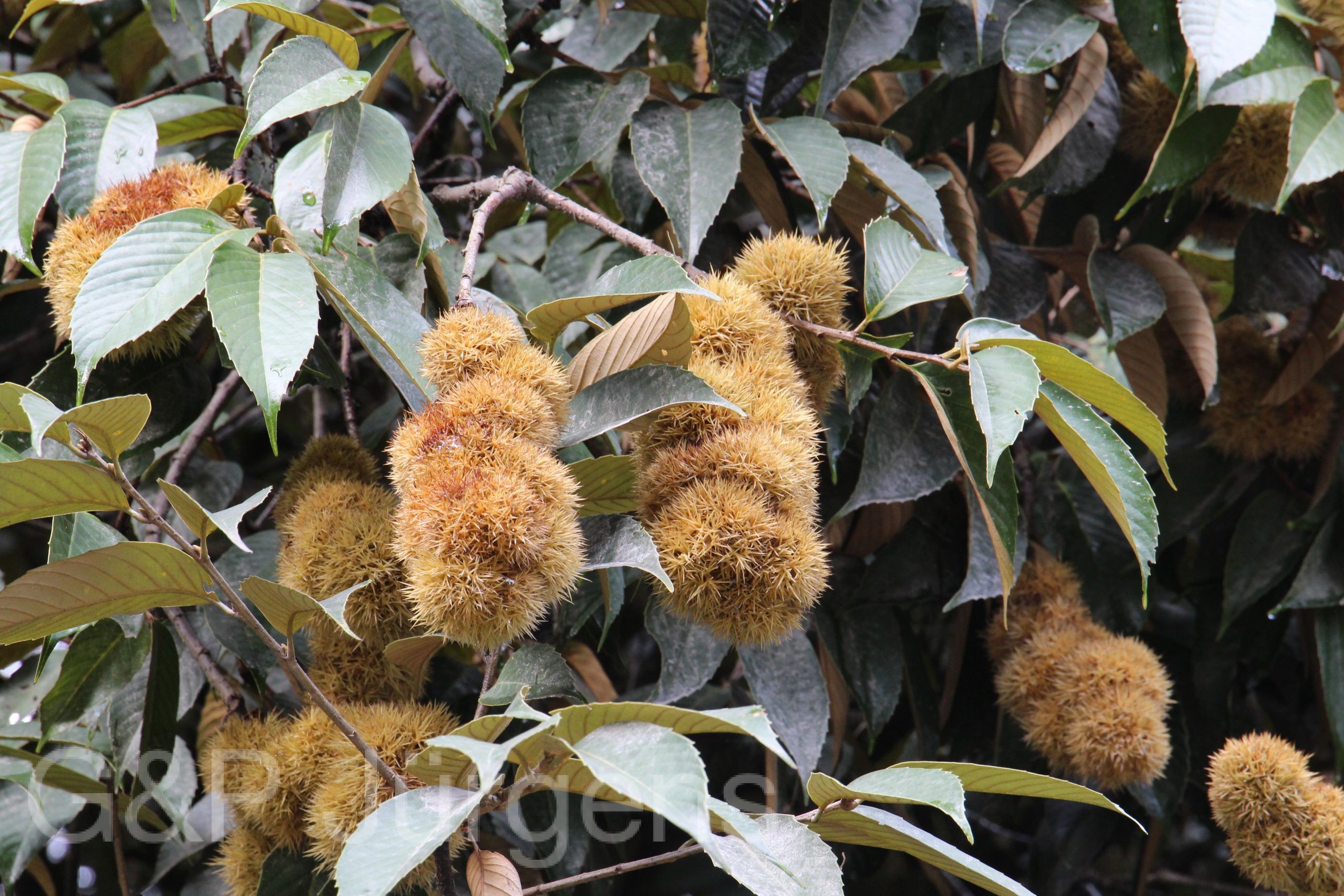
Castanopsis indica

by GP Jürgens

(Roxb. ex Lindl.) A.DC.

Bhutan2015 191
Bhutan Mo-Chu 1400m, October
Bhutan2015 192
Bhutan Mo-Chu 1400m, October
Bhutan2015 649 scaled
Bhutan Mo-Chu 1400m, October

Description

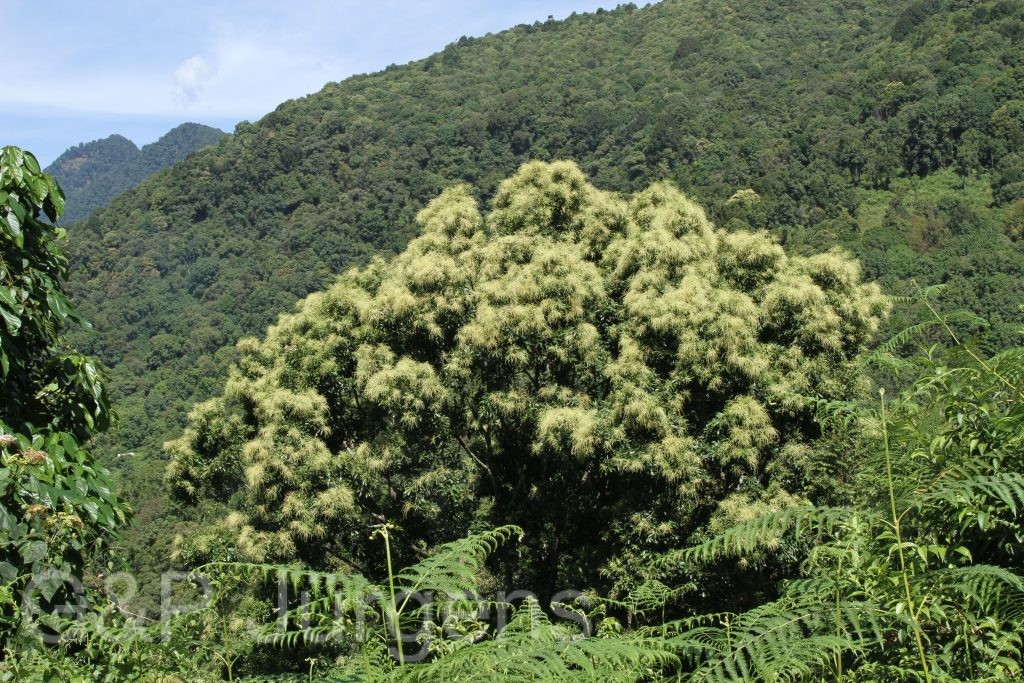
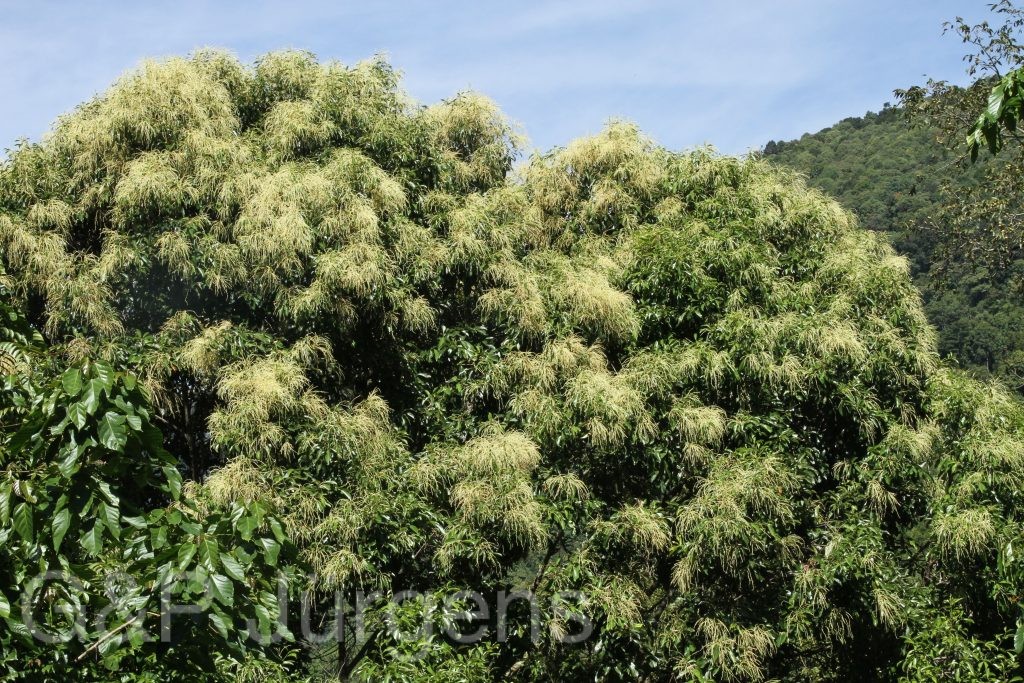
Castanopsis indica is a large evergreen tree of the subtropical and lower temperate forests of the Himalaya and Southeast Asia, abundantly recorded with around 1680 GBIF occurrences across India, China, Myanmar, Vietnam, Laos, Thailand, Nepal, Bhutan and Bangladesh. The photographed tree was found along the Mo-Chu in Bhutan at 1400 m in October. The species is a dominant or co-dominant canopy element of mid-elevation broad-leaved forest, typically between 800 and 2000 m, often forming Castanopsis-Schima associations on humid, well-drained hill slopes.

It is a stout tree with a broad crown and greyish, somewhat fissured bark. The leaves are alternate, leathery, oblong to elliptic-lanceolate, with a coarsely serrate margin bearing spinose-tipped teeth, glabrous and dark green above. Like other chestnut relatives the flowers are unisexual, the males borne in erect catkin-like spikes and the females clustered at their base, producing a strong scent at anthesis. The fruit is a hard nut wholly enclosed in a globose cupule densely armed with branched, spiny processes; the cupules split irregularly to release the edible nuts.

The genus Castanopsis (chinquapins) belongs to the Fagaceae and is a keystone group in Asian evergreen oak forests. The nutritious nuts are eaten locally and dispersed by rodents and birds, while the timber is valued for construction and the trees provide important habitat structure. Although the species is widespread and not globally threatened, the Castanopsis-dominated forests it characterises are under pressure from logging, fuelwood collection and agricultural conversion.

Author: (Roxb. ex Lindl.) A.DC. · Sources: POWO (Kew), GBIF, Flora of China, Flora of Bhutan, Flora of Nepal, Camus – Les Chenes: Monographie du genre Castanopsis