Tag:

Nepal

Flowers of Nepal — 1313 wild plant species documented from the Nepalese Himalaya, from subtropical foothills to high alpine meadows above 4,000 m. Nepal’s dramatic elevation gradient makes it one of the richest botanical regions on Earth, home to rhododendrons, primulas, gentians and the famed blue poppies (Meconopsis). Every entry gives a botanical description, native distribution, habitat and flowering season, alongside the original field photograph and the location where it was taken.

(Jack) Phengklai

Bhutan2015 230
Bhutan Zhemgang 950m, October

Description

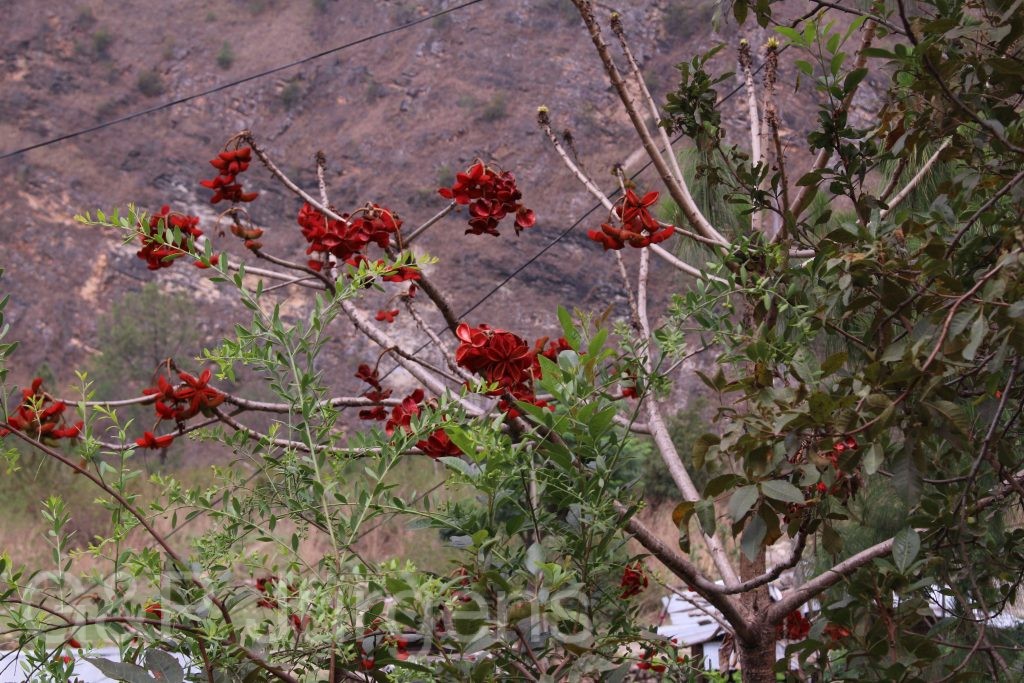
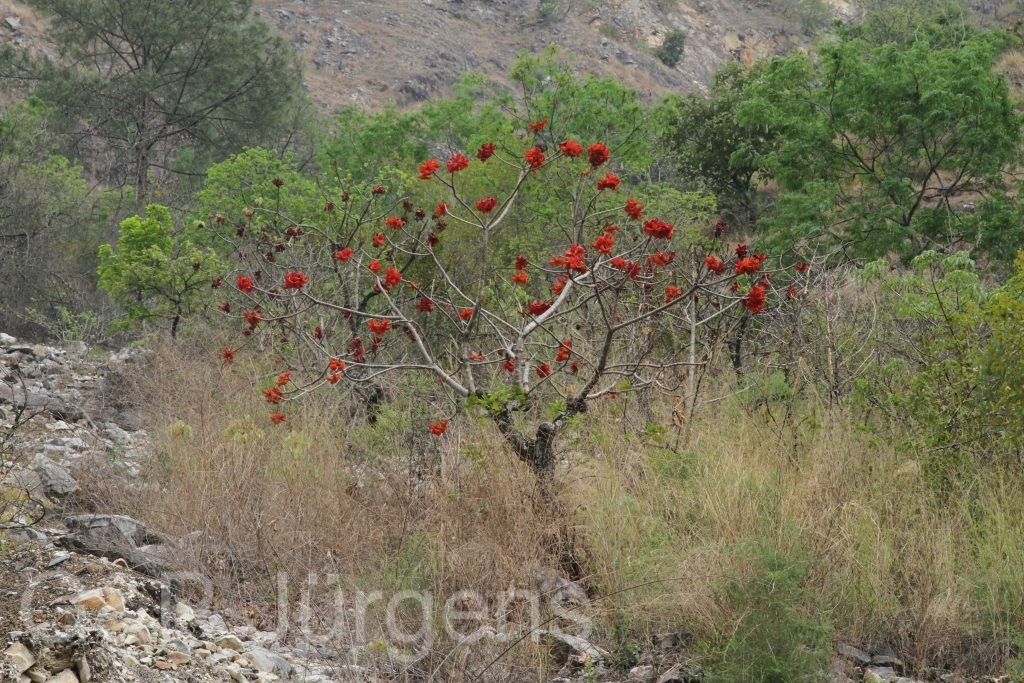
Sterculia lanceolata var. coccinea is a tree of tropical and subtropical Asia, ranging from the Indian subcontinent (India, Nepal, Sri Lanka) through Myanmar, Thailand, Indochina (Vietnam, Laos, Cambodia) and southern China into Malesia (Malaysia, Indonesia, Singapore, Brunei, Philippines), as reflected in the 322 GBIF records. It occurs in evergreen and semi-evergreen lowland to lower-montane forest, along streams and forest margins, typically below about 1500 m. The photographed tree from Zhemgang in central Bhutan at around 950 m, fruiting in October, sits at the warm-temperate northern edge of the species' range, where the bright fruiting display is conspicuous in autumn.

The variety is a small to medium tree with a slender bole and spreading crown. The leaves are alternate, simple, elliptic-lanceolate to oblong, entire, glabrescent and pinnately veined, on slender petioles — the lanceolate blade distinguishing this species from the palmately lobed S. villosa. The small flowers are apetalous with a campanulate, lobed calyx and are borne in axillary panicles; the variety coccinea is named for its scarlet colouring. The fruit is the diagnostic cluster of woody, beaked follicles that ripen a vivid red ('coccineus') and split open to reveal glossy black seeds against the crimson inner wall.

Now classified in Malvaceae subfamily Sterculioideae (formerly Sterculiaceae), Sterculia lanceolata is a variable species, and this variety, based on the basionym described by Jack and recombined by Phengklai, segregates the scarlet-fruited Malesian-Indochinese populations. The boldly coloured dehisced follicles are bird-dispersed, the contrasting red and black serving as a visual lure. Widespread and occurring in both primary and secondary forest, the taxon is not regarded as threatened.

Author: (Jack) Phengklai · Sources: POWO (Kew), GBIF, Flora of Thailand, Flora of China, Flora of British India, Kostermans Sterculiaceae monograph
Roxb.

Bhutan2014 253
Bhutan Karu-Chu 1800m, May
Bhutan2014 264
Bhutan Karu-Chu 1800m, May

Description

Sterculia villosa is a deciduous tree widely distributed across tropical and subtropical Asia, from India, Nepal, Bangladesh, Bhutan and Sri Lanka eastward through Myanmar, Thailand, Vietnam, southern China and into Malesia (Malaysia, Indonesia), with the 452 GBIF records reflecting both this native range and cultivated or naturalised occurrences elsewhere. It is a tree of monsoon and deciduous forest, riverine valleys and disturbed slopes at low to moderate elevations, generally below about 1500 m though reaching higher in warm valleys. The photographed individual from the Karu-Chu valley in Bhutan at around 1800 m, flowering in May before or with the new leaves, marks the upper, warm-temperate edge of its range.

The tree has a straight bole, grey bark and stout branches, the young parts densely clad in soft tawny villous hairs from which the epithet derives. The large, alternate leaves are palmately lobed with 5-7 broad lobes, cordate at the base and long-petioled, hairy beneath. The flowers, borne in much-branched velvety panicles, are apetalous, with a campanulate, lobed, reddish to greenish-yellow calyx; the species is andromonoecious with a central androgynophore. The fruit is the characteristic sterculiaceous group of large, woody, beaked, velvety follicles that dehisce to expose black seeds against a red interior.

Formerly placed in Sterculiaceae, the genus Sterculia is now treated within an enlarged Malvaceae (subfamily Sterculioideae), as adopted here. S. villosa is economically valued for its strong bast fibre, used for ropes and cordage, and yields a gum; its bark and seeds feature in local medicine. As a fast-growing, light-demanding species of disturbed and secondary forest it is widespread and not of conservation concern, though it is locally significant in agroforestry and as a host for lac and silk insects.

Author: Roxb. · Sources: POWO (Kew), GBIF, Flora of Bhutan, Flora of British India, Flora of China, Kostermans Sterculiaceae monograph
D.Don

CA5B74EED12643D5951B19E897481F0A
Bhutan Chogcham, 3300m June
Sikkim2003 474 P657
Sikkim Lachung Valley 3200m August

Description

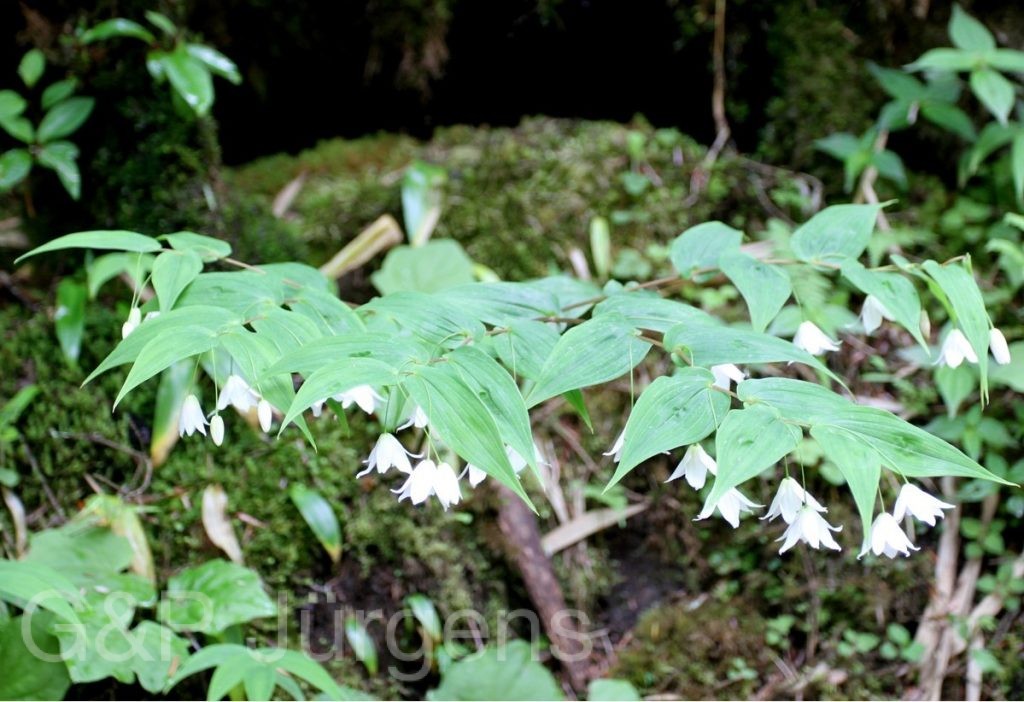
Streptopus simplex, a twistedstalk of the Sino-Himalayan region, is distributed across China (CN), Nepal (NP), Bhutan (BT), India (IN), Myanmar (MM) and Japan (JP), with 726 GBIF occurrences indicating it is a frequent component of high forest. It grows in shaded, humid temperate and subalpine coniferous and broadleaf forest, in bamboo thickets, ravines and on mossy slopes, typically between about 3000 and 4000 m. The illustrated plants came from Chogcham in Bhutan at around 3300 m in June and the Lachung Valley of Sikkim at about 3200 m in August, spanning the early- and late-monsoon flowering and fruiting seasons.

It is a slender perennial herb arising from a short creeping rhizome, with an erect, simple or sparingly branched stem. The leaves are alternate, sessile and somewhat clasping, ovate to lanceolate with entire margins and parallel venation. The flowers are solitary and nodding, borne on slender pedicels that hang beneath the leaves; the perianth consists of six free, campanulate to spreading tepals, white to pink and often purple-spotted within. There are six stamens, and the ovary is superior. The fruit is a globose, fleshy red berry containing several seeds, providing dispersal by birds and other animals.

Streptopus is now placed in Liliaceae sensu lato (the family cited verbatim here), within the Lilioid monocots; some treatments segregate it variably among the lily allies. The genus has a disjunct circumboreal and montane Asian-American distribution, and S. simplex represents its Himalayan and East Asian extension, of biogeographic interest as part of the temperate forest-floor herb flora.

Author: D.Don · Sources: POWO (Kew), GBIF, Flora of China, Flora of Bhutan, Flora of Nepal, Monograph of the genus Streptopus

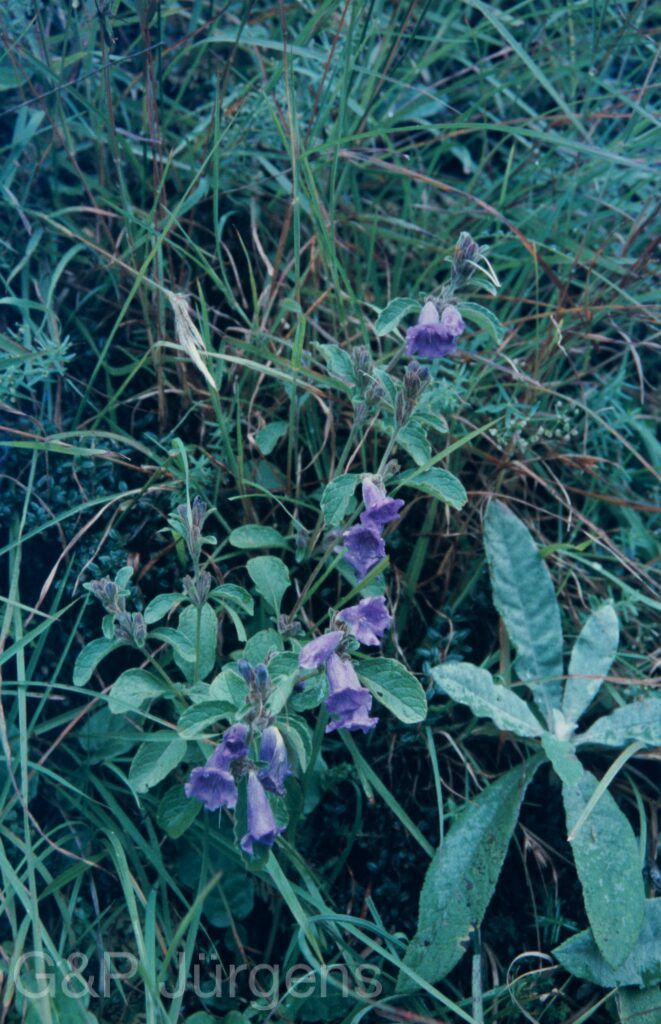
Nees

Garw 2005 247 ergebnis ergebnis
India Garhwal Sitel 1850m, September

Description

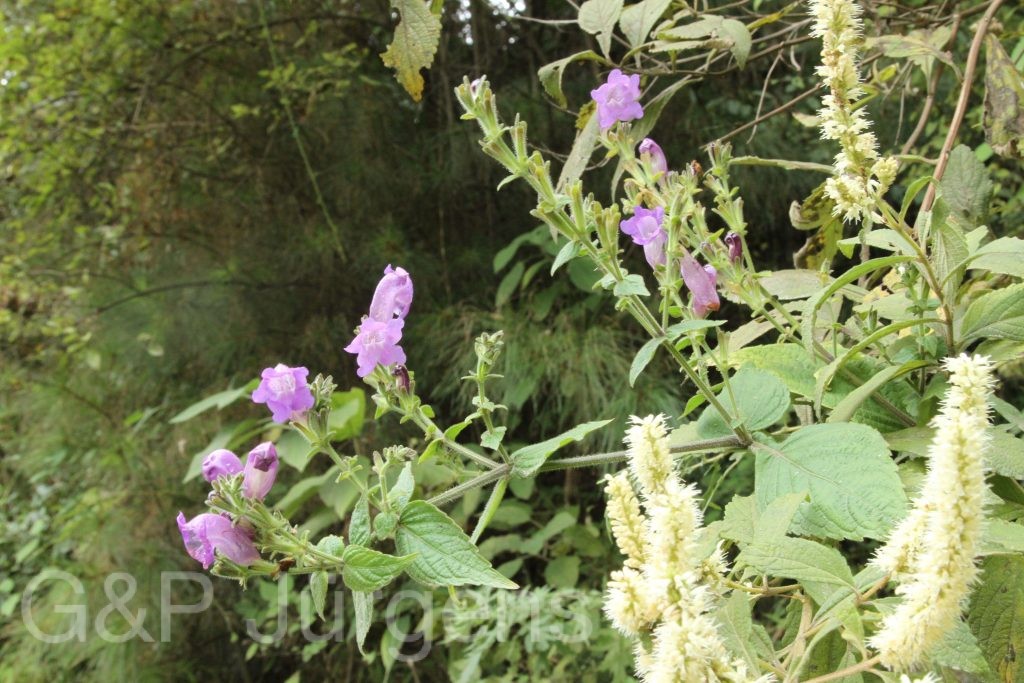
Strobilanthes atropurpurea Nees is a robust perennial herb of the Acanthaceae, distributed along the Himalaya from Pakistan and India through Nepal and Bhutan to southwestern China, with further records reaching Myanmar and Vietnam (GBIF: c. 328 occurrences). It is a characteristic understorey and forest-margin plant of moist temperate broad-leaved and mixed forests, favouring shaded, humid ravines and stream banks. The illustrated plant from Sitel in Garhwal, western India, at about 1,850 m and flowering in September, reflects its typical late-monsoon flowering in the mid-montane forest belt.

The plant is an erect, branched herb or subshrub reaching 0.5–1.5 m, with quadrangular stems often swollen at the nodes. The leaves are opposite and decussate, the pairs frequently unequal (anisophyllous), ovate to elliptic, acuminate, with crenate-serrate margins and prominent venation; cystoliths are usually visible as fine streaks on the leaf surface. The inflorescence is a terminal or axillary spike or panicle of cymose clusters subtended by bracts. The flowers have a tubular-funnelform corolla that is deep violet to purple, five-lobed and slightly two-lipped, with four didynamous stamens. The fruit is an explosively dehiscent capsule bearing few seeds on hooked retinacula.

Strobilanthes is a large, taxonomically difficult genus noted for gregarious, often plietesial (mast) flowering, in which many individuals bloom synchronously after several years and then die. Such cohort dynamics complicate field identification and herbarium representation. The species is locally common and not considered threatened, though its forest habitat is subject to regional degradation.

Author: Nees · Sources: POWO (Kew), Flora of China Vol. 19, Flora of Bhutan Vol. 2, Flora of Nepal, GBIF, Wood & Scotland: Strobilanthes monograph

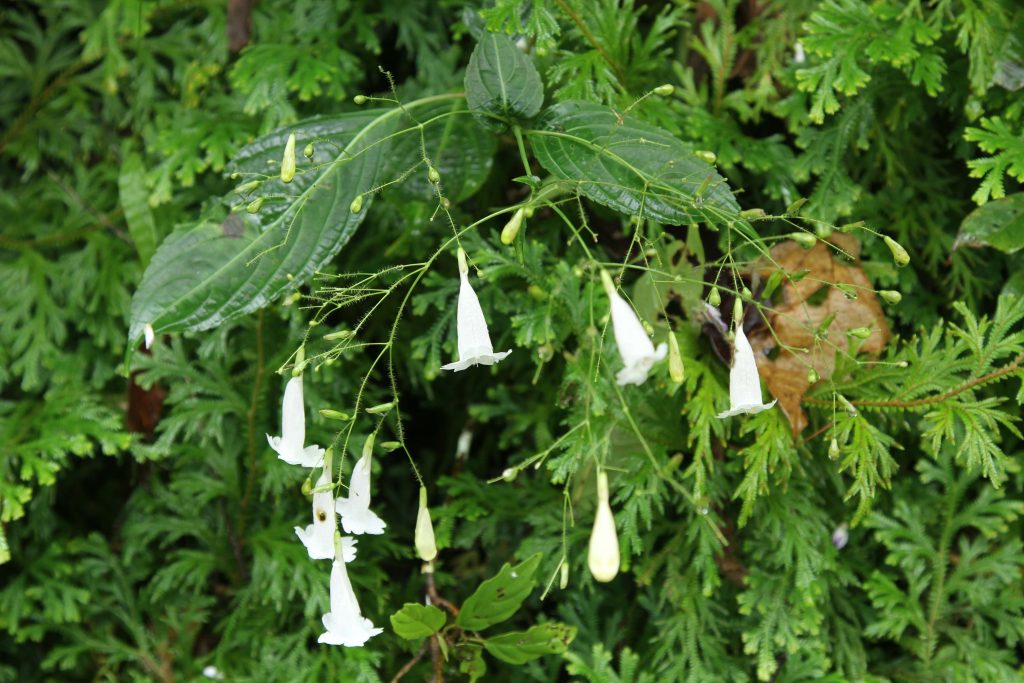
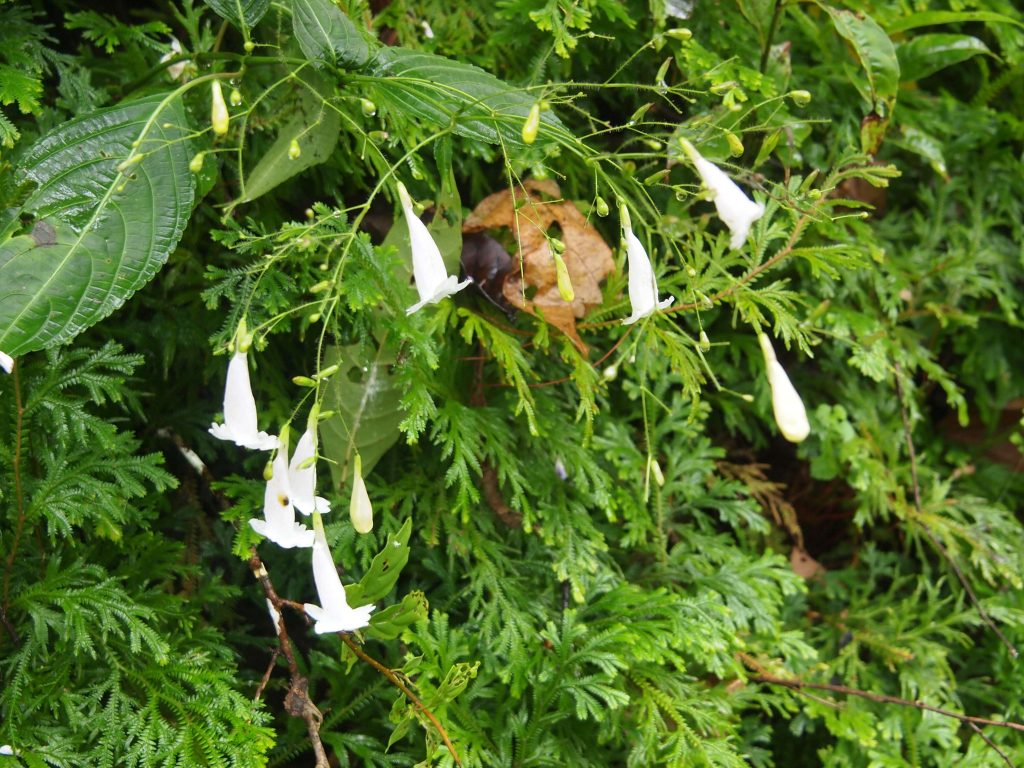
(Steud.) Bosser & Heine

Bhutan2012 992
Bhutan Trithangebe 1100m, October
Bhutan2012 993
Bhutan Trithangebe 1100m, October

Description

Strobilanthes hamiltoniana (Steud.) Bosser & Heine is a shrubby Acanthaceae of the eastern Himalaya and Indo-Burmese region, native to India, Bhutan, Nepal, Myanmar and China, but widely naturalised and cultivated, as reflected in its GBIF total of nearly 779 occurrences spanning many tropical islands and the Americas. In its native range it grows along forest margins, streamsides, ravines and shaded roadbanks in the warm subtropical hill zone, flowering in the late monsoon and autumn. The illustrated plant from Trithangebe in Bhutan at 1100 m in October shows it in its characteristic low-elevation forest-edge habitat at the onset of its flowering season.

The species is an erect, much-branched perennial shrub with four-angled stems and opposite, petiolate, ovate-lanceolate leaves that are acuminate and finely toothed, the pairs typically anisophyllous. The inflorescences are slender, lax, often drooping panicles bearing numerous flowers; each corolla is tubular and gracefully curved, pale violet to mauve-blue with a paler tube, the limb shortly five-lobed, and the androecium of four stamens. The fruit is the typical acanthaceous club-shaped capsule that dehisces explosively to disperse the seeds, which are borne on hooked retinacula.

Strobilanthes is a large and taxonomically difficult Asian genus famed for the gregarious, mast (plietesial) flowering of many species, in which whole populations bloom synchronously after a span of years and then die. S. hamiltoniana is popular in ornamental horticulture for its arching sprays of bloom and consequently appears far beyond its native limits. It is not of conservation concern, being common and readily cultivated.

Author: (Steud.) Bosser & Heine · Sources: POWO (Kew), GBIF, Flora of Bhutan, Flora of China, Acanthaceae of the Indian Subcontinent, Carine & Scotland revision of Strobilanthes

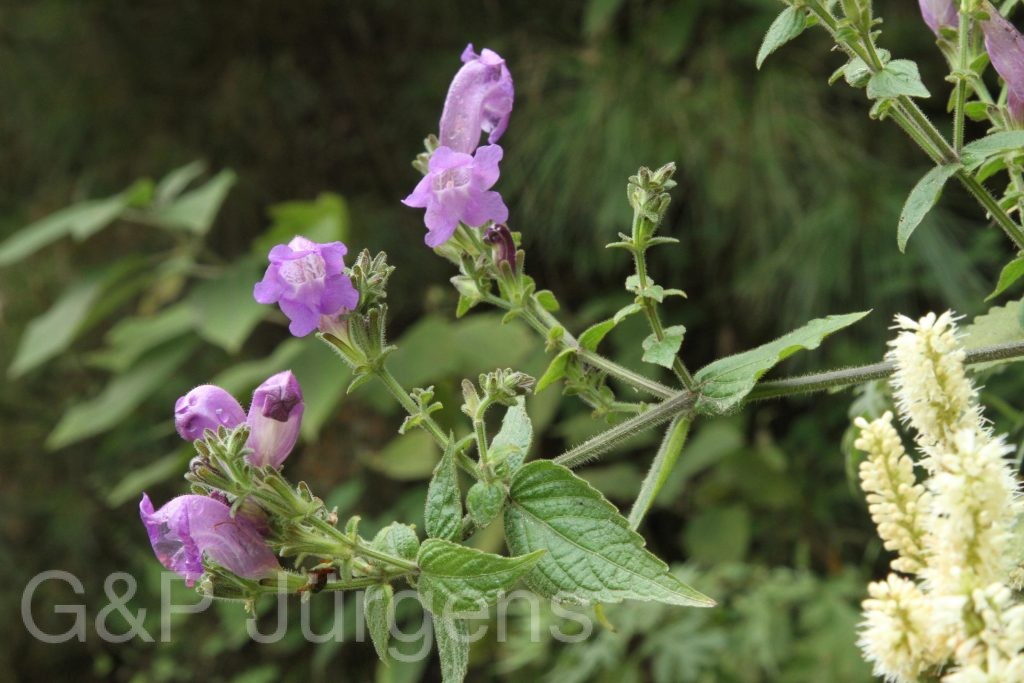
C.B.Clarke

Bhutan2015 654
Bhutan Semkota 2000m, October
Bhutan2015 653
Bhutan Semkota 2000m, October

Description

Strobilanthes lachenensis C.B.Clarke is a shrubby herb of the Acanthaceae endemic to the eastern Himalaya and adjacent ranges, recorded from China, Nepal, India and Bhutan, with about 125 GBIF occurrences. It grows in the understorey and along the margins of temperate broad-leaved and mixed forest, on shaded slopes, banks and forest clearings, mainly between about 1800 and 2800 m. It was documented in Bhutan at Semkota near 2000 m in October, an autumn flowering that accords with the often gregarious, plietesial flowering behaviour characteristic of many Himalayan Strobilanthes, in which populations bloom synchronously after several years of vegetative growth.

It is an erect, branched perennial or subshrub with quadrangular stems that are swollen at the nodes. The leaves are opposite and conspicuously anisophyllous, the pair unequal, elliptic to lanceolate, acuminate, with crenate-serrate margins and cystoliths visible as fine streaks on the surface. The flowers are borne in spike-like or capitate inflorescences subtended by bracts; the bilabiate, funnel-shaped corolla is blue to pale violet, curved and slightly inflated at the throat, enclosing four didynamous stamens. The fruit is an elongate, two-valved capsule that dehisces explosively, ejecting a few flattened seeds borne on hooked retinacula.

Strobilanthes is a large and taxonomically complex genus centred on tropical and subtropical Asia, and the Sino-Himalayan species such as S. lachenensis form part of an intricate, much-revised assemblage. Its mass-flowering, bee-pollinated reproductive strategy and the type locality at Lachen in Sikkim, from which the epithet derives, anchor it in the eastern Himalayan flora. The species is forest-dependent and locally distributed, making it potentially sensitive to habitat disturbance, though it is not formally assessed.

Author: C.B.Clarke · Sources: POWO (Kew), GBIF, Flora of China, Flora of Bhutan, Flora of British India, Strobilanthes monograph (Wood; Carine & Scotland revision of Strobilanthes)

Roxb.

Nepal 97 399 P770
Nepal Arun-Valley 1750m April
Nepal 97 400 P771
Nepal Arun-Valley 1750m April

Description

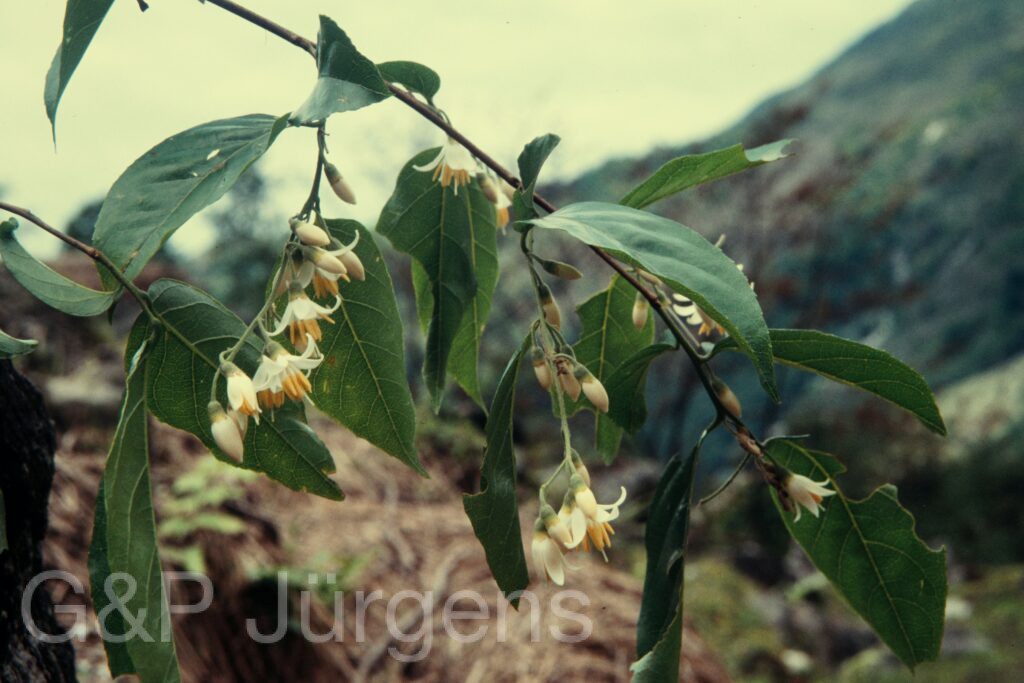
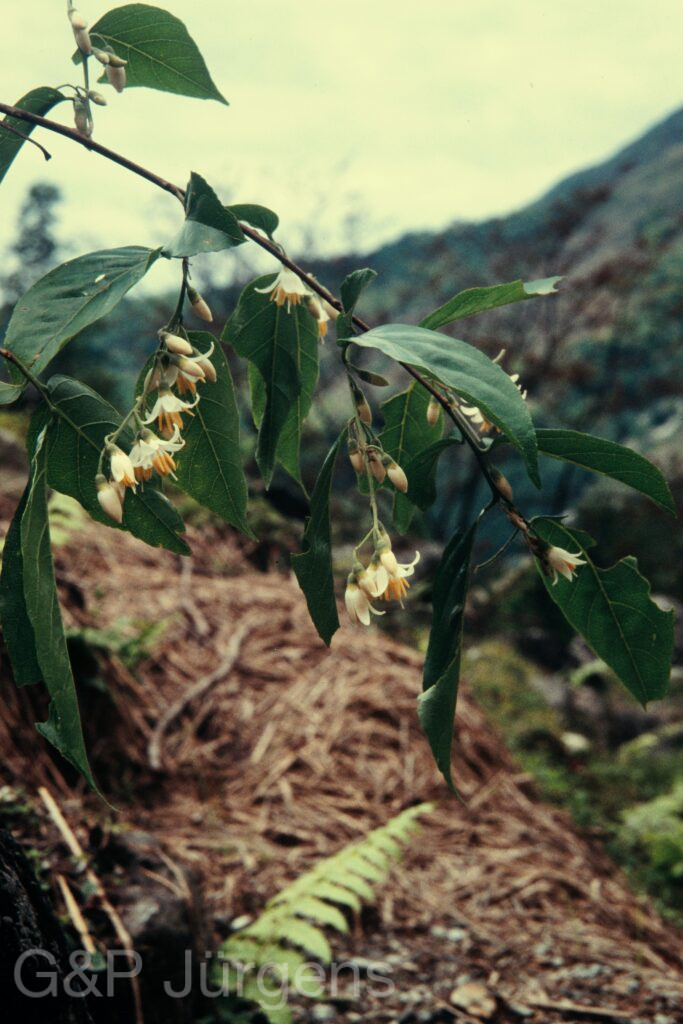
Styrax serrulatus is a small tree or shrub of the eastern Himalaya and mainland Southeast Asia, distributed from India and Nepal through Bhutan, Bangladesh, Myanmar, Thailand, Laos, Vietnam and southern China to Malaysia and Indonesia, with around 395 GBIF records (the few from Korea and the United States reflecting cultivation). It grows in subtropical to lower-temperate broad-leaved evergreen and mixed forest, forest margins and along streams, generally between about 1,000 and 2,400 m. The plant photographed in the Arun Valley of eastern Nepal at 1,750 m, flowering in April, exemplifies its spring anthesis in the warm, humid mid-elevation forests of the eastern Himalaya.

The plant is a deciduous to semi-evergreen shrub or small tree, the young branchlets, buds and lower leaf surfaces clothed in characteristic stellate hairs. The leaves are alternate, simple, elliptic to ovate-oblong with finely serrulate margins (as the epithet indicates), shortly petiolate and acuminate. The flowers are borne in short axillary or terminal racemes; each is white and fragrant, with a five-lobed campanulate calyx and a five-lobed, deeply divided corolla, the ten stamens united at the base into a short tube. The fruit is a subglobose, dry to leathery drupe-like capsule, often crowned by the persistent calyx, containing one or few seeds.

Styrax is the principal genus of the family Styracaceae, several species of which yield aromatic resins (benzoin). The genus has a notable disjunct distribution between eastern Asia and the Americas, and S. serrulatus belongs to its species-rich Asian assemblage. Widespread and occurring in both primary and secondary forest, it is not considered threatened.

Author: Roxb. · Sources: POWO (Kew), Flora of China Vol. 15, Flora of Bhutan Vol. 2, GBIF, Hwang & Grimes: Styracaceae monographic treatments

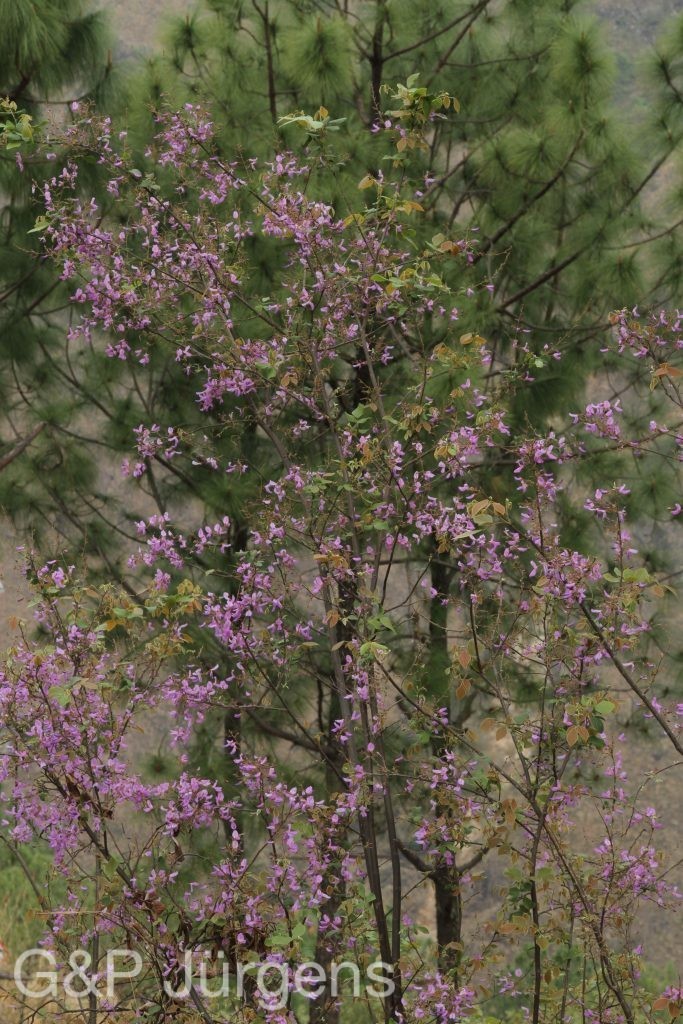
Sunhangia elegans

by GP Jürgens

(DC.) H.Ohashi & K.Ohashi.

Bhutan2014 125
Bhutan Trashigang 1570m, May
Bhutan2014 126
Bhutan Trashigang 1570m, May

Description

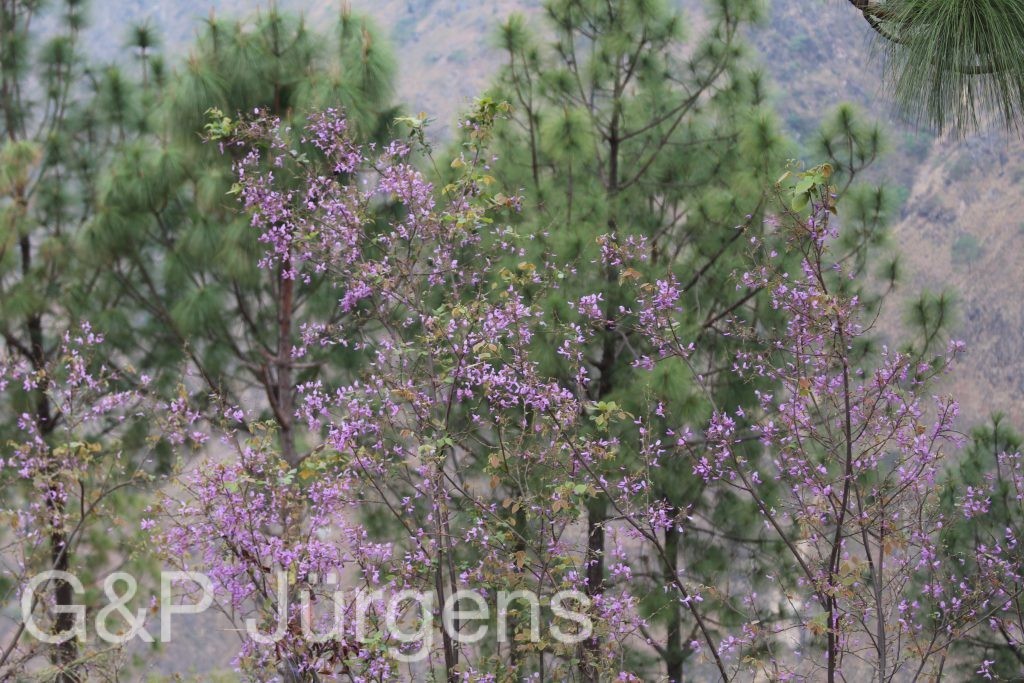
Sunhangia elegans—long familiar as Desmodium elegans—is a shrubby legume widely distributed through the Himalaya and adjoining mountains of China, Nepal, India, Pakistan and Bhutan, with around 1611 occurrence records; the scatter of points in distant countries largely reflects cultivation and naturalisation of this popular ornamental. It grows on open hillsides, forest margins, scrub, roadsides and disturbed slopes, mostly in the warm-temperate to subtropical montane belt. The illustrated plant from Trashigang in eastern Bhutan at 1570 m, flowering in May, sits within this characteristic mid-elevation habitat.

It is a deciduous shrub with arching, much-branched stems bearing trifoliolate leaves; the leaflets are rhombic-ovate to broadly elliptic, the terminal one largest, green above and paler and finely pubescent beneath. The inflorescences are terminal and axillary panicles of many papilionaceous flowers ranging from pale lilac and pink to purple, with the typical standard, wing and keel petals and diadelphous stamens. The fruit is a flattened, jointed loment constricted between the seeds and breaking into one-seeded articles whose hooked hairs cling to fur and clothing, effecting epizoochorous dispersal.

The genus Desmodium has recently been dismembered on molecular evidence, with several Asiatic species transferred by H. Ohashi and K. Ohashi to segregate genera, here placed in Sunhangia, with the accepted combination Sunhangia elegans. Like other members of the tribe Desmodieae it forms root nodules with nitrogen-fixing rhizobia, enriching poor montane soils, and is valued both as fodder and as a hardy garden shrub. It is widespread and faces no recognised conservation concern.

Author: (DC.) H.Ohashi & K.Ohashi. · Sources: POWO (Kew), GBIF, Flora of China (Fabaceae), Annotated Checklist of the Flowering Plants of Nepal, Grierson & Long Flora of Bhutan, Ohashi & Ohashi's revision of the Desmodium group (Leguminosae)

Buch.-Ham. ex D.Do

Bhutan2012 415
Bhutan Wangdi 2700m, September
Bhutan2012 416
Bhutan Wangdi 2700m, September

Description

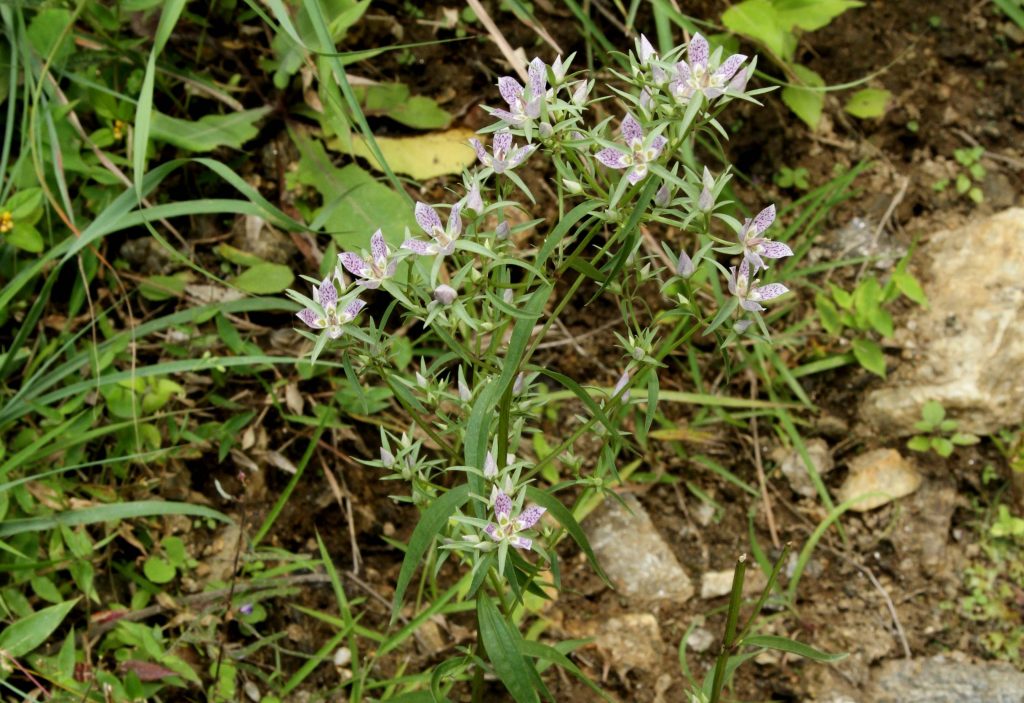
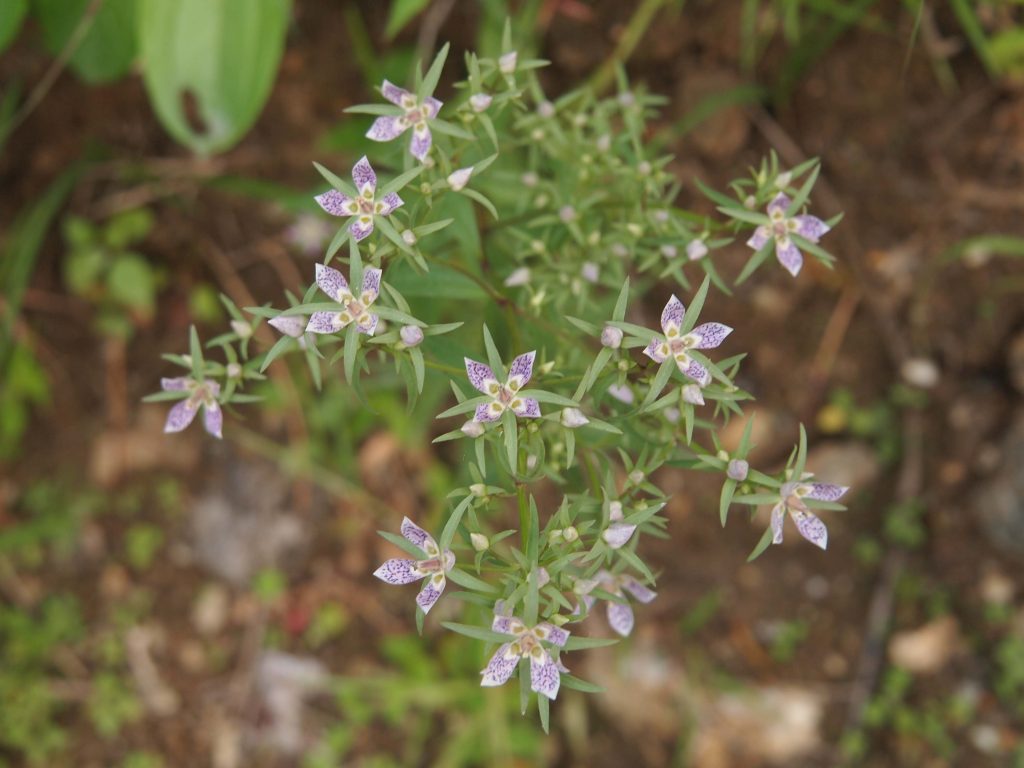
Swertia angustifolia is a slender annual or biennial herb widespread across the Himalaya and montane Asia, recorded from China, India, Nepal, Myanmar, Thailand, Pakistan, Bhutan and beyond, with peripheral records (KR, ZA, SG, US) reflecting introduction or cultivated material. Its roughly 1,000 georeferenced collections make it one of the better-documented species in this group, ranging through the subtropical to temperate hill belt. It grows on open grassy slopes, fallow fields, roadsides, forest margins and disturbed ground, often as a pioneer of seasonally moist sites. The photographed plant from Bhutan near Wangdi at 2700 m, flowering in September, is characteristic of its autumn flowering at the close of the monsoon.

It is an erect, glabrous herb with a slender, quadrangular, usually much-branched stem arising from a thin taproot. The opposite leaves are narrowly lanceolate to linear, sessile, entire and acute, the epithet angustifolia referring to their narrowness. The flowers are numerous, small and borne in a lax, leafy, paniculate cyme. The corolla is rotate and typically four- or five-merous, white to pale greenish or purplish, each lobe bearing one or two nectary glands (foveae) fringed with hairs near its base, a diagnostic feature of the genus. Stamens equal the corolla lobes in number, and the superior, one-celled ovary develops into a many-seeded capsule.

Swertia is a large genus of the gentian family, richest in the Sino-Himalayan region, and many species (notably the chiretta group) are economically important in traditional medicine for their intensely bitter secoiridoid glycosides. S. angustifolia is a common, weedy, wide-ranging species of no conservation concern, frequently colonising agricultural and disturbed land. Its small, fly- and bee-pollinated flowers and prolific seed set underpin its success as a montane ruderal.

Author: Buch.-Ham. ex D.Do · Sources: POWO (Kew), GBIF, Flora of China Vol. 16, Flora of Bhutan Vol. 2, Flora of Nepal, Clarke's Monograph of Asiatic Gentianaceae

(Siebold & Zucc.) Hook. f. & Thomson ex C.B. Clarke

Bhutan2012 354
Bhutan Doch-La, 3000m September
Bhutan2012 355
Bhutan Doch-La, 3000m September
Bh2008 65 P106
Bhutan Punaka-Chu, 1600m April

Description

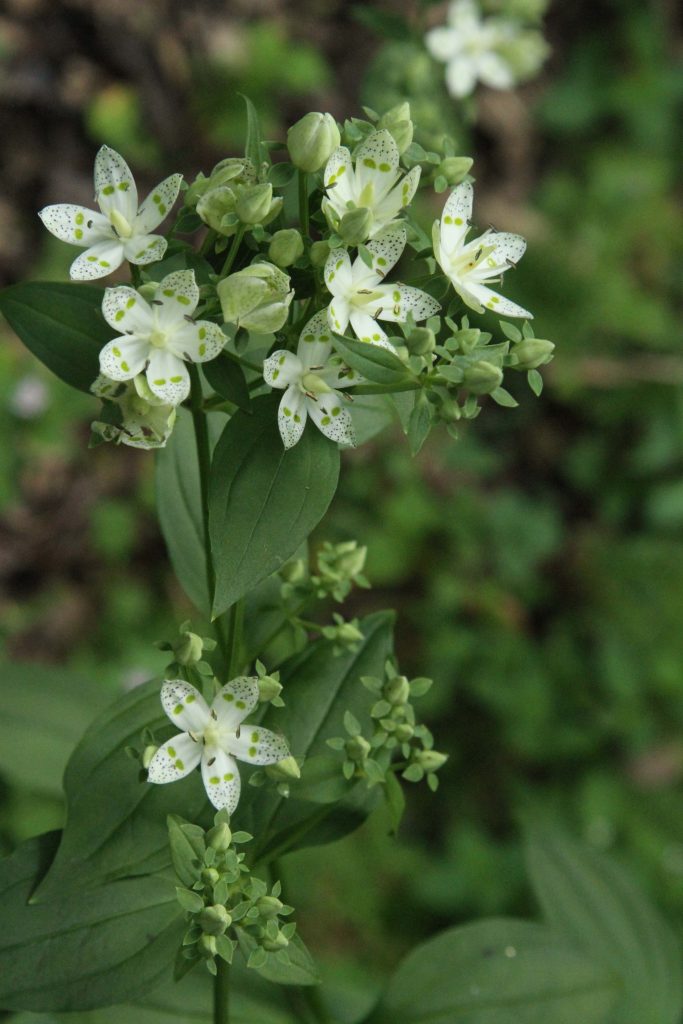
Swertia bimaculata is a widely distributed Asian gentian recorded by GBIF in nearly 3,942 occurrences spanning China, Japan, Korea, India, Bhutan, Nepal, Myanmar, Indonesia, Malaysia and Vietnam, making it one of the most far-ranging members of its genus. It occupies forest margins, grassy slopes, meadows and streamsides over a broad altitudinal span from lowland valleys to the subalpine zone. The Bhutanese collections illustrated, one from the Dochu La at 3000 m flowering in September and another from the Punakha Chu at 1600 m in April, demonstrate both its wide elevational tolerance and a flowering season extended by the diversity of habitats it occupies.

The species is a tall, erect annual or biennial herb with an angular, often branched stem arising from a slender taproot. The leaves are opposite, sessile to short-petiolate and broadly elliptic to lanceolate, with prominent arcuate veins. Flowers are numerous in a large, lax terminal panicle; the corolla is rotate and deeply four- to five-lobed, the lobes pale greenish-white to yellowish and finely dotted or streaked with purple. Each lobe bears two conspicuous dark glandular nectaries—the paired "two spots" of the epithet bimaculata—fringed with long fimbriae. The superior ovary develops into a narrowly ovoid septicidal capsule releasing many small seeds.

Swertia is a taxonomically complex, pharmacologically notable genus whose bitter secoiridoid-rich species are widely used in traditional Asian medicine, and S. bimaculata is among those harvested for such purposes. The fringed nectary glands and spotted corolla attract bees and flies that effect cross-pollination. Despite its medicinal exploitation the species remains common and ecologically plastic across its enormous range and is not regarded as threatened.

Author: (Siebold & Zucc.) Hook. f. & Thomson ex C.B. Clarke · Sources: POWO (Kew), GBIF, Flora of China, Flora of Bhutan, Flora of Japan, Revision of the Genus Swertia (Hara)