Tag:

Sikkim

Flowers of Sikkim — 350 species from the Sikkim Himalaya in northeast India, a compact yet botanically extraordinary region that climbs from subtropical valleys to the alpine zone beneath Kangchenjunga. Sikkim is a classic centre of Himalayan plant diversity, celebrated for its rhododendrons, primulas, orchids and gentians. Each entry provides a botanical description, distribution, habitat and flowering season with the original field photograph.

Craib

Sikkim 2006 345 ergebnis
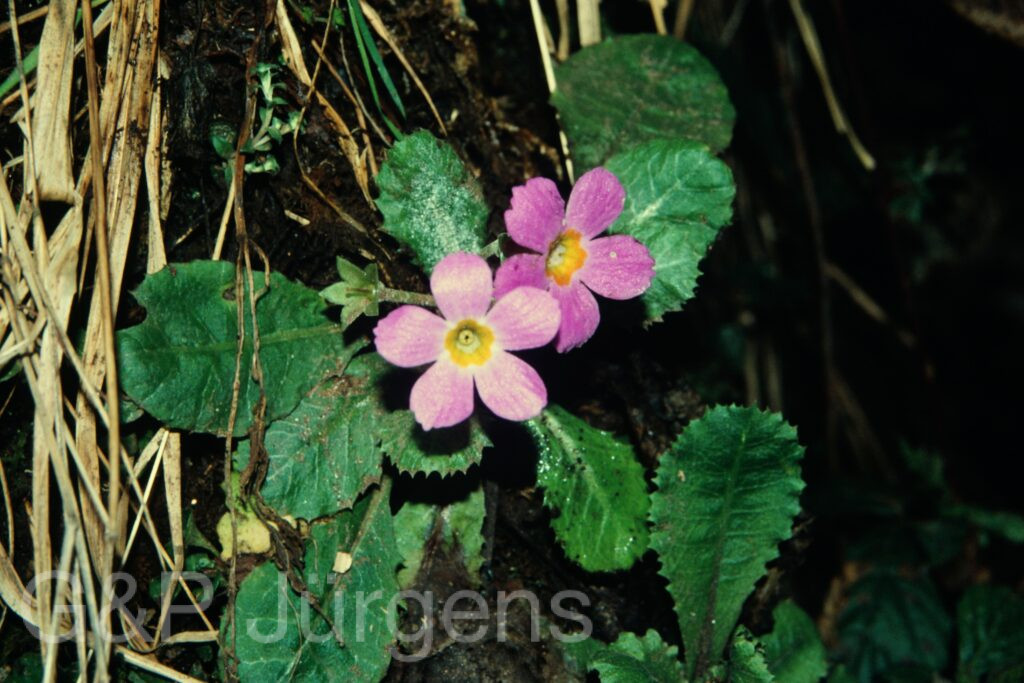
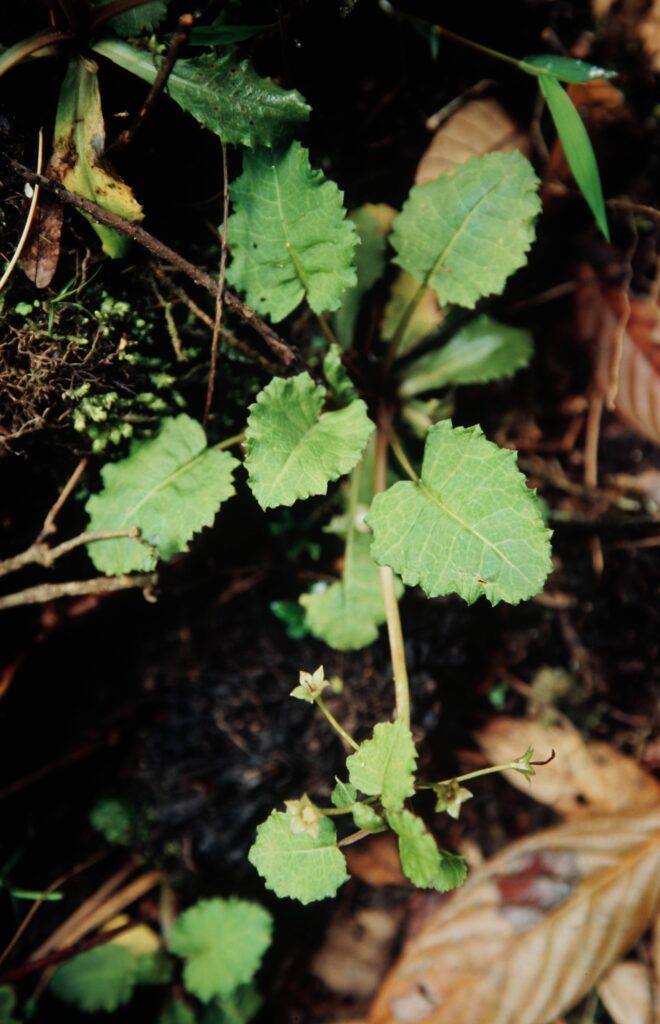
India West-Bengal, Tolung 2500m, May

Description

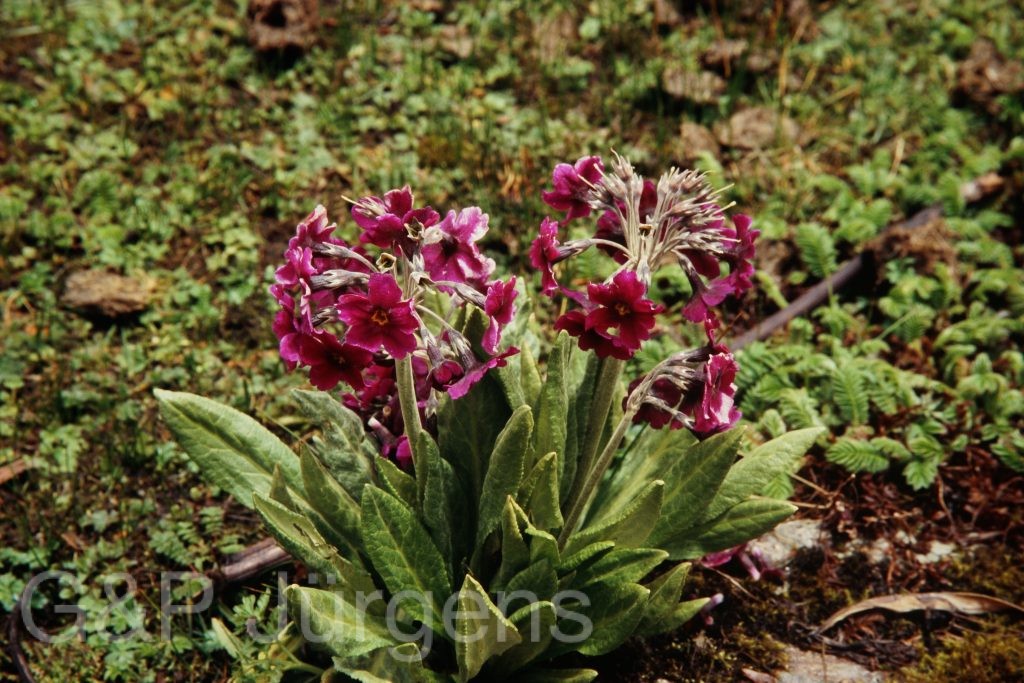
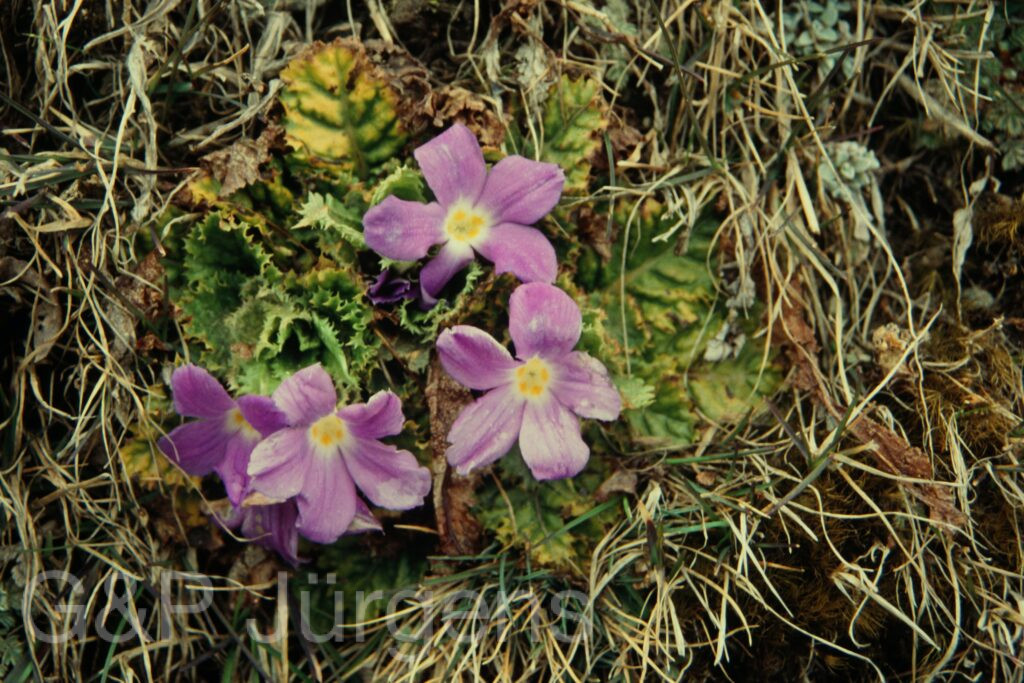
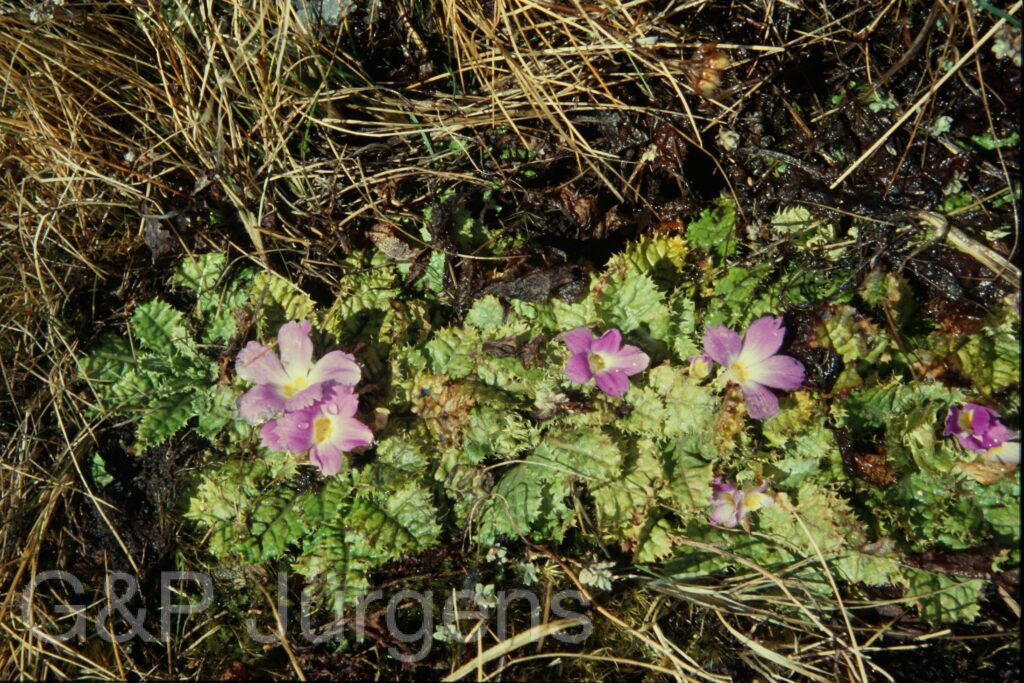
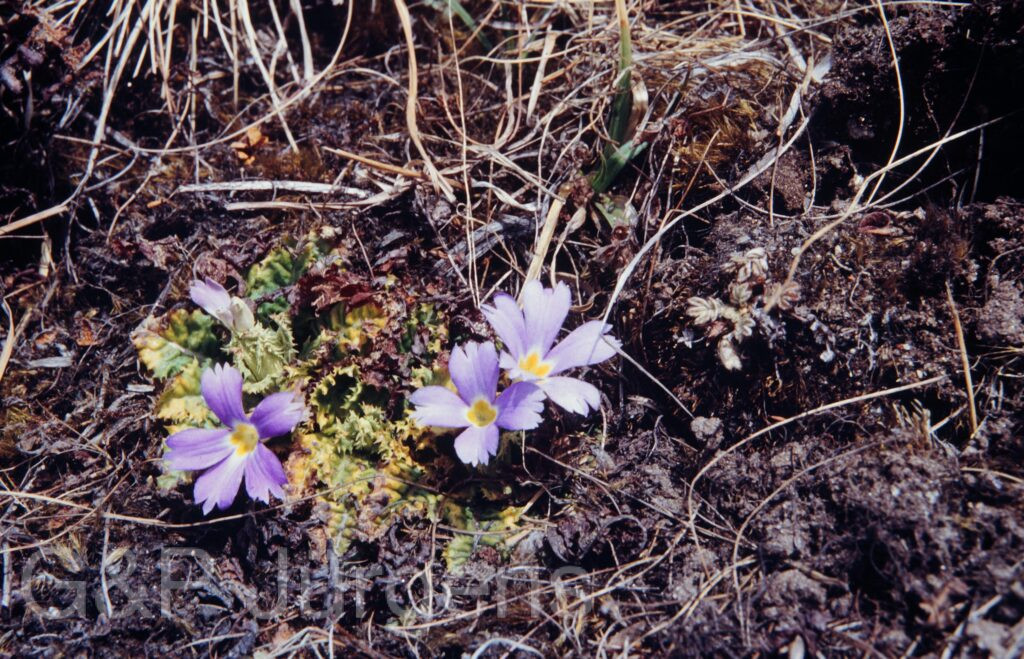
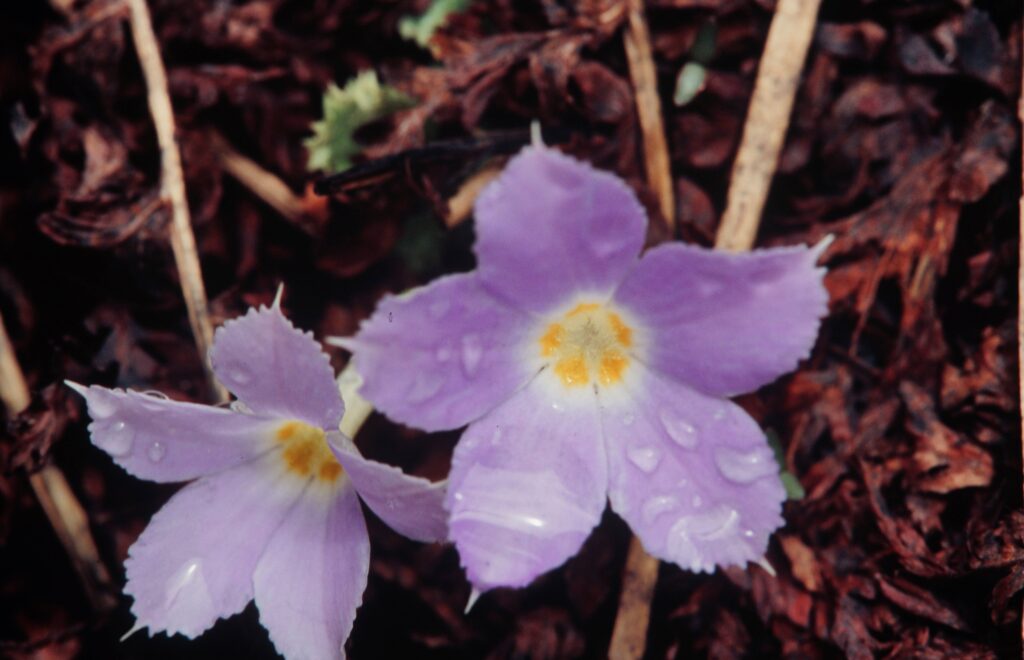
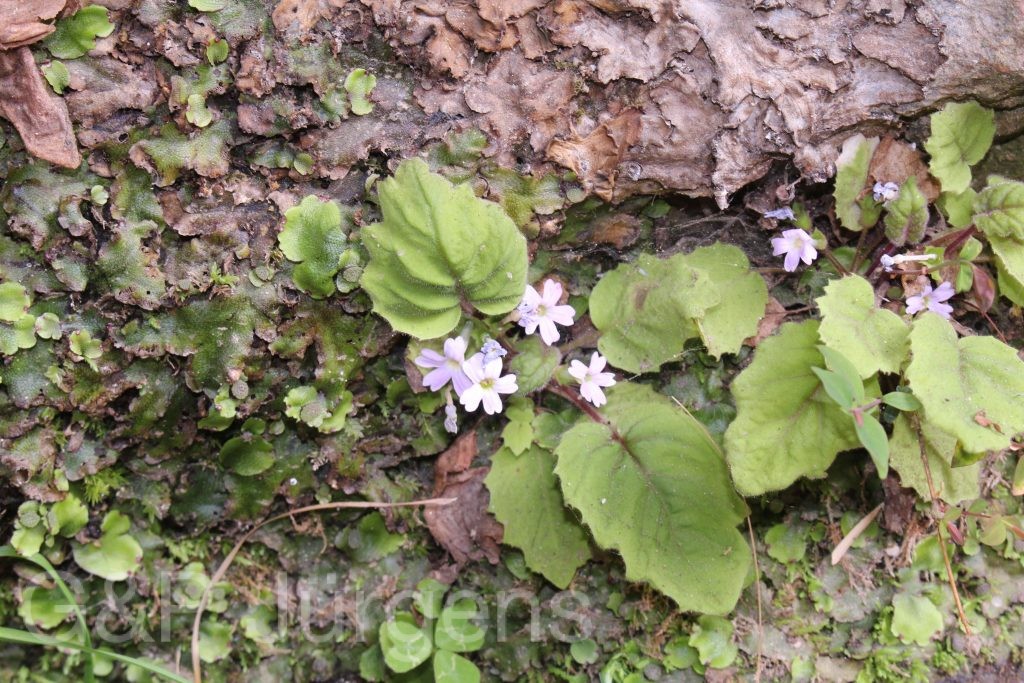
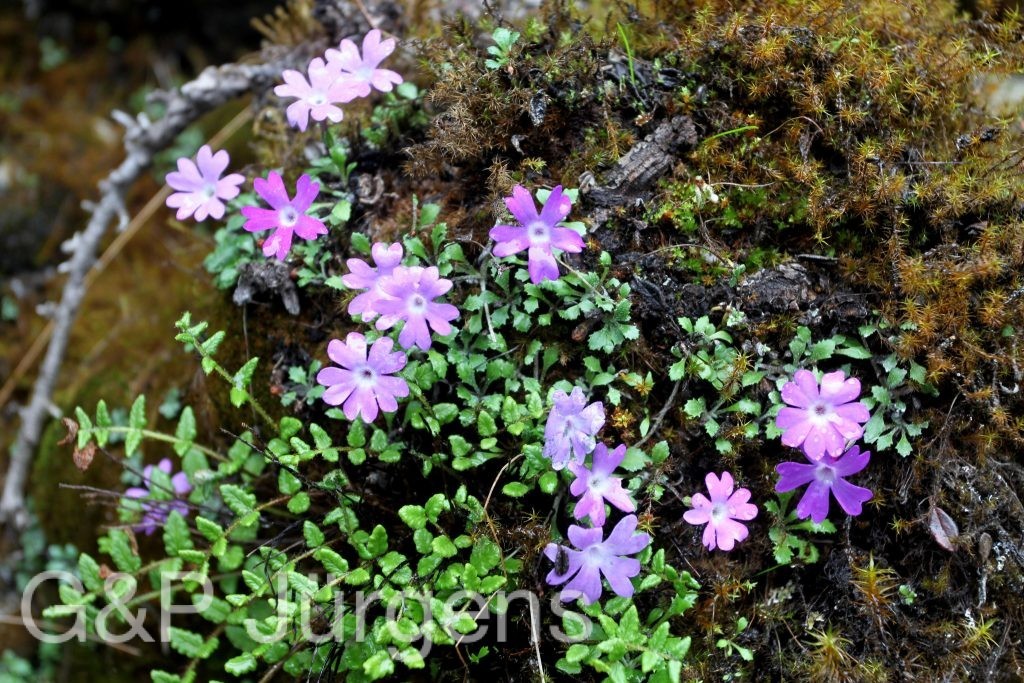
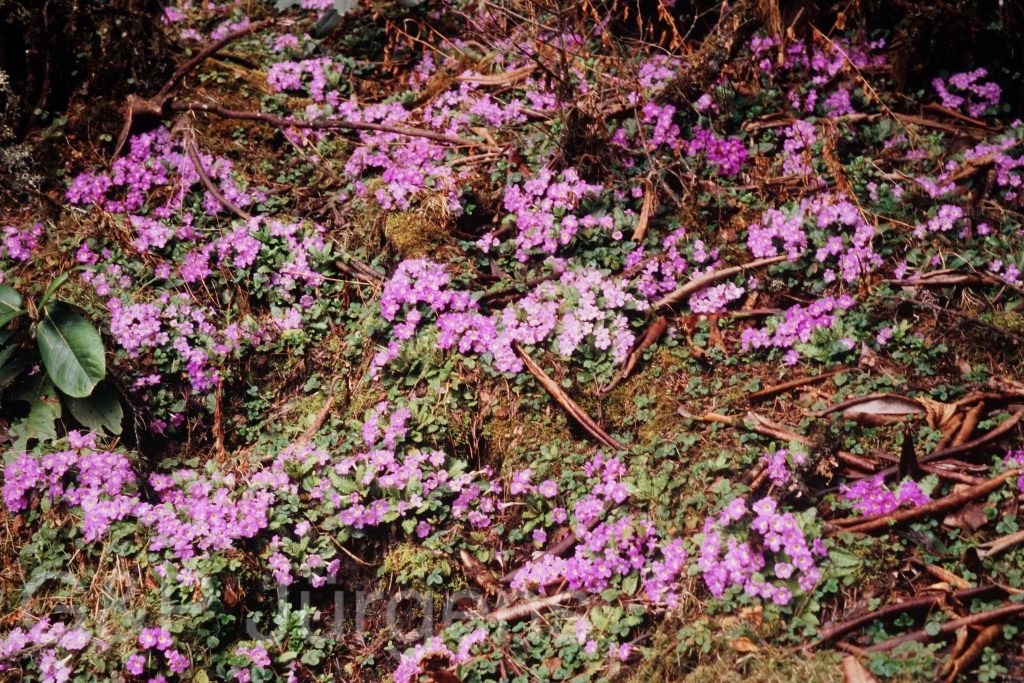
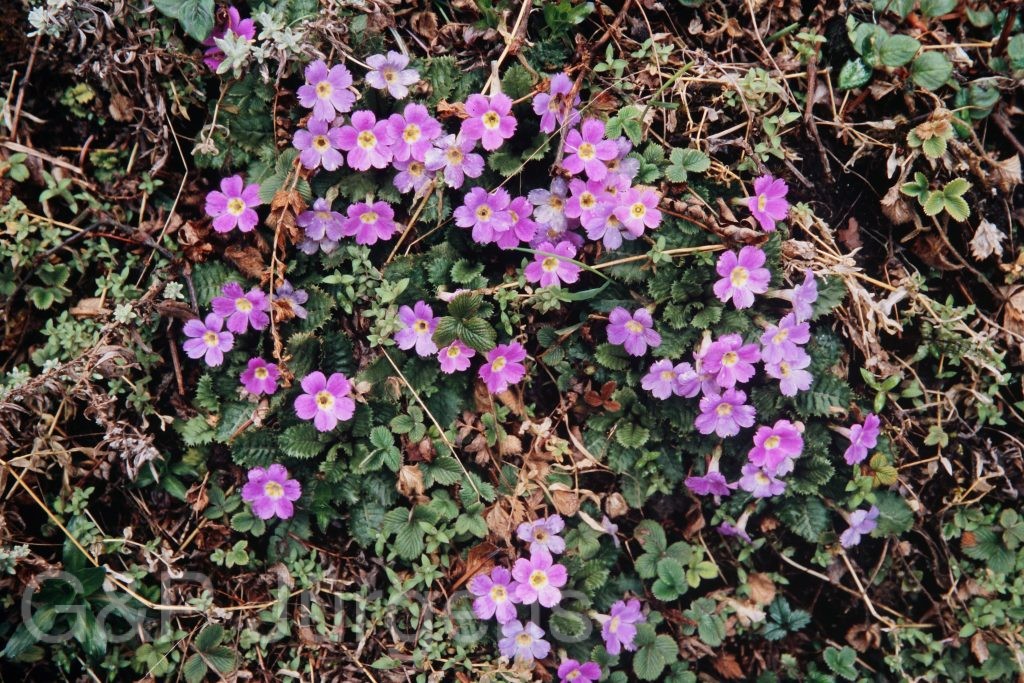
Primula bracteosa is a temperate to subalpine primrose of the eastern Himalaya, recorded from Bhutan, India and Nepal, with 51 georeferenced occurrences across this comparatively narrow range. It favours cool, shaded, moist situations such as mossy banks, damp rock ledges and the humus-rich floor of broadleaved and conifer forest. The plant photographed at Tolung in West Bengal, India, at 2500 m in May documents its spring flowering in the moist temperate forest belt, when the rosettes emerge and bloom early in the season following snowmelt and the first monsoon moisture.

The plant forms a basal rosette of obovate to spathulate leaves that are toothed to crenate along the margin, often farinose (mealy) beneath and tapering to a winged petiole. The flowers are borne in a terminal umbel atop a slender scape; as the epithet indicates, the umbel is subtended by conspicuous bracts. The individual flowers are salverform with a slender corolla tube and a spreading, notched-lobed limb, pink to rose-purple or lilac with a yellow or greenish eye. Like most Primula the species is typically heterostylous, with pin and thrum flower morphs promoting outcrossing. The fruit is a small capsule releasing numerous minute seeds.

Within the large and taxonomically complex genus Primula, P. bracteosa is placed in section Petiolares, a group of early-flowering, often farinose eastern-Himalayan primroses centred on Sikkim, Bhutan and adjacent regions. The section is prized but demanding in cultivation. Restricted to cool, humid montane forest, the species is locally frequent in suitable habitat but potentially vulnerable to forest disturbance and a warming climate.

Author: Craib · Sources: POWO (Kew), GBIF, Flora of Bhutan, Flora of China, The Genus Primula monograph (Richards), Flowers of the Himalaya (Polunin & Stainton)

Balf. f. & R.E. Cooper

Sikkim2011 266
Sikkim Lada-La 4000m, June
Sikkim2011 335
Sikkim Lada-La 4000m, June
Bh09 120 P192
Bhutan Jimilangtso, 4000m June
Bh09 150 G268
Bhutan Jimilangtso, 4000m June
Sikkim2004 211 G358
Sikkim/India Gometang 4200m May

Description

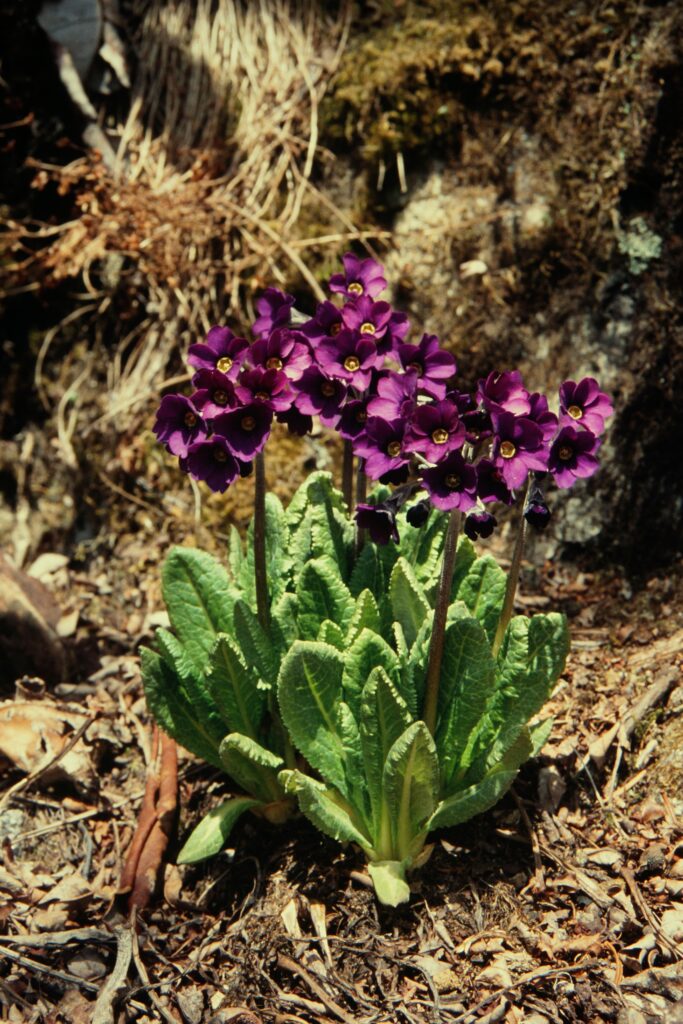
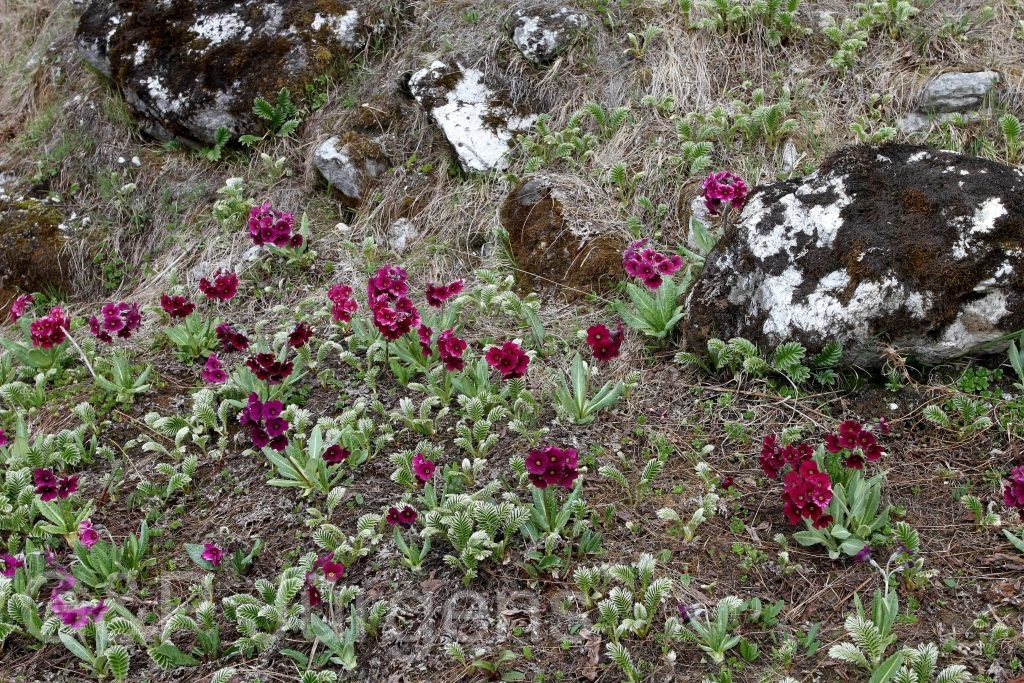
Primula calderiana is an eastern Himalayan alpine primrose distributed through Nepal, India (Sikkim), Bhutan and adjacent China, with about 313 georeferenced records; isolated entries from Japan and elsewhere reflect cultivation or data artefacts. It grows on moist alpine meadows, damp turf, streamsides and the margins of melting snow between roughly 3500 and 4500 m. The documented localities at Lada-La (4000 m) and Gometang (4200 m) in Sikkim and at Jimilangtso (4000 m) in Bhutan, flowering in May and June, capture its appearance just after snowmelt in the high pastures.

It is a stout, scapose perennial with a basal rosette of obovate to spathulate leaves that are toothed at the margin and often dusted beneath with whitish or yellowish farina. The leafless scape bears a terminal umbel of several flowers, each subtended by linear bracts. The corolla is salver- or funnel-shaped with a slender tube and spreading limb of five notched lobes, ranging from deep purple to crimson with a contrasting yellow or dark eye, and a campanulate calyx. The fruit is a small capsule containing numerous seeds.

Primula calderiana belongs to section Petiolares, a notoriously difficult group whose species hybridise and intergrade across the eastern Himalaya; it is closely allied to P. tsariensis and related farinose primroses. As an early-flowering snowmelt specialist it is an indicator of intact alpine turf, and like many high-elevation Petiolares it is locally collected for gardens. It remains widespread within its core range.

Author: Balf. f. & R.E. Cooper · Sources: POWO (Kew), GBIF, Flora of Bhutan, Annotated Checklist of the Flowering Plants of Nepal, Richards' Primula monograph

Hook.

Bhutan2015 372
Bhutan Tumching-La 4000m, October

Description

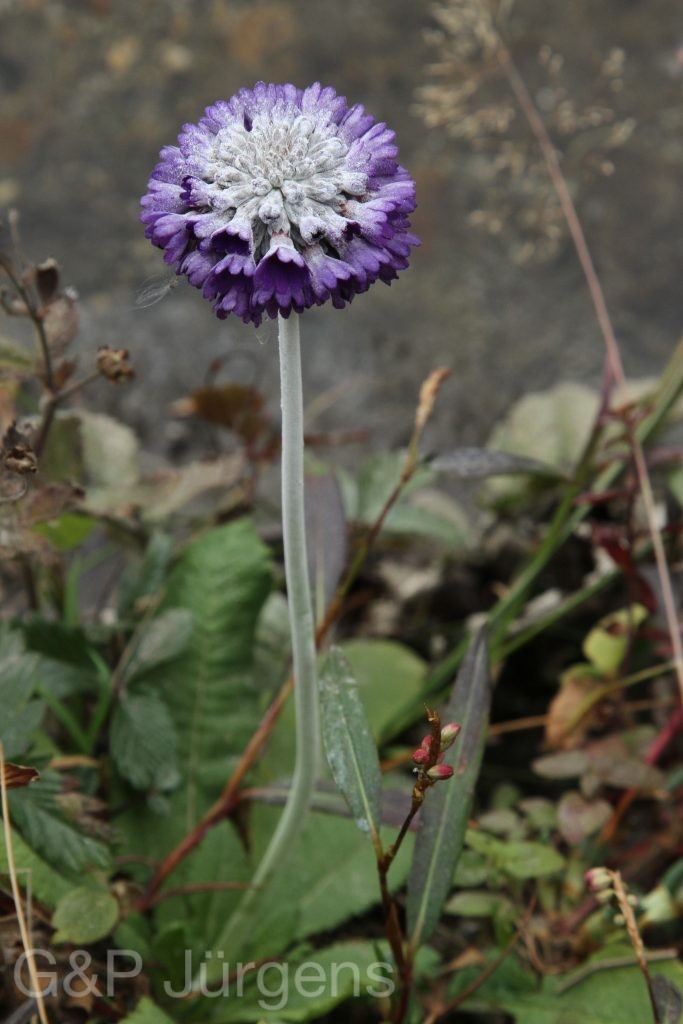
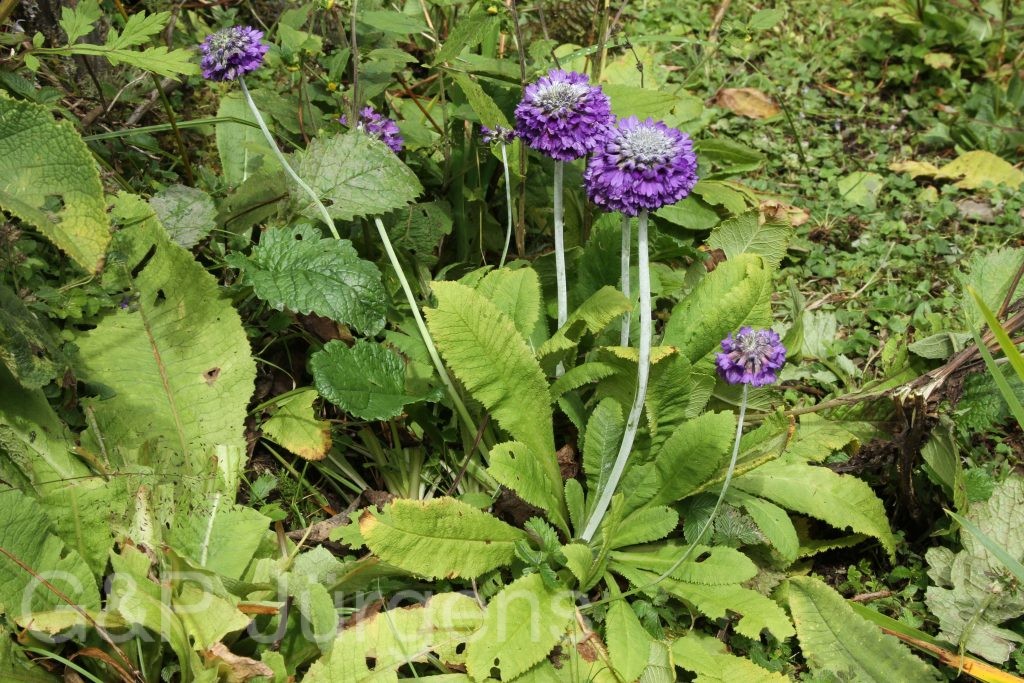
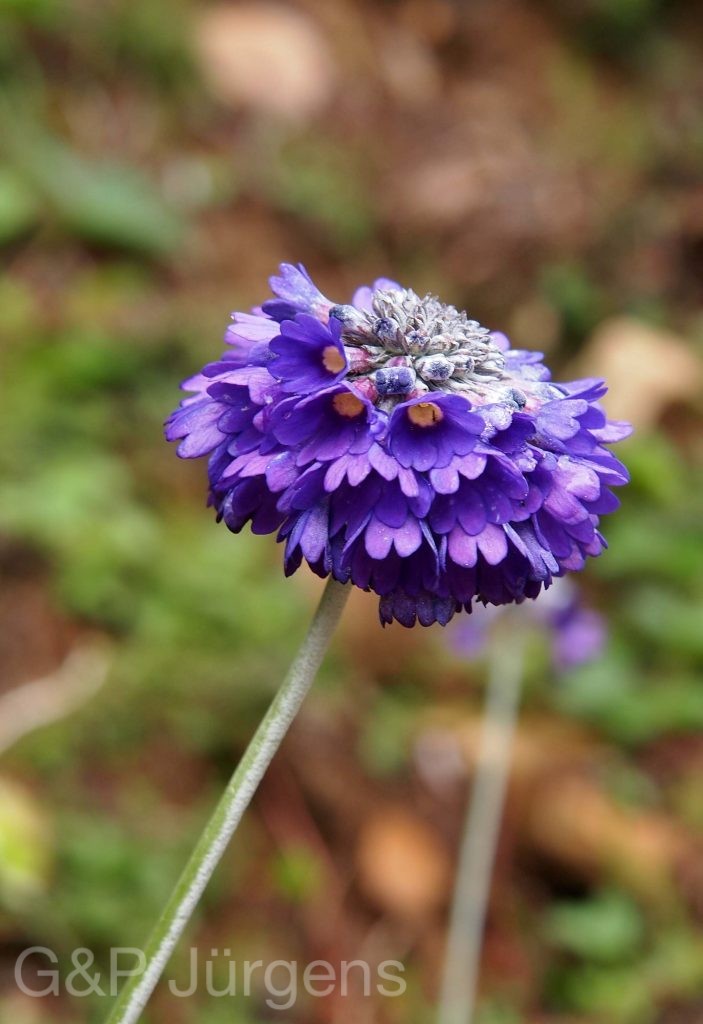
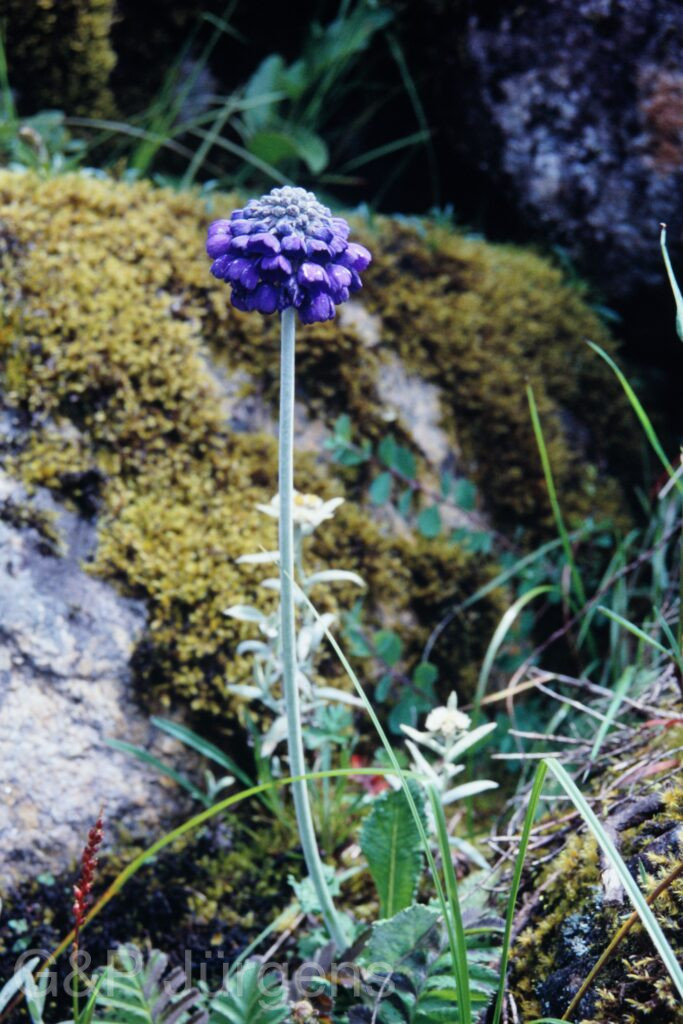
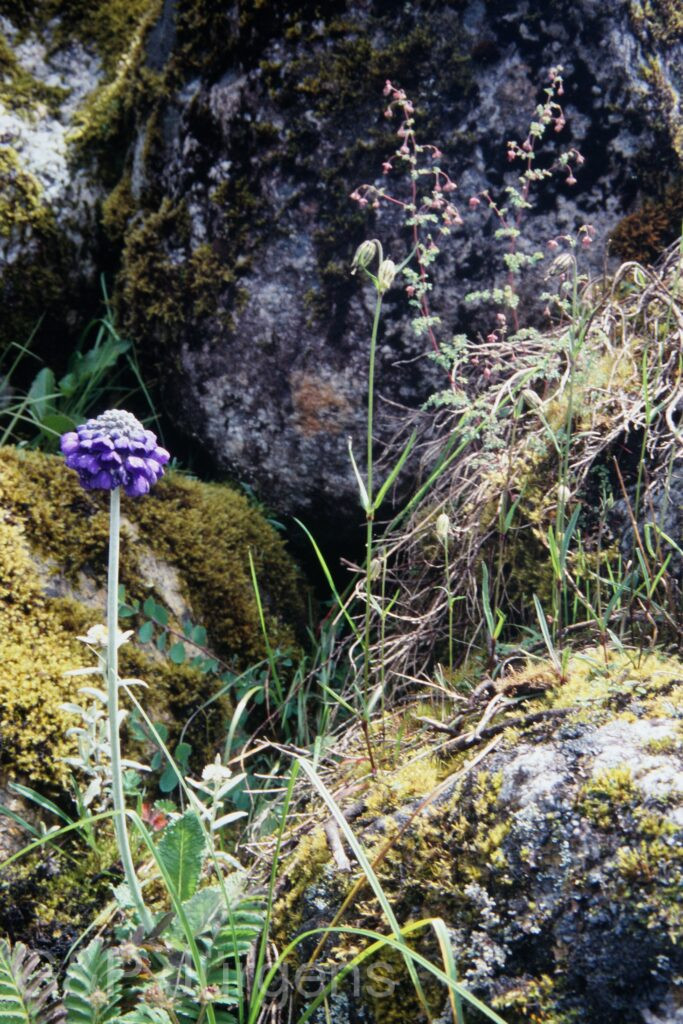
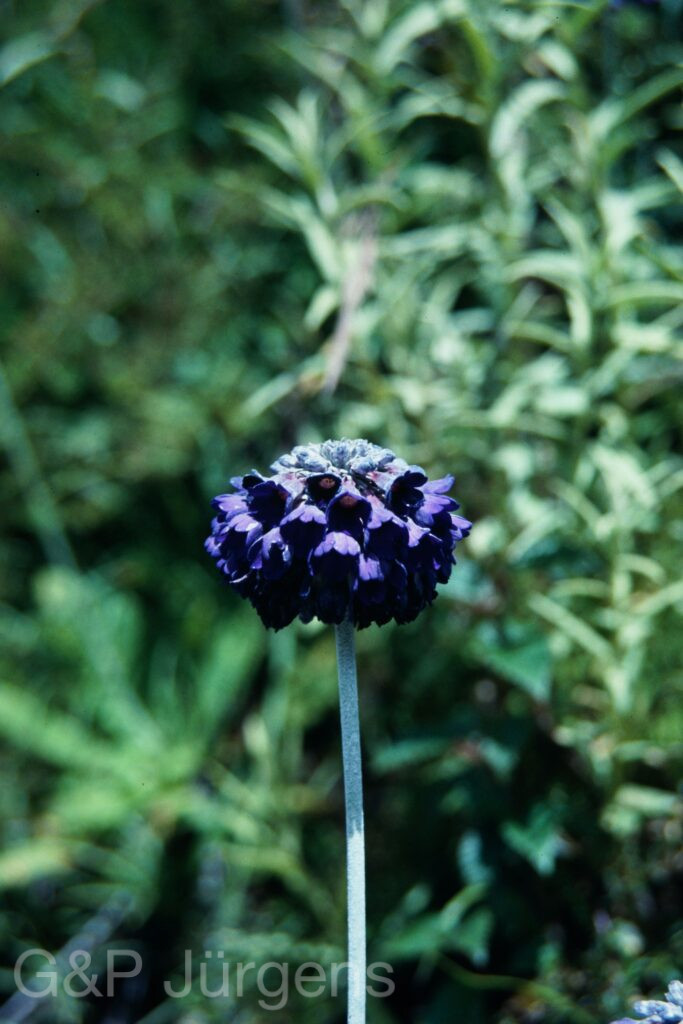
Primula capitata is an eastern Himalayan primrose distributed through Nepal, Sikkim and northern India, Bhutan and adjacent southern China and northern Myanmar, with around 476 GBIF records (additional entries from Europe, North America, Japan and Korea reflecting its cultivation). It is a plant of open, moist alpine and subalpine habitats, growing in damp meadows, on grassy slopes, streamsides and among rocks. The imaged populations at Tumching La (4000 m) and Shele La (3000 m) in Bhutan and at Dzongri in Sikkim (4100 m) span its typical elevational range and its notably late, monsoon-to-autumn flowering from August into October, when much of the alpine flora has already set seed.

The species forms a rosette of oblanceolate to spathulate leaves that are crenate to denticulate at the margin and densely white- or yellow-farinose beneath. From the rosette rises a stout, farinose scape bearing the diagnostic inflorescence: a dense, flat-topped to hemispherical capitate head of many small flowers, the lowermost opening first so that the head appears truncate. Each flower has a tubular calyx and a violet to deep blue-purple corolla with a short tube and small, spreading limb-lobes, the throat farinose. The plant is heterostylous. The fruit is a small capsule enclosed in the persistent calyx.

Primula capitata belongs to sect. Capitatae, a small group distinguished by their compact, drumstick-like heads of farinose flowers. Several subspecies and varieties have been recognised on the basis of leaf and farina characters and degree of late-season flowering. Its dependence on cool, moist alpine turf ties its distribution to the high monsoon-influenced ranges of the eastern Himalaya; it is locally common and not regarded as threatened, and is valued in cultivation as a hardy late-flowering rock-garden primula.

Author: Hook. · Sources: POWO (Kew), GBIF, Flora of Bhutan, Flora of China, Annotated Checklist of the Flowering Plants of Nepal, Richards' Primula (monograph)

Craib

Sikkim2004 167 G283
Sikkim/India Singalila 3900m May
Sikkim2004 156 P270
Sikkim/India Singalila 3900m May
Nepal1992 127 P181 ergebnis
Nepal Ghunsa 3600m March 
Sikkim 2006 386 ergebnis
India West-Bengal, Kishong 3500m, May

Description

Primula deuteronana is an eastern Himalayan primrose restricted to Nepal, India and Bhutan, and is comparatively poorly collected, with only about 61 GBIF records. It is a plant of the subalpine and alpine zone, growing on moist, shaded slopes, rocky banks, mossy ledges and the margins of rhododendron scrub, often flowering very early in the season as the snow melts. The cited collections illustrate this well: Singalila on the Sikkim-India ridge at around 3900 m in May, Ghunsa in eastern Nepal at about 3600 m as early as March, and Kishong in West Bengal at some 3500 m in May, indicating a preference for cool, humid, well-drained mountain habitats.

The plant is a small, low perennial herb with a basal rosette of leaves that are obovate to spathulate, often narrowed to a winged petiole, with crenate to dentate margins and frequently a farinose (mealy) coating, particularly when young. The flowers are borne singly or few together on short scapes barely exceeding the foliage, each with a tubular, lobed calyx and a salverform corolla in shades of rose-pink to purple with a contrasting paler or yellowish eye, the five lobes spreading and notched. The fruit is a small capsule containing numerous tiny seeds.

Described by Craib, P. deuteronana belongs to the species-rich Himalayan assemblage of farinose primulas. Its very early, near-snowmelt flowering is an adaptation to the short high-mountain growing season. As a narrow-range eastern Himalayan endemic with relatively few documented populations, it is potentially sensitive to grazing, trampling and climatic warming affecting its restricted alpine habitat, and merits monitoring.

Author: Craib · Sources: POWO (Kew), GBIF, Flora of Bhutan, Annotated Checklist of the Flowering Plants of Nepal, Richards' monograph Primula

G.Watt

Sikkim2011 40
Sikkim Vista-valley 3700m, June
Sikkim2011 41
Sikkim Vista-valley 3700m, June
Sikkim2004 388 P666
Sikkim Lachung 3100m, May
Sikkim 2006 357 ergebnis
India West-Bengal Tamrong 2750m, May

Description

Primula dickieana is an eastern Himalayan primrose ranging through China, Nepal, India, Myanmar and Bhutan, with about 202 GBIF records concentrated in the Sikkim–Bhutan sector. It is a plant of moist alpine meadows, damp turf and seepage slopes, typically between roughly 2700 and 4500 m. The cited collections span this gradient, from Sikkim's Vista valley at 3700 m and Lachung at 3100 m to Tamrong in West Bengal at 2750 m, flowering in May and June as snowmelt saturates the high pastures. It thrives where cool, humus-rich soils remain reliably wet through the early growing season.

The species is a small, tufted, perennial herb forming a basal rosette of leaves that are oblanceolate to spathulate, narrowed to a winged petiole, with crenate to entire margins and an efarinose (mealless) surface. A single slender scape bears a solitary terminal flower, or occasionally a few, the corolla rotate and showy in proportion to the plant. Flower colour is notably variable, ranging from yellow through cream, pink and purple to nearly white, with a tubular calyx and a corolla limb of broad, often emarginate lobes. The fruit is a small capsule enclosed within the persistent calyx, dehiscing to release numerous minute seeds.

Within Primula, the species is placed in section Yunnanensis (formerly allied to section Dickieana), a group of single-flowered alpine primulas, and its remarkable colour polymorphism has long interested monographers. Pollination is effected by alpine insects visiting the open corolla. The species is locally common within its narrow alpine band but, like many Sino-Himalayan primulas, is potentially vulnerable to upslope habitat compression under a warming climate and to trampling and grazing in accessible high pastures.

Author: G.Watt · Sources: POWO (Kew), GBIF, Flora of Bhutan, Flora of China (Primulaceae), Richards Primula (monograph)

G.Watt

Sikkim2011 254
Sikkim Lada-La 3800m, June
Bh2008 580 P870
Bhutan Chele-La 3900m April
Bh2008 581 G871
Bhutan Chele-La 3900m April

Description

Primula elongata is a high-alpine primrose of the eastern Himalaya, recorded from Bhutan, India (Sikkim), Nepal and southern China, with GBIF holding around 107 occurrences across this range. It inhabits damp alpine turf, open hillsides, streamsides and the margins of rhododendron scrub in the subalpine to alpine zones, typically between about 3500 and 4300 m. The collections illustrated here, from Lada-La in Sikkim at 3800 m in June and from the Chele-La in western Bhutan at 3900 m in April, are characteristic of its preference for cool, moist, snow-fed slopes that flush green soon after snowmelt.

It is a small, herbaceous perennial forming basal rosettes of oblong to spathulate leaves that are gradually narrowed into a winged petiole, with the lamina often finely toothed and bearing a thin covering of farina (mealy powder) on the undersurface. From the rosette arises a slender, erect scape carrying a terminal umbel of several flowers. The corolla is funnel- to salver-shaped, in shades of violet, pink-purple or lilac with a contrasting yellow or whitish eye, and the species is heterostylous (pin and thrum forms). The fruit is a small capsule shorter than or equalling the persistent calyx, releasing numerous angular seeds.

Primula elongata belongs to a complex group of small farinose Himalayan primulas, and its segregation from allied taxa rests on leaf shape, farina distribution and capsule proportions. Restricted to high-elevation pastures, the species is potentially sensitive to changes in snow regime and to heavy grazing pressure, although across its broad eastern-Himalayan range it is not presently considered threatened.

Author: G.Watt · Sources: POWO (Kew), GBIF, Flora of Bhutan, Flora of China, Primula (J. Richards monograph)

G.Watt

Bhutan2014 1057
Bhutan Takthsang 2900m, May
Bhutan2014 1060
Bhutan Takthsang 2900m, May

Description

Primula filipes is a slender, delicate primrose of the eastern Himalayas, distributed across Bhutan, Sikkim and adjacent northeast India, eastern Nepal, northern Myanmar and southwest China (Xizang, Yunnan). It is a plant of cool, humid montane forest, favouring mossy banks, shaded streamsides and damp rock ledges within mixed broad-leaved and conifer woodland. The species typically occurs between roughly 2,500 and 3,600 m; the population photographed near the cliffside monastery of Taktshang (Tiger's Nest) in Bhutan at about 2,900 m in May is characteristic of its preferred shaded, moist forest understorey.

The plant is a small perennial herb forming a loose rosette of thin, ovate to oblong-elliptic leaves that are crenate-dentate at the margin and gradually narrowed into a slender, winged petiole, the lamina often farinose beneath. From the rosette arises a filiform, erect scape, frequently efarinose, terminating in a lax umbel of few flowers. The flowers are small, with a campanulate calyx and a pale to deep purple-violet corolla bearing a yellow eye and a notched, spreading limb; the capsule is globose and shorter than or subequal to the persistent calyx.

Primula filipes belongs to section Petiolares, a large and taxonomically intricate Himalayan group characterised by farinose, rosette-forming herbs of moist forest habitats. The species was described by the botanist George Watt from Himalayan material. As a narrowly montane forest endemic dependent on undisturbed humid woodland, it is sensitive to deforestation and trampling at popular pilgrimage sites, though it remains locally frequent within suitable habitat.

Author: G.Watt · Sources: POWO (Kew), Flora of Bhutan Vol. 1, Flora of China Vol. 15, GBIF, Richards: Primula (2003)

W.W.Sm.

BhutanPG2011 607 01
Bhutan Ludlow-Sherriff-Trail Kim-La, 4480m July

Description

Primula flagellaris is a diminutive alpine primrose endemic to the Eastern Himalaya, known from Bhutan and adjacent India (Sikkim and Arunachal Pradesh), with only a small number of recorded occurrences reflecting its localised, high-altitude range. It inhabits the alpine zone, growing among damp turf, mossy rocks, seepage slopes and the margins of snow-melt flushes well above the treeline. The plant photographed on the historic Ludlow–Sherriff trail near Kim-La in Bhutan at 4480 m in July illustrates its characteristic occurrence in cool, moist alpine meadows during the brief summer flowering season following snow-melt.

The species is a small stoloniferous perennial whose specific epithet alludes to its slender, whip-like runners by which it spreads vegetatively to form loose mats or colonies. The leaves are gathered in small rosettes, obovate to spathulate, narrowed to a short petiole, with crenate to dentate margins and frequently a thin farinose coating. The flowering scapes are short, sometimes barely exceeding the leaves, bearing solitary flowers or few-flowered umbels. Each flower is heterostylous, with a tubular calyx and a salver-shaped corolla of rose-pink to lilac-purple lobes, notched at the apex, surrounding a contrasting eye. The fruit is a small capsule dehiscing to release numerous minute seeds.

Primula flagellaris belongs to the speciose Himalayan radiation of Primula, where it has at times been treated within the affinity of P. tenella, as reflected in the synonymy P. tenella var. flagellaris. Its stoloniferous habit is unusual within the genus and of considerable taxonomic interest. As a narrow Eastern Himalayan endemic confined to fragile alpine habitats potentially sensitive to climatic warming and grazing pressure, it warrants monitoring and is best considered of conservation interest pending formal assessment.

Author: W.W.Sm. · Sources: POWO (Kew), GBIF, Flora of Bhutan, Smith & Fletcher Genus Primula, Richards Primula (monograph), Flowers of the Himalaya

G.Watt

BhutanPG2011 268
Bhutan Jule-Tso, 4000m June

Description

Primula gambeliana G.Watt is an eastern Himalayan alpine primula recorded from India (Sikkim, Arunachal Pradesh), Nepal, Bhutan and south-western China, with about 66 georeferenced occurrences in GBIF. It grows on cool, humus-rich and mossy ground, on shaded rock ledges, beneath dwarf rhododendron and along the upper forest edge into the lower alpine zone, generally between roughly 3000 and 4300 m. The collection from Jule-Tso at 4000 m in June reflects its preference for damp, sheltered high-altitude sites flushed by snowmelt early in the growing season.

It is a tufted perennial herb forming a rosette from a short rhizome. The leaves are obovate to spatulate, abruptly contracted into a broadly winged petiole, with an irregularly toothed margin and an efarinose, somewhat fleshy texture. The slender scape rises above the foliage bearing an umbel of several nodding, funnel-shaped flowers; the corolla is rose-purple to violet with a paler or yellowish throat, the lobes spreading and emarginate, and the calyx is campanulate and divided to about the middle. The flowers are heterostylous, and the fruit is a capsule about equalling the calyx that releases numerous small seeds.

P. gambeliana belongs to section Petiolares, a large and taxonomically complex eastern-Himalayan group of woodland and alpine primulas distinguished by their winged petioles and early flowering. Within this section it is recognised by its leaf form and flower colour. As a localised petiolarid of cool, moist high-elevation habitat it depends on intact moss and humus layers; it carries no formal threat status but is potentially sensitive to habitat disturbance.

Author: G.Watt · Sources: POWO (Kew), GBIF, Flora of Bhutan, Flora of China, Smith & Fletcher monograph of Primula

Craib

Bh2008 240 G378
Bhutan Tumching-La, 3600m April
Bh2008 241 P379
Bhutan Tumching-La, 3600m April
Sikkim2004 132 G230
Sikkim/India Singalila 3200m April

Description

Primula gracilipes is a spring-flowering primrose of the eastern Himalaya, distributed through Nepal, Sikkim and the rest of India, Bhutan and adjacent China, with additional material in European collections such as Austria and Japan. Its roughly 198 georeferenced records trace a band along the moist eastern Himalayan ranges. It grows on damp, mossy banks, in open subalpine forest, on rock ledges and along stream margins at roughly 2700-4000 m, flowering very early as the snow recedes. The collections cited above, from Tumching-La in Bhutan at 3600 m and from Singalila on the Sikkim-India border at 3200 m, both in April, are typical of its early-season alpine display.

It is a small rosette-forming perennial with leaves that are at first short and enlarge after flowering, the blades obovate to oblong, crenate to dentate and somewhat farinose or efarinose. The flowers appear almost stemless among the developing leaves on slender pedicels (gracilipes meaning "slender-stalked"), arising from a much-shortened scape so that the inflorescence is nearly sessile. Each flower has a tubular calyx and a flat, rose-pink to mauve-purple corolla with a yellow or greenish eye and notched lobes; the species is heterostylous, with pin and thrum flowers. The fruit is a small capsule shorter than or about equalling the calyx.

Primula gracilipes belongs to section Petiolares, a large and taxonomically difficult eastern Himalayan group characterised by early flowering on a short scape and rosettes that expand after anthesis. Heterostyly promotes outcrossing by long-tongued spring insects active at the snowline. It is prized in alpine horticulture but can be challenging in cultivation. While not formally assessed, its early-flowering habit and dependence on cool, humid subalpine sites make it sensitive to changes in snow cover and montane climate.

Author: Craib · Sources: POWO (Kew), GBIF, Flora of Bhutan, Annotated Checklist of the Flowering Plants of Nepal, The Genus Primula (Richards) monograph